

Nanosilica Gel-Stabilized Phase-Change Materials Based on Epoxy Resin and Wood’s Metal
 , , ,
, , , 
Abstract
1. Introduction
2. Results and Discussion
2.1. Size Distribution of Silica Nanoparticles in Epoxy Resin
2.2. Rheological Properties of Silica Dispersions in Epoxy Resin
2.3. Rheological Properties of Silica Dispersions at Heating
2.4. Rheological Properties of Epoxy Resin Containing Hydrophilic Silica and Wood’s Metal
2.5. Thermophysical Properties of Cured Metal-Containing Nanocomposite Epoxy Resin
2.6. Mechanical Properties of Cured Metal-Containing Nanocomposite Epoxy Resin
2.7. Morphology of Cured Metal-Containing Nanocomposite Epoxy Resin
2.8. Stabilization Mechanism of Wood’s Metal Droplets
3. Conclusions
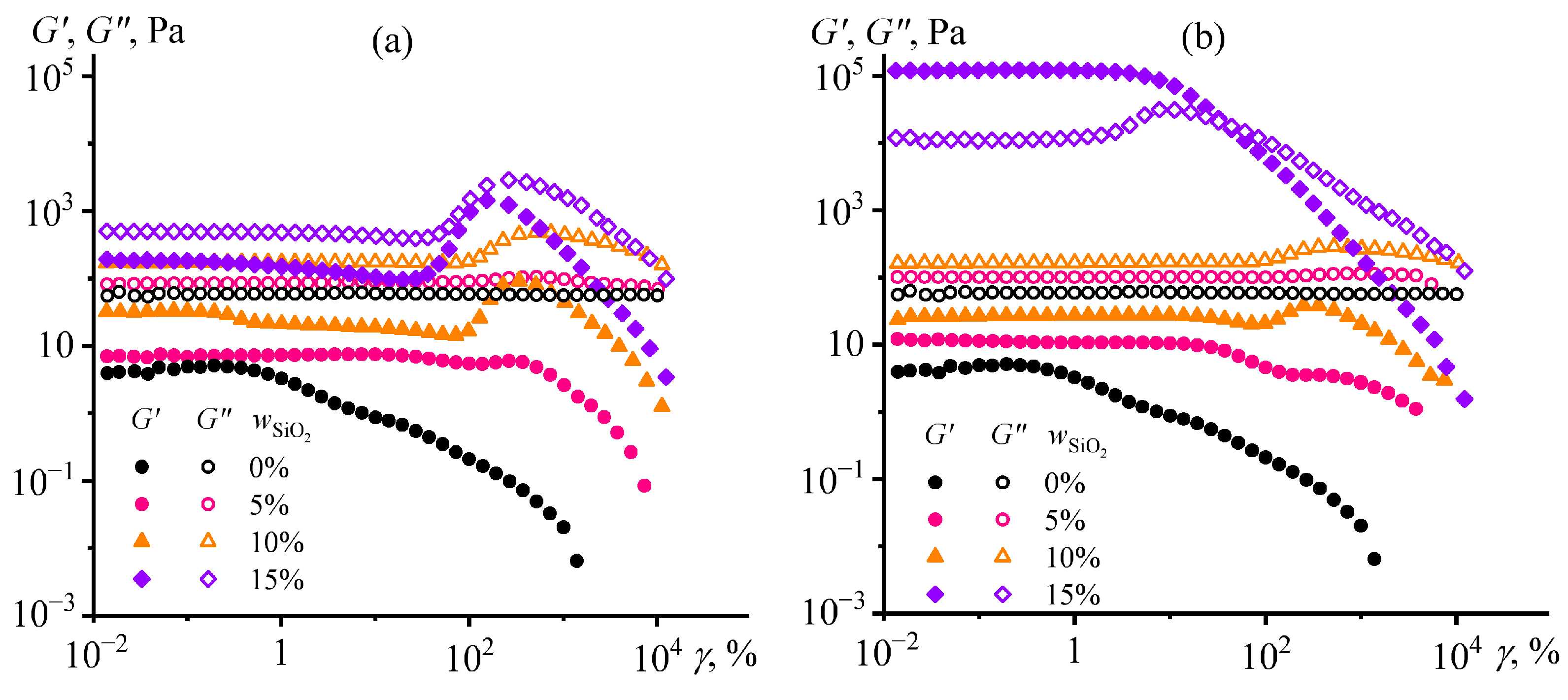
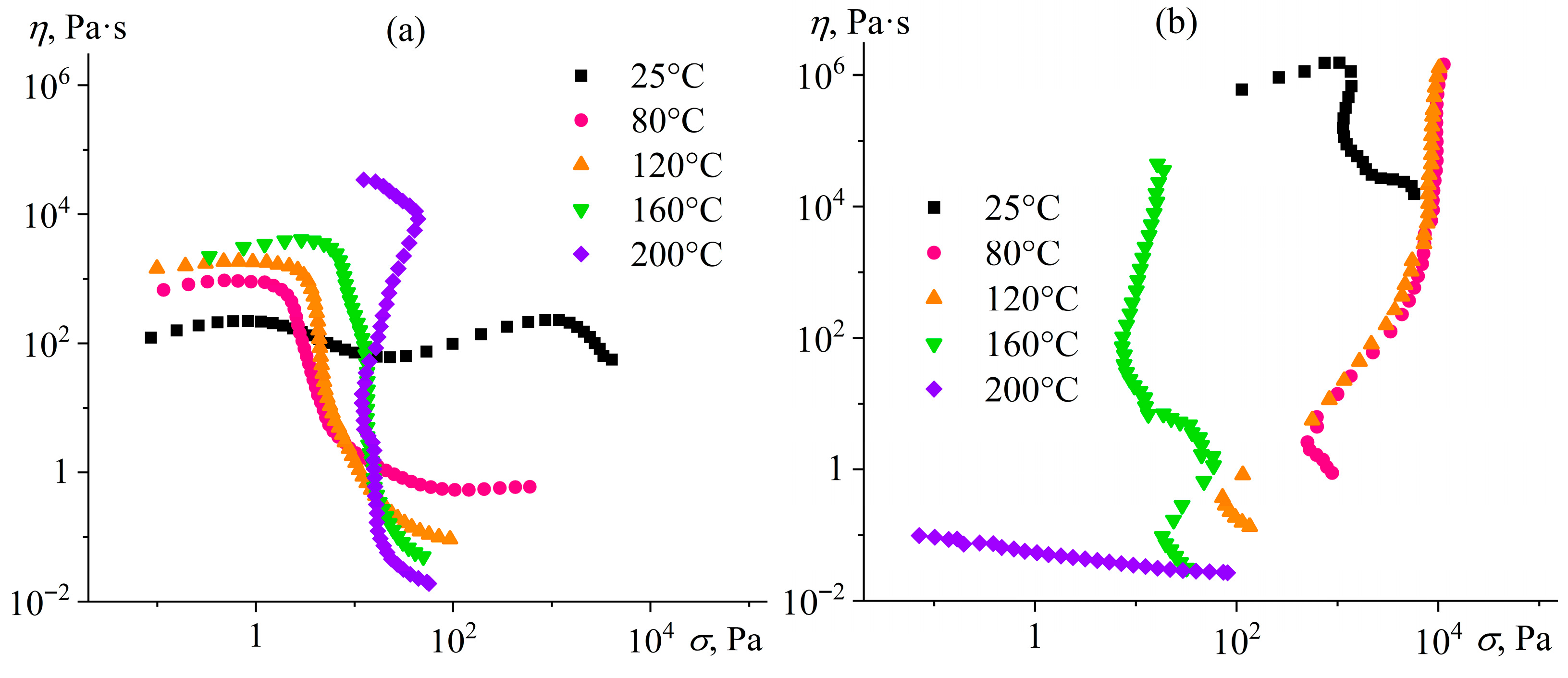
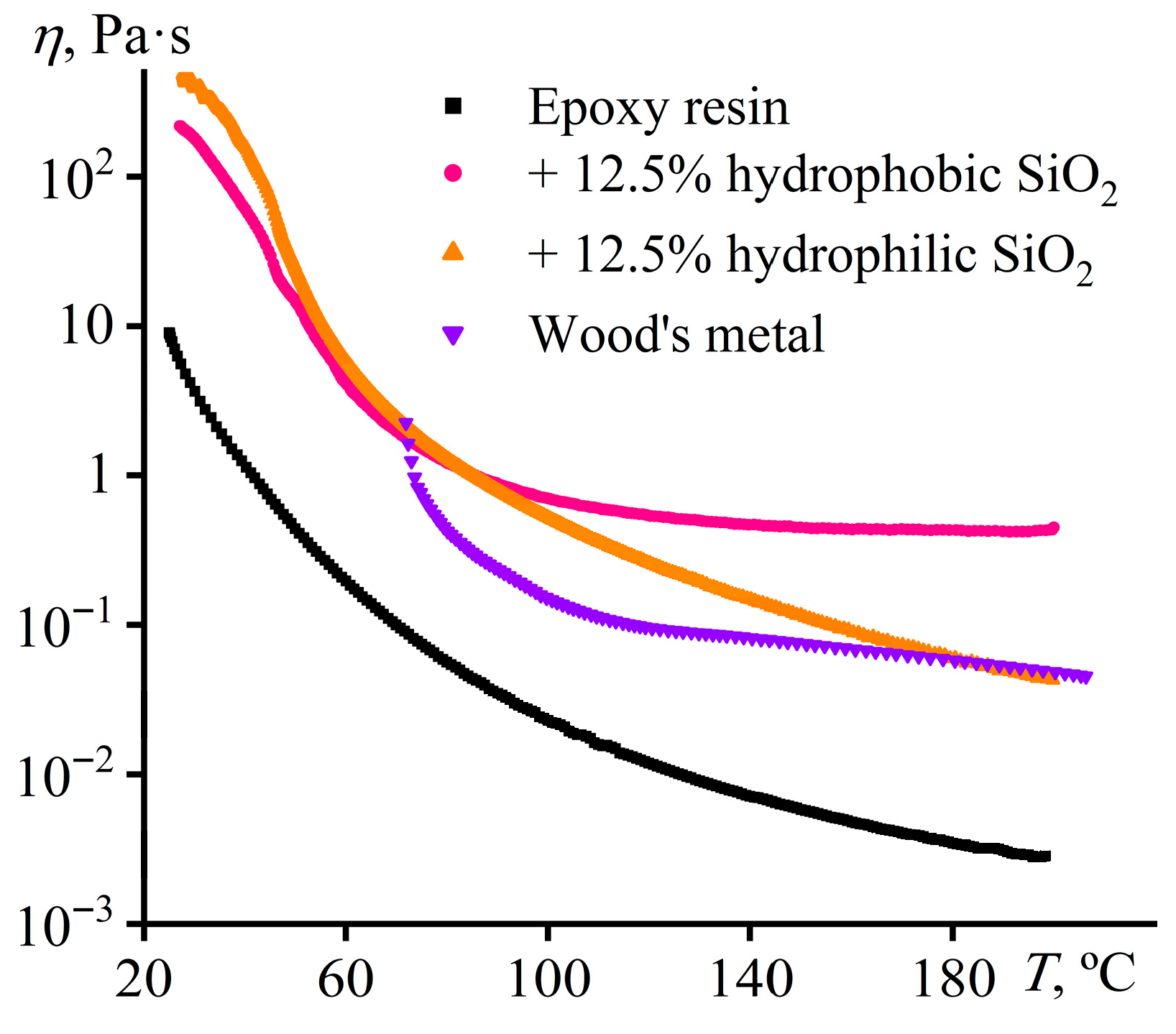
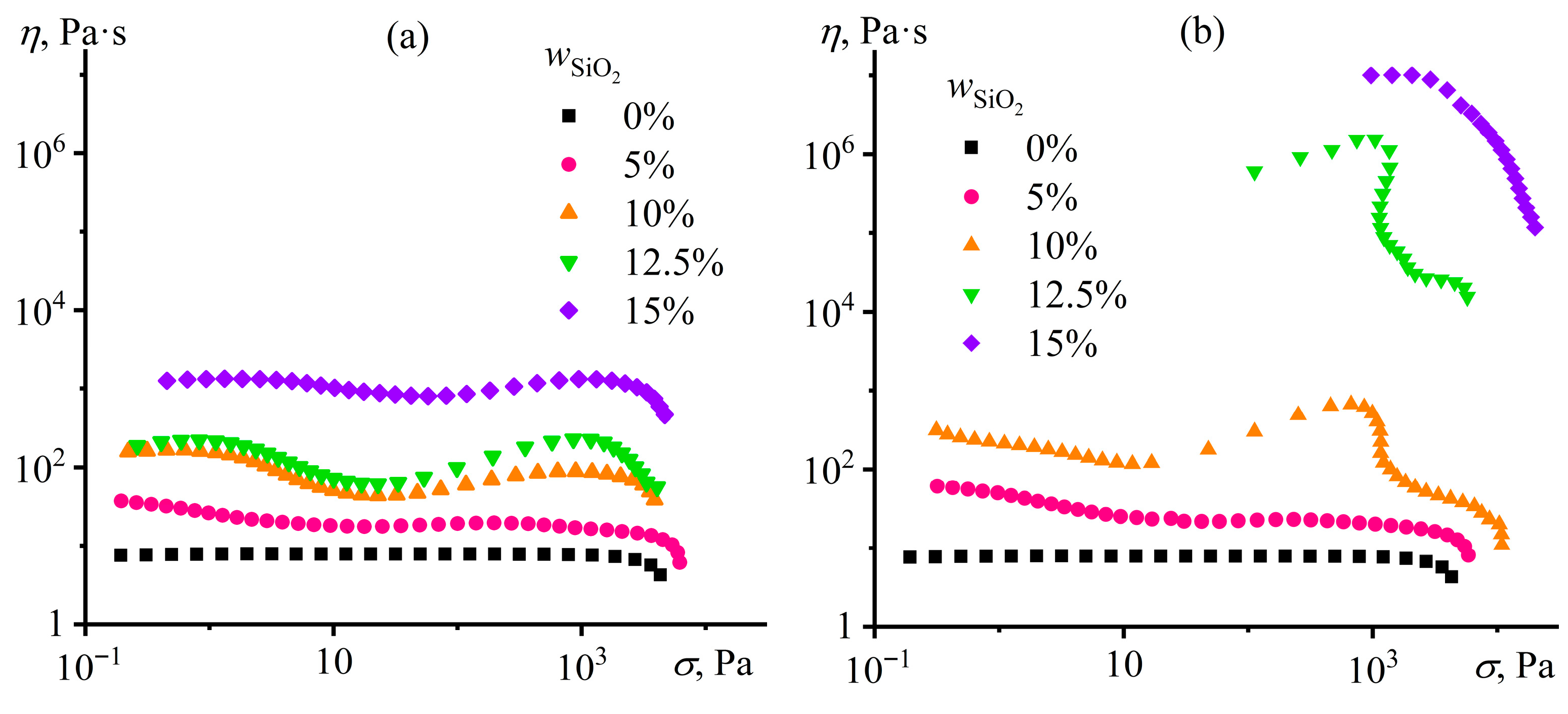
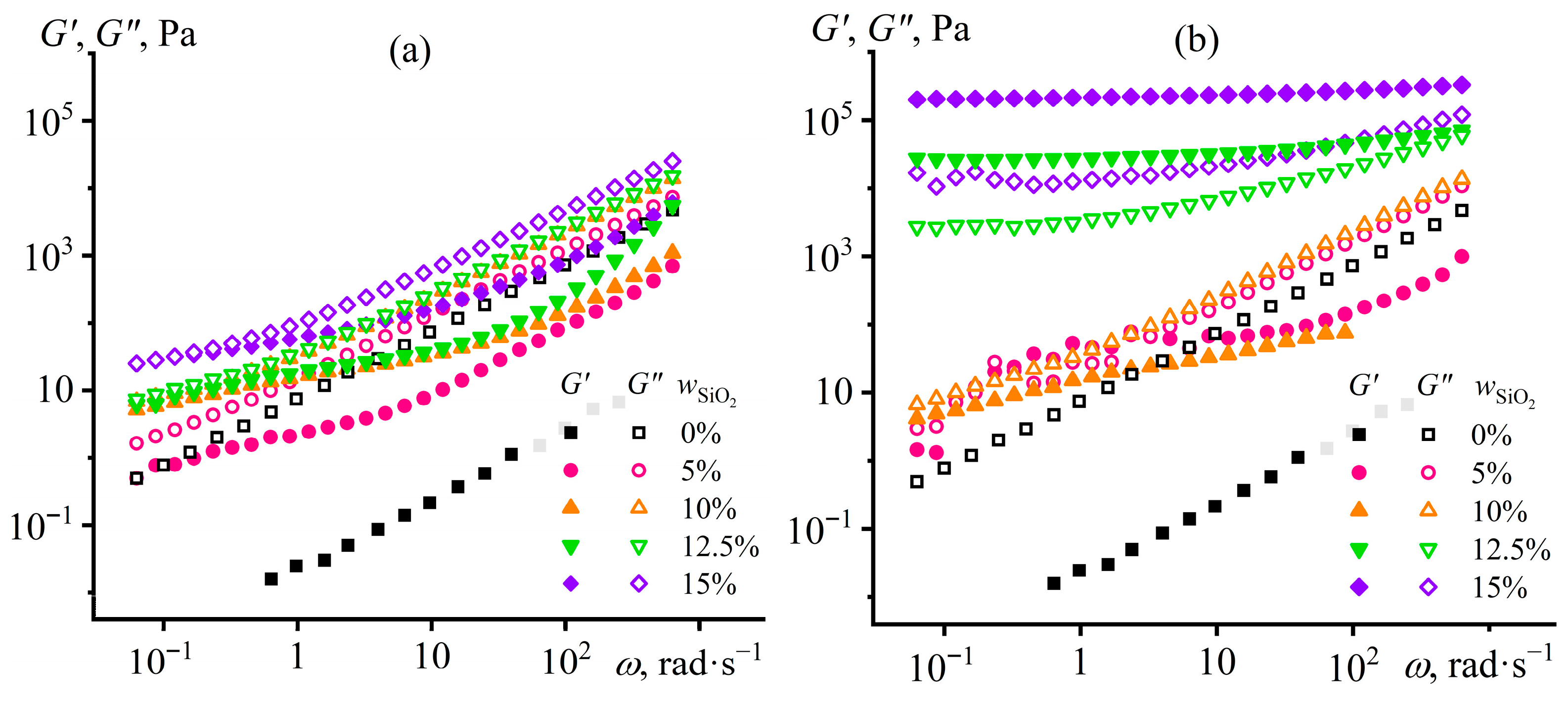
- The addition of 12.5–15 wt% hydrophilic silica nanoparticles induces physical gelation of the epoxy resin, forming a yield-stress nanocomposite gel, which significantly increases both the elasticity and the effective viscosity at 25 °C. As the temperature increases, this yield stress persists in systems with hydrophilic silica. In contrast, dispersions with hydrophobic silica develop a yield stress only upon heating, indicating the formation of a more structured system at elevated temperatures.
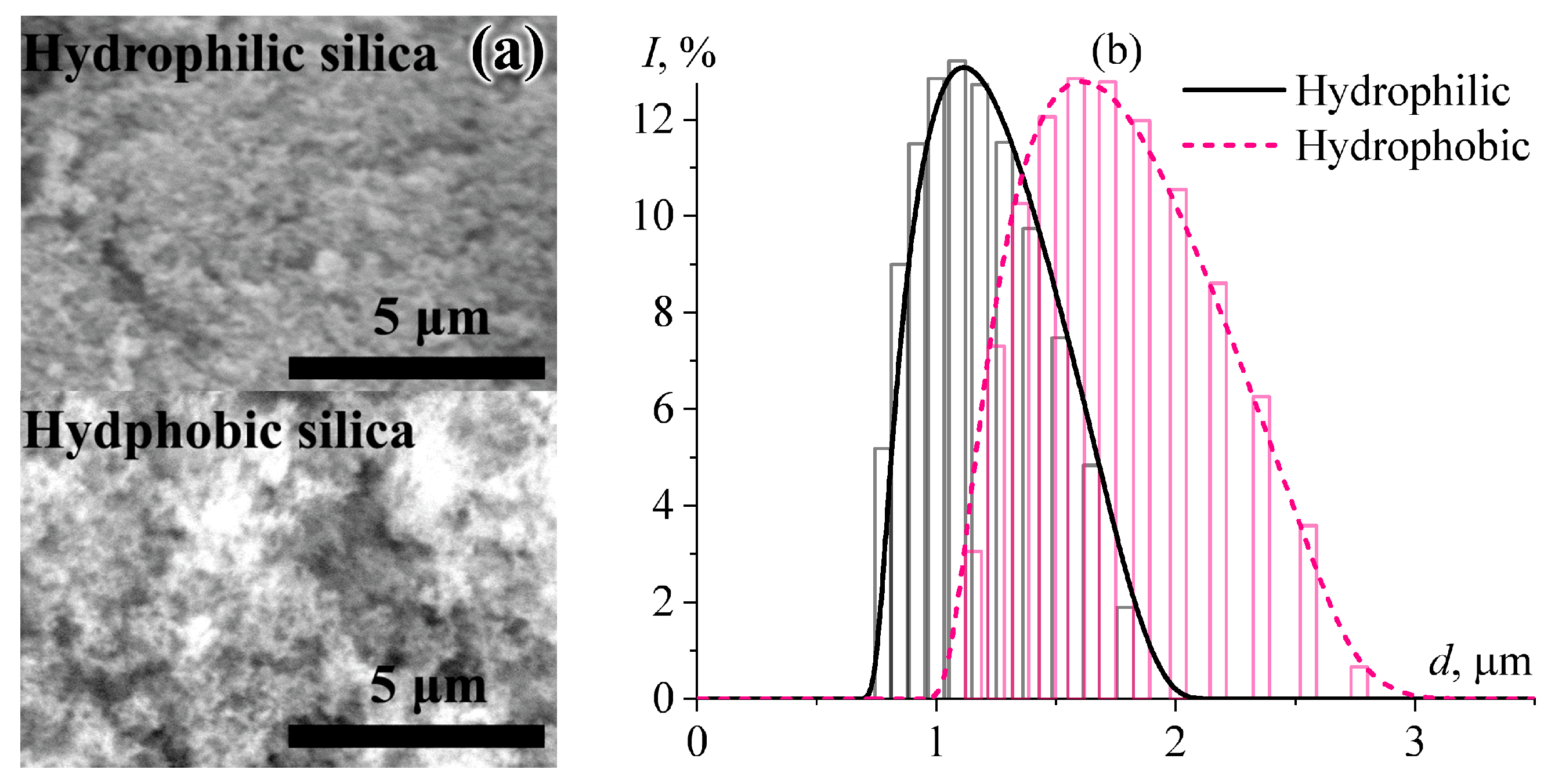
- Hydrophilic silica works better for immobilizing dispersed Wood’s metal in the epoxy-based medium because of the proximity in viscosities of the molten Wood’s metal and the silica/epoxy dispersion, which minimizes the critical capillary number during their mixing and, consequently, the resulting metal droplet size.
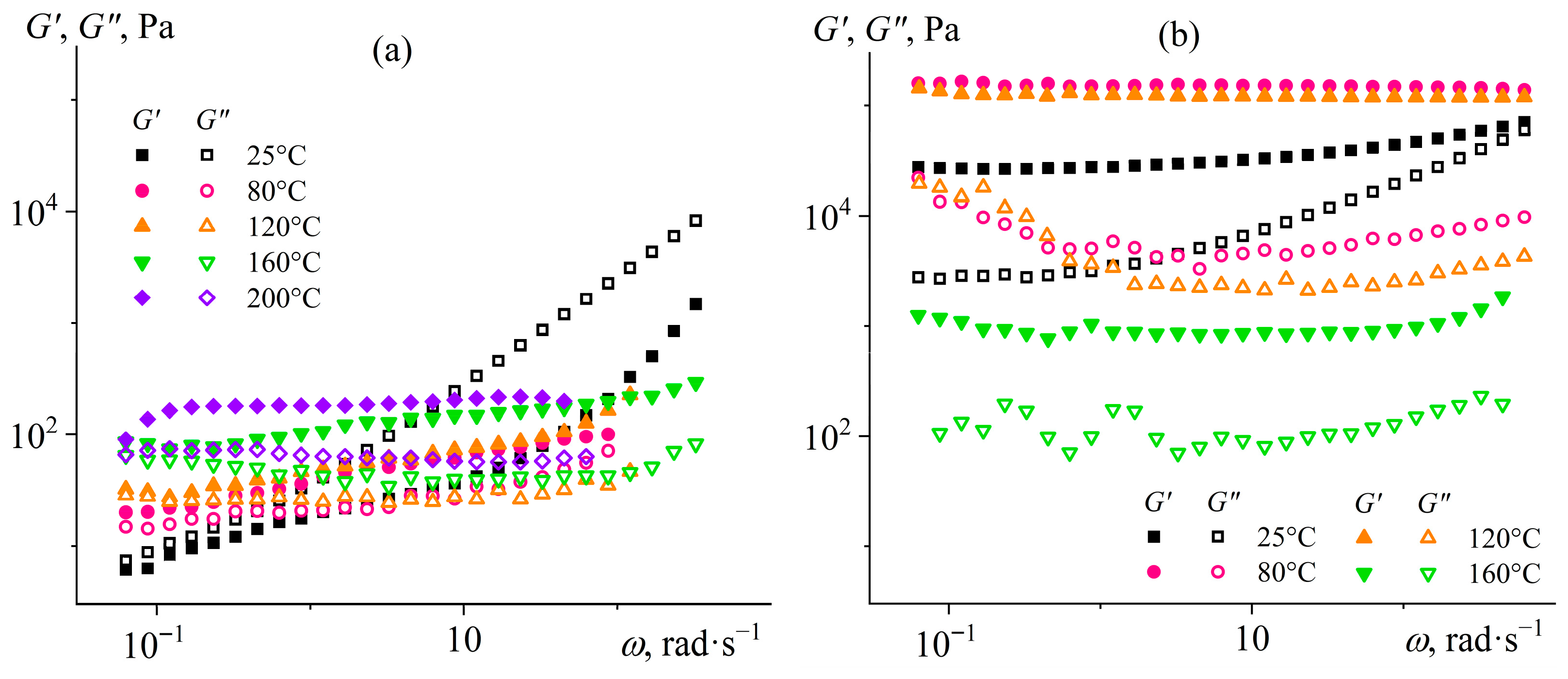
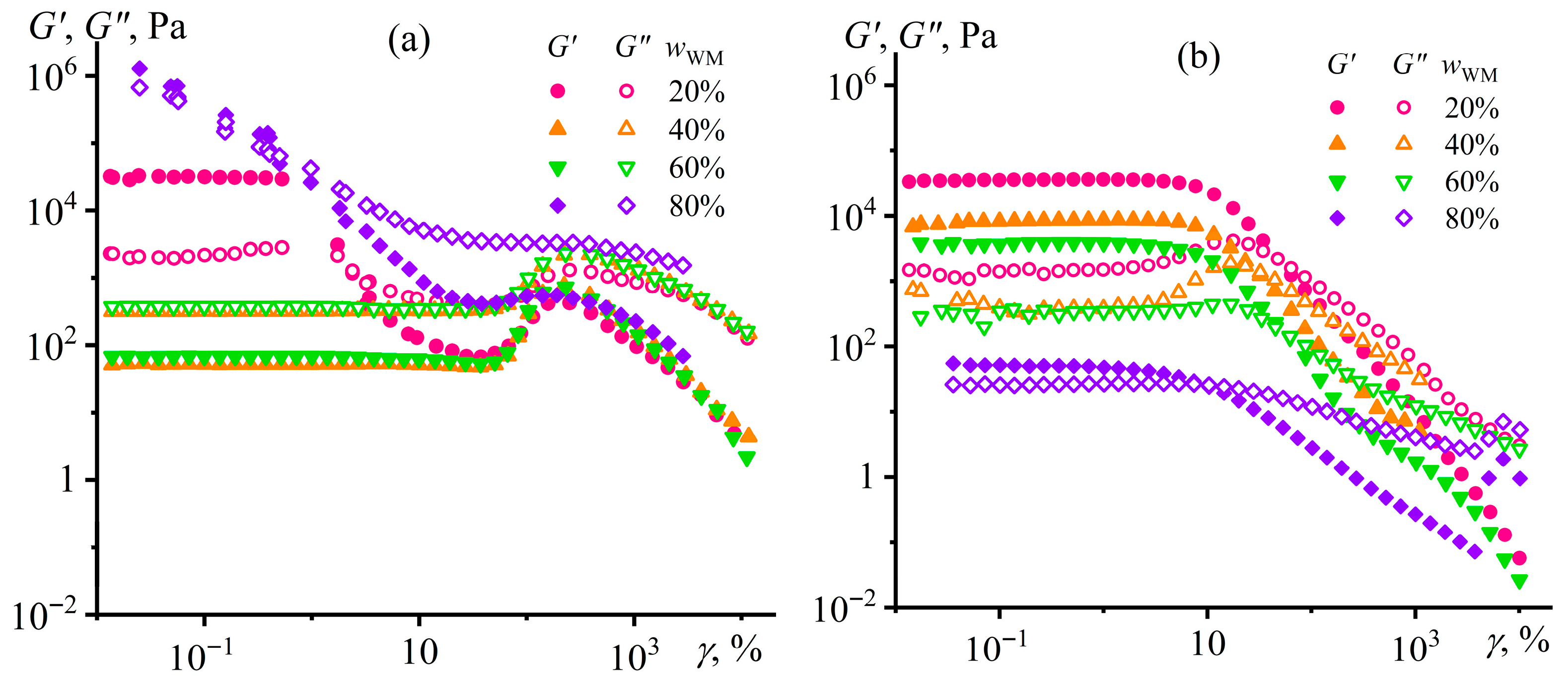
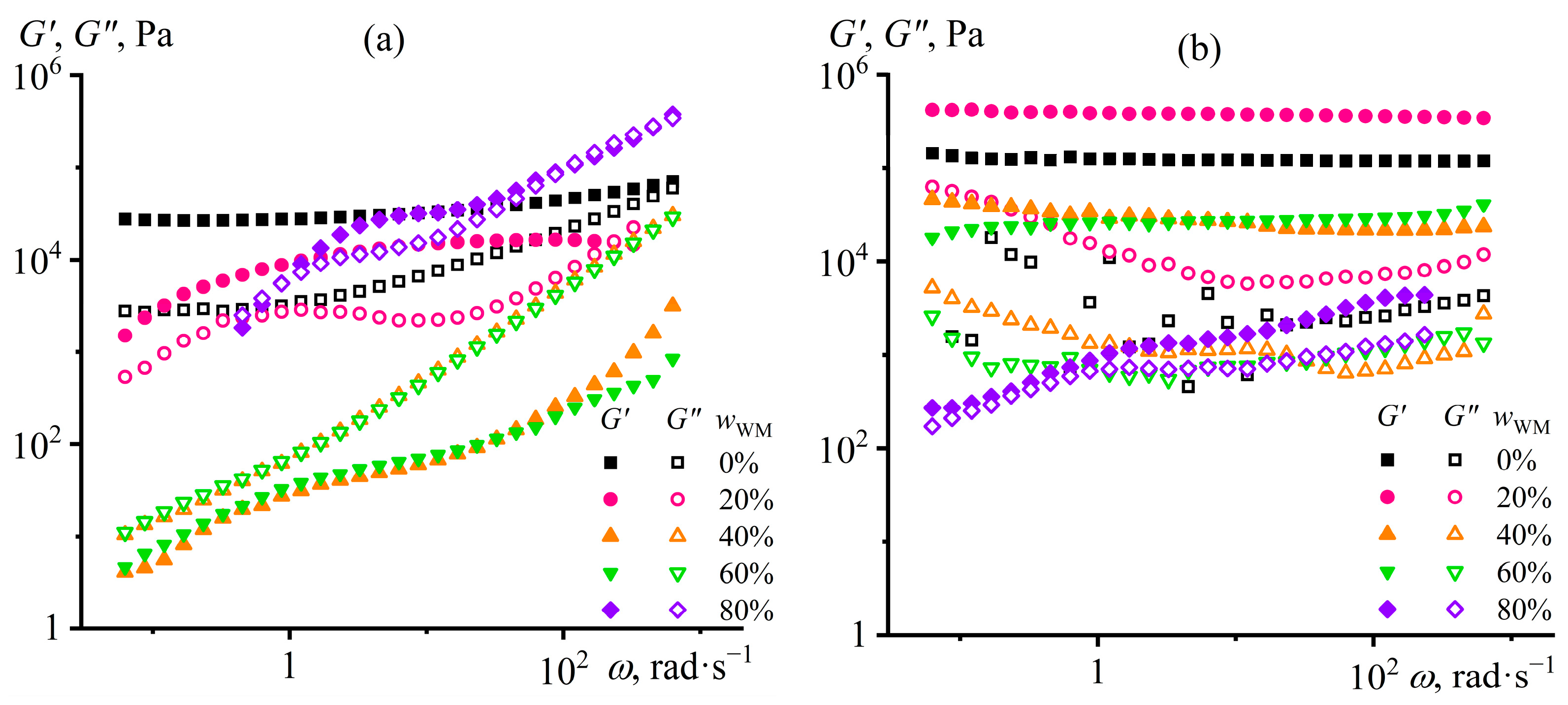
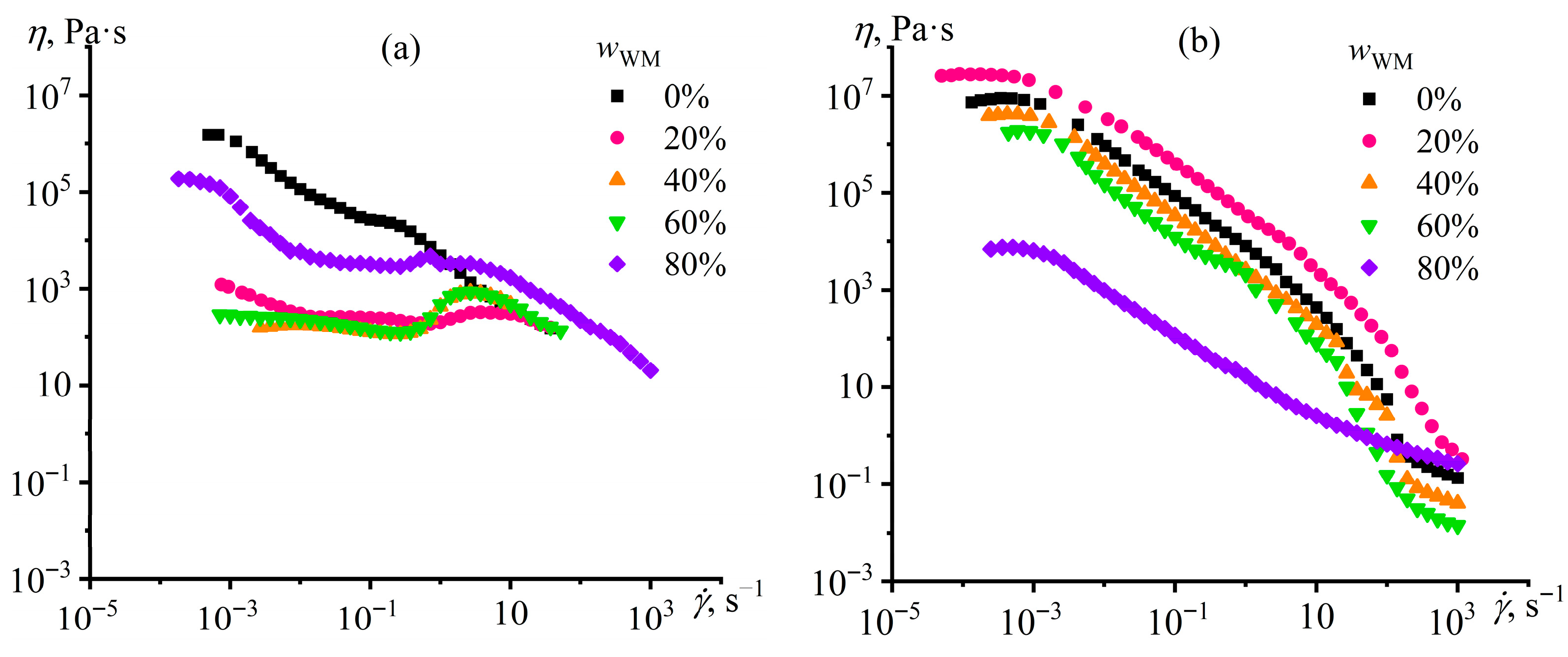
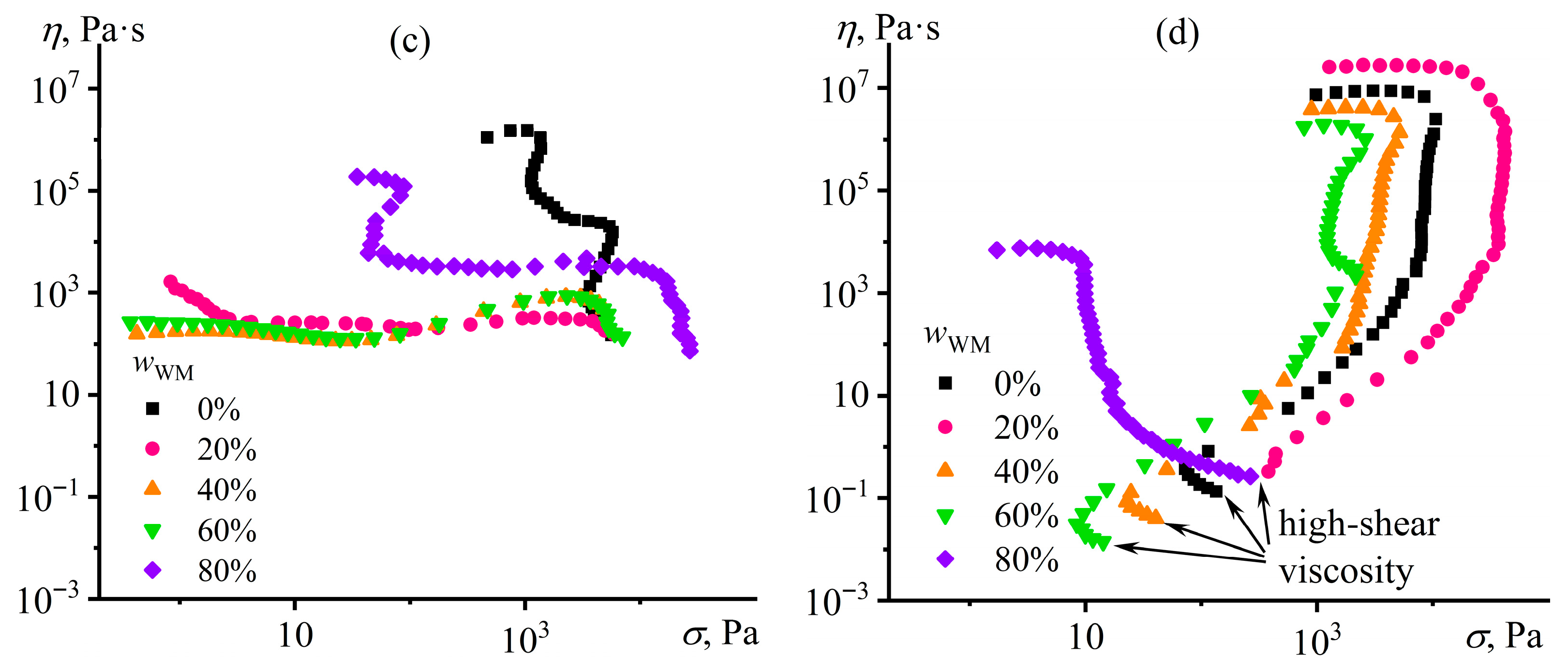
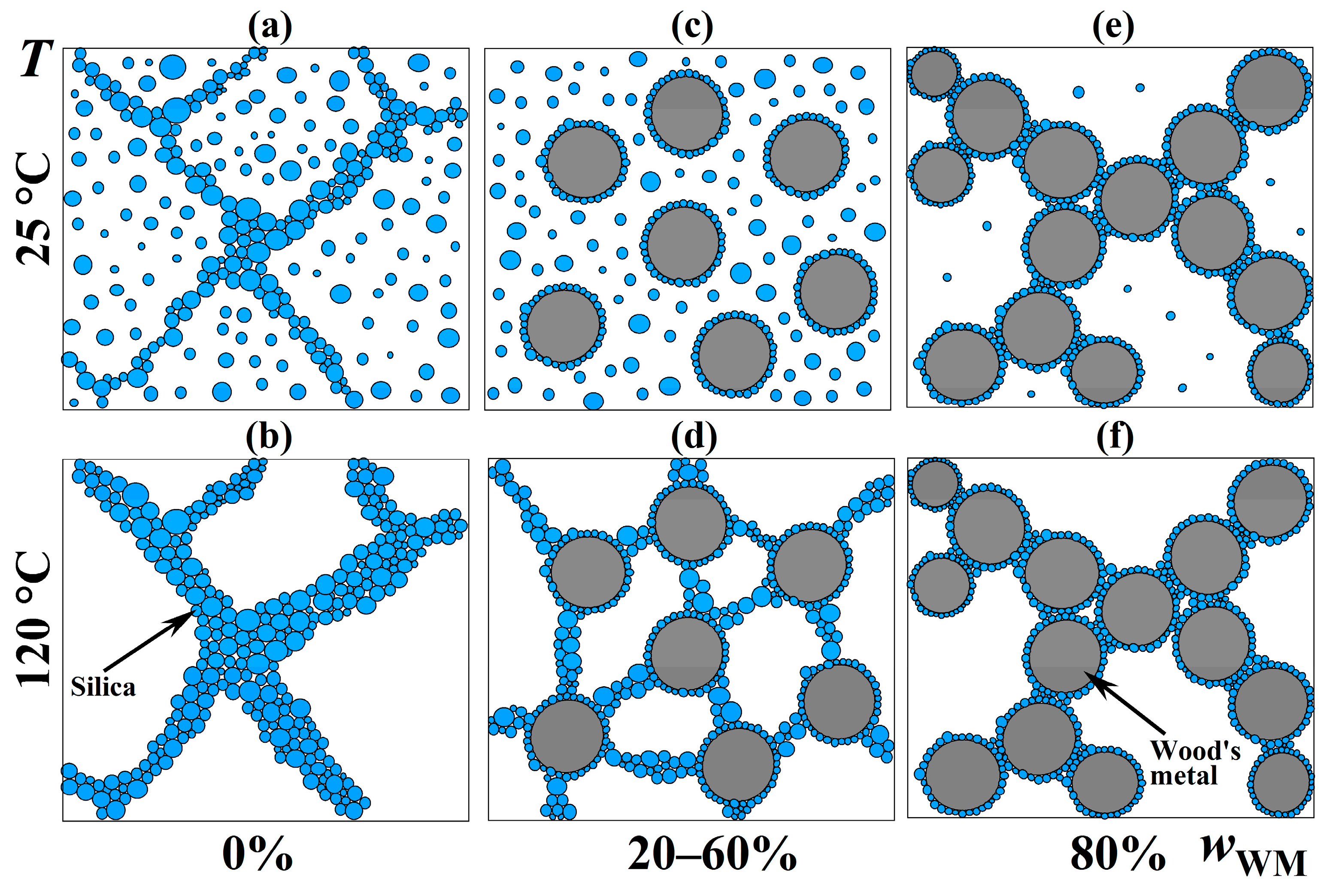
- Wood’s metal reduces the yield stress of hydrophilic particle dispersions up to its disappearance at 25 °C because particles adsorb on the metal/epoxy interface or are absorbed by molten metal droplets during high-temperature emulsification. However, Wood’s metal forms a percolated gel network at 80 wt% content, leading to the kinetic stability of its dispersion at both low and high temperatures, likely facilitated by interfacial coverage with silica nanoparticles, though direct interfacial evidence was not obtained in this study.
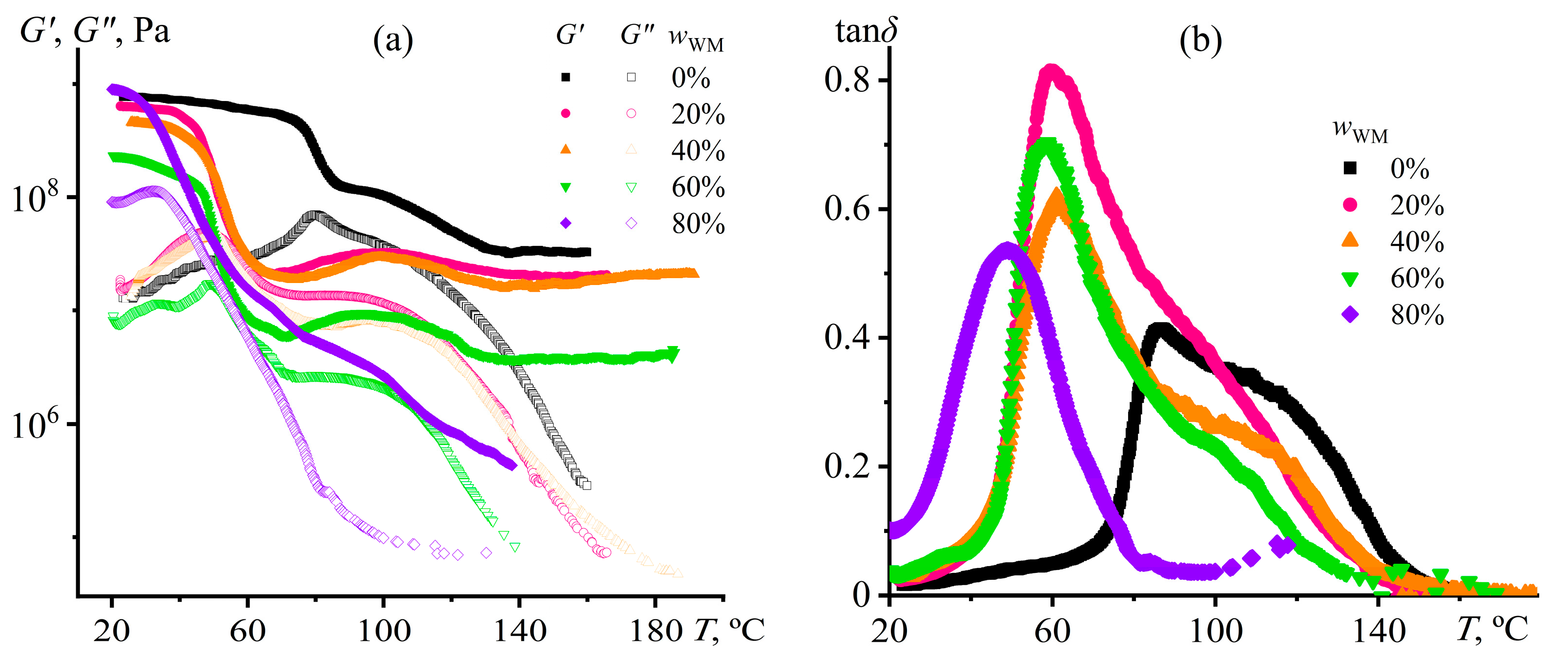
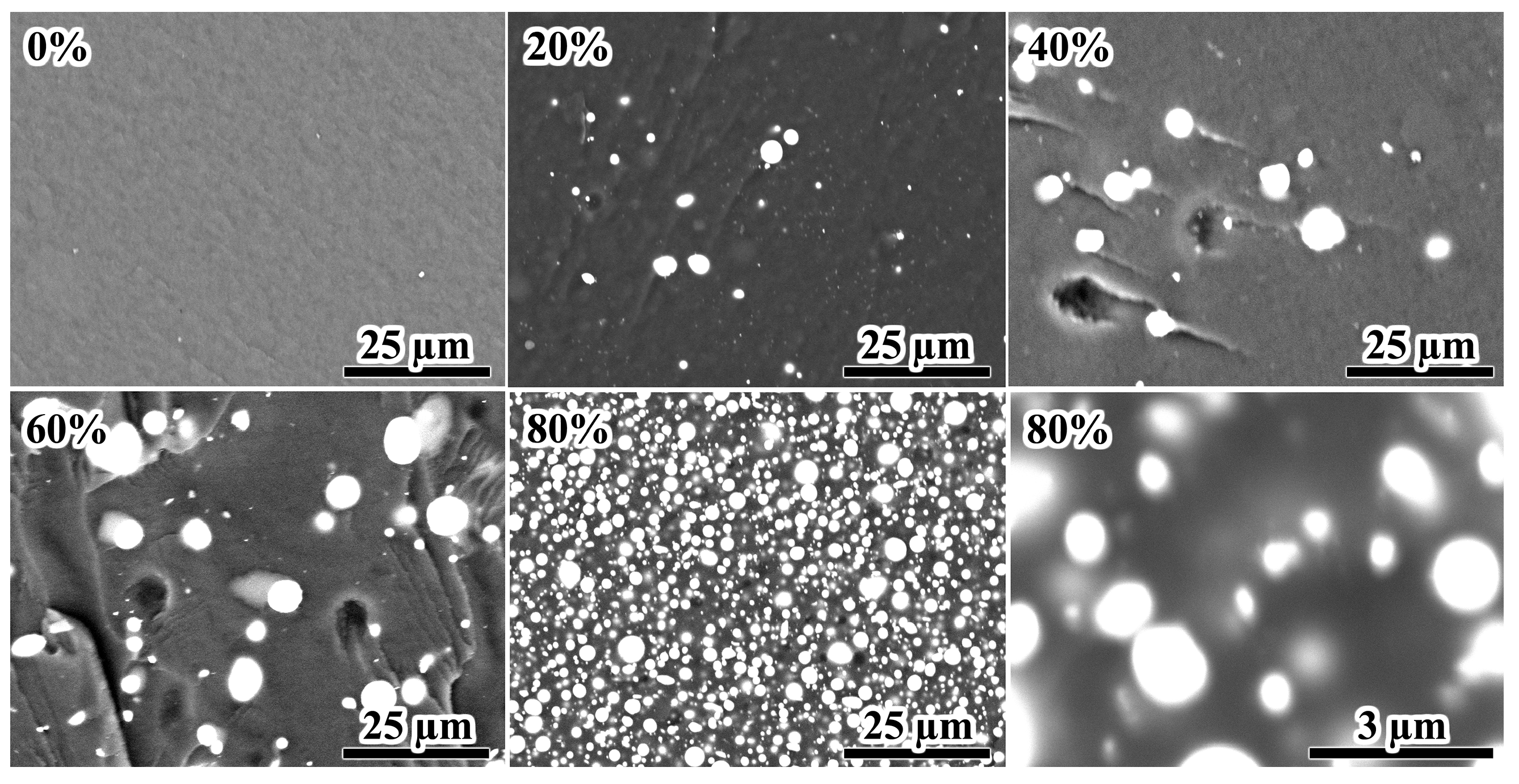
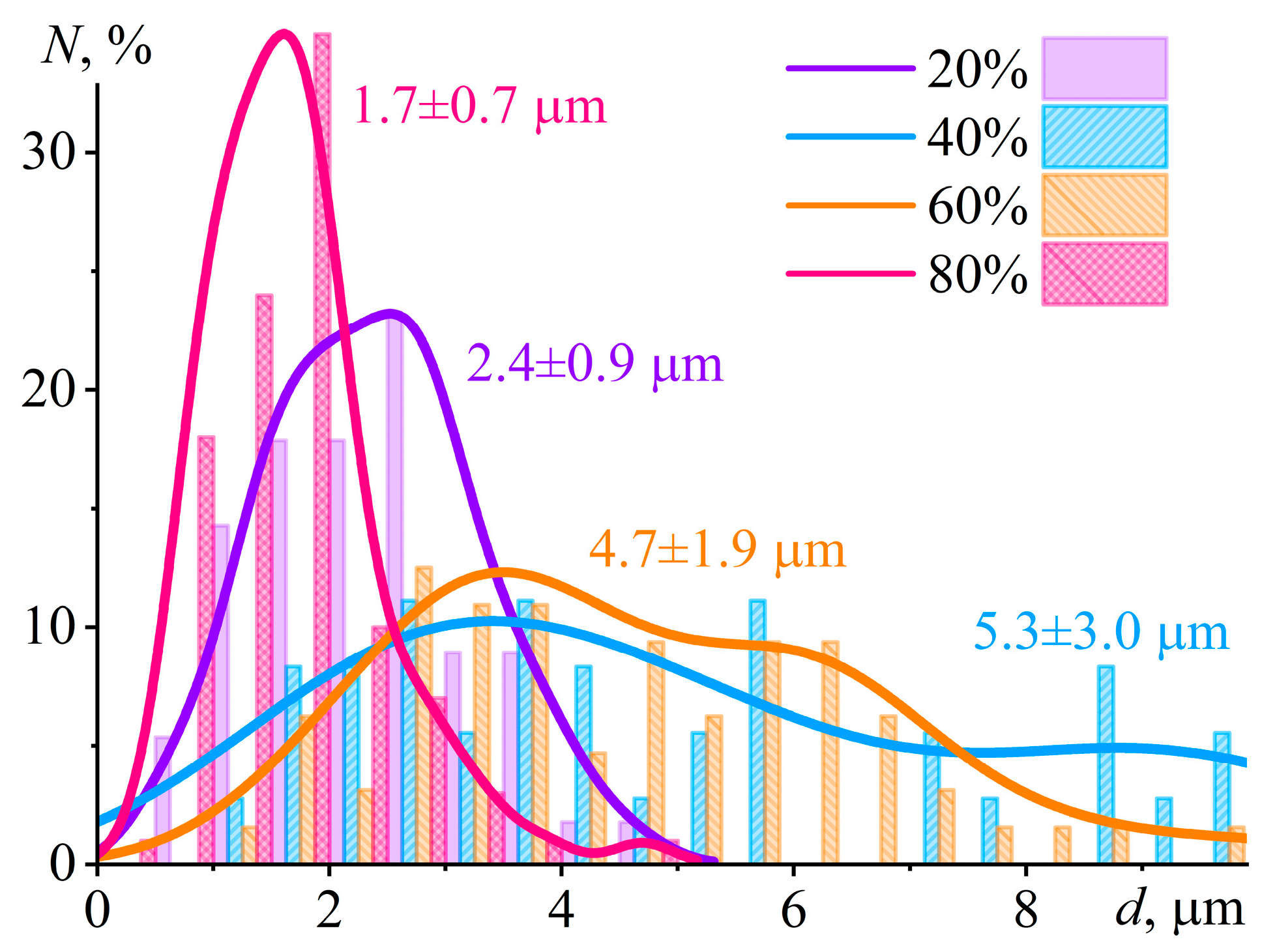
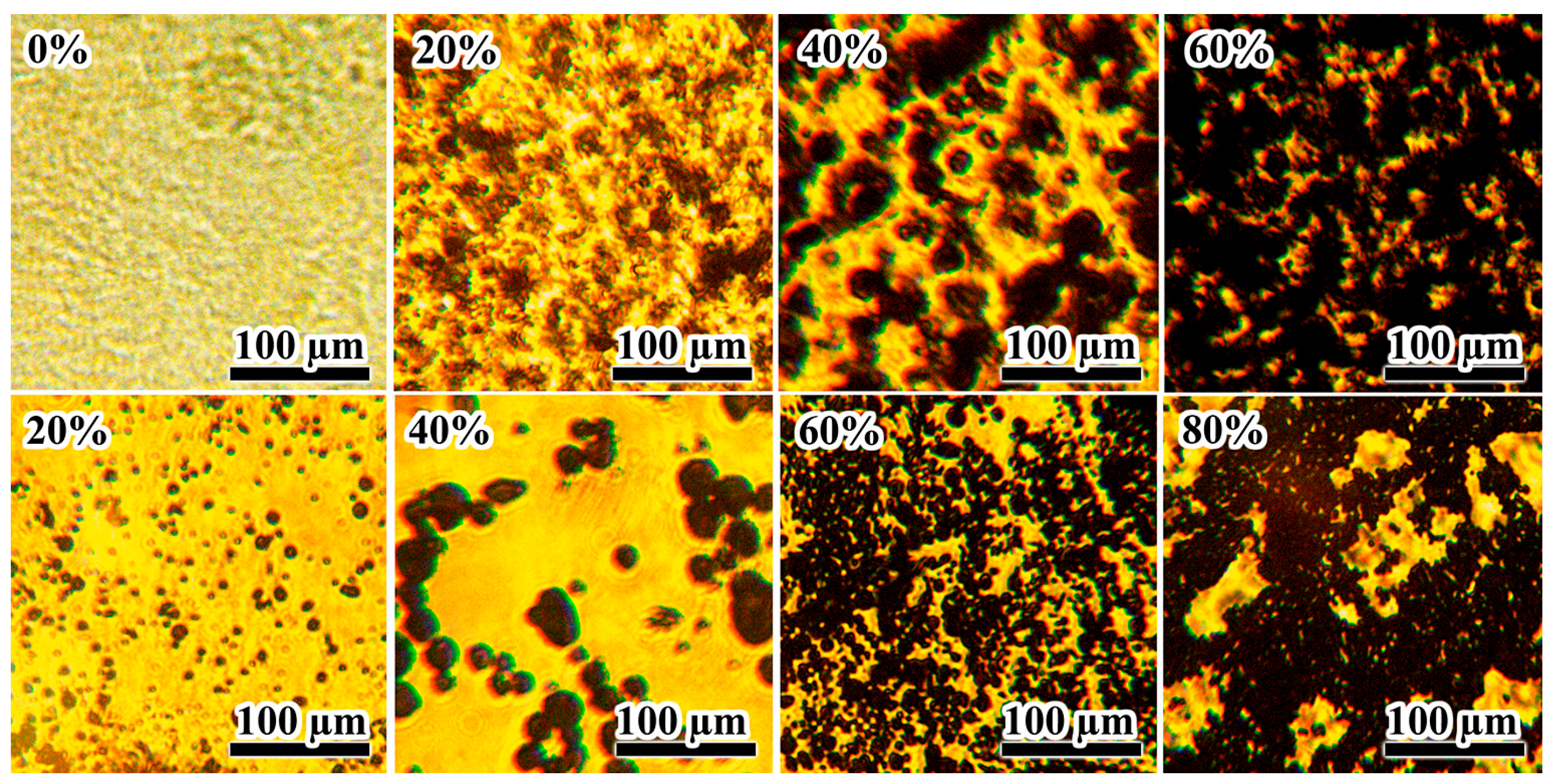
- At 80 wt% content, Wood’s metal decreases the glass transition temperature of cured epoxy compositions by 34 °C, indicating a reduction in cross-link density, but increases their storage modulus thanks to the reinforcing effect of solid spherical metal particles that do not form aggregates and have an average size of 2 µm.
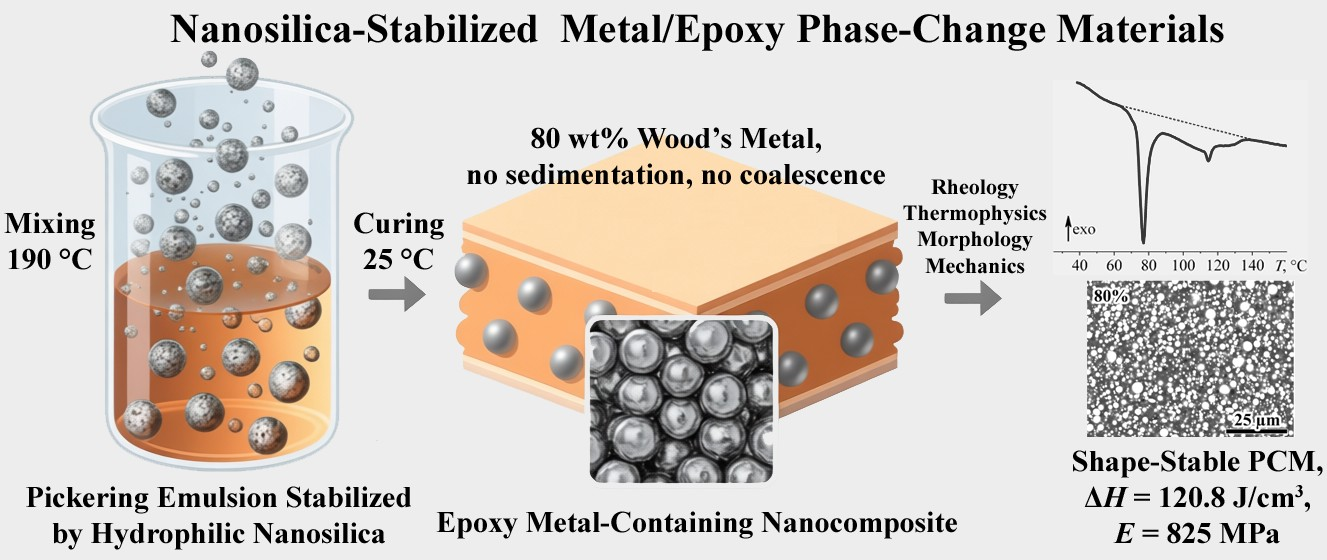
- Wood’s metal melts and crystallizes gradually, decomposing into phases of different compositions, reflected in the extended length of phase transitions on the temperature scale. The nominal crystallinity of Wood’s metal dispersed in the epoxy matrix decreases but remains high enough to store thermal energy up to 120.8 J/cm3 at Wood’s metal mass fraction of 80%.
4. Materials and Methods
4.1. Materials
4.2. Methods
Author Contributions
Funding
Institutional Review Board Statement
Informed Consent Statement
Data Availability Statement
Acknowledgments
Conflicts of Interest
References
- Bondareva, N.S.; Sheremet, M.A. Heat Transfer Performance in a Concrete Block Containing a Phase Change Material for Thermal Comfort in Buildings. Energy Build. 2022, 256, 111715. [Google Scholar] [CrossRef] [Scilit]
- Sharshir, S.W.; Joseph, A.; Elsharkawy, M.; Hamada, M.A.; Kandeal, A.W.; Elkadeem, M.R.; Kumar Thakur, A.; Ma, Y.; Eid Moustapha, M.; Rashad, M.; et al. Thermal Energy Storage Using Phase Change Materials in Building Applications: A Review of the Recent Development. Energy Build. 2023, 285, 112908. [Google Scholar] [CrossRef] [Scilit]
- Rashid, F.L.; Al-Obaidi, M.A.; Dulaimi, A.; Mahmood, D.M.N.; Sopian, K. A Review of Recent Improvements, Developments, and Effects of Using Phase-Change Materials in Buildings to Store Thermal Energy. Designs 2023, 7, 90. [Google Scholar] [CrossRef] [Scilit]
- Sharma, R.K.; Kumar, A.; Rakshit, D. A Phase Change Material (PCM) Based Novel Retrofitting Approach in the Air Conditioning System to Reduce Building Energy Demand. Appl. Therm. Eng. 2024, 238, 121872. [Google Scholar] [CrossRef] [Scilit]
- Masood, U.; Haggag, M.; Hassan, A.; Laghari, M. A Review of Phase Change Materials as a Heat Storage Medium for Cooling Applications in the Built Environment. Buildings 2023, 13, 1595. [Google Scholar] [CrossRef] [Scilit]
- Goel, V.; Saxena, A.; Kumar, M.; Thakur, A.; Sharma, A.; Bianco, V. Potential of Phase Change Materials and Their Effective Use in Solar Thermal Applications: A Critical Review. Appl. Therm. Eng. 2023, 219, 119417. [Google Scholar] [CrossRef] [Scilit]
- Imran Khan, M.; Asfand, F.; Al-Ghamdi, S.G. Progress in Research and Development of Phase Change Materials for Thermal Energy Storage in Concentrated Solar Power. Appl. Therm. Eng. 2023, 219, 119546. [Google Scholar] [CrossRef] [Scilit]
- Wang, F.; Pang, D.; Liu, X.; Liu, M.; Du, W.; Zhang, Y.; Cheng, X. Progress in Application of Phase-Change Materials to Cooling Clothing. J. Energy Storage 2023, 60, 106606. [Google Scholar] [CrossRef] [Scilit]
- Zare, M.; Mikkonen, K.S. Phase Change Materials for Life Science Applications. Adv. Funct. Mater. 2023, 33, 2213455. [Google Scholar] [CrossRef] [Scilit]
- Mehling, H.; Brütting, M.; Haussmann, T. PCM Products and Their Fields of Application—An Overview of the State in 2020/2021. J. Energy Storage 2022, 51, 104354. [Google Scholar] [CrossRef] [Scilit]
- Wang, G.; Tang, Z.; Gao, Y.; Liu, P.; Li, Y.; Li, A.; Chen, X. Phase Change Thermal Storage Materials for Interdisciplinary Applications. Chem. Rev. 2023, 123, 6953–7024. [Google Scholar] [CrossRef] [Scilit]
- Yuan, K.; Shi, J.; Aftab, W.; Qin, M.; Usman, A.; Zhou, F.; Lv, Y.; Gao, S.; Zou, R. Engineering the Thermal Conductivity of Functional Phase-Change Materials for Heat Energy Conversion, Storage, and Utilization. Adv. Funct. Mater. 2020, 30, 1904228. [Google Scholar] [CrossRef] [Scilit]
- Huang, J.; Luo, Y.; Weng, M.; Yu, J.; Sun, L.; Zeng, H.; Liu, Y.; Zeng, W.; Min, Y.; Guo, Z. Advances and Applications of Phase Change Materials (PCMs) and PCMs-Based Technologies. ES Mater. Manuf. 2021, 13, 23–39. [Google Scholar] [CrossRef] [Scilit]
- Yang, T.; King, W.P.; Miljkovic, N. Phase Change Material-Based Thermal Energy Storage. Cell Rep. Phys. Sci. 2021, 2, 100540. [Google Scholar] [CrossRef] [Scilit]
- Atinafu, D.G.; Ok, Y.S.; Kua, H.W.; Kim, S. Thermal Properties of Composite Organic Phase Change Materials (PCMs): A Critical Review on Their Engineering Chemistry. Appl. Therm. Eng. 2020, 181, 115960. [Google Scholar] [CrossRef] [Scilit]
- Liu, Q.; Zhang, J.; Liu, J.; Sun, W.; Xu, H.; Liu, C. Self-Healed Inorganic Phase Change Materials for Thermal Energy Harvesting and Management. Appl. Therm. Eng. 2023, 219, 119423. [Google Scholar] [CrossRef] [Scilit]
- Junaid, M.F.; Rehman, Z.U.; Čekon, M.; Čurpek, J.; Farooq, R.; Cui, H.; Khan, I. Inorganic Phase Change Materials in Thermal Energy Storage: A Review on Perspectives and Technological Advances in Building Applications. Energy Build. 2021, 252, 111443. [Google Scholar] [CrossRef] [Scilit]
- Sun, M.; Liu, T.; Sha, H.; Li, M.; Liu, T.; Wang, X.; Chen, G.; Wang, J.; Jiang, D. A Review on Thermal Energy Storage with Eutectic Phase Change Materials: Fundamentals and Applications. J. Energy Storage 2023, 68, 107713. [Google Scholar] [CrossRef] [Scilit]
- Glova, A.D.; Nazarychev, V.M.; Larin, S.V.; Lyulin, A.V.; Lyulin, S.V.; Gurtovenko, A.A. Asphaltenes as Novel Thermal Conductivity Enhancers for Liquid Paraffin: Insight from in Silico Modeling. J. Mol. Liq. 2022, 346, 117112. [Google Scholar] [CrossRef] [Scilit]
- Bondareva, N.S.; Sheremet, M.A. Effect of Nano-Sized Heat Transfer Enhancers on PCM-Based Heat Sink Performance at Various Heat Loads. Nanomaterials 2019, 10, 17. [Google Scholar] [CrossRef] [Scilit]
- Glova, A.D.; Nazarychev, V.M.; Larin, S.V.; Gurtovenko, A.A.; Lyulin, S.V. Size Matters: Asphaltenes with Enlarged Aromatic Cores Promote Heat Transfer in Organic Phase-Change Materials. Phys. Chem. Chem. Phys. 2023, 25, 32196–32207. [Google Scholar] [CrossRef] [Scilit]
- Shamseddine, I.; Pennec, F.; Biwole, P.; Fardoun, F. Supercooling of Phase Change Materials: A Review. Renew. Sustain. Energy Rev. 2022, 158, 112172. [Google Scholar] [CrossRef] [Scilit]
- Zhao, Y.; Zhang, X.; Xu, X.; Zhang, S. Research Progress in Nucleation and Supercooling Induced by Phase Change Materials. J. Energy Storage 2020, 27, 101156. [Google Scholar] [CrossRef] [Scilit]
- Yu, K.; Liu, Y.; Yang, Y. Review on Form-Stable Inorganic Hydrated Salt Phase Change Materials: Preparation, Characterization and Effect on the Thermophysical Properties. Appl. Energy 2021, 292, 116845. [Google Scholar] [CrossRef] [Scilit]
- Zhang, S.; Jin, Y.; Yan, Y. Depression of Melting Point and Latent Heat of Molten Salts as Inorganic Phase Change Material: Size Effect and Mechanism. J. Mol. Liq. 2022, 346, 117058. [Google Scholar] [CrossRef] [Scilit]
- Mohamed, S.A.; Al-Sulaiman, F.A.; Ibrahim, N.I.; Zahir, M.H.; Al-Ahmed, A.; Saidur, R.; Yılbaş, B.S.; Sahin, A.Z. A Review on Current Status and Challenges of Inorganic Phase Change Materials for Thermal Energy Storage Systems. Renew. Sustain. Energy Rev. 2017, 70, 1072–1089. [Google Scholar] [CrossRef] [Scilit]
- Ge, H.; Li, H.; Mei, S.; Liu, J. Low Melting Point Liquid Metal as a New Class of Phase Change Material: An Emerging Frontier in Energy Area. Renew. Sustain. Energy Rev. 2013, 21, 331–346. [Google Scholar] [CrossRef] [Scilit]
- Shamberger, P.J.; Bruno, N.M. Review of Metallic Phase Change Materials for High Heat Flux Transient Thermal Management Applications. Appl. Energy 2020, 258, 113955. [Google Scholar] [CrossRef] [Scilit]
- Zhu, S.; Nguyen, M.T.; Yonezawa, T. Micro- and Nano-Encapsulated Metal and Alloy-Based Phase-Change Materials for Thermal Energy Storage. Nanoscale Adv. 2021, 3, 4626–4645. [Google Scholar] [CrossRef] [Scilit]
- Handschuh-Wang, S.; Gancarz, T.; Uporov, S.; Wang, T.; Gao, E.; Stadler, F.J.; Zhou, X. A Short History of Fusible Metals and Alloys—Towards Room Temperature Liquid Metals. Eur. J. Inorg. Chem. 2022, 2022, e202200313. [Google Scholar] [CrossRef] [Scilit]
- Huang, Y.; Stonehouse, A.; Abeykoon, C. Encapsulation Methods for Phase Change Materials—A Critical Review. Int. J. Heat Mass Transf. 2023, 200, 123458. [Google Scholar] [CrossRef] [Scilit]
- Pasarkar, N.P.; Yadav, M.; Mahanwar, P.A. A Review on the Micro-Encapsulation of Phase Change Materials: Classification, Study of Synthesis Technique and Their Applications. J. Polym. Res. 2023, 30, 13. [Google Scholar] [CrossRef] [Scilit]
- Vasilyev, G.; Koifman, N.; Shuster, M.; Gishvoliner, M.; Cohen, Y.; Zussman, E. Synergistic Effect of Two Organogelators for the Creation of Bio-Based, Shape-Stable Phase-Change Materials. Langmuir 2020, 36, 15572–15582. [Google Scholar] [CrossRef] [Scilit]
- Vasilyev, G.; Koifman, N.; Shuster, M.; Gishvoliner, M.; Cohen, Y.; Zussman, E. Phase Change Material with Gelation Imparting Shape Stability. ACS Omega 2022, 7, 11887–11902. [Google Scholar] [CrossRef] [Scilit] [PubMed]
- Ilyina, S.O.; Gorbunova, I.Y.; Makarova, V.V.; Kerber, M.L.; Ilyin, S.O. Self-Lubricating and Shape-Stable Phase-Change Materials Based on Epoxy Resin and Vegetable Oils. Polymers 2023, 15, 4026. [Google Scholar] [CrossRef] [Scilit] [PubMed]
- Ilyina, S.O.; Gorbunova, I.Y.; Yadykova, A.Y.; Vlasova, A.V.; Kerber, M.L.; Ilyin, S.O. Naphthalene-Containing Epoxy Resin: Phase Structure, Rheology, and Thermophysical Properties. Polymers 2024, 16, 3264. [Google Scholar] [CrossRef] [Scilit] [PubMed]
- Ilyina, S.O.; Gorbunova, I.Y.; Kerber, M.L.; Ilyin, S.O. Epoxy Resin Highly Loaded with an Ionic Liquid: Morphology, Rheology, and Thermophysical Properties. Gels 2025, 11, 992. [Google Scholar] [CrossRef] [Scilit]
- Ilyin, S.O.; Malkin, A.Y.; Kulichikhin, V.G.; Shaulov, A.Y.; Stegno, E.V.; Berlin, A.A.; Patlazhan, S.A. Rheological Properties of Polyethylene/Metaboric Acid Thermoplastic Blends. Rheol. Acta 2014, 53, 467–475. [Google Scholar] [CrossRef] [Scilit]
- Kostyuk, A.V.; Ignatenko, V.Y.; Makarova, V.V.; Antonov, S.V.; Ilyin, S.O. Polyethylene Wax as an Alternative to Mineral Fillers for Preparation of Reinforced Pressure-Sensitive Adhesives. Int. J. Adhes. Adhes. 2020, 102, 102689. [Google Scholar] [CrossRef] [Scilit]
- Handschuh-Wang, S.; Wang, B.; Wang, T.; Stadler, F.J. Measurement Principles for Room Temperature Liquid and Fusible Metals’ Surface Tension. Surf. Interfaces 2023, 39, 102921. [Google Scholar] [CrossRef] [Scilit]
- Gorbacheva, S.N.; Ilyin, S.O. Morphology and Rheology of Heavy Crude Oil/Water Emulsions Stabilized by Microfibrillated Cellulose. Energy Fuels 2021, 35, 6527–6540. [Google Scholar] [CrossRef] [Scilit]
- Grace, H.P. Dispersion phenomena in high viscosity immiscible fluid systems and application of static mixers as dispersion devices in such systems. Chem. Eng. Commun. 1982, 14, 225–277. [Google Scholar] [CrossRef] [Scilit]
- Mironova, M.V.; Ilyin, S.O. Effect of Silica and Clay Minerals on Rheology of Heavy Crude Oil Emulsions. Fuel 2018, 232, 290–298. [Google Scholar] [CrossRef] [Scilit]
- Yadykova, A.Y.; Ilyin, S.O. Rheological and Adhesive Properties of Nanocomposite Bitumen Binders Based on Hydrophilic or Hydrophobic Silica and Modified with Bio-Oil. Constr. Build. Mater. 2022, 342, 127946. [Google Scholar] [CrossRef] [Scilit]
- Frelichowska, J.; Bolzinger, M.-A.; Chevalier, Y. Pickering Emulsions with Bare Silica. Colloids Surf. A Physicochem. Eng. Asp. 2009, 343, 70–74. [Google Scholar] [CrossRef] [Scilit]
- Björkegren, S.; Nordstierna, L.; Törncrona, A.; Palmqvist, A. Hydrophilic and Hydrophobic Modifications of Colloidal Silica Particles for Pickering Emulsions. J. Colloid Interface Sci. 2017, 487, 250–257. [Google Scholar] [CrossRef] [Scilit]
- Whaval, S.P.; Tiwari, A.K. A Review on the Synergistic Effect of Various Surfactants and Silica Nanoparticles on Pickering Emulsion. J. Dispers. Sci. Technol. 2025, 1–24. [Google Scholar] [CrossRef] [Scilit]
- Malkin, A.Y.; Ilyin, S.O.; Arinina, M.P.; Kulichikhin, V.G. The Rheological State of Suspensions in Varying the Surface Area of Nano-Silica Particles and Molecular Weight of the Poly(Ethylene Oxide) Matrix. Colloid Polym. Sci. 2017, 295, 555–563. [Google Scholar] [CrossRef] [Scilit]
- Bao, J.; Zou, D.; Zhu, S.; Ma, Q.; Wang, Y.; Hu, Y. A Medium-Temperature, Metal-Based, Microencapsulated Phase Change Material with a Void for Thermal Expansion. Chem. Eng. J. 2021, 415, 128965. [Google Scholar] [CrossRef] [Scilit]
- Lei, K.; Wang, S.; Wang, Z.; Wang, H.; Zou, D. A Metal-Based Microencapsulated Phase Change Material (MEPCM) with High Thermal Reliability and Its Performance Regulation. Compos. Part A Appl. Sci. Manuf. 2023, 168, 107480. [Google Scholar] [CrossRef] [Scilit]
- Morgan, R.J. The Effect of Thermal History and Strain Rate on the Mechanical Properties of Diethylenetriamine-cured bisphenol-A-diglycidyl Ether Epoxies. J. Appl. Polym. Sci. 1979, 23, 2711–2717. [Google Scholar] [CrossRef] [Scilit]
- Ismail, N.A.; Shakoor, R.A.; Kahraman, R. Corrosion Inhibition Performance of Developed Epoxy Coatings Containing Carbon Nanocapsules Loaded with Diethylenetriamine. Prog. Org. Coat. 2023, 183, 107716. [Google Scholar] [CrossRef] [Scilit]
- Ma, C.; Zhang, Y.; Chen, X.; Song, X.; Tang, K. Experimental Study of an Enhanced Phase Change Material of Paraffin/Expanded Graphite/Nano-Metal Particles for a Personal Cooling System. Materials 2020, 13, 980. [Google Scholar] [CrossRef] [Scilit]
- Li, J.; Hu, X.; Zhang, C.; Luo, W.; Jiang, X. Enhanced Thermal Performance of Phase-Change Materials Supported by Mesoporous Silica Modified with Polydopamine/Nano-Metal Particles for Thermal Energy Storage. Renew. Energy 2021, 178, 118–127. [Google Scholar] [CrossRef] [Scilit]
- Kalidasan, B.; Pandey, A.K.; Saidur, R.; Tyagi, V.V. Energizing Organic Phase Change Materials Using Silver Nanoparticles for Thermal Energy Storage. J. Energy Storage 2023, 58, 106361. [Google Scholar] [CrossRef] [Scilit]
- Makarova, V.V.; Gorbacheva, S.N.; Antonov, S.V.; Ilyin, S.O. On the Possibility of a Radical Increase in Thermal Conductivity by Dispersed Particles. Russ. J. Appl. Chem. 2020, 93, 1796–1814. [Google Scholar] [CrossRef] [Scilit]
- Aramesh, M.; Shabani, B. Metal Foam-Phase Change Material Composites for Thermal Energy Storage: A Review of Performance Parameters. Renew. Sustain. Energy Rev. 2022, 155, 111919. [Google Scholar] [CrossRef] [Scilit]
- Li, W.; Wan, H.; Lou, H.; Fu, Y.; Qin, F.; He, G. Enhanced Thermal Management with Microencapsulated Phase Change Material Particles Infiltrated in Cellular Metal Foam. Energy 2017, 127, 671–679. [Google Scholar] [CrossRef] [Scilit]
- Sabet, S.; Buonomo, B.; Sheremet, M.A.; Manca, O. Numerical Investigation of Melting Process for Phase Change Material (PCM) Embedded in Metal Foam Structures with Kelvin Cells at Pore Scale Level. Int. J. Heat Mass Transf. 2023, 214, 124440. [Google Scholar] [CrossRef] [Scilit]
- Navarrete, N.; Mondragón, R.; Wen, D.; Navarro, M.E.; Ding, Y.; Juliá, J.E. Thermal Energy Storage of Molten Salt –Based Nanofluid Containing Nano-Encapsulated Metal Alloy Phase Change Materials. Energy 2019, 167, 912–920. [Google Scholar] [CrossRef] [Scilit]
- Yang, T.; Kang, J.G.; Weisensee, P.B.; Kwon, B.; Braun, P.V.; Miljkovic, N.; King, W.P. A Composite Phase Change Material Thermal Buffer Based on Porous Metal Foam and Low-Melting-Temperature Metal Alloy. Appl. Phys. Lett. 2020, 116, 071901. [Google Scholar] [CrossRef] [Scilit]
- Blanco-Rodríguez, P.; Rodríguez-Aseguinolaza, J.; Risueño, E.; Tello, M. Thermophysical Characterization of Mg–51%Zn Eutectic Metal Alloy: A Phase Change Material for Thermal Energy Storage in Direct Steam Generation Applications. Energy 2014, 72, 414–420. [Google Scholar] [CrossRef] [Scilit]
- Confalonieri, C.; Grimaldi, A.T.; Gariboldi, E. Ball-Milled Al–Sn Alloy as Composite Phase Change Material. Mater. Today Energy 2020, 17, 100456. [Google Scholar] [CrossRef] [Scilit]
- Fukahori, R.; Nomura, T.; Zhu, C.; Sheng, N.; Okinaka, N.; Akiyama, T. Thermal Analysis of Al–Si Alloys as High-Temperature Phase-Change Material and Their Corrosion Properties with Ceramic Materials. Appl. Energy 2016, 163, 1–8. [Google Scholar] [CrossRef] [Scilit]
- Kawaguchi, T.; Sakai, H.; Sheng, N.; Kurniawan, A.; Nomura, T. Microencapsulation of Zn-Al Alloy as a New Phase Change Material for Middle-High-Temperature Thermal Energy Storage Applications. Appl. Energy 2020, 276, 115487. [Google Scholar] [CrossRef] [Scilit]
- Liu, L.; Chen, J.; Qu, Y.; Xu, T.; Wu, H.; Zhou, X.; Zhang, H. Preparation and Thermal Properties of Low Melting Point Alloy/Expanded Graphite Composite Phase Change Materials Used in Solar Water Storage System. Sol. Energy Mater. Sol. Cells 2019, 201, 110112. [Google Scholar] [CrossRef] [Scilit]
- Noohi, Z.; Nosouhian, S.; Niroumand, B.; Timelli, G. Use of Low Melting Point Metals and Alloys (Tm < 420 °C) as Phase Change Materials: A Review. Metals 2022, 12, 945. [Google Scholar] [CrossRef] [Scilit]
- Schilde, C.; Nolte, H.; Arlt, C.; Kwade, A. Effect of Fluid–Particle-Interactions on Dispersing Nano-Particles in Epoxy Resins Using Stirred-Media-Mills and Three-Roll-Mills. Compos. Sci. Technol. 2010, 70, 657–663. [Google Scholar] [CrossRef] [Scilit]
- Brantseva, T.V.; Ilyin, S.O.; Gorbunova, I.Y.; Antonov, S.V.; Korolev, Y.M.; Kerber, M.L. Epoxy Reinforcement with Silicate Particles: Rheological and Adhesive Properties—Part II: Characterization of Composites with Halloysite. Int. J. Adhes. Adhes. 2016, 68, 248–255. [Google Scholar] [CrossRef] [Scilit]
- Ying, L.; Wu, Y.; Nie, C.; Wu, C.; Wang, G. Improvement of the Tribological Properties and Corrosion Resistance of Epoxy–PTFE Composite Coating by Nanoparticle Modification. Coatings 2020, 11, 10. [Google Scholar] [CrossRef] [Scilit]
- Papadopoulou, A.; Gillissen, J.J.; Wilson, H.J.; Tiwari, M.K.; Balabani, S. On the Shear Thinning of Non-Brownian Suspensions: Friction or Adhesion? J. Non-Newton. Fluid Mech. 2020, 281, 104298. [Google Scholar] [CrossRef] [Scilit]
- Pan, D.; Wang, Y.; Yoshino, H.; Zhang, J.; Jin, Y. A Review on Shear Jamming. Phys. Rep. 2023, 1038, 1–18. [Google Scholar] [CrossRef] [Scilit]
- Vinogradov, G.V. Ultimate Regimes of Deformation of Linear Flexible Chain Fluid Polymers. Polymer 1977, 18, 1275–1285. [Google Scholar] [CrossRef] [Scilit]
- Raghavan, S.R.; Walls, H.J.; Khan, S.A. Rheology of Silica Dispersions in Organic Liquids: New Evidence for Solvation Forces Dictated by Hydrogen Bonding. Langmuir 2000, 16, 7920–7930. [Google Scholar] [CrossRef] [Scilit]
- Ilyin, S.O.; Arinina, M.P.; Malkin, A.Y.; Kulichikhin, V.G. Sol–Gel Transition and Rheological Properties of Silica Nanoparticle Dispersions. Colloid J. 2016, 78, 608–615. [Google Scholar] [CrossRef] [Scilit]
- Hyun, K.; Wilhelm, M.; Klein, C.O.; Cho, K.S.; Nam, J.G.; Ahn, K.H.; Lee, S.J.; Ewoldt, R.H.; McKinley, G.H. A Review of Nonlinear Oscillatory Shear Tests: Analysis and Application of Large Amplitude Oscillatory Shear (LAOS). Prog. Polym. Sci. 2011, 36, 1697–1753. [Google Scholar] [CrossRef] [Scilit]
- Crawford, N.C.; Williams, S.K.R.; Boldridge, D.; Liberatore, M.W. Shear-Induced Structures and Thickening in Fumed Silica Slurries. Langmuir 2013, 29, 12915–12923. [Google Scholar] [CrossRef] [Scilit] [PubMed]
- Li, B.; Guo, Y.; Steeman, P.; Bulters, M.; Yu, W. Shear-Induced Breakdown and Agglomeration in Nanoparticles Filled Polymer: The Shift of Phase Boundary and Kinetics. J. Rheol. 2021, 65, 291–309. [Google Scholar] [CrossRef] [Scilit]
- Gorbacheva, S.N.; Makarova, V.V.; Ilyin, S.O. Hydrophobic Nanosilica-Stabilized Graphite Particles for Improving Thermal Conductivity of Paraffin Wax-Based Phase-Change Materials. J. Energy Storage 2021, 36, 102417. [Google Scholar] [CrossRef] [Scilit]
- Beris, A.N.; Tsamopoulos, J.A.; Armstrong, R.C.; Brown, R.A. Creeping Motion of a Sphere through a Bingham Plastic. J. Fluid Mech. 1985, 158, 219–244. [Google Scholar] [CrossRef] [Scilit]
- Park, S.-J.; Jin, F.-L.; Lee, J.-R. Thermal and Mechanical Properties of Tetrafunctional Epoxy Resin Toughened with Epoxidized Soybean Oil. Mater. Sci. Eng. A 2004, 374, 109–114. [Google Scholar] [CrossRef] [Scilit]
- Hossain, M.K.; Himuro, Y.; Morita, K.; Nakagawa, K.; Matsumoto, T.; Fukuda, K.; Maschek, W. Simulation of Molten Metal Penetration and Freezing Behavior in a Seven-Pin Bundle Experiment. J. Nucl. Sci. Technol. 2009, 46, 799–808. [Google Scholar] [CrossRef]
- Emady, H.; Caggioni, M.; Spicer, P. Colloidal Microstructure Effects on Particle Sedimentation in Yield Stress Fluids. J. Rheol. 2013, 57, 1761–1772. [Google Scholar] [CrossRef] [Scilit]
- Meakin, P. Fractal Aggregates. Adv. Colloid Interface Sci. 1987, 28, 249–331. [Google Scholar] [CrossRef] [Scilit]
- Kulkarni, P.; Biswas, P. A Brownian Dynamics Simulation to Predict Morphology of Nanoparticle Deposits in the Presence of Interparticle Interactions. Aerosol Sci. Technol. 2004, 38, 541–554. [Google Scholar] [CrossRef] [Scilit]
- Zhang, Q.; Weber, C.; Schubert, U.S.; Hoogenboom, R. Thermoresponsive Polymers with Lower Critical Solution Temperature: From Fundamental Aspects and Measuring Techniques to Recommended Turbidimetry Conditions. Mater. Horiz. 2017, 4, 109–116. [Google Scholar] [CrossRef] [Scilit]
- Pasparakis, G.; Tsitsilianis, C. LCST Polymers: Thermoresponsive Nanostructured Assemblies towards Bioapplications. Polymer 2020, 211, 123146. [Google Scholar] [CrossRef] [Scilit]
- French, S.J. Melting Points of Eutectics. Ind. Eng. Chem. 1936, 28, 111–113. [Google Scholar] [CrossRef] [Scilit]
- Rehbinder, P.A. Formation of Structures in Disperse Systems. Pure Appl. Chem. 1965, 10, 337–358. [Google Scholar] [CrossRef] [Scilit]
- Uriev, N.B. Physicochemical Dynamics of Disperse Systems. Russ. Chem. Rev. 2004, 73, 37–58. [Google Scholar] [CrossRef] [Scilit]
- Gorbacheva, S.N.; Yarmush, Y.M.; Ilyin, S.O. Rheology and Tribology of Ester-Based Greases with Microcrystalline Cellulose and Organomodified Montmorillonite. Tribol. Int. 2020, 148, 106318. [Google Scholar] [CrossRef] [Scilit]
- Ilyin, S.O.; Konstantinov, I.I. Rheology of Highly Ordered Smectic Phases Based on Biphenyl Derivatives. J. Mol. Liq. 2022, 363, 119872. [Google Scholar] [CrossRef] [Scilit]
- Utracki, L.A. On the Viscosity-concentration Dependence of Immiscible Polymer Blends. J. Rheol. 1991, 35, 1615–1637. [Google Scholar] [CrossRef] [Scilit]
- Zhao, R.; Macosko, C.W. Slip at Polymer–Polymer Interfaces: Rheological Measurements on Coextruded Multilayers. J. Rheol. 2002, 46, 145–167. [Google Scholar] [CrossRef] [Scilit]
- Ilyin, S.O.; Makarova, V.V.; Polyakova, M.Y.; Kulichikhin, V.G. Phase State and Rheology of Polyisobutylene Blends with Silicone Resin. Rheol. Acta 2020, 59, 375–386. [Google Scholar] [CrossRef] [Scilit]
- Ilyin, S.O. Structural Rheology in the Development and Study of Complex Polymer Materials. Polymers 2024, 16, 2458. [Google Scholar] [CrossRef] [Scilit] [PubMed]
- Morris, J.F. Shear Thickening of Concentrated Suspensions: Recent Developments and Relation to Other Phenomena. Annu. Rev. Fluid Mech. 2020, 52, 121–144. [Google Scholar] [CrossRef] [Scilit]
- Huang, G.C.; Lee, J.K. Isothermal Cure Characterization of Fumed Silica/Epoxy Nanocomposites: The Glass Transition Temperature and Conversion. Compos. Part A Appl. Sci. Manuf. 2010, 41, 473–479. [Google Scholar] [CrossRef] [Scilit]
- Hodge, I.M. Enthalpy Relaxation and Recovery in Amorphous Materials. J. Non-Cryst. Solids 1994, 169, 211–266. [Google Scholar] [CrossRef] [Scilit]
- Christenson, H.K. Confinement Effects on Freezing and Melting. J. Phys. Condens. Matter 2001, 13, R95–R133. [Google Scholar] [CrossRef] [Scilit]
- Meldrum, F.C.; O’Shaughnessy, C. Crystallization in Confinement. Adv. Mater. 2020, 32, 2001068. [Google Scholar] [CrossRef] [Scilit] [PubMed]
- Ilyina, S.O.; Vlasova, A.V.; Gorbunova, I.Y.; Lukashov, N.I.; Kerber, M.L.; Ilyin, S.O. Epoxy Phase-Change Materials Based on Paraffin Wax Stabilized by Asphaltenes. Polymers 2023, 15, 3243. [Google Scholar] [CrossRef] [Scilit] [PubMed]
- Fenton, A.M.; Xie, R.; Aplan, M.P.; Lee, Y.; Gill, M.G.; Fair, R.; Kempe, F.; Sommer, M.; Snyder, C.R.; Gomez, E.D.; et al. Predicting the Plateau Modulus from Molecular Parameters of Conjugated Polymers. ACS Cent. Sci. 2022, 8, 268–274. [Google Scholar] [CrossRef] [Scilit] [PubMed]





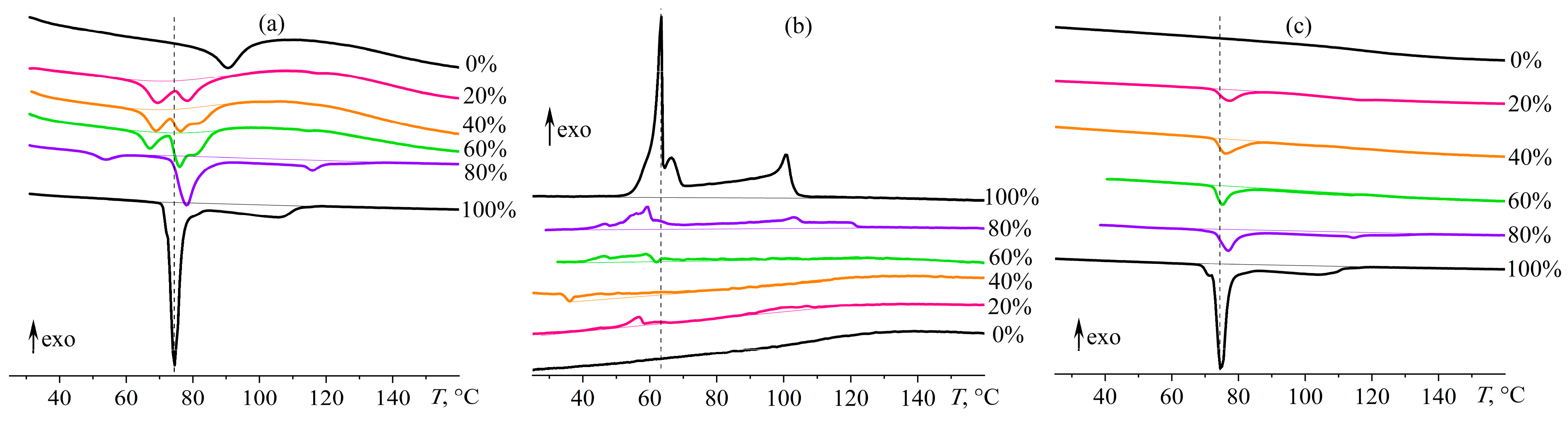




| wWM, wt% | Tg, °C | Tcr, °C | Tm, °C * | ΔHcr, J/g | ΔHm, J/g | ΔHV, J/cm3 | DC, % |
|---|---|---|---|---|---|---|---|
| 0 | 83.0 | – | – | – | – | – | – |
| 20 | 64.6 | 56.7 | 78.5 (77.3) | 0.89 | 5.3 | 13.5 | 88.0 |
| 40 | 64.4 | 45.5 | 76.4 (76.1) | <0.5 | 11.0 | 43.4 | 91.4 |
| 60 | 62.9 | 58.7 | 76.0 (75.0) | <0.5 | 9.4 | 50.1 | 52.0 |
| 80 | 48.8 | 59.2 | 78.2 (77.0) | 9.6 | 18.0 | 120.8 | 74.8 |
| 100 | – | 63.4 | 74.5 (74.6) | 24.3 | 30.1 | 243.8 | 100 |
| wWM, wt% | G′25°C, MPa | GN0, MPa | Tg,tanδ, °C |
|---|---|---|---|
| 0 | 770 | 33 | 86 |
| 20 | 630 | 20 | 60 |
| 40 | 460 | 18 | 61 |
| 60 | 230 | 3.9 | 58 |
| 80 | 830 | 0.4 | 49 |
| wWM, wt% | d, µm |
|---|---|
| 20 | 2.4 ± 0.9 |
| 40 | 5.3 ± 3.0 |
| 60 | 4.7 ± 1.9 |
| 80 | 1.7 ± 0.7 |
Disclaimer/Publisher’s Note: The statements, opinions and data contained in all publications are solely those of the individual author(s) and contributor(s) and not of MDPI and/or the editor(s). MDPI and/or the editor(s) disclaim responsibility for any injury to people or property resulting from any ideas, methods, instructions or products referred to in the content. |
© 2026 by the authors. Licensee MDPI, Basel, Switzerland. This article is an open access article distributed under the terms and conditions of the Creative Commons Attribution (CC BY) license.
Share and Cite
Ilyina, S.O.; Gorbunova, I.Y.; Shutov, V.V.; Kerber, M.L.; Ilyin, S.O. Nanosilica Gel-Stabilized Phase-Change Materials Based on Epoxy Resin and Wood’s Metal. Gels 2026, 12, 79. https://doi.org/10.3390/gels12010079
Ilyina SO, Gorbunova IY, Shutov VV, Kerber ML, Ilyin SO. Nanosilica Gel-Stabilized Phase-Change Materials Based on Epoxy Resin and Wood’s Metal. Gels. 2026; 12(1):79. https://doi.org/10.3390/gels12010079
Chicago/Turabian StyleIlyina, Svetlana O., Irina Y. Gorbunova, Vyacheslav V. Shutov, Michael L. Kerber, and Sergey O. Ilyin. 2026. "Nanosilica Gel-Stabilized Phase-Change Materials Based on Epoxy Resin and Wood’s Metal" Gels 12, no. 1: 79. https://doi.org/10.3390/gels12010079
APA StyleIlyina, S. O., Gorbunova, I. Y., Shutov, V. V., Kerber, M. L., & Ilyin, S. O. (2026). Nanosilica Gel-Stabilized Phase-Change Materials Based on Epoxy Resin and Wood’s Metal. Gels, 12(1), 79. https://doi.org/10.3390/gels12010079