
Review

Recent Advances in Pathogenicity and Biocontrol of Postharvest Penicillium Diseases

1
College of Biological and Chemical Engineering, Qilu Institute of Technology, Jinan 250200, China
2
School of Natural Sciences & Mathematics, Stockton University, Galloway, NJ 08205, USA
3
Department of Ecology and Evolutionary Biology, Tulane University, New Orleans, LA 70118, USA
*
Author to whom correspondence should be addressed.
J. Fungi 2026, 12(3), 219; https://doi.org/10.3390/jof12030219
Submission received: 25 February 2026 / Revised: 13 March 2026 / Accepted: 17 March 2026 / Published: 18 March 2026

Abstract

Penicillium species are major postharvest pathogens of fruits and vegetables, causing significant economic losses and posing serious threats to food safety through mycotoxin contamination. This review systematically summarizes the pathogenic mechanisms, metabolic diversity, and eco-friendly strategies of postharvest Penicillium pathogens. The application of CRISPR-Cas9 technology has enabled precise functional analysis of pathogenicity-related genes (e.g., PacC, PeStuA) and regulatory elements involved in fungicide resistance (e.g., FlbC). RNA interference-based strategies, including host-induced gene silencing (HIGS) and spray-induced gene silencing (SIGS), offer promising non-transgenic approaches for disease control. Additionally, artificial intelligence-assisted species identification and fermentation regulation have improved research efficiency. Future integration of multidisciplinary technologies will facilitate sustainable management of postharvest diseases.

1. Introduction

The genus Penicillium comprises a group of saprophytic fungi widely distributed in nature, commonly found in diverse environments such as soil, plant residues, and even deep-sea sediments. This genus encompasses over 300 species, many of which possess complex metabolic pathways yielding bioactive compounds with significant value. Metabolites from Penicillium strains demonstrate substantial practical implications in drug development, food safety, and agriculture [1]. However, they can also have known or potential toxicity [2,3]. Most Penicillium strains have been isolated from terrestrial soil. Although marine-derived strains are fewer in number, their unique living environments often lead to the production of structurally novel metabolites, making them an important source for discovering new compounds [4].
Beyond their ability to synthesize valuable metabolites, certain Penicillium species are responsible for severe plant infections in major fruits (such as citrus, apples, pears, and grapes) and vegetables (including onions, garlic, and tomatoes), leading to substantial yield losses. Postharvest blue mold in citrus and apples caused by P. digitatum and P. expansum represents a global challenge. These pathogens not only induce fruit rot and the emission of organic volatile compounds [3,5], but P. expansum also produces the mycotoxin patulin, posing a serious risk to food safety [2,6]. A thorough understanding of their pathogenic mechanisms is essential for developing effective and sustainable control strategies. Traditional genetic manipulation techniques, such as Agrobacterium tumefaciens-mediated transformation (ATMT), have limited efficiency, which has constrained functional genomics research in these fungi. The CRISPR-Cas9 system, known for its high efficiency and precision, has emerged as a revolutionary tool for reverse genetics in filamentous fungi [7]. In recent years, the successful application of this technology in both P. digitatum and P. expansum has enabled the systematic functional characterization of several key genes involved in pathogenicity and fungicide resistance [8,9].
Current strategies for managing fungal diseases in plants primarily rely on field management, chemical fungicide application, resistance breeding, and the development of transgenic plants. The long-term use of conventional fungicides can lead to pathogen resistance and human health issues related to pesticide residues. In the United States, Penicillium spp. causing apple bule mold have developed resistance to the fungicide difenoconazole through global transcriptomic changes, including the upregulation of cytochrome P450 monooxygenases and active efflux pumps [10]. Brazilian citrus pathogens have developed considerable resistance to multiple chemical classes, including azoles and benzodioxoles, prompting the exploration of alternatives like “killer” yeasts, essential oils and antimicrobial volatile substances [11]. A 2025 study in Moroccan citrus packinghouses revealed that high resistance rates to thiabendazole (61.3%) and imazalil (58.1%) among P. digitatum and P. italicum isolates, with some exhibiting dual resistance that compromises conventional control programs [12]. Traditional resistance breeding methods are frequently constrained by extended selection cycles and evolution of new resistance mechanisms. Meanwhile, the short-term commercial release and widespread adoption of transgenic plants face considerable challenges such as public acceptance [13]. These global cases underscore how resistance mutations and adaptive mechanisms necessitate integrated, eco-friendly management strategies, including generally regarded as safe (GRAS) salts and biocontrol agents, to ensure sustainable production and export compliance. Achieving sustainable control of fungal plant diseases is of great significance for ensuring food security and promoting sustainable agricultural development. This review aims to systematically outline the study and control of postharvest diseases caused by Penicillium species. It focuses on the identification of pathogenicity and resistance-related genes in Penicillium, as well as the latest advancements in RNA interference (RNAi)-based strategies for its control, intending to provide a comprehensive reference for related research.

2. Systematic Analyses of the Function of Pathogenic Genes

2.1. Methodological Tools Advanced Understanding of Penicillium Pathogenicity

Significant progress has been made in elucidating the genetic basis of pathogenicity in Penicillium species, driven largely by advances in genomics and functional analysis tools [6]. Agrobacterium tumefaciens-mediated transformation has been successfully optimized in Penicillium expansum [14] and P. italicum [15]. This enabled the construction of mutant libraries and identification of novel pathogenicity determinants such as PiBla and PiFTF1 in P. italicum, which regulate conidiation and virulence. More recently, RNA-based approaches have uncovered cross-kingdom RNA interference mechanisms in P. italicum, where silencing the Dicer-like gene Pit-DCL2 reduced fungal virulence and disrupted the biogenesis of microRNA-like small RNAs predicted to target host immunity genes [16]. Additionally, metabolomics-guided functional genetics revealed that the nonribosomal peptide synthetase HcpA is required for producing cyclic peptides (e.g., fungisporin) that act as time-regulated virulence factors during citrus infection [17].
The cell wall structure of Penicillium species poses significant challenges for genetic transformation. In 2022, Garrigues et al. conducted pioneering work by successfully establishing an efficient CRISPR-Cas9 system for both P. digitatum and P. expansum [7]. This study developed new, optimized protocols for protoplast preparation and transformation, utilizing a self-replicating plasmid based on the AMA1 backbone. A key advantage of this plasmid system is its recyclability—after gene editing is complete, the plasmid can be eliminated, enabling marker-free editing and allowing sequential rounds of genetic manipulation within the same strain. The authors validated the system by targeting the wetA gene, which regulates spore development, successfully obtaining mutant strains. These mutants exhibited reduced growth rates, sporulation defects, and altered pathogenicity [7]. While CRISPR-Cas9 is presented as a forward-looking functional genomics tool, most characterized genes to date were elucidated through A. tumefaciens-mediated transformation [14,18] and targeted gene replacement [19]. In the future, extensions of new CRISPR-Cas9 strategies will provide versatile and powerful platforms for precise, large-scale functional gene studies in pathogenic Penicillium species. Collectively, multi-faceted approaches—spanning genomics, ATMT, RNAi, CRISPR, and metabolomics—have substantially advanced the understanding of molecular mechanisms underlying Penicillium pathogenicity. The major pathogenicity-related genes and their functions are summarized in Table 1.

2.2. Penicillium digitatum

Using CRISPR and earlier ATMT techniques, a series of genes critical for the virulence of P. digitatum have been functionally validated. The pH-responsive transcription factor PacC functions as a global virulence regulator, and its deletion results in complete loss of pathogenicity, confirming that the pathogen adapts to the host microenvironment through pH modulation [20]. Deletion of the chitin synthase gene PdChsVII and the O-mannosyltransferase gene Pmt2 severely compromises cell wall integrity, thereby impairing fungal growth and infection capacity, highlighting the essential role of cell wall biogenesis in pathogenicity [21,22]. Mutation of PdMpkB (a homolog of Fus3/Kss1) in the MAPK signaling pathway renders the pathogen nearly incapable of causing fruit rot, demonstrating that this kinase is indispensable for infection [26]. Garrigues et al. (2020) identified a unique cysteine-rich anionic secreted protein named Sca [23]. Although this protein lacks direct antimicrobial activity, its overexpression or exogenous application significantly enhances the infection success of P. digitatum on citrus fruits. Mechanistically, Sca effectively counteracts the protective effects of antifungal proteins (such as AfpB and PeAfpA) produced by the host or applied exogenously. Sca represents a class of virulence-enhancing factors that do not participate directly in basal metabolism but rather function to fine-tune host interactions and improve infection efficiency [23]. Mutations in the major facilitator superfamily (MFS) transporter genes PdMfs1 and PdMfs2 lead to reduced virulence of P. digitatum on citrus fruits. These transporters may be involved in the secretion of toxic compounds, such as tryptoquialanines, contributing to pathogenicity [27,34].
Functional genomics studies have elucidated a sophisticated regulatory network governing Penicillium pathogenicity. The transcription factor PdSte12 is essential for conidiation and virulence during citrus infection, acting as a regulator of transporter-encoding genes and sterol demethylases [35]. Similarly, the PdSlt2 mitogen-activated protein kinase controls sporulation and infection and also serves as negative regulator of several transporter encoding genes, such as ATP-binding cassette (ABC) and MFS transporters [36]. Major facilitator superfamily transporters play multifaceted roles, with PdMFS1 contributing to both fungicide resistance and virulence [37], while PdMFS2-5 display differential functions during pathogen-fruit interaction [38]. The sterol 14α-demethylase PdCYP51B enhances both demethylation inhibitor resistance and fungal virulence through promoter modifications [39]. The recently characterized PdMFS6 transporter contributes to chemical susceptibility and infectivity [40]. Notably, the transcription factor PdMut3 exerts negative regulation on virulence, as its deletion unexpectedly increased pathogenicity during citrus infection, revealing complex transcriptional control mechanisms [41].

2.3. Penicillium expansum

Significant progress has been made in elucidating the genetic basis of pathogenicity in P. expansum and P. italicum, driven largely by advances in genomics and functional analysis tools. The publication of foundational genome sequences for both species has provided crucial insights into their virulence mechanisms and host specificity [19]. The APSES family transcription factor PeStuA has been identified as a core regulatory hub that globally controls hyphal growth, asexual sporulation, virulence, and patulin biosynthesis in P. epansum [29]. The acetate transporter PepatA positively regulates sporulation and patulin accumulation by modulating acetate metabolism [30]. These findings establish a close link between fundamental developmental processes, secondary metabolism, and pathogenicity in this fungus [42].
Genomic analysis indicates that P. expansum possesses a complete patulin biosynthetic gene cluster comprising 15 genes (PePatA to PePatO). In contrast, P. digitatum and P. italicum lack this complete cluster, explaining why P. expansum produces patulin while other citrus-infecting species do not [6,19]. Functional studies have confirmed that PePatL and PePatK play key roles in patulin biosynthesis; however, patulin production is not directly associated with the virulence of P. expansum [19]. The genome of P. expansum (33.52 Mb) is larger than those of P. digitatum (~26 Mb) and P. italicum (28.99 Mb), and it contains a greater number of carbohydrate-active enzymes (CAZymes) and secondary metabolite biosynthetic gene clusters. This expanded genetic repertoire may contribute to the broader host range of P. expansum [19]. Notably, pectin-degrading enzymes specific to P. expansum, particularly those belonging to the GH78 family, may provide the molecular basis for its ability to infect diverse fruits such as apples and pears [19].

2.4. Penicillium italicum

The pathogenicity of P. italicum is governed by complex genetic networks involving signaling, epigenetic regulation, and structural integrity. The genes PiCaMK1, PiSntB, and Piwsc1 are all critical nodes within these networks. Knocking out any one of them significantly impairs the fungus’s ability to grow, reproduce, and cause disease, making them ideal targets for RNAi technology. RNAi could be applied to “silence” these essential genes by spraying citrus fruit with double-stranded RNA (dsRNA) molecules designed specifically against their transcripts. For instance, dsRNA targeting PiCaMK1 would disrupt calcium signaling, hindering growth and stress response [31]. Silencing PiSntB could trigger a carbon starvation response and autophagy [32], while targeting Piwsc1 would compromise cell wall integrity, reducing spore germination and lesion formation [33]. Because these genes are fundamental to P. italicum and have no known counterparts in plants or mammals, an RNAi-based fungicide could offer a highly specific, sustainable, and environmentally friendly strategy for controlling postharvest blue mold.

2.5. New Mechanisms for Fungicide Resistance Regulation

With the widespread application of fungicides, fungicide resistance has become an increasingly serious challenge. CRISPR technology has facilitated the discovery of novel resistance mechanisms that are independent of target gene (e.g., CYP51) mutations. Xi et al. (2024) combined transcriptomic analysis with CRISPR-based gene knockout to identify the transcription factor FlbC as a key positive regulator of resistance to DMI fungicides, such as imazalil, in P. digitatum [24]. Interestingly, although ΔFlbC mutants exhibited hypersensitivity to imazalil, their intracellular ergosterol levels remained unchanged. This indicates that FlbC regulates a novel resistance signaling pathway independent of the ergosterol biosynthesis pathway [24]. Earlier studies had already shown that the sterol regulatory element-binding protein homologs PdSreA and PdSreB influence the sensitivity of P. digitatum to DMI fungicides by regulating the expression of multiple sterol biosynthesis genes, including CYP51 [25]. Major facilitator superfamily transporters are key multidrug resistance determinants in Penicillium, functioning as drug-H+ antiporters that actively extrude fungicides. In P. digitatum, PdMFS1-6 confers differential resistance to multiple fungicide classes and link chemical sensitivity to virulence [38]. Multi-drug resistant strains of P. expansum constitutively overexpress PeMFS1-2, with transporters also facilitating patulin export [43]. ABC transporters are also commonly associated with fungicide resistance in fungi [44]. Together, these findings depict a complex fungicide resistance regulatory network involving multiple layers of transcription factors.

2.6. Future Research

The application of CRISPR-Cas9 technology has successfully advanced research on the biology of postharvest Penicillium pathogens from traditional single-gene functional validation into the era of systematic dissection of pathogenicity and resistance regulatory networks. Current studies have not only confirmed classical “virulence-essential genes,” such as PacC [20] and cell wall synthesis-related genes [21], but have also expanded the conceptual framework to include newly defined categories such as “virulence-enhancing factors” (e.g., Sca) [23] and “dedicated resistance regulators” (e.g., FlbC) [24]. These findings have enriched our understanding of the infection strategies employed by these pathogens.
Building upon these achievements, future research directions may include the following: (1) advanced CRISPR applications employing CRISPR interference and CRISPR activation for precise gene expression modulation, as well as conducting genome-wide loss-of-function screens to systematically identify all genes contributing to pathogenicity; (2) in-depth mechanistic studies for investigation key factors already identified (such as FlbC and Sca), to elucidate their downstream target genes, interacting proteins, and the complete signalling pathways in which they function; (3) translational research for developing fungicides with novel modes of action, using molecular targets from these newly discovered pathogenicity and resistance genes, designing gene silencing-based control agents, and breeding disease-resistant fruit and vegetable varieties [42].

3. Etiologies and Metabolites of Penicillium Postharvest Diseases

The ecological and biological characteristics of Penicillium species exhibit profound regional variation, particularly between tropical and temperate zones. Research indicates that Penicillium species are more prevalent in temperate regions, while they are relatively rare in arid tropical environments where Aspergillus molds tends to dominate [45]. This geographical distribution reflects fundamental differences in adaptation, physiology, and metabolic potential. Cold-adapted strains from polar and high-altitude regions demonstrate remarkable psychrotolerance, with some species like P. svalbardense showing optimal growth at 17–18 °C and enhanced production of secondary metabolites under cold stress [46]. Himalayan isolates exhibit polyextremophily, tolerating wide temperature ranges, high salinity, and extreme pH while showing enhanced sporulation at low temperatures [47]. Conversely, tropical strains from biodiverse hotspots like the Brazilian Atlantic Forest display distinct species assemblages and metabolic profiles adapted to warmer, competitive environments [48]. Notably, strains from anthropogenically altered Antarctic habitats produce more structurally diverse secondary metabolites than those from undisturbed sites, suggesting environmental pressure shapes metabolic capacity [49]. Marine-derived Penicillium spp. from different climatic zones also yield distinct bioactive compounds, with recent reviews documenting 177 cytotoxic metabolites from marine strains between 2018–2024 alone [4]. These regional variations have significant implications for understanding pathogenicity mechanisms, predicting fungal responses to climate change, and developing targeted control strategies across different climatic zones.
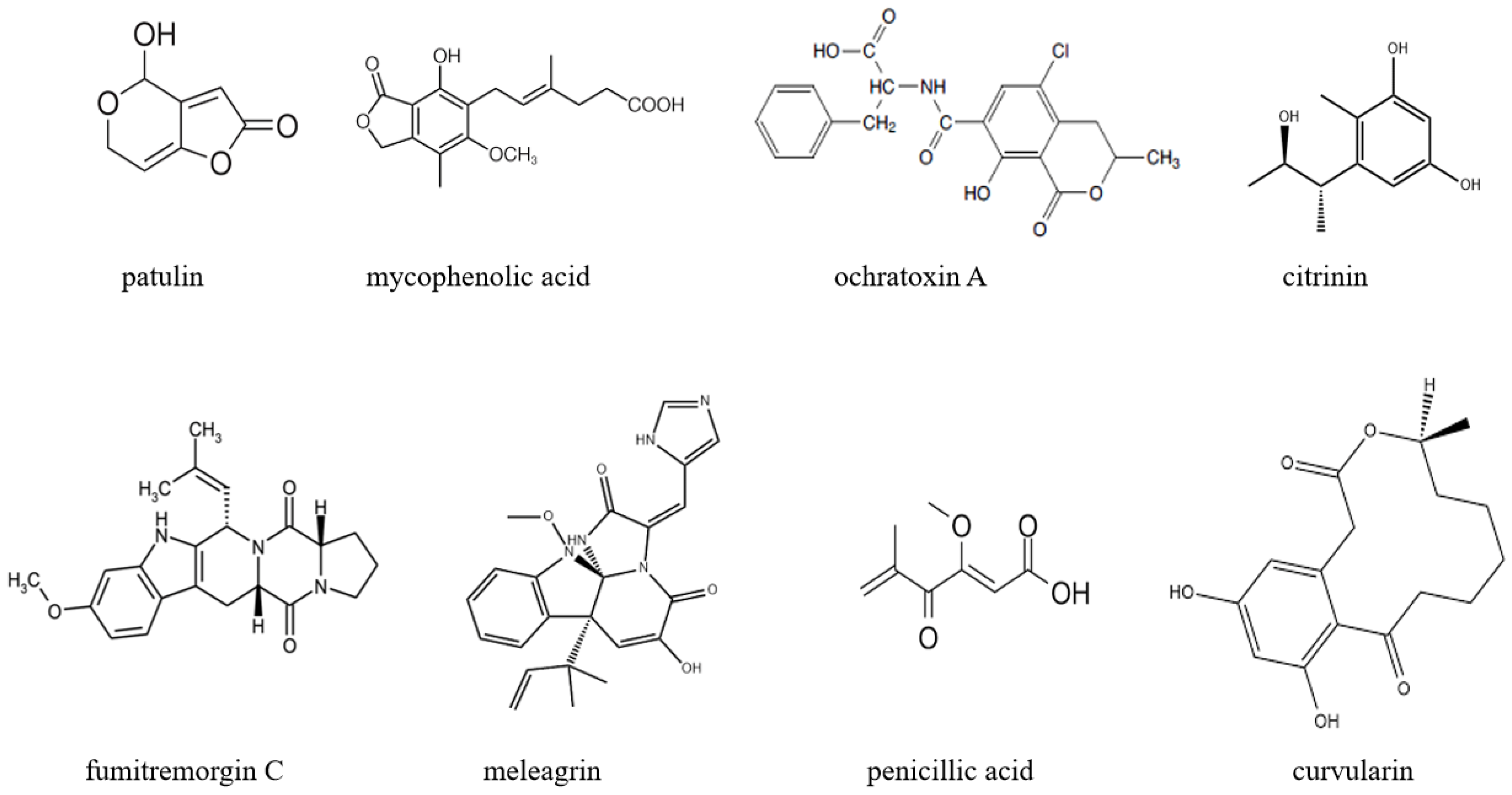
The primary species responsible for postharvest blue mold in apples include P. digitatum, P. expansum, and P. italicum [11,50,51]. During the infection process, Penicillium species generate a diverse array of secondary metabolites, including alkaloids, polyketides, terpenoids, and mycotoxins [52]. Many of these compounds exhibit a dual nature, possessing both toxic properties and beneficial bioactive potential [2]. The structures of some major Penicillium metabolites are presented in Figure 1.

3.1. Typical Mycotoxins

Produced primarily by P. expansum, patulin is the most significant mycotoxin associated with this species. It exhibits immunotoxicity, neurotoxicity, and potential carcinogenicity, making patulin a critical contaminant monitored in processed apple products such as juice and jam [2,6]. Strict regulatory limits have been established globally; the European Union sets a maximum limit of 50 μg/L for patulin in apple juice [53]. Produced by Penicillium glabrum IBRCM 30518, mycophenolic acid (MPA) possesses antiviral and immunosuppressive properties, while at high concentrations, it exhibits cytotoxic effects [54]. Produced by Penicillium verrucosum and Penicullium nordicum, ochratoxin A (OTA) is a mycotoxin known for its nephrotoxic and carcinogenic effects [55]. It is a contaminant of concern in fruits and their derived products [2]. Citrinin is produced by a number of species including Penicillium citrinum and P. expansum [50]. The compound has nephrotoxic properties and is frequently found together with ochratoxin A, with which it may exert synergistic toxic effects [2,56]. Fumitremorgin C is a neurotoxic mycotoxin previously reported in actinomycetes. Homologous compounds produced by Penicillium species are believed to have similar toxicological mechanisms and warrant further attention [57].

3.2. Alkaloids

Shentonins A, B, C, and D were isolated from Penicillium shentong XL-F41. Among them, shentonin D exhibits weak antibacterial activity against Escherichia coli (MIC = 100 μg/mL). Its nitrogen-containing heterocyclic structure is associated with toxicity modulation, warranting further investigation into its potential applications [58]. Derived from Penicillium sp. OUCMDZ-1435, meleagrin demonstrates anti-inflammatory potential. Because it exhibits cytotoxicity at high concentrations, additional studies will be needed to assess its therapeutic suitability [59]. Another classical alkaloid toxin, penicillic acid, displays both antimicrobial activity and cytotoxicity in mammalian cells, highlighting its dual biological effects [60].

3.3. Polyketone Active Ingredients

Azaphilone derivatives such as isochromophilone XV and arvoredol, isolated from P. glabrum SF-61290, exhibit significant cytotoxic activity against colorectal cancer HCT-8 cells, with efficacy surpassing that of the standard chemotherapeutic agent 5-fluorouracil [61]. Curvularin derivatives belonging to the curvularin family, including dehydrocurvularin, demonstrate marked inhibitory effects on the proliferation of HCT116 colorectal cancer cells [62].

3.4. Other Metabolites

Fatty acids and terpenoids derived from P. shentong XL-F41 exhibit potential metabolic toxicity, whereas, sesquiterpenoid toxins produced by P. glabrum demonstrate both antimicrobial activity and cytotoxic effects [58]. Macrolide compounds, such as brefeldin A derivatives, have shown promising bioactivity in anticancer research, highlighting their potential as leads for antitumor drug development [63].

4. Integrated Prevention and Control of Penicillium

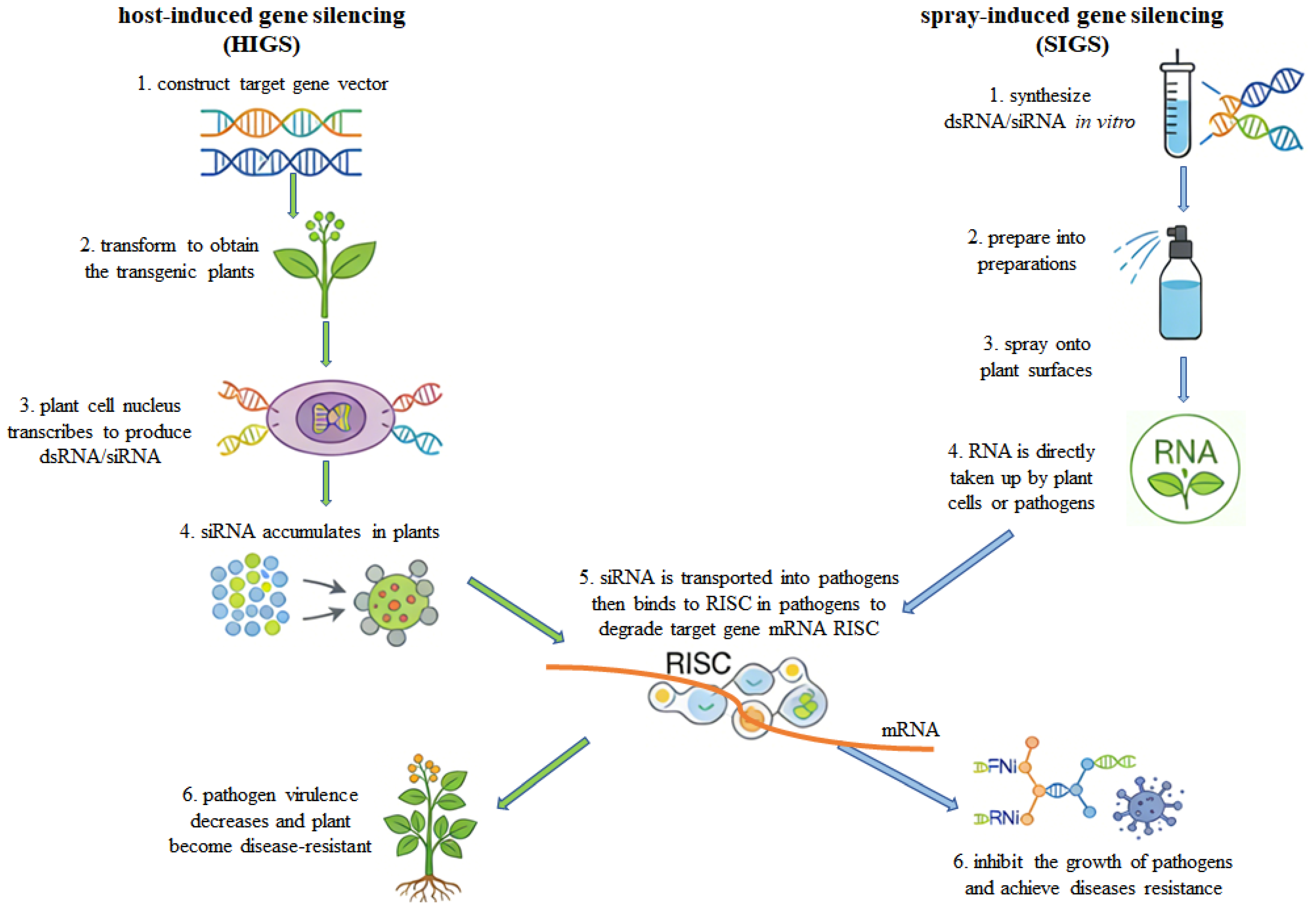
Fungal diseases account for a majority of all plant biotic diseases, posing a severe threat to global crop production and food security. These devastating fungal diseases cause up to 14% crop yield losses annually [64]. Traditional chemical control methods are increasingly problematic due to the development of fungicide resistance and concerns about environmental pollution. Conventional breeding approaches for disease resistance are often time-consuming, while the commercial deployment of transgenic technologies faces regulatory and public acceptance challenges. RNAi-based gene silencing technologies have emerged as promising alternatives for sustainable management of fungal diseases and mycotoxin contamination [16,65]. Among these, host-induced gene silencing (HIGS) and spray-induced gene silencing (SIGS) represent the most rapidly advancing ecological friendly control strategies [66]. The fundamental principles underlying these technologies are illustrated in Figure 2.

4.1. Host-Induced Gene Silencing (HIGS)

HIGS is an RNAi-based technology that involves introducing dsRNA complementary to pathogen target genes into host plants through methods such as viral vectors or ATMT. Once inside the plant, the dsRNA is processed by plant endonucleases into small interfering RNAs (siRNAs), which are then loaded into the RNA-induced silencing complex (RISC). Upon pathogen infection, these siRNAs are taken up by the invading pathogen and specifically silence the corresponding target genes, thereby inhibiting pathogen growth and infection [67]. This approach not only enables functional validation of pathogen genes in reverse genetics but also facilitates the development of stably inherited disease-resistant crop varieties (Figure 2).
The concept of HIGS was first introduced in 2010 by Nowara and colleagues, who demonstrated gene silencing mediated by the Barley stripe mosaic virus [68]. Since then, HIGS has been widely applied in studying disease resistance in crops such as wheat and cotton. Successful applications include the control of wheat leaf rust [69], wheat stripe rust [70], cotton Verticillium wilt [71], and banana Fusarium wilt [72]. For instance, HIGS targeting the PtCYC1 [69] and PsFUZ7 [70] genes in the wheat stripe rust pathogen (Puccinia striiformis f. sp. tritici) has resulted in stable, highly resistant wheat lines. Similarly, transgenic cotton plants silencing the VdH1 gene of Verticillium dahliae have shown strong resistance against Verticillium wilt [73]. Progress has also been made in developing resistant germplasm against rice blast (Pyricularia oryzae) [74] and rapeseed stem rot (Sclerotinia sclerotiorum) [75], significantly enriching the available pool of resistance genes.
Despite its potential, HIGS technology has several limitations: (1) applicability is currently limited to crop species with established genetic transformation systems, and the breeding process is often time-consuming; (2) genetic stability and off-target effects can result from random integration of vectors into the plant genome that may lead to unintended phenotypic alterations and silencing non-target genes with sequence homology; (3) target selection requires identifying highly effective target genes in pathogens, which remains challenging, and the technology may not achieve optimal results in some host–pathogen interaction systems; (4) regulatory and ethical concerns remain as HIGS involves the creation of genetically modified organisms (GMOs), its application is subject to stringent regulatory oversight and public acceptance issues, which may limit its commercial deployment.

4.2. Spray-Induced Gene Silencing (SIGS)

SIGS is a non-transgenic strategy developed from the HIGS. It involves spraying dsRNAs or siRNA targeting pathogen virulence genes directly onto plant surfaces. Gene silencing is triggered either through plant uptake and transport of the RNA molecules or by direct pathogen ingestion [76]. The underlying mechanism relies on cross-kingdom RNAi, where extracellular vesicles and other pathways facilitate nucleic acid transfer between plants and pathogens (Figure 2). By avoiding genetic modification, SIGS circumvents regulatory and ethical concerns associated with transgenic crops while offering shorter development cycles. Since its introduction, SIGS has demonstrated significant potential for controlling plant diseases in various crops, culminating in the U.S. Environmental Protection Agency (EPA) approving the first sprayable RNA-based biopesticide in 2023 targeting Colorado potato beetle Leptinotarsa decemlineata, marking its transition toward commercial application [77].
SIGS strategies can be categorized into single-target and multi-target approaches. Single-target applications include spraying dsRNA targeting the CYP51 gene in Fusarium species to inhibit Fusarium head blight in barley [78], as well as dsRNA targeting the FolRDR1 gene in Fusarium oxysporum f. sp. lycopersici to alleviate symptoms of tomato Fusarium wilt [79]. Multi-target approaches, which involve mixing dsRNAs corresponding to multiple key pathogenicity genes, enhance control efficacy. For example, simultaneously silencing the Chs7, Gls, and Pkc genes in Fusarium graminearum reduced wheat Fusarium head blight lesions by up to 78% [80]. The effectiveness of SIGS has been validated across multiple crops, including wheat, rice, tomato, and cotton, and it can be integrated with chemical fungicides to reduce overall pesticide usage.
Despite its promise, SIGS technology faces several limitations: (1) environmental instability due to the short half-life of naked dsRNA in field environments (approximately 48 h), as it is susceptible to degradation by nucleases, wash-off by rain, and damage from ultraviolet radiation; (2) variable uptake efficiency as pathogens differ significantly in their ability to take up exogenous dsRNA, for instance, Colletotrichum species show minimal uptake, while uptake efficiency in oomycetes varies depending on cell type and developmental stage [81]; (3) unclear molecular mechanisms govern siRNA transport and interaction with Argonaute proteins, and specificity determinants remain incompletely understood; (4) target selection challenges also inhibit progress as identifying highly effective target genes remains difficult, requiring a balance between specificity against target pathogens and broad-spectrum activity against multiple pathogens or isolates.

4.3. Technological Improvements, Enhancements, and Regulation

Both HIGS and SIGS face several challenges, including off-target effects and the potential for pathogens to develop resistance. The mechanisms underlying both approaches are regulated by complex RNAi networks. Key processes—such as the transfer of siRNAs between host and pathogen and the role of silencing suppressors—require further investigation. Combining HIGS and SIGS may offer complementary advantages: the rapid action of SIGS together with the sustained resistance provided by HIGS could lead to the development of more effective and long-term disease management strategies. Additionally, exploiting the cross-kingdom regulatory functions of plant endogenous or exogenous microRNAs presents a promising avenue for designing novel HIGS approaches with enhanced disease resistance [82,83].
To enhance the dsRNA stability and delivery efficiency, researchers have developed various delivery systems. Nanocarriers—such as chitosan, carbon quantum dots, and layered double hydroxides—can protect dsRNAs from degradation, improve cellular uptake, and extend the duration of effectiveness [84,85]. Protein-based spherical nanoparticles derived from plant viruses enable efficient dsRNA encapsulation and soil delivery, achieving sustained gene silencing in nematodes by protecting dsRNA from environmental degradation [86]. Food-derived carriers (e.g., grapefruit juice-derived lipids) [87] and beneficial microorganism-based carriers (e.g., Trichoderma spp.) [88] offer advantages in terms of safety and cost-effectiveness. Furthermore, E. coli expression systems enable large-scale production of dsRNA, reducing manufacturing costs and laying the foundation for industrial application [89,90,91]. Yin and colleagues successfully engineered the RNase III enzyme in E. coli to cleave dsRNA into 22–23 bp siRNAs, further advancing RNAi efficiency [92].
Recent field trials have also validated the environmental safety of RNAi crops through comprehensive non-target organism assessments: transgenic cotton expressing dsRNA targeting the FAR gene of the pest Adelphocoris suturalis showed no adverse effects on the predatory lady beetle Harmonia axyridis across multiple generations, with no detectable trophic transfer of dsRNA through the plant-pest-natural enemy food chain [93]. In plant pathology, SIGS has progressed to advanced field trials targeting fungal pathogens. Notably, researchers have developed self-assembling triangular RNA nanoparticles (Bc-triangle) targeting four virulence genes of Botrytis cinerea, demonstrating superior persistence and efficacy compared to linear dsRNA, with lesion area reduction sustained up to 10 days post-spraying in planta [94]. This RNA nanotechnology approach eliminates the need for synthetic nanocarriers, addressing biocompatibility and environmental persistence concerns. Beyond agriculture, RNAi therapeutics have achieved remarkable clinical milestones: SGB-3908, an siRNA medicine targeting angiotensinogen mRNA for hypertension, demonstrated >95% sustained target suppression and durable blood pressure reduction for up to six months after single-dose administration in Phase 1 trials [95], while ARO-ALK7 has entered clinical studies as the first investigational RNAi therapeutic targeting adipose tissue for obesity treatment [96].
Future research should prioritize the development of low-cost, environmentally friendly nanocarriers and delivery technologies—such as pH-responsive nanopesticide systems and biomimetic nanovesicles—to enhance dsRNA stability and delivery efficiency. Optimization of large-scale dsRNA production processes will also be essential to reduce costs and promote industrial application. In parallel, integrating big data and intelligent technologies to establish RNAi target gene screening systems will facilitate the identification of conserved pathogenicity genes, enabling the development of broad-spectrum nucleic acid-based pesticides. Multi-target design strategies can help mitigate the risk of resistance and improve control efficacy against complex diseases.
The international regulatory landscape for HIGS remains fragmented and complex, creating significant hurdles for commercialization. Regulatory bodies like the EPA in the United States and EFSA in Europe mandate thorough biosafety assessments focusing on potential risks including off-target effects on non-target organisms, unintended epigenetic changes, and environmental persistence of dsRNA molecules [97]. A key regulatory challenge stems from the classification of HIGS plants—whether they should be regulated as GMOs with all associated restrictions, which varies considerably across jurisdictions. In Latin America, some countries are developing specific frameworks for RNAi-based technologies, but international harmonization is lacking [98]. Additionally, the variability in HIGS efficacy due to poor understanding of trans-kingdom RNA translocation mechanisms complicates risk assessment and regulatory approval [99].

4.4. Biocontrol Agents for Postharvest Penicillium Diseases

Recent advances in biocontrol have diversified the arsenal against postharvest Penicillium diseases, encompassing microbial antagonists, actinobacterium-derived metabolites, plant-derived compounds [100], and endophytic bacteria with multifunctional mechanisms. Actinobacterium-derived metabolites have emerged as potent biocontrol agents. Streptomyces netropsis DT02 demonstrates strong antifungal activity against P. italicum, the causal agent of blue mold in citrus fruits, through production of diverse secondary metabolites including pimprinine, amphotericin B, pimprinethine, N-acetylaureothamine, prothracarcin, and aureothin. These metabolites exhibit inhibition zones ranging from 15 to 45 mm in vitro, creating opportunities for sustainable postharvest disease management in citrus crops [101]. Plant-derived compounds also show remarkable efficacy against Penicillium pathogens. Perillaldehyde (PAE), extracted from Perilla frutescens, exhibits excellent inhibitory activity against P. digitatum with minimum inhibitory concentration and minimum fungicidal concentration of 0.625 mL L−1 and 1.25 mL L−1, respectively. The compound’s antifungal mechanism involves disruption of cell membrane permeability and integrity, leading to leakage of cellular contents, reactive oxygen species accumulation, and lipid peroxidation. Metabolomic analysis revealed that PAE primarily affects alpha-linolenic acid metabolism, steroid degradation, and steroid hormone biosynthesis pathways, ultimately suppressing mycelial growth and spore germination. In vivo experiments successfully confirmed that PAE reduces lesion diameter and decay rate in citrus during storage, positioning it as a promising natural antifungal agent [102].
Endophytic bacteria represent another innovative biocontrol strategy. Bacillus amyloliquefaciens LJ1, isolated from Nanguo pear, exhibits a unique dual intervention mechanism against P. expansum. In vitro experiments demonstrated significant inhibition of spore germination, while in vivo studies showed a 66.66% reduction in disease incidence in Nanguo pears after 11 days of storage. Transcriptomic analysis revealed that LJ1 upregulates NAD(P)H-dependent reductase and cytochrome P450 genes, initiating patulin degradation through epoxidation modification. Simultaneously, activated ABC transporters facilitate toxin excretion. Importantly, LJ1 suppresses patulin biosynthesis by upregulating the carbon metabolism repressor gene PeCreA and downregulating PAT biosynthesis genes (PePatG through PePatK). This represents the first confirmation of a dual intervention mechanism involving both patulin synthesis regulation and direct detoxification [103]. Yeast antagonists continue to be extensively studied for citrus biocontrol. Recent research highlights their mechanisms of action, including oxidative burst of reactive oxygen species, iron depletion, and production of secondary metabolites. Emerging approaches such as CRISPR/Cas9, RNAi, and omics technologies are advancing our understanding of yeast-pathogen interactions. Future directions emphasize the development of beneficial microbial consortia comprising core microbial species that metabolically complement each other in interacting networks, potentially offering enhanced efficacy compared to single-strain applications [104]. Bacterial biocontrol agents have demonstrated broad-spectrum activity. Bacillus species, including B. subtilis, B. velezensis, and B. amyloliquefaciens, effectively control various postharvest pathogens through volatile organic compound production and nutrient competition, reducing disease incidence by 60–85%. Pseudomonas fluorescens and other pseudomonads contribute to disease suppression through similar mechanisms [105]. The integration of multiple biocontrol strategies with physical methods enhances overall efficacy. These integrated approaches represent the future direction of sustainable postharvest disease management.

5. Climate Change Impacts on Penicillium Distribution and Disease Dynamics

Climate change is fundamentally reshaping the ecological dynamics of postharvest fungal pathogens, with profound implications for Penicillium distribution, virulence, and mycotoxin contamination risks [106]. Geographic distribution shifts represent a primary concern under changing climatic conditions. Rising global temperatures and altered precipitation patterns are expanding the geographical range of postharvest pathogens, potentially introducing warm-adapted Penicillium species to new regions. This geographic expansion threatens agricultural systems previously unexposed to specific pathogens, requiring adaptive management strategies and heightened surveillance in vulnerable areas. Temperature effects on pathogen biology are multifaceted. Warmer conditions accelerate fungal growth rates and may select for thermotolerant strains with enhanced competitive advantages. Temperature fluctuations during storage and transport directly influence pathogen virulence, sporulation capacity, and infection efficiency. Studies indicate that climate-induced temperature changes can modify the expression of pathogenicity factors and secondary metabolite gene clusters, potentially enhancing disease severity [107]. Humidity and precipitation patterns critically affect postharvest disease dynamics. Increased humidity and extreme weather events disrupt traditional postharvest drying and storage practices, creating favorable conditions for fungal proliferation. Higher moisture content in stored commodities promotes spore germination and mycelial growth, so compromised drying protocols increase contamination risks throughout the supply chain [106].
Mycotoxin production exhibits climate sensitivity, with significant food safety implications. Climate variables influence mycotoxin biosynthesis pathways, potentially increasing toxin accumulation in contaminated commodities. The global mycotoxin survey reveals that climate variability has expanded the ecological niche of toxigenic fungi, with fusariotoxins showing increased prevalence across Europe, Central and South America [108]. While this survey focused on Fusarium toxins, similar climate-driven patterns are likely for Penicillium mycotoxins, warranting increased monitoring and risk assessment.
Host–pathogen interactions are modified by climate-induced stress in crops. Plants experiencing drought, heat stress, or nutrient imbalances may exhibit weakened natural defenses, making them more susceptible to postharvest infections. This stress-mediated susceptibility creates feedback loops wherein climate-stressed crops become more vulnerable, while simultaneously, warming conditions enhance pathogen fitness. Fungicide resistance development may be accelerated by climate change. Environmental stress can select for resistant genotypes, while altered growing seasons and expanded pathogen ranges increase fungicide application frequency, intensifying selection pressure for resistance. The emergence of multi-drug resistant Penicillium strains in major production regions underscores this concern [109].
Adaptive strategies for climate-resilient postharvest management include several approaches. Advanced storage technologies, such as hermetic systems and controlled atmospheres, provide physical barriers against fungal invasion under variable environmental conditions. Predictive modeling tools integrating climate data enable early disease detection and targeted interventions. Region-specific biocontrol formulations that perform consistently across temperature and humidity gradients are essential for sustainable protection. Integration of climate science with agronomy and microbiology will be crucial for developing resilient postharvest management systems that safeguard food supplies in a warming world. The convergence of climate change impacts with evolving pathogen biology necessitates proactive, multidisciplinary approaches combining predictive modeling, adaptive storage technologies, and climate-resilient biocontrol strategies to ensure global food security and safety [110].

6. Artificial Intelligence and Future Perspectives

Postharvest diseases caused by Penicillium species involve complex, multi-stage biochemical processes. Effective control strategies must therefore be grounded in a thorough understanding of disease development and shift toward sustainable, integrated approaches that prioritize ecological safety, resource efficiency, and consumer health. RNAi-based gene silencing technologies, including HIGS and SIGS, offer efficient, specific, and sustainable solutions for the control of these fungal diseases. Significant progress has been made in applying these approaches to manage various crop diseases. Despite current challenges related to stability, delivery efficiency, and cost, ongoing innovations in vector design, target selection, technological integration, and supportive policy frameworks are expected to drive the widespread adoption of RNAi-based methods [67]. These technologies hold great potential to substantially reduce reliance on chemical fungicides and emerge as key tools for ensuring global food security and advancing sustainable agricultural development. Future efforts should focus on deepening fundamental research into underlying mechanisms, accelerating industrial translation, addressing technical barriers, and expanding application scenarios. Such advances will facilitate the transformation and upgrading of plant disease management strategies.
Although artificial intelligence (AI) technologies have not yet been widely applied to Penicillium research specifically, some laboratories have already taken advantage of this transformative approach for the precise identification, efficient fermentation, and risk management of Penicillium species, significantly enhancing research efficiency and translational applications. Concurrently, deep learning like RNAsmol now enable accurate prediction of RNA–small molecule interactions using only sequence data, facilitating in silico target selection without requiring structural information [111]. In the field of species identification, deep learning models can automatically extract features such as colony morphology, textural characteristics, and molecular sequence data from Penicillium cultures. Recent advances in computer vision have demonstrated that convolutional neural networks and vision transformers can achieve >88% validation accuracy in identifying pathogenic fungi based solely on colony architecture, with some models reaching 93.9% accuracy for fungal classification using microscopic images [112]. This enables high-precision, high-throughput identification at the genus and species levels, with some systems achieving high accuracy rates representing a substantial improvement over traditional manual microscopy and conventional taxonomic methods [113,114].
Beyond identification, machine learning algorithms are increasingly being integrated with multi-omics approaches [115] to predict antifungal resistance, model host–pathogen interactions, and optimize fermentation parameters [116]. For fermentation control, deep reinforcement learning already has been applied to optimize batch management in Penicillium fermentation processes, allowing for real-time optimization of critical parameters such as temperature and pH, thereby improving both the yield and quality stability of penicillin production. Traditional fermentation methods rely heavily on empirical manual adjustments and lack precise control [117]. Furthermore, AI can be integrated with sensor technologies to enable real-time monitoring and localization of Penicillium contamination providing an efficient and scalable technological foundation for contamination control and management. There is no doubt that AI will becoming increasing important in guiding Penicillium-related research in the near future, particularly as portable sequencing technologies and field-deployable diagnostic tools become more accessible [116]. The translation of RNAi technology from laboratory research to commercial applications has accelerated dramatically, with several high-profile field trials and regulatory approvals demonstrating its practical potential. These developments are supported by advanced bioinformatics tools such as dsRNAmax, which uses machine learning to design highly specific dsRNA sequences that minimize off-target effects on beneficial organisms while maximizing efficacy against target pests [118]. Together, these advances underscore the maturation of RNAi technology and AI-assisted decision-making across medical and agricultural domains.

Author Contributions

Conceptualization, G.Y.; resources, G.Y.; data curation, G.Y., S.Z., H.Z. and K.K.P.; writing—original draft preparation, G.Y.; writing—review and editing, G.Y., K.K.P. and J.W.B.; supervision, G.Y.; project administration, G.Y.; funding acquisition, G.Y. All authors have read and agreed to the published version of the manuscript.

Funding

This research was partially funded by the Research Program of Qilu Institute of Technology (No: QIT23TP009).

Institutional Review Board Statement

Ethical review and approval were waived for this study due to not involving humans or animals.

Informed Consent Statement

Not applicable.

Data Availability Statement

The original contributions presented in this study are included in the article. Further inquiries can be directed to the corresponding author.

Conflicts of Interest

The authors declare no conflicts of interest.

References

  1. Toghueo, R.M.K.; Boyom, F.F. Endophytic Penicillium species and their agricultural, biotechnological, and pharmaceutical applications. 3 Biotech 2020, 10, 107. [Google Scholar] [CrossRef]
  2. Shen, Y.; Ma, N.; Liu, S.; Xu, G.; Zhang, J. Mycotoxins and secondary metabolites from fruit postharvest pathogenic Penicillium species. Food Chem. 2025, 488, 144880. [Google Scholar] [CrossRef]
  3. Yin, G.; Pennerman, K.K.; Chen, W.; Wu, T.; Bennett, J.W. Characterization of volatile organic compounds released by Penicillium expansum and Penicillium polonicum. Metabolites 2026, 16, 37. [Google Scholar] [CrossRef]
  4. Zhang, S.; Wang, H.; Sai, C.; Wang, Y.; Cheng, Z.; Zhang, Z. The cytotoxic activity of secondary metabolites from marine-derived Penicillium spp.: A Review (2018–2024). Mar. Drugs 2025, 23, 197. [Google Scholar] [CrossRef]
  5. Zhang, Y.; Gao, X.; Yin, G.; Bennett, J.W. The volatilomes of Penicillium crustosum G10 and Penicillium solitum SA. Mycobiology 2026, 54, 89–99. [Google Scholar] [CrossRef] [PubMed]
  6. Yin, G.; Zhao, H.; Pennerman, K.K.; Jurick, W.M.; Fu, M.; Bu, L.; Guo, A.; Bennett, J.W. Genomic analyses of Penicillium species have revealed patulin and citrinin gene clusters and novel loci involved in oxylipin production. J. Fungi 2021, 7, 743. [Google Scholar] [CrossRef] [PubMed]
  7. Garrigues, S.; Manzanares, P.; Marcos, J.F. Application of recyclable CRISPR/Cas9 tools for targeted genome editing in the postharvest pathogenic fungi Penicillium digitatum and Penicillium expansum. Curr. Genet. 2022, 68, 515–529. [Google Scholar] [CrossRef]
  8. Ropero-Pérez, C.; Marcos, J.F.; Manzanares, P.; Garrigues, S. Increasing the efficiency of CRISPR/Cas9-mediated genome editing in the citrus postharvest pathogen Penicillium digitatum. Fungal Biol. Biotechnol. 2024, 11, 8. [Google Scholar] [CrossRef]
  9. Clemmensen, S.E.; Kromphardt, K.J.K.; Frandsen, R.J.N. Marker-free CRISPR-Cas9 based genetic engineering of the phytopathogenic fungus, Penicillium expansum. Fungal Genet. Biol. 2022, 160, 103689. [Google Scholar] [CrossRef] [PubMed]
  10. Lichtner, F.J.; Gaskins, V.L.; Cox, K.D.; Jurick, W.M. Global transcriptomic responses orchestrate difenoconazole resistance in Penicillium spp. causing blue mold of stored apple fruit. BMC Genom. 2020, 21, 574. [Google Scholar] [CrossRef]
  11. Kanashiro, A.M.; Akiyama, D.Y.; Kupper, K.C.; Fill, T.P. Penicillium italicum: An underexplored postharvest pathogen. Front. Microbiol. 2020, 11, 606852. [Google Scholar] [CrossRef]
  12. Hamrani, M.; Zelmat, L.; Jazayeri, S.M.; El Ammari, M.; Brhadda, N.; Ziri, R.; Aarrouf, J.; El Guilli, M. Generally recognized as safe salts for a natural strategy to managing fungicide-resistant Penicillium strains in the Moroccan citrus packinghouse. Agriculture 2025, 15, 2184. [Google Scholar] [CrossRef]
  13. Jaishree; Garewal, N.; Kaur, R.; Singh, K. Transgenic plants for bacterial and fungal disease tolerance. In Biotechnological Advances for Disease Tolerance in Plants; Springer: Berlin/Heidelberg, Germany, 2024; pp. 269–292. [Google Scholar]
  14. Zhang, T.; Qi, Z.; Wang, Y.; Zhang, F.; Li, R.; Yu, Q.; Chen, X.; Wang, H.; Xiong, X.; Tang, K. Agrobacterium tumefaciens-mediated transformation of Penicillium expansum PE-12 and its application in molecular breeding. Microbiol. Res. 2013, 168, 130–137. [Google Scholar] [CrossRef] [PubMed]
  15. Zhang, M.; Yang, S.; Li, Q.; Wang, M.; Peng, L. Screening of pathogenicity-deficient Penicillium italicum mutants established by Agrobacterium tumefaciens-mediated transformation. Mol. Genet. Genom. 2024, 299, 82. [Google Scholar] [CrossRef] [PubMed]
  16. Yin, C.; Zhu, H.; Jiang, Y.; Shan, Y.; Gong, L. Silencing dicer-like genes reduces virulence and sRNA generation in Penicillium italicum, the cause of citrus blue mold. Cells 2020, 9, 363. [Google Scholar] [CrossRef]
  17. Silva, E.; Barbosa, J.C.; González-Gárcia, A.; Berlinck, R.G.S.; Ballester, A.-R.; González-Candelas, L.; Fill, T. Decoding virulence in Penicillium italicum: A functional link between NRPS-derived cyclic peptides and citrus infection. Postharvest Biol. Technol. 2026, 234, 114069. [Google Scholar] [CrossRef]
  18. Vu, T.X.; Ngo, T.T.; Mai, L.T.D.; Bui, T.-T.; Le, D.H.; Bui, H.T.V.; Nguyen, H.Q.; Ngo, B.X.; Tran, V.-T. A highly efficient Agrobacterium tumefaciens-mediated transformation system for the postharvest pathogen Penicillium digitatum using DsRed and GFP to visualize citrus host colonization. J. Microbiol. Methods 2018, 144, 134–144. [Google Scholar] [CrossRef]
  19. Li, B.; Zong, Y.; Du, Z.; Chen, Y.; Zhang, Z.; Qin, G.; Zhao, W.; Tian, S. Genomic characterization reveals insights into patulin biosynthesis and pathogenicity in Penicillium species. Mol. Plant-Microbe Interact. 2015, 28, 635–647. [Google Scholar] [CrossRef]
  20. Zhang, T.; Sun, X.; Xu, Q.; Candelas, L.G.; Li, H. The pH signaling transcription factor PacC is required for full virulence in Penicillium digitatum. Appl. Microbiol. Biotechnol. 2013, 97, 9087–9098. [Google Scholar] [CrossRef]
  21. Gandía, M.; Harries, E.; Marcos, J.F. The myosin motor domain-containing chitin synthase PdChsVII is required for development, cell wall integrity and virulence in the citrus postharvest pathogen Penicillium digitatum. Fungal Genet. Biol. 2014, 67, 58–70. [Google Scholar] [CrossRef]
  22. Harries, E.; Gandía, M.; Carmona, L.; Marcos, J.F. The Penicillium digitatum protein O-mannosyltransferase Pmt2 is required for cell wall integrity, conidiogenesis, virulence and sensitivity to the antifungal peptide PAF26. Mol. Plant Pathol. 2015, 16, 748–761. [Google Scholar] [CrossRef]
  23. Garrigues, S.; Marcos, J.F.; Manzanares, P.; Gandía, M. A novel secreted cysteine-rich anionic (Sca) protein from the citrus postharvest pathogen Penicillium digitatum enhances virulence and modulates the activity of the antifungal protein B (AfpB). J. Fungi 2020, 6, 203. [Google Scholar] [CrossRef]
  24. Xi, Y.; Zhang, J.; Fan, B.; Sun, M.; Cao, W.; Liu, X.; Gai, Y.; Shen, C.; Wang, H.; Wang, M. Transcriptome analysis reveals potential regulators of DMI fungicide resistance in the citrus postharvest pathogen Penicillium digitatum. J. Fungi 2024, 10, 360. [Google Scholar] [CrossRef]
  25. Ruan, R.; Wang, M.; Liu, X.; Sun, X.; Chung, K.-R.; Li, H. Functional analysis of two sterol regulatory element binding proteins in Penicillium digitatum. PLoS ONE 2017, 12, e0176485. [Google Scholar] [CrossRef] [PubMed]
  26. Zhang, T.; Cao, Q.; Li, N.; Liu, D.; Yuan, Y. Transcriptome analysis of fungicide-responsive gene expression profiles in two Penicillium italicum strains with different response to the sterol demethylation inhibitor (DMI) fungicide prochloraz. BMC Genom. 2020, 21, 156. [Google Scholar] [CrossRef] [PubMed]
  27. Cheng, Y.; Lin, Y.; Cao, H.; Li, Z. Citrus postharvest green mold: Recent advances in fungal pathogenicity and fruit resistance. Microorganisms 2020, 8, 449. [Google Scholar] [CrossRef]
  28. Sánchez-Torres, P.; Vilanova, L.; Ballester, A.R.; López-Pérez, M.; Teixidó, N.; Viñas, I.; Usall, J.; González-Candelas, L.; Torres, R. Unravelling the contribution of the Penicillium expansum PeSte12 transcription factor to virulence during apple fruit infection. Food Microbiol. 2018, 69, 123–135. [Google Scholar] [CrossRef]
  29. Wang, Y.; Wu, Y.; Liang, Q.; Chen, X.; Zhu, J.; Li, W. The global APSES transcription factor PeStuA modulates growth, development, stress response, hydrophobicity, patulin biosynthesis and pathogenicity in Penicillium expansum. Int. J. Food Microbiol. 2026, 450, 111652. [Google Scholar] [CrossRef]
  30. Li, B.; Chen, Y.; Zhang, Z.; Qin, G.; Chen, T.; Tian, S. Molecular basis and regulation of pathogenicity and patulin biosynthesis in Penicillium expansum. Compr. Rev. Food Sci. Food Saf. 2020, 19, 3416–3438. [Google Scholar] [CrossRef] [PubMed]
  31. Li, G.; Liu, S.; Wu, L.; Wang, X.; Cuan, R.; Zheng, Y.; Liu, D.; Yuan, Y. Characterization and functional analysis of a new calcium/calmodulin-dependent protein kinase (CaMK1) in the citrus pathogenic fungus Penicillium italicum. J. Fungi 2022, 8, 667. [Google Scholar] [CrossRef]
  32. Li, C.; Yang, S.; Zhang, M.; Yang, Y.; Li, Z.; Peng, L. SntB affects growth to regulate infecting potential in Penicillium italicum. J. Fungi 2024, 10, 368. [Google Scholar] [CrossRef] [PubMed]
  33. Li, X.; Yang, S.; Zhang, M.; Yang, Y.; Peng, L. Identification of pathogenicity-related effector proteins and the role of Piwsc1 in the virulence of Penicillium italicum on citrus fruits. J. Fungi 2022, 8, 646. [Google Scholar] [CrossRef]
  34. Yin, G.; Zhang, Y.; Fu, M.; Hua, S.S.T.; Huang, Q.; Pennerman, K.K.; Wu, G.; Jurick, W.M.; Lee, S.; Bu, L. Influence of R and S enantiomers of 1-octen-3-ol on gene expression of Penicillium chrysogenum. J. Ind. Microbiol. Biotechnol. 2019, 46, 977–991. [Google Scholar] [CrossRef]
  35. Vilanova, L.; Teixidó, N.; Torres, R.; Usall, J.; Viñas, I.; Sánchez-Torres, P. Relevance of the transcription factor PdSte12 in Penicillium digitatum conidiation and virulence during citrus fruit infection. Int. J. Food Microbiol. 2016, 235, 93–102. [Google Scholar] [CrossRef]
  36. de Ramón-Carbonell, M.; Sánchez-Torres, P. PdSlt2 Penicillium digitatum mitogen-activated-protein kinase controls sporulation and virulence during citrus fruit infection. Fungal Biol. 2017, 121, 1063–1074. [Google Scholar] [CrossRef]
  37. de Ramón-Carbonell, M.; López-Pérez, M.; González-Candelas, L.; Sánchez-Torres, P. PdMFS1 transporter contributes to Penicilliun digitatum fungicide resistance and fungal virulence during citrus fruit infection. J. Fungi 2019, 5, 100. [Google Scholar] [CrossRef]
  38. de Ramón-Carbonell, M.; Sánchez-Torres, P. Penicillium digitatum MFS transporters can display different roles during pathogen-fruit interaction. Int. J. Food Microbiol. 2021, 337, 108918. [Google Scholar] [CrossRef]
  39. de Ramón-Carbonell, M.; Sánchez-Torres, P. Significance of 195 bp-enhancer of PdCYP51B in the acquisition of Penicillium digitatum DMI resistance and increase of fungal virulence. Pestic. Biochem. Physiol. 2020, 165, 104522. [Google Scholar] [CrossRef]
  40. Sánchez-Torres, P. Functional outlook of Penicillium digitatum PdMFS6 transporter to elucidate its role in fungicide resistance and virulence. Microorganisms 2025, 13, 1213. [Google Scholar] [CrossRef] [PubMed]
  41. de Ramón-Carbonell, M.; Sánchez-Torres, P. Unveiling the role displayed by Penicillium digitatum PdMut3 transcription factor in pathogen–fruit interaction. J. Fungi 2021, 7, 828. [Google Scholar] [CrossRef] [PubMed]
  42. Mawdod, P.A.; Ahmed, A.; He, P.; Liu, Y.; Khan, R.; Wu, Y.; He, Y.; He, P.; Munir, S. Molecular mechanisms involved in the biocontrol of post-harvest pathogen Penicillium digitatum. Plant Stress 2025, 19, 101213. [Google Scholar] [CrossRef]
  43. Ntasiou, P.; Samaras, A.; Papadakis, E.-N.; Menkissoglu-Spiroudi, U.; Karaoglanidis, G.S. Aggressiveness and patulin production in Penicillium expansum multidrug resistant strains with different expression levels of MFS and ABC transporters, in the presence or absence of Fludioxonil. Plants 2023, 12, 1398. [Google Scholar] [CrossRef]
  44. Shen, X.; Tan, X.; Wang, Z.; Meng, K.; Tao, N. Bioinformatic analysis of the ABC transporter protein family and their function in Penicillium digitatum. Physiol. Mol. Plant Pathol. 2023, 128, 102162. [Google Scholar] [CrossRef]
  45. Pitt, J.I.; Hocking, A.D. Penicillium and Talaromyces. In Fungi and Food Spoilage; Springer International Publishing: Cham, Switzerland, 2022; pp. 231–349. [Google Scholar]
  46. Sonjak, S.; Frisvad, J.C.; Gunde-Cimerman, N. Penicillium Mycobiota in Arctic Subglacial Ice. Microb. Ecol. 2006, 52, 207–216. [Google Scholar] [CrossRef]
  47. Pandey, A.; Dhakar, K.; Jain, R.; Pandey, N.; Gupta, V.K.; Kooliyottil, R.; Dhyani, A.; Malviya, M.K.; Adhikari, P. Cold Adapted Fungi from Indian Himalaya: Untapped Source for Bioprospecting. Proc. Natl. Acad. Sci. India Sect. B Biol. Sci. 2019, 89, 1125–1132. [Google Scholar] [CrossRef]
  48. Barbosa, R.d.N.; Santos, J.E.F.d.; Bezerra, J.D.P.; Istel, Ł.; Houbraken, J.; Oliveira, N.T.; Souza-Motta, C.M.d. Brazilian Atlantic Forest and Pampa Biomes in the spotlight: An overview of Aspergillus, Penicillium, and Talaromyces (Eurotiales) species and the description of Penicillium nordestinense sp. nov. Acta Bot. Bras. 2022, 36, e2021abb0390. [Google Scholar] [CrossRef]
  49. Kozlovsky, A.G.; Kochkina, G.A.; Zhelifonova, V.P.; Antipova, T.V.; Ivanushkina, N.E.; Ozerskaya, S.M. Secondary metabolites of the genus Penicillium from undisturbed and anthropogenically altered Antarctic habitats. Folia Microbiol. 2020, 65, 95–102. [Google Scholar] [CrossRef] [PubMed]
  50. Yin, G.; Zhang, Y.; Pennerman, K.K.; Wu, G.; Hua, S.S.T.; Yu, J.; Jurick, W.M.; Guo, A.; Bennett, J.W. Characterization of blue mold Penicillium species isolated from stored fruits using multiple highly conserved loci. J. Fungi 2017, 3, 12. [Google Scholar] [CrossRef] [PubMed]
  51. Wu, G.; Jurick, W.M., II; Lichtner, F.J.; Peng, H.; Yin, G.; Gaskins, V.L.; Yin, Y.; Hua, S.-S.; Peter, K.A.; Bennett, J.W. Whole-genome comparisons of Penicillium spp. reveals secondary metabolic gene clusters and candidate genes associated with fungal aggressiveness during apple fruit decay. Peer J. 2019, 7, e6170. [Google Scholar] [CrossRef]
  52. Zhang, X.; Yin, Q.; Li, X.; Liu, X.; Lei, H.; Wu, B. Structures and bioactivities of secondary metabolites from Penicillium genus since 2010. Fitoterapia 2022, 163, 105349. [Google Scholar] [CrossRef] [PubMed]
  53. Lai, C.-L.; Fuh, Y.-M.; Shih, D.-C. Detection of mycotoxin patulin in apple juice. J. Food Drug Anal. 2000, 8, 5. [Google Scholar] [CrossRef]
  54. Mahmoudian, F.; Sharifirad, A.; Yakhchali, B.; Ansari, S.; Fatemi, S.S.-A. Production of mycophenolic acid by a newly isolated indigenous Penicillium glabrum. Curr. Microbiol. 2021, 78, 2420–2428. [Google Scholar] [CrossRef] [PubMed]
  55. Cabañes, F.J.; Bragulat, M.R.; Castellá, G. Ochratoxin A producing species in the genus Penicillium. Toxins 2010, 2, 1111–1120. [Google Scholar] [CrossRef]
  56. Geisen, R.; Schmidt-Heydt, M.; Touhami, N.; Himmelsbach, A. New aspects of ochratoxin A and citrinin biosynthesis in Penicillium. Curr. Opin. Food Sci. 2018, 23, 23–31. [Google Scholar] [CrossRef]
  57. Fornal, E.; Parfieniuk, E.; Czeczko, R.; Bilinska-Wielgus, N.; Frac, M. Fast and easy liquid chromatography–mass spectrometry method for evaluation of postharvest fruit safety by determination of mycotoxins: Fumitremorgin C and verruculogen. Postharvest Biol. Technol. 2017, 131, 46–54. [Google Scholar] [CrossRef]
  58. Zou, R.; Li, X.; Chen, X.; Guo, Y.-W.; Xu, B. Chemical and biosynthetic potential of Penicillium shentong XL-F41. Beilstein J. Org. Chem. 2024, 20, 597–606. [Google Scholar] [CrossRef]
  59. He, X.; Jin, Y.; Kong, F.; Yang, L.; Zhu, M.; Wang, Y. Discovery, antitumor activity, and fermentation optimization of roquefortines from Penicillium sp. OUCMDZ-1435. Molecules 2023, 28, 3180. [Google Scholar] [CrossRef]
  60. Youssef, D.T.; Alahdal, A.M. Cytotoxic and antimicrobial compounds from the marine-derived fungus, Penicillium species. Molecules 2018, 23, 394. [Google Scholar] [CrossRef]
  61. Zhao, S.; Liu, F.; Wang, K.; Fang, W.; Liu, M.; Gong, Y.; Yang, X.; Zhang, Y. Secondary metabolites of Penicillium glabrum SF-61290 and their bioactivities. Nat. Prod. Res. Dev. 2025, 1, 1–14. [Google Scholar]
  62. Wang, Y.-R.; Dong, Y.-L.; Li, X.-M.; Shi, X.-S.; Li, H.-L.; Meng, L.-H.; Xu, R.; Wang, B.-G. Curvularin derivatives from the marine mangrove derived fungus Penicillium sumatrense MA-325. Phytochemistry 2024, 220, 114000. [Google Scholar] [CrossRef] [PubMed]
  63. Hu, Z.-F.; Qin, L.-L.; Ding, W.-J.; Liu, Y.; Ma, Z.-J. New analogues of brefeldin A from sediment-derived fungus Penicillium sp. DT-F29. Nat. Prod. Res. 2016, 30, 2311–2315. [Google Scholar] [CrossRef]
  64. Anand, G.; Rajeshkumar, K.C. Challenges and Threats Posed by Plant Pathogenic Fungi on Agricultural Productivity and Economy. In Fungal Diversity, Ecology and Control Management; Rajpal, V.R., Singh, I., Navi, S.S., Eds.; Springer Nature: Singapore, 2022; pp. 483–493. [Google Scholar]
  65. Majumdar, R.; Rajasekaran, K.; Cary, J.W. RNA interference (RNAi) as a potential tool for control of mycotoxin contamination in crop plants: Concepts and considerations. Front. Plant Sci. 2017, 8, 200. [Google Scholar] [CrossRef]
  66. Sang, H.; Kim, J.-I. Advanced strategies to control plant pathogenic fungi by host-induced gene silencing (HIGS) and spray-induced gene silencing (SIGS). Plant Biotechnol. Rep. 2020, 14, 1–8. [Google Scholar] [CrossRef]
  67. Islam, M.T.; Sherif, S.M. RNAi-based biofungicides as a promising next-generation strategy for controlling devastating gray mold diseases. Int. J. Mol. Sci. 2020, 21, 2072. [Google Scholar] [CrossRef]
  68. Nowara, D.; Gay, A.; Lacomme, C.; Shaw, J.; Ridout, C.; Douchkov, D.; Hensel, G.; Kumlehn, J.; Schweizer, P. HIGS: Host-induced gene silencing in the obligate biotrophic fungal pathogen Blumeria graminis. Plant Cell 2010, 22, 3130–3141. [Google Scholar] [CrossRef]
  69. Panwar, V.; Jordan, M.; McCallum, B.; Bakkeren, G. Host-induced silencing of essential genes in Puccinia triticina through transgenic expression of RNAi sequences reduces severity of leaf rust infection in wheat. Plant Biotechnol. J. 2018, 16, 1013–1023. [Google Scholar] [CrossRef]
  70. Zhu, X.; Qi, T.; Yang, Q.; He, F.; Tan, C.; Ma, W.; Voegele, R.T.; Kang, Z.; Guo, J. Host-induced gene silencing of the MAPKK gene PsFUZ7 confers stable resistance to wheat stripe rust. Plant Physiol. 2017, 175, 1853–1863. [Google Scholar] [CrossRef]
  71. Wang, Q.; Pan, G.; Wang, X.; Sun, Z.; Guo, H.; Su, X.; Cheng, H. Host-induced gene silencing of the Verticillium dahliae thiamine transporter protein gene (VdThit) confers resistance to Verticillium wilt in cotton. J. Integr. Agric. 2024, 23, 3358–3369. [Google Scholar] [CrossRef]
  72. Das, P.; Savani, A.K.; Sharma, R.; Bhattcharyya, A.; Malarvizhi, M.; Ayesha; Ravishankar, K.; Sen, P. Fusarium wilt in banana: Unraveling molecular aspects of host–pathogen interaction and resistance mechanism. Vegetos 2024, 37, 1232–1243. [Google Scholar] [CrossRef]
  73. Zhang, T.; Jin, Y.; Zhao, J.-H.; Gao, F.; Zhou, B.-J.; Fang, Y.-Y.; Guo, H.-S. Host-induced gene silencing of the target gene in fungal cells confers effective resistance to the cotton wilt disease pathogen Verticillium dahliae. Mol. Plant 2016, 9, 939–942. [Google Scholar] [CrossRef]
  74. Wang, M.; Dean, R.A. Host induced gene silencing of Magnaporthe oryzae by targeting pathogenicity and development genes to control rice blast disease. Front. Plant Sci. 2022, 13, 959641. [Google Scholar] [CrossRef]
  75. Gupta, N.C.; Ashraf, S.; Bouqellah, N.A.; Hamed, K.E.; RU, K.N. Understanding resistance mechanisms and genetic advancements for managing Sclerotinia stem rot disease in oilseed Brassica. Physiol. Mol. Plant Pathol. 2025, 136, 102480. [Google Scholar] [CrossRef]
  76. Mosquera, S.; Ginésy, M.; Bocos-Asenjo, I.T.; Amin, H.; Diez-Hermano, S.; Diez, J.J.; Niño-Sánchez, J. Spray-induced gene silencing to control plant pathogenic fungi: A step-by-step guide. J. Integr. Plant Biol. 2025, 67, 801–825. [Google Scholar] [CrossRef] [PubMed]
  77. Li, X.; Lu, H.; Zhao, C.; Tang, Q. Spray-applied RNA interference biopesticides: Mechanisms, technological advances, and challenges toward dustainable pest management. Horticulturae 2026, 12, 137. [Google Scholar] [CrossRef]
  78. Koch, A.; Biedenkopf, D.; Furch, A.; Weber, L.; Rossbach, O.; Abdellatef, E.; Linicus, L.; Johannsmeier, J.; Jelonek, L.; Goesmann, A. An RNAi-based control of Fusarium graminearum infections through spraying of long dsRNAs involves a plant passage and is controlled by the fungal silencing machinery. PLoS Path. 2016, 12, e1005901. [Google Scholar] [CrossRef] [PubMed]
  79. Ouyang, S.-Q.; Ji, H.-M.; Feng, T.; Luo, S.-J.; Cheng, L.; Wang, N. Artificial trans-kingdom RNAi of FolRDR1 is a potential strategy to control tomato wilt disease. PLoS Path. 2023, 19, e1011463. [Google Scholar] [CrossRef]
  80. Yang, P.; Yi, S.-Y.; Nian, J.-N.; Yuan, Q.-S.; He, W.-J.; Zhang, J.-B.; Liao, Y.-C. Application of double-strand RNAs targeting chitin synthase, glucan synthase, and protein kinase reduces Fusarium graminearum spreading in wheat. Front. Microbiol. 2021, 12, 660976. [Google Scholar] [CrossRef]
  81. Qiao, L.; Lan, C.; Capriotti, L.; Ah-Fong, A.; Nino Sanchez, J.; Hamby, R.; Heller, J.; Zhao, H.; Glass, N.L.; Judelson, H.S. Spray-induced gene silencing for disease control is dependent on the efficiency of pathogen RNA uptake. Plant Biotechnol. J. 2021, 19, 1756–1768. [Google Scholar] [CrossRef]
  82. Zhang, Y.L.; Huang, Q.X.; Yin, G.H.; Lee, S.; Jia, R.Z.; Liu, Z.X.; Yu, N.T.; Pennerman, K.K.; Chen, X.; Guo, A.P. Identification of microRNAs by small RNA deep sequencing for synthetic microRNA mimics to control Spodoptera exigua. Gene 2015, 557, 215–221. [Google Scholar] [CrossRef]
  83. Rabuma, T.; Gupta, O.P.; Chhokar, V. Recent advances and potential applications of cross-kingdom movement of miRNAs in modulating plant’s disease response. RNA Biol. 2022, 19, 519–532. [Google Scholar] [CrossRef] [PubMed]
  84. Das, S.; Debnath, N.; Cui, Y.; Unrine, J.; Palli, S.R. Chitosan, carbon quantum dot, and silica nanoparticle mediated dsRNA delivery for gene silencing in Aedes aegypti: A comparative analysis. ACS Appl. Mater. Interfaces 2015, 7, 19530–19535. [Google Scholar] [CrossRef]
  85. Xing, Y.; Jiang, H.; Cai, L. Engineered nanotransporters for efficient RNAi delivery in plant protection applications. J. Integr. Plant Biol. 2025, 67, 1223–1245. [Google Scholar] [CrossRef]
  86. Opdensteinen, P.; Caparco, A.A.; Steinmetz, N.F. Protein-based spherical nanoparticles for dsRNA delivery to nematodes—A platform technology for RNA silencing. Mater. Today 2025, 88, 117–128. [Google Scholar] [CrossRef]
  87. Liu, R.; Zhang, F.; He, X.; Huang, K. Plant derived exosome-like nanoparticles and their therapeutic applications in glucolipid metabolism diseases. J. Agric. Food Chem. 2025, 73, 6385–6399. [Google Scholar] [CrossRef]
  88. Brody, H.; Maiyuran, S. RNAi-mediated gene silencing of highly expressed genes in the industrial fungi Trichoderma reesei and Aspergillus niger. Ind. Biotechnol. 2009, 5, 53–60. [Google Scholar] [CrossRef]
  89. Yin, G.; Sun, Z.; Liu, N.; Zhang, L.; Song, Y.; Zhu, C.; Wen, F. Production of double-stranded RNA for interference with TMV infection utilizing a bacterial prokaryotic expression system. Appl. Microbiol. Biotechnol. 2009, 84, 323–333. [Google Scholar] [CrossRef]
  90. Sun, Z.-N.; Yin, G.-H.; Song, Y.-Z.; An, H.-L.; Zhu, C.-X.; Wen, F.-J. Bacterially expressed double-stranded RNAs against hot-spot sequences of tobacco mosaic virus or potato virus Y genome have different ability to protect tobacco from viral infection. Appl. Biochem. Biotechnol. 2010, 162, 1901–1914. [Google Scholar] [CrossRef] [PubMed]
  91. Zhang, Y.; Zhang, Y.; Fu, M.; Yin, G.; Sayre, R.T.; Pennerman, K.K.; Yang, F. RNA interference to control Asian corn borer using dsRNA from a novel glutathione-S-transferase gene of Ostrinia furnacalis (Lepidoptera: Crambidae). J. Insect Sci. 2018, 18, 16. [Google Scholar] [CrossRef]
  92. Yin, G.; Lebrun, E.; Travers, T. Systems, Methods and Composition of Using RNase III Mutants to Produce sRNA to Control Host Pathogen Infection. U.S. Patent 11,800,872, 31 October 2023. [Google Scholar]
  93. Yao, H.; Xu, H.; Yang, J.; Ma, W. Assessment of potential toxic effects of RNAi-based transgenic cotton on the non-target predator Harmonia axyridis. Biology 2025, 14, 1173. [Google Scholar] [CrossRef]
  94. Chen, Y.; Liu, Y.; Huang, Y.; Wu, F.; Jin, W. Development of triangle RNA nanostructure for enhancing RNAi-mediated control of Botrytis cinerea through spray-induced gene silencing without extra nanocarrier. Biology 2025, 14, 1616. [Google Scholar] [CrossRef]
  95. Wang, F.; He, X.; Xue, F.; Yao, X.; Jin, Y.; Deng, H.; Li, H. Abstract 4362610: Safety, pharmacokinetics, and pharmacodynamics of SGB-3908, a siRNA targeting AGT in healthy and mildly hypertensive subjects. Circulation 2025, 152, A4362610. [Google Scholar] [CrossRef]
  96. Anand, P.; Zhang, Y.; Patil, S.; Kaur, K. Metabolic stability and targeted delivery of oligonucleotides: Advancing RNA therapeutics beyond the liver. J. Med. Chem. 2025, 68, 6870–6896. [Google Scholar] [CrossRef]
  97. Chen, Y.; De Schutter, K. Biosafety aspects of RNAi-based pests control. Pest Manag. Sci. 2024, 80, 3697–3706. [Google Scholar] [CrossRef] [PubMed]
  98. Basso, M.F.; Vásquez, D.D.N.; Campos-Pinto, E.R.; Pinheiro, D.H.; Cruz, B.; Maktura, G.C.; Guidelli, G.V.; Marques-Souza, H.; Grossi-de-Sa, M.F. Progress and opportunities of In Planta and topical RNAi for the biotechnological control of agricultural pests. Agronomy 2025, 15, 859. [Google Scholar] [CrossRef]
  99. Zand Karimi, H.; Innes, R.W. Molecular mechanisms underlying host-induced gene silencing. Plant Cell 2022, 34, 3183–3199. [Google Scholar] [CrossRef] [PubMed]
  100. Hassan, F.-U.; Liu, C.; Mehboob, M.; Bilal, R.M.; Arain, M.A.; Siddique, F.; Chen, F.; Li, Y.; Zhang, J.; Shi, P.; et al. Potential of dietary hemp and cannabinoids to modulate immune response to enhance health and performance in animals: Opportunities and challenges. Front. Immunol. 2023, 14, 1285052. [Google Scholar] [CrossRef]
  101. Demirci, Ç.Y.; Oskay, M. Bioactive secondary metabolite profile of Streptomyces netropsis DT02 and its biocontrol potential against some phytopathogenic fungi. Res. Agric. Sci. 2025, 57, 1–10. [Google Scholar]
  102. Liu, Q.; Xu, H.; Xie, Y.; Ding, K.; Xu, S.; Li, Y.; Tao, N.; Ding, S.; Wang, R. The inhibitory mechanism of perillaldehyde against Penicillium digitatum and its role in delaying citrus green mold. Postharvest Biol. Technol. 2025, 230, 113794. [Google Scholar] [CrossRef]
  103. Li, Z.; Jiang, J.; Sun, K.; Ye, S. Bacillus amyloliquefaciens LJ1 from Nanguo Pear: Suppressing Penicillium expansum colonization and degrading patulin in postharvest disease management. Food Control 2026, 179, 111564. [Google Scholar] [CrossRef]
  104. Wang, Z.; Sui, Y.; Li, J.; Tian, X.; Wang, Q. Biological control of postharvest fungal decays in citrus: A review. Crit. Rev. Food Sci. Nutr. 2022, 62, 861–870. [Google Scholar] [CrossRef]
  105. Liu, S.; Liu, T.; Chen, Y.; Hu, R.; Yuan, J.; Jian, W. Advances in application of biocontrol agents and natural plant products to control post-harvest fungal pathogens of fruits and vegetables. Physiol. Mol. Plant Pathol. 2026, 141, 102987. [Google Scholar] [CrossRef]
  106. Rhouma, A. Impact of climate change on post-harvest fungal pathogens: Emerging risks and adaptive strategies. Agropastoralis Sci. J. 2025, 2, 142–156. [Google Scholar]
  107. Singh, B.K.; Delgado-Baquerizo, M.; Egidi, E.; Guirado, E.; Leach, J.E.; Liu, H.; Trivedi, P. Climate change impacts on plant pathogens, food security and paths forward. Nat. Rev. Microbiol. 2023, 21, 640–656. [Google Scholar] [CrossRef] [PubMed]
  108. Pérez-Pizá, M.C.; Vicente, S.; Sautua, F.J.; Pacin, A.M.; Sansinena, M.J.; Chulze, S.N.; Carmona, M.A.; Stenglein, S.A. Global occurrence, impact, and mitigation strategies of Fusarium species and their mycotoxins in natural grasslands and cultivated forage grasses. Grass Forage Sci. 2026, 81, e70045. [Google Scholar] [CrossRef]
  109. Khalifa, H.O.; Oreiby, A.; Abdelhamid, M.A.A.; Ki, M.-R.; Pack, S.P. Biomimetic antifungal materials: Countering the challenge of multidrug-resistant fungi. Biomimetics 2024, 9, 425. [Google Scholar] [CrossRef]
  110. Harishchandra, D.L.; Anuruddha, K.; Sukanya, H.; Sirikanlaya, S.; Thitima, W.; Ratchadawan, C. Improving crop resilience in drought-prone agroecosystems: Bioinoculants and biocontrol strategies from climate-adaptive microorganisms. Agriculture 2025, 15, 2479. [Google Scholar] [CrossRef]
  111. Ma, H.; Gao, L.; Jin, Y.; Ma, J.; Bai, Y.; Liu, X.; Bao, P.; Liu, K.; Xu, Z.Z.; Lu, Z.J. RNA–ligand interaction scoring via data perturbation and augmentation modeling. Nat. Comput. Sci. 2025, 5, 648–660. [Google Scholar] [CrossRef]
  112. Ghetia, T.; Kaur, I.; Kumar, Y. Automated fungi classification using deep learning based approaches with explainable AI. In Proceedings of the 2025 12th International Conference on Computing for Sustainable Global Development (INDIACom), New Delhi, India, 2–4 April 2025; pp. 1–5. [Google Scholar]
  113. Singla, N.; Kundu, R.; Dey, P. Artificial Intelligence: Exploring utility in detection and typing of fungus with futuristic application in fungal cytology. Cytopathology 2024, 35, 226–234. [Google Scholar] [CrossRef]
  114. El-Maradny, Y.A.; Hajji-Hedfi, L.; Ismail, R.E.; Daraghmeh, H.M.; Aldib, L.; Mohamed, K.I.; Enairat, A.L.; Abdel-Azeem, A.M. Integrating Artificial Intelligence in Combatting Fungal Diseases: Diagnosis, Antifungal Resistance, and Therapeutic Strategies. In Proceedings of the 2025 International Conference on Machine Intelligence and Smart Innovation (ICMISI), Alexandria, Egypt, 10–12 May 2025; pp. 128–132. [Google Scholar]
  115. Lodi, R.S.; Jia, X.; Yang, P.; Peng, C.; Dong, X.; Han, J.; Liu, X.; Wan, L.; Peng, L. Whole genome sequencing and annotations of Trametes sanguinea ZHSJ. Sci. Data 2025, 12, 1460. [Google Scholar] [CrossRef] [PubMed]
  116. Naqvi, S.A.H.; Abbas, A.; Hasnain, A.; Bilal, Z.; Hakim, F.; Shabbir, M.; Amin, A.; Iqbal, M.U. Advancing fungal phylogenetics: Integrating modern sequencing, dark taxa discovery, and machine learning. Arch. Microbiol. 2025, 207, 192. [Google Scholar] [CrossRef] [PubMed]
  117. Li, H.; Qiu, T. AI-based optimal batch control for industrial Penicillin fermentation leveraging deep reinforcement learning. In Proceedings of the 2023 AIChE Annual Meeting, Orlando, FL, USA, 5–10 November 2023. [Google Scholar]
  118. Fletcher, S.J.; Lawrence, J.; Sawyer, A.; Manzie, N.; Gardiner, D.M.; Mitter, N.; Brosnan, C.A. dsRNAmax: A multi-target chimeric dsRNA designer for safe and effective crop protection. NAR Genom. Bioinform. 2025, 7, lqaf064. [Google Scholar] [CrossRef] [PubMed]
Figure 1. Chemical structures of some compounds biosynthesized by Penicillium species.
Jof 12 00219 g001
Figure 2. Host-induced gene silencing and spray-induced gene silencing.
Jof 12 00219 g002
Table 1. The main known pathogenic genes of Penicillium spp. and their functions.
PenicilliumGeneProteinRole and Mechanism in PathogenicityControl Strategies
P. digitatumPacCpH signaling response transcription factorThis gene plays a global regulatory role in mediating pathogen adaptation to the host microenvironmental pH. Its deletion results in complete loss of pathogenicity [20].Fungicide, microbial antagonists, natural plant-derived products, HIGS, SIGS
PdChsVIIchitin synthaseThis gene is involved in cell wall biogenesis and maintains cell wall integrity. Its deletion leads to growth defects and reduced pathogenicity [21].
Pmt2protein O-mannose transferaseThis gene is involved in the glycosylation of cell wall proteins and contributes to maintaining cell wall integrity. Its deletion affects fungal growth, sporulation, and sensitivity to antifungal peptides [22].
Scacysteine-rich anion secretion proteinThis gene produces a protein that lacks direct antimicrobial activity but effectively counteracts the effects of host-derived or exogenously applied antifungal proteins (such as AfpB), thereby significantly enhancing infection success [23].
FlbCtranscription factorThis gene positively regulates resistance to demethylation inhibitor (DMI) fungicides, such as imazalil. Its deletion results in hypersensitivity without altering ergosterol levels, indicating that it regulates a novel resistance pathway independent of the target enzyme [24].
PdSreA/Bsterol regulatory element-binding protein (SREBP) homologThis gene influences the sensitivity of fungal strains to DMI fungicides by regulating the expression of multiple sterol biosynthesis genes, including CYP51 [25].
PdMpkBMAPK kinase (Fus3/Kss1 homology)The mutant strain is nearly incapable of causing fruit rot, because of downregulated expression of multiple cell wall-degrading enzyme genes [26].
PdMfs1/PdMfs2major facilitator superfamily (MFS) transporterThis gene may be involved in the secretion of toxic compounds. Mutants exhibit reduced virulence on citrus fruits [27].
P. expansumPePatA-PePatOpatulin biosynthesis gene clusterThe patulin biosynthetic gene cluster comprises 15 genes, among which PePatL and PePatK play key roles in patulin biosynthesis [19].HIGS, SIGS, plant volatile compounds, the mixture and heterogeneous fungicide
PeSte12transcription factorThis gene regulates hyphal fusion and host penetration, thereby influencing pathogenicity [28].
PeStuAAPSES family transcription factorThis gene globally regulates hyphal growth, asexual sporulation, pathogenicity, and patulin biosynthesis [29].
PepatAacetate transporterThis gene positively regulates sporulation and patulin accumulation by modulating acetate metabolism [30].
P. italicumPiCaMK1a new calcium/calmodulin-dependent protein kinaseThis gene regulates multiple physical and cellular processes including growth, conidiation, virulence, and environmental stress tolerance [31].HIGS, SIGS, fungicide
SntBthe epigenetic readerIts deletion leads to the significant phenotypic alterations, including delayed mycelial growth, reduced spore production, and decreased utilization of sucrose, and it also increases sensitivity to pH and reduces the virulence [32].
Piwsc1a cell wall integrity-related geneIts deletion reduces virulence on citrus fruits, and decreases the growth rate of mycelia, the germination rate of spores [33].
Disclaimer/Publisher’s Note: The statements, opinions and data contained in all publications are solely those of the individual author(s) and contributor(s) and not of MDPI and/or the editor(s). MDPI and/or the editor(s) disclaim responsibility for any injury to people or property resulting from any ideas, methods, instructions or products referred to in the content.