Communication

Air Sampling for Fungus around Hospitalized Patients with Coronavirus Disease 2019
1
Division of Infectious Diseases, Department of Internal Medicine, Kaohsiung Chang Gung Memorial Hospital, Kaohsiung 83301, Taiwan
2
Department of Laboratory Medicine, Kaohsiung Chang Gung Memorial Hospital, Kaohsiung 83301, Taiwan
3
Department of Medical Biotechnology and Laboratory Sciences, College of Medicine, Chang Gung University, Taoyuan 33302, Taiwan
4
School of Medicine, College of Medicine, Chang Gung University, Taoyuan 33302, Taiwan
*
Author to whom correspondence should be addressed.
J. Fungi 2022, 8(7), 692; https://doi.org/10.3390/jof8070692
Submission received: 8 June 2022 / Revised: 29 June 2022 / Accepted: 29 June 2022 / Published: 30 June 2022
(This article belongs to the Special Issue Fungi in Indoor Environments)

Abstract

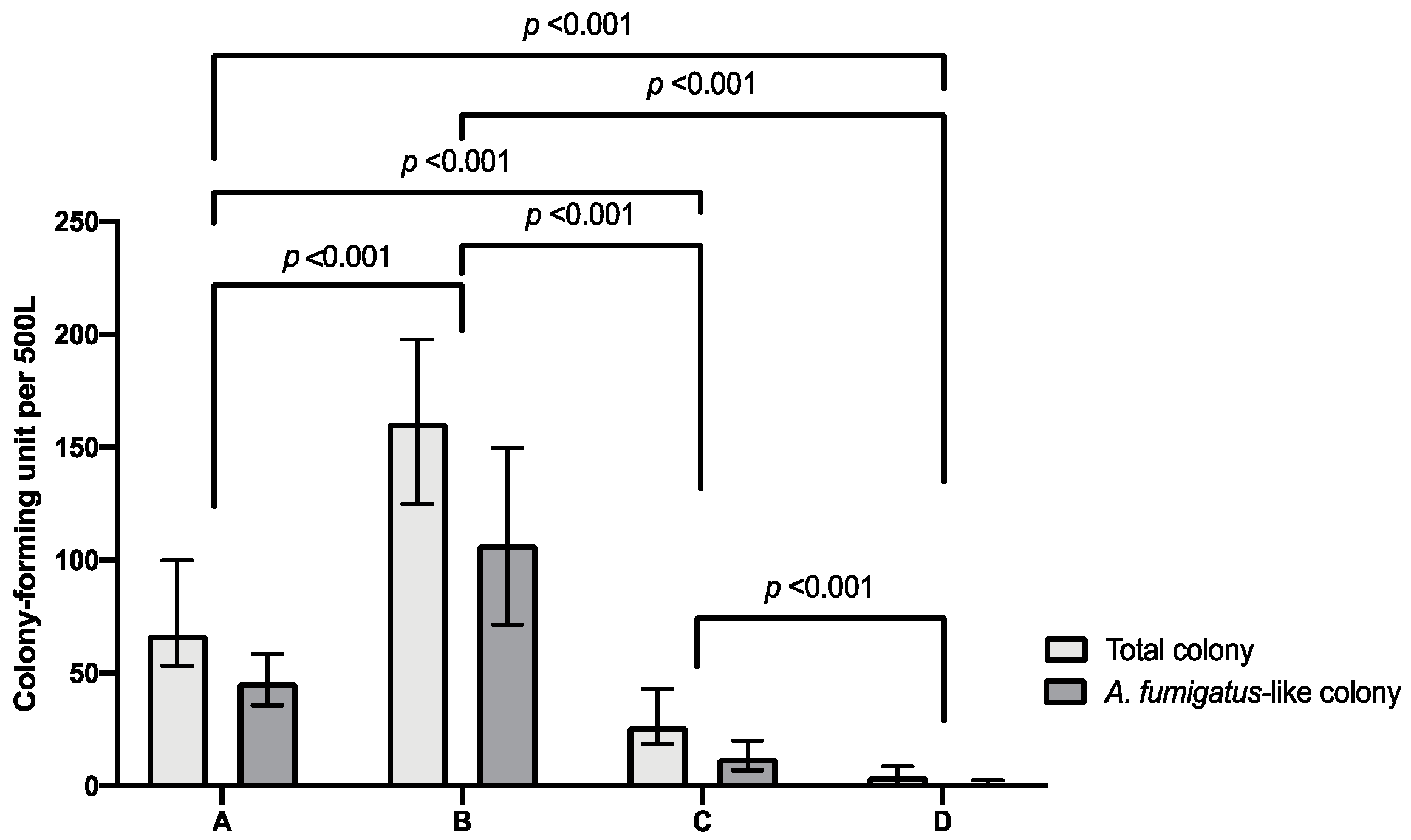
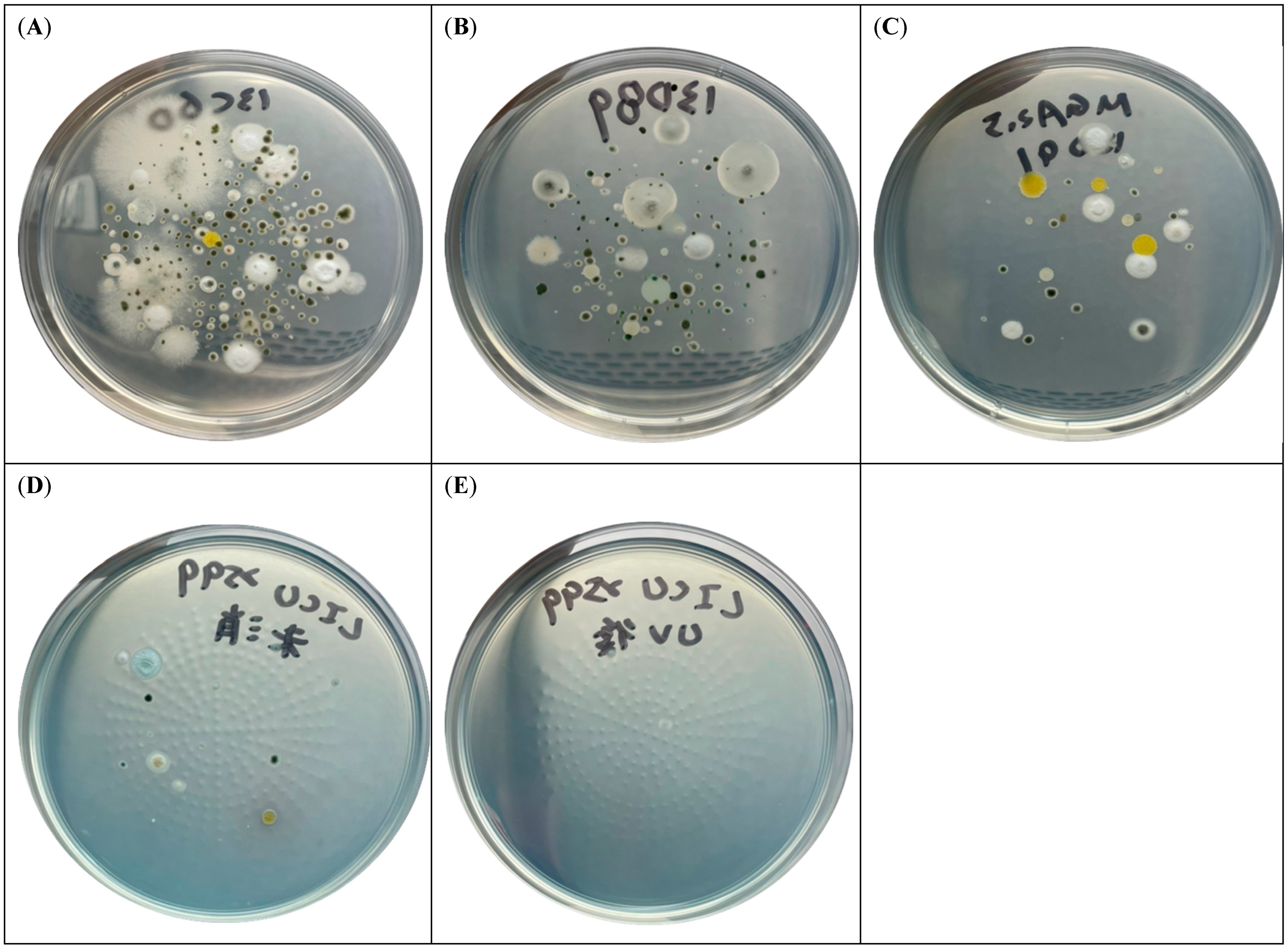
The risk of developing coronavirus disease 2019 (COVID-19)-associated pulmonary aspergillosis (CAPA) depends on factors related to the host, virus, and treatment. However, many hospitals have modified their existing rooms and adjusted airflow to protect healthcare workers from aerosolization, which may increase the risk of Aspergillus exposure. This study aimed to quantitatively investigate airborne fungal levels in negative and slightly negative pressure rooms for COVID-19 patients. The air in neutral pressure rooms in ordinary wards and a liver intensive care unit with high-efficiency particulate air filter was also assessed for comparison. We found the highest airborne fungal burden in recently renovated slightly negative air pressure rooms, and a higher airborne fungal concentration in both areas used to treat COVID-19 patients. The result provided evidence of the potential environmental risk of CAPA by quantitative microbiologic air sampling, which was scarcely addressed in the literature. Enhancing environmental infection control measures to minimize exposure to fungal spores should be considered. However, the clinical implications of a periodic basis to determine indoor airborne fungal levels and further air sterilization in these areas remain to be defined.
Keywords: fungus; air sampling; COVID-19; invasive aspergillosis fungus; air sampling; COVID-19; invasive aspergillosis