
Review

Nature’s Most Fruitful Threesome: The Relationship between Yeasts, Insects, and Angiosperms

by
Eduardo D. Fenner
1,2,
Thamarys Scapini
3,
Mariana da Costa Diniz
2,
Anderson Giehl
2,
Helen Treichel
3,
Sergio Álvarez-Pérez
4 and
Sérgio L. Alves, Jr.
1,2,*
1
Graduate Program in Environment and Sustainable Technologies, Federal University of Fronteira Sul, Campus Cerro Largo, Cerro Largo 97900-000, RS, Brazil
2
Laboratory of Yeast Biochemistry, Federal University of Fronteira Sul, Campus Chapecó, Chapecó 89815-899, SC, Brazil
3
Laboratory of Microbiology and Bioprocesses, Federal University of Fronteira Sul, Campus Erechim, Erechim 99700-970, RS, Brazil
4
Department of Animal Health, Faculty of Veterinary Medicine, Complutense University of Madrid, 28040 Madrid, Spain
*
Author to whom correspondence should be addressed.
J. Fungi 2022, 8(10), 984; https://doi.org/10.3390/jof8100984
Submission received: 21 August 2022 / Revised: 13 September 2022 / Accepted: 18 September 2022 / Published: 20 September 2022
(This article belongs to the Special Issue New Opportunities in Fungal Biotechnology)

Abstract

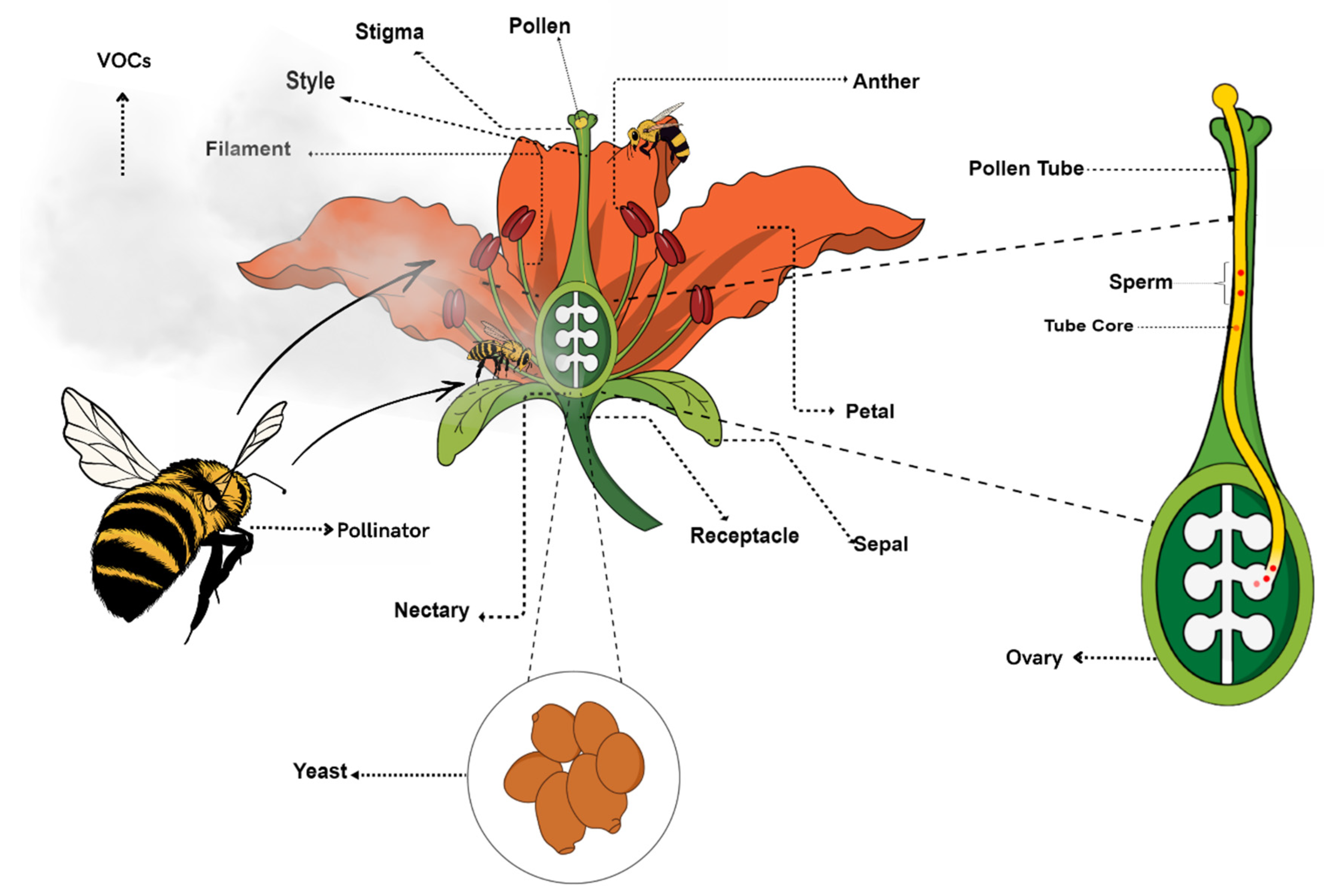
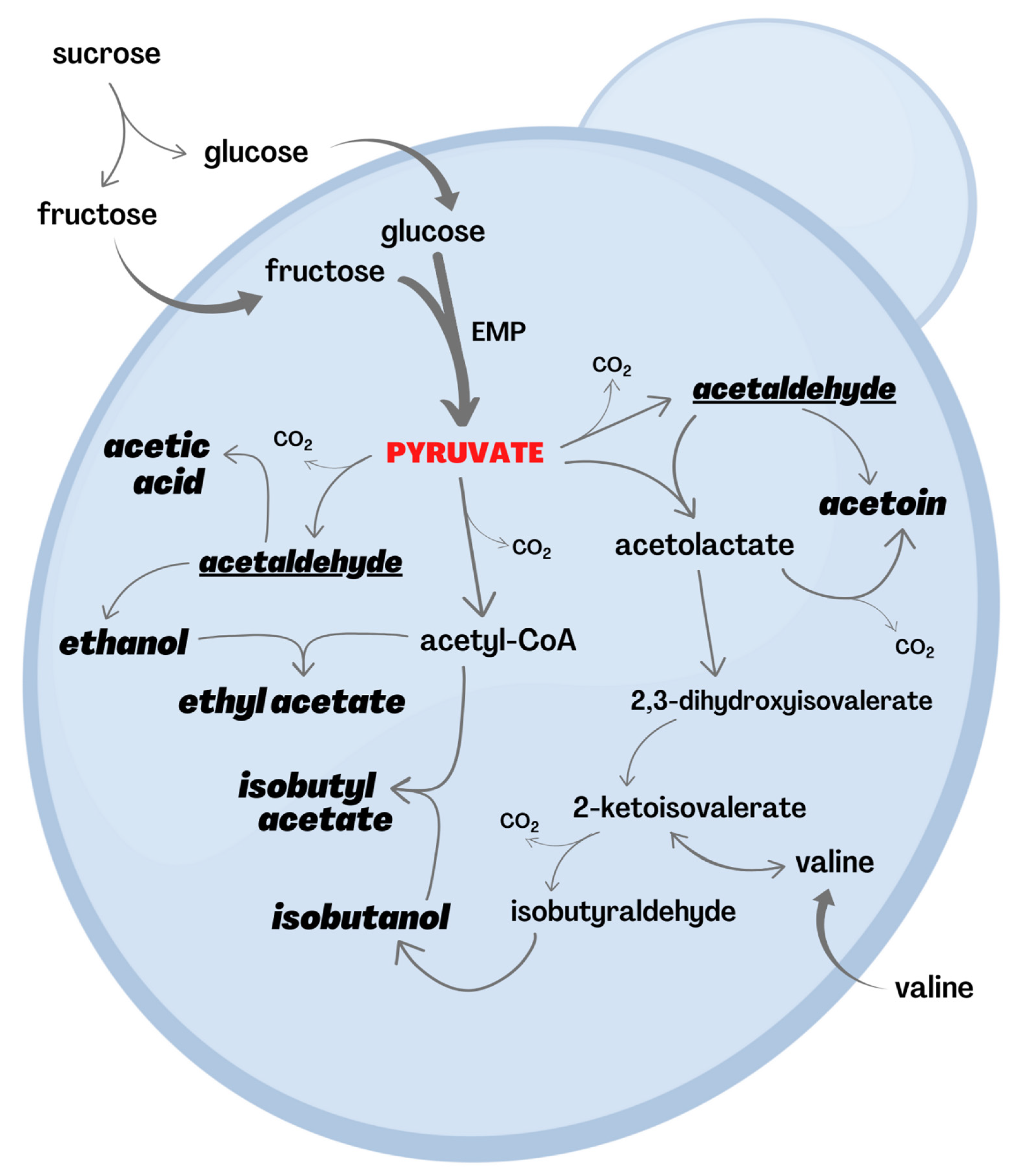
The importance of insects for angiosperm pollination is widely recognized. In fact, approximately 90% of all plant species benefit from animal-mediated pollination. However, only recently, a third part player in this story has been properly acknowledged. Microorganisms inhabiting floral nectar, among which yeasts have a prominent role, can ferment glucose, fructose, sucrose, and/or other carbon sources in this habitat. As a result of their metabolism, nectar yeasts produce diverse volatile organic compounds (VOCs) and other valuable metabolites. Notably, some VOCs of yeast origin can influence insects’ foraging behavior, e.g., by attracting them to flowers (although repelling effects have also been reported). Moreover, when insects feed on nectar, they also ingest yeast cells, which provide them with nutrients and protect them from pathogenic microorganisms. In return, insects serve yeasts as transportation and a safer habitat during winter when floral nectar is absent. From the plant’s point of view, the result is flowers being pollinated. From humanity’s perspective, this ecological relationship may also be highly profitable. Therefore, prospecting nectar-inhabiting yeasts for VOC production is of major biotechnological interest. Substances such as acetaldehyde, ethyl acetate, ethyl butyrate, and isobutanol have been reported in yeast volatomes, and they account for a global market of approximately USD 15 billion. In this scenario, the present review addresses the ecological, environmental, and biotechnological outlooks of this three-party mutualism, aiming to encourage researchers worldwide to dig into this field.
Keywords: angiosperms; bioprospection; floral nectar; insects; volatile organic compounds; yeasts angiosperms; bioprospection; floral nectar; insects; volatile organic compounds; yeasts