Article

Reflections on Menisporopsis, Multiguttulispora and Tainosphaeria Using Molecular and Morphological Data

by
Martina Réblová
1,*,
Jana Nekvindová
2 and
Margarita Hernández-Restrepo
3
1
Institute of Botany, Czech Academy of Sciences, 252 43 Průhonice, Czech Republic
2
Department of Clinical Biochemistry and Diagnostics, University Hospital Hradec Králové, 500 05 Hradec Králové, Czech Republic
3
Westerdijk Fungal Biodiversity Institute, 3508 AD Utrecht, The Netherlands
*
Author to whom correspondence should be addressed.
J. Fungi 2021, 7(6), 438; https://doi.org/10.3390/jof7060438
Submission received: 28 April 2021 / Revised: 27 May 2021 / Accepted: 28 May 2021 / Published: 31 May 2021
(This article belongs to the Section Fungal Evolution, Biodiversity and Systematics)

Abstract

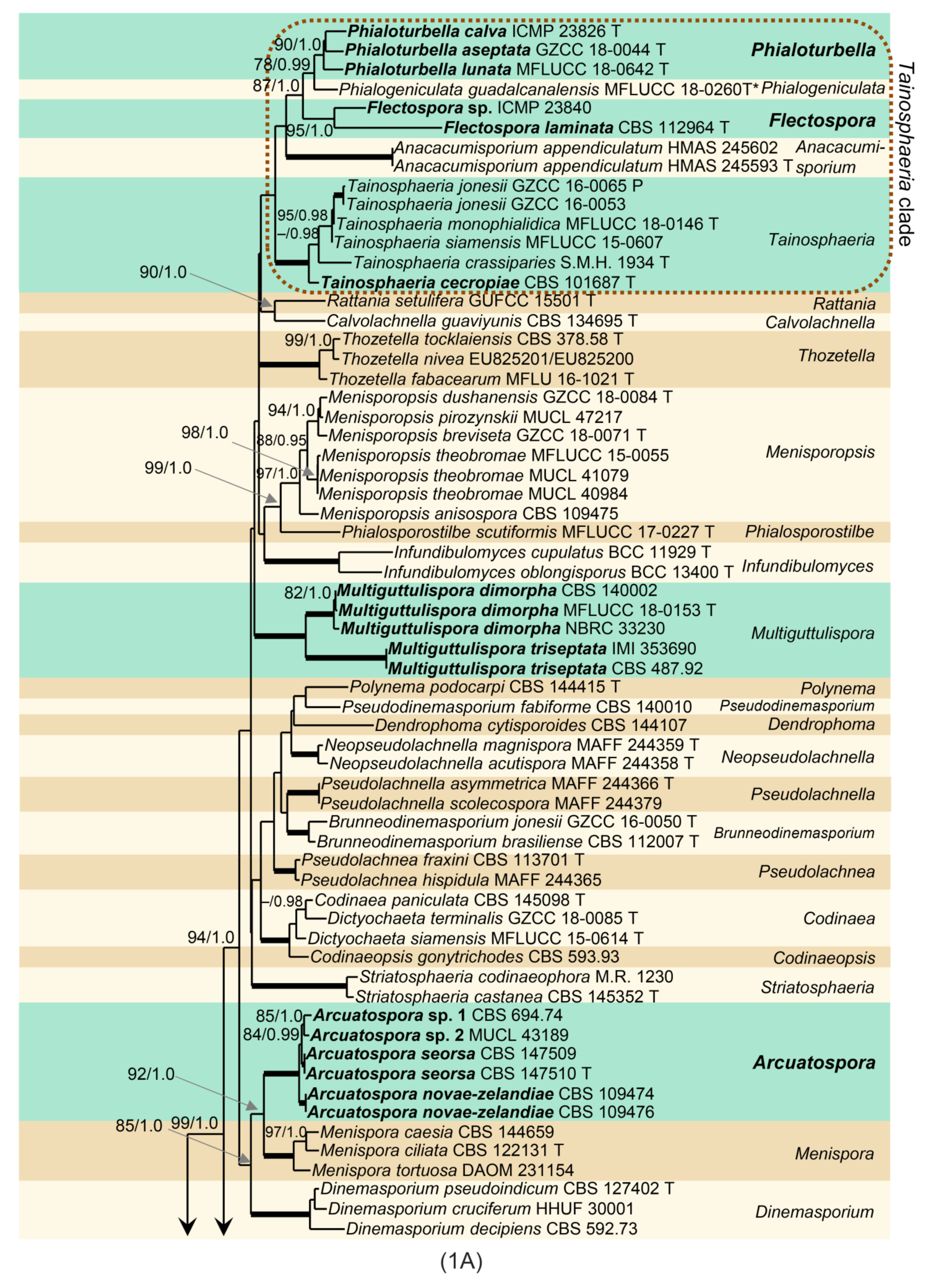
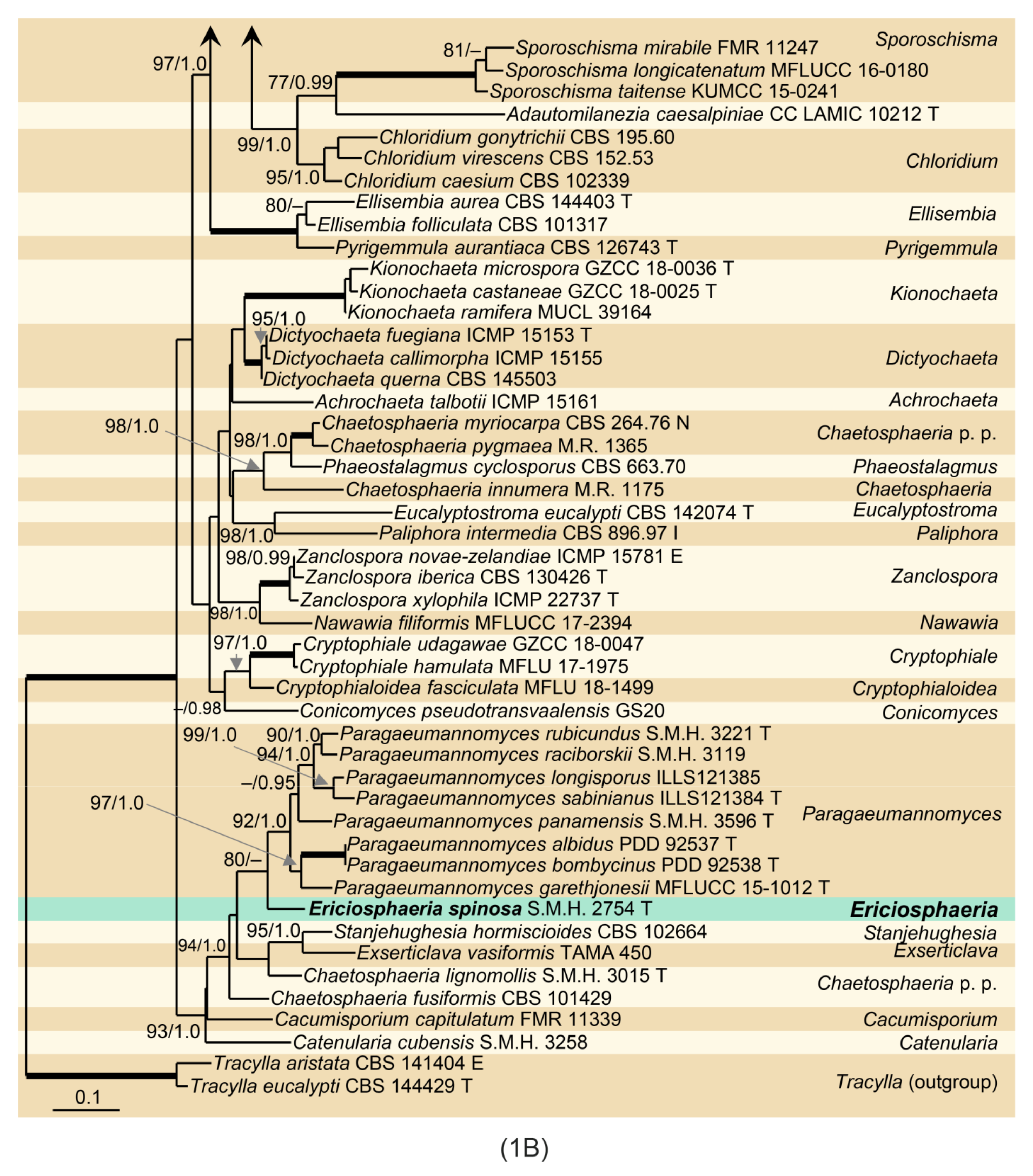
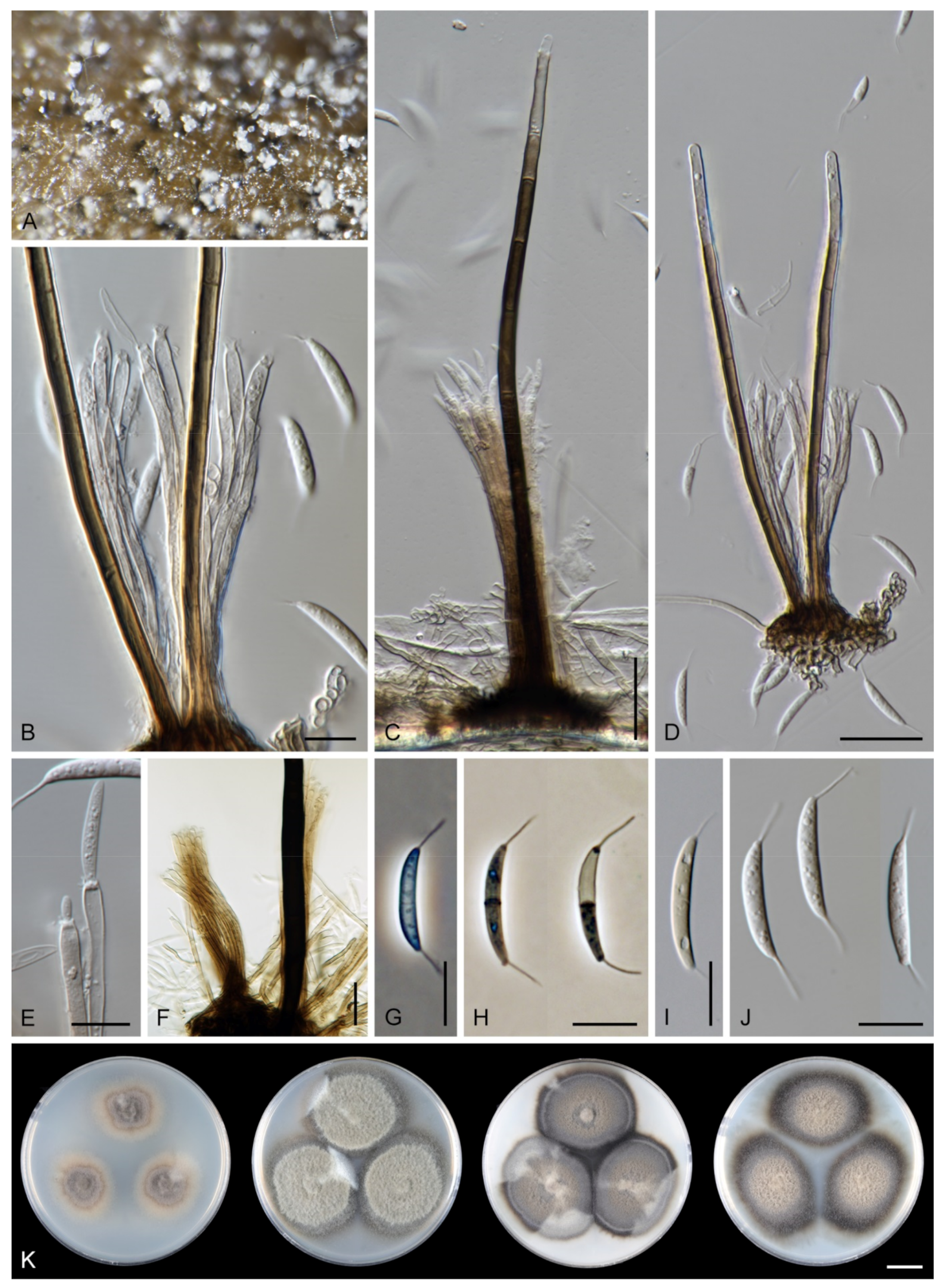
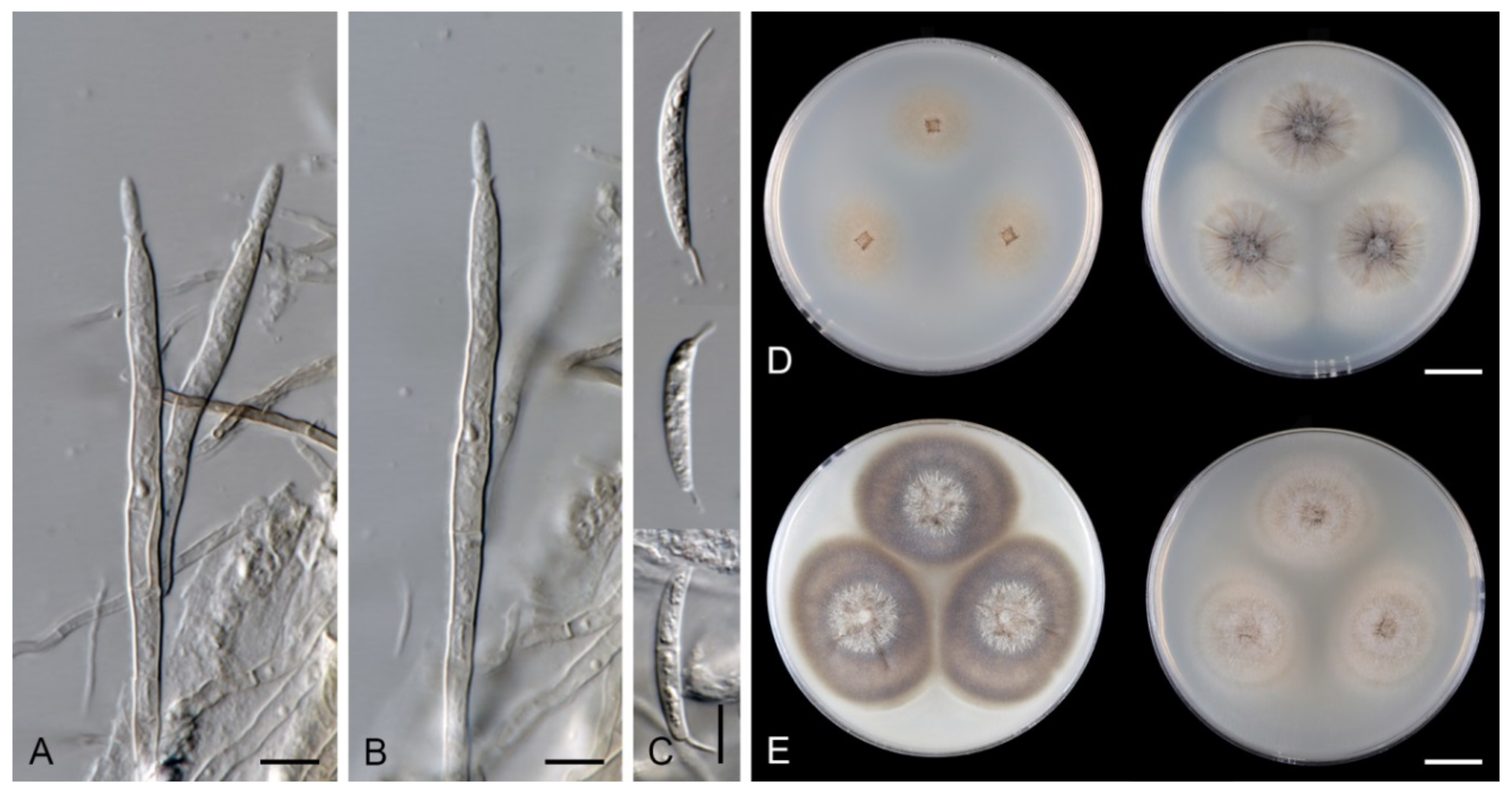
The genera Menisporopsis, Multiguttulispora and Tainosphaeria (Chaetosphaeriaceae) are saprobes inhabiting decaying plant material. This study is based on an integrated morpho-molecular characterisation to assess their generic concepts and explore phylogenetic relationships. Menisporopsis is revealed as polyphyletic, and species with 1-septate conidia and synnemata growing unilaterally along the seta are placed in the new segregate genus Arcuatospora. Codinaea dimorpha and C. triseptata are shown to be congeneric with Multiguttulispora sympodialis, the type species. Two new combinations are proposed: M. sympodialis is found conspecific with M. dimorpha. The Tainosphaeria complex is resolved into three genera. We found that the morphological separation of three groups within the genus is consistent with phylogenetic relationships. Tainosphaeria s. str. is accepted with five species. Tainosphaeria aseptata and T. lunata are transferred to the newly erected Phialoturbella, whereas T. obclavata is revealed as conspecific with Phialogeniculata guadalcanalensis, reducing it to a synonym. A new genus Flectospora is erected for a chloridium-like fungus nested in the Tainosphaeria clade. Based on molecular evidence, we show that asymmetrical, scolecosporous ascospores are a unique teleomorphic characteristic among family members. Therefore, we propose new combinations for Chaetosphaeria hispida in Paragaeumannomyces and Ch. spinosa in the new genus Ericiosphaeria, both exhibiting this rare morphotype.
Keywords: appendages; foliicolous; lignicolous; molecular systematics; phialidic conidiogenesis; taxonomic novelties appendages; foliicolous; lignicolous; molecular systematics; phialidic conidiogenesis; taxonomic novelties