Article

SsPEP1, an Effector with Essential Cellular Functions in Sugarcane Smut Fungus
1
State Key Laboratory for Conservation and Utilization of Subtropical Agro-Bioresources and Ministry & Province Co-Sponsored Collaborative Innovation Center for Sugarcane and Sugar Industry, Nanning 530004, China
2
Guangxi Key Laboratory of Sugarcane Biology, College of Agriculture, Guangxi University, Nanning 530004, China
3
College of Life Science and Technology, Guangxi University, Nanning 530004, China
*
Author to whom correspondence should be addressed.
J. Fungi 2021, 7(11), 954; https://doi.org/10.3390/jof7110954
Submission received: 13 October 2021 / Revised: 8 November 2021 / Accepted: 8 November 2021 / Published: 11 November 2021
(This article belongs to the Section Fungal Genomics, Genetics and Molecular Biology)

Abstract

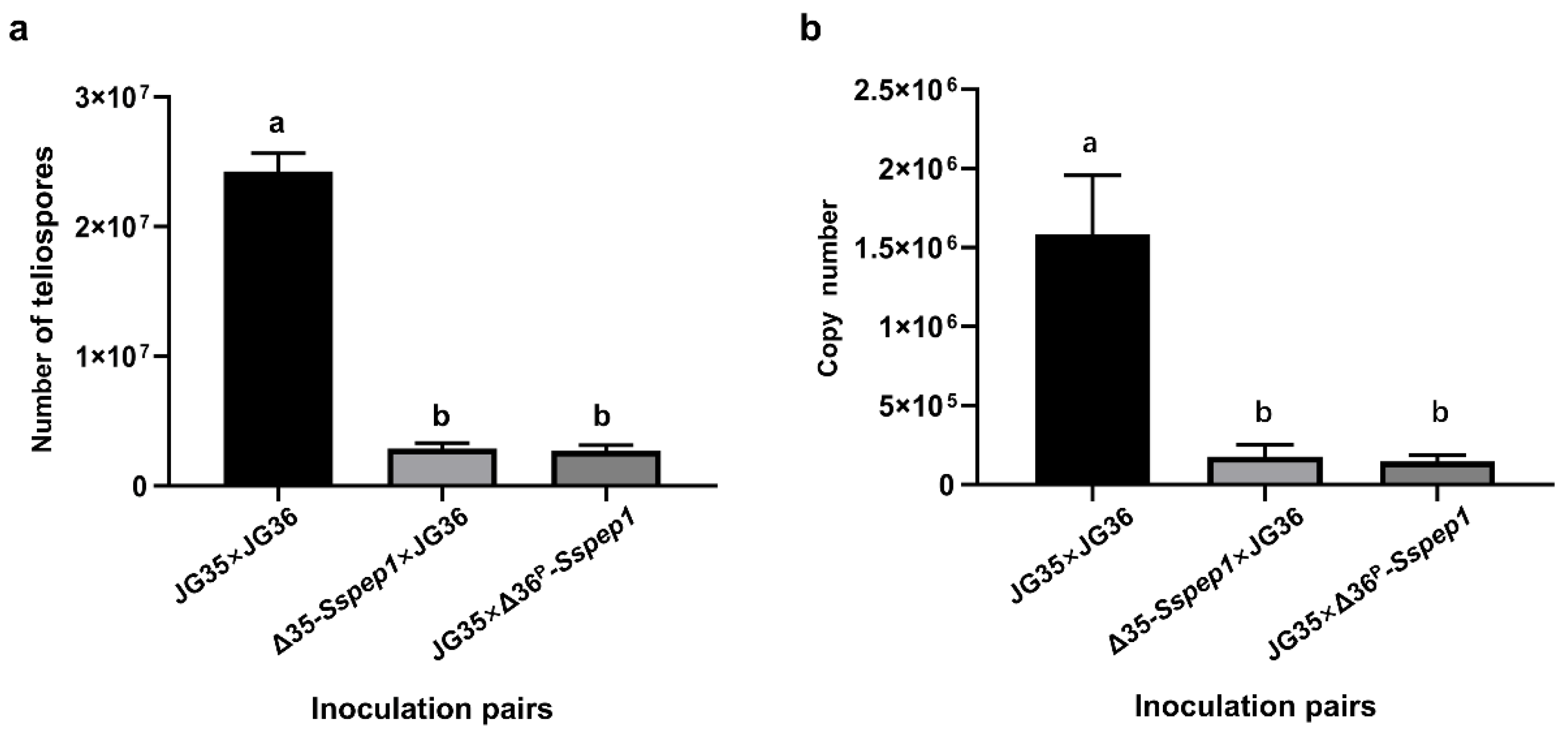
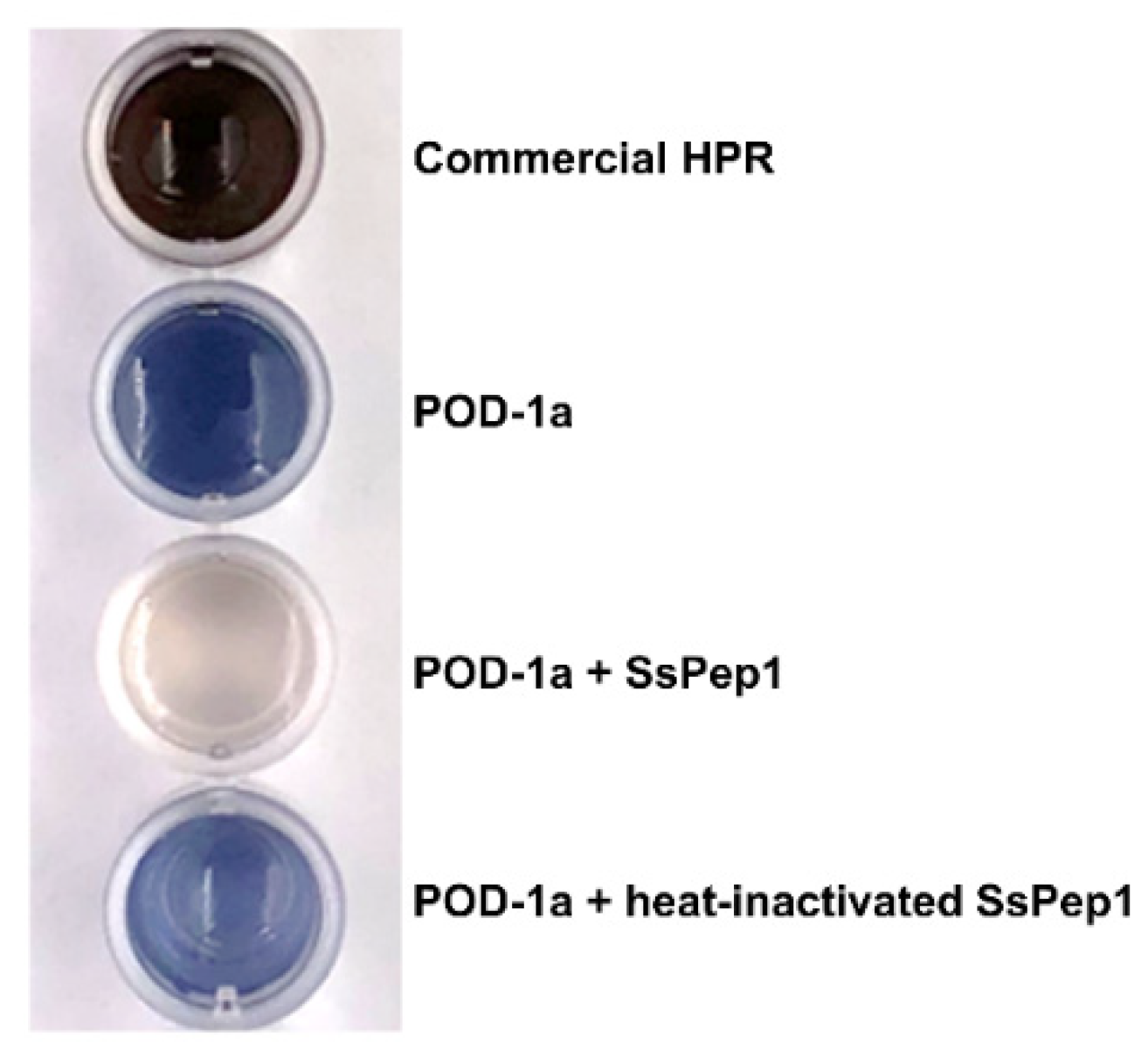
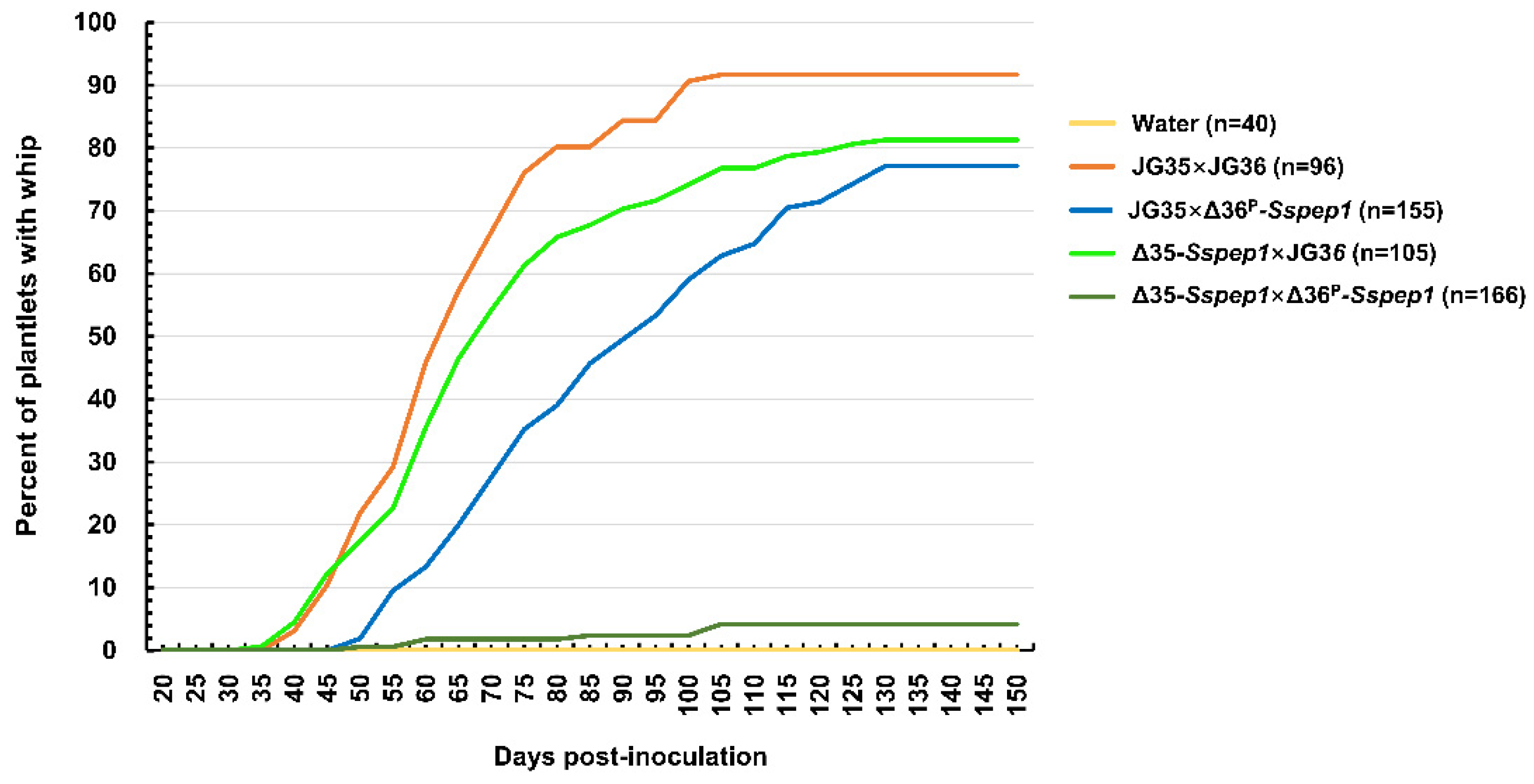
Biotrophic fungi have to infect their host to obtain nutrients and must establish an interaction with the host to complete their life cycle. In this process, effectors play important roles in manipulating the host’s immune system to avoid being attacked. Sporisorium scitamineum is the causative agent of sugarcane smut, the most important disease in sugarcane-producing regions worldwide. In this work, we functionally characterized the conserved effector PEP1 in S. scitamineum. The mating process and the expression of genes in the MAPK signaling pathway and the a and b loci were adversely affected in Sspep1-null mutants. The requirement for SsPEP1 in pathogenicity and symptom development was allele dosage-dependent, i.e., deleting one Sspep1 allele in the mating pair turned a normal black whip with abundant teliospores into a white whip with few teliospores; however, deleting both alleles almost abolished infectivity and whip development. ΔSspep1 mutants produced significantly less mycelium mass within infected plants. Additionally, SsPEP1 was identified as a potent inhibitor of sugarcane POD-1a peroxidase activity, implying that SsPEP1 may function to relieve reactive oxygen species-related stress within the host plant. Taken together, our work demonstrated that SsPEP1 is a multifaceted effector essential for S. scitamineum growth, development, and pathogenicity.
Keywords: Sporisorium scitamineum; effector; cell function; pathogenicity; teliospore development Sporisorium scitamineum; effector; cell function; pathogenicity; teliospore development