Article

Genomic Basis of Zoonotic Transmission and Antifungal Resistance in Microsporum canis

1
College of Veterinary Medicine, China Agricultural University, Beijing 100193, China
2
Department of Pharmacology and Toxicology, College of Veterinary Medicine, China Agricultural University, Beijing 100193, China
*
Author to whom correspondence should be addressed.
J. Fungi 2026, 12(6), 429; https://doi.org/10.3390/jof12060429
Submission received: 19 May 2026 / Revised: 8 June 2026 / Accepted: 9 June 2026 / Published: 11 June 2026
(This article belongs to the Section Fungal Pathogenesis and Disease Control)

Abstract

Microsporum canis is a globally prevalent zoonotic dermatophyte and the major causative agent of dermatophytosis in both pets and humans. The widespread clinical use of antifungal drugs has led to the frequent emergence of decreased susceptibility, while its molecular features and the genomic basis of cross-host transmission remain incompletely elucidated. In this study, 38 clinical M. canis isolates were collected from dogs and cats in Beijing (2025). We determined the minimum inhibitory concentrations (MICs) of six common antifungal agents via microbroth dilution, and performed whole-genome sequencing and comparative genomic analysis. All isolates showed high clonal homogeneity, with ANI > 99.9 % to the reference. A local human-derived strain was nested within the pet-derived clade, supporting zoonotic cross-host transmission. Terbinafine exhibited the highest activity, while itraconazole, voriconazole, posaconazole, griseofulvin, and ciclopirox olamine showed higher MICs; 11 isolates showed a multidrug high-MIC phenotype. Notably, copy number variation in the ABC transporter gene CDR1 was positively correlated with MICs of multiple antifungal agents ( p < 0.05 ). This study provides a genomic basis for optimized antifungal therapy, resistance surveillance and transmission control of zoonotic M. canis.

1. Introduction

Dermatophytosis is one of the most prevalent superficial fungal infections worldwide. Microsporum canis, a prototypical zoonotic dermatophyte, is the major causative agent of dermatophytosis in dogs and cats. Epidemiological studies consistently report isolation rates exceeding 90 % in feline cases and over 60 % in canine cases across different regions [1,2,3,4]. Moreover, M. canis is a leading pathogen of human dermatophytosis, particularly tinea capitis in children, and its prevalence has been increasing in several regions worldwide [5,6,7]. Close contact between companion animals and humans facilitates cross-host transmission, making this fungus a key driver of intrafamilial zoonotic infection and a sustained public health concern [8,9,10].
To date, numerous studies have characterized the virulence factors and antifungal susceptibility profiles of M. canis [11,12,13,14,15]. Clinically, antifungal agents including ciclopirox olamine, griseofulvin, azoles, and allylamines are widely used. However, their extensive use has led to the frequent emergence of elevated MICs and reduced susceptibility, particularly to first-line drugs such as terbinafine and itraconazole [13,16,17], contributing to treatment failure in up to 40 % of patients [11]. At the mechanistic level, virulence factors, including secreted proteolytic enzymes, lipases, oxidative stress tolerance-related molecules, and efflux pump proteins [14], have been implicated in host colonization, invasion, and immune evasion [12].
Despite these advances, several key gaps remain. Most antifungal susceptibility data and molecular mechanistic studies focus on human-derived strains, whereas systematic data from companion animal-derived epidemic strains remain scarce [8,13,18]. Comparative genomic studies of M. canis are limited, and the population genetic structure as well as the genomic distribution of core virulence factors are not well characterized [15,19]. Importantly, although companion animals are recognized as major reservoirs for the zoonotic transmission of M. canis [3], genome-based phylogenetic evidence linking animal-derived and human-derived strains, and clarifying the molecular basis of cross-host transmission, is still lacking [9].
Therefore, the primary objective of this study was to perform an integrated phenotypic and genomic analysis of 38 clinical M. canis isolates from dogs and cats at two Beijing veterinary hospitals in 2025. Specifically, we aimed to: (i) determine the susceptibility profiles to six common clinical antifungals using the latest CLSI M38 (3rd Edition) broth microdilution method [20]; (ii) conduct whole-genome sequencing and comparative genomic analyses to resolve the population structure and characterize virulence- and resistance-related genes; and (iii) assess zoonotic transmission potential via phylogenetic comparisons with human-derived reference strains.

2. Materials and Methods

2.1. Strain Source and Identification

A total of 38 M. canis isolates were collected from companion animals diagnosed with dermatophytosis at two veterinary hospitals in Beijing from April to October 2025. The host origin of these isolates included 16 from dogs (Canis lupus familiaris) and 22 from cats (Felis catus). All clinical samples were obtained from the junction of diseased and healthy skin (hairs and scales) of animals preliminarily diagnosed via Wood’s lamp examination and/or direct microscopic observation by clinical veterinarians. As the primary focus of this study was on the in vitro antifungal susceptibility and genomic characteristics of the pathogens rather than clinical epidemiology, detailed clinical signs (e.g., specific lesion types, extent of alopecia, or other systemic signs) and exact lesion locations were not systematically recorded. Prior to sampling, the affected area was shaved and disinfected with 75 % ethanol, and hair with intact follicles showing characteristic yellow-green fluorescence was aseptically collected. All sample collection procedures were approved by the Teaching and Research Department of China Agricultural University Veterinary Teaching Hospital (approval No. 202501041709000223875, approval date: 4 January 2025). All samples were collected from client-owned animals with written informed consent from the pet owners, and all procedures were performed in strict accordance with institutional and national guidelines for the care and use of companion animals.
Samples were inoculated on Sabouraud dextrose agar (SDA) medium and incubated at 28 °C for 3–7 days. SDA was utilized instead of Mycosel agar based on two main considerations: first, SDA is a universally recognized and widely applied standard medium for the cultivation and maintenance of dermatophytes [21,22]; second, considering the large sample size in the initial screening phase, SDA offered a more cost-effective alternative to the relatively expensive Mycosel agar. Potential contamination by non-dermatophyte fungi was effectively managed through strict aseptic techniques and subsequent molecular identification. Preliminary identification was performed based on colony morphological characteristics and microscopic observation of spiny, thick-walled fusiform macroconidia (≥6 cells) according to the standard criteria described in the Atlas of Clinical Fungi [21]. Single colonies were purified by three successive passages on SDA medium to obtain pure cultures. Genomic DNA was extracted from each purified strain, and the internal transcribed spacer (ITS) region was amplified by PCR using the universal primers ITS1 (5′-TCCGTAGGTGAACCTGCGG-3′) and ITS4 (5′-TCCTCCGCTTATTGATATGC-3′) [23]. PCR amplification was performed in a 25 μ L reaction system containing 12.5 μ L of 2 × Taq PCR MasterMix (Tiangen Biotech, Beijing, China), 1 μ L each of 10 μ mol/L forward and reverse primers, 2 μ L of template genomic DNA (20–50 ng/ μ L), and 8.5 μ L of nuclease-free water. The amplification protocol was as follows: initial denaturation at 95 °C for 5 min; 35 cycles of denaturation at 94 °C for 30 s, annealing at 55 °C for 30 s, and extension at 72 °C for 1 min; and a final extension at 72 °C for 10 min.
PCR products were verified by 1.0 % agarose gel electrophoresis to confirm a single target band of approximately 550 bp. Qualified products were subjected to Sanger sequencing by Beijing Novogene Technology Co., Ltd. (Beijing, China). The obtained sequences were aligned against the NCBI Nucleotide database using BLASTn v2.14.0+ [24], with a sequence similarity of ≥98% as the final species confirmation criterion.

2.2. Antifungal Drug Susceptibility Test

The in vitro antifungal susceptibility of 38 M. canis isolates to six antifungal agents (ciclopirox olamine, griseofulvin, posaconazole, terbinafine, voriconazole, and itraconazole) was determined via the broth microdilution method, in strict accordance with the CLSI M38 (third edition) standard [20]. All tested antifungal agents were obtained as pure standard powders from Aladdin Biochemical Technology Co., Ltd. (Shanghai, China).
All isolates and the quality control strain Trichophyton mentagrophytes ATCC MYA-4439 were activated on SDA medium at 28 °C for 5 days. Subsequently, 1 mL of sterile 0.85% saline was added to the culture surface and allowed to soak for 1–2 min. The surface was gently scraped with a sterile inoculation loop to dislodge hyphae and spores. The resulting suspension was collected and left to stand at room temperature for 20 min to allow larger hyphal fragments to settle at the bottom. The upper homogeneous liquid was then filtered through sterile No. 40 filter paper to remove residual debris. A 10 μ L aliquot of the filtrate was used to count the spores using a hemocytometer under a microscope. The spore concentration was adjusted using MOPS-buffered Roswell Park Memorial Institute-1640 (RPMI-1640) medium (pH 7.0) to obtain a final working inoculum of 2–6 × 10 3 CFU/mL. To verify the accuracy of the inoculum concentration, 0.01 mL of the prepared suspension was evenly spread onto an SDA plate, incubated at 30 °C for 3 days, and the resulting colonies were counted.
Drug stock solutions were prepared with dimethyl sulfoxide (DMSO) and serially diluted with RPMI-1640 medium, with a final DMSO concentration 1 % (v/v) to avoid solvent interference. The final concentration gradients were set as follows: 0.004–16 μ g/mL for ciclopirox olamine, posaconazole, voriconazole, and itraconazole; 0.008–32 μ g/mL for griseofulvin; 0.001–4 μ g/mL for terbinafine. For the microdilution assay, 100 μ L of the standardized spore suspension was added to wells 1–11 of a 96-well microtiter plate containing the serially diluted antifungal drugs. Each isolate was tested in duplicate, with positive growth and blank medium controls included on each plate. Plates were incubated at 30 °C for 96 h. The minimum inhibitory concentration (MIC) was defined as the lowest drug concentration achieving ≥80% growth inhibition relative to the positive control, consistent with the endpoint criteria validated for dermatophytes under the CLSI M38 (third edition) framework.
The high-MIC phenotype (non-wild type, NWT), defined as decreased in vitro antifungal susceptibility, was designated when an isolate’s MIC exceeded the upper limit of wild-type (UL-WT) threshold for the corresponding antifungal agent. UL-WT thresholds were determined with reference to a 27-year large-scale MIC study of 348 M. canis isolates from mainland China, the largest epidemiological dataset of this pathogen in China to date [13]. Thresholds were set as follows: terbinafine ≥ 0.125 μ g/mL, itraconazole ≥ 0.25 μ g/mL, voriconazole ≥ 0.125 μ g/mL, posaconazole ≥ 0.25 μ g/mL, and griseofulvin ≥ 2 μ g/mL. For ciclopirox olamine, which was not included in the aforementioned study, the threshold was set as ≥2 μ g/mL with reference to Chinese veterinary clinical guidelines for dermatophytosis and published dermatophyte susceptibility studies.
A multidrug high-MIC phenotype was defined as an isolate exhibiting a high-MIC phenotype against two or more classes of antifungal agents with distinct mechanisms of action. The tested agents were classified into four categories based on their mechanism of action: (1) allylamines (terbinafine, squalene epoxidase inhibitor); (2) triazoles (itraconazole, voriconazole, posaconazole, lanosterol 14 α -demethylase inhibitor); (3) hydroxypyridones (ciclopirox olamine, metal ion chelator); (4) griseofulvins (griseofulvin, tubulin inhibitor) [25].
Trichophyton mentagrophytes ATCC MYA-4439 was tested in parallel with each batch of test isolates. All measured MIC values of the quality control strain fell within the CLSI-specified acceptable ranges, confirming the reliability of all test results.

2.3. Whole-Genome Sequencing, Assembly and Quality Assessment

Genomic DNA was extracted from pure M. canis cultures using a modified cetyltrimethylammonium bromide (CTAB) method as previously described [26]. The integrity and purity (A260/A280 = 1.8–2.0) of the extracted DNA were verified via 1.0 % agarose gel electrophoresis and NanoDrop 2000 detection. Qualified DNA was fragmented by sonication to construct 350 bp insert paired-end libraries, which were validated using an Agilent 5400 system and qPCR, then sequenced on the Illumina NovaSeq 6000 platform with 150 bp paired-end reads.
Raw reads were quality-filtered using fastp v0.23.4 [27] with the following criteria: removal of adapter-contaminated reads, reads with >10% ambiguous bases (N), and reads with >50% low-quality bases (Phred score < 5). Briefly, a total of 141 Gb of raw data was generated, with an average of 3.71 Gb clean data per isolate (mean Q20 = 99.42 % , Q30 = 97.35 % , GC content = 47.45 % , average sequencing depth = 163×), meeting the requirements for high-quality fungal genome assembly. Detailed sequencing quality metrics and genome accession numbers for all isolates are presented in Table 1.
De novo genome assembly was performed using SPAdes v3.15.5 [28]. Assembly metrics were assessed using QUAST v5.2.0 [29], genome completeness was evaluated via BUSCO v5.4.7 [30] with the fungi_odb10 dataset, and host contamination was filtered via Blastn v2.14.0+ alignment [24]. Species identity was further validated via average nucleotide identity (ANI) analysis against the M. canis ATCC 4439 reference genome (GCF_000151145.1) using FastANI v1.33 [31]. Two human-derived M. canis genomes (GCA_026259285.1 and GCA_051943485.1) were downloaded from the NCBI Assembly database, processed through the same analytical pipeline, and included in subsequent comparative genomic analyses.

2.4. Genome Annotation and Phylogenetic Analysis

Whole-genome annotation was performed using the Funannotate v1.8.16 pipeline [32]. Briefly, genomic repetitive sequences were masked using RepeatMasker, and protein-coding gene prediction was performed using Augustus v3.4.0 [33] based on the fungal universal model. Gene function annotation was completed by alignment against the Swiss-Prot (v2026.01), Pfam (v35.0), and EggNOG (v5.0) databases, and a standardized GFF3 format annotation file was generated through integration.
Phylogenetic analysis was constructed based on core single-nucleotide polymorphisms (cgSNPs). Using M. canis ATCC 4439 as the reference genome, alignment of all strain genome sequences was performed using Snippy v4.6.0 [34]. Core genome alignment sequences were extracted using snippy-core, and high-quality cgSNP sites were obtained using snp-sites v2.5.1 [35] after quality control filtering of invalid sites. A maximum likelihood (ML) phylogenetic tree was constructed using IQ-TREE v2.4.0 software [36], with the best-fit evolutionary model automatically selected by ModelFinder [37] and 1000 ultrafast bootstrap tests set to evaluate branch reliability. The iTOL v7 online tool [38] was used to integrate metadata including strain host source and drug susceptibility phenotype for visualization of the phylogenetic tree.

2.5. Mining of Virulence- and Drug Resistance-Related Genes

Virulence and antifungal resistance-related genes were identified via homologous alignment using BLASTp v2.14.0+ [24]. Predicted protein sequences of each isolate were aligned against two databases: (1) the Fungal Pathogen Virulence Factor Database (DFVF) [39] for virulence gene identification; (2) a custom curated UniProt-based database of experimentally validated fungal antifungal resistance-related proteins (detailed in Supplementary Table S1), covering ergosterol biosynthesis, cell wall biosynthesis, ABC/MFS efflux pumps, and stress response regulation.
BLASTp alignment thresholds were set as E-value 10 5 , sequence identity > 40%, and alignment length > 200 amino acids, which are widely validated in fungal comparative genomics to minimize false positives while retaining accurate homologous matches [39]. High-quality alignments were screened using the Best-Hit strategy.
Virulence gene analysis focused on core elements including ABC/MFS transporters, secreted subtilisins (SUB), metalloproteases (MEP), ergosterol/cell wall biosynthesis-related genes, and heat shock proteins. Resistance-related gene analysis focused on core genes including efflux pumps (CDR1, PDR5), ergosterol biosynthesis targets (ERG1, ERG11), cell wall synthesis gene (FKS1), and stress response gene (HSP90). A copy number matrix of target genes for each isolate was constructed based on the filtered alignments.

2.6. Statistical Analysis

All data analysis and visualization were performed using R v4.3.1 software [40]. The chi-square test with continuity correction or Fisher’s exact test was used to compare differences in the proportion of high-MIC isolates between Canis lupus familiaris-derived and Felis catus-derived strains, with the test method selected according to the expected frequency of the 2 × 2 contingency table. Spearman rank correlation analysis was performed to assess the association between resistance gene copy number and log2-transformed MIC values, with the Spearman correlation coefficient (r) and 95 % confidence interval (CI) reported for each gene–drug pair. Univariate linear regression was conducted to quantify the proportion of MIC variance explained by CDR1 copy number variation (CNV), with the coefficient of determination ( R 2 ) reported. The Kruskal–Wallis nonparametric test was used to compare differences in log2-transformed MIC values among groups with different CDR1 copy numbers.
The pheatmap package v1.0.13 [41] was used to generate heatmaps of virulence and drug resistance gene distribution, with strain clustering analysis performed based on Euclidean distance and the Complete linkage clustering algorithm. The ggplot2 v4.0.3 package [42] was used to generate correlation bubble plots and box plots of drug susceptibility distribution.

3. Results

3.1. Epidemiological Characteristics, Strain Identification and Phylogenetic Analysis

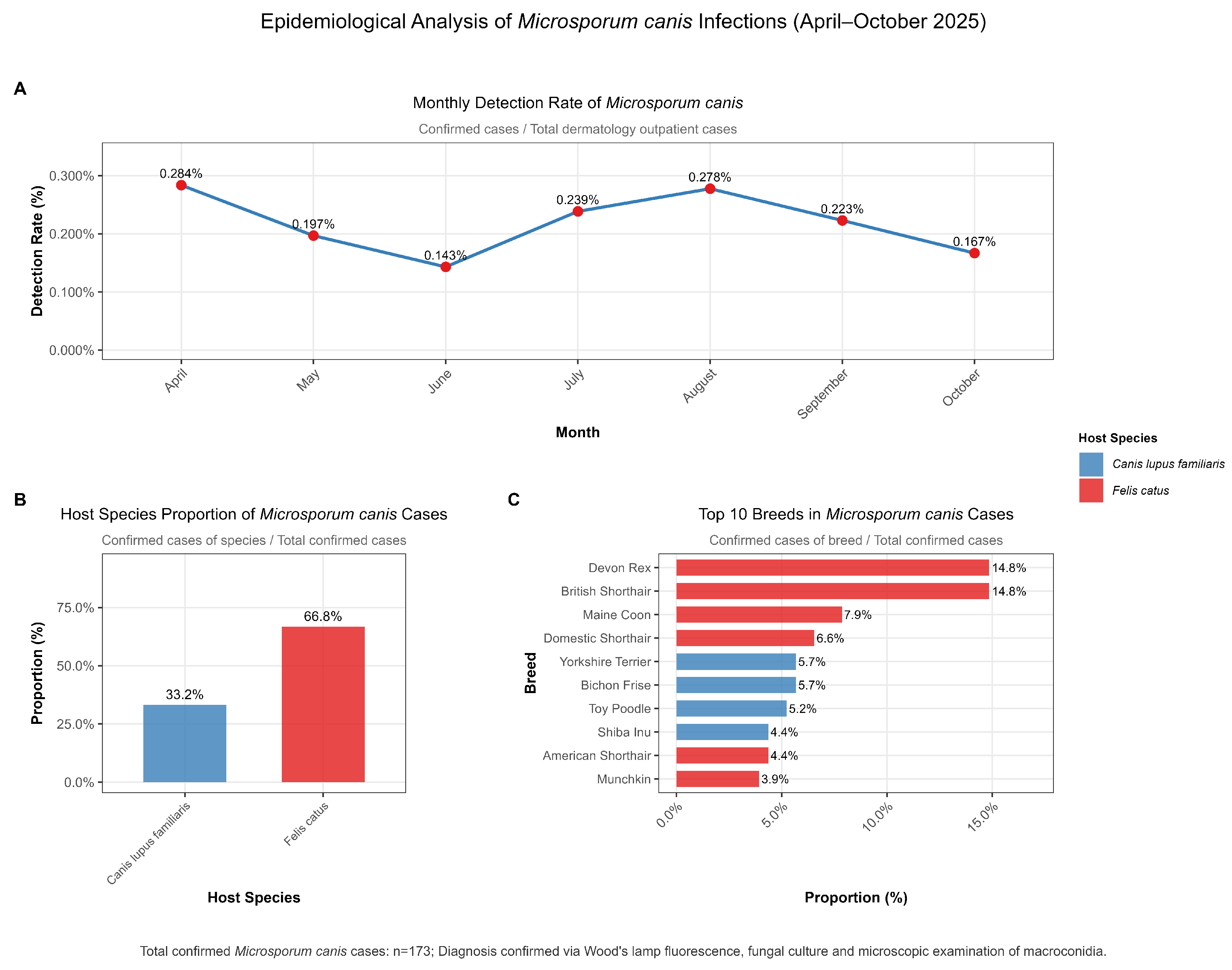
Between April and October 2025, a total of 79,696 dermatology outpatient cases were enrolled from the two monitored veterinary hospitals in Beijing, among which 173 cases were etiologically confirmed as M. canis infection (Figure 1). The monthly detection rate of M. canis fluctuated between 0.14 % and 0.28 % , with two distinct incidence peaks in April and August (Figure 1A). Host distribution analysis showed that Felis catus was the predominant infected host, accounting for 65.4 % of total confirmed cases (n = 113), while Canis lupus familiaris accounted for 34.6 % of cases (n = 60) (Figure 1B). Breed distribution analysis revealed that British Shorthair cats and Toy Poodles represented the highest proportion of confirmed cases within feline and canine populations, respectively (Figure 1C). From the 173 confirmed cases, 38 strains were successfully isolated and preserved for subsequent whole-genome sequencing (WGS) and in vitro antifungal susceptibility testing.
All 38 isolates were confirmed as M. canis via morphological observation and internal transcribed spacer (ITS) region sequencing, with all isolates showing ≥98% sequence similarity to reference M. canis sequences in the NCBI Nucleotide database. WGS generated a total of 141 Gb of raw data, with de novo assembly yielding genome sizes ranging from 22.8 to 23.5 Mbp and BUSCO completeness values all exceeding 98%. Average nucleotide identity (ANI) analysis confirmed that all 38 isolates shared >99.9% sequence identity with the M. canis reference strain ATCC 4439 (GCF_000151145.1). Detailed clinical information (host species, age, sex) and basic genomic characteristics (contig number, total length, gene count) of the 38 isolates are summarized in Table 2.
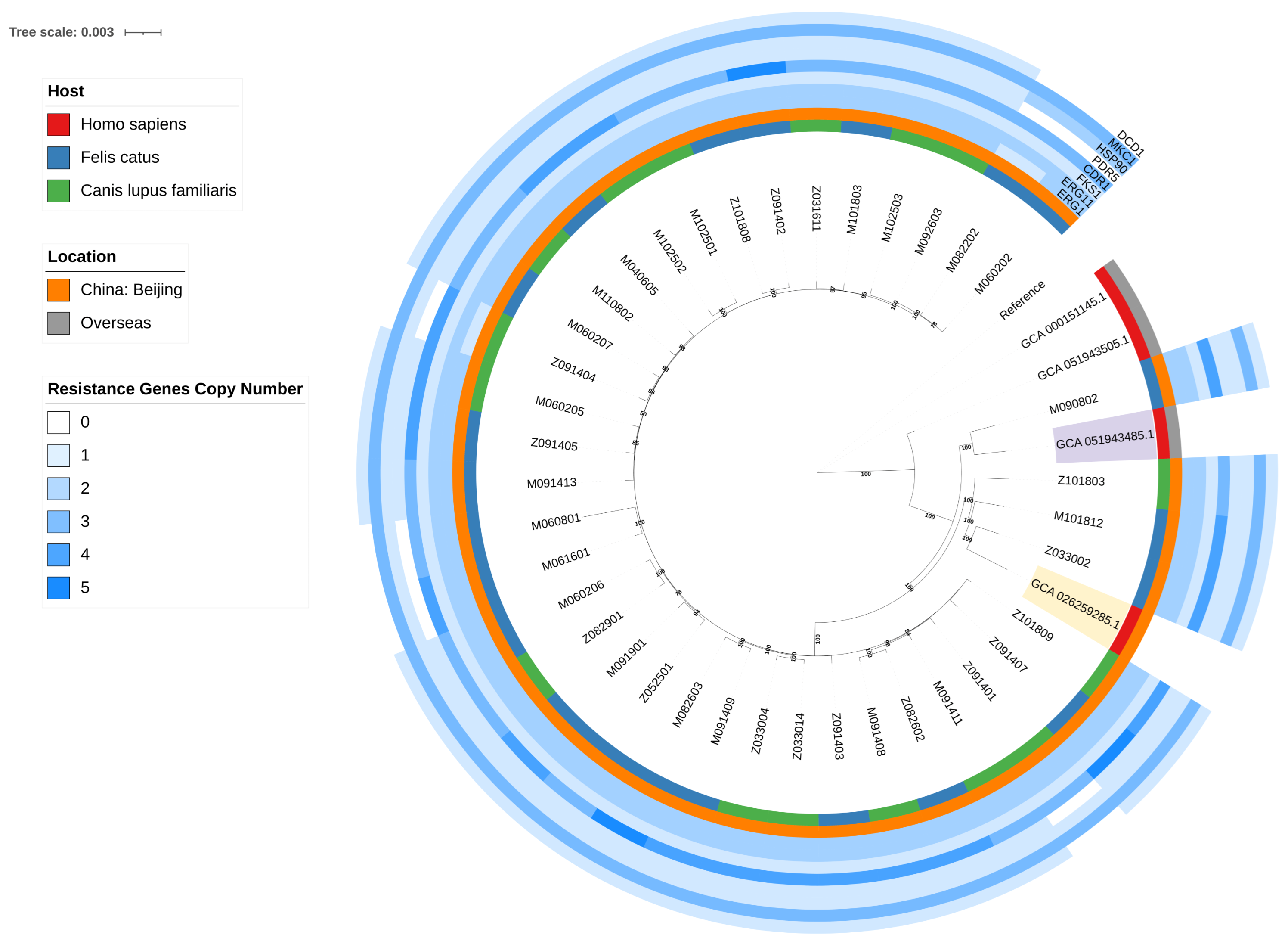
Phylogenetic analysis based on core single-nucleotide polymorphisms (cgSNPs) revealed the strong clonal homogeneity of the local M. canis population (Figure 2). The human-derived M. canis reference strain isolated from Beijing (GenBank accession: GCA_026259285.1) was fully nested within the epidemic cluster formed by local animal-derived isolates, indicating close genetic relatedness and supporting zoonotic cross-host transmission. Even a geographically distant Dutch reference strain (GCA_051943485.1) clustered closely with one local isolate, suggesting the remarkable genomic evolutionary stability of M. canis.

3.2. In Vitro Antifungal Susceptibility Phenotypes

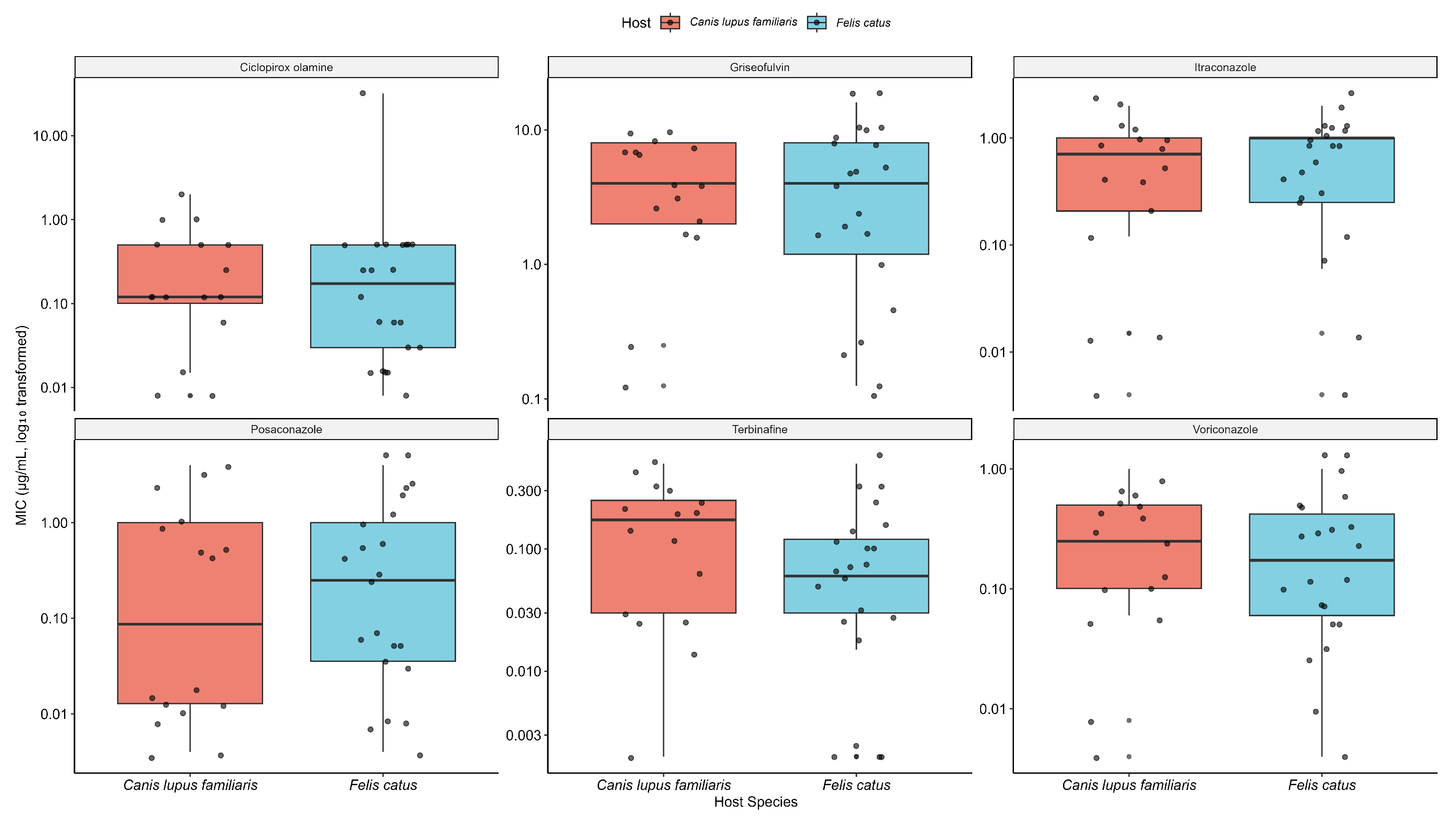
In vitro antifungal susceptibility testing against six clinically common antifungal drugs was performed for all 38 M. canis isolates (16 canine-derived, 22 feline-derived) in strict accordance with the CLSI M38 (third edition) standard. Detailed MIC values for each isolate against all six agents are provided in Table 3. Terbinafine exhibited the most potent antifungal activity, with an MIC range of 0.002 to 0.5 μ g/mL (median 0.06 μ g/mL). Griseofulvin (MIC range 0.125 to 16 μ g/mL) and ciclopirox olamine (MIC range 0.008 to >16 μ g/mL) showed weak overall antifungal activity (Figure 3).
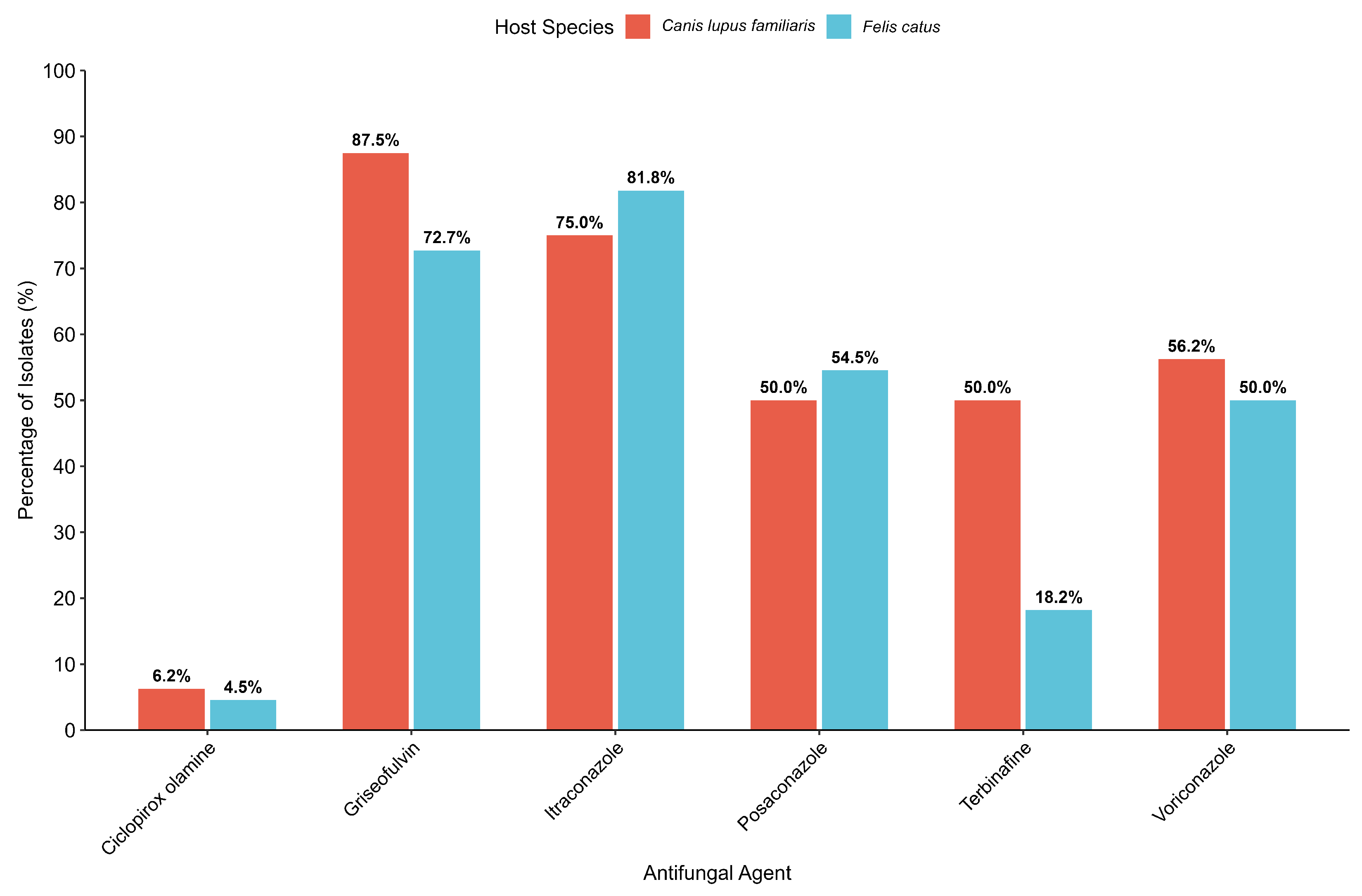
Stratified analysis by host source showed that canine-derived isolates had a numerically higher proportion of high-MIC (non-wild type, NWT) phenotype across all six tested drugs. In particular, the high-MIC rate of terbinafine in canine-derived isolates ( 50.0 % , 8/16) was numerically higher than that in feline-derived isolates ( 18.2 % , 4/22). Two-sided Fisher’s exact test showed no statistically significant difference in the proportion of high-MIC isolates between the two host groups for any tested agent (all p > 0.05 , Figure 4). A total of 11 isolates ( 28.9 % of all tested isolates) exhibited a multidrug high-MIC phenotype.

3.3. Genomic Distribution of Virulence Factors and Resistance Genes

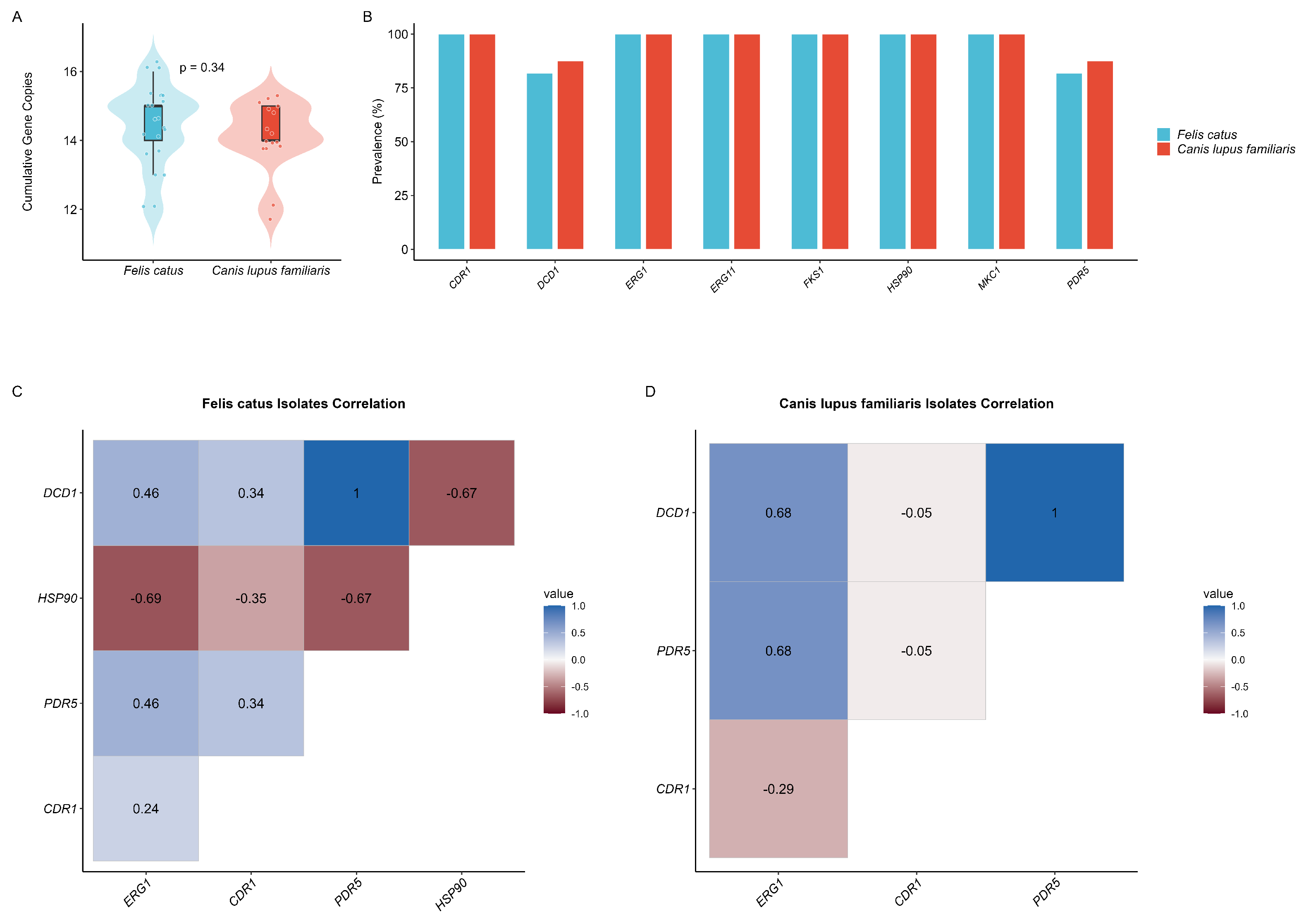
To assess whether the numerical difference in high-MIC phenotype proportion between canine-derived and feline-derived isolates was driven by genomic variations, we first analyzed the distribution of core resistance-related genes by host source. Wilcoxon rank-sum test showed no statistically significant difference in the total cumulative copy number of detected core resistance genes between the two host groups ( W = 142 , p = 0.34 , Figure 7A). There was also no significant difference in the detection rate and copy number distribution of individual core resistance genes (including CDR1, PDR5, ERG11, ERG1) between canine and feline isolates (all p > 0.05 ). Clustering analysis based on resistance gene copy number profiles showed no distinct host-specific clustering pattern, with isolates from both hosts randomly distributed across clusters.
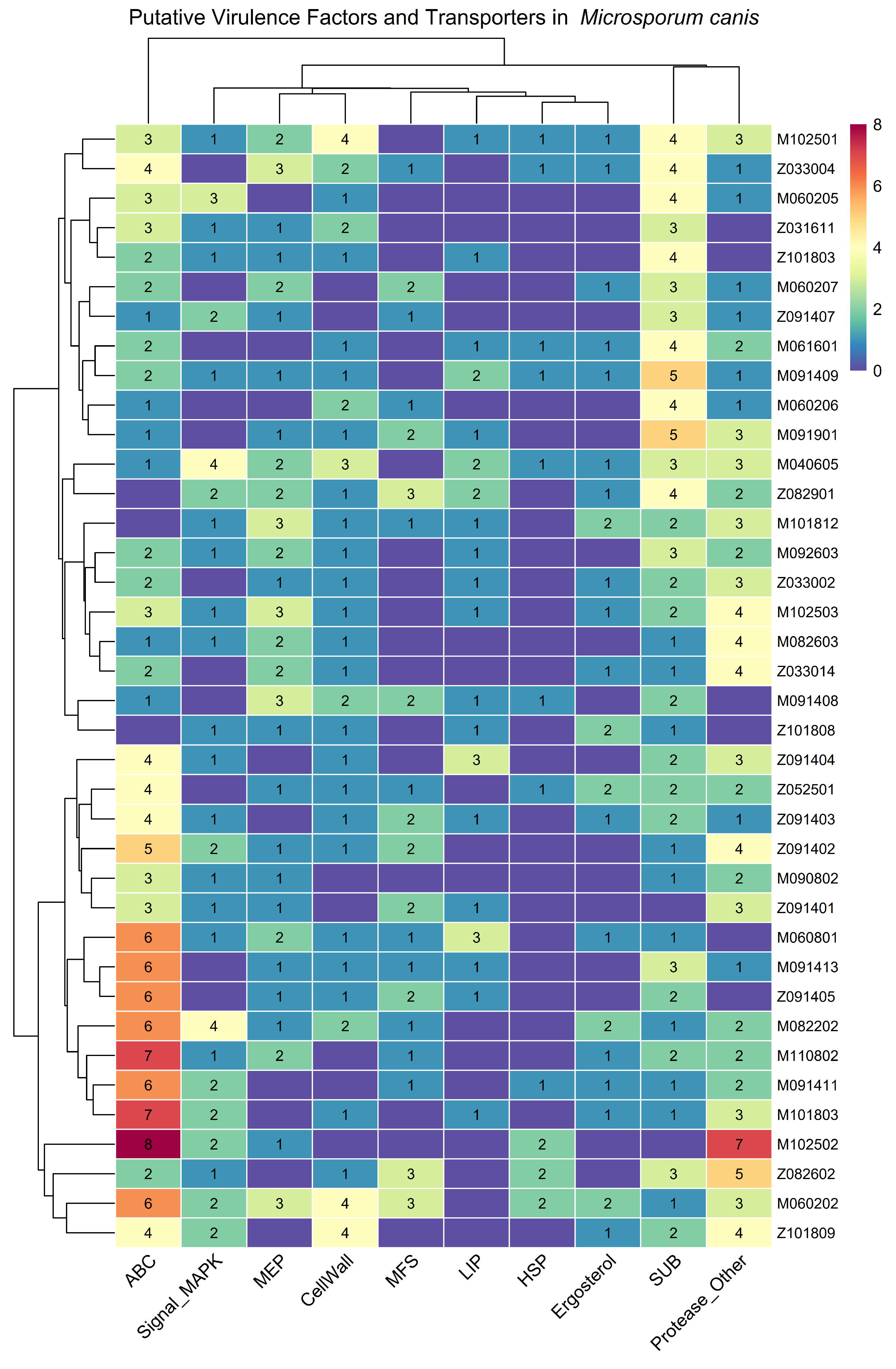
Genomic prediction of virulence factors showed that the composition of core virulence gene families was highly conserved across all isolates, with no host-specific gene deletion or copy number variation (CNV) observed. Secreted protease families associated with keratin degradation and host invasion showed significant gene enrichment: the subtilisin (SUB) family maintained three to eight copies in all strains, while the dipeptidyl peptidase (DPP) and metalloprotease (MEP) families also showed consistent copy number distribution. The ABC transporter family and major facilitator superfamily (MFS) transporters were also significantly enriched, with MFS transporters maintaining four to five copies in all isolates (Figure 5).
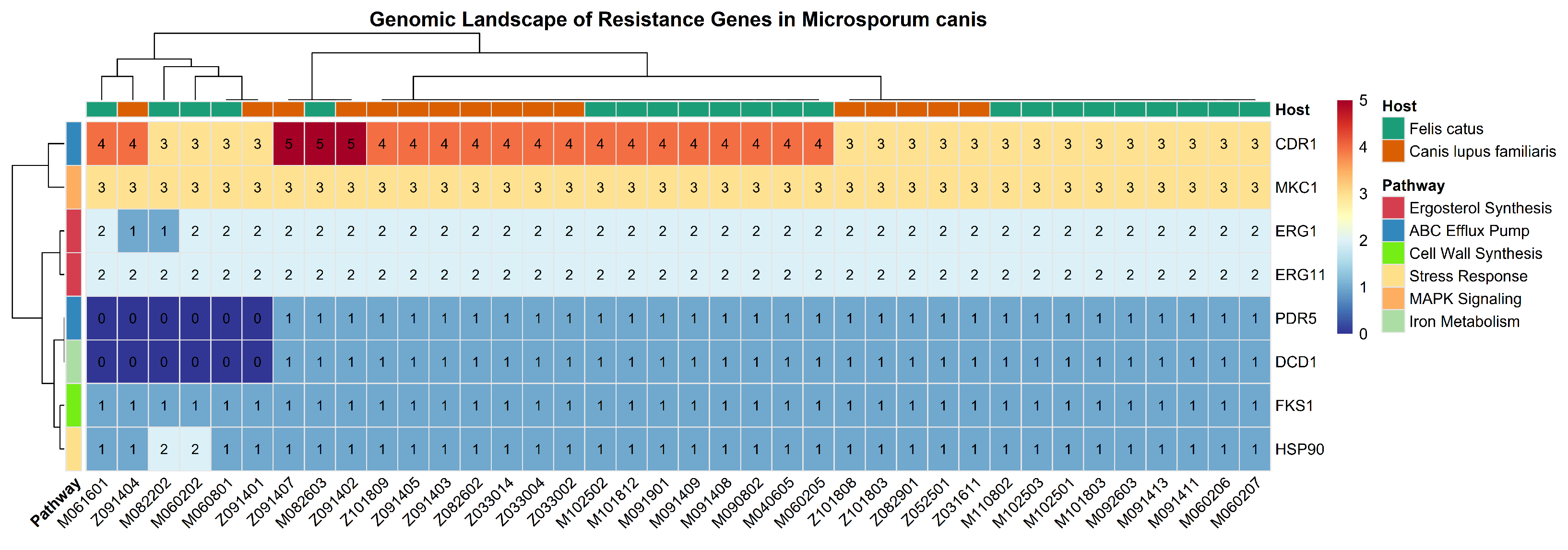
Homologous alignment identified core antifungal resistance-related genes including ergosterol biosynthesis genes (ERG1, ERG11), ABC efflux pumps (CDR1, PDR5), cell wall synthesis gene (FKS1), stress response gene (HSP90), MAPK signaling gene (MKC1) and iron metabolism gene (DCD1). Among these, only the ABC transporter-encoding gene CDR1 showed significant CNV among different strains, ranging from three to five copies, while the copy numbers of other resistance-related genes were relatively stable (Figure 6).
Spearman rank correlation analysis further revealed that CDR1 copy number had no significant correlation with other core resistance-related genes (including PDR5, ERG1, HSP90, DCD1) in both canine-derived and feline-derived isolate groups (all | r | 0.68 , all adjusted p > 0.05 , Figure 7C,D), indicating that CDR1 CNV is an independent genomic event in this study population, not linked to variations in other classical resistance-related genes.

3.4. Association Between CDR1 Copy Number Expansion and Multidrug High-MIC Phenotype

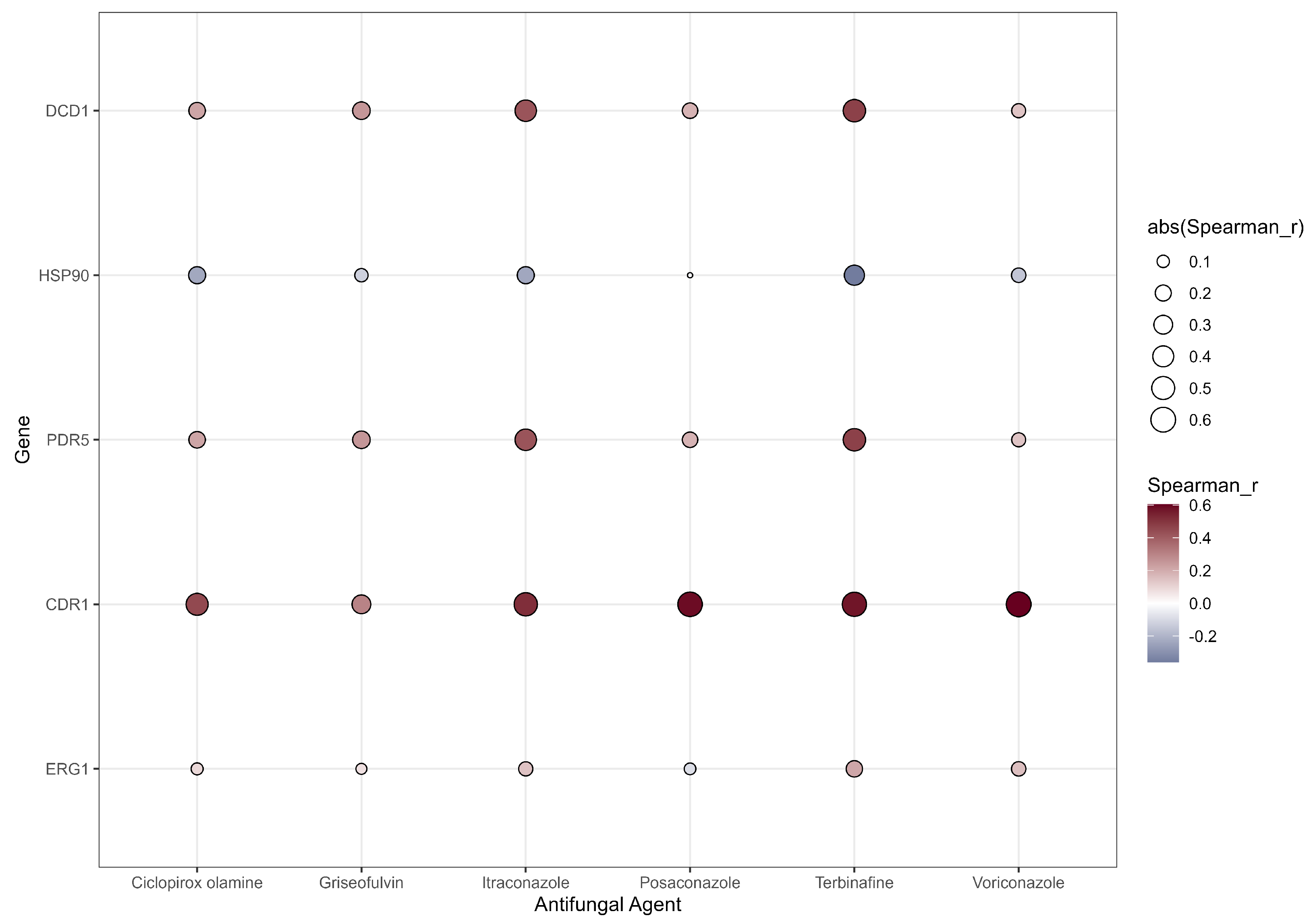
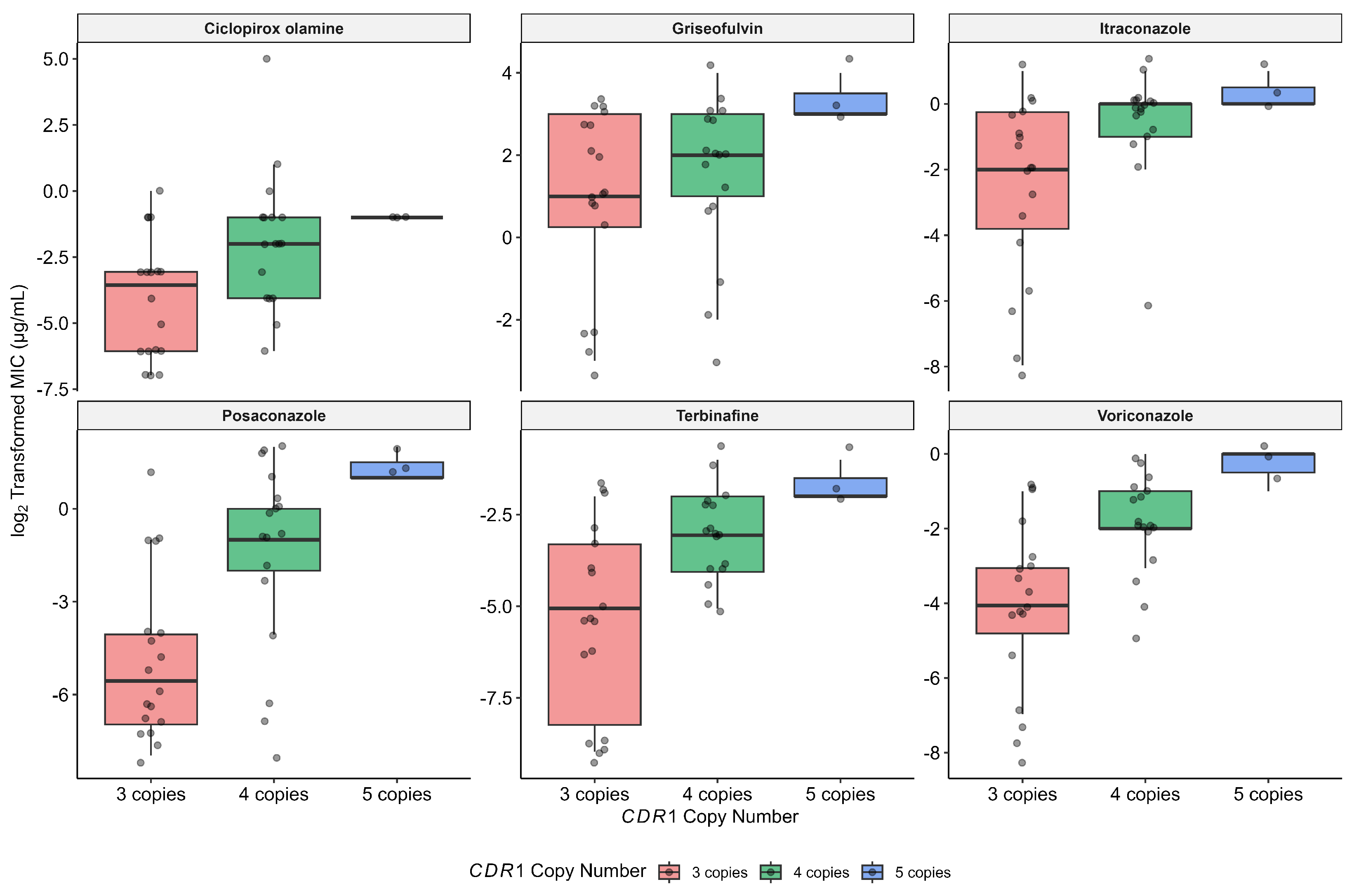
Spearman rank correlation analysis with false discovery rate (FDR) correction was performed to assess the association between core resistance gene copy numbers and log2-transformed MIC values of the six tested antifungal drugs. The results showed that CDR1 copy number was significantly positively correlated with the MIC values of all six tested antifungal drugs. The strongest correlation was observed for voriconazole (Spearman r = 0.60 , adjusted p < 0.001 ), followed by posaconazole ( r = 0.59 , adjusted p < 0.001 ), terbinafine ( r = 0.57 , adjusted p < 0.001 ), itraconazole ( r = 0.52 , adjusted p = 0.0009 ), and ciclopirox olamine ( r = 0.45 , adjusted p = 0.0045 ). No significant correlation was observed between CDR1 copy number and griseofulvin MIC ( r = 0.30 , adjusted p = 0.065 ).
Univariate linear regression further showed that CDR1 copy number explained 35.6 % of the variance in posaconazole MIC ( R 2 = 0.356 ), 33.9 % of the variance in voriconazole MIC ( R 2 = 0.339 ), 31.9 % of the variance in terbinafine MIC ( R 2 = 0.319 ), 20.0 % of the variance in itraconazole MIC ( R 2 = 0.200 ), and 19.4 % of the variance in ciclopirox olamine MIC ( R 2 = 0.194 ). PDR5 copy number also showed a moderate positive correlation with the MIC values of terbinafine ( r = 0.47 , adjusted p = 0.0028 ) and itraconazole ( r = 0.42 , adjusted p = 0.0083 ). No significant correlation was observed between CNV of ERG1, HSP90, DCD1 and the MIC values of all tested drugs (all adjusted p > 0.05 , Figure 8).
Kruskal–Wallis nonparametric test confirmed that the MIC values of voriconazole ( χ 2 = 13.89 , d f = 2 , p < 0.001 ), posaconazole ( χ 2 = 13.06 , d f = 2 , p = 0.0015 ), terbinafine ( χ 2 = 12.37 , d f = 2 , p = 0.0021 ), itraconazole ( χ 2 = 9.93 , d f = 2 , p = 0.0070 ), and ciclopirox olamine ( χ 2 = 7.58 , d f = 2 , p = 0.0226 ) increased significantly with elevated CDR1 copy number (Figure 9). No significant association was observed between CDR1 copy number and griseofulvin MIC ( χ 2 = 5.41 , d f = 2 , p = 0.0669 , R 2 = 0.085 ).

4. Discussion

In this study, we performed integrated genomic and phenotypic characterization of 38 clinical Microsporum canis isolates from companion animals in Beijing, China. Our core findings are fourfold: (1) M. canis strains exhibit high clonal homogeneity, without significant host-specific genetic differentiation between canine and feline isolates; (2) a local human M. canis strain is fully nested within the clade of pet isolates, providing direct genome-level phylogenetic evidence for zoonotic cross-host transmission; (3) terbinafine shows the most potent in vitro antifungal activity against local epidemic strains, while 28.9% of isolates exhibit a multidrug high-MIC phenotype; (4) copy number expansion of the ABC transporter-encoding gene CDR1 is the key genomic feature associated with elevated MICs to multiple antifungal agents in M. canis. These findings fill critical gaps in the current understanding of M. canis zoonotic transmission and antifungal resistance, and provide a scientific basis for clinical precision therapy and One Health-based zoonotic disease control.
From a zoonotic transmission perspective, the high clonal homogeneity of M. canis strains, combined with the highly conserved distribution of core virulence gene families, indicates that this fungus has no observable host adaptation barrier during transmission between canine and feline hosts. Notably, the local human-derived M. canis strain was fully nested within the animal-derived epidemic clade, providing direct genome-level phylogenetic evidence that companion animal-derived strains can be transmitted to humans via close contact, and confirming pets as the primary reservoir hosts for human M. canis infection. Currently, global antifungal resistance surveillance for dermatophytes is largely focused on human clinical strains, with limited systematic monitoring of companion animal-derived epidemic strains [8,13]. Our data strongly support the integration of companion animal dermatophyte surveillance into public health frameworks to establish a human–animal integrated monitoring network and curb the cross-host transmission of drug-resistant M. canis.
Our in vitro antifungal susceptibility data provide clear guidance for clinical empirical treatment of M. canis. Terbinafine exhibited the strongest antifungal activity against all tested isolates, with the lowest MIC range (0.002–0.5 μ g/mL) and median value (0.06 μ g/mL), which is consistent with the 27-year large-scale epidemiological data of M. canis in mainland China. This finding supports terbinafine as the preferred first-line empirical treatment option for companion animal M. canis-associated dermatophytosis in this region. In contrast, griseofulvin and ciclopirox olamine showed weak overall antifungal activity, with individual isolates exhibiting extremely high MIC values exceeding the wild-type threshold, suggesting that these agents should be used with caution in clinical settings without prior susceptibility testing. Stratified analysis by host source showed that canine-derived isolates had a numerically higher proportion of high-MIC phenotype across all six tested agents, although the difference was not statistically significant. This observation is consistent with previous regional studies reporting similar host-associated differences in antifungal susceptibility profiles of companion animal-derived dermatophytes [43]. This observation still has clinical relevance, reminding clinicians to be alert to the risk of empirical azole treatment failure for canine-derived M. canis infections.
Importantly, 28.9% of isolates in this study met the definition of multidrug high-MIC phenotype, indicating that multidrug reduced susceptibility is not uncommon in local M. canis epidemic strains. This rate is significantly higher than the 15.2% reported in a 2025 nationwide study of 348 M. canis isolates from mainland China [13], suggesting a potentially higher prevalence of efflux-mediated cross-resistance in the Beijing region, which aligns with the global alarming trend of rising antifungal resistance in dermatophytes [44]. The significant positive correlation between CDR1 copy number and MICs of antifungals with distinct mechanisms of action (allylamines, triazoles, and hydroxypyridones) provides direct evidence for cross-resistance mediated by broad-spectrum efflux pumps in M. canis. This cross-resistance pattern is consistent with previous reports in other dermatophytes such as Trichophyton rubrum, where overexpression of ABC transporters confers reduced susceptibility to multiple drug classes [45,46].
While our study focused on MIC-based resistance phenotypes, it is important to distinguish between resistance, tolerance, and heteroresistance. Tolerance refers to the ability of fungi to survive high drug concentrations without growth, while heteroresistance describes the presence of subpopulations with reduced susceptibility within a clonal isolate. Although we did not perform specific tolerance or heteroresistance assays, the wide range of MIC values observed for individual drugs (e.g., terbinafine MIC range 0.002–0.5 μ g/mL) and the presence of isolates with intermediate MICs may indicate the existence of heteroresistant subpopulations. This hypothesis is supported by a recent scoping review that identified emerging evidence of heteroresistance to terbinafine in zoonotic dermatophytes [2], highlighting the need for further investigation into these understudied phenotypes in M. canis.
We found that copy number expansion of the ABC transporter-encoding gene CDR1 is the key genomic feature associated with elevated MICs to multiple antifungal agents in M. canis, and this copy number variation is an independent genomic event not linked to variations in other classical resistance-related genes. This finding aligns with established antifungal resistance mechanisms in pathogenic fungi: CDR1 encodes a broad-spectrum ABC efflux pump that can mediate the efflux of antifungal agents with distinct mechanisms of action, whereas variations in ergosterol biosynthesis target genes only affect susceptibility to a single drug class [25,45,46]. Under the selective pressure of widespread clinical use of multiple antifungal agents, copy number variation in broad-spectrum efflux pumps confers a greater survival advantage than single-target gene mutations, a pattern widely documented in Candida albicans and Aspergillus fumigatus [45,47]. The gene dosage effect of CDR1 copy number expansion explained 20–36% of the variance in MIC values for five antifungal agents except griseofulvin, indicating that increased copy number directly enhances the efflux capacity of the ABC transporter. No significant association was observed between CDR1 copy number and griseofulvin MIC ( R 2 = 0.085 , p = 0.0669 ). We therefore propose a mechanistic model for multidrug reduced susceptibility in M. canis: CDR1 copy number expansion increases the expression dosage of the broad-spectrum ABC efflux pump, enhances the efflux of multiple classes of antifungal drugs, and ultimately leads to elevated MIC values and multidrug high-MIC phenotype. This model links genomic variation to phenotypic changes in M. canis drug resistance and provides a clear framework for subsequent functional validation. Notably, this is the first systematic study to demonstrate the association between CDR1 copy number variation and multidrug reduced susceptibility in M. canis, complementing a 2025 case report that identified CDR1 overexpression in a single terbinafine-resistant isolate [18].
Several limitations of this study should be noted. First, we only confirmed the association between CDR1 copy number expansion and elevated MIC phenotype at the genomic level, with no transcriptomic validation of CDR1 expression or functional verification via gene manipulation assays, leaving the complete causal relationship not fully elucidated. Second, all isolates were collected from two veterinary hospitals in Beijing with a limited sample size, so the generalizability of our findings to other geographic regions requires further validation in multi-center, large-sample epidemiological studies. Third, this study focused only on known classical antifungal resistance-related genes, without genome-wide variant screening, which may miss other novel genomic variations associated with reduced antifungal susceptibility in M. canis. We did not perform a genome-wide association study (GWAS) due to the extremely high clonal homogeneity of our study population (average nucleotide identity > 99.9%), which would result in insufficient statistical power to detect significant associations between genetic variants and phenotypes, as previously demonstrated in clonal microbial populations [19,31].
Regarding the choice of antifungal susceptibility testing method, we adopted the CLSI M38 (third edition) standard rather than the EUCAST method for two main reasons. First, the CLSI M38 (third edition) provides validated quality control ranges for all six antifungal agents tested in this study (terbinafine, itraconazole, voriconazole, posaconazole, griseofulvin, and ciclopirox olamine) using Trichophyton mentagrophytes ATCC MYA-4439 as the quality control strain. In contrast, the current EUCAST E.Def 9.3.2 standard does not include quality control ranges for griseofulvin and ciclopirox olamine for dermatophytes, and the quality control range for terbinafine is not yet fully validated for M. canis [48]. Second, the vast majority of previous antifungal susceptibility studies of M. canis in China have used the CLSI method [13], allowing for direct comparison of our results with existing epidemiological data. Notably, fluconazole was not included in this study because neither CLSI nor EUCAST provides validated quality control ranges for fluconazole against M. canis, which would compromise the reliability of susceptibility testing results. This is consistent with previous observations that fluconazole exhibits poor activity against M. canis and is not recommended for clinical use [11,13].

5. Conclusions

This study provides a comprehensive genomic and phenotypic characterization of clinical M. canis isolates circulating in Beijing, China. We demonstrate the high clonal homogeneity of the local M. canis population and provide genome-level evidence for zoonotic cross-host transmission between companion animals and humans. Terbinafine exhibits the most potent in vitro antifungal activity against local epidemic strains, while multidrug high-MIC is prevalent in nearly 30% of isolates. Copy number expansion of the ABC transporter-encoding gene CDR1 is significantly associated with elevated MICs to multiple antifungal agents, representing a key genomic marker of multidrug reduced susceptibility in M. canis. These findings fill critical gaps in the understanding of M. canis zoonotic transmission and antifungal resistance, and provide a scientific basis for clinical precision therapy, antifungal resistance surveillance, and One Health-based zoonotic disease control.

Supplementary Materials

The following supporting information can be downloaded at https://www.mdpi.com/article/10.3390/jof12060429/s1. Table S1: Information of antifungal drug-related genes in Microsporum canis and reference fungal species.

Author Contributions

Z.D.: data curation, formal analysis, investigation, methodology, writing—original draft. X.M. and Y.Z.: resources, investigation, validation. Z.L.: writing—review. Y.W.: writing—review and editing. C.W.: conceptualization, supervision and editing, Corresponding author. All authors have read and agreed to the published version of the manuscript.

Funding

This research was funded by the National Innovation and Entrepreneurship Training Program for College Students of the Ministry of Education of the People’s Republic of China, grant number 202510019024. The APC was not funded by this program.

Institutional Review Board Statement

The study was conducted in strict accordance with institutional guidelines for the clinical sample collection and scientific research use of companion animals, and the sample collection protocol was approved by the Teaching and Research Department of China Agricultural University Veterinary Teaching Hospital (approval No. 202501041709000223875, approval date: 4 January 2025). All procedures performed in this study were non-invasive, did not involve any experimental intervention, anesthesia, or harm to the animals, and fully complied with the 3Rs principle for animal research.

Informed Consent Statement

Written informed consent was obtained from the owners of all client-owned animals involved in this study for the collection of clinical samples and their use in scientific research.

Data Availability Statement

The de novo assembled whole-genome sequences of the 38 Microsporum canis isolates generated in this study have been deposited in the NCBI GenBank database. All related data are publicly accessible under the BioProject accession number PRJNA1460975, and the corresponding GenBank genome accession number for each isolate is detailed in Table 1.

Conflicts of Interest

The authors declare no conflict of interest.

Abbreviations

The following abbreviations are used in this manuscript:
ANIAverage Nucleotide Identity
ABCATP-binding Cassette
CLSIClinical and Laboratory Standards Institute
CNVCopy Number Variation
DMSODimethyl Sulfoxide
FDRFalse Discovery Rate
ITSInternal Transcribed Spacer
IQRInterquartile Range
MFSMajor Facilitator Superfamily
MICMinimum Inhibitory Concentration
MLMaximum Likelihood
NWTNon-Wild-type
PCRPolymerase Chain Reaction
RPMIRoswell Park Memorial Institute
SDASabouraud Dextrose Agar
SNPSingle Nucleotide Polymorphism
UL-WTUpper Limit of Wild-type
WGSWhole-genome Sequencing

References

  1. Gordon, E.; Idle, A.; DeTar, L. Descriptive epidemiology of companion animal dermatophytosis in a Canadian Pacific Northwest animal shelter system. Can. Vet. J. 2020, 61, 763–770. [Google Scholar] [PubMed]
  2. Gupta, A.K.; Wang, T.; Talukder, M.; Bakotic, W.L. Global dermatophyte infections linked to human and animal health: A scoping review. Microorganisms 2025, 13, 575. [Google Scholar] [CrossRef]
  3. Lopes, R.; Garcês, A.; Silva, A.; Brilhante-Simões, P.; Martins, Â.; Cardoso, L.; Duarte, E.L.; Coelho, A.C. Dermatophytosis in companion animals in Portugal: A comprehensive epidemiological retrospective study of 12 years (2012–2023). Microorganisms 2024, 12, 1727. [Google Scholar] [CrossRef]
  4. Yamada, S.; Anzawa, K.; Mochizuki, T. An epidemiological study of feline and canine dermatophytoses in Japan. Med. Mycol. J. 2019, 60, 39–44. [Google Scholar] [CrossRef]
  5. Zhan, P.; Liu, W. The Changing Face of Dermatophytic Infections Worldwide. Mycopathologia 2017, 182, 77–86. [Google Scholar] [CrossRef]
  6. Nenoff, P.; Krüger, C.; Ginter-Hanselmayer, G.; Tietz, H.J. Mycology—An update. Part 1: Dermatomycoses: Causative agents, epidemiology and pathogenesis. J. Dtsch. Dermatol. Ges. 2014, 12, 188–210. [Google Scholar] [CrossRef]
  7. Hay, R.J. Tinea Capitis: Current Status. Mycopathologia 2019, 184, 487–493. [Google Scholar] [CrossRef]
  8. Pasquetti, M.; Min, A.R.M.; Scacchetti, S.; Dogliero, A.; Peano, A. Infection by Microsporum canis in Paediatric Patients: A Veterinary Perspective. Vet. Sci. 2017, 4, 46. [Google Scholar] [CrossRef]
  9. Sierra-Maeda, K.Y.; Martínez-Hernández, F.; Arenas, R.; Boeta-Ángeles, L.; Martínez-Chavarría, L.C.; Rodríguez-Colín, S.F.; Xicohtencatl-Cortes, J.; Hernández-Castro, R. Tinea corporis intrafamilial infection in pets due to Microsporum canis. Rev. Inst. Med. Trop. São Paulo 2024, 66, e30. [Google Scholar] [CrossRef]
  10. Watanabe, M.; Tsuchihashi, H.; Ogawa, T.; Ogawa, Y.; Komiyama, E.; Hirasawa, Y.; Hiruma, M.; Kano, R.; Ikeda, S. Microsporum canis Infection in a Cat Breeder Family and an Investigation of Their Breeding Cats. Med. Mycol. J. 2022, 63, 139–142. [Google Scholar] [CrossRef]
  11. Aneke, C.I.; Otranto, D.; Cafarchia, C. Therapy and antifungal susceptibility profile of Microsporum canis. J. Fungi 2018, 4, 107. [Google Scholar] [CrossRef]
  12. Vite-Garín, T.; Estrada-Cruz, N.A.; Hernández-Castro, R.; Fuentes-Venado, C.E.; Zarate-Segura, P.B.; Frías-De-León, M.G.; Martínez-Castillo, M.; Martínez-Herrera, E.; Pinto-Almazán, R. Remarkable phenotypic virulence factors of Microsporum canis and Their Associated Genes: A Systematic Review. Int. J. Mol. Sci. 2024, 25, 2533. [Google Scholar] [CrossRef]
  13. Liang, T.; Chen, X.; de Hoog, G.S.; Li, L.; Wang, L.; Wan, Z.; Yu, J.; Li, R.; Song, Y. Antifungal resistance patterns of Microsporum canis: A 27-Year MIC Study in Mainland China. Mycoses 2025, 68, e70020. [Google Scholar] [CrossRef]
  14. Aneke, C.I.; Rhimi, W.; Hubka, V.; Otranto, D.; Cafarchia, C. Virulence and Antifungal Susceptibility of Microsporum canis Strains from Animals and Humans. Antibiotics 2021, 10, 296. [Google Scholar] [CrossRef]
  15. Zhou, X.; Belmonte, R.; Tang, C.; Vicente, V.A.; de Hoog, S.; Feng, P. Dermatophytes adaptation to the human host exemplified by Microsporum canis. Mycology 2025, 16, 1357–1372. [Google Scholar] [CrossRef]
  16. Bishnoi, A.; Vinay, K.; Dogra, S. Emergence of recalcitrant dermatophytosis in India. Lancet Infect. Dis. 2018, 18, 250–251. [Google Scholar] [CrossRef]
  17. Mahajan, S.; Tilak, R.; Kaushal, S.K.; Mishra, R.N.; Pandey, S.S. Clinico-mycological study of dermatophytic infections and their sensitivity to antifungal drugs in a tertiary care center. Indian J. Dermatol. Venereol. Leprol. 2017, 83, 436–440. [Google Scholar] [CrossRef] [PubMed]
  18. Nojo, H.; Watanabe, A.; Makimura, K.; Kano, R. Genomic analysis of terbinafine resistance in Microsporum canis Isolated from a Feline Dermatophytosis. Med. Mycol. J. 2025, 66, 17–20. [Google Scholar] [CrossRef] [PubMed]
  19. Nair, S.S.; Thomas, P.; Abdel-Glil, M.Y.; Prajapati, S.K.; V, A.; Reddi, L.; Kumar, B.; Saikumar, G.; Dandapat, P.; Rudramurthy, S.M.; et al. Whole genome sequence analysis of Microsporum canis: A study based on animal strains isolated from India. Microbe 2025, 7, 100329. [Google Scholar] [CrossRef]
  20. Clinical and Laboratory Standards Institute (CLSI). Reference Method for Broth Dilution Antifungal Susceptibility Testing of Filamentous Fungi, 3rd ed.; CLSI Standard M38; Clinical and Laboratory Standards Institute: Wayne, PA, USA, 2017; Available online: https://clsi.org/standards/products/microbiology/documents/m38/ (accessed on 6 April 2026).
  21. de Hoog, G.S.; Guarro, J.; Gené, J.; Figueras, M.J. Atlas of Clinical Fungi, 2nd ed.; Centraalbureau voor Schimmelcultures: Utrecht, The Netherlands, 2000. [Google Scholar]
  22. Gupta, A.K.; Foley, K.A.; Mays, R.R.; Shear, N.H. The diagnosis and management of tinea. BMJ 2020, 370, m2460. [Google Scholar] [CrossRef]
  23. White, T.J.; Bruns, T.D.; Lee, S.; Taylor, J. Amplification and direct sequencing of fungal ribosomal RNA genes for phylogenetics. In PCR Protocols: A Guide to Methods and Applications; Innis, M.A., Gelfand, D.H., Sninsky, J.J., Eds.; Academic Press: San Diego, CA, USA, 1990; pp. 315–322. [Google Scholar]
  24. Altschul, S.F.; Gish, W.; Miller, W.; Myers, E.W.; Lipman, D.J. Basic local alignment search tool. J. Mol. Biol. 1990, 215, 403–410. [Google Scholar] [CrossRef]
  25. Odds, F.C.; Brown, A.J.P.; Gow, N.A.R. Antifungal agents: Mechanisms of action. Trends Microbiol. 2003, 11, 272–279. [Google Scholar] [CrossRef]
  26. Möller, E.M.; Bahnweg, G.; Sandermann, H.; Geiger, H.H. A simple and efficient protocol for isolation of high molecular weight DNA from filamentous fungi, fruit bodies, and infected plant tissues. Nucleic Acids Res. 1992, 20, 6115–6116. [Google Scholar] [CrossRef]
  27. Chen, S.; Zhou, Y.; Chen, Y.; Gu, J. fastp: An ultra-fast all-in-one FASTQ preprocessor. Bioinformatics 2018, 34, i884–i890. [Google Scholar] [CrossRef]
  28. Prjibelski, A.; Antipov, D.; Meleshko, D.; Lapidus, A.; Korobeynikov, A. Using SPAdes de novo assembler. Curr. Protoc. Bioinform. 2020, 70, e102. [Google Scholar] [CrossRef]
  29. Gurevich, A.; Saveliev, V.; Vyahhi, N.; Tesler, G. QUAST: Quality assessment tool for genome assemblies. Bioinformatics 2013, 29, 1072–1075. [Google Scholar] [CrossRef]
  30. Manni, M.; Berkeley, M.R.; Seppey, M.; Simão, F.A.; Zdobnov, E.M. BUSCO update: Novel and streamlined workflows along with broader and deeper phylogenetic coverage for scoring of eukaryotic, prokaryotic, and viral genomes. Mol. Biol. Evol. 2021, 38, 4647–4654. [Google Scholar] [CrossRef]
  31. Jain, C.; Rodriguez-R, L.M.; Phillippy, A.M.; Konstantinidis, K.T.; Aluru, S. High throughput ANI analysis of 90K prokaryotic genomes reveals clear species boundaries. Nat. Commun. 2018, 9, 5114. [Google Scholar] [CrossRef]
  32. Palmer, J.M.; Stajich, J.E. Funannotate, v1.8.16. Available online: https://github.com/nextgenusfs/funannotate (accessed on 6 April 2026).
  33. Stanke, M.; Keller, O.; Gunduz, I.; Hayes, A.; Waack, S.; Morgenstern, B. AUGUSTUS: Ab initio prediction of alternative transcripts. Nucleic Acids Res. 2006, 34, W435–W439. [Google Scholar] [CrossRef]
  34. Seemann, T. Snippy. Available online: https://github.com/tseemann/snippy (accessed on 6 April 2026).
  35. Page, A.J.; Taylor, B.; Delaney, A.J.; Soares, J.; Seemann, T.; Keane, J.A.; Harris, S.R. SNP-sites: Rapid efficient extraction of SNPs from multi-FASTA alignments. Microb. Genom. 2016, 2, e000056. [Google Scholar] [CrossRef]
  36. Minh, B.Q.; Schmidt, H.A.; Chernomor, O.; Schrempf, D.; Woodhams, M.D.; von Haeseler, A.; Lanfear, R. IQ-TREE 2: New models and efficient methods for phylogenetic inference in the genomic era. Mol. Biol. Evol. 2020, 37, 1530–1534. [Google Scholar] [CrossRef]
  37. Kalyaanamoorthy, S.; Minh, B.Q.; Wong, T.K.F.; von Haeseler, A.; Jermiin, L.S. ModelFinder: Fast model selection for accurate phylogenetic estimates. Nat. Methods 2017, 14, 587–589. [Google Scholar] [CrossRef]
  38. Letunic, I.; Bork, P. Interactive Tree Of Life (iTOL) v5: An online tool for phylogenetic tree display and annotation. Nucleic Acids Res. 2021, 49, W293–W296. [Google Scholar] [CrossRef]
  39. Lu, T.; Yao, B.; Zhang, C. DFVF: Database of fungal virulence factors. Database 2012, 2012, bas032. [Google Scholar] [CrossRef]
  40. R Core Team. R: A Language and Environment for Statistical Computing; R Foundation for Statistical Computing: Vienna, Austria, 2026; Available online: https://www.r-project.org/ (accessed on 6 April 2026).
  41. Kolde, R. pheatmap: Pretty Heatmaps, v1.0.13. Available online: https://cran.r-project.org/web/packages/pheatmap/index.html (accessed on 6 April 2026).
  42. Wickham, H.; Chang, W.; Henry, L.; Pedersen, T.L.; Takahashi, K.; Wilke, C.; Woo, K.; Yutani, H.; Dunnington, D.; van den Brand, T.; et al. ggplot2: Create Elegant Data Visualisations Using the Grammar of Graphics, v4.0.3. Available online: https://cran.r-project.org/web/packages/ggplot2/index.html (accessed on 6 April 2026).
  43. Katiraee, F.; Kouchak Kosari, Y.; Soltani, M.; Shokri, H.; Minooieanhaghighi, M.H. Molecular identification and antifungal susceptibility patterns of dermatophytes isolated from companion animals with clinical symptoms of dermatophytosis. J. Vet. Res. 2021, 65, 175–182. [Google Scholar] [CrossRef]
  44. Burmester, A.; Tittelbach, J.; Uhrlass, S.; Nenoff, P.; Fabri, M.; Wiegand, C. Rising antifungal resistance in Trichophyton Species—the Bleak Future Treat. Dermatomycosis? Front. Microbiol. 2026, 17, 1724650. [Google Scholar] [CrossRef]
  45. Prasad, R.; Banerjee, A.; Khandelwal, N.K.; Dhamgaye, S. The ABCs of Candida Albicans Multidrug Transporter Cdr1. Eukaryot. Cell 2015, 14, 1154–1164. [Google Scholar] [CrossRef]
  46. Sanglard, D. Resistance of human fungal pathogens to antifungal drugs. Curr. Opin. Microbiol. 2002, 5, 379–385. [Google Scholar] [CrossRef]
  47. Fraczek, M.G.; Bromley, M.; Buied, A.; Moore, C.B.; Rajendran, R.; Rautemaa, R.; Ramage, G.; Denning, D.W.; Bowyer, P. The Cdr1B efflux transporter is associated with non-cyp51A-mediated itraconazole resistance in Aspergillus fumigatus. J. Antimicrob. Chemother. 2013, 68, 1486–1496. [Google Scholar] [CrossRef]
  48. European Committee on Antimicrobial Susceptibility Testing (EUCAST). Method for the Determination of Broth Dilution Minimum Inhibitory Concentrations of Antifungal Agents for Conidia Forming Moulds. EUCAST Definitive Document E.Def 9.4. 2022. Available online: https://www.eucast.org/fileadmin/src/media/PDFs/EUCAST_files/AFST/Files/EUCAST_EDef_9.4_method_for_susceptibility_testing_of_moulds.pdf (accessed on 6 April 2026).
Figure 1. Epidemiological characteristics of Microsporum canis infections in Beijing, April to October 2025. (A) Monthly detection rate of M. canis in the monitored veterinary hospitals, calculated as the number of confirmed cases divided by total dermatology outpatient cases in the corresponding month. (B) Host species distribution of confirmed M. canis infection cases, showing the proportion of Canis lupus familiaris and Felis catus hosts. (C) Top 10 affected breeds of confirmed M. canis infection cases, with the proportion of each breed in total confirmed cases shown. Total confirmed M. canis cases: n = 173; diagnosis confirmed via Wood’s lamp fluorescence, fungal culture, and microscopic examination of macroconidia.
Jof 12 00429 g001
Figure 2. Maximum likelihood (ML) phylogenetic tree and drug resistance gene copy number distribution of 38 clinical Microsporum canis isolates. The phylogenetic tree was constructed based on cgSNPs, with the best-fit evolutionary model automatically selected by ModelFinder and 1000 ultrafast bootstrap tests performed to evaluate branch reliability. Tree scale bar represents 0.003 nucleotide substitutions per site. Metadata including host source (Homo sapiens, Felis catus, Canis lupus familiaris) and geographic origin (China: Beijing, Overseas) are annotated on the tree; the reference strain ATCC 4439 (GCF_000151145.1) was used as the outgroup. The heatmap on the right shows the copy numbers of core drug resistance genes in each isolate.
Jof 12 00429 g002
Figure 3. Box plots of minimum inhibitory concentration (MIC) distributions of six antifungal drugs against Microsporum canis isolates from Canis lupus familiaris and Felis catus hosts. Y-axis represents log 10 -transformed MIC values ( μ g/mL) of each antifungal drug. Box plot elements: the horizontal line inside the box indicates the median; the box limits represent the 25th (Q1) and 75th (Q3) quartiles; the whiskers extend to the minimum and maximum values within 1.5× interquartile range (IQR); individual dots represent outliers beyond 1.5× IQR. Canis lupus familiaris-derived isolates are marked in red and Felis catus-derived isolates are marked in blue (consistent with the phylogenetic tree color scheme in this study).
Jof 12 00429 g003
Figure 4. Proportion of isolates with high-MIC (non-wild type, NWT) phenotype of Microsporum canis between Canis lupus familiaris-derived and Felis catus-derived isolates. Y-axis represents the percentage of isolates with high-MIC phenotype for each tested antifungal drug. High-MIC thresholds were defined according to the upper limit of wild-type (UL-WT) criteria set in the Methods section: terbinafine ≥ 0.125 μ g/mL, itraconazole ≥ 0.25 μ g/mL, voriconazole ≥ 0.125 μ g/mL, posaconazole ≥ 0.25 μ g/mL, ciclopirox olamine ≥ 2 μ g/mL, griseofulvin ≥2 μ g/mL. Statistical analysis: Two-sided Fisher’s exact test was used to compare the difference in high-MIC proportion between the two host groups; no statistically significant difference was observed for all tested drugs (all p > 0.05 ).
Jof 12 00429 g004
Figure 5. Distribution of copy numbers of virulence factor and transporter protein genes in 38 Microsporum canis isolates. The heatmap shows the copy number of each target gene in individual isolates. Color scale represents gene copy number, ranging from 0 (white) to 10 (dark red). Core gene families include secreted proteases (SUB, MEP, DPP), ABC transporters, MFS transporters, and cell wall biosynthesis-related genes. Note: A copy number of 0 for cell wall-related genes indicates incomplete identification of homologous genes during genome prediction and annotation, not the actual absence of cell wall structures in the isolates.
Jof 12 00429 g005
Figure 6. Genomic landscape of copy numbers of core drug resistance-related genes in 38 Microsporum canis isolates. The heatmap shows the copy number of each drug resistance-related gene in individual isolates, with host source annotated on the top. Color scale represents gene copy number, ranging from 0 (white) to 5 (dark red). The functional pathway of each gene is annotated on the left, including ergosterol biosynthesis, ABC efflux pump, cell wall synthesis, stress response, MAPK signaling, and iron metabolism.
Jof 12 00429 g006
Figure 7. Cumulative copy numbers of core drug resistance genes and gene–gene correlation analysis in Microsporum canis isolates from canine and feline hosts. (A) Box plot of cumulative copy numbers of core drug resistance genes in Felis catus and Canis lupus familiaris isolates. Y-axis represents total cumulative copy number of detected resistance genes. Statistical analysis: Wilcoxon rank-sum test, W = 142 , p = 0.34 . Box plot elements are consistent with Figure 3. (B) Prevalence of core drug resistance genes in Felis catus and Canis lupus familiaris isolates. Y-axis represents the percentage of isolates carrying at least one copy of the corresponding gene. (C) Spearman rank correlation heatmap of core drug resistance genes in Felis catus isolates. (D) Spearman rank correlation heatmap of core drug resistance genes in Canis lupus familiaris isolates. Color scale for (C,D) represents Spearman correlation coefficient, ranging from −1 (dark blue, negative correlation) to 1 (dark red, positive correlation).
Jof 12 00429 g007
Figure 8. Spearman rank correlation analysis between resistance gene copy number and log 2 -transformed antifungal MIC values. Circle size represents the magnitude of the Spearman correlation coefficient (r), with larger circles indicating stronger correlation. Color scale represents the Spearman correlation coefficient, ranging from −1 (dark blue, negative correlation) to 1 (dark red, positive correlation). Statistical analysis: Spearman rank correlation with FDR correction for multiple testing. Core significant results: CDR1 copy number was significantly positively correlated with voriconazole ( r = 0.60 , adjusted p < 0.001 , R 2 = 0.339 ), posaconazole ( r = 0.59 , adjusted p < 0.001 , R 2 = 0.356 ), terbinafine ( r = 0.57 , adjusted p < 0.001 , R 2 = 0.319 ), itraconazole ( r = 0.52 , adjusted p = 0.0009 , R 2 = 0.200 ), and ciclopirox olamine ( r = 0.45 , adjusted p = 0.0045 , R 2 = 0.194 ); PDR5 copy number was significantly positively correlated with terbinafine ( r = 0.47 , adjusted p = 0.0028 , R 2 = 0.267 ) and itraconazole ( r = 0.42 , adjusted p = 0.0083 , R 2 = 0.066 ).
Jof 12 00429 g008
Figure 9. Association between CDR1 copy number and log 2 -transformed antifungal MIC values in 38 Microsporum canis isolates. Y-axis represents log 2 -transformed MIC values ( μ g/mL) of each tested antifungal drug; X-axis represents CDR1 copy number (3, 4, 5 copies). Box plot elements are consistent with Figure 3. Statistical analysis: Kruskal–Wallis nonparametric test was used to compare the differences in MIC values among groups with different CDR1 copy numbers; detailed statistics: voriconazole χ 2 = 13.89 , d f = 2 , p < 0.001 ; posaconazole χ 2 = 13.06 , d f = 2 , p = 0.0015 ; terbinafine χ 2 = 12.37 , d f = 2 , p = 0.0021 ; itraconazole χ 2 = 9.93 , d f = 2 , p = 0.0070 ; ciclopirox olamine χ 2 = 7.58 , d f = 2 , p = 0.0226 ; griseofulvin χ 2 = 5.41 , d f = 2 , p = 0.0669 .
Jof 12 00429 g009
Table 1. Quality control metrics of whole-genome sequencing data for 38 Microsporum canis isolates.
Isolate IDRaw Reads (Pairs)Clean Reads (Pairs)Clean Data (Gb)Q20 (%)Q30 (%)GC Content (%)Average Sequencing Depth (×)Genome Accession Number
M04060522,730,98222,690,1983.4099.3997.3547.44151.37JBXXSW000000000
M06020222,907,93222,762,0503.4199.4097.4047.75151.82JBXXSX000000000
M06020524,001,60823,933,3003.5999.1996.3047.39159.83JBXXSY000000000
M06020623,279,91223,229,5743.4899.4797.5247.42154.94JBXXSZ000000000
M06020725,606,89625,409,9743.8199.4897.7547.41169.63JBXXTA000000000
M06080125,951,64025,789,1723.8799.3797.0147.49172.30JBXXTB000000000
M06160122,311,63822,202,6983.3399.5197.5847.38148.26JBXXTC000000000
M08220221,153,19220,336,2763.0599.3797.3547.48135.79JBXXTD000000000
M08260325,807,61625,722,5303.8699.3096.5947.44171.85JBXXTE000000000
M09080225,395,75225,346,4903.8099.3997.0647.45169.18JBXXTF000000000
M09140828,587,79028,519,7324.2899.4097.2047.43190.55JBXXTG000000000
M09140928,167,28828,102,3104.2299.4297.2047.42187.88JBXXTH000000000
M09141123,594,24623,472,0623.5299.4597.5647.60156.72JBXXTI000000000
M09141328,122,53628,061,5584.2199.4397.3347.41187.44JBXXTJ000000000
M09190126,951,35426,892,9344.0399.4397.2947.41179.42JBXXTK000000000
M09260320,965,31620,855,3263.1399.5197.5447.41139.35JBXXTL000000000
M10180320,989,19620,920,2663.1499.3996.9747.48139.80JBXXTM000000000
M10181221,138,10421,027,8103.1599.3596.9947.40140.24JBXXTN000000000
M10250127,948,54227,833,3324.1799.4397.7847.45185.66JBXXTO000000000
M10250226,205,94626,093,1343.9199.4797.8347.56174.08JBXXTP000000000
M10250323,407,40423,300,3723.5099.4597.6147.44155.83JBXXTQ000000000
M11080219,595,95619,488,0382.9299.3697.2947.71130.00JBXXTR000000000
Z03161121,363,66220,961,5303.1499.4697.5647.43139.80JBXXTS000000000
Z03300224,605,16624,542,8943.6899.4697.6647.46163.84JBXXTT000000000
Z03300424,577,94024,430,1643.6699.5597.7347.39162.95JBXXTU000000000
Z03301423,267,58222,882,3803.4399.4997.6647.46152.71JBXXTV000000000
Z05250124,691,79424,616,9923.6999.5097.8147.41164.29JBXXTW000000000
Z08260225,302,84025,220,5743.7899.4597.7047.51168.29JBXXTX000000000
Z08290122,783,05222,706,8823.4199.3997.0747.61151.82JBXXTY000000000
Z09140127,783,52027,727,8304.1699.4097.1647.46185.21JBXXTZ000000000
Z09140227,480,17827,410,5364.1199.4397.3047.46182.98JBXXUA000000000
Z09140327,288,10427,219,1284.0899.4297.2947.40181.65JBXXUB000000000
Z09140428,425,61428,366,4684.2599.4197.2947.42189.22JBXXUC000000000
Z09140531,572,98031,503,4504.7399.4397.3047.41210.59JBXXUD000000000
Z09140733,550,37833,477,3725.0299.4197.2447.36223.50JBXXUE000000000
Z10180320,675,35820,611,6103.0999.4097.0947.48137.57JBXXUF000000000
Z10180820,685,46220,607,1863.0999.4097.1247.46137.57JBXXUG000000000
Z10180921,155,09821,089,5803.1699.4097.0947.53140.69JBXXUH000000000
Table 2. Clinical information and basic genomic characteristics of 38 Microsporum canis clinical isolates.
Isolate IDHost SpeciesBreedAge 1SexSource HospitalIsolate MonthContigsTotal Length (Mb)GenestRNAANI (%) 2Genome Accession Number
M040605Felis catusAmerican Shorthair2 yFemaleMZAH 3April20723.0882529499.95JBXXSW000000000
M060202Felis catusDevon Rex2 yMaleMZAHJune50823.5015,63315699.95JBXXSX000000000
M060205Canis lupus familiarisGolden Retriever3 yMaleMZAHJune18523.1481639299.94JBXXSY000000000
M060206Felis catusBritish Shorthair3 yMaleMZAHJune18623.11883510199.94JBXXSZ000000000
M060207Felis catusMaine Coon3 yFemaleMZAHJune19423.1183479699.95JBXXTA000000000
M060801Felis catusDevon Rex2 mFemaleMZAHJune26723.0212,01215399.95JBXXTB000000000
M061601Felis catusBritish Longhair4 yMaleMZAHJune17023.1483259199.95JBXXTC000000000
M082202Felis catusBritish Shorthair9 mMaleMZAHAugust21223.0514,08114999.95JBXXTD000000000
M082603Felis catusGolden British Shorthair4 yFemaleMZAHAugust21323.1082039299.95JBXXTE000000000
M090802Felis catusDevon Rex10 mMaleMZAHSeptember19823.1885229799.95JBXXTF000000000
M091408Canis lupus familiarisToy Poodle8 yMaleMZAHSeptember19023.10841710999.95JBXXTG000000000
M091409Felis catusBritish Shorthair5 yFemaleMZAHSeptember20223.1183779799.95JBXXTH000000000
M091411Canis lupus familiarisSamoyed6 yMaleMZAHSeptember36423.3211,15311299.94JBXXTI000000000
M091413Felis catusBritish Shorthair3 yMaleMZAHSeptember18123.12868010299.95JBXXTJ000000000
M091901Felis catusBritish Shorthair8 mFemaleMZAHSeptember19323.12844010099.95JBXXTK000000000
M092603Canis lupus familiarisYorkshire Terrier3 yMaleMZAHSeptember17323.1185819699.95JBXXTL000000000
M101803Felis catusDevon Rex3 yFemaleMZAHOctober20923.0684589399.95JBXXTM000000000
M101812Felis catusDevon Rex3 mMaleMZAHOctober21923.1783249499.95JBXXTN000000000
M102501Canis lupus familiarisMaltese1 yFemaleMZAHOctober25823.1310,58811399.95JBXXTO000000000
M102502Canis lupus familiarisGolden Retriever2 yFemaleMZAHOctober31323.1810,38911299.95JBXXTP000000000
M102503Canis lupus familiarisBichon Frise1 yMaleMZAHOctober22123.13980910499.95JBXXTQ000000000
M110802Canis lupus familiarisSchnauzer10 yMaleMZAHNovember49023.6311,53311999.94JBXXTR000000000
Z031611Canis lupus familiarisWelsh Corgi4 yMaleCAUVTH 4March21323.0982949799.95JBXXTS000000000
Z033002Felis catusBritish Shorthair9 mMaleCAUVTHMarch16523.1282669799.95JBXXTT000000000
Z033004Canis lupus familiarisToy Poodle11 yFemaleCAUVTHMarch16023.1483829699.95JBXXTU000000000
Z033014Canis lupus familiarisShiba Inu2 yFemaleCAUVTHMarch21523.0881919299.94JBXXTV000000000
Z052501Felis catusMunchkin4 mFemaleCAUVTHMay18823.1284329499.94JBXXTW000000000
Z082602Felis catusDomestic Shorthair2 mMaleCAUVTHAugust21523.0283939999.95JBXXTX000000000
Z082901Canis lupus familiarisMaltipoo6 mMaleCAUVTHAugust18822.9087379899.96JBXXTY000000000
Z091401Canis lupus familiarisFrench Bulldog4 yMaleCAUVTHSeptember21023.0487219999.95JBXXTZ000000000
Z091402Felis catusRagdoll3 yFemaleCAUVTHSeptember20723.08846210199.95JBXXUA000000000
Z091403Felis catusDomestic Shorthair4 mFemaleCAUVTHSeptember17523.27852610499.95JBXXUB000000000
Z091404Canis lupus familiarisToy Poodle10 yMaleCAUVTHSeptember18723.10844510299.95JBXXUC000000000
Z091405Felis catusSelkirk Rex1 yMaleCAUVTHSeptember17723.19853610399.95JBXXUD000000000
Z091407Felis catusChinese Li Hua1 yMaleCAUVTHSeptember22023.26866212699.95JBXXUE000000000
Z101803Canis lupus familiarisSchnauzer12 yMaleCAUVTHOctober22923.1586109999.95JBXXUF000000000
Z101808Felis catusBritish Shorthair3 yFemaleCAUVTHOctober19923.08848510099.95JBXXUG000000000
Z101809Canis lupus familiarisBichon Frise1 yMaleCAUVTHOctober27523.10846410399.96JBXXUH000000000
1 Age is presented as year (y) for adult animals and month (m) for juvenile animals; 1 y = 12 months. 2 ANI: Average Nucleotide Identity, calculated against the reference strain ATCC 4439 (GCF_000151145.1). 3 Meilian Zhonghe Animal Hospital. 4 China Agricultural University Veterinary Teaching Hospital.
Table 3. Minimum inhibitory concentrations (MICs) of six antifungal drugs against 38 clinical Microsporum canis isolates (unit: μ g/mL).
Isolate IDVoriconazoleTerbinafineItraconazoleCiclopirox OlaminePosaconazoleGriseofulvin
M0406050.250.1210.060.2516
M0602020.120.0020.120.030.031
M0602050.50.250.50.1244
M0602060.120.060.50.50.52
M0602070.060.0150.060.0150.032
M0608010.50.0020.250.120.068
M0616010.250.030.0150.030.0040.5
M0822020.060.0020.250.0150.54
M08260310.2520.528
M0908020.250.0610.2518
M0914080.50.1210.50.54
M0914090.250.060.25>160.58
M0914110.120.030.250.0080.52
M0914130.030.0310.0150.0080.25
M0919010.250.1220.524
M0926030.060.0150.0150.120.0048
M1018030.0080.060.50.50.064
M1018120.060.1210.060.060.125
M1025010.250.1220.528
M1025020.250.2510.544
M1025030.50.25110.0158
M1108020.0040.0020.0040.0080.0080.25
Z0316110.50.2510.0150.0082
Z03300210.2510.548
Z0330040.50.51118
Z03301410.2510.060.0152
Z0525010.060.1210.060.062
Z0826020.030.0310.0150.0080.25
Z0829010.060.250.0150.120.0048
Z0914010.0080.030.120.120.0150.125
Z09140210.2510.548
Z0914030.120.0610.250.252
Z0914040.120.060.50.250.52
Z0914050.50.120.50.2514
Z0914070.50.510.5216
Z1018030.120.030.50.120.0158
Z1018080.0040.0020.0040.0080.0080.125
Z1018090.50.52218
Disclaimer/Publisher’s Note: The statements, opinions and data contained in all publications are solely those of the individual author(s) and contributor(s) and not of MDPI and/or the editor(s). MDPI and/or the editor(s) disclaim responsibility for any injury to people or property resulting from any ideas, methods, instructions or products referred to in the content.