1. Introduction
Table beet (
Beta vulgaris subsp.
vulgaris) is a strategically important vegetable crop in the Russian Federation. This root crop is gaining increasing popularity each year due to its rich, unique nutrient composition [
1]. Recently, table beet has been actively used in food production: in ready-made salads, frozen soups, chips, snacks, borscht dressings, smoothie powders, food colorings, microgreens, biological additives, and much more [
2,
3,
4,
5].
The special value and popularity of this crop is determined by its easy to grow, high yield and long shelf life in fresh form [
6].
In the Russian Federation, table beet cultivation accounts for approximately 10% of all open-field crop areas—approximately 30,000 hectares. The main industrial production of table beet is concentrated in the Central, Southern, and Volga Federal Districts, where approximately 40% of the gross harvest is grown. The leaders in terms of table beet production in recent years are Moscow (68.74 thousand tons—18.0% of the gross harvest), Samara (32.47 thousand tons—8.5%), Rostov (18.81 thousand tons—4.9%), Volgograd (16.24 thousand tons—4.3%) and Omsk (16.45 thousand tons—4.3%) regions [
7]. The average yield of table beets in the country is about 30 tons/ha. In farms in the Moscow, Leningrad and Volgograd regions with a high level of development of industrial technologies, the yield reaches 70–80 tons/ha [
8].
Table beet is susceptible to various fungal and bacterial pathogens both during plant growth and during root storage. The most harmful of these are
Fusarium spp.,
Phoma spp.,
Alternaria radicina,
Sclerotinia sclerotiorum,
Rhizoctonia solani Kuhn,
Pythium ultimum Trow,
Cercospora beticola Sacc, and
Pseudomonas syringae pv.
aptata [
9,
10,
11,
12,
13,
14,
15,
16].
In the Moscow region of the Russian Federation, annual monitoring of table beet roots after long-term storage (October–April) revealed that significant damage to the yield is caused by
Fusarium root rot pathogens [
17]. Localization of Fusarium fungi in the root head area leads to rotting and death of the central bud, and often the entire root head, making it impossible for flower stalks to grow and produce seed.
Information about the species diversity of
Fusarium fungi that cause
Fusarium root rot of table beets is currently very limited. We were able to find only a few publications devoted to this issue. It is reported that in the 1980s in New York State, several
Fusarium species were isolated and identified from infected root tissue and stems of plants grown in fields and greenhouses. There were
F. roseum,
F. solani,
F. oxysporum and
F. moniliforme. Pathogenicity testing showed that all isolates were non-pathogenic to beet plants and affected only roots already infected with other diseases [
18]. Later in 2017, a group of scientists, also in New York State, conducted phytosanitary monitoring of beet crops and found that, among other root crop pathogens, internal dry rot caused by
Fusarium spp. was the predominant one [
9].
Specifically, in New York State in the 1970s,
F. oxysporum,
F. roseum,
F. solani and
F. monoliforme were isolated and identified from infected roots and stems [
14]. In the Russian Federation, also at the end of the 20th century, scientists from the FSBSI FSVC, based on a study of the morphological characteristics of colonies of isolated pathogens, identified the following spectrum of
Fusarium species in this crop. In the Moscow region, the pathocomplex of
Fusarium root rot of table beet included the species
F. sambucinum,
F. culmorum,
F. solani,
F. sporotrichiella,
F. oxysporum and
F. avenaceum [
19,
20].
Species identification of
Fusarium fungi by analyzing their micromorphological and cultural characteristics is time-consuming and often difficult due to their similarity and high variability of a number of traits [
21,
22]. For reliable identification and confirmation of the taxonomic status of strains, molecular genetic methods are used. These methods are based on the analysis of nucleotide sequences of phylogenetically informative regions of the genome: the
EF1a gene encoding translation elongation factor 1 alpha, the
RPB2 gene encoding the second-largest subunit of RNA polymerase II, and the
CYP51C gene encoding sterol 14-demethylase. An integrated approach, using molecular markers and studying the morphological and biological characteristics of fungi, will enable to address various research challenges in understanding the biological diversity of the genus
Fusarium and its geographic distribution at a new level [
23,
24]. This information is crucial for phytopathological research, a better understanding of the distribution and harmfulness of individual species, and the development of effective strategies to combat associated diseases [
25,
26].
Currently, data on the actual composition and aggressiveness of the Fusarium spp. pathocomplex causing Fusarium rot of table beet roots during storage are lacking in Russia. Therefore, the aim of this study was to identify the species of Fusarium fungi associated with storage root rot in the Moscow region of Russia and to assess their pathogenicity on the host plant.
2. Materials and Methods
2.1. Weather Conditions During the Growing Seasons in the Years of Research
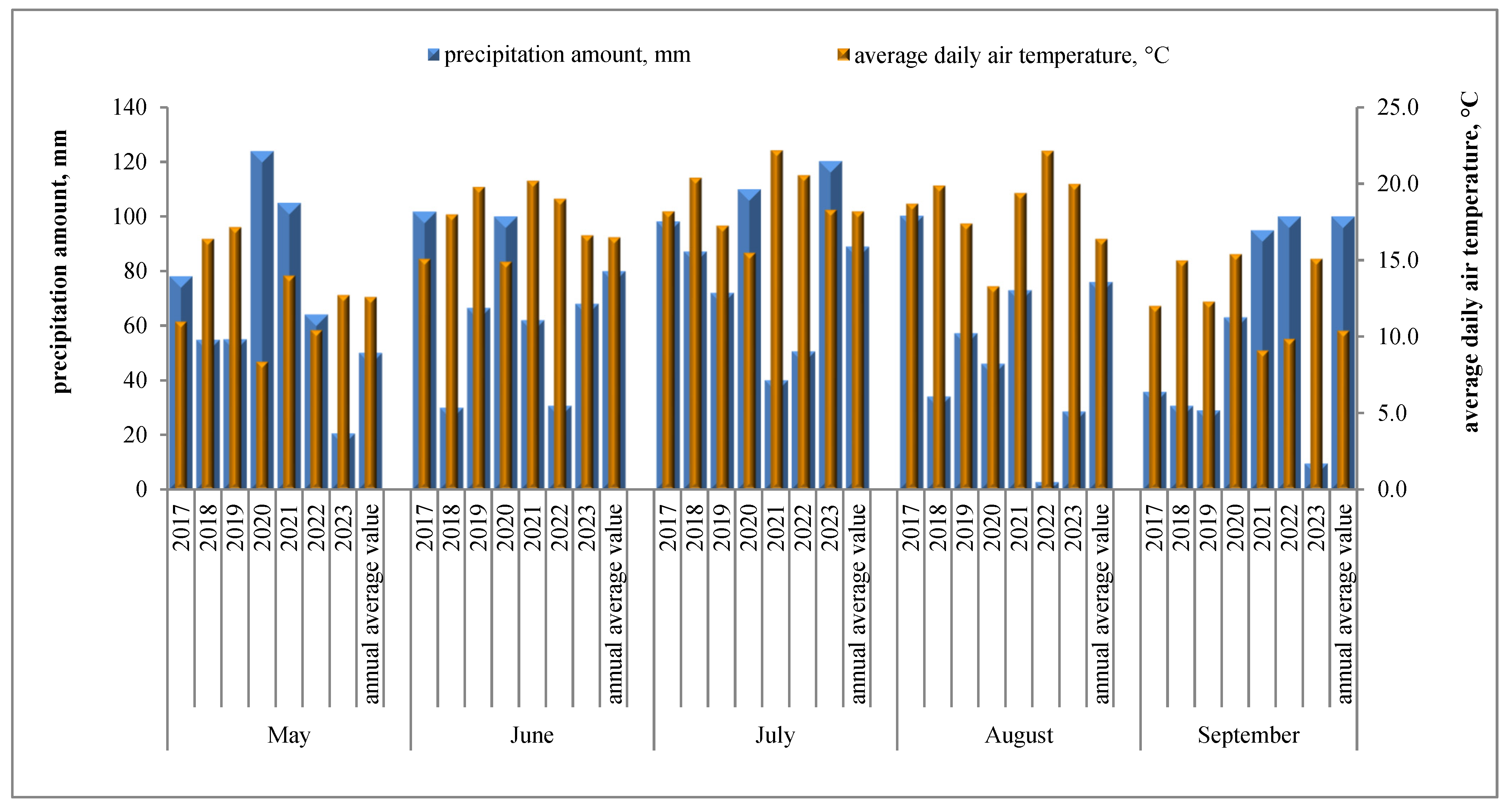
Average daily air temperature and precipitation amount in the Moscow region by month during the growing season are presented since 2017, as the study results discuss the potential relationship between the prevalence of
Fusarium rot during the storage period of table beet edible roots, depending on weather conditions during the growing season (
Figure 1).
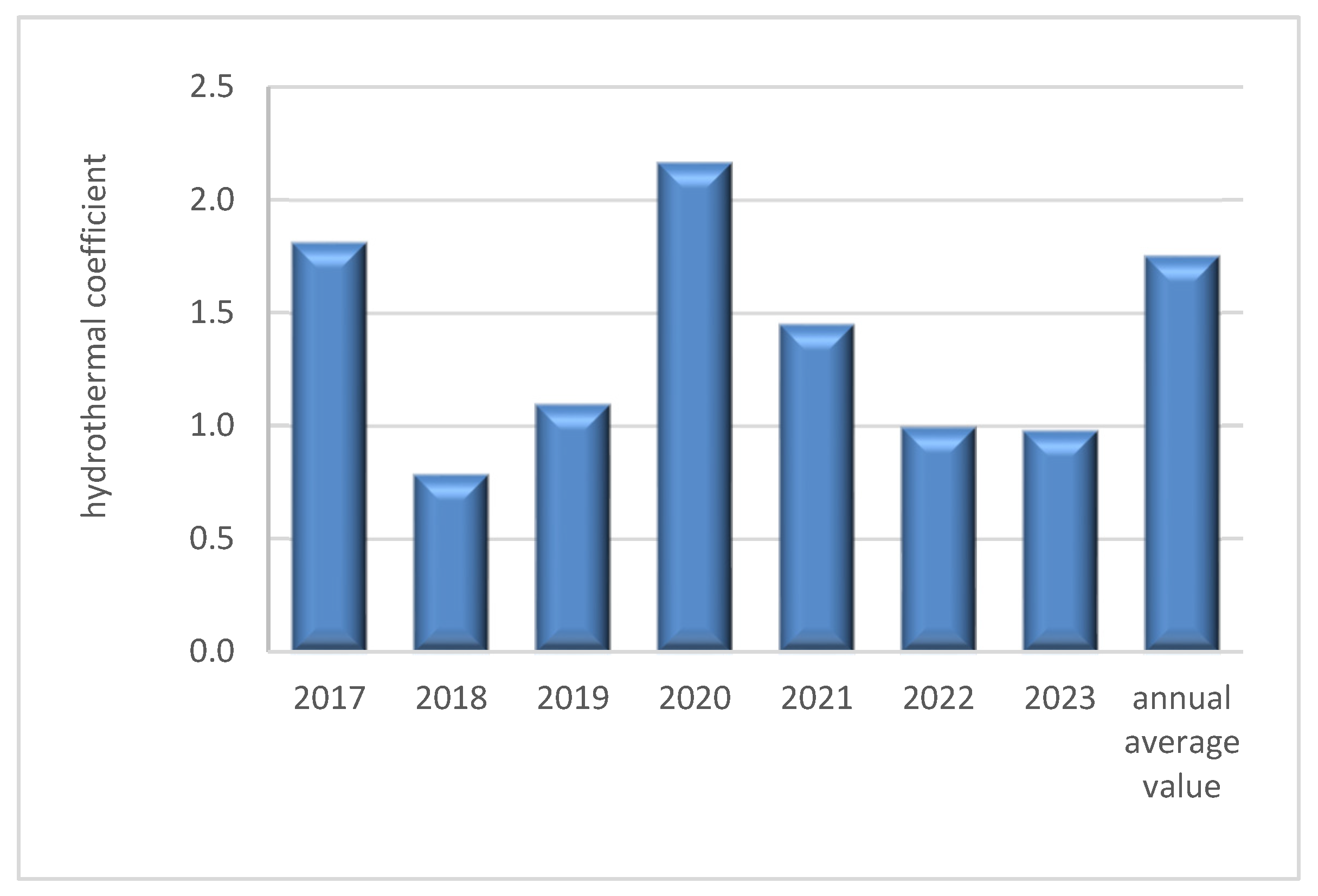
The growing season weather conditions in 2017 and 2020 were identical and characterized by cool and humid summers (HTC = 1.9 and 2.2, respectively) (
Figure 2). Average air temperatures during the growing season were 15.1 °C and 13.3 °C, respectively, which is 1.4–3.2 °C below the long-term average. The growing seasons of 2018, 2019, 2021 and 2022 were characterized as warm and dry (HTC = 0.8–1.4). Average air temperatures during the growing season were 1.6–2.5 °C higher than the long-term average, and 3–4 °C higher in the summer months, with precipitation deficit (60–70% of normal). The 2023 growing season was also warm and dry (HTC = 1.0), but was characterized by uneven precipitation, with minimal amounts in May and August (40% of the normal). In July, precipitation exceeded the long-term average by 36%. Air temperatures during the growing season averaged 1.7 °C above the long-term average. Significantly higher temperatures than the long-term average were observed at the end of the growing season in August-September, by 3.6 °C and 4.7 °C, respectively, with virtually no precipitation.
2.2. Phytopathological Monitoring of the Prevalence of Fusarium Storage Rot on Table Beet Crops in the Moscow Region
The research was conducted from 2017 to 2023. The roots of selected beet varieties were grown in the experimental fields of the main crop rotation of the Federal State Budgetary Scientific Institution Federal Scientific Vegetable Center (FSBSI FSVC) in the Moscow Region of the Russian Federation, using the standard technology [
27]. In total, 350 samples of root crops were grown over the years of research. Each sample contained between 30 and 120 root crops.
During the harvest, each sample was selected for marketable root crops without signs of disease, placed in separate vegetable nets, and stored in containers with polyethylene liners in a vegetable storage facility. During the storage period from October to December, the storage temperature was 2–3 °C, and then from January to April, it was 4–6 °C. The air humidity was 90–92% throughout the storage period.
From 2018 to 2023, after storage of the beet samples selected for the breeding table, phytosanitary monitoring of edible roots for Fusarium rot was conducted. All stored root vegetables were examined. About 3500 root vegetables were analyzed every year. The pathogen’s localization was taken into account during visual diagnostics of disease symptoms.
For each sample, the percentage of disease prevalence and the disease severity index were calculated using the following formulas:
The Disease severity index was determined according to a seven-point scale: 0—no symptoms; 0.5—up to 5% of the surface is affected; 1—6–20% is affected; 2—21–50% is affected; 3—51–70% is affected; 4—more than 70% of the entire surface is affected; 5—the edible root is completely rotten [
28].
2.3. Collection of Plant Material and Isolation of Fungi
Every year, during spring analysis and phytopathological examination of breeding samples, root crops with symptoms of Fusarium rot were selected.
Edible roots having various symptoms of damage were photographed in the laboratory, thoroughly rinsed under tap water, then surface sterilized by immersion in a 50% solution of commercial bleach «Belizna», containing 10–12% sodium hypochlorite for 5 min, followed by two rinses in sterile water. To isolate fungi at the junction of diseased and healthy areas, tissue was cut into several small segments, surface sterilized in 70% ethanol, rinsed in sterile water, dried, placed on potato dextrose agar (PDA) and Czapek-Dox medium, and kept at 25 °C for 3–5 days. Each colony grown was transferred by the hyphal tip to a new medium to obtain a pure isolate culture, followed by single-spore colonies. A total of 32 isolates of the genus Fusarium were isolated over the years of research.
2.4. DNA Extraction, PCR Amplification and Phylogenetic Analysis
The air mycelium of Fusarium fungi was collected from Petri dishes and placed into 1.5 mL Eppendorf tubes. The DNeasy Plant Pro Kit (QIAGEN, Hilden, Germany) was used to isolate DNA. The data on DNA purity and concentration were obtained using a NanoDrop device (Thermo Fisher Scientific, Waltham, MA, USA).
Primer sequences used for PCR amplification of ITS, tef1 and rpb2 loci and PCR conditions were described previously [
29] and are now given in
Table 1.
The composition of the PCR mixture was as follows: 2.5 μL of 10X PCR buffer, 1–10 ng of genomic DNA, 2.5 μL of 2.5 M dNTP, 10 pmol of each primer, 1 unit of Taq DNA polymerase (Syntol, Moscow, Russia) or Pfu DNA polymerase (Evrogen, Moscow, Russia), and sterile water to a volume of 25 μL. Amplification was performed in an MJ PTC-200 thermal cycler (Bio-Rad, Hercules, CA, USA). The amplification program consisted of one cycle of 94 °C for 3 min; 35 cycles of 94 °C for 30 s, for 30 s and 72 °C for 1 min; and a final extension at 72 °C for 5 min. PCR products were separated in agarose gel using the horizontal electrophoresis chamber Sub-Gell GT System and the PowerPac HC power supply (BioRad, Hercules, CA, USA). Visualization of the results was carried out using a GelDoc XR+ System transilluminator (Bio Rad, Hercules, CA, USA). Excision of PCR products from the gel was performed on an ECX-M transilluminator (VilberLourmat, Eberhardzell, Germany). The samples were purified with a ColGen kit (Syntol, Russia) and sequenced at Syntol. Species identification was carried out in GenBank NCBI (
https://www.ncbi.nlm.nih.gov/genbank/ (accessed on 4 April 2026)) and FUSARIOID-ID database—Food, Fibre & Health (
https://www.fusarium.org/).
Phylogenetic analysis was carried out using the Maximum Likelihood method and the Tamura-Nei model. The percentage of trees in which the associated taxa clustered together is shown next to the branches. Evolutionary analyses were performed in MEGA 12 [
24].
2.5. Macro- and Micromorphology of Fusarium Isolates
Micro- and macromorphological characteristics of single-spore cultures were assessed by growing fungi on potato dextrose agar (PDA) medium. Isolates were cultured for 26 days under alternating light conditions (16 h day and 8 h night) at 25 °C. Colony morphology was characterized by the following features: aerial mycelium density and substrate mycelium (stroma) pigmentation. Microscopic characteristics of single-spore cultures were examined and recorded using a Zeiss Axio Lab A1 microscope (Carl Zeiss, Oberkochen, Germany) and ADF Image Capture software (version x64, 4.11.21522.20221011). At least 30–40 microstructures (conidia, chlamydospores) were measured for each isolate. The taxonomic status of
Fusarium fungi was characterized using identification guides [
30,
31] and scientific publications.
2.6. Pathogenicity Test
To assess the pathogenicity of Fusarium isolates associated with storage rot of root crops and to confirm Koch’s postulates, four widely cultivated table beet varieties bred by FSBSI FSVC—Marusya, Krasny barkhat, Dobrynya, and Lyubava—were used. These varieties differ in their resistance to storage rot. First, all 32 isolates collected from affected edible roots were analyzed, followed by defined isolates of the five identified Fusarium species.
The edible roots were surface sterilized by immersion in a 50% sodium hypochlorite solution for 5 min, then rinsed twice in sterile water. After sterilization, the roots were cut into identically sized disks (4 × 3 × 1 cm) and placed in plastic containers (five replicates for five roots of each variety). Inoculation was carried out with mycelial blocks of a ten-day-old
Fusarium fungal culture, placing them in the center of the disks. A sterile agar block served as the control. Containers with inoculated disks were moistened with sterile water and placed in the dark for two days, then in a light installation with alternating illumination (16 h day and 8 h night) at a temperature of 25 °C. The degree of damage was assessed on the seventh day after inoculation, measuring the diameter and depth of the affected area. The volume of the affected area (Va, cm
3) was calculated using the formula for the volume of a cylinder, measuring the radius and depth of the affected area:
Based on the volume of the affected area of root disks, fungal isolates were differentiated into the following pathogenicity categories:
Non-pathogenic (NP): Va = 0 mm3.
Weakly aggressive (WA): Va = 1–70 mm3.
Moderately aggressive (MA): Va = 71–150 mm3.
Highly aggressive (HA): Va = ≥151 mm3.
2.7. Growth of Fusarium Species on Artificial Medium and Natural Substrate (Beet Root Disks) at Different Temperatures (Temperature Sensitivity) In Vitro
Eight isolates of five identified Fusarium species were grown on artificial medium (PDA) for 26 days under alternating light conditions (16 h day and 8 h night) at different temperatures (25 °C and 5 °C). Colony morphology, pigmentation, and fungal growth rate were assessed daily, recording the time of growth onset (the appearance of mycelium beyond the root disk). Colony diameter was measured in two transverse directions for three parallel inoculations (n = 3) until the plate was completely covered.
Inoculation of root disks of 13 table beet breeding lines (Nos. 174, 179, 184, 185, 187, 189, 204, 205, 206, 207, 208, 209, and 210) was carried out with 5 defined isolates of different Fusarium species. Five edible roots of each line were taken for inoculation in triplicate. Artificial inoculation of disks was carried out in the same way as in the pathogenicity test. The experiment was set up at two temperatures: 25 °C and 5 °C. The results were recorded on the tenth day after inoculation. The lines were differentiated into resistant (Va25 °C = 1–50 mm3; Va5 °C = 0 mm3); relatively resistant (Va25 °C = 51–200 mm3, Va5 °C = 0.1–5 mm3); moderately susceptible (Va25 °C = 201–1000 mm3, Va5 °C = 5–8 mm3) and susceptible (Va25 °C > 1000 mm3).
Temperature sensitivity was determined according to the cold tolerance index (CTI) of linear growth using the formula:
The higher the CTI (closer to 1), the better the pathogen is relatively adapted to cold.
2.8. Statistical Analysis
Experimental data analysis and statistical evaluation were performed using Microsoft Excel 2010 and Statistica 10.0 software. To determine the significance of differences in the aggressiveness of
Fusarium strains, one-way analysis of variance (ANOVA) was used with grouping of mean values into homogeneous groups according to Duncan’s multiple range test (
p ≤ 0.05) [
32].
3. Results
3.1. Phytopathological Monitoring and Symptoms
Monitoring of disease development during storage of table beet roots grown in the Moscow region revealed that
Fusarium fungi predominate in the pathocomplex causing the pit-storage decay. The percent of edible roots affected by
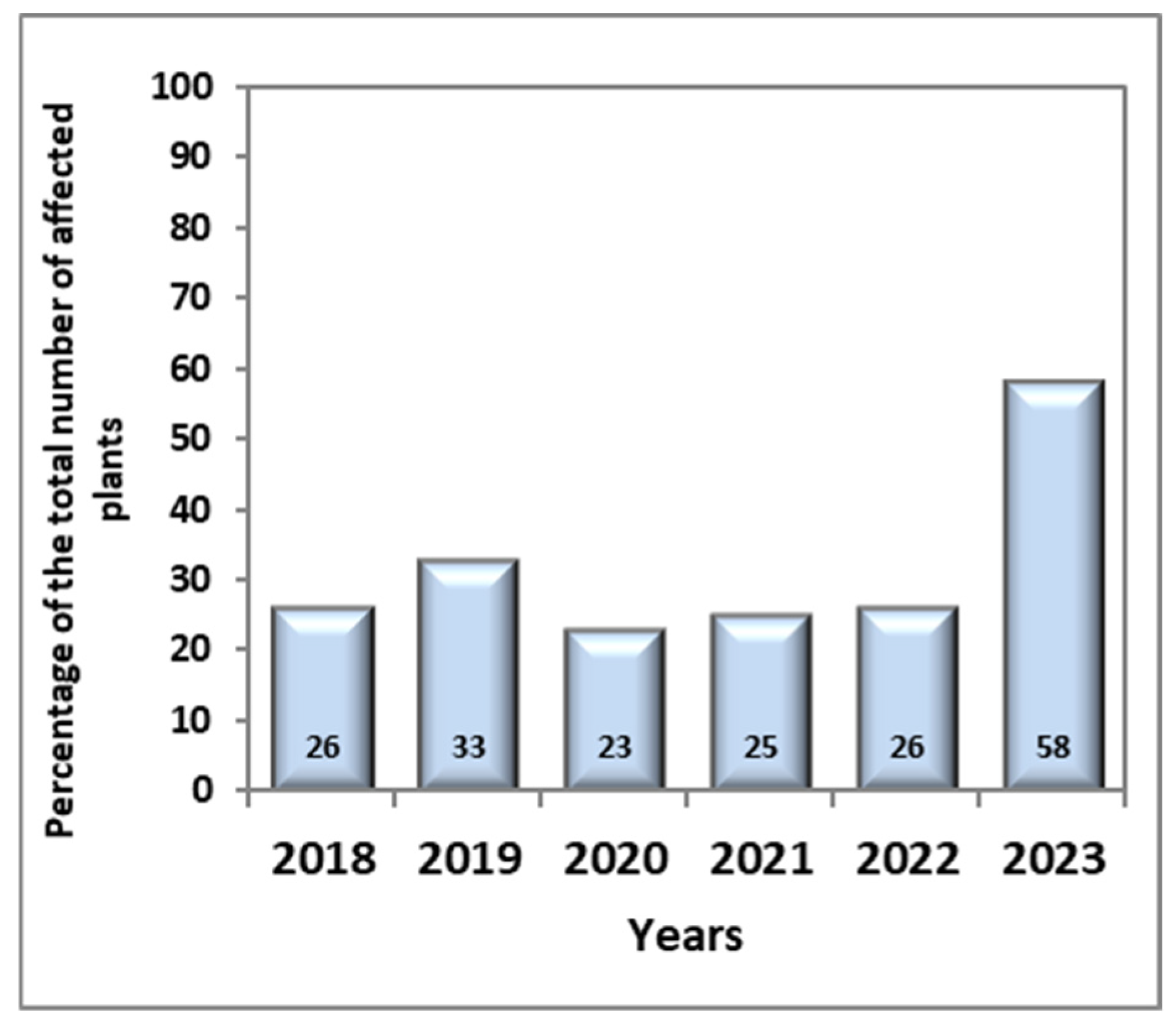
Fusarium during storage varied across the study years, depending on the agroclimatic conditions of the year and the sample size analyzed, from 23% (2020) to 58% (2023) (
Figure 3). The prevalence of Fusarium rot within individual varieties, depending on their resistance and the year of study, ranged from 3% to 70%. The disease severity index (DSI) averaged from 1.8 points (2020–2021) to 2.4 points (2019, 2023) (
Table 2).
Warm and humid weather is believed to promote the active development of most
Fusarium species. In our studies, a correlation analysis of the dependence of
Fusarium rot prevalence on weather conditions during plant vegetation revealed the most consistent negative relationship between
Fusarium rot development and the integral indicator—the hydrothermal coefficient (r = −0.42)—during the vegetation period before storage. As can be seen in
Figure 1, the maximum number of edible roots affected by
Fusarium rot during storage, relative to the number analyzed, was recorded in the 2018/2019 and 2022/2023 seasons, when the HTC during the vegetation periods of 2018 and 2022 was significantly lower than the long-term average—0.8 and 1.0, respectively. It can be assumed that the lack of soil moisture with persistently high daytime air temperatures during the period of intensive accumulation of dry matter and ripening of edible roots to the stage of technical maturity in these years provoked a decrease in the immune status of plants, which led to an increase in the intensity of spread in the field and the development of infection during storage.
When visually diagnosing
Fusarium rot symptoms on edible roots, the location of pathogen development was taken into account, as this is a pivotal factor in the ability of
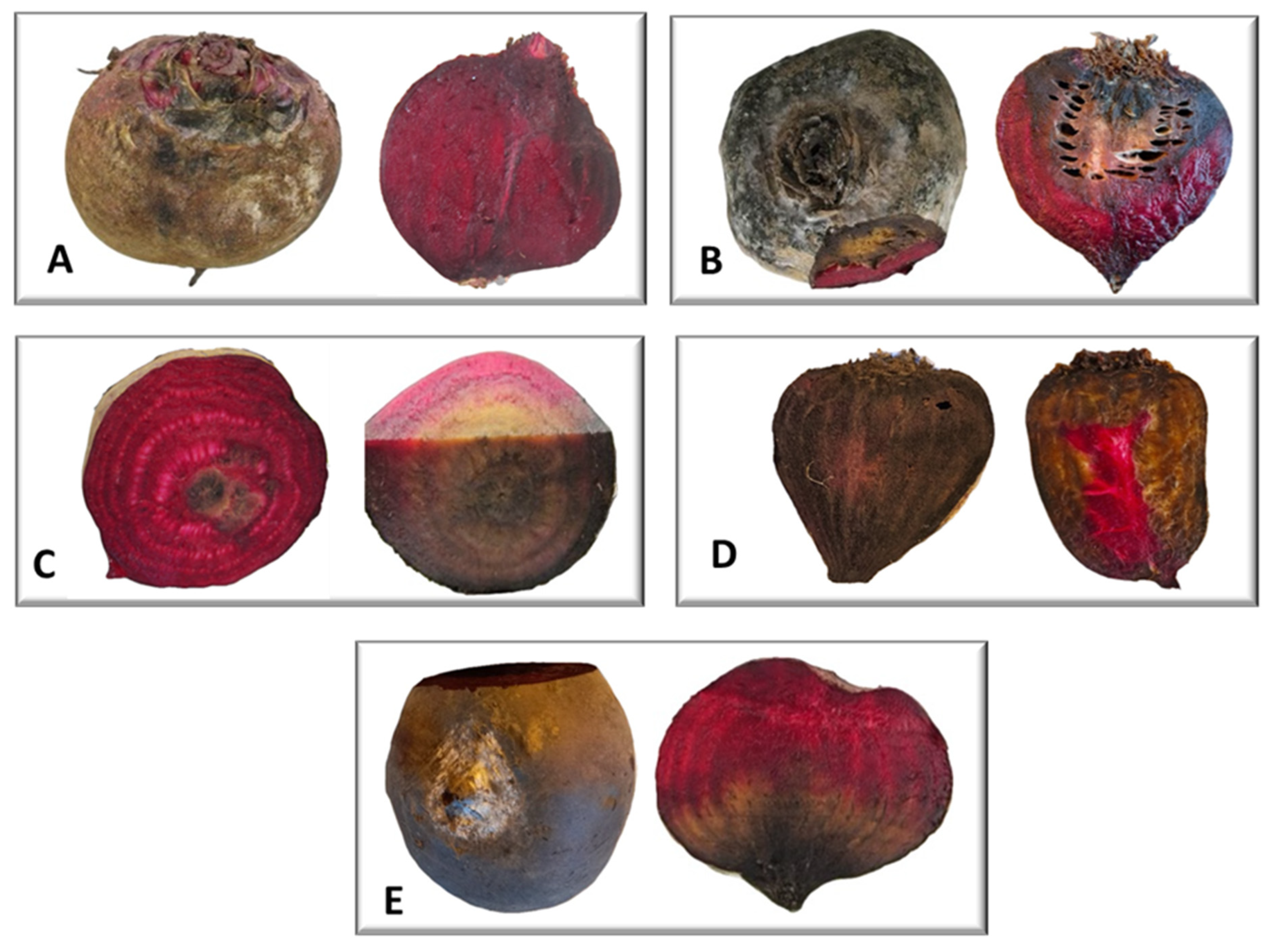
Fusarium-infected roots to regrow and produce seed for the propagation of valuable breeding material. On average, over the years of research, in 33% of cases,
Fusarium rot symptoms manifested as ulcers on the root surface, darkening and softening of the tissue in the affected area, sometimes with a small amount of exudate and a white-gray sporulation (
Table 2 and
Figure 4A). Signs of root head rot were observed in 30% of affected edible roots. In most cases, the disease severity index was high: the root head was completely affected and collapsed when pressed. When cutting the root, dry rot of the internal tissue spreading from the head was observed, forming cavities and a sporulation coating (
Figure 4B). In 15% of roots without external surface damage, symptoms of
Fusarium rot were detected only upon cutting the root, manifesting as rot of the internal tissue or conductive bundles (
Figure 4C). At a high stage of disease development, when the DSI reached 3.5–4 points, complete damage of the entire root was observed (also 15% of the analyzed ones) (
Figure 4D). In some roots (on average, 7% over the years of study), signs of damage were observed in the area of the tip and axial root in the form of dry rot without further spreading (
Figure 4E). When planted, most of these edible roots took root and formed a leaf rosette.
In some years of research, a change in the dominant types of localization of symptoms of
Fusarium root rot was observed. In the period 2018–2019, edible roots affected by
Fusarium in the head area predominated (35–50% of all cases). This is typical for primary infection through the root neck or the development of a systemic infection. In the 2020–2023 years of research, a drastic increase in the proportion of roots with superficial ulcers (from 15 to 16% to 30–60%) was recorded, and a decrease in the proportion of lesions in the head area of the root to 10–32%. The proportion of completely affected roots reached 11–17% over five seasons, and 25% in 2018, indicating a high infectious load of vegetable agrocenosis with aggressive pathogens in relation to table beet roots (
Table 2).
3.2. Isolation of Fusarium Isolates Associated with Storage Rot of Table Beet and Assessment of Their Aggressiveness
Fusarium isolates were isolated from different parts of Fusarium-infected beet roots during storage. Over the years of research, a total of 28
Fusarium isolates were obtained (
Table 3), which were included in a study on species identification (morphological, molecular, and phylogenetic) and their phytopathogenic properties for the host plant.
A primary pathogenicity test on edible roots of two commercial beet varieties (Marusya and Krasny barkhat) with different field resistance to Fusarium under natural infection conditions showed that, based on the average disk damage zone after artificial inoculation with mycelial blocks of Fusarium isolates, the group of moderately aggressive isolates predominated (54%). The group of isolates characterized by high aggressiveness was the smallest (18%).
3.3. Phylogenetic Analysis of Fusarium Fungi
Based on macro- and micromorphological characteristics, the isolates were preliminarily divided into five morphological groups with similar features. Representatives of each morphological group, each with varying levels of aggressiveness (a total of seven
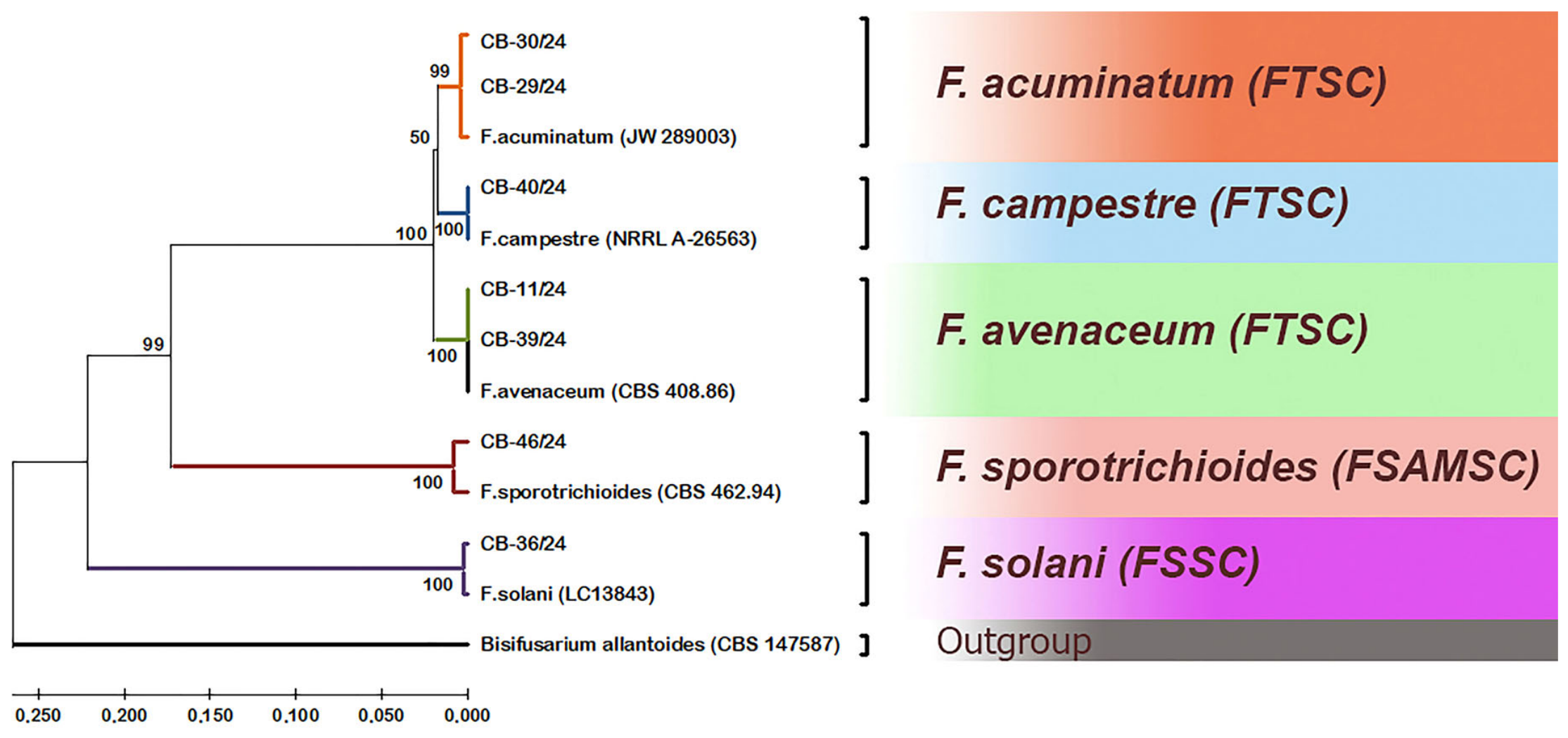
Fusarium isolates), were included in a study of species identification using molecular markers at three loci: ITS, tef1, and rpb2. The resulting nucleotide sequences of these loci in the studied isolates were compared with reference sequences from the curated FUSARIOID-ID database. As can be seen from the dendrogram, the sequences of all three analyzed loci were clustered with the reference sequences of the loci of the corresponding species, which made it possible to unambiguously identify the species of the strains studied (
Figure 5).
As a result, strains F-CB-29 and F-sv-30 were discerned to belong to the species F. acuminatum—F. tricinctum species complex (FTSC). Strains F-CB-39, F-CB-11, according to a set of molecular and phenotypic characteristics, belong to the species F. avenaceum (FTSC); strain F-CB-40 belongs to the species F. campestre (FTSC); strain F-CB-46 belongs to the species F. sporotrichioides—F. sambucinum species complex (FSAMSC); strain F-CB-36 belongs to the species F. solani—F. solani species complex (FSSC). Thus, in the conditions of the Moscow region, five Fusarium species were identified as part of the pathocomplex of pathogens causing storage rot of table beet edible roots: F. acuminatum, F. avenaceum, F. campestre, F. sporotrichioides, and F. solani. F. acuminatum was the dominant species in the structure of the analyzed pathocomplex (43% of isolates from the total number), the percentage of other species was around 14%.
3.4. Morphology of Strains of Identified Fusarium Species
Based on the morphological and cultural characteristics of colonies on artificial agar medium PDA, the analyzed isolates differed in the structure and density of the aerial mycelium, and pigment formation in the aerial mycelium and stroma (
Table 4). The micromorphological characteristics of the
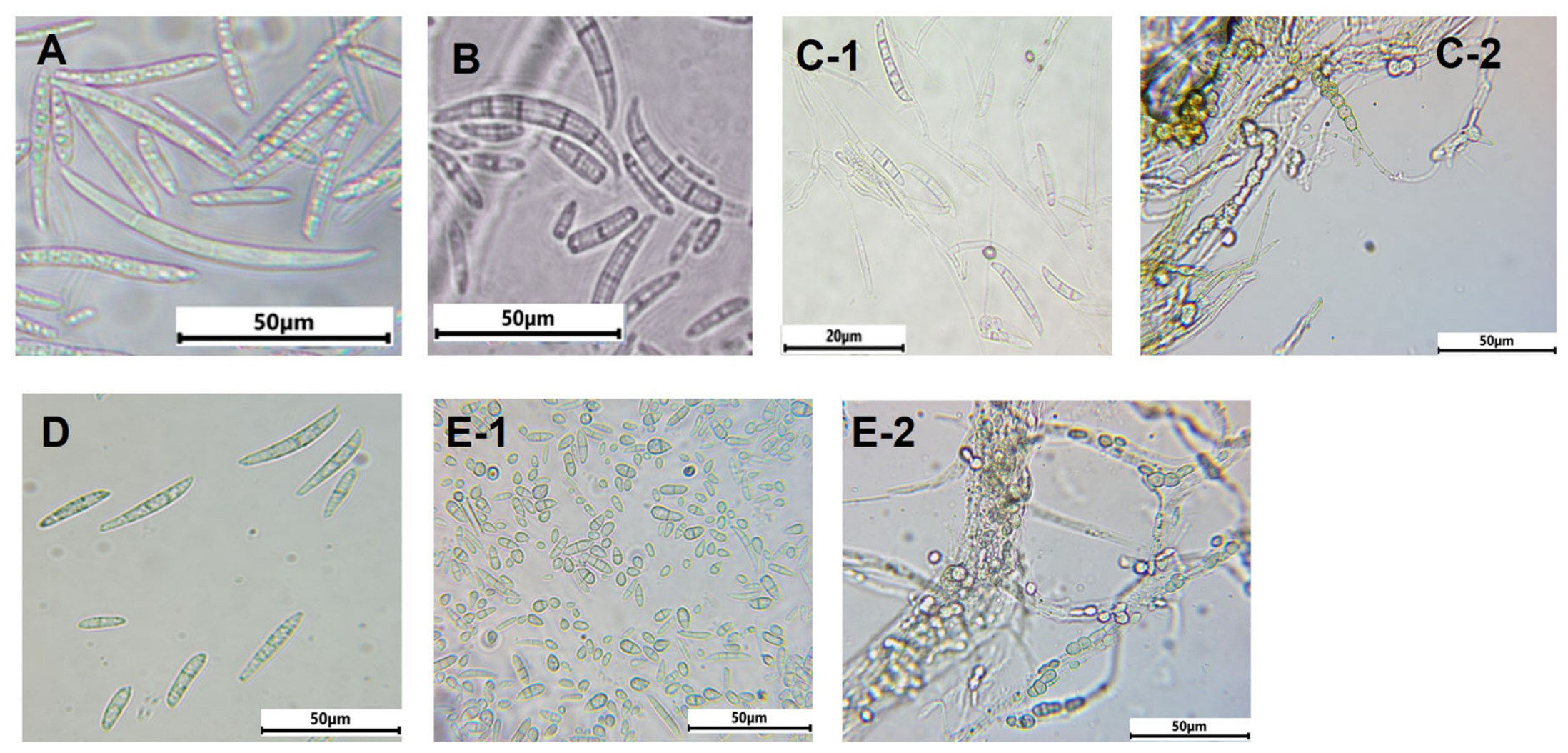
Fusarium species involved in the pathocomplex causing storage rot of table beet roots are presented in
Table 4 and
Figure 6.
All species produced different proportions of macro- and microconidia of various shapes and sizes; chlamydospores were found only in the species
F. sporothrichioides and
F. solani (
Table 4 and
Figure 6).
3.5. Aggressiveness of Fusarium Species for Different Varieties of Table Beet Based on In Vitro Artificial Inoculation of Root Disks
Different
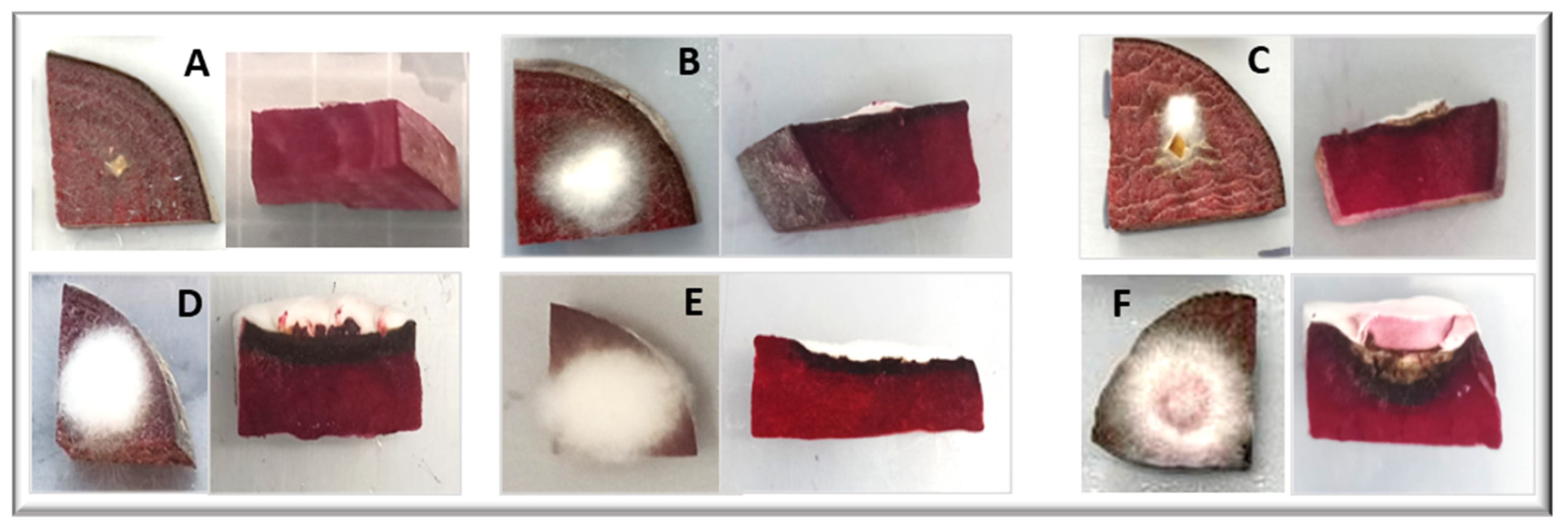
Fusarium species caused different symptoms of beet root disk lesions (
Figure 7).
F. avenaceum and
F. sporotrichioides strains were characterized by a small diameter zone and weak development of aerial mycelium on the disk surface, penetrating 1–2 mm into the tissue with a 1.5–2 times larger diameter of the affected area. The diameter of the affected area by
F. campestre strain averaged 40–50% of the disk surface, forming a dense aerial mycelium in the center, beneath which a zone of darkening of the inner tissue layers reached 5–10 mm. By the seventh day,
F. solani and
F. acuminatum strains had almost completely occupied the entire disk surface, forming well-developed dense aerial mycelium, penetrating and mummifying internal tissue by 3–4 mm and 4–20 mm, respectively. At the same time,
F. acuminatum in the center of the affected area caused destructive changes in the internal tissues with a change in their color, the formation of cavities and a coating of white mycelium.
Based on the average affected area volume,
F. acuminatum demonstrated the greatest aggressiveness. When infected with this species, the average affected area volume on root disks across all analyzed varieties was 435 mm
3, significantly exceeding the average affected area volume for isolates of other species.
F. solani was the second most aggressive, with an average affected area volume of 303 mm
3. This isolate demonstrated the most pronounced variety-specificity: from significant damage of root disks in the Dobrynya variety to mild damage in the Marusya and Lyubava varieties. The isolates of
F. sporotrichioides and
F. campestre were characterized by a moderate degree of aggressiveness according to the average value of the affected area, and the isolate of
F. avenaceum showed weak aggressiveness towards the table beet roots of the analyzed varieties and did not differ significantly from the control (
Table 5).
This experiment demonstrated varying degrees of resistance among the analyzed varieties to specific Fusarium species. For example, when the Krasny barkhat variety was infected, the degree of disk damage was minimal and did not differ significantly from the control. The Marusya variety was primarily affected by F. acuminatum, while the Dobrynya and Lyubava varieties showed varying degrees of susceptibility to the analyzed Fusarium species. Overall, the degree of damage and symptomatic manifestations in the table beet varieties after artificial inoculation corresponded to their field resistance.
Thus, the infection outcome after inoculation of root disks with different isolates was influenced by both the aggressiveness of the analyzed Fusarium species and the specific resistance of the cultivars. A two-way analysis of variance revealed the strongest interaction effect of both factors, accounting for 47%, as well as a significant effect of the Fusarium species, accounting for 45% of the total variance. The genotype effect was also significant, accounting for 8%.
3.6. In Vitro Growth of Fusarium Species on Artificial Nutrient Media at Different Temperatures
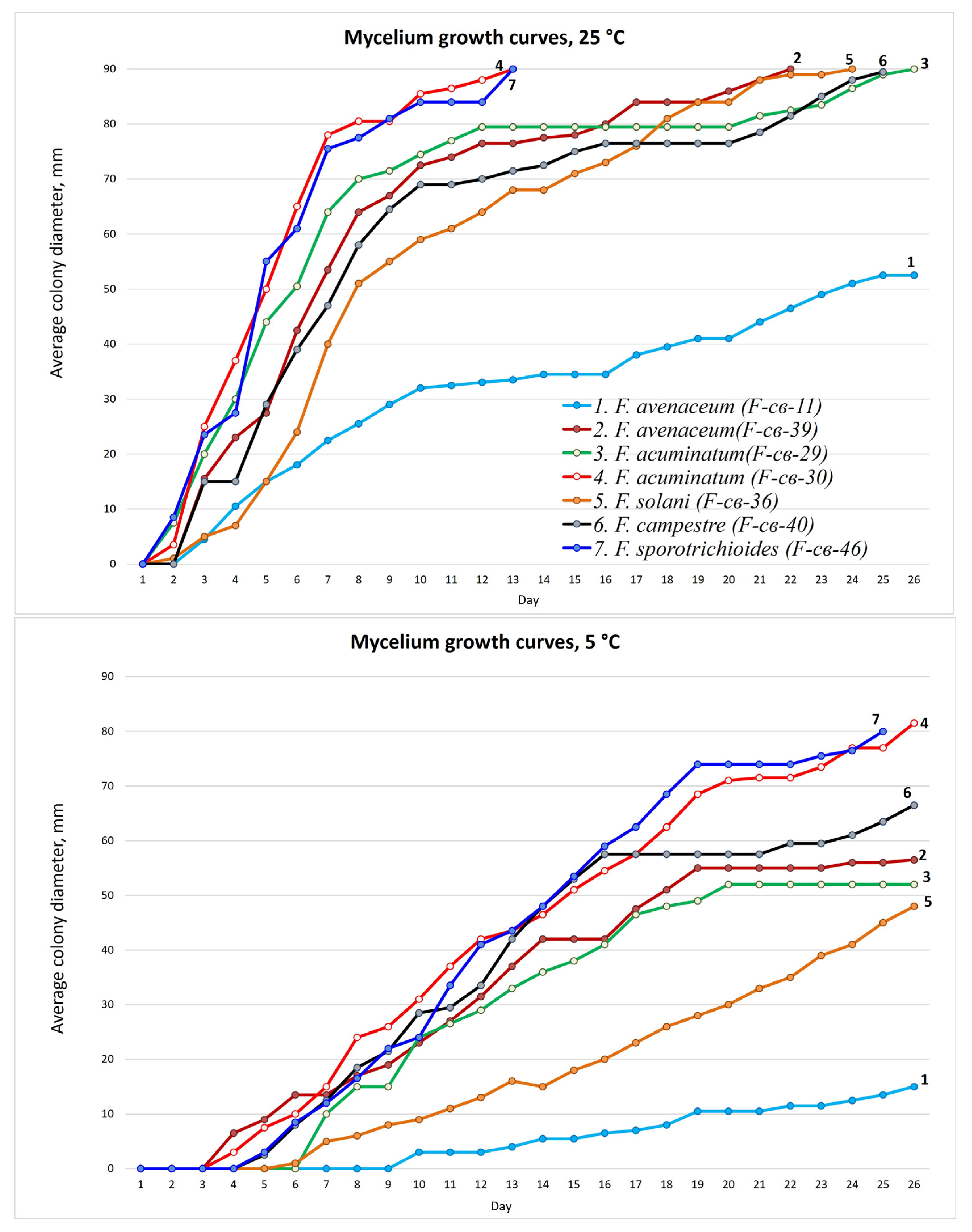
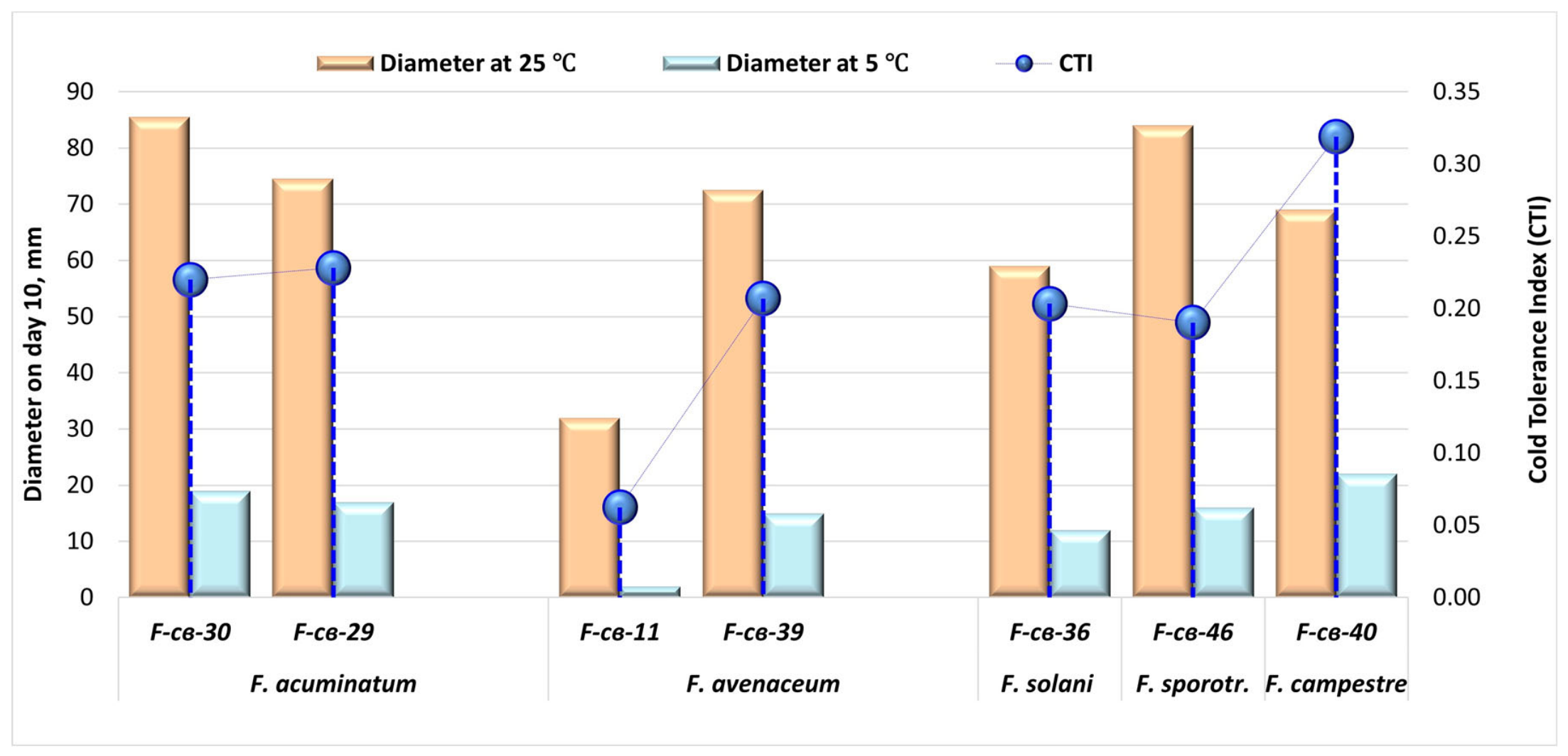
When grown on solid PDA medium at 25 °C, most defined strains of different
Fusarium species showed a rapid onset of growth as early as day 1–2, followed by active exponential growth in the first 7–10 days and reaching a plateau of 75–90 mm by days 12–18 (
Figure 8). The fastest-growing isolates were F-CB-30 of
F. acuminatum and F-CB-46 of
F. sporotrichioides, with an average colony growth rate of 0.7 cm/day and reaching a plate diameter of 90 mm by day 13. Isolate F-CB-11 of
F. avenaceum was characterized by the slowest growth rate—0.2 cm/day; by day 26, the colony diameter was only 53 mm. The remaining isolates analyzed at 25 °C had an average colony growth rate of 0.34–0.41 cm/day and reached the plate diameter on days 22–26 of cultivation.
Considering that the second half of table beet storage occurs at 4–6 °C, we studied the growth of defined strains on PDA medium at 5 °C to potentially predict the dominant pathogenic
Fusarium species in the storage rot pathocomplex. Results showed that at 5 °C, all analyzed species exhibited a distinct lag phase. Colony growth was virtually absent during the first 6–8 days. Afterward, very slow linear growth was observed, and by day 26, colony diameter was 1.5–2 times smaller than when cultured at 25 °C (
Figure 8). The highest average growth rate at low temperatures was observed for isolates F-CB-30 of
F. acuminatum and F-CB-46 of
F. sporotrichioides—0.29 and 0.28 cm/day, with colony diameters on day 26 of 76 and 72 mm, respectively. Isolate F-CB-11 of
F. avenaceum demonstrated the slowest growth rate—0.05 cm/day. The colony diameter of this isolate on day 26 was 13 mm.
The sensitivity of isolates to low temperatures is most clearly shown in
Figure 9, where significant differences are visible between isolates even within the same species, indicating intraspecific variability in low temperature tolerance. Based on the CTI value, isolate F-CB-40 of
F. campestre was characterized by higher cold resistance (CTI 0.32), while isolate F-CB-11 of
F. avenaceum was characterized by higher cold sensitivity (CTI 0.06).
F. acuminatum isolates differed in growth rates at different temperatures, but all showed relative tolerance to low temperatures (CTI 0.22–0.23).
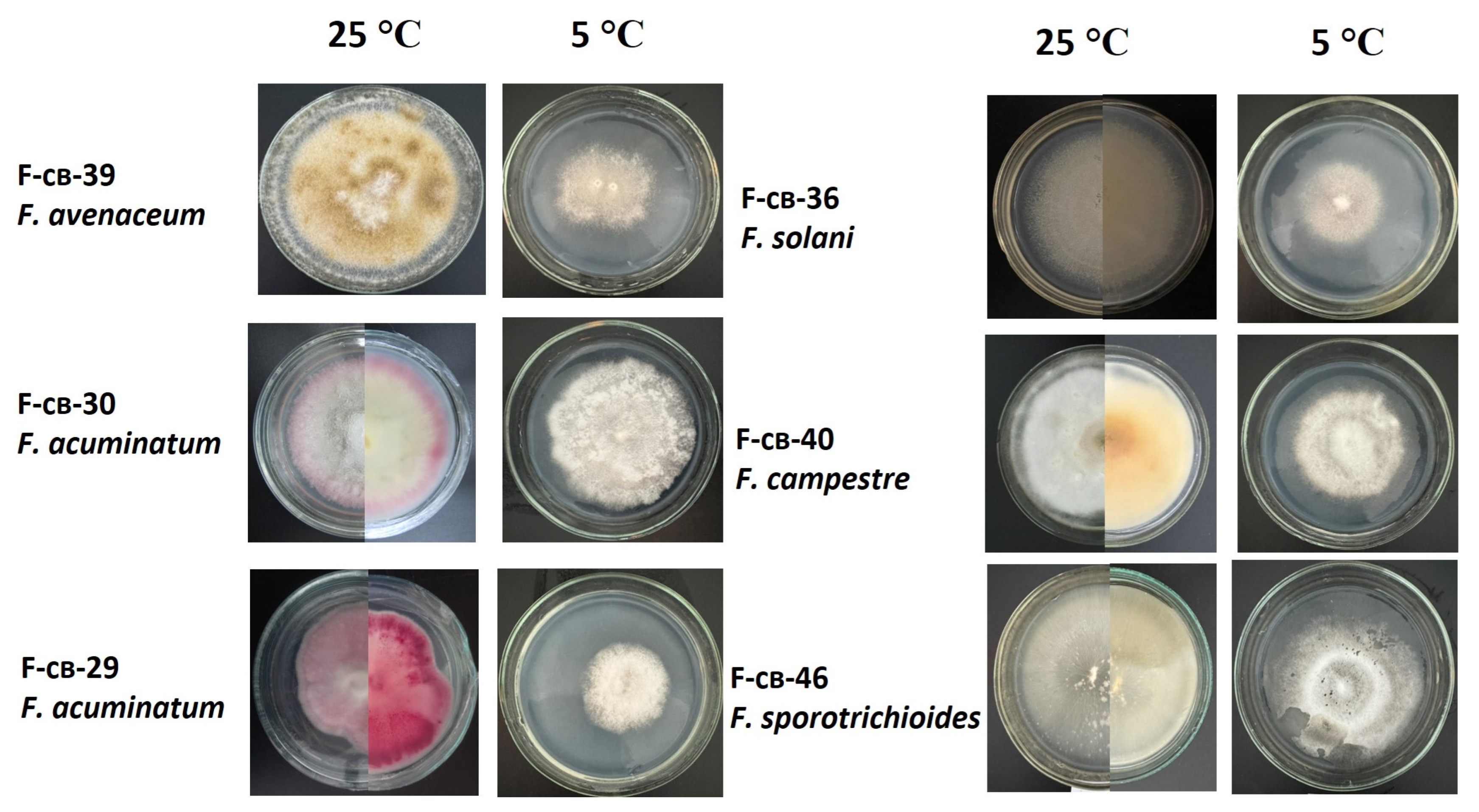
On day 26 of cultivation, the analyzed isolates differed in mycelial structure and density, as well as pigment formation (
Figure 10). At 25 °C, species-specific pigment formation was observed from days 7 (
F. solani) to 19 (
F. acuminatum). At 5 °C, colonies of all analyzed species did not produce pigments.
3.7. In Vitro Growth of Fusarium Species on a Natural Substrate (Beet Root Discs) at Different Temperatures
The most aggressive representative strains of the five identified species involved in the pathogenesis of storage rot were used to inoculate root disks from 13 table beet breeding lines. The inoculation procedure was performed with agar blocks at different temperatures: 5 °C (simulating root storage conditions) and 25 °C (simulating plant vegetation conditions). As a result, as in the experiment studying the pathogenic properties, it was shown that at 25 °C,
Fusarium species differ in their aggressiveness against table beet roots depending on the host plant genotype. Under the conditions of this experiment, the species
F. avenaceum,
F. campestre,
F. sporotrichioides, and
F. solani were characterized by weak to moderate aggressiveness and did not differ statistically from each other (
Table 6). The average volume of the affected area in case of inoculation with these species ranged from 5 to 21 mm
3.
F. acuminatum was the most aggressive species, with the average volume of the affected area of 663 mm
3, ranging from 31 to 1760 mm
3. In this respect, it was significantly different from other species.
As can be seen from
Table 6, lines 208, 207, and 185 were characterized, on average, by a small affected area (15–22 mm
3), including when infected with a highly aggressive
F. acuminatum isolate, which allows us to consider them as potential sources of resistance to
Fusarium root rot. Lines 184, 174, and 179, on the contrary, significantly exceeded the other analyzed hybrid combinations in terms of average volume of the affected area (282–363 mm
3), which is determined by their susceptibility to
F. acuminatum, while damage by other species was insignificant and corresponded to the average values of most lines. Line 209 stood out by the largest volume of the affected area when inoculated with
F. sporotrichioides (50 mm
3).
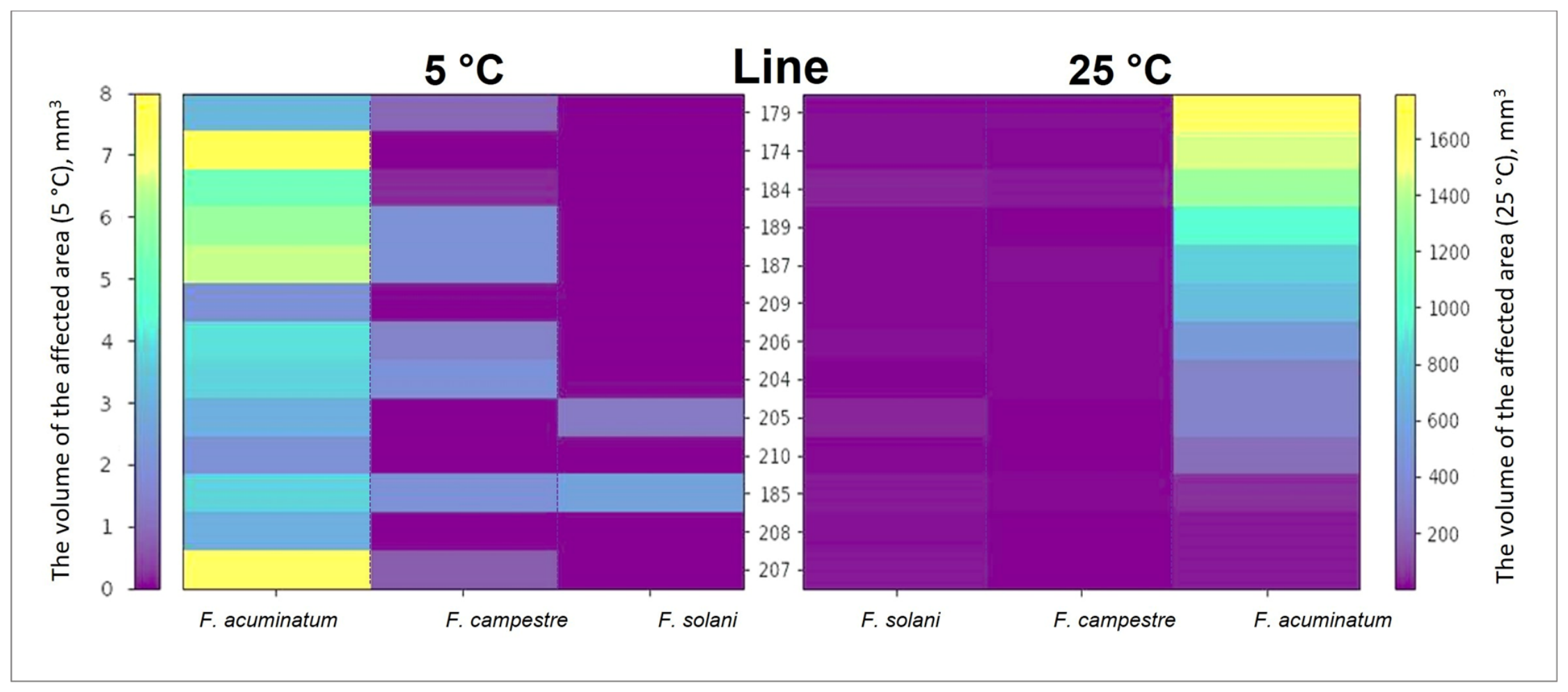
At 5 °C, the majority of lines demonstrated virtually no pathogen development when disks were infected with
F. avenaceum and
F. sporotrichioides isolates (lesion diameter 0–1 mm). When infected with
F. campestre,
F. solani, and
F. acuminatum, a multiple reduction in volume of the affected area was also observed compared to 25 °C (average for all hybrid combinations 0.3–4.5 mm
3) (
Table 7).
While
F. acuminatum was poor growing in cold conditions, this species demonstrated the greatest aggressiveness. In the case of
F. acuminatum, the volume of the affected area was significantly larger than that of other species (4.5 mm
3 on average), and the analyzed lines also differed in the volume of the affected area, which varied in the range from 0.7 to 8.0 mm
3. In this case, the average volume of the affected area of lines 174, 189, 185, 187, and 207 was significantly larger than that of the other lines (
Table 7). The level of resistance of the lines was generally determined by their response to infection, depending on the temperature background (
Figure 11).
3.8. The Effect of Pathogen Species, Temperature, Substrate Type, and Plant Genotype on the Development and Pathogenic Properties of Fusarium Fungi
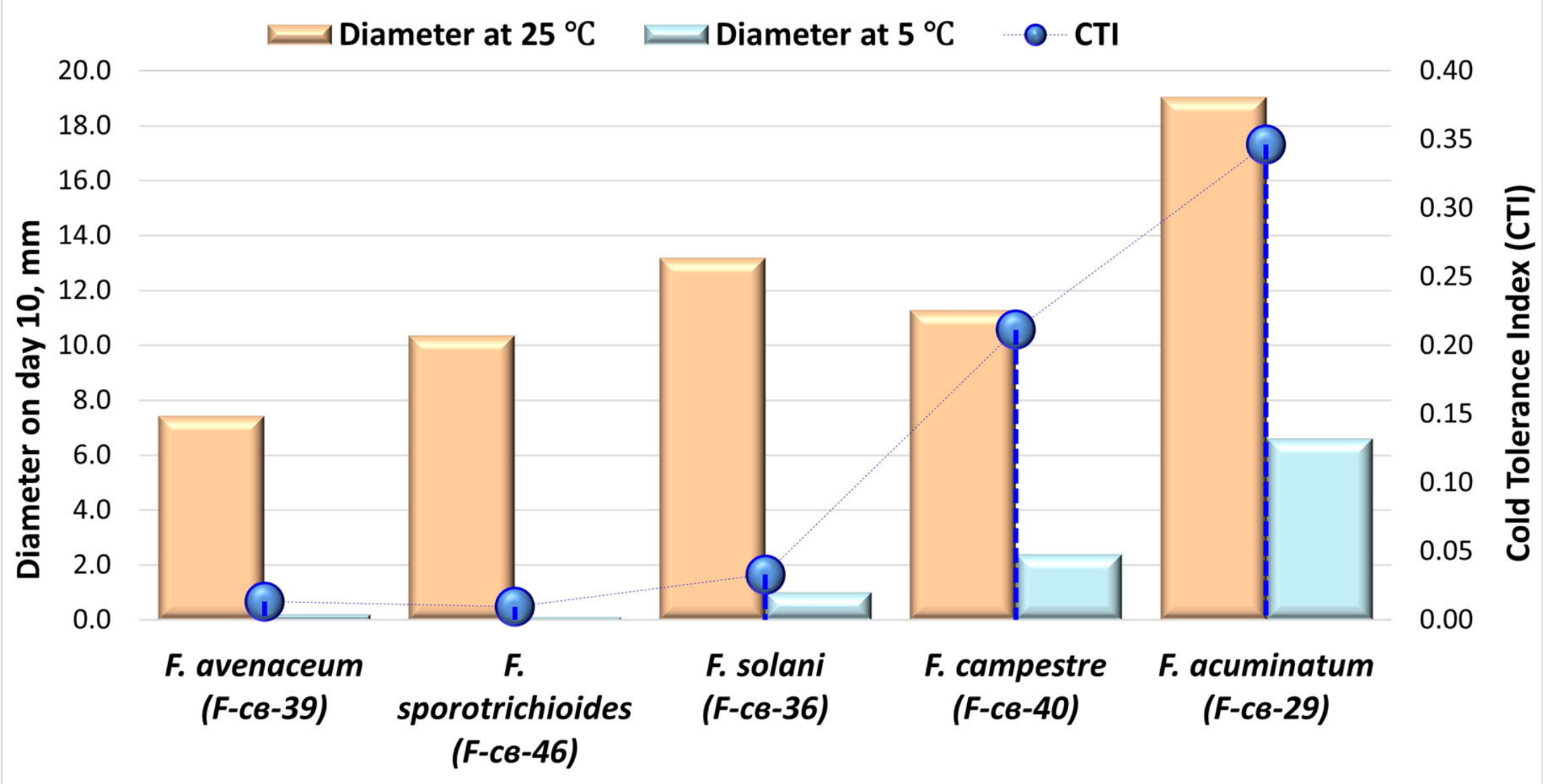
The data obtained from inoculating root disks differ somewhat from the results of a study of the linear growth characteristics of colonies of identified isolates on an artificial nutrient medium (10 days). Thus, the decrease in
F. acuminatum aggressiveness with decreasing temperature is less than the decrease in overall metabolism during growth on a nutrient medium, in contrast to
F. campestre, the leader in cold resistance on an artificial medium. According to the cold tolerance index (CTI) values based on the average diameter of the affected areas of all lines (
Figure 12), the studied
Fusarium isolates were distributed in a different sequence—
F. acuminatum (0.32) >
F. campestre (0.21) >
F. solani (0.03) >
F. avenaceum and
F. sporotrichioides (0.01), than when grown on a nutrient medium (
Figure 10)—
F. campestre (0.32) >
F. acuminatum (0.22) >
F. avenaceum (0.21) >
F. sporotrichioides (0.19) >
F. solani (0.20).
Temperature influences the interrelation between the linear growth rate of pathogens on a nutrient medium and a natural substrate. At the optimal temperature (25 °C), the correlation between these characteristics is very weak (r = 0.23). However, at a stressful low temperature (5 °C), the correlation is closer (r = 0.72), indicating common genetic or physiological mechanisms of cold adaptation for growth and infection processes. Moreover, the ranking of species by pathogenicity at 25 °C is generally maintained at 5 °C (r = 0.85).
In the studied pathosystem, the “pathogen species” factor is primary, determining up to 25–80% of the variation in damage severity. The dominant pathogen responsible for the main potential losses is F. acuminatum, whose aggressiveness on beet roots is orders of magnitude higher than that of the other studied species. The “temperature” factor is a key moderator: its contribution to the variation in linear colony growth on a nutrient medium reaches 80%. However, for pathogenic activity on root disks, its influence is mediated by the fungal species and a significant interaction between the “pathogen species × temperature” factors (10–12%).
Due to the complex nature of the resistance trait, the primary contribution of the host plant genotype is generally low (2–5%) and is revealed through interactions between factors, particularly in the triple relationship “plant genotype × pathogen species × temperature.” For example, plant genotype makes a significant contribution (up to 10%) in the case of the dominant pathogen F. acuminatum.
Correlation analysis did not reveal universal resistance to all Fusarium species. However, two groups of pathogens with cross-reactivity between genotypes were identified: F. campestre/F. solani (r = 0.75–0.85) and F. avenaceum/F. sporotrichioides (r = 0.62), indicating common resistance mechanisms. Susceptibility to the most aggressive species, F. acuminatum, is weakly correlated with response to other species.
4. Discussion
Fusarium species are known to affect beet plants worldwide at different stages of development, causing seed asphyxiation and seedling death [
33,
34],
Fusarium wilt, root rot, and leaf and stem necrosis [
35,
36].
Fusarium root rot of beets, which develops during the post-harvest period during long-term storage, is of particular economic significance. This form of the disease is progressive and can lead to yield losses of up to 50% or more of the total weight of the stored product, making
Fusarium root rot of beets a high phytopathological and economic risk [
25,
37,
38]. Our long-term phytopathological monitoring of storage disease development in table beet roots confirmed this.
Fusarium fungi have become a leading component of the pit rot pathocomplex in the last decade. In the Moscow region, root crop losses due to
Fusarium rot can reach 58%, depending on the agroclimatic conditions of the year and the sample size [
39]. The increase in Fusarium rot prevalence in individual years may be related to climatic factors, particularly an increase in average daily air temperature relative to long-term averages, agricultural practices, and an increase in the infection load in vegetable crop rotations.
Because research resources and investments are overwhelmingly concentrated on sugar beet, a strategic raw material for industrial processing, the most comprehensive information on the composition of the pathological complex of pathogens associated with
Fusarium root rot is available specifically for this crop. Since the second half of the 20th century, about 20 species of
Fusarium have been isolated and identified from affected parts of sugar beet plants [
18,
25,
40,
41,
42].
However, currently, there is no up-to-date information on the species composition of the pathocomplex of Fusarium root rot during storage in table beet-growing regions of the Russian Federation, which undoubtedly complicates the development of a strategy for protection against this disease.
Due to the high intra- and interspecific variability of
Fusarium morphology caused by the influence of genetic and environmental factors, phylogenetic analysis is an integral part of the correct identification of
Fusarium species [
43,
44,
45].
The presented study revealed significant changes not only in the species composition, but also in the succession of dominant
Fusarium species that formed the currently existing pathocomplex of
Fusarium root rot in table beets grown in the Moscow region of the Russian Federation. Molecular phylogeny using the TEF-1α and RPB2 genes, combined with morphological characterization, allowed us to establish the taxonomic affiliation and identify five main species that cause
Fusarium root rot in table beet during storage:
F. acuminatum,
F. avenaceum, F. campestre (FTSC),
F. sporotrichioides (FSAMSC) and
F. solani (FSSC). Furthermore,
F. acuminatum,
F. campestre, and
F. sporotrichioides were discovered for the first time on table beet roots in the Russian Federation.
F. acuminatum was the dominant species in the analyzed pathocomplex (43% of the total isolates), while the percentages of other species were comparable to each other (within 14%). In Minnesota, USA,
F. acuminatum was also one of the dominant species in the composition of
Fusarium root rot of sugar beet. However, this study did not report its pathogenic potential on the host plant [
42]. Our pathogenicity testing showed that this species exhibited the greatest aggressiveness in infecting beet roots.
F. solani was the second most aggressive species, but this species exhibited the most pronounced cultivar-specific response.
F. sporotrichioides and
F. campestre isolates were characterized by moderate aggressiveness based on the average volume of the affected area, while
F. avenaceum exhibited the weakest aggressiveness against the table beet roots of the analyzed varieties.
Another important aspect of our research was the study of the vital activity and pathogenic potential of identified
Fusarium species under different temperature conditions, simulating the conditions of root formation during vegetation and storage. We were unable to find similar studies in the available scientific literature devoted to this issue in the context of
Fusarium root rot. It is known that for the growth and development of most
Fusarium species, the optimal temperature range is considered to be 25–30 °C [
30], which is close to the temperature regime during the growing season of plants in the conditions of the Central and Southern regions of the Russian Federation. During root storage, a sharp increase in the spread of
Fusarium rot is observed from January to March, when the storage temperature of table beet roots (in case of seed production) is increased from 2–3 °C to 4–6 °C. This leads to an accelerated spread of these facultative pathogens, which are known to most actively attack aging tissues [
46], including those of table beet roots as a result of changes in their biochemical composition during storage.
To predict the harmfulness of species forming the Fusarium root rot pathocomplex, the linear colony growth of identified isolates of the detected species was studied in vitro on artificial nutrient medium (PDA) and a natural substrate (beet root discs) at contrasting temperatures of 5 °C and 25 °C. All species successfully attacked beet roots under optimal conditions (25 °C), with F. acuminatum occupying a leading position in both colony growth rate on the nutrient medium and diameter of the affected area of root discs. No such correlation was observed for other species, and it was also noted that immunological assessment of resistance to pathogens in this case may not always identify consistently resistant genotypes during cold storage, which is a stressful environment for pathogen development.
According to the cold tolerance index (CTI) value on PDA and root discs, the studied Fusarium isolates were also distributed differently: F. campestre (0.32) > F. acuminatum (0.22) > F. avenaceum (0.21) > F. sporotrichioides (0.19) > F. solani (0.20) and F. acuminatum (0.32) > F. campestre (0.21) > F. solani (0.03) > F. avenaceum > F. sporotrichioides (0.01), respectively. This confirms that in vitro studies of colony growth on artificial nutrient media cannot be directly extrapolated to assess the threat both during storage and during the growing season. Mandatory tests on a natural substrate (host plant) under different temperature backgrounds are necessary. The obtained results indicate that F. acuminatum, F. campestre, and F. solani are capable of infecting table beet roots across a wide temperature range. At the same time, F. acuminatum can be the dominant species in the complex of soil phytopathogens in areas of risky agriculture with a cool climate. F. avenaceum and F. sporotrichioides will cause most damage during the growing season at optimal temperatures. All identified Fusarium species were included in our breeding program to create resistant heterotic table beet hybrids.
In this case, it is of primary importance to expand knowledge about the resistance of varieties and hybrids to the most harmful species associated with
Fusarium rot during the growing season and storage of roots, the introduction of which into production is the main component of the strategy for combating this disease [
9].
In this regard, in parallel with studying the pathogenic properties, we assessed the resistance of the promising breeding material to five identified species involved in the pathogenesis of Fusarium root rot. It was found that the differentiation of genotypes into resistance groups to Fusarium root rot at a low temperature of 5 °C did not always coincide with that at 25 °C. This once again underscores the specificity of the interaction of factors in the complex “host genotype—pathogen species—environmental conditions” system.
Variation in the volume of the affected area is primarily explained by the pathogen species and temperature conditions, as well as their interactions. The influence of plant genotype manifests itself in a complex interaction with these two factors, especially under conditions optimal for pathogenicity. This confirms the need to consider abiotic environmental factors when screening and breeding for resistance. Low temperatures selectively and radically suppress some species (almost to zero) and only reduce the activity of others (F. acuminatum, F. campestre). The dependence of the degree of aggressiveness and harmfulness on external conditions indicates the importance of pathogen specialization.
The influence of the plant’s genotype manifests itself in a complex interaction with these two factors, especially under optimal conditions for pathogenesis. Immunological assessment of resistance under optimal pathogen conditions may not always identify valuable genotypes that exhibit consistent resistance under stressful conditions (particularly during storage).
When infected with the dominant, most aggressive species, F. acuminatum, the highest variation in the volume of the affected area was observed depending on the plant genotype at both temperature conditions. Therefore, this species can be considered the most objective differentiating factor when assessing the resistance of table beet roots to Fusarium root rot. When breeding table beet genotypes resistant to Fusarium rot under a wide range of conditions, it is necessary to conduct phenotypic evaluation at lower temperatures, focusing on the response specifically to F. acuminatum, supplemented by an assessment of resistance to a range of less aggressive, but regionally common, pathogenic Fusarium species.
It is important to note the alarming trend of widespread distribution of the identified species
F. acuminatum in vegetable agrocenoses, which in our previous studies was also isolated from other vegetable crops in the Moscow region: from onion bulbs [
47] and carrot roots [
48] affected by rot during storage. Obtained isolates of this species were also characterized by high aggressiveness against their host plants. This may indicate that in four-field vegetable crop rotations (alternating crops: cabbage, carrots, onions, and beets) [
49], which are most often used in vegetable farms, there is a real risk of this pathogen infecting various crops. In this regard, an important direction for further research is the study of the cross-pathogenicity of
F. acuminatum and other
Fusarium species isolated from table beet for other crops in order to find crops with a reduced risk of infection and to optimize vegetable crop rotations to reduce the infectious load in existing agrocenoses.
5. Conclusions
The study provided new insights into the biodiversity and pathogenicity of Fusarium fungi that cause Fusarium rot of table beet roots during storage in the conditions of the Moscow region in the Russian Federation. Molecular phylogeny using the TEF-1α and RPB2 genes, combined with morphological characterization, allowed us to establish the taxonomic affiliation and identify five Fusarium species causing storage rot of table beet roots: F. acuminatum, F. avenaceum, F. campestre (FTSC); F. sporotrichioides (FSAMSC) and F. solani (FSSC). F. acuminatum was the dominant species in the analyzed pathocomplex (43% of the total number of isolates), while the percentage of other species was within 14%. The temperature sensitivity of the identified species at 5 °C and 25 °C was studied.
High pathogenicity of the F. acuminatum species, associated with this disease of table beet, for the host plant in the Russian Federation has been reported for the first time. It was established that the differentiating factor of genotypes for resistance to Fusarium rot under both temperature conditions is F. acuminatum, characterized by relative tolerance to low temperatures. In our study, breeding lines 208 and 210 demonstrated consistently low average damage values under both temperature conditions, which may indicate their genetically determined group resistance to the species F. acuminatum, F. avenaceum, F. campestre, F. sporotrichioides and F. solani, which are part of the Fusarium root rot pathocomplex.
The data obtained in the presented study are of great importance for the development of a strategy for the control of Fusarium fungi associated with storage rot of table beet roots, as well as other vegetable crops that are stored fresh for a long time, also in the case of seed production at low temperatures (vernalization).




 ,
,