
Pulcherrimin and Beyond: The Multifaceted Role of Metschnikowia pulcherrima in Postharvest Disease Management—A Scoping Review

 , , , , and
Abstract
1. Introduction
2. Materials and Methods
2.1. Design and Development of Research Questions
2.2. Definition of the Search Strategy
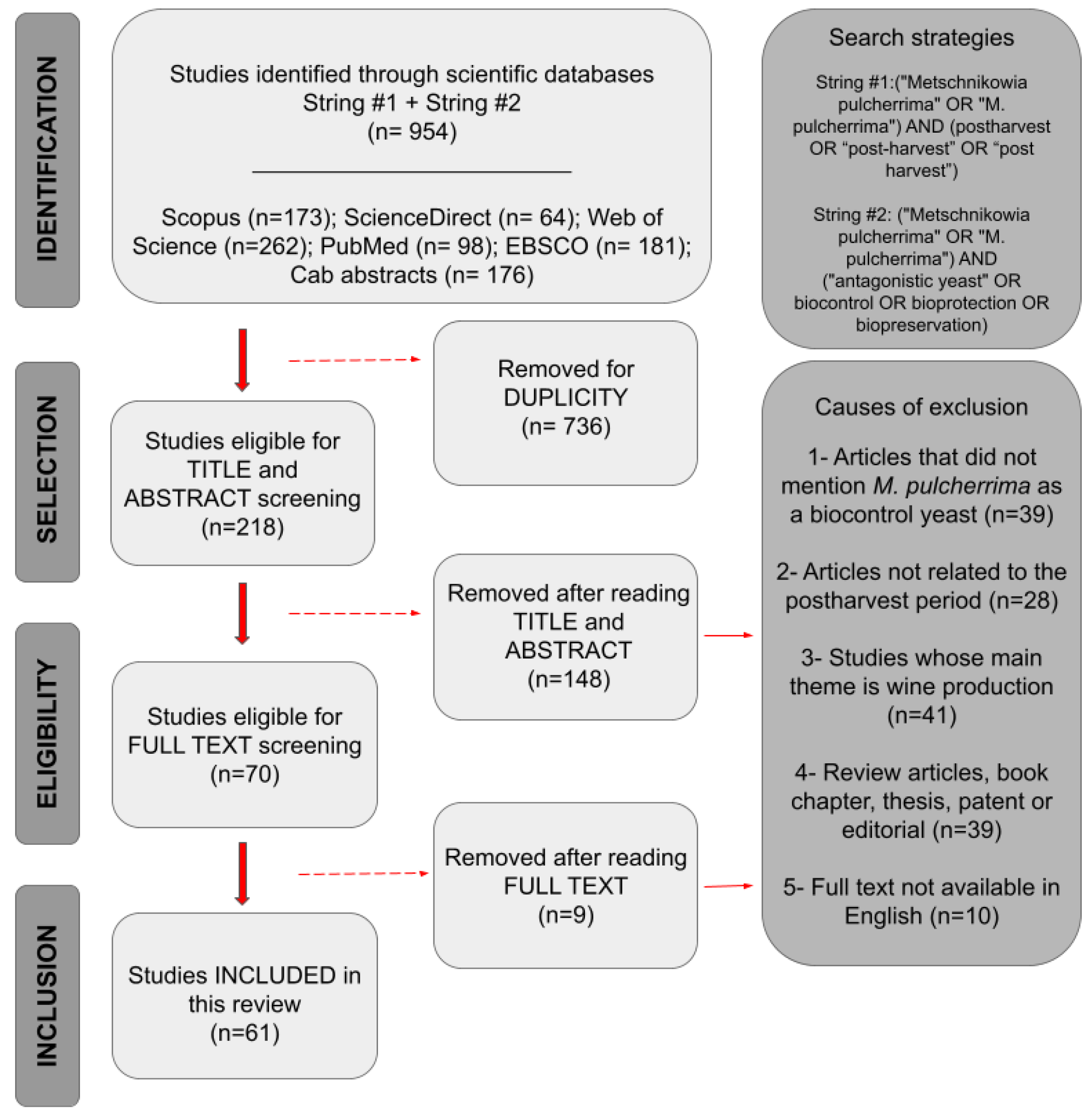
- Query string 1: (“Metschnikowia pulcherrima” OR “M. pulcherrima” OR “Candida pulcherrima”) AND (“postharvest” OR “post harvest” OR “post-harvest”)
- Query string 2: (“Metschnikowia pulcherrima” OR “M. pulcherrima” OR “Candida pulcherrima”) AND (“antagonistic yeast” OR biocontrol OR bioprotection OR biopreservation)
2.3. Selection and Screening of Primary Studies
2.4. Data Extraction and Synthesis
2.5. Data Analysis
2.6. Protocol and Registration
3. Results and Discussion
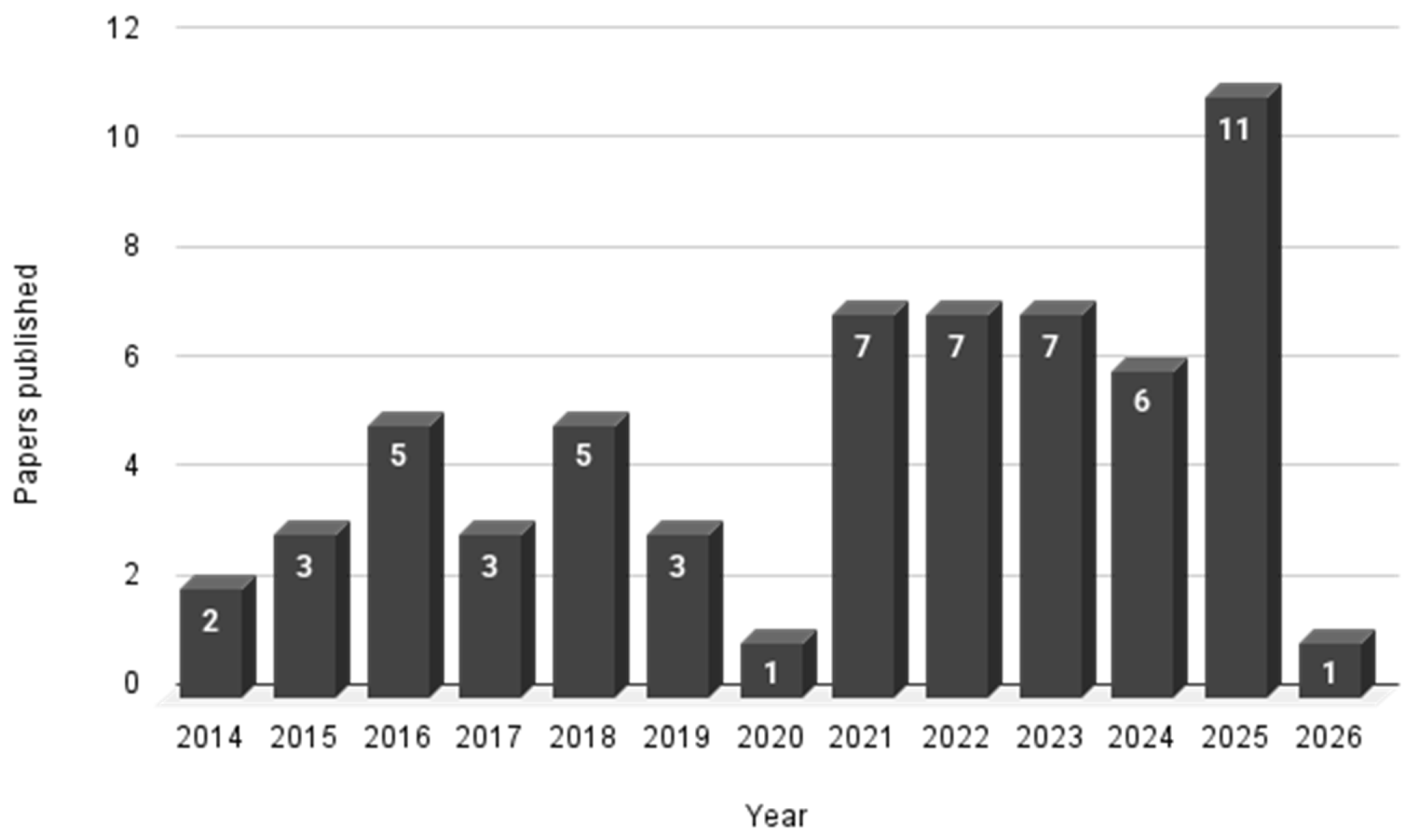
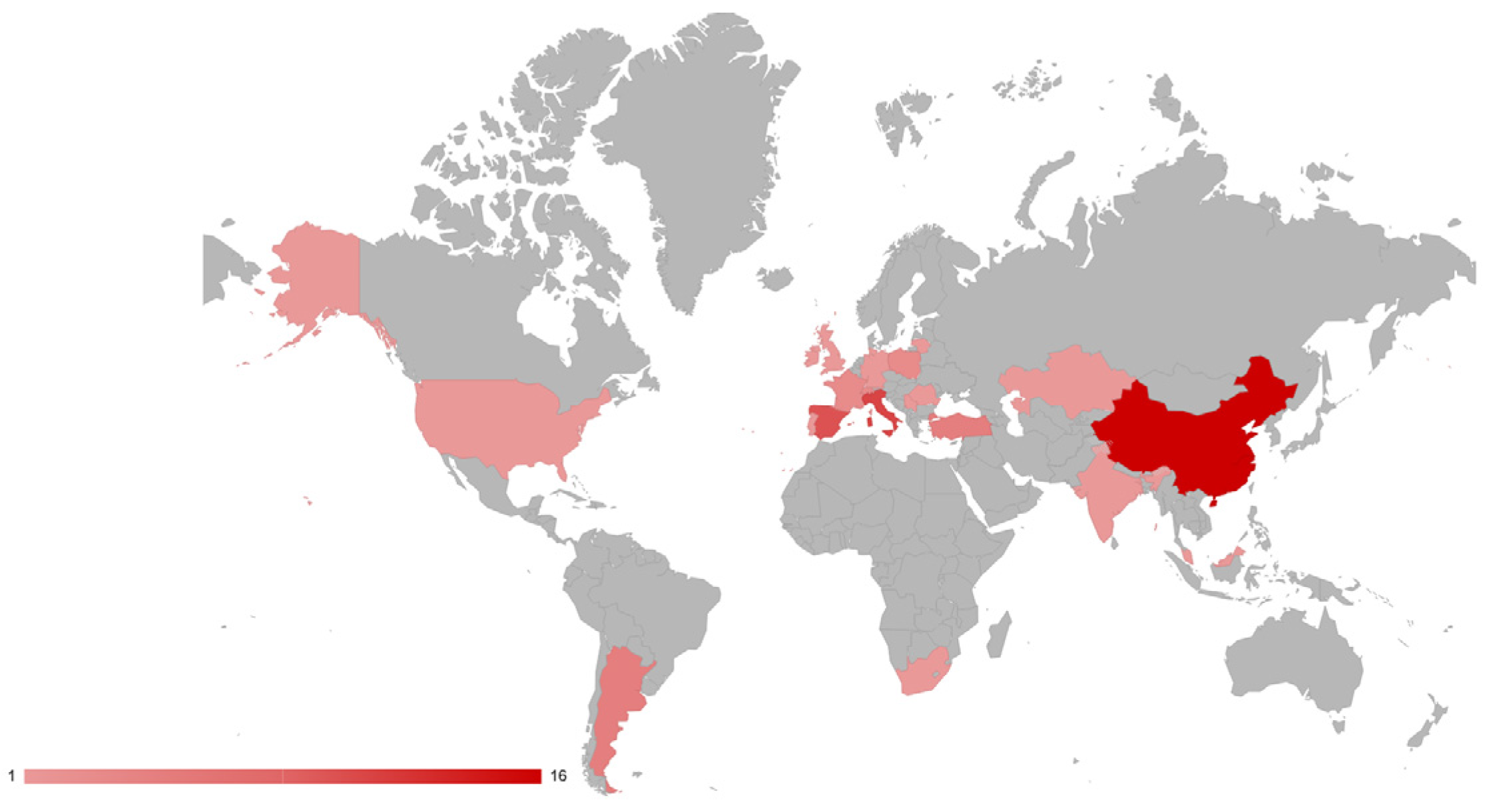
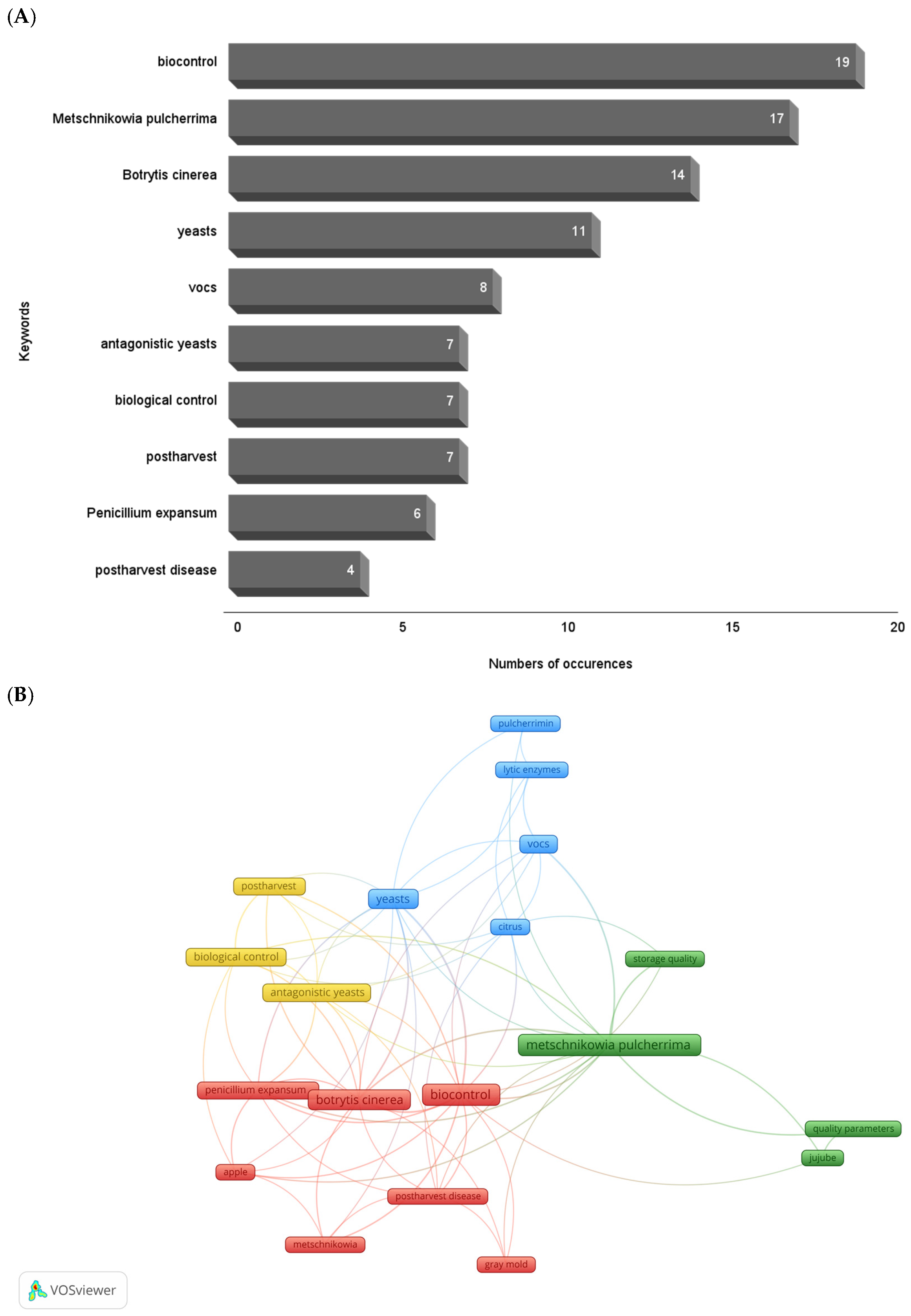
3.1. Bibliometrics from the Last 12 Years (2014–2026) on the Use of M. pulcherrima as a Postharvest Biocontrol Agent
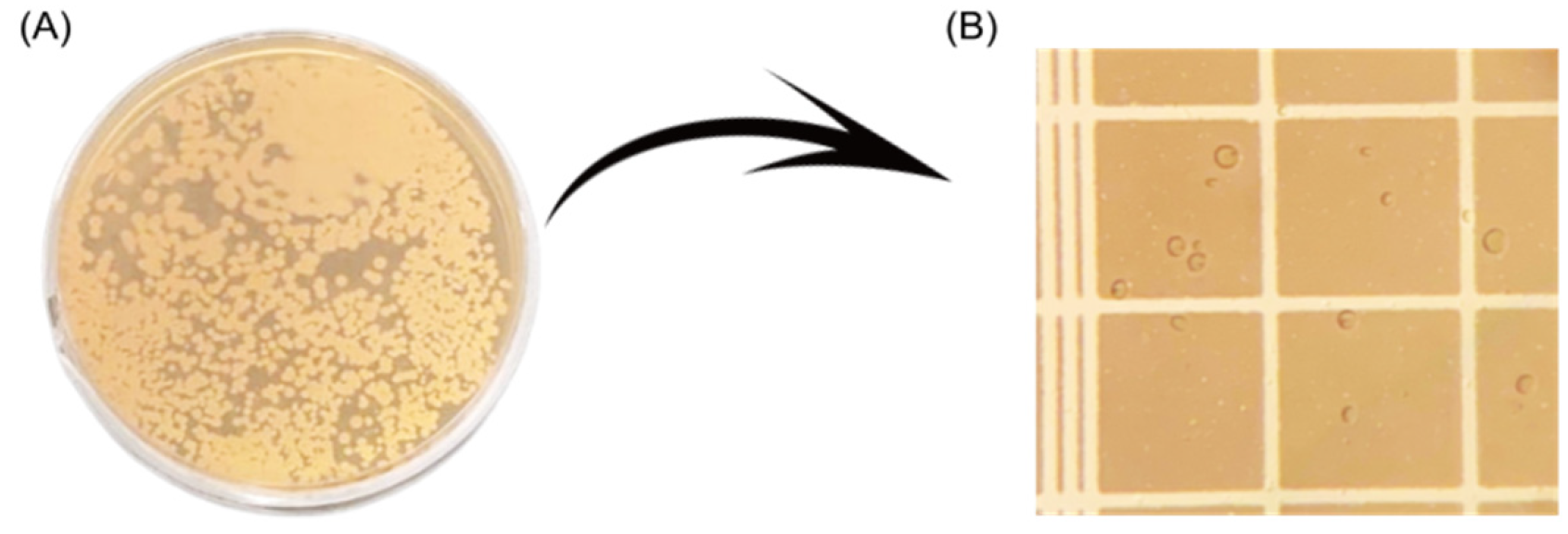
3.2. Metschnikowia pulcherrima
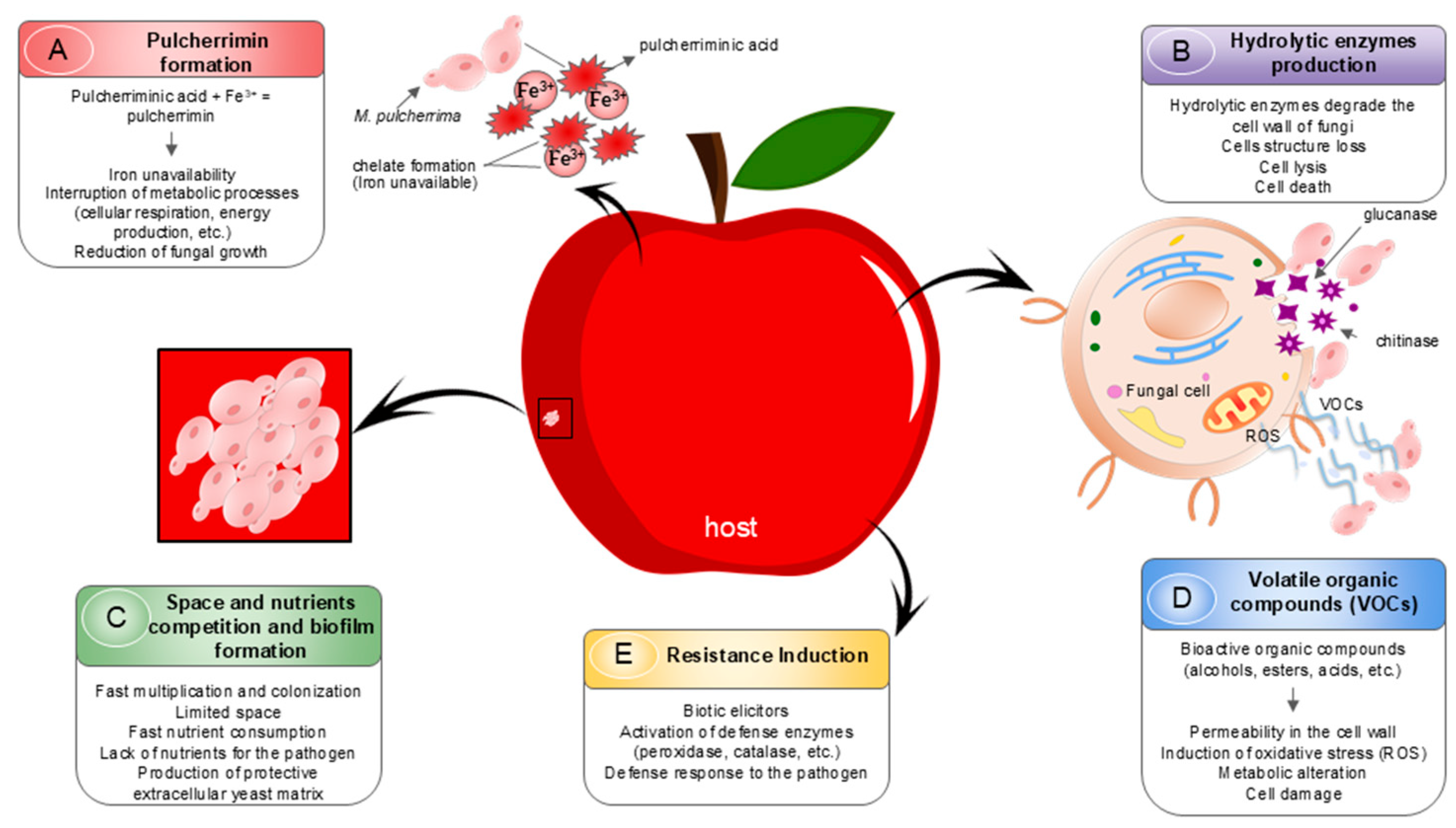
3.3. Use of M. pulcherrima as a Biocontrol Agent in Postharvest Fruit
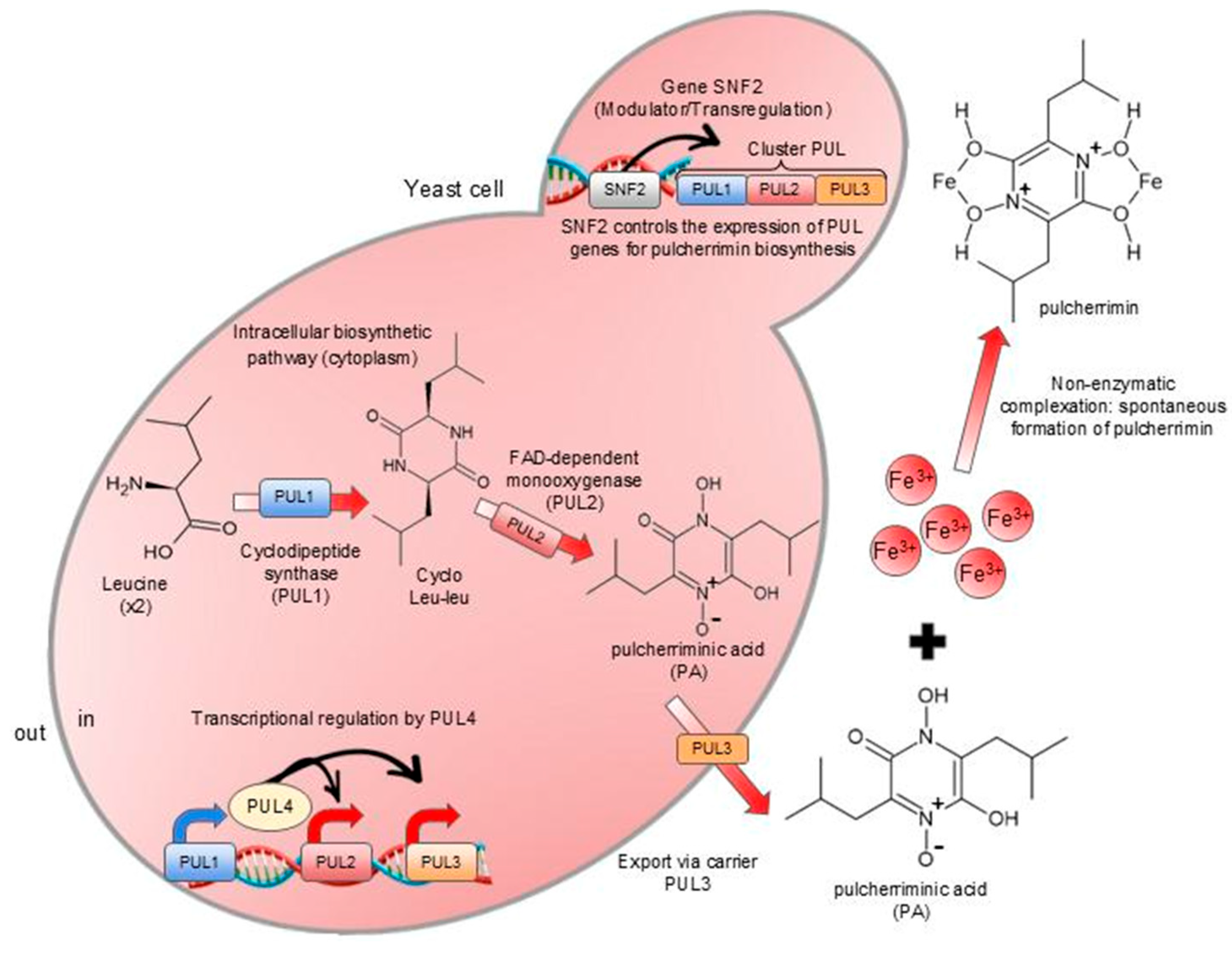
3.3.1. Competition
3.3.2. Production of Volatile Organic Compounds
3.3.3. Action of Hydrolytic Enzymes
3.3.4. Mycocins (Killer Toxins)
3.3.5. Biofilm Formation
3.3.6. Resistance Induction
3.4. Synergistic Effect of Combining Various Emerging Ecological Techniques with Biocontrol Using M. pulcherrima
3.5. Use of M. pulcherrima in Commercial Product Formulations
4. Strengths and Limitations of the Scoping Review
5. Conclusions
Supplementary Materials
Author Contributions
Funding
Institutional Review Board Statement
Informed Consent Statement
Data Availability Statement
Conflicts of Interest
References
- Ramudingana, P.; Makhado, N.; Kamutando, C.N.; Thantsha, M.S.; Mamphogoro, T.P. Fungal Biocontrol Agents in the Management of Postharvest Losses of Fresh Produce—A Comprehensive Review. J. Fungi 2025, 11, 82. [Google Scholar] [CrossRef]
- Rodrigues, J.P.; de Souza Coelho, C.C.; Soares, A.G.; Freitas-Silva, O. Current Technologies to Control Fungal Diseases in Postharvest Papaya (Carica papaya L.). Biocatal. Agric. Biotechnol. 2021, 36, 102128. [Google Scholar] [CrossRef]
- ONU The 17 GOALS|Sustainable Development. Available online: https://sdgs.un.org/goals#icons (accessed on 27 September 2025).
- Pedrozo, L.P.; Kuchen, B.; Flores, C.B.; Rodríguez, L.A.; Pesce, V.M.; Maturano, Y.P.; Nally, M.C.; Vazquez, F. Optimization of Sustainable Control Strategies against Blue Rot in Table Grapes under Cold Storage Conditions. Postharvest Biol. Technol. 2024, 213, 112946. [Google Scholar] [CrossRef]
- Oztekin, S.; Karbancioglu-Guler, F. Recruiting Grape-Isolated Antagonistic Yeasts for the Sustainable Bio-Management of Botrytis cinerea on Grapes. Food Energy Secur. 2024, 13, e528. [Google Scholar] [CrossRef]
- Kowalska, J.; Krzymińska, J.; Tyburski, J. Yeasts as a Potential Biological Agent in Plant Disease Protection and Yield Improvement—A Short Review. Agriculture 2022, 12, 1404. [Google Scholar] [CrossRef]
- Fontes, E.M.G.; Valadares-Inglis, M.C. Controle Biológico de Pragas da Agricultura; Embrapa: Brasilia, Brazil, 2020; ISBN 9788527729833. [Google Scholar]
- Ma, Y.; Wu, M.; Qin, X.; Dong, Q.; Li, Z. Antimicrobial Function of Yeast against Pathogenic and Spoilage Microorganisms via Either Antagonism or Encapsulation: A Review. Food Microbiol. 2023, 112, 104242. [Google Scholar] [CrossRef]
- Ruiz-Moyano, S.; Martín, A.; Villalobos, M.C.; Calle, A.; Serradilla, M.J.; Córdoba, M.G.; Hernández, A. Yeasts Isolated from Figs (Ficus carica L.) as Biocontrol Agents of Postharvest Fruit Diseases. Food Microbiol. 2016, 57, 45–53. [Google Scholar] [CrossRef]
- Parafati, L.; Vitale, A.; Polizzi, G.; Restuccia, C.; Cirvilleri, G. Understanding the Mechanism of Biological Control of Postharvest Phytopathogenic Moulds Promoted by Food Isolated Yeasts. Acta Hortic. 2016, 1144, 93–100. [Google Scholar] [CrossRef]
- He, Y.; Degraeve, P.; Oulahal, N. Bioprotective Yeasts: Potential to Limit Postharvest Spoilage and to Extend Shelf Life or Improve Microbial Safety of Processed Foods. Heliyon 2024, 10, e24929. [Google Scholar] [CrossRef]
- Sipiczki, M. Taxonomic Revision of the pulcherrima Clade of Metschnikowia (Fungi): Merger of Species. Taxonomy 2022, 2, 107–123. [Google Scholar] [CrossRef]
- Guo, D.; Zhu, L.; Hou, X. Combination of UV-C Treatment and Metschnikowia pulcherrimas for Controlling Alternaria Rot in Postharvest Winter Jujube Fruit. J. Food Sci. 2015, 80, M137–M141. [Google Scholar] [CrossRef] [PubMed]
- Parafati, L.; Vitale, A.; Restuccia, C.; Cirvilleri, G. Biocontrol Ability and Action Mechanism of Food-Isolated Yeast Strains against Botrytis cinerea Causing Post-Harvest Bunch Rot of Table Grape. Food Microbiol. 2015, 47, 85–92. [Google Scholar] [CrossRef]
- Parafati, L.; Restuccia, C.; Cirvilleri, G. Efficacy and Mechanism of Action of Food Isolated Yeasts in the Control of Aspergillus flavus Growth on Pistachio Nuts. Food Microbiol. 2022, 108, 104100. [Google Scholar] [CrossRef]
- Oro, L.; Feliziani, E.; Ciani, M.; Romanazzi, G.; Comitini, F. Volatile Organic Compounds from Wickerhamomyces anomalus, Metschnikowia pulcherrima and Saccharomyces cerevisiae Inhibit Growth of Decay Causing Fungi and Control Postharvest Diseases of Strawberries. Int. J. Food Microbiol. 2018, 265, 18–22. [Google Scholar] [CrossRef]
- Aromataris, E.; Lockwood, C.; Porritt, K.; Jordan, Z. JBI Manual for Evidence Synthesis; JBI: Adelaide, Australia, 2024. [Google Scholar]
- Tricco, A.C.; Lillie, E.; Zarin, W.; O’Brien, K.K.; Colquhoun, H.; Levac, D.; Moher, D.; Peters, M.D.J.; Horsley, T.; Weeks, L.; et al. PRISMA Extension for Scoping Reviews (PRISMA-ScR): Checklist and Explanation. Ann. Intern. Med. 2018, 169, 467–473. [Google Scholar] [CrossRef]
- Bühlmann, A.; Kammerecker, S.; Müller, L.; Hilber-Bodmer, M.; Perren, S.; Freimoser, F.M. Stability of Dry and Liquid Metschnikowia pulcherrima Formulations for Biocontrol Applications against Apple Postharvest Diseases. Horticulturae 2021, 7, 459. [Google Scholar] [CrossRef]
- Fernandez-San Millan, A.; Larraya, L.; Farran, I.; Ancin, M.; Veramendi, J. Successful Biocontrol of Major Postharvest and Soil-Borne Plant Pathogenic Fungi by Antagonistic Yeasts. Biol. Control 2021, 160, 104683. [Google Scholar] [CrossRef]
- Fernandez-San Millan, A.; Fernandez-Irigoyen, J.; Santamaria, E.; Larraya, L.; Farran, I.; Veramendi, J. Metschnikowia pulcherrima as an Efficient Biocontrol Agent of Botrytis cinerea Infection in Apples: Unraveling Protection Mechanisms through Yeast Proteomics. Biol. Control 2023, 183, 105266. [Google Scholar] [CrossRef]
- Acar, E.G.; Dikmetas, D.N.; Devecioglu, D.; Ozer, E.M.; Sarikece, H.; Karbancioglu-Guler, F. Antagonistic Activities of Metschnikowia pulcherrima Isolates Against Penicillium expansum on Amasya Apples. Curr. Microbiol. 2024, 81, 180. [Google Scholar] [CrossRef] [PubMed]
- Wang, S.; Tan, Z.; Wang, C.; Liu, W.; Hang, F.; He, X.; Ye, D.; Li, L.; Sun, J. Iron Competition as an Important Mechanism of Pulcherrimin-Producing Metschnikowia Sp. Strains for Controlling Postharvest Fungal Decays on Citrus Fruit. Foods 2023, 12, 4249. [Google Scholar] [CrossRef]
- Tian, Y.; Li, W.; Jiang, Z.; Jing, M.; Shao, Y. The Preservation Effect of Metschnikowia pulcherrima Yeast on Anthracnose of Postharvest Mango Fruits and the Possible Mechanism. Food Sci. Biotechnol. 2018, 27, 95–105. [Google Scholar] [CrossRef]
- Shao, Y.; Zeng, J.; Tang, H.; Zhou, Y.; Li, W. The Chemical Treatments Combined with Antagonistic Yeast Control Anthracnose and Maintain the Quality of Postharvest Mango Fruit. J. Integr. Agric. 2019, 18, 1159–1169. [Google Scholar] [CrossRef]
- Prendes, L.P.; Merín, M.G.; Fontana, A.R.; Bottini, R.A.; Ramirez, M.L.; Morata de Ambrosini, V.I. Isolation, Identification and Selection of Antagonistic Yeast against Alternaria alternata Infection and Tenuazonic Acid Production in Wine Grapes from Argentina. Int. J. Food Microbiol. 2018, 266, 14–20. [Google Scholar] [CrossRef]
- Stocco, A.F.; Diaz, M.E.; Rodríguez Romera, M.C.; Mercado, L.A.; Rivero, M.L.; Ponsone, M.L. Biocontrol of Postharvest Alternaria Decay in Table Grapes from Mendoza Province. Biol. Control 2019, 134, 114–122. [Google Scholar] [CrossRef]
- Rodriguez Assaf, L.A.; Pedrozo, L.P.; Nally, M.C.; Pesce, V.M.; Toro, M.E.; Castellanos de Figueroa, L.I.; Vazquez, F. Use of Yeasts from Different Environments for the Control of Penicillium expansum on Table Grapes at Storage Temperature. Int. J. Food Microbiol. 2020, 320, 108520. [Google Scholar] [CrossRef] [PubMed]
- Sabaghian, S.; Braschi, G.; Vannini, L.; Patrignani, F.; Samsulrizal, N.H.; Lanciotti, R. Isolation and Identification of Wild Yeast from Malaysian Grapevine and Evaluation of Their Potential Antimicrobial Activity against Grapevine Fungal Pathogens. Microorganisms 2021, 9, 2582. [Google Scholar] [CrossRef] [PubMed]
- Steglińska, A.; Kołtuniak, A.; Berłowska, J.; Czyżowska, A.; Szulc, J.; Cieciura-Włoch, W.; Okrasa, M.; Kręgiel, D.; Gutarowska, B. Metschnikowia pulcherrima as a Biocontrol Agent against Potato (Solanum tuberosum) Pathogens. Agronomy 2022, 12, 2546. [Google Scholar] [CrossRef]
- Marsico, A.D.; Velenosi, M.; Perniola, R.; Bergamini, C.; Sinonin, S.; David-Vaizant, V.; Maggiolini, F.A.M.; Hervè, A.; Cardone, M.F.; Ventura, M. Native Vineyard Non-Saccharomyces Yeasts Used for Biological Control of Botrytis cinerea in Stored Table Grape. Microorganisms 2021, 9, 457. [Google Scholar] [CrossRef]
- Oztekin, S.; Karbancioglu-Guler, F. Bioprospection of Metschnikowia Sp. Isolates as Biocontrol Agents against Postharvest Fungal Decays on Lemons with Their Potential Modes of Action. Postharvest Biol. Technol. 2021, 181, 111634. [Google Scholar] [CrossRef]
- Gore-Lloyd, D.; Sumann, I.; Brachmann, A.O.; Schneeberger, K.; Ortiz-Merino, R.A.; Moreno-Beltrán, M.; Schläfli, M.; Kirner, P.; Santos Kron, A.; Rueda-Mejia, M.P.; et al. Snf2 Controls Pulcherriminic Acid Biosynthesis and Antifungal Activity of the Biocontrol Yeast Metschnikowia pulcherrima. Mol. Microbiol. 2019, 112, 317–332. [Google Scholar] [CrossRef]
- Maghradze, T.; Di Canito, A.; Bezerra, C.C.D.O.N.; Setati, M.E.; Foschino, R.C.; Fracassetti, D.; Vigentini, I. Grape-Associated Yeasts as Promising Antagonists Against Fungal Pathogens. Microbiol. Res. 2026, 17, 32. [Google Scholar] [CrossRef]
- Settier-Ramírez, L.; López-Carballo, G.; Hernández-Muñoz, P.; Fontana-Tachon, A.; Strub, C.; Schorr-Galindo, S. Apple-Based Coatings Incorporated with Wild Apple Isolated Yeast to Reduce Penicillium expansum Postharvest Decay of Apples. Postharvest Biol. Technol. 2022, 185, 111805. [Google Scholar] [CrossRef]
- Settier-Ramírez, L.; López-Carballo, G.; Hernández-Muñoz, P.; Fontana, A.; Strub, C.; Schorr-Galindo, S. New Isolated Metschnikowia pulcherrima Strains from Apples for Postharvest Biocontrol of Penicillium expansum and Patulin Accumulation. Toxins 2021, 13, 397. [Google Scholar] [CrossRef]
- Torres-Palazzolo, C.; Ferreyra, S.; Iribas, F.; Chimeno, V.; Rojo, M.C.; Casalongue, C.; Fontana, A.; Combina, M.; Ponsone, M.L. Biocontrol of Alternaria alternata in Cold-Stored Table Grapes Using Psychrotrophic Yeasts and Bioactive Compounds of Natural Sources. Int. J. Food Microbiol. 2024, 415, 110640. [Google Scholar] [CrossRef]
- FAO FAOSTAT. Available online: https://www.fao.org/faostat/en/#data/QCL (accessed on 28 September 2025).
- OIV World Wine Production Outlook—OIV First Estimates. 2023. Available online: https://www.oiv.int/public/medias/8553/en-oiv-2021-world-wine-production-first-estimates-to-update.pdf (accessed on 12 January 2026).
- De Paiva, E.; Serradilla, M.J.; Ruiz-Moyano, S.; Córdoba, M.G.; Villalobos, M.C.; Casquete, R.; Hernández, A. Combined Effect of Antagonistic Yeast and Modified Atmosphere to Control Penicillium expansum Infection in Sweet Cherries Cv. Ambrunés. Int. J. Food Microbiol. 2017, 241, 276–282. [Google Scholar] [CrossRef]
- Liu, W.; Liu, C.; Zeren, D.; Wang, S.; Tan, Z.; Hang, F.; Liang, X.; Xie, C.; Li, K. Biocontrol Ability and Possible Mechanism of Metschnikowia pulcherrima against Major Diseases of Postharvest Citrus Fruit and Its Biopreservative Application. Int. J. Food Microbiol. 2025, 438, 111230. [Google Scholar] [CrossRef]
- Liu, Y.; Yan, H.; Yao, J.; Yan, Y.; Zhou, J.; Shi, W. Bioprospection of Metschnikowia pulcherrima as Biocontrol Agents against Gray Mold on Grapes with Their Potential Modes of Action. Int. J. Food Microbiol. 2025, 442, 111383. [Google Scholar] [CrossRef]
- Wang, S.; Wang, C.; Liu, W.; Hang, F.; Chen, M.; Zhao, Z.; Ye, D.; Li, L.; Zhang, L.; He, X.; et al. The Role of Iron Competition in the Antagonistic Action of Metschnikowia pulcherrima against Three Major Pathogenic Fungi on Postharvest Citrus Fruit. Int. J. Food Microbiol. 2025, 441, 111338. [Google Scholar] [CrossRef]
- Parafati, L.; Vitale, A.; Restuccia, C.; Cirvilleri, G. The Effect of Locust Bean Gum (LBG)-Based Edible Coatings Carrying Biocontrol Yeasts against Penicillium digitatum and Penicillium italicum Causal Agents of Postharvest Decay of Mandarin Fruit. Food Microbiol. 2016, 58, 87–94. [Google Scholar] [CrossRef] [PubMed]
- Parafati, L.; Vitale, A.; Restuccia, C.; Cirvilleri, G. Performance Evaluation of Volatile Organic Compounds by Antagonistic Yeasts Immobilized on Hydrogel Spheres against Gray, Green and Blue Postharvest Decays. Food Microbiol. 2017, 63, 191–198. [Google Scholar] [CrossRef]
- Yang, H.; Wang, L.; Li, S.; Gao, X.; Wu, N.; Zhao, Y.; Sun, W. Control of Postharvest Grey Spot Rot of Loquat Fruit with Metschnikowia pulcherrima E1 and Potential Mechanisms of Action. Biol. Control 2021, 152, 104406. [Google Scholar] [CrossRef]
- Öztekin, S.; Karbancioglu-Guler, F. Biological Control of Green Mould on Mandarin Fruit through the Combined Use of Antagonistic Yeasts. Biol. Control 2023, 180, 105186. [Google Scholar] [CrossRef]
- Stanevičienė, R.; Lukša, J.; Strazdaitė-Žielienė, Ž.; Ravoitytė, B.; Losinska-Sičiūnienė, R.; Mozūraitis, R.; Servienė, E. Mycobiota in the Carposphere of Sour and Sweet Cherries and Antagonistic Features of Potential Biocontrol Yeasts. Microorganisms 2021, 9, 1423. [Google Scholar] [CrossRef]
- Janakiev, T.; Berić, T.; Stević, T.; Stanković, S.; Bačić, J.; Majstorović, H.; Fira, D.; Dimkić, I. The Microbiome of the ‘Williams’ Pear Variety Grown in the Organic Orchard and Antifungal Activity by the Autochthonous Bacterial and Yeast Isolates. Microorganisms 2022, 10, 1282. [Google Scholar] [CrossRef]
- Agarbati, A.; Canonico, L.; Pecci, T.; Romanazzi, G.; Ciani, M.; Comitini, F. Biocontrol of Non-Saccharomyces Yeasts in Vineyard against the Gray Mold Disease Agent Botrytis Cinerea. Microorganisms 2022, 10, 200. [Google Scholar] [CrossRef] [PubMed]
- Fernandez-San Millan, A.; Gamir, J.; Farran, I.; Larraya, L.; Veramendi, J. Identification of New Antifungal Metabolites Produced by the Yeast Metschnikowia pulcherrima Involved in the Biocontrol of Postharvest Plant Pathogenic Fungi. Postharvest Biol. Technol. 2022, 192, 111995. [Google Scholar] [CrossRef]
- Oro, L.; Feliziani, E.; Ciani, M.; Romanazzi, G.; Comitini, F. Biocontrol of Postharvest Brown Rot of Sweet Cherries by Saccharomyces cerevisiae Disva 599, Metschnikowia pulcherrima Disva 267 and Wickerhamomyces anomalus Disva 2 Strains. Postharvest Biol. Technol. 2014, 96, 64–68. [Google Scholar] [CrossRef]
- Dikmetas, D.N.; Özer, H.; Karbancıoglu-Guler, F. Biocontrol Potential of Antagonistic Yeasts on In Vitro and In Vivo Aspergillus Growth and Its AFB1 Production. Toxins 2023, 15, 402. [Google Scholar] [CrossRef]
- Tejero, P.; Rodríguez, A.; Martín, A.; Moraga, C.; Aranda, E.; Hernández, A. Effects on Quality of Application of Two Antagonistic Yeasts on Plums (Prunus salicina) During Postharvest Cold Storage. Foods 2025, 14, 3101. [Google Scholar] [CrossRef]
- Cabañas, C.M.; Hernández, A.; Serradilla, M.J.; Moraga, C.; Martín, A.; Córdoba, M.d.G.; Ruiz-Moyano, S. Improvement of Shelf-life of Cherry (Prunus avium L.) by Combined Application of Modified-atmosphere Packaging and Antagonistic Yeast for Long-distance Export. J. Sci. Food Agric. 2023, 103, 4592–4602. [Google Scholar] [CrossRef]
- Tejero, P.; Rodríguez, A.; Martín, A.; Olmo, S.; Hernández, A. Antagonistic Activity of Two Yeasts against Penicillium expansum in Stone Fruits. J. Sci. Food Agric. 2025, 105, 8878–8887. [Google Scholar] [CrossRef]
- Türkel, S.; Korukluoğlu, M.; Yavuz, M. Biocontrol Activity of the Local Strain of Metschnikowia pulcherrima on Different Postharvest Pathogens. Biotechnol. Res. Int. 2014, 2014, 397167. [Google Scholar] [CrossRef]
- Guo, D.; Yang, B.; Ren, X.; Zhu, L. Effect of an Antagonistic Yeast in Combination with Microwave Treatment on Postharvest Blue Mould Rot of Jujube Fruit. J. Phytopathol. 2016, 164, 11–17. [Google Scholar] [CrossRef]
- Guo, D.Q.; Wang, W.H.; Pu, Y.F.; Xu, Q.; Zhu, L.X.; Yang, B.Q. Influence of Calcium Propionate on the Control of Post-Harvest Rots of Jujube and the Biocontrol Activity of an Antagonistic Yeast. J. Hortic. Sci. Biotechnol. 2016, 91, 435–440. [Google Scholar] [CrossRef]
- Hilber-Bodmer, M.; Schmid, M.; Ahrens, C.H.; Freimoser, F.M. Competition Assays and Physiological Experiments of Soil and Phyllosphere Yeasts Identify Candida subhashii as a Novel Antagonist of Filamentous Fungi. BMC Microbiol. 2017, 17, 4. [Google Scholar] [CrossRef]
- Wang, X.; Glawe, D.A.; Kramer, E.; Weller, D.; Okubara, P.A. Biological Control of Botrytis Cinerea: Interactions with Native Vineyard Yeasts from Washington State. Phytopathology 2018, 108, 691–701. [Google Scholar] [CrossRef] [PubMed]
- Pretscher, J.; Fischkal, T.; Branscheidt, S.; Jäger, L.; Kahl, S.; Schlander, M.; Thines, E.; Claus, H. Yeasts from Different Habitats and Their Potential as Biocontrol Agents. Fermentation 2018, 4, 31. [Google Scholar] [CrossRef]
- Wu, C.; Wang, Y.; Ai, D.; Li, Z.; Wang, Y. Biocontrol Yeast T-2 Improves the Postharvest Disease Resistance of Grape by Stimulation of the Antioxidant System. Food Sci. Nutr. 2022, 10, 3219–3229. [Google Scholar] [CrossRef]
- Esteves, M.; Lage, P.; Sousa, J.; Centeno, F.; de Fátima Teixeira, M.; Tenreiro, R.; Mendes-Ferreira, A. Biocontrol Potential of Wine Yeasts against Four Grape Phytopathogenic Fungi Disclosed by Time-Course Monitoring of Inhibitory Activities. Front. Microbiol. 2023, 14, 1146065. [Google Scholar] [CrossRef] [PubMed]
- Bhan, C.; Asrey, R.; Singh, D.; Meena, N.K.; Vinod, B.R.; Menaka, M. Bioefficacy of Bacteria and Yeast Bioagents on Disease Suppression and Quality Retention of Stored Kinnow Mandarin Fruits. Food Biosci. 2023, 53, 102743. [Google Scholar] [CrossRef]
- Li, Z.; Liu, Q.; Wu, C.; Yuan, Y.; Ni, X.; Wu, T.; Chang, R.; Wang, Y. Volatile Organic Compounds Produced by Metschnikowia pulcherrima Yeast T-2 Inhibited the Growth of Botrytis cinerea in Postharvest Blueberry Fruits. Hortic. Plant J. 2025, 11, 1529–1540. [Google Scholar] [CrossRef]
- Li, Z.; Liu, Q.; Wu, C.; Yuan, Y.; Ma, Z.; Chang, R.; Wang, Y. Metschnikowia pulcherrima Yeast T-2 VOCs Enhances Postharvest Blueberry Fruit Resistance to Botrytis cinerea by Activating Flavonoid Metabolic Pathways. LWT 2024, 201, 116112. [Google Scholar] [CrossRef]
- Khan, N.; Qi, J.; Wang, X.; Qu, J.; Wang, L.; Wang, J.; Zhang, P.; Xi, Z.; Wang, X. Effect of Metschnikowia pulcherrima and 24-Epibrassinolide on Grape Quality Preservation and Botrytis Control during Postharvest. Plant Physiol. Biochem. 2025, 229, 110435. [Google Scholar] [CrossRef]
- Li, X.; Wu, K.; Li, X.; Zhao, Y.; Sun, W. The Study of Metschnikowia pulcherrima E1 in the Induction of Improved Gray Spot Disease Resistance in Loquat Fruit. J. Fungi 2025, 11, 497. [Google Scholar] [CrossRef]
- Urazova, M.; Satenova, A.; Askarova, M.; Tuyakova, A.; Abilkhadirov, A.; Shaikhin, S. Biocontrol Activity of Metschnikowia pulcherrima Strains Isolated from Local Varieties of Apples in Kazakhstan. Int. J. Agric. Biosci. 2025, 14, 265–275. [Google Scholar] [CrossRef]
- Dinu, S.; Fătu, V.; Buturugă Barbu, L.D.N.; Boiu Sicuia, O.A. Eco-Friendly and Biological Means to Reduce Phytopatogenic and Coliform Contaminants on Strawberries. Curr. Trends Nat. Sci. 2024, 13, 143–151. [Google Scholar] [CrossRef]
- Perek, Z.; Boruta, T.; Ścigaczewska, A.; Bizukojć, M.; Gutarowska, B. Biotechnological Potential of Metschnikowia pulcherrima Yeasts for Biomass Production in Agricultural Biocontrol. Appl. Sci. 2025, 15, 13236. [Google Scholar] [CrossRef]
- Perek, Z.; Krupa, S.; Nizioł, J.; Kręgiel, D.; Ruman, T.; Gutarowska, B. Metabolomic Insights into the Antimicrobial Effects of Metschnikowia Yeast on Phytopathogens. Molecules 2025, 30, 3268. [Google Scholar] [CrossRef]
- Xu, C.; Gao, S.; Wu, C.; Jing, H.; Shao, H. Yeast Antagonist and Microwave Treatment Control Blue Mold Rots of Harvested Jujube Fruits. Plant Omics 2015, 8, 517–522. [Google Scholar]
- Garcia, D.C.F.; Gattaz, C.C.; Gattaz, N.C. A Relevância Do Título, Do Resumo e de Palavras-Chave Para a Escrita de Artigos Científicos. Rev. Adm. Contemp. 2019, 23, 1–9. [Google Scholar] [CrossRef]
- Haniffadli, A.; Ban, Y.; Rahmat, E.; Kang, C.H.; Kang, Y. Unforeseen Current and Future Benefits of Uncommon Yeast: The Metschnikowia Genus; Springer: Berlin/Heidelberg, Germany, 2024; Volume 108. [Google Scholar]
- Liu, J.; Sui, Y.; Wisniewski, M.; Droby, S.; Liu, Y. Review: Utilization of Antagonistic Yeasts to Manage Postharvest Fungal Diseases of Fruit. Int. J. Food Microbiol. 2013, 167, 153–160. [Google Scholar] [CrossRef]
- Sipiczki, M. Metschnikowia pulcherrima and Related Pulcherrimin-Producing Yeasts: Fuzzy Species Boundaries and Complex Antimicrobial Antagonism. Microorganisms 2020, 8, 1029. [Google Scholar] [CrossRef]
- Pitt, J.I.; Miller, M.W. Sporulation in Candida pulcherrima, Candida reukaufii and Chlamydozyma Species: Their Relationships with Metschnikowia. Mycologia 1968, 60, 663–685. [Google Scholar] [CrossRef]
- Kluyver, A.J.; Van Der Walt, J.P.; Van Triet, A.J. Pulcherrimin, the Pigment of Candida Pulcherrima. Proc. Natl. Acad. Sci. USA 1953, 39, 583–593. [Google Scholar] [CrossRef]
- Miller, M.W.; Phaff, H.J. Metschnikowia Kamienski. In The Yeast, 4th ed.; Elsevier: Amsterdam, The Netherlands, 1993; Volume 5, pp. 256–267. [Google Scholar]
- Sipiczki, M. Identification of Antagonistic Yeasts as Potential Biocontrol Agents: Diverse Criteria and Strategies. Int. J. Food Microbiol. 2023, 406, 110360. [Google Scholar] [CrossRef] [PubMed]
- Sipiczki, M.; Czentye, K. Reversible Stochastic Epigenetic like Silencing of the Production of Pulcherriminic Acid in the Antimicrobial Antagonist Metschnikowia Pulcherrima. Sci. Rep. 2024, 14, 29677. [Google Scholar] [CrossRef] [PubMed]
- Sipiczki, M.; Czentye, K.; Kállai, Z. High Intragenomic, Intergenomic, and Phenotypic Diversity in Pulcherrimin-Producing Metschnikowia Yeasts Indicates a Special Mode of Genome Evolution. Sci. Rep. 2024, 14, 10521. [Google Scholar] [CrossRef]
- Larini, I.; Ferrara, M.; Troiano, E.; Gatto, V.; Mulè, G.; Vitulo, N.; Capozzi, V.; Salvetti, E.; Felis, G.E.; Torriani, S. Unlocking the Potential of Metschnikowia Pulcherrima: A Dive into the Genomic and Safety Characterization of Four Plant-Associated Strains. Appl. Microbiol. Biotechnol. 2025, 109, 128. [Google Scholar] [CrossRef]
- NCBI. Metschnikowia aff. Pulcherrima. Genome Assembly ASM421770v1—NCBI—NLM. Available online: https://www.ncbi.nlm.nih.gov/datasets/genome/GCA_004217705.1/ (accessed on 2 March 2026).
- Gross, S.; Kunz, L.; Müller, D.C.; Santos Kron, A.; Freimoser, F.M. Characterization of Antagonistic Yeasts for Biocontrol Applications on Apples or in Soil by Quantitative Analyses of Synthetic Yeast Communities. Yeast 2018, 35, 559–566. [Google Scholar] [CrossRef] [PubMed]
- Janisiewicz, W.J.; Korsten, L. Biological Control of Postharvest Diseases of Fruits. Annu. Rev. Phytopathol. 2002, 40, 411–441. [Google Scholar] [CrossRef] [PubMed]
- Pérez-Gago, M.B.; Palou, L. Subtropical Fruits: Citrus. In Controlled and Modified Atmospheres for Fresh and Fresh-Cut Produce; Academic Press: Cambridge, MA, USA, 2020; pp. 411–419. [Google Scholar] [CrossRef]
- Piano, S.; Neyrotti, V.; Migheli, Q.; Gullino, M.L. Biocontrol Capability of Metschnikowia pulcherrima against Botrytis Postharvest Rot of Apple. Postharvest Biol. Technol. 1997, 11, 131–140. [Google Scholar] [CrossRef]
- Sawicka, B. Post-Harvest Losses of Agricultural Produce. In Zero Hunger; Springer International Publishing: Cham, Switzerland, 2020; pp. 654–669. ISBN 9783319956756. [Google Scholar]
- Pawlikowska, E.; Kręgiel, D. Non-Conventional Yeast Metschnikowia pulcherrima and Its Application in Biotechnology. Postep. Mikrobiol. 2017, 56, 405–415. [Google Scholar] [CrossRef]
- Sipiczki, M. Metschnikowia Strains Isolated from Botrytized Grapes Antagonize Fungal and Bacterial Growth by Iron Depletion. Appl. Environ. Microbiol. 2006, 72, 6716–6724. [Google Scholar] [CrossRef] [PubMed]
- Krause, D.J.; Kominek, J.; Opulente, D.A.; Shen, X.-X.; Zhou, X.; Langdon, Q.K.; DeVirgilio, J.; Hulfachor, A.B.; Kurtzman, C.P.; Rokas, A.; et al. Functional and Evolutionary Characterization of a Secondary Metabolite Gene Cluster in Budding Yeasts. Proc. Natl. Acad. Sci. USA 2018, 115, 11030–11035. [Google Scholar] [CrossRef] [PubMed]
- Kai, M.; Haustein, M.; Molina, F.; Petri, A.; Scholz, B.; Piechulla, B. Bacterial Volatiles and Their Action Potential. Appl. Microbiol. Biotechnol. 2009, 81, 1001–1012. [Google Scholar] [CrossRef]
- Golubev, W.I. Mycocins (Killer Toxins). In The Yeasts; Elsevier: Amsterdam, The Netherlands, 1998; pp. 55–62. [Google Scholar] [CrossRef]
- Zara, G.; Budroni, M.; Mannazzu, I.; Fancello, F.; Zara, S. Yeast Biofilm in Food Realms: Occurrence and Control. World J. Microbiol. Biotechnol. 2020, 36, 134. [Google Scholar] [CrossRef]
- Wang, D.; Zeng, N.; Li, C.; Li, Z.; Zhang, N.; Li, B. Fungal Biofilm Formation and Its Regulatory Mechanism. Heliyon 2024, 10, e32766. [Google Scholar] [CrossRef]
- Thakur, M.; Bhattacharya, S.; Khosla, P.K.; Puri, S. Improving Production of Plant Secondary Metabolites through Biotic and Abiotic Elicitation. J. Appl. Res. Med. Aromat. Plants 2019, 12, 1–12. [Google Scholar] [CrossRef]
- Avramescu, S.M.; Butean, C.; Popa, C.V.; Ortan, A.; Moraru, I.; Temocico, G. Edible and Functionalized Films/Coatings-Performances and Perspectives. Coatings 2020, 10, 687. [Google Scholar] [CrossRef]
- Suhag, R.; Kumar, N.; Petkoska, A.T.; Upadhyay, A. Film Formation and Deposition Methods of Edible Coating on Food Products: A Review. Food Res. Int. 2020, 136, 109582. [Google Scholar] [CrossRef]
- Assis, O.B.G.; Britto, D. de Revisão: Coberturas Comestíveis Protetoras Em Frutas: Fundamentos e Aplicações. Braz. J. Food Technol. 2014, 17, 87–97. [Google Scholar] [CrossRef]
- Nair, M.S.; Tomar, M.; Punia, S.; Kukula-Koch, W.; Kumar, M. Enhancing the Functionality of Chitosan- and Alginate-Based Active Edible Coatings/Films for the Preservation of Fruits and Vegetables: A Review. Int. J. Biol. Macromol. 2020, 164, 304–320. [Google Scholar] [CrossRef] [PubMed]
- Dumont, M.J.; Orsat, V.; Raghavan, V. Reducing Postharvest Losses; Elsevier Ltd: Amsterdam, The Netherlands, 2016; ISBN 9781782423539. [Google Scholar]
- Saravanakumar, D.; Ciavorella, A.; Spadaro, D.; Garibaldi, A.; Gullino, M.L. Metschnikowia pulcherrima Strain MACH1 Outcompetes Botrytis cinerea, Alternaria alternata and Penicillium expansum in Apples through Iron Depletion. Postharvest Biol. Technol. 2008, 49, 121–128. [Google Scholar] [CrossRef]
- EFSA Panel on Food additives and Nutrient Sources added to Food (ANS). EFSA Scientific Opinion on the Re-Evaluation of Propionic Acid (E 280), Sodium Propionate (E 281), Calcium Propionate (E 282) and Potassium Propionate (E 283) as Food Additives. EFSA J. 2014, 12, 3779. [Google Scholar] [CrossRef]
- FDA GRAS Notice (GRN) No. 786 OFFICE OF Re: GRAS Notification for the Use of Calcium Propionate on Processed (Sliced/Cut) Fruits and Vegetables. Available online: https://www.fda.gov/food/generally-recognized-safe-gras/gras-notice-inventory (accessed on 2 October 2025).
- US FDA Food Irradiation. What You Need to Know. In Food Facts; U.S. Food and Drug Administration (FDA): Silver Spring, MD, USA, 2016; pp. 1–2. [Google Scholar]
- Jeong, M.A.; Jeong, R.D. Applications of Ionizing Radiation for the Control of Postharvest Diseases in Fresh Produce: Recent Advances. Plant Pathol. 2018, 67, 18–29. [Google Scholar] [CrossRef]
- Spadaro, D.; Droby, S.; Gullino, M.L. Postharvest Pathology; Prusky, D., Gullino, M.L., Eds.; Springer International Publishing: Cham, Switzerland, 2014; ISBN 978-3-319-07700-0. [Google Scholar]
- Arena, M.; Auteri, D.; Barmaz, S.; Bellisai, G.; Brancato, A.; Brocca, D.; Bura, L.; Byers, H.; Chiusolo, A.; Court Marques, D.; et al. Peer Review of the Pesticide Risk Assessment of the Active Substance Metschnikowia Fructicola NRRL Y-27328. EFSA J. 2017, 15, e05084. [Google Scholar] [PubMed][Green Version]
- EC. Regulation (EC) No 1107/2009 concerning the placing of plant protection products on the market. Off. J. Eur. Union 2009, L309, 1–50. [Google Scholar]
- EPA. Microbial Pesticide Test Guidelines OPPTS 885.0001—Overview for Microbial Pest Control Agents; EPA: Washington, DC, USA, 1996.
- Liu, J.; Rygała, A.; Zhang, B.; Kręgiel, D. Potential of Metschnikowia Yeasts in Green Applications: A Review. Front. Microbiol. 2025, 16, 1652494. [Google Scholar] [CrossRef]
- Heo, S.; Kim, T.; Na, H.-E.; Lee, G.; Park, J.-H.; Park, H.-J.; Jeong, D.-W. Safety Assessment Systems for Microbial Starters Derived from Fermented Foods. J. Microbiol. Biotechnol. 2022, 32, 1219–1225. [Google Scholar] [CrossRef] [PubMed]



| Journals | Number of Papers | References |
|---|---|---|
| International Journal of Food Microbiology | 8 | [16,26,28,37,40,41,42,43] |
| Food Microbiology | 5 | [9,14,15,44,45] |
| Biological Control | 5 | [20,21,27,46,47] |
| Microorganisms | 5 | [29,31,48,49,50] |
| Postharvest Biology and Technology | 4 | [4,35,51,52] |
| Toxins | 2 | [36,53] |
| Foods | 2 | [23,54] |
| Journal of the Science of Food and Agriculture | 2 | [55,56] |
| Biotechnology Research International | 1 | [57] |
| Journal of Phytopathology | 1 | [58] |
| The Journal of Horticultural Science and Biotechnology | 1 | [59] |
| Acta Horticulturae | 1 | [10] |
| BMC Microbiology | 1 | [60] |
| Food Science and Biotechnology | 1 | [24] |
| Phytopathology | 1 | [61] |
| Fermentation | 1 | [62] |
| Molecular Microbiology | 1 | [33] |
| Journal of Integrative Agriculture | 1 | [25] |
| Horticulturae | 1 | [19] |
| Agronomy | 1 | [30] |
| Food and Science Nutrition | 1 | [63] |
| Frontiers in Microbiology | 1 | [64] |
| Food Bioscience | 1 | [65] |
| Journal of Food Science | 1 | [13] |
| Food Energy Security | 1 | [5] |
| Horticultural Plant Journal | 1 | [66] |
| LWT—Food Science and Technology | 1 | [67] |
| Current Microbiology | 1 | [22] |
| Plant Physiology and Biochemistry | 1 | [68] |
| Journal of Fungi | 1 | [69] |
| Microbiology Research | 1 | [34] |
| International Journal of Agriculture and Biosciences | 1 | [70] |
| Current Trends in Natural Science | 1 | [71] |
| Applied Science | 1 | [72] |
| Molecules | 1 | [73] |
| Plant Omics Journal | 1 | [74] |
| Total | 61 |
| Sources | M. pulcherrima Strain | Cell Growth Medium | Cell Culture Conditions | Reference |
|---|---|---|---|---|
| Grape surface | DiSVA 267, 269, 467, 476, 489, 1069, 1067 | YEPG liquid medium (yeast extract 10 g·L−1, peptone 10 g·L−1, and D-glucose 20 g·L−1) | 25 °C/24 h-48 h | [16,50,52] |
| Vineyards of Türkiye | UMY15 | YEPG liquid medium (yeast extract 10 g·L−1, peptone 20 g·L−1, and glucose 20 g·L−1) | 30 °C/overnight at 130 rpm | [57] |
| Jujubes fruit surface | - | NYDB liquid medium (nutrient broth 8 g·L−1, yeast extract 5 g·L−1 and dextrose 10 g·L−1) | 28 °C/24 h at 140–200 rpm | [13,58,59,74] |
| Minimally processed pomegranate and olive brine | MPR3 | PD solid medium (pH 6.0 and 4.5); YEPD solid medium (yeast extract 10 g·L−1, peptone 10 g·L−1, dextrose 20 g·L−1 and agar 20 g·L−1); YNBS liquid medium (supplemented with 100 mM glucose) for the biofilm formation | 25 °C/48–72 h | [10,14,15,44,45] |
| Different cultivars of figs (Ficus carica L.) | L672 | NYDB liquid medium (nutrient broth 8 g·L−1, yeast extract 5 g·L−1 and dextrose 10 g·L−1) | 25 °C/24 h at 120 rpm | [9,55] |
| Apple blossoms; apple phyllosphere | APC 1.2; wild-type isolate APC 1.2 | PD solid medium; PD liquid medium | 22 °C; 22 °C/overnight at 150 rpm | [19,33,40,60] |
| Malbec wine grapes | LP132.1 | MYGP solid medium | 28 °C/48–72 h | [26] |
| Wine and fruits | - | YEPG liquid medium (yeast extract 10 g·L−1, peptone 20 g·L−1 and glucose 20 g·L−1) | - | [62] |
| Mango orchard soil | - | PD liquid medium | 28 °C/72 h at 110 rpm | [24] |
| Vineyard | P01A016 and P01C004 | YEPD liquid medium (peptone 20 g·L−1, dextrose 20 g·L−1, yeast extract 10 g·L−1); YEPG solid medium; PD liquid medium | 25 °C/48 h under a 12 h photoperiod; 28 °C/24 h at 250 rpm | [61,68] |
| Red grapes | RCM2 | PD solid medium | 22°C | [27] |
| Rhizosphere soil of a mango tree | - | PD liquid medium | 28 °C/48 h | [25] |
| Table grapes | Mp8, Mp11, Mp22, Mp36, Mp43, Mp45, Mp46, Mp47 e Mp53 | YEPD solid medium (yeast extract 10 g·L−1, peptone 20 g·L−1, dextrose 20 g·L−1, agar 20 g·L−1; pH 4.5) | 24–48 h | [28] |
| Grapes | Mp-16, Mp-22, Mp-23, Mp-30, Mp-35, Mp-50 | YME solid medium (malt extract 3 g·L−1, yeast extract 3 g·L−1, peptone 4 g·L−1, dextrose 10 g·L−1 and agar 20 g·L−1; pH 6.8); YEPD liquid medium (yeast extract 10 g·L−1, peptone 20 g·L−1 and dextrose 20 g·L−1; pH 6.8) | 28 °C/48 h; 28 °C/48 h at 150 rpm | [20] |
| Grape juice | N20/006, Ale4 and Pr7 | YEPD solid medium (yeast extract 10 g·L−1, peptone 20 g·L−1, dextrose 20 g·L−1, agar 20 g·L−1) | 25 °C/48 h | [31] |
| Grape berries | H12.08, A05.01, B05.02, F12.06, G12.07, GP8, and E20671 | YEPD liquid medium (pH 5.5) | 25 °C/24 h | [29] |
| Apple skins | Y33, Y29, and Y24 | YEG liquid medium (yeast extract 90 g·L−1 and glucose (D (+) glucose monohydrate 200 g·L−1) | 30 °C/24 h | [36] |
| Sweet and sour cherries | PA-6-26.1 and PC-1-48.2 | YEPD solid medium | [48] | |
| Loquat leaves | E1 | YED liquid medium; malt extract decoction | 28 °C/24 h at 180 rpm; 28 °C/ 2–3 days at 150 rpm | [46,69] |
| Apple, raspberry and strawberry fruits; strawberry flowers | NCYC 747 e 2321; J2, J3, J6, TK1 e M4 | ME solid medium; YPD liquid medium or different variants of acid whey-based supplemented medium | 25 °C/24 h; 25 °C/72 h at 160 rpm | [30] |
| Peel surface of cider apples | - | YEG liquid medium | 28 °C/overnight | [35] |
| - | T-2 | YEPD liquid medium | 28 °C/180 rpm | [63] |
| Pear leaves and fruits | V2 and V7 | YED liquid medium | 30 °C | [49] |
| Grapes (Vitis vinifera) | Mp-22 and Mp-30 | YME solid medium; YNBS liquid medium (with additional glucose 20 g·L−1 and ammonium sulfate 5 g·L−1, pH 6.8); YPD liquid medium | 28 °C/2 days at 150 rpm | [51] |
| 632 | PD solid medium | [65] | ||
| Grapes, blackberries, Amaranthus retrofexus, corn tassel, bean leaves and hawthorn | M. aff. pulcherrima (26-BMD, 32-AMM, DN-HS, DN-MP e DN-UY) | ME solid medium supplemented with chloramphenicol 0.1 g·L−1 | 25 °C/72 h | [53] |
| Wine-related environments | - | YEPG solid medium (yeast extract 5 g·L−1, peptone 10 g·L−1, glucose 20 g·L−1 and agar 20 g·L−1) | 28 °C | [64] |
| Grapes | Mp-30 | YM solid medium or YEPD liquid medium | 28 °C/48 h or 28 °C/48 h at 150 rpm | [21] |
| Hawthorn fruits | P01A016 | YEPG solid medium (yeast extract 10 g·L−1, peptone 20 g·L−1, glucose 20 g·L−1 and agar 20 g·L−1) | 25 °C/48–72 h | [47] |
| Table grapes | CICC 33433, CICC 1467, CICC 32343, CICC 33447, and CGMCC 2.3314 | YEPD solid medium (peptone 20 g·L−1, dextrose 20 g·L−1, yeast extract 10 g·L−1, agar 20 g·L−1), enriched or not with FeCl3 5 mg·L−1 | 28 °C/48 h | [23] |
| Amaranthus retrofexus, corn tassel and grape leaf | DN-HS, DN-MP and DN-UY | YEPD liquid medium | 25 °C/48 h | [22] |
| Surface of blueberries | T-2 | YEPD solid medium | 28 °C/48 h | [66,67] |
| Table grapes (Vitis vinifera L.) | 34-UEM | YEPG liquid medium (yeast extract 10 g·L−1, peptone 20 g·L−1, and glucose 20 g·L−1) | 28 °C/24 h at 200 rpm | [5] |
| Mp22, Mp36, Mp43 | YEPG liquid medium (yeast extract 10 g·L−1, peptone 20 g·L−1, glucose 20 g·L−1) | 25 °C/48 h | [4] | |
| Grape Red Globe | RCM2 and ULA146 | YEPG liquid medium (glucose 0.4 g·L−1, peptone 5 g·L−1, yeast extract 5 g·L−1) | 4 °C/7 days | [37] |
| Grape berry | sa5 | YEPD solid medium (yeast extract 10 g·L−1, peptone 20 g·L−1, D-dextrose 20 g·L−1 and agar 20 g·L−1) | 28 °C | [71] |
| Grape peel | WM05 | YEPD liquid medium | 28 °C/20 h at 200 rpm | [41] |
| Grape and apple epidermis | MP01, MP02, MP06, MP07, MP08, MP11, MP14; M. aff. pulcherrima (MP03, MP04, MP05, MP09, MP10, MP12, MP13) | NYDB liquid medium | 28 °C/2 days at 200 rpm | [42] |
| Table grapes | XX04 | YM liquid medium | 28 °C/20–24 h at 180 rpm | [43] |
| Apple and pear peel surface | MP-01, MP-02, MP-03, MP-04, MP-05, MP-06, MP-07 and MP-08 | NYDA solid medium and SD solid medium | 28 ± 2 °C/48 h | [70] |
| Apple, raspberry fruits and strawberry flowers | D1, D2, D3, D4 and TK1 | YEPG liquid or solid medium; YEPG complex medium (yeast extract 5.0 g·L−1, soy peptone 5.0 g·L−1, and glucose 2.6 g·L−1) | 25 °C/48 h at 150 rpm; 30 °C/48 h; 25 °C/48 h at 180 rpm (pH 5) | [72,73] |
| Wine | UMY1472 | YEPG liquid medium (peptone 20 g·L−1, yeast extract 10 g·L−1, glucose 20 g·L−1) | 24–48 h | [34] |
| Host Fruit and Vegetables | Target Pathogens | Treatment Combination with M. pulcherrima | Conclusions about M. pulcherrima Modes of Action | Main Results (In Vivo Test) | Reference |
|---|---|---|---|---|---|
| Sweet cherries | M. fructicola | Colonization and persistence on the surface of fruits. | The application of a suspension of M. pulcherrima (107 cells·mL−1) reduced the infection rate in cherries by 62% compared to the control. | [52] | |
| Apple slices and grape juice | Penicillium roqueforti, P. italicum, P. expansum, Fusarium sp., Rhizopus sp., Aspergillus niger, Aspergillus oryzae, and Aspergillus parasiticus | Competition for iron ions. | M. pulcherrima was 100% effective in the biocontrol of P. roqueforti, Fusarium sp., and A. oryzae. | [57] | |
| Jujube fruit | A. alternata | UV-C (5 kJ·m2 for 15 min.) | The combination of M. pulcherrima and UV-C reduced the incidence of alternaria rot by 44% in artificially inoculated fruits. | [13] | |
| Table grapes | B. cinerea | VOCs’ production, competition for iron ions, and biofilm formation. | M. pulcherrima MPR3 controlled gray mold in grape berries. | [14] | |
| Jujube fruit | P. citrinum and A. alternata | 2% (p/v) of CaP | Competition for nutrients and space. | The combination of 2% (w/v) CaP and 108 cells. mL−1 of the yeast M. pulcherrima reduced disease incidence by 27.3% for P. citrinum and 31.4% for A. alternata in artificially inoculated fruits. | [59] |
| Jujube fruit | P. citrinum | Microwave for 2 min (2450 MHz) | The combination of microwave treatment and immersion in M. pulcherrima solution (108 cells·mL−1 for 1 min) reduced natural disease incidence by 21.67% after storage at 2 ± 1 °C for 45 days and at 22 °C for 7 days. | [74] | |
| Jujube fruit | P. citrinum | Microwave for 2 min | The percentage of deteriorated fruit treated with the combination of microwaves and M. pulcherrima was only 6.2%, compared to 28.6% in the control group. | [58] | |
| Grapes and Mandarin | B. cinerea, P. digitatum, and P. italicum | LBG bioactive coating (0.5% and 1.0%) | Induction of resistance, indicated by increased peroxidase and superoxide dismutase activity | LBG coating at 1.0% incorporated with M. pulcherrima reduced the incidence and severity of the disease in artificially inoculated mandarin fruits. | [44] |
| Apples and nectarines | B. cinerea CECT20518, M. laxa CA1, P. expansum M639, and C. cladosporioides M310 and M624 | M. pulcherrima L672 was most effective in inhibiting P. expansum (56% in apples; 69.4% in nectarines), B. cinerea (100% in apples; 57% in nectarines), and M. laxa (41.7% in apples; 54.5% in nectarines). The percentage inhibition of C. cladosporioides in nectarines was 52.5% for M310 and 56.57% for M624. | [9] | ||
| Strawberries and tangerines | P. digitatum, P. italicum and B. cinerea | VOCs’ production | VOCs produced by M. pulcherrima immobilized in hydrogel spheres reduced the severity of the disease and the lesion diameter caused by P. digitatum in mandarins and B. cinerea in strawberries. | [45] | |
| Sweet cherries | P. expansum M639 | MAP | Packaging with MAP (microperforated with three holes) combined with M. pulcherrima controlled the development of P. expansum in wounded cherries for up to 21 days in refrigerated storage. | [40] | |
| Strawberries | M. fructicola, A. alternata, Aspergillus carbonarius, P. digitatum, Cladosporium spp., and Colletotrichum spp. | VOCs’ production | Strawberries exposed for 48 h to VOCs produced by 6-day liquid cultures of M. pulcherrima showed a 40% reduction in the McKinney Index for gray mold. | [16] | |
| Mango | C. gloeosporioides | Competition for nutrients and space. | Treatment with M. pulcherrima inhibited changes in total soluble solids content, total acidity, and vitamin C in mango fruits compared to untreated fruits. | [24] | |
| Grapes | A. alternata | The M. pulcherrima strains LP122.2, LP128.2, and LP131.2 completely prevented A. alternata infection in grape berries, achieving an infection rate of 0% when applied 2 h before pathogen inoculation. | [26] | ||
| Grapes | B. cinerea 111bb, 207a, 207cb and 407cb | M. pulcherrima P01A016 suppressed the growth of all Botrytis isolates in inoculated grape berries. | [61] | ||
| Grapes | A. alternata | After application of M. pulcherrima inoculum (106 cells·mL−1), the incidence of A. alternata was lower on the surface of the wounded berries; however, the disease incidence was higher than in the SO2 treatments. | [27] | ||
| Mango | C. gloeosporioides | SA solution (50 mg·L−1) and CaCl2 solution (1 g·L−1) | The combination of yeast, SA, and CaCl2 prevented anthracnose development in the fruit and delayed ripening by 24 days. | [25] | |
| Table grapes | P. expansum PSS4, PSS6, PRG2, and PRG3 | Three different isolates of M. pulcherrima (Mp22, Mp36, and Mp43) reduced the incidence and severity of blue mold in artificially inoculated fruits. | [28] | ||
| Apples | Neofabraea vagabunda | M. pulcherrima reduced the diameter of lesions caused by N. vagabunda by more than 50% in artificially inoculated apple fruits. | [19] | ||
| Cherry tomatoes and grapes | B. cinerea | The Mp-22 and Mp-30 strains of M. pulcherrima almost completely inhibited gray mold symptoms in tomatoes, reducing disease severity by 97% during the 14-day storage period. These strains also provided complete protection against the disease in grapes. | [20] | ||
| Grapes | B. cinerea | Production of cell wall-degrading enzymes. | The application of M. pulcherrima (104 cells·mL−1) reduced the severity of the disease caused by B. cinerea by 95.3% compared to the control. | [31] | |
| Grapes | A. carbonarius | The application of M. pulcherrima GP8 to grape berries inhibited the growth of A. carbonarius, reducing the growth diameter by 76% compared to the control. | [29] | ||
| Apples | P. expansum | Applying a spore suspension of M. pulcherrima Y29 to the surface of apples inhibited the development of blue mold for up to 10 days of storage at 21 °C. | [36] | ||
| Loquat | Pestalotiopsis vismiae | Competition for space and nutrients, biofilm formation, VOCs’ production, and induction of resistance in fruits. | M. pulcherrima E1 (109 cells·mL−1) reduced rot incidence in loquats by 31.81% compared to the control treatment. | [46] | |
| Grapes | B. cinerea | The M. pulcherrima DiSva 269 strain was effective in controlling B. cinerea, showing lower disease severity than the commercial formulation with A. pullulans used as a positive control. | [50] | ||
| Tomatoes, apples and grapes | B. cinerea | Metabolites produced by M. pulcherrima. | Three metabolites produced by M. pulcherrima (3-amino-5-methylhexanoic acid, biphenyl-2,3-diol, and sinapaldehyde) at a concentration of 100 mM were effective in controlling B. cinerea infection in tomatoes, apples, and grapes, reducing both the incidence and severity of the disease. | [51] | |
| Pistachio nuts | Aspergillus flavus | Production of extracellular enzymes and VOCs. | M. pulcherrima inhibited the growth and sporulation of A. flavus in wounded pistachio seeds. | [15] | |
| Potatoes | F. oxysporum, F. sambucinum, R. solani, A. solani, A. tenuissima, A. alternative, C. coccodes, P. exigua, P. carotovorum, and S. scabiei | Iron depletion, enzymatic activity, and organic acid production. | M. pulcherrima TK1 completely or partially inhibited fungal development (100–30%) and achieved 40% inhibition against S. scabiei. It was not able to inhibit the symptoms of the disease caused by P. carotovorum in artificially inoculated potato seeds. | [30] | |
| Apples | P. expansum | Edible coatings made from a matrix of apple pomace waste. | The coating containing M. pulcherrima delayed the development of blue mold in artificially inoculated fruits stored at 21 °C for 17 days. | [35] | |
| Sweet cherries | MAP | The combination of MAP with M. pulcherrima yeast improved control of microbiological deterioration, similarly to the fungicide treatment, and reduced fruit weight loss during storage. | [55] | ||
| Apples | B. cinerea and Erysiphe necator | Resistance induction. | The M. pulcherrima (Mp-30) strain limited the development of B. cinerea infection in apple fruits when inoculated with 104 or more yeast cells per wound. | [21] | |
| Mandarins | P. digitatum | Combination of the yeasts Meyerozyma guilliermondii, Hanseniaspora uvarum, and M. pulcherrima | Biofilm formation and competition for nutrients. | The combined use of yeasts produced a synergistic effect, increasing the effectiveness of biocontrol. | [47] |
| Apples | P. expansum | Production of VOCs, biofilm formation, and inhibition of spore germination | Symptoms of disease caused by P. expansum in wounds on artificially inoculated apples were reduced. | [22] | |
| Grapes | B. cinerea | M. pulcherrima 34-UEM cells were effective in biocontrol against B. cinerea, significantly reducing disease incidence by 89.4% and lesion diameter by 88.7% in grape berries. | [5] | ||
| Table grapes | P. expansum PSS6 | NaHCO3 (0.3% w/v) + M.pulcherrima Mp22 and Mp36 | The combination of NaHCO3 and M. pulcherrima reduced the symptoms of blue mold in grapes stored for 30 days at 2 °C. | [4] | |
| Grapes | A. alternata AU133 and AU159 | Bioactive extracts from vine shoots and stems + CHI | The combination of M. pulcherrima with shoot extracts, stem extract, and CHI did not increase the effectiveness of the yeasts against the pathogen; however, M. pulcherrima ULA146 alone controlled the size and diameter of the lesions, similarly to the commercial treatment. | [37] | |
| Blueberries | B. cinerea | VOCs’ production | VOCs emitted by M. pulcherrima T-2 reduced rot caused by B. cinerea in blueberry fruits. The total flavonoid content in the fruits was higher after treatment with VOCs, which was associated with increased resistance to the pathogen. | [67] | |
| Blueberries | B. cinerea | VOCs’ production | M. pulcherrima T-2 reduced rot symptoms caused by B. cinerea, decreased fruit mass loss, and increased total soluble solids (TSS), total saturated fat (TA), and vitamin C levels in blueberry fruits stored at 25 °C and 85% RH. | [66] | |
| Mandarins | Geotrichum citri-aurantii; P. digitatum and P. italicum | Nutrient and space competition, surface colonization, biofilm formation, VOCs’ production, resistance induction, and iron competition | Treatment with M. pulcherrima (108 cells·mL−1) completely inhibited the development of green and blue mold in the fruit and reduced the appearance of sour rot symptoms by 98% in artificially inoculated fruit. It also reduced naturally occurring rot symptoms by 64.8% over 180 days of storage. | [41] | |
| Apples | B. cinerea, A. alternata, A. tenuissima, C. coccodes, Fusarium oxysporum, F. sambucinum, M. laxa, P. exigua and Venturia inaequalis. | Fewer than 50% of the fruits treated with a suspension (108 cells·mL−1) of M. pulcherrima D2 showed symptoms of diseases caused by B. cinerea, A. alternata, and A. tenuissima for up to 31 days of storage at 21 ± 2 °C. | [72] | ||
| Grapes | B. cinerea | Phytohormone 24-epibrassinolide (0.8 mg·L−1) | The synergistic effect of the phytohormone combined with a solution of M. pulcherrima (109 cells·mL−1) controlled rot and maintained fruit firmness for 60 days, increased the content of phenolic compounds, flavonoids, and anthocyanins, reduced oxidative stress, and extended the fruit’s shelf life. | [68] | |
| Apple | P. expansum | The use of an MP-03 yeast solution (108 cells·mL−1) on artificially inoculated fruits reduced P. expansum infection by up to 65%. Furthermore, applying this solution to healthy fruits allowed apples to be stored for up to 120 days at 1–2 °C, maintaining approximately 74% healthy fruit. | [70] | ||
| Loquats | P. vismiae | The application of M. pulcherrima E1 (108 cells·mL−1) to artificially inoculated fruits inhibited the development of P. vismae in fruits stored at room temperature by approximately 77%. | [69] | ||
| Grapes | B. cinerea | Colonization capacity, space competition, and VOC activity. | The use of an MP07 yeast solution (108 cells mL−1) on artificially inoculated fruits inhibited B. cinerea infection by approximately 80%. The VOCs produced by MP14 inhibited almost 100% of B. cinerea growth in fruits stored at 25 °C and 85% relative humidity. | [42] |
| Molecule | Structure | Individual/Synergistic Activity | Reference |
|---|---|---|---|
| Ethyl acetate |  | Individual antifungal properties against B. cinerea | [16,46] |
| Isoamyl alcohol or 1-butanol, 3-methyl- |  | Individually inhibits the mycelial growth | [16,29,46] |
| Isoamyl acetate or 1-butanol, 3-methyl acetate |  | Individual antifungal properties against B. cinerea | [16,46,67] |
| Phenylethyl alcohol or 2-phenyl-ethanol |  | Individually inhibits B. cinerea and Pestalotiopsis vismiae mycelial growth and spore germination | [16,29,46,67] |
| Acetic acid |  | Individual and synergistic fungal growth and spore germination reduction | [29,67] |
| Isobutyl alcohol or isobutanol |  | Synergistic fungal growth inhibition | [16,29] |
| n-caprylic acid or octanoic acid |  | Individual fungal growth and spore germination reduction | [29,67] |
| 1-hexanol |  | Individual P. vismiae growth reduction | [46] |
| 2-ethyl-1-hexanol |  | Individual fungal growth reduction | [67] |
| Benzaldehyde |  | Individual fungal growth reduction | [67] |
| Benzyl alcohol |  | Individual fungal growth reduction | [67] |
| 3-hydroxy-2-butanone |  | Individual fungal growth reduction | [67] |
| 2,5-dimethyl-pyrazine |  | Individual B. cinerea growth reduction | [67] |
| Amyl alcohol |  | Synergistic fungal growth inhibition | [16] |
Disclaimer/Publisher’s Note: The statements, opinions and data contained in all publications are solely those of the individual author(s) and contributor(s) and not of MDPI and/or the editor(s). MDPI and/or the editor(s) disclaim responsibility for any injury to people or property resulting from any ideas, methods, instructions or products referred to in the content. |
© 2026 by the authors. Licensee MDPI, Basel, Switzerland. This article is an open access article distributed under the terms and conditions of the Creative Commons Attribution (CC BY) license.
Share and Cite
Belas, J.P.R.; Coelho, C.C.d.S.; Gottschalk, L.M.F.; Cavalcanti, E.d.C.; Freire, D.M.G.; Freitas Silva, O. Pulcherrimin and Beyond: The Multifaceted Role of Metschnikowia pulcherrima in Postharvest Disease Management—A Scoping Review. J. Fungi 2026, 12, 298. https://doi.org/10.3390/jof12040298
Belas JPR, Coelho CCdS, Gottschalk LMF, Cavalcanti EdC, Freire DMG, Freitas Silva O. Pulcherrimin and Beyond: The Multifaceted Role of Metschnikowia pulcherrima in Postharvest Disease Management—A Scoping Review. Journal of Fungi. 2026; 12(4):298. https://doi.org/10.3390/jof12040298
Chicago/Turabian StyleBelas, Juliana Pereira Rodrigues, Caroline Corrêa de Souza Coelho, Leda Maria Fortes Gottschalk, Elisa d’Avila Costa Cavalcanti, Denise Maria Guimarães Freire, and Otniel Freitas Silva. 2026. "Pulcherrimin and Beyond: The Multifaceted Role of Metschnikowia pulcherrima in Postharvest Disease Management—A Scoping Review" Journal of Fungi 12, no. 4: 298. https://doi.org/10.3390/jof12040298
APA StyleBelas, J. P. R., Coelho, C. C. d. S., Gottschalk, L. M. F., Cavalcanti, E. d. C., Freire, D. M. G., & Freitas Silva, O. (2026). Pulcherrimin and Beyond: The Multifaceted Role of Metschnikowia pulcherrima in Postharvest Disease Management—A Scoping Review. Journal of Fungi, 12(4), 298. https://doi.org/10.3390/jof12040298