Article

MAPK Signaling Pathway May Directly Regulate the Expression of Hydrophobin Genes in Flammulina filiformis


1
College of Biosience and Engineering, Ningde Normal University, Ningde 352100, China
2
Fujian Higher Education Research Center for Local Biological Resources, Ningde 352100, China
3
Institute of Edible Fungi, Shanghai Academy of Agriculture Sciences, Shanghai 201304, China
4
Mycological Research Center, Fujian Agriculture and Forestry University, Fuzhou 350002, China
*
Authors to whom correspondence should be addressed.
J. Fungi 2026, 12(4), 268; https://doi.org/10.3390/jof12040268
Submission received: 5 November 2025 / Revised: 21 March 2026 / Accepted: 26 March 2026 / Published: 8 April 2026
(This article belongs to the Section Fungal Genomics, Genetics and Molecular Biology)

Abstract

Fungal hydrophobins reduce the surface tension of hyphae so that hyphae can grow into the air. Reduced expression of hydrophobin genes results in abnormal morphogenesis of both hyphae and the fruiting body of Flammulina filiformis. Previous studies showed that filamentous-growth MAPK signaling pathway directly modulates pseudohyphae formation in budding yeast, so we hypothesized that the specific transcription factor in this pathway may also directly regulate the expression of hydrophobin genes in F. filiformis. Downstream of the G protein, the cAMP/PKA signaling pathway is parallel with the filamentous-growth MAPK signaling pathway in regulating the filamentous growth of fungi. Thus, the cAMP addition test was carried out to exclude the involvement of the PKA/cAMP signaling pathway in aerial-hyphae deficiency of the three mutants used in our previous study. Transcriptomic analysis showed common changes in the MAPK signaling pathway of the three mutants, including 6 downregulated and 3 upregulated genes in common. Transcription factor Tec1 was one of the upregulated genes, and it is a pathway-specific transcription factor for filamentous growth. Motif prediction showed that putative binding sites of Tec1 and Ste12 existed in the promoter region of the three chosen hydrophobin genes mentioned in our previous study, and DAP-seq analysis suggested that putative binding sites of Tec1 and Ste12 were located in 10 hydrophobin genes, respectively, and there were 8 in common for both the transcription factors. These results gave suggestive evidence supporting our hypothesis. We have identified a potential regulatory connection between the filamentous-growth MAPK signaling pathway and hydrophobin genes through Tec1 and Ste12. However, functional validation is required to confirm direct regulation between both the transcription factors and the downstream genes.

1. Introduction

Hydrophobins are secreted structural proteins that can self-assemble on the surface of the cell wall to reduce the surface tension of hyphae, so that hyphae can grow into the air [1]. Hydrophobins exist in filamentous fungi from basidiomycetes, ascomycetes, and zygomycetes, and hold multiple important functions during the life cycle of fungi [2,3]. There are two types of hydrophobins, known as class I and II hydrophobins. Class I hydrophobins exist in both basidiomycetes and ascomycetes, while class II hydrophobins only exist in ascomycetes [4], and they have been evolving separately [5]. Hydrophobins participate in many important biological processes in fungi, such as morphogenesis [6], invasion [7], sexual development [8], and stress tolerance [9]. Aspergillus fumigatus RodA knockout mutant showed decreased invading ability, while RodA in Aspergillus nidulans affects sexual development [10,11]. Hydrophobins showed even more significant influence on the morphogenesis of mushrooms. Schizophyllum commune Sc3 knockout mutant could not produce aerial hyphae, with its hyphae tightly stuck to the medium surface [12]. In S. commune, Sc7 and Sc14 are two fruiting body-specific hydrophobins, which would not be expressed in hyphae before the fruiting body develops [13]. Hyd9, a hydrophobin from Flammulina filiformis, bears a more decisive role than other hydrophobins in the morphogenesis of this mushroom, for its RNAi (RNA interference) mutants showed impressive flaws in the development of both aerial hyphae and fruiting body [14]. Hyd9 and Sc3 are both Class I hydrophobins, and severe reduction of either gene’s expression results in loss of aerial hyphae. However, the regulatory mechanisms underlying their expression differ, i.e., Sc3 is expressed specifically in aerial hyphae, whereas Hyd9 is highly expressed in both hyphae and fruiting bodies [12,15]. So, uncovering the regulation mechanisms of hydrophobin expression in F. filiformis holds profound meaning in understanding filamentous growth and mushroom production.
Several factors regulate the expression of hydrophobin genes, such as mating, nutritional conditions, and light [16,17,18]. However, a clear pathway through which the expression of hydrophobin genes was regulated is still unknown. Previously, a thn gene mutant of S. commune showed severe reduction of aerial hyphae. These phenotypes were the same as the phenotypes of F. filiformis mutants in our previous study [5]. Scholars finally found that the thn gene could regulate the expression of the Sc3 gene, which encodes a hydrophobin [12,19]. The thn gene encodes a regulator of G-protein signaling (RGS), a vital component in G-protein signaling. In ascomycetes, RGS regulator knockout mutants also showed significantly inhibited expression of hydrophobin genes [20,21]. Downstream the RGS, protein kinases in the MAPK (mitogen-activated protein kinase) signaling pathway can also regulate the expression of hyhrophobin genes, such as LaeA, LDB1, Hog1, tvk1 [22,23,24,25]. Furthermore, transcription factor FL in the MAPK signaling pathway played an important role in regulating the expression of hydrophobin genes, and FL was demonstrated to bind to hydrophobin gene eas by the cis-acting element 5′-CGG(N)9CCG-3′ [26]. However, there is no homologue of FL in basidiomycetes. Scholars tried to explore the transcription factor directly regulating hyhrophobin genes through the upstream cis-acting elements, and found a BRE (brlA response element) element in the promoter region of Sc3 gene, which is the cis-acting element of A. nidulans transcription factor brlA [27]. However, they ignored whether this BRE element existed in the promoter region of other hydrophobin genes or not. Moreover, the system regulating growth and development in basidiomycetes is obviously different from that in filamentous ascomycetes, for example, homologues of Aspergilus regulators abaA, brlA, flbC, flbD, fluG, phiA, stuA, and wetA are absent in basidiomycetes [28]. How signaling passes to hydrophobin genes downstream of Thn in basidiomycetes is still unclear. Downstream of the G protein, the cAMP/PKA signaling pathway (cyclic AMP and the cAMP-dependent protein kinase signaling pathway) is parallel with the filamentous-growth MAPK signaling pathway in regulating the filamentous growth of fungi [29]. If the components in this pathway were mutated, such as adenylyl cyclase or Gpa2, a G protein subunit, extracellular cAMP could restore fungal morphogenesis by normalizing development-related gene expression [30,31].
In our previous study, we demonstrated that the aerial-hyphae-deficient morphology was caused by the extremely inhibited expression of hydrophobin genes in F. filiformis [5]. Here, in order to reveal the regulatory relationship between hydrophobin genes and its upstream signaling pathway, firstly, cAMP addition test was carried out to check whether components in cAMP signaling pathway change or not; secondly, comparative transcriptome analysis was performed to show gene expression in MAPK signaling pathway in the mutants; finally, putative cis-acting elements of hydrophobin genes were predicted, and DAP-seq (DNA affinity purification sequencing) was subsequently used to demonstrate the regulatory relationship between Tec1, Ste12 and hydrophobin genes.

2. Materials and Methods

2.1. Fungal Strains

Three aerial-hyphae-deficient mutants, UV-70, UV-104, and UV-128, were obtained from UV-radiated oidia spores of WT583, a monokaryotic F. filiformis strain. These mutants were stored in the Mycological Research Center of Fujian Agriculture and Forestry University.

2.2. cAMP Addition Test

cAMP addition can restore the mutants’ morphology and promote the filamentous growth if the genes in the cAMP/PKA signaling pathway were mutated. According to previous research [31], the final density of cAMP in the medium was 1 mmol/L in the treatment group, and no cAMP was added in the control group.

2.3. Sample Collection and RNA Sequencing

Because the mutants produced rare aerial hyphae, cellophane was used to collect hyphae samples. Spawn was inoculated on the sterile cellophane so that hyphae could grow separately from the medium in the plates. This operation provided convenience for collecting hyphae samples. The mutants grew so slowly and nonuniformly that sample collection was performed almost one month after inoculation. Three biological replicates were collected for each mutant. The collected samples were sent to Novogene Bioinformatics Institute (Beijing, China) for RNA sequencing. RNA extraction and quality determination, construction of transcriptome sequencing library, sequencing, and quality control of reads were performed according to the standard procedure of Novogene Bioinformatics Institute [32]. After clean reads were obtained, the FPKM (fragments per kilobase of exon model per million mapped fragments) value of the transcripts was calculated according to a previously published method [33].

2.4. KEGG Annotation of Differentially Expressed Genes (DEGs)

DEGs were chosen according to the filtering standard described by Chen et al. [34], i.e., FPKM > 1, |log2FC| > 2, p < 0.05, and FDR < 0.05. Corresponding protein ko numbers of DEGs were gained by Batch Functional Annotation of eggNOG-mapper v2 (http://eggnog6.embl.de/#/app/home, accessed on 12 November 2025), then, the OMICSHARE tool (https://www.omicshare.com/tools/, accessed on 13 November 2025) was applied to visualize KEGG pathway distribution of DEGs.

2.5. RT-qPCR and Data Analysis

Sample collection was the same as mentioned above. Total RNA extraction and PCR reaction were carried out based on the protocol employed by Huang et al. [35]. PrimerQuest Tool (https://sg.idtdna.com/PrimerQuest/Home/Index, accessed on 20 May 2020) was used for designing primers of DEGs. Primer length was set from 20 nt to 24 nt, and Tm between 60 and 63 °C. The amplified length spanned from 70 bp to 150 bp, and other parameters were set as default. The glyceraldehyde-3-phosphate dehydrogenase gene of F. filiformis was used as the internal control. All primers are listed in Supplementary Material S1. The 2−ΔΔCT method was employed to analyze the RT-qPCR data [36].

2.6. Predicting Potential Transcription Factor of Hydrophobin Genes

According to the gtf (gene transfer format) file of genome annotation, the 1000 bp promoter sequences upstreaming the start codon of the chosen hyhrophobin genes were taken from the F. filiformis genome, then, the common conserved motifs in the 1000 bp promoter regions were visualized by MEME (http://meme-suite.org/tools/meme, accessed on 24 August 2025). Finally, these motifs were compared with the cis-acting elements of Ste12, Tec1, and SKO1, et al., which are transcription factors in the yeast MAPK signaling pathway. The transcription factor provided high similarities between its cis-acting elements and the predicted motifs was considered as the possible one.

2.7. DAP-Seq of F. filiformis Tec1 and Data Analysis

DAP-seq was performed by IGENEBOOK Biotechnology (Wuhan, China) according to the previously published protocol [37]. Firstly, F. filiformis genomic DNA library was built using a NEBNext® DNA Library Prep Master Mix Set for Illumina (New England Biolabs, lnc., Ipswich, MA, USA). Secondly, the Halo Tag expression plasmid of fftec1 was constructed by fusing the CDS of fftec1 into the pFN19K HaloTag T7 SP6 Flexi Vector (Promega, Madison, WI, USA), then the recombinant plasmid was transferred into TnT SP6 High-Yield Wheat Germ Protein Expression System (L3260, Promega) for fusion protein production. The Magne HaloTag Beads were used to purify the fusion protein, then the beads and protein mixture were directly incubated with 500 ng genomic DNA library with slow rotation for 1 h at room temperature. Finally, non-specific bound DNA fragments were removed by washing several times, and the purified DNA fragments were sequenced on Illumina NovaSeq 6000 with the PE 150 method. In order to eliminate the background influence of fungal genome on peak calling, the same genomic DNA library was prepared as the input control. To obtain more precise data, DAP-seq analysis of Ste12 was also performed. DAP-seq of both transcription factors was repeated twice.
For data analysis, Trimmomatic (version 0.36) was used to eliminate low-quality reads [38]. Clean reads were mapped to the F. filiformis genome by the BWA software (version 0.7.15) [39]. MACS2 software (version 2.1.1.20160309) was employed to call peaks by default parameters (bandwidth, 300 bp; model fold, 5, 50; FC, 2; q value, 0.001) [40]. HOMER (version 3) was used to predict motif occurrence within peaks with default settings for a maximum motif length of 12 base pairs [41]. ClusterProfiler (version 4.2.2) in the R package was employed to perform KEGG (Kyoto Encyclopedia of Genes and Genomes, http://www.genome.jp/kegg/) enrichment analysis, and the KEGG enrichment analysis was calculated using a hypergeometric distribution with a q-value cutoff of 0.05 [42].

3. Results

3.1. cAMP Addition Failed to Fix Aerial-Hyphae-Deficient Mutants

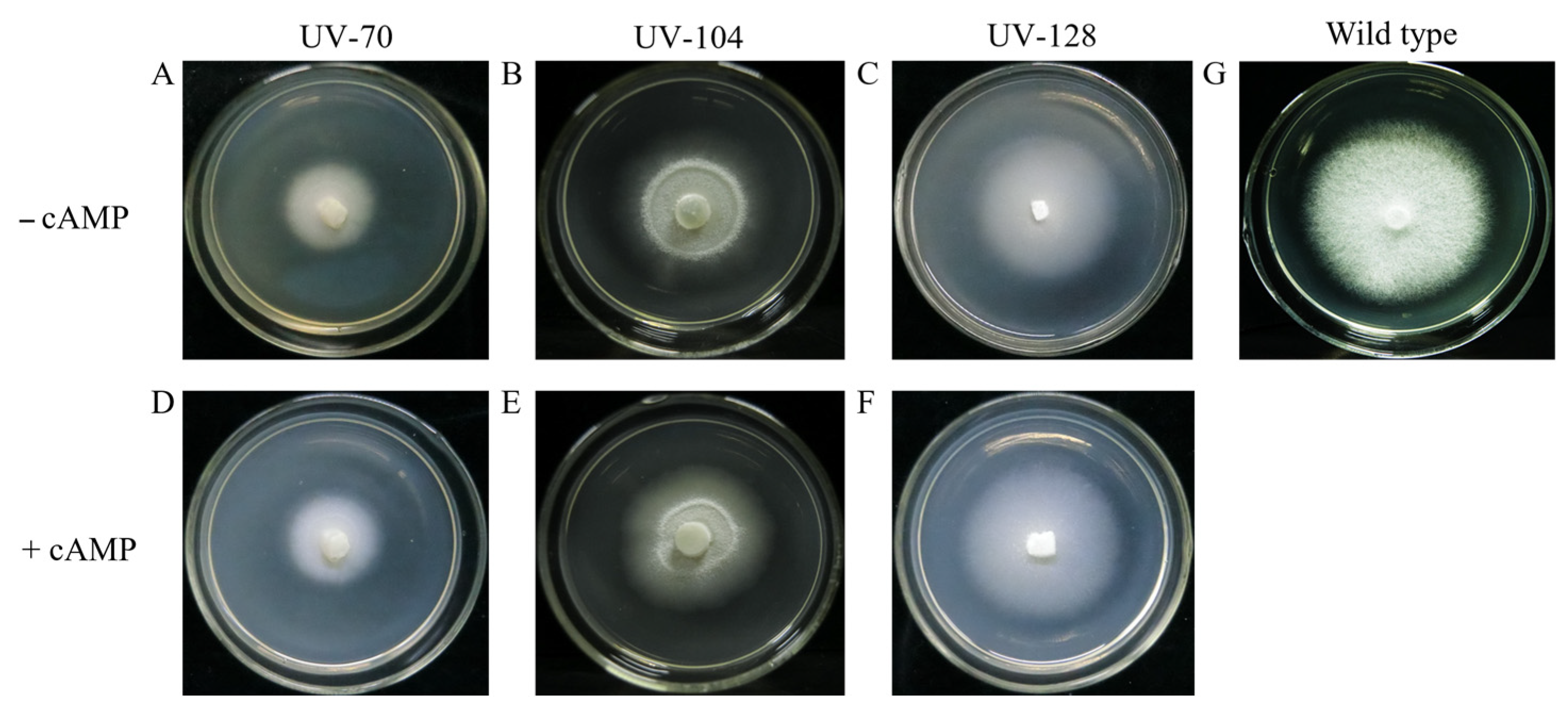
Based on our previous study on the aerial-hyphae-defecient mutants [5], a cAMP addition test was carried out to check whether the phenotype of the mutants would be restored or not. Obviously, hyphae of the three mutants in the plates with cAMP seemed the same as those in the plates without cAMP (Figure 1A–F). So, it was reasonable to propose that the phenotype of the mutants could not be resumed by exogenous cAMP, and the aerial-hyphae-deficient phenotype may not be caused by the cAMP/PKA signaling pathway.

3.2. KEGG Pathway Annotation of DEGs

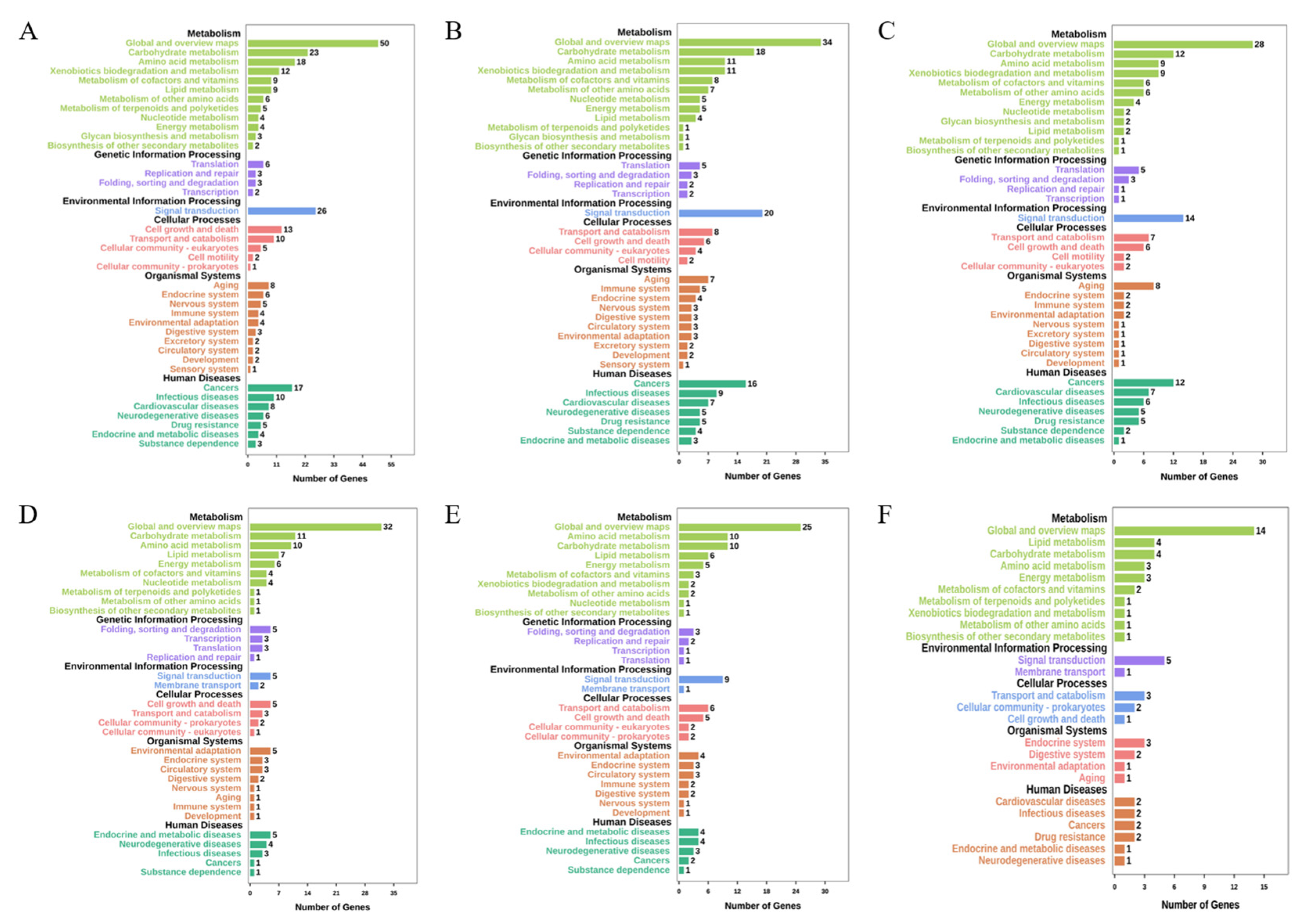
1745, 973, 802 downregulated and 609, 540, 329 upregulated genes were detected in UV-70, UV-104, and UV-128, respectively. Only 107, 84, 62 downregulated and 56, 48, 22 upregulated genes were annotated in KEGG (Supplementary Material S2). There were 26, 20, 14 downregulated genes in the item signal transduction of UV-70, UV-104, UV-128, respectively, among which, 12 (46%), 12 (60%), 6 (43%) genes were distributed in the MAPK signaling pathway (Figure 2A–C). 5, 9, 5 upregulated genes were annotated in the item signal transduction of UV-70, UV-104, UV-128, respectively, of which 3 (80%), 6 (67%), 3 (80%) genes belonged to the MAPK signaling pathway (Figure 2D–F). These data indicated that, in UV-70, UV-104, and UV-128, both downregulated and upregulated genes in the MAPK signaling pathway held the highest rates among all signaling pathways in the item signal transduction.
DEGs distributed in the MAPK signaling pathway were listed in Table 1 and Table 2. The downregulated genes outnumbered the upregulated genes in the MAPK signaling pathway of the three mutants. Among the downregulated genes, there were 6 common genes, of which 5 belonged to the MAPK signaling pathway—yeast (ko04011). MSTRG5365.1, MSTRG10940.1, and MSTRG11179.1 were annotated as STE3, a pheromone receptor of fungi. STE3 locates on the cell membrane and transfers signals inside by catalyzing GDP to GTP. MSTRG7679.1 was annotated as ANP1, a MAPKK kinase mainly responding to stress in the plant MAPK signaling pathway [43]. ANP1 has no homologue in yeast; however, its location in the plant MAPK signaling pathway was the same as that of STE11 in yeast, and its overexpression could fix the MAPK signaling in the yeast STE11 mutant [44]. MSTRG10971.1 was annotated as CK1 (casein kinase 1). Its yeast homologue Yck1 regulates several important processes, including nutrient sensing, cell growth, budding, and cell division [45,46,47]. MSTRG10559.1 was annotated as SKO1, a transcription factor mainly involved in stress response [48,49]. Of the upregulated genes, there were 3 common genes, of which 2 belonged to the MAPK signaling pathway—yeast (ko04011). MSTRG 472.1 was annotated as a transcription factor belonging to the TEAD family, and its homolog in yeast is Tec1, which directly regulates the expression of genes related to filamentous growth [50]. MSTRG.2205.1 was annotated as BCK1, also a MAPKK kinase, and its location in the MAPK signaling pathway is the same as that of STE11 and ANP1. The difference is that BCK1 is located in the MAPK signaling pathway responsible for cell wall integrity [51,52]. MSTRG.4611.1 was annotated as a serine/threonine-protein phosphatase 5 (PPP5C), the function of which was rarely explored in filamentous fungi; however, research showed PPP5C was involved in glucose homeostasis in mouse cells [53].

3.3. Expression of Common DEGs in MAPK Signaling Pathway

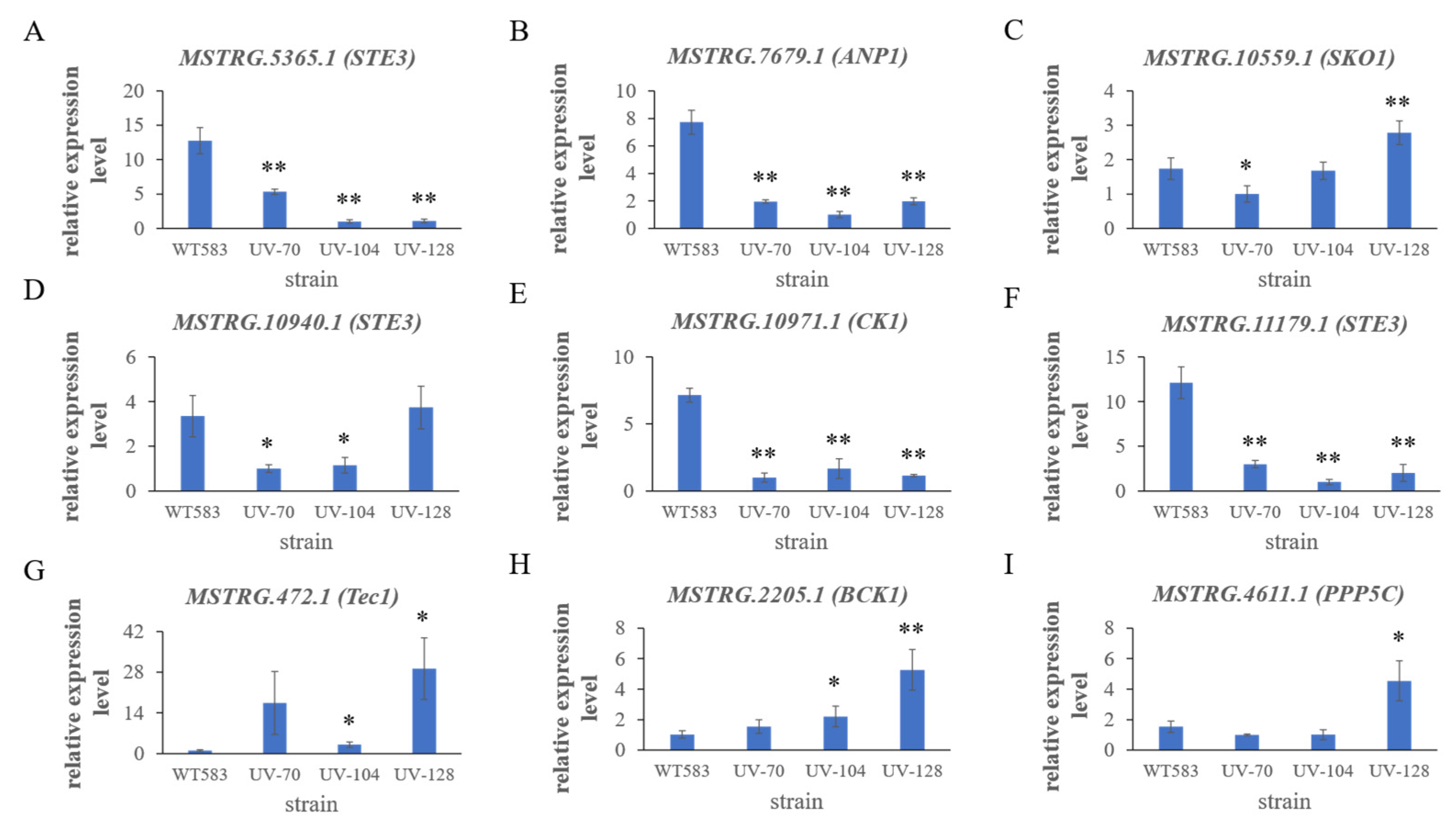
The relative expression levels of the 9 mutual DEGs in the mutants were verified by RT-qPCR (Figure 3). Among the downregulated DEGs, the expression levels of MSTRG.5365.1, MSTRG.7679.1, MSTRG.10971.1, and MSTRG.11179.1 were all downregulated in all mutants (Figure 3A,B,E,F), while the expression level of MSTRG.10559.1 was only downregulated in mutant UV-70 (Figure 3C), and there was no significant difference in the expression levels of MSTRG.10940.1 between WT583 and UV-128 (Figure 3D). Of the upregulated transcripts, the expression levels of MSTRG.472.1 and MSTRG.2205.1 were significantly upregulated in mutants UV-104 and UV-128 (Figure 3G,H) and the expression level of MSTRG.4611.1 was only upregulated in UV-128 compared with WT583 (Figure 3I).

3.4. Possible Transcription Factors of Hydrophobin Genes

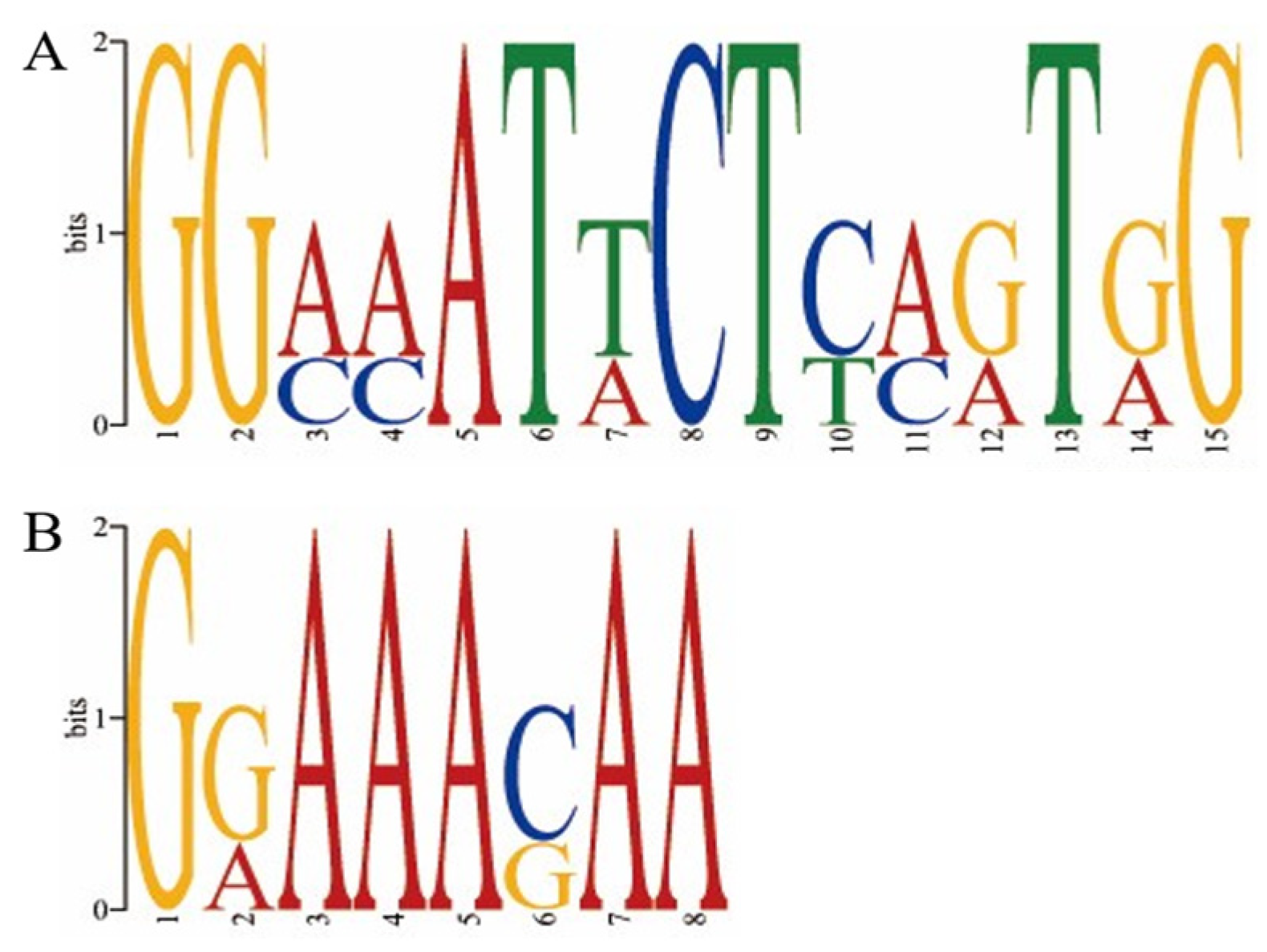
Since Tec1, together with Ste12, can directly regulate the expression of genes related to filamentous growth (https://www.kegg.jp/pathway/sce04011, accessed on 28 November 2025), we hypothesized that it can also directly regulate the expression of hydrophobin genes in F. filiformis. The three most downregulated hydrophobin genes in our previous study [5], MSTRG.6832.1, MSTRG.7580.1, and MSTRG.8862.1 were chosen for conserved motif detection. Two putative conserved motifs were found holding high similarity with the cis-acting elements of Tec1 and Ste12 (Figure 4A,B), which are two important transcription factors regulating filamentous growth of fungi. However, there were no putative conserved motifs of SKO1 (MSTRG.10559.1). There were 1 to 2 mismatches between the putative conserved motifs and the cis-acting elements of Tec1 and Ste12 from budding yeast (Table 3).

3.5. Determination of the Regulatory Relationship Between Tec1 and Hydrophobin Genes by DAP-Seq

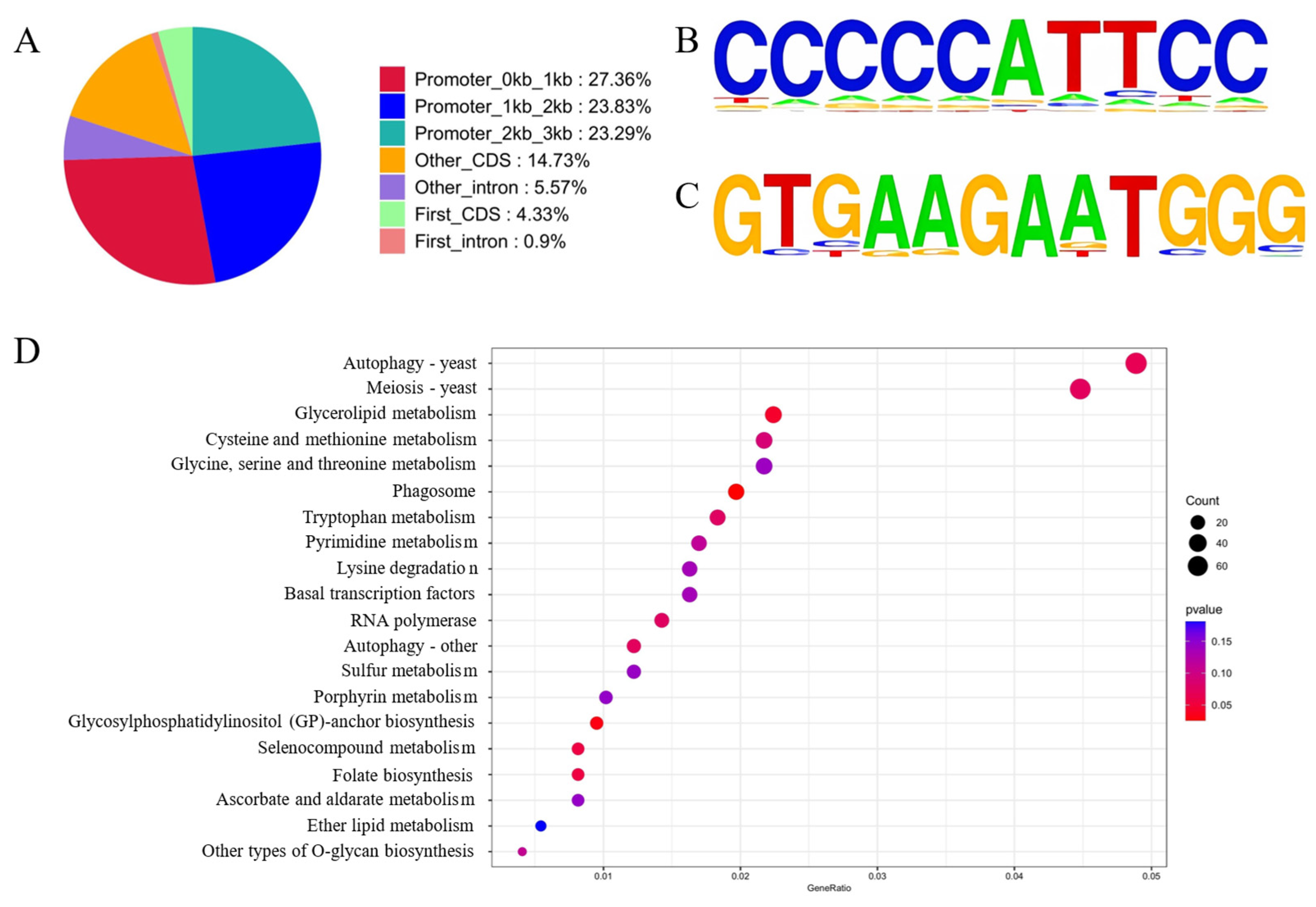
74.48% of the Tec1 peaks were located in the promoter region (0 to 3 kb relative to the transcription start site), while peaks in the first CDS, other CDS, the first intron, and other intron held a much smaller proportion (Figure 5A). Due to transcription factors binding to the promoter region, genes with peaks located in the promoter region were considered as putative targets. Among these promoter peaks, two putative cis-acting elements of Tec1 were found (Figure 5B,C). Sequence CCCCCATTCC (Figure 5B) contained a consensus motif ATTC specific for TEAD1 from eukaryotes (e-value 1 × 10⁻²⁰), while sequence GTGAAGAATGGG (Figure 5C) was also predicted to contain a motif for yeast Tec1 (e-value 1 × 10⁻¹⁰). KEGG analysis of genes, of which the peaks lay in promoter regions, was performed (Figure 5D). The results showed that most of the top 20 items were metabolism-related. However, it was notable that there were 3 items related to autophagy and 1 item related to meiosis. As to the hydrophobin genes we are concerned, both Tec1 and Ste12 showed binding peaks in the promoter region of 10 hydrophobins, respectively, of which 8 genes were mutual (Table 4). Moreover, both transcription factors showed binding peaks in promoter regions of many other gene families (Supplementary Material S3).

4. Discussion

Downstream of the G protein, the MAPK signaling pathway and the cAMP/PKA signaling pathway can both transfer signals to regulate the filamentous growth of fungi [30]. cAMP addition test demonstrated that the cAMP/PKA signaling pathway may not cause aerial-hyphae deficiency in the three mutants. So, we proposed that the factors causing aerial-hyphae deficiency may exist in the MAPK signaling pathway. The subsequent transcriptome analysis focused on the members in the MAPK signaling pathway, and the results showed that interesting expression shifts happened in this signaling pathway of the three mutants. Also, we speculated that this pathway may mainly regulate the expression of hydrophobin genes, which are a decisive factor for aerial hyphae formation. However, which transcription factor in the MAPK signaling pathway can directly activate the transcription of these hydrophobin genes? Answering this question means building a bridge between the MAPK signaling pathway and the downstream regulated genes.
There are several transcription factors in the MAPK signaling pathway. For example, MCM1 is a transcription factor specific for pheromone-related signal transduction, and SKO1 (MSTRG.10559.1) is mainly involved in stress response. However, we are very interested in Tec1. Firstly, Tec1 mainly participates in mycelial formation, pathogenesis, and interaction with other regulatory elements in ascomycota, but its function in basidiomycota is rarely revealed [56]. Secondly, Tec1 functions in parallel with MCM1 but specifically responds to starvation. MCM1, together with Ste12, can activate the expression of genes involved in fruiting body and basidiospore formation, while Tec1 binding to Ste12 can regulate gene expression involved in filamentous growth in ascomycota [30,57]; thus, the MAPK signaling pathway Tec1 lies in is also named filamentous-growth MAPK signaling pathway [30,58]. Our DAP-seq analysis indicated that Tec1 and Ste12 had many targeted genes or gene families in common, including hydrophobin genes. Thirdly, the expression of a structural protein, FLO11, which promotes the formation of pseudohyphae development, is directly activated by Tec1 in S. cerevisiae [58,59]. FLO11 and hydrophobin are structural proteins needed for hyphal growth. Based on the facts above, it is rational to hypothesize that Tec1 in F. filiformis may directly regulate the expression of genes specific for aerial-hyphae morphogenesis, including hydrophobin genes. Many motifs were predicted in the promoter region of the chosen hydrophobin genes. More interestingly, one putative cis-acting element for Ste12 and Tec1, respectively, was included in the predicted motifs, which coincides with the fact that Tec1, together with Ste12, can activate the expression of hyphae-specific genes [50,55,60]. We noticed that there were 1 to 2 mismatches between some predicted motifs and the consensus sequences of cis-acting elements from ascomycota, which we thought may not influence the recognition and binding by transcription factors according to previous research [50,54]. Even in different strains of Lactobacillus plantarum, three or more mismatches exist in the consensus sequences of binding sites of the same transcription factor [61].
The transcription factor SKO1 from the MAPK signaling pathway(osmolarity stress responding) also grabbed our attention, for its expression tendency was opposite to that of Tec1 in our study. We noticed SKO1 is a versatile transcription factor involved not only in osmolarity stress, but also in oxidative stress response, and it acts as a transcription repressor for hyphae-specific genes [62,63]. So, its function goes antagonistically with that of Tec1 in filamentous growth, so it is reasonable that the downregulation of SKO1 and the upregulation of Tec1 may not be a coincidence. The mutants failed to form normal aerial hyphae to obtain enough oxygen, so the hypoxia stress induced the expression shifts of both the transcription factors to produce more aerial hyphae. This speculation could explain that there were a few aerial hyphae in the center of the mutant colonies after long-term culture.
But how could Tec1 be upregulated in this study? The previous study showed that Tec1 could be self-activated by binding to its promoter region containing the AGATTCTT sequence element in budding yeast [50]. We then checked the promoter region 1000 bp relative to the translation start site of Tec1, and found two putative binding sites for Tec1 itself (see Supplementary Material S4). So it was possible that Tec1 would be activated by itself in F. filiformis under hypoxic stress.
In addition to the above transcription factors, the 4 downregulated pheromone receptors appealed to us. MSTRG.5365.1, MSTRG.7714.1, MSTRG.10940.1, and MSTRG.11179.1 are pheromone receptor Ste3.s4, Ste3.s1, Ste3.s3, and Ste3.s5, respectively. Ste3.s3 and Ste3.s5 are non-mating type pheromone receptors. Such pheromone receptors cannot be activated by pheromone and cannot activate sex development [64]. According to an earlier study, many G-protein-coupled receptors do not need specific ligands for signal transduction [65]. Literature showed non-mating type receptor may function by self-recognition [66]. In our study, wild type WT583 is a monokaryon strain, and two types of pheromone receptors are expressed. So non-mating type receptors may work in a pheromone-independent manner without the activation of pheromone. The identification and characterization of the 4 pheromone receptors were seen in the Supplementary Material, identification and characterization of STE3.
A large fraction of putative Tec1 binding sites were located in the promoter region, and putative binding sites in 0 to 1 kb relative to the transcription start site were higher than those in 1 to 2 kb and 2 to 3 kb, respectively. Distribution of cis-acting elements in ascomycete fungi showed regular patterns, i.e., mainly in 0 to 1 kb regions [67]. However, no such study was performed in higher fungi, including mushrooms. So we would not have a further discussion on this result. The predicted Tec1 binding motifs were not totally the same with the cis-acting elements of Tec1 from yeast and higher eukaryotes [50,54], but they contained the consensus sequence ATTC. Fluctuation in the flanking sequences or consensus sequences is compatible with transcription factor binding [61]. So the differences between our prediction and cis-acting elements from other species seem normal.

5. Conclusions

This study investigated the regulatory connection between the filamentous-growth MAPK signaling pathway and hydrophobin genes in F. filiformis. Our key findings include the following: cAMP addition failed to restore the mutants’ phenotypes; transcriptomic analysis and RT-qPCR revealed common alterations in the filamentous-growth MAPK signaling pathway; motif prediction and DAP-seq analysis identified putative binding sites of Tec1 and Ste12 in the promoter region of hydrophobin genes and many other gene families. These results suggest a potential regulatory relationship between the filamentous-growth MAPK signaling pathway and hydrophobin genes through Tec1 and Ste12. Moreover, this study may possibly represent a mutual regulatory mechanism for hyphal development in all basidiomycetes. However, functional validation through overexpression and RNAi is needed to confirm direct transcriptional regulation and establish a causal relationship between the filamentous-growth MAPK signaling pathway and its downstream genes. Understanding this regulatory network has prominent implications for fundamental fungal development biology and mushroom production.

Supplementary Materials

The following supporting information can be downloaded at: https://www.mdpi.com/article/10.3390/jof12040268/s1, including Supplementary Material S1, Supplementary Material S2, Supplementary Material S3, Supplementary Material S4, information of RNA sequencing, and optical microscopy analysis.

Author Contributions

Formal analysis, Z.T., X.G. and Q.Q.; Funding acquisition, Q.H., W.Z., Q.W. and B.X.; Methodology, Q.H. and Z.T.; Supervision, Q.W.; Writing—original draft, Q.H.; Writing—review & editing, Q.H., S.L. and Q.W. All authors have read and agreed to the published version of the manuscript.

Funding

This research was supported by the Natural Science Foundation of Fujian (2021J05257, 2022J05272, 2025J011094), Ningde Normal University (2025ZX069) and the Fujian Higher Education Research Center for Local Biological Resources (Ningde, China).

Data Availability Statement

RNA-seq rawreads and DAP-seq rawreads are deposited in NCBI SRA with accessions SRR37715099 and SRR37543589, respectively. More data are available on request.

Conflicts of Interest

The authors declare no conflicts of interest.

References

  1. Wösten, H.A.; Richter, M.; Willey, J.M. Structural proteins involved in emergence of microbial aerial hyphae. Fungal Genet. Biol. 1999, 27, 153–160. [Google Scholar] [CrossRef]
  2. Wessels, J.G. Fungi in their own right. Fungal Genet. Biol. 1999, 27, 134–145. [Google Scholar] [CrossRef]
  3. Wösten, H.A.; Wessels, J.G. Hydrophobins, from molecular structure to multiple functions in fungal development. Mycoscience 1997, 38, 363–374. [Google Scholar] [CrossRef]
  4. Askolin, S.; Linder, M.; Scholtmeijer, K.; Tenkanen, M.; Penttilä, M.; de Vocht, M.L.; Wösten, H.A. Interaction and comparison of a class I hydrophobin from Schizophyllum commune and class II hydrophobins from Trichoderma reesei. Biomacromolecules 2006, 7, 1295–1301. [Google Scholar] [CrossRef]
  5. Huang, Q.H.; Yao, S.; Wei, Z.Y.; Tong, Z.J.; Zhang, Y.L.; Deng, Y.J.; Xie, B.G. Analysis of hydrophobin gene expression in aerial hypha deficient mutants of Flammulina filiformis. Acta Edulis Fungi 2021, 28, 1–10. [Google Scholar]
  6. Askolin, S.; Penttilä, M.; Wösten, H.A.; Nakari-Setälä, T. The Trichoderma reesei hydrophobin genes hfb1 and hfb2 have diverse functions in fungal development. FEMS Microbiol. Lett. 2005, 253, 281–288. [Google Scholar] [CrossRef]
  7. Zhang, S.; Xia, Y.X.; Kim, B.; Keyhani, N.O. Two hydrophobins are involved in fungal spore coat rodlet layer assembly and each play distinct roles in surface interactions, development and pathogenesis in the entomopathogenic fungus, Beauveria bassiana. Mol. Microbiol. 2011, 80, 811–826. [Google Scholar] [CrossRef]
  8. Viterbo, A.D.A.; Chet, I. TasHyd1, a new hydrophobin gene from the biocontrol agent Trichoderma asperellum, is involved in plant root colonization. Mol. Plant Pathol. 2006, 7, 249–258. [Google Scholar] [CrossRef] [PubMed]
  9. Moonjely, S.; Keyhani, N.O.; Bidochka, M.J. Hydrophobins contribute to root colonization and stress responses in the rhizosphere-competent insect pathogenic fungus Beauveria bassiana. Microbiology 2018, 164, 517–528. [Google Scholar] [CrossRef]
  10. Valsecchi, I.; Dupres, V.; Stephen-Victor, E.; Guijarro, J.I.; Gibbons, J.; Beau, R.; Bayry, J.; Coppee, J.Y.; Lafont, F.; Latgé, J.P.; et al. Role of hydrophobins in Aspergillus fumigatus. J. Fungi 2017, 4, 2. [Google Scholar] [CrossRef]
  11. Grünbacher, A.; Throm, T.; Seidel, C.; Gutt, B.; Röhrig, J.; Strunk, T.; Vincze, P.; Walheim, S.; Schimmel, T.; Wenzel, W.; et al. Six hydrophobins are involved in hydrophobin rodlet formation in Aspergillus nidulans and contribute to hydrophobicity of the spore surface. PLoS ONE 2014, 9, e94546. [Google Scholar] [CrossRef]
  12. van Wetter, M.A.; Schuren, F.H.; Schuurs, T.A.; Wessels, J.G. Targeted mutation of the SC3 hydrophobin gene of Schizophyllum commune affects formation of aerial hyphae. FEMS Microbiol. Lett. 1996, 140, 265–269. [Google Scholar] [CrossRef]
  13. Schuren, F.H.; Sgeirsdttir, S.A.; Kothe, E.M.; Scheer, J.M.; Wessels, J.G. The Sc7/Sc14 gene family of Schizophyllum commune codes for extracellular proteins specifically expressed during fruit-body formation. Microbiology 1993, 139, 2083–2090. [Google Scholar] [CrossRef]
  14. Tao, Y.; Chen, R.; Yan, J.; Long, Y.; Tong, Z.; Song, H.; Xie, B. A hydrophobin gene, Hyd9, plays an important role in the formation of aerial hyphae and primordia in Flammulina filiformis. Gene 2019, 706, 84–90. [Google Scholar] [CrossRef] [PubMed]
  15. Kim, H.I.; Lee, C.S.; Park, Y.J. Further characterization of hydrophobin genes in genome of Flammulina velutipes. Mycoscience 2016, 57, 320–325. [Google Scholar] [CrossRef]
  16. Bell-Pedersen, D.; Dunlap, J.C.; Loros, J.J. Distinct cis-acting elements mediate clock, light, and developmental regulation of the Neurospora crassa eas (ccg-2) gene. Mol. Cell. Biol. 1996, 16, 513–521. [Google Scholar] [CrossRef] [PubMed][Green Version]
  17. Larraya, L.; Peñas, M.M.; Pérez, G.; Santos, C.; Ritter, E.; Pisabarro, A.G.; Ramírez, L. Identification of incompatibility alleles and characterisation of molecular markers genetically linked to the A incompatibility locus in the white rot fungus Pleurotus ostreatus. Curr. Genet. 1999, 34, 486–493. [Google Scholar] [CrossRef] [PubMed]
  18. Talbot, N.J.; McCafferty, H.R.K.; Ma, M.; Moore, K.; Hamer, J.E. Nitrogen starvation of the rice blast fungus Magnaporthe griseamay act as an environmental cue for disease symptom expression. Physiol. Mol. Plant Pathol. 1997, 50, 179–195. [Google Scholar] [CrossRef]
  19. Wessels, J.G.H.; De Vries, O.M.H.; Asgeirsdottir, S.A.; Springer, J. The thn mutation of Schizophyllum commune, which suppresses formation of aerial hyphae, affects expression of the Sc3 hydrophobin gene. Microbiology 1991, 137, 2439–2445. [Google Scholar] [CrossRef]
  20. Segers, G.C.; Regier, J.C.; Nuss, D.L. Evidence for a role of the regulator of G-protein signaling protein CPRGS-1 in Gα subunit CPG-1-mediated regulation of fungal virulence, conidiation, and hydrophobin synthesis in the chestnut blight fungus Cryphonectria parasitica. Eukaryot. Cell 2004, 3, 1454–1463. [Google Scholar] [CrossRef]
  21. Fang, W.; Pei, Y.; Bidochka, M.J. A regulator of a G protein signalling (RGS) gene, cag8, from the insect-pathogenic fungus Metarhizium anisopliae is involved in conidiation, virulence and hydrophobin synthesis. Microbiology 2007, 153, 1017–1025. [Google Scholar] [CrossRef]
  22. Dagenais, T.R.; Giles, S.S.; Aimanianda, V.; Latgé, J.P.; Hull, C.M.; Keller, N.P. Aspergillus fumigatus LaeA-mediated phagocytosis is associated with a decreased hydrophobin layer. Infect. Immun. 2010, 78, 823–829. [Google Scholar] [CrossRef]
  23. Li, Y.; Liang, S.; Yan, X.; Wang, H.; Li, D.; Soanes, D.M.; Talbot, N.J.; Wang, Z.; Wang, Z. Characterization of MoLDB1 required for vegetative growth, infection-related morphogenesis, and pathogenicity in the rice blast fungus Magnaporthe oryzae. Mol. Plant-Microbe Interact. 2010, 23, 1260–1274. [Google Scholar] [CrossRef]
  24. Zhang, Y.; Zhao, J.; Fang, W.; Zhang, J.; Luo, Z.; Zhang, M.; Fan, Y.; Pei, Y. Mitogen-activated protein kinase hog1 in the entomopathogenic fungus Beauveria bassiana regulates environmental stress responses and virulence to insects. Appl. Environ. Microb. 2009, 75, 3787–3795. [Google Scholar] [CrossRef] [PubMed]
  25. Mendoza-Mendoza, A.; Rosales-Saavedra, T.; Cortes, C.; Castellanos-Juarez, V.; Martínez, P.; Herrera-Estrella, A. The MAP kinase TVK1 regulates conidiation, hydrophobicity and the expression of genes encoding cell wall proteins in the fungus Trichoderma virens. Microbiology 2007, 153, 2137–2147. [Google Scholar] [CrossRef] [PubMed]
  26. Rerngsamran, P.; Murphy, M.B.; Doyle, S.A.; Ebbole, D.J. Fluffy, the major regulator of conidiation in Neurospora crassa, directly activates a developmentally regulated hydrophobin gene. Mol. Microbiol. 2005, 56, 282–297. [Google Scholar] [CrossRef] [PubMed]
  27. Chang, Y.C.; Timberlake, W.E. Identification of Aspergillus brlA response elements (BREs) by genetic selection in yeast. Genetics 1993, 133, 29. [Google Scholar] [CrossRef]
  28. Fischer, R.; Kües, U. Asexual sporulation in mycelial fungi. In Growth, Differentiation and Sexuality; Springer: Berlin/Heidelberg, Germany, 2006; pp. 263–292. [Google Scholar]
  29. Li, L.; Wright, S.J.; Krystofova, S.; Park, G.; Borkovich, K.A. Heterotrimeric G protein signaling in filamentous fungi. Annu. Rev. Microbiol. 2007, 61, 423–452. [Google Scholar] [CrossRef]
  30. Lengeler, K.B.; Davidson, R.C.; D’souza, C.; Harashima, T.; Shen, W.C.; Wang, P.; Pan, X.; Waugh, M.; Heitman, J. Signal transduction cascades regulating fungal development and virulence. Microbiol. Mol. Biol. R. 2000, 64, 746–785. [Google Scholar] [CrossRef]
  31. Pitt, G.S.; Brandt, R.; Lin, K.C.; Devreotes, P.N.; Schaap, P. Extracellular cAMP is sufficient to restore developmental gene expression and morphogenesis in Dictyostelium cells lacking the aggregation adenylyl cyclase (ACA). Genes Dev. 1993, 7, 2172–2180. [Google Scholar] [CrossRef]
  32. Li, Y.; Huang, J.; Song, X.; Zhang, Z.; Jiang, Y.; Zhu, Y.; Zhao, H.; Ni, D. An RNA-Seq transcriptome analysis revealing novel insights into aluminum tolerance and accumulation in tea plant. Planta 2017, 246, 91–103. [Google Scholar] [CrossRef]
  33. Pertea, M.; Kim, D.; Pertea, G.M.; Leek, J.T.; Salzberg, S.L. Transcript-level expression analysis of RNA-seq experiments with HISAT, StringTie and Ballgown. Nat. Protoc. 2016, 11, 1650–1667. [Google Scholar] [CrossRef]
  34. Chen, F.; Zhu, H.H.; Zhou, L.F.; Li, J.; Zhao, L.Y.; Wu, S.S.; Wang, J.; Liu, W.; Chen, Z. Genes related to the very early stage of ConA-induced fulminant hepatitis: A gene-chip-based study in a mouse model. BMC Genom. 2010, 11, 240. [Google Scholar] [CrossRef] [PubMed]
  35. Huang, Q.; Han, X.; Mukhtar, I.; Gao, L.; Huang, R.; Fu, L.; Yan, J.; Tao, Y.; Chen, B.; Xie, B. Identification and expression patterns of fvexpl1, an expansin-like protein-encoding gene, suggest an auxiliary role in the stipe morphogenesis of Flammulina velutipes. J. Microbiol. Biotechnol. 2018, 28, 622–629. [Google Scholar] [CrossRef] [PubMed]
  36. Kl, L. Analysis of relative gene expression data using real-time quantitative PCR and the 2−ΔΔCT method. Methods 2001, 25, 402–408. [Google Scholar] [CrossRef] [PubMed]
  37. Bartlett, A.; O’Malley, R.C.; Huang, S.S.; Galli, M.; Nery, J.R.; Gallavotti, A.; Ecker, J.R. Mapping genome-wide transcription-factor binding sites using DAP-seq. Nat. Protoc. 2017, 12, 1659–1672. [Google Scholar] [CrossRef]
  38. Bolger, A.M.; Lohse, M.; Usadel, B. Trimmomatic: A flexible trimmer for Illumina sequence data. Bioinformatics 2014, 30, 2114–2120. [Google Scholar] [CrossRef]
  39. Li, H.; Durbin, R. Fast and accurate short read alignment with Burrows–Wheeler transform. Bioinformatics 2009, 25, 1754–1760. [Google Scholar] [CrossRef]
  40. Gaspar, J.M. Improved peak-calling with MACS2. bioRxiv 2018. [Google Scholar] [CrossRef]
  41. Hull, R.P.; Srivastava, P.K.; D’Souza, Z.; Atanur, S.S.; Mechta-Grigoriou, F.; Game, L.; Petretto, E.; Cook, H.T.; Aitman, T.J.; Behmoaras, J. Combined ChIP-Seq and transcriptome analysis identifies AP-1/JunD as a primary regulator of oxidative stress and IL-1β synthesis in macrophages. BMC Genom. 2013, 14, 92. [Google Scholar] [CrossRef]
  42. Yu, G.; Wang, L.G.; Han, Y.; He, Q.Y. clusterProfiler: An R package for comparing biological themes among gene clusters. Omics 2012, 16, 284–287. [Google Scholar] [CrossRef]
  43. Nakagami, H.; Soukupová, H.; Schikora, A.; Zárský, V.; Hirt, H. A mitogen-activated protein kinase kinase kinase mediates reactive oxygen species homeostasis in Arabidopsis. J. Biol. Chem. 2006, 281, 38697–38704. [Google Scholar] [CrossRef]
  44. Nishihama, R.; Banno, H.; Kawahara, E.; Irie, K.; Machida, Y. Possible involvement of differential splicing in regulation of the activity of Arabidopsis ANP1 that is related to mitogen-activated protein kinase kinase kinases (MAPKKKs). Plant J. 1997, 12, 39–48. [Google Scholar] [CrossRef]
  45. Sabina, J.; Brown, V. Glucose sensing network in Candida albicans: A sweet spot for fungal morphogenesis. Eukaryot. Cell 2009, 8, 1314–1320. [Google Scholar] [CrossRef]
  46. Moriya, H.; Johnston, M. Glucose sensing and signaling in Saccharomyces cerevisiae through the Rgt2 glucose sensor and casein kinase I. Proc. Natl. Acad. Sci. USA 2004, 101, 1572–1577. [Google Scholar] [CrossRef]
  47. Knippschild, U.; Gocht, A.; Wolff, S.; Huber, N.; Löhler, J.; Stöter, M. The casein kinase 1 family: Participation in multiple cellular processes in eukaryotes. Cell. Signal 2005, 17, 675–689. [Google Scholar]
  48. Rep, M.; Proft, M.; Remize, F.; Tamás, M.; Serrano, R.; Thevelein, J.M.; Hohmann, S. The Saccharomyces cerevisiae Sko1p transcription factor mediates HOG pathway-dependent osmotic regulation of a set of genes encoding enzymes implicated in protection from oxidative damage. Mol. Microbiol. 2001, 40, 1067–1083. [Google Scholar] [CrossRef] [PubMed]
  49. Proft, M.; Struhl, K. Hog1 kinase converts the Sko1-Cyc8-Tup1 repressor complex into an activator that recruits SAGA and SWI/SNF in response to osmotic stress. Mol. Cell 2002, 9, 1307–1317. [Google Scholar] [PubMed]
  50. Heise, B.; van der Felden, J.; Kern, S.; Malcher, M.; Brückner, S.; Mösch, H.U. The TEA transcription factor Tec1 confers promoter-specific gene regulation by Ste12-dependent and-independent mechanisms. Eukaryot. Cell 2010, 9, 514–531. [Google Scholar] [PubMed]
  51. Li, G.; Zhou, X.; Xu, J.R. Genetic control of infection-related development in Magnaporthe oryzae. Curr. Opin. Microbiol. 2012, 15, 678–684. [Google Scholar] [CrossRef]
  52. Turrà, D.; Segorbe, D.; Di Pietro, A. Protein kinases in plant-pathogenic fungi: Conserved regulators of infection. Annu. Rev. Phytopathol. 2014, 52, 267–288. [Google Scholar] [CrossRef]
  53. Grankvist, N.; Amable, L.; Honkanen, R.E.; Sjöholm, Å.; Ortsäter, H. Serine/threonine protein phosphatase 5 regulates glucose homeostasis in vivo and apoptosis signalling in mouse pancreatic islets and clonal MIN6 cells. Diabetologia 2012, 55, 2005–2015. [Google Scholar] [CrossRef]
  54. Anbanandam, A.; Albarado, D.C.; Nguyen, C.T.; Halder, G.; Gao, X.; Veeraraghavan, S. Insights into transcription enhancer factor 1 (TEF-1) activity from the solution structure of the TEA domain. Proc. Natl. Acad. Sci. USA 2006, 103, 17225–17230. [Google Scholar]
  55. Köhler, T.; Wesche, S.; Taheri, N.; Braus, G.H.; Mösch, H.U. Dual role of the Saccharomyces cerevisiae TEA/ATTS family transcription factor Tec1p in regulation of gene expression and cellular development. Eukaryot. Cell 2002, 1, 673–686. [Google Scholar]
  56. León-Ramírez, C.G.; Sánchez-Arreguin, J.A.; Cabrera-Ponce, J.L.; Martínez-Soto, D.; Ortiz-Castellanos, M.L.; Aréchiga-Carvajal, E.T.; Salazar-Chávez, M.F.; Sánchez-Segura, L.; Ruiz-Herrera, J. Tec1, a member of the TEA transcription factors family, is involved in virulence and basidiocarp development in Ustilago maydis. Int. Microbiol. 2022, 25, 17–26. [Google Scholar] [PubMed]
  57. Alejandre-Castaneda, V.; Patino-Medina, J.A.; Valle-Maldonado, M.I.; Garcia, A.; Ortiz-Alvarado, R.; Ruiz-Herrera, L.F.; Castro-Cerritos, K.V.; Ramirez-Emiliano, J.; Ramirez-Diaz, M.I.; Garre, V.; et al. Transcription Factors Tec1 and Tec2 Play Key Roles in the Hyphal Growth and Virulence of Mucor lusitanicus Through Increased Mitochondrial Oxidative Metabolism. J. Microbiol. 2025, 63, e2504100. [Google Scholar] [CrossRef]
  58. Gavrias, V.; Andrianopoulos, A.; Gimeno, C.J.; Timberlake, W.E. Saccharomyces cerevisiae TEC1 is required for pseudohyphal growth. Mol. Microbiol. 1996, 19, 1255–1263. [Google Scholar] [CrossRef] [PubMed]
  59. Lo, W.S.; Dranginis, A.M. The cell surface flocculin Flo11 is required for pseudohyphae formation and invasion by Saccharomyces cerevisiae. Mol. Biol. Cell 1998, 9, 161–171. [Google Scholar] [CrossRef] [PubMed]
  60. Lane, S.; Zhou, S.; Pan, T.; Dai, Q.; Liu, H. The basic helix-loop-helix transcription factor Cph2 regulates hyphal development in Candida albicans partly via TEC1. Mol. Cell. Biol. 2001, 21, 6418–6428. [Google Scholar]
  61. Wels, M.; Francke, C.; Kerkhoven, R.; Kleerebezem, M.; Siezen, R.J. Predicting cis-acting elements of Lactobacillus plantarum by comparative genomics with different taxonomic subgroups. Nucleic Acids Res. 2006, 34, 1947–1958. [Google Scholar]
  62. Alonso-Monge, R.; Román, E.; Arana, D.M.; Prieto, D.; Urrialde, V.; Nombela, C.; Pla, J. The Sko1 protein represses the yeast-to-hypha transition and regulates the oxidative stress response in Candida albicans. Fungal Genet. Biol. 2010, 47, 587–601. [Google Scholar] [CrossRef]
  63. Nehlin, J.O.; Carlberg, M.; Ronne, H. Yeast SKO1 gene encodes a bZIP protein that binds to the CRE motif and acts as a repressor of transcription. Nucleic Acids Res. 1992, 20, 5271–5278. [Google Scholar] [PubMed][Green Version]
  64. Casselton, L.; Challen, M. The mating type genes of the basidiomycetes. In Growth, Differentiation and Sexuality; Springer: Berlin/Heidelberg, Germany, 2006; pp. 357–374. [Google Scholar]
  65. Seifert, R.; Wenzel-Seifert, K. Constitutive activity of G-protein-coupled receptors: Cause of disease and common property of wild-type receptors. Naunyn-Schmiedeberg’s Arch. Pharmacol. 2002, 366, 381–416. [Google Scholar] [CrossRef] [PubMed]
  66. Kües, U.; James, T.Y.; Heitman, J. Mating type in basidiomycetes: Unipolar, bipolar, and tetrapolar patterns of sexuality. In Evolution of Fungi and Fungal-like Organisms; Springer: Berlin/Heidelberg, Germany, 2011; pp. 97–160. [Google Scholar]
  67. Gasch, A.P.; Moses, A.M.; Chiang, D.Y.; Fraser, H.B.; Berardini, M.; Eisen, M.B. Conservation and evolution of cis-regulatory systems in ascomycete fungi. PLoS Biol. 2004, 2, e398. [Google Scholar] [CrossRef] [PubMed]
Figure 1. cAMP addition test of the mutants. The three aerial-hyphae-deficient mutants are UV-70, UV-104, and UV-128, previously used in our study [5]. No cAMP was added in control group (AC), 1 mmol/L cAMP was added in treatment group (DF). The monokaryotic strain WT583 ((G), wild type) was used as positive control.
Jof 12 00268 g001
Figure 2. KEGG pathway analysis of DEGs. KEGG pathway analysis of downregulated DEGs of UV-70, UV-104, UV-128 (AC), and upregulated DEGs (DF), respectively.
Jof 12 00268 g002
Figure 3. Relative expression levels of the common DEGs in MAPK signaling pathway. (AF) are downregulated DEGs, and (GI) upregulated DEGs. The title of each subfigure is represented by the DEG names in this study and their corresponding homologues from budding yeast (in the parentheses). Statistical significance was determined by Least Significant Difference method in One-Way Analysis of Variance (* p < 0.05, ** p < 0.01).
Jof 12 00268 g003
Figure 4. Conserved motif prediction of the upstream sequences of the hydrophobins. Motif (A) contains the consensus sequence ATTC recognized by yeast Tec1, and motif (B) shows high similarities with the cis-acting element of yeast Ste12.
Jof 12 00268 g004
Figure 5. DAP-seq analysis of Tec1 transcription factor. Most peaks located in promoter region, and other peaks in CDS and intron regions (A). HOMER software (version 3) predicted conserved motifs and aligned motifs to the motif database. One putative motif was obtained for Tec1 and Ste12, respectively (B,C). KEGG enrichment of DEGs whose promoter regions were targeted (D).
Jof 12 00268 g005
Table 1. Function annotation of the downregulated DEGs in MAPK signaling pathway.
StrainsTranscript IDPathway IDFunction Description
UV-70MSTRG.10971.1ko04011CSNK1, CKI; casein kinase 1
MSTRG.9623.1ko04011CDC28, CDC2; cyclin-dependent kinase
MSTRG.7714.1ko04011STE3; pheromone receptor
MSTRG.5365.1ko04011STE3; pheromone receptor
MSTRG.11179.1ko04011STE3; pheromone receptor
MSTRG.10940.1ko04011STE3; pheromone receptor
MSTRG.3411.1ko04011YWHAE; 14-3-3 protein epsilon
MSTRG.10559.1ko04011SKO1, ATF1, PCR1; ATF/CREB family transcription factor
MSTRG.2606.1ko04011STE11; mitogen-activated protein kinase kinase kinase
MSTRG.3829.1ko04011GRE2; NADPH-dependent methylglyoxal reductase
g5646.t1ko04010PKA; protein kinase A
MSTRG.7679.1ko04016ANP1; mitogen-activated protein kinase kinase kinase ANP1
UV-104MSTRG.10971.1ko04011CSNK1, CKI; casein kinase 1
MSTRG.9623.1ko04011CDC28, CDC2; cyclin-dependent kinase
MSTRG.10940.1ko04011STE3; pheromone receptor
MSTRG.11179.1ko04011STE3; pheromone receptor
MSTRG.7714.1ko04011STE3; pheromone receptor
MSTRG.5365.1ko04011STE3; pheromone receptor
MSTRG.10559.1ko04011SKO1, ATF1, PCR1; ATF/CREB family transcription factor
MSTRG.1905.1ko04011TEAD; transcriptional enhancer factor
MSTRG.3829.1ko04011GRE2; NADPH-dependent methylglyoxal reductase
MSTRG.5584.1ko04011ROM1_2; RHO1 GDP-GTP exchange protein 1/2
g5646.t1ko04010PKA; protein kinase A
MSTRG.7679.1ko04016ANP1; mitogen-activated protein kinase kinase kinase ANP1
UV-128MSTRG.10559.1ko04011SKO1, ATF1, PCR1; ATF/CREB family transcription factor
MSTRG.10940.1ko04011STE3; pheromone receptor
MSTRG.5365.1ko04011STE3; pheromone receptor
MSTRG.11179.1ko04011STE3; pheromone receptor
MSTRG.10971.1ko04011CSNK1, CKI; casein kinase 1
MSTRG.7679.1ko04016ANP1; mitogen-activated protein kinase kinase kinase ANP1
MAPK signaling pathway—yeast (ko04011), classical MAPK signaling pathway (ko04010), MAPK signaling pathway—plant (ko04016).
Table 2. Function annotation of the upregulated DEGs in the MAPK signaling pathway.
StrainsTranscript IDPathway IDFunction Description
UV-70MSTRG.472.1ko04011TEAD; transcriptional enhancer factor
MSTRG.2205.1ko04011BCK1; mitogen-activated protein kinase kinase kinase
MSTRG.4611.1ko04010PPP5C; serine/threonine-protein phosphatase 5
UV-104MSTRG.858.1ko04011CSNK1, CKI; casein kinase 1
MSTRG.5445.1ko04011CSNK1, CKI; casein kinase 1
MSTRG.472.1ko04011TEAD; transcriptional enhancer factor
MSTRG.2758.1ko04011NEDD4, RSP5; E3 ubiquitin-protein ligase NEDD4
MSTRG.2205.1ko04011BCK1; mitogen-activated protein kinase kinase kinase
MSTRG.4611.1ko04010PPP5C; serine/threonine-protein phosphatase 5
UV-128MSTRG.472.1ko04011TEAD; transcriptional enhancer factor
MSTRG.2205.1ko04011BCK1; mitogen-activated protein kinase kinase kinase
MSTRG.4611.1ko04010PPP5C; serine/threonine-protein phosphatase 5
MAPK signaling pathway—yeast (ko04011), classical MAPK signaling pathway (ko04010).
Table 3. Putative transcription factor and cis-acting element prediction of the hydrophobins.
Transcript IDsStart SitePutative TFPutative Binding Motif
MSTRG.6832.1291 bpTec1CATTCTC
379 bpSTE12GAAAACA
MSTRG.7580.1744 bpTec1CATTCTC
225 bpSTE12GGAAAGA
MSTRG.8862.1269 bpTec1AATTCTT
582 bpSTE12GGAAACA
TEAD family proteins bind strongly to the consensus sequence ANATDCHN in higher eukaryotes or CATTCTT in yeast [50,54], and Ste12 proteins bind to the consensus sequence TGAAACA [55]. The numbers in item Start site mean the distance between the putative binding site and the transcription start site.
Table 4. Targeted hydrophobin genes by Tec1 and Ste12.
Transcription FactorsPeak NumbersPeak Location and Targeted GenesGene Function
Tec1Peak_5307g2660:Promoter_0kb_1kbfungal hydrophobin
Peak_5308g2661:Promoter_0kb_1kbfungal hydrophobin
Peak_1278g9642:Promoter_0kb_1kbhydrophobin
Peak_7599g4117:Promoter_1kb_2kbhydrophobin
Peak_9537g718:Promoter_0kb_1kbhydrophobin
Peak_11029g6319:Promoter_0kb_1kbhydrophobin
Peak_11031g6321:Promoter_0kb_1kbhydrophobin
Peak_2402g10327:Promoter_0kb_1kbputative hydrophobin
Peak_5832g372:Promoter_0kb_1kbputative hydrophobin
Peak_3079g1973:Promoter_0kb_1kbputative hydrophobin 2
Ste12Peak_1356g9642:Promoter_0kb_1kbhydrophobin
Peak_2309g10197:Promoter_0kb_1kbhydrophobin
Peak_5311g348:Promoter_1kb_2kbhydrophobin
Peak_7935g4117:Promoter_1kb_2kbhydrophobin
Peak_11452g6319:Promoter_0kb_1kbhydrophobin
Peak_11454g6321:Promoter_0kb_1kbhydrophobin
Peak_2551g10327:Promoter_0kb_1kbputative hydrophobin
Peak_3238g1973:Promoter_0kb_1kbputative hydrophobin 2
Peak_5575g2660:Promoter_0kb_1kbfungal hydrophobin
Peak_5576g2661:Promoter_0kb_1kbfungal hydrophobin
Peak means signal peak where the transcription factor may recognize and bind. In this table, hydrophobin genes whose promoter regions were targeted by signal peaks were chosen.
Disclaimer/Publisher’s Note: The statements, opinions and data contained in all publications are solely those of the individual author(s) and contributor(s) and not of MDPI and/or the editor(s). MDPI and/or the editor(s) disclaim responsibility for any injury to people or property resulting from any ideas, methods, instructions or products referred to in the content.