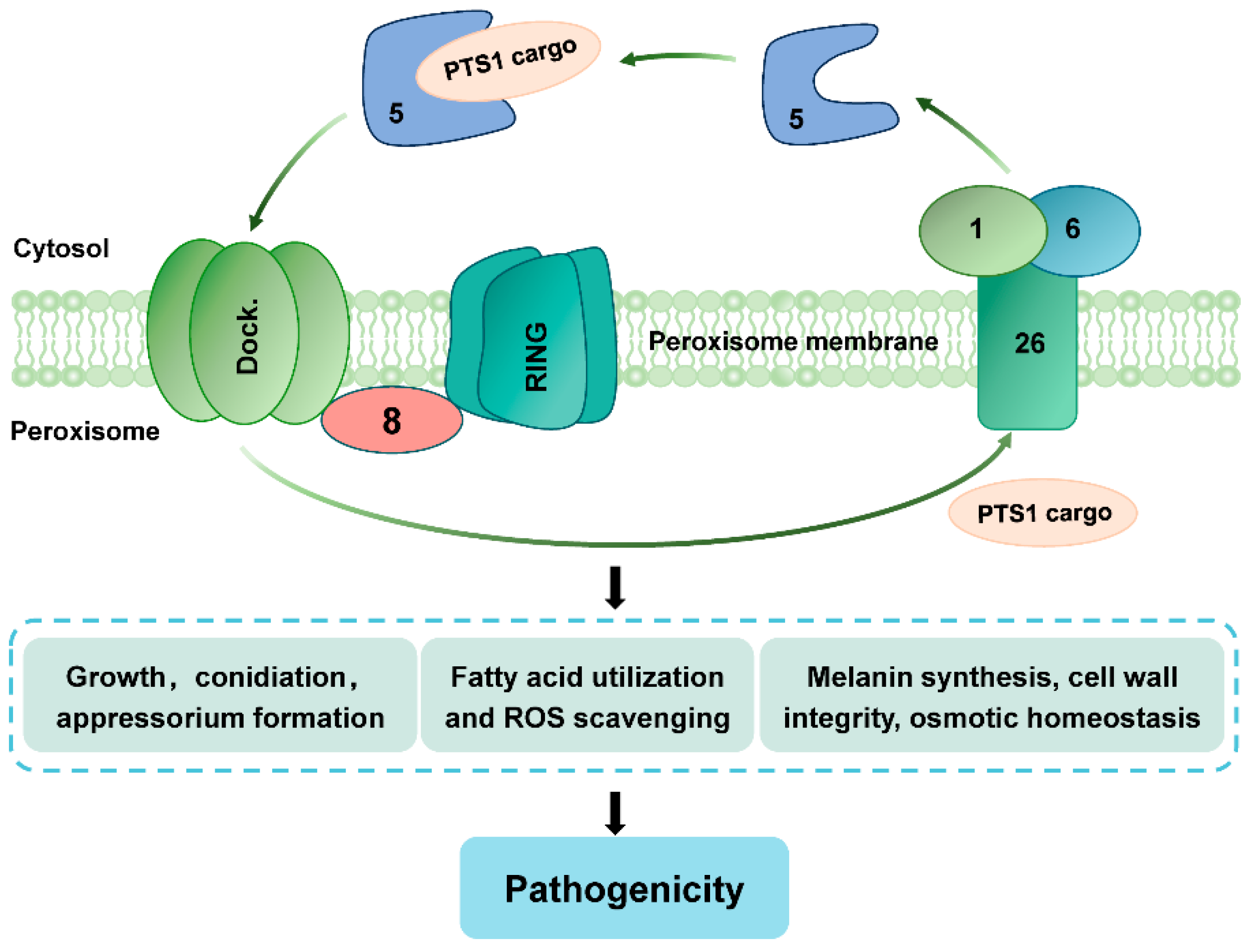

Pex8, a Fungal Specific Peroxin, Regulates Peroxisome Biogenesis and Pathogenicity in the Cucumber Anthracnose Fungus Colletotrichum orbiculare

 , , , ,
Abstract
1. Introduction
2. Materials and Methods
2.1. Fungal Strains and Culture Conditions
2.2. Sequence and Phylogenetic Analysis
2.3. Generation of ΔCopex8 Mutants and Complemented Strains
2.4. Fluorescence Microscopy Observation
2.5. Transmission Electron Microscope (TEM) Observations
2.6. Pathogenicity Assay
2.7. Appressorium Formation and Staining Analysis
2.8. Phenotypic Analysis of Fungal Strains
2.9. Statistical Analysis
3. Results
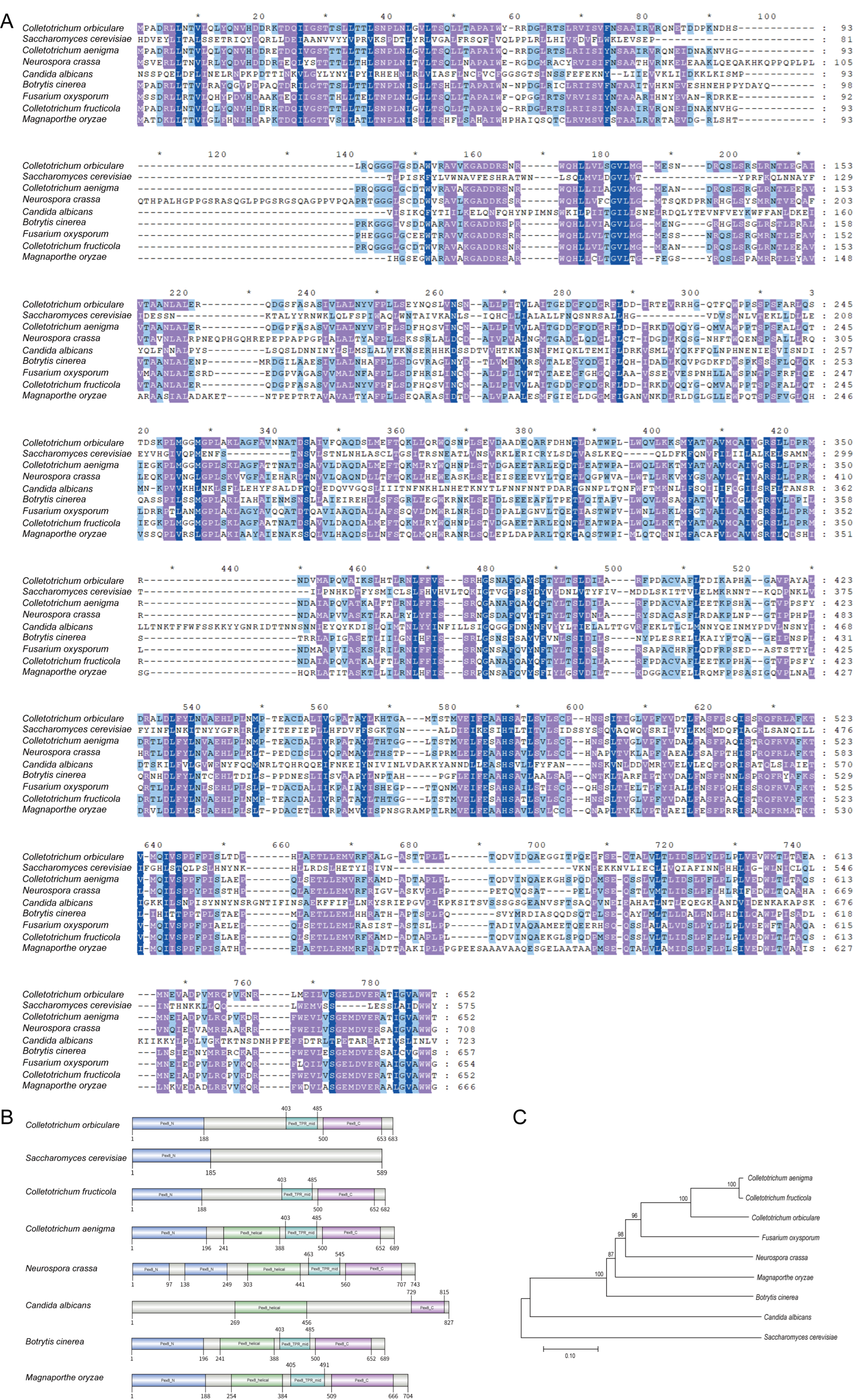
3.1. Homology Analysis of CoPex8
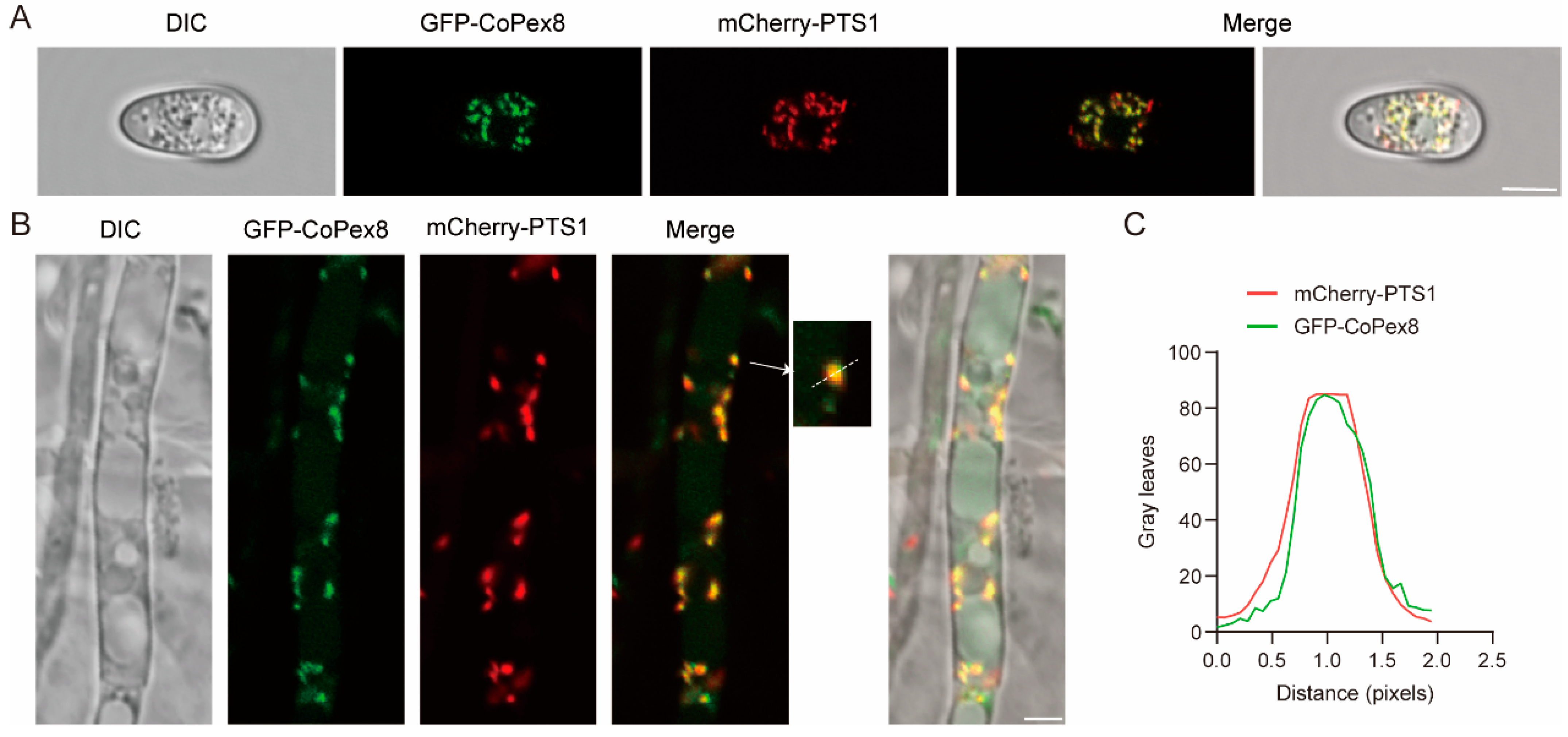
3.2. CoPex8 Is Distributed on the Peroxisomal Membrane


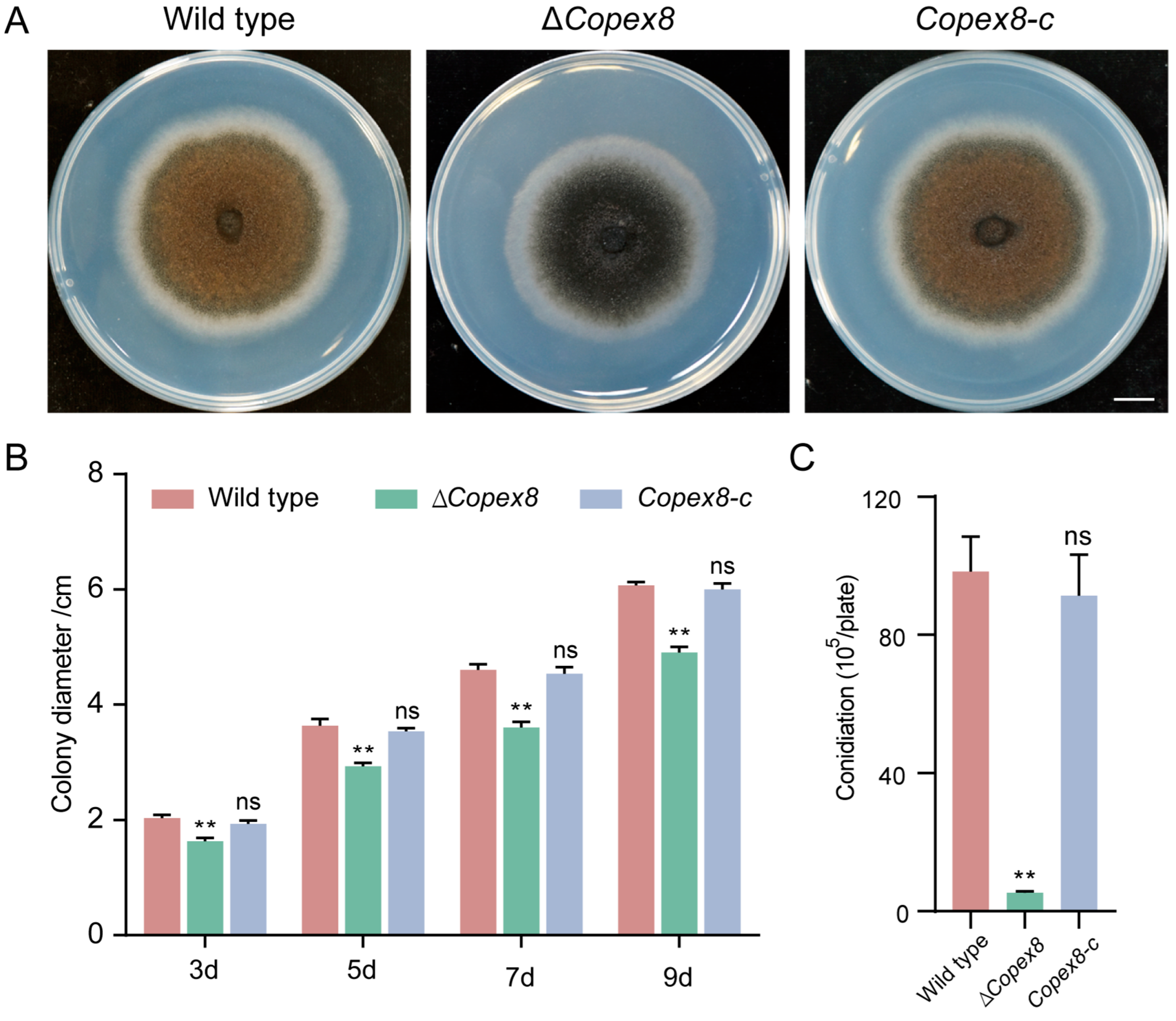
3.3. CoPEX8 Is Involved in Vegetative Growth and Conidiation in C. orbiculare
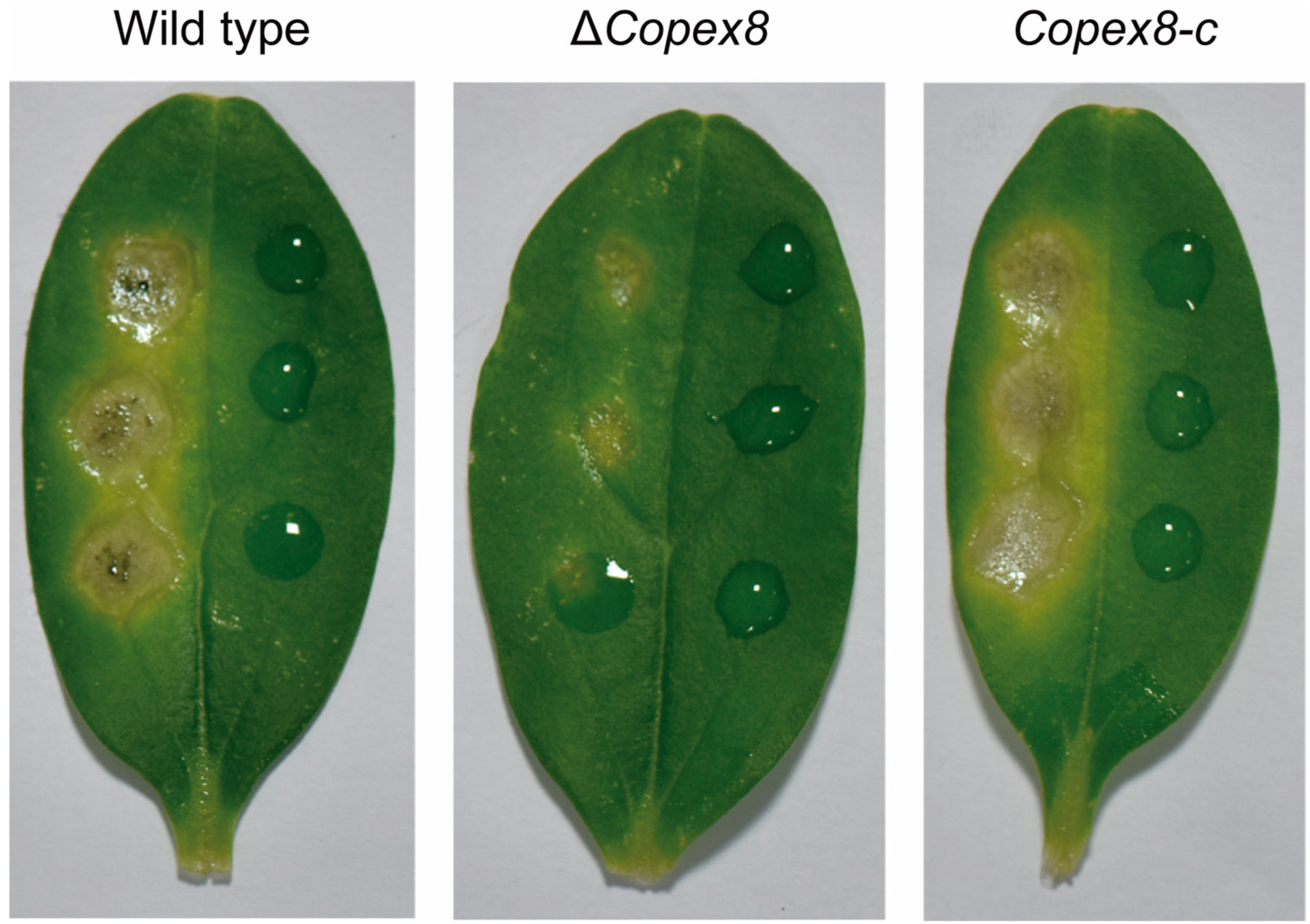
3.4. CoPex8 Is Required for Full Virulence of C. orbiculare
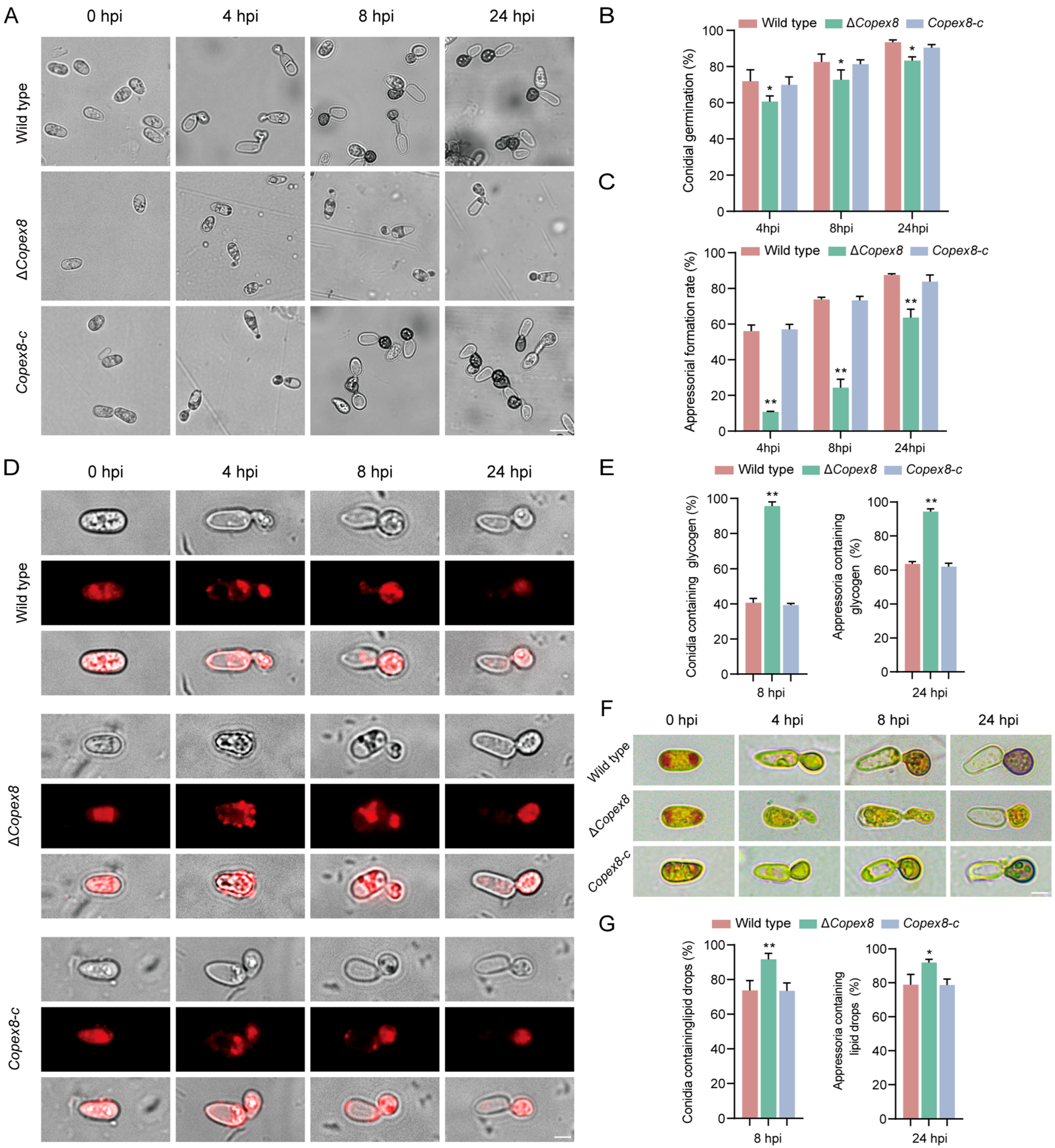
3.5. CoPEX8 Is Essential for Appressorium Formation and Maturation
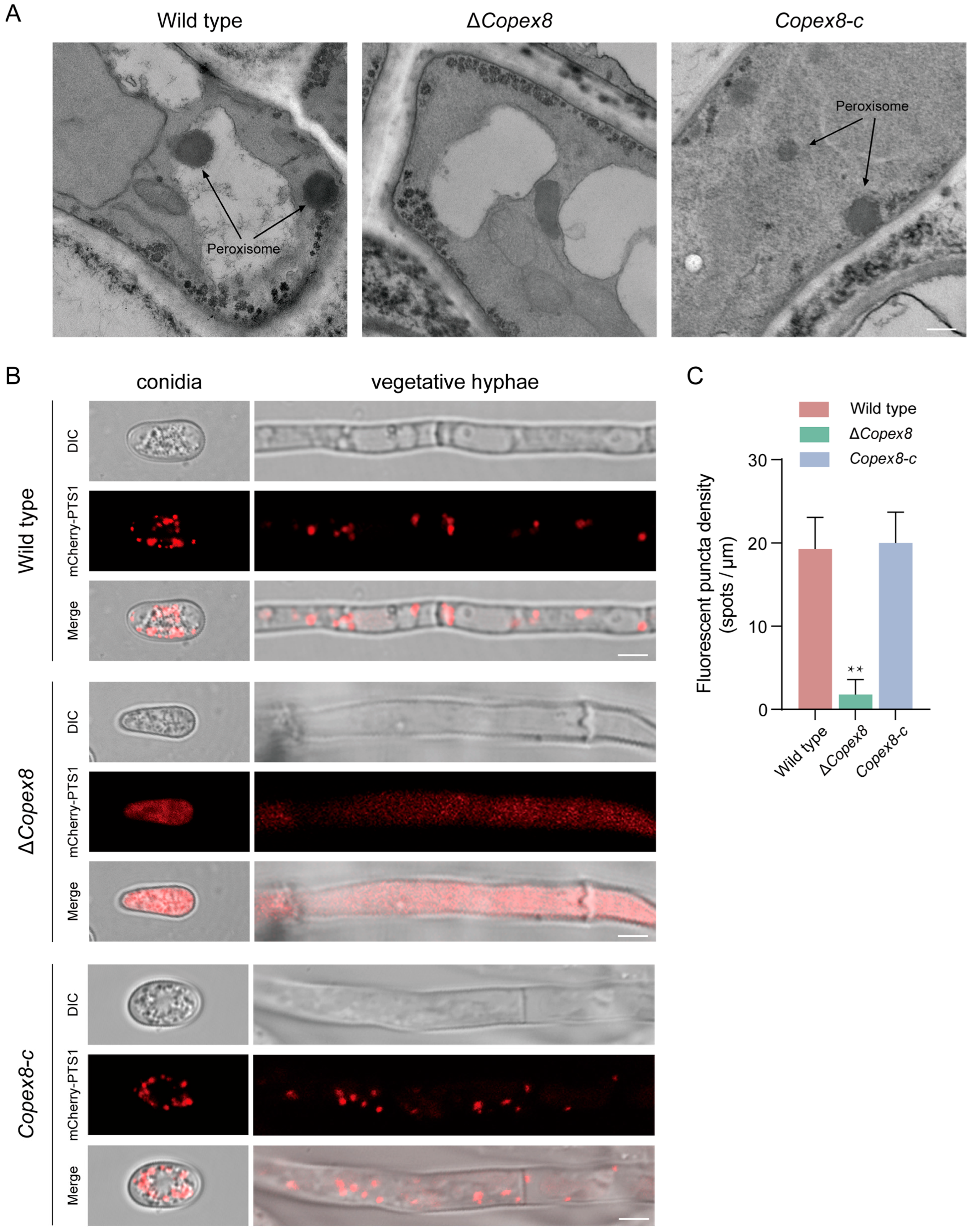
3.6. CoPEX8 Is Required for Peroxisome Biogenesis of C. orbiculare
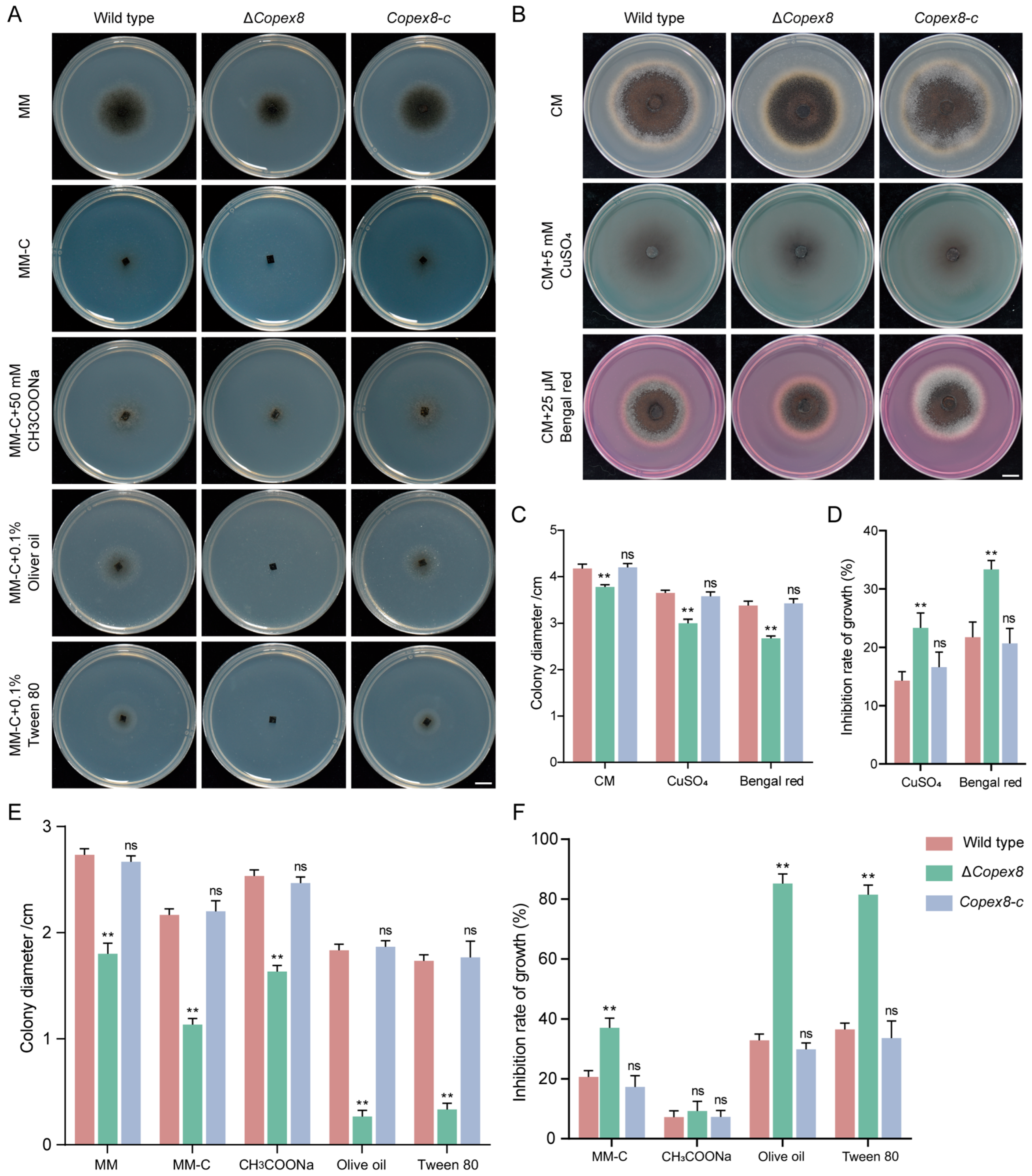
3.7. CoPEX8 Is Required for Fatty Acid β-Oxidation and Free Oxidative Radicals Detoxification
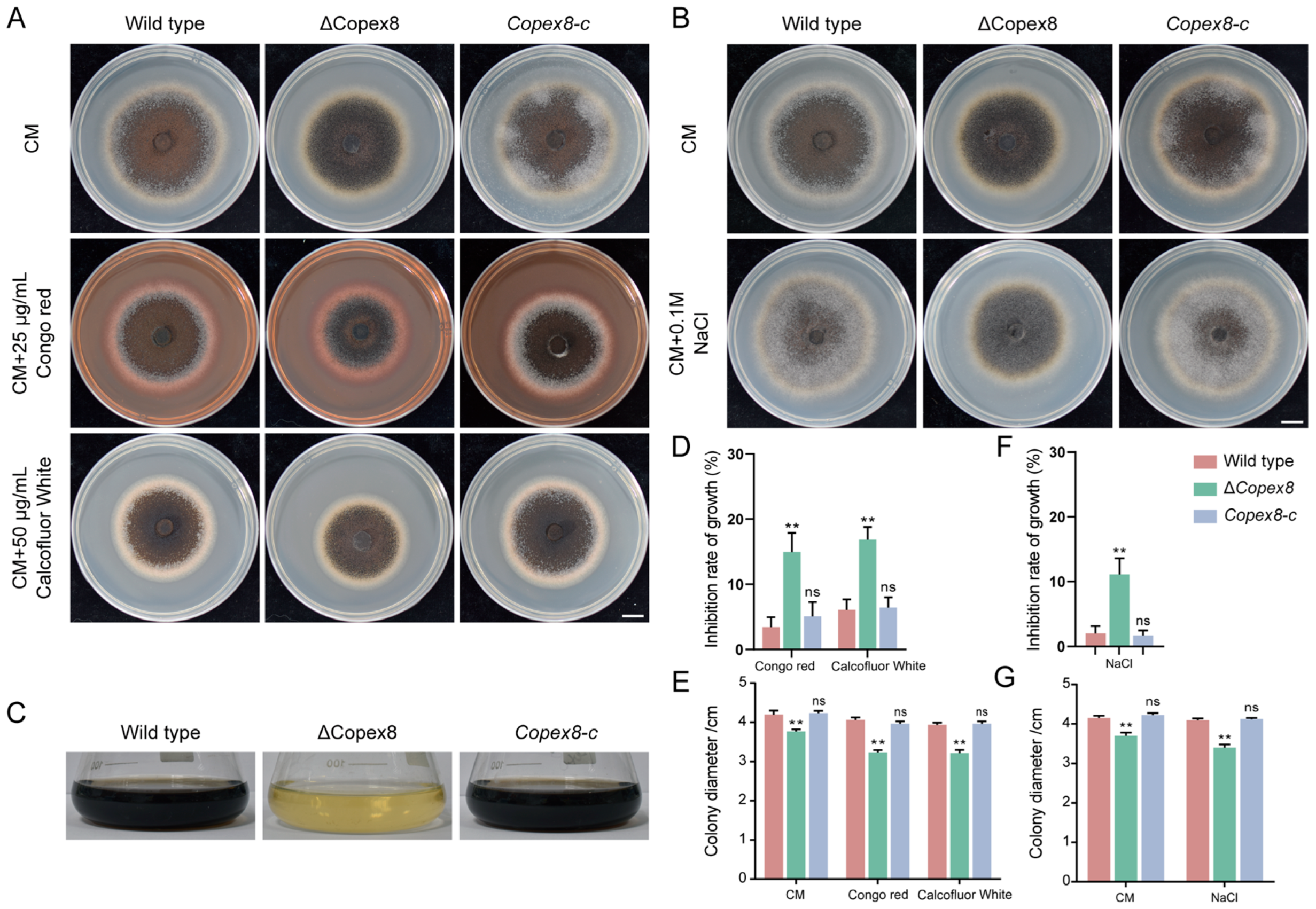
3.8. CoPEX8 Influences Cell Wall Integrity, Osmotic Stress Response, and Melanin Biosynthesis


4. Discussion
5. Conclusions
Supplementary Materials
Author Contributions
Funding
Institutional Review Board Statement
Informed Consent Statement
Data Availability Statement
Conflicts of Interest
References
- Patel, T.; Quesada-Ocampo, L.M.; Wehner, T.C.; Bhatta, B.P.; Correa, E.; Malla, S. Recent Advances and Challenges in Management of Colletotrichum orbiculare, the Causal Agent of Watermelon Anthracnose. Horticulturae 2023, 9, 1132. [Google Scholar] [CrossRef] [Scilit]
- Nazarov, P.A.; Baleev, D.N.; Ivanova, M.I.; Sokolova, L.M.; Karakozova, M.V. Infectious Plant Diseases: Etiology, Current Status, Problems and Prospects in Plant Protection. Acta Naturae 2020, 12, 46–59. [Google Scholar] [CrossRef] [Scilit] [PubMed]
- Shaikh, S.; Yaqoob, M.; Aggarwal, P. An overview of biodegradable packaging in food industry. Curr. Res. Food Sci. 2021, 4, 503–520. [Google Scholar] [CrossRef] [Scilit] [PubMed]
- Wakene, D.M.; Sharew, T. A Comprehensive Review of Tomato Post-Harvest Losses: Understanding Impacts and Contributing Factors in Ethiopia. Asian Sci. Bull. 2024, 2, 524–534. [Google Scholar] [CrossRef] [Scilit]
- Sarkar, T.; Chakraborty, P.; Karmakar, A.; Saha, D.; Saha, A. First Report of Colletotrichum orbiculare Causing Anthracnose of Pointed Gourd in India. Plant Dis. 2024, 108, 2929. [Google Scholar] [CrossRef] [Scilit]
- Kubo, Y.; Furusawa, I. Melanin biosynthesis: Prerequisite for successful invasion of the plant host by appressoria of Colletotrichum and Pyricularia. In The Fungal Spore and Disease Initiation in Plants and Animals; Springer: Boston, MA, USA, 1991; pp. 205–218. [Google Scholar]
- Steiner, U.; Oerke, E.-C. Localized melanization of appressoria is required for pathogenicity of Venturia inaequalis. Phytopathology 2007, 97, 1222–1230. [Google Scholar] [CrossRef] [Scilit]
- Atanasova, L.; Dubey, M.; Grujic, M.; Gudmundsson, M.; Lorenz, C.; Sandgren, M.; Kubicek, C.P.; Jensen, D.F.; Karlsson, M. Evolution and functional characterization of pectate lyase PEL12, a member of a highly expanded Clonostachys rosea polysaccharide lyase 1 family. BMC Microbiol. 2018, 18, 178. [Google Scholar] [CrossRef] [Scilit]
- Zhang, X.; Wang, Y.; Yao, H.; Deng, S.; Gao, T.; Shang, L.; Chen, X.; Cui, X.; Zeng, J. Peroxisomal beta-oxidation stimulates cholesterol biosynthesis in the liver in diabetic mice. J. Biol. Chem. 2022, 298, 101572. [Google Scholar] [CrossRef] [Scilit]
- Jansen, R.L.M.; Santana-Molina, C.; van den Noort, M.; Devos, D.P.; van der Klei, I.J. Comparative Genomics of Peroxisome Biogenesis Proteins: Making Sense of the PEX Proteins. Front. Cell Dev. Biol. 2021, 9, 654163. [Google Scholar] [CrossRef] [Scilit]
- Wang, Z.; Wang, J.; Li, L.; Zhang, Z.; Qiu, H.; Li, D.; Fang, Y.; Jiang, H.; Chai, R.Y.; Mao, X.; et al. One of Three Pex11 Family Members Is Required for Peroxisomal Proliferation and Full Virulence of the Rice Blast Fungus Magnaporthe oryzae. PLoS ONE 2015, 10, e0134249. [Google Scholar] [CrossRef] [Scilit]
- Fujihara, N.; Sakaguchi, A.; Tanaka, S.; Fujii, S.; Tsuji, G.; Shiraishi, T.; O’Connell, R.; Kubo, Y. Peroxisome biogenesis factor PEX13 is required for appressorium-mediated plant infection by the anthracnose fungus Colletotrichum orbiculare. Mol. Plant Microbe Interact. 2010, 23, 436–445. [Google Scholar] [CrossRef] [Scilit] [PubMed]
- Asakura, M.; Ninomiya, S.; Sugimoto, M.; Oku, M.; Yamashita, S.; Okuno, T.; Sakai, Y.; Takano, Y. Atg26-mediated pexophagy is required for host invasion by the plant pathogenic fungus Colletotrichum orbiculare. Plant Cell 2009, 21, 1291–1304. [Google Scholar] [CrossRef] [Scilit] [PubMed]
- Sangappillai, V.; Nadarajah, K. Fatty Acid Synthase Beta Dehydratase in the Lipid Biosynthesis Pathway Is Required for Conidiogenesis, Pigmentation and Appressorium Formation in Magnaporthe oryzae S6. Int. J. Mol. Sci. 2020, 21, 7224. [Google Scholar] [CrossRef] [Scilit] [PubMed]
- Zhang, T.; Li, Y.N.; Li, X.; Gu, W.; Moeketsi, E.K.; Zhou, R.; Zheng, X.; Zhang, Z.; Zhang, H. The Peroxisomal-CoA Synthetase MoPcs60 Is Important for Fatty Acid Metabolism and Infectious Growth of the Rice Blast Fungus. Front. Plant Sci. 2021, 12, 811041. [Google Scholar] [CrossRef] [Scilit]
- Pan, R.; Liu, J.; Wang, S.; Hu, J. Peroxisomes: Versatile organelles with diverse roles in plants. New Phytol. 2019, 225, 1410–1427. [Google Scholar] [CrossRef] [Scilit]
- van der Klei, I.J.; Veenhuis, M. PTS1-independent sorting of peroxisomal matrix proteins by Pex5p. Biochim. Biophys. Acta (BBA)—Mol. Cell Res. 2006, 1763, 1794–1800. [Google Scholar] [CrossRef] [Scilit]
- Lockshon, D.; Surface, L.E.; Kerr, E.O.; Kaeberlein, M.; Kennedy, B.K. The Sensitivity of Yeast Mutants to Oleic Acid Implicates the Peroxisome and Other Processes in Membrane Function. Genetics 2007, 175, 77–91. [Google Scholar] [CrossRef] [Scilit]
- Cross, L.L.; Ebeed, H.T.; Baker, A. Peroxisome biogenesis, protein targeting mechanisms and PEX gene functions in plants. Biochim. Biophys. Acta (BBA)—Mol. Cell Res. 2016, 1863, 850–862. [Google Scholar] [CrossRef] [Scilit]
- Platta, H.W.; Brinkmeier, R.; Reidick, C.; Galiani, S.; Clausen, M.P.; Eggeling, C. Regulation of peroxisomal matrix protein import by ubiquitination. Biochim. Biophys. Acta (BBA)—Mol. Cell Res. 2016, 1863, 838–849. [Google Scholar] [CrossRef] [Scilit]
- Rehling, P.; Skaletz-Rorowski, A.; Girzalsky, W.; Voorn-Brouwer, T.; Franse, M.M.; Distel, B.; Veenhuis, M.; Kunau, W.-H.; Erdmann, R. Pex8p, an Intraperoxisomal Peroxin of Saccharomyces cerevisiae Required for Protein Transport into Peroxisomes Binds the PTS1 Receptor Pex5p. J. Biol. Chem. 2000, 275, 3593–3602. [Google Scholar] [CrossRef] [Scilit]
- Ma, C.; Hagstrom, D.; Polley, S.G.; Subramani, S. Redox-regulated Cargo Binding and Release by the Peroxisomal Targeting Signal Receptor, Pex5. J. Biol. Chem. 2013, 288, 27220–27231. [Google Scholar] [CrossRef] [Scilit] [PubMed]
- Smith, J.J.; Rachubinski, R.A. A Role for the Peroxin Pex8p in Pex20p-dependent Thiolase Import into Peroxisomes of the Yeast Yarrowia lipolytica. J. Biol. Chem. 2001, 276, 1618–1625. [Google Scholar] [CrossRef] [Scilit] [PubMed]
- Agne, B.; Meindl, N.M.; Niederhoff, K.; Einwächter, H.; Rehling, P.; Sickmann, A.; Meyer, H.E.; Girzalsky, W.; Kunau, W.-H. Pex8p: An Intraperoxisomal Organizer of the Peroxisomal Import Machinery. Mol. Cell 2003, 11, 635–646. [Google Scholar] [CrossRef] [Scilit] [PubMed]
- Li, L.; Yu, M.X.; Guo, J.; Hao, Z.N.; Zhang, Z.; Lu, Z.Q.; Wang, J.Y.; Zhu, X.M.; Wang, Y.L.; Chen, J.; et al. The peroxins BcPex8, BcPex10, and BcPex12 are required for the development and pathogenicity of Botrytis cinerea. Front. Microbiol. 2022, 13, 962500. [Google Scholar] [CrossRef] [Scilit]
- Talbot, N.J.; Ebbole, D.J.; Hamer, J.E. Identification and characterization of MPG1, a gene involved in pathogenicity from the rice blast fungus Magnaporthe grisea. Plant Cell 1993, 5, 1575–1590. [Google Scholar]
- Rho, H.S.; Kang, S.; Lee, Y.H. Agrobacterium tumefaciens-mediated transformation of the plant pathogenic fungus, Magnaporthe grisea. Mol. Cells 2001, 12, 407–411. [Google Scholar] [CrossRef] [Scilit]
- Harris, S.; Li, L.; Wang, J.; Zhang, Z.; Wang, Y.; Liu, M.; Jiang, H.; Chai, R.; Mao, X.; Qiu, H.; et al. MoPex19, which Is Essential for Maintenance of Peroxisomal Structure and Woronin Bodies, Is Required for Metabolism and Development in the Rice Blast Fungus. PLoS ONE 2014, 9, e85252. [Google Scholar] [CrossRef] [Scilit]
- Kubo, Y.; Fujihara, N.; Harata, K.; Neumann, U.; Robin, G.P.; O’Connell, R.; Turgeon, B.G. Colletotrichum orbiculare FAM1 Encodes a Novel Woronin Body-Associated Pex22 Peroxin Required for Appressorium-Mediated Plant Infection. mBio 2015, 6, e01305-15. [Google Scholar] [CrossRef] [Scilit]
- Cao, H.; Huang, P.; Zhang, L.; Shi, Y.; Sun, D.; Yan, Y.; Liu, X.; Dong, B.; Chen, G.; Snyder, J.H.; et al. Characterization of 47 Cys2-His2 zinc finger proteins required for the development and pathogenicity of the rice blast fungus Magnaporthe oryzae. New Phytol. 2016, 211, 1035–1051. [Google Scholar] [CrossRef] [Scilit]
- Thines, E.; Weber, R.W.; Talbot, N.J. MAP kinase and protein kinase A-dependent mobilization of triacylglycerol and glycogen during appressorium turgor generation by Magnaporthe grisea. Plant Cell 2000, 12, 1703–1718. [Google Scholar] [CrossRef] [Scilit]
- Greenspan, P.; Mayer, E.P.; Fowler, S.D. Nile red: A selective fluorescent stain for intracellular lipid droplets. J. Cell Biol. 1985, 100, 965–973. [Google Scholar] [CrossRef] [Scilit] [PubMed]
- Cui, Q.; Wang, T.; Li, Y.; Liang, X.; Song, X.; Ji, X.; Wang, L.; Wang, X.; Chu, Z.; Dang, Y. Carbonic anhydrases contribute to mitochondrial function, conidial development, and pathogenicity of Magnaporthe oryzae. Appl. Environ. Microbiol. 2026, 92, e02488-25. [Google Scholar] [CrossRef] [Scilit] [PubMed]
- Kershaw, M.J.; Basiewicz, M.; Soanes, D.M.; Yan, X.; Ryder, L.S.; Csukai, M.; Oses-Ruiz, M.; Valent, B.; Talbot, N.J. Conidial Morphogenesis and Septin-Mediated Plant Infection Require Smo1, a Ras GTPase-Activating Protein in Magnaporthe oryzae. Genetics 2019, 211, 151–167. [Google Scholar] [CrossRef] [Scilit] [PubMed]
- Reverberi, M.; Punelli, M.; Smith, C.A.; Zjalic, S.; Scarpari, M.; Scala, V.; Cardinali, G.; Aspite, N.; Pinzari, F.; Payne, G.A.; et al. How peroxisomes affect aflatoxin biosynthesis in Aspergillus flavus. PLoS ONE 2012, 7, e48097. [Google Scholar] [CrossRef] [Scilit]
- Lu, K.; Chen, R.; Yang, Y.; Xu, H.; Jiang, J.; Li, L. Involvement of the Cell Wall–Integrity Pathway in Signal Recognition, Cell-Wall Biosynthesis, and Virulence in Magnaporthe oryzae. Mol. Plant-Microbe Interact. 2023, 36, 608–622. [Google Scholar] [CrossRef] [Scilit]
- Yu, W.; Lin, M.; Peng, M.; Yan, H.; Wang, J.; Zhou, J.; Lu, G.; Wang, Z.; Shim, W.B. Fusarium verticillioides FvPex8 is a key component of the peroxisomal docking/translocation module that serves important roles in fumonisin biosynthesis but not in virulence. Mol. Plant-Microbe Interact. 2021, 34, 803–814. [Google Scholar]
- Li, L.; Wang, J.; Chen, H.; Chai, R.; Zhang, Z.; Mao, X.; Qiu, H.; Jiang, H.; Wang, Y.; Sun, G. Pex14/17, a filamentous fungus-specific peroxin, is required for the import of peroxisomal matrix proteins and full virulence of Magnaporthe oryzae. Mol. Plant Pathol. 2016, 18, 1238–1252. [Google Scholar] [CrossRef] [Scilit]
- Wang, J.-Y.; Li, L.; Chai, R.-Y.; Qiu, H.-P.; Zhang, Z.; Wang, Y.-L.; Liu, X.-H.; Lin, F.-C.; Sun, G.-C. Pex13 and Pex14, the key components of the peroxisomal docking complex, are required for peroxisome formation, host infection and pathogenicity-related morphogenesis in Magnaporthe oryzae. Virulence 2019, 10, 292–314. [Google Scholar] [CrossRef] [Scilit]
- Wang, J.; Zhang, Z.; Wang, Y.; Li, L.; Chai, R.; Mao, X.; Jiang, H.; Qiu, H.; Du, X.; Lin, F.; et al. PTS1 peroxisomal import pathway plays shared and distinct roles to PTS2 pathway in development and pathogenicity of Magnaporthe oryzae. PLoS ONE 2013, 8, e55554. [Google Scholar] [CrossRef] [Scilit]
- Martens, I. The Role of PEX5 in Peroxisomal Matrix Protein Import. Bachelor’s Thesis, University of Groningen, Groningen, The Netherlands, 2023. [Google Scholar]
- Fang, W.; Hong, Y.; Zhou, T.; Wei, Y.; Lin, L.; Wang, Z.; Zhu, X. Uncoupling of nutrient metabolism and cellular redox by cytosolic routing of the mitochondrial G-3-P dehydrogenase Gpd2 causes loss of conidiation and pathogenicity in Pyricularia oryzae. J. Integr. Agric. 2024, 24, 638–654. [Google Scholar] [CrossRef] [Scilit]


Disclaimer/Publisher’s Note: The statements, opinions and data contained in all publications are solely those of the individual author(s) and contributor(s) and not of MDPI and/or the editor(s). MDPI and/or the editor(s) disclaim responsibility for any injury to people or property resulting from any ideas, methods, instructions or products referred to in the content. |
© 2026 by the authors. Licensee MDPI, Basel, Switzerland. This article is an open access article distributed under the terms and conditions of the Creative Commons Attribution (CC BY) license.
Share and Cite
Wang, X.; Wang, J.; Yu, S.; Cai, Y.; Lin, Y.; Zhang, Z.; Noman, M.; Qiu, H.; Hao, Z.; Chai, R.; et al. Pex8, a Fungal Specific Peroxin, Regulates Peroxisome Biogenesis and Pathogenicity in the Cucumber Anthracnose Fungus Colletotrichum orbiculare. J. Fungi 2026, 12, 248. https://doi.org/10.3390/jof12040248
Wang X, Wang J, Yu S, Cai Y, Lin Y, Zhang Z, Noman M, Qiu H, Hao Z, Chai R, et al. Pex8, a Fungal Specific Peroxin, Regulates Peroxisome Biogenesis and Pathogenicity in the Cucumber Anthracnose Fungus Colletotrichum orbiculare. Journal of Fungi. 2026; 12(4):248. https://doi.org/10.3390/jof12040248
Chicago/Turabian StyleWang, Xinhe, Jing Wang, Shendan Yu, Yingying Cai, Yanxi Lin, Zhen Zhang, Muhammad Noman, Haiping Qiu, Zhongna Hao, Rongyao Chai, and et al. 2026. "Pex8, a Fungal Specific Peroxin, Regulates Peroxisome Biogenesis and Pathogenicity in the Cucumber Anthracnose Fungus Colletotrichum orbiculare" Journal of Fungi 12, no. 4: 248. https://doi.org/10.3390/jof12040248
APA StyleWang, X., Wang, J., Yu, S., Cai, Y., Lin, Y., Zhang, Z., Noman, M., Qiu, H., Hao, Z., Chai, R., Wang, Y., Li, L., Li, L., & Wang, J. (2026). Pex8, a Fungal Specific Peroxin, Regulates Peroxisome Biogenesis and Pathogenicity in the Cucumber Anthracnose Fungus Colletotrichum orbiculare. Journal of Fungi, 12(4), 248. https://doi.org/10.3390/jof12040248