Role of Iron Availability in Modulating Pseudomonas aeruginosa’s Antifungal Effects on Planktonic and Biofilm Growth of Scedosporium/Lomentospora Under Cystic Fibrosis-Mimicking Conditions

 ,
,  ,
,  ,
,  and
and 
Abstract
1. Introduction
2. Materials and Methods
2.1. Microorganisms and Culture Conditions
2.2. CF-Mimicking Medium
2.3. Preparation of P. aeruginosa Supernatants
2.4. Quantification of Phenazines, Pyoverdine and Siderophores Activity
2.5. Preparation of Conidial Cells
2.6. Effects of P. aeruginosa Supernatants on Fungal Growth
2.7. Effects of P. aeruginosa Supernatants on Fungal Biofilm Formation
2.8. Supernatant Cytotoxicity on Mammalian Cells
2.9. Supernatant Cytotoxicity in In Vivo Model
2.10. Statistical Analysis
3. Results
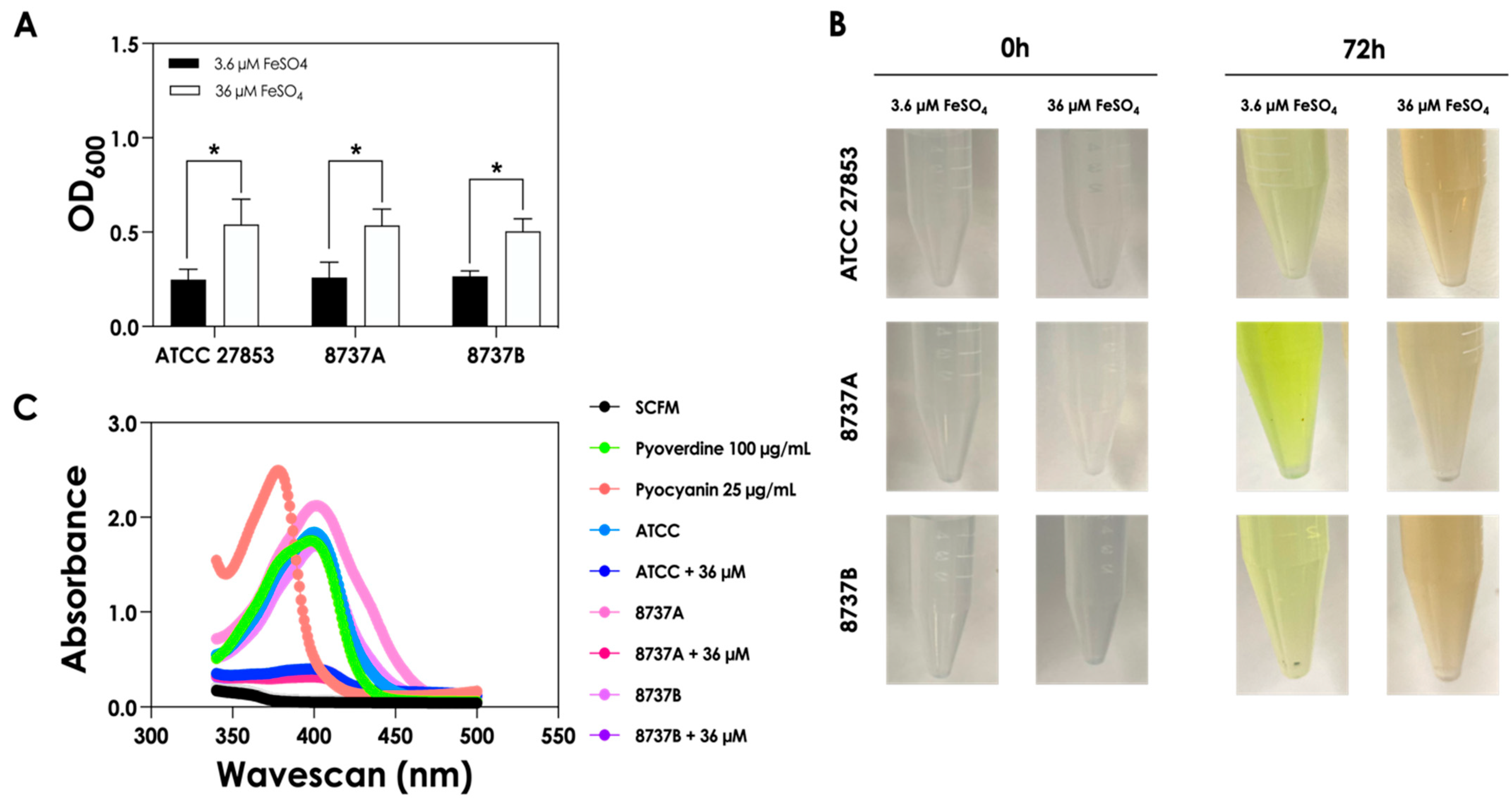
3.1. Iron Availability Modulates P. aeruginosa Growth and Siderophore Production
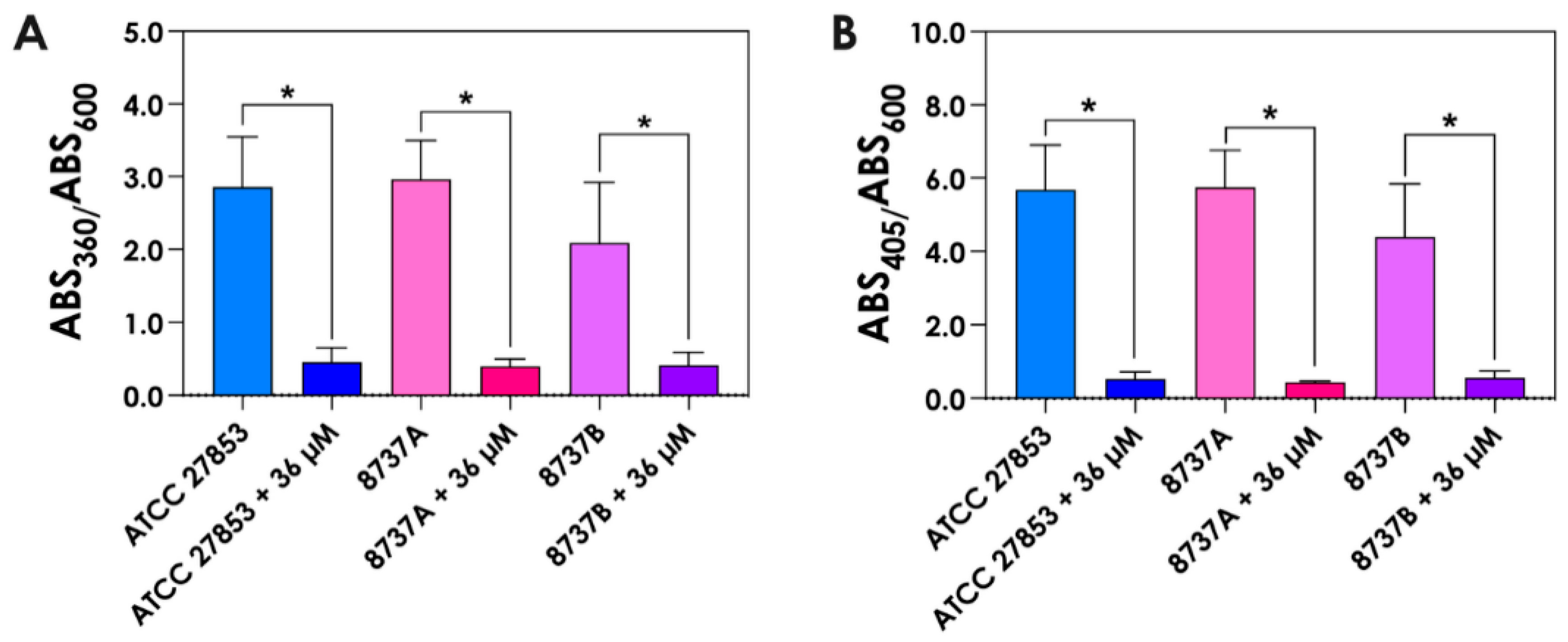
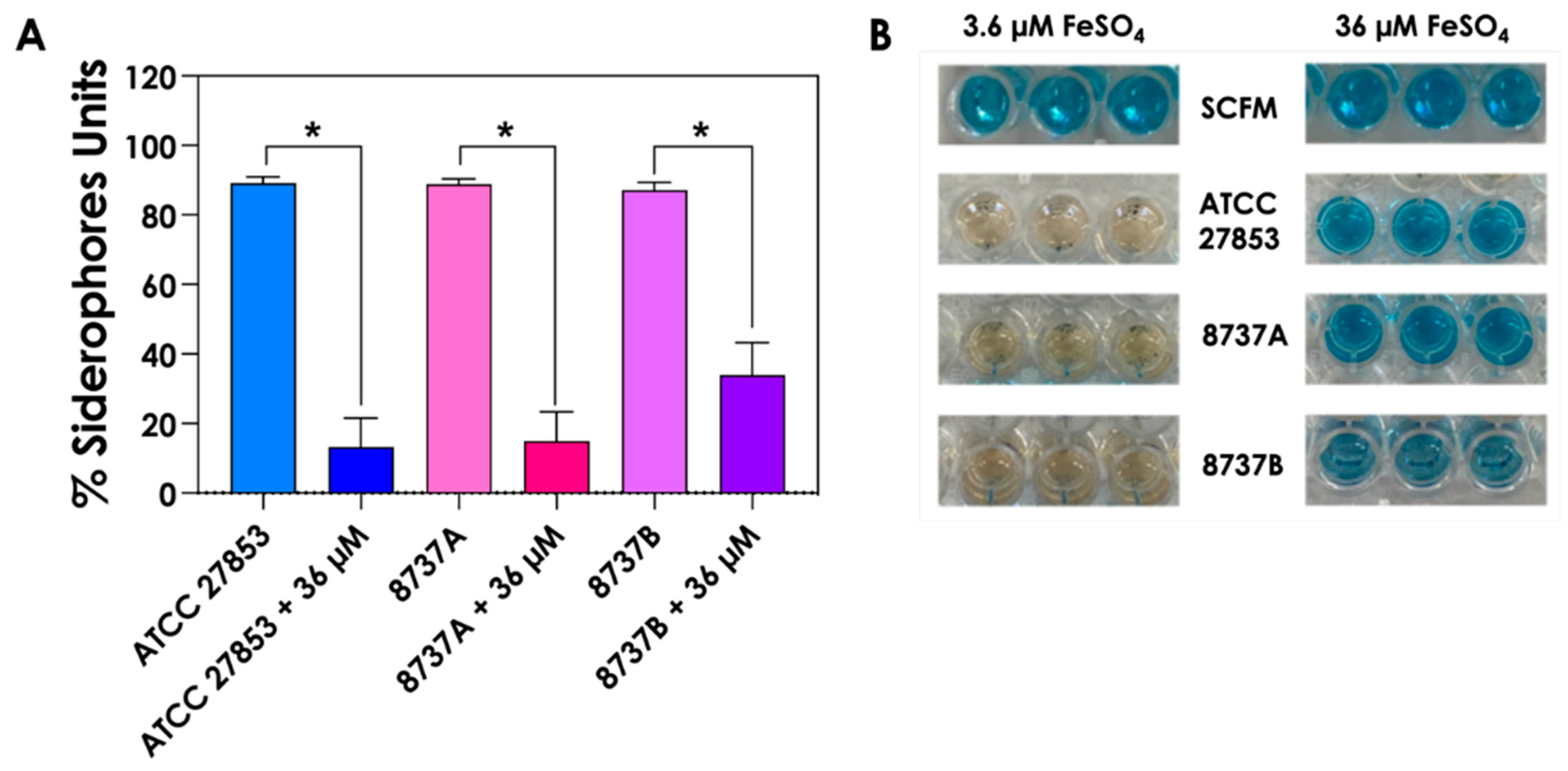
3.2. Iron-Dependent Regulation of Phenazine, Pyoverdine and Siderophore Production in P. aeruginosa
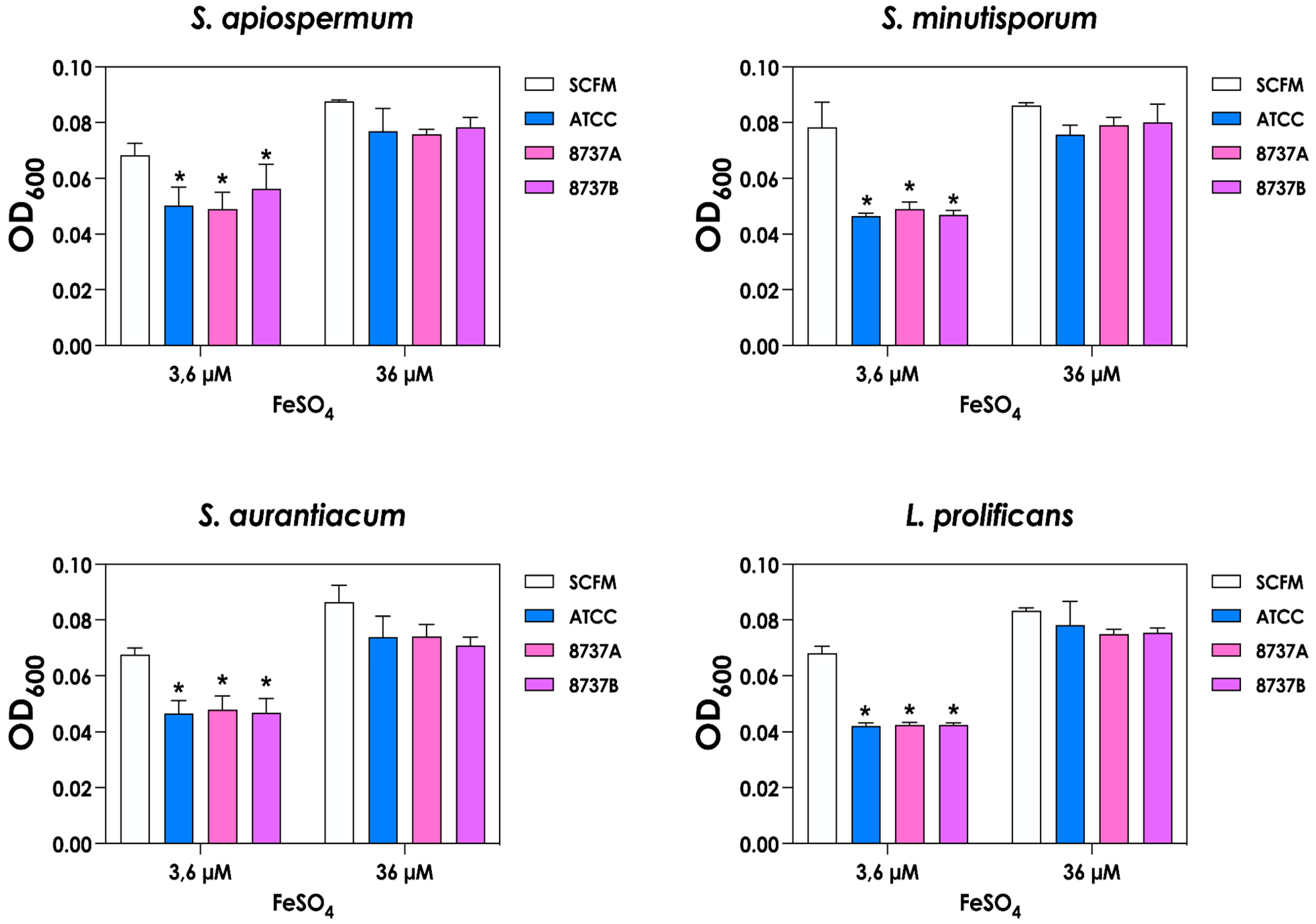
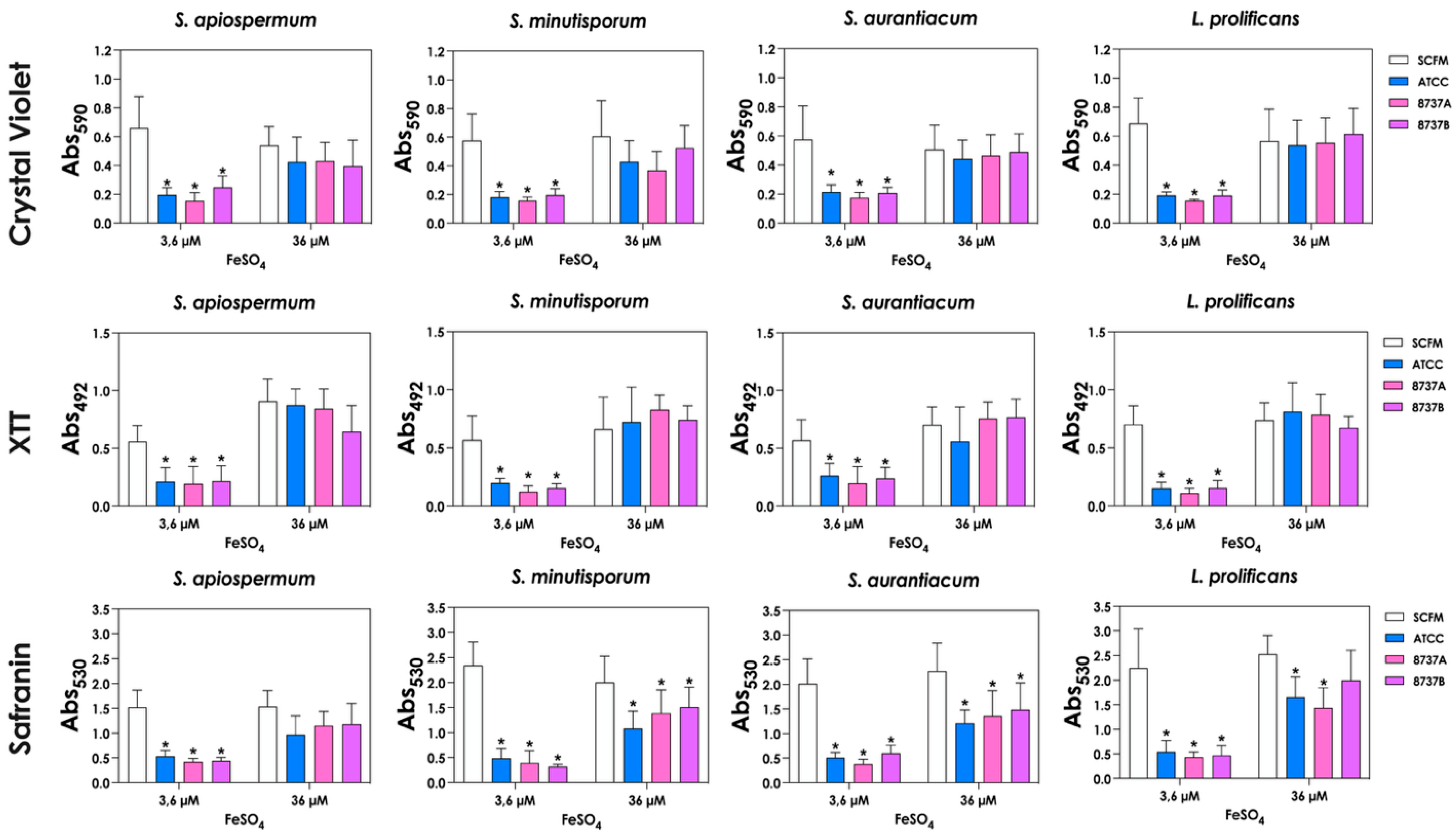
3.3. Iron-Dependent Inhibition of Fungal Growth and Biofilm Formation by P. aeruginosa
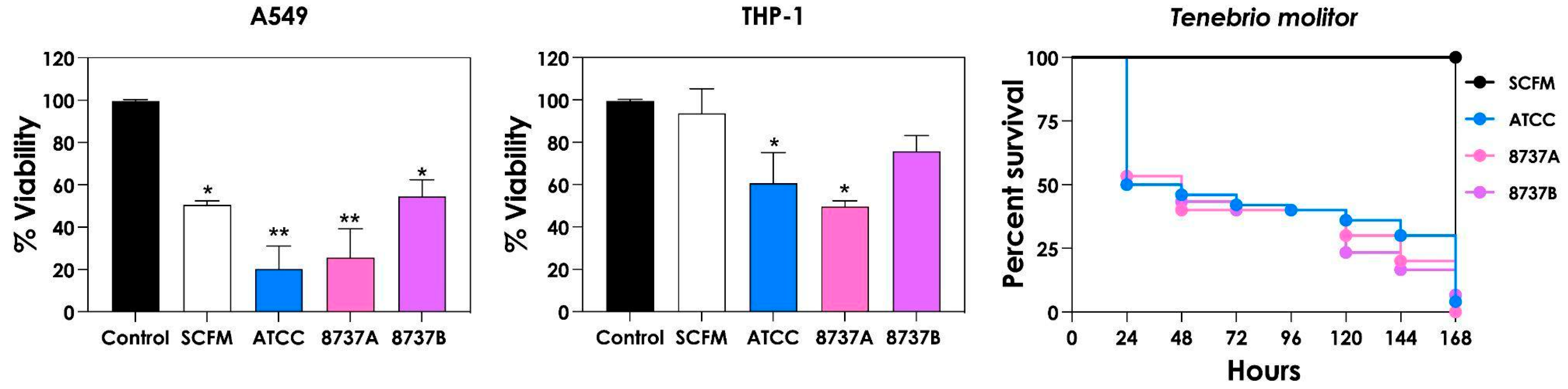
3.4. Cytotoxicity and Pathogenic Effects of P. aeruginosa Supernatants Under Iron-Limited Conditions
4. Discussion
Author Contributions
Funding
Institutional Review Board Statement
Informed Consent Statement
Data Availability Statement
Conflicts of Interest
References
- Grasemann, H.; Ratjen, F. Cystic Fibrosis. N. Engl. J. Med. 2023, 389, 1693–1707. [Google Scholar] [CrossRef]
- Armbruster, C.R.; Coenye, T.; Touqui, L.; Bomberger, J.M. Interplay between host-microbe and microbe-microbe interactions in cystic fibrosis. J. Cyst. Fibros. 2020, 19, S47–S53. [Google Scholar] [CrossRef]
- Schwarz, C.; Brandt, C.; Whitaker, P.; Sutharsan, S.; Skopnik, H.; Gartner, S.; Smazny, C.; Röhmel, J.F. Invasive pulmonary fungal infections in cystic fibrosis. Mycopathologia 2018, 183, 33–43. [Google Scholar] [CrossRef]
- Iribarren, M.E.; Moreno, R.M.G.; Cáceres, L.D.; Sanz, M.T.P.; Moreno, B.B.; Cavero, T.A.; Torrecillas, S.G.; Cruz, N.D.Z.; Bermúdez, J.A. Study of a cohort of patients with cystic fibrosis and isolation of Scedosporium spp. Arch. Bronconeumol. (Engl. Ed.) 2019, 55, 559–564. [Google Scholar] [CrossRef]
- Parize, P.; Fleury, M.; Poupon-Bourdy, S.; Persat, F.; Touzet, S.; Bienvenu, A.L.; Wallon, M.; Reix, P.; Bouchara, J.P.; Durieu, I. Outcome of patients with cystic fibrosis colonized by Scedosporium and Lomentospora species: A longitudinal cohort study. Med. Mycol. 2023, 61, myad051. [Google Scholar] [CrossRef]
- Mello, T.P.; Bittencourt, V.C.B.; Liporagi-Lopes, L.C.; Aor, A.C.; Branquinha, M.H.; Santos, A.L.S. Insights into the social life and obscure side of Scedosporium/Lomentospora species: Ubiquitous, emerging and multidrug-resistant opportunistic pathogens. Fung. Biol. Rev. 2019, 33, 16–46. [Google Scholar] [CrossRef]
- Bouchara, J.P.; Le Govic, Y.; Kabbara, Y.S.; Cimon, B.; Zouhair, R.; Hamze, M.; Papon, N.; Nevez, G. Advances in understanding and managing Scedosporium respiratory infections in patients with cystic fibrosis. Expert Rev. Respi. Med. 2019, 14, 259–273. [Google Scholar] [CrossRef]
- Mello, T.P.; Lackner, M.; Branquinha, M.H.; Santos, A.L.S. Impact of biofilm formation and azoles’ susceptibility in Scedosporium/Lomentospora species using an in vitro model that mimics the cystic fibrosis patients’ airway environment. J. Cyst. Fibros. 2021, 20, 303–309. [Google Scholar] [CrossRef] [PubMed]
- Chhabra, R.; Saha, A.; Chamani, A.; Schneider, N.; Shah, R.; Nanjundan, M. Iron pathways and iron chelation approaches in viral, microbial, and fungal Infections. Pharmaceuticals 2020, 13, 275. [Google Scholar] [CrossRef] [PubMed]
- Berlutti, F.; Morea, C.; Battistoni, A.; Sarli, S.; Cipriani, P.; Superti, F.; Ammendolia, M.G.; Valenti, P. Iron availability influences aggregation, biofilm, adhesion and invasion of Pseudomonas aeruginosa and Burkholderia cenocepacia. Int. J. Immunopathol. Pharmacol. 2005, 18, 661–670. [Google Scholar] [CrossRef] [PubMed]
- Gifford, A.H.; Polineni, D.; He, J.; D’Amico, J.L.; Dorman, D.B.; Williams, M.A.; Nymon, A.B.; Balwan, A.; Budden, T.; Zuckerman, J.B. A pilot study of cystic fibrosis exacerbation response phenotypes reveals contrasting serum and sputum iron trends. Sci. Rep. 2021, 11, 4897. [Google Scholar] [CrossRef]
- Tan, C.A.Z.; Lam, L.N.; Biukovic, G.; Soh, E.Y.; Toh, X.W.; Lemos, J.A.; Kline, K.A. Enterococcus faecalis antagonizes Pseudomonas aeruginosa growth in mixed-species interactions. J. Bacteriol. 2022, 204, e0061521. [Google Scholar] [CrossRef]
- Wei, Z.; Gu, S.; Vollenweider, V.; Zuo, Y.; Li, Z.; Kümmerli, R. Microbial siderophores for One Health. Trends Microbiol. 2025, 33, 1277–1285. [Google Scholar] [CrossRef]
- Dumas, Z.; Ross-Gillespie, A.; Kümmerli, R. Switching between apparently redundant iron-uptake mechanisms benefits bacteria in changeable environments. Proc. R. Soc. B 2013, 280, 20131055. [Google Scholar] [CrossRef] [PubMed]
- Schalk, I.J.; Perraud, Q. Pseudomonas aeruginosa and its multiple strategies to access iron. Environ. Microbiol. 2023, 25, 811–831. [Google Scholar] [CrossRef] [PubMed]
- Mello, T.P.; Barcellos, I.C.; Lackner, M.; Branquinha, M.H.; Santos, A.L.S. Scedosporium/Lomentospora species induce the production of siderophores by Pseudomonas aeruginosa in a cystic fibrosis mimic environment. J. Fungi 2023, 9, 502. [Google Scholar] [CrossRef] [PubMed]
- Kousser, C.; Clark, C.; Sherrington, S.; Voelz, K.; Hall, R.A. Pseudomonas aeruginosa inhibits Rhizopus microsporus germination through sequestration of free environmental iron. Sci. Rep. 2019, 9, 5714. [Google Scholar] [CrossRef]
- Sass, G.; Nazik, H.; Chatterjee, P.; Shrestha, P.; Groleau, M.C.; Déziel, E.; Stevens, D.A. Altered Pseudomonas strategies to inhibit surface Aspergillus colonies. App. Environ. Microbiol. 2021, 11, 6403–6413. [Google Scholar] [CrossRef]
- Pinto, M.R.; Mulloy, B.; Haido, R.M.; Travassos, L.R.; Barreto-Bergter, E. A peptidorhamnomannan from the mycelium of Pseudallescheria boydii is a potential diagnostic antigen of this emerging human pathogen. Microbiology 2011, 147, 1499–1506. [Google Scholar] [CrossRef]
- Schick, A.; Kassen, R. Rapid diversification of Pseudomonas aeruginosa in cystic fibrosis lung-like conditions. Proc. Natl. Acad. Sci. USA 2017, 115, 10714–10719. [Google Scholar] [CrossRef]
- Palmer, K.L.; Aye, L.M.; Whiteley, M. Nutritional cues control Pseudomonas aeruginosa multicellular behavior in cystic fibrosis sputum. J. Bacteriol. 2007, 189, 8079–8087. [Google Scholar] [CrossRef]
- Sass, G.; Nazik, H.; Chatterjee, P.; Stevens, D.A. Under nonlimiting iron conditions pyocyanin is a major antifungal molecule, and differences between prototypic Pseudomonas aeruginosa strains. Med. Mycol. 2020, 59, 453–464. [Google Scholar] [CrossRef]
- Schwyn, B.; Neilands, J.B. Universal chemical assay for the detection and determination of siderophores. Anal. Biochem. 1987, 160, 47–56. [Google Scholar] [CrossRef]
- Miyazawa, K.; Umeyama, T.; Hoshino, Y.; Abe, K.; Miyazaki, Y. Quantitative monitoring of mycelial growth of Aspergillus fumigatus in liquid culture by optical density. Microbiol. Spectr. 2022, 10, e0006321. [Google Scholar] [CrossRef]
- Peeters, E.; Nelis, H.J.; Coenye, T. Comparison of multiple methods for quantification of microbial biofilms grown in microtiter plates. J. Microbiol. Methods 2008, 72, 157–165. [Google Scholar] [CrossRef] [PubMed]
- Choi, N.Y.C.; Kang, S.Y.; Kim, K.J. Artemisia princeps inhibits biofilm formation and virulence-factor expression of antibiotic-resistant bacteria. Biomed Res. Int. 2015, 2015, 239519. [Google Scholar] [CrossRef] [PubMed]
- Costa-Orlandi, C.B.; Sardi, J.C.O.; Santos, C.T.; Fusco-Almeida, A.M.; Mendes-Giannini, M.J.S. In vitro characterization of Trichophyton rubrum and T. mentagrophytes biofilms. Biofouling 2014, 30, 719–727. [Google Scholar] [CrossRef] [PubMed]
- El-Kamand, S.; Steiner, M.; Ramirez, C.; Halliday, C.; Chen, S.C.; Papanicolaou, A.; Morton, C.O. Assessing differences between clinical isolates of Aspergillus fumigatus from cases of proven invasive aspergillosis and colonizing isolates with respect to phenotype (virulence in Tenebrio molitor larvae) and genotype. Pathogens 2022, 11, 428. [Google Scholar] [CrossRef]
- Chatterjee, P.; Sass, G.; Swietnicki, W.; Stevens, D.A. Review of potential Pseudomonas weaponry, relevant to the Pseudomonas-Aspergillus interplay, for the mycology community. J. Fungi 2020, 6, 81. [Google Scholar] [CrossRef]
- Visca, P.; Leoni, L.; Wilson, M.J.; Lamont, I.L. Iron transport and regulation, cell signalling and genomics: Lessons from Escherichia coli and Pseudomonas. Mol. Microbiol. 2002, 45, 1177–1190. [Google Scholar] [CrossRef]
- Venturi, V. Regulation of quorum sensing in Pseudomonas. FEMS Microbiol. Rev. 2006, 30, 274–291. [Google Scholar] [CrossRef]
- Nguyen, A.T.; Jones, J.W.; Ruge, M.A.; Kane, M.A.; Oglesby-Sherrouse, A.G. Iron depletion enhances production of antimicrobials by Pseudomonas aeruginosa. J. Bacteriol. 2015, 197, 2265–2275. [Google Scholar] [CrossRef]
- Wilson, R.; Sykes, D.A.; Watson, D.; Rutman, A.; Taylor, G.W.; Cole, P.J. Measurement of Pseudomonas aeruginosa phenazine pigments in sputum and assessment of their contribution to sputum sol toxicity for respiratory epithelium. Infect. Immun. 1988, 56, 2515–2517. [Google Scholar] [CrossRef] [PubMed]
- Price-Whelan, A.; Dietrich, L.E.P.; Newman, D.K. Rethinking ‘secondary’ metabolism: Physiological roles for phenazine antibiotics. Nat. Chem. Biol. 2006, 2, 71–78. [Google Scholar] [CrossRef]
- Briard, B.; Bomme, P.; Lechner, B.E.; Mislin, G.L.; Lair, V.; Prévost, M.C.; Latgé, J.P.; Haas, H.; Beauvais, A. Pseudomonas aeruginosa manipulates redox and iron homeostasis of its microbiota partner Aspergillus fumigatus via phenazines. Sci. Rep. 2015, 5, 8220. [Google Scholar] [CrossRef] [PubMed]
- Wang, Y.; Wilks, J.C.; Danhorn, T.; Ramos, I.; Croal, L.; Newman, D.K. Phenazine-1-carboxylic acid promotes bacterial biofilm development via ferrous iron acquisition. J. Bacteriol. 2011, 193, 3606–3617. [Google Scholar] [CrossRef] [PubMed]
- Purschke, F.G.; Hiller, E.; Trick, I.; Rupp, S. Flexible survival strategies of Pseudomonas aeruginosa in biofilms result in increased fitness compared with Candida albicans. Mol. Cell. Proteom. 2012, 11, 1652–1669. [Google Scholar] [CrossRef]
- Bastos, R.W.; Akiyama, D.; dos Reis, T.F.; Colabardini, A.C.; Luperini, R.S.; de Castro, P.A.; Baldini, R.L.; Fill, T.; Goldman, G.H. Secondary metabolites produced during Aspergillus fumigatus and Pseudomonas aeruginosa biofilm formation. mBio 2022, 13, e01850-22. [Google Scholar] [CrossRef]
- Le Govic, Y.; Havlíček, V.; Capilla, J.; Luptáková, D.; Dumas, D.; Papon, N.; Le Gal, S.; Bouchara, J.P.; Vandeputte, P. Synthesis of the hydroxamate siderophore Nα-methylcoprogen B in Scedosporium apiospermum is mediated by sidD ortholog and is required for virulence. Front. Cell. Infect. Microbiol. 2020, 10, 587909. [Google Scholar] [CrossRef]
- Gibson, J.; Sood, A.; Hogan, D.A. Pseudomonas aeruginosa-Candida albicans interactions: Localization and fungal toxicity of a phenazine derivative. Appl. Environ. Microbiol. 2009, 75, 504–513. [Google Scholar] [CrossRef]
- Morales, D.K.; Grahl, N.; Okegbe, C.; Dietrich, L.E.P.; Jacobs, N.J.; Hogan, D.A. Control of Candida albicans metabolism and biofilm formation by Pseudomonas aeruginosa phenazines. mBio 2013, 4, e00526-12. [Google Scholar] [CrossRef]
- Tupe, S.G.; Kulkarni, R.R.; Shirazi, F.; Sant, D.G.; Joshi, S.P.; Deshpande, M.V. Possible mechanism of antifungal phenazine-1-carboxamide from Pseudomonas sp. against dimorphic fungi Benjaminiella poitrasii and human pathogen Candida albicans. J. Appl. Microbiol. 2015, 118, 39–48. [Google Scholar] [CrossRef]
- Homa, M.; Sándor, A.; Tóth, E.; Szebenyi, C.; Nagy, G.; Vágvölgyi, C.; Papp, T. In vitro interactions of Pseudomonas aeruginosa with Scedosporium species frequently associated with cystic fibrosis. Front. Microbiol. 2019, 10, 441. [Google Scholar] [CrossRef] [PubMed]
- Stewart-Tull, D.E.; Armstrong, A.V. The effect of 1-hydroxyphenazine and pyocyanin from Pseudomonas aeruginosa on mammalian cell respiration. J. Med. Microbiol. 1972, 5, 67–73. [Google Scholar] [CrossRef]
- Gloyne, L.S.; Grant, G.D.; Perkins, A.V.; Powell, K.L.; McDermott, C.M.; Johnson, P.V.; Anderson, G.J.; Kiefel, M.; Anoopkumar-Dukie, S. Pyocyanin-induced toxicity in A549 respiratory cells is causally linked to oxidative stress. Toxicol. In Vitro 2011, 25, 1353–1358. [Google Scholar] [CrossRef]
- Abdelaziz, A.A.; Kamer, A.M.A.; Al-Monofy, K.B.; Al-Madboly, L.A. A purified and lyophilized Pseudomonas aeruginosa derived pyocyanin induces promising apoptotic and necrotic activities against MCF-7 human breast adenocarcinoma. Microb. Cell Fact. 2022, 21, 262. [Google Scholar] [CrossRef] [PubMed]
- Cezairliyan, B.; Vinayavekhin, N.; Grenfell-Lee, D.; Yuen, G.J.; Saghatelian, A.; Ausubel, F.M. Identification of Pseudomonas aeruginosa phenazines that kill Caenorhabditis elegans. PLoS Pathog. 2013, 9, e1003101. [Google Scholar] [CrossRef]
- Nutman, J.; Berger, M.; Chase, P.A.; Dearborn, D.G.; Miller, K.M.; Waller, R.L.; Sorensen, R.U. Studies on the mechanism of T cell inhibition by the Pseudomonas aeruginosa phenazine pigment pyocyanine. J. Immunol. 1987, 138, 3481–3487. [Google Scholar] [CrossRef] [PubMed]
- Munro, N.C.; Barker, A.; Rutman, A.; Taylor, G.; Watson, D.; McDonald-Gibson, W.J.; Towart, R.; Taylor, W.A.; Wilson, R.; Cole, P.J. Effect of pyocyanin and 1-hydroxyphenazine on in vivo tracheal mucus velocity. J. Appl. Physiol. 1989, 67, 316–323. [Google Scholar] [CrossRef]
- Amitani, R.; Wilson, R.; Rutman, A.; Read, R.; Ward, C.; Burnett, D.; Stockley, R.A.; Cole, P.J. Effects of human neutrophil elastase and Pseudomonas aeruginosa proteinases on human respiratory epithelium. Am. J. Respir. Cell Mol. Biol. 1991, 4, 26–32. [Google Scholar] [CrossRef]
- Forteza, R.; Lauredo, I.T.; Burch, R.; Abraham, W.M. Extracellular metabolites of Pseudomonas aeruginosa produce bronchoconstriction by different mechanisms. Am. J. Respir. Crit. Care Med. 1994, 149, 687–693. [Google Scholar] [CrossRef] [PubMed]
- Kirienko, N.V.; Kirienko, D.R.; Larkins-Ford, J.; Wahlby, C.; Ruvkun, G.; Ausubel, F.M. Pseudomonas aeruginosa disrupts Caenorhabditis elegans iron homeostasis, causing a hypoxic response and death. Cell Host Microbe 2013, 13, 406–416. [Google Scholar] [CrossRef]
- Kang, D.; Kirienko, D.R.; Webster, P.; Fisher, A.L.; Kirienko, N.V. Pyoverdine, a siderophore from Pseudomonas aeruginosa, translocates into C. elegans, removes iron, and activates a distinct host response. Virulence 2018, 9, 804–817. [Google Scholar] [CrossRef] [PubMed]
- Kang, D.; Kirienko, N.V. An in vitro cell culture model for pyoverdine-mediated virulence. Pathogens 2020, 10, 9. [Google Scholar] [CrossRef] [PubMed]


Disclaimer/Publisher’s Note: The statements, opinions and data contained in all publications are solely those of the individual author(s) and contributor(s) and not of MDPI and/or the editor(s). MDPI and/or the editor(s) disclaim responsibility for any injury to people or property resulting from any ideas, methods, instructions or products referred to in the content. |
© 2026 by the authors. Licensee MDPI, Basel, Switzerland. This article is an open access article distributed under the terms and conditions of the Creative Commons Attribution (CC BY) license.
Share and Cite
Mello, T.P.; Barcellos, I.C.; Oliveira, S.S.C.; Giovanini, L.; Lackner, M.; Branquinha, M.H.; Santos, A.L.S. Role of Iron Availability in Modulating Pseudomonas aeruginosa’s Antifungal Effects on Planktonic and Biofilm Growth of Scedosporium/Lomentospora Under Cystic Fibrosis-Mimicking Conditions. J. Fungi 2026, 12, 89. https://doi.org/10.3390/jof12020089
Mello TP, Barcellos IC, Oliveira SSC, Giovanini L, Lackner M, Branquinha MH, Santos ALS. Role of Iron Availability in Modulating Pseudomonas aeruginosa’s Antifungal Effects on Planktonic and Biofilm Growth of Scedosporium/Lomentospora Under Cystic Fibrosis-Mimicking Conditions. Journal of Fungi. 2026; 12(2):89. https://doi.org/10.3390/jof12020089
Chicago/Turabian StyleMello, Thaís P., Iuri C. Barcellos, Simone S.C. Oliveira, Lucas Giovanini, Michaela Lackner, Marta H. Branquinha, and André L.S. Santos. 2026. "Role of Iron Availability in Modulating Pseudomonas aeruginosa’s Antifungal Effects on Planktonic and Biofilm Growth of Scedosporium/Lomentospora Under Cystic Fibrosis-Mimicking Conditions" Journal of Fungi 12, no. 2: 89. https://doi.org/10.3390/jof12020089
APA StyleMello, T. P., Barcellos, I. C., Oliveira, S. S. C., Giovanini, L., Lackner, M., Branquinha, M. H., & Santos, A. L. S. (2026). Role of Iron Availability in Modulating Pseudomonas aeruginosa’s Antifungal Effects on Planktonic and Biofilm Growth of Scedosporium/Lomentospora Under Cystic Fibrosis-Mimicking Conditions. Journal of Fungi, 12(2), 89. https://doi.org/10.3390/jof12020089