
Review

Trametes polyzona as a Source for Bioremediation and Industrial Applications: A Systematic Review

by
Melanie Ashley Ochoa-Ocampo
1,
Maria Belén Macas-Granizo
2,
Nina Espinosa de los Monteros-Silva
3,
Thomas Garzón
4,
Anthony Jose Balcazar-Sinailin
5,
Zulay Niño-Ruiz
6,
Roldán Torres-Gutiérrez
5,
José R. Almeida
7,8,
Noroska G. S. Mogollón
7,* and
Karel Diéguez-Santana
7,*
1
Laboratorio de Productos Naturales, Universidad Regional Amazónica Ikiam, Km 7 Via Muyuna, Tena 150101, Napo, Ecuador
2
Department of Biomedical Sciences for Health, University of Milan, 20133 Milano, Italy
3
Laboratorio de Biología Molecular y Bioquímica, Universidad Regional Amazónica Ikiam, Km 7 Via Muyuna, Tena 150101, Napo, Ecuador
4
Laboratorio de Química I, Universidad Regional Amazónica Ikiam, Km 7 Via Muyuna, Tena 150101, Napo, Ecuador
5
Life of Sciences Faculty, Universidad Regional Amazónica Ikiam, Km 7 Via Muyuna, Tena 150101, Napo, Ecuador
6
Biomass to Resources Group, Universidad Regional Amazónica Ikiam, Km 7 Via Muyuna, Tena 150101, Napo, Ecuador
7
Biomolecules Discovery Group, Universidad Regional Amazónica Ikiam, Km 7 Via Muyuna, Tena 150101, Napo, Ecuador
8
School of Pharmacy, University of Reading, Reading RG6 6UB, UK
*
Authors to whom correspondence should be addressed.
J. Fungi 2026, 12(1), 19; https://doi.org/10.3390/jof12010019 (registering DOI)
Submission received: 22 November 2025 / Revised: 17 December 2025 / Accepted: 22 December 2025 / Published: 26 December 2025
(This article belongs to the Section Fungi in Agriculture and Biotechnology)

Abstract

Trametes polyzona is a white-rot basidiomycete with increasing relevance in environmental biotechnology due to its ligninolytic enzymes, biodegradation capacity, and versatile metabolic responses to diverse substrates. To provide an integrated and updated understanding of its biotechnological potential, we conducted a systematic review following PRISMA guidelines. A total of 46 studies published between 1991 and 2024 were analyzed, covering enzymatic production profiles, degradation of xenobiotics, extraction of bioactive metabolites, and experimental conditions influencing performance. Across the literature, T. polyzona consistently exhibits high ligninolytic activity, including laccase specific activities reported up to 1637 U/mg, together with efficient transformation of dyes, pesticides, and phenolic pollutants, and promising antioxidant and antimicrobial properties. However, substantial methodological heterogeneity was identified, particularly in strain characterization, fermentation parameters, and analytical approaches used to quantify enzymatic and biodegradation outcomes. These inconsistencies limit cross-study comparability and hinder process standardization. This review integrates current evidence; highlights critical gaps, such as limited ecotoxicological assessment of degradation products and scarce multi-omics characterization; and identifies key opportunities for process optimization in submerged/solid-state fermentation, bioreactor scaling, and the valorization of fungal metabolites. Overall, T. polyzona remains an underutilized resource with distinct advantages for applied mycology, environmental remediation, and industrial biotechnology.

1. Introduction

Fungi represent one of the most diverse and ecologically significant biological groups in both terrestrial and aquatic ecosystems [1]. Their role in biogeochemical cycles, symbiosis with plants and animals, as well as organic matter decomposition makes them essential for maintaining natural balance [2,3]. Moreover, from a biotechnological perspective, fungi have been widely used in the production of antibiotics, industrial enzymes, bioactive compounds, and fermented foods, demonstrating their versatility and scientific relevance [4]. In particular, white-rot fungi (WRF) have attracted significant attention in recent years, either for their valuable enzyme systems capable of efficiently degrading lignocellulosic biomass [5], or their ability to break down a wide range of pollutants generally found in industrial wastewater [6].
Among the WRF in the family Polyporaceae are members of the genus Trametes, which have been the subject of numerous studies due to their ecological, biotechnological, and medicinal relevance. One of the most outstanding species is Trametes polyzona, recognized for its efficiency in producing ligninolytic enzymes for applications in the paper and textile industries and for degrading environmental pollutants [7,8]. Therefore, it is recognized as one of the most effective decomposers of wood, typically found in association with hardwood species. Additionally, this species been reported to produce bioactive compounds with pharmacological potential—including antioxidant, antimicrobial and anticancer properties—which has generated growing interest in the scientific community [9,10].
Within the genus Trametes, T. versicolor is widely regarded as the benchmark species for ligninolytic activity and biotechnological applications, particularly in temperate environments [11]. However, emerging evidence suggests that Trametes polyzona, a predominantly pantropical species, exhibits several traits that may confer advantages under specific operational conditions. These include higher thermotolerance, distinct ligninolytic enzyme ratios with frequent laccase dominance, and robust growth on lignocellulosic and agro-industrial residues under nutrient-limited or high-temperature conditions [12,13]. Such characteristics position T. polyzona not merely as an alternative to T. versicolor but as a potentially more suitable candidate for applications requiring elevated temperatures, laccase-driven oxidation, or treatment of complex effluents in tropical and subtropical settings.
Belonging to that, Adongbede et al. [14] the analysis of antioxidant and antibacterial activity of phenolic extracts of T. polyzona strains found that the extracts exhibited comparable activity to antibiotics such as ceftazidime and erythromycin, inhibiting the growth of bacteria such as Klebsiella pneumoniae, Escherichia coli, Staphylococcus aureus, and Salmonella enterica [14]. In addition, crude polysaccharides from T. polyzona have demonstrated notable bioactivity. Kurniawan et al. [15] reported that these polysaccharides exhibit significant antioxidant capacity against 2,2′-azino-bis(3-ethylbenzothiazoline-6-sulfonic acid) (ABTS) radicals and possess antiproliferative effects against MCF-7 breast cancer (BC) cells, with an IC50 value of 0.58 mg/mL. Importantly, these compounds showed a favorable selectivity index, maintaining over 80% viability in normal human kidney cells (293) even at 1.6 mg/mL, suggesting a promising safety profile for potential anticancer development. These findings suggest potential antiproliferative, antioxidant, and apoptosis-inducing effects against the tested BC cell lines.
In the field of biotechnological and industrial applications, T. polyzona stands out for its ability to produce ligninolytic enzymes, such as laccases (Lac), manganese peroxidases (MnP) and lignin peroxidases (LiP). These enzymes are key for textile effluent decolorization, paper biopulping, biopolymer synthesis, and degradation of persistent organic compounds [7,16,17]. Furthermore, this fungus produces hydrolytic enzymes, such as cellulases, xylanases, and hemicellulases, which are essential for the degradation of lignocellulosic residues [18,19]. Recent studies have shown that T. polyzona can produce customized enzymes in situ, achieving up to 90% sugar recovery efficiency. This makes it a promising alternative to commercial enzymes for ethanol production from biomass [20]. These findings underscore its potential in biorefinery processes and biotechnology industry.
The bioremediation potential of T. polyzona is well established, primarily due to its ligninolytic enzyme system, which enables the degradation of various environmental pollutants such as synthetic dyes, phenolic compounds, polycyclic aromatic hydrocarbons (PAHs), and endocrine disruptor compounds (EDCs) [21,22,23]. It has been successfully used in the decolorization of textile effluents [8,19,24,25], degradation of PAHs [22], and treatment of agricultural and industrial wastewater [26,27]. Moreover, T. polyzona has shown effectiveness in removing estrogenic compounds from wastewater [28]. These applications position T. polyzona as an ecological and efficient solution for soil and water decontamination associated with industrial activities.
Despite the growing interest in T. polyzona for its biotechnological, medicinal, and bioremediation potential, significant gaps in the literature can hinder a comprehensive understanding of its applications. The available information is scattered across disciplines, limiting a structured synthesis of scientific advances in key areas such as biological activity, medicinal potential, industrial applications, and bioremediation potential. Additionally, there is a notable lack of comprehensive systematic reviews that synthesize the current state of knowledge on this species. Therefore, this study proposes a systematic review following the PRISMA methodology to organize and critically evaluate current scientific knowledge, providing a solid basis for future research and practical applications.
However, despite the growing number of studies on ligninolytic activity, biodegradation performance, and applied mycology, there is still no comprehensive and critical synthesis that integrates these capacities for T. polyzona. This review addresses this gap by systematically analyzing the available evidence, identifying methodological limitations, and highlighting the biotechnological potential of this species across environmental and industrial applications.

2. Materials and Methods

This study follows a systematic review approach to investigate the research landscape related to Trametes polyzona.

2.1. Search Strategy

Bibliographic data collection was carried out using the Scopus and Web of Science databases on 28 January 2025. We combined controlled keywords and synonyms related to T. polyzona using Boolean operators: for Scopus, the core string was TITLE-ABS-KEY (“Trametes polyzona” OR “Coriolus polyzonus” OR “Coriolopsis polyzona”), and for Web of Science we used TS = (“Trametes polyzona” OR “Coriolus polyzonus” OR “Coriolopsis polyzona”). Filters were applied for language (English), document type (‘article’ and ‘review’), and time range (1991–2024) to ensure the relevance of the results. The exact search strings and database-specific syntax are provided in Table A1 (Appendix A). The datasets from both databases were exported in RIS format, merged in EndNote X9 software, and checked for duplicate records using automated and manual screening.

2.2. Eligibility Criteria

Studies were eligible if they characterized T. polyzona or evaluated its biological, environmental, or industrial applications. Publications were excluded if they focused on other fungal species, were duplicate records, or did not provide primary information relevant to T. polyzona.

2.3. Study Selection

Two reviewers independently screened titles, abstracts, and full texts using the PRISMA 2020 protocol [29]. All screening decisions and reasons for exclusion were documented. An evaluation matrix was applied to rank the studies according to their relevance and methodological clarity. A completed PRISMA 2020 checklist is provided as Supplementary Table S2. This review was not registered, and no formal protocol was prepared.

2.4. Data Extraction

Data extraction was performed independently by two reviewers using a standardized template. For each study, information was collected on bibliographic details, fungal strain or source, fermentation or culture conditions, analytical methods, enzymatic activities, biodegradation parameters, and reported bioactive properties. All extracted data were cross-checked, and discrepancies were resolved by discussion until consensus was reached. No automation tools were used, and no study authors were contacted for additional information.

3. Results and Discussion

3.1. Study Selection Results

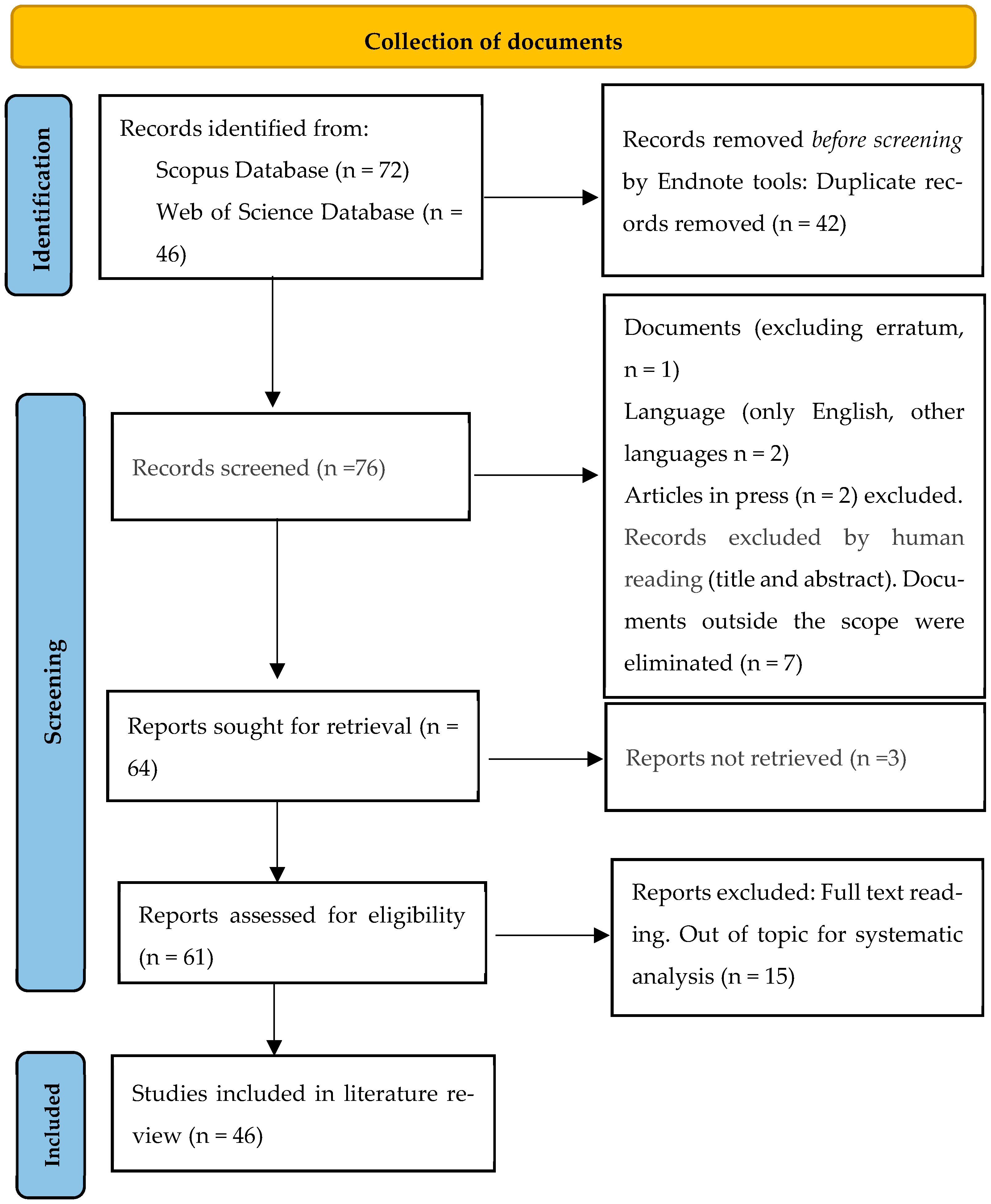
The PRISMA 2020 flowchart (Figure 1) summarizes the results of the search across different databases and the number of documents selected at each stage. The eligibility criteria were defined before performing the search, and duplicate files found in WoS and Scopus (42 papers) were eliminated (leaving 76 documents). Subsequently, content analysis was performed by reading the complete article (abstract, methods, results, and conclusion). A total of five records were excluded due to erratum (n = 1), non-English languages (n = 2), or articles in press (n = 2). Subsequently, seven documents were eliminated because they were undoubtedly outside the scope of the review. In addition, three documents were removed due to the unavailability of the full text. After applying the inclusion and exclusion criteria, and following the screening process, a total of 46 relevant articles was retained for systematic analyses. A detailed list of excluded studies at the full-text stage, with reasons for their exclusion, is provided in Supplementary Table S1. A completed PRISMA 2020 checklist is provided as Supplementary Table S2.

3.2. Content Analysis. Systematic Literature Review

3.2.1. General Characteristics

Trametes polyzona (Pers.) Justo (syn. Coriolopsis polyzona), originally described as Polyporus polyzonus [30], is a pantropical polypore characterized by a coriaceous appearance. It exhibits a reniform to flabelliform pileus, with a yellowish-ochre, tomentose to pilose, concentrically zoned surface. The pore surface is typically white to cream-colored.
This white-rot fungus efficiently degrades hardwood through the production ligninolytic enzymes (laccase, manganese peroxidase, lignin peroxidase) and cellulolytic enzymes, leading to spongy or fibrous decay [31,32]. T. polyzona has been widely studied for its biological activity and biotechnological potential, including its applications in the decolorization of olive oil mill wastewater [33], the degradation of synthetic dyes, and the removal of endocrine-disrupting chemicals.
Table 1 summarizes the compounds identified in extracts of T. polyzona, including their classification, molecular characteristics, relative abundances, and biological relevance.
The FAME profile is dominated by unsaturated fatty acids (84% relative abundance), including widespread components such as oleic, linoleic, and α-linolenic acids [9]. Although these fatty acids are not unique to T. polyzona, their relative proportions—especially the high unsaturated-to-saturated ratio—may contribute to the antioxidant and membrane-modulating activities observed in the extracts. More distinctive is the detection of heneicosanoic acid, a long-chain saturated fatty acid that is relatively rare in fungal lipids and could serve as a chemotaxonomic or functional marker in conjunction with other metabolite classes. In the aqueous extract, glucose is the predominant monosaccharide (97.34%), with minor arabinose and mannose contributions, consistent with a polysaccharide matrix that may underlie the reported immunomodulatory and antiproliferative effects [15].
A notable limitation in the literature on T. polyzona is the partial characterization of its chemical profile. Studies have focused mainly on primary metabolites, such as sugars and fatty acid esters (Table 1), which, although biologically relevant, do not fully explain the wide range of pharmacological activities attributed to the species. Therefore, it is suggested that future research prioritize the isolation and identification of secondary metabolites—terpenoids, alkaloids, and phenolic compounds—through bioactivity-guided fractionation and high-resolution mass spectrometry. This approach will allow the identification of the active principles responsible for antioxidant, antimicrobial, and anticancer activities, thus consolidating the therapeutic and biotechnological potential of the species.

3.2.2. Biological Activities of T. polyzona

Table 2 presents a summary of the biological activity of extracts obtained from T. polyzona, including antioxidants, antibacterial, anticancer, antifungal and anti-inflammatory capabilities, and toxicity evaluations. Furthermore, Supplementary Table S3 outlines the key results associated with each activity.
The biological activities reported for Trametes polyzona have been linked to several classes of metabolites, although their chemical characterization remains partial in most studies. Analyses of lipophilic extracts by GC–MS have consistently shown a predominance of fatty acids, particularly unsaturated fatty acids such as oleic, linoleic, and α-linolenic acids, together with less common components such as heneicosanoic acid [9]. Although these fatty acids are not unique to T. polyzona, their relative abundance may contribute to the antibacterial and antioxidant activities observed, potentially through mechanisms involving membrane disruption and modulation of inflammatory processes.
In parallel, polar extracts—especially methanolic and phenolic-rich fractions—have demonstrated strong free-radical scavenging capacity in DPPH and ABTS assays [14,15]. In most cases, these extracts are characterized by total phenolic content rather than by the identification of individual phenolic compounds, suggesting that low-molecular-weight phenolics collectively account for the reported antioxidant activity. These same extracts have also exhibited notable antibacterial effects against both Gram-positive and Gram-negative bacteria, including Staphylococcus aureus, Escherichia coli, and Salmonella enterica [14,34], as well as antifungal activity against Trichophyton mentagrophytes and Aspergillus fumigatus [34]. The enhanced antimicrobial efficacy observed in extracts obtained under solid-state fermentation conditions further suggests that polar secondary metabolites play a central role in these bioactivities [9].
Beyond antioxidant and antimicrobial properties, T. polyzona has shown promising anticancer and anti-inflammatory potential. Water-soluble polysaccharide fractions isolated from mycelial cultures have demonstrated selective antiproliferative activity against MCF-7 breast cancer cells (IC50 = 0.58 mg/mL), while exhibiting low cytotoxicity toward normal cell lines [15]. These effects are commonly attributed to immunomodulatory and apoptosis-related mechanisms, although specific molecular targets have not yet been elucidated for T. polyzona. In addition, ethanolic extracts from fruiting bodies have displayed significant anti-inflammatory activity in animal models, achieving up to a 39.58% reduction in induced inflammation [10].
With respect to safety, available data indicate low acute toxicity of T. polyzona extracts in Artemia salina bioassays [10]. Nevertheless, despite these encouraging biological activities, the specific secondary metabolites responsible for each effect, their quantitative contribution, and their precise mechanisms of action remain insufficiently characterized. This underscores the need for comprehensive metabolomic profiling, bioactivity-guided fractionation, and mechanistic studies to accurately identify and validate the compounds underlying the antioxidant, antibacterial, anticancer, and anti-inflammatory properties attributed to T. polyzona.

3.2.3. Enzymatic Activity of T. polyzona

Table 3 summarizes the enzymatic activities reported for T. polyzona strains under various fermentation conditions, substrates, and culture parameters. To complement this information, Supplementary Table S4 provides detailed activity data for each enzyme evaluated in the literature.
The studies highlight its ability to produce a wide range of hydrolytic and oxidative enzymes, such as cellulases (Cel), xylanases (Xyl), laccases (Lac), manganese peroxidases (MnP) and lignin peroxidases (LiP). These enzymes are useful in bioremediation, biofuel production, and other industrial applications.
Most studies characterize these enzymes at the biochemical level, reporting activity profiles, substrate specificity, optimal pH and temperature ranges, and molecular weights determined by SDS–PAGE. In contrast, molecular-level identification remains limited. To date, only one study has addressed gene-level evidence for ligninolytic enzymes in T. polyzona. Ezike et al. (2020) [35] screened the genome of T. polyzona WRF03 using laccase gene–specific primers targeting conserved copper-binding regions, obtaining a positive PCR amplification of an approximately 1500–1600 bp fragment, which is consistent with the expected size of fungal laccase genes. This result confirms the presence of a laccase-encoding gene in T. polyzona.
However, the amplified sequence was not fully characterized, and no gene sequences were deposited in public databases. At present, complete gene sequences for laccase, manganese peroxidase, or lignin peroxidase from T. polyzona are not available. Consequently, current knowledge of the enzymatic system of this species relies largely on biochemical characterization, and the lack of genomic and transcriptomic data represents a significant gap that limits comparative analyses and enzyme engineering efforts.
Table 3. Enzymatic activity of T. polyzona on different substrates and fermentation conditions.
Fungus/StrainSubstrateFermentation Type aCulture Conditions bEnzyme ActivityReported Yield/Titer (Maximum)Method of Analysis cRef.
C. polyzona MUCL 38443Tree leavesSSFpH = 6, T = 27 °C, t = 7–14 daysCMC, Xyl, FPA, Lac, MnPCMC: 9 U/mLDNS; ABTS; Phenol red (UV–Vis)[36]
C. polyzona MUCL 38443Wheat strawSSFpH = 6, T = 27 °C, t = 7–14 daysCMC, Xyl, FPA, Lac, MnPCMC: 5 U/mLDNS; ABTS; Phenol red (UV–Vis)[36]
C. polyzona MUCL 38443Apple peelsSSFpH = 6, T = 27 °C, t = 7–14 daysCMC, Xyl, FPA, Lac, MnPCMC: 16 U/mLDNS; ABTS; Phenol red (UV–Vis)[36]
C. polyzona MUCL 38443Banana peelsSSFpH = 6, T = 27 °C, t = 7–14 daysCMC, Xyl, FPA, Lac, MnPCMC: 21 U/mLDNS; ABTS; Phenol red (UV–Vis)[36]
C. polyzona MUCL 38443Tree leavesSmFpH = 6, T = 27 °C, t = 3–10 daysCMC, Xyl, FPA, Lac, MnPLac: 1.78 U/mLDNS; ABTS; Phenol red (UV–Vis)[36]
C. polyzona MUCL 38443Mandarin peelsSmFpH = 6, T = 27 °C, t = 3–10 daysCMC, Xyl, FPA, Lac, MnPCMC: 94 U/mLDNS; ABTS; Phenol red (UV–Vis)[36]
T. polyzona BKW-001Cassava peelsSSFpH = 5, T = 30 °C, t = 14 daysEG, β-Glu, Exg, Xyl, Amy, CelAmy: 56.2 U/mLHPLC/PAHBAH (UV–Vis)[20]
T. polyzona BKW-001Cassava peelsSSFpH = 6, T = 30 °CEG, β-Glu, Exg, Xyl, AmyEG: 1.97 U/mLPAHBAH (UV–Vis)[37]
T. polyzona BKW-001Cocoa pod huskSSFpH = 6, T = 30 °CEG, β-Glu, Exg, Xyl, AmyAmy: 0.9 U/mLPAHBAH (UV–Vis)[37]
T. polyzona BKW-001Water HyacinthSSFpH = 6, T = 30 °CEG, β-Glu, Exg, Xyl, AmyAmy: 0.4 U/mLPAHBAH (UV–Vis)[37]
T. polyzona HHM001Corn leaf residuesSSFT = 37 °C, t = 11–15 daysLac, LiP, MnP, Cel, XylLac: 80 U/mLABTS; Veratryl alcohol; Phenol red[19]
C. polyzona CCBAS 740Wheat strawSSFpH = 4.5, T = 28 °C, t = 25 daysLac, MnPMnP: 22 U/mLMBTH + DMAB (UV–Vis)[38]
T. polyzona WRF03ABTSSSFpH = 4.5, T = 55 °C, t = 9 daysLac (purified)Lac: 1637 U/mg protein (66 kDa)SDS-PAGE; ABTS[39]
T. polyzona KU-RNW027ABTS/guaiacolNRpH = 4.5, T = 50 °CMnP, Lac (purified)MnP: 16.5 U/mg proteinSDS-PAGE; UV–Vis[17]
T. polyzona WR710–1Tangerine orange peelsSSFpH = 2.2, T = 50 °CLacLac: 1.36 U/mg/71 kDa (SDS-PAGE)/68 kDa (Gel filtration)Oxidation of 2,6-DMP/SDS–PAGE/Gel filtration[37]
T. polyzonaFruit nopal paddleSSFT = 28 °C, t = 5 daysCel, XylXyl: 0.0036 U/mgDNS (UV–Vis)[15]
T. polyzona MPS1-3Palm oil mill effluentNRpH = 4, T = 37 °C, t = 10 daysLacLac: 156.3 U/mLSDS-PAGE[40]
T. polyzona MUCL 38443ABTSSSFpH = 6, T = 50 °C, t = 20 daysLacLac: 0.97 U/mL. MM: ~60 kDaSDS-PAGE; ABTS[13]
T. polyzonaMelaninNRpH = 5.3, T = 25 °CLacLac: 2.42 U/mLUV–Vis[41]
T. polyzona RYNF13Wood meal guaiacol agarSmFpH = 6, T = 30 °C, t = 16 daysMnPMnP: 24 U/mLOxidation of 2,6-DMP[21]
C. polyzona CCBAS 740NRNRT = 28 °C, t = 7 daysLac, LiP, MnPMnP = 0.056 U/mLSDS-PAGE; ABTS[42]
T. polyzona MUCL 38443ABTSNRpH = 3, T = 70 °CLacLac: 800 U/LSDS-PAGE; ABTS[43]
C. polyzona MUCL38443Olive Oil Mill WastewaterSmFpH = 5, T = 30 °C, t = 21 daysLac, LiP, MnPLac = 0.038 U/mLUV–Vis[44]
T. polyzonaEffuent with Amaranth dyeSmFt = 10 daysLac, LiP, MnPLiP: 0.038 U/mLABTS; Veratryl alcohol; Phenol red[25]
co-culture of T. polyzona, A. niger, T. longibrachiatum, M. circinelloides and R. microsporusPharmaceuticalsSBRpH = 3–4.6, t = 6 daysLac, LiP, MnPMnP: 0.253 U/mLABTS; 2,6-DMP[28]
Notes a: Type of Fermentation. SSF: Solid-state fermentation, SmF: Submerged fermentation. NR: Not reported. SBR: Sequencing batch reactor. b Culture Conditions. T: Temperature, t: time. c Method of Analysis. ABTS: 2,2′-azino-bis(3-ethylbenzothiazoline-6-sulfonic acid), DNS: 3,5-dinitrosalicylic acid, PAHBAH: para-hydroxybenzoic acid hydrazide, MBTH: 3-methyl-2-benzothiazolinone hydrazone hydrochloride, DMAB: 3-dimethylaminobenzoic acid, 2,6-DMP: 2,6-dimethoxyphenol, SDS-PAGE: Sodium dodecyl sulfate-polyacrylamide gel electrophoresis. HPLC: High Performance Liquid Chromatography.
Fermentation and Substrate Influence: As shown in Table 3, SSF and SmF affect enzyme yield differently. SmF generally yields higher enzyme production than SSF, particularly for ligninolytic enzymes like Lac and MnP, due to better nutrient diffusion and oxygen availability. For example, SmF on tree leaves resulted in Lac and MnP activities of 1780 U/L and 896 U/L, respectively, significantly higher than the levels obtained via SSF (Table S4) [36]. The substrate composition critically affects enzyme yield. Fruit residues like mandarin peels induce high cellulase activity (94 U/mL), while banana peels are effective for laccase production [36]. Cassava peels, rich in starch, induce high amylase activity (56.22 U/mL) (Table S4) [20].
Optimization Parameters: Culture conditions such as pH, temperature, and aeration significantly influence enzyme production. Optimal laccase production of 156.3 U/mL was achieved at pH 4 and 37 °C [40]. Enhanced aeration and reduced substrate particle size also increase enzyme yield [19].
Enzyme Characterization: Enzyme molecular masses were determined using methods like SDS-PAGE, revealing sizes such as 66 kDa for Lac [39] and 42–44 kDa for MnP [17]. Analytical techniques for activity measurement include UV-Vis spectrophotometry with substrate-specific assays like ABTS oxidation for laccase and the DNS method for cellulases [36].
In summary, the enzymatic activity of T. polyzona is highly dependent on fermentation type, substrate selection, and culture conditions. SmF and lignocellulosic substrates like fruit residues and tree leaves generally enhance enzyme production, making this fungus a promising candidate for industrial bioprocesses [36].

3.2.4. Molecular Mechanisms and Critical Comparison Between Studies

The degradative ability of Trametes polyzona and other white-rot fungi relies on the synergistic action of three major enzyme groups: laccases (Lac), manganese peroxidases (MnP), and lignin peroxidases (LiP) [45,46]. Laccases catalyze one-electron oxidations of phenolic substrates, generating phenoxyl radicals that trigger β–O–4 bond cleavage or lignin repolymerization. Their oxidative range toward non-phenolic compounds is substantially expanded by laccase–mediator systems that use mediators such as ABTS or HBT to shuttle electrons between the enzyme and otherwise inaccessible substrates [47].
MnPs oxidize Mn2+ to Mn3+, which forms Mn3+–organic acid complexes (e.g., oxalate or malonate) that diffuse into the extracellular matrix and oxidize phenolic compounds at a distance from the catalytic site [48]. LiPs, possessing the highest redox potential (~1.2 V), oxidize non-phenolic lignin units and highly recalcitrant pollutants such as bisphenols and azo dyes [49]. These electrochemical and substrate differences explain the temporal expression patterns reported in several studies, where LiP predominates in early growth phases and Lac/MnP dominate during later stages [50].
For T. polyzona specifically, mechanistic insights are still fragmentary and are often extrapolated from studies on T. versicolor and other Trametes species. Nevertheless, several strain-level features have been reported. T. polyzona KU-RNW027 produces two MnP isoenzymes (42–44 kDa) and one laccase (71 kDa) with high redox potential and activity optima at pH 4.5 and 50 °C [17], while strain WRF03 secretes a 66 kDa laccase that remains active at 55 °C [39]. These molecular-weight patterns and temperature optima suggest a set of moderately thermotolerant ligninolytic isoenzymes that may partly explain the strong performance of T. polyzona in dye and pharmaceutical degradation (Table 3). However, without gene-sequence data or structural information, most mechanistic models remain inferred from better-studied Trametes species.
In T. polyzona, distinct isoenzymatic profiles are strongly correlated with degradation performance. Lueangjaroenkit et al. [17] characterized two MnPs and one laccase with unique catalytic properties, achieving >80% decolorization of azo dyes within 48–72 h. Chairin et al. [16] demonstrated that adding redox mediators significantly enhanced removal of non-phenolic dyes by T. polyzona. Together, these findings show that the Lac/MnP/LiP ratio is a practical predictor of oxidative capacity and may explain the wide range of efficiencies (40–95%) reported across studies depending on the target compound, substrate composition, pH, and nutrient balance [7,51].
Another major source of variability arises from methodological differences. Conventional spectrophotometric assays using model substrates (ABTS, guaiacol) often underestimate total enzymatic potential or overlook intermediate metabolites that can be identified only by chromatographic techniques (LC–MS or GC–MS). Therefore, a combined standardization of enzyme-activity assays with LC–MS/MS metabolomic profiling is essential to produce comparable datasets and to verify detoxification rather than simple decolorization.
Overall, this comparative synthesis highlights that T. polyzona’s oxidative efficiency results from a dynamic balance among Lac, MnP, and LiP activities, modulated by environmental parameters and oxidative stress during fermentation, consistent with mechanistic models previously proposed for T. versicolor and related Trametes species [51,52], while emphasizing the need for T. polyzona-specific omics and structural studies.

3.2.5. Biodegradation Potential of T. polyzona

Table 4 shows the results of studies on the pollutant degradation capacity of T. polyzona, including synthetic dyes, pharmaceuticals, PAHs, and industrial effluents.
Trametes polyzona demonstrates a significant capacity to degrade a wide spectrum of industrial pollutants, including synthetic dyes, pharmaceuticals, polycyclic aromatic hydrocarbons (PAHs), and endocrine-disrupting compounds (EDCs), primarily through the action of its lignin-modifying enzymes (Lac, MnP, LiP) [17,21,28].
Degradation of Diverse Pollutants: The fungus is highly effective against various synthetic dyes, particularly anthraquinone dyes like Remazol Brilliant Blue R, which can be completely decolorized within 30 min [17]. The degradation of azo dyes is generally less efficient but can be enhanced using redox mediators like acetosyringone (AS) or 1-hydroxybenzotriazole (HBT) [13,16].
An important caveat in dye-removal studies is the relative contribution of biosorption versus enzymatic degradation. Only a minority of the reviewed works performed desorption tests or mass-balance analyses to differentiate dye molecules irreversibly transformed by enzymes from those merely adsorbed onto fungal biomass. Most studies report color loss based on UV–Vis absorbance without systematically quantifying desorbed dyes after washing the mycelium, meaning that the extent of true biodegradation may be overestimated in some cases (e.g., [56,57]). This methodological limitation applies to several of the dye-removal studies summarized in Table 4. Future experiments with T. polyzona should therefore incorporate standardized desorption controls, TOC/COD balances, and LC–MS/MS identification of intermediates to clearly disentangle biosorption from enzymatic transformation.
For pharmaceutical contaminants, T. polyzona can achieve complete removal of tetracyclines and certain non-steroidal anti-inflammatory drugs like ibuprofen [12,17]. The efficiency is notably higher in co-culture systems, where removal rates for compounds like carbamazepine can reach over 97% [28].
The fungus also degrades PAHs, with one strain showing 100% degradation of phenanthrene and 86% of pyrene [21]. Furthermore, it efficiently removes EDCs, achieving complete degradation of bisphenol A (BPA) and nonylphenol, especially when laccase is immobilized to enhance stability [16,55].
Application in Industrial Effluent Treatment: T. polyzona has been applied to treat complex industrial wastewaters, such as palm oil and olive oil mill effluents, achieving substantial reductions in chemical oxygen demand (COD), color, and phenolic compounds [26,40,44].
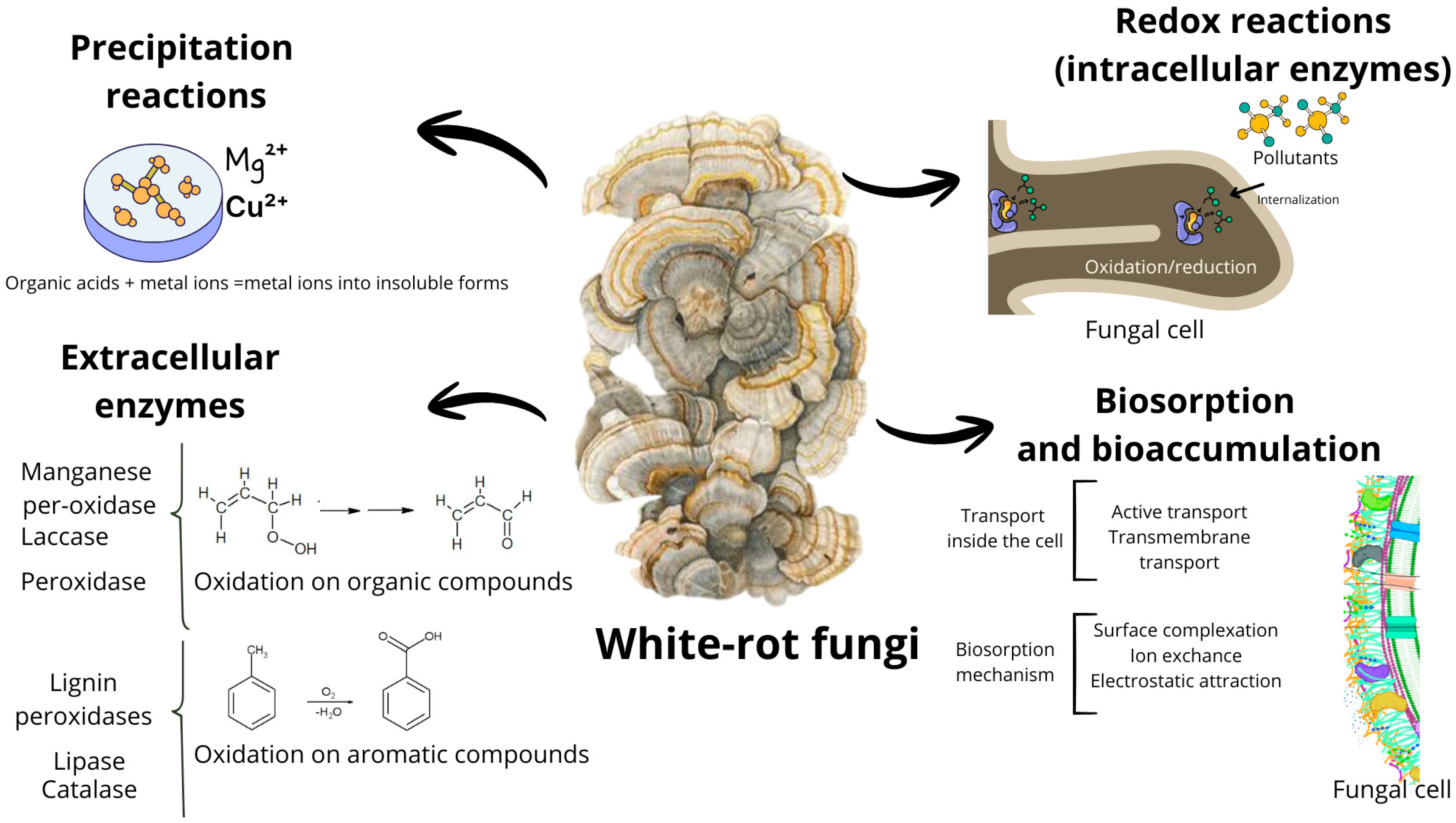
Although the specific degradation mechanisms of different contaminant classes by T. polyzona have not yet been fully elucidated, available experimental evidence combined with established models for white-rot fungi allows the main transformation pathways to be summarized (Figure 2) [57]. For endocrine-disrupting compounds (EDCs) such as bisphenol A (BPA) and nonylphenol, laccase-mediated oxidation appears to be the primary initial step. This process involves the generation of phenoxy radicals, which undergo radical coupling reactions (dimerization and oligomerization), followed by side-chain hydroxylation and partial aromatic ring cleavage, as evidenced by LC–MS and GC–MS analyses [16,54,55]. While these transformations often reduce estrogenic activity, they may also lead to the formation of partially oxidized aromatic by-products with residual toxicity.
In the case of polycyclic aromatic hydrocarbons (PAHs), such as phenanthrene and pyrene, degradation is mainly driven by manganese peroxidase (MnP) and lignin peroxidase (LiP) through one-electron oxidation reactions that yield epoxides and quinone-type intermediates. These compounds can subsequently undergo ring-cleavage reactions, forming smaller, more polar metabolites such as carboxylic acids that are more amenable to further biodegradation or mineralization [21,23].
Emerging contaminants including pharmaceuticals—such as antibiotics (tetracyclines, quinolones) and non-steroidal anti-inflammatory drugs (diclofenac, ibuprofen)—are typically attacked at phenolic, aromatic, or amino functional groups, resulting in hydroxylated, dechlorinated, or otherwise oxidized derivatives [12,17,28]. In several cases, degradation efficiency is enhanced by redox mediators or co-culture systems, suggesting that the relative activities of Lac, MnP, and LiP strongly influence the distribution of transformation products.
It should be noted that many of these pathways are partly inferred from mechanistic studies on related white-rot fungi, such as Trametes versicolor. Nevertheless, the available data indicate that T. polyzona follows comparable oxidative strategies, with the Lac/MnP/LiP ratio, mediator availability, and culture conditions modulating degradation efficiency and intermediate formation. Importantly, several studies have reported residual toxicity of degradation products toward organisms such as Daphnia magna, Vibrio fischeri, and Artemia, highlighting that high contaminant removal does not necessarily equate to complete detoxification. Therefore, coupling chemical analyses with ecotoxicological assays is essential to accurately assess the environmental safety of T. polyzona-based bioremediation processes.
It should be noted that the efficiency of enzymatic degradation by T. polyzona is strongly influenced by operational parameters, particularly pH and temperature. Most studies report optimal ligninolytic activity under acidic conditions (pH 4–6) and moderate temperatures (25–30 °C), although some strains exhibit partial thermotolerance [21,35]. Variability in reported degradation efficiencies across studies can therefore be attributed not only to differences in contaminant structure, but also to strain-specific genetic variation, substrate complexity, culture conditions, and analytical methodologies.

3.3. Applications of T. polyzona

As mentioned above, the properties of T. polyzona have been extensively researched, with many applications ranging from biotechnology, industrial, and environmental science to nanotechnology and other emerging areas.
Environmental Bioremediation and Wastewater Treatment: One of the most prominent applications of T. polyzona is in the bioremediation of polluted environments. The fungus’s efficient ligninolytic system, particularly laccase (Lac), manganese peroxidase (MnP), and lignin peroxidase (LiP), allows for the degradation of a wide spectrum of recalcitrant pollutants. As evidenced in Table 4, this includes the successful decolorization of synthetic dyes from textile effluents (e.g., Remazol Brilliant Blue R and Amaranth dye [8,16,17,24,25,42], the breakdown of endocrine-disrupting chemicals (EDCs) like bisphenol A (BPA) and nonylphenol [16,54,55], and the removal of pharmaceuticals and personal care products, including antibiotics and anti-inflammatories [12,17,28]). Furthermore, T. polyzona demonstrates a robust capacity to degrade polycyclic aromatic hydrocarbons (PAHs) such as phenanthrene and fluoranthene [21,23], aligning it as a powerful tool for rehabilitating soils and waters contaminated by industrial waste and fossil fuels.
Bioenergy and Biorefining: In the context of the circular bioeconomy, T. polyzona offers substantial value in the valorization of lignocellulosic biomass. The fungus produces a suite of hydrolytic enzymes, including cellulases, xylanases, and amylases (Table 3), which efficiently break down agricultural residues like cassava peels, banana peels, and other agro-industrial waste [20,36,37]. This enzymatic hydrolysis facilitates the release of fermentable sugars for conversion into bioethanol, as demonstrated by Acheampong et al. [37]. This application not only provides a renewable energy source but also promotes the efficient and sustainable use of low-value agricultural by-products.
Pharmaceutical and Biomedical Potential: Beyond environmental applications, T. polyzona exhibits considerable promise in the health sector. Extracts from its fruiting bodies and mycelia have demonstrated a range of bioactivities (Table 2). These include significant antioxidant properties [14,15], potent antimicrobial effects against pathogens like Staphylococcus aureus and Escherichia coli [9,14,34], and notable antifungal activity against species such as Trichophyton mentagrophytes [34]. Moreover, studies have confirmed anti-inflammatory effects in animal models [10] and antiproliferative activity against cancer cell lines, such as MCF-7 breast cancer cells [15]. The bioactive compounds underlying these effects, which include unsaturated fatty acids and polysaccharides (Table 1), present a promising foundation for the development of nutraceuticals, natural antibiotics, and adjuvant therapies.
When compared with the extensively studied T. versicolor, T. polyzona exhibits several potentially advantageous traits for applied biotechnology. Multiple studies report sustained growth and enzymatic activity at temperatures between 35 and 40 °C, exceeding the typical optimum reported for T. versicolor. In addition, T. polyzona frequently displays a high laccase-to-peroxidase ratio, which can be advantageous in peroxide-independent oxidation processes such as dye decolorization, phenolic compound removal, and green synthesis applications. Rapid colonization of hardwood substrates and agricultural residues, together with tolerance to metal ions and complex effluents, further supports its suitability for bioremediation in warm climates and high-strength waste streams. While strain-level variability remains significant, these features suggest that T. polyzona can complement or outperform other Trametes species under specific operational constraints.

3.4. Process Limitations, Scalability, and Enzymatic Stability

The industrial viability of T. polyzona–based bioprocesses depends on balancing enzyme production cost, catalytic efficiency, and operational robustness. In SSF using low-cost lignocellulosic residues such as bagasse, sawdust, or rice straw, T. polyzona can yield 19.72 U/mg of laccase and up to 16.53 U/mg of MnP with minimal energy input [17]. In contrast, SmF generally produces lower yields (0.080–0.19 U/mL of laccase) but provides better control of aeration and pH, enabling reproducibility and integration into continuous-flow bioreactors [36,59].
The formulation and recovery of fungal enzymes may account for up to 50% of total operational costs in bioremediation [60,61]. Immobilization using natural polymers such as alginate, chitosan, or biochar, and the production of cross-linked enzyme aggregates (CLEAs) [62], can extend enzymatic lifetime for 10–12 reuse cycles [7], reducing treatment cost per unit. Nevertheless, support regeneration and partial catalytic loss (20–40%) remain significant barriers for industrial scaling.
At the reactor scale, T. polyzona shows tolerance to moderate fluctuations in pH and pollutant load. In airlift and packed-bed systems, decolorization efficiencies exceeding 80% for dyes and phenolic pollutants have been achieved after seven days of continuous operation [24,25]. However, scaling up is still limited by (i) oxygen transfer control needed to maintain Lac/MnP balance, (ii) foam formation and mycelial aggregation that restrict mass transfer, and (iii) progressive enzyme inactivation caused by radical accumulation.
Recent work indicates that biofilm-based reactors or porous carriers (e.g., coconut fibers, expanded silica) can improve enzyme stability and enable semi-continuous operation [24,63]. Co-immobilization with natural mediators such as sinapic acid or acetosyringone can further enhance electron-transfer efficiency while lowering dependence on synthetic mediators.
Despite its strong bioremediation potential, several challenges limit the large-scale application of T. polyzona. These include the structural recalcitrance of certain pollutants (e.g., methylene blue), the possible formation of toxic degradation intermediates, and the need to reduce enzyme production costs while optimizing reactor design for industrial implementation [25,35,55]. Addressing these challenges through enzyme immobilization, process optimization, and integrated toxicity assessment will be critical for translating laboratory-scale efficiencies into robust and economically viable bioremediation systems.
Ligninolytic enzymes are highly sensitive to extreme pH (<4.0 or >8.0), heavy-metal ions, and excess H2O2. Trametes laccases may lose up to 60% of their activity after ten reuse cycles under continuous flow [64]. Protein-engineering approaches—particularly directed evolution—have produced thermostable laccase variants in other fungal species [60], although recombinant T. polyzona enzymes remain unreported.
Incomplete degradation may yield intermediate products more toxic than the parent pollutants. For instance, triclosan and azo-dye degradation can generate chlorinated aromatic amines or oligomers with higher acute toxicity [65]. In T. polyzona, partially oxidized aromatic metabolites have been detected post-treatment, with residual toxicity confirmed by Daphnia magna and Vibrio fischeri assays [23,25]. This aspect is often overlooked in conventional chemical oxidation processes (e.g., Fenton, ozone), which can rapidly decolorize effluents but frequently increase toxicity by generating reactive electrophiles. In contrast, fungal treatments offer the possibility of coupling enzymatic oxidation with subsequent mineralization, provided that intermediate metabolites are rigorously monitored. Therefore, industrial scaling must integrate LC–MS/MS metabolite profiling and standardized ecotoxicological assays (e.g., Microtox®, Daphnia magna) to demonstrate true detoxification rather than mere color removal before wastewater discharge [66].
Collectively, these insights show that while T. polyzona presents clear advantages for eco-efficient bioprocesses, successful implementation depends on the simultaneous optimization of enzyme production, reactor design, and environmental safety validation.

3.5. Emerging and Cross-Sectoral Applications

The technological potential of T. polyzona continues to expand through advances in bioprocessing and nanobiotechnology. Enzyme-immobilization strategies, such as the formation of CLEAs have enhanced laccase stability and enabled its operation in continuous reactors for the removal of EDC and industrial dyes [54,55]. Moreover, the covalent attachment of T. polyzona laccase to silica or magnetic nanoparticles has shown efficient degradation of BPA in aqueous matrices, demonstrating potential for advanced nanocomposite-based wastewater treatment [67].
The broad application spectrum of T. polyzona reflects its versatile enzymatic system and metabolic adaptability. However, translating these promising laboratory-scale results into standardized industrial processes requires addressing persistent challenges, including strain variability, culture-mode differences (SSF vs. SmF), and extraction methodologies. Future efforts should prioritize protocol standardization, detailed metabolite profiling, and pilot-scale validation of immobilized enzyme systems. By systematically overcoming these constraints, T. polyzona can be fully harnessed as a sustainable and multifunctional biocatalyst, reinforcing its role in green chemistry, environmental protection, and biotechnological innovation.

3.6. Critical Appraisal of the Evidence

Despite the broad range of studies available, the evidence on T. polyzona remains highly heterogeneous and presents several methodological weaknesses that limit cross-study comparability. Most publications differ substantially in strain identification, culture conditions, and substrate preprocessing (e.g., use of raw versus steam-exploded biomass, chemical delignification, or size reduction below 5 mm), which hinders the establishment of reliable benchmarks for enzymatic activity or biodegradation performance. In many cases, experimental designs lack standardized controls, quantitative kinetic parameters, or adequate reporting of environmental variables such as pH, aeration, or nutrient availability. Furthermore, only a minority of studies identify intermediate metabolites or assess the post-treatment ecotoxicity of degradation products—an essential step for validating the environmental safety of fungal bioprocesses. Analytical methods also vary widely, from basic spectrophotometric measurements to more advanced LC-MS/MS approaches, creating inconsistencies in the detection and quantification of by-products. These gaps highlight the need for harmonized methodologies, improved analytical resolution, and more robust experimental designs to enable meaningful comparisons and support the advancement of T. polyzona as a reliable biotechnological platform. For example, studies employing finely milled, pre-treated agricultural residues often report higher apparent enzymatic activities and degradation efficiencies than those using coarse, untreated substrates, making direct comparison difficult in the absence of standardized preprocessing protocols.

4. Conclusions

This systematic review provides an integrated and critical synthesis of the current knowledge on Trametes polyzona, highlighting its strong potential for environmental and industrial biotechnology. The species consistently demonstrates high ligninolytic activity, effective transformation of structurally diverse xenobiotics, and the capacity to produce metabolites with antioxidant and antimicrobial properties. Collectively, the available evidence confirms that T. polyzona is a versatile fungal resource capable of contributing to bioremediation, enzymatic bioprocessing, and value-added applications.
However, the analysis also reveals substantial limitations in the existing body of research. Most studies rely on heterogeneous experimental conditions, insufficient strain characterization, inconsistent reporting of fermentation parameters, and analytical methods that prevent direct comparison of enzymatic or biodegradation efficiencies. Additionally, few studies evaluate ecotoxicity of degradation products or address the stability, kinetics, and scalability of fungal processes. These methodological gaps underline the need for more standardized protocols and robust analytical frameworks.
Future research should prioritize: (i) detailed characterization of strains and enzymatic isoforms; (ii) standardized experimental designs in submerged and solid-state fermentation; (iii) comprehensive monitoring of intermediate metabolites and post-treatment toxicity; (iv) integration of omics tools to elucidate regulatory pathways; and (v) pilot-scale studies that validate process performance under realistic operational conditions. Strengthening these areas will enable more reliable assessments of the organism’s biotechnological potential and facilitate translation from laboratory findings to industrial applications.
Overall, T. polyzona should be regarded as an underexploited but strategically relevant member of the genus, offering advantages over the reference species T. versicolor in thermotolerant, laccase-centered, and high-load bioremediation applications. Targeted comparative studies and multi-omics analyses will be essential to fully define its niche within industrial biotechnology.

Supplementary Materials

The following supporting information can be downloaded at https://www.mdpi.com/article/10.3390/jof12010019/s1, Table S1: Studies excluded during the screening process and reasons for exclusion; Table S2: PRISMA 2020 Checklist: Locations of reporting items within the manuscript. Table S3: Summary of the main findings on the biological activity of T. polyzona extracts reported in the reviewed studies. Table S4: Enzymatic activity data by enzyme for each evaluated T. polyzona strain.

Author Contributions

Conceptualization, N.G.S.M. and K.D.-S.; Methodology, M.A.O.-O., Z.N.-R., and K.D.-S.; Software, Z.N.-R. and R.T.-G.; Validation, M.B.M.-G., T.G. and J.R.A.; Formal analysis, M.A.O.-O. and N.E.d.l.M.-S.; Investigation, M.A.O.-O., M.B.M.-G., N.E.d.l.M.-S., T.G., A.J.B.-S. and R.T.-G.; Resources, N.G.S.M. and K.D.-S.; Data curation, Z.N.-R. and R.T.-G.; Writing—original draft preparation, M.A.O.-O. and K.D.-S.; Writing—review and editing, all authors; Visualization, A.J.B.-S. and Z.N.-R.; Supervision, J.R.A., N.G.S.M. and K.D.-S.; Project administration, K.D.-S.; Funding acquisition, K.D.-S. All authors have read and agreed to the published version of the manuscript.

Funding

This research was funded by Universidad Regional Amazónica Ikiam/DBM-023-2024 “Hongos Medicinales del Colonso Chalupas: Un Estudio Integral de su Perfil Químico y Actividad Biológica para Aplicaciones Biotecnológicas”.

Institutional Review Board Statement

Not applicable.

Informed Consent Statement

Not applicable.

Data Availability Statement

No new data were created or analyzed in this study. Data sharing is not applicable to this article.

Acknowledgments

The authors gratefully acknowledge the support of “Hongos Medicinales del Colonso Chalupas: Un Estudio Integral de su Perfil Químico y Actividad Biológica para Aplicaciones Biotecnológicas”, funded by Universidad Regional Amazónica Ikiam/DBM-023-2024, for providing the resources and expertise that significantly contributed to this research.

Conflicts of Interest

The authors declare no conflicts of interest.

Abbreviations

The following abbreviations are used in this manuscript:
ABTS2,2′-azino-bis(3-ethylbenzothiazoline-6-sulfonic acid)
AMAmaranth dye
AmyAmylase
ASAcetosyringone
BCBreast Cancer
β-GluBeta-Glucosidase
CelCellulase
CLEAsCross-linked enzyme aggregates
CMCCarboxymethyl cellulase
CODChemical Oxygen Demand
DPPH2,2-diphenyl-1-picrylhydrazyl
EDCsEndocrine Disrupting Chemicals
EGEndoglucanase
ExgExoglucanase
FAMEFatty Acid Methyl Esters
FPAFilter Paper Activity
GC-MSGas Chromatography-Mass Spectrometry
GC-ECDGas Chromatography-Electron Capture Detection
HBT 1-hydroxybenzotriazole
HPLCHigh Performance Liquid Chromatography
HPLC-MS-ESIHigh Performance Liquid Chromatography-Mass Spectrometry with Electrospray Ionization
IZInhibition Zone
LacLaccase
LC-MS/MSLiquid Chromatography-Tandem Mass Spectrometry
LiPLignin Peroxidase
MBMethylene Blue
MCMoisture content
MICMinimum Inhibitory Concentration
MMMolecular Mass
MnPManganese Peroxidase
MnIPManganese Independent Peroxidase
PAHsPolycyclic Aromatic Hydrocarbons
PCBsPolychlorinated Biphenyls
PCDEPolychlorinated Diphenyl Ethers
PSParticle size
RBBRRemazol Brilliant Blue R
SBRSequencing Batch Reactor
SDS-PAGESodium Dodecyl Sulfate–Polyacrylamide Gel Electrophoresis
SmFSubmerged Fermentation
SPE-UPLC-QToF/MSSolid-Phase Extraction-Ultra Performance Liquid Chromatography-Quadrupole Time-of-Flight Mass Spectrometry
SSFSolid-State Fermentation
TBARSThiobarbituric Acid Reactive Substances
TEACTrolox Equivalent Antioxidant Capacity
TPCTotal Phenolic Content
TSTotal Solids
TSSTotal Suspended Solids
UFMUnFermented Material
WoSWeb of Science
WRFWhite Rot Fungi
XylXylanase

Appendix A

Table A1. The specifics of search strings.
DatabaseSearch Strings
SCOPUS(TITLE-ABS-KEY (trametes AND polyzona) OR TITLE-ABS-KEY (polystictus AND polyzonus) OR TITLE-ABS-KEY (coriolus AND polyzonus) OR TITLE-ABS-KEY (polystictus AND septosporus) OR TITLE-ABS-KEY (coriolopsis AND polyzona)) AND (EXCLUDE (DOCTYPE, “er”)) AND (EXCLUDE (PUBSTAGE, “aip”)) AND (LIMIT-TO (LANGUAGE, “English”))
Web of Science (WoS)(TS = (ALL= (Trametes polyzona)) OR ALL = (coriolopsis polyzona)) AND (LIMIT-TO (LANGUAGE, “English, Spanish”))

References

  1. Grossart, H.-P.; Wyngaert, S.V.d.; Kagami, M.; Wurzbacher, C.; Cunliffe, M.; Rojas-Jimenez, K. Fungi in aquatic ecosystems. Nat. Rev. Microbiol. 2019, 17, 339–354. [Google Scholar] [CrossRef] [PubMed]
  2. Frey, S.D. Mycorrhizal Fungi as Mediators of Soil Organic Matter Dynamics. Annu. Rev. Ecol. Evol. Syst. 2019, 50, 237–259. [Google Scholar] [CrossRef]
  3. Dighton, J. Fungi in Ecosystem Processes; CRC Press: Boca Raton, FL, USA, 2018. [Google Scholar]
  4. Corbu, V.M.; Gheorghe-Barbu, I.; Dumbravă, A.Ș.; Vrâncianu, C.O.; Șesan, T.E. Current Insights in Fungal Importance—A Comprehensive Review. Microorganisms 2023, 11, 1384. [Google Scholar] [CrossRef] [PubMed]
  5. Manavalan, T.; Manavalan, A.; Heese, K. Characterization of Lignocellulolytic Enzymes from White-Rot Fungi. Curr. Microbiol. 2015, 70, 485–498. [Google Scholar] [CrossRef]
  6. Latif, W.; Ciniglia, C.; Iovinella, M.; Shafiq, M.; Papa, S. Role of White Rot Fungi in Industrial Wastewater Treatment: A Review. Appl. Sci. 2023, 13, 8318. [Google Scholar] [CrossRef]
  7. Lueangjaroenkit, P.; Teerapatsakul, C.; Chitradon, L. Morphological characteristic regulation of ligninolytic enzyme produced by Trametes polyzona. Mycobiology 2018, 46, 396–406. [Google Scholar] [CrossRef]
  8. Uribe-Arizmendi, I.; Anducho-Reyes, M.A.; Ramírez-Vargas, M.R.; Cadena-Ramírez, A.; Muro-Urista, C.R.; Téllez-Jurado, A. Biological Decolorization of Amaranth, Denim Blue, and Orange G with Trametes polyzona. Water, Air, and Soil Pollution 2020, 231, 307. [Google Scholar] [CrossRef]
  9. Oyetayo, V.O.; Akingbesote, E.T. Assessment of the antistaphylococcal properties and bioactive compounds of raw and fermented Trametes polyzona (Pers.) Justo extracts. Microb. Biosyst. 2022, 7, 1–7. [Google Scholar] [CrossRef]
  10. Oyetayo, V.O.; Nieto-Camacho, A.; Rodriguez, B.E.; Jimenez, M. Assessment of anti-inflammatory, lipid peroxidation and acute toxicity of extracts obtained from wild higher basidiomycetes mushrooms collected from Akure (Southwest Nigeria). Int. J. Med. Mushrooms 2012, 14, 575–580. [Google Scholar] [CrossRef]
  11. Patel, S.K.S.; Gupta, R.K.; Karuppanan, K.K.; Padhi, D.K.; Ranganathan, S.; Paramanantham, P.; Lee, J.-K. Trametes versicolor Laccase-Based Magnetic Inorganic-Protein Hybrid Nanobiocatalyst for Efficient Decolorization of Dyes in the Presence of Inhibitors. Materials 2024, 17, 1790. [Google Scholar] [CrossRef]
  12. Kasonga, T.K.; Coetzee, M.A.A.; Kamika, I.; Momba, M.N.B. Assessing the Fungal Simultaneous Removal Efficiency of Carbamazepine, Diclofenac and Ibuprofen in Aquatic Environment. Front. Microbiol. 2021, 12, 755972. [Google Scholar] [CrossRef] [PubMed]
  13. Bucchieri, D.; Mangiagalli, M.; Martani, F.; Butti, P.; Lotti, M.; Serra, I.; Branduardi, P. A novel laccase from Trametes polyzona with high performance in the decolorization of textile dyes. AMB Express 2024, 14, 32. [Google Scholar] [CrossRef] [PubMed]
  14. Adongbede, E.M.; Jaiswal, Y.S.; Davis, S.S.; Randolph, P.D.; Huo, L.N.; Williams, L.L. Antioxidant and antibacterial activity of Trametes polyzona (Pers.) Justo. Food Sci. Biotechnol. 2020, 29, 27–33. [Google Scholar] [CrossRef] [PubMed]
  15. Kurniawan, B.; Bankeeree, W.; Yanatatsaneejit, P.; Prasongsuk, S. Antiproliferative activity and apoptosis-inducing effects of Trametes polyzona polysaccharides against human breast cancer cells. Biomed. Rep. 2023, 19, 83. [Google Scholar] [CrossRef]
  16. Chairin, T.; Nitheranont, T.; Watanabe, A.; Asada, Y.; Khanongnuch, C.; Lumyong, S. Biodegradation of bisphenol A and decolorization of synthetic dyes by laccase from white-rot fungus, Trametes polyzona. Appl. Biochem. Biotechnol. 2013, 169, 539–545. [Google Scholar] [CrossRef]
  17. Lueangjaroenkit, P.; Teerapatsakul, C.; Sakka, K.; Sakka, M.; Kimura, T.; Kunitake, E.; Chitradon, L. Two Manganese Peroxidases and a Laccase of Trametes polyzona KU-RNW027 with Novel Properties for Dye and Pharmaceutical Product Degradation in Redox Mediator-Free System. Mycobiology 2019, 47, 217–229. [Google Scholar] [CrossRef]
  18. Mondragón-Rojas, A.G.; Arana-Cuenca, A.; Ortíz-Moreno, A.; Torres-Maravilla, E.; Blancas-Nápoles, J.; Jiménez-García, E.; Sánchez-Pardo, M.E. Production of cellulolytic and xylanolytic enzymes by fungi grown on cactus (nopal) in solid-state fermentation. Agrochimica 2015, 59, 236–246. [Google Scholar] [CrossRef]
  19. García-Esquivel, Y.; Mercado-Flores, Y.; Anducho-Reyes, M.; Téllez-Jurado, A. Effect of particle size, aeration, and substrate height on the production of lignocellulolytic enzymes produced by Trametes polyzona HHM001 grown in corn leaf residues. Mex. J. Biotechnol. 2023, 8, 66–85. [Google Scholar] [CrossRef]
  20. Acheampong, N.A.; Akanwariwiak, W.G.; Mensah, M.; Fei-Baffoe, B.; Offei, F.; Bentil, J.A.; Imoro, A.Z.; Borquaye, L.S. Conversion of cassava peels into bioethanol using the OSTEP approach. Biomass Convers. Biorefinery 2025, 15, 1925–1938. [Google Scholar] [CrossRef]
  21. Teerapatsakul, C.; Pothiratana, C.; Chitradon, L.; Thachepan, S. Biodegradation of polycyclic aromatic hydrocarbons by a thermotolerant white rot fungus Trametes polyzona RYNF13. J. Gen. Appl. Microbiol. 2016, 62, 303–312. [Google Scholar] [CrossRef]
  22. Vyas, B.R.M.; Bakowski, S.; Šašek, V.; Matucha, M. Degradation of anthracene by selected white rot fungi. FEMS Microbiol. Ecol. 1994, 14, 65–70. [Google Scholar] [CrossRef]
  23. Wulandari, R.; Lotrakul, P.; Punnapayak, H.; Amirta, R.; Kim, S.W.; Prasongsuk, S. Toxicity evaluation and biodegradation of phenanthrene by laccase from Trametes polyzona PBURU 12. 3 Biotech 2021, 11, 32. [Google Scholar] [CrossRef] [PubMed]
  24. Cerrón, L.M.; Romero-Suárez, D.; Vera, N.; Ludeña, Y.; Villena, G.K.; Gutiérrez-Correa, M. Decolorization of Textile Reactive Dyes and Effluents by Biofilms of Trametes polyzona LMB-TM5 and Ceriporia sp. LMB-TM1 Isolated from the Peruvian Rainforest. Water Air Soil Pollut. 2015, 226, 235. [Google Scholar] [CrossRef]
  25. Pérez-Cadena, R.; García-Esquivel, Y.; Castañeda-Cisneros, Y.E.; Serna-Díaz, M.G.; Ramírez-Vargas, M.R.; Muro-Urista, C.R.; Téllez-Jurado, A. Biological decolorization of Amaranth dye with Trametes polyzona in an airlift reactor under three airflow regimes. Heliyon 2020, 6, e05857. [Google Scholar] [CrossRef] [PubMed]
  26. Jaouani, A.; Vanthournhout, M.; Penninckx, M.J. Olive Oil Mill Wastewater purification by combination of coagulation-flocculation and biological treatments. Environ. Technol. 2005, 26, 633–642. [Google Scholar] [CrossRef]
  27. Jaouani, A.; Sayadi, S.; Vanthournhout, M.; Pennînckx, M.J. Potent fungi for decolourisation of olive oil mill wastewaters. Enzym. Microb. Technol. 2003, 33, 802–809. [Google Scholar] [CrossRef]
  28. Kasonga, T.K.; Coetzee, M.A.A.; Kamika, I.; Momba, M.N.B. Assessing a co-culture fungal granule ability to remove pharmaceuticals in a sequencing batch reactor. Environ. Technol. 2022, 43, 1684–1699. [Google Scholar] [CrossRef]
  29. Page, M.J.; McKenzie, J.E.; Bossuyt, P.M.; Boutron, I.; Hoffmann, T.C.; Mulrow, C.D.; Shamseer, L.; Tetzlaff, J.M.; Akl, E.A.; Brennan, S.E.; et al. The PRISMA 2020 statement: An updated guideline for reporting systematic reviews. BMJ 2021, 372, n71. [Google Scholar] [CrossRef]
  30. Justo, A.; Hibbett, D.S. Phylogenetic classification of Trametes (Basidiomycota, Polyporales) based on a five–marker dataset. Taxon 2011, 60, 1567–1583. [Google Scholar] [CrossRef]
  31. Rattanarat, S.; Pongstabodee, N.; Lotrakul, P.; Punnapayak, H.; Prasongsuk, S. Decolorization of pulp mill black liquor by a laccase-producing white rot fungus, Trametes polyzona, combined with coagulation. Proceedings for 11th Conference on Science and Technology for Youth, Bangkok, Thailand, 1 August 2016; The Institute for the Promotion of Teaching Science and Technology (IPST): Bangkok, Thailand, 2016; pp. 35–46. [Google Scholar]
  32. Zmitrovich, I.V.; Ezhov, O.N.; Wasser, S.P. A Survey of Species of Genus Trametes Fr. (Higher Basidiomycetes) with Estimation of Their Medicinal Source Potential. Int. J. Med. Mushrooms 2012, 14, 307–319. [Google Scholar] [CrossRef]
  33. Alaoui, S.M.; Merzouki, M.; Pennînckx, M.J.; Benlemlih, M. Relationship between cultivation mode of white rot fungi and their efficiency for olive oil mill wastewaters treatment. Electron. J. Biotechnol. 2008, 11, 13–14. [Google Scholar] [CrossRef]
  34. Al-Fatimi, M.; Schröder, G.; Kreisel, H.; Lindequist, U. Biological activities of selected basidiomycetes from Yemen. Pharmazie 2013, 68, 221–226. [Google Scholar] [CrossRef] [PubMed]
  35. Ezike, T.C.; Ezugwu, A.L.; Udeh, J.O.; Eze, S.O.O.; Chilaka, F.C. Purification and characterisation of new laccase from Trametes polyzona WRF03. Biotechnol. Rep. 2020, 28, e00566. [Google Scholar] [CrossRef] [PubMed]
  36. Elisashvili, V.; Kachlishvili, E.; Penninckx, M. Effect of growth substrate, method of fermentation, and nitrogen source on lignocellulose-degrading enzymes production by white-rot basidiomycetes. J. Ind. Microbiol. Biotechnol. 2008, 35, 1531–1538. [Google Scholar] [CrossRef]
  37. Acheampong, N.A.; Akanwariwiak, W.G.; Mensah, M.; Fei-Baffoe, B.; Offei, F.; Bentil, J.A.; Borquaye, L.S. Optimization of hydrolases production from cassava peels by Trametes polyzona BKW001. Scientific African 2021, 12, e00835. [Google Scholar] [CrossRef]
  38. Vyas, B.R.M.; Volc, J.; Šašek, V. Ligninolytic enzymes of selected white rot fungi cultivated on wheat straw. Folia Microbiol. 1994, 39, 235–240. [Google Scholar] [CrossRef]
  39. Ezike, T.C.; Udeh, J.O.; Joshua, P.E.; Ezugwu, A.L.; Isiwu, C.V.; Eze, S.O.O.; Chilaka, F.C. Substrate specificity of a new laccase from Trametes polyzona WRF03. Heliyon 2021, 7, e06080. [Google Scholar] [CrossRef]
  40. Aka, B.Z.E.; Djeni, T.N.; Konan, H.K.; Semeniuc, C.A.; Rotar, A.M.; Suharoschi, R.; Djè, M.K. Characterization of a Potential Isozyme Laccase from Trametes polyzona MPS1-3 and its Contribution to Palm Oil Mill Effluent Treatment. Curr. Microbiol. 2021, 78, 3246–3257. [Google Scholar] [CrossRef]
  41. Andriani, A.; Agustriana, E.; Perwitasari, U.; Wahyuwati, F.A.; Hastuty, A.; Ferdian, P.R. High melanin degradation by laccase from a novel isolated white rot fungi Trametes polyzona 023 in the presence of phenolic compounds. Bioresour. Technol. Rep. 2024, 27, 101923. [Google Scholar] [CrossRef]
  42. Novotný, Č.; Vyas, B.R.M.; Erbanová, P.; Kubátová, A.; Šašek, V. Removal of PCBs by Various White Rot Fungi in Liquid Cultures. Folia Microbiol. 1997, 42, 136–140. [Google Scholar] [CrossRef]
  43. Pinar, O.; Tamerler, C.; Karataş, A.Y. Heterologous expression and characterization of a high redox potential laccase from Coriolopsis polyzona MUCL 38443. Turk. J. Biol. 2017, 41, 278–291. [Google Scholar] [CrossRef]
  44. Neifar, M.; Jaouani, A.; Martínez, M.J.; Pennînckx, M.J. Comparative study of olive oil mill wastewater treatment using free and immobilized Coriolopsis polyzona and Pycnoporus coccineus. J. Microbiol. 2012, 50, 746–753. [Google Scholar] [CrossRef] [PubMed]
  45. Martínez, A.T.; Speranza, M.; Ruiz-Dueñas, F.J.; Ferreira, P.; Camarero, S.; Guillén, F.; Martínez, M.J.; Gutiérrez, A.; del Río, J.C. Biodegradation of lignocellulosics: Microbial, chemical, and enzymatic aspects of the fungal attack of lignin. Int. Microbiol. 2005, 8, 195–204. [Google Scholar]
  46. Wesenberg, D.; Kyriakides, I.; Agathos, S.N. White-rot fungi and their enzymes for the treatment of industrial dye effluents. Biotechnol. Adv. 2003, 22, 161–187. [Google Scholar] [CrossRef] [PubMed]
  47. Morozova, O.V.; Shumakovich, G.P.; Shleev, S.V.; Yaropolov, Y.I. Laccase-mediator systems and their applications: A review. Appl. Biochem. Microbiol. 2007, 43, 523–535. [Google Scholar] [CrossRef]
  48. Hofrichter, M. Review: Lignin conversion by manganese peroxidase (MnP). Enzym. Microb. Technol. 2002, 30, 454–466. [Google Scholar] [CrossRef]
  49. Tien, M.; Kirk, T.K. Lignin-Degrading Enzyme from the Hymenomycete Phanerochaete chrysosporium Burds. Science 1983, 221, 661–663. [Google Scholar] [CrossRef]
  50. Lundell, T.K.; Mäkelä, M.R.; Hildén, K. Lignin-modifying enzymes in filamentous basidiomycetes—Ecological, functional and phylogenetic review. J. Basic Microbiol. 2010, 50, 5–20. [Google Scholar] [CrossRef]
  51. Janusz, G.; Kucharzyk, K.H.; Pawlik, A.; Staszczak, M.; Paszczynski, A.J. Fungal laccase, manganese peroxidase and lignin peroxidase: Gene expression and regulation. Enzym. Microb. Technol. 2013, 52, 1–12. [Google Scholar] [CrossRef]
  52. Pointing, S. Feasibility of bioremediation by white-rot fungi. Appl. Microbiol. Biotechnol. 2001, 57, 20–33. [Google Scholar] [CrossRef]
  53. Ramadhan, K.P.; Anita, S.H.; Oktaviani, M.; Laksana, R.P.B.; Sari, F.P.; Nurhayat, O.D.; Yanto, D.H.Y. Biodecolorization of Anthraquinone and Azo Dyes by Newly Isolated Indonesian White-Rot Fungi. Biosaintifika J. Biol. Biol. Educ. 2021, 13, 16–25. [Google Scholar] [CrossRef]
  54. Cabana, H.; Jiwan, J.L.H.; Rozenberg, R.; Elisashvili, V.; Penninckx, M.; Agathos, S.N.; Jones, J.P. Elimination of endocrine disrupting chemicals nonylphenol and bisphenol A and personal care product ingredient triclosan using enzyme preparation from the white rot fungus Coriolopsis polyzona. Chemosphere 2007, 67, 770–778. [Google Scholar] [CrossRef] [PubMed]
  55. Cabana, H.; Alexandre, C.; Agathos, S.N.; Jones, J.P. Immobilization of laccase from the white rot fungus Coriolopsis polyzona and use of the immobilized biocatalyst for the continuous elimination of endocrine disrupting chemicals. Bioresour. Technol. 2009, 100, 3447–3458. [Google Scholar] [CrossRef] [PubMed]
  56. Chen, B.; Wang, Y.; Hu, D. Biosorption and biodegradation of polycyclic aromatic hydrocarbons in aqueous solutions by a consortium of white-rot fungi. J. Hazard. Mater. 2010, 179, 845–851. [Google Scholar] [CrossRef]
  57. Dinakarkumar, Y.; Ramakrishnan, G.; Gujjula, K.R.; Vasu, V.; Balamurugan, P.; Murali, G. Fungal bioremediation: An overview of the mechanisms, applications and future perspectives. Environ. Chem. Ecotoxicol. 2024, 6, 293–302. [Google Scholar] [CrossRef]
  58. Bibbins-Martínez, M.; Juárez-Hernández, J.; López-Domínguez, J.; Nava-Galicia, S.; Martínez-Tozcano, L.; Juárez-Atonaľ, R.; Cortés-Espinosa, D.; Díaz-Godinez, G. Potential application of fungal biosorption and/or bioaccumulation for the bioremediation of wastewater contamination: A review. J. Environ. Biol. 2023, 44, 135–145. [Google Scholar] [CrossRef]
  59. Arora, D.S.; Sharma, R.K. Ligninolytic Fungal Laccases and Their Biotechnological Applications. Appl. Biochem. Biotechnol. 2010, 160, 1760–1788. [Google Scholar] [CrossRef]
  60. Mate, D.M.; Alcalde, M. Laccase engineering: From rational design to directed evolution. Biotechnol. Adv. 2015, 33, 25–40. [Google Scholar] [CrossRef]
  61. Couto, S.R.; Toca-Herrera, J.L. Lacasses in the textile industry. Biotechnol. Mol. Biol. Rev. 2006, 1, 115–120. [Google Scholar]
  62. Cabana, H.; Jones, J.P.; Agathos, S.N. Preparation and characterization of cross-linked laccase aggregates and their application to the elimination of endocrine disrupting chemicals. J. Biotechnol. 2007, 132, 23–31. [Google Scholar] [CrossRef]
  63. Cristóvão, R.O.; Silvério, S.C.; Tavares, A.P.M.; Brígida, A.I.S.; Loureiro, J.M.; Boaventura, R.A.R.; Macedo, E.A.; Coelho, M.A.Z. Green coconut fiber: A novel carrier for the immobilization of commercial laccase by covalent attachment for textile dyes decolourization. World J. Microbiol. Biotechnol. 2012, 28, 2827–2838. [Google Scholar] [CrossRef]
  64. Minussi, R.C.; Pastore, G.M.; Durán, N. Laccase induction in fungi and laccase/N–OH mediator systems applied in paper mill effluent. Bioresour. Technol. 2007, 98, 158–164. [Google Scholar] [CrossRef]
  65. Chen, X.; Nielsen, J.L.; Furgal, K.; Liu, Y.; Lolas, I.B.; Bester, K. Biodegradation of triclosan and formation of methyl-triclosan in activated sludge under aerobic conditions. Chemosphere 2011, 84, 452–456. [Google Scholar] [CrossRef]
  66. Chan-Cheng, M.; Cambronero-Heinrichs, J.C.; Masís-Mora, M.; Rodríguez-Rodríguez, C.E. Ecotoxicological test based on inhibition of fungal laccase activity: Application to agrochemicals and the monitoring of pesticide degradation processes. Ecotoxicol. Environ. Saf. 2020, 195, 110419. [Google Scholar] [CrossRef]
  67. Galliker, P.; Hommes, G.; Schlosser, D.; Corvini, P.F.X.; Shahgaldian, P. Laccase-modified silica nanoparticles efficiently catalyze the transformation of phenolic compounds. J. Colloid Interface Sci. 2010, 349, 98–105. [Google Scholar] [CrossRef]
Figure 1. Flow diagram summarizing document selection procedure, adapted from PRISMA 2020 [29]. The completed PRISMA checklist is available as Supplementary Table S2.
Jof 12 00019 g001
Figure 2. Mechanisms of fungal bioremediation (Adapted from [57,58]). Notes. Schematic representation of the bioremediation mechanisms of white rot fungi. The arrows indicate the direction of biochemical and transport processes, while the colored dots represent organic contaminants and metals. Precipitation reactions, extracellular and intracellular oxidation, as well as biosorption and bioaccumulation processes at the cell wall and fungal interior levels are shown.
Jof 12 00019 g002
Table 1. Bioactive compounds present in extracts obtained from T. polyzona. Data derived from Fatty Acid Methyl Esters (FAMEs) identified by GC-MS in ethanolic extracts [9], and Monosaccharides identified by HPLC in aqueous extracts [12].
No.ClassCompound NameMolecular FormulaMW (g/mol)Area (%)Biological Activity
Fatty Acid Methyl Esters (FAMEs) * (ethanolic extract)
1Saturated (C8:0)Caprylic acid methyl esterC9H18O2158.240.7430Antimicrobial, precursor for flavor compounds
2Saturated (C13:0)Tridecanoic acid methyl esterC14H28O2228.372.3991Rare in nature
3Monounsaturated (C14:1Δ9)Myristoleic acid methyl esterC15H28O2240.381.2098Potential anti-inflammatory effects
4Monounsaturated (C15:1Δ10)cis-10-Pentadecanoic acid methyl esterC16H30O2254.412.5627Found in dairy fats; role in membrane fluidity
5Monounsaturated (C16:1Δ9)Palmitoleic acid methyl ester (9-Hexadecenoic acid)C17H32O2268.431.3090Omega-7; improves insulin sensitivity, anti-inflammatory
6Saturated (C17:0)Heptadecanoic acid methyl esterC18H36O2284.484.0211Biomarker for dairy intake; minor metabolic roles
7Saturated (C18:0)Stearic acid methyl esterC19H38O2298.502.6906Neutral effect on cholesterol; used in food emulsifiers
8Monounsaturated trans (C18:1Δ9t)Elaidic acid methyl esterC19H36O2296.495.6737Trans fat; linked to cardiovascular disease
9Monounsaturated cis (C18:1Δ9c)Oleic acid methyl esterC19H36O2296.492.7858Omega-9; heart-healthy, reduces LDL cholesterol
10Polyunsaturated trans (C18:2Δ9t,12t)Linolelaidic acid methyl esterC19H34O2294.4712.4574Trans fat; adverse metabolic effects
11Polyunsaturated (C18:3Δ6,9,12)γ-Linolenic acid methyl esterC19H32O2292.462.7134Omega-6; anti-inflammatory, used in eczema treatment
12Polyunsaturated (C18:3Δ9,12,15)α-Linolenic acid methyl esterC19H32O2292.461.4846Omega-3; essential fatty acid; supports brain health
13Saturated (C21:0)Heneicosanoic acid methyl esterC22H44O2340.585.8626Rare; used in lipidomics research
14Polyunsaturated (C20:2Δ11,14)cis-11,14-Eicosadienoic acid methyl esterC22H38O2322.524.3872Precursor for signaling molecules
Monosaccharide ** (aqueous extract)
15Hexose (C6)GlucoseC6H12O6180.1697.34Primary energy source; central in metabolism
16Pentose (C5)ArabinoseC5H10O5150.132.52Component of plant cell walls; used in food additives
17Hexose (C6)MannoseC6H12O6180.160.15Immune modulation; precursor for glycoproteins
Notes. * Area (%) expressed in relative area and determined by GC-MS analysis [9]. ** Area (%) expressed only in monosaccharide composition and determined by high-performance liquid chromatography [15].
Table 2. Biological activity of the extracts obtained from the T. polyzona.
Biological ActivityPart/StrainProcess aSolvent UsedExtraction (Time/Temperature)Assay Measure/Organism-Cell Line bRefs.
Antioxidant capacityFruiting bodies/T. polyzonaRawAcidified methanolT = 23 °C, (magnetic stirrer at 2.5 Hz), t = 1 hTPC, TEAC, DPPH[14]
Mycelial/T. polyzona CU07Fermentation (T = 25 °C, t = 14 days, static)WaterReflux refractor (solid-to-liquid ratio of 1:40 (g/mL), T = 90 °C and t = 4 h)DPPH, ABTS[15]
Fruiting bodies/C. polyzonaRawMethanolT = 25 °C, t = 8 hDPPH[34]
AntibacterialFruiting bodies/C. polyzonaRawDichlormethane/Methanol/WaterT= 25 °C, t = 8 hIZ/Staphylococcus aureus (ATCC 29213), Bacillus subtilis (ATCC 6059), Escherichia coli (ATCC 25922), Pseudomonas aeruginosa (ATCC 27853), and Micrococcus flavus (SBUG 16)[34]
AntibacterialFruiting bodies/T. polyzonaRawAcidified methanolT = 23 °CIZ/Klebsiella pneumoniae (ATCC 1100975, ATCC 1100975, BAA1705, and ATCC 1100770). E. coli. (ATCC 700972, ATCC 25922, ATCC 25927). Salmonella enterica, S. aureus (ATCC 700698)[14]
AntibacterialFruiting bodies/T. polyzonaRaw (UFM) and fermented (SSF, SmF). Fermentation: 4 daysAcetone and methanolt = 3 days (occasional stirring)MIC/S. aureus isolated from blood[9]
AnticancerMycelial/T. polyzona CU07Fermentation (T = 25 °C, t = 14 days, static)WaterReflux refractor (solid-to-liquid ratio of 1:40 (g/mL), T = 90 °C, t = 4 h)Cell line MCF-7 BC (ATCC HTB-22)[15]
AntifungalFruiting bodies/C. polyzonaRawDichloromethane, methanol, and waterT = 25 °C, t = 8 hIZ/Candida maltosa SBUG17, Candida albicans ATCC 90028, Candida krusei ATCC 90878, Aspergillus fumigatus 13550/99, Mucor sp., Microsporum gypseum, Trichophyton mentagrophytes 05/2004[34]
Anti-inflammatoryFruiting bodies/C. polyzonaRawEthanolT = 25 °C, t = 2 daysTPA-induced ear edema in mice[10]
Lipid peroxidationFruiting bodies/C. polyzonaRawEthanolT = 25 °C, t = 2 daysTBARS levels were measured using rat brain homogenates[10]
ToxicityFruiting bodies/C. polyzonaRawEthanolT = 25 °C, t = 2 daysAcute toxicity test/Artemia salina[10]
Notes. a Process. SSF: Solid state fermentation, SmF: Submerged fermentation, UFM: Not fermented. b Assay Measure/Organism-Cell Line. TPC: Total phenolic content. TEAC: Trolox Equivalent Antioxidant Capacity. DPPH: 1,1-diphenyl-1-picrylhydrazil or 2,2-diphenyl-1-picrylhydrazil inhibition assay. ABTS: 2,2′-azino-bis(3-ethylbenzothiazoline-6-sulfonic acid) inhibition assay. MIC: Minimum inhibitory concentration. IZ: Inhibition zones. TPA: 12-O-tetradecanoyphorbol-13-acetate. TBARS: Thiobarbituric acid reactive species.
Table 4. Enzymatic biodegradation of industrial pollutants by T. polyzona.
Fungus/Enzyme aContaminant/Colorant/Class bInitial ConcentrationDegradation Conditions cDegradation Time Eff. (%) dMethod of Analysis eRefs.
T. polyzona KU-RNW027/MnP-LacRemazol Brilliant Blue R (RBBR)/Anthraquinone 25 mg/LpH = 5, T = 30 °C, Agitation = 100 rpm. Enzyme = 1 U/mL30 min100Spectrophotometry UV-Vis[17]
Reactive Blue 120 (RNB)/Azo dye7 days83–100
Reactive Yellow 160 (RBY)/Azo dye69–73
Reactive Orange 107 (RGY)/Azo dye33–46
Reactive Red 198 (RR)/Azo dye42–75
Reactive Red 180 (RBR)/Azo dye33–46
T. polyzona WRF03/LacCoomassie Brilliant Blue (CBB)/Triphenylmethane200 mg/mLpH = 4.5, T = 25 °C. 0.5 mL of purified enzyme solution6 h72.35Spectrophotometry UV-Vis[35]
Malachite Green/Triarylmethane57.84
Methyl Orange (MO)/Azo dye47.55
Erichrome Black (EB)/Azo dye40.20
Congo Red (CR)/Diazo dye18.11
Azure B (AB)/Thiazin1.78
Methylene Blue (MB)/Heterocyclic0.38
T. polyzona KU-RNW027/MnP-LacTetracycline/Tetracyclines25 mg/LpH = 4.5, T = 30 °C. Enzyme = 1 U/mL1–3 days100LC-MS/MS[17]
Doxycycline/Tetracyclines1–3 days100
Amoxicillin/β-lactams5 days25–100
Ciprofloxacin/Quinolones7 days6.7–73
T. polyzona WR710-1/LacBisphenol A (BPA)/Benzene and substituted derivatives0.01%pH = 4, T = 28 °C, dark conditions. Enzyme = 0.64 U/mL3 h100GC-MS + HPLC[16]
Bromophenol Blue (BRB)/Triphenlymethane pH = 4, T = 28 °C, dark conditions. Enzyme = 0.45 U/mL + Redox mediator (HBT = 2 mM)1 day100Spectrophotometry UV-Vis
Remazol Brilliant Blue R (RBBR)/Antraquinone ~96–98
Methyl Orange (MO)/Azo dyepH = 4, T = 28 °C, dark conditions.~88–95
Relative Black 5 (RB5)/Diazo dyepH = 4, T = 28 °C, dark conditions. Enzyme = 0.45 U/mL + Redox mediator (HBT = 2 mM)~50–90
Congo Red (CR)/Diazo dye~70–85
Acridine Orange (AO)/Heterocyclic ~30–55
T. polyzona MPS1-3 rPalm Oil Mill Eluent/COD61,100 mg/LpH = 4.03, T = 28 °C, Agitation = 120 rpm5 days16.03Spectrophotometry UV-Vis[40]
Palm Oil Mill Eluent/TSS27,550 mg/L70.15Gravimetry
Palm Oil Mill Eluent/TS45, 300 mg/L38.9
Palm Oil Mill Eluent/Total phenolics compound 129.80 mg/L50.84Spectrophotometry UV-Vis + HPLC
T. polyzona MUCL 38443/LacAmido Black (AB) 10B/Azo dye50 mg/LT = 50 °C, Agitation = 160 rpm. Enzyme = 0.11 U/mL + mediator (AS = 0.05 mM) 1 day94.6Spectrophotometry UV-Vis[13]
Bromocresol Purple Sodium Salt/Triphenlymethane 5 h72.2
Orange G (OG)/Azo dye79.3
Malachite Green Oxalate/Triarylmethane 94.6
T. polyzona RYNF13/MnP, Lac, LiPPhenanthrene/PAH100 mg/LpH = 6, T = 30 °C11 days100Spectrophotometry UV Vis[21]
Fluorene/PAH100
Pyrene/PAH86
T. polyzona LMB-TM5Levafix Yellow E-3RL (LY-3RL)/Azo dye400 mg/LpH = 6, T = 28 °C 2 days<20Spectrophotometry UV Vis[24]
Remazol Brilliant Red 3BS (RBR-3BS)/Azo dye<20
Remazol Brilliant Blue R (RBBR)/Anthraquinone97
Cibacron Deep Red S-B (CDR-SB)/Azo dye3 days33.7
Synozol Yellow HF-4GL (SY-HF4GL)/Azo dye1 day<20
Synozol Turquoise Blue HF-G (STB-HFG)/Phthalocyanine80
Real textile effluent2 days93HPLC
T. polyzona PBURU 12/LacPhenanthrene/PAH100 ppmT = 25 °C, dark conditions, Agitation = 150 rpm, Crude enzyme = 10 U/mL.1 day98Spectrophotometry UV Vis/GC-MS[23]
T = 25 °C, dark conditions, Agitation = 150 rpm. Live culture (Submerged).11 days88
T. polyzona/Lac, LiP, MnPAmaranth dye (AM)/Azo dye100–200 mg/LSubmerged 3 L reactor, T = 28 °C, Agitation = 150 rpm21–27 days100Spectrophotometry UV Vis[8]
Orange G (OG)/Azo dye 27 days92–93.5
Denim blue (commercial dye)16–17 days99
T. polyzona isolated H18Remazol Brilliant Blue R (RBBR)/Anthraquinone 100 mg/LpH = 4,5, T = 25–30 °C4 days95.4Oxidation of ABTS/Spectrophotometry UV Vis[53]
Acid Blue 129 (AB129)/Anthraquinone89
Acid Orange 7 (AO7)/Monoazo dye77.7
Reactive Black 5 (RB5)/Diazo dye94.8
C. polyzona MUCL 38443/LacNonylphenol/EDC5 mg/LpH = 5, T = 50 °C. Enzyme = 1 U/L8 h100HPLC-MS-ESI[54]
Bisphenol A/EDC100
Triclosan/PCDE65
C. polyzona CCBAS 740/LiP, MnP, MnIP, LacDelor 106/PCB commercial mixture0.9 ppmT = 28 °C21 days41GC-ECD[42]
Poly R-478/Triarylmethane200 mg/L3 days100Spectrophotometry UV Vis
Remazol Brilliant Blue R (RBBR)/Anthraquinone 10 days
C. polyzona MUCL38443/LiP, MnP, LacOlive Oil Mill Wastewater/COD25,000–100,000 mg/L pH = 5, T = 30 °C, Static cultures/Agitation = 150 rpm. 21 days31.3–59.1/50.1Spectrophotometry UV Vis[44]
Olive Oil Mill Wastewater/Color15 days57.3–75.2/39.4
C. polyzona MUCL 38443Olive Oil Mill Wastewater/COD102 g/LpH 5.2, T = 25 °C24 days77Spectrophotometry UV-Vis + HPLC[26]
Olive Oil Mill Wastewater/Phenols3500 mg/L91
Olive Oil Mill Wastewater/Color-63
T. polyzona.Amaranth dye (AM) (100 mg/L)/COD1600 mg/LReactor Airlift, T = 37 °C30 days95.5Spectrophotometry UV Vis[25]
Amaranth dye (AM)/Azo dye 100 mg/L25 days95
C. polyzona MUCL 38443/LacNonylphenol/EDC5 mg/LpH = 5, T = 20 °C. Reactor packed with Lac = 0.37 U/g100 min100GC-MS[55]
Bisphenol A/EDCpH = 5, T = 20 °C. Reactor packed with Lac = 0.75 U/g200 min
Triclosan/PCDE 120 min
co-culture of T. polyzona, A. niger, T. longibrachiatum, M. circinelloides and R. microsporus/Lac, LiP, MnPCarbamazepine/Pharmaceutical compounds 1 mg/LpH = 6.22, T = 25 °C. SBR at steady state, Agitation = 120 rpm2 days97.41SPE-UPLC-QToF/MS [28]
Diclofenac/Pharmaceutical compounds 99.83
Ibuprofen/Pharmaceutical compounds 99.91
T. polyzona/Lac, LiP, MnPCarbamazepine/Pharmaceutical compounds 1 mg/LpH = 4.3, T = 37 ± 1.5 °C3 days22SPE-UPLC/MS[12]
Diclofenac/Pharmaceutical compounds 1 day92
Ibuprofen/Pharmaceutical compounds 5 days100
Notes a: Fungus/Enzyme. Lac: Laccase, MnP: Manganese Peroxidase, LiP: Lignin Peroxidase. b Contaminant/Colorant/Class. PAH: Polycyclic Aromatic Hydrocarbons, PCDE: Polychlorinated Diphenyl Ethers, COD: Chemical oxygen demand. PCBs: Polychlorinated biphenyls. c Degradation Conditions. AS: Acetosyringone, HBT: 1-hydroxybenzotriazole, SBR: Sequencing batch reactor. d Eff: Efficiency of Degradation/decolorization (%). e Method of Analysis. ABTS: 2,2′-azino-bis(3-ethylbenzothiazoline-6-sulfonic acid), HPLC: High Performance Liquid Chromatography. SPE-UPLC-QToF/MS: Solid-Phase Extraction-Ultra Performance Liquid Chromatography-Quadrupole Time-of-Flight Mass Spectrometry, HPLC-MS-ESI: High Performance Liquid Chromatography-Mass Spectrometry with Electrospray Ionization, GC-ECD: Gas Chromatography-Electron Capture Detection, SPE-UPLC/MS: Solid-Phase Extraction-Ultra Performance Liquid Chromatography/Mass Spectrometry, LC-MS/MS: Liquid Chromatography-Tandem Mass Spectrometry, GC-MS: Gas Chromatography-Mass Spectrometry.
Disclaimer/Publisher’s Note: The statements, opinions and data contained in all publications are solely those of the individual author(s) and contributor(s) and not of MDPI and/or the editor(s). MDPI and/or the editor(s) disclaim responsibility for any injury to people or property resulting from any ideas, methods, instructions or products referred to in the content.