Article

Alternaria alternata Pathogen from Cuscuta japonica Could Serve as a Potential Bioherbicide

1
State Key Laboratory for Conservation and Utilization of Bio-Resources in Yunnan, Yunnan Agricultural University, Kunming 650201, China
2
College of Agronomy and Life Science, Zhaotong University, Zhaotong 657000, China
*
Authors to whom correspondence should be addressed.
J. Fungi 2024, 10(7), 494; https://doi.org/10.3390/jof10070494
Submission received: 4 June 2024 / Revised: 2 July 2024 / Accepted: 11 July 2024 / Published: 17 July 2024
(This article belongs to the Section Fungal Genomics, Genetics and Molecular Biology)

Abstract

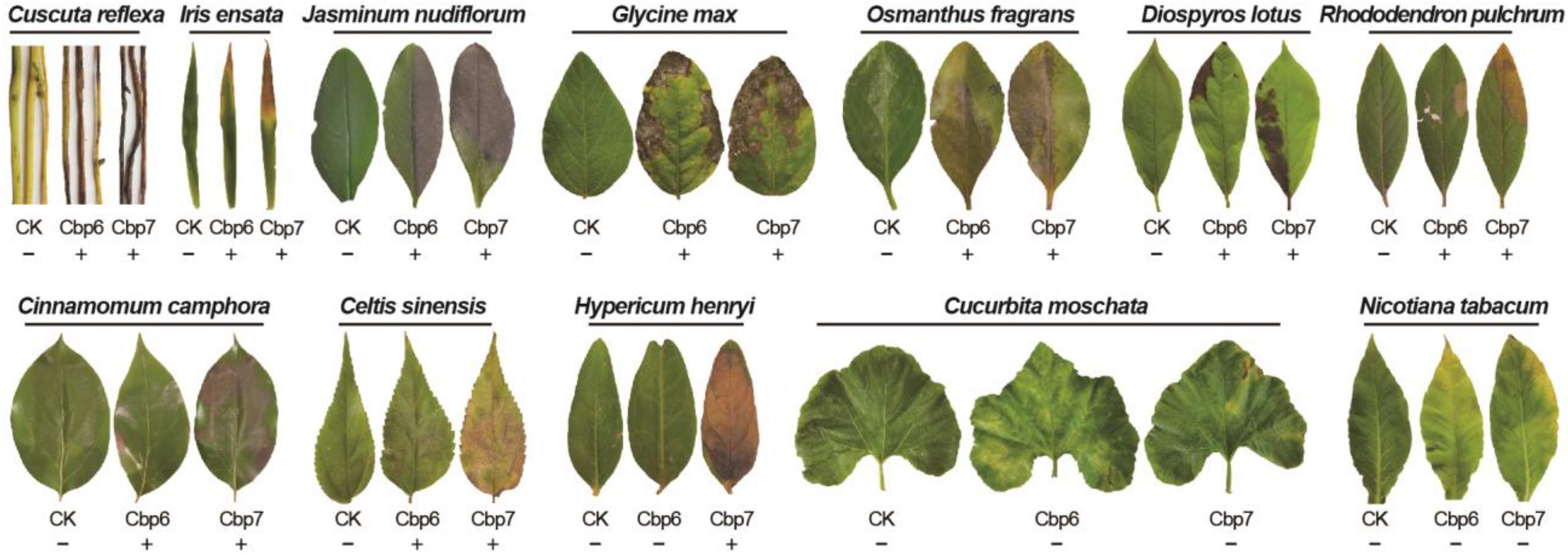
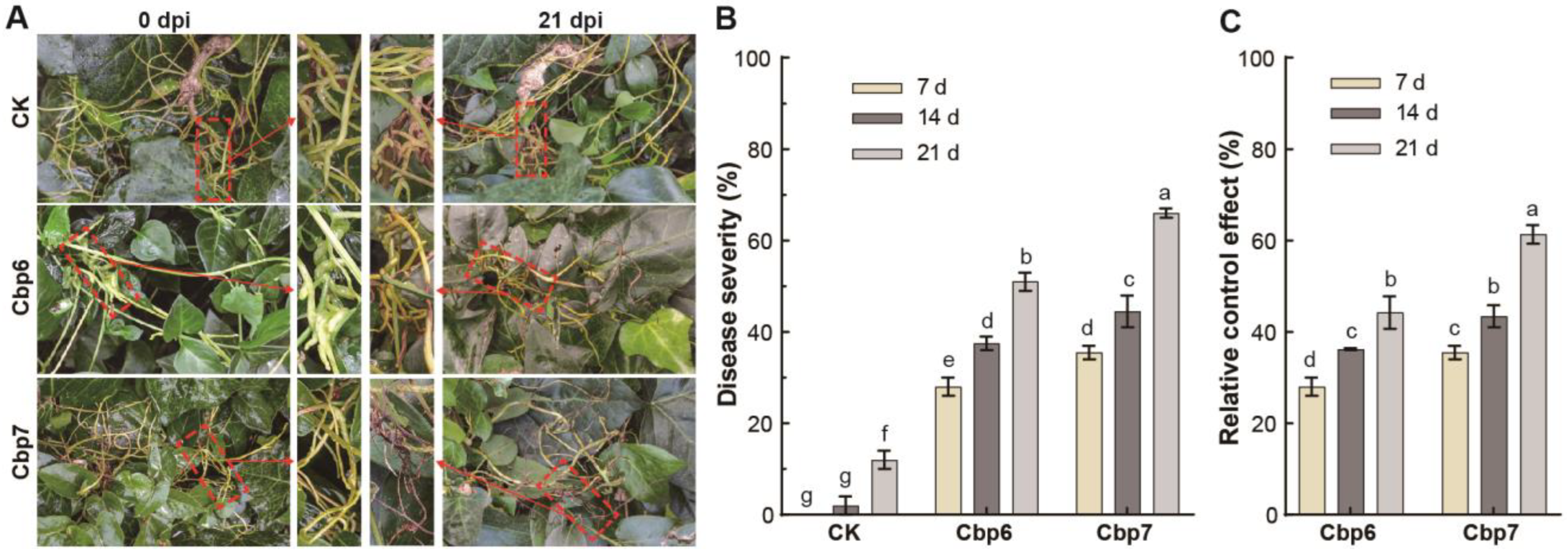
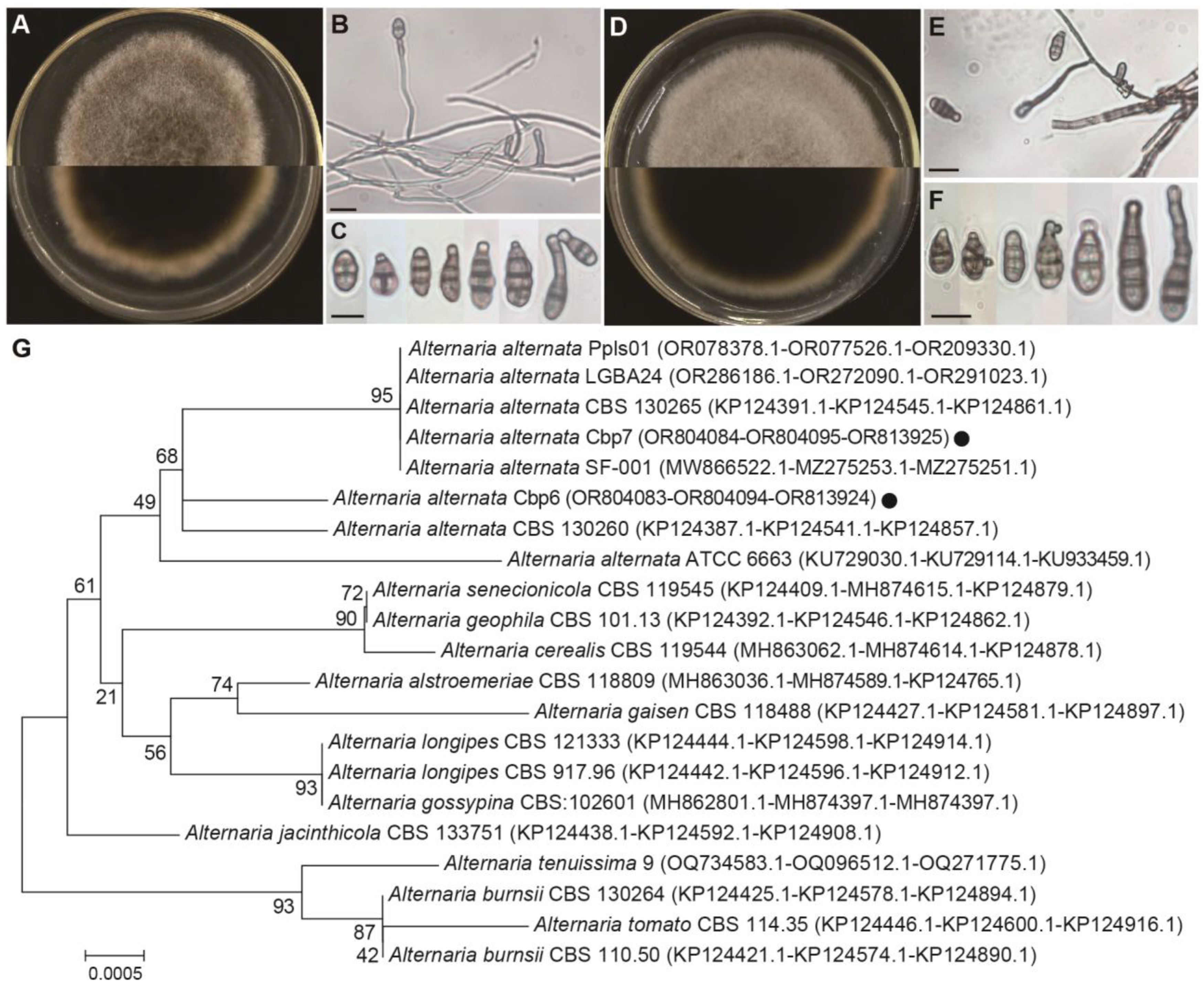
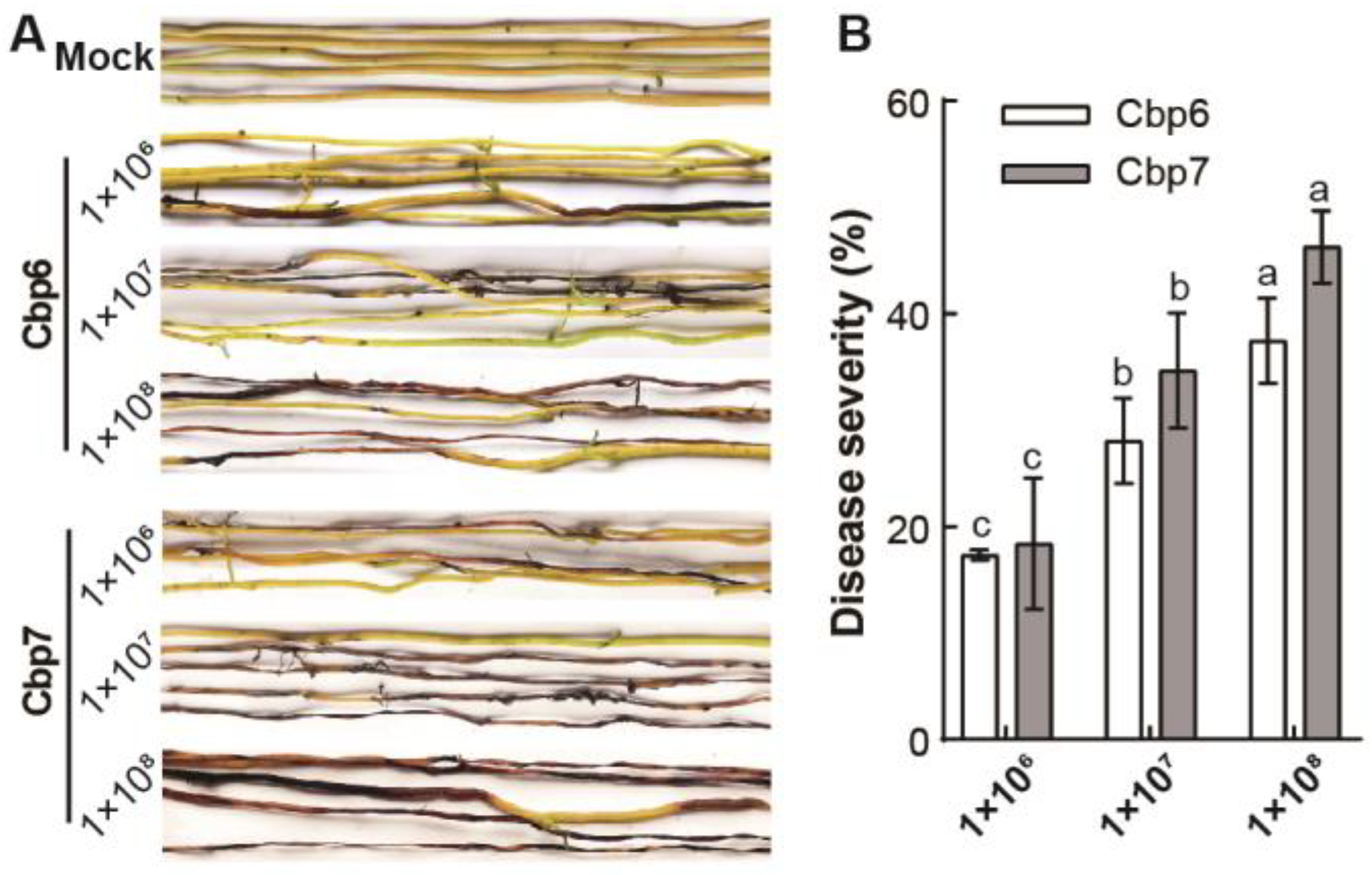
Dodder (Cuscuta spp.) is a dangerous parasitic plant that causes serious damage to crop production and is challenging to eliminate. Herbicide application is a common strategy to control dodder in the field, but it is costly, ineffective, and further results in hazardous outcomes. Therefore, our study aims to identify the potential pathogens in naturally occurring dodder infections which may provide efficient biocontrol options. In this regard, the pathogens were isolated from the infected plants, their pathogenicity was validated through inoculation, and the optimal culture conditions for their growth were identified by determining the pathogenicity difference. The pathogenicity range was determined in vitro using the leaves of common horticultural plants and crops. Furthermore, a small range of horticultural plants parasitized by Cuscuta reflexa in the field were inoculated with the pathogen to determine their biosafety and biocontrol potential, and the pathogens were identified by morphological and molecular characterization. We found 7 strains that were isolated after pathogen enrichment culture. Among them, Cbp6 and Cbp7 showed the highest pathogenicity against C. reflexa. After testing the inoculation of more than 50 species of plants, only 9 species showed varying degrees of lesions on leaves, which proved the high biosafety for common plants. Field spraying of these pathogens showed a good control effect on C. reflexa after 21 days; the disease severityreached 66.0%, while its host plant did not display obvious symptoms. In conclusion, the pathogens Cbp6 and Cbp7 were identified as Alternaria alternata, and the results of this study provide a theoretical basis for the biological control of dodder.
Keywords: dodder; biological control; Alternaria; bioherbicide dodder; biological control; Alternaria; bioherbicide