Article

Molecular Identification and Pathogenicity of Fusarium Species Associated with Wood Canker, Root and Basal Rot in Turkish Grapevine Nurseries


by
Davut Soner Akgül
1,*,
Serkan Önder
2,
Nurdan Güngör Savaş
3,
Murat Yıldız
4,
İzzet Bülbül
5 and
Mümine Özarslandan
5
1
Department of Plant Protection, Agriculture Faculty, Çukurova University, 01330 Adana, Türkiye
2
Department of Plant Protection, Agriculture Faculty, Eskişehir Osmangazi University, 26160 Eskişehir, Türkiye
3
Manisa Viticulture Research Institute, Turkish Ministry of Agriculture and Forestry, 45125 Manisa, Türkiye
4
Malatya Apricot Research Institute, Turkish Ministry of Agriculture and Forestry, 44090 Malatya, Türkiye
5
Biological Control Research Institute, Turkish Ministry of Agriculture and Forestry, 01321 Adana, Türkiye
*
Author to whom correspondence should be addressed.
J. Fungi 2024, 10(7), 444; https://doi.org/10.3390/jof10070444
Submission received: 16 May 2024 / Revised: 20 June 2024 / Accepted: 21 June 2024 / Published: 24 June 2024
(This article belongs to the Section Fungal Pathogenesis and Disease Control)

Abstract

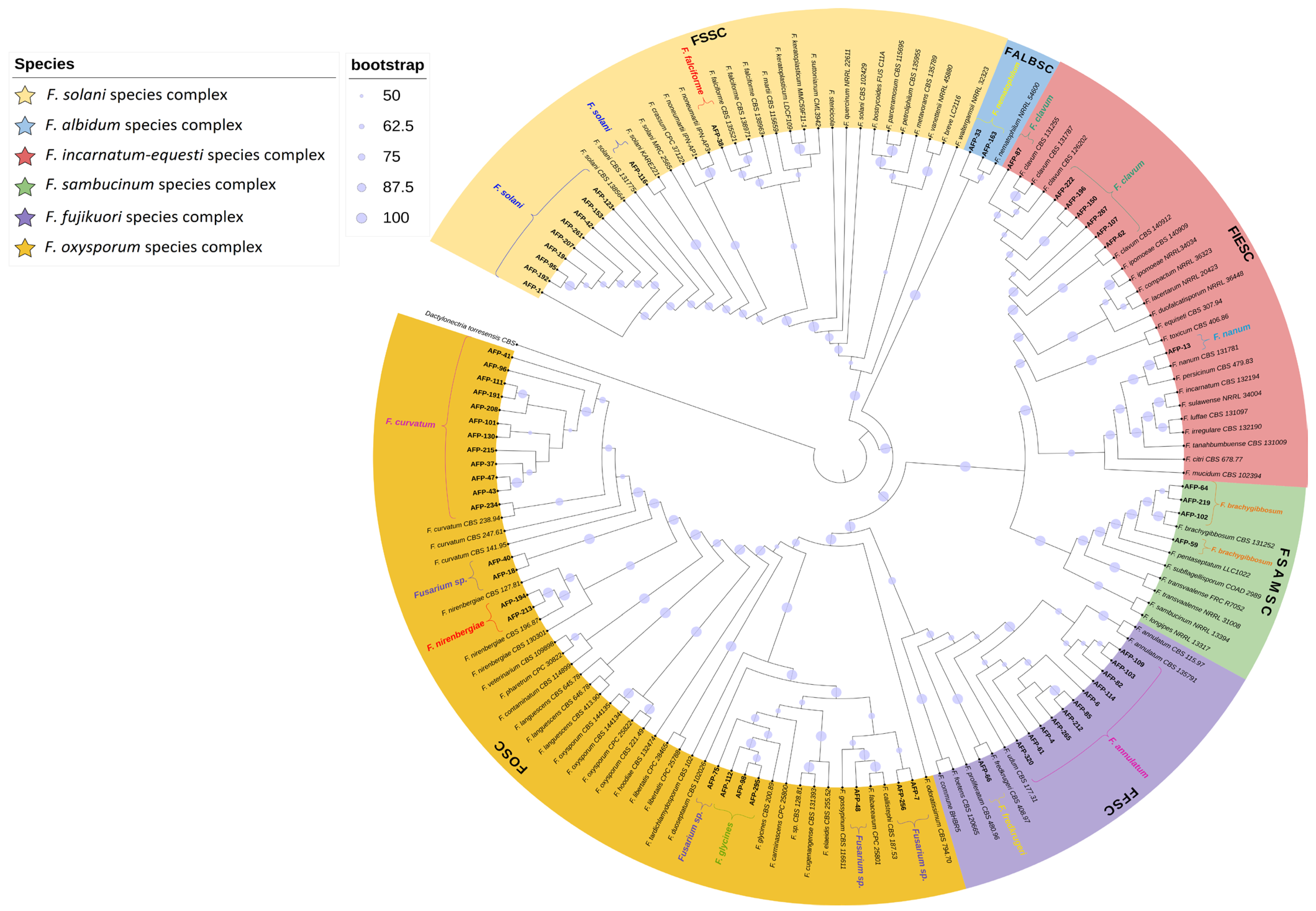
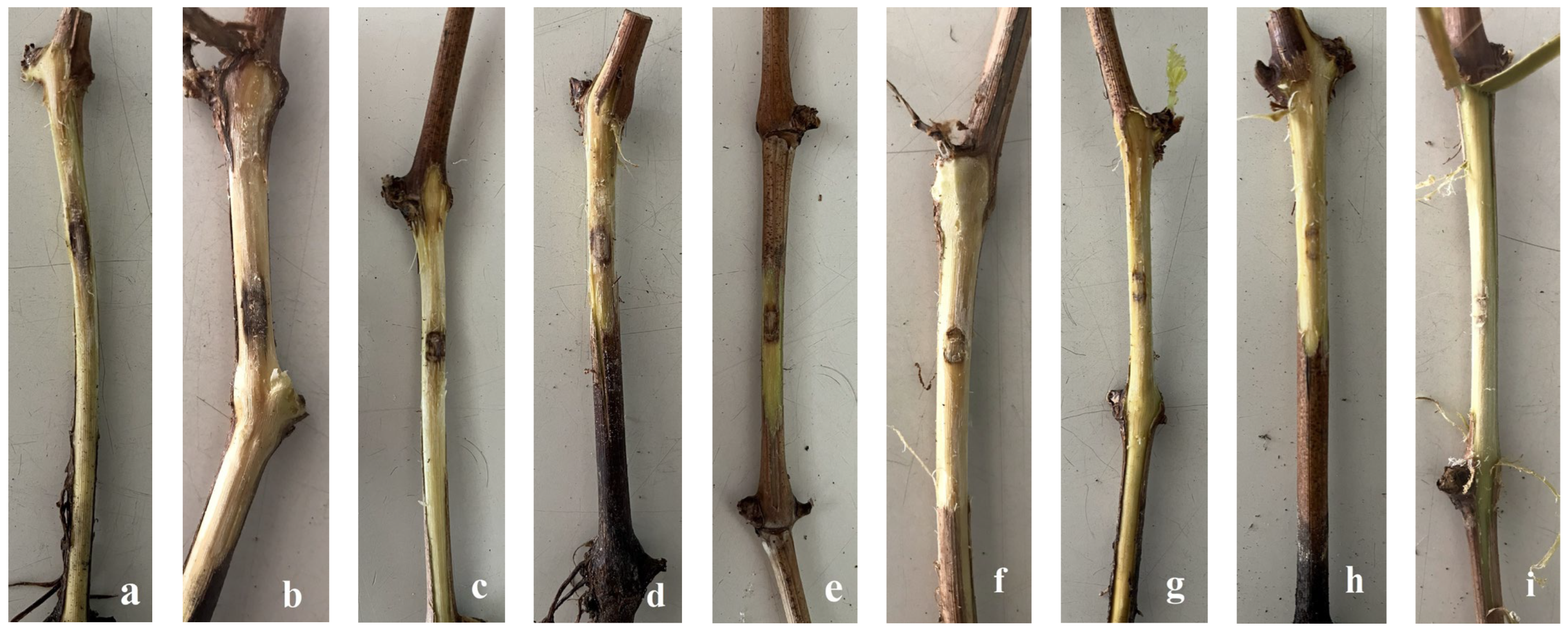
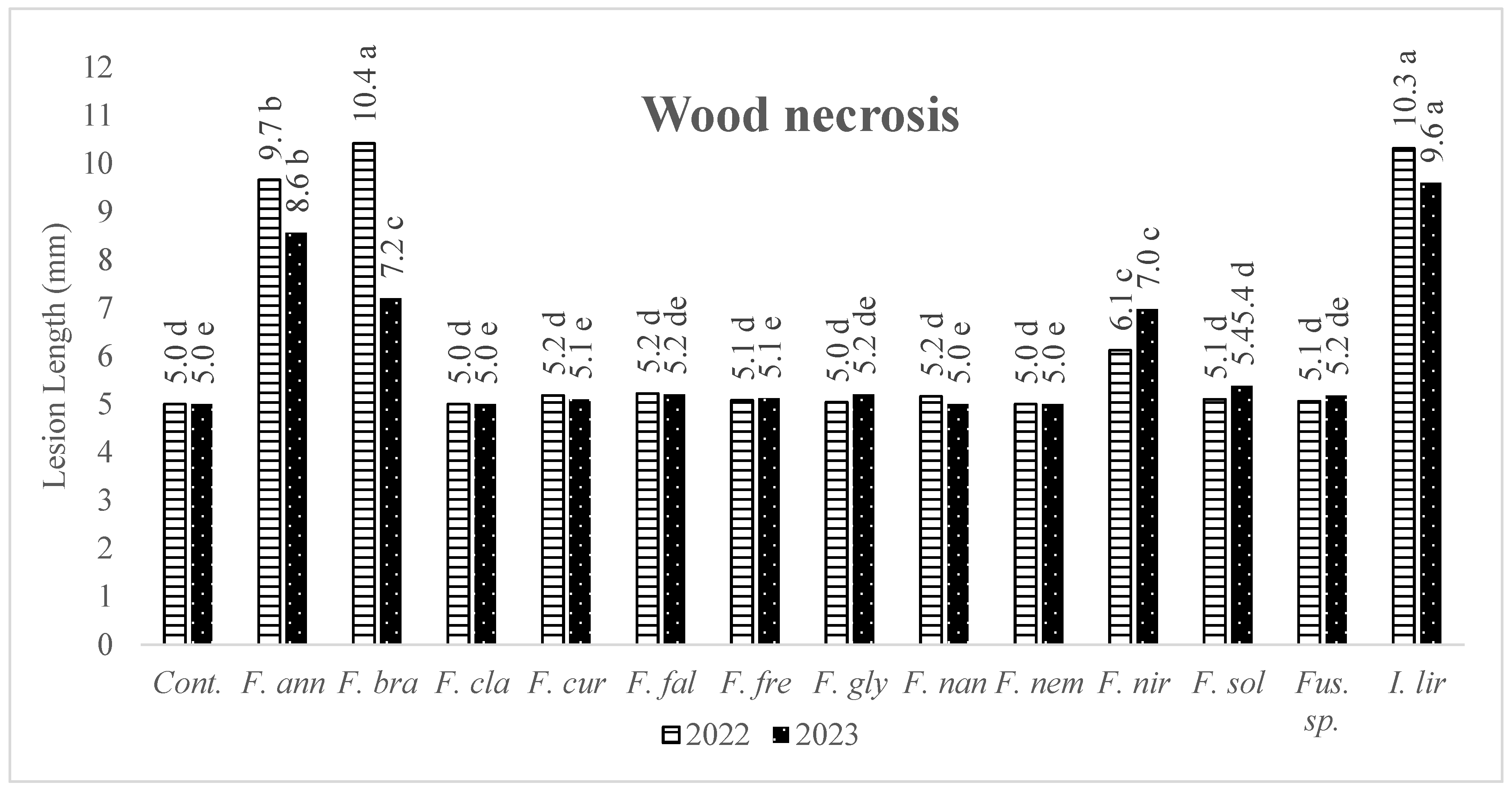
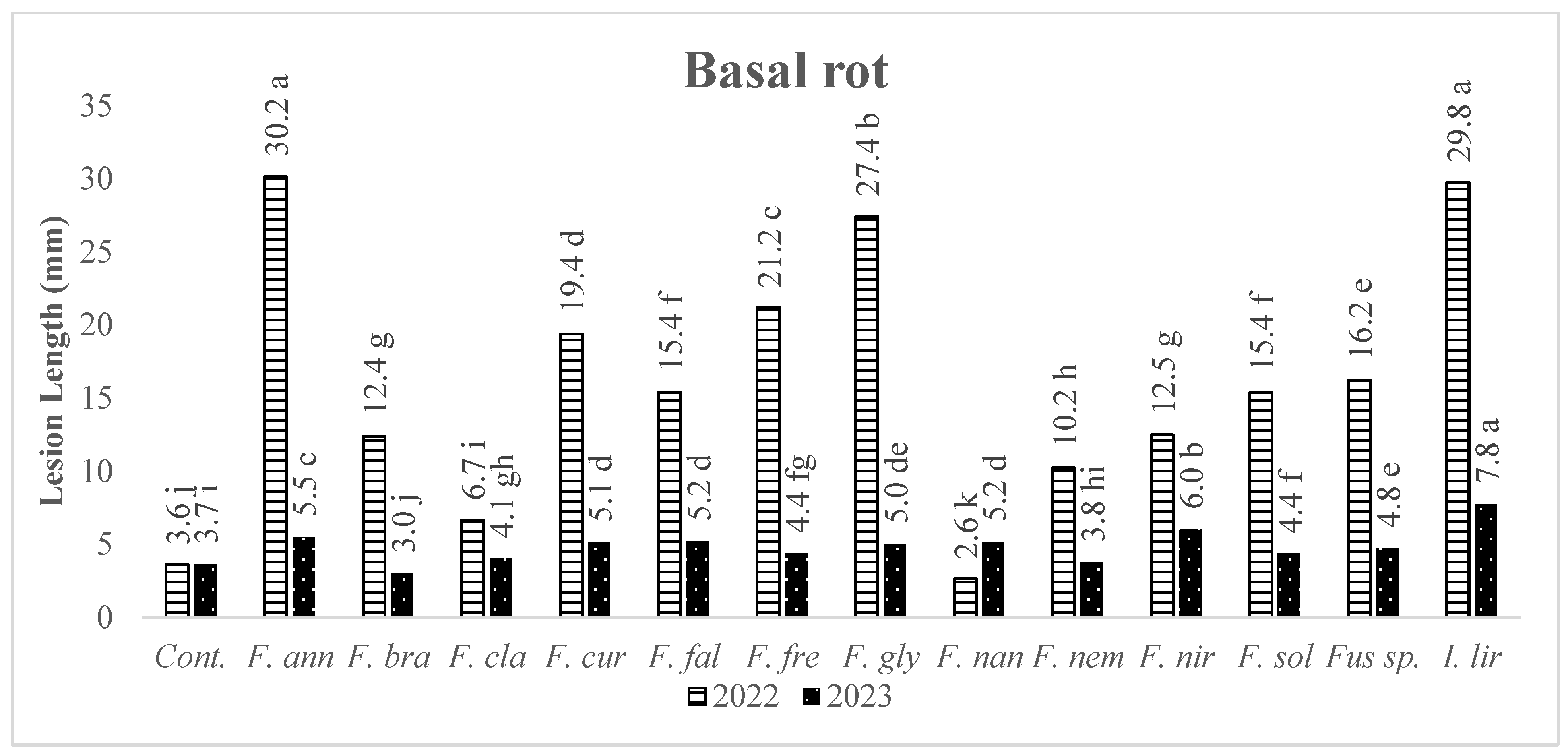
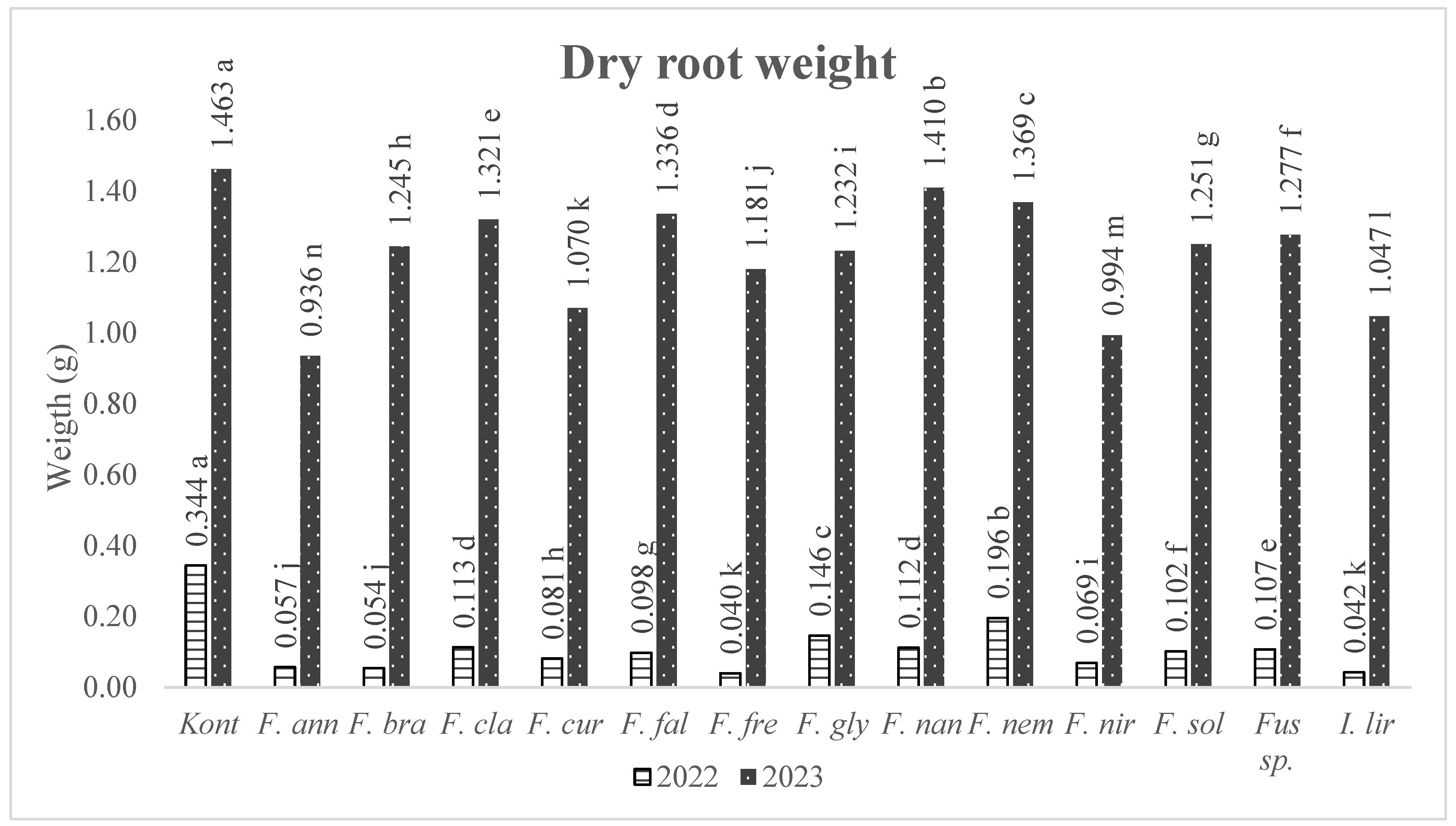
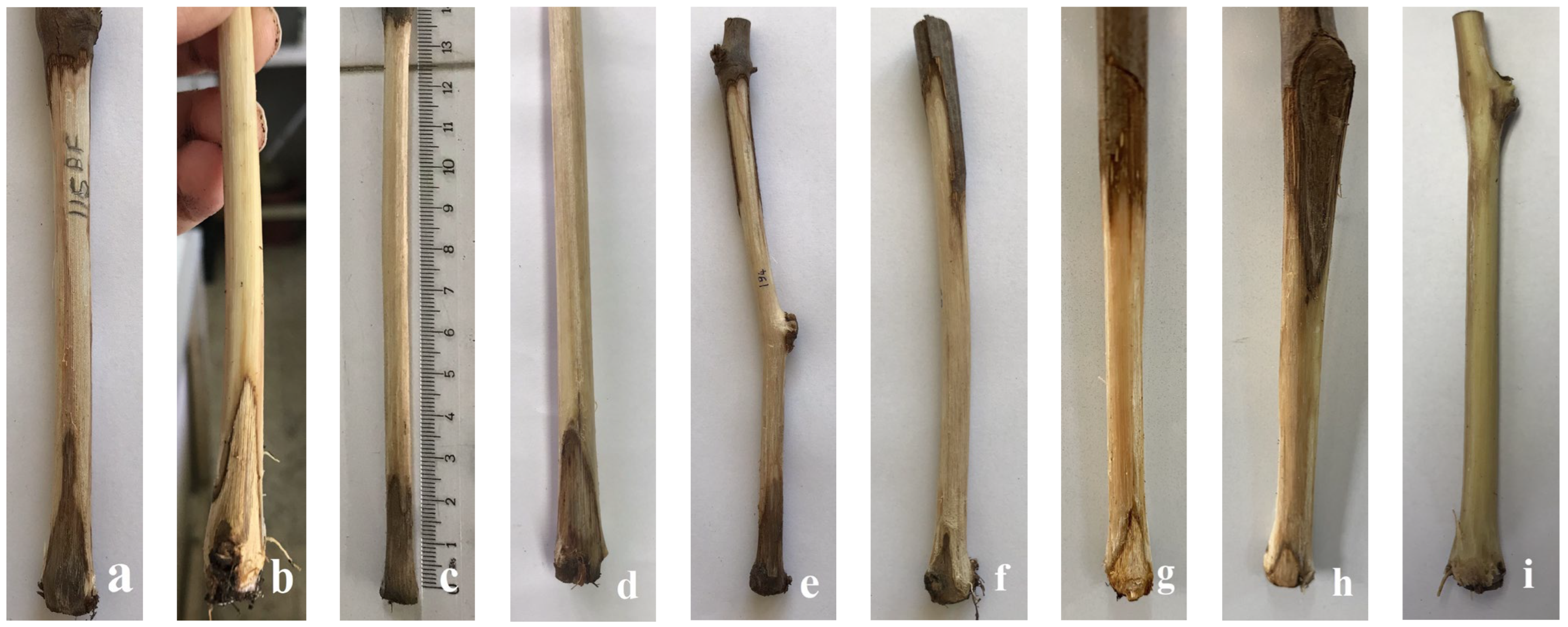
Fusarium species are agriculturally important fungi with a broad host range and can be found as endophytic, pathogenic, or opportunistic parasites in many crop plants. This study aimed to identify Fusarium species in bare-rooted, dormant plants in Turkish grapevine nurseries using molecular identification methods and assess their pathogenicity. Asymptomatic dormant plants were sampled from grapevine nurseries (43) in different regions of the country, and fungi were isolated from plant roots and internal basal tissues. The Fusarium strains were identified by performing gene sequencing (TEF1-α, RPB2) and phylogenetic analyses. Pathogenicity tests were carried out by inoculating mycelial agar pieces of strains onto the stem or conidial suspensions into the rhizosphere of vines (1103 Paulsen rootstock). Laboratory tests revealed that Fusarium species were highly prevalent in Turkish grapevine nurseries (41 out of 43). Gene sequencing and phylogenetic analyses unraveled that 12 Fusarium species (F. annulatum, F. brachygibbosum, F. clavum, F. curvatum, F. falciforme, F. fredkrugeri, F. glycines, F. nanum, F. nematophilum, F. nirenbergiae, F. solani, and Fusarium spp.) existed in the ready-to-sale plants. Some of these species (F. annulatum, F. curvatum and F. nirenbergiae) consistently caused wood necrosis of seedling stems, rotting of the basal zone and roots, and reduced root biomass. Although the other nine species also caused some root rot and root reduction, their virulence was not as severe as the pathogenic ones, and they were considered opportunistic parasites or endophytic species. This study suggests that Fusarium species might play an important role in root-basal rot, wood canker symptoms, and young vine decline in Turkish grapevine nurseries and that these species need to be considered for healthy seedling production.
Keywords: diversity; Fusarium annulatum; Fusarium curvatum; Fusarium nirenbergiae; phylogenetic analysis; vine decline; Vitis diversity; Fusarium annulatum; Fusarium curvatum; Fusarium nirenbergiae; phylogenetic analysis; vine decline; Vitis