
tsRNA-3025a Impairs Mitochondrial Function and Autophagy to Inhibit Myocardial Regeneration and Repair Following Ischemia–Reperfusion Injury

 ,
,
Abstract
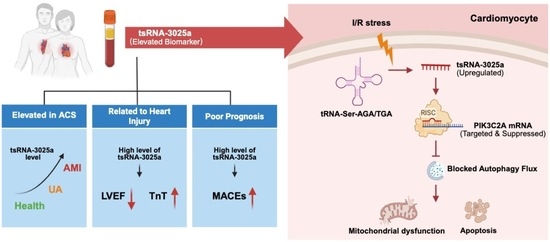
1. Introduction
2. Materials and Methods
2.1. Study Design and Participants
2.2. tsRNA Sequencing and Expression Analysis
2.3. Plasma RNA Extraction
2.4. Reverse Transcription and RT-qPCR Analysis
2.5. Cell Culture and Oxygen-Glucose Deprivation/Reperfusion (OGD/R) Treatment
2.6. RNA Synthesis and Transfection
2.7. Assessment of Proliferation, Apoptosis, and Viability
2.8. Mitochondrial Membrane Potential
2.9. RNA Fluorescence In Situ Hybridization (FISH)
2.10. Isolation of the Nuclear and Cytoplasmic Fractions
2.11. Animal Experiments
2.12. Echocardiography
2.13. Transmission Electron Microscopy (TEM)
2.14. Luciferase Assay
2.15. Western Blotting
2.16. Autophagic Flux Assay
2.17. RNA Sequencing and Bioinformatic Analysis
2.18. Sample Size Calculation
2.19. Statistical Analysis
3. Results
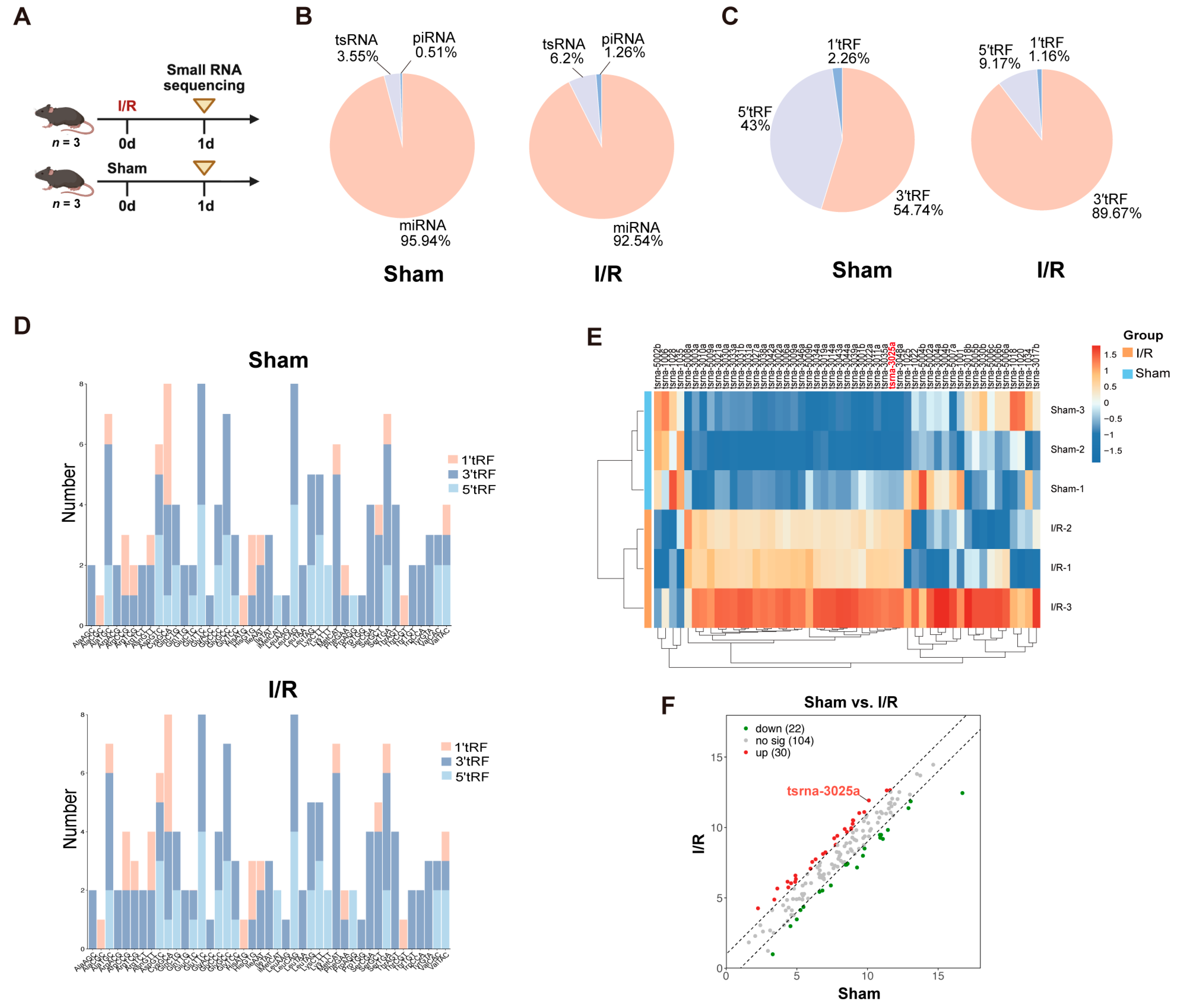
3.1. I/R Induces Cardiac Injury with Alternations in tsRNA Profile in Mice
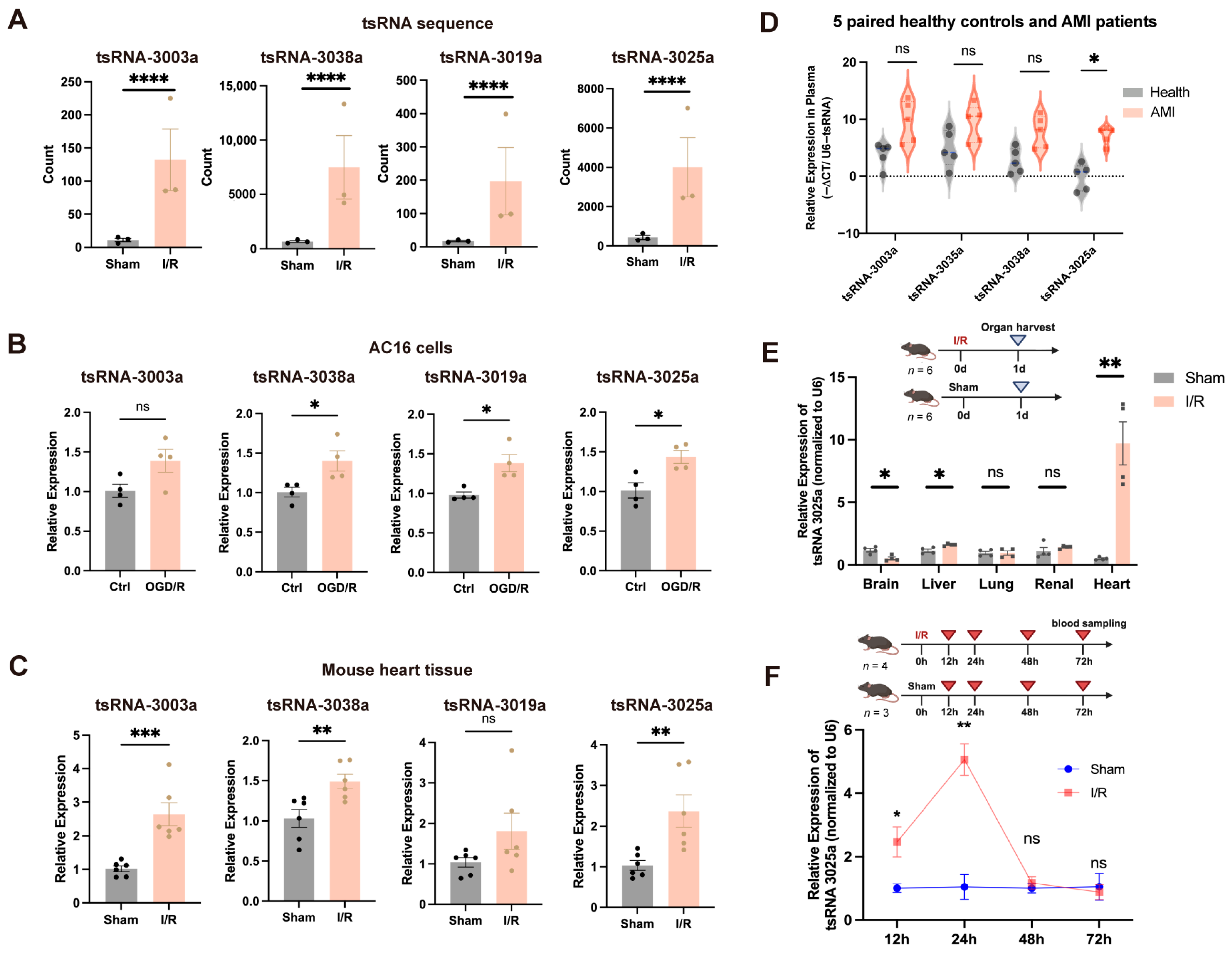
3.2. tsRNA-3025a Upregulates in Ischemia–Reperfusion Injury
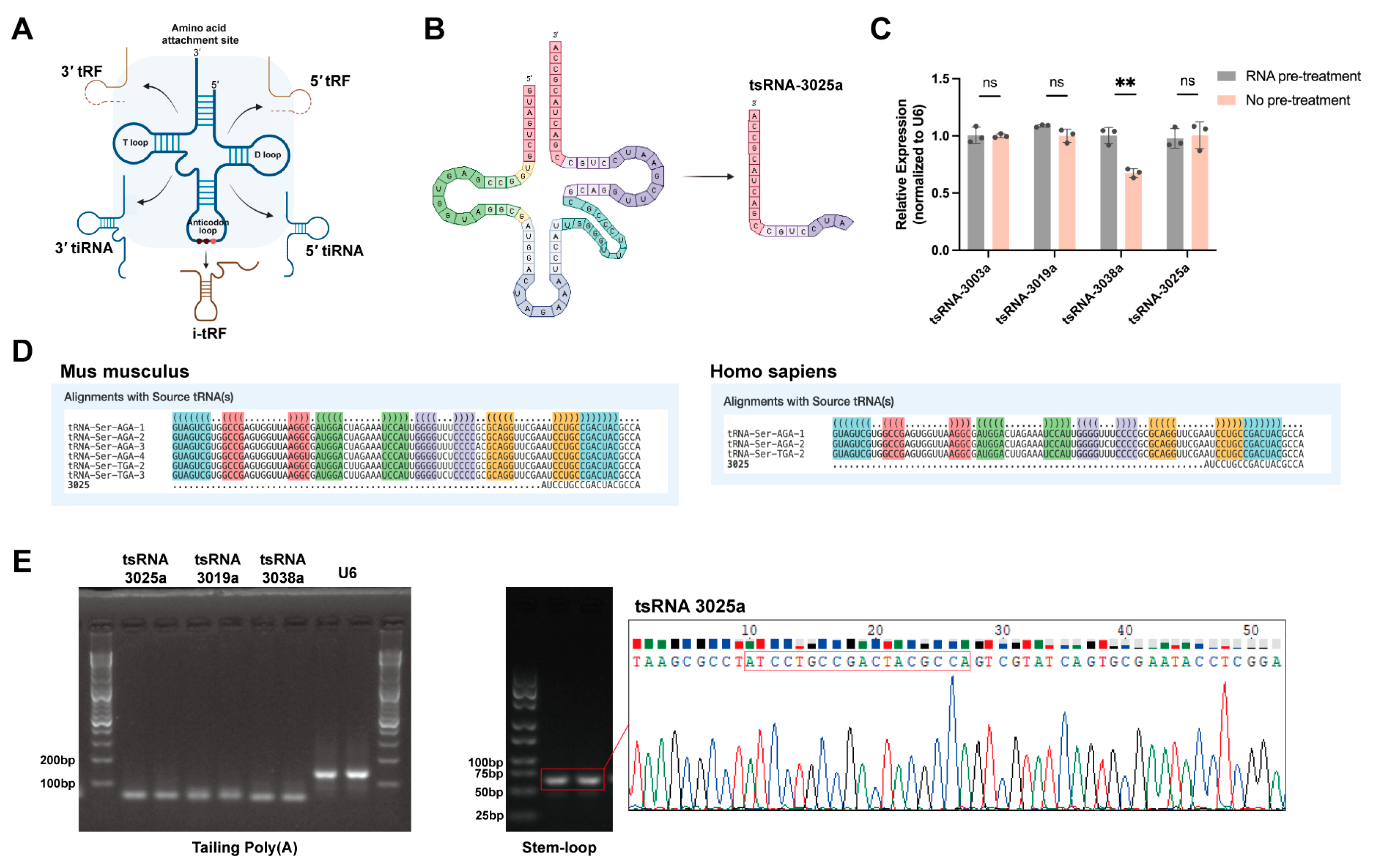
3.3. Characteristic and Comparison of Detection Methods of tsRNA3025a
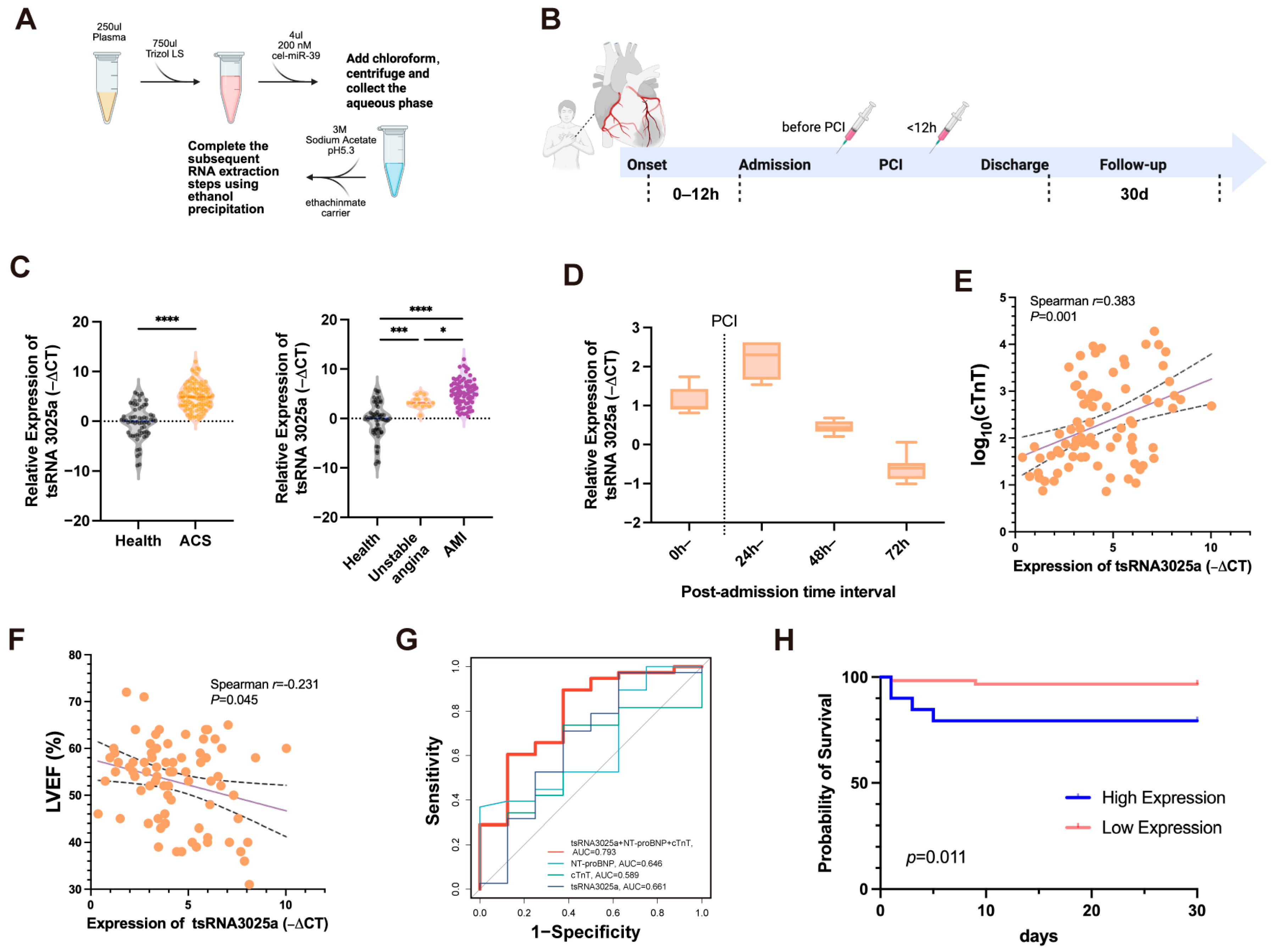
3.4. Elevated tsRNA-3025a Is Associated with Serious Cardiac Injury in ACS Patients and Predicts Adverse Events
3.4.1. Clinical Characterization and Temporal Expression Profiles of Circulating tsRNA-3025a in ACS Patients
3.4.2. Association Between tsRNA-3025a and Cardiac Injury in Humans
3.4.3. Association Between tsRNA-3025a and Adverse Events
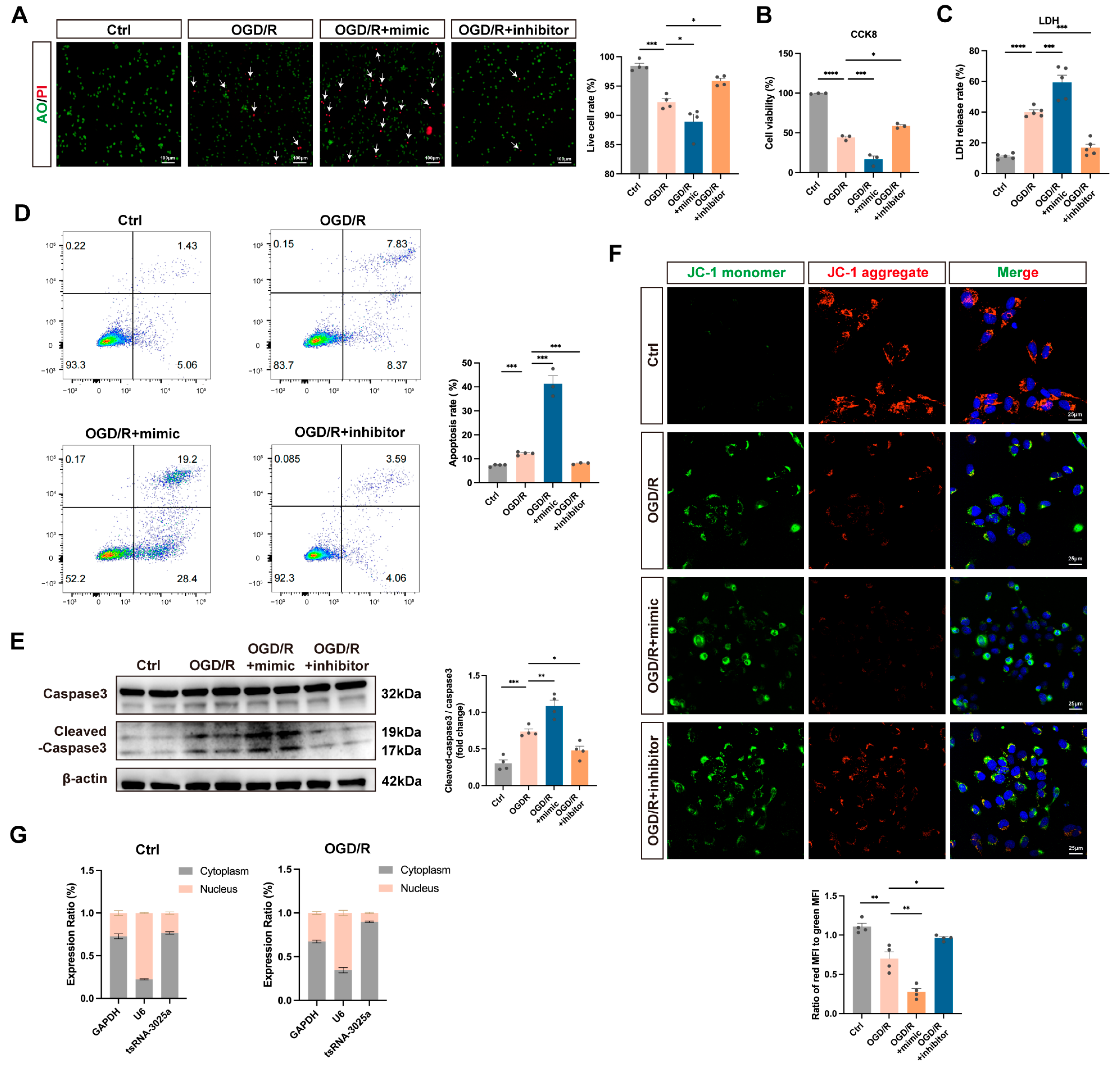
3.5. tsRNA-3025a Promotes Apoptosis and Mitochondrial Membrane Depolarization In Vitro
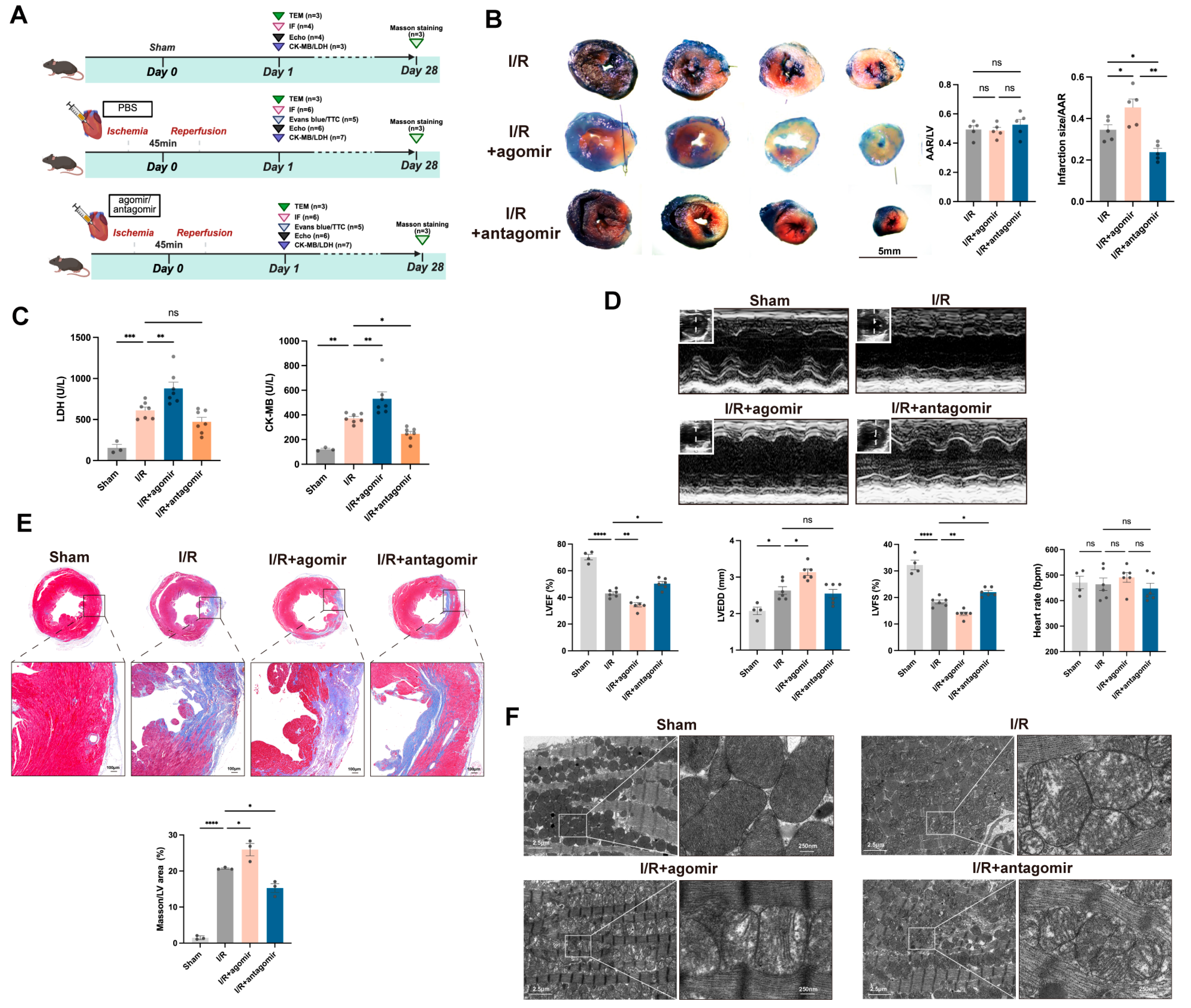
3.6. tsRNA-3025a Aggravates I/R Injury in Mice, While Inhibiting tsRNA-3025a Alleviates Cardiac Injury
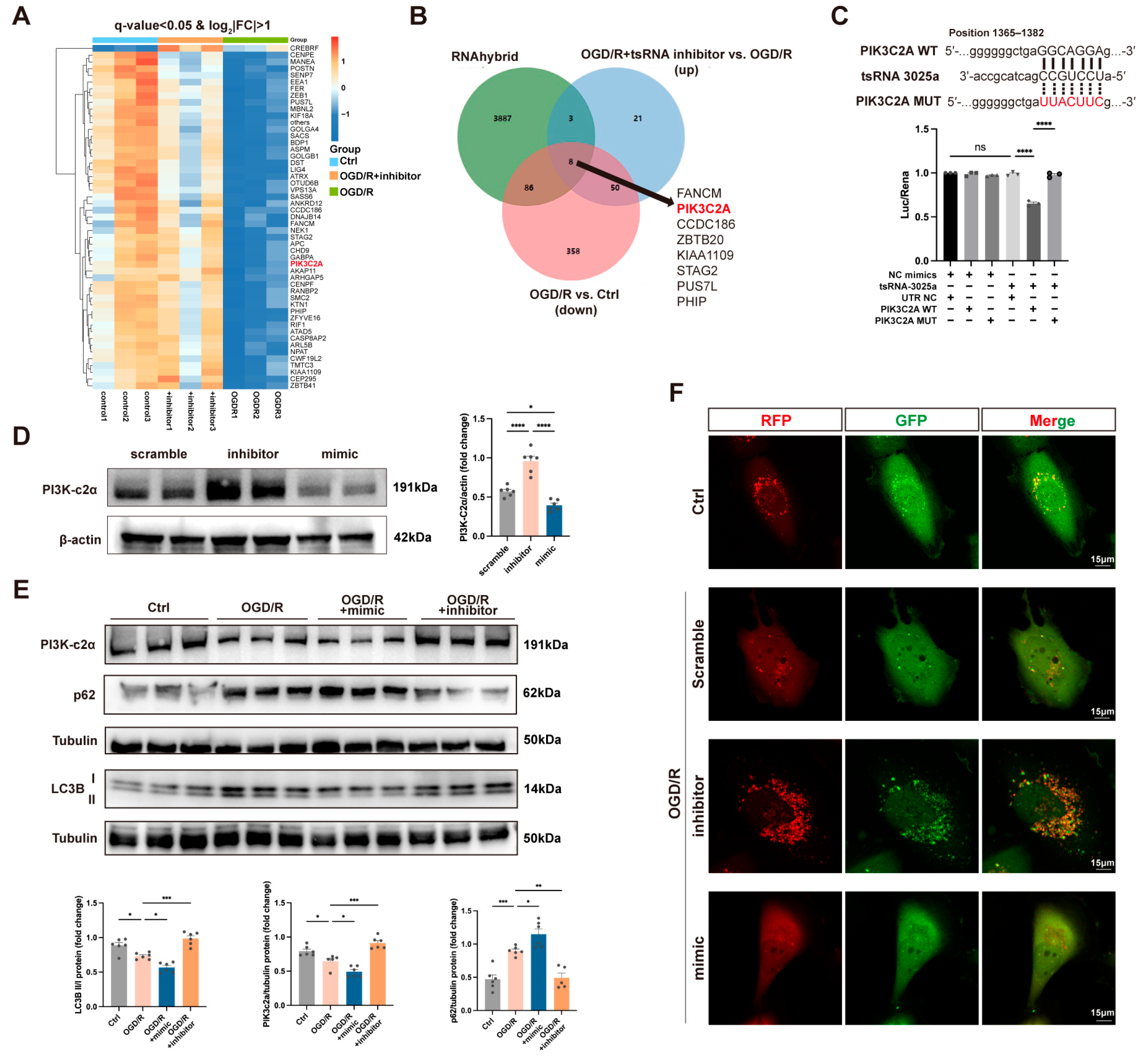
3.7. tsRNA-3025a Is Involved in the Autophagy Pathway by Regulating the Expression of PIK3C2A
4. Discussion
5. Conclusions
Supplementary Materials
Author Contributions
Funding
Institutional Review Board Statement
Informed Consent Statement
Data Availability Statement
Acknowledgments
Conflicts of Interest
Abbreviations
| AAR | Area at risk |
| ACS | Acute coronary syndrome |
| Ago | Argonaute |
| AMI | Acute myocardial infarction |
| ANG | Angiogenin |
| AUC | Area under the curve |
| Bax | Bcl-2-associated X protein |
| CHD | Coronary heart disease |
| CI | Confidence interval |
| CK-MB | Creatine kinase-MB |
| cTnT | Cardiac troponin T |
| FISH | Fluorescence in situ hybridization |
| GSEA | Gene set enrichment analysis |
| H&E | Hematoxylin and eosin |
| I/R | Ischemia–reperfusion |
| LAD | Left anterior descending coronary artery |
| LDH | Lactate dehydrogenase |
| LVEDD | Left ventricular end-diastolic dimension |
| LVEF | Left ventricular ejection fraction |
| LVFS | Left ventricular fractional shortening |
| MACEs | Major adverse cardiovascular events |
| miRNA | microRNA |
| ncRNA | Non-coding RNA |
| NT-proBNP | N-terminal pro-brain natriuretic peptide |
| OGD/R | Oxygen-glucose deprivation/reoxygenation |
| OR | Odds ratio |
| PCI | Percutaneous coronary intervention |
| PI3K | Phosphatidylinositol 3-kinase |
| PIK3C2A | Phosphatidylinositol-4-phosphate 3-kinase catalytic subunit type 2 alpha |
| qRT-PCR | Quantitative real-time polymerase chain reaction |
| ROC | Receiver operating characteristic |
| TEM | Transmission electron microscopy |
| tiRNA | tRNA-derived stress-induced RNA |
| tRF | tRNA-derived fragment |
| tRNA | Transfer RNA |
| tsRNA | Transfer RNA-derived small RNA |
| TTC | 2,3,5-Triphenyltetrazolium chloride |
| TUNEL | Terminal deoxynucleotidyl transferase dUTP nick end labeling |
| UA | Unstable angina |
| VT/VF | Ventricular tachycardia/ventricular fibrillation |
References
- Stark, B.; Johnson, C.; Roth, G.A. Global prevalence of coronary artery disease: An update from the global burden of disease study. J. Am. Coll. Cardiol. 2024, 83, 2320. [Google Scholar] [CrossRef] [Scilit]
- Dalen, J.E.; Alpert, J.S.; Goldberg, R.J.; Weinstein, R.S. The Epidemic of the 20th Century: Coronary Heart Disease. Am. J. Med. 2014, 127, 807–812. [Google Scholar] [CrossRef] [Scilit]
- Zhou, M.; Wang, H.; Zhu, J.; Chen, W.; Wang, L.; Liu, S.; Li, Y.; Wang, L.; Liu, Y.; Yin, P.; et al. Cause-Specific Mortality for 240 Causes in China during 1990–2013: A Systematic Subnational Analysis for the Global Burden of Disease Study 2013. Lancet 2016, 387, 251–272. [Google Scholar] [CrossRef] [Scilit]
- Bergmark, B.A.; Mathenge, N.; Merlini, P.A.; Lawrence-Wright, M.B.; Giugliano, R.P. Acute Coronary Syndromes. Lancet 2022, 399, 1347–1358. [Google Scholar] [CrossRef] [Scilit]
- Björkegren, J.L.M.; Lusis, A.J. Atherosclerosis: Recent Developments. Cell 2022, 185, 1630–1645. [Google Scholar] [CrossRef] [Scilit]
- Arakawa, K.; Himeno, H.; Kirigaya, J.; Otomo, F.; Matsushita, K.; Nakahashi, H.; Shimizu, S.; Nitta, M.; Takamizawa, T.; Yano, H.; et al. B-Type Natriuretic Peptide as a Predictor of Ischemia/Reperfusion Injury Immediately after Myocardial Reperfusion in Patients with ST-Segment Elevation Acute Myocardial Infarction. Eur. Heart J. Acute Cardiovasc. Care 2016, 5, 62–70. [Google Scholar] [CrossRef] [Scilit] [PubMed]
- Poller, W.; Dimmeler, S.; Heymans, S.; Zeller, T.; Haas, J.; Karakas, M.; Leistner, D.-M.; Jakob, P.; Nakagawa, S.; Blankenberg, S.; et al. Non-Coding RNAs in Cardiovascular Diseases: Diagnostic and Therapeutic Perspectives. Eur. Heart J. 2018, 39, 2704–2716. [Google Scholar] [CrossRef] [Scilit]
- Chistiakov, D.A.; Orekhov, A.N.; Bobryshev, Y.V. Cardiac-Specific miRNA in Cardiogenesis, Heart Function, and Cardiac Pathology (with Focus on Myocardial Infarction). J. Mol. Cell. Cardiol. 2016, 94, 107–121. [Google Scholar] [CrossRef] [Scilit] [PubMed]
- Wang, X.; Cheng, Z.; Xu, J.; Feng, M.; Zhang, H.; Zhang, L.; Qian, L. Circular RNA Arhgap12 Modulates Doxorubicin-Induced Cardiotoxicity by Sponging miR-135a-5p. Life Sci. 2021, 265, 118788. [Google Scholar] [CrossRef] [Scilit]
- Li, M.; Jiao, L.; Shao, Y.; Li, H.; Sun, L.; Yu, Q.; Gong, M.; Liu, D.; Wang, Y.; Xuan, L.; et al. LncRNA-ZFAS1 Promotes Myocardial Ischemia-Reperfusion Injury Through DNA Methylation-Mediated Notch1 Down-Regulation in Mice. JACC Basic Transl. Sci. 2022, 7, 880–895. [Google Scholar] [CrossRef] [Scilit]
- Zhou, Y.; Fang, Y.; Dai, C.; Wang, Y. PiRNA Pathway in the Cardiovascular System: A Novel Regulator of Cardiac Differentiation, Repair and Regeneration. J. Mol. Med. 2021, 99, 1681–1690. [Google Scholar] [CrossRef] [Scilit]
- Shen, Y.; Yu, X.; Zhu, L.; Li, T.; Yan, Z.; Guo, J. Transfer RNA-Derived Fragments and tRNA Halves: Biogenesis, Biological Functions and Their Roles in Diseases. J. Mol. Med. 2018, 96, 1167–1176. [Google Scholar] [CrossRef] [Scilit] [PubMed]
- Tao, E.; Cheng, W.Y.; Li, W.; Yu, J.; Gao, Q. tiRNAs: A Novel Class of Small Noncoding RNAs That Helps Cells Respond to Stressors and Plays Roles in Cancer Progression. J. Cell. Physiol. 2020, 235, 683–690. [Google Scholar] [CrossRef] [Scilit]
- Xie, Y.; Yao, L.; Yu, X.; Ruan, Y.; Li, Z.; Guo, J. Action Mechanisms and Research Methods of tRNA-Derived Small RNAs. Signal Transduct. Target. Ther. 2020, 5, 109. [Google Scholar] [CrossRef] [Scilit] [PubMed]
- Yu, X.; Xie, Y.; Zhang, S.; Song, X.; Xiao, B.; Yan, Z. tRNA-Derived Fragments: Mechanisms Underlying Their Regulation of Gene Expression and Potential Applications as Therapeutic Targets in Cancers and Virus Infections. Theranostics 2021, 11, 461–469. [Google Scholar] [CrossRef] [Scilit]
- Luo, S.; He, F.; Luo, J.; Dou, S.; Wang, Y.; Guo, A.; Lu, J. Drosophila tsRNAs Preferentially Suppress General Translation Machinery via Antisense Pairing and Participate in Cellular Starvation Response. Nucleic Acids Res. 2018, 46, 5250–5268. [Google Scholar] [CrossRef] [Scilit] [PubMed]
- Su, Z.; Kuscu, C.; Malik, A.; Shibata, E.; Dutta, A. Angiogenin Generates Specific Stress-Induced tRNA Halves and Is Not Involved in tRF-3–Mediated Gene Silencing. J. Biol. Chem. 2019, 294, 16930–16941. [Google Scholar] [CrossRef] [Scilit]
- Wang, S.; Luo, Z.; Yuan, L.; Lin, X.; Tang, Y.; Yin, L.; Liang, P.; Jiang, B. tRNA-Derived Small RNAs: Novel Insights into the Pathogenesis and Treatment of Cardiovascular Diseases. J. Cardiovasc. Transl. Res. 2023, 16, 300–309. [Google Scholar] [CrossRef] [Scilit]
- Wang, C.; Gao, Y.; Liu, K.; Zhang, Y.; Sun, Z.; Huang, M.; Qu, Z.; Yu, S.; Han, J.; Mei, Z.; et al. tiRNA-HAR Contributes to Ischemic Myocardial Injury via Facilitating HuR-Mediated Stability of P53. Transl. Res. 2025, 280, 17–28. [Google Scholar] [CrossRef] [Scilit]
- Shen, L.; Liao, T.; Chen, Q.; Lei, Y.; Wang, L.; Gu, H.; Qiu, Y.; Zheng, T.; Yang, Y.; Wei, C.; et al. tRNA-derived Small RNA, 5’tiRNA-Gly-CCC, Promotes Skeletal Muscle Regeneration through the Inflammatory Response. J. Cachexia Sarcopenia Muscle 2023, 14, 1033–1045. [Google Scholar] [CrossRef] [Scilit]
- Deng, L.; Weng, Y.; Lin, J.; Zhong, L.; Tang, Z.; Lin, S.; Huang, W.; Cheng, Z.; Lu, K.; Ye, B. A tRNA-Derived Fragment tiRNA-Met-CAT-002 Induced by Myocardial Ischemia/Reperfusion Injury Inhibits Cardiomyocyte Autophagy by Regulating Bnip3. Exp. Cell Res. 2025, 453, 114809. [Google Scholar] [CrossRef] [Scilit]
- French, C.J.; Taatjes, D.J.; Sobel, B.E. Autophagy in Myocardium of Murine Hearts Subjected to Ischemia Followed by Reperfusion. Histochem. Cell Biol. 2010, 134, 519–526. [Google Scholar] [CrossRef] [Scilit]
- Gurusamy, N.; Lekli, I.; Mukherjee, S.; Ray, D.; Ahsan, M.K.; Gherghiceanu, M.; Popescu, L.M.; Das, D.K. Cardioprotection by Resveratrol: A Novel Mechanism via Autophagy Involving the mTORC2 Pathway. Cardiovasc. Res. 2010, 86, 103–112. [Google Scholar] [CrossRef] [Scilit]
- Wang, H.; Lo, W.-T.; Žagar, A.V.; Gulluni, F.; Lehmann, M.; Scapozza, L.; Haucke, V.; Vadas, O. Autoregulation of Class II Alpha PI3K Activity by Its Lipid-Binding PX-C2 Domain Module. Mol. Cell 2018, 71, 343–351.e4. [Google Scholar] [CrossRef] [Scilit]
- Yu, M.; Yi, J.; Qiu, Q.; Yao, D.; Li, J.; Yang, J.; Mi, C.; Zhou, L.; Lu, B.; Lu, W.; et al. Pan-Cancer tRNA-Derived Fragment CAT1 Coordinates RBPMS to Stabilize NOTCH2 mRNA to Promote Tumorigenesis. Cell Rep. 2023, 42, 113408. [Google Scholar] [CrossRef] [Scilit] [PubMed]
- Tao, E.-W.; Wang, H.-L.; Cheng, W.Y.; Liu, Q.-Q.; Chen, Y.-X.; Gao, Q.-Y. A Specific tRNA Half, 5’tiRNA-His-GTG, Responds to Hypoxia via the HIF1α/ANG Axis and Promotes Colorectal Cancer Progression by Regulating LATS2. J. Exp. Clin. Cancer Res. 2021, 40, 67. [Google Scholar] [CrossRef] [Scilit] [PubMed]
- Kuscu, C.; Kumar, P.; Kiran, M.; Su, Z.; Malik, A.; Dutta, A. tRNA Fragments (tRFs) Guide Ago to Regulate Gene Expression Post-Transcriptionally in a Dicer-Independent Manner. RNA 2018, 24, 1093–1105. [Google Scholar] [CrossRef] [Scilit] [PubMed]
- Gulluni, F.; Santis, M.C.D.; Margaria, J.P.; Martini, M.; Hirsch, E. Class II PI3K Functions in Cell Biology and Disease. Trends Cell Biol. 2019, 29, 339–359. [Google Scholar] [CrossRef] [Scilit]
- Yellon, D.M.; Hausenloy, D.J. Myocardial Reperfusion Injury. N. Engl. J. Med. 2007, 357, 1121–1135. [Google Scholar] [CrossRef] [Scilit]
- Khera, A.V.; Kathiresan, S. Genetics of Coronary Artery Disease: Discovery, Biology and Clinical Translation. Nat. Rev. Genet. 2017, 18, 331–344. [Google Scholar] [CrossRef] [Scilit]
- Marinescu, M.-C.; Lazar, A.-L.; Marta, M.M.; Cozma, A.; Catana, C.-S. Non-Coding RNAs: Prevention, Diagnosis, and Treatment in Myocardial Ischemia–Reperfusion Injury. Int. J. Mol. Sci. 2022, 23, 2728. [Google Scholar] [CrossRef] [Scilit]
- He, Y.; Wang, J.; Chen, C.; Wang, R.; Ma, X.; Ma, R.; Sun, Y.; Wang, L.; Ding, H. Comprehensive Profiling of tsRNAs in Acute Coronary Syndrome: Expression Patterns, Clinical Correlations, and Functional Insights. Hum. Genet. 2025, 144, 575–590. [Google Scholar] [CrossRef] [Scilit] [PubMed]
- Li, W.; Lan, M.; Xu, K.; Li, S.; Wang, Q.; Chen, B.; Huang, X.; Dou, L.; Jia, N.; Zhao, L.; et al. Screening and Evaluation of tRF-Glu-CTC-013 as a Biomarker and Key Regulator in the Development of Cardiac Hypertrophy. Int. J. Med. Sci. 2025, 22, 2839–2851. [Google Scholar] [CrossRef] [Scilit]
- Jenča, D.; Melenovský, V.; Stehlik, J.; Staněk, V.; Kettner, J.; Kautzner, J.; Adámková, V.; Wohlfahrt, P. Heart Failure after Myocardial Infarction: Incidence and Predictors. ESC Heart Fail. 2021, 8, 222–237. [Google Scholar] [CrossRef] [Scilit]
- Lu, S.; Wei, X.; Tao, L.; Dong, D.; Hu, W.; Zhang, Q.; Tao, Y.; Yu, C.; Sun, D.; Cheng, H. A Novel tRNA-Derived Fragment tRF-3022b Modulates Cell Apoptosis and M2 Macrophage Polarization via Binding to Cytokines in Colorectal Cancer. J. Hematol. Oncol. 2022, 15, 176. [Google Scholar] [CrossRef] [Scilit]
- Zou, L.; Yang, Y.; Zhou, B.; Li, W.; Liu, K.; Li, G.; Miao, H.; Song, X.; Yang, J.; Geng, Y.; et al. tRF-3013b Inhibits Gallbladder Cancer Proliferation by Targeting TPRG1L. Cell. Mol. Biol. Lett. 2022, 27, 99. [Google Scholar] [CrossRef] [Scilit]
- Xiong, Q.; Zhang, Y.; Xu, Y.; Yang, Y.; Zhang, Z.; Zhou, Y.; Zhang, S.; Zhou, L.; Wan, X.; Yang, X.; et al. tiRNA-Val-CAC-2 Interacts with FUBP1 to Promote Pancreatic Cancer Metastasis by Activating c MYC Transcription. Oncogene 2024, 43, 1274–1287. [Google Scholar] [CrossRef] [Scilit] [PubMed]
- Merrill, N.M.; Schipper, J.L.; Karnes, J.B.; Kauffman, A.L.; Martin, K.R.; MacKeigan, J.P. PI3K-C2α Knockdown Decreases Autophagy and Maturation of Endocytic Vesicles. PLoS ONE 2017, 12, e0184909. [Google Scholar] [CrossRef] [Scilit] [PubMed]
- Soliman, S.E.; Abouelenin, M.A.H.; Samy, N.I.; Omar, M.M.; Alrefai, A.A. Various Expressions of PIK3C2A and TXNIP Genes and Their Potential Role as Independent Risk Factors for Chronic Stable Angina and Acute Coronary Syndrome. Biomolecules 2023, 13, 302. [Google Scholar] [CrossRef] [Scilit]
- Tan, B.; Liu, M.; Yang, Y.; Liu, L.; Meng, F. Low Expression of PIK3C2A Gene. Medicine 2019, 98, e15061. [Google Scholar] [CrossRef] [Scilit]
- Popov, S.V.; Mukhomedzyanov, A.V.; Voronkov, N.S.; Derkachev, I.A.; Boshchenko, A.A.; Fu, F.; Sufianova, G.Z.; Khlestkina, M.S.; Maslov, L.N. Regulation of Autophagy of the Heart in Ischemia and Reperfusion. Apoptosis 2023, 28, 55–80. [Google Scholar] [CrossRef] [Scilit] [PubMed]
- Zhao, M.; Sun, L.; Yu, X.-J.; Miao, Y.; Liu, J.-J.; Wang, H.; Ren, J.; Zang, W.-J. Acetylcholine Mediates AMPK-Dependent Autophagic Cytoprotection in H9c2 Cells During Hypoxia/Reoxygenation Injury. Cell. Physiol. Biochem. 2013, 32, 601–613. [Google Scholar] [CrossRef] [Scilit]
- Ma, X.; Liu, H.; Foyil, S.R.; Godar, R.J.; Weinheimer, C.J.; Hill, J.A.; Diwan, A. Impaired Autophagosome Clearance Contributes to Cardiomyocyte Death in Ischemia/Reperfusion Injury. Circulation 2012, 125, 3170–3181. [Google Scholar] [CrossRef] [Scilit] [PubMed]
- Huang, Z.; Han, Z.; Ye, B.; Dai, Z.; Shan, P.; Lu, Z.; Dai, K.; Wang, C.; Huang, W. Berberine Alleviates Cardiac Ischemia/Reperfusion Injury by Inhibiting Excessive Autophagy in Cardiomyocytes. Eur. J. Pharmacol. 2015, 762, 1–10. [Google Scholar] [CrossRef] [Scilit] [PubMed]
- Wang, J.; Wu, D.; Wang, H. Hydrogen Sulfide Plays an Important Protective Role by Influencing Autophagy in Diseases. Physiol. Res. 2019, 68, 345. [Google Scholar] [CrossRef] [Scilit]
- Zhang, H.; Yang, N.; He, H.; Chai, J.; Cheng, X.; Zhao, H.; Zhou, D.; Teng, T.; Kong, X.; Yang, Q.; et al. The Zinc Transporter ZIP7 (Slc39a7) Controls Myocardial Reperfusion Injury by Regulating Mitophagy. Basic Res. Cardiol. 2021, 116, 54. [Google Scholar] [CrossRef] [Scilit]
- Ji, W.; Wei, S.; Hao, P.; Xing, J.; Yuan, Q.; Wang, J.; Xu, F.; Chen, Y. Aldehyde Dehydrogenase 2 Has Cardioprotective Effects on Myocardial Ischaemia/Reperfusion Injury via Suppressing Mitophagy. Front. Pharmacol. 2016, 7, 101. [Google Scholar] [CrossRef] [Scilit]



| Characteristics | Controls (n = 63) | AMI (n = 80) | p Value |
|---|---|---|---|
| Gender, n (%) | |||
| Female | 29 (46.0) | 16 (20.0) | |
| Male | 34 (54.0) | 64 (80.0) | 0.001 |
| Age, years | 60 (52, 60) | 63 (52, 73) | 0.079 |
| Weight, kg | 67 (62, 75) | 70 (64, 80) | 0.066 |
| Height, cm | 168 (160, 172) | 170 (165, 175) | 0.052 |
| Risk Factor, n (%) | |||
| HBP | 11 (22.40) | 52 (65.0) | <0.001 |
| DM | 3 (6.10) | 30 (37.50) | <0.001 |
| Hyperlipemia | 9 (18.40) | 29 (36.30) | <0.001 |
| Smoke | 10 (20.40) | 48 (60.0) | <0.001 |
| Culprit vessel, n (%) | |||
| LA | / | 59 (73.7) | |
| RA | / | 21 (26.3) | / |
| Onset to door time, hours | / | 6 (3, 12.5) | / |
| TIMI classification before PCI, n (%) | |||
| 0–1 | / | 70 (87.5) | |
| 2–3 | / | 10 (12.5) | / |
| Echocardiography | |||
| LVEF, % | 62 (60, 63) | 55 (46, 59) | <0.001 |
| LA, mm | 37 (34, 39) | 37 (35, 40) | 0.047 |
| Lab | |||
| WBC, 109/L | 6.14 (5.07, 6.84) | 9.62 (7.82, 12.39) | <0.001 |
| Hb, g/L | 139 (129, 148) | 146 (136, 157) | 0.041 |
| CK-MB, U/L | 13.0 (10.0, 15.80) b | 37.55 (16.25, 192.50) | 0.001 |
| cTnT, ng/L | 7.50 (4.85, 10.78) a | 210 (40.08, 1162.50) | <0.001 |
| NT-proBNP, pg/mL | 59 (27, 114) b | 251 (85, 937) | 0.003 |
| TC, mmol/L | 3.77 (3.18, 5.08) c | 4.42 (3.80, 5.51) | 0.020 |
| TG, mmol/L | 1.27 (0.86, 1.68) c | 1.70 (1.10, 2.33) | 0.082 |
| LDL-C, mmol/L | 2.40 (1.77, 3.25) c | 3.24 (2.58, 4.02) | <0.001 |
| ALT, U/L | 17.80 (14.38, 34.23) | 27.50 (14.75, 43.50) | 0.176 |
| AST, U/L | 20.0 (17.30, 24.0) | 43.50 (19.0, 95.25) | 0.167 |
| SCr, μmol/L | 65.70 (50.10, 77.20) | 78.15 (63.30, 91.23) | 0.003 |
| tsRNA-3025a, −ΔCT | −0.91 (−2.24, 2.32) | 4.02 (3.03, 5.99) | <0.001 |
| Treatment, n (%) | |||
| Aspirin | 39 (61.9) | 80 (100) | <0.001 |
| Clopidogrel | 12 (19.0) | 2 (2.50) | <0.001 |
| Ticagrelor | 0 (0) | 78 (97.50) | <0.001 |
| CCB | 9 (14.3) | 14 (17.70) | <0.001 |
| ARNI | 3 (4.80) | 33 (41.30) | <0.001 |
| ACEI/ARB | 7 (14.30) | 20 (25.0) | <0.001 |
| Statin | 20 (31.70) | 80 (100) | <0.001 |
| PCSK9i | 1 (1.60) | 55 (68.80) | <0.001 |
| Characteristics | High Expression (n = 20) | Low Expression (n = 60) | p Value |
|---|---|---|---|
| Gender, n (%) | |||
| Female | 4 | 12 | |
| Male | 16 | 48 | 1.000 |
| Age, years | 59 (49, 71) | 65 (56, 75) | 0.034 |
| Height, kg | 170 (160, 175) | 170 (165, 175) | 0.947 |
| Weight, cm | 72 (61, 81) | 70 (63, 80) | 0.493 |
| Risk Factor, n (%) | |||
| HBP | 10 (50) | 42 (70) | 0.115 |
| DM | 8 (40) | 22 (37) | 0.796 |
| Hyperlipemia | 11 (55) | 18 (30) | 0.044 |
| Smoke | 14 (70) | 34 (57) | 0.292 |
| Killip grade, n (%) | |||
| 0–1 | 14 (70.0) | 52 (86.60) | |
| 2–4 | 6 (30.0) | 8 (13.40) | 0.089 |
| Onset to door time, hours | 7.0 (2.25, 10.0) | 6.0 (3.80, 13.0) | 0.463 |
| TIMI classification before PCI, n (%) | |||
| 0–1 | 18 (90.0) | 52 (86.7) | |
| 2–3 | 2 (10.0) | 8 (13.3) | 0.696 |
| Echocardiography | |||
| LVEF, % | 50 (40, 58) | 55 (50, 59) | 0.012 |
| LA, mm | 37 (35, 40) | 37 (35, 40) | 0.298 |
| Lab | |||
| WBC, 109/L | 11.51 (7.89, 15.01) | 9.40 (7.82, 11.87) | 0.119 |
| Hb, g/L | 148 (136, 158) | 145 (136, 157) | 0.861 |
| CK-MB, U/L | 33 (15, 270) | 50 (17, 166) | 0.673 |
| cTnT, ng/L | 571.50 (37.10, 3517.0) | 153.30 (40.20, 900.20) | 0.045 |
| NT-proBNP, pg/mL | 291 (108, 796) | 250 (81, 959) | 0.381 |
| TC, mmol/L | 5.12 (3.67, 5.92) | 4.38 (3.83, 5.37) | 0.514 |
| TG, mmol/L | 2.05 (1.47, 3.74) | 1.48 (1.05, 2.19) | 0.004 |
| LDL-C, mmol/L | 3.87 (2.80, 4.56) | 3.17 (2.42, 3.82) | 0.030 |
| Treatment, n (%) | |||
| Aspirin | 20 (100) | 60 (100) | / |
| Ticagrelor | 19 (95.0) | 59 (98.30) | 0.408 |
| ARNI | 7 (35.0) | 26 (43.30) | 0.512 |
| ACEI/ARB | 6 (30.0) | 14 (23.30) | 0.551 |
| CCB | 2 (10.0) | 12 (20.30) | 0.499 |
| Statin | 20 (100) | 60 (100) | / |
| PCSK9i | 13 (65.0) | 42 (70.0) | 0.676 |
Disclaimer/Publisher’s Note: The statements, opinions and data contained in all publications are solely those of the individual author(s) and contributor(s) and not of MDPI and/or the editor(s). MDPI and/or the editor(s) disclaim responsibility for any injury to people or property resulting from any ideas, methods, instructions or products referred to in the content. |
© 2026 by the authors. Licensee MDPI, Basel, Switzerland. This article is an open access article distributed under the terms and conditions of the Creative Commons Attribution (CC BY) license.
Share and Cite
Feng, Z.; Li, X.; Zhou, A.; Zhang, H.; Tang, K.; Yang, Y.; Chen, Y.; Zhang, L.; Qian, L. tsRNA-3025a Impairs Mitochondrial Function and Autophagy to Inhibit Myocardial Regeneration and Repair Following Ischemia–Reperfusion Injury. J. Cardiovasc. Dev. Dis. 2026, 13, 266. https://doi.org/10.3390/jcdd13060266
Feng Z, Li X, Zhou A, Zhang H, Tang K, Yang Y, Chen Y, Zhang L, Qian L. tsRNA-3025a Impairs Mitochondrial Function and Autophagy to Inhibit Myocardial Regeneration and Repair Following Ischemia–Reperfusion Injury. Journal of Cardiovascular Development and Disease. 2026; 13(6):266. https://doi.org/10.3390/jcdd13060266
Chicago/Turabian StyleFeng, Zehao, Xing Li, Ai Zhou, Han Zhang, Kaixuan Tang, Yumo Yang, Ying Chen, Li Zhang, and Lingmei Qian. 2026. "tsRNA-3025a Impairs Mitochondrial Function and Autophagy to Inhibit Myocardial Regeneration and Repair Following Ischemia–Reperfusion Injury" Journal of Cardiovascular Development and Disease 13, no. 6: 266. https://doi.org/10.3390/jcdd13060266
APA StyleFeng, Z., Li, X., Zhou, A., Zhang, H., Tang, K., Yang, Y., Chen, Y., Zhang, L., & Qian, L. (2026). tsRNA-3025a Impairs Mitochondrial Function and Autophagy to Inhibit Myocardial Regeneration and Repair Following Ischemia–Reperfusion Injury. Journal of Cardiovascular Development and Disease, 13(6), 266. https://doi.org/10.3390/jcdd13060266