Functional Classification of Tropical Cattle Feeding Systems Reveals Consistent Associations with Dairy Lipid Quality, Enteric Methane Emissions, and Preclinical Metabolic Outcomes: A Multi-Study Narrative Synthesis
by
 , , and
Mario Cuchillo-Hilario
1,2,* ,
,
Margarita Díaz-Martínez
1 ,
,
Gustavo Flores-Coello
3,
Claudia Delgadillo-Puga
1 and
and
José Nahed-Toral
4 1
Departamento de Nutrición Animal, Instituto Nacional de Ciencias Médicas y Nutrición Salvador Zubirán (INCMNSZ), Tlalpan 14080, Ciudad de Mexico, Mexico
2
Departamento de Ciencias Biológicas, Facultad de Estudios Superiores de Cuautitlán, Universidad Nacional Autónoma de México, Cuautitlán Izcalli 54714, Estado de Mexico, Mexico
3
Facultad de Medicina Veterinaria y Zootecnia, Universidad Nacional Autónoma de México, Coyoacán 04510, Ciudad de Mexico, Mexico
4
Departamento de Agricultura, Sociedad y Ambiente, El Colegio de la Frontera Sur (ECOSUR), San Cristóbal de Las Casas 29290, Chiapas, Mexico
*
Author to whom correspondence should be addressed.
Vet. Sci. 2026, 13(9), 988; https://doi.org/10.3390/vetsci13090988 (registering DOI)
Submission received: 17 August 2026
/
Revised: 14 September 2026
/
Accepted: 16 September 2026
/
Published: 18 September 2026
(This article belongs to the Special Issue From Feed to Function: Exploring Nutritional Strategies for Ruminant Health, Sustainable Feeding Practices, and Food Quality)
Simple Summary
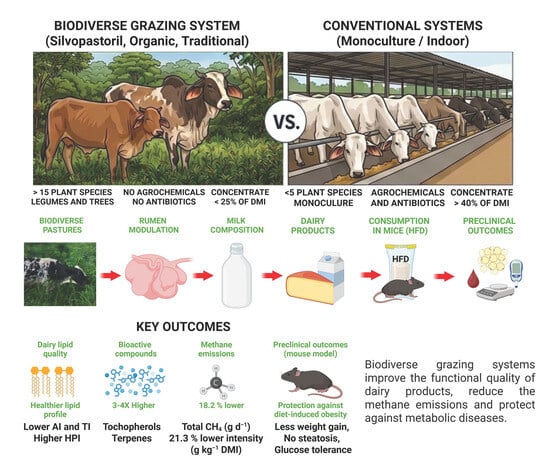
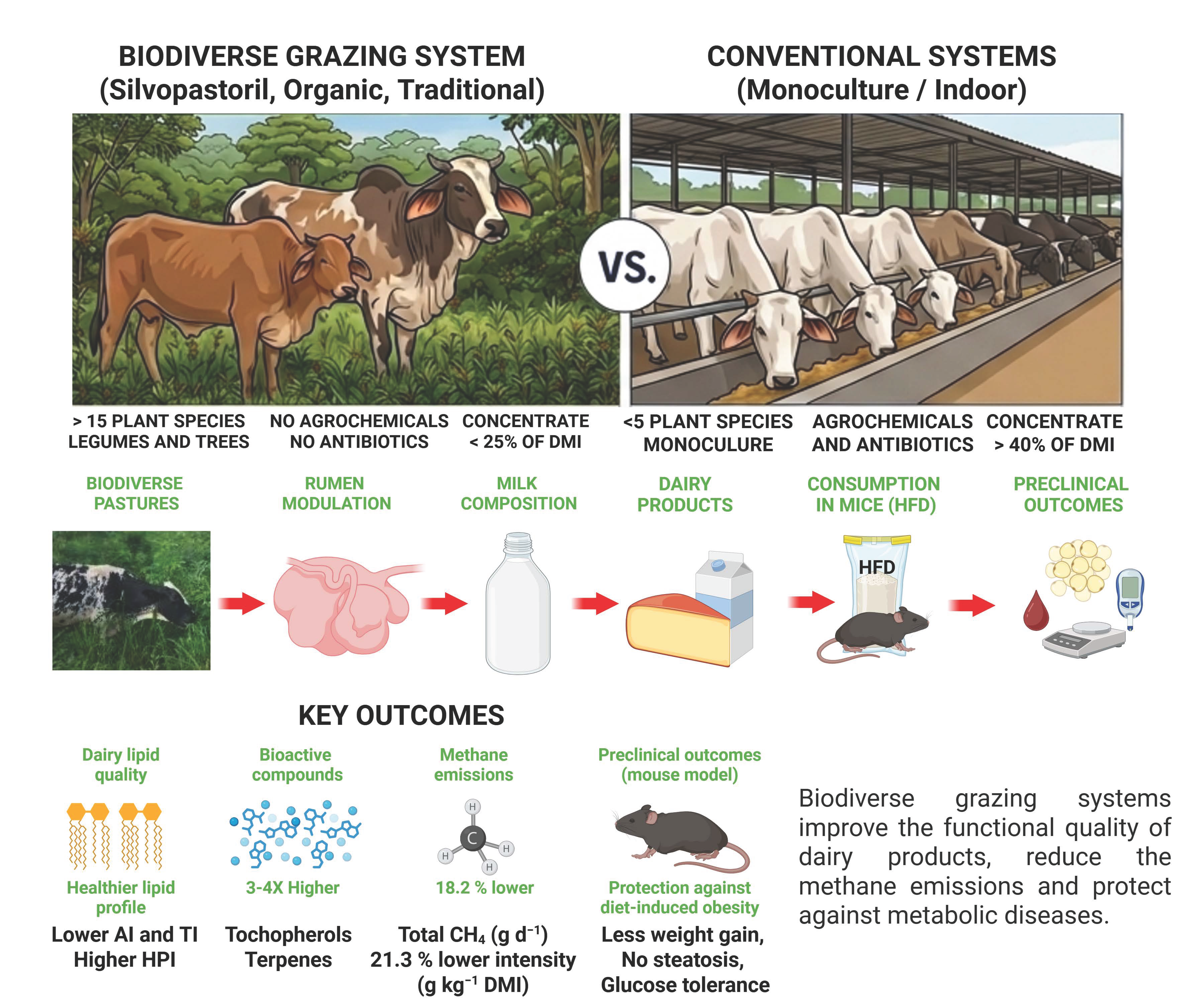
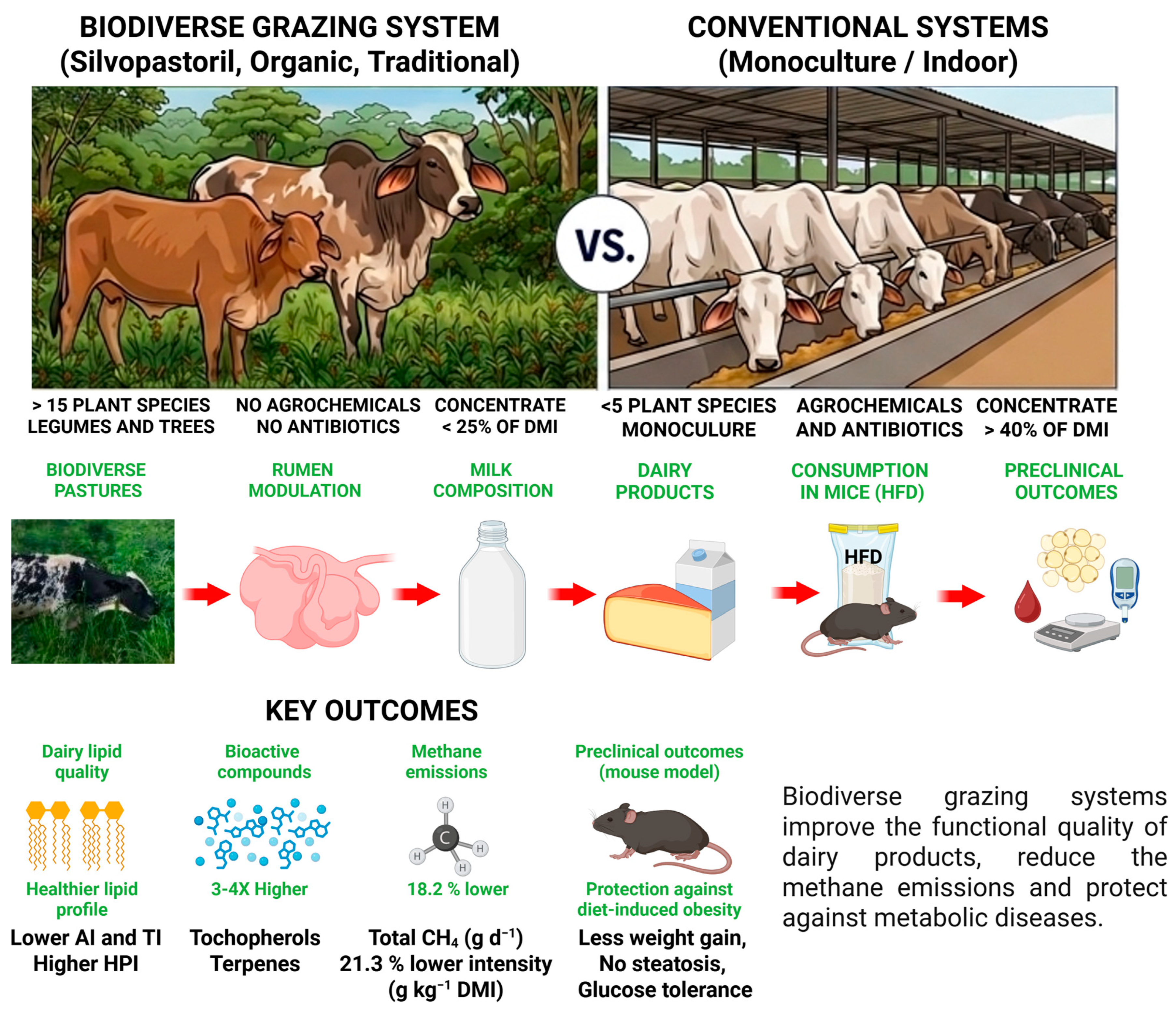
Consumer demand for dairy products from pasture-based or organic systems has grown substantially. Yet administrative labels such as “organic” or “pasture-fed” food commodities inconsistently predict nutritional quality or environmental impact across production contexts. This narrative synthesis integrates six original studies from tropical Mexico using a functional classification grounded in three core measurable traits: (1) botanical diversity of grazing areas, (2) concentrate dependence, and (3) synthetic input intensity. Biodiverse grazing systems were defined as those with ≥15 plant species, <25% concentrate present in the animal diet, and no use of agrochemical inputs. Within the included studies, this system was associated with milk and cheese with more favorable fatty acid profiles, approximately doubled tocopherol concentrations, and markedly higher terpene content compared with conventional monoculture systems. Similarly, enteric methane emissions were 18% lower per animal and 21% lower per unit of dry matter intake in biodiverse systems. In a murine model of diet-induced obesity, milk from biodiverse systems attenuated body weight gain, preserved glucose tolerance, completely prevented hepatic steatosis, and promoted healthier subcutaneous adipose tissue remodeling relative to conventional milk. Nevertheless, these findings represent merely associations and preclinical evidence; external validation and further human intervention trials are required before causal claims or consumer health protection can be established.
Abstract
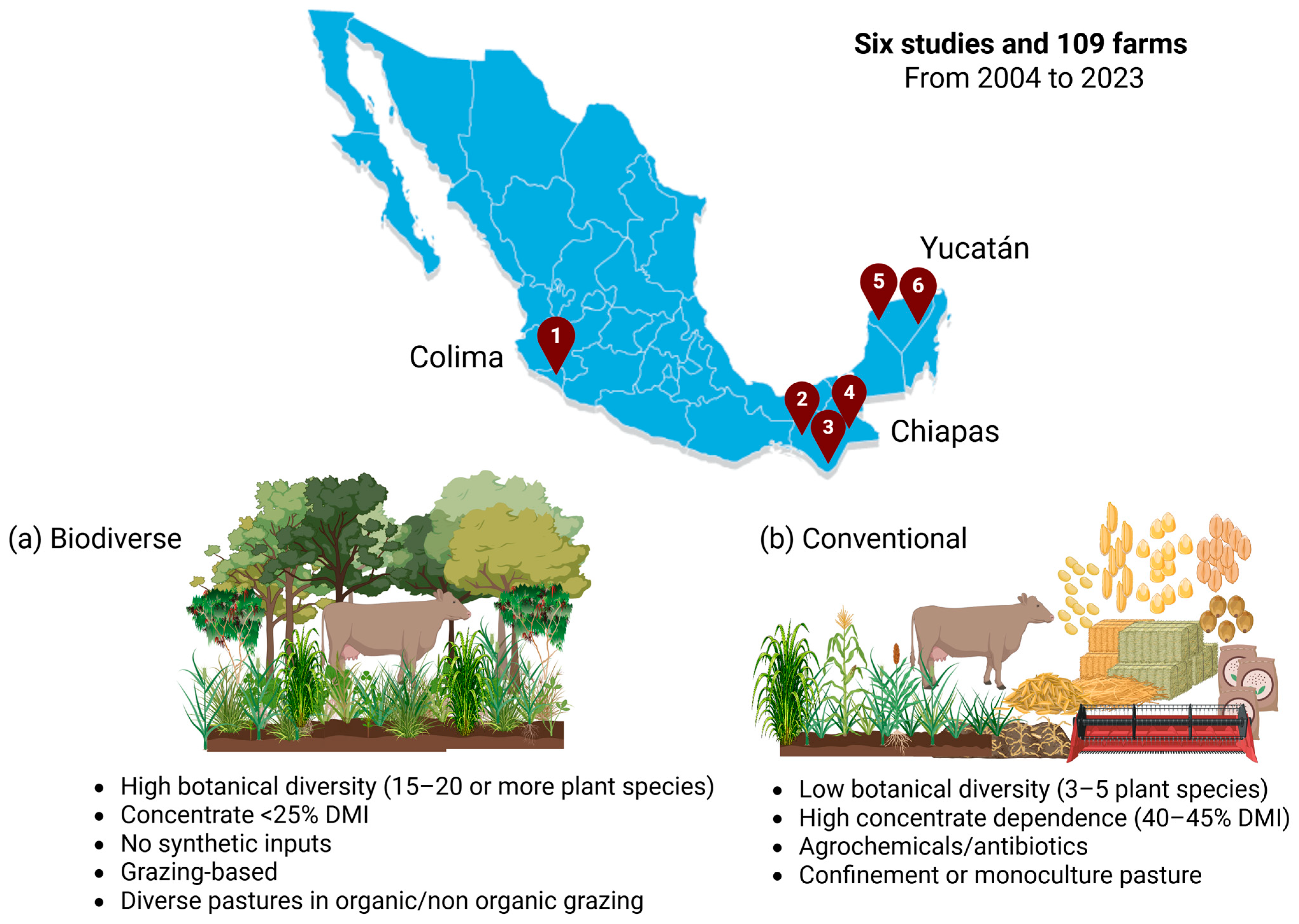
Administrative labels such as “organic” or “pasture-fed” animal food products inadequately capture the biological complexity of dairy production systems and consequently fail to differentiate potentially meaningful associations with nutritional quality, environmental impact and consumers’ health. We developed a functional classification framework based on three measurable traits: (1) botanical diversity, (2) concentrate dependence, and (3) input intensity, and applied it to six observational and/or experimental studies from tropical Mexico (n = 109 farms across Yucatán, Chiapas, and Colima federal states). Animal production systems were categorized as: (a) biodiverse grazing (silvopastoral, organic, or traditional grazing; >15 plant species or 8–14 species with concentrate < 25% dry matter intake and no synthetic inputs) or (b) conventional (monoculture/indoor systems; <5 plant species or 6–10 species with concentrate >40% with a use of agrochemicals). Biodiverse grazing systems produced lower daily milk yields (6.1 vs. 7.7 L d−1; p < 0.0001) but yielded milk with more favorable cardiovascular lipid indices: atherogenic index (AI: 1.6–2.2 vs. 1.9–2.5), thrombogenic index (TI: 2.3–2.7 vs. 2.3–3.1), and health promotion index (HPI: 0.46–0.67 vs. 0.40–0.54). Artisan cheese from biodiverse systems contained substantially higher concentrations of tocopherols (127 vs. 77 mg 100 g−1 DM) and monoterpenes (460–475 vs. 111–126 ng kg−1). An intensive silvopastoral system reduced enteric methane emissions by 18.2% (376 vs. 460 g d−1; p < 0.05) and by 21.3% per unit dry matter intake (24.0 vs. 30.5 g kg−1 DMI; p < 0.0001). Forage nutritional quality (crude protein, neutral detergent fiber, acid detergent fiber) varied by species and season, with these parameters influencing estimated methane emissions. In a C57BL/6 murine model of high-fat diet-induced obesity, milk from biodiverse silvopastoral systems attenuated body weight gain (30.5 vs. 36.8 g; p < 0.05), preserved glucose tolerance (AUC: 32,616 vs. 45,248), nearly eliminated hepatic macrovesicular steatosis, and promoted smaller adipocyte size (1863 vs. 3880 µm2; p < 0.05) compared with conventional milk. These findings suggest that functional ecological traits provide a useful framework for evaluating dairy systems, with biodiverse grazing offering a potential convergence of environmental sustainability and preclinical health benefits. Nevertheless, external validation across diverse tropical regions and direct human intervention trials remain necessary to establish generalizability, and the associations identified should be considered hypothesis-generating rather than confirmatory.