Effect of Dietary Postbiotics Derived from Lactiplantibacillus plantarum and Pediococcus lactis on Lipid Metabolism, Blood Biochemistry, and Fecal Microbiota in Cats: A Pilot Study

 ,
,  , ,
, , 
Simple Summary
Abstract
1. Introduction
2. Materials and Methods
2.1. Preparation of Postbiotics
2.2. Experimental Animals
2.3. Sample Collection and Fecal Score
2.4. Blood Biochemical Tests
2.5. Measurement of Fecal Skatole and Indole Levels
2.6. 16S rRNA Gene Amplicon Sequencing and Bioinformatics Analysis
2.7. Statistical Analysis
3. Results
3.1. Body Weight and Feed Intake
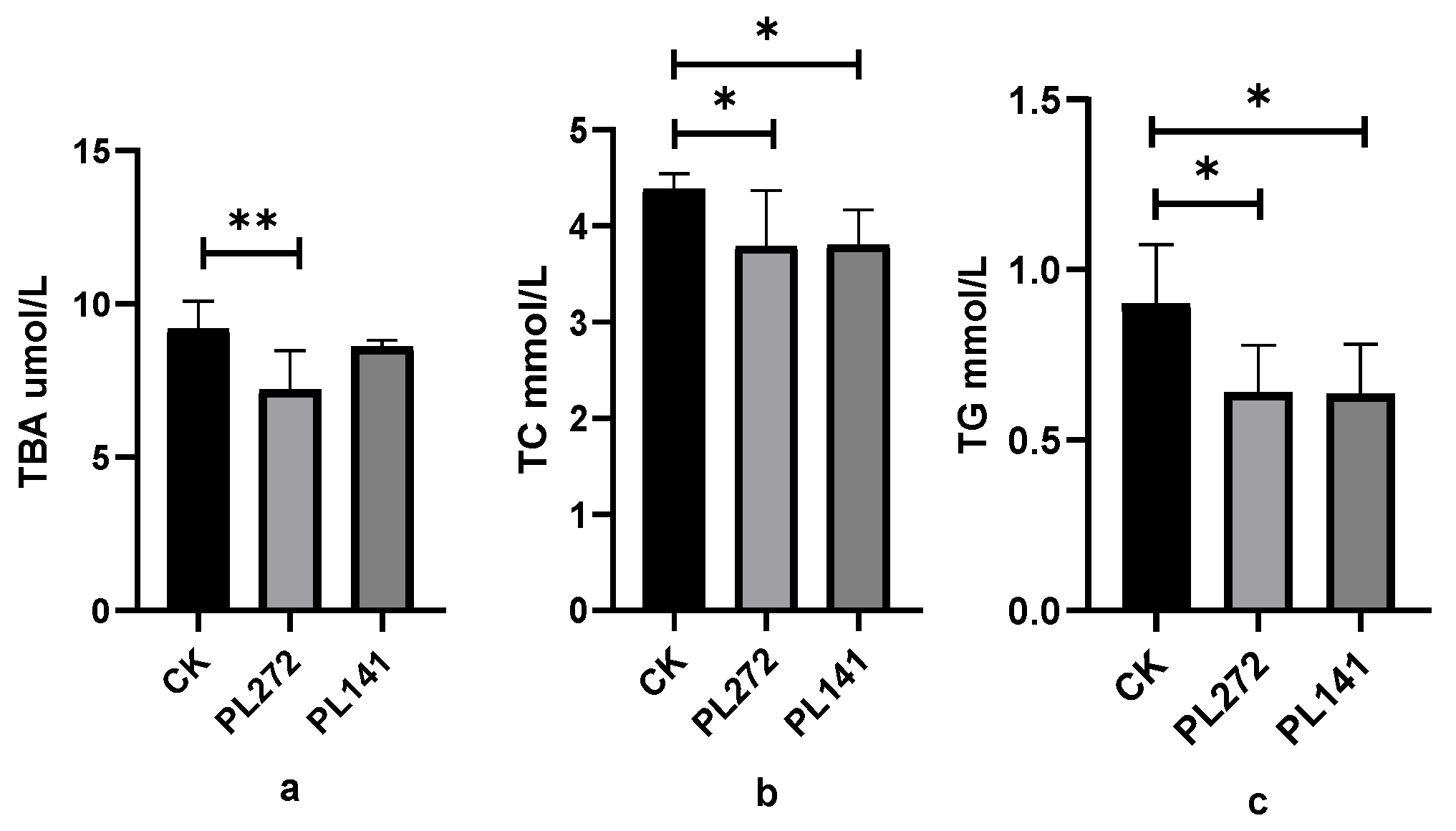
3.2. Blood Biochemistry Indicators
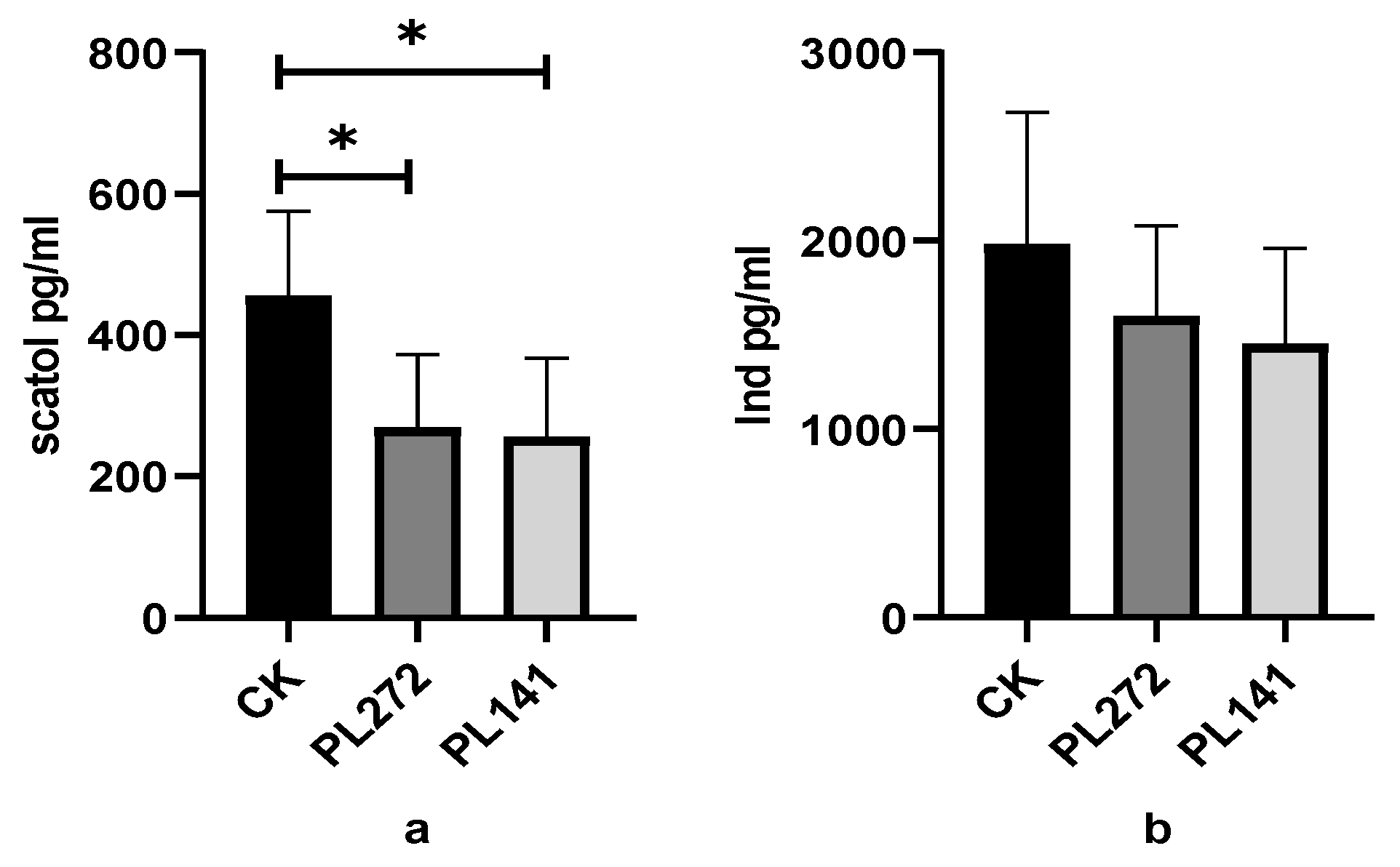
3.3. Skatole and Indole
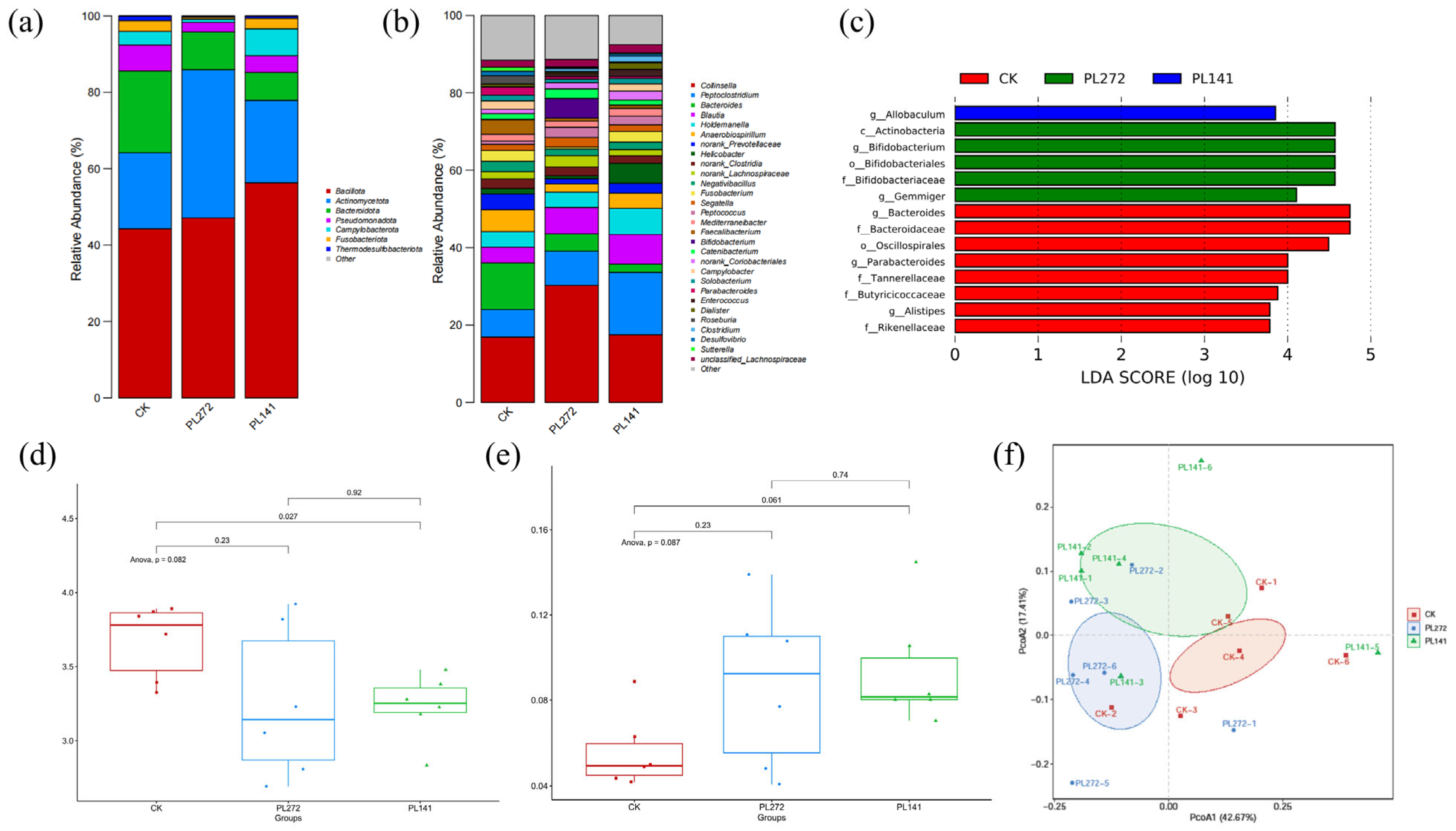
3.4. Fecal Microbiota
4. Discussion
5. Conclusions
Author Contributions
Funding
Institutional Review Board Statement
Informed Consent Statement
Data Availability Statement
Conflicts of Interest
References
- Grigg, E.K.; Turner, D.C.; Lyons, L.A.; Hart, B.L.; Hart, L.A. Editorial: Exploring cats: Their behaviors and human-cat interactions. Front. Vet. Sci. 2023, 10, 1329398. [Google Scholar] [CrossRef]
- Murray, L.E. People and Pets: Good for Each Other? Animals 2025, 15, 2007. [Google Scholar] [CrossRef] [PubMed]
- Shi, Y.; Peng, G.; Gebremariam, A.A.; Iqbal, M.M.; Baghaei Daemi, H.; Khan, M.A.; Ullah, R.; Wang, D. Analytical insights, modulation and compositional dynamics of the feline gut microbiota: A review. Anim. Dis. 2024, 4, 36. [Google Scholar] [CrossRef]
- Rowe, J.C.; Winston, J.A.; Parker, V.J.; McCool, K.E.; Suchodolski, J.S.; Lopes, R.; Steiner, J.M.; Gilor, C.; Rudinsky, A.J. Gut microbiota promoting propionic acid production accompanies caloric restriction-induced intentional weight loss in cats. Sci. Rep. 2024, 14, 11901. [Google Scholar] [CrossRef]
- Pilla, R.; Suchodolski, J.S. The Gut Microbiome of Dogs and Cats, and the Influence of Diet. Vet. Clin. N. Am. Small Anim. Pract. 2021, 51, 605–621. [Google Scholar] [CrossRef] [PubMed]
- Deng, P.; Swanson, K.S. Gut microbiota of humans, dogs and cats: Current knowledge and future opportunities and challenges. Br. J. Nutr. 2015, 113, S6–S17. [Google Scholar] [CrossRef]
- Dimski, D.S. Feline hepatic lipidosis. Semin. Vet. Med. Surg. (Small Anim.) 1997, 12, 28–33. [Google Scholar] [CrossRef]
- Ryu, S.; Kyoung, H.; Park, K.I.; Oh, S.; Song, M.; Kim, Y. Postbiotic heat-killed lactobacilli modulates on body weight associated with gut microbiota in a pig model. AMB Express 2022, 12, 83. [Google Scholar] [CrossRef]
- Fang, S.; Fan, X.; Xu, S.; Gao, S.; Wang, T.; Chen, Z.; Li, D. Effects of dietary supplementation of postbiotic derived from Bacillus subtilis ACCC 11025 on growth performance, meat yield, meat quality, excreta bacteria, and excreta ammonia emission of broiler chicks. Poult. Sci. 2024, 103, 103444. [Google Scholar] [CrossRef]
- Ismael, M.; Wu, J.; Yang, H.; Zhong, Q. Dietary Interventions with Schleiferilactobacillus harbinensis Z171, Its EPS and Postbiotics Ameliorate Cholesterol Metabolism via Modulating the Gut-Liver Axis in High-Fat Diet-Fed Mice. Mol. Nutr. Food Res. 2026, 70, e70410. [Google Scholar] [CrossRef] [PubMed]
- Hill, C.; Guarner, F.; Reid, G.; Gibson, G.R.; Merenstein, D.J.; Pot, B.; Morelli, L.; Canani, R.B.; Flint, H.J.; Salminen, S.; et al. Expert consensus document. The International Scientific Association for Probiotics and Prebiotics consensus statement on the scope and appropriate use of the term probiotic. Nat. Rev. Gastroenterol. Hepatol. 2014, 11, 506–514. [Google Scholar] [CrossRef]
- Falcinelli, S.; Rodiles, A.; Hatef, A.; Picchietti, S.; Cossignani, L.; Merrifield, D.L.; Unniappan, S.; Carnevali, O. Influence of Probiotics Administration on Gut Microbiota Core: A Review on the Effects on Appetite Control, Glucose, and Lipid Metabolism. J. Clin. Gastroenterol. 2018, 52, S50–S56. [Google Scholar] [CrossRef] [PubMed]
- Liang, S.; Kang, Y.; Zhao, Y.; Sun, J.; Wang, X.; Tao, H.; Wang, Z.; Wang, J.; Zhong, Y.; Han, B. Characterization and potential lipid-lowering effects of lactic acid bacteria isolated from cats. Front. Microbiol. 2024, 15, 1392864. [Google Scholar] [CrossRef] [PubMed]
- Schmitz, S.; Werling, D.; Allenspach, K. Effects of ex-vivo and in-vivo treatment with probiotics on the inflammasome in dogs with chronic enteropathy. PLoS ONE 2015, 10, e0120779. [Google Scholar] [CrossRef]
- Liang, S.; Gu, X.; Sun, J.; Wang, X.; Tao, H.; Wang, Z.; Zhong, Y.; Wang, J.; Han, B. Application of Lactobacillus plantarum and Pediococcus lactis on Lipid Metabolism, Anti-Inflammatory, and Fecal Microbiota in Cats. Microorganisms 2024, 12, 2446. [Google Scholar] [CrossRef]
- Sanders, M.E.; Akkermans, L.M.; Haller, D.; Hammerman, C.; Heimbach, J.; Hörmannsperger, G.; Huys, G.; Levy, D.D.; Lutgendorff, F.; Mack, D.; et al. Safety assessment of probiotics for human use. Gut Microbes 2010, 1, 164–185. [Google Scholar] [CrossRef]
- Guo, P.; Zhang, K.; Ma, X.; He, P. Clostridium species as probiotics: Potentials and challenges. J. Anim. Sci. Biotechnol. 2020, 11, 24. [Google Scholar] [CrossRef] [PubMed]
- Salminen, S.; Collado, M.C.; Endo, A.; Hill, C.; Lebeer, S.; Quigley, E.M.M.; Sanders, M.E.; Shamir, R.; Swann, J.R.; Szajewska, H.; et al. The International Scientific Association of Probiotics and Prebiotics (ISAPP) consensus statement on the definition and scope of postbiotics. Nat. Rev. Gastroenterol. Hepatol. 2021, 18, 649–667. [Google Scholar] [CrossRef]
- Amobonye, A.; Pillay, B.; Hlope, F.; Asong, S.T.; Pillai, S. Postbiotics: An insightful review of the latest category in functional biotics. World J. Microbiol. Biotechnol. 2025, 41, 293. [Google Scholar] [CrossRef]
- Zhang, A.; Li, D.; Yu, T.; Zhang, M.; Cui, Y.; Wang, H.; Dong, T.; Wu, Y. Multi-Omics Approach to Evaluate Effects of Dietary Sodium Butyrate on Antioxidant Capacity, Immune Function and Intestinal Microbiota Composition in Adult Ragdoll Cats. Metabolites 2025, 15, 120. [Google Scholar] [CrossRef]
- Han, B.; Zhao, P.; Liang, S.; Wang, Z.; Tao, H.; Wang, X.; Liu, J.; Wang, J. The Effect of Duck Bile Acid Extract on the Fecal Microbiota, Short Chain Fatty Acids, Fat Digestibility and Blood Biochemical Indices in Cats. Appl. Sci. 2023, 13, 9713. [Google Scholar] [CrossRef]
- Kim, B.; Park, K.Y.; Ji, Y.; Park, S.; Holzapfel, W.; Hyun, C.K. Protective effects of Lactobacillus rhamnosus GG against dyslipidemia in high-fat diet-induced obese mice. Biochem. Biophys. Res. Commun. 2016, 473, 530–536. [Google Scholar] [CrossRef]
- Xu, S.; Jia, X.; Liu, Y.; Pan, X.; Chang, J.; Wei, W.; Lu, P.; Petry, D.; Che, L.; Jiang, X.; et al. Effects of yeast-derived postbiotic supplementation in late gestation and lactation diets on performance, milk quality, and immune function in lactating sows. J. Anim. Sci. 2023, 101, skad201. [Google Scholar] [CrossRef] [PubMed]
- Danladi, Y.; Loh, T.C.; Foo, H.L.; Akit, H.; Tamrin, N.A.; Naeem Azizi, M. Effects of postbiotics and paraprobiotics as replacements for antibiotics on growth performance, carcass characteristics, small intestine histomorphology, immune status and hepatic growth gene expression in broiler chickens. Animals 2022, 12, 917. [Google Scholar] [CrossRef] [PubMed]
- Chiang, J.Y. Bile acid metabolism and signaling. Compr. Physiol. 2013, 3, 1191–1212. [Google Scholar] [CrossRef] [PubMed]
- Wang, W.; Miao, C.; Chen, Q.; Wang, L.; Chang, X.; Zhao, L.; Ma, W.; Lei, S.; Ma, M.; Zhang, Y.; et al. Postbiotic supplementation promotes gut barrier integrity and immune balance in cats via microbiota modulation. Front. Microbiol. 2025, 16, 1692845. [Google Scholar] [CrossRef]
- Jackson, M.I.; Jewell, D.E. Docosahexaenoate-enriched fish oil and medium chain triglycerides shape the feline plasma lipidome and synergistically decrease circulating gut microbiome-derived putrefactive postbiotics. PLoS ONE 2020, 15, e0229868. [Google Scholar] [CrossRef]
- Liu, P.; Wang, Y.; Yang, G.; Zhang, Q.; Meng, L.; Xin, Y.; Jiang, X. The role of short-chain fatty acids in intestinal barrier function, inflammation, oxidative stress, and colonic carcinogenesis. Pharmacol. Res. 2021, 165, 105420. [Google Scholar] [CrossRef]
- Vacca, M.; Celano, G.; Calabrese, F.M.; Portincasa, P.; Gobbetti, M.; De Angelis, M. The Controversial Role of Human Gut Lachnospiraceae. Microorganisms 2020, 8, 573. [Google Scholar] [CrossRef]
- Liu, Y.; Kuang, W.; Li, M.; Wang, Z.; Liu, Y.; Zhao, M.; Huan, H.; Yang, Y. Cholesterol-Lowering Mechanism of Lactobacillus Bile Salt Hydrolase Through Regulation of Bifidobacterium pseudolongum in the Gut Microbiota. Nutrients 2025, 17, 3019. [Google Scholar] [CrossRef]
- Onuma, M.; Ataka, K.; Murakami, A. Evaluating the safety and functionality of a novel compound containing prebiotics, probiotics, and postbiotics in healthy cats and dogs. Open Vet. J. 2025, 15, 1969–1981. [Google Scholar] [CrossRef]
- Li, Z.; Zhang, L.; Wan, Z.; Liu, H.; Zhang, T.; Li, Y. Therapeutic potential of the gut commensal bacterium Parabacteroides goldsteinii in human health and disease treatment. Front. Microbiol. 2025, 16, 1618892. [Google Scholar] [CrossRef] [PubMed]
- de Souza Junior, S.M.; Chenoll, E.; Howard-Varona, A.; Lamelas, A.; Martinez-Blanch, J.F.; Davenport, G.M.; Nixon, S.; He, F.; de Godoy, M.R.C. Effects of supplementation with Bifidobacterium animalis subsp. lactis CECT 8145-in live probiotic and heat-treated postbiotic form on adult cats. J. Anim. Sci. 2025, 103, skaf355. [Google Scholar] [CrossRef]
- Zhang, K.; Xu, Y.; Zheng, Y.; Zhang, T.; Wu, Y.; Yan, Y.; Lei, Y.; Cao, X.; Wang, X.; Yan, F.; et al. Bifidobacterium pseudolongum-Derived Bile Acid from Dietary Carvacrol and Thymol Supplementation Attenuates Colitis via cGMP-PKG-mTORC1 Pathway. Adv. Sci. 2024, 11, e2406917. [Google Scholar] [CrossRef] [PubMed]
- Cho, H.Y.; Park, H.J.; Choi, J.S.; Kim, S.H.; Ryu, M.O.; Seo, K.W. Delineating the fecal microbiome of healthy domestic short-hair cats in South Korea. Front. Vet. Sci. 2025, 12, 1571107. [Google Scholar] [CrossRef] [PubMed]



| Group | Initial Body Weight (kg) | Final Body Weight (kg) | Body Weight Change (kg) | Daily Feed Intake (g/d) | Feed Intake/Body Weight (g/kg/d) |
|---|---|---|---|---|---|
| CK | 3.35 ± 0.38 | 3.42 ± 0.38 | +0.07 ± 0.06 | 99.9 ± 6.1 | 29.1 ± 3.3 |
| PL272 | 4.08 ± 1.07 | 4.04 ± 1.12 | −0.04 ± 0.21 | 100.5 ± 2.5 | 25.7 ± 6.7 |
| PL141 | 3.69 ± 1.05 | 3.76 ± 1.13 | +0.07 ± 0.17 | 104.3 ± 3.9 | 30.2 ± 9.5 |
| p-value | 0.442 | 0.522 | 0.476 | 0.092 | 0.404 |
| Parameter (Unit) | CK (n = 6) | PL272 (n = 6) | PL141 (n = 6) | Reference Range | p-Value |
|---|---|---|---|---|---|
| Albumin (g/L) | 35.9 ± 2.9 | 35.0 ± 4.1 | 30.2 ± 3.1 | 22–45 | 0.025 |
| Globulin (g/L) | 49.9 ± 8.9 | 56.7 ± 16.4 | 53.3 ± 10.3 | 15–57 | 0.648 |
| Inorganic phosphorus (mmol/L) | 2.21 ± 0.25 | 1.49 ± 0.34 | 1.75 ± 0.12 | 1–2.5 | <0.001 |
| Albumin/Globulin ratio | 0.73 ± 0.11 | 0.64 ± 0.17 | 0.60 ± 0.09 | — | 0.243 |
| Total bilirubin (μmol/L) | 6.00 ± 1.45 | 6.20 ± 1.15 | 5.73 ± 1.35 | 2–15 | 0.786 |
| ALT (U/L) | 65.0 ± 39.5 | 54.3 ± 8.1 | 70.0 ± 59.9 | 8.2–123 | 0.812 |
| GGT (U/L) | 1.42 ± 0.55 | 1.30 ± 0.73 | 1.37 ± 0.38 | 0–2 | 0.939 |
| ALP (U/L) | 35.0 ± 7.2 | 25.5 ± 9.0 | 23.2 ± 6.9 | 10–90 | 0.042 |
| Creatine kinase (U/L) | 182 ± 54 | 198 ± 115 | 143 ± 45 | 69–214 | 0.476 |
| Amylase (U/L) | 1722 ± 218 | 1912 ± 649 | 1590 ± 343 | 400–3000 | 0.453 |
| Creatinine (μmol/L) | 119.5 ± 15.0 | 115.7 ± 15.9 | 119.8 ± 14.3 | 89–207 | 0.860 |
| Urea nitrogen (mmol/L) | 8.71 ± 1.06 | 8.04 ± 1.02 | 8.06 ± 0.88 | 6.6–11.3 | 0.434 |
| BUN/Creatinine ratio | 18.8 ± 2.1 | 16.8 ± 0.8 | 16.8 ± 1.5 | — | 0.059 |
| Group | Day 0 (8.28) | Day 7 (9.4) | Day 14 (9.11) | Day 21 (9.18) | Day 28 (9.25) |
|---|---|---|---|---|---|
| CK | 1.92 ± 0.49 | 2.00 ± 0.55 | 1.67 ± 0.61 | 2.67 ± 0.41 | 2.67 ± 0.26 |
| PL272 | 1.50 ± 0.55 | 2.00 ± 0.63 | 1.83 ± 0.41 | 2.33 ± 0.52 | 2.83 ± 0.26 |
| PL141 | 1.33 ± 0.52 | 1.83 ± 0.41 | 1.42 ± 0.58 | 2.25 ± 0.27 | 2.92 ± 0.20 |
| p-value | 0.152 | 0.783 | 0.321 | 0.084 | 0.233 |
| Indices | CK | PL272 | PL141 | p Value |
|---|---|---|---|---|
| Shannon index | 3.673 | 3.230 | 3.255 | 0.082 |
| Simpson index | 0.055 | 0.093 | 0.087 | 0.086 |
Disclaimer/Publisher’s Note: The statements, opinions and data contained in all publications are solely those of the individual author(s) and contributor(s) and not of MDPI and/or the editor(s). MDPI and/or the editor(s) disclaim responsibility for any injury to people or property resulting from any ideas, methods, instructions or products referred to in the content. |
© 2026 by the authors. Licensee MDPI, Basel, Switzerland. This article is an open access article distributed under the terms and conditions of the Creative Commons Attribution (CC BY) license.
Share and Cite
Zhang, H.; Sun, J.; Wang, J.; Wang, X.; Tao, H.; Wang, Z.; Liu, J.; Han, B. Effect of Dietary Postbiotics Derived from Lactiplantibacillus plantarum and Pediococcus lactis on Lipid Metabolism, Blood Biochemistry, and Fecal Microbiota in Cats: A Pilot Study. Vet. Sci. 2026, 13, 571. https://doi.org/10.3390/vetsci13060571
Zhang H, Sun J, Wang J, Wang X, Tao H, Wang Z, Liu J, Han B. Effect of Dietary Postbiotics Derived from Lactiplantibacillus plantarum and Pediococcus lactis on Lipid Metabolism, Blood Biochemistry, and Fecal Microbiota in Cats: A Pilot Study. Veterinary Sciences. 2026; 13(6):571. https://doi.org/10.3390/vetsci13060571
Chicago/Turabian StyleZhang, Huaiyu, Jintao Sun, Jinquan Wang, Xiumin Wang, Hui Tao, Zhenlong Wang, Jie Liu, and Bing Han. 2026. "Effect of Dietary Postbiotics Derived from Lactiplantibacillus plantarum and Pediococcus lactis on Lipid Metabolism, Blood Biochemistry, and Fecal Microbiota in Cats: A Pilot Study" Veterinary Sciences 13, no. 6: 571. https://doi.org/10.3390/vetsci13060571
APA StyleZhang, H., Sun, J., Wang, J., Wang, X., Tao, H., Wang, Z., Liu, J., & Han, B. (2026). Effect of Dietary Postbiotics Derived from Lactiplantibacillus plantarum and Pediococcus lactis on Lipid Metabolism, Blood Biochemistry, and Fecal Microbiota in Cats: A Pilot Study. Veterinary Sciences, 13(6), 571. https://doi.org/10.3390/vetsci13060571