
Chicken lncRNA-9802 Induces the S Phase Arrest in the T Lymphocyte Cells Infected by Marek’s Disease Virus via the TP53BP1/p53/p21 Pathway
Simple Summary
Abstract
1. Introduction
2. Materials and Methods
2.1. Ethics Statement
2.2. Vector, Cell and Animal
2.3. Production and Preparation of Lentiviruses
2.4. Transient Over-Expression and Knock Down of lncRNA-9802 in MDCC-MSB1 Cells
2.5. Flow Cytometry
2.6. Induction of Protein Expression
2.7. Preparation of Polyclonal Antibody
2.8. Enzyme-Linked Immunosorbent Assay (ELISA)
2.9. Real-Time Quantitative Polymerase Chain Reaction (RT-qPCR)
2.10. Western Blot
2.11. Statistical Analysis
3. Results
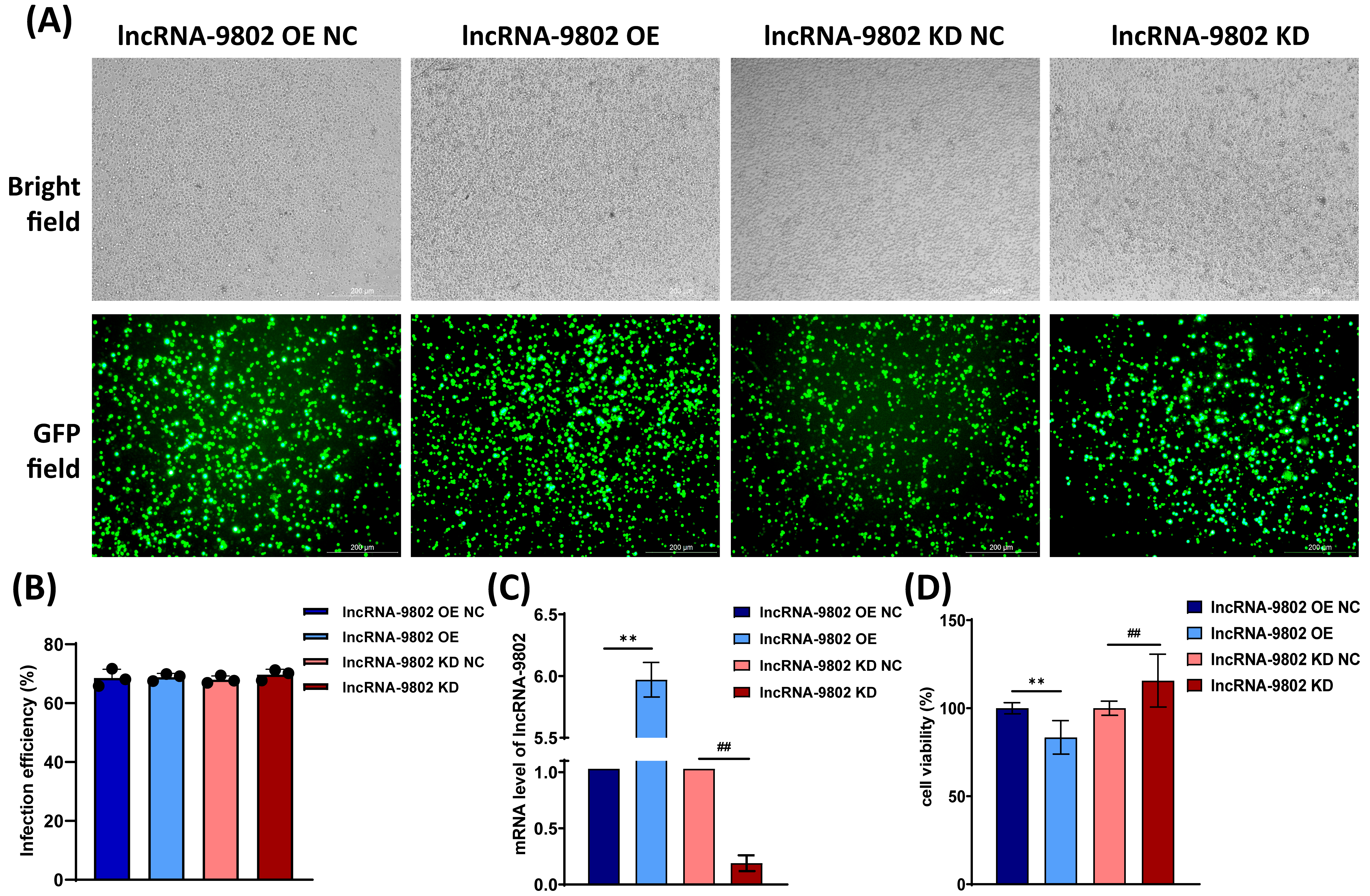
3.1. The Effect of lncRNA-9802 Over-Expression and Knock Down on the Proliferation of MDCC-MSB1 Cells
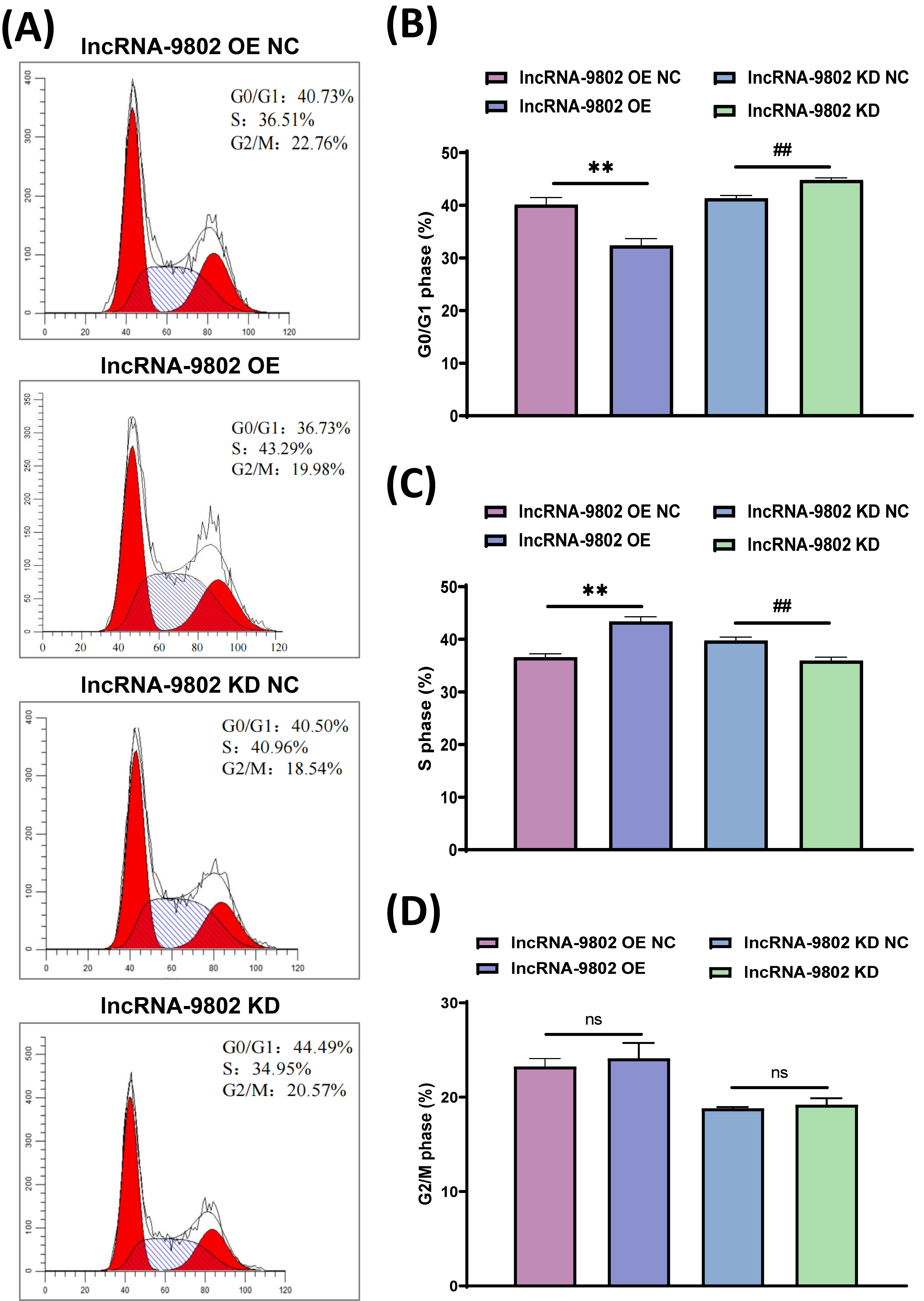
3.2. The Effect of lncRNA-9802 on the Cell Cycle Regulation of MDCC-MSB1 Cells
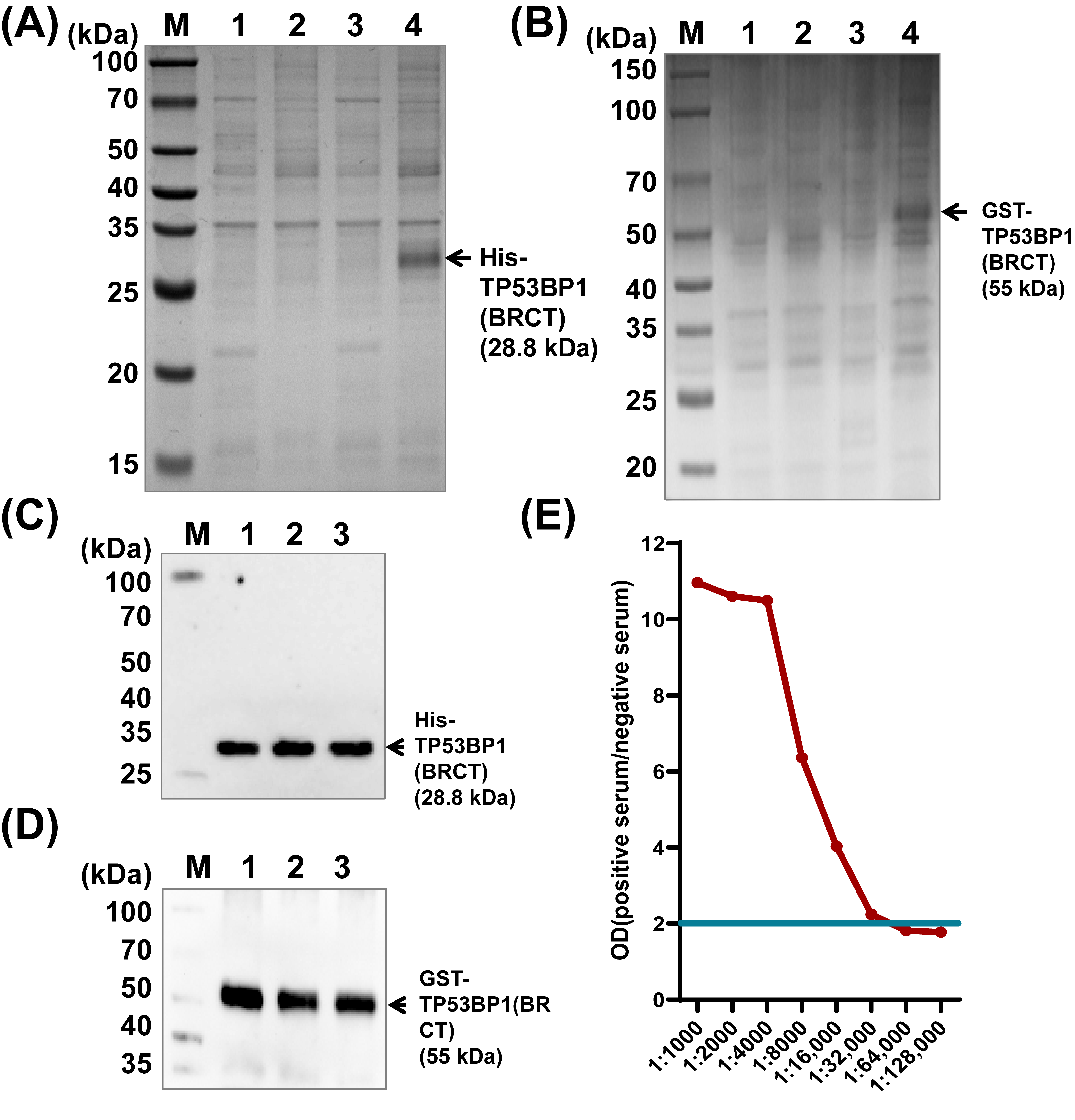
3.3. Production of TP53BP1 Polyclonal Antibody
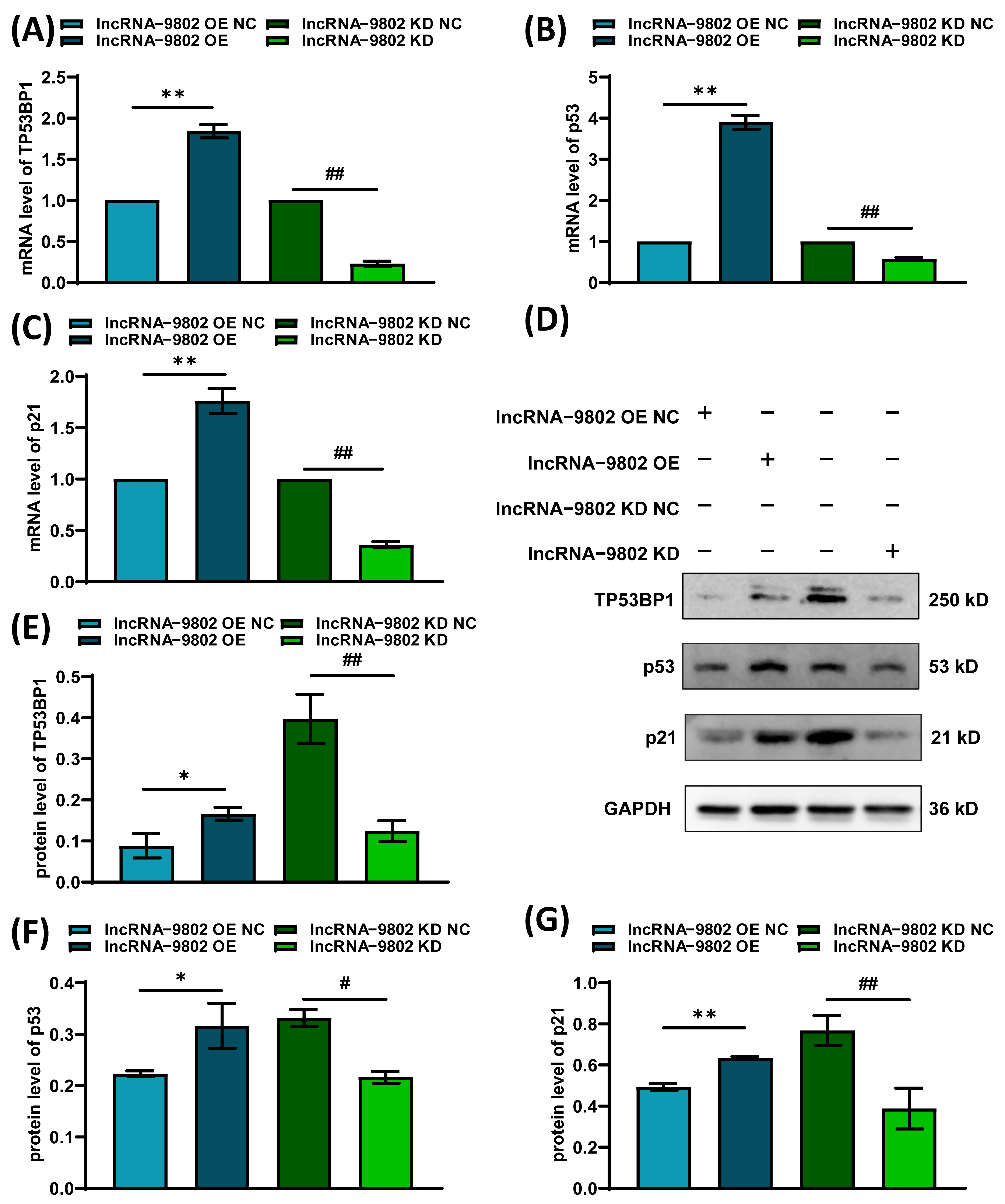
3.4. The Effect of lncRNA-9802 on the Expression of the TP53BP1/p53/p21 Pathway in MDCC-MSB1
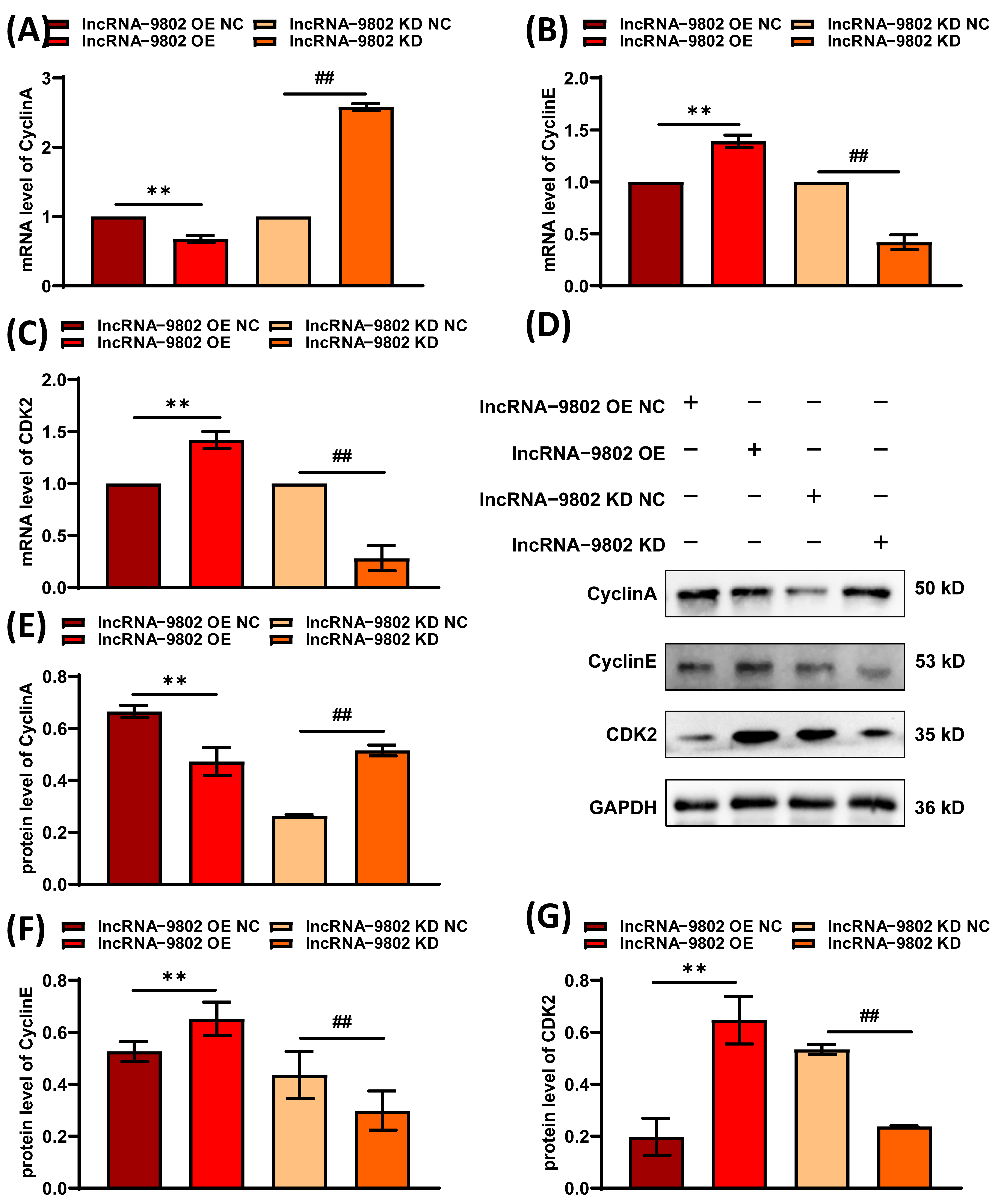
3.5. The Effect of lncRNA-9802 on the Expression of the Cell Cycle-Related Genes in MDCC-MSB1
4. Discussion
5. Conclusions
Supplementary Materials
Author Contributions
Funding
Institutional Review Board Statement
Informed Consent Statement
Data Availability Statement
Conflicts of Interest
References
- Mulyati, S.; Mustofa, I.; Khairullah, A.R.; Kusala, M.K.J.; Fauziah, I.; Ahmad, R.Z.; Ekawasti, F.; Prihandani, S.S.; Furqoni, A.H.; Wardhani, B.W.K.; et al. Marek’s disease: A global challenge to poultry health and productivity. Open Vet. J. 2025, 15, 4797–4813. [Google Scholar] [CrossRef] [PubMed]
- Song, B.; Zeb, J.; Hussain, S.; Aziz, M.U.; Circella, E.; Casalino, G.; Camarda, A.; Yang, G.; Buchon, N.; Sparagano, O. A review on the Marek’s disease outbreak and its virulence-related meq genovariation in Asia between 2011 and 2021. Animals 2022, 12, 540. [Google Scholar] [CrossRef] [PubMed]
- Liu, J.L.; Teng, M.; Zheng, L.P.; Zhu, F.X.; Ma, S.X.; Li, L.Y.; Zhang, Z.H.; Chai, S.J.; Yao, Y.; Luo, J. Emerging hypervirulent Marek’s disease virus variants significantly overcome protection conferred by commercial vaccines. Viruses 2023, 15, 1434. [Google Scholar] [CrossRef]
- Kennedy, D.A.; Cairns, C.; Jones, M.J.; Bell, A.S.; Salathé, R.M.; Baigent, S.J.; Nair, V.K.; Dunn, P.A.; Read, A.F. Industry-wide surveillance of Marek’s disease virus on commercial poultry farms. Avian Dis. 2017, 61, 153–164. [Google Scholar] [CrossRef] [PubMed]
- Núñez-Martínez, H.N.; Recillas-Targa, F. Emerging functions of lncRNA loci beyond the transcript itself. Int. J. Mol. Sci. 2022, 23, 6258. [Google Scholar] [CrossRef]
- Choudhuri, S. Long noncoding RNAs: Biogenesis, regulation, function, and their emerging significance in toxicology. Toxicol. Mech. Methods 2023, 33, 541–551. [Google Scholar] [CrossRef]
- Lu, N.; Jiang, Q.; Xu, T.; Gao, Q.; Wang, Y.; Huang, Z.; Huang, Z.; Xu, X. LncOCMRL1 promotes oral squamous cell carcinoma growth and metastasis via the RRM2/EMT pathway. J. Exp. Clin. Cancer Res. 2024, 43, 267. [Google Scholar] [CrossRef]
- Yu, B.; Chang, H.Y. Long noncoding RNA regulation of immunity. Nat. Immunol. 2026, 27, 16–25. [Google Scholar] [CrossRef]
- Wen, R.; Zhang, T.N.; Zhang, T.; Tong, Y.J.; Song, W.L.; Liu, Y.P.; Yang, N.; Liu, C.F. A novel long noncoding RNA-lncRNA-AABR07066529.3 alleviates inflammation, apoptosis, and pyroptosis by inhibiting MyD88 in lipopolysaccharide-induced myocardial depression. FASEB J. 2023, 37, e23063. [Google Scholar] [CrossRef]
- Sarma, A.; Suri, P.; Justice, M.; Angamuthu, R.; Pushparaj, S. An emphasis on the role of long non-coding RNAs in viral gene expression, pathogenesis, and innate immunity in viral chicken diseases. Non-Coding RNA 2025, 11, 42. [Google Scholar] [CrossRef]
- Han, B.; He, Y.; Zhang, L.; Ding, Y.; Lian, L.; Zhao, C.; Song, J.; Yang, N. Long intergenic non-coding RNA GALMD3 in chicken Marek’s disease. Sci. Rep. 2017, 7, 10294. [Google Scholar] [CrossRef]
- He, Y.; Han, B.; Ding, Y.; Zhang, H.; Chang, S.; Zhang, L.; Zhao, C.; Yang, N.; Song, J. Linc-GALMD1 regulates viral gene expression in the chicken. Front. Genet. 2019, 10, 1122. [Google Scholar] [CrossRef]
- Rasschaert, P.; Figueroa, T.; Dambrine, G.; Rasschaert, D.; Laurent, S. Alternative splicing of a viral mirtron differentially affects the expression of other microRNAs from its cluster and of the host transcript. RNA Biol. 2016, 13, 1310–1322. [Google Scholar] [CrossRef] [PubMed]
- Figueroa, T.; Boumart, I.; Coupeau, D.; Rasschaert, D. Hyperediting by ADAR1 of a new herpesvirus lncRNA during the lytic phase of the oncogenic Marek’s disease virus. J. Gen. Virol. 2016, 97, 2973–2988. [Google Scholar] [CrossRef] [PubMed]
- Han, S.; Zhao, S.; Ren, H.; Jiao, Q.; Wu, X.; Hao, X.; Liu, M.; Han, L.; Han, L. Novel lncRNA 803 related to Marek’s disease inhibits apoptosis of DF-1 cells. Avian Pathol. 2024, 53, 229–241. [Google Scholar] [CrossRef] [PubMed]
- Han, S.; Zhao, S.; Zhao, Y.; Liu, M.; Han, L.; Han, L. The novel lncRNA-9802/miR-1646 axis affects cell proliferation of DF-1 by regulating Bax/Bcl-2 signaling pathway. Res. Vet. Sci. 2023, 164, 105047. [Google Scholar] [CrossRef]
- Zhang, H.; Liu, M.; Zhang, H.; Cao, S.; Li, Y.; Jiang, S.; Song, Y.; Liu, S. Detection of p53 mutation and serum monitoring alert caused by Marek’s disease virus in poultry. BMC Vet. Res. 2020, 16, 303. [Google Scholar] [CrossRef]
- Deng, X.; Li, X.; Shen, Y.; Qiu, Y.; Shi, Z.; Shao, D.; Jin, Y.; Chen, H.; Ding, C.; Li, L.; et al. The Meq oncoprotein of Marek’s disease virus interacts with p53 and inhibits its transcriptional and apoptotic activities. Virol. J. 2010, 7, 348. [Google Scholar] [CrossRef]
- Lee, D.; Apelt, K.; Lee, S.O.; Chan, H.R.; Luijsterburg, M.S.; Leung, J.W.C.; Miller, K.M. ZMYM2 restricts 53BP1 at DNA double-strand breaks to favor BRCA1 loading and homologous recombination. Nucleic Acids Res. 2022, 50, 3922–3943. [Google Scholar] [CrossRef]
- Tian, J.; Li, J.; Liu, F.; Wang, C.; Sun, B.; Yan, J.; Zhu, B.; Qin, Y.; Fang, S.; Zhang, H.; et al. DSCC1 restrains 53BP1/RIF1 signaling at DNA double-strand breaks to promote homologous recombination repair. Cell Rep. 2025, 44, 115452. [Google Scholar] [CrossRef]
- Meitinger, F.; Belal, H.; Davis, R.L.; Martinez, M.B.; Shiau, A.K.; Oegema, K.; Desai, A. Control of cell proliferation by memories of mitosis. Science 2024, 383, 1441–1448. [Google Scholar] [CrossRef]
- Galarreta, A.; Pasti, V.; Vornberger, J.; Imhof, R.; Oppikofer, M.; Altmeyer, M. Identification of CNOT1-CCR4-NOT as a suppressor of 53BP1-p53-p21 signaling. Cell Rep. 2025, 44, 116090. [Google Scholar] [CrossRef]
- Lambrus, B.G.; Daggubati, V.; Uetake, Y.; Scott, P.M.; Clutario, K.M.; Sluder, G.; Holland, A.J. A USP28-53BP1-p53-p21 signaling axis arrests growth after centrosome loss or prolonged mitosis. J. Cell Biol. 2016, 214, 143–153. [Google Scholar] [CrossRef]
- Pellarin, I.; Dall’Acqua, A.; Favero, A.; Segatto, I.; Rossi, V.; Crestan, N.; Karimbayli, J.; Belletti, B.; Baldassarre, G. Cyclin-dependent protein kinases and cell cycle regulation in biology and disease. Signal Transduct. Target. Ther. 2025, 10, 11. [Google Scholar] [CrossRef] [PubMed]
- Serizay, J.; Khoury Damaa, M.; Boudjema, A.R.; Balagué, R.; Faucourt, M.; Delgehyr, N.; Noûs, C.; Zaragosi, L.E.; Barbry, P.; Spassky, N.; et al. Cyclin switch tailors a cell cycle variant to orchestrate multiciliogenesis. Cell Rep. 2025, 44, 115103. [Google Scholar] [CrossRef] [PubMed]
- Glaviano, A.; Singh, S.K.; Lee, E.H.C.; Okina, E.; Lam, H.Y.; Carbone, D.; Reddy, E.P.; O’Connor, M.J.; Koff, A.; Singh, G.; et al. Cell cycle dysregulation in cancer. Pharmacol. Rev. 2025, 77, 100030. [Google Scholar] [CrossRef] [PubMed]
- Ben-Salem, S.; Venkadakrishnan, V.B.; Heemers, H.V. Novel insights in cell cycle dysregulation during prostate cancer progression. Endocr. Relat. Cancer 2021, 28, 141–155. [Google Scholar] [CrossRef]
- Li, S.; Ran, M.Y.; Qiao, H. A cell cycle-related lncRNA signature predicts the progression-free interval in papillary thyroid carcinoma. Front. Endocrinol. 2023, 14, 1110987. [Google Scholar] [CrossRef]
- Singh, D.K.; Cong, Z.; Song, Y.J.; Liu, M.; Chaudhary, R.; Liu, D.; Wang, Y.; Prasanth, R.; Rajendra, K.C.; Lizarazo, S.; et al. MANCR lncRNA modulates cell-cycle progression and metastasis by Cis-regulation of nuclear Rho-GEF. Mol. Cell. Biol. 2024, 44, 372–390. [Google Scholar] [CrossRef]
- Schat, K.A. The iImportance of the bursa of fabricius, B cells and T cells for the pathogenesis of Marek’s disease: A review. Viruses 2022, 14, 2015. [Google Scholar] [CrossRef]
- Tien, Y.T.; Akbar, H.; Jarosinski, K.W. Temperature-induced reactivation of Marek’s disease virus-transformed T cells ex vivo. Front. Vet. Sci. 2023, 10, 1145757. [Google Scholar] [CrossRef] [PubMed]
- Akiyama, Y.; Kato, S. Two cell lines from lymphomas of Marek’s disease. Biken J. 1974, 17, 105–116. [Google Scholar]
- Lambeth, L.S.; Yao, Y.; Smith, L.P.; Zhao, Y.; Nair, V. MicroRNAs 221 and 222 target p27Kip1 in Marek’s disease virus-transformed tumour cell line MSB-1. J. Gen. Virol. 2009, 90, 1164–1171. [Google Scholar] [CrossRef]
- Hayashi, M.; Nakamura, K.; Isogai, E.; Namioka, S. Nucleosomal structure of Marek’s disease virus genome in transformed lymphoblastoid cell lines, MDCC-MSB1 and MDCC-RP1. Microbiol. Immunol. 1991, 35, 643–653. [Google Scholar] [CrossRef] [PubMed][Green Version]
- Hu, Y.; Song, W.; Zhang, L.; Yuan, L.; Jin, Y. The establishment of Asian black bear (Ursus thibetanus) fibroblast cell line. Animals. 2026, 16, 436. [Google Scholar] [CrossRef] [PubMed]
- Abdolahi, S.; Khodakaram-Tafti, A.; Aligholi, H.; Ziaei, S.; Khaleghi Ghadiri, M.; Stummer, W.; Gorji, A. Lentiviral vector-mediated transduction of adult neural stem/progenitor cells isolated from the temporal tissues of epileptic patients. Iran. J. Basic Med. Sci. 2020, 23, 354–361. [Google Scholar]
- Ziaei, S.; Rezaei-Tavirani, M.; Ardeshirylajimi, A.; Arefian, E.; Soleimani, M. Induced overexpression of THAP11 in human fibroblast cells enhances expression of key pluripotency genes. Galen Med. J. 2019, 8, e1308. [Google Scholar] [CrossRef]
- Himly, M.; Foster, D.N.; Bottoli, I.; Iacovoni, J.S.; Vogt, P.K. The DF-1 chicken fibroblast cell line: Transformation induced by diverse oncogenes and cell death resulting from infection by avian leukosis viruses. Virology 1998, 248, 295–304. [Google Scholar] [CrossRef]
- Xie, Q.; Anderson, A.S.; Morgan, R.W. Marek’s disease virus (MDV) ICP4, pp38, and meq genes are involved in the maintenance of transformation of MDCC-MSB1 MDV-transformed lymphoblastoid cells. J. Virol. 1996, 70, 1125–1131. [Google Scholar] [CrossRef]
- Sato, J.; Motai, Y.; Yamagami, S.; Win, S.Y.; Horio, F.; Saeki, H.; Maekawa, N.; Okagawa, T.; Konnai, S.; Ohashi, K.; et al. Programmed cell eeath-1 expression in T-cell subsets in chickens infected with Marek’s disease virus. Pathogens 2025, 14, 431. [Google Scholar] [CrossRef]
- Colicino-Murbach, E.; Hathaway, C.; Dungrawala, H. Replication fork stalling in late S-phase elicits nascent strand degradation by DNA mismatch repair. Nucleic Acids Res. 2024, 52, 10999–11013. [Google Scholar] [CrossRef]
- Cornwell, J.A.; Crncec, A.; Afifi, M.M.; Tang, K.; Amin, R.; Cappell, S.D. Loss of CDK4/6 activity in S/G2 phase leads to cell cycle reversal. Nature 2023, 619, 363–370. [Google Scholar] [CrossRef]
- Lin, Y.C.; Liu, D.; Chakraborty, A.; Macias, V.; Brister, E.; Sonalkar, J.; Shen, L.; Mitra, J.; Ha, T.; Kajdacsy-Balla, A.; et al. DNA damage-induced, S-phase specific phosphorylation of Orc6 is critical for the maintenance of genome stability. Mol. Cell. Biol. 2023, 43, 143–156. [Google Scholar] [CrossRef] [PubMed]
- Zhang, J.; Yan, Z.; Wang, Y.; Wang, Y.; Guo, X.; Jing, J.; Dong, X.; Dong, S.; Liu, X.; Yu, X.; et al. Cancer-associated 53BP1 mutations induce DNA damage repair defects. Cancer Lett. 2021, 501, 43–54. [Google Scholar] [CrossRef] [PubMed]
- Liu, Y.; Su, Z.; Tavana, O.; Gu, W. Understanding the complexity of p53 in a new era of tumor suppression. Cancer Cell 2024, 42, 946–967. [Google Scholar] [CrossRef] [PubMed]
- Zhang, H.; Xu, J.; Long, Y.; Maimaitijiang, A.; Su, Z.; Li, W.; Li, J. Unraveling the guardian: p53’s multifaceted role in the DNA damage response and tumor treatment strategies. Int. J. Mol. Sci. 2024, 25, 12928. [Google Scholar] [CrossRef]
- Vorhauser, J.; Roumeliotis, T.I.; Coupe, D.; Leung, J.K.; Yu, L.; Böhlig, K.; Zerjatke, T.; Glauche, I.; Nadler, A.; Choudhary, J.S.; et al. A redox switch in p21-CDK feedback during G2 phase controls the proliferation-cell cycle exit decision. Mol. Cell 2025, 85, 3241–3255. [Google Scholar] [CrossRef]
- Wang, Z. Cell cycle progression and synchronization: An overview. Methods Mol. Biol. 2022, 2579, 3–23. [Google Scholar]
- Harashima, H.; Dissmeyer, N.; Schnittger, A. Cell cycle control across the eukaryotic kingdom. Trends Cell Biol. 2013, 23, 345–356. [Google Scholar] [CrossRef]
- Zhu, Z.; Liu, Y.; Zeng, J.; Ren, S.; Wei, L.; Wang, F.; Sun, X.; Huang, Y.; Jiang, H.; Sui, X.; et al. Diosbulbin C, a novel active ingredient in Dioscorea bulbifera L. extract, inhibits lung cancer cell proliferation by inducing G0/G1 phase cell cycle arrest. BMC Complement. Med. Ther. 2023, 23, 436. [Google Scholar] [CrossRef]
- Salama, M.; Ali, A.; Ibrahim, F.A.R.; Elabd, S. Citalopram, an antipsychotic agent, induces G1/G0 phase cell cycle arrest and promotes apoptosis in human laryngeal carcinoma HEP-2 cells. Med. Oncol. 2024, 41, 105. [Google Scholar] [CrossRef]
- Bournaka, S.; Badra-Fajardo, N.; Arbi, M.; Taraviras, S.; Lygerou, Z. The cell cycle revisited: DNA replication past S phase preserves genome integrity. Semin. Cancer Biol. 2024, 99, 45–55. [Google Scholar] [CrossRef] [PubMed]
- Zhu, Q.; Wei, X.; Qu, Z.; Lu, L.; Zhang, Y.; Wang, H. The roles of cell cycle proteins in regulating the tumor immune microenvironment. Genes Dis. 2026, 13, 101706. [Google Scholar] [CrossRef] [PubMed]
- Wan, Q.; Yang, Z.; Huang, L.; Xia, Y.; Long, L.; Xu, Z.; Li, J. Tumor cell cycle regulation: Integrated perspective of stage characteristics, regulatory networks, and signaling pathway intervention strategies. Mol. Biomed. 2026, 7, 14. [Google Scholar] [CrossRef] [PubMed]
- Fagundes, R.; Teixeira, L.K. Cyclin E/CDK2: DNA replication, replication stress and genomic instability. Front. Cell Dev. Biol. 2021, 9, 774845. [Google Scholar] [CrossRef]
- Susanti, N.M.P.; Tjahjono, D.H. Cyclin-dependent kinase 4 and 6 inhibitors in cell cycle dysregulation for breast cancer treatment. Molecules 2021, 26, 4462. [Google Scholar] [CrossRef]
- Rowland, R.J.; Korolchuk, S.; Salamina, M.; Tatum, N.J.; Ault, J.R.; Hart, S.; Turkenburg, J.P.; Blaza, J.N.; Noble, M.E.M.; Endicott, J.A. Cryo-EM structure of the CDK2-cyclin A-CDC25A complex. Nat. Commun. 2024, 15, 6807. [Google Scholar] [CrossRef]
- Ye, H.; Shi, W.; Yang, J.; Wang, L.; Jiang, X.; Zhao, H.; Qin, L.; Qin, J.; Li, L.; Cai, W.; et al. PICH activates cyclin A1 transcription to drive S-phase progression and chemoresistance in gastric cancer. Cancer Res. 2023, 83, 3767–3782. [Google Scholar] [CrossRef]
- Singh, S.; Gleason, C.E.; Fang, M.; Laimon, Y.N.; Khivansara, V.; Xie, S.; Durmaz, Y.T.; Sarkar, A.; Ngo, K.; Savla, V.; et al. Targeting G1-S-checkpoint-compromised cancers with cyclin A/B RxL inhibitors. Nature 2025, 646, 734–745. [Google Scholar] [CrossRef]
- Akaike, Y.; Chibazakura, T. Aberrant activation of cyclin A-CDK induces G2/M-phase checkpoint in human cells. Cell Cycle 2020, 19, 84–96. [Google Scholar] [CrossRef]
- Wang, C.Z.; Luo, Y.; Huang, W.H.; Zeng, J.; Zhang, C.F.; Lager, M.; Du, W.; Xu, M.; Yuan, C.S. Falcarindiol and dichloromethane fraction are bioactive components in Oplopanax elatus: Colorectal cancer chemoprevention via induction of apoptosis and G2/M cell cycle arrest mediated by cyclin A upregulation. J. Appl. Biomed. 2021, 19, 113–124. [Google Scholar] [CrossRef]
- Engeland, K. Cell cycle regulation: p53-p21-RB signaling. Cell Death Differ. 2022, 29, 946–960. [Google Scholar] [CrossRef]
- Hu, X.; Wu, J.; Shi, L.; Wang, F.; He, K.; Tan, P.; Hu, Y.; Yang, Y.; Wang, D.; Ma, T.; et al. The transcription factor MEF2C restrains microglial overactivation by inhibiting kinase CDK2. Immunity 2025, 58, 946–960. [Google Scholar] [CrossRef]


Disclaimer/Publisher’s Note: The statements, opinions and data contained in all publications are solely those of the individual author(s) and contributor(s) and not of MDPI and/or the editor(s). MDPI and/or the editor(s) disclaim responsibility for any injury to people or property resulting from any ideas, methods, instructions or products referred to in the content. |
© 2026 by the authors. Licensee MDPI, Basel, Switzerland. This article is an open access article distributed under the terms and conditions of the Creative Commons Attribution (CC BY) license.
Share and Cite
Han, S.; Ren, H.; Yang, J.; Han, K.; Qiu, Y.; Jiang, Y.; Han, L.; Han, L. Chicken lncRNA-9802 Induces the S Phase Arrest in the T Lymphocyte Cells Infected by Marek’s Disease Virus via the TP53BP1/p53/p21 Pathway. Vet. Sci. 2026, 13, 469. https://doi.org/10.3390/vetsci13050469
Han S, Ren H, Yang J, Han K, Qiu Y, Jiang Y, Han L, Han L. Chicken lncRNA-9802 Induces the S Phase Arrest in the T Lymphocyte Cells Infected by Marek’s Disease Virus via the TP53BP1/p53/p21 Pathway. Veterinary Sciences. 2026; 13(5):469. https://doi.org/10.3390/vetsci13050469
Chicago/Turabian StyleHan, Shuo, Haile Ren, Jingyi Yang, Kexin Han, Yunqiao Qiu, Yingxue Jiang, Limei Han, and Liping Han. 2026. "Chicken lncRNA-9802 Induces the S Phase Arrest in the T Lymphocyte Cells Infected by Marek’s Disease Virus via the TP53BP1/p53/p21 Pathway" Veterinary Sciences 13, no. 5: 469. https://doi.org/10.3390/vetsci13050469
APA StyleHan, S., Ren, H., Yang, J., Han, K., Qiu, Y., Jiang, Y., Han, L., & Han, L. (2026). Chicken lncRNA-9802 Induces the S Phase Arrest in the T Lymphocyte Cells Infected by Marek’s Disease Virus via the TP53BP1/p53/p21 Pathway. Veterinary Sciences, 13(5), 469. https://doi.org/10.3390/vetsci13050469