



Effects of Feeding Strategies on Gut Microbial Communities in Donkeys: A Comprehensive Narrative Review
 , ,
, ,  and
and
Simple Summary
Abstract
1. Introduction
2. Literature Search Strategy
3. Forage Studies on Donkeys
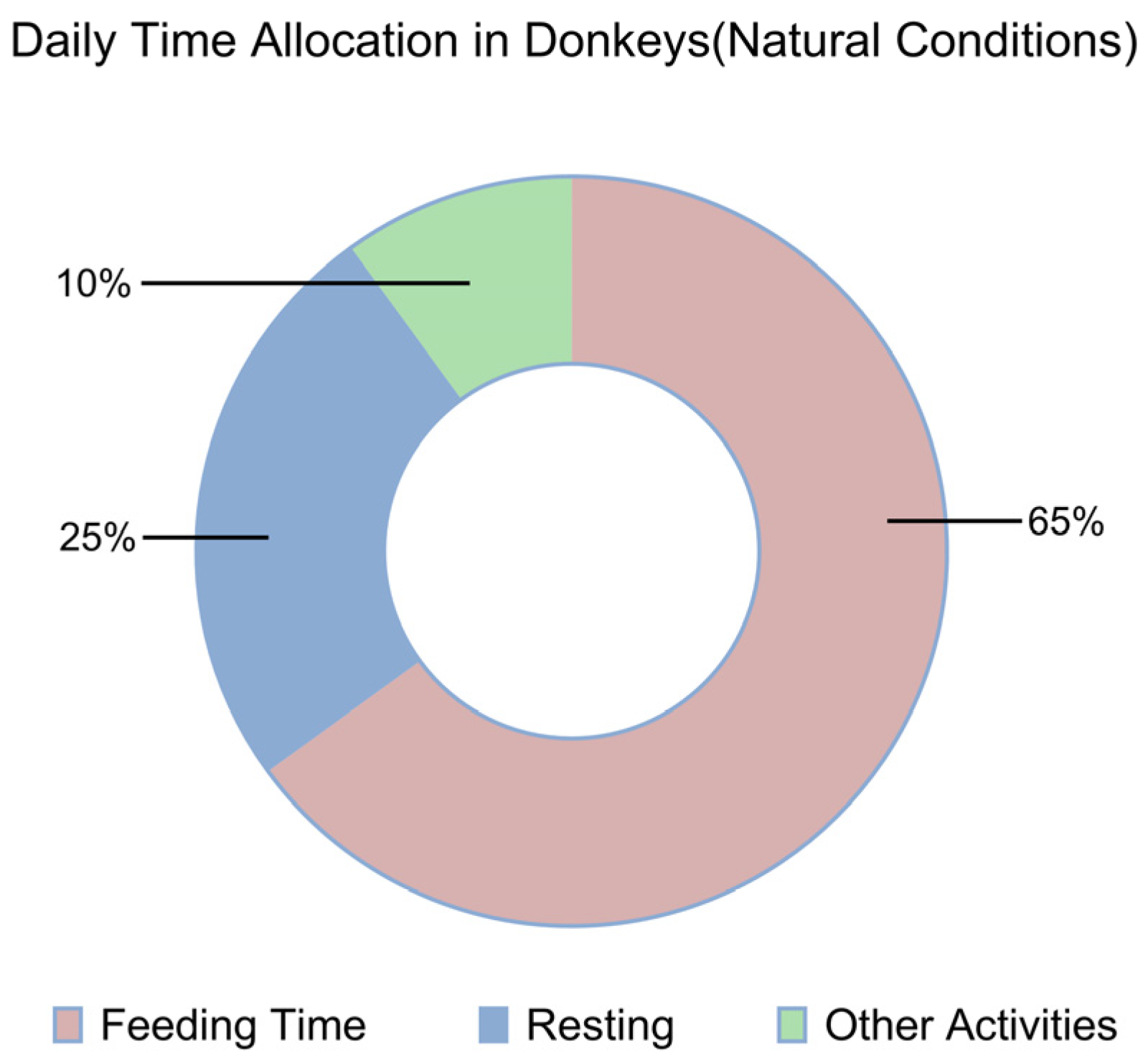
3.1. Foraging Behavior
3.2. Roughage for Donkeys
3.2.1. Conventional Roughage on Donkeys
3.2.2. Locally Sourced Non-Conventional Roughage on Donkeys
3.3. Concentrated Feed for Donkeys
4. Nutritional Studies on Donkeys
4.1. Energy Requirements
4.2. Protein Requirements
4.3. Vitamin and Mineral Requirements
4.4. Water Supply Requirements

| Nutrient Category | Requirement | Key Notes | Comparison to Horses |
|---|---|---|---|
| Energy (digestible) | 20 MJ/day (150 kg donkey) | 20% lower basal metabolic rate | Lower requirements |
| Dry matter intake | 2.0–2.5% body weight | 25–30% less than horses | Lower intake |
| Protein | Stage-specific needs | Essential amino acids critical | Similar quality needs |
| Crude fiber | 25–50% of diet | Higher digestibility than horses | 30% better utilization |
| Water | 35–95 g/kg·BW−1 | Can tolerate 30% water loss | Similar to horses |
| Ca: P | 1.5:1 to 2:1 ratio | Vitamin D required for absorption | Similar ratios |
5. The Impact of Donkey Intestinal Microbiota on Donkey Growth
6. Nutritional Intervention and Its Effect on Donkey Microbiota
6.1. Mechanistic Pathways Linking Diet, Microbiota, and Health Outcomes in Donkeys
6.1.1. Protein-Microbiota-Growth Performance Axis
6.1.2. Methionine Supplementation and the Oxidative Stress-Antioxidant-Microbiota Triangle
6.1.3. Energy Optimization and the Inflammation-Microbiota-Immunity Nexus
6.1.4. Non-Conventional Feeds and Bioactive Compound-Microbiota Interactions
6.2. Comparative Analysis and Pattern Recognition Across Nutritional Interventions
6.2.1. Universal Microbiota Responders to Nutritional Optimization
6.2.2. Dose–Response Relationships and Threshold Effects
6.2.3. Temporal Dynamics and Critical Windows for Intervention
6.3. From Mechanisms to Management: Translating Microbiota Knowledge into Practical Feeding Strategies
6.3.1. Microbiota-Based Nutritional Optimization Framework
6.3.2. Regional Adaptation and Sustainable Feed Resource Development
6.3.3. Practical Implementation Challenges and Solutions
6.4. Evidence-Based Study Summaries
7. Novel Insights and Future Directions for Donkey Nutrition Science
7.1. Novel Contributions of This Review
7.2. Critical Knowledge Gaps and Research Priorities
7.3. Translational Impact and Future Vision
8. Conclusions
Author Contributions
Funding
Institutional Review Board Statement
Informed Consent Statement
Data Availability Statement
Conflicts of Interest
References
- Todd, E.T.; Tonasso-Calvière, L.; Chauvey, L.; Schiavinato, S.; Fages, A.; Seguin-Orlando, A.; Clavel, P.; Khan, N.; Pérez Pardal, L.; Patterson Rosa, L.J.S. The genomic history and global expansion of domestic donkeys. Science 2022, 377, 1172–1180. [Google Scholar] [CrossRef]
- Rossel, S.; Marshall, F.; Peters, J.; Pilgram, T.; Adams, M.D.; O’Connor, D.J. Domestication of the donkey: Timing, processes, and indicators. Proc. Natl. Acad. Sci. USA 2008, 105, 3715–3720. [Google Scholar] [CrossRef] [PubMed]
- Khan, M.Z.; Chen, W.; Wang, X.; Liang, H.; Wei, L.; Huang, B.; Kou, X.; Liu, X.; Zhang, Z.; Chai, W. A review of genetic resources and trends of omics applications in donkey research: Focus on China. Front. Vet. Sci. 2024, 11, 1366128. [Google Scholar] [CrossRef] [PubMed]
- Wang, Y.; Hua, X.; Shi, X.; Wang, C. Origin, evolution, and research development of donkeys. Genes 2022, 13, 1945. [Google Scholar] [CrossRef] [PubMed]
- Kimura, B.; Marshall, F.; Beja-Pereira, A.; Mulligan, C. Donkey domestication. Annu. Rev. Anthropol. 2013, 30, 83–95. [Google Scholar] [CrossRef]
- Huang, B.; Khan, M.Z.; Chai, W.; Ullah, Q.; Wang, C. Exploring genetic markers: Mitochondrial DNA and genomic screening for biodiversity and production traits in donkeys. Animals 2023, 13, 2725. [Google Scholar] [CrossRef]
- Khan, M.Z.; Chen, W.; Li, M.; Ren, W.; Huang, B.; Kou, X.; Ullah, Q.; Wei, L.; Wang, T.; Khan, A. Is there sufficient evidence to support the health benefits of including donkey milk in the diet? Front. Nutr. 2024, 11, 1404998. [Google Scholar] [CrossRef]
- Li, M.; Sun, L.; Du, X.; Zhao, Y.; Ren, W.; Man, L.; Zhu, M.; Liu, G.; Khan, M.Z.; Wang, C. Characterization and discrimination of donkey milk lipids and volatiles across lactation stages. Food Chem. X 2024, 23, 101740. [Google Scholar] [CrossRef]
- Ravichandran, T.; Perumal, R.K.; Vijayalakshmy, K.; Raw, Z.; Cooke, F.; Baltenweck, I.; Rahman, H. Means of livelihood, clean environment to women empowerment: The multi-faceted role of donkeys. Animals 2023, 13, 1927. [Google Scholar] [CrossRef]
- Seyiti, S.; Kelimu, A. Donkey industry in China: Current aspects, suggestions and future challenges. J. Equine Vet. Sci. 2021, 102, 103642. [Google Scholar] [CrossRef]
- Geiger, M.; Hockenhull, J.; Buller, H.; Tefera Engida, G.; Getachew, M.; Burden, F.A.; Whay, H.R. Understanding the attitudes of communities to the social, economic, and cultural importance of working donkeys in rural, peri-urban, and urban areas of Ethiopia. Front. Vet. Sci. 2020, 7, 60. [Google Scholar] [CrossRef]
- Martin-Rosset, W. Donkey nutrition and feeding: Nutrient requirements and recommended allowances—A review and prospect. J. Equine Vet. Sci. 2018, 65, 75–85. [Google Scholar] [CrossRef]
- Polidori, P.; Vincenzetti, S. Farm management and feeding strategies for donkey milk production. In Sustainable Goat Production in Adverse Environments; Gorawala, P., Mandhatri, S., Eds.; Springer: Cham, Switzerland, 2017; Volume 2, pp. 93–109. [Google Scholar]
- Jerbi, H.; Rejeb, A.; Erdoğan, S.; Pérez, W. Anatomical and morphometric study of gastrointestinal tract of donkey (Equus africanus asinus). J. Morphol. Sci. 2014, 31, 18–22. [Google Scholar] [CrossRef][Green Version]
- Salari, F.; Licitra, R.; Altomonte, I.; Martini, M. Donkey feeding during maintenance, pregnancy, and lactation: Effects on body weight, milk production, and foal growth. J. Equine Vet. Sci. 2020, 91, 103131. [Google Scholar] [CrossRef] [PubMed]
- Raspa, F.; Cavallarin, L.; McLean, A.K.; Bergero, D.; Valle, E. A review of the appropriate nutrition welfare criteria of dairy donkeys: Nutritional requirements, farm management requirements and animal-based indicators. Animals 2019, 9, 315. [Google Scholar] [CrossRef] [PubMed]
- Zhang, Z.; Huang, B.; Gao, X.; Shi, X.; Wang, X.; Wang, T.; Wang, Y.; Liu, G.; Wang, C. Dynamic changes in fecal microbiota in donkey foals during weaning: From pre-weaning to post-weaning. Front. Microbiol. 2023, 14, 1105330. [Google Scholar] [CrossRef]
- Zhang, Z.; Huang, B.; Shi, X.; Wang, T.; Wang, Y.; Zhu, M.; Wang, C. Comparative analysis of bacterial diversity between the liquid phase and adherent fraction within the donkey caeco-colic ecosystem. Animals 2022, 12, 1116. [Google Scholar] [CrossRef] [PubMed]
- Zhang, Z.; Huang, B.; Wang, Y.; Zhu, M.; Wang, C. Could weaning remodel the oral microbiota composition in donkeys? An exploratory study. Animals 2022, 12, 2024. [Google Scholar] [CrossRef]
- Wang, Y.; Hu, T.; Liang, K.; Li, S.; Zhang, Q.; Li, W.; Qu, H.; Dong, B.; Zhang, H.; Ma, Q. Spatial variations in the microbiota: Comparative analysis of microbial composition and predicted functions across different intestinal segments and feces in donkeys. Front. Microbiol. 2025, 15, 1494926. [Google Scholar] [CrossRef]
- Wang, Y.; Li, X.; Li, Z.; Han, Q.; Hu, T.; Zhang, Q.; Qu, H.; Zhang, H.; Qu, Y.; Shi, D. Comparative analysis of composition and spatial variations in the foregut microbiota of male and female donkeys. Front. Microbiol. 2025, 16, 1532265. [Google Scholar] [CrossRef]
- Kou, X.; Liu, Y.; Xiang, F.; Zhang, X.; Khan, M.Z.; Wu, B.; Wang, H.; Gong, Y.; Wang, C.; Ma, Q. Insights into the donkey hindgut microbiome using metagenome-assembled genomes. Animals 2024, 14, 3625. [Google Scholar] [CrossRef]
- Liu, X.; Fan, H.; Ding, X.; Hong, Z.; Nei, Y.; Liu, Z.; Li, G.; Guo, H. Analysis of the gut microbiota by high-throughput sequencing of the V5–V6 regions of the 16S rRNA gene in donkey. Curr. Microbiol. 2014, 68, 657–662. [Google Scholar] [CrossRef]
- Guo, Y.; Yin, G.; Hui, F.; Guo, X.; Shi, B.; Zhao, Y.; Yan, S. Effects of dietary energy level on antioxidant capability, immune function and rectal microbiota in late gestation donkeys. Front. Microbiol. 2024, 15, 1308171. [Google Scholar] [CrossRef]
- Huang, B.; Khan, M.Z.; Chen, Y.; Liang, H.; Kou, X.; Wang, X.; Ren, W.; Wang, C.; Zhang, Z. Yeast polysaccharide supplementation: Impact on lactation, growth, immunity, and gut microbiota in Dezhou donkeys. Front. Microbiol. 2023, 14, 1289371. [Google Scholar] [CrossRef]
- McLean, A.K.; Gonzalez, F. Can scientists influence donkey welfare? Historical perspective and a contemporary view. J. Equine Vet. Sci. 2018, 65, 25–32. [Google Scholar] [CrossRef]
- Gross, M. A brief history of donkeys. Curr. Biol. 2022, 32, R985–R987. [Google Scholar] [CrossRef]
- Mueller, P.; Protos, P.; Houpt, K.; Van Soest, P. Chewing behaviour in the domestic donkey (Equus asinus) fed fibrous forage. Appl. Anim. Behav. Sci. 1998, 60, 241–251. [Google Scholar] [CrossRef]
- Ren, W.; Sun, M.; Shi, X.; Wang, T.; Wang, Y.; Wang, X.; Huang, B.; Kou, X.; Liang, H.; Chen, Y. Effects of roughage on the lipid and volatile-organic-compound profiles of donkey milk. Foods 2023, 12, 2231. [Google Scholar] [CrossRef] [PubMed]
- Lockard, C.L.; Lockard, C.G.; Smith, W.N.; Karr, K.J.; Holland, B.P.; Word, A.B.; Foster, J.L.; Jennings, J.S. Effects of roughage type on particle separation, rumination, fiber mat characteristics, in situ degradation, and ruminal fermentation parameters in beef steers. J. Anim. Sci. 2021, 99, skab214. [Google Scholar] [CrossRef] [PubMed]
- Hu, P.; Wang, L.; Hu, Z.; Jiang, L.; Hu, H.; Rao, Z.; Wu, L.; Tang, Z. Effects of multi-bacteria solid-state fermented diets with different crude fiber levels on growth performance, nutrient digestibility, and microbial flora of finishing pigs. Animals 2021, 11, 3079. [Google Scholar] [CrossRef] [PubMed]
- Liu, L.L.; Zhou, X.L.; Yang, H.J. Effect of Dietary Forage: Concentrate Ratio on Pre-Caecal and Total Digestive Tract Digestibility of Diverse Feedstuffs in Donkeys as Measured by the Mobile Nylon Bag Technique. Animals 2020, 10, 1070. [Google Scholar] [CrossRef]
- Kara, K.; Altınsoy, A. Effects of dietary fiber on ruminant nutrition. Vet. Med. Sci. 2024, 10, e31373. [Google Scholar] [CrossRef]
- Wang, X.; Song, J.; Liu, Z.; Zhang, G.; Zhang, Y. Fermentation quality and microbial community of corn stover or rice straw silage mixed with soybean curd residue. Animals 2022, 12, 919. [Google Scholar] [CrossRef]
- Ghorbani, M.; Kianmehr, M.H.; Sarlaki, E.; Angelidaki, I.; Yang, Y.; Tabatabaei, M.; Pan, J.; Aghbashlo, M. Ozonation-pelleting of nitrogen-enriched wheat straw: Towards improved pellet properties, enhanced digestibility, and reduced methane emissions. Sci. Total Environ. 2023, 892, 164526. [Google Scholar] [CrossRef]
- Zhang, W.; Pan, K.; Liu, C.; Qu, M.; OuYang, K.; Song, X.; Zhao, X. Recombinant Lentinula edodes xylanase improved the hydrolysis and in vitro ruminal fermentation of soybean straw by changing its fiber structure. Int. J. Biol. Macromol. 2020, 151, 286–292. [Google Scholar] [CrossRef]
- Ghalkhani, A.; Golzardi, F.; Khazaei, A.; Mahrokh, A.; Illés, Á.; Bojtor, C.; Mousavi, S.M.N.; Széles, A. Irrigation management strategies to enhance forage yield, feed value, and water-use efficiency of sorghum cultivars. Plants 2023, 12, 2154. [Google Scholar] [CrossRef] [PubMed]
- Ma, Y.; Khan, M.Z.; Liu, Y.; Xiao, J.; Chen, X.; Ji, S.; Cao, Z.; Li, S. Analysis of nutrient composition, rumen degradation characteristics, and feeding value of Chinese rye grass, barley grass, and naked oat straw. Animals 2021, 11, 2486. [Google Scholar] [CrossRef] [PubMed]
- Bolson, D.C.; Pereira, D.H.; dos Santos Pina, D.; Xavier, I.M.; Barbosa, P.L.; Pedreira, B.C.E.; Mombach, M.A. Corn silage rehydrated with crude glycerin in lambs’ diets. Trop. Anim. Health Prod. 2020, 52, 3307–3314. [Google Scholar] [CrossRef]
- Zhang, M.; Wang, Y.; Tan, Z.; Li, Z.; Li, Y.; Lv, H.; Zhang, B.; Jin, Q. Microorganism profile, fermentation quality and rumen digestibility in vitro of maize-stalk silages produced at different maturity stages. Crop Pasture Sci. 2017, 68, 225–233. [Google Scholar] [CrossRef]
- Kazemi, M.; Mokhtarpour, A.; Saleh, H. Toward making a high-quality silage from common reed (Phragmites australis). J. Anim. Physiol. Anim. Nutr. 2024, 108, 338–345. [Google Scholar] [CrossRef]
- Ding, H.; Ao, C.; Zhang, X. Potential use of garlic products in ruminant feeding: A review. Anim. Nutr. 2023, 14, 343–355. [Google Scholar] [CrossRef] [PubMed]
- Abdelmoteleb, A.; Valdez-Salas, B.; Beltran-Partida, E.; Mendez-Trujillo, V.; González-Mendoza, D.; Tzintzun-Camacho, O.; Roumia, A.F. Biosynthesis of zinc oxide nanoparticles using garlic peel extract and their antibacterial potential. Microbiol. Res. 2024, 15, 1655–1669. [Google Scholar] [CrossRef]
- Sirisa-ard, P.; Pholsonklam, K.; Satchachai, A.; Tragoolpua, Y.; Kaewkod, T. Antioxidant, antibacterial activities and cytotoxicity of garlic leaf extract from garlic waste. Nat. Life Sci. Commun. 2023, 22, e2023059. [Google Scholar] [CrossRef]
- Harun, M.A.; Buraena, S.; Wello, E.A.; Idrus, H.H.; Arsal, A.S.F. Antibacterial potency of black garlic extract from Allium sativum on Escherichia coli. Gac. Med. J. 2021, 3, 125–132. [Google Scholar] [CrossRef]
- Ahn, J.; Shin, J.; Son, G.; Jang, S.; Park, B. Effect of allicin and illite supplementation on the methane production and growth performance of beef cattle. Int. J. Agric. Res. 2024, 58, 1165. [Google Scholar] [CrossRef]
- Antwi, C.; Sasu, P.; Partey, S.; Kwaku, M.; Anim-Jnr, A.; Frimpong, Y.; Idan, F. Nutritional evaluation and supplementation effect of bamboo leaves on intake, growth performance, and blood indices of Djallonké sheep fed Cenchrus purpureus and Brachiaria decumbens as basal diets. Ghana J. Agric. Sci. 2023, 14, 46–63. [Google Scholar] [CrossRef]
- Zali, M. Economic value of bamboo leaf on nutrition intake, productivity, and growth performance on Boer goat. J. Peternak. Indones. 2024, 10, 120–126. [Google Scholar] [CrossRef]
- Bin, Y.; Tian, M.; Xie, J.; Wang, M.; Chen, C.; Jiang, A. Bamboo leaf extract treatment alleviates the surface browning of fresh-cut apple by regulating membrane lipid metabolism and antioxidant properties. J. Sci. Food Agric. 2024, 104, 2888–2896. [Google Scholar] [CrossRef]
- Xie, Z.; Yu, G.; Yun, Y.; Zhang, X.; Shen, M.; Jia, M.; Li, A.; Zhang, H.; Wang, T.; Zhang, J. Effects of bamboo leaf extract on energy metabolism, antioxidant capacity, and biogenesis of small intestine mitochondria in broilers. J. Anim. Sci. 2023, 101, skac391. [Google Scholar] [CrossRef]
- Yu, G.; Ji, S.; Yun, Y.; Cheng, K.; Zhang, H.; Jia, P.; Wang, T.; Zhang, L. Effects of bamboo leaf extract intervention on the growth performance, antioxidant capacity, and hepatic apoptosis in suckling piglets. J. Anim. Sci. 2022, 100, skac201. [Google Scholar] [CrossRef]
- Fang, J.; Gao, S.; Islam, R.; Teramoto, Y.; Maeda, H. Extracts of Phellinus linteus, bamboo (Sasa senanensis) leaf and chaga mushroom (Inonotus obliquus) exhibit antitumor activity through activating innate immunity. Nutrients 2020, 12, 2279. [Google Scholar] [CrossRef]
- Guo, X.; Xu, D.; Li, F.; Bai, J.; Su, R. Current approaches on the roles of lactic acid bacteria in crop silage. Microb. Biotechnol. 2023, 16, 67–87. [Google Scholar] [CrossRef]
- Zhang, Q.; Zhao, M.; Wang, X.; Yu, Z.; Na, R. Ensiling alfalfa with whole crop corn improves the silage quality and in vitro digestibility of the silage mixtures. Grassl. Sci. 2017, 63, 211–217. [Google Scholar] [CrossRef]
- Liang, X.; Yue, Y.; Zhao, Y.; Guo, Y.; Guo, X.; Shi, B.; Yan, S. Effects of dietary concentrate to forage ratio on milk performance, milk amino acid composition and milk protein synthesis of lactating donkeys. Anim. Feed Sci. Technol. 2022, 292, 115444. [Google Scholar] [CrossRef]
- Li, B.; He, X.L.; Zhao, Y.P.; Zhao, Q.N.; Bai, D.Y.; Manglai, D. Tyrosinase-related protein 1 (TYRP1) gene polymorphism and skin differential expression related to coat color in Mongolian horse. Livest. Sci. 2014, 167, 58–64. [Google Scholar] [CrossRef]
- Naderi, N.; Ghorbani, G.R.; Erfani, H.; Ferraretto, L.F. Feeding byproduct-based concentrates instead of human-edible feed ingredients increases net food production and improves performance of high-producing Holstein cows. Animals 2022, 12, 2977. [Google Scholar] [CrossRef] [PubMed]
- Bohlen, L.; Sawyer, J.; Baber, J.; Redmon, L.; Wickersham, T. Effect of level of Pongamia seedcake on nutrient utilization in cattle consuming forage. J. Anim. Sci. 2016, 94, 14–15. [Google Scholar] [CrossRef]
- Widderich, N.; Stotz, J.; Lohkamp, F.; Visscher, C.; Schwaneberg, U.; Liese, A.; Bubenheim, P.; Ruff, A. An up-scaled biotechnological approach for phosphorus-depleted rye bran as animal feed. J. Biotechnol. Bioprocess. 2024, 11, 49. [Google Scholar] [CrossRef]
- Astuti, T.; Rofiq, M.N.; Nurhaita; Santoso, U. Analysis of fibre fraction of palm oil frond fermented with different microbes and soluble carbohydrates addition as ruminant feeding. IOP Conf. Ser. Earth Environ. Sci. 2019, 347, 012059. [Google Scholar] [CrossRef]
- Köninger, M.; von Velsen-Zerweck, A.; Eiberger, C.; Löffler, C.; Töpper, A.; Visscher, C.; Reckels, B.; Vervuert, I. Nutrient composition and feed hygiene of alfalfa, comparison of feed intake and selected metabolic parameters in horses fed alfalfa haylage, alfalfa hay or meadow hay. Animals 2024, 14, 889. [Google Scholar] [CrossRef]
- Wang, Y.; Luo, Y.; Luo, L.; Zhang, H.; Liao, Y.; Gou, C. Enhancement of the nutritional value of fermented corn stover as ruminant feed using the fungi Pleurotus spp. Sci. Rep. 2021, 11, 11961. [Google Scholar] [CrossRef]
- Chen, X.; Liang, X.; Shi, N.; He, L.; Ma, Y.; Zhu, D.; Ni, Z.; Chen, H. New wheat straw fermentation feed: Recombinant Schizosaccharomyces pombe efficient degradation of lignocellulose and increase feed protein. Process Biochem. Biotechnol. 2025, 55, 36–44. [Google Scholar] [CrossRef]
- Li, L.; Guo, X.; Zhao, Y.; Guo, Y.; Shi, B.; Zhou, Y.; Zhang, Y.; Yan, S. Cecal microbial diversity and metabolome reveal a reduction in growth due to oxidative stress caused by a low-energy diet in donkeys. Animals 2024, 13, 1377. [Google Scholar] [CrossRef] [PubMed]
- Fusaro, I.; Parrillo, S.; Buonaiuto, G.; Prasinou, P.; Gramenzi, A.; Bucci, R.; Cavallini, D.; Carosi, A.; Carluccio, A.; De Amicis, I. Effects of hemp-based polyunsaturated fatty acid supplementation on membrane lipid profiles and reproductive performance in Martina Franca jacks. Front. Vet. Sci. 2025, 12, 1553218. [Google Scholar] [CrossRef]
- Peng, X.N.; Wilken, S.E.; Lankiewicz, T.S.; Gilmore, S.P.; O’Malley, M.A. Supplementary information for “Genomic and functional analyses of fungal and bacterial consortia that enable lignocellulose breakdown in goat gut microbiomes”. Nat. Microbiol. 2021, 6, 1630–1642. [Google Scholar] [CrossRef]
- Prasinou, P.; De Amicis, I.; Fusaro, I.; Bucci, R.; Cavallini, D.; Parrillo, S.; Caputo, M.; Gramenzi, A.; Carluccio, A. The lipidomics of spermatozoa and red blood cells membrane profile of Martina Franca donkey: Preliminary evaluation. Animals 2022, 13, 8. [Google Scholar] [CrossRef]
- Ikhlas, Z.; Jamarun, N. Effect of soaking mangrove fruit (Sonneratia alba) with lime water on crude protein, crude fiber, and nitrogen free extract content as a ruminant feed. IOP Conf. Ser. Earth Environ. Sci. 2024, 1364, 012094. [Google Scholar] [CrossRef]
- Jiyana, S.; Ratsaka, M.; Leeuw, K.; Mbatha, K. Effects of dietary fibre level on rumen pH, total microbial count and methanogenic archaea in Bonsmara and Nguni steers. S. Afr. J. Anim. Sci. 2021, 51, 397–407. [Google Scholar] [CrossRef]
- Kim, E.; Morgan, N.; Moss, A.; Troescher, A.; Ader, P.; Choct, M. Starch digestion along the gastrointestinal tract in broiler chickens offered a wheat- or corn-based diet. Poult. Sci. 2020, 99, 3196–3204. [Google Scholar]
- Mori, A.M.; Nahak, O.R.; Tahuk, P.K. The effect of the use of fish flour as a source of protein in complete feeds on the digestiveness of fat, crude fiber and nitrogen-free extract in Bali cattle fattened. Bul. J. Anim. Sci. 2022, 4, 70–82. [Google Scholar]
- Zhang, L.; Wu, T.; Zhang, Y.; Chen, Y.; Ge, X.; Sui, W.; Zhu, Q.; Geng, J.; Zhang, M. Release of bound polyphenols from wheat bran soluble dietary fiber during simulated gastrointestinal digestion and colonic fermentation in vitro. Food Chem. 2023, 402, 134111. [Google Scholar] [CrossRef]
- Liu, H.; Zeng, X.; Huang, J.; Yuan, X.; Wang, Q.; Ma, L. Dietary fiber extracted from pomelo fruitlets promotes intestinal functions, both in vitro and in vivo. Carbohydr. Polym. 2021, 252, 117186. [Google Scholar] [CrossRef] [PubMed]
- Nakamura, Y.K.; Metea, C.; Llorenç, V.; Karstens, L.; Balter, A.; Lin, P. A diet rich in fermentable fiber promotes robust changes in the intestinal microbiota, mitigates intestinal permeability, and attenuates autoimmune uveitis. Sci. Rep. 2023, 13, 10806. [Google Scholar] [CrossRef]
- Raspa, F.; Chessa, S.; Bergero, D.; Sacchi, P.; Ferrocino, I.; Cocolin, L.; Corvaglia, M.R.; Moretti, R.; Cavallini, D.; Valle, E. Microbiota characterization throughout the digestive tract of horses fed a high-fiber vs. a high-starch diet. Front. Vet. Sci. 2024, 11, 1386135. [Google Scholar] [CrossRef]
- MacFarlane, N.G. Digestion and absorption. Anaesth. Intensive Care Med. 2018, 19, 125–127. [Google Scholar] [CrossRef]
- Moro, J.; Roisné-Hamelin, G.; Chaumontet, C.; Even, P.C.; Blais, A.; Cansell, C.; Piedcoq, J.; Gaudichon, C.; Tomé, D.; Azzout-Marniche, D. Lysine or threonine deficiency decreases body weight gain in growing rats despite an increase in food intake without increasing energy expenditure in response to FGF21. Nutrients 2022, 15, 197. [Google Scholar] [CrossRef]
- Trabue, S.; Kerr, B.; Scoggin, K.; Andersen, D.; Van Weelden, M. Swine diets impact manure characteristics and gas emissions: Part I protein level. Sci. Total Environ. 2021, 755, 142528. [Google Scholar] [CrossRef] [PubMed]
- Rehman, S.U.; Ali, R.; Zhang, H.; Zafar, M.H.; Wang, M. Research progress in the role and mechanism of leucine in regulating animal growth and development. Front. Physiol. 2023, 14, 1252089. [Google Scholar] [CrossRef]
- Tremblay, G.F.; Thériault, M.; Seguin, P.; Godin, X.; Claessens, A.; Bittman, S.; Hunt, D.; Bélanger, G.; Hakl, J.; Bertrand, A. Legume addition to alfalfa-based mixtures improves the forage energy to protein ratio. Agron. J. 2023, 115, 1842–1855. [Google Scholar] [CrossRef]
- Sasongko, W.T.; Wahyono, T.; Astuti, D.A.; Syahputra, A.R.; Widodo, S.; Jayanegara, A. Use of irradiated chitosan as a matrix for slow-release urea and in vitro fermentation characteristics of slow-release urea supplementation in ruminant rations. Vet. World 2024, 17, 319–328. [Google Scholar] [CrossRef] [PubMed]
- Patra, A.K.; Aschenbach, J.R. Ureases in the gastrointestinal tracts of ruminant and monogastric animals and their implication in urea-N/ammonia metabolism: A review. J. Adv. Res. 2018, 13, 39–50. [Google Scholar] [CrossRef]
- Nordlund, E.; Silventoinen-Veijalainen, P.; Hyytiäinen-Pabst, T.; Nyyssölä, A.; Valtonen, A.; Ritala, A.; Lienemann, M.; Rosa-Sibakov, N. In vitro protein digestion and carbohydrate colon fermentation of microbial biomass samples from bacterial, filamentous fungus and yeast sources. Food Res. Int. 2024, 182, 114146. [Google Scholar] [CrossRef]
- Nardi, K.T.; Sarturi, J.O.; Huerta-Leidenz, N.; Henry, D.D.; Woerner, D.R.; Ciriaco, F.M.; Sánchez-Escalante, A.; Torrescano-Urrutia, G.R.; Silva, K.G.; Favero, I.G. The effects of a nutritional packet (live yeast, vitamins C and B1, and electrolytes) offered during the final phase of feedlot steers on growth performance, nutrient digestion, and feeding behavior. J. Anim. Sci. 2023, 101, skac416. [Google Scholar] [CrossRef]
- Malik, D.; Narayanasamy, N.; Pratyusha, V.; Thakur, J.; Sinha, N. Inorganic nutrients: Macrominerals. In Textbook of Nutritional Biochemistry; Springer: Cham, Switzerland, 2023; pp. 391–446. [Google Scholar]
- Floradin, P.; Pomar, C.; Létourneau-Montminy, M.; Schlegel, P. Development of the mineralisation of individual bones and bone regions in replacement gilts according to dietary calcium and phosphorus. Animal 2024, 18, 101241. [Google Scholar] [CrossRef] [PubMed]
- Jlali, M.; Cozannet, P.; Moore, D.; Preynat, A. Investigating the effect of available phosphorus and calcium level on the potential of a multi-carbohydrase and phytase complex on growth performance, amino acids and phosphorus digestibility in broilers from 1 to 21 days of age. Anim. Feed Sci. Technol. 2021, 276, 114927. [Google Scholar] [CrossRef]
- Revilla-Ruiz, Á.; Carulla, P.; Fernandez-Novo, A.; De Mercado, E.; Pérez-Navarro, A.; Patrón-Collantes, R.; Sebastián, F.; Pérez-Garnelo, S.S.; González-Martín, J.V.; Estellés, F. Effect of milk-feeding frequency and calcium gluconate supplementation on growth, health, and reproductive and metabolic features of Holstein heifers at a rearing farm. Animals 2024, 14, 1336. [Google Scholar] [CrossRef]
- Workman, C.; Jonsson, G.; Wroblewski, R. Concentrations of sodium, potassium, calcium, magnesium and chlorine in the muscle cells of downer cows and cows with parturient paresis. Res. Vet. Sci. 1994, 57, 53–57. [Google Scholar] [CrossRef] [PubMed]
- Isaac-Olive, K.; Chatt, A. Expanded uncertainties of preconcentration neutron activation measurements of extractable organo-chlorine, bromine and iodine compounds in bovine milk lipids. J. Radioanal. Nucl. Chem. 2014, 302, 1213–1224. [Google Scholar] [CrossRef]
- Enke, N.; Brinkmann, L.; Südekum, K.H.; Tholen, E.; Gerken, M. Sensitivity of ponies to sodium in the drinking water. Anim. Sci. J. 2022, 93, e13776. [Google Scholar] [CrossRef]
- Molla, B.; Dembela, S.; Megersa, B.; Mekuria, W. The welfare, watering, housing, feeding and working management of working donkeys in and around Hawassa City, Southern Ethiopia. J. Vet. Res. Anim. Husb. 2017, 2, 106–113. [Google Scholar]
- Ellis, R.N.; Lawrence, T.L. The energy and protein requirements of the light horse. Br. Vet. J. 1980, 136, 116–121. [Google Scholar] [CrossRef]
- Nengomasha, E.; Pearson, R.; Smith, T. The donkey as a draught power resource in smallholder farming in semi-arid western Zimbabwe: 1. Live weight and food and water requirements. Anim. Sci. 1999, 69, 297–304. [Google Scholar] [CrossRef]
- Carretero-Roque, L.; Colunga, B.; Smith, D.; González-Ronquillo, M.; Solis-Mendez, A.; Castelán-Ortega, O. Digestible energy requirements of Mexican donkeys fed oat straw and maize stover. Trop. Anim. Health Prod. 2005, 37, 123–142. [Google Scholar] [CrossRef]
- Wood, S.J.; Smith, D.G.; Morris, C. Seasonal variation of digestible energy requirements of mature donkeys in the UK. Pferdeheilkunde 2005, 21, 39–45. [Google Scholar] [CrossRef]
- Tisserand, J.; Pearson, R.A. Nutritional requirements, feed intake and digestion in working donkeys: A comparison with other work animals. In Working Animals in Agriculture and Transport; Pearson, R.A., Lhoste, P., Saastamoinen, M., Martin-Rosset, W., Eds.; Wageningen Academic Publishers: Wageningen, The Netherlands, 2003; pp. 63–73. [Google Scholar]
- Tassone, S.; Fortina, R.; Valle, E.; Cavallarin, L.; Raspa, F.; Boggero, S.; Bergero, D.; Giammarino, M.; Renna, M. Comparison of in vivo and in vitro digestibility in donkeys. Animals 2020, 10, 2100. [Google Scholar] [CrossRef]
- Liu, G.; Bou, G.; Su, S.; Xing, J.; Qu, H.; Zhang, X.; Wang, X.; Zhao, Y.; Dugarjaviin, M. Microbial diversity within the digestive tract contents of Dezhou donkeys. PLoS ONE 2019, 14, e0226186. [Google Scholar] [CrossRef]
- Guo, R.; Zhang, S.; Chen, J.; Shen, W.; Zhang, G.; Wang, J.; Zhang, F.; Pan, Q.; Xie, T.; Ai, D. Comparison of gut microflora of donkeys in high and low altitude areas. Front. Microbiol. 2022, 13, 964799. [Google Scholar] [CrossRef] [PubMed]
- Li, C.; Li, X.Y.; Li, X.B.; Ma, C.; Chen, H.; Yang, F. Growth performance, nutrient digestibility, fecal microbial diversity and volatile fatty acid, and blood biochemical indices of suckling donkeys fed diets supplemented with multienzymes. BMC Vet. Res. 2024, 20, 61. [Google Scholar] [CrossRef] [PubMed]
- Xie, L.; Xing, J.; Qi, X.; Lu, T.; Jin, Y.; Akhtar, M.F.; Li, L.; Liu, G. Effects of concentrate feeding sequence on growth performance, nutrient digestibility, VFA production, and fecal microbiota of weaned donkeys. Animals 2023, 13, 2893. [Google Scholar] [CrossRef] [PubMed]
- Yang, Q.; Wang, Z.; Su, J.; Yang, G.; Liu, H.; Liu, B.; Cheng, J.; Dong, B.; Jafari, H.; Wang, H.; et al. Comprehensive omics analysis of the fecal microbiome and serum metabolome in Dezhou donkey foals at the end of weaning and after weaning. Anim. Sci. J. 2025, 96, e70021. [Google Scholar] [CrossRef]
- Sneddon, J.; Boomker, E.; Howard, C. Mucosal surface area and fermentation activity in the hind gut of hydrated and chronically dehydrated working donkeys. J. Anim. Sci. 2006, 84, 119–124. [Google Scholar] [CrossRef]
- Khan, M.Z.; Li, Y.; Zhu, M.; Li, M.; Wang, T.; Zhang, Z.; Liu, W.; Ma, Q.; Wang, C. Advances in donkey disease surveillance and microbiome characterization in China. Microorganisms 2025, 13, 749. [Google Scholar] [CrossRef]
- Zhang, C.; Zhang, C.; Wang, Y.; Du, M.; Zhang, G.; Lee, Y. Dietary energy level impacts the performance of donkeys by manipulating the gut microbiome and metabolome. Front. Vet. Sci. 2021, 8, 694357. [Google Scholar] [CrossRef]
- Wang, Y.; Diao, K.; Li, H.; Zhang, C.; Zhang, G.; Guo, C. Effects of dietary protein levels on production performance, meat quality traits, and gut microbiome of fattening Dezhou donkeys. Microorganisms 2025, 13, 1388. [Google Scholar] [CrossRef]
- Khan, M.Z.; Liu, S.; Ma, Y.; Ma, M.; Ullah, Q.; Khan, I.M.; Wang, J.; Xiao, J.; Chen, T.; Khan, A. Overview of the effect of rumen-protected limiting amino acids (methionine and lysine) and choline on the immunity, antioxidative, and inflammatory status of periparturient ruminants. Front. Immunol. 2023, 13, 1042895. [Google Scholar] [CrossRef]
- Song, C.; Zhang, T.; Xu, D.; Zhu, M.; Mei, S.; Zhou, B.; Wang, K.; Chen, C.; Zhu, E.; Cheng, Z. Impact of feeding dried distillers’ grains with solubles diet on microbiome and metabolome of ruminal and cecal contents in Guanling yellow cattle. Front. Microbiol. 2023, 14, 1171563. [Google Scholar] [CrossRef] [PubMed]
- Plovier, H.; Everard, A.; Druart, C.; Depommier, C.; Van Hul, M.; Geurts, L.; Chilloux, J.; Ottman, N.; Duparc, T.; Lichtenstein, L.; et al. A purified membrane protein from Akkermansia muciniphila or the pasteurized bacterium improves metabolism in obese and diabetic mice. Nat. Med. 2017, 23, 107–113. [Google Scholar] [CrossRef]
- Huang, F.; Ma, Z.; Du, X.; Wang, C.; Liu, G.; Zhou, M. Methionine alters the fecal microbiota and enhances the antioxidant capacity of lactating donkeys. Animals 2025, 15, 648. [Google Scholar] [CrossRef] [PubMed]
- Wu, G.; Fang, Y.Z.; Yang, S.; Lupton, J.R.; Turner, N.D. Glutathione metabolism and its implications for health. J. Nutr. 2004, 134, 489–492. [Google Scholar] [CrossRef]
- Donohoe, D.R.; Collins, L.B.; Wali, A.; Bigler, R.; Sun, W.; Bultman, S.J. The Warburg effect dictates the mechanism of butyrate-mediated histone acetylation and cell proliferation. Mol. Cell 2012, 48, 612–626. [Google Scholar] [CrossRef] [PubMed]
- Ma, X.; Nan, F.; Liang, H.; Shu, P.; Fan, X.; Song, X.; Hou, Y.; Zhang, D. Excessive intake of sugar: An accomplice of inflammation. Front. Immunol. 2022, 13, 988481. [Google Scholar] [CrossRef]
- Koh, A.; De Vadder, F.; Kovatcheva-Datchary, P.; Bäckhed, F. From dietary fiber to host physiology: Short-chain fatty acids as key bacterial metabolites. Cell 2016, 165, 1332–1345. [Google Scholar] [CrossRef] [PubMed]
- Tan, J.; McKenzie, C.; Potamitis, M.; Thorburn, A.N.; Mackay, C.R.; Macia, L. The role of short-chain fatty acids in health and disease. Adv. Immunol. 2014, 121, 91–119. [Google Scholar]
- Kim, M.H.; Kang, S.G.; Park, J.H.; Yanagisawa, M.; Kim, C.H. Short-chain fatty acids activate GPR41 and GPR43 on intestinal epithelial cells to promote inflammatory responses in mice. Gastroenterology 2013, 145, 396–406. [Google Scholar] [CrossRef]
- Singh, N.; Gurav, A.; Sivaprakasam, S.; Brady, E.; Padia, R.; Shi, H.; Thangaraju, M.; Prasad, P.D.; Manicassamy, S.; Munn, D.H.; et al. Activation of Gpr109a, receptor for niacin and the commensal metabolite butyrate, suppresses colonic inflammation and carcinogenesis. Immunity 2014, 40, 128–139. [Google Scholar] [CrossRef]
- Vijay-Kumar, M.; Aitken, J.D.; Carvalho, F.A.; Cullender, T.C.; Mwangi, S.; Srinivasan, S.; Sitaraman, S.V.; Knight, R.; Ley, R.E.; Gewirtz, A.T. Metabolic syndrome and altered gut microbiota in mice lacking Toll-like receptor 5. Science 2010, 328, 228–231. [Google Scholar] [CrossRef]
- Khan, M.Z.; Huang, B.; Kou, X.; Chen, Y.; Liang, H.; Ullah, Q.; Khan, I.M.; Khan, A.; Chai, W.; Wang, C. Enhancing bovine immune, antioxidant and anti-inflammatory responses with vitamins, rumen-protected amino acids, and trace minerals to prevent periparturient mastitis. Front. Immunol. 2024, 14, 1290044. [Google Scholar] [CrossRef]
- Smith, P.M.; Howitt, M.R.; Panikov, N.; Michaud, M.; Gallini, C.A.; Bohlooly-Y, M.; Glickman, J.N.; Garrett, W.S. The microbial metabolites, short-chain fatty acids, regulate colonic Treg cell homeostasis. Science 2013, 341, 569–573. [Google Scholar] [CrossRef] [PubMed]
- Cai, C.; Xie, L.; Xing, J.; Lu, T.; Qi, X.; Li, L.; Chen, X.; Akhtar, M.F.; Jin, Y.; Liu, G. Effects of concentrate feeding sequence on VFA production, and cecal microbiota of Dezhou donkeys by metagenomic technology. Front. Vet. Sci. 2024, 11, 1401980. [Google Scholar] [CrossRef] [PubMed]
- Wang, T.; Wang, Y.; Li, P.; Liu, J.; Mao, X.; Li, Z.; Wen, Z.; Yin, Y.; Li, Y.; Lin, G. Dietary mannan oligosaccharides enhance lactational performance, nutrient metabolism, plasma metabolomics, and gut microbiota in Dezhou donkeys. Int. J. Mol. Sci. 2025, 26, 9105. [Google Scholar] [CrossRef]
- Shaheen, N.; Khursheed, W.; Gurung, B.; Wang, S. Akkermansia muciniphila: A key player in gut microbiota-based disease modulation. Microbiol. Res. 2025, 301, 128317. [Google Scholar] [CrossRef] [PubMed]


| Feed Type | Category | Crude Fiber (%) | Crude Protein (%) | Advantages | Considerations | References |
|---|---|---|---|---|---|---|
| Garlic Byproducts | Non-conventional | Variable | Variable | Bioactive compounds, antimicrobial | Limited usage data | [42] |
| Alfalfa Hay | Conventional | 25–30 | 10–19 | High quality, good protein | More expensive | [61] |
| Corn Stalks | Conventional | >30 | 2–4 | Readily available, low cost | Requires processing | [62] |
| Wheat Straw | Conventional | 25–50 | 3–5 | Common in northern regions | Low protein | [63] |
| Reed Silage | Non-conventional | Variable | Variable | Locally abundant, cost-effective | Requires fermentation | [62] |
| Bamboo Leaves | Non-conventional | High | Higher than straw | Antioxidant properties, drought-resistant | Limited research | [62] |
| Treatment | Effects | Reference |
|---|---|---|
| Medium energy level (10.49 MJ/kg) during periparturient period | Enhanced average daily gain (ADG), TNF-α, CAT, T-SOD, GSH-Px, T-AOC levels Reduced MDA, IL-1, IL-2, IL-6 Beneficial rectal microbiota: Candidatus_Saccharimonas, Fibrobacter, Lactobacillus, Bifidobacterium, Akkermansia muciniphila These bacteria were positively associated with antioxidant enzymes and negative with inflammatory markers | [24] |
| Yeast polysaccharide supplementation | Increased immunoglobulin A (IgA) and immunoglobulin G (IgG) levels Enhanced fecal microbiome: Lactobacillus, Prevotella, Terriporobacter, Cellulosilyticum Positive association with metabolism and growth performance | [25] |
| Multienzyme supplementation (glyanase, β-mannanase, β-glucanase, cellulase, protease, amylase) in 2-month-old suckling donkeys | Improved beneficial bacterial populations: Firmicutes, Oscillospiraceae, Lachnospiraceae, Christensenellaceae, Christensenellaceae_R-7_group, Streptococcus Reduced harmful Proteobacteria Enhanced microbial balance for long-term digestive health during weaning | [101] |
| Total Mixed Ration (TMR) vs. sequential feeding in weaned donkeys | Superior growth performance and nutrient digestibility Increased Firmicutes, Bacteroidetes, Treponema, Rikenellaceae-RC9-gut-group, Unidentified-F082, Bacteroidales-RF16-group Varied volatile fatty acid profiles (Acetic Acid, Propionic Acid, Butyric Acid, Isobutyric Acid, Valeric Acid, Isovaleric Acid) | [103] |
| Concentrate supplements with soybean meal (donkey foals) | Enhanced beneficial gut microbiota: Akkermansia, Oscillospiraceae, Porphyromonas, Streptococcus Improved growth performance, serum hormones, and metabolites Superior effects on gut health | [106] |
| Dietary protein supplementation (12.52%) | Modulated hindgut microbiota including Prevotella, Clostridiumsensustricto1, NK4A214 group, OscillospiraceaeUCG-002, OscillospiraceaeUCG-005 Enhanced microbial community composition Improved nutrient digestibility and overall performance | [107] |
| Methionine supplementation | 5 g/d: Increased abundance of Methanocorpusculum and Ruminococcus 15 g/d: Altered gut microbiota including Ruminococcus, Peptococcus, Anaeroplasma Reduced oxidative stress (lower MDA) Enhanced antioxidant capacity (higher T-AOC and CAT activity) Beneficial bacteria positively associated with antioxidant activity | [108] |
| Low-energy diets | Reduced growth performance and nutrient digestibility Increased oxidative stress Cecal microbiome changes: decreased Firmicutes and Actinobacteria, increased Bacteroidetes Metabolomic changes in energy metabolism pathways | [109] |
| Fiber-to-concentrate ratios in total mixed rations (82-day trial) | Increased abundance of beneficial intestinal bacteria: Firmicutes, Prevotella, Bacteroides, Proteobacteria, Fibrobacter Upregulated galactose metabolism and glycolysis Enhanced host growth and metabolic function | [110] |
| Mannan oligosaccharides (0.5 g/kg diet for 60 days) | Improved anti-inflammatory response: decreased TNF-α, IL-6, IL-17 levels Enhanced antioxidant responses and metabolic health Increased beneficial microbiota: Clostridium, Bacteroides, Parabacteroides, Lachnospiraceae_UCG-009, Faecalicoccus | [111] |
| Dietary energy level (Low and high energy feed supplementation) | Both the diet significantly enhanced growth performance including ADG and feed efficiency Enhanced beneficial bacteria such as Firmicutes, Bacteroidetes, unidentified_Prevotellaceae, unidentified_Ruminococcaceae with improved metabolism and growth performance of donkeys ameliorated growth performance of donkeys. The effect of High energy on all parameters including microbiota and growth performance was more significant compared to low energy levels. | [112] |
Disclaimer/Publisher’s Note: The statements, opinions and data contained in all publications are solely those of the individual author(s) and contributor(s) and not of MDPI and/or the editor(s). MDPI and/or the editor(s) disclaim responsibility for any injury to people or property resulting from any ideas, methods, instructions or products referred to in the content. |
© 2025 by the authors. Licensee MDPI, Basel, Switzerland. This article is an open access article distributed under the terms and conditions of the Creative Commons Attribution (CC BY) license.
Share and Cite
Wei, L.; Wei, J.; Liu, X.; Chen, W.; Wang, C.; Khan, M.Z.; Zhang, Z. Effects of Feeding Strategies on Gut Microbial Communities in Donkeys: A Comprehensive Narrative Review. Vet. Sci. 2026, 13, 7. https://doi.org/10.3390/vetsci13010007
Wei L, Wei J, Liu X, Chen W, Wang C, Khan MZ, Zhang Z. Effects of Feeding Strategies on Gut Microbial Communities in Donkeys: A Comprehensive Narrative Review. Veterinary Sciences. 2026; 13(1):7. https://doi.org/10.3390/vetsci13010007
Chicago/Turabian StyleWei, Lin, Jinjin Wei, Xiaotong Liu, Wenting Chen, Changfa Wang, Muhammad Zahoor Khan, and Zhenwei Zhang. 2026. "Effects of Feeding Strategies on Gut Microbial Communities in Donkeys: A Comprehensive Narrative Review" Veterinary Sciences 13, no. 1: 7. https://doi.org/10.3390/vetsci13010007
APA StyleWei, L., Wei, J., Liu, X., Chen, W., Wang, C., Khan, M. Z., & Zhang, Z. (2026). Effects of Feeding Strategies on Gut Microbial Communities in Donkeys: A Comprehensive Narrative Review. Veterinary Sciences, 13(1), 7. https://doi.org/10.3390/vetsci13010007