Identification of the Role of NAT10 in the Regulation of Porcine Circovirus Type 2 Infection
Simple Summary
Abstract
1. Introduction
2. Materials and Methods
2.1. Cell Culture and PCV2 Viral Infection
2.2. RNA Isolation, cDNA Synthesis and Quantitative PCR
2.3. Western Blot Analysis
2.4. RNA Interference
2.5. Indirect Immunofluorescence Assay (IFA)
2.6. RNA Sequencing and Data Analysis
2.7. Statistical Analysis
3. Results
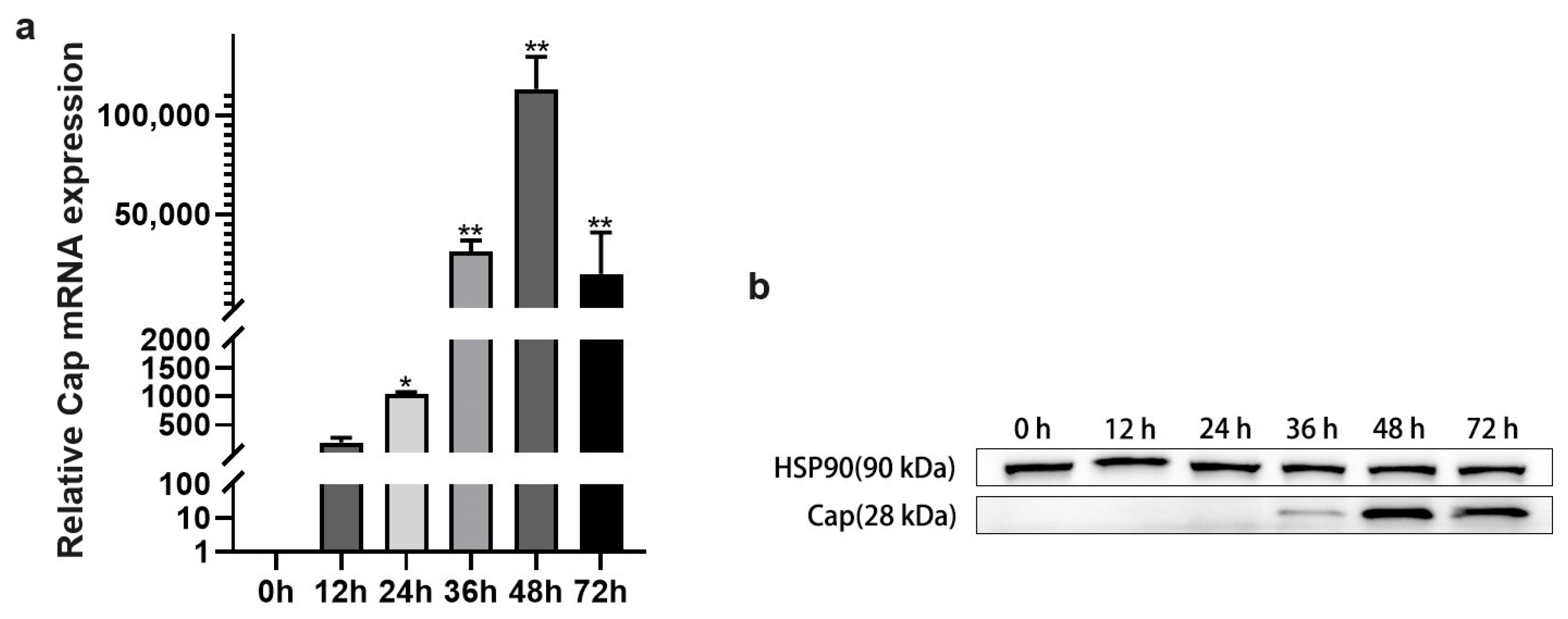
3.1. Establishment of PCV2-Infected PK15 Cell Model
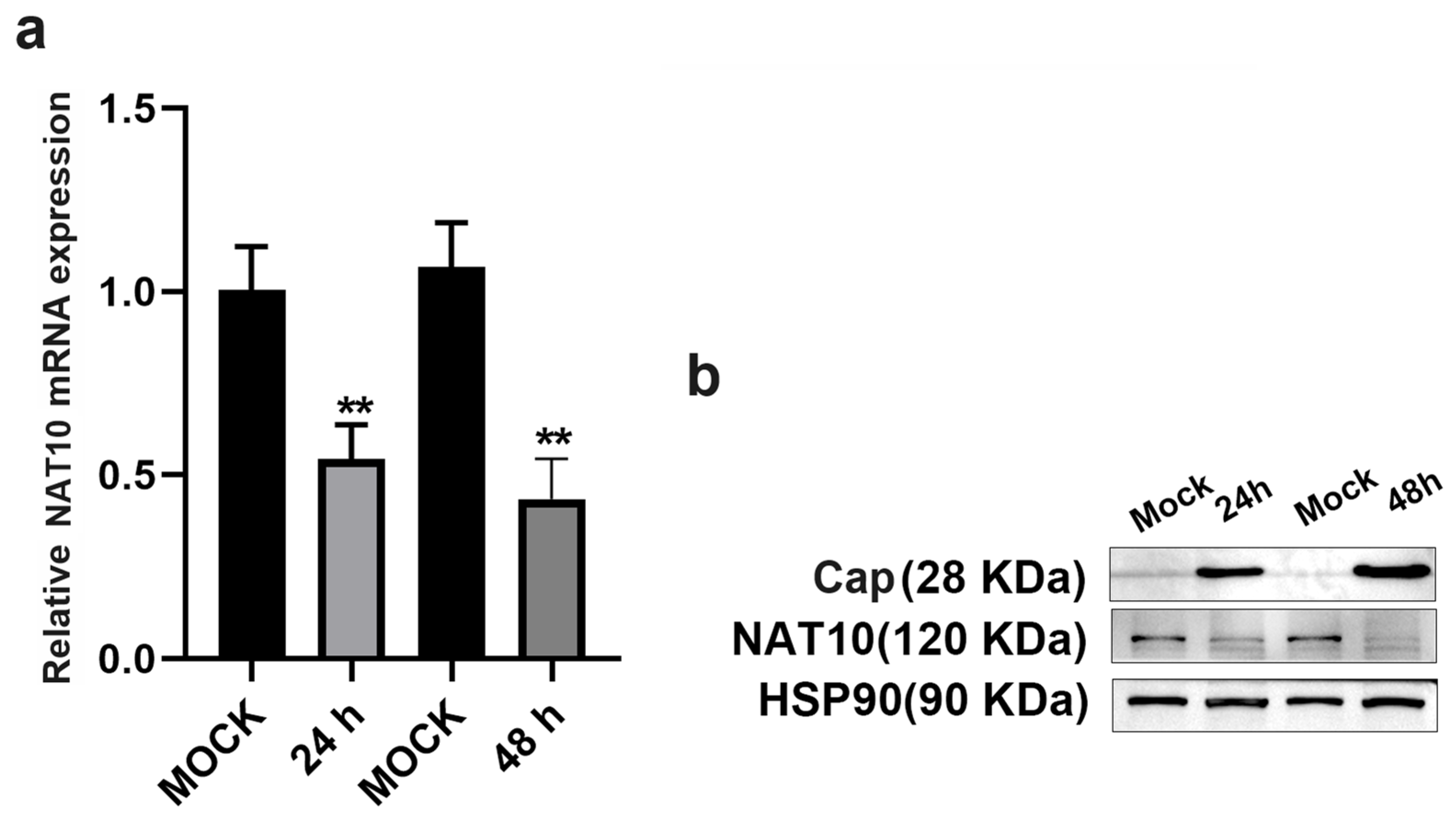
3.2. Down-Regulated NAT10 Expression in PK15 Cells After PCV2 Infection
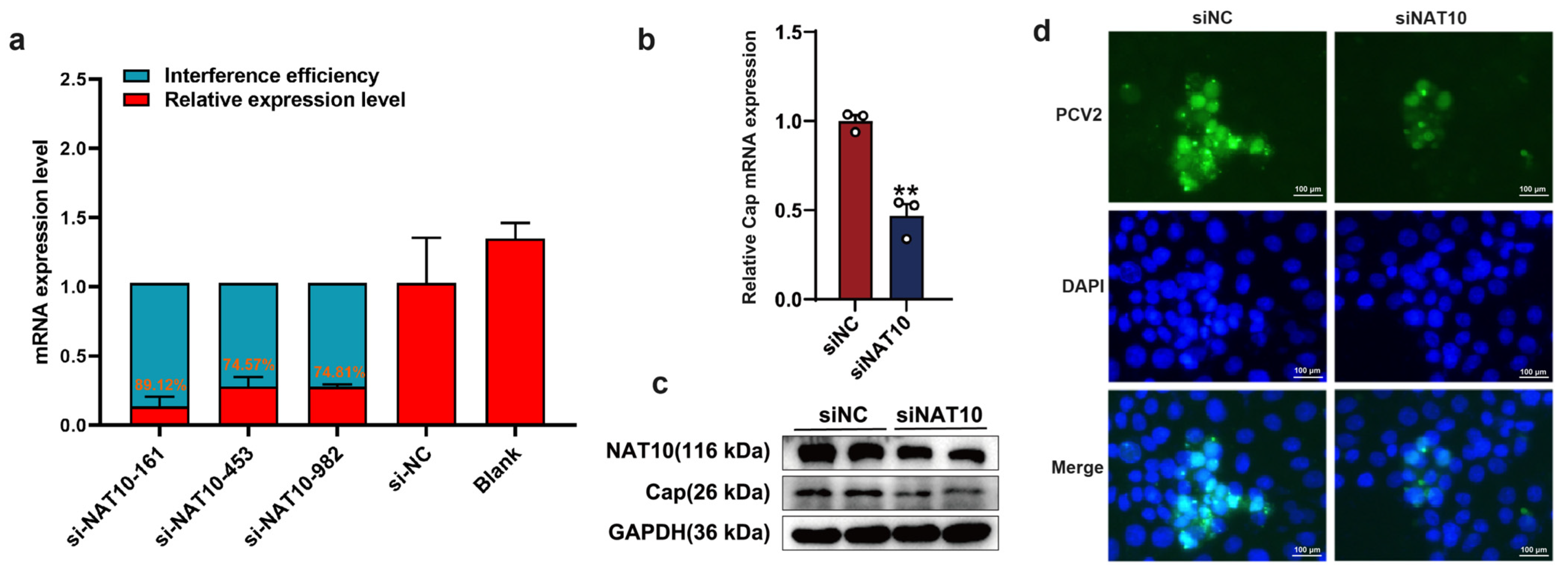
3.3. NAT10 Is Required for the PCV2 Replication Regulation in PK15 Cells
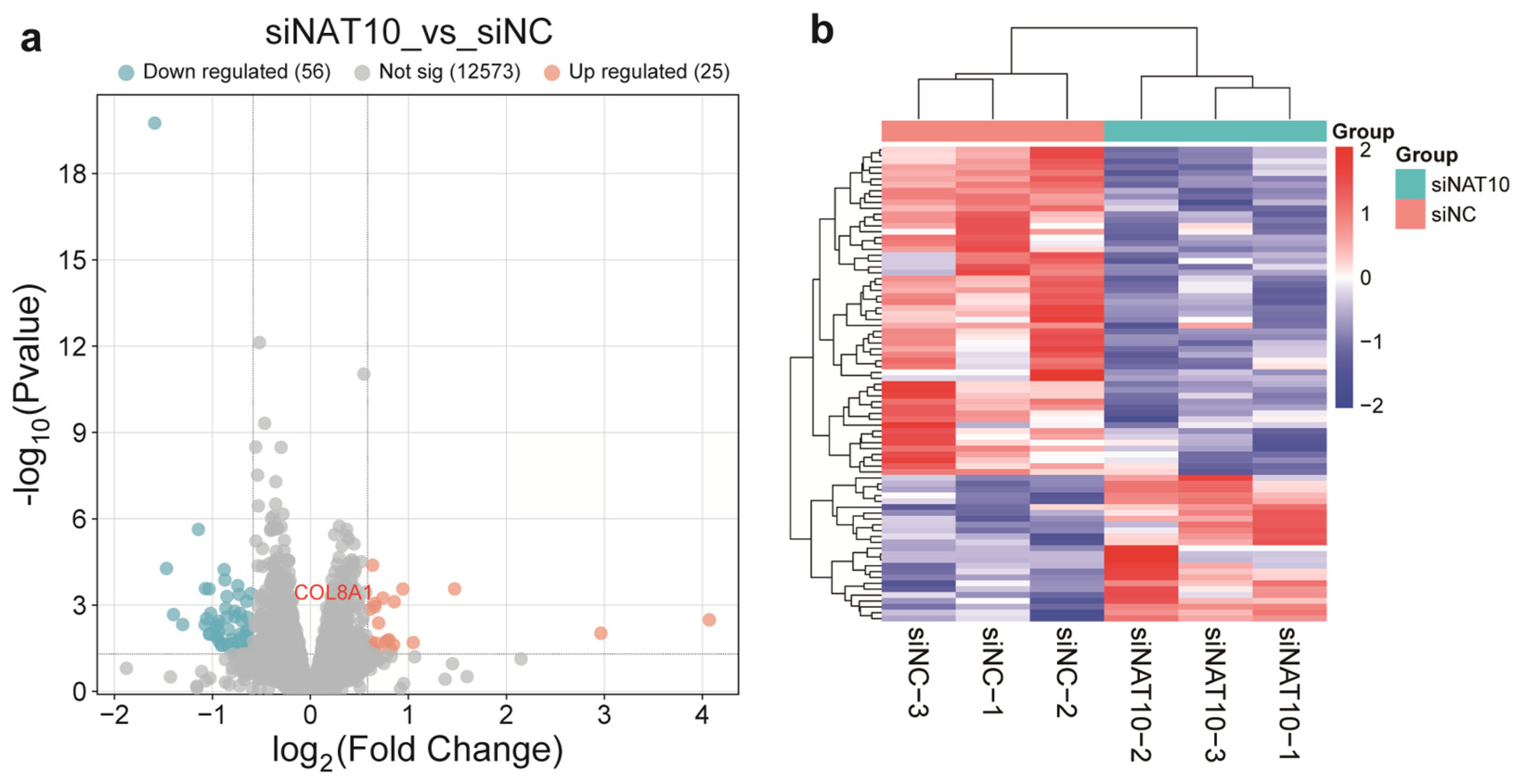
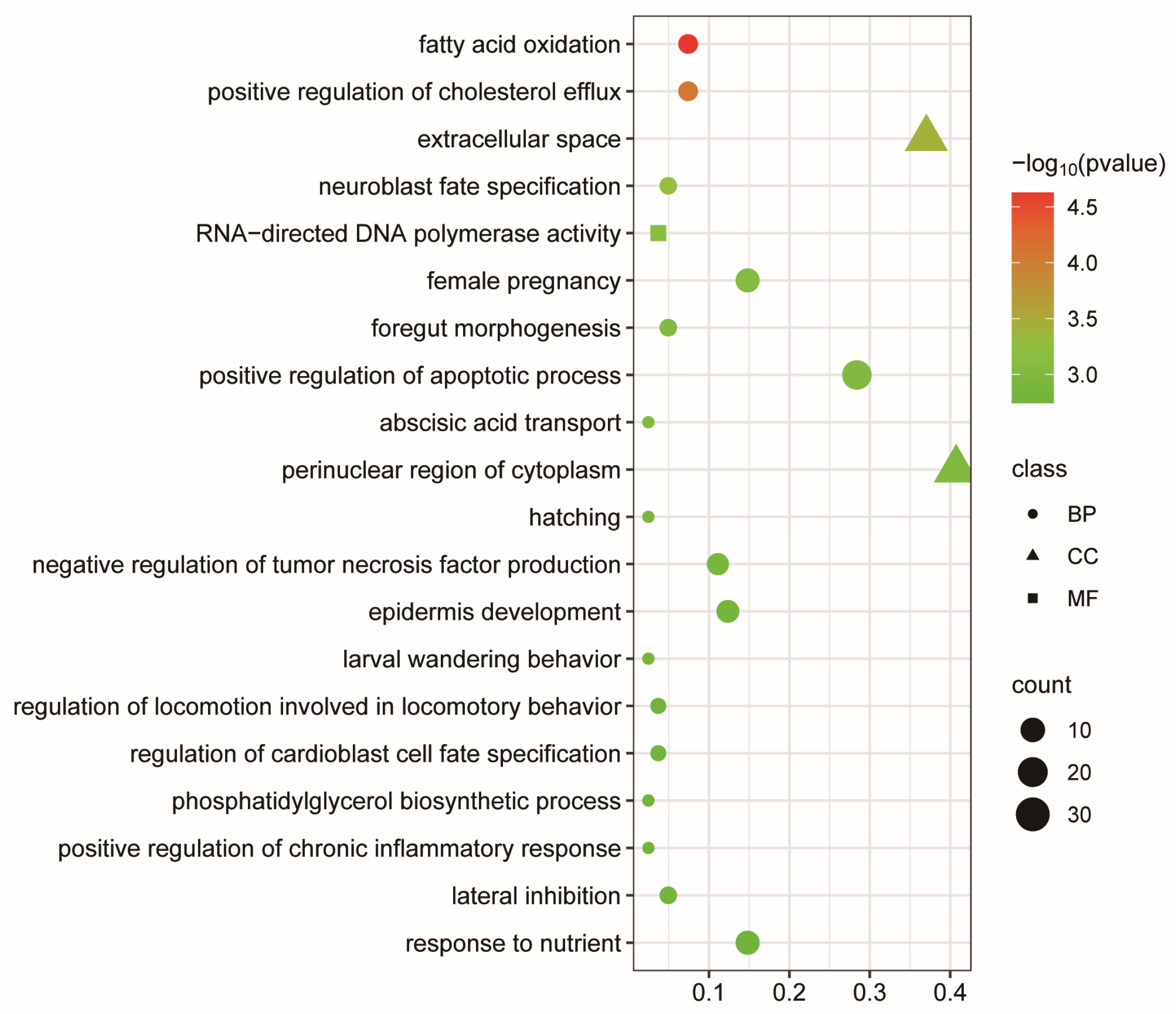
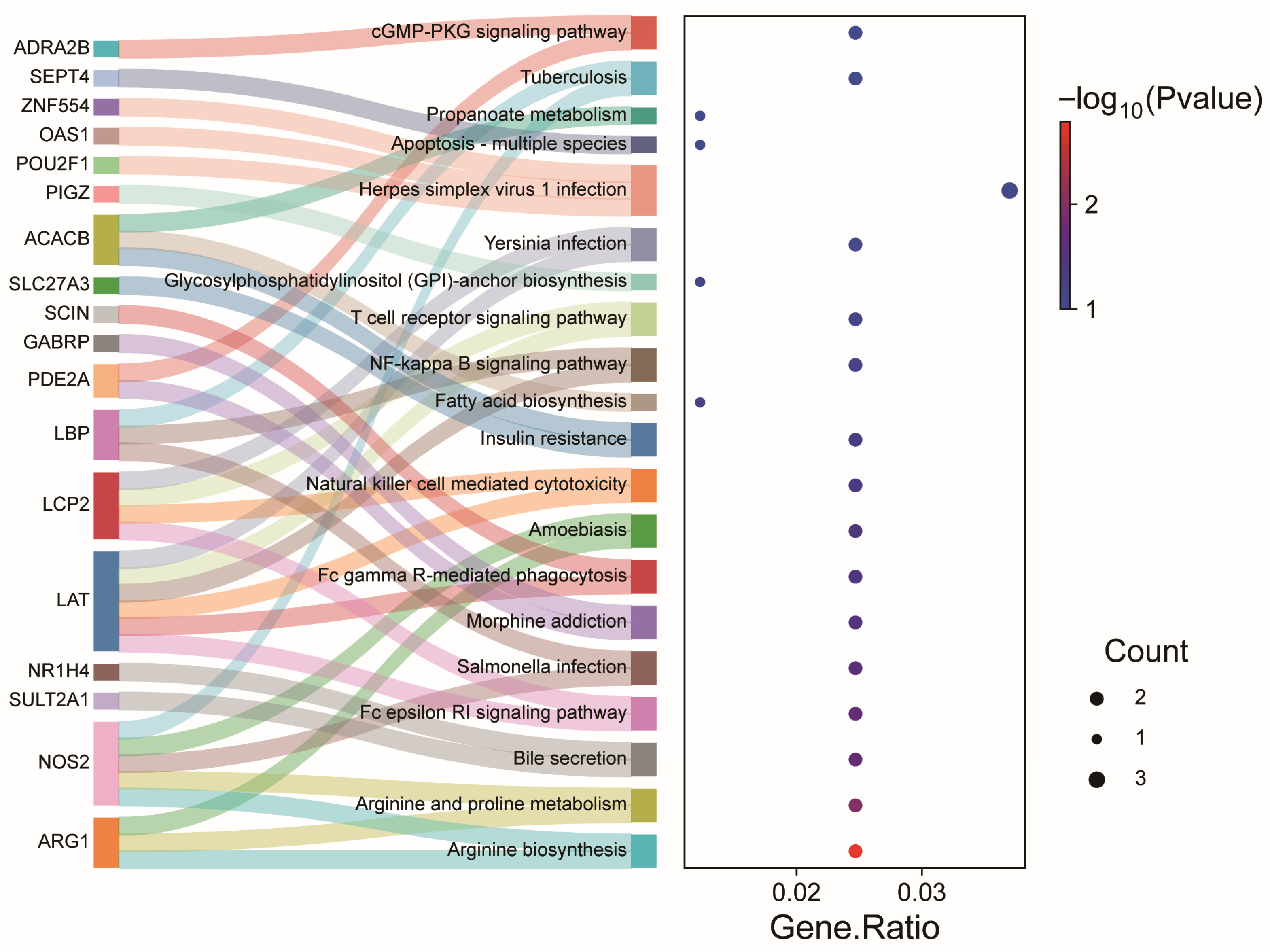
3.4. Comparative Transcriptome Analysis of PK15 Cells with NAT10 Knockdown
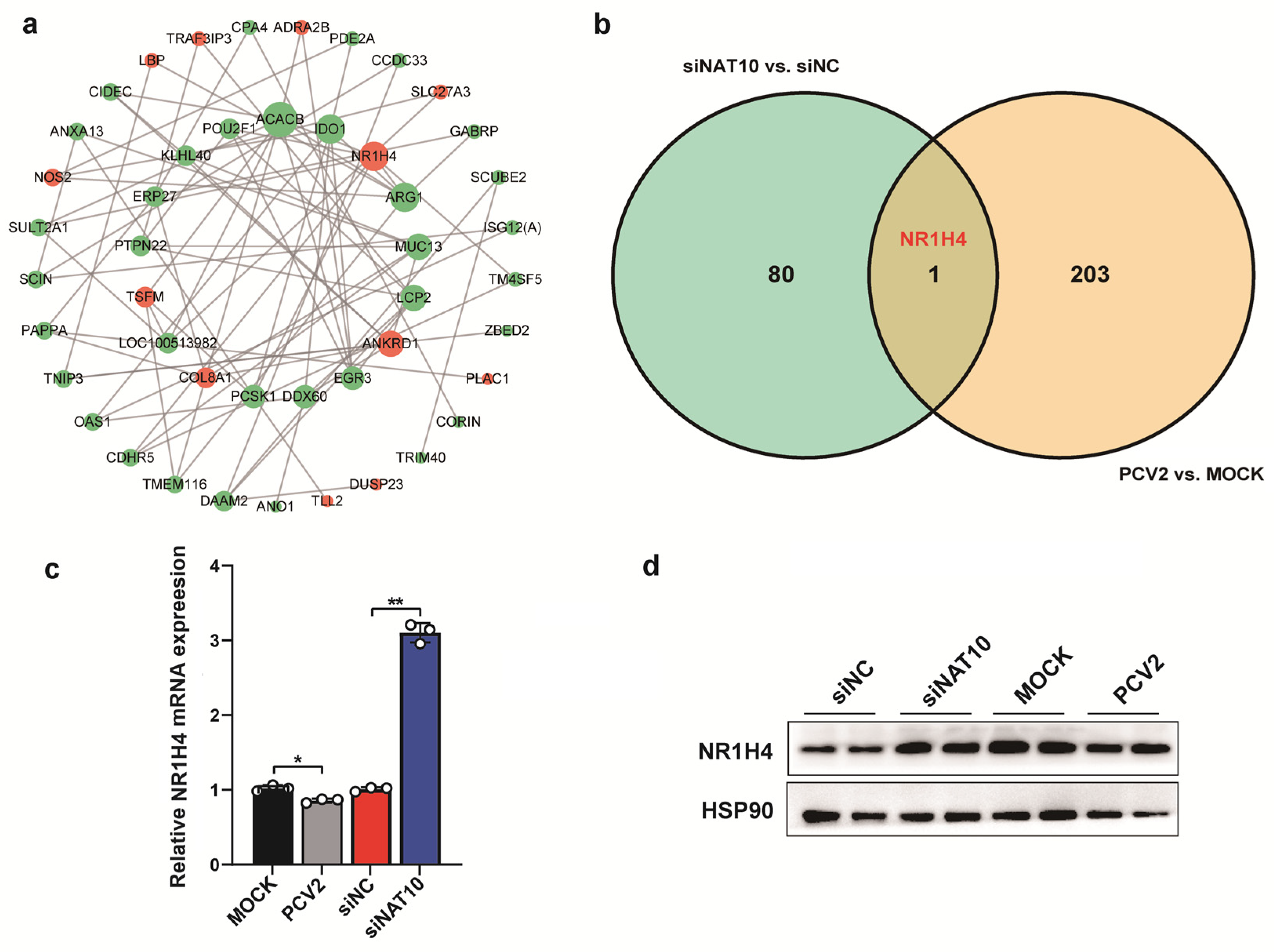
3.5. NR1H4 Probably Acts as a Potential Target of NAT10 in PCV2 Infection
4. Discussion
5. Conclusions
Supplementary Materials
Author Contributions
Funding
Institutional Review Board Statement
Informed Consent Statement
Data Availability Statement
Conflicts of Interest
Abbreviations
| PCV2 | porcine circovirus type 2 |
| NAT10 | N-acetyltransferase 10 |
| qRT-PCR | quantitative real-time PCR |
| DEGs | differential expression genes |
| PK15 | porcine kidney cells |
| Cap | capsid protein |
| GO | Gene Ontology |
| KEGG | Kyoto Encyclopedia of Genes and Genomes |
| SD | standard deviation |
| IFA | indirect fluorescent antibody |
References
- Nachtergaele, S.; He, C. Chemical modifications in the life of an mRNA transcript. Annu. Rev. Genet. 2018, 52, 349–372. [Google Scholar] [CrossRef]
- Tsai, K.; Cullen, B.R. Epigenetic and epitranscriptomic regulation of viral replication. Nat. Rev. Microbiol. 2020, 18, 559–570. [Google Scholar] [CrossRef] [PubMed]
- Dang, W.; Xie, Y.; Cao, P.; Xin, S.; Wang, J.; Li, S.; Li, Y.; Lu, J. N6-Methyladenosine and Viral Infection. Front. Microbiol. 2019, 10, 417. [Google Scholar] [CrossRef] [PubMed]
- Li, J.; Zhang, L. The emerging role of m5C modification in viral infection. Virology 2025, 610, 110606. [Google Scholar] [CrossRef]
- Ito, S.; Akamatsu, Y.; Noma, A.; Kimura, S.; Miyauchi, K.; Ikeuchi, Y.; Suzuki, T.; Suzuki, T. A single acetylation of 18 S rRNA is essential for biogenesis of the small ribosomal subunit in saccharomyces cerevisiae. J. Biol. Chem. 2014, 289, 26201–26212. [Google Scholar] [CrossRef]
- Johansson, M.J.; Bystrom, A.S. The saccharomyces cerevisiae TAN1 gene is required for N4-acetylcytidine formation in tRNA. RNA 2004, 10, 712–719. [Google Scholar] [CrossRef] [PubMed]
- Sharma, S.; Langhendries, J.L.; Watzinger, P.; Kotter, P.; Entian, K.D.; Lafontaine, D.L. Yeast kre33 and human NAT10 are conserved 18S rRNA cytosine acetyltransferases that modify tRNAs assisted by the adaptor Tan1/THUMPD1. Nucleic Acids Res. 2015, 43, 2242–2258. [Google Scholar] [CrossRef]
- Arango, D.; Sturgill, D.; Alhusaini, N.; Dillman, A.A.; Sweet, T.J.; Hanson, G.; Hosogane, M.; Sinclair, W.R.; Nanan, K.K.; Mandler, M.D.; et al. Acetylation of cytidine in mRNA promotes translation efficiency. Cell 2018, 175, 1872–1886. [Google Scholar] [CrossRef]
- Tsai, K.; Jaguva Vasudevan, A.A.; Martinez Campos, C.; Emery, A.; Swanstrom, R.; Cullen, B.R. Acetylation of Cytidine Residues Boosts HIV-1 Gene Expression by Increasing Viral RNA Stability. Cell Host Microbe 2020, 28, 306–312.e6. [Google Scholar] [CrossRef]
- Hao, H.; Liu, W.; Miao, Y.; Ma, L.; Yu, B.; Liu, L.; Yang, C.; Zhang, K.; Chen, Z.; Yang, J.; et al. N4-acetylcytidine regulates the replication and pathogenicity of enterovirus 71. Nucleic Acids Res. 2022, 50, 9339–9354. [Google Scholar] [CrossRef]
- Furuse, Y. RNA Modifications in Genomic RNA of Influenza A Virus and the Relationship between RNA Modifications and Viral Infection. Int. J. Mol. Sci. 2021, 22, 9127. [Google Scholar] [CrossRef]
- Yan, Q.; Zhou, J.; Wang, Z.; Ding, X.; Ma, X.; Li, W.; Jia, X.; Gao, S.J.; Lu, C. NAT10-dependent N4-acetylcytidine modification mediates PAN RNA stability, KSHV reactivation, and IFI16-related inflammasome activation. Nat. Commun. 2023, 14, 6327. [Google Scholar] [CrossRef]
- Dang, Y.; Li, J.; Li, Y.; Wang, Y.; Zhao, Y.; Zhao, N.; Li, W.; Zhang, H.; Ye, C.; Ma, H.; et al. N-acetyltransferase 10 regulates alphavirus replication via N4-acetylcytidine (ac4C) modification of the lymphocyte antigen six family member E (LY6E) mRNA. J. Virol. 2024, 98, e0135023. [Google Scholar] [CrossRef] [PubMed]
- Zhang, H.; Chen, Z.; Zhou, J.; Gu, J.; Wu, H.; Jiang, Y.; Gao, S.; Liao, Y.; Shen, R.; Miao, C.; et al. NAT10 regulates neutrophil pyroptosis in sepsis via acetylating ULK1 RNA and activating STING pathway. Commun. Biol. 2022, 5, 916. [Google Scholar] [CrossRef]
- Wang, Z.; Luo, J.; Huang, H.; Wang, L.; Lv, T.; Wang, Z.; Li, C.; Wang, Y.; Liu, J.; Cheng, Q.; et al. NAT10-mediated upregulation of GAS5 facilitates immune cell infiltration in non-small cell lung cancer via the MYBBP1A-p53/IRF1/type I interferon signaling axis. Cell Death Discov. 2024, 10, 240. [Google Scholar] [CrossRef]
- Guo, G.; Shi, X.; Wang, H.; Ye, L.; Tong, X.; Yan, K.; Ding, N.; Chen, C.; Zhang, H.; Xue, X. Epitranscriptomic N4-Acetylcytidine Profiling in CD4+ T Cells of Systemic Lupus Erythematosus. Front. Cell Dev. Biol. 2020, 8, 842. [Google Scholar] [CrossRef] [PubMed]
- Chen, X.; Hao, Y.; Liu, Y.; Zhong, S.; You, Y.; Ao, K.; Chong, T.; Luo, X.; Yin, M.; Ye, M.; et al. NAT10/ac4C/FOXP1 Promotes Malignant Progression and Facilitates Immunosuppression by Reprogramming Glycolytic Metabolism in Cervical Cancer. Adv. Sci. 2023, 10, e2302705. [Google Scholar] [CrossRef]
- Gu, Z.; Zou, L.; Pan, X.; Yu, Y.; Liu, Y.; Zhang, Z.; Liu, J.; Mao, S.; Zhang, J.; Guo, C.; et al. The role and mechanism of NAT10-mediated ac4C modification in tumor development and progression. MedComm 2024, 5, e70026. [Google Scholar] [CrossRef]
- Li, G.; Ma, X.; Sui, S.; Chen, Y.; Li, H.; Liu, L.; Zhang, X.; Zhang, L.; Hao, Y.; Yang, Z.; et al. NAT10/ac4C/JunB facilitates TNBC malignant progression and immunosuppression by driving glycolysis addiction. J. Exp. Clin. Cancer Res. 2024, 43, 278. [Google Scholar] [CrossRef]
- Qin, G.; Bai, F.; Hu, H.; Zhang, J.; Zhan, W.; Wu, Z.; Li, J.; Fu, Y.; Deng, Y. Targeting the NAT10/NPM1 axis abrogates PD-L1 expression and improves the response to immune checkpoint blockade therapy. Mol. Med. 2024, 30, 13. [Google Scholar] [CrossRef] [PubMed]
- Finsterbusch, T.; Mankertz, A. Porcine circoviruses--small but powerful. Virus Res. 2009, 143, 177–183. [Google Scholar] [CrossRef]
- Misinzo, G.; Delputte, P.L.; Meerts, P.; Lefebvre, D.J.; Nauwynck, H.J. Porcine circovirus 2 uses heparan sulfate and chondroitin sulfate B glycosaminoglycans as receptors for its attachment to host cells. J. Virol. 2006, 80, 3487–3494. [Google Scholar] [CrossRef]
- Yan, Y.R.; Sun, Y.H. Genotypic diversity and immunological implications of porcine circovirus: Inspiration from PCV1 to PCV4. Microb. Pathog. 2024, 196, 106997. [Google Scholar] [CrossRef] [PubMed]
- Ren, L.Z.; Chen, X.R.; Ouyang, H.S. Interactions of porcine circovirus 2 with its hosts. Virus Genes 2016, 52, 437–444. [Google Scholar] [CrossRef] [PubMed]
- Zhang, H.H.; Hu, W.Q.; Li, J.Y.; Liu, T.N.; Zhou, J.Y.; Opriessnig, T.; Xiao, C.T. Novel circovirus species identified in farmed pigs designated as Porcine circovirus 4, Hunan province, China. Transbound Emerg. Dis. 2020, 67, 1057–1061. [Google Scholar] [CrossRef]
- Trible, B.R.; Rowland, R.R. Genetic variation of porcine circovirus type 2 (PCV2) and its relevance to vaccination, pathogenesis and diagnosis. Virus Res. 2012, 164, 68–77. [Google Scholar] [CrossRef] [PubMed]
- Ramamoorthy, S.; Meng, X.J. Porcine circoviruses: A minuscule yet mammoth paradox. Anim. Health. Res. Rev. 2009, 10, 1–20. [Google Scholar] [CrossRef]
- López-Lorenzo, G.; Díaz-Cao, J.M.; Prieto, A.; López-Novo, C.; López, C.M.; Díaz, P.; Rodríguez-Vega, V.; Díez-Baños, P.; Fernández, G. Environmental distribution of Porcine Circovirus Type 2 (PCV2) in swine herds with natural infection. Sci. Rep. 2019, 9, 14816. [Google Scholar] [CrossRef]
- Shan, Y.; Xiao, Q.; He, K.; Wu, S.; Bao, W.; Wu, Z. Identification of the Effects of 5-Azacytidine on Porcine Circovirus Type 2 Replication in Porcine Kidney Cells. Vet. Sci. 2024, 11, 135. [Google Scholar] [CrossRef]
- Du, X.; Xiao, Q.; Yang, L.; Shan, Y.; Hu, Y.; Bao, W.; Wu, S.; Wu, Z. DNMT3B inhibits PCV2 replication via targeting TMEM37 to regulate Ca2 + influx in PK15 cells. Vet. Microbiol. 2025, 304, 110480. [Google Scholar] [CrossRef]
- Cao, M.X.; Wang, X.R.; Hu, W.Y.; Yin, D.; Ren, C.Z.; Chen, S.Y.; Yu, M.L.; Wei, Y.Y.; Hu, T.J. Regulatory effect of Panax notoginseng saponins on the oxidative stress and histone acetylation induced by porcine circovirus type 2. J. Vet. Med. Sci. 2022, 84, 600–609. [Google Scholar] [CrossRef]
- Li, C.; Wu, X.; Yang, Y.; Shi, J.; Wang, S.; Li, J.; Tian, Y.; Liu, C.; Han, H.; Xu, S.; et al. METTL14 and FTO mediated m6A modification regulate PCV2 replication by affecting miR-30a-5p maturity. Virulence 2023, 14, 2232910. [Google Scholar] [CrossRef]
- Majeed, A.; Mukhtar, S. Protein-Protein Interaction Network Exploration Using Cytoscape. Methods Mol. Biol. 2023, 2690, 419–427. [Google Scholar] [CrossRef]
- Dong, Z.W.; Shao, P.; Diao, L.T.; Zhou, H.; Yu, C.H.; Qu, L.H. RTL-P: A sensitive approach for detecting sites of 2′-O-methylation in RNA molecules. Nucleic Acids Res. 2012, 40, e157. [Google Scholar] [CrossRef] [PubMed]
- Jackman, J.E.; Montange, R.K.; Malik, H.S.; Phizicky, E.M. Identification of the yeast gene encoding the tRNA m1G methyltransferase responsible for modification at position 9. RNA 2003, 9, 574–585. [Google Scholar] [CrossRef]
- McIntyre, W.; Netzband, R.; Bonenfant, G.; Biegel, J.M.; Miller, C.; Fuchs, G.; Henderson, E.; Arra, M.; Canki, M.; Fabris, D.; et al. Positive-sense RNA viruses reveal the complexity and dynamics of the cellular and viral epitranscriptomes during infection. Nucleic Acids Res. 2018, 46, 5776–5791. [Google Scholar] [CrossRef]
- Xiong, X.; Li, X.; Yi, C. N(1)-methyladenosine methylome in messenger RNA and non-coding RNA. Curr. Opin. Chem. Biol. 2018, 45, 179–186. [Google Scholar] [CrossRef]
- Xu, J.; Song, F.; Lyu, H.; Kobayashi, M.; Zhang, B.; Zhao, Z.; Hou, Y.; Wang, X.; Luan, Y.; Jia, B.; et al. Subtype-specific 3d genome alteration in acute myeloid leukaemia. Nature 2022, 611, 387–398. [Google Scholar] [CrossRef] [PubMed]
- Park, Y.; He, J.; Suha, E.; Zhenyu, W.; Fiches, G.N.; Zhou, D.; Watters, E.G.; He, Z.M.; Shanaka, K.A.; Lepcha, T.T.; et al. NAT10 Suppresses RNA Sensing Induced IFN-β Transactivation to Promote Viral Infection via Interfering with IRF3 Activities. bioRxiv 2025. [Google Scholar] [CrossRef] [PubMed]
- Li, C.; Sun, Y.; Jiang, C.; Cao, H.; Zeng, W.; Zhang, X.; Li, Z.; He, Q. Porcine circovirus type 2 infection activates NF-κB pathway and cellular inflammatory responses through circPDCD4/miR-21/PDCD4 axis in porcine kidney 15 cell. Virus Res. 2021, 298, 198385. [Google Scholar] [CrossRef]
- Arango, D.; Sturgill, D.; Yang, R.; Kanai, T.; Bauer, P.; Roy, J.; Wang, Z.; Hosogane, M.; Schiffers, S.; Oberdoerffer, S. Direct epitranscriptomic regulation of mammalian translation initiation through N4-acetylcytidine. Mol. Cell 2022, 82, 2912. [Google Scholar] [CrossRef]
- Sleiman, S.; Dragon, F. Recent advances on the structure and function of RNA acetyltransferase Kre33/NAT10. Cells 2019, 8, 1035. [Google Scholar] [CrossRef]
- Xie, L.; Zhong, X.; Cao, W.; Liu, J.; Zu, X.; Chen, L. Mechanisms of NAT10 as ac4C writer in diseases. Mol. Ther. Nucleic Acids. 2023, 32, 359–368. [Google Scholar] [CrossRef]
- Jiao, L.; Si, Y.; Yuan, Y.; Lei, X.; Jiang, Q.; Yang, L.; Mao, W.; Ying, B.; Ma, L.; Sun, T. Emerging role of N-acetyltransferase 10 in diseases: RNA ac4C modification and beyond. Mol. Biomed. 2025, 6, 46. [Google Scholar] [CrossRef] [PubMed]
- Zachari, M.; Ganley, I.G. The mammalian ULK1 complex and autophagy initiation. Essays Biochem. 2017, 61, 585–596. [Google Scholar] [CrossRef] [PubMed]
- Macqueen, D.J.; Meischke, L.; Manthri, S.; Anwar, A.; Solberg, C.; Johnston, I.A. Characterisation of capn1, capn2-like, capn3 and capn11 genes in Atlantic halibut (Hippoglossus hippoglossus L.): Transcriptional regulation across tissues and in skeletal muscle at distinct nutritional states. Gene 2010, 453, 45–58. [Google Scholar] [CrossRef] [PubMed]
- Mao, Y.; Shi, D.; Li, G.; Jiang, P. Citrulline depletion by ASS1 is required for proinflammatory macrophage activation and immune responses. Mol. Cell 2022, 82, 527–541. [Google Scholar] [CrossRef]
- Li, J.; Liu, H.; Hu, X.; Zhang, S.; Yu, Q.; Kuang, G.; Liu, L.; Yu, D.; Huang, J.; Xia, Y.; et al. NR1H4 ameliorates Parkinson’s disease via inhibiting astrocyte activation and neuroinflammation in a CEBPβ/NF-κB dependent manner. Int. Immunopharmacol. 2024, 142, 113087. [Google Scholar] [CrossRef]


Disclaimer/Publisher’s Note: The statements, opinions and data contained in all publications are solely those of the individual author(s) and contributor(s) and not of MDPI and/or the editor(s). MDPI and/or the editor(s) disclaim responsibility for any injury to people or property resulting from any ideas, methods, instructions or products referred to in the content. |
© 2025 by the authors. Licensee MDPI, Basel, Switzerland. This article is an open access article distributed under the terms and conditions of the Creative Commons Attribution (CC BY) license (https://creativecommons.org/licenses/by/4.0/).
Share and Cite
Liu, Y.; Zhou, G.; Wang, G.; Wu, Z. Identification of the Role of NAT10 in the Regulation of Porcine Circovirus Type 2 Infection. Vet. Sci. 2025, 12, 1160. https://doi.org/10.3390/vetsci12121160
Liu Y, Zhou G, Wang G, Wu Z. Identification of the Role of NAT10 in the Regulation of Porcine Circovirus Type 2 Infection. Veterinary Sciences. 2025; 12(12):1160. https://doi.org/10.3390/vetsci12121160
Chicago/Turabian StyleLiu, Ying, Gang Zhou, Guolian Wang, and Zhengchang Wu. 2025. "Identification of the Role of NAT10 in the Regulation of Porcine Circovirus Type 2 Infection" Veterinary Sciences 12, no. 12: 1160. https://doi.org/10.3390/vetsci12121160
APA StyleLiu, Y., Zhou, G., Wang, G., & Wu, Z. (2025). Identification of the Role of NAT10 in the Regulation of Porcine Circovirus Type 2 Infection. Veterinary Sciences, 12(12), 1160. https://doi.org/10.3390/vetsci12121160