Dietary Features Are Associated with Differences in the Urinary Microbiome in Clinically Healthy Adult Dogs
by
 , , , and
Emily L. Coffey
1,*,
Zoe W. Becker
1,
Andres M. Gomez
2 ,
,
Aaron C. Ericsson
3,
Julie A. Churchill
1,
Erin N. Burton
4,
Jennifer L. Granick
1,
Jody P. Lulich
1 and
Eva Furrow
1 1
Department of Veterinary Clinical Sciences, College of Veterinary Medicine, University of Minnesota, Saint Paul, MN 55108, USA
2
Department of Animal Science, College of Food, Agricultural, and Natural Resource Sciences, University of Minnesota, Saint Paul, MN 55108, USA
3
Department of Veterinary Pathobiology, College of Veterinary Medicine, University of Missouri, Columbia, MO 65211, USA
4
Department of Veterinary and Biomedical Sciences, College of Veterinary Medicine, University of Minnesota, Saint Paul, MN 55108, USA
*
Author to whom correspondence should be addressed.
Vet. Sci. 2024, 11(7), 286; https://doi.org/10.3390/vetsci11070286
Submission received: 21 May 2024
/
Revised: 24 June 2024
/
Accepted: 25 June 2024
/
Published: 27 June 2024
Simple Summary
The microbiome refers to the vast community of microorganisms such as bacteria that inhabit a particular host or ecosystem. Recently, it was discovered that the urine from healthy dogs hosts its own unique microbiome, known as the urobiome. These microbial organisms play important roles in maintaining urinary system health and preventing disease. Although the gut microbiome is heavily influenced by diet, it remains unknown how nutritional features impact the urobiome. Therefore, the purpose of this work was to determine how dietary features alter the urobiome’s composition in clinically healthy dogs. Specifically, we examined how nutrient intake (protein, fat, and crude fiber), commercial diet brands, and dietary diversity (i.e., the number of unique food sources consumed each day) altered the abundance and diversity of bacteria present in the canine urobiome. We discovered that both commercial diet brands and dietary diversity were associated with distinct shifts in the composition of the urobiome. This discovery highlights the complex relationships between diet and urinary microbes, and these findings could ultimately lead to novel dietary strategies to promote urobiome health.
Abstract
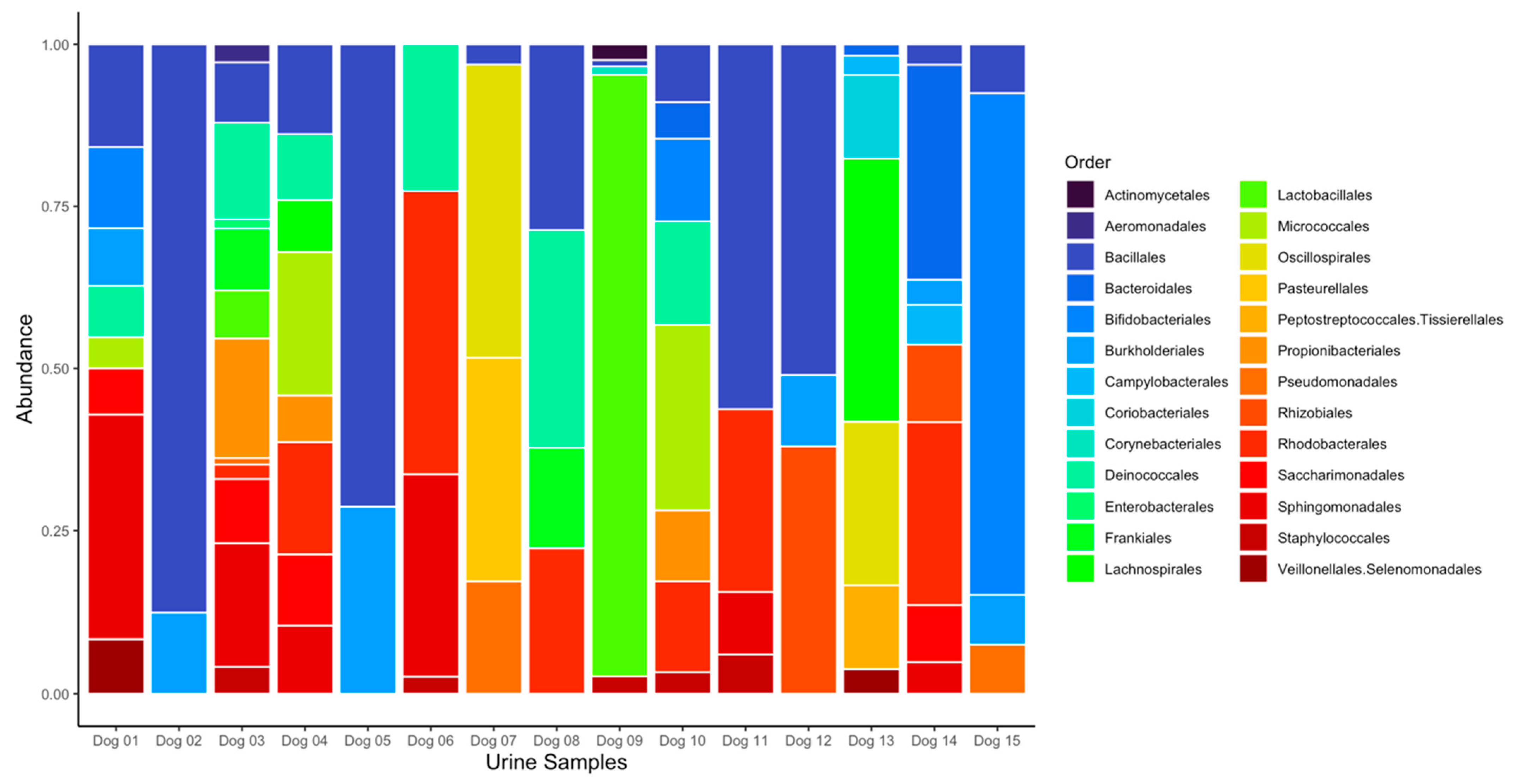
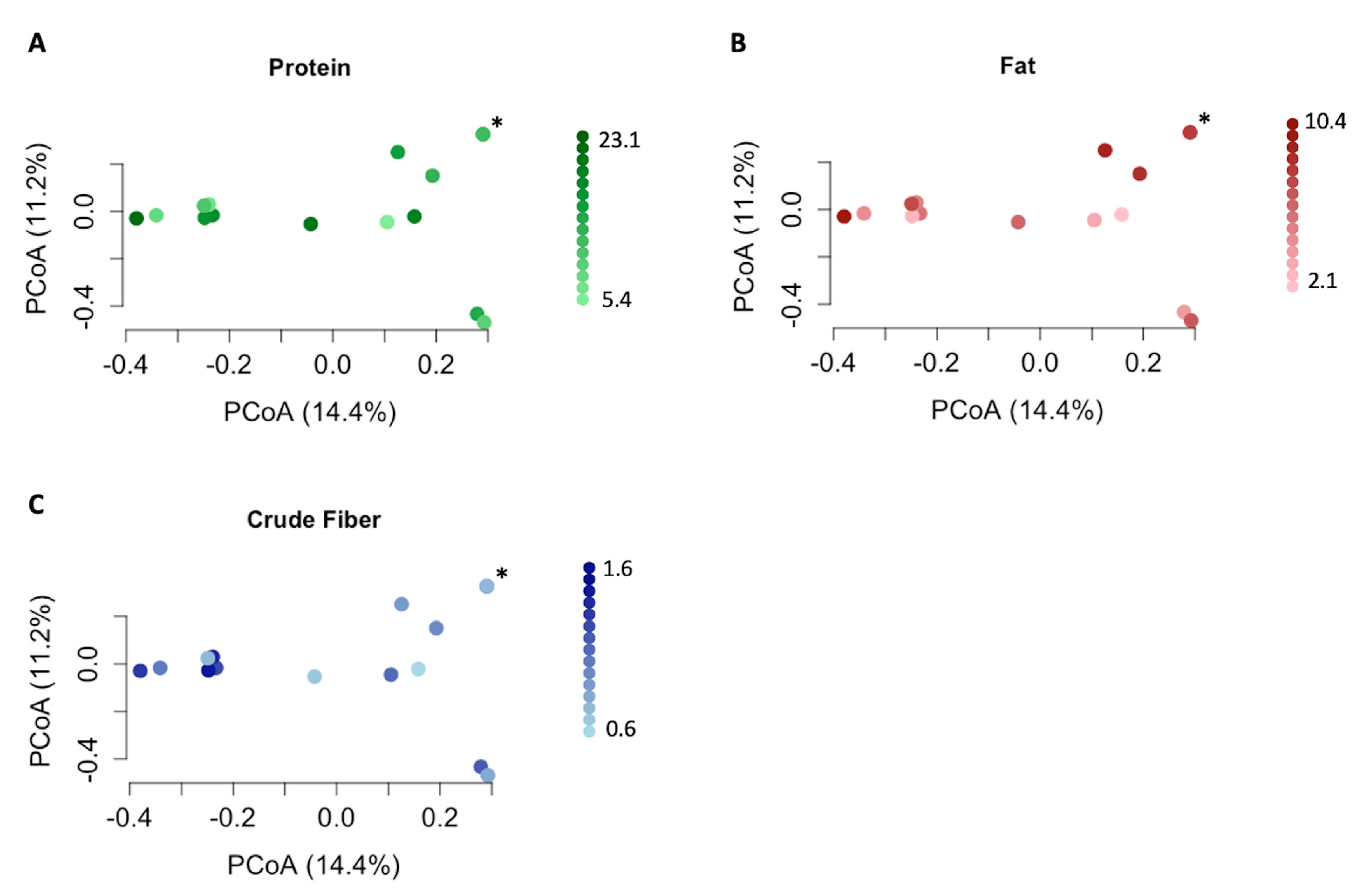
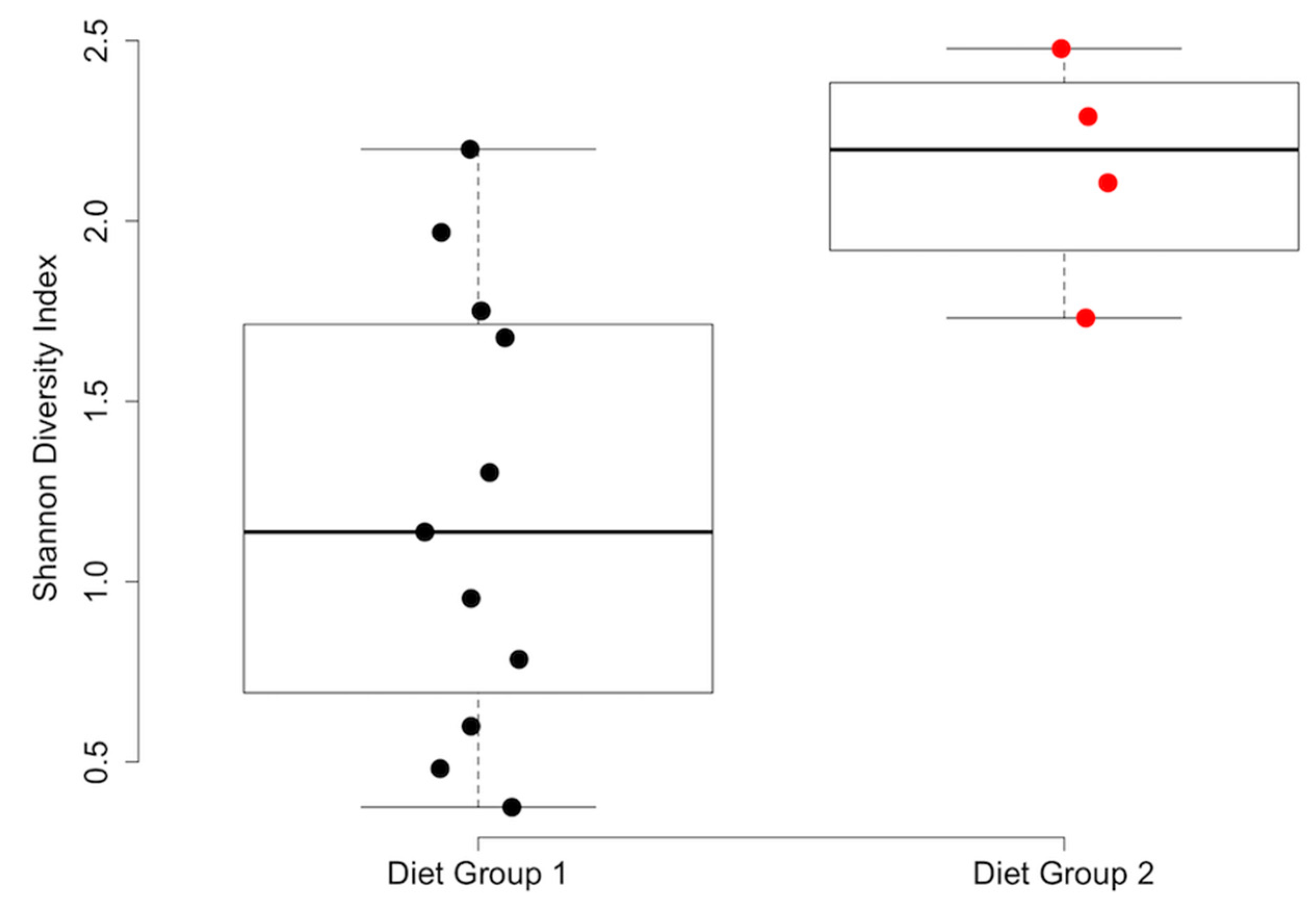
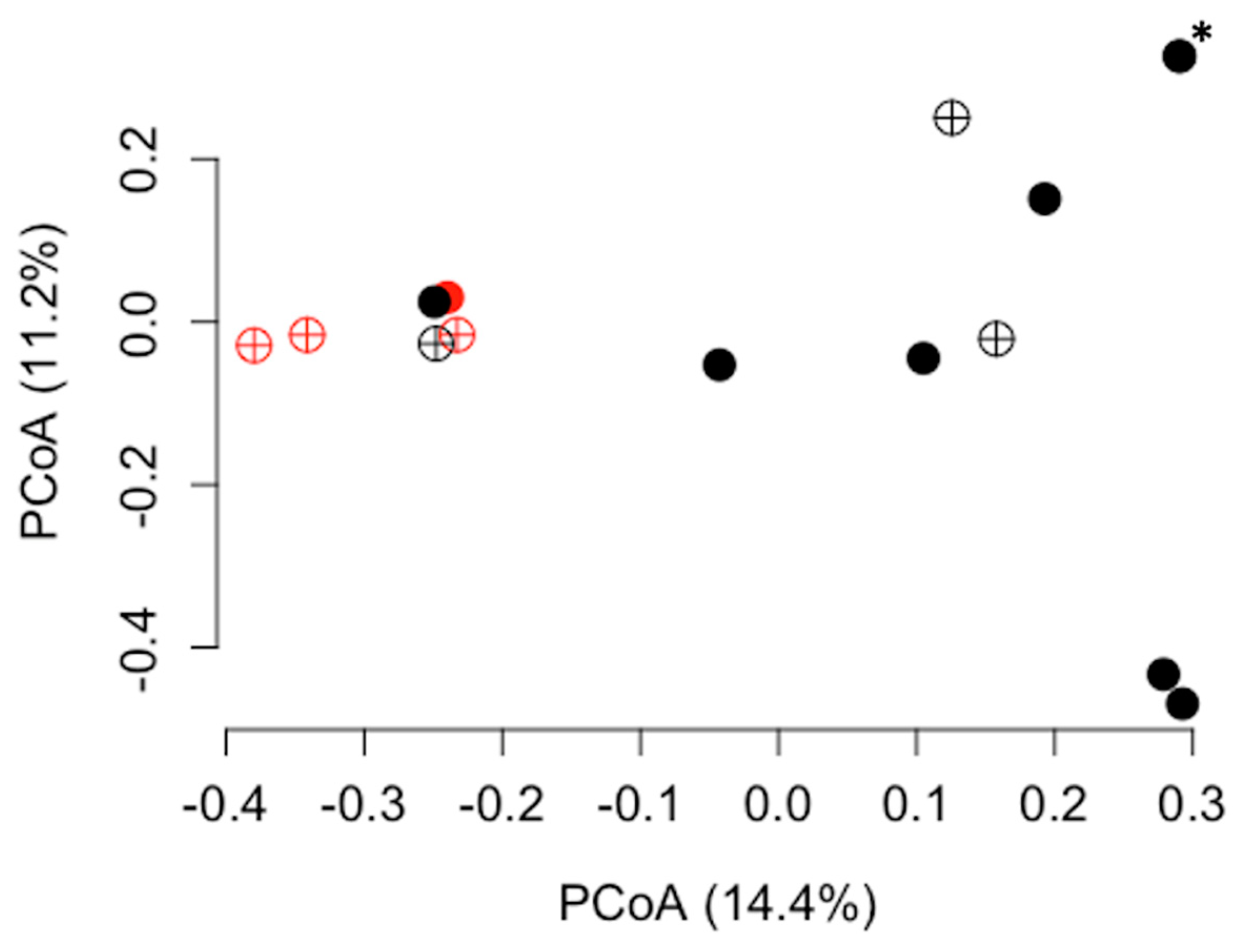
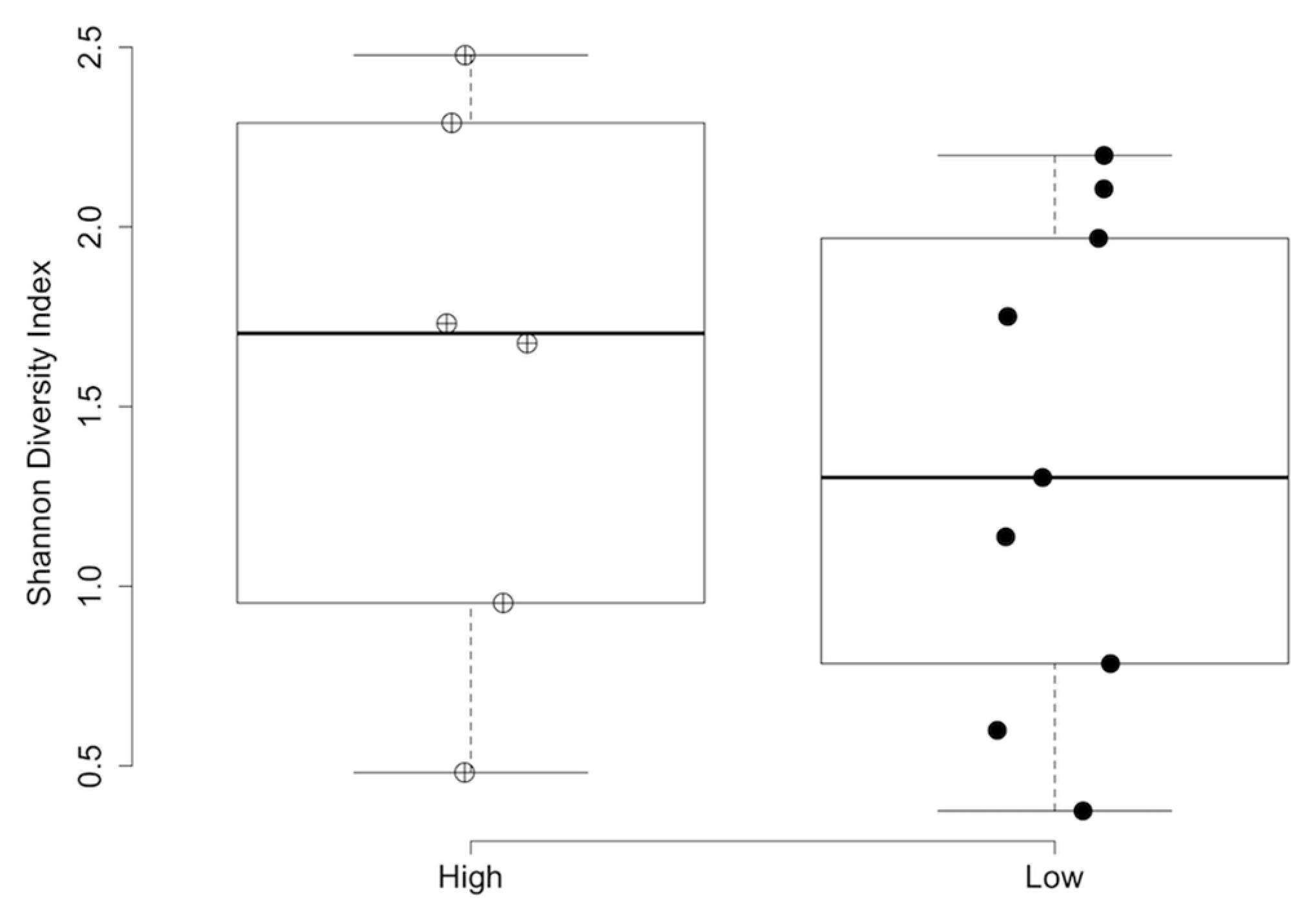
Nutrition plays an important role in shaping the gut microbiome composition, although the impact of diet on the urinary microbiome (i.e., urobiome) remains unknown. The aim of this pilot study was to discover how nutritional features affect the diversity and composition of the urobiome in dogs. Dietary histories were obtained for 15 clinically healthy adult dogs, including limited nutrient (protein, fat, crude fiber), commercial diet brand, and dietary diversity profiles. The urine samples were collected via cystocentesis, followed by sequencing of the bacterial 16S rRNA gene. The data were analyzed to determine associations between major nutrients and dietary sources with the urobiome’s composition. The protein, fat, and crude fiber contents had no statistically significant effect on the alpha or beta diversity. However, the beta diversity values differed (PERMANOVA; p = 0.017, R2 = 0.10) between dogs fed one commercial diet brand compared to dogs consuming any other brand. The beta diversity values also differed (p = 0.019, R2 = 0.10) between dogs consuming more diverse daily diets compared to those consuming less diverse diets (≥3 or <3 unique food sources, respectively). Overall, the results of this pilot study suggest that diet might impact the urobiome and support further exploration of the relationship between diet and the urobiome’s composition in dogs.
Keywords:
urinary microbiome; urobiome; canine; dog; dietary diversity; nutrition