Data Descriptor

Experimental Data of a Pilot Parabolic Trough Collector Considering the Climatic Conditions of the City of Coatzacoalcos, Mexico


by
Aldo Márquez-Nolasco
1,
Roberto A. Conde-Gutiérrez
1,*,
Luis A. López-Pérez
2,
Gerardo Alcalá Perea
1,
Ociel Rodríguez-Pérez
2,
César A. García-Pérez
2,
Josept D. Revuelta-Acosta
3 and
Javier Garrido-Meléndez
4
1
Centro de Investigación en Recursos Energéticos y Sustentables, Universidad Veracruzana, Campus Coatzacoalcos, Av. Universidad Km. 7.5, Col. Santa Isabel, Coatzacoalcos CP 96538, Veracruz, Mexico
2
Centro de Investigación en Ingeniería y Ciencias Aplicadas-IICBA, UAEM, Avenida Universidad 1001, Cuernavaca CP 62209, Morelos, Mexico
3
Department of Civil Engineering, Universidad Veracruzana, Campus Coatzacoalcos, Av. Universidad Km. 7.5, Col. Santa Isabel, Coatzacoalcos CP 96538, Veracruz, Mexico
4
Department of Mechanical and Electric Engineering, Universidad Veracruzana, Campus Coatzacoalcos, Av. Universidad Km. 7.5, Col. Santa Isabel, Coatzacoalcos CP 96538, Veracruz, Mexico
*
Author to whom correspondence should be addressed.
Data 2026, 11(1), 17; https://doi.org/10.3390/data11010017
Submission received: 19 November 2025 / Revised: 12 December 2025 / Accepted: 30 December 2025 / Published: 13 January 2026

Abstract

This article presents a database focused on measuring the experimental performance of a pilot parabolic trough collector (PTC) combined with the meteorological conditions corresponding to the installation site. Water was chosen as the fluid to recirculate through the PTC circuit. The data were recorded between August and September, assuming that global radiation was adequate for use in the concentration process. The database comprises seven experimental tests, which contain variables such as time, inlet temperature, outlet temperature, ambient temperature, global radiation, diffuse radiation, wind direction, wind speed, and volumetric flow rate. Based on the data obtained from this pilot PTC system, it is possible to provide relevant information for the installation and construction of large-scale solar collectors. Furthermore, the climatic conditions considered allow key factors in the design of multiple collectors to be determined, such as the type of arrangement (series or parallel) and manufacturing materials. In addition, the data collected in this study are key to validating future theoretical models of the PTC. Finally, considering the real operating conditions of a PTC in conjunction with meteorological variables could also be useful for predicting the system’s thermal performance using artificial intelligence-based models.
Dataset: https://data.mendeley.com/datasets/4fnzknj8sn/1, accessed on 10 October 2025.
Dataset License: CC BY 4.0

1. Summary

The implementation of parabolic trough collectors (PTC) is relevant in regions characterized by high levels of solar radiation. These devices are designed to capture solar energy and transform it into thermal energy. Therefore, the concentration of solar radiation is key to the effective operation of the PTC based on a parabolic-shaped reflector. Currently, the PTC has been modeled for solar desalination using a porous medium and a phase change material [1]. Furthermore, the evaluation of this device has been determined, considering an energy, exergy, environmental, enviroeconomic, exergoenvironmental and exergoenviroeconomic analysis [2]. Direct radiation is generally the main variable reported in research to determine PTC thermal efficiency [3,4]. However, in regions at sea level, global and diffuse radiation are two essential meteorological elements to record due to the effect of the humidity present in the environment. Wind direction and speed are other important variables related to heat transfer in collectors [5]. The fundamental parameters for determining the instantaneous efficiency of a parabolic trough collector (PTC) include the volumetric flow rate of the working fluid, as well as the inlet and outlet temperatures in the receiving tube [6,7]. These operating conditions are usually reported in summary form in the investigations. In the literature, it is difficult to find datasets focused on the operation of PTC devices. A study presents data on the combination of a parabolic solar thermal system with a CH4 cycle and a solar tower system with a Cu-Cl cycle for hydrogen production in the city of Ghardaia, Algeria [8]. This dataset describes the use of a meteorological station for measuring temperature, humidity, and solar irradiance. However, the dataset does not include meteorological variables such as global and diffuse radiation, wind speed, and wind direction, which can be key to determining the optimal performance of the device. This work presents the operation of a pilot PTC system and the acquisition of a dataset that incorporates meteorological variables, including global and diffuse radiation, as well as wind speed and direction, which may be useful as complementary information in future studies. The daily interval of experimental data recorded per day was wide, ranging from proximity to the maximum global solar irradiance to its gradual reduction associated with the apparent movement of the sun during the day. Therefore, the novelty of this work lies in the high-frequency data recording (collected over 8 s) obtained from the city of Coatzacoalcos, notable for its solar energy potential as part of the Gulf of Mexico coastal zone [9]. Additionally, diffuse radiation was incorporated as a relevant variable, absent in previous studies, which is useful for evaluating thermal efficiency under non-ideal conditions associated with cloud cover or the presence of pollution. The contribution of these data lies in considering the operating variables of a PTC and the meteorological conditions of a region at sea level, generating a reference for future research, such as the construction of collectors, the validation of mathematical models, and the input for artificial intelligence-based models, among others.

2. Data Description

2.1. Dataset Overview

The dataset details measurements taken in August and September 2025. During these months, seven experimental tests were conducted on 28 and 29 August, and on 2, 6, 15, 22 and 25 September. The data scan was programmed to take 8 s. In experimental tests, it is possible to find spaces where the data was not recorded (N/D), due to issues that are beyond the operator’s control (unforeseen power outages and monitoring equipment failures). The PTC operating variables, as well as the meteorological variables recorded for each experimental test, are detailed in Table 1. The first column displayed for each test is the local time (GMT-6). The variables recorded in the database are based on ANSI/ASHRAE Standard 93-2003 [10]. This Standard specifies which variables should be considered to determine relevant parameters from experimental data, such as thermal performance.

2.2. Study Area

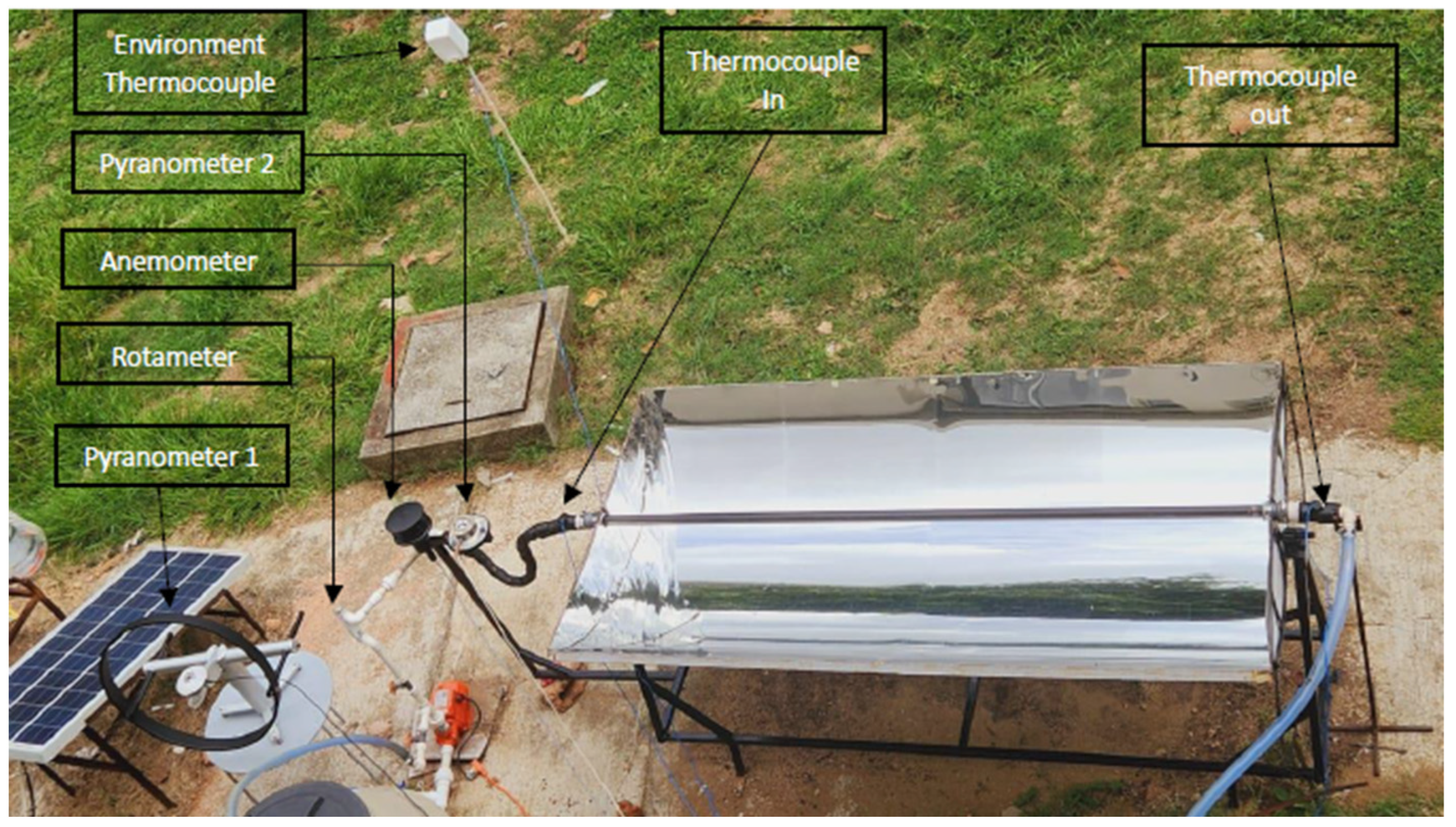
The operational principle of the PTC is that the parabolic geometry concentrates Direct Normal Irradiance (DNI) onto a focal line, where a receiver tube transfers the thermal energy to a heat transfer fluid, thereby elevating its temperature for thermal applications. In Figure 1, the fully instrumented experimental PTC is shown, where the working fluid is water. It was installed at the coordinates of 18.1443093° N latitude, −94.476729° W longitude, and an altitude of 10 m above sea level, corresponding to the Universidad Veracruzana, Coatzacoalcos campus, in the state of Veracruz, Mexico. It is oriented east–west with north–south solar tracking.

3. Methods

3.1. Instrumentation

The methodology used for developing the experimental tests and the instrumentation was consulted in ANSI/ASHRAE Standard 93-2003 [10]. The instrumentation for measuring the PTC’s climatic and thermal process variables is also indicated in Figure 1. The diffuse radiation is measured by Pyranometer 1, which is characterized by a black metallic shading ring. It is the Senseca LPSO3OPO model, calibrated under ISO 9847:2023 [11], with a resolution of 0.1 W/m2. Pyranometer 2 is a model 8–48 Black and White Pyranometer used to measure global horizontal irradiance. Wind speed and direction are measured using the WindSonic 1405-PK-021 option 1 Ultrasonic Wind Speed & Direction Sensor from Gill Instruments made in Lymington, UK. The volumetric flow rate of water recirculating in the PTC’s receiver tube is measured by an acrylic flowmeter made in China (Other brand) with an operating range of up to 4 L/min. Three Type T thermocouples were used to measure the ambient temperature and the water inlet and outlet temperatures of the receiver tube. To ensure reliable measurements, Table 2 describes the uncertainty values and other relevant characteristics of these measuring instruments.

3.2. Construction Features

The system features a galvanized steel base that supports the parabolic trough 0.9 m above the ground. The geometry and main characteristics of the system are detailed in Table 3. According to this information, the gross collector area ( A g ) is 2.08 m2, and the concentration ratio ( C ) is 8.7. The outer surface of the copper receiver tube was coated with selective high-absorbance paint (Pyromark 2500 made in Elk Grove Village, USA), achieving a solar absorbance coefficient of 0.95 [12]. This coating enhances the absorption of solar radiation and minimizes reflective losses. The parabolic trough structure is made of 304 L stainless steel, which is covered with a film (3 M Solar Mirror Film 1100 made in Maplewood, USA) having a reflectance index greater than 90% [13]. Theoretical values of the materials, the determination of its real value is outside this work.

3.3. Experimental Data Acquisition

The radiation and temperature sensors were connected to an Agilent multiplexer card, model 34901A. An Agilent data logger, model 34972A, was installed to record information from the experimental equipment using Agilent BenchLink Data Logger software version 3. The data acquisition system is set to record measurements every 8 s. The wind sensor is connected directly to the computer via a USB port, and the data are recorded every 4 s using the WindView 1.04 software. However, for the final dataset, this wind data is synchronized to a reporting frequency of 8 s using a Point Sampling sub-sampling method. This ensures temporal uniformity with the remaining performance variables by selecting only the measured value recorded precisely at the 8 s time mark.
The database consists of seven experimental tests carried out in Coatzacoalcos, Veracruz, Mexico (CST time zone, UTC-6) on distinct days in August and September 2025. Each test was conducted approximately between 9:30 a.m. and 4:00 p.m., generating approximately 3000 data points that describe the daily behavior under specific operating conditions.
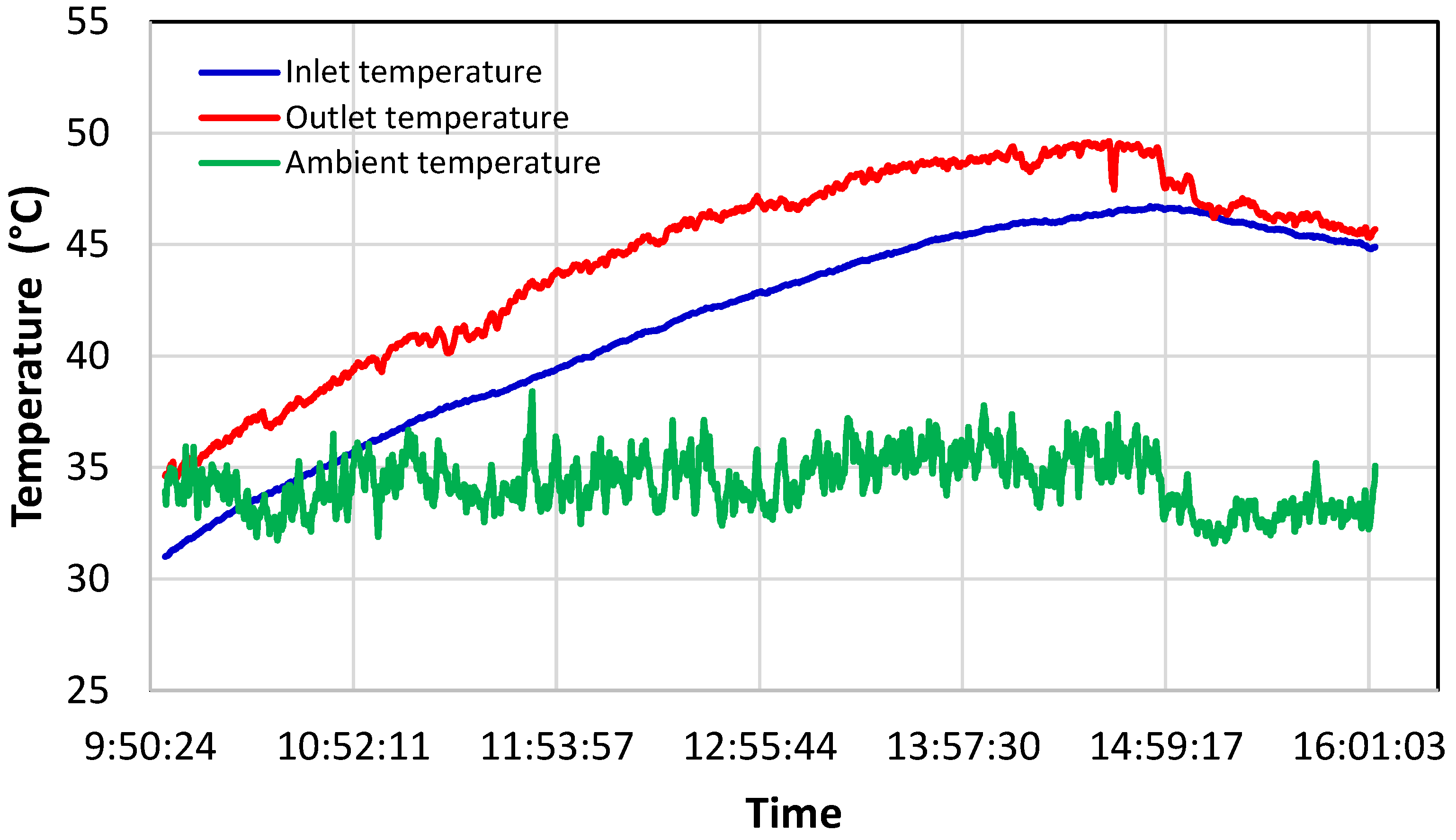
The inlet and outlet temperatures corresponding to the PTC and ambient temperatures are then entered. Figure 2 illustrates, as an example, the variation in inlet and outlet temperatures during the operation of PTC with the ambient temperature recorded on September 6th. The maximum difference recorded on September 6th between the inlet and outlet temperatures of the PTC system was 4.40 °C; this value varies with the other experimental tests because the operating and climatic conditions differed. The difference between the inlet and outlet temperatures of the PTC in the experimental tests was low due to the dimensions of the collector’s construction, reflected in the concentration ratio, and relatively to the high volumetric operating flows. Other significant factors are the use of an uncovered receiver tube and the weather conditions of the coastal region, where solar irradiation is affected by humidity and cloud cover.
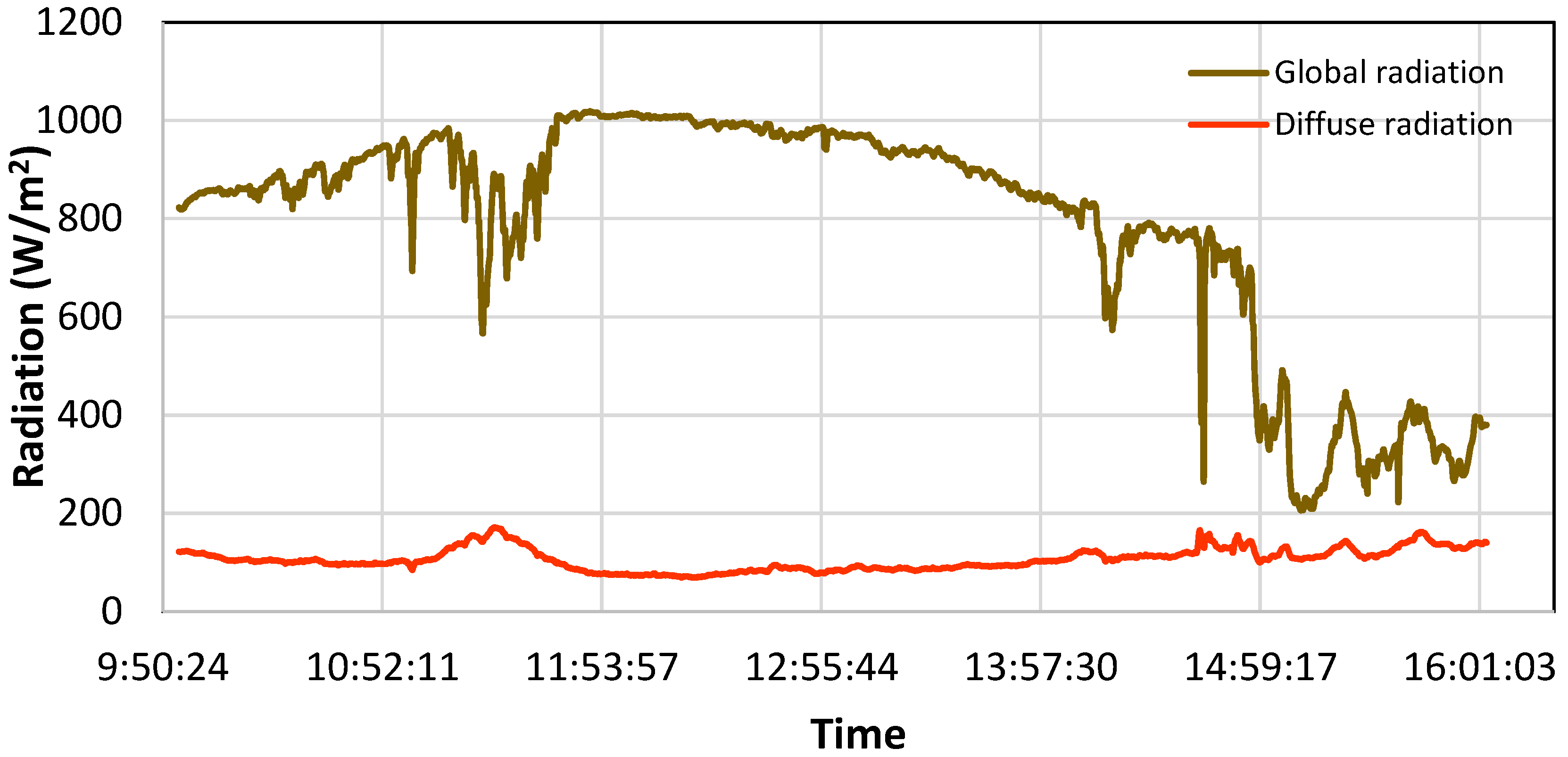
Figure 3 shows the global and diffuse radiation presented on September 6th from 09:54 a.m. to 16:03 p.m. Maximum global and diffuse radiation values were reported at 1018.65 W/m2 and 171.61 W/m2 at 11:50 a.m. and 11:23 a.m., respectively. Identifying these points in each test is useful because of the direct relationship between radiation intensity and heat generation. On the other hand, Figure 3 shows significant fluctuations in global and diffuse radiation. This is attributed to meteorological factors, such as cloud cover, because as it moves, it alters the way sunlight reaches the surface, causing a partial blockage of radiation to the solar collector. Another factor is humidity, which increases diffuse radiation due to scattering caused by water vapor characteristic of the coastal region.
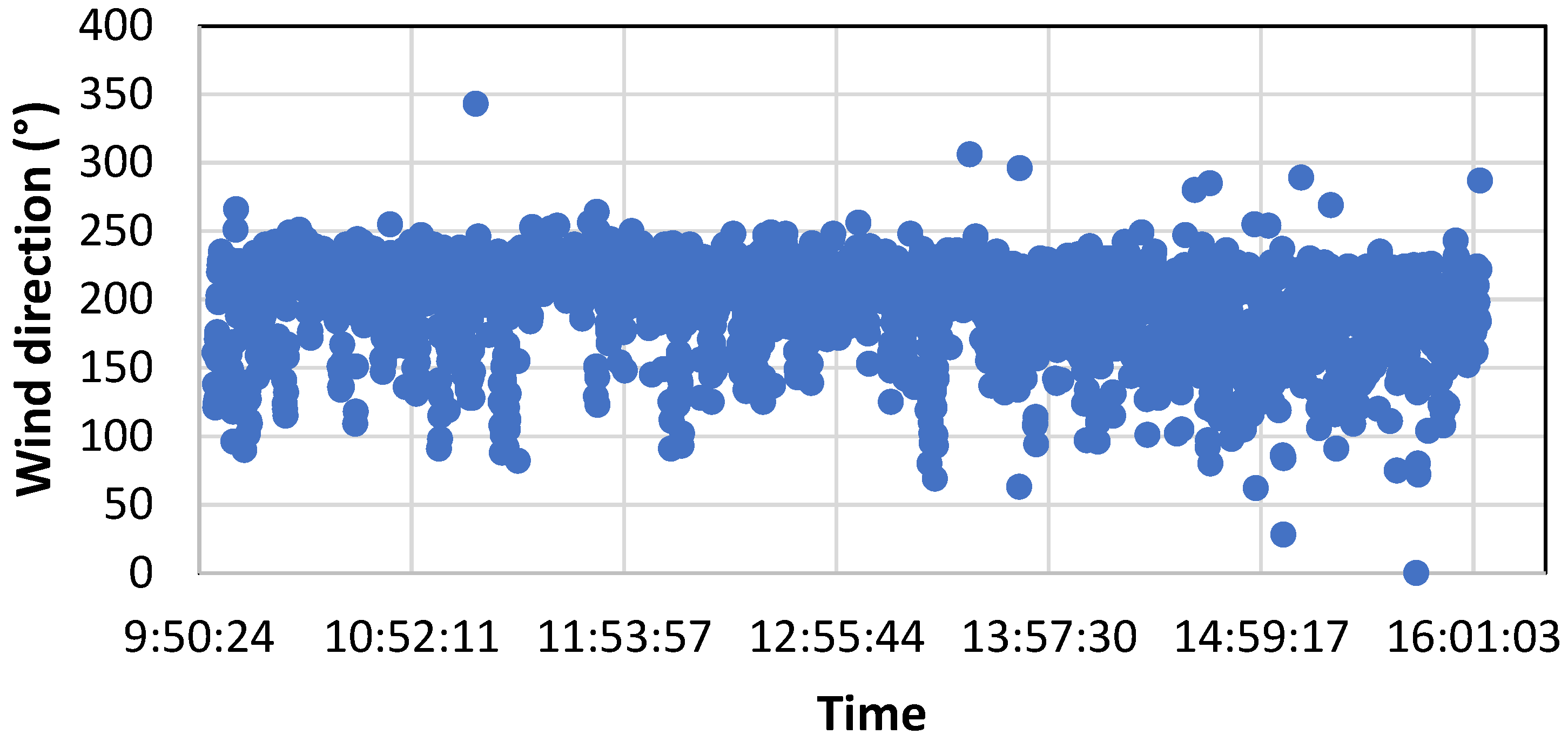
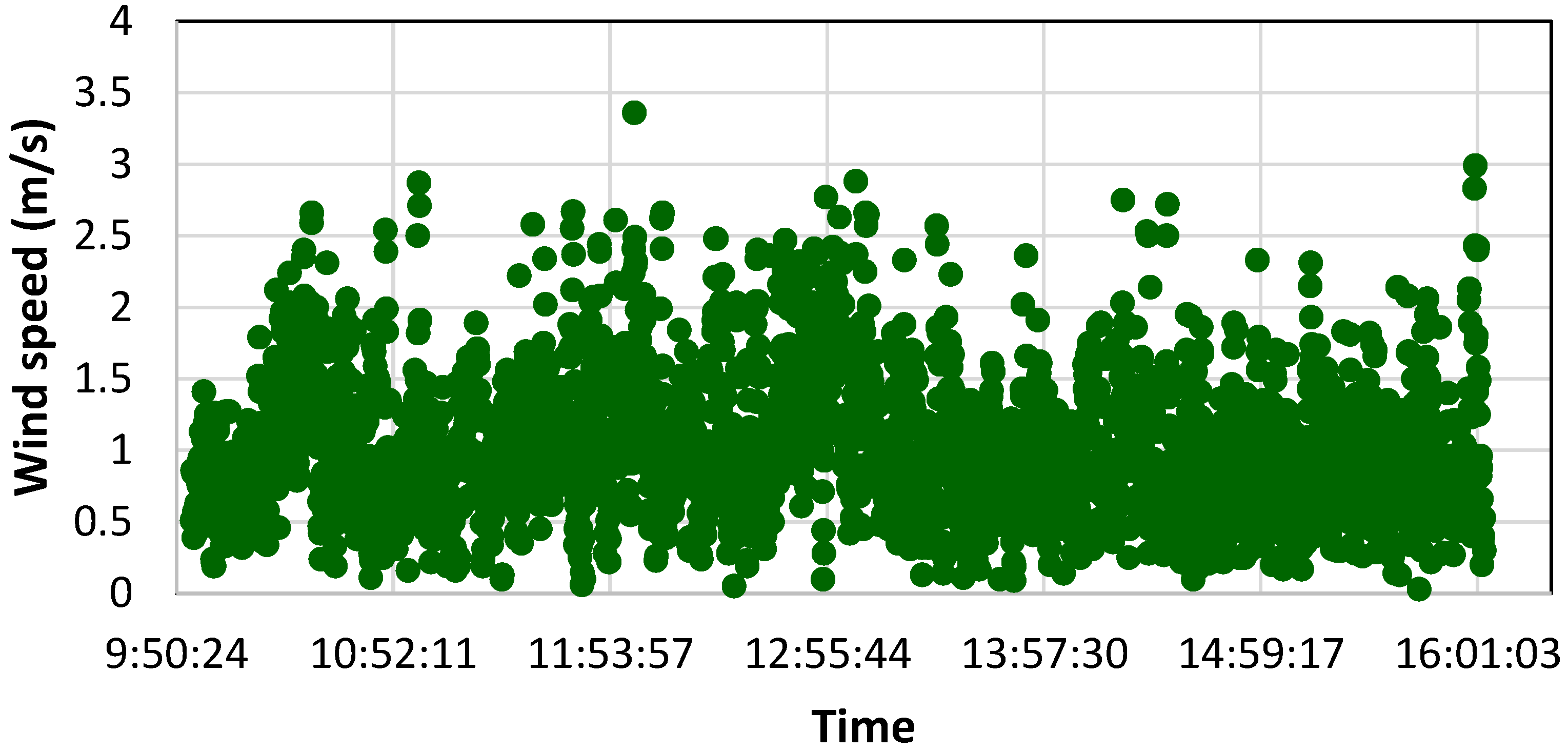
Figure 4 shows the wind direction exposed on September 6th. According to this information, the average wind direction was 198.49°, which means the wind is coming from the south-southwest. Figure 5 describes the variation in wind speed recorded on 6 September. The maximum value was 3.36 m/s, while the minimum value was 0.03 m/s. Wind direction and speed variables have an impact on the operation of the PTC, as they are related to wind convection and increased heat loss to the environment.
Finally, the dataset was constructed from the evaluation of three discrete volumetric flow rates, with each flow measured during two different experimental days. These flow rates were maintained constant and stable throughout each operation via the manual adjustment of a sphere valve, requiring strict observation to ensure reading reliability. The operator ensured that the rotameter’s float operated well below the nominal instrument sensitivity error (±0.25 L/min). The final flow values used for the analysis are the result of a calibration adjustment from the direct rotameter readings of 1, 2, and 3 L/min, which are: 1.0065 L/min, 1.9795 L/min, and 3.1003 L/min, respectively. The precision of each flow reading, based on the calibration curve, presents a maximum error of 2.4%, as detailed in Table 2.
For fluid flow measurement, the volumetric flow meter (rotameter) was selected due to its robustness and operational reliability within the testing environment. The mass flow rate ( m ˙ ) is required for calculating the useful heat gain ( Q = m ˙ C p T ), which necessitates knowing the fluid density ( ρ ). Therefore, the density of the saturated water is determined as a function of the average fluid temperature. This methodology is both valid and widely accepted in solar collector literature [3,4,10].

4. User Notes

This dataset is best suited for users wishing to:
(1)
The database provides relevant information for the construction of parabolic trough collectors installed at sea level.
(2)
The meteorological information contained in the database can be used to study the impact of these variables on key system parameters.
(3)
The recorded data can be applied to validate theoretical models, generating points of comparison between real and theoretical data.
(4)
The variables described in this paper can be used to feed artificial intelligence-based models focused on diverse applications, such as identifying optimal parameters, predicting thermal performance, remote control, maximizing real-time efficiency, among others.
The global horizontal irradiance and the diffuse horizontal irradiance were obtained on the collector’s horizontal plane. Additionally, the beam horizontal irradiance ( G b p ) can be indirectly determined from the difference between the global and diffuse irradiance:
G b p = G t G d
An important parameter in PTCs is the collector concentration ratio ( C ), whose value can be determined using the aperture of the parabola ( W a ) and the diameter of the receiver tube ( D ).
C = W a π · D
According to ANSI/ASHRAE Standard 93-2003, the thermal efficiency of a concentrating collector can be determined through the following equation:
η g = m ˙ · c p · t f , e t f , i / A g · G b p  
where m ˙ is the mass flow rate (this value can be calculated from the volumetric flow rate), c p is the specific heat, and A g aperture area of collector.

5. Conclusions

This study presents the description of a database obtained from the operation of a parabolic trough collector installed in the City of Coatzacoalcos. The database includes meteorological conditions for the coastal area of the Gulf of Mexico. The database comprises seven experimental tests recorded on different days in August and September 2025. Each of the tests has approximately 3000 data points, which show the behavior of the PTC’s operational variables and the region’s meteorological variables.
The importance of this work lies in providing information for the design and construction of future parabolic solar collectors. According to ANSI/ASHRAE 93-2003, the variables included in this work are sufficient to determine the thermal efficiency of the device. Therefore, this dataset can be useful as a reference for comparing efficiency with other collectors that may be developed in the future. Furthermore, the addition of meteorological variables, such as global and diffuse radiation, wind speed, and direction, can allow the identification of the impact of other variables on relevant device parameters.
Among the possible uses of the database, the validation of theoretical models stands out, which are based on ideal conditions and require comparison with real data. Another application of the database lies in the training of artificial intelligence-based models, which require information to model or predict non-linear behaviors.
Finally, one limitation of this work is the absence of a solar tracker, which was omitted due to economic reasons. Consequently, the collector was oriented with a horizontal east–west axis and a north–south solar tracking to remain fixed and only change at the start of the test. Another limitation was the presence of sudden failures in the monitoring equipment. This gap can affect data quality when strictly continuous analysis is required. However, for AI-based models, this is not a challenge, as the learning process can tolerate missing data. To ensure a rigorous and continuous process, it is recommended to apply filtering or use interpolation methods, as the data presented in this work is raw and intended to be adaptable to the needs of future research.

Author Contributions

R.A.C.-G., A.M.-N.: Conceptualization, Methodology, Data curation, Validation, Writing—original draft. J.D.R.-A., J.G.-M., G.A.P.: Software, Visualization. L.A.L.-P., O.R.-P., C.A.G.-P.: Writing—review and editing, Formal analysis. All authors have read and agreed to the published version of the manuscript.

Funding

This research received no funding.

Institutional Review Board Statement

Not applicable.

Informed Consent Statement

Not applicable.

Data Availability Statement

The original data presented in this data descriptor are openly available in the secure cloud-based communal repository: https://data.mendeley.com/datasets/4fnzknj8sn/1, accessed on 10 October 2025.

Acknowledgments

Márquez-Nolasco acknowledges the support for a postdoctoral fellowship from CONAHCYT and CIRES-UV for the facilities used to develop this work. The authors thank SECIHTI-SNII for the support provided. In addition, the authors thank the Faculty of Engineering of the University of Veracruz, Coatzacoalcos region, for allowing the installation of the PTC.

Conflicts of Interest

The authors declare no competing interests.

References

  1. Khedher, N.B.; Mehryan, S.A.M.; Alashaari, G.A.A.; Alshehery, S.; Boujelbene, M.; Mahariq, I. Enhancing solar desalination efficiency through integrated parabolic trough solar collector, porous media, and phase change material: A case study using Middle East weather data. Appl. Therm. Eng. 2025, 274, 126672. [Google Scholar] [CrossRef]
  2. Khedher, N.B.; Boujelbene, M.; Nabaei, S.H.; Bahari, M.; Ashtari, M.; Aliehyaei, M. Exergy and energy investigations of ET-150 PTSC with non-Newtonian nanofluid. Appl. Therm. Eng. 2024, 252, 123720. [Google Scholar] [CrossRef]
  3. Jaramillo, O.A.; Venegas-Reyes, E.; Aguilar, J.O.; Castrejón-García, R.; Sosa-Montemayor, F. Parabolic trough concentrators for low enthalpy processes. Renew. Energy 2013, 60, 529–539. [Google Scholar] [CrossRef]
  4. Rosado Hau, N.; Escalante Soberanis, M.A. Efficiency of a parabolic trough collector as a water heater system in Yucatán, Mexico. J. Renew. Sustain. Energy 2011, 3, 063108. [Google Scholar] [CrossRef]
  5. Kumar, S.; Mullick, S.C. Wind heat transfer coefficient in solar collectors in outdoor conditions. Sol. Energy 2010, 84, 956–963. [Google Scholar] [CrossRef]
  6. Rezaeian, M.; Dehaj, M.S.; Mohiabadi, M.Z.; Salarmofrad, M.; Shamsi, S. Experimental investigation into a parabolic solar collector with direct flow evacuated tube. Appl. Therm. Eng. 2021, 189, 116608. [Google Scholar] [CrossRef]
  7. Al-Rabeeah, A.Y.; Seres, I.; Farkas, I. Experimental investigation of parabolic trough solar collector thermal efficiency enhanced with different absorber coatings. Int. J. Thermofluids 2023, 19, 100386. [Google Scholar] [CrossRef]
  8. Gomri, R.; Lalmi, D. Data on combination of parabolic solar system with CH4 cycle and power tower solar system with Cu–Cl cycle for hydrogen production in the city of Ghardaia (Algeria). Data Brief 2018, 21, 1267–1276. [Google Scholar] [CrossRef] [PubMed]
  9. Villicaña-Ortiz, E.; Gutiérrez-Trashorras, A.J.; Paredes-Sánchez, J.P.; Xiberta-Bernat, J. Solar energy potential in the coastal zone of the Gulf of Mexico. Renew. Energy 2015, 81, 534–542. [Google Scholar] [CrossRef]
  10. ANSI/ASHRAE Standard 93-2003; Methods of Testing to Determine the Thermal Performance of Solar Collectors. American Society of Heating, Refrigerating and Air-Conditioning Engineers, Inc.: Atlanta, GA, USA, 2003.
  11. ISO 9847:2023; Solar Energy—Calibration of Pyranometers by Comparison to a Reference Pyranometer. International Organization for Standardization (ISO), Inc.: Geneva, Switzerland, 2023.
  12. Wu, Z.; Li, X.; Wang, X.; Huang, Y. A review of high-temperature selective absorbing coatings for solar thermal applications. J. Mater. 2020, 6, 167–182. [Google Scholar] [CrossRef]
  13. Gray, M. Optical and Durability Evaluation for Silvered Polymeric Mirrors and Reflectors; CRADA Report; National Renewable Energy Laboratory: Golden, CO, USA, 2014. [Google Scholar] [CrossRef][Green Version]
Figure 1. Experimental Parabolic Trough Collector.
Data 11 00017 g001
Figure 2. Record of the inlet and outlet temperatures of the PTC system, together with the ambient temperature, presented on 6 September 2025.
Data 11 00017 g002
Figure 3. Behavior of global and diffuse radiation on 6 September 2025.
Data 11 00017 g003
Figure 4. Wind direction on 6 September 2025.
Data 11 00017 g004
Figure 5. Wind speed variation on 6 September 2025.
Data 11 00017 g005
Table 1. Variables recorded for each experimental test.
Variable NumberVariable DesignationUnitSymbolism
1TimeHH:MM:SST
2Temperature of the heat transfer fluid entering the collector°C t f , i
3Temperature of the heat transfer fluid leaving the collector°C t f , e
4Ambient temperature°C t a
5Global solar irradianceW/m2 G t
6Diffuse solar irradianceW/m2 G d
7Wind direction°-
8Wind speedm/s-
9Volumetric flow rateL/min-
Table 2. Features of the measuring instruments installed in the PTC.
InstrumentsMeasure Variables, Figure 1FeaturesUncertainty
T-Type thermocouples (made in USA).Environment, water inlet and outlet0–105 °C±0.5 °C
Rotameter (made in China)Volumetric flow of water0–4 L/min2.4%
Pyranometer 1 (made in Caselle di Selvazzano, Italy Diffuse horizontal solar irradiance Sensitivity 17.29 × 10⁻⁶ V/(W/m2)1.8%
Pyranometer 2 (made in Newport, RI, USA).Global horizontal solar irradianceSensitivity 10.24 × 10⁻⁶ V/(W/m2) 2%
Anemometer (made in Lymington, UK). Wind speed and direction in the horizontal planeRange: 0–60 m/s (wind speed) and 0–359° (wind direction)Wind Speed 2% and Wind direction 2°
Table 3. Geometric dimensions of the PTC components and tube receiver (absorber) optical properties.
Rim angle90°
Parabola arc length1.20 m
Parabola aperture1.04 m
Collector length2.0 m
Focal distance0.260 m
Outer diameter of receiver tube0.038 m
Receiver tube length2.0 m
Receiver tube absorptivity95%
Disclaimer/Publisher’s Note: The statements, opinions and data contained in all publications are solely those of the individual author(s) and contributor(s) and not of MDPI and/or the editor(s). MDPI and/or the editor(s) disclaim responsibility for any injury to people or property resulting from any ideas, methods, instructions or products referred to in the content.