
Stress Factors in Higher Education: A Data Analysis Case


Abstract
1. Introduction
2. Related Works
2.1. Exploratory Data Analysis in the Education Realm
- Academic Performance Prediction: EDA is used to analyze various factors affecting student performance, including demographic, social, and academic attributes. This helps in identifying key predictors of academic success and areas needing intervention [17].
- Improving Teaching Processes: By understanding the data on students’ performance and behavior, educators can adjust teaching techniques and educational tools to better meet student needs [18].
- Dropout Rate Analysis: EDA can help identify factors contributing to high dropout rates, enabling the development of strategies to retain students [18].
- Personalized Learning: Insights from EDA can be used to tailor educational content and methods to individual student needs, enhancing learning outcomes [19].
- MOOC Analysis: In the context of Massive Open Online Courses (MOOCs), EDA helps analyze learner behavior and predict course completion rates, which can inform course design and delivery [20].
2.2. Common Stressors Faced by Students in Higher Education
- Financial Obligations and Academic Expectations: Financial obligations, academic expectations, and social and emotional difficulties have been recognized as multidimensional stressors that are faced by higher education students [26].
2.3. Impact of Stressors on Students’ Mental Health
- Negative Impact: The prevalence of stress has been found to negatively impact students’ mental and physical health, academic performance, and overall quality of life [26].
- Physical and Psychological Issues: Stressors trigger physical and psychological issues such as a lack of energy, loss of appetite, headaches, sleep problems, and gastrointestinal problems [21].
- Health Symptoms: Academic stress has been found to be moderately correlated with health symptoms such as physical exhaustion, sleeping disorders, irascibility, negative thoughts, and feeling nervous [27].
2.4. Strategies to Mitigate Stressors in Higher Education
- Support Systems and Initiatives: It is essential for institutions to comprehend stressors to put in place efficient support systems and initiatives that foster student resilience and well-being [26].
- Stress Management Programs: Higher education institutions focus on students’ involvement in co-curricular activities and provide counseling facilities and stress management programs that are tailored to students’ needs and levels of stress [22].
- Counseling and Stress Management: Stress management, assertiveness skills, time management, and counseling sessions have been identified as effective in reducing the stress experienced by students [28].
2.5. Long-Term Effects on Academic Performance and Career Outcomes
- Academic Achievement: Academic-related stress has been found to reduce academic achievement, decrease motivation, and increase the risk of school dropout [29].
- Impact on Learning Capacity: Stress has been shown to impact students’ learning capacity, academic performance, mental health problems, sleep disturbances, and substance use [29].
- Health and Academic Performance: Long-term and frequent exposure to stress can lead to health complications and may cause students to make behavioral changes and sacrifices that impact their health and academic performance [30].
2.6. Common Stressors Faced by Faculty in Higher Education
- University faculty members experience occupational stress due to teaching and scientific research pressures, professional ranking, age, and the length of teaching [32].
- Non-academic activities such as maintaining records, institutional branding, irregular pay, and unfavorable employment conditions also contribute to stress among teaching faculty [33].
2.7. Impact of Stressors on Faculty Performance and Well-Being
- Stress affects the job performance of faculty members, particularly in teaching and research activities [33].
- Excessive non-academic responsibilities lead to a decline in overall performance in teaching and research among faculty members [33].
- Stress among faculty members can lead to physical and psychological issues, affecting their health and well-being [35].
- The prevalence of stress among faculty members can have negative socioeconomic impacts, including the cost of medical treatments, leaves of absence, and loss of individual productivity [36].
2.8. Strategies to Mitigate Stressors for Faculty in Higher Education
- Faculty members should recognize the positive impact of occupational stress while striving to eliminate stressors [32].
- Implementing efficient support systems and initiatives that foster faculty resilience and well-being is essential [37].
- Strategies such as exercise, meditation, taking short breaks, flexible work schedules, and open communication can help faculty cope with stress [38].
- Formulating public policies to organize their teaching career and considering the incidence of stress is recommended to mitigate stress among faculty members [36].
2.9. Long-Term Effects of Stressors on Faculty in Higher Education
- The long-term effects of stressors on faculty in higher education can lead to burnout and negative repercussions, impacting the quality and productivity of academic life [39].
- Stress among faculty members can result in poor health, low work satisfaction, decreased work performance, and intentions of leaving the profession [40].
- Addressing stress among faculty members is crucial for their all-round development and the overall quality of higher education [38].
3. Materials and Methods
3.1. Data Collection
- Data Sources: The primary dataset was obtained from the university’s official academic information system, which records key variables related to student performance, retention, graduation, employability, and faculty workload. These data sources are institutional records that adhere to national higher education regulations and internal university policies.
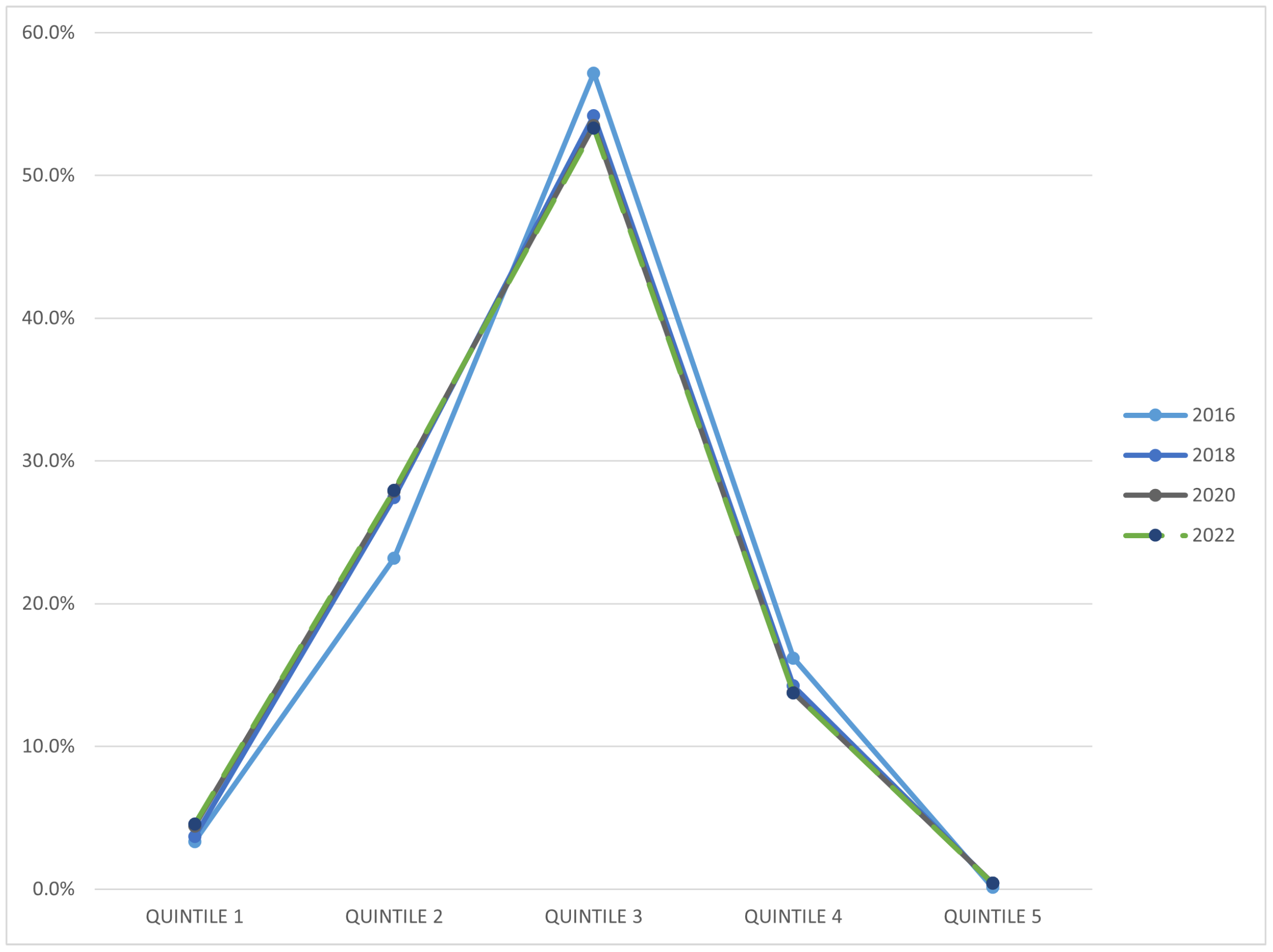
- Student Variables: The dataset includes information on student enrollment, retention rates, graduation rates, employability, academic performance (GPA), and socioeconomic status. The socioeconomic status is determined based on a mandatory self-reported survey that is used to assess scholarship eligibility, classifying students into five quintiles.
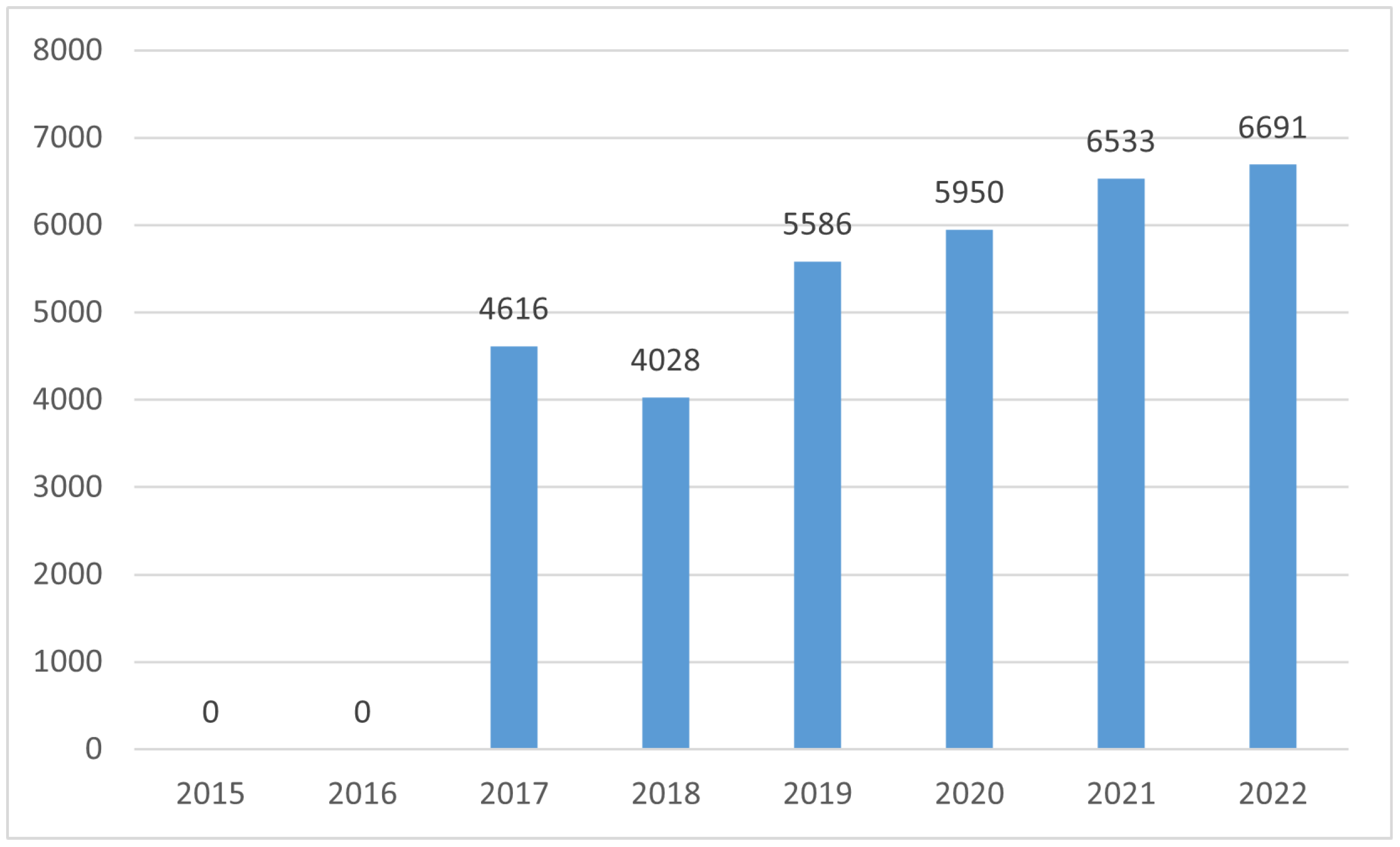
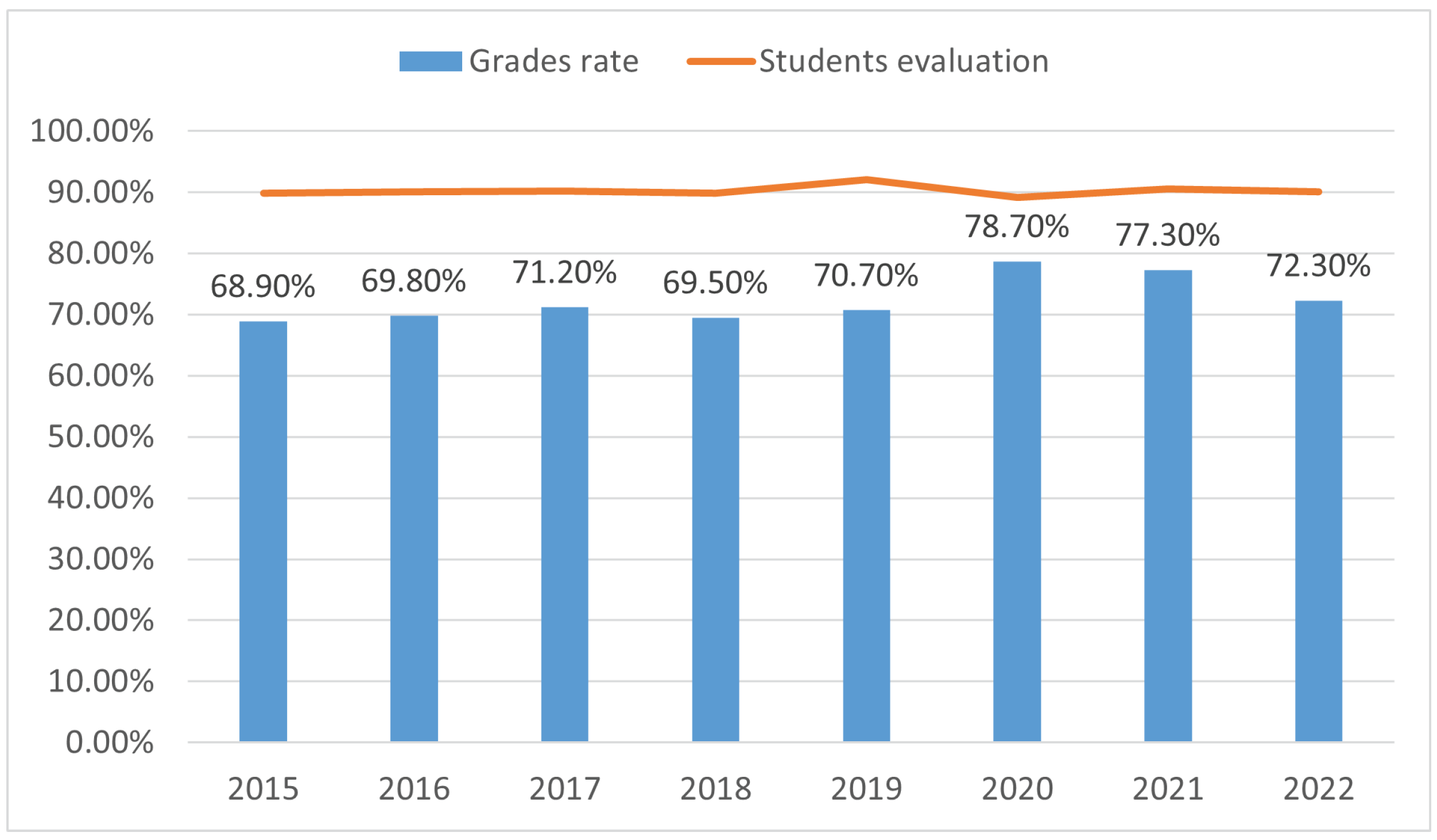
- Faculty Variables: Data on faculty members include academic qualifications (PhD rate), years of teaching experience, research output (Scimago Research Rank), teaching load (number of students per faculty member), and faculty evaluations by students. These indicators align with internationally recognized academic performance metrics.
- Data Cleaning and Preprocessing: The raw data underwent a preprocessing stage, including data validation, outlier detection, and handling of missing values to ensure consistency. Standard statistical methods and machine learning preprocessing techniques were applied to minimize bias in the analysis.
3.2. Exploratory Data Analysis
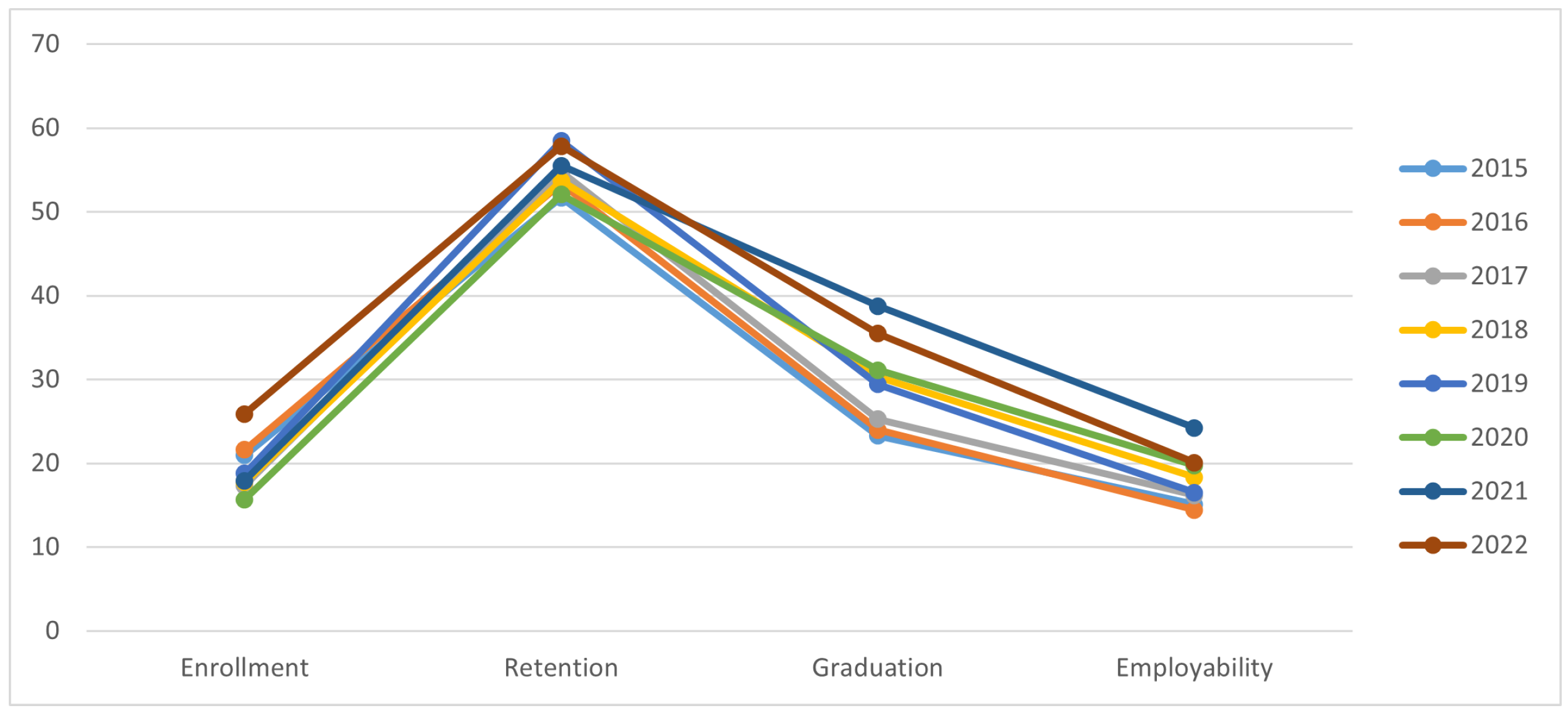
- represents the number of new enrollments in the first years;
- is the number of students who are continuing their undergraduate education.
- represents the number of students who graduated until a year after their curriculum duration.
- represents the number of graduates who have secured employment or started their own businesses in their professional field within one year after graduation.
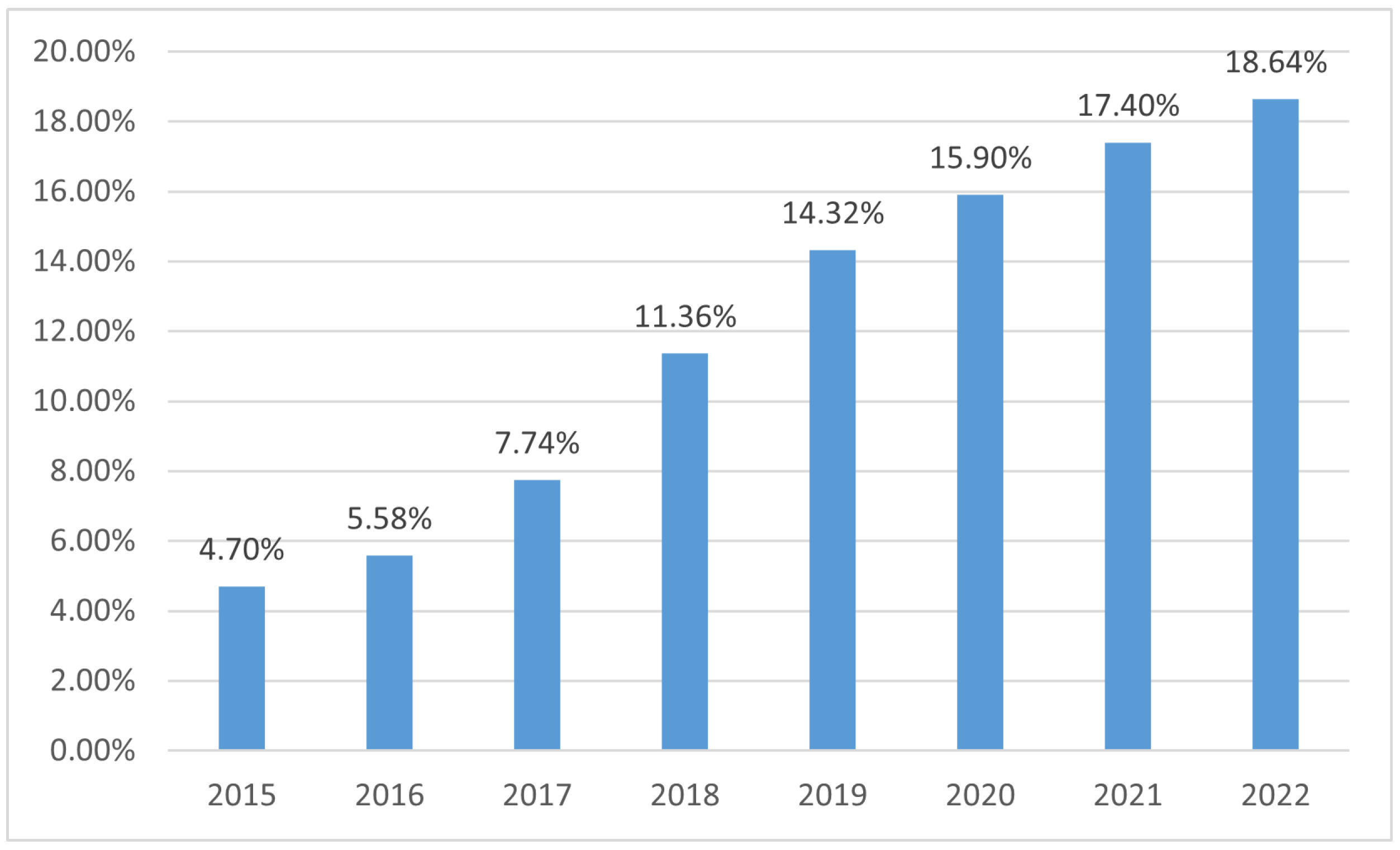
- The Rate of Professors with a PhD: The ratio of faculty members with a PhD to the total number of faculty.
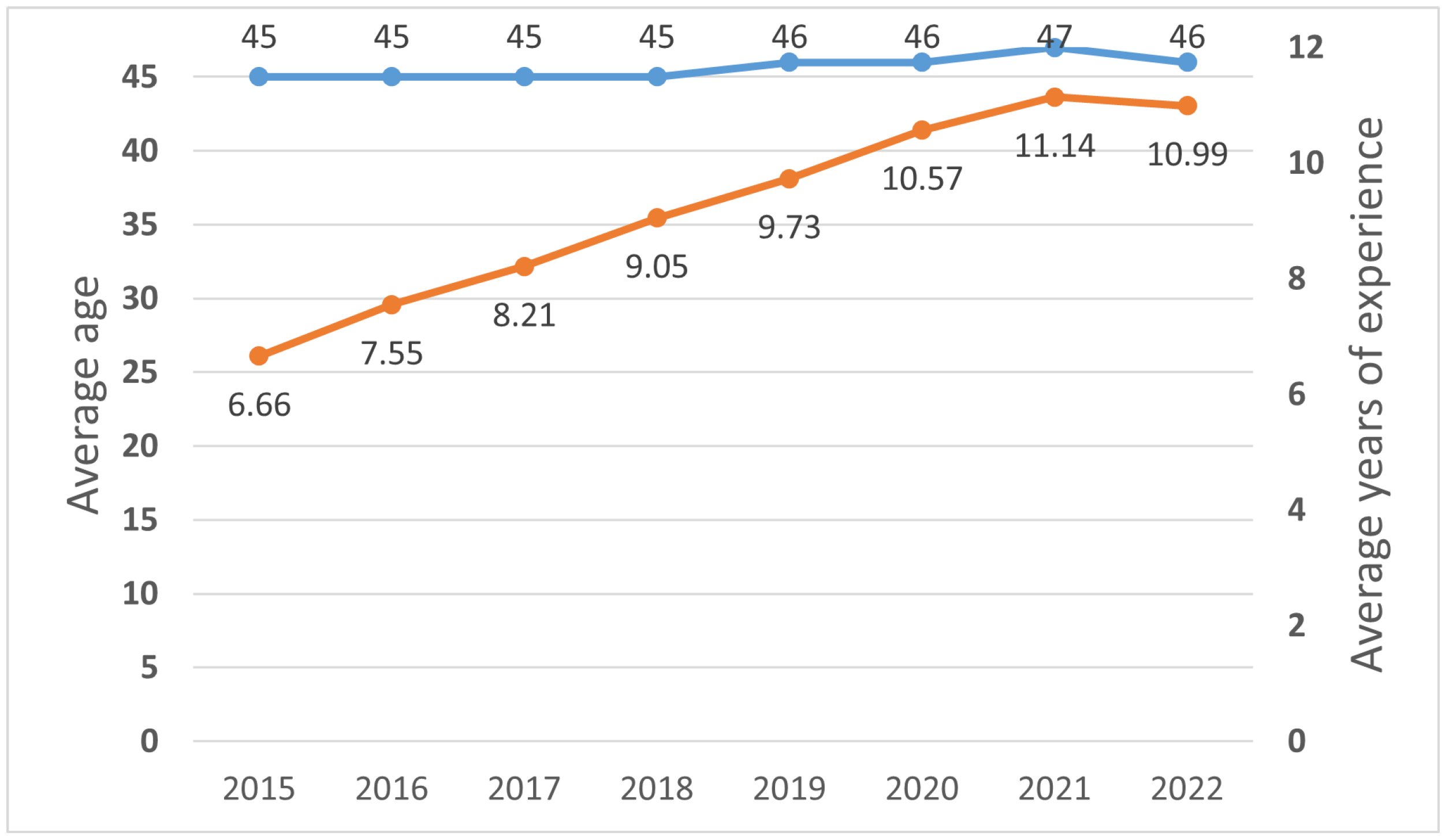
- Average Age: A statistic indicating the average age of faculty members.
- Years of Experience: This measures faculty tenure and seniority.
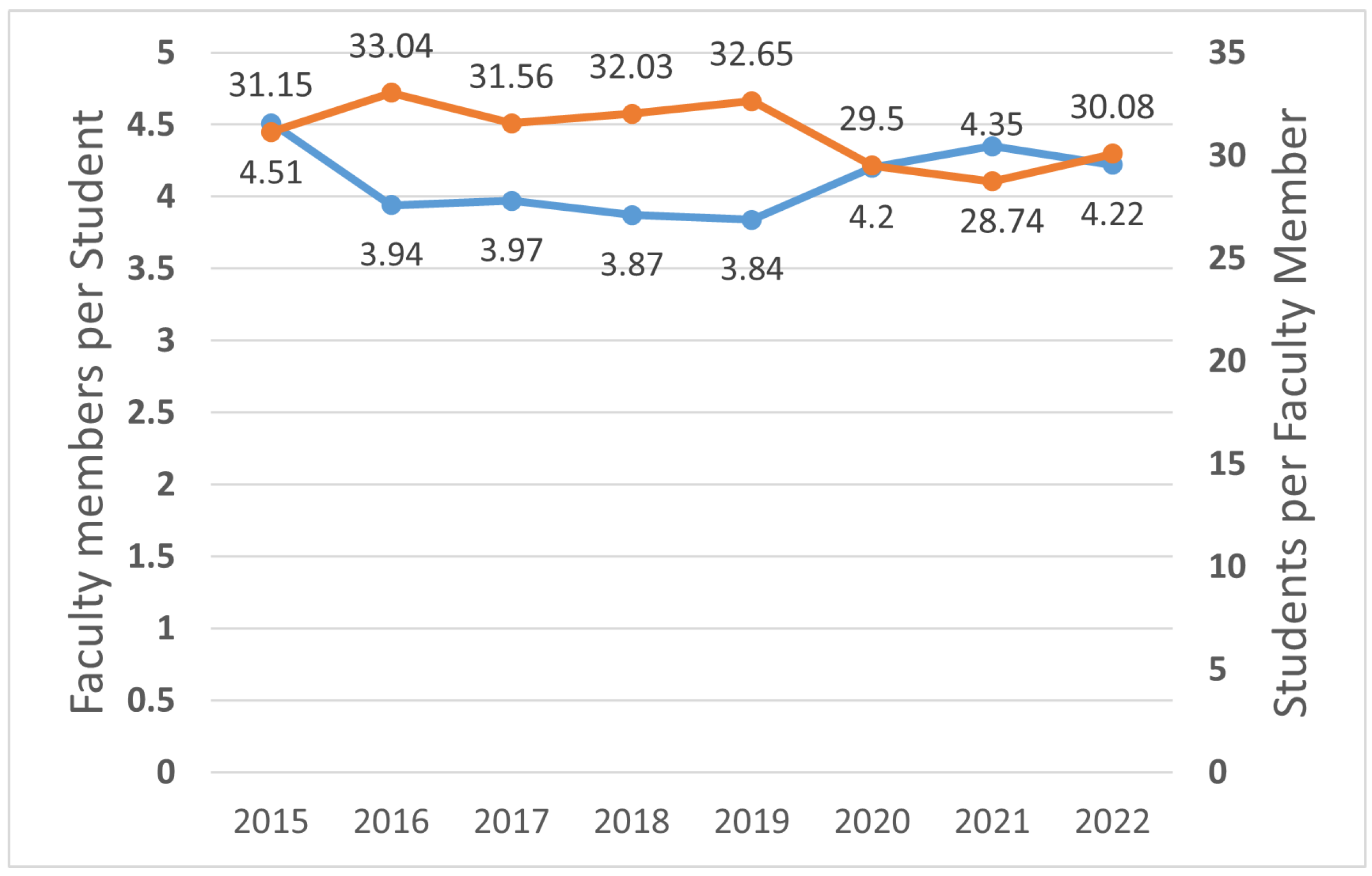
- Students per Faculty Member: The ratio of students to faculty. This is a significant stressor, often directly proportional to the number of students—more students result in increased stress levels.
- Faculty Members per Student: This indicator reflects the average number of different instructors that a student has each year.
- Scimago Research Rank: Research, as a core academic responsibility, is perceived by faculty as another stress factor.
3.3. Relationships Between the Study Variables
4. Results
4.1. Student Level
4.2. Faculty Level
4.3. Relationships Between Stress Factors for Faculty and Students
5. Discussion
6. Conclusions
Author Contributions
Funding
Institutional Review Board Statement
Informed Consent Statement
Data Availability Statement
Acknowledgments
Conflicts of Interest
References
- Corrales Riveros, C.A.; Rojas Polo, J.E.; Atoche Diaz, W.J.; Cáceres Cansaya, A.A.; Rodriguez Anticona, M.Á. Caracterización del Nivel de Estrés de Alumnos de Ingeniería Mediante Herramientas de Data Mining; LACCEI Inc.: Boca Raton, FL, USA, 2021. [Google Scholar]
- Kötter, T.; Wagner, J.; Brüheim, L.; Voltmer, E. Perceived medical school stress of undergraduate medical students predicts academic performance: An observational study. BMC Med. Educ. 2017, 17, 256. [Google Scholar] [CrossRef] [Scilit] [PubMed]
- Kadapatti, M.G.; Vijayalaxmi, A. Stressors of academic stress-a study on pre-university students. Indian J. Sci. Res. 2012, 3, 171–175. [Google Scholar]
- Bojorque, R.; Moscoso, F.; Durazno-Silva, P. Data mining for patterns detection stressors in higher education; [Minería de Datos para detección de patrones estresores en la educación superior]. RISTI -Rev. Iber. Sist. E Tecnol. Inf. 2024, 2024, 224–232. [Google Scholar]
- Oaten, M.; Cheng, K. Academic examination stress impairs self-control. Aust. J. Psychol. 2003, 55, 56. [Google Scholar] [CrossRef] [Scilit]
- Scrimin, S.; Moscardino, U.; Altoè, G.; Mason, L. Effects of perceived school well-being and negative emotionality on students’ attentional bias for academic stressors. Br. J. Educ. Psychol. 2016, 86, 278–295. [Google Scholar] [CrossRef] [Scilit] [PubMed]
- Chrousos, G.P.; Gold, P.W. The concepts of stress and stress system disorders. Overview of physical and behavioral homeostasis. JAMA 1992, 267, 1244–1252. [Google Scholar] [CrossRef] [Scilit]
- Radcliffe, C.; Lester, H. Perceived stress during undergraduate medical training: A qualitative study. Med. Educ. 2003, 37, 32–38. [Google Scholar] [CrossRef] [Scilit] [PubMed]
- Mahalle, P.N.; Hujare, P.P.; Shinde, G.R. Data Acquisition and Preparation. Springerbriefs Appl. Sci. Technol. 2023, 11–38. [Google Scholar] [CrossRef] [Scilit]
- Unwin, A. Exploratory Data Analysis; Springer: Berlin/Heidelberg, Germany, 2009; pp. 156–161. [Google Scholar] [CrossRef] [Scilit]
- Lee, D.H.; Kang, S.; Yum, S. A qualitative assessment of personal and academic stressors among Korean college students: An exploratory study. Coll. Stud. J. 2005, 39, 442–449. [Google Scholar]
- Bojorque, R.; Moscoso-Merchán, F.; Pesantez-Avilés, F. Correlations between Syllabus Schedule and Academic Achievement, a Case Study. In Proceedings of the Conference Proceedings. New Perspectives in Science Education 2020, Florence, Italy, 19–20 March 2020. [Google Scholar]
- Bojorque, R.; Plaza, A.; Moscoso, F. Predicting Student Success in Higher Education with Social, Economic, and Education Variables Using Machine Learning Techniques. In Proceedings of the International Congress on Information and Communication Technology, London, UK, 19–22 February 2024; Springer: Berlin/Heidelberg, Germany, 2024; pp. 201–209. [Google Scholar]
- Syed Mustapha, S. Predictive analysis of students’ learning performance using data mining techniques: A comparative study of feature selection methods. Appl. Syst. Innov. 2023, 6, 86. [Google Scholar] [CrossRef] [Scilit]
- Alghamdi, A.S.; Rahman, A. Data mining approach to predict success of secondary school students: A Saudi Arabian case study. Educ. Sci. 2023, 13, 293. [Google Scholar] [CrossRef] [Scilit]
- Dol, S.M.; Jawandhiya, P.M. Use of data mining tools in educational data mining. In Proceedings of the 2022 Fifth International Conference on Computational Intelligence and Communication Technologies (CCICT), Sonepat, India, 8–9 July 2022; IEEE: Piscataway, NJ, USA, 2022; pp. 380–387. [Google Scholar]
- Patel, H.I.; Patel, D. Exploratory Data Analysis and Feature Selection for Predictive Modeling of Student Academic Performance Using a Proposed Dataset. Int. J. Eng. Trends Technol. 2024, 72, 131–143. [Google Scholar] [CrossRef] [Scilit]
- Otero-Escobar, A.D.; Velasco-Ramirez, M.L. Study on Exploratory Data Analysis Applied to Education. In Proceedings of the 2023 IEEE International Conference on Engineering Veracruz (ICEV), Boca del Río, Mexico, 23–26 October 2023. [Google Scholar] [CrossRef] [Scilit]
- Kumar, M.; Singh, N.; Wadhwa, J.; Singh, P.; Kumar, G.; Qtaishat, A. Utilizing Random Forest and XGBoost Data Mining Algorithms for Anticipating Students’ Academic Performance. Int. J. Mod. Educ. Comput. Sci. 2024, 16, 29–44. [Google Scholar] [CrossRef] [Scilit]
- Al-Shabandar, R.; Hussain, A.; Laws, A.; Keight, R.; Lunn, J.; Radi, N. Machine learning approaches to predict learning outcomes in Massive open online courses. In Proceedings of the 2017 International Joint Conference on Neural Networks (IJCNN), Anchorage, AK, USA, 14–19 May 2017; Volume 2017, pp. 713–720. [Google Scholar] [CrossRef] [Scilit]
- Hartson, K.R.; Hall, L.A.; Choate, S.A. Stressors and resilience are associated with well-being in young adult college students. J. Am. Coll. Health 2023, 71, 821–829. [Google Scholar] [CrossRef] [Scilit] [PubMed]
- Guzmán-Castillo, A.; Claudio Bustos, N.; Walter Zavala, S.; Castillo-Navarrete, J.L. SISCO inventory of academic stress: Review of its psychometric properties in university students; [Inventario SISCO del estrés académico: Revisión de sus propiedades psicométricas en estudiantes universitarios]. Ter. Psicol. 2022, 40, 197–211. [Google Scholar] [CrossRef] [Scilit]
- Hochschild Ovalle, H.; Nussbaum, M.; Claro, S.; Espinosa, P.; Alvares, D. Happiness at School and Its Relationship with Academic Achievement. Educ. Sci. 2024, 14, 1321. [Google Scholar] [CrossRef] [Scilit]
- Ramachandiran, M.; Dhanapal, S. Academic stress among university students: A quantitative study of generation Y and Z’s perception. Pertanika J. Soc. Sci. Humanit. 2018, 26, 2115–2128. [Google Scholar]
- Barongo, S.M. Stressors Among Students at Higher Education Institutions; IGI Global: Hershey, PA, USA, 2023; pp. 19–36. [Google Scholar] [CrossRef] [Scilit]
- Martincová, J.; Bílá, M. Pedagogical aspects of the development of academic stress. Cogent Educ. 2023, 10, 2237285. [Google Scholar] [CrossRef] [Scilit]
- Esperanza, E.T.; Bulusan, F. Stressors and coping mechanisms of college scholarship grantees: A quantitative case study of an island higher education institution. Univers. J. Educ. Res. 2020, 8, 2156–2163. [Google Scholar] [CrossRef] [Scilit]
- Kebelo, K.K.; Ananda Rao, T. Role stressors as predictors of psychological strain among academic officers of ethiopian higher education institutions. J. Indian Acad. Appl. Psychol. 2012, 38, 367–373. [Google Scholar]
- Pascoe, M.C.; Hetrick, S.E.; Parker, A.G. The impact of stress on students in secondary school and higher education. Int. J. Adolesc. Youth 2020, 25, 104–112. [Google Scholar] [CrossRef] [Scilit]
- Younes, R.; Sadler, C. Simple Steps to Lower Student Stress in a Digital Systems Course While Maintaining High Standards and Expectations. In Proceedings of the 2020 ASEE Virtual Annual Conference Content Access, Online, 22 June 2020. [Google Scholar]
- Zapata-Garibay, R.; González-Fagoaga, J.E.; Asadi-González, A.A.; Martínez-Alvarado, J.R.; Chavez-Baray, S.M.; Plascencia-López, I.; González-Fagoaga, C.J. Mental Health Stressors in Higher Education Instructors and Students in Mexico During the Emergency Remote Teaching Implementation due to COVID-19. Front. Educ. 2021, 6. [Google Scholar] [CrossRef] [Scilit]
- Hendel, D.D.; Horn, A.S. The relationship between academic life conditions and perceived sources of faculty stress over time. J. Hum. Behav. Soc. Environ. 2008, 17, 61–88. [Google Scholar] [CrossRef] [Scilit]
- Meng, Q.; Wang, G. A research on sources of university faculty occupational stress: A Chinese case study. Psychol. Res. Behav. Manag. 2018, 11, 597–605. [Google Scholar] [CrossRef] [Scilit] [PubMed]
- Göregen, M.S.; Tanghe, E.; Schelfhout, W. What Works to Retain Beginning Teachers in the Profession? A Mixed Methods Approach to Detect Determining Factors. Educ. Sci. 2024, 14, 1319. [Google Scholar] [CrossRef] [Scilit]
- Lindholm, J.A.; Szelényi, K. Faculty time stress: Correlates within and across academic disciplines. J. Hum. Behav. Soc. Environ. 2008, 17, 19–40. [Google Scholar] [CrossRef] [Scilit]
- Das, S.; Babu, B.K. Impact of non-academic work stress on faculty performance: A research on selected engineering institutes in Guntur district of Andhra Pradesh. Int. J. Sci. Technol. Res. 2019, 8, 2660–2664. [Google Scholar]
- Mensonen, M.; Pramila-Savukoski, S.; Mikkonen, K.; Törmänen, T.; Juntunen, J.; Kuivila, H.M. The experiences of social and health care and health sciences educators of implementing hybrid teaching in higher education: A qualitative study. Nurse Educ. Today 2024, 133, 106079. [Google Scholar] [CrossRef] [Scilit] [PubMed]
- Salmi, R.; Izwan, M.N.M.; Azreen, H.N.; Hapizah, M.N. Stress among University Staff. Is Working in Suburban Campus Better? Academia 2021, 2021, 85–105. [Google Scholar] [CrossRef] [Scilit]
- Uniyal, A.K.; Dixit, A.K.; Kanojia, P. Effects of stress among the faculty working in private universities and colleges with special reference to Uttarakhand (India). Int. J. Innov. Technol. Explor. Eng. 2019, 8, 760–766. [Google Scholar] [CrossRef] [Scilit]
- Johnson, S.J.; Willis, S.M.; Evans, J. An examination of stressors, strain, and resilience in academic and non-academic U.K. university job roles. Int. J. Stress Manag. 2019, 26, 162–172. [Google Scholar] [CrossRef] [Scilit]


Disclaimer/Publisher’s Note: The statements, opinions and data contained in all publications are solely those of the individual author(s) and contributor(s) and not of MDPI and/or the editor(s). MDPI and/or the editor(s) disclaim responsibility for any injury to people or property resulting from any ideas, methods, instructions or products referred to in the content. |
© 2025 by the authors. Licensee MDPI, Basel, Switzerland. This article is an open access article distributed under the terms and conditions of the Creative Commons Attribution (CC BY) license (https://creativecommons.org/licenses/by/4.0/).
Share and Cite
Bojorque, R.; Moscoso, F.; Pesántez, F.; Flores, Á. Stress Factors in Higher Education: A Data Analysis Case. Data 2025, 10, 22. https://doi.org/10.3390/data10020022
Bojorque R, Moscoso F, Pesántez F, Flores Á. Stress Factors in Higher Education: A Data Analysis Case. Data. 2025; 10(2):22. https://doi.org/10.3390/data10020022
Chicago/Turabian StyleBojorque, Rodolfo, Fernando Moscoso, Fernando Pesántez, and Ángela Flores. 2025. "Stress Factors in Higher Education: A Data Analysis Case" Data 10, no. 2: 22. https://doi.org/10.3390/data10020022
APA StyleBojorque, R., Moscoso, F., Pesántez, F., & Flores, Á. (2025). Stress Factors in Higher Education: A Data Analysis Case. Data, 10(2), 22. https://doi.org/10.3390/data10020022