
A Dataset for the Medical Support Vehicle Location–Allocation Problem

 , , ,
, , ,  and
and 
Abstract
1. Introduction
- Coordinated multi-layer geospatial structure;
- Synthetic multi-demand scenarios derived from historical patterns;
- A harmonized transportation network in a projected CRS appropriate for routing;
- Congestion-aware travel-time weights;
- A reduced set of realistic candidate bases derived from road-network topology.
2. Data Description
2.1. Overview of the Dataset
- The administrative and political structure of Mexico City;
- Seismic risk and emergency management divisions;
- Demographic and land-use distribution;
- Building-level information for population estimation;
- Historical damage patterns used to calibrate synthetic disaster scenarios.
2.2. Raw Data Sources
- The Mexico City Open Data Portal (in Spanish Portal de Datos Abiertos de la Ciudad de México—PDACDMX);
- The National Risk Atlas (in Spanish Atlas Nacional de Riesgos—ANR);
- The National Institute of Statistics and Geography (in Spanish Instituto Nacional de Estadística y Geografía—INEGI);
- The Secretariat of Urban Development and Housing (in Spanish Secretaría de Desarrollo Urbano y Vivienda de la Ciudad de México—SEDUVI);
- The Mexico City Reconstruction Commission (in Spanish Comisión para la Reconstrucción de la Ciudad de México—CRCDMX).
2.3. Administrative and Risk-Related Layers
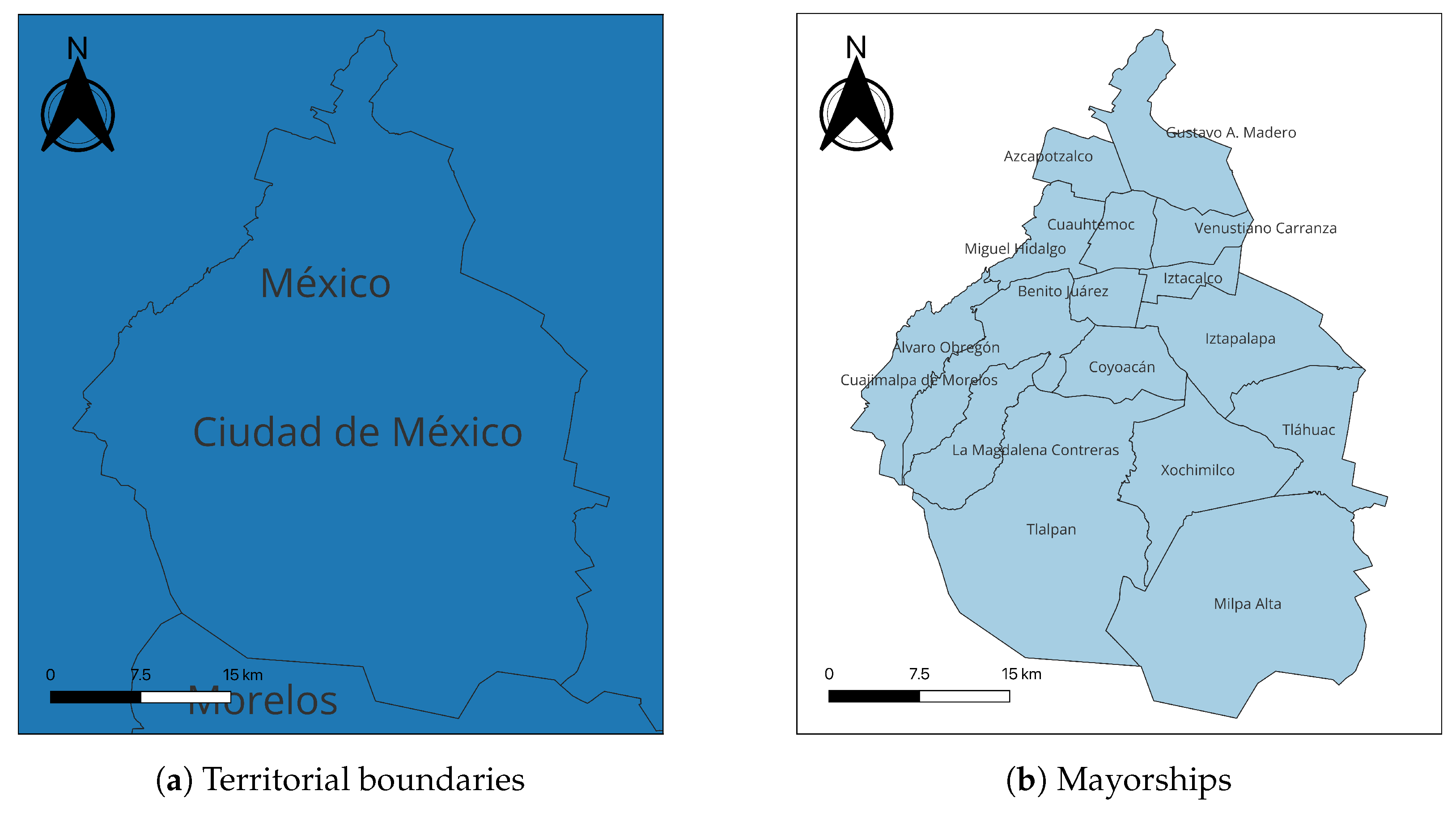
- Territorial boundaries: Polygon defining the official extent of Mexico City. The polygon with attribute COV_ID = 9 is selected from the original dataset.
- Mayorships: Geographic boundaries of the sixteen districts that constitute the city.
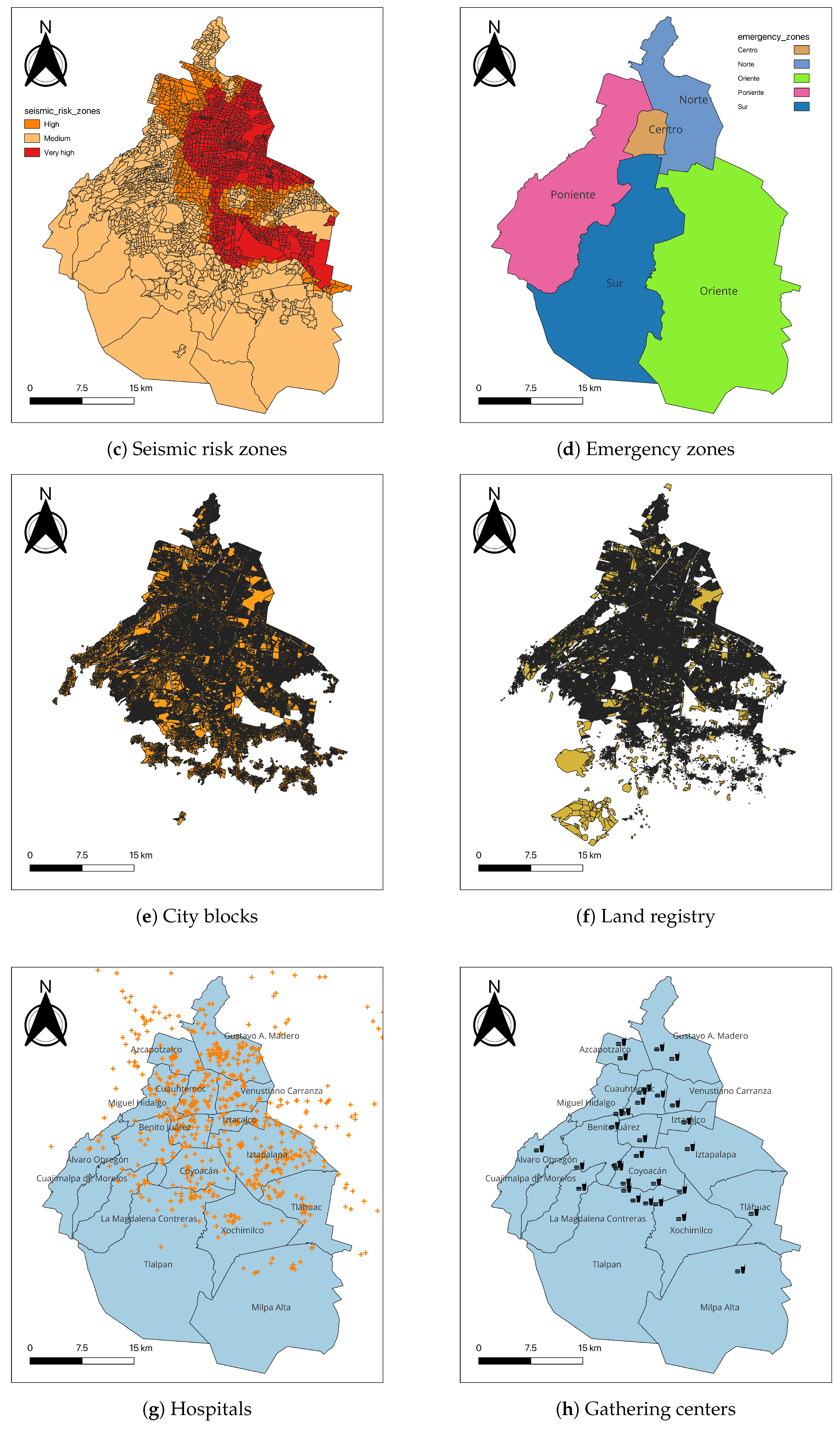
- Seismic risk zones: Areas classified by AGEB, representing expected seismic amplification and hazard.2
- Emergency zones: Regions defined by the local emergency management agency to coordinate response operations.
2.4. Socioeconomic and Cadastral Layers
- City blocks: AGEB-level blocks including population and housing census data.
- Land registry: Cadastral parcels with use, lot size or parcel area, and identifiers.
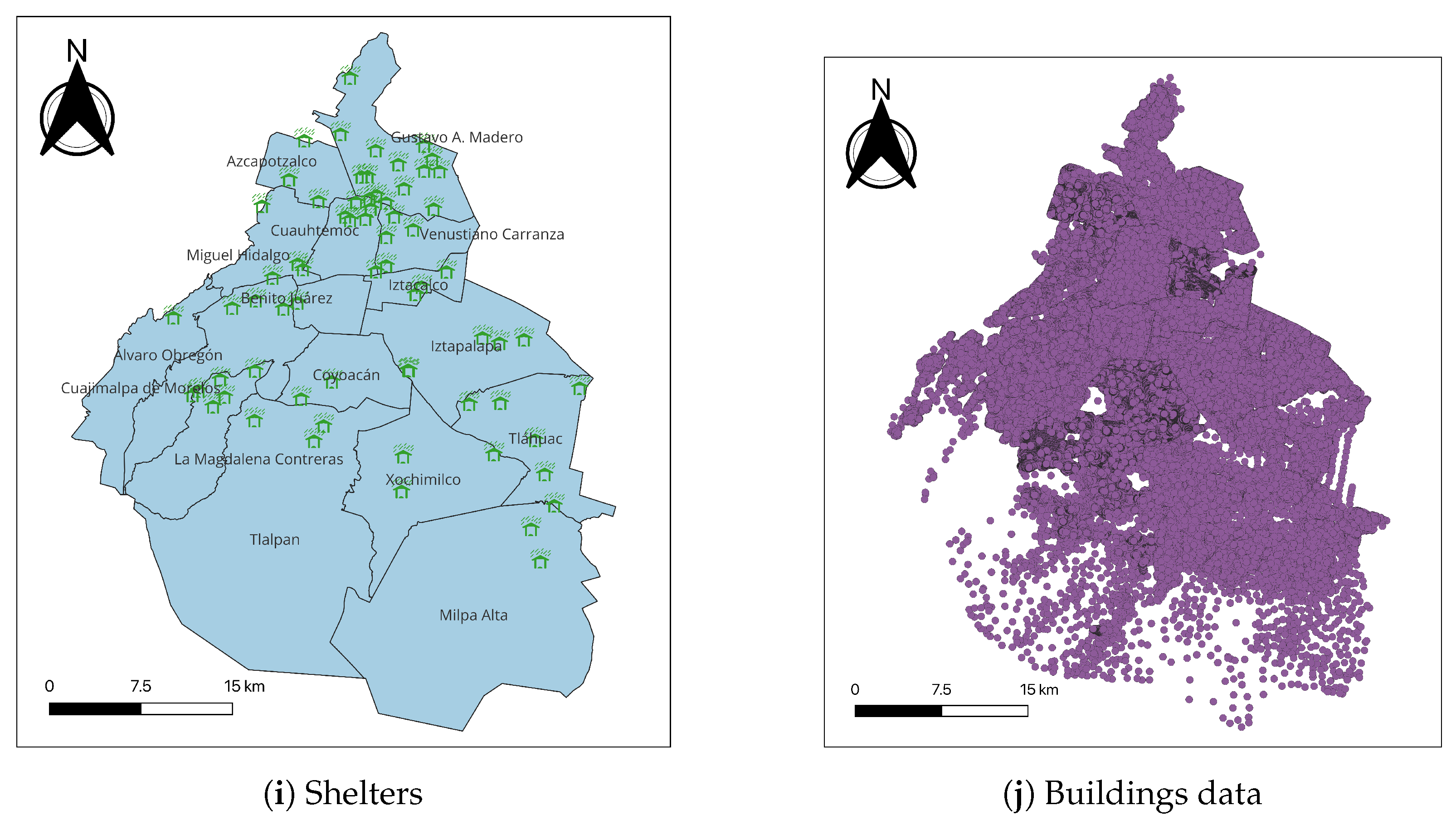
- Buildings data: Centroids and attributes of registered buildings.
- Hospitals: Public and private hospitals operating within city boundaries.
- Gathering centers: Official collection and supply points for emergencies.
- Shelters: Temporary accommodations designated during disasters.
2.5. Earthquake Impact Layers
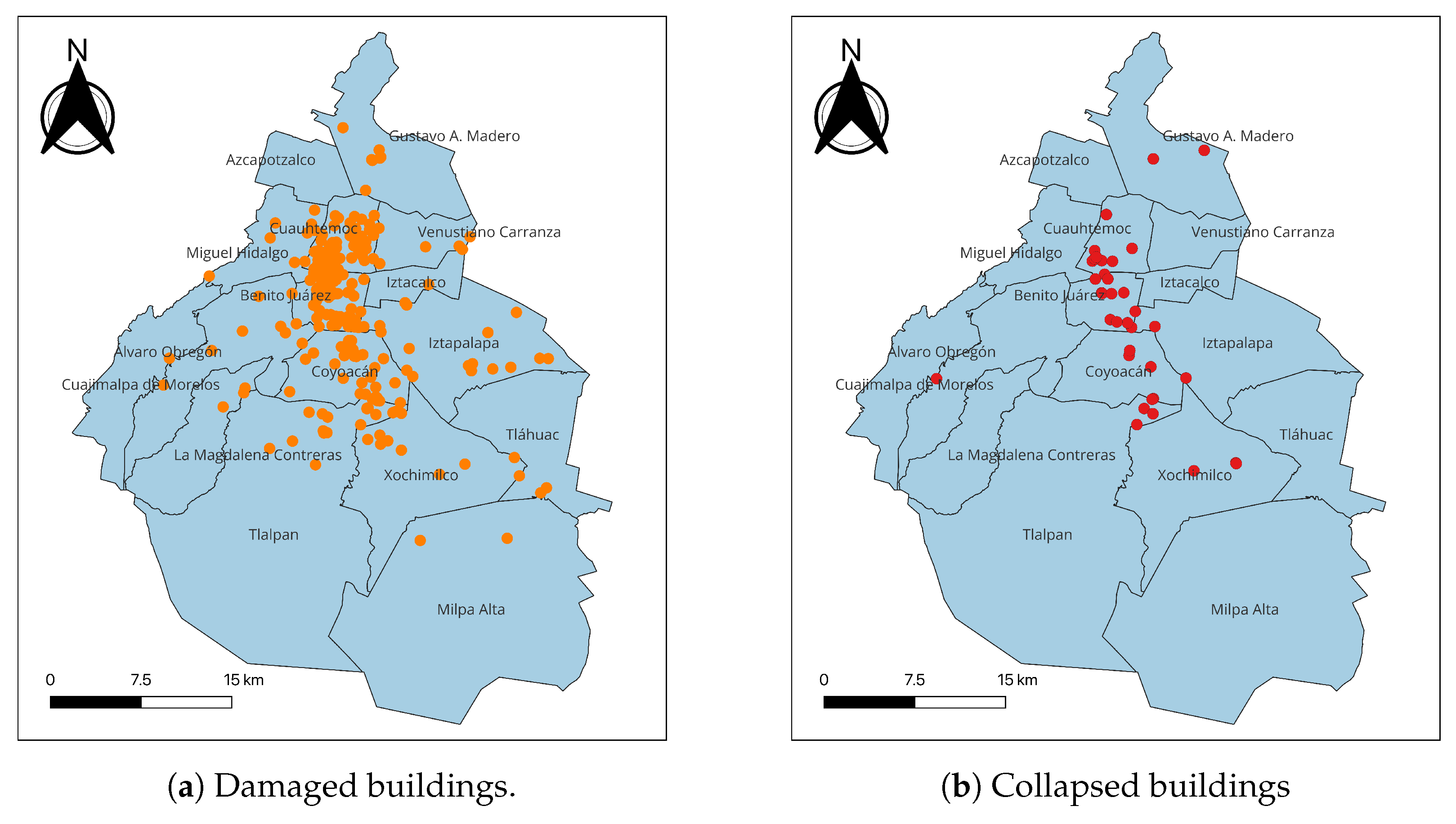
- Collapsed buildings: Locations where structures fully collapsed during the 2017 earthquake. This dataset is no longer available publicly; the version included corresponds to the official file released in late 2018.
- Damaged buildings: Buildings requiring structural intervention. The current public version differs from the original 2018 release, because this new dataset combines the following:
- -
- The 2017–2018 social and technical census;
- -
- Entries added between 2019 and 2023 after inspections and citizen reports.
2.6. Data Availability, Provenance, and Limitations
- Collapsed buildings: original dataset from 2017 is no longer hosted by PDACDMX.
- Damaged buildings: the current public release differs from the 2017–2018 official census; the version included corresponds to the 2017–2018 census.
- Emergency zones: official shapefiles are not provided; polygons were digitized from the governmental document.
2.7. ISO 19115 Metadata Summary
2.8. Role of Raw Data in the Dataset Pipeline
- Administrative layers define clipping and aggregation units;
- Cadastral and building layers support victim estimation;
- Seismic and emergency layers guide synthetic scenario calibration;
- Earthquake impact layers calibrate the spatial kernel density estimator used to generate hypothetical disaster scenarios.
3. Materials and Methods
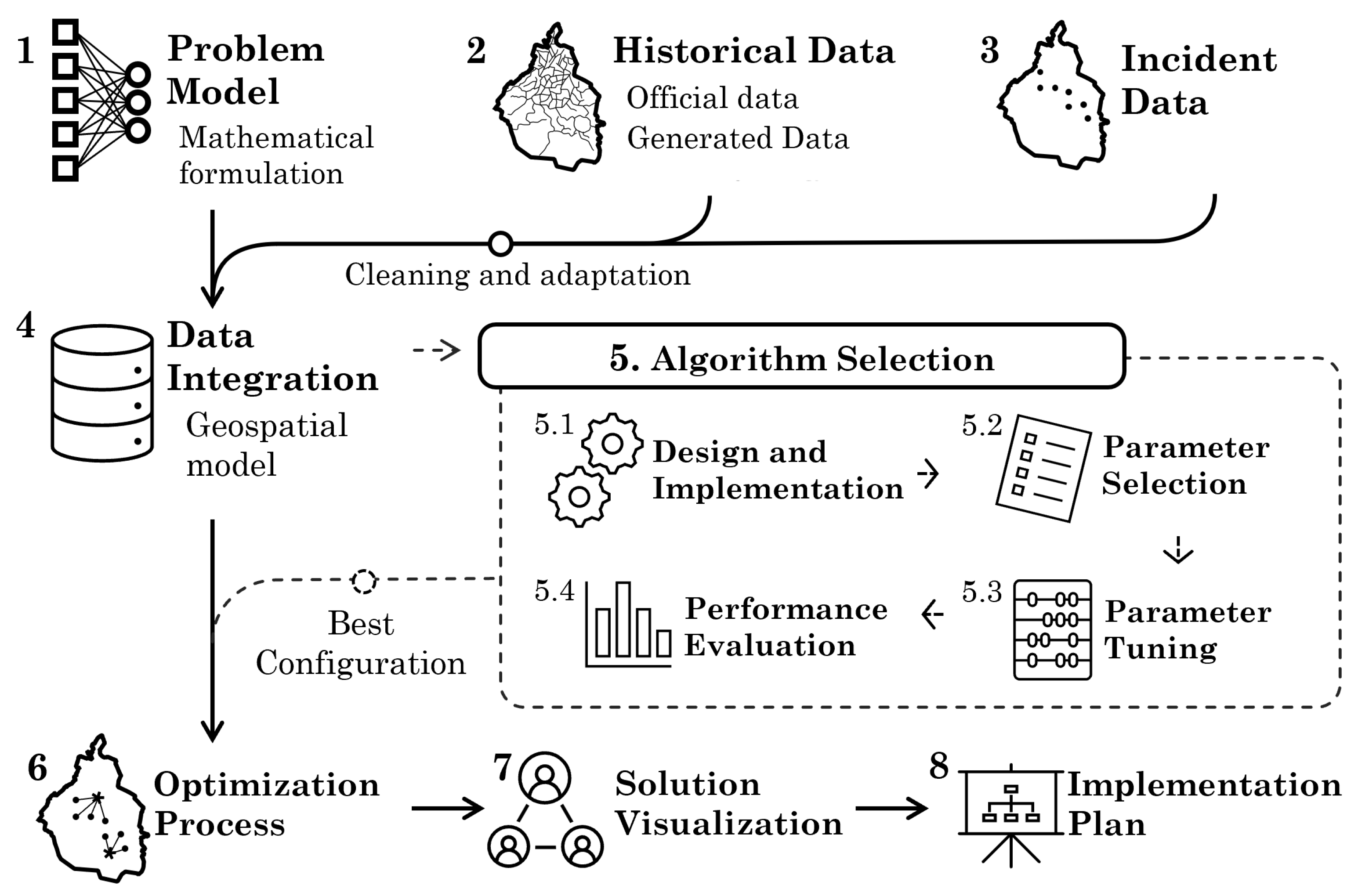
- Problem model:. It is formulated mathematically as an assignment optimization problem.
- Historical data.This stage involves acquiring or generating the information necessary to define the case study, as described in Section 2.
- Incident data. At this stage, data specific to the incident are collected from the locations of multiple demand points (with confirmed or suspected victims), road blockages, and current hospital capacity.
- Data integration. The outcome is a geospatial model that captures the full context of the incident. The technical details regarding geospatial harmonization and mobility graph updates thoroughly described in Section 3.1 and Section 3.3.2, respectively.
- Algorithm selection. Once the geospatial model and optimization problem have been defined, we selected an appropriate algorithm through the following sub-stages:
- 5.1
- Design and implementation. An optimization algorithm is proposed and implemented to address the formulated problem.
- 5.2
- Parameter selection. Each algorithm requires a specific set of parameters that must align with the geospatial model’s information. Parameters may be categorical or numerical.
- Categorical variables include internal procedures such as assignment methods, crossover or mutation operators, and performance metrics.
- Numerical variables correspond to hyperparameters that can take discrete or continuous values, such as population size, crossover and mutation rates, and number of offspring. For numerical variables, it is essential to define a finite search space to ensure computational feasibility.
- 5.3
- Parameter tunning. This step aims to determine the optimal algorithm configuration for solving a set of instances of the same problem.
- 5.4
- Performance evaluation. The configurations obtained in the previous step are evaluated using performance criteria, including execution time, the best solution found, and average solution quality. Based on these criteria, the most suitable algorithm was selected for real-world implementation.
- Optimization process. With the problem model and incident-specific data defined, the optimization algorithm that demonstrated the best performance is executed, producing a set of solutions for use in the subsequent stage.
- Solution visualization. The resulting solutions are visualized to support decision-making by response teams, along with any additional information relevant to the emergency plan.
- Implementation plan. The resulting solutions are visualized graphically to support decision-making by response teams, accompanied by any additional information relevant to the emergency plan.
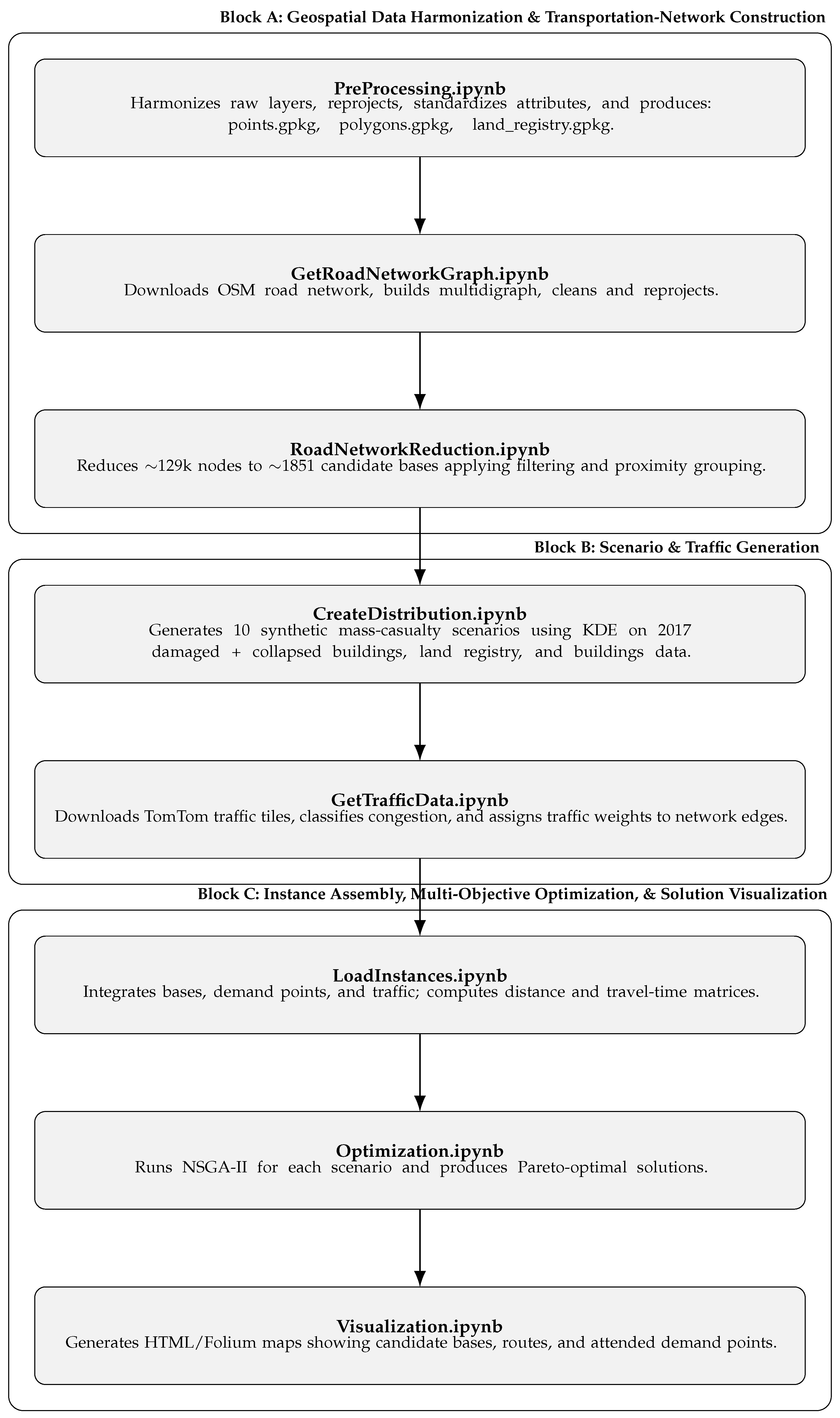
3.1. Geospatial Data Harmonization and Transportation-Network Construction
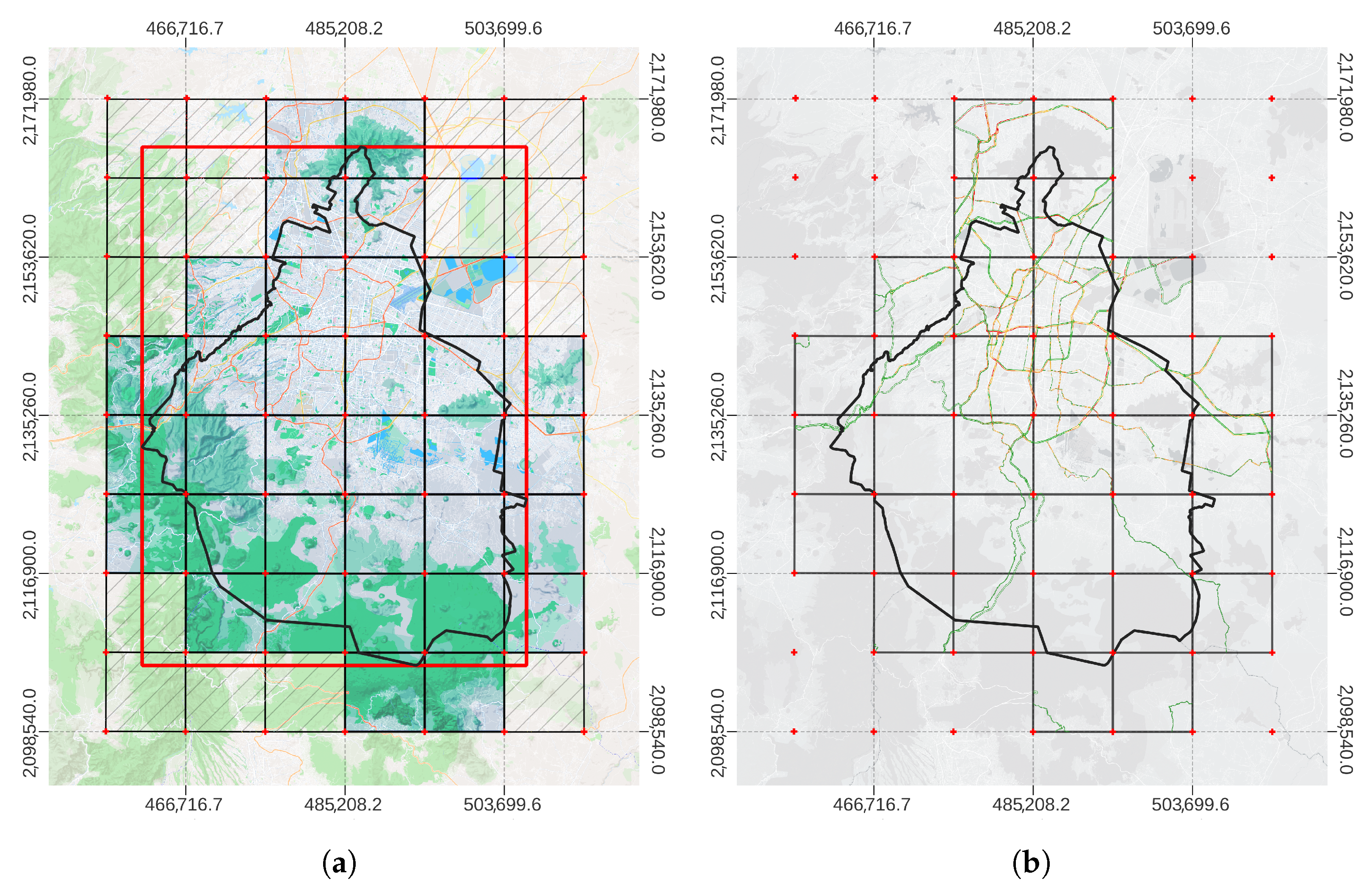
3.1.1. Geospatial Data Harmonization
3.1.2. Extraction of the Transportation Network
3.1.3. Candidate-Base Reduction
3.2. Scenario and Traffic Generation
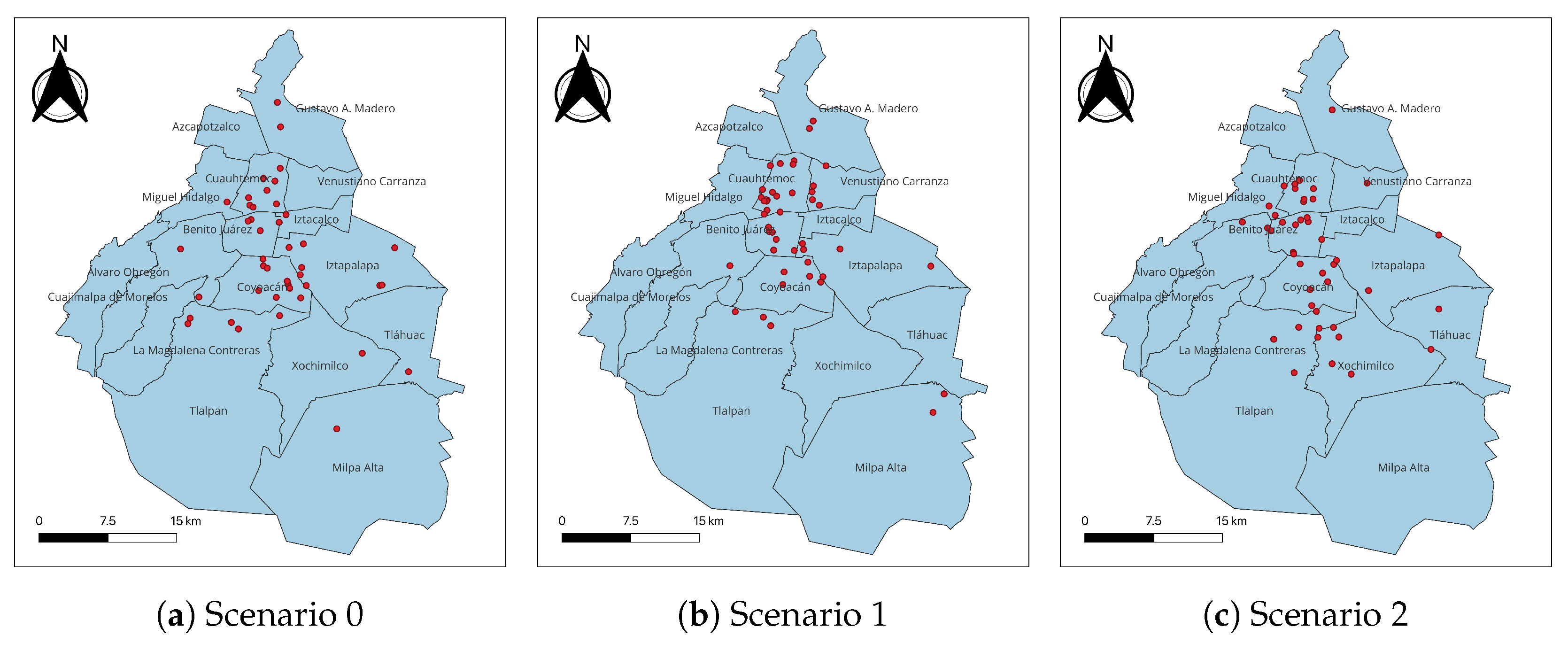
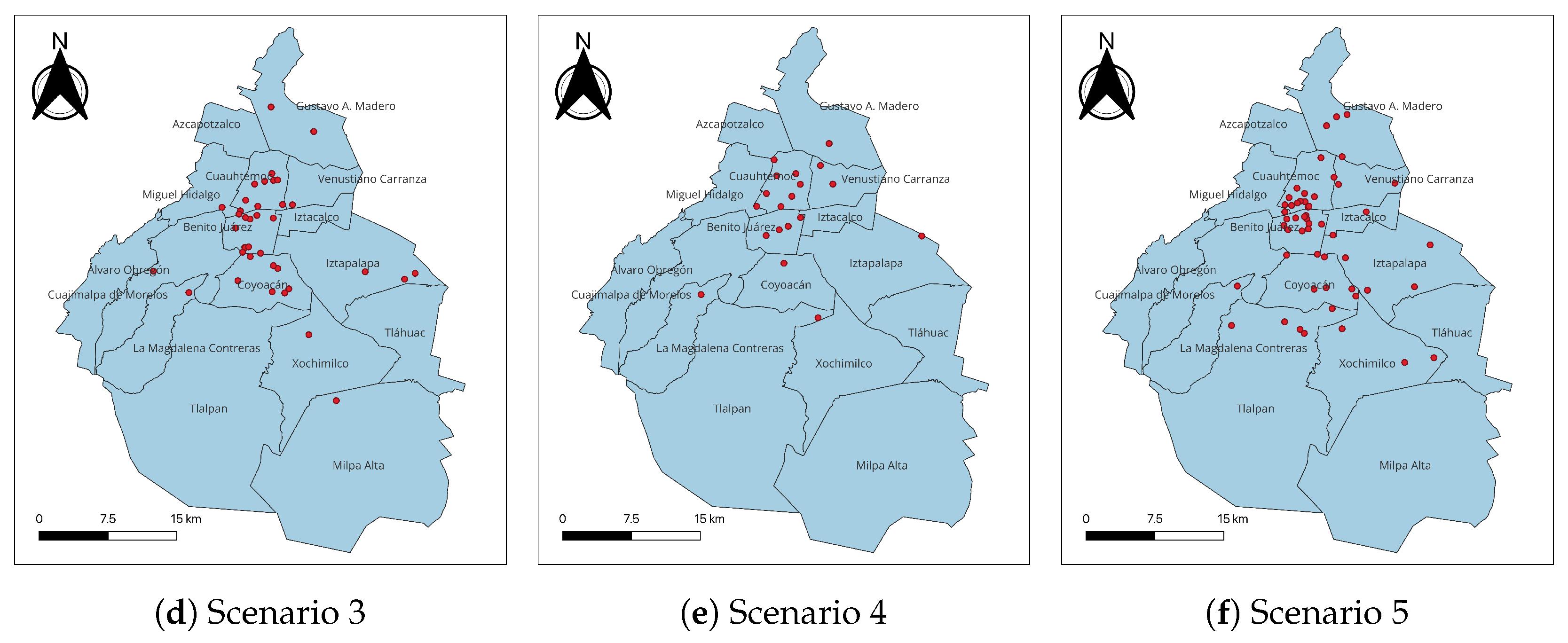
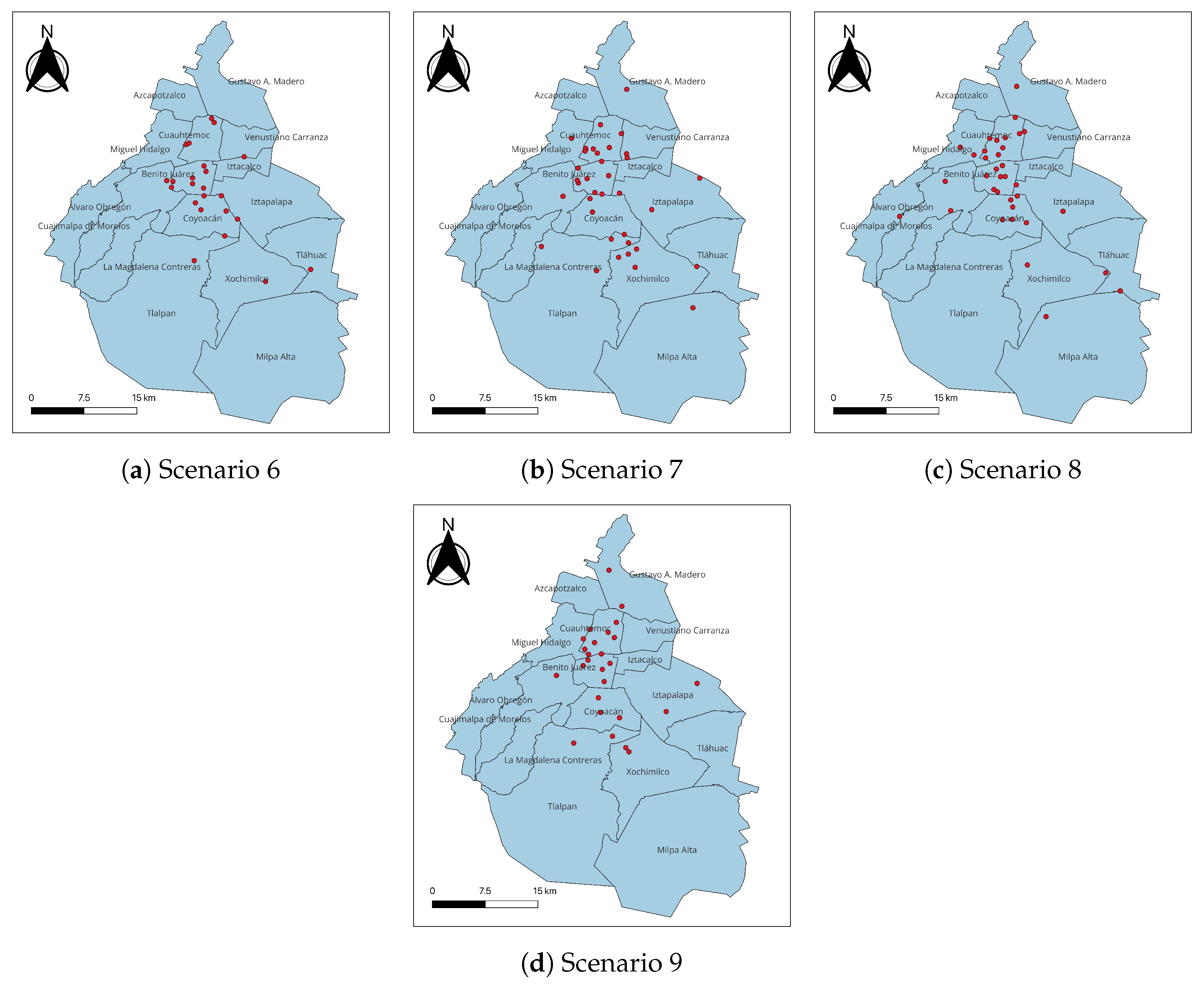
3.2.1. Generation of Mass-Casualty Scenarios
3.2.2. Traffic-Based Edge Weighting
- baseURL: base URL of TomTom services (default: api.tomtom.com).
- versionNumber: API version (currently 4).
- style: tile rendering style (set to relative0).
- z: zoom level.
- x: x coordinate of the tile.
- y: y coordinate of the file.
- format: image format (currently PNG only).
- apiKey: personal API access key.
- thickness: line width multiplier (integer value).
- tileSize: tile size (256 or 512).
| Algorithm 1 Formal procedure for obtaining and processing traffic data from TomTom tiles |
|
3.3. Instance Assembly, Multi-Objective Optimization, and Solution Visualization
3.3.1. Instance Construction and Cost-Matrix Generation
3.3.2. Multi-Objective Optimization of Emergency Response Plans
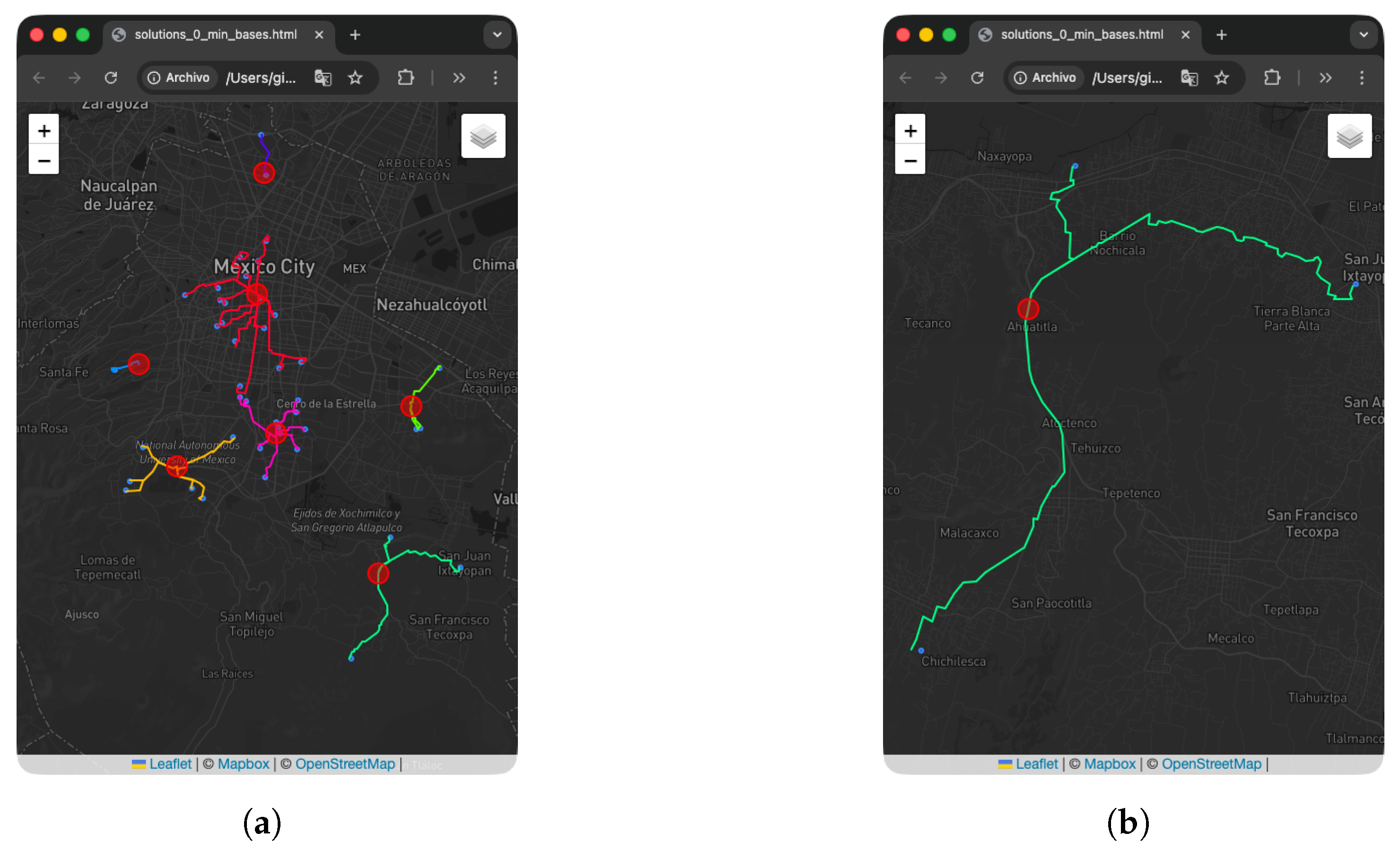
3.3.3. Visualization of Optimized Deployment Plans
4. Conclusions
Author Contributions
Funding
Data Availability Statement
Conflicts of Interest
| 1 | Other resource types, such as search-and-rescue personnel or emergency medical staff, can also be analyzed. |
| 2 | AGEB (Basic Geostatistical Area -in Spanish Área Geoestadística Básica-) is a geographic unit defined by INEGI for the statistical division of Mexican territory. These areas can be urban or rural and operate as the smallest unit for demographic and socioeconomic analysis. |
| 3 | In practice, only attributes should be removed; however, some OSMNX functions internally reference auxiliary fields that may also be discarded. |
| 4 | If TomTom services are temporarily unavailable, archived or historical traffic tiles may also be used. |
| 5 | The URL is a query template for the TomTom Traffic API and is not a navigable hyperlink. It contains placeholder parameters (e.g., {x}, {y}, {apiKey}) required to construct requests programmatically. |
References
- Campos, V. PHTLS: Soporte Vital de Trauma Prehospitalario; Jones & Bartlett Learning: Burlington, MA, USA, 2020. [Google Scholar]
- Medina-Perez, M.; Legaria-Santiago, V.K.; Guzmán, G.; Saldana-Perez, M. Search Space Reduction in Road Networks for the Ambulance Location and Allocation Optimization Problems: A Real Case Study. In Proceedings of the Telematics and Computing, Puerto Vallarta, Mexico, 13–17 November 2023; Mata-Rivera, M.F., Zagal-Flores, R., Barria-Huidobro, C., Eds.; Springer: Cham, Switzerland, 2023; pp. 157–175. [Google Scholar] [CrossRef]
- Medina-Perez, M.; Guzmán, G.; Saldana-Perez, M.; Legaria-Santiago, V.K. Medical Support Vehicle Location and Deployment at Mass Casualty Incidents. Information 2024, 15, 260. [Google Scholar] [CrossRef]
- Nurwatik; Hong, J.H. A framework: Implementation of smart city concept towards evacuation route mapping in disaster management system. IOP Conf. Ser. Earth Environ. Sci. 2019, 389, 012043. [Google Scholar] [CrossRef]
- Bhatti, F.; Shah, M.A.; Maple, C.; Islam, S.U. A Novel Internet of Things-Enabled Accident Detection and Reporting System for Smart City Environments. Sensors 2019, 19, 2071. [Google Scholar] [CrossRef]
- Darwassh Hanawy Hussein, T.; Frikha, M.; Ahmed, S.; Rahebi, J. BA-CNN: Bat Algorithm-Based Convolutional Neural Network Algorithm for Ambulance Vehicle Routing in Smart Cities. Mob. Inf. Syst. 2022, 2022, 7339647. [Google Scholar] [CrossRef]
- Veisi, O.; Du, D.; Moradi, M.A.; Guasselli, F.C.; Athanasoulias, S.; Syed, H.A.; Müller, C.; Stevens, G. Designing SafeMap Based on City Infrastructure and Empirical Approach: Modified A-Star Algorithm for Earthquake Navigation Application. In Proceedings of the 1st ACM SIGSPATIAL International Workshop on Advances in Urban-AI, Hamburg, Germany, 13 November 2023; ACM: New York, NY, USA, 2023; pp. 61–70. [Google Scholar] [CrossRef]
- Comisión Nacional para el Conocimiento y Uso de la Biodiversidad. División Política Estatal 1:250,000. 2019. Available online: http://geoportal.conabio.gob.mx/metadatos/doc/html/dest2019gw.html (accessed on 28 October 2025).
- Instituto Nacional de Estadística y Geografía (INEGI). Límite de Alcaldías (Áreas Geoestadísticas Municipales). 2023. Available online: https://datos.cdmx.gob.mx/dataset/alcaldias (accessed on 28 October 2025).
- Secretaría de Gestión Integral de Riesgos y Protección Civil. Atlas de Riesgo Sísmico. 2021. Available online: https://datos.cdmx.gob.mx/dataset/atlas-de-riesgo-sismico (accessed on 28 October 2025).
- Gaceta Oficial de la Ciudad de México. No. 685bis, Protocolo del Plan de Emergencia Sísmica. 2021. Available online: https://data.consejeria.cdmx.gob.mx/portal_old/uploads/gacetas/18652b057da05daee4cf7a0784093fff.pdf#page=5.25 (accessed on 28 October 2025).
- Instituto Nacional de Estadística y Geografía (INEGI). Polígonos de Manzanas de la Ciudad de México. 2023. Available online: https://datos.cdmx.gob.mx/dataset/poligonos-de-manzanas-de-la-ciudad-de-mexico (accessed on 28 October 2025).
- Agencia Digital de Innovación Pública “Sistema Abierto de Información Geográfica (SIGCDMX)”. Catastro de la Ciudad de México. 2021. Available online: https://sig.cdmx.gob.mx/datos/descarga#d_datos_cat (accessed on 28 October 2025).
- Instituto de Planeación Democrática y Prospectiva. Hospitales púBlicos y Privados en Operación de la ZMVM. 2022. Available online: https://datos.cdmx.gob.mx/dataset/hospitales-publicos-y-privados-en-operacion-de-la-zmvm (accessed on 28 October 2025).
- Secretaría de Gestión Integral de Riesgos y Protección Civil. Centros de Acopio. 2021. Available online: https://datos.cdmx.gob.mx/dataset/centros_acopio (accessed on 28 October 2025).
- Secretaría de Gestión Integral de Riesgos y Protección Civil. Refugios Temporales. 2023. Available online: https://datos.cdmx.gob.mx/dataset/refugios (accessed on 28 October 2025).
- Agencia Digital de Innovación Pública “Sistema Abierto de Información Geográfica (SIGCDMX). Datos de Uso de Suelo. 2022. Available online: https://sig.cdmx.gob.mx/datos/descarga#d_datos_seduvi (accessed on 28 October 2025).
- International Organization for Standardization (ISO). ISO 19115-1:2014—Geographic Information—Metadata—Part 1: Fundamentals; ISO: Geneva, Switzerland, 2014; Available online: https://www.iso.org/standard/53798.html (accessed on 27 November 2025).
- Comisión Nacional de Proteción Civil y Centro Nacional de Prevención de Desastres. Guía para la Reducción del Riesgo Sísmico. Available online: http://www.atlasnacionalderiesgos.gob.mx/descargas/Gu_a_RRS-Final.pdf (accessed on 7 November 2025).
- Secretaria de Gestión Integral de Riesgos y Protección Civil de la Ciudad de México and Urzúa, Myriam. Protocolo del Plan de Emergencia Sísmica. Available online: https://data.consejeria.cdmx.gob.mx/portal_old/uploads/gacetas/18652b057da05daee4cf7a0784093fff.pdf (accessed on 7 November 2025).
- TomTom Developers. Zoom Levels and Tile Grid. 2023. Available online: https://developer.tomtom.com/map-display-api/documentation/zoom-levels-and-tile-grid (accessed on 23 August 2024).



| Layer Name | Alias | Online | Format | SRS | Geometry |
|---|---|---|---|---|---|
| territorial boundaries [8] | boundaries | yes | shapefile | EPSG:4326 | polygon |
| mayorships [9] | — | yes | shapefile | EPSG:4326 | polygon |
| seismic risk zones [10] | risk_zones | yes | shapefile | EPSG:4326 | polygon |
| emergency zones [11] | regions | yes | PDF/Doc | — | polygon |
| city blocks [12] | blocks | yes | shapefile | EPSG:4326 | polygon |
| land registry [13] | land_registry | yes | shapefile | EPSG:32614 | polygon |
| hospitals [14] | — | yes | shapefile | EPSG:32614 | point |
| gathering centers [15] | gathering_centers | yes | CSV | EPSG:4326 | point |
| shelters [16] | refuges | yes | shapefile | EPSG:4326 | point |
| buildings data [17] | seduvi | yes | shapefile | EPSG:32614 | point |
| collapsed buildings | collapses | no | shapefile | EPSG:4326 | point |
| damaged buildings | damages | no | shapefile | EPSG:4326 | point |
| Metadata Element | Description |
|---|---|
| Spatial reference system | EPSG:4326 or EPSG:32614 (as provided by the source) |
| Temporal reference | 2017 (earthquake impact), 2019–2025 (other layers) |
| Geographic extent | Mexico City official boundary |
| Lineage | Official government sources, harmonized version included in dataset |
| Positional accuracy | As reported by PDACDMX, ANR, INEGI, SEDUVI, CRCDMX and OSM |
| Thematic accuracy | As defined by source agencies |
| Completeness | Full coverage of Mexico City; clipped versions provided in processed data |
| License | Original licensing from PDACDMX, ANR, INEGI, SEDUVI, CRCDMX and OSM |
| Attribute | Specification | Type | Percentage Data |
|---|---|---|---|
| osmid | unique identifier | int | 100 |
| highway | road type | str | 100 |
| lanes | number of lanes | int | 20.54 |
| maxspeed | maximum speed | int | 9.85 |
| name | name | str | 86.28 |
| oneway | direction | bool | 100 |
| ref | alternative name | str | 2.93 |
| reversed | geometry direction | bool | 100 |
| length | length | float | 100 |
| geometry | geometry | geometry | 100 |
| merged_edges | merged edges | list | 35.49 |
| junction | intersection segment | str | 0.32 |
| width | road width | float | 0.23 |
| bridge | indicates whether it is a bridge | str | 0.48 |
| access | access type | str | 5.75 |
| tunnel | indicates whether it is a tunnel | bool | 0.08 |
| service | related service type | str | 0 |
| Step | Result | Number of Nodes |
|---|---|---|
| Transport graph from Networkx | 129,067 | |
| Selection by characteristics | 15,640 | |
| Selection by capacity | 8208 | |
| Elimination of redundancy | 5743 | |
| Proximity-based grouping | V | 1851 |
| Variable | Type | Description |
|---|---|---|
| len_sources | int | Total number of sources (candidate bases) |
| len_targets | int | Total number of targets (demand points) |
| len_ambulances | int | Total number of ambulances |
| max_cost | int | Maximum cost for a solution, length in meters of the route |
| sources | dict | List with the IDs of the candidate bases |
| targets | dict | List with the IDs of the demand points |
| source_i_to_node | dict | Equivalence between the position in the ST matrix (row i) and the ID (node attribute) of the candidate base |
| source_node_to_i | dict | Equivalence between the ID (node attribute) of the candidate base and the position in the ST matrix (row i) |
| target_i_to_num | dict | Equivalence between the position in the ST matrix (column i) and the ID (num attribute) of the demand point it represents |
| target_num_to_i | dict | Equivalence between the ID (num attribute) of the demand point represented by the position in the ST matrix (column i) |
| target_num_to_node | dict | Equivalence between the ID of the demand point and the two terminal vertices of the nearest edge |
| target_node_to_num | dict | Equivalence between the terminal vertices of the edge nearest to each demand point |
| capabilities | list | List containing the capacities of each candidate base on the sources field |
| demands | list | List containing the demand at each point in the targets field |
| matrix_ST | np.array | Cost matrix from each candidate base to each demand point |
| routes | list(cudf) | List storing the predecessor table for each demand point, which can be used to obtain the routes used to calculate the cost matrix |
| Element | Description |
|---|---|
| Header | Normalization value used for comparing Pareto fronts across scenarios (inverse hyper volume) |
| Solution ID | Unique identifier corresponding to one non-dominated solution |
| Objective 1 | Total distance required to serve all demand points |
| Objective 2 | Total travel time computed with traffic-adjusted weights |
| Constraint 1 | Maximum route length; encoded as a negative value representing feasibility |
| Constraint 2 | Maximum number of active bases; also represented as a negative feasibility value |
| Assignment Vector | For each demand point i, the ID of the candidate base assigned to serve it |
Disclaimer/Publisher’s Note: The statements, opinions and data contained in all publications are solely those of the individual author(s) and contributor(s) and not of MDPI and/or the editor(s). MDPI and/or the editor(s) disclaim responsibility for any injury to people or property resulting from any ideas, methods, instructions or products referred to in the content. |
© 2025 by the authors. Licensee MDPI, Basel, Switzerland. This article is an open access article distributed under the terms and conditions of the Creative Commons Attribution (CC BY) license (https://creativecommons.org/licenses/by/4.0/).
Share and Cite
Medina-Perez, M.; Guzmán, G.; Saldana-Perez, M.; Lara, A.; Torres-Ruiz, M. A Dataset for the Medical Support Vehicle Location–Allocation Problem. Data 2025, 10, 206. https://doi.org/10.3390/data10120206
Medina-Perez M, Guzmán G, Saldana-Perez M, Lara A, Torres-Ruiz M. A Dataset for the Medical Support Vehicle Location–Allocation Problem. Data. 2025; 10(12):206. https://doi.org/10.3390/data10120206
Chicago/Turabian StyleMedina-Perez, Miguel, Giovanni Guzmán, Magdalena Saldana-Perez, Adriana Lara, and Miguel Torres-Ruiz. 2025. "A Dataset for the Medical Support Vehicle Location–Allocation Problem" Data 10, no. 12: 206. https://doi.org/10.3390/data10120206
APA StyleMedina-Perez, M., Guzmán, G., Saldana-Perez, M., Lara, A., & Torres-Ruiz, M. (2025). A Dataset for the Medical Support Vehicle Location–Allocation Problem. Data, 10(12), 206. https://doi.org/10.3390/data10120206