Article

Characterisation of Anthocyanin Profile in Premium Red Wines from the Hilandar Monastery Vineyard (Mount Athos, Greece)

1
Institute of Horticulture, Faculty of Agriculture, University of Belgrade, 11080 Belgrade, Serbia
2
Institute for Medicinal Plants Research “Dr. Josif Pančić”, Tadeuša Košćuška 1, 11000 Belgrade, Serbia
3
Department of Chemistry, Faculty of Science and Mathematics, University of Niš, 18000 Niš, Serbia
4
Foundation of the Holy Monastery Hilandar, 11040 Belgrade, Serbia
*
Author to whom correspondence should be addressed.
Beverages 2026, 12(8), 90; https://doi.org/10.3390/beverages12080090
Submission received: 17 March 2026 / Revised: 27 June 2026 / Accepted: 2 July 2026 / Published: 1 August 2026

Abstract

In this paper, we present for the first time a complex, comprehensive multi-year investigation focusing on some of the qualitative and quantitative components of wines from a centuries-old traditional viticulture area in the Chalkidiki peninsula in the northeastern part of Greece. The research was conducted at the Hilandar monastery vineyard and winery. French premium clones of Merlot (181, 345, 346), Cabernet Franc (210, 214) and Cabernet Sauvignon (15,169, 337) were used for the “Savino Polje” wine blend. A comparative analysis of the anthocyanin complex was performed for wines made from the 2010 to 2016 harvests. Statistical analysis revealed a significant difference in the concentration values of individual anthocyanin compounds in relation to the duration of wine ageing. Among the identified and quantified anthocyanins, malvidin-3-O-glucoside (acetylated and coumarylated derivatives) were the most prevalent, especially in young wines (vintages 2015 and 2016). With the exception of vitisin A and peonidin-3-O-glucoside-coumaroyl, which showed the highest concentration in the oldest wines with values increasing with age, a decreasing trend was observed for all other anthocyanin compounds. The sum of the identified anthocyanin compounds also showed a decreasing trend over time. The highest relative total compound content of the malvidin group (64.65 ± 0.42–81.30 ± 0.44%) and the sum of non-acylated anthocyanins (48.84 ± 0.29–58.00 ± 0.37%) were determined. The presented results are of great importance, as this is the first time that results related to wines from this region are being published. This research represents a valuable source of information and contributes to the ongoing comparison of the qualitative parameters of wines from this and other regions.

1. Introduction

Mount Athos (Greek: Άγιον Όρος Άθως, Agion Oros Athos) is the third eastern “finger” of the Chalkidiki peninsula in northeastern Greece. It extends 50 km from north to south through the Aegean Sea, with a width that varies between 5 and 12 km. In antiquity, it was known as Akté; it was later renamed Athos after the imposing mountain (2033 m) that rises above the sea at its southern tip. Monks began settling on the peninsula around the 8th century, and from the mid-9th century onwards, Athos flourished spiritually, becoming one of Byzantium’s “holy mountains” [1]. The Typikon (constitutional charter) of Emperor John Tzimiskes, issued in 972, established the internal organisation and governing bodies of the monastic community on Athos, granting it formal autonomy from the outside world, which has allowed it to endure to this day [2].
Due to the sacred significance of wine in the Christian tradition, grapevine cultivation and wine production have become integral to the monastic economy of rural cenobitic monasteries, especially in the eastern Mediterranean and Levant [3], regions whose geography and climate are conducive to grapevine cultivation, and to which Mount Athos belongs. Wine was also an integral part of monastic meals [4,5] and was widely used in the preparation of medicines for treating illnesses [6]. The monasteries also traded wine in exchange for goods they were unable to produce themselves [7]. Accordingly, since the 9th century, grape varieties necessary for producing liturgical wine, as well as for other monastic needs, have been cultivated on Mount Athos [8].
Among the 20 monasteries on Mount Athos today is the Serbian monastery of Hilandar (GPS 40.346111° N, 24.11889° E), founded by the former great prefect Stefan Nemanja (monk Simeon) and his youngest son (monk Sava) in 1198 on the site of the abandoned monastery of Helandarion [9]. The monastery has maintained the tradition of viticulture and winemaking since its founding. Over the centuries, it remained a carefully guarded spiritual institution under the personal supervision of Serbian rulers, archbishops, and patriarchs. After Serbia fell under Ottoman rule in the mid-15th century, it was supported by Wallachian princes and Russian emperors. Following the restoration of modern Serbian statehood in the early 19th century, Hilandar remains a unique centre of Serbian spiritual, cultural, and historical traditions to this day.
Accounting for the centuries-old tradition of grape growing on the monastery estate, dating from the 13th century to the present, and in line with the modern orientation of viticulture and wine production from an international assortment on the property of the Hilandar Monastery (at the “Savino Polje” site, Figure 1), a vineyard was planted in 2008 [8].
Given the centuries-old cultivation of vines in this area, the results presented in this paper indicate that this region is suitable for producing high-quality wines. When establishing the vineyard, the focus was on red wine varieties that display the best varietal characteristics in this area. Climatic factors (explained in a later section) are favourable for grape and wine production. Additionally, the most suitable rootstock was selected based on the agrochemical analysis of the soil (the results of which are presented in a subsequent section).
Considering that grape harvest and winemaking began in 2010, the research covered the period up to 2016, analysing the agrochemical structure of the soil and climatic indicators; ampelological and uvometric properties of grapes and berries; sugar content and total acids in the must during grape ripening from veraison to full maturity; and the chemical properties of aged blended wines, specifically the modified “Bordeaux blend”.
This paper presents part of a study related to the anthocyanin content of blended wines and their quantitative and qualitative characteristics. Many researchers have demonstrated that anthocyanin compounds exhibit various biological activities, such as antioxidant, anti-inflammatory, anticarcinogenic [10,11,12], antiviral and cardioprotective effects. They also reduce the risk of diabetes [13] and prevent cognitive dysfunction [14,15,16,17].
Anthocyanins (Greek: anthos (άνθος) = flower and kianeos (κυανός) = blue) belong to the group of flavonoids in polyphenols, which are responsible for the red and blue colour of plant organs, such as leaves, flowers and berries [18]. The dominant anthocyanins in black grape varieties are derivatives malvidin-3-O-glucoside and malvidin-3,5-O-diglucoside, two anthocyanins that are important wine compound. Malvidin-3,5-O-diglucoside is characteristic of some hybrid grape varieties and young wines from Eurasian cultivated vines (Vitis vinifera L.) [19,20]. Red wine contains glycosides of five important anthocyanidins: delphinidin-3-O-glucoside, cyanidin-3-O-glucoside, petunidin-3-O-glucoside, peonidin-3-O-glucoside, and malvidin-3-O-glucoside, while pelargonidin-3-O-glucoside is absent or present only in trace amounts [21]. Anthocyanin compounds are responsible for certain organoleptic characteristics, such as colour, bitterness and astringency. As the colour of wine is a common quality criterion, the analysis of these pigments has attracted considerable attention [22,23,24].
The anthocyanin compounds in red wine are directly related to geographical origin [25,26,27], soil quality, climatic conditions of grapevine cultivation [28,29,30,31], selected grape varieties [32,33], cultivation technology and applied ampelotechnique [34,35,36,37,38,39], as well as the method and conditions of vinification [40,41,42,43]. The anthocyanin content and composition are determined by the duration of the wine ageing process, i.e., the age of the wine in different vessels (barrels, glass bottles, etc.).
Anthocyanins are a common component of the human diet and can be found in berries and other red, blue or purple fruits, as well as in red grapes and red wine. For example, the total anthocyanin content in young (one-year-old) red wine is 40–1269 mg/L, which decreases by around 60% or more in four-year-old bottled wine [44]. An important source of anthocyanins, which hold great significance as biological antioxidants, is the skin and pith of berries, i.e., their seeds and skins, which are by-products of pressing the grapes and may remain after fermentation is complete [45].
The quantitative and qualitative content of the anthocyanin complex of “Savino Polje” wines of different vintages from a period of seven years (2010–2016) is reported here for the first time for the professional public, related to the Mount Athos and the Hilandar Monastery winery.

2. Materials and Methods

2.1. Experimental Site and Design

The vineyard is situated on the northeastern side of the Chalkidiki peninsula in the Athos region (GPS 40.346111° N, 24.11889° E) and covers an area of 15 ha. It was planted in 2008 with a row spacing of 2.5 m, with 1.0 m spacing between vines within each row. The Guyot pruning system was used. This paper presents the results of a comparative study analysing the anthocyanin components in wines from the 2010–2016 harvests. The wine was produced at the Hilandar Monastery winery and sold under the brand name “Savino Polje”. It is a blend of French superior clones of Cabernet Sauvignon (clones 15, 169, 337), Cabernet Franc (clones 210 and 214), and Merlot (clones 181, 346, and 347) selected at ENTAV-INRA, France, and approved by experts from INRAE (formerly INRA), in collaboration with the French Institute of Viticulture and Wine (IFV). Clones are officially registered in the French catalogue by these institutes since the 1970s. The proportion of grape varieties in the blend was consistent for each year: 50% Merlot, 25% Cabernet Franc, and 25% Cabernet Sauvignon (a modified Bordeaux blend).
The selected varieties and clones were selected to produce wines with intense colour and specific aromatic notes that would enhance the overall aroma. All varieties were grafted onto R 110 rootstock (Vitis berlandieri cv. Resseguier no 2 x Vitis rupestris cv. Martin).

2.2. Climate Condition, Soil Sampling and Chemical Characterisation

The general characteristics of climatic conditions on the Holy Mountain (Athos) are presented for the period 1980–2016, based on the data from the meteorological station for the area of Thessaloniki, which is closest to Hhilandar Monastery. This makes it the best possible option for identifying climatic conditions on Mount Athos. Data on temperature (mean annual and monthly temperatures in °C), precipitation (mean monthly and annual precipitation in mm (H), average number of days with rainfall (h 0.1 mm), potential evaporation (PE) and potential evapotranspiratrion (PET), monthly sums of potential evaporation (E) and differences between rainfall and evaporation (H–E) in mm) and wind data (mean monthly and annual average speed) are also provided. Selected parameters are chosen to provide an overview of climate-relevant information, including heat and humidity conditions. However, a more detailed climate-related analysis aligning with OIV recommended bioclimatic for zoning purposes [46] is not provided, as this is outside the scope of this paper. We will complement this analysis in future work, in which we will also evaluate the impact of climate change and climate variability.
Soil samples were taken at three depths: 0–30 cm (surface mineral layer of the soil), 30–60 cm (subsurface soil layer) and 60–90 cm (deep soil layer). The soil samples were dried, crushed and sieved through <2 mm mesh before analysis. Agrochemical analyses were used to determine the pH (in water and KCl), CaCO3 (%), humus (%), total N, C/N ratio, NH4 (mg/kg), NO3 (mg/kg), NH4 + NO3 (mg/kg), P2O5 (mg/100 g) and K2O (mg/100 g) in the soil samples.
The pH of the soil was determined at a solid/liquid ratio of 1:2.5 (w/v) (method ISO 10390:1994—Determination of soil pH) using a pH metre (Iskra MA 5730, Ljubljana, Slovenia.). To measure the active acidity (pHH2O), 10 g of dry soil was weighed and 25 mL of distilled water was added and stirred. The exchangeable acidity (pHKCl) was assessed in a 1 M KCl solution.
The total organic C content of the soil was determined by sulfochromic oxidation (SRPS ISO 14235:2005). The total N content of the soil samples was calculated using the semi-micro Kjeldahl method (SRPS ISO 11261:2005).
The available phosphorus (P2O5) and potassium (K2O) in the soil were extracted by the Egner–Riehm method using 2 M AL solution (mixture of 0.1 M ammonium lactate and 0.4 M acetic acid). The P2O5 concentration was determined by the molybdenum blue method using a spectrophotometer (580 nm, Shimadzu UV-1900i, Shimadzu Corporation, Kyoto, Japan) and the K2O concentration was determined by the Shimadzu AA-7000 flame emission spectrophotometer using a calibration curve prepared after measuring a standard of known concentration.

2.3. Vinification Process

The grapes were harvested at technological ripeness. The quality parameters of the grape juice (must) are represented by the accumulated sugar content (%), the total acidity expressed as tartaric acid (g/L), and the pH value. The sugar content was determined with physico-chemical methods using the Oeschle hydrometer (Tlos, Zagreb, Croatia), and the values were calculated using the Dujardin–Salleron tables. The total acidity was determined by a titration method using 0.1 M NaOH [47]. After the grape was harvested, the fermentation process was performed. This involved sulphurisation of the crushed grapes with potassium metabisulphite-Winy 2.2 lb (Enartis, Trecate, Italy); the addition of a selected pure culture of the Saccharomyces cerevisiae yeast strain (Lallemand Oenology (Briquetiers, France)), which tolerates high sugar content; initiation of alcoholic fermentation; pressing of the fermented grapes; sulphurisation of the new wine; settling of the new wine; separation of the wine from the lees and first racking in mid-October; and second racking in early December, followed by decanting into maturation tanks, clarification, filtration, and bottling.
Controlled fermentation took place in vessels that had been emptied to 30% of their total volume, at a controlled temperature of 15–18 °C at the start of fermentation, which reached 23–26 °C during intensive fermentation. Fermentation lasted 10–25 days on average. After settling and clarifying, the wine was transferred to 225-litre wooden barrels to mature. After ageing, until filtration and bottling, the wines were stored in inert stainless-steel vessels with appropriate care and quality control.

2.4. Chemical Analysis of Wine

Chemical analysis of all wine samples were done in 2017. year using spectrophotometric and HPLC-DAD methods.
All solvents used for chromatographic analysis were of HPLC-grade. Acetonitrile (AcN) was purchased from Sigma-Aldrich (St Louis, MO, USA). Formic acid (HCOOH) was obtained from Merck (Darmstadt, Hesse, Germany). Ultrapure water was produced using a Milli-Q purification system (Merck). All samples were filtered prior to injection using 0.45 µm membrane syringe filters.
Anthocyanin analysis was performed using an HPLC Agilent 1200 series with UV-VIS DAD (Agilent Technologies, Inc., Santa Clara, California) for multi-wavelength detection. Wine samples were separated on a Zorbax SB-Aq column (250 mm × 4.6 mm, 5 mm) in accordance with the OIV-MA-BS-14 Compendium of International [47]. A Zorbax SB-Aq column (Agilent Technologies) was selected due to its high stability under highly aqueous mobile phase conditions and its suitability for the separation of polar anthocyanin glycosides, providing improved retention and resolution compared to conventional reversed-phase C18 [48]. The mobile phase, consisting of solvent A (H2O/HCOOH/CH3CN, volume ratio 87:10:3) and solvent B (H2O/HCOOH/CH3CN, volume ratio 40:10:50), was applied at a flow rate of 0.8 mL/min according to the following gradient program: 6 to 30% B linear from 0 to 15 min, 30 to 50% B linear from 15 to 30 min, 50 to 60% B linear from 30 to 35 min, and 60 to 6% B linear from 35 to 41 min. The injection volume was 50 µL and the column was thermostatted at 40 °C. The anthocyanins were measured at 520 nm for identification purposes and their spectra and retention times were compared with those of commercial standards. Quantification was performed using calibration curves of authentic standards (malvidin, petunidin, pelargonidin, delphinidin and cyanidin; purity ≥ 98%) purchased from Extrasynthèse (Genay, France). Quantification was carried out for aglycone equivalents. The anthocyanin compounds were identified based on LC–MS analysis performed according to the methodology previously described for wine samples by Živković et al. [49]. All measurements were performed in triplicate (n = 3), and the results are expressed as mean ± standard deviation.
The applied HPLC method was found to be linear within five different concentrations for each of the compounds. The correlation coefficients (R2) were close to 1 (R2 > 0.998), indicating a good linear correlation. The limit of detection (LOD) and limit of quantification (LOQ) for the four analysed compounds are presented in Table 1. The values of relative standard deviation (%) were within the 2% limit, indicating that the current method is repeatable.
Based on the results obtained, the sums of the individual anthocyanin groups and the anthocyanin coefficients were calculated as described in previous studies [50,51,52]:
D f = ( D e l p h i n i d i n 3 O g l u c o s i d e + D e l p h i n i d i n 3 O ( 6 p c o u m a r o y l ) g l u c o s i d e )
C y = ( C y a n i d i n 3 O g l u c o s i d e + C y a n i d i n 3 O ( 6 a c e t y l ) g l u c o s i d e )
P t = ( P e t u n i d i n 3 O g l u c o s i d e + P e t u n i d i n 3 O ( 6 a c e t y l ) g l u c o s i d e )
P n = ( P e o n i d i n 3 O g l u c o s i d e + P e o n i d i n 3 O ( 6 p c o u m a r o y l ) g l u c o s i d e )
M v = ( M a l v i d i n 3 O g l u c o s i d e + M a l v i d i n 3 O ( 6 p c o u m a r o y l ) g l u c o s i d e + M a l v i d i n 3 O ( 6 a c e t y l ) g l u c o s i d e + M a l v i d i n 3 O ( 6 p c o u m a r o y l ) g l u c o s i d e 5 O g l u c o s i d e )
N o n a c y l a t e d   a n t h o c y a n i n s = ( C y a n i d i n 3 O g l u c o s i d e + D e l p h i n i d i n 3 O g l u c o s i d e + P e t u n i d i n 3 O g l u c o s i d e + P e o n i d i n 3 O g l u c o s i d e + M a l v i d i n 3 O g l u c o s i d e + v i t i s i n   A )
A c y l a t e d   a n t h o c y a n i n s = A c e t y l   d e r i v a t i v e s = ( M a l v i d i n 3 O ( 6 a c e t y l ) g l u c o s i d e + P e t u n i d i n 3 O ( 6 a c e t y l ) g l u c o s i d e )
C o u m a r y l a t e d   a n t h o c y a n i n s = C o u m a r o y l   d e r i v a t i v e s = ( D e l p h i n i d i n 3 O ( 6 p c o u m a r o y l ) g l u c o s i d e + M a l v i d i n 3 O ( 6 p c o u m a r o y l ) g l u c o s i d e 5 O g l u c o s i d e + P e o n i d i n 3 O ( 6 p c o u m a r o y l ) g l u c o s i d e + M a l v i d i n 3 O ( 6 p c o u m a r o y l ) g l u c o s i d e )
∑Mv/∑Pn—coefficient indicating the activity of flavonoid hydroxylase, the enzyme responsible for hydroxylation and, simultaneously, that of ortho-dihydroxy-transferase, the enzyme responsible for methylation of the ortho-dihydroxy groups in the anthocyanin molecule. When the activity of ortho-dihydroxy-transferase is high, malvidin components form in large quantities, as unacylated glucosides, acetylated and coumarylated derivatives of these glucosides.
∑Coumar./∑Acetate—coefficient directly indicating the activity of the coumaroyltransferase enzyme. It is not significant if its value is less than 3.
∑Mv + ∑Pt + ∑Df + ∑Pn—coefficient directly indicating the enzymatic activity of flavonoid-3-O-hydroxylase. When the enzyme is more active, trisubstituted derivatives form in larger amounts; otherwise, the amount of disubstituted anthocyanins increases. ∑Df/∑Pn and ∑Pt/∑Pn—coefficients whose values indicated the enzymatic activity of the hydroxylases and methyltransferases. If both enzymes are highly active, increased accumulation of delphinidin (Df) and petunidin (Pt) is expected.

2.5. Statistical Analysis

Statistical analysis was performed using one-way analysis of variance (ANOVA) followed by Duncan’s multiple range test to evaluate differences in the concentrations of individual anthocyanins and anthocyanin groups among the analysed wine samples. The results are presented as the mean ± standard deviation (SD) of replicate measurements. Statistical analyses were performed using StatSoft (Tulsa, OK, USA). Differences were considered statistically significant at p < 0.05.

3. Results and Discussion

Hilandar Monastery is situated in a region with a moderate continental variant of the Mediterranean climate. The climate in this area is typical of the coastal region of the Aegean Sea. The highest amount of rainfall occurs in winter, while the summers are dry.
The average annual air temperature is 15.6 °C (Table 2) and the annual temperature range is 21.5 °C. Warm conditions in spring are more favourable than in autumn, which is characteristic of the maritime coastal climate. January is the coldest month, and July is the warmest, followed by August, when the average temperatures are above 20 °C. This is crucial for the production of high-quality grapes. The average temperature during the vegetation period (April–October) is 21.2 °C and the average duration of the vegetation period is 247 days.
The area of the Hilandar Monastery has a rainfall regime with maritime characteristics, i.e., a Mediterranean rainfall regime, which is characterised by the high frequency and amount of rainfall during the winter and especially in late autumn. A secondary maximum rainfall occurs in March or April. The summer is dry, with the lowest rainfall recorded in July and August, which are the hottest months.
The average annual rainfall is 460 mm, most of which (51%) falls in the winter period, with 234 mm falling from November to March. In the vegetation period, from April to October, 226 mm falls, i.e., 49% of the annual total. The highest amount of rainfall falls in November, while the secondary maximum is in May. The driest winter months are January and February, and during the vegetation period in July, August and September, when there are frequent dry periods in summer, the relative annual variation in rainfall amounts to 8% of the annual rainfall total. On average, there are 62 days with rainfall (Table 3).
The colder period of the year is influenced by the Mediterranean depression. The average speed of the “Vardarac” wind, which is typical for this area, is around 6 m/s in winter. According to the data presented in Table 4, windspeeds remained fairly consistent within the winter months. The greatest windspeeds were recorded in June and July.
The soil has good agrochemical characteristics (Table 5 and Table 6). Since the parcel is located in the Mediterranean wine region, most of the area is alluvial, meaning that its soil formation is associated with the accumulation of solid materials (skeleton and sand), their washing away from the neighbouring heights, and their pedochemical transformation into dispersed particles (e.g., dust and clay). Unlike in other regions of the Athos Peninsula, where vineyards have already been planted, this is not carbonised soil, but material derived from acidic rock, which was also washed out after being applied to the designated area. This influenced the acidity of this soil, with a pH of around 6 in water, which may be even lower in potassium chloride (pH in KCl of 4.80 to 5.5). The organic matter content ranges from 1.40 to 3.21% in the surface layer (0–30 cm) to 0.52–0.70% in the deepest layer (60–90 cm). At the periphery, the humus content is significantly lower (maximum 1.5%). The mineralization capacity of these soils, in which all organic nitrogen is converted into its accessible forms, is very low, as the total nitrogen content is about 0.1%. According to meteorological and pedological data collected at the experimental location, these were the optimal conditions for the production of high-quality grapes.
Thanks to the location of the vineyard, as well as the orographic, soil, agrochemical and climatic characteristics and the agro- and ampelotechnical methods used, a grape yield was achieved that matched the planned cultivation, averaging between 9 and 12 tonnes (depending on the variety).
The quality indicators of Hilandar grapes and wine are reflected in the sugar content and the total acidity expressed as tartaric acid in the grape juice (must), the alcohol content in the wine, the specific gravity of the wine, the presence of certain minerals, the aromatic properties, etc. For the blend used to produce “Savino Polje” wine, superior clones of the Merlot variety were selected—181, 345, and 346. These were distinguished primarily by the sugar content in the grape juice (must), which ranged from 23.8 to 31.6% during the ripening period, and by the total acidity expressed as tartaric acid, which in certain years ranged from 6.1 to 9.2 g/L. For the Cabernet Franc variety, clones 210 and 214 were used; they complemented each other in terms of yield and quality (sugar content in the grape juice/must of 22.8 to 27.4% and the total acidity expressed as tartaric acid of 5.8 to 8.7 g/L). For Cabernet Sauvignon, clones 15, 169 and 337 were used, with the percentage of accumulated sugar varying from 23.6 to 28.2%, while the total acidity was expressed as tartaric acid from 5.5 to 7.8 g/L. This ratio of sugar to acids in the listed varieties and clones results in wines with an alcohol content of 13.5 to 15.5 vol.%, characterised by a number of varietal features complemented by minerality, specific aromatic notes, and other indicators typical of premium wines.
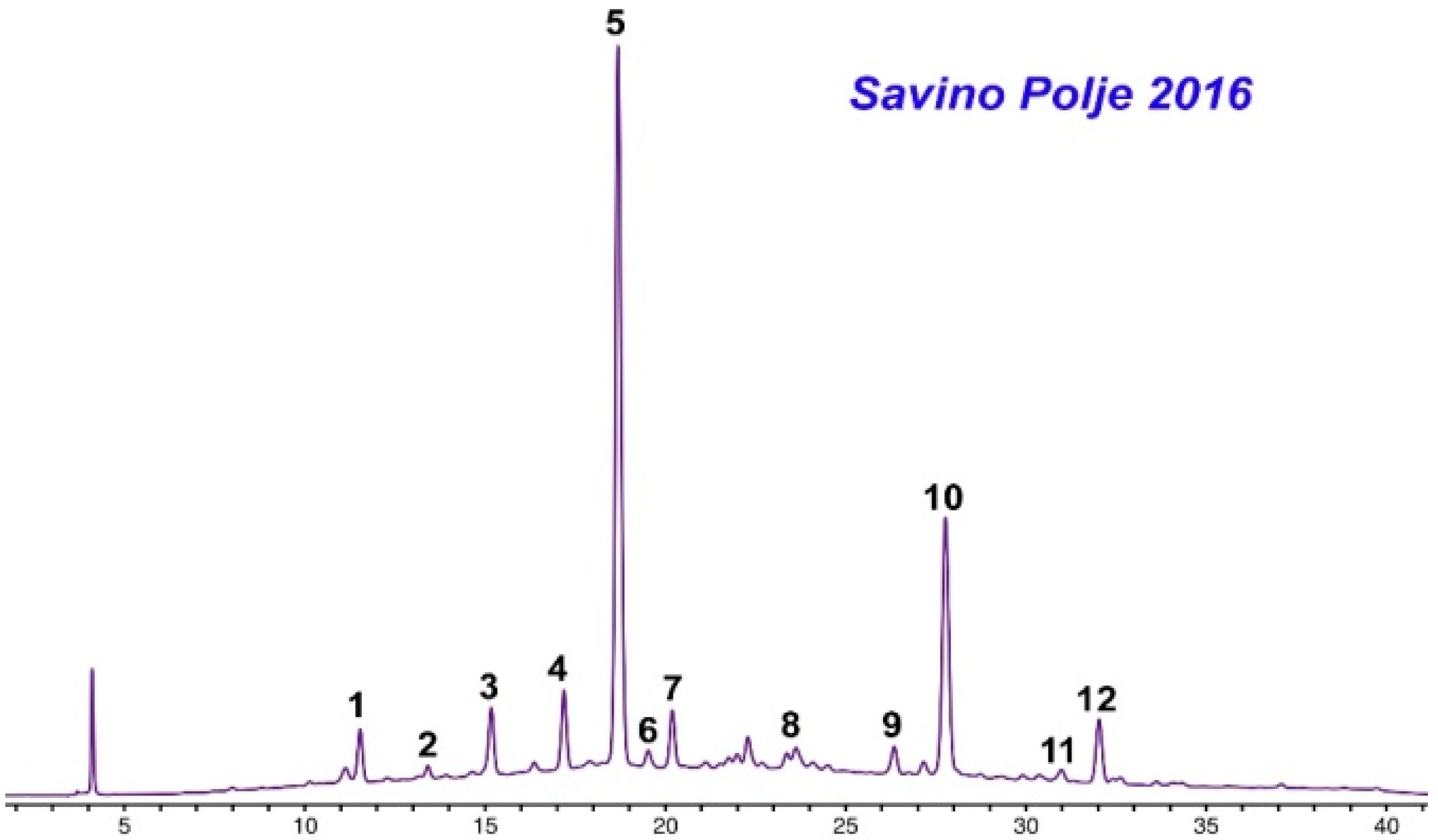
Regarding the anthocyanin complex, qualitative and quantitative differences in the anthocyanin profiles of “Savino Polje” wine from the 2010 to 2016 vintages were determined, and their HPLC chromatograms are shown in Figure 2. The following anthocyanins were identified in the “Savino Polje” wines from the 2010 to 2016 vintages:
(a)
3-glucosides of delphinidin (DfG) (1), cyanidin (CyG) (2), petunidin (PtG) (3), peonidin (PnG) (5) and malvidin (MvG) (6).
(b)
3-(6-acetyl)-glucosides of delphinidin (DfAc) (7), petunidin (PtAc) (8), peonidin (PnAc) (9) and malvidin (MvAc) (10), peonidin-3-O-glucoside-coumaroyl (PnCm) (11) and malvidin-3-O-glucoside-coumaroyl (MvCm) (12).
In young wines, free anthocyanins are the main source of the red colouration. However, these compounds are highly unstable and change over time through the process of copigmentation. These structural changes lead to a colour shift from purple-red, characteristic of young wines, to red-orange, which is typical of aged wines [53,54,55]. The dominant anthocyanins in red varieties are malvidin derivatives. Malvidin-3-O-glucoside and malvidin-3,5-O-diglucoside are anthocyanins that also occur in wines. Malvidin-3, 5-O-diglucoside is a distinctive feature of some hybrid grape varieties and young wines from Eurasian vines (Vitis vinifera L.). Red wine also contains glycosides of five main types of anthocyanidins: delphinidin-3-O-glucoside, cyanidin-3-O-glucoside, petunidin-3-O-glucoside, peonidin-3-O-glucoside and malvidin-3-O-glucoside, while pelargonidin-3-O-glucoside is either entirely absent or present only in trace amounts [56].
The monomeric anthocyanins in red wines are usually the 3-O-monoglucosides of the six free anthocyanidins: pelargonidin, cyanidin, delphinidin, peonidin, petunidin and malvidin (56). In some American wines, anthocyanin diglucosides with glucose at positions 3 and 5 have also been found [57]. Since anthocyanins differ in the number and position of the hydroxyl and methoxy groups in the B-ring of the anthocyanin molecule, a change in the substitution in this ring can drastically affect the colour of the wine. For example, anthocyanins with more hydroxyl groups in the B-ring increase the intensity of the blue colour, while anthocyanins with methoxy groups increase the intensity of the red hue of the wine. Among the monomeric anthocyanins, malvidin-3-O-glucoside and its derivatives are usually the most abundant and are responsible for the red colouration of young wines [57,58,59].
Anthocyanin compounds may also be responsible for certain organoleptic characteristics of wine, such as colour, bitterness and astringency. As the colour of wine is a common quality criterion, the analysis of these pigments has received considerable attention. The glucosidic forms of anthocyanins can be esterified with acetic acid or phenolic acids (such as coumaric and caffeic acid) at the C6′ position of glucose. Glycosylation increases anthocyanins’ stability and solubility in water, while acylation of sugar residues with aromatic and aliphatic acids results in further improvements in their stability [59,60].
During and after fermentation, anthocyanins undergo acid-catalysed and/or oxidation reactions with various compounds in red wine to form modified pigments. The newly formed compounds are much more stable than the primary forms of anthocyanins [55]. Direct reactions between free anthocyanins and certain fermentation products, such as acetaldehyde, tartaric acid and vinylphenols, can form stabilised pyranoanthocyanin pigments, such as vitisin A.
During the synthesis of vitisin A, pyruvic acid in its enol form can react with malvidin-3-O-glucoside under acidic conditions, such as those found in red wines, to form an additional pyran ring. This cycloaddition step is followed by further dehydration and rearomatisation to obtain the malvidin-3-O-glucoside pyruvic sugar adduct, vitisin A. Vitisins A are typically formed from the beginning to the middle of alcoholic fermentation process, when the pyruvic sugar concentration is high. The concentration slowly decreases as a result of malolactic fermentation and wine ageing. Several factors influence its formation, which is maximised at low pH, high pyruvic acid concentration and low temperature [61].
Among the quantified anthocyanin compounds, malvidin and its derivatives are the dominant anthocyanin components in wine. In all Hilandar wines, malvidin-3-O-glucoside (1) and its acetylated (2) and coumarylated (3) derivatives predominate in the anthocyanin complex. Hilandar wines are characterised by their high quantities of these malvidin components, both in blends and in varietal wines, which range from over 100 mg/L in the “Savino Polje” wine, vintage 2010, to almost 800 mg/L in the Cabernet Franc, vintage 2016.
The identified and quantified anthocyanin compounds in “Savino Polje” wine from the 2010–2016 harvests are listed in Table 7. In 2010, the content of individual compounds varied, with relative values ranging from 0.3% for peonidin-3-O-acetyl-glucoside to 25.05% for vitisin A (0.03 ± 0.09 mg/100 mL peonidin-3-O-acetyl-glucoside to 2.54 ± 0.34 mg/100 mL vitisin A). In 2011, the values for individual compounds ranged from 0.74% for petunidin-3-O-acetyl-glucoside to 22.63% for vitisin A (0.08 ± 0.25 mg/100 mL petunidin-3-O-acetyl-glucoside to 2.44 ± 0.35 mg/100 mL vitisin A). In the wines from the 2012 harvest, the lowest amount of anthocyanins was found in petunidin-3-O-acetyl-glucoside (0.97%) and the highest was found in malvidin-3-O-glucoside (28.96%), corresponding to values of 0.12 ± 0.21 to 3.48 ± 0.03 mg/100 mL. Similar values were reported in the 2013 harvest, with petunidin-3-O-acetyl-glucoside at 0.78% (0.09 ± 0.19 mg/100 mL) and the highest content in malvidin-3-O-glucoside at 23.3% (2.67 ± 0.01 mg/100 mL). In the 2014 harvest, the lowest content was that of vitisin A at 1.27% (0.19 ± 0.19 mg/100 mL), while the highest was the malvidin-3-O-glucoside content at 41.71% (6.23 ± 0.02 mg/100 mL). The 2015 wines contained the lowest quantity of cyanidin-3-O-glucoside at 0.44% (0.09 ± 0.02 mg/100 mL) and the highest amount of malvidin-3-O-glucoside at 43.86% (8.90 ± 0.15 mg/100 mL). In the final year analysed (2016), the measured values did not correlate with those of previous years. Table 7 shows the lowest content of cyanidin-3-O-glucoside (0.39%, 0.15 ± 0.01 mg/100 mL) and the highest content of malvidin-3-O-glucoside (47.82%, 20.55 ± 0.09 mg/100 mL).
Statistical analysis of the data shows the high significance of the varying amounts of anthocyanin compounds in wines from different vintages. The data confirm findings from previous studies, which suggested that the content of individual compounds increases or decreases depending on the duration of wine ageing [62,63,64]. With the exception of vitisin A (highest concentrations in the 2010 and 2011 vintages) and peonidin-3-O-glucoside-coumaroyl (2010 vintage), for which increasing values were observed as the wine aged, all other compounds showed a decreasing trend in line with the ageing process. In younger wines (vintages 2012–2016), malvidin-3-O-glucoside dominates, with a concentration of 20.55 ± 0.09 mg/100 mL in the youngest wine and only 1.88 ± 0.02 mg/100 mL in the oldest wine (Table 7). These results are consistent with previously published findings [61,62,65,66].
The sums of the identified anthocyanin compounds decrease from the youngest to the oldest (aged) wines. In 2016, the total content of anthocyanin compounds amounted to 42.97 mg/100 mL, whereas it was only 10.15 mg/100 mL in 2010. The change in the sum of quantitative anthocyanin compounds observed over the time interval shows an exponential decline.
Examining the sums of the different anthocyanin groups in “Savino Polje” wine, expressed as percentages (Table 8), different values are observed, with the malvidin group showing the highest relative total compound content (64.65 ± 0.42–81.30 ± 0.44%) and the sum of non-acylated anthocyanins ranging from 48.84 ± 0.29 to 58.00 ± 0.37%. In all wines, non-esterified anthocyanins are more abundant than esterified anthocyanins.
Regarding the anthocyanin coefficients found in the “Savino Polje” wines, the lowest average value was recorded for the coefficient ∑Pt/∑Pn (0.53 ± 0.59), while the coefficient ∑Mv/∑Pn (6.38 ± 5.14) had the highest average value. These values (Table 9) indicate that flavonoid hydroxylase and ortho-dihydroxy-transferase, which are responsible for the formation of malvidin anthocyanins, were highly active in these wines.
The pathways of anthocyanin biosynthesis have been discussed by several authors [67,68,69]. Cyanidin-3-O-glucoside is considered to be the primary terminal compound and the precursor of delphinidin-3-O-glucoside and peonidin-3-O-glucoside, which are synthesised by the action of 3′-hydroxylase and 3′-O-methyltransferase, respectively [70]. Petunidin-3-O-glucoside is formed via the transformation of delphinidin-3-O-glucoside through methyltransferase activity and is a precursor of malvidin-3-O-glucoside, which is synthesised by the same enzyme. However, malvidin-3-O-glucoside can also be obtained directly from delphinidin-3-O-glucoside through the action of methyltransferases [70,71].
Furthermore, malvidin-3-O-(6-coumaroyl)-glucoside is a precursor of p-coumaric acid and is present in wine at a concentration of 1–5 mg/L [70]. The presence and activity of the enzymes involved in these reactions are closely related to the genetic structure of the grape variety [71,72].
When comparing the anthocyanin composition of the Hilandar wine “Savino Polje” with selected wines from other producers of similar blends from Uruguay, Chile, Argentina, France and North Macedonia [73,74], the total anthocyanin content in “Savino Polje” was 1.57–2.78 times higher than that in the commercial wines tested. The content of malvidin derivatives—malvidin-3-O-glucoside, malvidin-3-O-acetylglucoside and malvidin-O-(6’-paracoumaroyl)-glucoside—was also 1.74–4.42, 2.34–4.78 and 1.84–2.69 times higher, respectively, than in commercial wines.
The values of the anthocyanin coefficients ∑Mv/∑Pn and ∑Mv + ∑Pt + ∑Df/∑Pn were also several times higher (2.44–5.73 and 2.55–4.90) in the Hilandar wine “Savino Polje” compared to the values in the commercial wines. This indicates that the enzyme flavonoid 3-O-hydroxylase, which catalyses the formation of the three substituted components (malvidin, petunidin and delphinidin), was more active during the production of “Savino Polje” wine than that of other commercial wines.

4. Limitation

Our research on the anthocyanin profile in premium red wines from the Hilandar Monastery (Month Athos, Greece) has several limitations. The study was conducted within the Hilandar Monastery Vineyard on Mount Athos, Greece. Although monastery wines are highly valued in the market, data on such wines are rarely published. This is the first published work containing results from this region and monastery, which has been renowned for centuries for its wine production, with wines that stand out or rival those of much more famous regions. The lack of data from this part of Europe posed a challenge for the authors when they attempted to compare their results with wines from similar production areas. During the study period, the distance between the vineyard and the home institutions of the authors was also an aggravating factor. The topic may also be of significant importance to wine connoisseurs, as it concerns monastery wine production, which has a long tradition but very limited available data. The scarcity of information can likely be attributed to the fact that the monastery administration rarely consents to the publication of such results.
The vineyard site is particularly interesting and atypical in terms of climate and soil characteristics, as it is located by the sea (Figure 1). Climatic and soil data are presented in the paper for comparison. The climate over the multi-year period of the experiment (2010–2016) was marked by certain variations that could affect grape quality. The authors sought to mitigate this limitation by harvesting at the optimal time and applying appropriate oenological procedures.
The experiment used superior clones of Merlot, Cabernet Franc, and Cabernet Sauvignon for the blend, which were combined each year in the same, precisely determined proportions that were selected to best express the wine’s oenological potential.
Highly sensitive methods were used, which, despite some deviations, could have a minimal effect on the results obtained.
The anthocyanin profile of the tested monastery wine is influenced by fermentation processes, oenological procedures during storage and ageing, and storage conditions related to vessels and rooms. To address this, over a period of several years, the wine was aged in vessels made from the same oak wood, of the same volume, and under consistent temperature and humidity conditions in the cellar. This approach aimed to minimise the influence of external factors on wine quality. For the methods described above, the samples were transported under conditions that did not affect the quality of the wine, which was another limitation.
The study focused on one group of compounds, which was the author’s choice, as monastery wine from this region is typically analysed in this way. Further research will include other groups of compounds.

5. Conclusions

Multi-year research conducted at the vineyard and winery of the Hilandar Monastery (Mount Athos, Greece) demonstrated that the climatic and soil conditions are favourable for cultivating international grape varieties and clones, enabling the production of high-quality red wines. The presented results pertaining to red wine quality provide a valuable basis for future research aimed at understanding how climate variability influences wine characteristics. Further work should include a more detailed analysis based on OIV-recommended bioclimatic indices, both for the classification of this region within viticultural zoning frameworks and for assessing how resilient the high-quality wine production in this area is to climate extremes.
The Hilandar wine “Savino Polje” analysed over the seven-year experimental period (2010–2016) was characterised by high anthocyanin content, with the highest concentration of malvidin-3-O-glucoside (20.55 ± 0.09 mg/100 mL in 2016) as the terminal compound in anthocyanin biosynthesis. In addition to malvidin-3-O-glucoside, significant concentrations of peonidin-3-O-glucoside (1.45 ± 0.15 mg/100 mL in 2016) and vitisin A (2.54 ± 0.34 mg/100 mL in 2010) were also present. The presence and concentration of these compounds are known to affect the development of specific organoleptic characteristics of the wine, such as its colour, bitterness, and astringency.
Free anthocyanins are the main source of the red colour in young wines. Their primary characteristic is pronounced instability, which leads to their incorporation into various pigments over time through copigmentation and the formation of polymeric pigments with other phenolic compounds in the wine. The resulting compounds are much more stable than the primary forms of anthocyanins. These structural changes cause a colour shift from purple-red, which is typical of young wines, to red-orange, characteristic of aged wines. Direct reactions between free anthocyanins and certain fermentation products, such as acetaldehyde, grape acid, and vinylphenols, can produce stabilised pyranoanthocyanin pigments such as vitisin A. Statistical analysis of the obtained data shows the strong significance of anthocyanin compound content in wines from different vintages. The data confirm that the content of individual compounds increases or decreases, with the exception of vitisin A. The highest concentrations of vitisin A were found in wines from the 2010 and 2011 vintages. The lowest content was found in the youngest wine from 2016. Peonidin-3-O-glucoside-coumaroyl content increased as the wine aged. The sum of identified anthocyanin compounds showed a decreasing trend with ageing (from 42.97 mg/100 mL in 2016 to 10.15 mg/100 mL in 2010). Glycosylation increases the stability and solubility of anthocyanins in water, while acylation of sugar residues with aromatic and aliphatic acids further enhances their stability. The highest relative total compound content of the malvidin group and the sum of non-acylated anthocyanins were observed. These characteristics were confirmed experimentally in the studied Hilandar wines.
Understanding the different trends of anthocyanin complex compounds during ageing, and the changes in the concentration and percentage of individual anthocyanin compounds, provides an indication of the stability and quality of the wine from a practical perspective. Furthermore, these trends can inform decisions about the optimal timing for bottling, ensuring that the wine is most representative in terms of its qualitative parameters.
The presented results are of great importance, as this is the first time that results related to wines from this region are being published. There is very little data on the quality, so this research is a valuable source of information and contributes significantly to the ability to draw relevant conclusions.

Author Contributions

Conceptualization, N.M. (Nebojša Marković) and N.M. (Nebojša Menković); methodology, N.M. (Nebojša Marković) and N.M. (Nebojša Menković); formal analysis, N.M. (Nebojša Marković), N.M. (Nebojša Menković), Z.P. and J.Ž.; investigation, N.M. (Nebojša Marković) and Z.P.; resources, N.M. (Nebojša Marković) and M.R.; writing—original draft preparation, N.M. (Nebojša Marković), N.M. (Nebojša Menković), Z.P., M.M., J.Ž. and M.R.; writing—review and editing, Z.P., M.M. and J.Ž.; visualization, N.M. (Nebojša Marković) and Z.P.; supervision, Z.P.; funding acquisition, N.M. (Nebojša Marković) and Z.P. All authors have read and agreed to the published version of the manuscript.

Funding

The research was funded by the Ministry of Science, Technological Development and Innovation of the Republic of Serbia under project number 451-03-34/2026-03/200116.

Institutional Review Board Statement

Not applicable.

Informed Consent Statement

Not applicable.

Data Availability Statement

The original contributions presented in this study are included in the article. Further inquiries can be directed to the corresponding author.

Acknowledgments

The authors gratefully acknowledge the Ministry of Science, Technological Development and Innovation of the Republic of Serbia and Foundation of the Holy Monastery Hilandar for support in the implementation of this research.

Conflicts of Interest

The authors declare no conflicts of interest.

References

  1. Papahrisantu, D. Atonsko Monaštvo; Publikum: Belgrade, Serbia, 2003; pp. 1–25. [Google Scholar]
  2. Maksimović, L. Svetogorska uprava kroz vekove. In Thirteen Lectures About the Holy Mount; Foundation of the Holy Monastery Hilandar: Belgrade, Serbia, 1995; Volume 1, pp. 25–46. [Google Scholar]
  3. Brooks Hedstrom, D.L. The Archaeology of Monastic Households. In The Oxford Handbook of Christian Monasticism; Oxford University Press: Oxford, UK, 2020; pp. 185–203. [Google Scholar]
  4. Taušev, A. Liturgika. Blagosloveno Carstvo Oca i Sina i Duha Svetoga; Obraz Svetacki/Ocev Dom: Belgrade, Serbia, 2007; pp. 173–174. [Google Scholar]
  5. Popović, D.; Đukić, B. Život u monaškoj zajednici. In Privatni Život u Srpskim Zemljama Srednjeg Veka; Clio: Belgrade, Serbia, 2004; pp. 547–549. [Google Scholar]
  6. Katić, R. (Ed.) HilaHilandarski Medicinski Kodeks; N. 517. Prevod.; Narodna Biblioteka Srbije: Belgrade, Serbia, 1989.
  7. Bencheva, J. Naval Trade of Mt Athos Monasteries in the Middle Ages. Études Balk. 1999, 1–2, 49–51. [Google Scholar]
  8. Marković, N. Iz istorije svetogorskog vinogradarstva. Holy Mt.-Thoughts Stud. 2019, 10, 195–228. [Google Scholar] [CrossRef] [Scilit]
  9. Krsmanović, B. Svetogorska zajednica u vreme osnivanja srpskog Hilandara. Holy Mt.-Thoughts Stud. 2016, 9, 77–93. [Google Scholar]
  10. Gonzalez de Mejia, E.; Rebollo-Hernanz, M.; Aguilera, Y.; Martín Cabrejas, M.A. Chapter 45—Role of anthocyanins in oxidative stress and the prevention of cancer in the digestive system. In Cancer: Oxidative Stress and Dietary Antioxidants; Elsevier: London, UK, 2021; pp. 265–280. [Google Scholar] [CrossRef] [Scilit]
  11. Wang, L.S.; Stoner, G.D. Anthocyanins and their role in cancer prevention. Cancer Lett. 2008, 269, 281–290. [Google Scholar] [CrossRef] [Scilit] [PubMed]
  12. Santhakumar, A.B.; Battino, M.; Alvarez-Suarez, J.M. Dietary polyphenols: Structures, bioavailability and protective effects against atherosclerosis. Food Chem. Toxicol. 2018, 113, 49–65. [Google Scholar] [CrossRef] [Scilit] [PubMed]
  13. Elejalde, E.; Villaran, M.C.; Esquivel, A.; Alonso, R.M. Bioaccessibility and Antioxidant Capacity of Grape Seed and Grape Skin Phenolic Compounds After Simulated In Vitro Gastrointestinal Digestion. Plant Foods Hum. Nutr. 2024, 79, 432–439. [Google Scholar] [CrossRef] [Scilit] [PubMed]
  14. Zafra-Stone, S.; Yasmin, T.; Bagchi, M.; Chatterjee, A.; Vinson, J.A.; Bagchi, D. Berry anthocyanins as novel antioxidants in human health and disease prevention. Mol. Nutr. Food Res. 2007, 51, 675–683. [Google Scholar] [CrossRef] [Scilit] [PubMed]
  15. He, J.; Giusti, M.M. Anthocyanins: Natural colorants with health-promoting properties. Annu. Rev. Food Sci. Technol. 2010, 1, 163–187. [Google Scholar] [CrossRef] [Scilit] [PubMed]
  16. Tsuda, T. Dietary anthocyanin-rich plants: Biochemical basis and recent progress in health benefits studies. Mol. Nutr. Food Res. 2011, 56, 159–170. [Google Scholar] [CrossRef] [Scilit] [PubMed]
  17. Liu, R.; Yue, W.; Yang, L.; Wang, Y.; Liu, J.; Han, F. Potential hypoglycemic activity of anthocyanidins monoglucoside and diglucoside from Yan 73 (Vitis vinifera L.) and spine grape (Vitis davidii Foex)—Effect on α-glucosidases of gut microbiota and human Caco-2 cells. Eur. Food Res. Technol. 2024, 250, 2111–2122. [Google Scholar] [CrossRef] [Scilit]
  18. Harborn, J.B. The flavonoids: Advances in research since 1986. Chapter 1. In The Anthocyanins; Strack, D., Wray, V., Eds.; Routledge: New York, NY, USA, 1994; pp. 1–22. [Google Scholar] [CrossRef] [Scilit]
  19. Lu, Z.; Wang, X.; Lin, X.; Mostafa, S.; Zou, H.; Wang, L.; Jin, B. Plant anthocyanins: Classification, biosynthesis, regulation, bioactivity, and health benefits. Plant Physiol. Biochem. 2024, 217, 109268. [Google Scholar] [CrossRef] [Scilit] [PubMed]
  20. Torres-Rochera, B.; Manjón, E.; Brás, N.F.; Escribano-Bailón, M.T.; García-Estévez, I. Supramolecular Study of the Interactions between Malvidin-3-O-Glucoside and Wine Phenolic Compounds: Influence on Color. J. Agric. Food Chem. 2024, 72, 1894–1901. [Google Scholar] [CrossRef] [Scilit] [PubMed]
  21. Horbowicz, M.; Kosson, R.; Grzesiuk, A.; Dębski, H. Anthocyanins of Fruits and Vegetables—Their Occurrence, Analysis and Role in Human Nutrition. J. Fruit Ornam. Plant Res. 2008, 68, 5–22. [Google Scholar] [CrossRef] [Scilit]
  22. Stoyanov, N.; Tagareva, S.; Yoncheva, T.; Shopska, V.; Kostov, G. Significance of Grape Phenolic Compounds for Wine Characteristics: Dynamics and Extractability During Fruit Maturation. Beverages 2025, 11, 163. [Google Scholar] [CrossRef] [Scilit]
  23. Martín, J.; Navas, M.J.; Jiménez-Moreno, A.M.; Asuero, A.G. Anthocyanin Pigments: Importance, Sample Preparation and Extraction. In Phenolic Compounds—Natural Sources, Importance and Applications; InTech: Rijeka, Croatia, 2017. [Google Scholar] [CrossRef] [Scilit] [PubMed]
  24. Mattioli, R.; Francioso, A.; Mosca, L.; Silva, P. Anthocyanins: A Comprehensive Review of Their Chemical Properties and Health Effects on Cardiovascular and Neurodegenerative Diseases. Molecules 2020, 25, 3809. [Google Scholar] [CrossRef] [Scilit] [PubMed] [PubMed Central]
  25. Medina-Plaza, C.; Meade, H.; Dokoozlian, N.; Ponangi, R.; Blair, T.; Block, D.E.; Oberholster, A. Investigating the Relation between Skin CellWall Composition and Phenolic Extractability in Cabernet Sauvignon Wines. Fermentation 2022, 8, 401. [Google Scholar] [CrossRef] [Scilit]
  26. Yao, Y.; Chen, K.; Yang, X.; Li, J.; Li, X. Comparative study of the key aromatic compounds of Cabernet Sauvignon wine from the Xinjiang region of China. J. Food Sci. Technol. 2021, 58, 2109–2120. [Google Scholar] [CrossRef] [Scilit] [PubMed]
  27. Ren, Y.; Sadeghnezhad, E.; Leng, X.; Pei, D.; Dong, T.; Zhang, P.; Gong, P.; Jia, H.; Fang, J. Assessment of ‘Cabernet Sauvignon’ Grape Quality Half-Véraison to Maturity for Grapevines Grown in Different Regions. Int. J. Mol. Sci. 2023, 24, 4670. [Google Scholar] [CrossRef] [Scilit] [PubMed]
  28. Crupi, P.; Alba, V.; Gentilesco, G.; Gasparro, M.; Ferrara, G.; Mazzeo, A.; Coletta, A. Viticultural Climate Indexes and Their Role in The Prediction of Anthocyanins and Other Flavonoids Content in Seedless Table Grapes. Horticulturae 2024, 10, 28. [Google Scholar] [CrossRef] [Scilit]
  29. Marta, A.E.; Slabu, C.; Covasa, M.; Motrescu, I.; Lungoci, C.; Jitareanu, C.D. Influence of Environmental Factors on Some Biochemical and Physiological Indicators in Grapevine from Copou Vineyard, Iasi, Romania. Agronomy 2023, 13, 886. [Google Scholar] [CrossRef] [Scilit]
  30. He, F.; Liang, N.-N.; Mu, L.; Pan, Q.-H.; Wang, J.; Reeves, M.J.; Duan, C.-Q. Anthocyanins and Their Variation in Red Wines I. Monomeric Anthocyanins and Their Color Expression. Molecules 2012, 17, 1571–1601. [Google Scholar] [CrossRef] [Scilit] [PubMed]
  31. Candar, S. How abiotic stress induced by artificial wounding changes maturity levels and berry composition of Merlot (Vitis vinifera L.). Eur. Food Res. Technol. 2023, 249, 2611–2623. [Google Scholar] [CrossRef] [Scilit]
  32. Makris, D.P.; Kallithraka, S.; Mamalos, A. Differentiation of young red wines based on cultivar and geographical origin with application of chemometrics of principal polyphenolic constituents. Talanta 2006, 70, 1143–1152. [Google Scholar] [CrossRef] [Scilit] [PubMed]
  33. Chengolova, Z.; Ivanov, Y.; Godjevargova, T. Comparison of Identification and Quantification of Polyphenolic Compounds in Skins and Seeds of Four Grape Varieties. Molecules 2023, 28, 4061. [Google Scholar] [CrossRef] [Scilit] [PubMed]
  34. Bubola, M.; Rossi, S.; Váczy, K.Z.; Hegyi, Á.I.; Persic, M.; Zdunic, G.; Bestulic, E.; Orbanic, F.; Zsofi, Z.; Radeka, S. Modifiction of Cv. Merlot Berry Composition and Wine Sensory Characteristics by Different Leaf Area to Fruit Ratios. Appl. Sci. 2023, 13, 5465. [Google Scholar] [CrossRef] [Scilit]
  35. Briz-Cid, N.; Oliva, J.; Rial-Otero, R.; Simal-Gandara, J.; Camara, M. Influence of iprovalicarb, mepanipyrim and tetraconazole fungicides on anthocyanins and color the Cabernet Sauvignon red wines. Eur. Food Res. Technol. 2021, 247, 947–960. [Google Scholar] [CrossRef] [Scilit]
  36. Aris, G.; Cuneo, I.F.; Pastenes, C.; Cáceres-Mella, A. Anthocyanin Composition in Cabernet Sauvignon Grape Skins: Effect of Regulated Deficit Irrigation in a Warm Climate. Horticulturae 2022, 8, 796. [Google Scholar] [CrossRef] [Scilit]
  37. Cincotta, F.; Verzera, A.; Prestia, O.; Tripodi, G.; Lechhab, W.; Sparacio, A.; Condurso, C. Influence of leaf removal on grape, wine and aroma compounds of Vitis vinifera L. cv. Merlot under Mediterranean climate. Eur. Food Res. Technol. 2022, 248, 403–413. [Google Scholar] [CrossRef] [Scilit]
  38. Theodorou, N.; Nikolaou, N.; Zioziou, E.; Kyraleou, M.; Kallithraka, S.; Kotseridis, Y.; Koundouras, S. Anthocyanin content and composition in four red winegrape cultivars (Vitis vinifera L.) under variable irrigation: Anthocyanin content and composition under variable irrigation. OENO One 2019, 53, 39–51. [Google Scholar] [CrossRef] [Scilit]
  39. Cook, M.G.; Zhang, Y.; Nelson, C.J.; Gambeta, G.; Kennedy, J.A.; Kurtural, S.K. Anthocyanin Composition of Merlot is Ameliorated by Light Microclimate and Irrigation in Central California. Am. J. Enol. Vitic. 2015, 66, 266–278. [Google Scholar] [CrossRef] [Scilit]
  40. Wang, Z.; Yin, H.; Yang, N.; Cao, J.; Wang, J.; Wang, X.; Xi, Z. Effect of vineyard row orientation on microclimate, phenolic compounds, individual anthocyanins, and free volatile compounds of Cabernet Sauvignon (Vitis vinifera L.) in a high-altitude arid valley. Eur. Food Res. Technol. 2022, 248, 1365–1378. [Google Scholar] [CrossRef] [Scilit]
  41. Kocabey, N.; Yilmaztekin, M.; Hayaloglu, A.A. Effect of maceration duration on physicochemical characteristics, organic acid, phenolic compounds and antioxidant activity of red wine from Vitis vinifera L. Karaoglan. J. Food Sci. Technol. 2016, 53, 3557–3565. [Google Scholar] [CrossRef] [Scilit] [PubMed]
  42. Darnal, A.; Poggesi, S.; Ceci, A.T.; Mimmo, T.; Boselli, E.; Longo, E. Interactive effect of pre-fermentative grape freezing and malolactic fermentation on the anthocyanins profile in red wines prone to colour instability. Eur. Food Res. Technol. 2023, 249, 2045–2065. [Google Scholar] [CrossRef] [Scilit]
  43. Medina-Plaza, C.; Beaver, J.W.; Miller, K.V.; Lerno, L.; Dokoozlian, N.; Ponangi, R.; Blair, T.; Block, D.E.; Oberholster, A. Cell Wall–Anthocyanin Interactions during Red Wine Fermentation-Like Conditions. Am. J. Enol. Vitic. 2020, 71, 149–156. [Google Scholar] [CrossRef] [Scilit]
  44. Mattivi, F.; Nicolini, G. Analysis of polyphenols and resveratrol in Italian wines. BioFactors 1997, 6, 445–448. [Google Scholar] [CrossRef] [Scilit]
  45. Di Stefano, V.; Buzzanca, C.; Melilli, M.G.; Indelicato, S.; Mauro, M.; Vazzana, M.; Arizza, V.; Lucarini, M.; Durazzo, A.; Bongiorno, D. Polyphenol Characterization and Antioxidant Activity of Grape Seeds and Skins from Sicily: A Preliminary Study. Sustainability 2022, 14, 6702. [Google Scholar] [CrossRef] [Scilit]
  46. International Organisation of Vine and Wine (OIV). Resolution OIV-VITI 423-2012 Rev1, Appendix 2. In Bioclimatic Indices Currently Used in the Practice of Vitiviniculture Zoning; International Organisation of Vine and Wine (OIV): Izmir, Turkey, 2012. [Google Scholar]
  47. International Organisation of Vine and Wine (OIV). Compendium of International Methods of Wine and Must Analysis Hplc-Determination of Nine Major Anthocyanins in Red and Rosé Wines (Type-II); International Organisation of Vine and Wine (OIV): Izmir, Turkey, 2012. [Google Scholar]
  48. Mack, A. A Variety of Agilent Zorbax RRHD Phases Offers Selectivity Options for the Determination of Anthocyanins in Blueberries with UHPLC/MS; Agilent Technologies, Inc.: Santa Clara, CA, USA, 2011. [Google Scholar]
  49. Živković, J.; Jadranin, M.; Pržić, Z.; Marković, N.; Sokolović, D.; Šavikin, K.; Menković, N. yVarietal Differences of Prokupac, Evita and Čokot Zemun Based on Their Anthocyanins Content in Grape Skin Extract. Chem. Biodivers. 2021, 18, e2000858. [Google Scholar] [CrossRef] [Scilit] [PubMed]
  50. González-Neves, G.; Franco, J.; Barreiro, L.; Gil, G.; Moutounet, M.; Carbonneau, A. Varietal differentiation of Tannat, Cabernet sauvignon and Merlot grapes and wines according to their anthocyanic composition. Eur. Food Res. Technol. 2007, 225, 111–117. [Google Scholar] [CrossRef] [Scilit]
  51. Burns, J.; Mullen, W.; Landrault, N.; Teissedre, P.L.; Lean, M.E.; Crozier, A. Variations in the profile and content of anthocyanins in wines made from Cabernet Sauvignon and hybrid grapes. J. Agric. Food Chem. 2002, 50, 4096–4102. [Google Scholar] [CrossRef] [Scilit] [PubMed]
  52. Nunez, V.; Monagas, M.; Gomez-Cordoves, M.C.; Bartolome, B. Vitis vinifera L. cv. Graciano grapes characterized by its anthocyanin profile. Postharvest Biol. Technol. 2004, 31, 69–79. [Google Scholar] [CrossRef] [Scilit]
  53. Mazza, G.; Miniati, E. Anthocyanins in Fruits, Vegetables and Grains; 362 Seiten, zahlr. Abb. und Tab; CRC Press: Boca Raton, FL, USA, 1994. [Google Scholar] [CrossRef] [Scilit]
  54. Samoticha, J.; Jara-Palacios, M.; Hernández-Hierro, J.M.; Heredia, F.; Wojdylo, A. Phenolic compounds and antioxidant activity of twelve grape cultivars measured by chemical and electrochemical methods. Eur. Food Res. Technol. 2018, 244, 1933–1943. [Google Scholar] [CrossRef] [Scilit]
  55. Heras-Roger, J.; Alonso-Alonso, O.; Gallo-Montesdeoca, A.; Diaz-Romero, C. Influence of copigmentation an phenolic composition on wine color. J. Food Sci. Technol. 2016, 53, 2540–2547. [Google Scholar] [CrossRef] [Scilit] [PubMed]
  56. Waterhouse, A.L. Wine phenolics. Ann. N. Y. Acad. Sci. 2022, 957, 21–36. [Google Scholar] [CrossRef] [Scilit] [PubMed]
  57. Parihar, S.; Sharma, D. A Breif Overview on Vitis vinifera. Sch. Acad. J. Pharm. 2021, 10, 231–239. [Google Scholar] [CrossRef] [Scilit]
  58. Ribéreau-Gayon, P.; Dubourdieu, D.; Donèche, B.B.; Lonvaud, A.A.; Darriet, P.; Towey, J. Handbook of Enology; John Wiley & Sons Ltd.: Hoboken, NJ, USA, 2021. [Google Scholar] [CrossRef] [Scilit]
  59. Mazza, G.; Cacace, J.E.; Kay, C.D. Methods of analysis for anthocyanins in plants and biological fluids. J. AOAC Int. 2004, 87, 129–145. [Google Scholar] [CrossRef] [Scilit]
  60. Zhang, H.-L.; Xia, N.-Y.; Yao, X.-C.; Duan, C.-Q.; Pan, Q.-H. Effects of Phenolic Evolution on Color Characteristics of Single-Cultivar Vitis vinifera L. Marselan and Merlot Wines during Vinification and Aging. Foods 2024, 13, 494. [Google Scholar] [CrossRef] [Scilit] [PubMed]
  61. Berrueta, L.; Rasines-Perea, Z.; Prieto-Perea, N.; Asensio-Regalado, C.; Alonso-Salces, R.; Sanchez-Llarduya, M.B.; Gallo, B. Formation and evolution profiles of anthocyanin derivatives and tannins during fermentations and aging of red wines. Eur. Food Res. Technol. 2020, 246, 149–165. [Google Scholar] [CrossRef] [Scilit]
  62. Caridi, A.; Romeo, R.; De Bruno, A.; Masaneo, C.; Poiana, M. Long-term effects of different starter yeasts on colour and natural antioxidant power of red wines. Eur. Food Res. Technol. 2021, 247, 2391–2398. [Google Scholar] [CrossRef] [Scilit]
  63. Uysal, R.S.; Issa-Issa, H.; Sendra, E.; Carbonell-Barrachina, A.A. Changes in anthocyanin pigments, trans-resveratrol, and colorimetric characteristics of Fondillón wine and other “Monastrell” wines during the aging period. Eur. Food Res. Technol. 2023, 249, 1821–1831. [Google Scholar] [CrossRef] [Scilit]
  64. Ivanova-Petropulos, V.; Durakova, S.; Ricci, A.; Parpinell, G.; Versari, A. Extraction and evaluation of natural occurring bioactive compounds and change in antioxidant activity during red winemaking. J. Food Sci. Technol. 2016, 53, 2634–2643. [Google Scholar] [CrossRef] [Scilit] [PubMed]
  65. Uzkuç, N.M.Ç.; Bayhan, A.; Toklucu, A.K. Phenolics and color components of young Cabernet Sauvignon wines: Effect of spontaneous fermentation and bottle storage. Eur. Food Res. Technol. 2022, 248, 393–401. [Google Scholar] [CrossRef] [Scilit]
  66. Pomar, F.; Novo, M.; Masa, A. Varietal differences among the anthocyanin profiles of 50 red table grape cultivars studied by high performance liquid chromatography. J. Chromatogr. A 2005, 1094, 34–41. [Google Scholar] [CrossRef] [Scilit] [PubMed]
  67. Ryan, J.M.; Revilla, E. Anthocyanin composition of Cabernet Sauvignon and Tempranillo grapes at different stages of ripening. J. Agric. Food Chem. 2003, 51, 3372–3378. [Google Scholar] [CrossRef] [Scilit] [PubMed]
  68. Roggero, J.P.; Coen, S.; Ragonnet, B. High performance liquid chromatography survey on changes in pigment content in ripening grapes of Syrah. An approach to anthocyanin metabolism. Am. J. Enol. Vitic. 1986, 37, 77–83. [Google Scholar] [CrossRef] [Scilit]
  69. Carreno, J.; Almela, L.; Martınez, A.; Fernandez-Lopez, J.A. Chemotaxonomical classification of red table grapes based on anthocyanin profile and external colour. LWT-Food Sci. Technol. 1997, 30, 259–265. [Google Scholar] [CrossRef] [Scilit]
  70. Lima, A.; Oliveira, C.; Santos, C.; Campos, F.M.; Couto, J.A. Phenolic composition on monovarietal red wines regarding volatile phenols and its precursors. Eur. Food Res. Technol. 2018, 244, 1985–1994. [Google Scholar] [CrossRef] [Scilit]
  71. Giovinazzo, G.; Grieco, F. Functional Properties of Grape and Wine Polyphenols. Plant Food Hum. Nutr. 2015, 70, 454–462. [Google Scholar] [CrossRef] [Scilit] [PubMed]
  72. Salama, A.-M.; Abdelsalam, M.A.; Rehan, M.; Elansary, M.; El-Shereif, A. Anthocyanin Accumulation and Its Corresponding Gene Expression, Total Phenol, Antioxidant Capacity, and Fruit Quality of ‘Crimson Seedless’ Grapevine (Vitis vinifera L.) in Response to Grafting and Pre-Harvest Applications. Horticulturae 2023, 9, 1001. [Google Scholar] [CrossRef] [Scilit]
  73. Menkovic, N.; Markovic, N.; Milosavljevic, S.; Licina, V.; Todic, S.; Tesevic, V.; Zivkovic, J.; Savikin, K.; Jadranin, M.; Jovsic, D. Report About Qualitative and Quantitative Analysis of Anthocyanin Complex Chilandar Wine; Institute for Medicinal Plant Research “Dr Josif Pancic”, Faculty of Agriculture University of Belgrade, Faculty of Chemistry University of Belgrade, Institute for Chemistry, Technology and Metalurgy University of Belgrade: Belgrade, Serbia, 2017. [Google Scholar]
  74. De Pascual-Teresa, S.; Sanchez-Ballesta, M.T.; García-Viguera, C. Anthocyanins. In Natural Products; Ramawat, K., Mérillon, J.M., Eds.; Springer: Berlin/Heidelberg, Germany, 2013. [Google Scholar] [CrossRef] [Scilit]
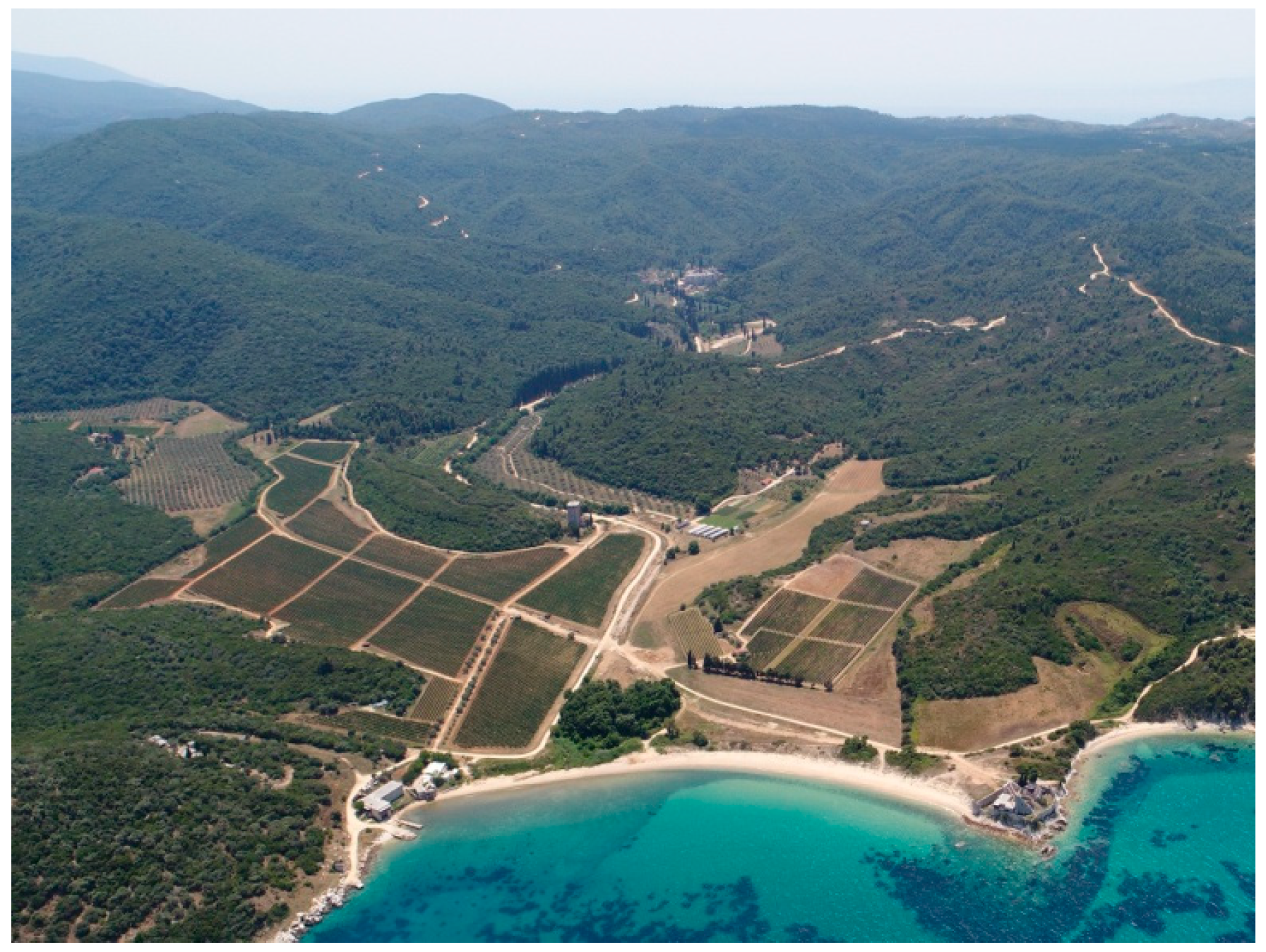
Figure 1. Panoramic view of the vineyards of the Hilandar monastery, “Savino Polje” site.
Beverages 12 00090 g001
Figure 2. HPLC-UV chromatogram of the anthocyanin complex of the wine “Savino Polje” vintage 2016 recorded at 520 nm, 2010–2016. Peak identification: (1) Df-3-O-Glc, (2) Pn-3,5-O-diGlc, (3) Mv-3,5-O-diGlc, (4) Pt-3-O-Glc, (5) Pn-3-O-Glc, (6) Mv-3-O-Glc, (7) Vitisin A, (8) Df-3-O-(6-p-coumaroyl)-Glc, (9) Mv-3-O-(6-p-coumaroyl)-5-O-diGlc, (10) Mv-3-O-(6-O-acetyl)-Glc, (11) Pn-3-O-(6-O-p-coumaroyl)-Glc, and (12) Mv-coumaroyl-3-O-Glc.
Beverages 12 00090 g002
Table 1. Limit of detection (LOD) and limit of quantification (LOQ) for the analysed compounds.
CompoundLOD
(µg/mL)
LOQ
(µg/mL)
Linear Range (µg/mL)R2
Malvidin105025–8000.9995
Delphinidin2510025–8000.9998
Peonidin102525–8000.9999
Petunidin156515–6000.9998
Cyanidin12.54515–6000.9996
Table 2. The average and absolute monthly and annual temperatures of the air (°C, 1980–2016).
MonthAverage Normal Air TemperatureAverage Maximum Air TemperatureAverage Minimum Air TemperatureAbsolute Maximum Air TemperatureAbsolute Minimum Air Temperature
I5.09.11.2208−14.0
II6.711.12.322.0−12.8
III9.614.24.425.8−7.2
IV14.219.27.331.2−1.2
V19.524.511.836.03.0
VI24.229.116.039.86.8
VII26.531.418.442.09.6
VIII25.830.918.138.28.2
IX21.827.314.936.22.6
X16.121.210.630.0−1.4
IX10.915.46.626.6−6.2
XII6.710.92.720.6−9.2
Annual15.620.49.542.0−14.0
Table 3. Average monthly and annual quantities of rainfall in mm (H), average number of days with rainfall (h 0.1 mm), potential evaporation (PE), potential evapotranspiratrion (PET), monthly sums of potential evaporation (E), and differences between rainfall and evaporation (H–E) for the period 1980–2016.
MonthHh 0.1PEPETEH–E
I37639-39−2
II40647-47−7
III46755-55−9
IV365866161−25
V446128109109−65
VI324192163163−131
VII263224191191−165
VIII213204174174−153
IX263150127127−101
X415916868−27
XI58753-535
XII53740-4013
Annual4606213098931127−667
Table 4. Average monthly and average annual windspeed (m/s), 1980–2016.
IIIIIIIVVVIVIIVIIIIXXXIXIIAnnual
1.51.61.51.41.31.61.81.51.51.31.31.51.5
Table 5. Agrochemical characteristics of the central tables in the vineyard.
Depth
(cm)
pH
y H2O
pH
y KCl
CaCO3
(%)
Humus
(%)
Total N
(%)
C/NNH4
(mg/kg)
NO3
(mg/kg)
NH4 + NO3
(mg/kg)
kg N/ha
(kg/ha)
P2O5
(mg/100 g)
K2O
(mg/100 g)
0–306.014.97-2.290.11511.6:16.706.0312.7357.287.415.0
30–605.864.89-2.010.10011.7:17.377.3714.7466.332.512.2
60–906.095.15-2.000.10011.6:16.0310.7216.7575.372.212.4
198.98
Table 6. Agrochemical characteristics of the peripheral tables in the vineyard.
Depth
(cm)
pH
y H2O
pH
y KCl
CaCO3
(%)
Humus
(%)
Total N
(%)
C/NNH4
(mg/kg)
NO3
(mg/kg)
NH4 + NO3
(mg/kg)
kg N/ha
(kg/ha)
P2O5
(mg/100 g)
K2O
(mg/100 g)
0–307.866.9417.842.180.10811.7:14.90.75.6257.69.8
30–607.897.0415.772.000.10011.6:13.59.813.3603.88.4
60–907.957.1014.941.720.08611.6:11.20.51.77.63.16.0
92.6
Table 7. Content of anthocyanin compounds in Hilandar wine “Savino Polje,” vintage 2010–2016 (mg/100 mL).
Anthocyanin CompoundsContent2010201120122013201420152016 x ¯ ± S d
Delphinidin-3-O-glucosideContent (mg/100 mL)0.31 ± 0.11 a0.33 ± 0.13 a0.33 ± 0.12 a0.35 ± 0.12 a0.44 ± 0.18 b0.38 ± 0.17 a0.56 ± 0.26 c0.38 ± 0.09
Relative content (%)3.063.062.673.052.941.871.302.56
Cyanidin-3-O-glucosideContent (mg/100 mL)0.33 ± 0.03 b0.09 ± 0.02 a0.08 ± 0.01 a0.09 ± 0.02 a0.31 ± 0.01 b0.09 ± 0.02 a0.15 ± 0.01 c0.16 ± 0.11
Relative content (%)3.250.830.651.662.080.440.431.33
Petunidin-3-O-glucosideContent (mg/100 mL)0.28 ± 0.10 b0.11 ± 0.09 a0.15 ± 0.12 a0.17 ± 0.11 ab0.46 ± 0.16 c0.68 ± 0.22 d1.62 ± 0.21 e0.50 ± 0.54
Relative content (%)2.761.021.211.483.083.353.772.38
Peonidin-3-O-glucosideContent (mg/100 mL)0.35 ± 0.11 a0.71 ± 0.12 b1.10 ± 0.10 c0.79 ± 0.09 b1.09 ± 0.09 c0.84 ± 0.11 b1.45 ± 0.15 d0.91 ± 0.35
Relative content (%)3.456.598.906.897.294.133.375.80
Malvidin-3-O-glucosideContent (mg/100 mL)1.88 ± 0.02 a1.97 ± 0.05 ab3.48 ± 0.03 c2.67 ± 0.01 b6.23 ± 0.02 d8.90 ± 0.15 e20.55 ± 0.09 f6.53 ± 6.69
Relative content (%)18.5418.2728.9623.3041.7143.8647.8231.78
Vitisin AContent (mg/100 mL)2.54 ± 0.34 d2.44 ± 0.35 d1.38 ± 0.23 c1.44 ± 0.21 c0.19 ± 0.19 a0.33 ± 0.16 b0.39 ± 0.12 b1.24 ± 0.99
Relative content (%)25.0522.6311.1612.561.271.620.9010.74
Delphinidin-3-O-acetyl-glucosideContent (mg/100 mL)0.31 ± 0.21 a0.29 ± 0.19 a0.31 ± 0.15 a0.38 ± 0.15 a0.49 ± 0.14 b1.45 ± 0.14 c3.08 ± 0.19 d0.91 ± 1.04
Relative content (%)3.062.692.513.323.287.147.164.16
Petunidin-3-O-acetyl-glucosideContent (mg/100 mL)0.09 ± 0.20 a0.08 ± 0.25 a0.12 ± 0.21 a0.09 ± 0.19 a0.21 ± 0.18 b0.21 ± 0.21 b0.33 ± 0.25 c0.16 ± 0.09
Relative content (%)0.890.740.970.781.341.030.760.93
Peonidin-3-O-acetyl-glucosideContent (mg/100 mL)0.03 ± 0.09 a1.35 ± 0.04 b1.39 ± 0.01 b1.39 ± 0.02 b1.39 ± 0.04 b0.35 ± 0.02 c0.58 ± 0.07 d0.93 ± 0.59
Relative content (%)0.3012.5211.2512.399.301.721.346.97
Malvidin-3-O-acetyl-glucosideContent (mg/100 mL)1.38 ± 0.03 a1.37 ± 0.02 a1.79 ± 0.02 b1.93 ± 0.03 c1.98 ± 0.01 c4.33 ± 0.03 d9.79 ± 0.03 e3.22 ± 3.07
Relative content (%)13.6112.7114.4816.8413.2521.3422.7816.43
Peonidin-3-O-glucoside-coumaroylContent (mg/100 mL)1.28 ± 0.08 e0.68 ± 0.08 d0.71 ± 0.05 c0.69 ± 0.06 c0.71 ± 0.05 c0.28 ± 0.04 b0.17 ± 0.02 a0.65 ± 0.36
Relative content (%)12.626.315.476.024.751.370.395.27
Malvidin-3-O-glucoside-coumaroylContent (mg/100 mL)1.36 ± 0.02 a1.36 ± 0.03 a1.42 ± 0.02 a1.36 ± 0.03 a1.45 ± 0.03 a2.94 ± 0.04 b4.30 ± 0.30 c2.03 ± 1.16
Relative content (%)13.4112.6111.4911.959.7114.4910.011.95
SumContent (mg/100 mL)10.1410.7812.2611.3514.9520.3942.97-
Different exponent letters in the same row indicate statistically significantly different values for anthocyanin compounds in wine between years (p < 0.05).
Table 8. Profile of the sum of different groups of anthocyanins in “Savino Polje” wine, vintage 2010–2016 (%).
Sum Profiles2010201120122013201420152016 x ¯ ± S d
∑Df6.12 ± 0.22 ab5.75 ± 0.23 a5.18 ± 0.20 a6.37 ± 0.29 ab6.00 ± 0.18 a9.01 ± 0.29 d8.46 ± 0.32 c6.70 ± 1.45
∑Cy3.25 ± 0.08 c0.83 ± 0.09 a0.65 ± 0.10 a1.66 ± 0.12 b2.08 ± 0.24 b0.44 ± 0.31 a0.34 ± 0.21 a1.32 ± 1.07
∑Pt3.65 ± 0.11 b1.76 ± 0.12 d2.18 ± 0.18 c2.26 ± 0.15 c4.42 ± 0.19 a4.38 ± 0.21 a4.53 ± 0.15 a3.31 ± 1.21
∑Pn16.07 ± 0.32 c25.42 ± 0.29 e25.62 ± 0.23 e12.91 ± 0.27 b21.34 ± 0.28 d7.22 ± 0.24 a5.10 ± 0.14 a16.24 ± 8.32
∑Mv70.61 ± 0.27 c66.22 ± 0.22 a66.09 ± 0.59 a64.65 ± 0.42 a65.92 ± 0.49 a81.30 ± 0.44 d80.60 ± 0.30 d70.77 ± 7.20
∑ non-acylated56.11 ± 0.08 c52.4 ± 0.40 b56.22 ± 0.25 c48.84 ± 0.29 a58.00 ± 0.37 d55.27 ± 0.29 bc57.16 ± 0.28 cd54.86 ± 3.19
∑acylated17.86 ± 0.06 a28.66 ± 0.27 b29.21 ± 0.29 b33.33 ± 0.30 d27.00 ± 0.45 b31.23 ± 0.42 c32.04 ± 0.39 cd28.48 ± 5.15
∑coumarylated26.03 ± 0.51 f18.92 ± 0.056 e16.96 ± 0.56 cd17.97 ± 0.22 de14.00 ± 0.20 b15.85 ± 0.21 bc10.39 ± 0.19 a17.16 ± 4.83
Different exponent letters in the same row indicate statistically significantly different profile values between years (p < 0.05).
Table 9. Anthocyanin coefficients detected in “Savino Polje” wine, vintage 2010–2016.
Anthocyanin
Coefficients
2010201120122013201420152016 x ¯ ± S d
∑Mv/∑Pn4.39 ± 0.21 b2.50 ± 0.21 a2.58 ± 0.28 a5.01 ± 0.32 b3.09 ± 0.34 a11.26 ± 0.39 c15.80 ± 0.45 d6.38 ± 5.14
∑Coumar./∑Acetat1.46 ± 0.11 d0.63 ± 0.22 c0.58 ± 0.48 bc0.54 ± 0.08 b0.51 ± 0.05 b0.50 ± 0.31 b0.32 ± 0.01 a0.65 ± 0.37
∑Mv + ∑Pt + ∑Df/∑Pn4.16 ± 0.31 b2.80 ± 0.29 a2.80 ± 0.47 a5.03 ± 0.33 c3.27 ± 0.57 a12.95 ± 0.49 d17.20 ± 0.0.41 e6.89 ± 5.78
∑Df/∑Pn0.38 ± 0.29 b0.22 ± 0.28 a0.20 ± 0.31 a0.49 ± 0.47 b0.28 ± 0.29 a1.24 ± 0.28 c1.65 ± 0.39 c0.64 ± 0.57
∑Pt/∑Pn1.68 ± 0.24 d0.06 ± 0.19 a0.09 ± 0.18 a0.17 ± 0.20 ab0.21 ± 0.19 b0.60 ± 0.10 c0.88 ± 0.22 c0.53 ± 0.59
Different exponent letters in the same row indicate statistically significant differences in anthocyanin coefficients between years (p < 0.05).
Disclaimer/Publisher’s Note: The statements, opinions and data contained in all publications are solely those of the individual author(s) and contributor(s) and not of MDPI and/or the editor(s). MDPI and/or the editor(s) disclaim responsibility for any injury to people or property resulting from any ideas, methods, instructions or products referred to in the content.