
Article

Evaluation of the Effect of Mango Pulp (Mangifera indica “Kent”) Addition and Its Pectinolytic Enzyme Treatment on Selected Physicochemical and Functional Properties of a Reduced-Alcohol Beer Produced with Safbrew La-01 Yeast

by
Cristian E. Biendicho-Melgar
and
Indira Franco
*
Grupo de Investigación en Ciencia y Tecnología Innovadora en Alimentos, Facultad de Ciencias y Tecnología, Universidad Tecnológica de Panamá, Panama City 0819-07289, Panama
*
Author to whom correspondence should be addressed.
Beverages 2026, 12(10), 121; https://doi.org/10.3390/beverages12100121
Submission received: 15 September 2026 / Revised: 2 October 2026 / Accepted: 6 October 2026 / Published: 9 October 2026
(This article belongs to the Section Malting, Brewing and Beer)

Highlights

What are the main findings?
  • Adding 15% mango pulp to a reduced-alcohol beer significantly increased dietary fiber and turbidity, with a non-significant trend toward higher total polyphenols, while pectinolytic enzyme treatment reduced turbidity by ~71% and increased FRAP-based antioxidant capacity.
  • The antioxidant response was assay-dependent: FRAP increased significantly with enzyme treatment, consistent with release of matrix-bound phenolics, whereas ABTS and ORAC showed no significant differences among fruit-containing treatments.
What are the implications of the main findings?
  • Combining mango pulp with pectinolytic enzyme treatment is an effective strategy to enhance the functional profile of reduced-alcohol beer while controlling turbidity, a key quality attribute for consumer acceptance.
  • The alcohol-free target (≤0.5% v/v) was not met (1.31–1.60% v/v); wort formulation and density-based fermentation monitoring should be refined to reach alcohol-free targets in future production.

Abstract

Low- and no-alcohol beers are gaining relevance in response to consumer demand for healthier fermented beverages, but incorporating fruit ingredients to enhance their functional value often compromises physicochemical stability. This study evaluated the effect of mango pulp (Mangifera indica “Kent”) addition, with and without pectinolytic enzyme treatment, on the physicochemical and functional properties of a reduced-alcohol beer produced with Saccharomyces cerevisiae SafBrew™ LA-01. Four treatments were developed: control beer (C1), beer with 15% mango pulp (C2), beer with 15% mango pulp and 0.15% pectinolytic enzyme (C3), and a control beer diluted to 85% used as a dilution control (C4). Total polyphenols, antioxidant capacity (ABTS, ORAC, and FRAP), alcohol content (HPLC), turbidity, and dietary fiber were determined in triplicate and analyzed by one-way Welch ANOVA (p < 0.05) with Tukey post hoc comparisons and Pearson correlation analysis. Mango pulp addition significantly increased dietary fiber and turbidity, whereas total polyphenols showed only a non-significant increasing trend (p = 0.052). The antioxidant response was method-dependent: ABTS and ORAC showed no significant differences among fruit-containing treatments, whereas FRAP increased significantly in the enzyme-treated sample, suggesting enhanced release. The intended alcohol-free target (≤0.5% v/v) was not achieved, as ethanol content ranged from 1.31 to 1.60% v/v; the product is therefore described as a reduced-alcohol beer.

1. Introduction

Beer is a fermented alcoholic beverage traditionally obtained from malted cereals, predominantly barley, together with water, hops, and yeast, through a process in which fermentable sugars derived from starch hydrolysis are converted into ethanol and carbon dioxide [1,2]. Beer styles are commonly classified according to the fermentation type, distinguishing top-fermenting ales (e.g., Saccharomyces cerevisiae) from bottom-fermenting lagers (e.g., Saccharomyces pastorianus), and further categorized by alcohol content into regular, low-alcohol, and alcohol-free beers [1,3]. Within this classification, no- and low-alcohol beers have specifically gained relevance in recent years, as detailed below.
No- and low-alcohol beers have gained increasing relevance within the fermented beverage sector, driven by changing consumption habits and a growing preference for products aligned with wellness-oriented lifestyles. Recent scientific literature consistently defines alcohol-free beer as one with an ethanol content below 0.5% v/v, a criterion used to distinguish it from regular and low-strength beers, although products reaching this level remain, strictly speaking, low in alcohol rather than completely free of it [1,2]. International regulation remains non-uniform: the European Union defines an “alcoholic beverage” as one exceeding 1.2% v/v without specifying a lower limit, and different countries set the “alcohol-free” threshold between 0.5% and 1.2% v/v [3].
From a technological standpoint, brewing alcohol-free beer poses a significant challenge, since ethanol contributes substantially to body, mouthfeel, and aromatic balance; its reduction or absence can diminish sensory complexity unless adequate process and formulation strategies are applied [1,2]. Alcohol-free beer has traditionally been obtained by removing ethanol from fully fermented beer through physical methods such as vacuum distillation or membrane separation, but these technologies cause partial losses of volatile aroma-active compounds, negatively affecting sensory quality [1,2,4]. As an alternative, biotechnological approaches based on controlling the fermentation process—particularly the use of yeasts with restricted fermentative metabolism—have gained interest, as they limit ethanol formation from the outset while preserving aroma-associated secondary metabolites and avoiding aggressive post-fermentation thermal treatments [1,2,5].
Fermentation with this type of yeast has broadened the possibilities for incorporating natural ingredients, as beer constitutes a suitable technological matrix for fruit addition, capable of improving the sensory profile and increasing the content of bioactive compounds such as polyphenols and antioxidants [6]. Fermented functional beverages have become established as an emerging category that concentrates bioactive compounds and enhances their bioavailability through fermentation, responding to the demand for healthier, more natural, and convenient products without compromising safety or sensory quality [7,8].
Tropical fruits, and mango (Mangifera indica) in particular, are attractive candidates for this purpose. Mango pulp provides a moderate content of phenolic compounds, carotenoids, and vitamins that confer high antioxidant capacity, in addition to modulating color, turbidity, and sensory perception in low- or no-alcohol matrices where sensory complexity is typically reduced [6,9]. In mango-producing countries such as Panama, this represents a distinctive technological opportunity for innovation in functional beverages. However, fruit pulps rich in pectins, proteins, and polysaccharides can generate persistent turbidity that compromises the appearance and colloidal stability of the product. Pectinolytic enzymes are widely used to address this challenge, improving clarification and reducing viscosity in pectin-rich beverages, while also promoting the release of phenolic compounds bound to the fruit matrix, which can enhance both sensory quality and functional potential [10,11].
Beer is the most widely consumed alcoholic beverage worldwide and the third most popular beverage overall after water and tea. According to the Global Beer Consumption Report published by Kirin Holdings, global beer consumption reached approximately 194.1 billion liters in 2024, a 0.5% increase relative to the previous year, driven mainly by rising demand in emerging markets such as India, Russia, and Thailand [12].
Despite growing interest in low-alcohol alternatives, conventional beer remains the leading alcoholic beverage produced in Panama: national statistics report an increase in beer production from approximately 262 million liters in 2020 to nearly 265 million liters in 2024 [13,14]. Sustained alcohol consumption is associated with adverse public health effects, reinforcing the need for lower-alcohol alternatives that preserve the sensory experience associated with beer consumption [15,16,17,18,19,20]. At the same time, incorporating fruit into low-alcohol beer formulations introduces technological trade-offs, since improvements in functional and antioxidant profile may be accompanied by increases in turbidity, color, and viscosity.
The objective of this study was therefore to evaluate the effect of mango pulp (Mangifera indica “Kent”) addition, with and without pectinolytic enzyme treatment, on the physicochemical properties (turbidity, alcohol content) and functional properties (total polyphenols, antioxidant capacity by ABTS, ORAC, and FRAP, and dietary fiber) of a reduced-alcohol beer produced under standardized fermentation conditions with Saccharomyces cerevisiae SafBrew™ LA-01, including a cold crash stabilization step, in order to identify the formulation offering the best balance between functional enrichment and physicochemical stability.

2. Materials and Methods

2.1. Experimental Design and Treatments

A completely randomized experimental design was used to evaluate the effect of mango pulp addition and pectinolytic enzyme treatment on the physicochemical and functional properties of a reduced-alcohol beer. The fermentation was designed to obtain an alcohol-free beer (≤0.5% v/v). Because the final ethanol content determined by HPLC (1.31–1.60% v/v) exceeded both this target and the 1.2% v/v threshold above which a beverage is considered alcoholic in the European Union [3], the product is referred to throughout this work as a reduced-alcohol beer. Four experimental treatments were prepared in triplicate (see Table 1): a control beer without pulp or enzyme (C1, reference), a beer with 15% (w/w) mango pulp (C2), a beer with 15% mango pulp treated with 0.15% pectinolytic enzyme (C3), and the control beer diluted to 85% (C4), included as a dilution control to distinguish whether the changes observed in C2 and C3 were due to the fruit itself or simply to volumetric dilution of the base matrix. The dependent variables included alcohol content (HPLC), total dietary fiber, total polyphenol content, antioxidant capacity (ABTS, ORAC, and FRAP), and turbidity. The physicochemical characterization was focused on selected parameters considered relevant to evaluate the effects of mango pulp addition and pectinolytic treatment, particularly alcohol content and turbidity, rather than on a comprehensive assessment of conventional brewing quality parameters.

2.2. Raw Materials and Reagents

The control beer was brewed with three malted barley varieties (Pale Ale, Vienna, and Carapils), Cascade hops, potable water, and Saccharomyces cerevisiae SafBrew™ LA-01 yeast (Fermentis), a strain with restricted fermentative capacity selected for low-alcohol beer production. Mango pulp (Mangifera indica “Kent”) was incorporated at 15% (w/w) considering its availability, sensory profile, and bioactive compound content. The same batch of Panamanian mango pulp was characterized in a parallel study, which reported a pH of 4.30 ± 0.01, titratable acidity of 46.50 ± 0.02 meq/kg (as citric acid), moisture content of 82.50 ± 0.00%, soluble solids of 17.50 ± 0.00 °Brix, and ash content of 0.27 ± 0.01% [21]. A commercial pectic enzyme preparation (Pectic Enzyme, North Mountain Supply, Mildred, PA, USA) was applied to the pulp at 0.15% (w/w) and incubated at 40 °C for 12 h, a temperature within the range reported for high pectinolytic activity in fruit matrices [10,22]. The manufacturer does not declare the activity units or the optimal pH of this preparation. HPLC-grade ethanol (Scharlau®, Barcelona, Spain) was used for the alcohol calibration curve; gallic acid (97.5–102.5%, Sigma-Aldrich & Merck®, St. Louis, MO, USA) and Trolox (97%, Acros Organics®, Geek, Belgium) were used as calibration standards for the total polyphenol and antioxidant capacity assays, respectively.

2.3. Preparation of the Reduced-Alcohol Control Beer

The control beer was brewed at a pilot scale. The grist consisted of 2.49 kg of Pale Ale malt, 0.163 kg of Vienna malt, and 0.313 kg of Carapils malt. The milled malt was mashed with 23 L of water in a false-bottom brew kettle at 70–74 °C for 60 min, followed by grain recirculation and sparging with 5 L of hot water (75–78 °C). The wort was filtered through the kettle’s false bottom and boiled for 60 min. During the boil, Cascade hops (5.6% alpha acids) were added in two portions, 24.8 g at 30 min and 10.6 g at 15 min before the end of the boil, to reach approximately 20 IBU, and one Whirlfloc tablet was added 10 min before the end of the boil. Approximately 19 L of wort was obtained after boiling, rapidly cooled to 20–25 °C using a counterflow heat exchanger, transferred to a 30 L conical fermenter, and inoculated with one 11.5 g sachet of SafBrew™ LA-01, (Fermentis, Ghante, Belgium), as recommended by the manufacturer. Fermentation was conducted under controlled temperature conditions for 40–45 h, followed by a cold-crash step and a two-week maturation period prior to treatment preparation.

2.4. Preparation of Experimental Treatments

After cold crash and maturation, the treatments were prepared in 350 mL bottles, as described in Table 1. For the fruit-containing treatments, each bottle contained 85% (w/w) control beer and 15% (w/w) mango pulp (approximately 297.5 g and 52.5 g, respectively). For C3, the mango pulp was previously incubated with pectic enzyme at 0.15% (w/w relative to the pulp; approximately 0.08 g per bottle) at 40 °C for 12 h before mixing with the control beer, allowing enzymatic pectin degradation prior to incorporation. C4 was prepared in the same way, replacing the mango pulp with potable water (85:15, w/w). All treatments were homogenized, centrifuged twice to separate the dissolved fraction used for the analyses, and pasteurized at 63 °C for 10 min (20–30 pasteurization units). Alcohol content, antioxidant capacity, and turbidity were determined on the pasteurized, centrifuged fraction, while fiber analysis was performed on non-centrifuged samples.

2.5. Alcohol Content (HPLC)

Ethanol content was quantified by high-performance liquid chromatography using a Shimadzu system equipped with a SIL-10AD autosampler, a CTO-10AS vp column oven, and an RID-10A refractive index detector. Separation was performed on a Supelcogel C-610H column at 60 °C, with 0.005 N sulfuric acid as the mobile phase at 0.5 mL/min. The calibration curve was constructed using ethanol standards at 0.05, 0.1, 0.3, 0.5, 0.7, 1.0, and 1.5% v/v. Samples were sequentially filtered through 0.44 and 0.22 µm syringe filters before injection.

2.6. Total Dietary Fiber

Total dietary fiber was determined by the AOAC 985.29 enzymatic–gravimetric method [23]. Briefly, 25 mL of sample was diluted with 25 mL of distilled water, adjusted to pH 6 (0.1 M HCl, ACS grade, Sigma-Aldrich & Merck®, USA), and digested with α-amylase (90 °C, 60 min). The pH was then adjusted to 7 (0.1 M NaOH, Scharlau®, Spain) for protease digestion (45 °C, 45 min), followed by adjustment to pH 5.5 (0.1 M HCl) for glucoamylase digestion (60 °C, 95 min). Fiber was precipitated with 95% ethanol (Scharlau®, Spain; −20 °C, 60 min), filtered (0.44 µm, Büchner funnel), washed sequentially with 95% ethanol and 98% acetone (synthesis grade, Scharlau®, Spain), dried at 105 °C for approximately 3 h, and quantified gravimetrically.

2.7. Total Polyphenol Content Determination

Total polyphenols were determined by the Folin–Ciocalteu colorimetric method [24]. A gallic acid calibration curve was prepared from a 2 mg/mL stock solution. In a 96-well plate, 10 µL of sample or standard (in quadruplicate) was mixed with 200 µL of 20% sodium carbonate (Scharlau®, Spain); after 2 min, 50 µL of Folin–Ciocalteu reagent (1:5 dilution; Scharlau®, Spain) was added, followed by incubation in the dark for 30 min. Absorbance was read at 750 nm (Thermo Scientific Multiskan FC, Thermo Fisher Scientific, Waltham, MA, USA). Results are expressed as mg gallic acid equivalents (GAEs) per liter.

2.8. Antioxidant Capacity (ABTS, ORAC, and FRAP) Determination

Antioxidant capacity was evaluated using three complementary spectrophotometric assays based on different reaction mechanisms: ABTS and FRAP (electron transfer-based assays) and ORAC (a hydrogen atom transfer-based assay). All assays were calibrated against Trolox, and results are expressed as Trolox equivalents (TEs) [24,25]. For ABTS, the radical cation was generated from an ABTS (Roche Diagnostics GmbH®, Mannheim, Germany)/potassium persulfate (≥99.0%, Sigma-Aldrich & Merck®, USA) solution (16 h incubation in the dark) and adjusted to an absorbance of 0.7; 10 µL of sample or standard was mixed with 190 µL of the working solution, incubated for 10 min in the dark, and read at 750 nm. For ORAC, fluorescein was used as the fluorescent probe and AAPH as the peroxyl radical generator, monitoring the decline in fluorescence over time. For FRAP, the reduction of the Fe3+–TPTZ complex to its blue Fe2+ form was measured spectrophotometrically, using a mixture of acetate buffer, ferric chloride hexahydrate (ACS grade, Sigma-Aldrich & Merck®, Germany), and TPTZ (Sigma-Aldrich & Merck®, USA). All assays were performed on a Thermo Scientific Multiskan FC microplate reader.

2.9. Turbidity Determination

Turbidity was measured using a Milwaukee MI415 PRO nephelometric turbidimeter, calibrated with the manufacturer’s standard solutions before each session. Samples were placed in measurement cuvettes, avoiding foam formation, and readings were taken in quadruplicate; results are expressed in Formazin Nephelometric Units (FNUs).

2.10. Scanning Electron Microscopy of Yeast

Yeast cell morphology was examined by scanning electron microscopy (SEM) following a simplified preparation protocol [26]. A yeast sample was suspended in 1 mL of distilled water and 2 mL of ethanol, vortex-mixed, mounted onto a microscope slide, and air-dried prior to observation using a ZEISS scanning electron microscope.

2.11. Statistical Analysis

All analyses were performed in triplicate (turbidity in quadruplicate), and results are expressed as mean ± standard deviation, with the coefficient of variation reported where relevant. Given the possible heterogeneity of variances among treatments, a one-way Welch ANOVA was applied to each dependent variable (categorical factors: C1, C2, C3, and C4), followed by Tukey post hoc comparisons when significant differences were detected. Pearson correlation analysis was used to explore associations among polyphenols, antioxidant capacity (ABTS, ORAC, and FRAP), alcohol content, turbidity, and fiber. A significance level of p < 0.05 was used in all cases. All statistical analyses were performed in Jamovi (version 2.7.23.0; The Jamovi Project, Sydney, Australia).

3. Results and Discussion

The control beer used to prepare the four experimental treatments was reproducible across replicates. Table 2 summarizes the physicochemical and functional results obtained for each treatment (mean ± SD, n = 3). Table 3 provides an overview of the corresponding one-way Welch ANOVA results.

3.1. Total Polyphenol Content

Total polyphenol content followed the order C2 > C3 > C1 > C4, with the highest value in C2 (31.10 ± 1.53 mg GAE/L) and the lowest in the diluted control C4 (26.27 ± 1.67 mg GAE/L). Although the Welch ANOVA did not detect statistically significant differences among treatments (p = 0.052), the fruit-containing treatments consistently showed higher mean polyphenol content than the controls, indicating an enrichment trend rather than an established difference. This pattern is consistent with previous reports on fruit-enriched beers, where mango pulp addition has been shown to increase polyphenol content by up to 44% relative to fruit-free controls [9], and with broader evidence that incorporating fruit or fruit by-products (cherry, raspberry, grape, orange, dragon fruit, eggplant peel, coffee pulp, and banana peel) enriches the phenolic content of beer [9,27,28,29,30,31,32]. Notably, C3 did not surpass C2 in total polyphenols despite enzymatic treatment, indicating that pectinase action on the mango matrix, although capable of releasing bound phenolics, does not necessarily translate into a net increase in total phenolic concentration as measured by Folin–Ciocalteu, a result that depends strongly on process conditions [30].

3.2. Antioxidant Capacity (ABTS, ORAC, FRAP)

The ABTS, ORAC, and FRAP results were internally consistent and fell within the ranges reported for commercial and fruit-enriched beers [27,31,32,33,34]. ABTS values were highest in C1 (623.05 ± 5.65 µmol TE/L) and showed a highly significant treatment effect (p = 0.006), while ORAC did not differ significantly among treatments (p = 0.126), remaining within the typical range of 4.0–5.0 mmol TE/L for beer matrices. Neither assay showed a clear improvement associated with mango pulp or enzymatic treatment, beyond the reduction observed in the diluted control C4, which consistently showed the lowest values across the three antioxidant assays, reinforcing the internal consistency of the dataset.
Unlike the other antioxidant assays, FRAP showed a significantly different trend, with C3 achieving the highest reducing capacity (800.73 ± 51.25 µmol TE/L), significantly outperforming C1, C2, and C4 (Welch’s ANOVA, p = 0.006). As FRAP reflects electron-donating capacity, this increase likely results from pectinolytic degradation of the mango matrix, which promotes the release of bound phenolic compounds. The lack of differences between C1 and C2 supports this interpretation. The contrasting responses of ABTS and ORAC are consistent with their differing reaction mechanisms and sensitivities to specific antioxidant compounds [35,36,37]. Overall, these findings indicate that the combination of mango pulp and pectinolytic enzyme treatment enhances the reducing capacity of reduced-alcohol beer, underscoring the role of enzymatic hydrolysis in increasing the bioavailability of antioxidant compounds beyond the effect of fruit addition alone.

3.3. Alcohol Content

Significant differences in alcohol content were observed among treatments (p < 0.05), following the order C1 (1.60 ± 0.01%) > C3 (1.41 ± 0.01%) > C4 (1.35 ± 0.01%) > C2 (1.31 ± 0.01%). The control beer (C1) exhibited the highest alcohol content, likely due to the absence of dilution and the full availability of fermentable sugars. The lower value in C2 relative to C1 reflects the dilution effect of adding non-fermented mango pulp after fermentation. The increase observed in C3 relative to C2 is attributed to the action of the pectinolytic enzyme on the pulp’s pectins, which can release additional fermentable sugars and other soluble compounds; however, since the pulp was mixed in after the main fermentation had concluded, this effect should be interpreted mainly as an increase in extractable solids rather than additional yeast activity.
In all treatments, the final alcohol content determined by HPLC (1.31–1.60% v/v) exceeded the alcohol-free target (≤0.5% v/v) originally set for this study, as well as the 1.2% v/v threshold above which a beverage is considered alcoholic in the European Union [3]. The target was therefore not achieved, and the product is classified as a reduced-alcohol beer. The final ethanol content most likely reflects the fermentable-sugar composition of the wort, determined by the mashing conditions and original gravity, together with the fermentation duration. Fermentation progress was monitored by refractometry, which systematically overestimates residual extract once ethanol is present because refraction depends on both sugar and ethanol concentration [38]. This limited the ability to identify the fermentation endpoint in real time, although it does not by itself explain the final ethanol content. Adjusting the wort formulation and adopting density-based monitoring, which is not affected by this interference, are recommended to reach alcohol-free targets in future work.

3.4. Turbidity

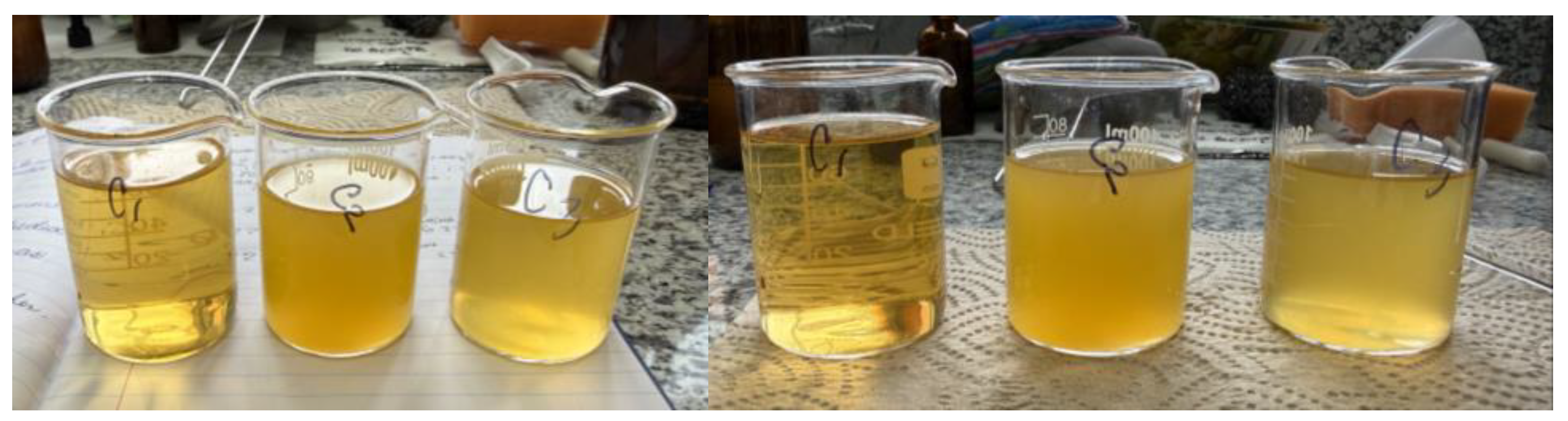
Turbidity differed markedly among treatments (C2 > C3 > C1 ≈ C4; p < 0.05), with C2 reaching 747.50 ± 3.79 FNU—more than 30 times higher than the control beer C1 (22.23 ± 0.45 FNU)—consistent with the presence of suspended particles, pectins, and other colloidal components contributed by the mango pulp [39]. This visual difference in clarity among treatments is shown in Figure 1. Enzymatic treatment reduced turbidity in C3 to 218.75 ± 0.96 FNU, a decrease of approximately 71% relative to C2, confirming that pectinolytic degradation substantially limits the formation of stable colloidal structures and favors clarification, in agreement with the established role of pectinases in clarifying fruit-derived beverages [10,40]. The similarity between C1 and C4 confirms that, in the absence of pulp, turbidity remains low regardless of dilution and further indicates that the cold crash step was effective in stabilizing the control beer prior to treatment preparation.

3.5. Dietary Fiber

Dietary fiber content ranged from 0.26 to 1.57 g/L, following the order C2 > C3 > C1 > C4 (p < 0.001). C2 and C3 fall within the range reported for regular and low- or no-alcohol beers enriched with soluble fiber (≈0.5–4.0 g/L) [41], consistent with the fiber contribution of mango pulp, particularly pectins and other structural polysaccharides. The moderate reduction in fiber observed in C3 relative to C2 is consistent with enzymatic depolymerization of pectins into lower-molecular-weight compounds not fully retained by the gravimetric method, which coincides with the turbidity reduction observed for the same sample and reinforces that both properties reflect the same underlying colloidal system.

3.6. Correlation Analysis

Pearson correlation analysis (Table 4) revealed strong, statistically significant positive correlations among fiber, polyphenols, and turbidity (r = 0.86–0.87, p ≤ 0.003), indicating that these three variables are closely linked within the same colloidal system, in which pectins and other polysaccharides act as a structural matrix that retains phenolic compounds. ABTS correlated strongly with alcohol content (r = 0.80, p = 0.005) and moderately with ORAC (r = 0.70, p = 0.026), showing a negligible correlation with turbidity and fiber, indicating that ABTS reactivity in this system is influenced by factors other than the colloidal fraction. The moderate, non-significant correlation between ORAC and FRAP (r = 0.64) supports the interpretation that, although both assays measure antioxidant capacity, they respond to different underlying mechanisms, which explains the divergent behavior observed between FRAP and the other two assays across treatments. Together, these associations confirm that the developed beer constitutes a complex system in which interactions among fiber, phenolic compounds, and colloidal structure jointly determine its functional and physicochemical properties.

3.7. Yeast Morphology (SEM)

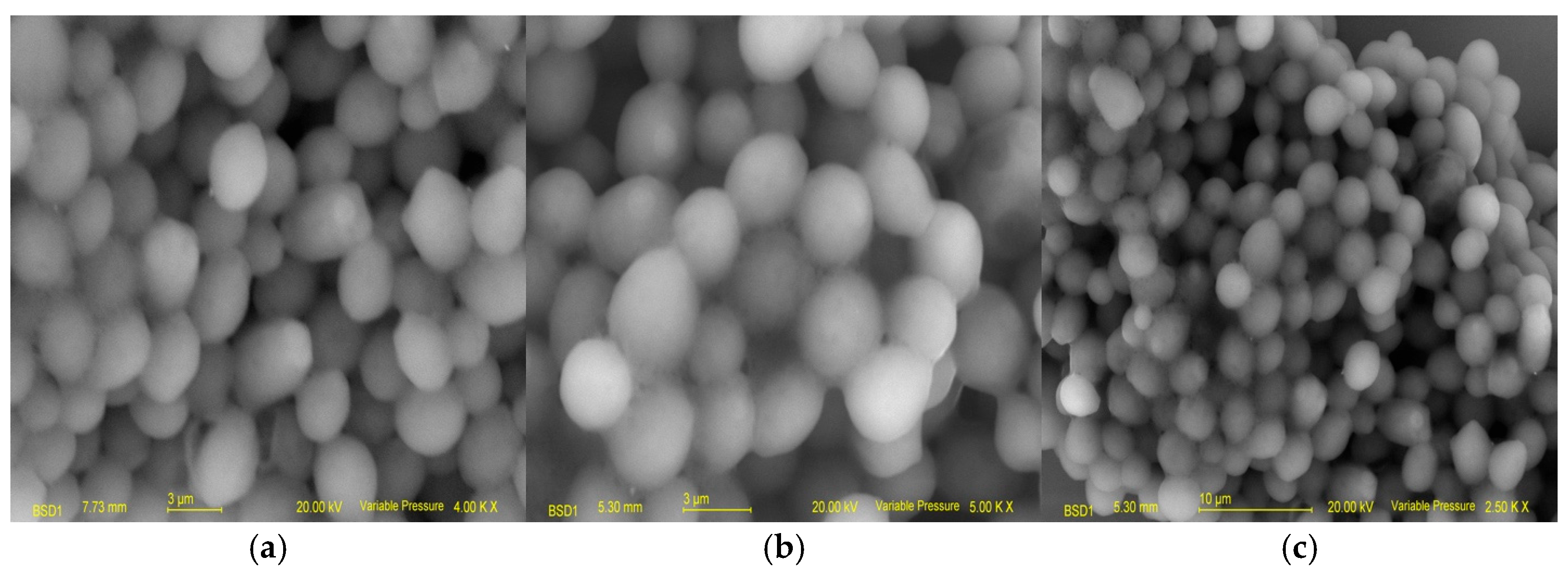
Scanning electron micrographs showed a predominantly spherical to slightly oval cell population, consistent with Saccharomyces morphology, with well-defined outlines, relatively smooth surfaces, and structures compatible with active budding processes (Figure 2). No severe deformation, structural collapse, or widespread cell rupture was observed, and localized cell aggregation (typical of fermentative behavior) was identified in some fields. These observations indicate that SafBrew™ LA-01 maintained adequate structural integrity throughout the process, consistent with stable performance despite its restricted fermentative capacity [26].

4. Limitations

This study was conducted at pilot scale, with treatments evaluated in triplicate; this design was sufficient to detect several statistically significant treatment effects, although variables with borderline significance, such as total polyphenols (p = 0.052), and the generalizability of the absolute values reported would benefit from further validation under production-scale conditions in future work. The number of replicates may also have limited the statistical power to detect differences of the magnitude observed for total polyphenols. The scope of this study was deliberately focused on a single mango pulp inclusion level (15% w/w) and a single pectinolytic enzyme dose (0.15% w/w, 40 °C, 12 h); extending the formulation matrix to additional inclusion levels, enzyme concentrations, and incubation conditions is a natural next step for further optimizing the functional and physicochemical profile of the beverage. The alcohol-free target (≤0.5% v/v) was not achieved; future work should adjust the wort formulation and fermentation control, using density-based instruments instead of refractometry, which overestimates residual extract once ethanol is present. Sensory evaluation and microbiological stability testing, while outside the scope of the present physicochemical and functional characterization, are identified as clear priorities prior to commercial scale-up. The absence of a comprehensive physicochemical characterization, including parameters such as pH, acidity, color, extract, attenuation, and bitterness, should be considered a limitation of the present study. Future studies should incorporate these parameters to provide a more complete characterization of the developed beer. Finally, because all raw materials, the mango cultivar (“Kent”), and processing conditions were specific to Panama, evaluating other mango varieties, barley malts, or brewing systems would help establish the broader applicability of the approach.

5. Conclusions

This study demonstrates that combining mango pulp with pectinolytic enzyme treatment is an effective strategy for enhancing the functional profile of reduced-alcohol beer while controlling turbidity, one of the main technological challenges associated with fruit incorporation in this beverage category. A reduced-alcohol beer was successfully produced with reproducible physicochemical characteristics using Saccharomyces cerevisiae SafBrew™ LA-01 under controlled fermentation, providing a consistent base for evaluating the experimental treatments. Mango pulp addition significantly increased turbidity and dietary fiber, with a non-significant trend toward higher total polyphenol content, while pectinolytic enzyme treatment significantly reduced turbidity and fiber relative to the pulp-only treatment, confirming that pectin degradation modulates the colloidal structure of the system. The antioxidant response was method-dependent: ABTS and ORAC showed limited sensitivity to fruit and enzyme addition, whereas FRAP revealed a significant enzyme-associated increase in reducing capacity, indicating greater release of matrix-bound phenolics. The alcohol-free target (≤0.5% v/v) was not achieved, as the ethanol content (1.31–1.60% v/v) placed the product in the reduced-alcohol category; wort formulation and density-based fermentation monitoring should be optimized in future work. Among the formulations evaluated, the combination of mango pulp and pectinolytic enzyme (C3) represented the most balanced treatment, combining a significant improvement in reducing capacity with a substantial reduction in turbidity, while the pulp-only treatment (C2) offered the greatest functional enrichment at the cost of excessive turbidity, and the diluted control (C4) consistently showed the lowest functional values. These findings support the combination of mango pulp and pectinolytic enzyme treatment as an effective strategy for developing reduced-alcohol beers with enhanced functional properties and controlled physicochemical characteristics and highlight the value of density-based fermentation monitoring and complementary phenolic characterization techniques (e.g., HPLC) in future studies, together with sensory evaluation and microbiological stability assessment prior to scale-up.

Author Contributions

Conceptualization, C.E.B.-M. and I.F.; methodology, C.E.B.-M.; software, C.E.B.-M.; validation, C.E.B.-M. and I.F.; formal analysis, C.E.B.-M.; investigation, C.E.B.-M.; resources, I.F.; data curation, C.E.B.-M.; writing—original draft preparation, C.E.B.-M.; writing—review and editing, C.E.B.-M. and I.F.; visualization, C.E.B.-M.; supervision, I.F.; project administration, C.E.B.-M.; funding acquisition, C.E.B.-M. All authors have read and agreed to the published version of the manuscript.

Funding

This research was funded by the Secretaría Nacional de Ciencia, Tecnología e Innovación (SENACYT), Republic of Panama, under Contract No. 270-2024-120.

Institutional Review Board Statement

Not applicable.

Informed Consent Statement

Not applicable.

Data Availability Statement

We wanted to change to: All data generated or analyzed during this study are included in this published article, because we used all the data in the article.

Acknowledgments

The authors thank the Universidad Tecnológica de Panamá and the Centro de Estudios Multidisciplinarios en Ciencias, Ingeniería y Tecnología (CEMCIT AIP) for the institutional and technical support provided. The authors also thank the Secretaría Nacional de Ciencia, Tecnología e Innovación (SENACYT) and the Instituto para la Formación y Aprovechamiento de Recursos Humanos (IFARHU) for academic and scientific support and the Universidad de la República (UDELAR) for the academic exchange that strengthened the experimental component of this work. During the preparation of this manuscript, the authors used Claude Opus 5.5 (Anthropic, accessed 2026) for the purpose of translating the text from English to Spanish. The authors have reviewed and edited the output and take full responsibility for the content of this publication.

Conflicts of Interest

The authors declare no conflicts of interest.

Abbreviations

The following abbreviations are used in this manuscript:
ABTS2,2′-azino-bis(3-ethylbenzothiazoline-6-sulfonic acid)
AOACAssociation of Official Analytical Collaboration/Chemists
AAPH2,2′-Azobis(2-methylpropionamidine) dihydrochloride
FNUFormazin Nephelometric Units
FRAPFerric Reducing Antioxidant Power
GAEGallic Acid Equivalents
HPLCHigh-Performance Liquid Chromatography
IBUInternational Bitterness Units
ORACOxygen Radical Absorbance Capacity
SEMScanning Electron Microscopy
TETrolox Equivalents
TPTZ2,4,6-tris(2-pyridyl)-s-triazine

References

  1. Bellut, K.; Arendt, E.K. Chance and Challenge: Non-Saccharomyces Yeasts in Nonalcoholic and Low Alcohol Beer Brewing—A Review. J. Am. Soc. Brew. Chem. 2019, 77, 77–91. [Google Scholar] [CrossRef] [Scilit]
  2. Sohrabvandi, S.; Mousavi, S.M.; Razavi, S.H.; Mortazavian, A.M.; Rezaei, K. Alcohol-Free Beer: Methods of Production, Sensorial Defects, and Healthful Effects. Food Rev. Int. 2010, 26, 335–352. [Google Scholar] [CrossRef] [Scilit]
  3. Okaru, A.O.; Lachenmeier, D.W. Defining No and Low (NoLo) Alcohol Products. Nutrients 2022, 14, 3873. [Google Scholar] [CrossRef] [Scilit] [PubMed]
  4. Müller, M.; Bellut, K.; Tippmann, J.; Becker, T. Physical Methods for Dealcoholization of Beverage Matrices and Their Impact on Quality Attributes. ChemBioEng Rev. 2017, 4, 310–326. [Google Scholar] [CrossRef] [Scilit]
  5. Canonico, L.; Agarbati, A.; Comitini, F.; Ciani, M. Unravelling the Potential of Non-Conventional Yeasts and Recycled Brewers Spent Grains (BSG) for Non-Alcoholic and Low Alcohol Beer (NABLAB). LWT 2023, 190, 115528. [Google Scholar] [CrossRef] [Scilit]
  6. Correa, J.; Amores Muñoz, I.D.J.; Barría Núñez, J.V.; Biendicho Melgar, C.E.; Medina Herrera, Y.K. Implementación de Pulpa de Mango en la Elaboración de una Cerveza Artesanal. Rev. Iniciación Cient. 2021, 6, 123–127. [Google Scholar] [CrossRef] [Scilit]
  7. Kaur, R.; Shekhar, S.; Prasad, K. Functional Beverages: Recent Trends and Prospects as Potential Meal Replacers. Food Mater. Res. 2024, 4, e006. [Google Scholar] [CrossRef] [Scilit]
  8. De La Fuente-Carmelino, L.; Anticona, M.; Ramos-Escudero, F.; Casimiro-Gonzales, S.; Muñoz, A.M. Commercial Plant-Based Functional Beverages: A Comparative Study of Nutritional Composition and Bioactive Compounds. Beverages 2025, 11, 26. [Google Scholar] [CrossRef] [Scilit]
  9. Gasiński, A.; Kawa-Rygielska, J.; Szumny, A.; Czubaszek, A.; Gąsior, J.; Pietrzak, W. Volatile Compounds Content, Physicochemical Parameters, and Antioxidant Activity of Beers with Addition of Mango Fruit (Mangifera indica). Molecules 2020, 25, 3033. [Google Scholar] [CrossRef] [Scilit] [PubMed]
  10. Patel, V.B.; Chatterjee, S.; Dhoble, A.S. A Review on Pectinase Properties, Application in Juice Clarification, and Membranes as Immobilization Support. J. Food Sci. 2022, 87, 3338–3354. [Google Scholar] [CrossRef] [Scilit] [PubMed]
  11. Jiang, X.; Lu, Y.; Liu, S.Q. Effects of Pectinase Treatment on the Physicochemical and Oenological Properties of Red Dragon Fruit Wine Fermented with Torulaspora delbrueckii. LWT 2020, 132, 109929. [Google Scholar] [CrossRef] [Scilit]
  12. Kirin Holdings Company, Ltd. Global Beer Consumption by Country in 2024. Kirin Holdings Newsroom. 22 December 2025. Available online: https://www.kirinholdings.com/en/newsroom/release/2025/1222_01.html (accessed on 3 September 2026).
  13. Anderson, K. The Emergence of Lower-Alcohol Beverages: The Case of Beer. J. Wine Econ. 2023, 18, 66–86. [Google Scholar] [CrossRef] [Scilit]
  14. Instituto Nacional de Estadística y Censo. Producción de Bebidas Alcohólicas en la República de Panamá, Años 2020–2024. Available online: https://www.inec.gob.pa/publicaciones/Default3.aspx?ID_PUBLICACION=1358&ID_CATEGORIA=4&ID_SUBCATEGORIA=15 (accessed on 17 August 2026).
  15. Hendriks, H.F.J. Alcohol and Human Health: What Is the Evidence? Annu. Rev. Food Sci. Technol. 2020, 11, 1–21. [Google Scholar] [CrossRef] [Scilit] [PubMed]
  16. Anderson, P.; Kokole, D.; Llopis, E.J. Production, Consumption, and Potential Public Health Impact of Low- and No-Alcohol Products: Results of a Scoping Review. Nutrients 2021, 13, 3153. [Google Scholar] [CrossRef] [Scilit] [PubMed]
  17. Piornos, J.A.; Koussissi, E.; Balagiannis, D.P.; Brouwer, E.; Parker, J.K. Alcohol-Free and Low-Alcohol Beers: Aroma Chemistry and Sensory Characteristics. Compr. Rev. Food Sci. Food Saf. 2023, 22, 233–259. [Google Scholar] [CrossRef] [Scilit] [PubMed]
  18. Mellor, D.D.; Hanna-Khalil, B.; Carson, R. A Review of the Potential Health Benefits of Low Alcohol and Alcohol-Free Beer: Effects of Ingredients and Craft Brewing Processes on Potentially Bioactive Metabolites. Beverages 2020, 6, 25. [Google Scholar] [CrossRef] [Scilit]
  19. Kozłowski, R.; Dziedziński, M.; Stachowiak, B.; Kobus-Cisowska, J. Non- and Low-Alcoholic Beer—Popularity and Manufacturing Techniques. Acta Sci. Pol. Technol. Aliment. 2021, 20, 347–357. [Google Scholar] [CrossRef] [PubMed]
  20. Salanță, L.C.; Coldea, T.E.; Ignat, M.V.; Pop, C.R.; Tofană, M.; Mudura, E.; Borșa, A.; Pasqualone, A.; Zhao, H. Non-Alcoholic and Craft Beer Production and Challenges. Processes 2020, 8, 1382. [Google Scholar] [CrossRef] [Scilit]
  21. Pérez Mendieta, T.M. Efecto de la Adición de Frutas en el Perfil Fermentativo, Fisicoquímico y Sensorial de una Bebida Alcohólica a Partir de Miel de Abejas en Panamá. Master’s Thesis, Universidad Tecnológica de Panamá, Panama City, Panama, 2026. [Google Scholar]
  22. Reddy, L.V.; Kim, Y.-M.; Wee, Y.-J. Rapid and enhanced liquefaction of pulp from mango (Mangifera indica L.) cv. Totapuri using ultrasound-assisted enzyme pretreatment. Processes 2020, 8, 718. [Google Scholar] [CrossRef] [Scilit]
  23. Method 985.29; Total Dietary Fiber in Foods—Enzymatic-Gravimetric Method. AOAC International: Arlington, VA, USA, 1995.
  24. Fernández-Fernández, A.M.; Iriondo-DeHond, A.; Dellacassa, E.; Medrano-Fernandez, A.; Del Castillo, M.D. Assessment of Antioxidant, Antidiabetic, Antiobesity, and Anti-Inflammatory Properties of a Tannat Winemaking By-Product. Eur. Food Res. Technol. 2019, 245, 1539–1551. [Google Scholar] [CrossRef] [Scilit]
  25. Olt, V.; Báez, J.; Curbelo, R.; Boido, E.; Amarillo, M.; Gámbaro, A.; Alborés, S.; García, N.G.; Cesio, M.V.; Heinzen, H.; et al. Tannat Grape Pomace as an Ingredient for Potential Functional Biscuits: Bioactive Compound Identification, In Vitro Bioactivity, Food Safety, and Sensory Evaluation. Front. Nutr. 2023, 10, 1241105. [Google Scholar] [CrossRef] [Scilit] [PubMed]
  26. Karimy, M.F.; Damayanti, E.; Suryani, A.E.; Prasetyo, E.; Nurhayati, R.; Anwar, M.; Anggraeni, A.S. A Simple Method for Analysis of Saccharomyces cerevisiae Morphology by Applying a High Vacuum Mode of the Scanning Electron Microscopy and Without Chemical Fixatives. IOP Conf. Ser. Earth Environ. Sci. 2020, 462, 012048. [Google Scholar] [CrossRef] [Scilit]
  27. Nardini, M.; Garaguso, I. Characterization of Bioactive Compounds and Antioxidant Activity of Fruit Beers. Food Chem. 2020, 305, 125437. [Google Scholar] [CrossRef] [Scilit] [PubMed]
  28. Sriwichai, W.; Detchewa, P.; Prasajak, P. Evaluation of the Physicochemical, Sensorial and Antioxidant Properties of Functional Ale Beer Brewed with Rice and Fruit By-Products. Chiang Mai Univ. J. Nat. Sci. 2021, 20, e2021031. [Google Scholar] [CrossRef] [Scilit]
  29. Horincar, G.; Enachi, E.; Bolea, C.; Râpeanu, G.; Aprodu, I. Value-Added Lager Beer Enriched with Eggplant (Solanum melongena L.) Peel Extract. Molecules 2020, 25, 731. [Google Scholar] [CrossRef] [Scilit] [PubMed]
  30. Coelho, E.M.; de Souza, M.E.A.O.; Corrêa, L.C.; Viana, A.C.; de Azevêdo, L.C.; Lima, M.d.S. Bioactive Compounds and Antioxidant Activity of Mango Peel Liqueurs (Mangifera indica L.) Produced by Different Methods of Maceration. Antioxidants 2019, 8, 102. [Google Scholar] [CrossRef] [Scilit] [PubMed]
  31. Belcar, J.; Kapusta, I.; Sekutowski, T.R.; Gorzelany, J. Impact of the Addition of Fruits of Kamchatka Berries (L. caerulea var. kamtschatica) and Haskap (L. caerulea var. emphyllocalyx) on the Physicochemical Properties, Polyphenolic Content, Antioxidant Activity and Sensory Evaluation Craft Wheat Beers. Molecules 2023, 28, 4011. [Google Scholar] [CrossRef] [Scilit] [PubMed]
  32. Gasiński, A.; Kawa-Rygielska, J.; Szumny, A.; Gąsior, J.; Głowacki, A. Assessment of Volatiles and Polyphenol Content, Physicochemical Parameters and Antioxidant Activity in Beers with Dotted Hawthorn (Crataegus punctata). Foods 2020, 9, 775. [Google Scholar] [CrossRef] [Scilit] [PubMed]
  33. Wang, C.; Fu, X.; Wang, J.; Yu, J.; Shi, Y.; Feng, X.; Liu, C.; Yang, Z.; Li, B.; Cao, W.; et al. Comprehensive Characterization of Chinese Beers Based on Chemical Composition, Antioxidant Activity and Volatile Metabolomics. Sci. Rep. 2025, 15, 10204. [Google Scholar] [CrossRef] [Scilit] [PubMed]
  34. Gouvinhas, I.; Breda, C.; Barros, A.I. Characterization and Discrimination of Commercial Portuguese Beers Based on Phenolic Composition and Antioxidant Capacity. Foods 2021, 10, 1144. [Google Scholar] [CrossRef] [Scilit] [PubMed]
  35. Munteanu, I.G.; Apetrei, C. Analytical Methods Used in Determining Antioxidant Activity: A Review. Int. J. Mol. Sci. 2021, 22, 3380. [Google Scholar] [CrossRef] [Scilit] [PubMed]
  36. Wannenmacher, J.; Cotterchio, C.; Schlumberger, M.; Reuber, V.; Gastl, M.; Becker, T. Technological Influence on Sensory Stability and Antioxidant Activity of Beers Measured by ORAC and FRAP. J. Sci. Food Agric. 2019, 99, 6628–6637. [Google Scholar] [CrossRef] [Scilit] [PubMed]
  37. Tafulo, P.A.R.; Queirós, R.B.; Delerue-Matos, C.M.; Sales, M.G.F. Control and Comparison of the Antioxidant Capacity of Beers. Food Res. Int. 2010, 43, 1702–1709. [Google Scholar] [CrossRef] [Scilit]
  38. Šavel, J.; Košin, P.; Brož, A.; Sigler, K. Convenient Monitoring of Brewery Fermentation Course by Refractometry. Kvas. Prum. 2009, 55, 94–99. [Google Scholar] [CrossRef] [Scilit]
  39. Rinaldi, B.J.D.; Montanher, P.F.; Johann, G. Brewing of Craft Beer Enriched with Freeze-Dried Cape Gooseberry: A Promising Source of Antioxidants. Braz. J. Food Technol. 2022, 25, e2022019. [Google Scholar] [CrossRef] [Scilit]
  40. Falcão, L.d.S.; Monteiro, T.E.d.A.; Amaral, T.S.D.; Azevedo, S.C.M.; Batista, B.N.; Jordão, A.M.; Albuquerque, P.M. Optimized Production of Fungal Polygalacturonase Using Cupuaçu (Theobroma grandiflorum) Peel as Substrate and Its Effect on Clarification of Cupuaçu Juice. Beverages 2024, 11, 6. [Google Scholar] [CrossRef] [Scilit]
  41. Reid, J.E.S.J.; Yakubov, G.E.; Lawrence, S.J. Non-Starch Polysaccharides in Beer and Brewing: A Review of Their Occurrence and Significance. Crit. Rev. Food Sci. Nutr. 2024, 64, 837–851. [Google Scholar] [CrossRef] [Scilit] [PubMed]
Figure 1. Visual appearance of the experimental treatments after pasteurization and centrifugation; from left to right: C1 (base beer, clear), C2 (beer with 15% mango pulp, visibly turbid), and C3 (mango pulp with pectinolytic enzyme treatment, intermediate clarity), illustrating the marked reduction in turbidity achieved by enzymatic treatment relative to C2.
Beverages 12 00121 g001
Figure 2. Scanning electron micrographs of SafBrew™ LA-01 yeast cells: (a) 4000×, (b) 5000×, and (c) 2500× magnification (From left to right), showing predominantly spherical to slightly oval cells with well-defined outlines, budding structures, and localized cellular aggregation.
Beverages 12 00121 g002
Table 1. Experimental treatments evaluated.
CodeDescription
C1Reduced-alcohol control beer; no mango pulp or enzyme (reference treatment)
C2Control beer with 15% (w/w) mango pulp addition
C3Control beer with 15% mango pulp treated with 0.15% pectinolytic enzyme (40 °C, 12 h) prior to mixing
C4Control beer diluted to 85% (w/w) with potable water; dilution control equivalent to the dilution introduced by the 15% pulp addition
Table 2. Physicochemical and functional properties of the experimental treatments (mean ± SD).
SamplePolyphenols
(mg GAE/L)
ABTS
(µmol TE/L)
ORAC
(µmol TE/L)
FRAP
(µmol TE/L)
Alcohol
(% v/v)
Turbidity
(FNU)
Dietary
Fiber (g/L)
C127.34 ± 0.23623.05 ± 5.654911.5 ± 74.5636.87 ± 10.231.60 ± 0.0122.23 ± 0.450.33 ± 0.01
C231.10 ± 1.53521.94 ± 25.894992.2 ± 338.8675.38 ± 30.671.31 ± 0.01747.50 ± 3.791.57 ± 0.04
C329.14 ± 0.92515.42 ± 46.244989.6 ± 379.3800.73 ± 51.251.41 ± 0.01218.75 ± 0.961.31 ± 0.10
C426.27 ± 1.67440.41 ± 39.544034.4 ± 381.0588.99 ± 10.031.35 ± 0.0114.20 ± 0.270.26 ± 0.01
C1 (base beer), C2 (beer with 15% mango pulp), C3 (mango pulp with pectinolytic enzyme treatment), and C4 (control beer diluted to 85% (w/w).
Table 3. One-way Welch ANOVA results for the evaluated variables (factor: treatment).
VariableFdf1df2p-Value
Polyphenols6.8433.780.052
ABTS28.2733.500.006
ORAC3.8533.580.126
FRAP21.1034.100.006
Alcohol519.6933.73<0.001
Turbidity353,502.9734.01<0.001
Fiber597.1633.95<0.001
Table 4. Pearson correlation matrix among the evaluated variables (r; * p < 0.05, ** p < 0.01).
Polyph.ABTSORACFRAPAlcoholTurbidity
Polyphenols—−0.0720.2840.356−0.5350.867 **
ABTS —0.695 *0.0800.801 **0.079
ORAC —0.6430.2570.475
FRAP —−0.1350.299
Alcohol —−0.536
Turbidity —
Disclaimer/Publisher’s Note: The statements, opinions and data contained in all publications are solely those of the individual author(s) and contributor(s) and not of MDPI and/or the editor(s). MDPI and/or the editor(s) disclaim responsibility for any injury to people or property resulting from any ideas, methods, instructions or products referred to in the content.