


Abstract
Lugana DOC is an Italian PDO white wine from the south coast of Lake Garda, produced with ‘Trebbiano di Lugana’ grapes (synonym of ‘Trebbiano di Soave’ and ‘Verdicchio bianco’) and characterised by tropical fruit, citrus, and balsamic notes due to the presence of volatile thiols and methyl salicylate, respectively. To deepen the knowledge of the aromatic profile of these wines and to study how they evolve during aging, the chemical and sensory profile of 12 Lugana DOC wines from the same winery in different consecutive vintages (2008–2019, evaluated in 2023) were analysed. Sensory analysis data were subjected to hierarchical cluster analysis, identifying four main groups that appropriately distinguished the aged wines from the young wines. Younger wines had a greenish yellow colour and were characterised mainly by fruity, citrus, floral, and flinty notes related to thiol compound contribution. Older wines, divided into three different clusters, shifted colour towards orange and were characterised by descriptors related to oxidative aging (e.g., cooked fruit, marsala-like, figs, nuts) or retained pleasant varietal and evolutionary notes (e.g., citrus, white flowers, flint, vanilla) confirmed by their chemical markers detected by GC-MS and LC-MS.
1. Introduction
Aged white wines are well known and renowned worldwide. Several studies have demonstrated the aging potential of Chardonnay wines from the Bourgogne and Chablis AOCs (Appellations d’Origine Contrôlée) in France, as well as Riesling from the Rhine and Mosel valleys, and Sauvignon blanc from the Loire Valley [1,2,3]. Although less extensively studied due to their limited distribution, wines made with autochthonous varieties from Portugal and Italy have been evaluated sensorially by experienced tasters to investigate their aging potential [4,5]. The sensory characteristics of aged white wines are typically associated with specific descriptors linked to individual volatile compounds such as 1,1,6-trimethyl-1,2-dihydronaphthalene (TDN) and benzenemethanethiol (BMT) responsible for kerosene and flint notes, respectively, of renowned aged Riesling, Chardonnay, and Sauvignon blanc, which, when present above their detection thresholds, influence the sensory profile [3,6]. In some cases, a combination of these compounds may form a characteristic ‘aroma vector’, represented by specific odour [7]. Nevertheless, given the complexity of the wine matrix, interactions among volatile organic compounds (VOCs) can influence perception beyond simple threshold concentrations [7]. Therefore, sensory analysis remains an essential tool to integrate analytical data in defining the final perception of a wine.
Lugana DOC (Denominazione di Origine Controllata) is an Italian white wine from the southern coast of Lake Garda (located between the provinces of Brescia and Verona, northern Italy) produced mainly (90%) with the white Vitis vinifera L. cultivar ‘Trebbiano di Lugana’, also known as ‘Turbiana’ [8]. ‘Trebbiano di Lugana’ is genetically identical to ‘Trebbiano di Soave’ cultivated in the Verona area (north of Italy) and to ‘Verdicchio’ cultivated in the Marche region (centre of Italy), showing different phenotypic traits related to the growing environment [9,10]. Therefore, they are considered three different biotypes of the same variety [9].
In recent years, the volatile chemical markers of the aroma in ‘Lugana’ [11,12,13] and ‘Verdicchio’ [14,15,16] grapes and wines have been investigated. Young Lugana and Verdicchio wines are characterised by tropical fruit (passion fruit and pineapple) and citrus notes [11,13,15] due to the presence of sulphur compounds (volatile thiols). These compounds are present in grapes as non-volatile precursors [17,18] and are subsequentially released during alcoholic fermentation by Saccharomyces cerevisiae yeasts [18]. Moreover, their concentration, as neo-synthesis of thiols or release and preservation, can be significantly influenced by grape pre-processing and winemaking strategies [11]. Specifically, 3-mercapto-1-hexanol (3MH) and 3-mercaptohexyl acetate (3MHA) were found above their odour thresholds in these two varieties [11,13,15,16]. However, these fruity notes can evolve during aging.
Anise, liquorice, and balsamic notes related to the presence of 3-methyl-2,4-nonanedione (3MND) and methyl salicylate (MeSA) were previously reported [14,15]. In particular, MeSA contributes significantly to the aroma and typicality of aged Lugana and Verdicchio wines. Its concentration can be found up to hundreds of µg/L, a very high content in comparison to other varieties (where the maximum value found was around 10 µg/L) [12,14,16,19]. For this reason, MeSA has been considered a varietal marker of wines produced with ‘Turbiana’ or ‘Verdicchio’ grapes. MeSA is found in grape musts in low concentrations, since it is present as glycosidic precursors [14,19,20] and subsequently released by yeast activity during alcoholic fermentation or during aging by acid hydrolysis [19,20]. MeSA has a characteristic wintergreen oil, mint, and fresh green scent, with an odour threshold in white wine reported in the range of 38–50 μg/L [15,19].
Other volatile organic compound (VOC) classes, such as esters, γ-lactones, terpenes, and norisoprenoids, can also contribute significantly to the overall aroma of Lugana wines [12,16]. Fermentative esters and γ-lactones, responsible for fruity and floral aromas, are the most abundant classes of aroma compounds (approximately 60%), even if their concentration usually showed a decreasing tendency during storage [12,15]. Regarding terpenes, a high concentration was observed in Lugana wines, with linalool, α- terpineol, and geraniol being the most abundant compounds [16]. Finally, a high concentration of C13-norisoprenoids was observed [12,16]. Specifically, β-damascenone was found in concentrations considerably higher than its perception threshold in many Lugana wines and has been studied extensively for its positive direct and indirect contribution to the aroma [16,21].
Lugana has been proposed by wine producers as a suitable wine for long aging due to its positive varietal features such as the presence, among others, of volatile thiols, methyl salicylate, and norisoprenoids. Moreover, it is well known that white wine encounters a loss of VOCs during aging, in particular, those of fermentative origin and, especially in certain conditions, oxidative phenomena may cause the presence of unwanted olfactory deviations [22]. Aldehydes, primarily acetaldehyde, but also others such as methional, benzaldehyde, and 2-phenylethanal, deriving from the oxidation of the respective alcohol are responsible for vanish, green, and boiled potato undesirable aroma, or a honey-like hint [22,23,24]. The bottle and the closure system strongly influence these faults in white wines during aging [22]. Nevertheless, other factors such as the grape nitrogen availability may play a role in these VOCs’ formation, as they are involved in higher alcohol production and Strecker degradation, as well as the formation of untypical aging notes related to 2-aminoacetophenone (2AAP) [22].
This research aimed to extend knowledge on the volatile profile of Lugana DOC wines and to study how this evolves during long aging, from both a chemical and sensory point of view. The main objective was to identify markers (i.e., volatile compounds, sensory descriptors), evaluate how they change over time, and assess whether any of them are positively associated with premium features of aged wines. For this reason, the focus of the study was on sensory properties determined through Check-All-That-Apply (CATA) and descriptive analysis (DA). Lugana wines from 12 consecutive vintages (2008–2019, analysed in 2023) were evaluated by a panel of wine experts. Instrumental techniques, gas and liquid chromatography (GC and LC) coupled with mass spectrometry (MS), were used to determine the VOC composition of the wines. Starting from the instrumental outputs, aroma descriptors of VOCs with odour-active scores greater than one were selected, resulting in several odour terms for the CATA methodology. For those cited by more than 10% of the panel, a Hierarchical Clustering Analysis was applied to differentiate groups of wines depending on the descriptors’ frequency. The correlation with VOCs was performed to establish those compounds that may influence the overall quality of Lugana wines during aging and establish chemical markers to monitor. The outcomes of this study will enhance the understanding of Lugana’s varietal heritage and its distinctive characteristics, while also providing deeper insight into the volatile compounds associated with desirable aging traits, thereby offering a possible predictive tool for the identification and traceability of premium vintages during their evolution. This knowledge can be a valuable tool for oenologists to optimise winemaking strategies.
2. Materials and Methods
2.1. Wine Samples
For this study, 12 Lugana Superiore DOC wines from the same winery (Cà Lojera, Peschiera del Garda, Italy) and from consecutive vintages (2008–2019) were subjected to chemical and sensory analysis. These wines, made from 100% ‘Turbiana’ grapes (synonym ‘Verdicchio bianco’, accession number 12963; VIVC, 2025, [25]), were produced following the same procedure. The grapes, harvested by hand, after destemming and pressing were fermented in stainless steel tanks under controlled temperature. After fermentation, the wines were bottled and stored horizontally in a cellar room under controlled conditions of temperature (13.5 °C) and humidity, protected from light. All bottled wines (n = 3, provided by the winery, two for the physico-chemical and one for the sensory studies) were analysed in 2023 and their main oenological parameters are shown in Table S1.
2.2. Experimental Approach
Recently, the concept of varietal typicity was rediscovered and ruled in its evaluation [26]. ‘Lugana’ wines have been partially explored in the literature. Nevertheless, it is a white wine with good aging ability. In this study, to achieve an ‘olfactory wheel’ of Lugana wines defining the varietal identity during aging, we proceeded with different steps:
- (i)
- Instrumental evaluation and detailed analysis of volatile organic compounds (VOCs);
- (ii)
- Bibliographic research of the sensory descriptors and known thresholds for each VOC detected;
- (iii)
- OAV calculation and preliminary tasting with five experts for establishing a list of descriptors;
- (iv)
- Official tasting with wine experts using the tasting sheet previously prepared in step III;
- (v)
- Analysis of the outcomes by multivariate methods and correlation between physico-chemical and sensory parameters: the overall quality was correlated with the sensory descriptors.
2.3. Determination of Physical–Chemical Parameters
The physico-chemical parameters were determined according to Fracassetti et al., 2020 [12]. Furthermore, total phenols (spectrophotometric method, [12,27]) were evaluated, as well as colour parameters according to the CIELab colour space, with L*, a*, b*, C, H, and ΔE* values calculated through the OIV-MA-AS2-11 method [28]. Wine absorbance at 420 nm was also reported after reading against H2O on a 10 mm optical path using a UV-1800 spectrophotometer (Shimadzu Corporation, Kyoto, Japan).
The determination of free volatile organic compounds (VOCs) was performed in analytical duplicate. Terpenes, norisoprenoids, benzenoids, higher alcohols, volatile acids, esters, lactones, alkyl thiols, C6-compounds, aldehydes and ketones, furanic compounds, and volatile phenols were determined following the method proposed by Guerrini et al. (2018) [29]. It is based on the headspace solid-phase microextraction of VOCs followed by gas chromatography–mass spectrometry analysis (HS-SPME-GC-MS) using a Thermo Scientific TriPlus RSH autosampler with a Thermo Scientific TRACE 1310 GC equipped with a Thermo Scientific ISQ 7000 MS detector (Thermo Scientific, Waltham, MA, USA). Briefly, 5 mL of sample was put into a 20 mL vial containing 2 g of NaCl (Sigma-Aldrich, St. Louis, MO, USA) and the internal standard solution of deuterated ethyl acetate-d3, n-butanol-d10, and ethyl hexanoate-d11, all purchased from LGC Standards (Guildford, UK), was added. The vial was tightly closed prior to the analysis and a 65 μm divinylbenzene/carboxen/polydimethylsiloxane fibre (Agilent Technologies, Santa Clara, CA, USA) was exposed to the headspace. For the chromatographic separation, an HP-INNOWax (30 m × 0.25 mm id, 0.5 μm) column (Agilent Technologies, Santa Clara, CA, USA) was used and the carrier gas was helium at 1.3 mL/min flow rate. Calibration curves were obtained with pure standards prepared in a solution consisting of 5 g/L tartaric acid and 12% ethanol, all purchased from Sigma-Aldrich (St. Louis, MO, USA). Regarding the determination of polyfunctional thiol compounds, the high-performance liquid chromatography–tandem mass spectrometry (HPLC-MS/MS) method developed by Capone et al. (2015) [30] was used with 4,4′-dithiodipyridine (DTDP), purchased from Sigma-Aldrich (St. Louis, MO, USA), as a derivatising agent. For sample preparation, 20 mL of wine was added with deuterated 3-mercaptohexanol-d5 internal standard, purchased from Eptes Flavour & Frangance Analytical (Vevey, Switzerland), EDTANa2 (20 mg) from Sigma-Aldrich (St. Louis, MO, USA), 50% acetaldehyde (80 μL) from Sigma-Aldrich, and 10 mM DTDP reagent (200 μL). After 30 min, the sample was submitted to solid-phase extraction using Bond Elut C18 cartridge (500 mg) from Agilent Technologies (Santa Clara, CA, USA) and 3 mL of methanol as eluent. The eluate was evaporated to dryness under nitrogen at 25 °C and reconstituted with 10% ethanol (200 μL) for HPLC-MS analysis using a Thermo Scientific UltiMate 3000 LC coupled to a Thermo Scientific TSQ Altis Triple Quadrupole MS (Thermo Scientific, Waltham, MA, USA). For chromatographic separation, a ZORBAX Eclipse Plus C18 column (100 mm × 4.6 mm i.d., 3.5 μm, Agilent Technologies, Santa Clara, CA, USA) operating at 25 °C was used with 0.5% aqueous formic acid (solvent A) and 0.5% formic acid in acetonitrile (solvent B) as mobile phase at 0.2 mL/min flow rate. Solvents of HPLC-gradient grade were supplied by Sigma-Aldrich (St. Louis, MO, USA). The injection volume was 10 μL. Mass spectrometry operated with electrospray ionisation in positive ion mode. Calibration curves were obtained with pure standards prepared in a solution consisting of 5 g/L tartaric acid and 10% ethanol.
2.4. Sensory Analysis
The sensory analysis (formal evaluation) was carried out by a panel of 19 judges (12 men and 7 women; 21–60 years old) selected based on interest, availability, and sensory ability. The panel was composed of oenologists and university staff of oenology previously enrolled in the sensory evaluation of wines, therefore having experience in both sensory analysis and wine evaluations, and were considered as a panel of experts (not trained). All participants were required to sign an informed consent form prior to the tasting session, which explained that all data would be de-identified and reported only in aggregate form. Their participation was voluntary, and they could withdraw from the survey at any time without giving a reason. The wines tested were safe for consumption. The study was approved by the University of Torino Ethics Committee (protocol number 0532886, approval date 18 July 2025).
The wine samples (20 mL, served in ISO 3591:1977 glass), identified by a three-digit code, were served at a temperature of 18 °C in random order (Latin Square Williams design) during three consecutive tasting sessions (six wines per session). Furthermore, two similar non-analysed wine samples (Lugana DOC wine, vintage 2019) were added to the wines tasted to evaluate panel performance and repeatability. Judges evaluated wines in individual booths, equipped with water, unsalted crackers, napkins, and a spittoon. Prior to evaluating wines, a discussion of each descriptor was had to achieve agreement among judges. Aroma descriptors represent both orto- and retro-nasal modalities.
Descriptive analysis (DA) was used with a 10-point unstructured line scale method for colour descriptors (intensity and hue), in-mouth descriptors (bitterness, body, acidity, and sapidity), and minerality of the aroma [31] with anchors (0 = not perceptible, 10 = extremely intense). The overall quality of the sample was also assessed using a 10-point unstructured scale. Additionally, the “Check-All-That-Apply” (CATA) method was adopted for the aroma descriptors [32]. Figure S1 shows the sensory questionnaire used for this study. Forty-two aroma descriptors were selected with two different strategies. First, before the formal evaluation, a preliminary sensory analysis by a panel of five wine experts was completed, collecting the most cited descriptors. As the second approach, the instrumental analysis of the wines was used to select volatile compounds with an odour activity value (OAV) greater than 1, considering their associated aroma descriptors [3,6,12,15,17,23,33,34,35,36,37,38,39,40,41,42,43,44,45,46,47,48,49,50,51,52,53,54,55,56,57,58,59,60,61,62,63,64,65,66,67,68,69,70,71]. The evidenced descriptors from the two strategies were adapted to the typical descriptors of Lugana wines according to the bibliography previously published on the variety [12,14,15,16].
2.5. Statistical Analysis
Statistical analysis of the data was performed using R software 2023.12.1 version (R Foundation for Statistical Computing, Vienna, Austria). For the sensory analysis, data analysis was performed using FactoMineR [72] and SensoMineR [73] packages. In wine tasting, the reproducibility index (Ri) proposed by Campo et al. (2008) [74] was used to evaluate panel performance for CATA tasks. The panel performance was evaluated on the control sample (Ri = 0.582), which was tasted in two replicates, respecting the repeatability requirement established by Campo et al. (Ri > 0.20). For the aroma frequencies obtained from the CATA questionnaire, the threshold was 10% of citation for being considered relevant in further analysis. Correspondence analysis (CA) was performed and the significant attributes were evaluated using Cochran’s Q-test (p < 0.1) [75]. Hierarchical Clustering (Ward method, using Euclidean distance) was applied to differentiate groups of wines based on the descriptors’ frequency (pheatmap package) [76]. Regarding the intensity scales, significant differences were then evaluated by two-way analysis of variance (ANOVA) with samples as a fixed factor and judges as a random factor. For descriptors with significant differences (p < 0.05), Tukey’s HSD post hoc test was applied. Differences of the VOCs in each cluster were evaluated by one-way ANOVA and Tukey’s HSD post hoc test. OAVs were calculated using the odour thresholds (OT) found in the literature [3,6,12,15,17,23,33,34,35,36,37,38,39,40,41,42,43,44,45,46,47,48,49,50,51,52,53,54,55,56,57,58,59,60,61,62,63,64,65,66,67,68,69,70,71] (Supplementary Dataset) as OAV = VOC concentration/VOC odour threshold. Aroma vectors are then grouped following the guidelines reported in [7], slightly modified according to the descriptors of each VOC in further sub-vectors, ‘Fruity’, ‘Fruity-thiols’, ‘Floral, ‘Green’, ‘Mint’, ‘Spicy’, ‘Empyreumatic’, ‘Oxidation’, ‘Dry Fruits’, and ‘Honey-like’, consistent with the previous literature. Aroma vectors are calculated by summing the OAVs for each established group. Differences among aroma vectors were calculated by Rank ANOVA followed by LSD (with Bonferroni correction) post hoc test.
Principal component analysis (PCA) was performed with sensory descriptors (frequency > 10%) and VOCs that resulted statistically significant (p < 0.1) among clusters. Analysis of covariance (ANCOVA) was performed using the PCA scores (PC1–PC3) as dependent variables to test the significance of group effects after adjustment for selected covariates. Clusters were included as a fixed factor, with ethanol (% v/v), CIELab coordinate b*, and total sulphur dioxide (mg/L) as covariates. Model significance was evaluated through F-tests (p < 0.05). A Pearson’s correlation was performed between the aroma descriptors and aroma quality to assess the most prized descriptors for different Lugana wines.
3. Results and Discussion
3.1. General Information on Wine Composition
The wine sample information is reported in Supplementary Table S1. Average ethanol content was 14.04% (range = 13.60–14.70% v/v), with residual sugars of 6.13 g/L (range = 4.00–8.75), indicating a high ripeness degree of the starting grapes. The wine pH was indeed preserved during aging (average = 3.19, range= 3.10–3.30) with a total acidity value of 6.30 (range 5.50–7.40, g/L as tartaric acid). The volatile acidity was on average 0.48 g/L as acetic acid, with peak values of 0.57 g/L, which is under the legal limit. Malolactic fermentation was not performed or, in some cases, was partially performed, given that the value of malic acid ranged from 1.01 to 2.78 g/L and lactic acid was between 0.26 and 0.94 g/L. Total polyphenols ranged from 186 to 300 mg/L, and A420 value, confirmed by CIELab b* coordinate, increased with aging from 0.100 to 0.300 absorbance units.
3.2. Volatile Compounds Profile
Differences in VOCs were observed across vintages, associated with variation in specific individual compounds. In total, more than 160 VOCs (Supplementary Dataset) were detected, resulting in 8 higher alcohols, 5 C6-compounds, 29 esters, 10 aldehydes and ketones, 12 volatile acids, 16 terpenes, 2 sesquiterpenes, 4 C13-norisoprenoids, 13 benzenoids, 30 volatile sulphur compounds, 5 furanic compounds, 10 lactones, and 16 volatile phenols quantified. Of these, 52 were found to have an OAV greater than 1 (Table 1) at least in one of the wines used in the study and, therefore, were further investigated in the sensory evaluation.
Table 1.
Volatile organic compounds (VOCs) with Odor Activity Value (OAV) greater than 1 found in the 12 Lugana DOC wines investigated.
3.2.1. Varietal VOCs: Terpenes, C13-Norisoprenoids, and Benzenoids
In the analysed Lugana wines, varietal compounds were found in relevant concentrations. Terpenes are synthesised in grapes: in non-aromatic varieties, they are predominantly present in glycosylated form and, once extracted, are released in the odour-active free form by yeasts during alcoholic fermentation. In this study, the free terpenes exhibiting the highest amounts were OH-trienol, linalool, geraniol, nerol, α-terpineol, citronellol, linalool oxide, and linanyl acetate. Linalool was found in wines at high concentrations (66.8–886 μg/L), contradicting previous results [12,16]. Among the terpenes detected, OH-trienol, linalool, piperitone, citronellol, and (±)-trans-nerolidol were found to have an OAV > 1, therefore possibly contributing to ‘Floral’, ‘Citrus’, and ‘Mint’ vectors of the wines. The concentration of terpenes is expected to decrease with prolonged aging [77], or to be subjected to chemical re-arrangement or oxidation-derived compounds with higher detection thresholds [78]; however, the decrease was not observed in the current study, showing a possible vintage effect.
C13-norisoprenoids, originating from the degradation of carotenoids and then glycosylated during grape ripening, increase in concentration during fermentation due to their enzymatic release. Some of them may increase during bottle storage and accumulate during aging, such as vitispirane and 1,1,6-trimethyl-1,2-dihydronaphthalene (TDN), or decrease as β-damascenone depending on their chemical features [79]. Nevertheless, different patterns could be observed depending on the presence of acid-labile glycosylated precursors and the aging conditions [80,81]. The first two molecules typically characterise aged wines with balsamic and kerosene notes, respectively, whereas β-damascenone contributes to aroma with cooked fruit, apple, and peach descriptors [3,21], usually associated with a ‘Fruity’ vector [7]. In this study, vitispirane was not detected and no consistent increase in TDN was observed over the years [79]. TDN and β-damascenone were the most abundant compounds, detected above their perception threshold in all samples.
Benzenoids are also significant varietal compounds contributing to spicy notes in wines. Here, six of them showed at OAV > 1. Phenylacetaldehyde and 2-aminoacetophenone were consistently detected in all vintages above perception threshold. These two compounds are usually associated with the aging aroma in white wines; the former is involved in oxidative aging and related to ‘Honey-like’ and ‘Floral’ vector [7] while the second is usually connected to premature aging in certain environmental conditions [22]. Vanillin was found at higher levels (24.3–110 μg/L) than those previously reported in Lugana wines [16]. Other compounds with OAV > 1 were methyl anthranilate, ethyl cinnamate, and methyl salicylate (MeSA). The first two can be considered as ‘Fruity’ aroma objects [7], whereas the latter, considered a maker of Lugana wines, is related to the wintergreen note. MeSA ranged from 17.5 μg/L (L14) to 305 μg/L (L18), showing higher values than previous studies [12,14,15,16,19]. This compound was detected above the perception threshold (here considered 50 μg/L, [15]) in all vintages except 2012 and 2014. Previous studies showed that MeSA tends to increase over time due to the acid hydrolysis of glycosidic precursors in wines [14,19]; however, no such increase was observed in the present study.
3.2.2. Fermentative VOCs: Higher Alcohol, Volatile Acids, Acetate Esters, and Ethyl Esters
Fermentative compounds, such as higher alcohols, esters, and volatile acids, are the most abundant VOCs in wine and contribute to the fruity and vinous notes that are involved in the so-called wine aroma buffer [7]. During fermentation, higher alcohols are primarily produced from amino acids through the Ehrlich pathway but also from carbohydrates. Alone, higher alcohols represented from 14% to 26% of the total VOC concentration in the wines analysed in this study. Their concentration was not affected by aging, as observed previously in Lugana wines [12], except for isoamyl alcohol, with higher concentrations in older vintages. Among the alcohols found, only 2-methyl-1-propanol, 2-ethyl-1-hexanol, 3-octanol, and 1-octen-3-ol were found to have an OAV > 1. The last two compounds may be connected to some relative mildew infection in grape, possibly contributing to mushroom notes [36,38].
Volatile acids, produced from acetyl-CoA and released by yeasts during alcoholic fermentation, are associated to the vinegary, rancid, fatty, and cheesy smells in wine. These compounds represented from 41% to 68% of the total VOCs, with concentrations higher than those previously found in Lugana wines [12,16]. Among these compounds, hexanoic acid, octanoic acid, and decanoic acid were found above their perception thresholds. These compounds are not specific (wine aroma buffer), although they may be relevant due to their interaction with other ‘Fruity’ volatile compounds [7]. Acetic acid—vinegar note—was also found to be above the perception threshold in the 2011, 2013, 2015, and 2018 vintages. The concentration of volatile acids was not influenced by the storage time in agreement with previous studies [12,16].
Esters are primarily produced by yeasts during alcoholic fermentation [82]. During bottle storage, their concentration typically decreases due to hydrolysis, which occurs at wine pH. Ethyl esters tend to hydrolyse more slowly than acetate esters during storage. This is because acetate esters are produced by yeasts in quantities exceeding their equilibrium concentrations, making them more susceptible to hydrolysis over time [83]. Esters in Lugana wines varied from 7% to 14% of the total VOCs, with the highest concentration in the L12 and the lowest in the L18. In particular, ethyl esters represented most of the total esters in wines: ethyl hexanoate, ethyl octanoate, and ethyl isovalerate had the greatest influence on wine fruity aroma for all vintages (OAV > 10). Acetate esters, however, showed concentrations ranging from 3603 μg/L (L09) to 12,758 μg/L (L18), with compounds such as ethyl acetate, isobutyl acetate, phenylethyl acetate, and isoamyl acetate above perception thresholds. Ethyl acetate, in very low quantities, contributes to a pleasant fruity flavour and to the olfactory complexity of the wine; however, at levels above 200 mg/L, it imparts a solvent-like note, compromising the wine quality. Isoamyl acetate, with an OAV > 1, contributes to the banana aroma along with isobutyl acetate [49], whereas phenylethyl acetate is associated with rose and honey descriptors [34]. The concentrations of esters were similar to those found previously [12,16], except for ethyl octanoate with higher values in the present study. No decrease over time was observed for ethyl esters, whereas a slight decrease was observed for acetate esters. The loss of these compounds may lead to a reduction in the fresh ‘Fruity’ vector typical of young Lugana wines. Nevertheless, an increase in the concentration of some esters was observed during the first years of storage, achieving the maximum value for methyl decanoate and ethyl phenylacetate in L13 wines and also for ethyl dodecanoate and ethyl tetradecanoate in L12 and L11 wines, respectively, but they then decreased. Fracassetti et al. (2020) also reported an increase in the concentration of ethyl phenylacetate with storage time [12]. The wine composition could have favoured the protection of these esters.
Lactones in wine were mostly detected in the 2011 vintage, but no trend in their concentration over the years was observed. The compounds with the greatest sensory impact (OAV > 1) were γ-butyrolactone and both γ-nonalactone and γ-decalactone, which confer notes of peach, apricot, and coconut [53,65]. Oak-derived cis-whiskey lactone, which gives notes of coconut, was found over thresholds [47,84].
3.2.3. Sulphur Compounds
In the wines studied, the 30 volatile sulphur compounds detected were divided into two categories: sulphur/alkyl thiols and polyfunctional thiols. Regarding the fermentative sulphur and alkyl thiols, with a maximum concentration in wine L15 and a minimum in L09, no consistent trend was observed during storage. In this group, methionol, methional, and methanethiol were found with an OAV > 1. Methionol contributes to the aroma of vegetables, boiled potatoes, and cabbage [46,85] in the 2010, 2011, 2012, 2014, 2015, 2018, and 2019 vintages. Instead, methional, which is related to the boiled potato unwanted aroma connected to the ‘Oxidation’ vector [7,23,24], only showed an OAV > 1 in the 2011 vintage. Methanethiol contributes to the aroma of rotten eggs and cabbage [60] and was present over thresholds in all the investigated wines. Nevertheless, its presence has been associated with the empyreumatic note of certain wines [86,87].
Polyfunctional thiol compounds showed the highest concentration in L16 and the lowest in L12, with a decreasing trend during storage. We grouped the polyfunctional thiols related to tropical fruit (vector ‘Fruity-Thiols’) and the aryl thiols linked with the ‘Empyreumatic’ vector. In the first group, 4-mercapto-4-methylpentan-2-ol and 3-mercapto-1-hexanol showed an OAV > 1, contributing to the varietal aromas of boxwood, guava, citrus, grapefruit, and passion fruit [17,88,89]. The last compound was previously found in Lugana wines above the odour threshold [11]. In the second group, 2-methyl-3-furanthiol, 2-furanmethanethiol, and ethyl 3-mercaptopropionate showed an OAV > 1 [6,64]. In Champagne, it has been found that the 2-furanmethanethiol content increases with aging, accompanied by a decrease in furfural [6].
3.2.4. Other Relevant VOCs
The C6-compounds, considered as pre-fermentative compounds, are usually alcohols and aldehydes that can significantly influence the aroma of white wines. C6-compounds, responsible for herbaceous/cut grass notes, are mainly formed during the grape crushing by the enzymatic oxidation of the unsaturated fatty acids [39]. In the analysed Lugana wines, these compounds ranged from 420 µg/L (L17) to 1012 µg/L (L12), with higher concentrations in old vintages. In this study, (Z)-3-hexenol and (E)-2-hexenal showed an OAV > 1 and contributed to the wine ‘Green’ vector [38,40].
Other aldehydes may be involved in overall aroma, in particular in older vintages. In fact, in the wines studied, their concentrations represent on average 5% of the total aroma, except for the 2008 and 2014 vintages, where they accounted for 20% and 16%, respectively. In this case, only ethanal and 3-methyl-2,4-nonanedione (3MND) were above their perception threshold in all wines. Previously, the case of methional, 2-phenylacetaldehyde, and 2-aminoacetophenone (2AAP) that were included in other classes was discussed. All these compounds are usually involved in oxidative notes of white wines [22,23,24]. Ethanal can be formed by yeasts during alcoholic fermentation or during wine storage by ethanol oxidation, as benzaldehyde and 2-phenylacethaldeyde can be formed from the oxidation of their respective alcohol. Older vintages showed higher levels of these compounds than younger vintages in the Lugana wines analysed. Another compound, which showed a tendency to increase with storage, was 3MND. Depending on the concentration, it is associated with dried fig, plum, mint, and pine, but also anise [14,15,51], and was detected above thresholds corresponding to independent vector ‘Dry-Fruits’. It may be formed by the degradation of lipids and fatty acids [51] and found in increased quantities in overripe grapes (the alcohol content in the analysed wines was relevant, shown in Table S1, due to the possible advanced ripeness of the starting grapes).
Finally, furanic compounds were found in higher concentrations in the aged wines, particularly in the 2011 vintage, while the wines from the 2019 vintage showed the lowest value. This suggests a tendency for these compounds to increase during wine aging. In fact, the formation of furan compounds is linked to the degradation of residual sugars (these latter ones were higher than 4.0 g/L in these wines, Table S1) that occurs over long periods of aging [90]. Furaneol was detected above the perception threshold in all wines, giving cotton candy notes [62]. Furfural, although not exceeding OAV > 1 [47], was found in lower amounts in the recent vintages (L17, L18, L19) and showed a tendency to increase with storage time.
Volatile phenols were found in wines in the range of 324–799 μg/L. However, the only one to show a concentration above its perception threshold (‘Spicy’ vector) was eugenol in the L11 and L16 samples.
3.3. Sensory Evaluation
Figure 1 shows the results of descriptive analysis (unstructured line scale) for colour descriptors (intensity and hue), in-mouth descriptors (bitterness, body, acidity, and sapidity), and minerality of the aroma. In the present study, we decided to divide the perception of the minerality in-mouth (sapidity) and as aroma (minerality of aroma) [86].
Figure 1.
Sensory analysis results of unstructured scale of in-mouth descriptors (acidity, bitterness, sapidity, body), minerality of aroma, colour intensity, colour hue (hue), and overall quality. Results are expressed as mean ± s/(n)1/2, s, standard deviation; n, number of panellists. Different letters mean significant differences among the wines analysed by Tukey HSD test (p < 0.05). Sign.: ns, non-significant; **, p < 0.01; ***, p < 0.001 according to one-way ANOVA.
The parameters that were significantly different according to ANOVA were hue, colour intensity, and overall quality. The colour intensity and hue were higher in the older vintages (with the highest value in L08) and decreased in the younger vintages (with the lowest values in L18 and L19), in contrast to the overall quality, which was higher in the L17, L18, and L19 samples and tended to decrease as the wines aged. The colour intensity measured instrumentally was also higher in the older vintages (L08, L09, L10), which were characterised by an orange colour in agreement with the CIELab parameters (Table S1). On the other hand, the younger vintages (L17, L18, L19) with a greenish-yellow colour showed the lowest intensity values. However, the bitterness, body, acidity, sapidity, and minerality of the aroma did not differ significantly.
Regarding the 42 aroma descriptors pre-selected for sensory analysis, only 30 of them (those cited more than 10%) were considered for the analysis of the results. The descriptors most frequently cited (Table S2) were citrus (32.9%), marsala-like (30.3%), candied fruit (29.4%), cooked fruit (28.1%), vanilla (27.2%), flint (26.8%), and figs (24.1%). The citrus descriptor, along with other significant fruity descriptors (grapefruit), was distinctive of the younger wines (L17, L18, L19) and it was positively correlated to the overall wine quality (Pearson’s r = 0.732, p < 0.01). On the other hand, greater variability was found in older vintages. The marsala-like descriptor characterised L08 (68.4%), L12 (57.9%), and L14 (63.2%) vintages. It was also the main driver of the negative score on wine quality rating (Pearson’s r = −0.833, p < 0.001). It should be taken into consideration that the serving temperature of 18 °C influences the results, with a stronger impact of alcohol/aldehyde (marsala-like) and masking low-boiling-point compounds such as volatile thiols (citrus/grapefruit) compared to lower temperatures. Nevertheless, the high citation of both descriptors and their discriminative power (Table S2) is remarkable, indicating clear sensory response and separation among samples. Meanwhile, the candied fruit, cooked fruit, and figs descriptors were mostly found in other old vintage wines, in line with the aging process. The former was not significantly correlated to the quality scores, whereas the other two showed negative correlation (p < 0.01). In particular, candied fruit characterised the L13, L14, and L15 wines (42.1–47.4%), cooked fruit the L12 wine (57.9%), and figs the L08 (42.1%) and L11, L12, and L14 wines (36.8%). The flint descriptor characterised the L16 and L18 vintages (42.1%) and positively influenced the wine score (Pearson’s r = 0.591, p < 0.05). Moreover, the white flowers descriptor was also frequently cited (22.4%) and characterised the young wines (L16, L17, L18, and L19, 31.6–47.4%), being strongly and positively correlated with the overall quality (Pearson’s r = 0.860, p < 0.001).
Figure 2A,B shows the result of the correspondence analysis (CA) illustrating the relationship among analysed Lugana wine vintages and the aroma descriptors. In Figure 2A, 48.35% of the variability was explained by Dim 1 and 16.25% by Dim 2, for a total of 64.60% of the variance explained. In Figure 2B, 48.35% of the variability was explained by Dim 1 and 8.80% by Dim3, for a total of 73.40% of the variance explained by the three dimensions. The closeness of the different attributes indicates a similarity that can be accurately assessed by their distance on the graph. In fact, in Figure 2A,B it is possible to see how the older vintages (L08, L11, L12, L14), which are close to each other on the graph, are characterised by notes of cooked fruit, marsala-like, acetaldehyde, and figs: notes related to oxidation vector. On the other hand, the younger vintages (L17, L18, L19) are characterised by fruity, floral, and green descriptors. It can also be noted that, among the 30 assessed descriptors, the most discriminating ones were 14: cooked fruit, marsala-like, sulphur, and cut grass (p < 0.001); figs, nuts, white flowers, citrus, and grapefruit (p < 0.01); burnt and acetaldehyde (p < 0.05); and solvent, tobacco, and candied fruit (p < 0.1), confirmed by Cochran’s Q test (Table S2).
Figure 2.
Correspondence analysis of sensory analysis aroma descriptors. Only descriptors with frequency > 10% are reported: (A) Dimensions 1 and 2; (B) Dimensions 1 and 3.
3.4. Hierarchical Cluster Analysis on Sensory Descriptors
Given the differences perceived in the sensory evaluation, in particular among older vintages, a clustering approach was attempted. Hierarchical Clustering (Ward method, using Euclidean distance) was applied to differentiate groups of wines according to the frequency of aroma descriptors, and four clusters were identified: (a) L08, L12, L14; (b) L17, L18, L19; (c) L11, L15; (d) L09, L10, L13, L16 (Figure 3).
Figure 3.
Hierarchical Clustering Analysis (Ward method, using Euclidean distance. Analysis was performed using descriptor frequency of Lugana wines from 12 consecutive vintages (2008–2019, evaluated in 2023). The heatmap was generated using 30 descriptors. The rows in the heatmap represent samples and the columns indicate descriptors. The colours of the heatmap cells indicate the frequency percentage of descriptors across different samples. The colour gradient, ranging from dark blue through yellow to dark red, represent low, middle, and high frequency percentage of descriptors.
If this categorisation is applied to the correspondence analysis (Figure 2A,B) as categorical supplementary variables, Dimension 1 significantly separated cluster a from cluster b (r = 0.922, p < 0.001), Dimension 2 was not correlated with any cluster, and Dimension 3 significantly separated cluster c (explained variance 8.80%, r = 0.662, p < 0.05). In contrast, cluster d was not separated from the others by any dimensions. Cluster a was characterised by the marsala-like (63%), cooked fruit (51%), figs (39%), nuts (33%), and candied fruit (32%) descriptors, while cluster b (younger wines) was characterised by citrus (51%), white flowers (40%), flint (33%), peach (32%), cut grass (28%), apple (28%), and grapefruit (26%) descriptors (Table 2). Cluster d was characterised by descriptors such as citrus (37%), flint (33%), vanilla (29%), and peach (26%): it can be described as a group of wines that retained pleasant varietal and aging notes. Cluster c was characterised by notes of candied fruit (42%), vanilla (37%), figs (34%), cooked fruit (32%), and, to a minor extent, butter (29%) and marsala-like (26%) (Table 2).
Table 2.
Aroma descriptor frequencies (%) of the different groups obtained by clustering through Ward’s hierarchical method.
The differences in the wine colour traits among the clusters obtained are shown in Table 3. Lightness (L*) was strongly correlated with storage time and was higher in the cluster of younger vintages (cluster b). The colour coordinate b* (yellow component) was significantly higher in clusters a and d (older wines) and lower in cluster b (younger wines), in agreement with the absorbance value at 420 nm. In general, an increase in these two parameters corresponds to a change in wine colour from yellow towards amber due to white wine browning during aging [12,91,92]. These results agreed with the experimental sensory analysis outcomes, where older wines showed greater colour intensity than wines from younger vintages. In addition, the ∆E* was determined to compare the colour difference of the different clusters with respect to the young wine cluster (cluster b as referenced control). The ∆E* value was greater than 4 for all clusters, indicating that the colour difference was easily perceived by the human eye, particularly for clusters a and d with a ∆E* value greater than 7. Conversely, no significant difference was found among the different clusters in terms of total polyphenols.
Table 3.
Colour parameters and total polyphenol content of the different groups obtained by clustering through Ward’s hierarchical method.
Table 4 displays the volatile compounds of the different clusters that were found to be statistically significant. Cluster a (L08, L12, and L4) exhibited the highest concentrations of esters (ethyl hexanoate, ethyl octanoate) and fatty acids (octanoic acid), contrasting with cluster b (the younger wines), which showed the lowest concentrations. However, cluster c (L11, L15) showed significantly higher concentrations of diethyl succinate than cluster b. Additionally, the acetaldehyde concentration was lower in cluster b due to the presence of more recent vintages (L17, L18, and L19) in this group. These wines (cluster b) also showed higher concentrations of thiol compounds. Significant compounds included 2-mercaptoethanol and 3-mercapto-2-methylpropan-1-ol (3-MMPrOH), but also 2-mercaptoethyl acetate (2-MEA) and 3-mercapto-1-hexanol (3MH), with the latter involved in a grapefruit–citrus note. 2-Furanmethanethiol (FMT), known for its roasted coffee aroma, more generally defined as empyreumatic, was notably higher in cluster d (L09, L10, L13, L16), correlating with aging.
Table 4.
Volatile organic compounds (VOCs) of the different groups obtained by clustering through Ward’s hierarchical method.
In fact, although not significantly, the ‘Fruity’, ‘Fruity-Thiols’, and the ‘Empyreumatic’ vectors resulted higher in clusters a, b, and d, respectively (Table 5). However, in the wines analysed in this study, even though it was above the detection threshold, FMT concentration was still 100 times lower than that found by Tominaga in aged Champagne wines [6]. Its significantly lower concentration in cluster b (L17, L18, and L19) confirms its correlation with aging. Ethyl cinnamate was the only significant benzenoid, with the higher concentration being observed in cluster b. Cluster b also exhibited a higher concentration of piperitone, followed by cluster c, that resulted in the only significant terpene. This compound contributes to the eucalyptus descriptor in these wines (22.8% and 21.1%, respectively, Table 2), resulting in clusters b and c having the higher score in the ‘Mint’ aroma vector (Table 5). Piperitone, present at high concentrations, especially in red Bordeaux vintage wines, confers a minty note to the wines [93].
Table 5.
Aroma vectors of principal volatile organic compounds with OAV > 1 of Lugana DOC wines.
Unfortunately, it is very difficult to associate ‘Fruity’ to specific compounds in a vector due to the wide dimension of the group and possible interactive effects among volatiles. Although specific characteristics (e.g., citrus, grapefruit, flint, mint descriptors) may be attributed to the presence of individual potent odorant compounds, the limitations of the OAV method must be taken into account, which does not consider the complex interactions between the matrix, buffer volatiles, and specific VOCs responsible for certain descriptors [7].
Among furan compounds, furaneol was found to be above perception thresholds in all clusters, with significantly higher concentrations in cluster d exceeding those reported in dry white wines (40–67 µg/L vs. 78–208 µg/L in the studied Lugana wines) [62]. This compound is responsible for a cotton candy aroma [15,62] and could be linked, in our study, to the vanilla descriptor. Cluster c showed higher concentrations of volatile phenols (guaiacol, 4-vinylguaiacol, and 4-ethylguaiacol), while group b (younger wines) showed the lowest. Finally, γ-nonalactone was the only significant lactone, found in the highest concentrations in groups a (L08, L12, L14) and c (L11, L15), probably contributing to the candied fruit notes characteristic of aged wines, particularly relevant in passito and botrytised varieties [62,94]. Finally, the wines belonging to cluster a were significantly richer in (E)-2-hexenal, the only significant C6-compound, and, therefore, contributed to the highest scores for the ‘green’ aroma vector of these wines (Table 5). Interestingly, the highest scores for ‘Dry fruits’, ‘Honey-like’, and ‘Oxidation’ aroma vectors were significantly associated with clusters a, c, and d, in agreement with the greatest frequency of cooked fruit, ethereal, figs, and marsala-like descriptors, while the ‘Floral’ aroma vector was related to cluster b, which was characterised by a high frequency of the white flowers sensory descriptor (Table 2 and Table 5).
3.5. Sensory Descriptors and VOC Interaction: Principal Component Analysis
To acquire more knowledge on Lugana wines, the results of the sensory analysis and the volatile composition have been treated together. This further investigation was attempted by principal component analysis (PCA) (Figure 4A,B) using sensory descriptors with over 10% citation and the volatile compounds that were significantly different among clusters (p < 0.1, Table 4) as additional variables.
Figure 4.
Principal component analysis (PCA) performed using descriptors >10% and those volatile components that were significantly different among the groups obtained by Hierarchical Clustering (p < 0.1). (A) Dimensions 1 and 2; (B) Dimensions 2 and 3. Cluster a: L08, L12, L14. Cluster b: L17, L18, L19. Cluster c: L11, L15. Cluster d: L09, L10, L13, L16.
PCA explained 78.9% of the total variability with the first three dimensions. Specifically, Dimension 1, 2, and 3 explained 38.1%, 24.3%, and 16.5%, respectively. The results indicated that the different groups of wines were well described: Dim 1 significantly correlates with cluster a (p = 0.021) and cluster b (p < 0.001), Dim 2 with cluster c (p = 0.023), and Dim 3 with cluster d (p = 0.025).
Dimension 1 was correlated with the L08, L12, and L14 samples (oxidised wines—cluster a) and characterised by significant correlation mainly with the descriptors cooked fruit, marsala-like, figs, nuts, ethereal, and prune and the compounds ethyl octanoate, γ-nonalactone, acetaldehyde, octanoic acid, isoamyl alcohol, and ethyl hexanoate and, to a lesser extent, also with hexanoic acid, dimethyl disulphide, 4-ethylguaiacol, 2-furanmentanthiol, and the coffee descriptor (p < 0.05). On the opposite side, the L17, L18, and L19 samples (young wines—cluster b) were distinguished by the descriptors white flowers, citrus, grapefruit, and passion fruit, and by thiol compounds (3-mercapto-1-hexanol, 3-mercapto-1-propanol, 3-mercapto-2-methyllpropan-1-ol, and 2-mercaptoethyl acetate), as well as ethyl cinnamate. Additionally, other descriptors such as cut grass and eucalyptus were highly significant, probably related to the presence of piperitone (p = 0.010). Dimension 2, on the other hand, showed a significant separation of cluster c, which is on the negative side of the axis. The L11 and L15 wines were significantly distinguished by the compounds furaneol, 2-(methylmercapto)ethanol, and the volatile phenols guaiacol, 4-vinylguaiacol, and 4-ethylguaiacol. Sensorially, the descriptors significantly associated with this group were vanilla, whose contribution may be explained by volatile phenols and furaneol. Finally, Dimension 3 was correlated with cluster d (L09, L10, L13, L16) and the compounds methionol and 2-mercaptoethanol, with these two compounds found in these wines in lower concentrations compared to other clusters (Table 4). Interestingly, although not significantly, the samples were scattered in the lower part of the graph, close to the sensory descriptors coffee and burnt, but also grapefruit, and, in general, sulphur. These descriptors may be related to the highest content of 2-furanmethanethiol and the second most abundant (after young wine) in 3-mercaptohexanol (Table 4).
ANCOVA models using PCA scores (PC1–PC3) and including clusters (b as reference; a, c, d) as a factor, with ethanol (% v/v), b*, and total sulphur dioxide (mg/L) as covariates, showed that group-related effects remained significant after adjustment (Table S3). The aim was to test whether the differences among groups remained significant after accounting for the basic chemical parameter covariates. For instance, strong colour differences emerged during aging (Table 3), which were not considered in the VOC and sensory aroma evaluation. The choice of these covariates was based on variable correlations evaluated with Pearson’s r: one parameter was selected to represent colour (b*, correlated with A420, TPI, and L*), ethanol content (correlated with pH and volatile acidity), and total sulphur dioxide. This approach allows for the inclusion of factors such as colour oxidation, grape ripeness, and antioxidant protection in the model.
The ANCOVA showed that PC1 and PC2 were significant, with good explanatory power (R2 = 0.920, p < 0.05 and R2 = 0.960, p < 0.01, respectively) (Table S3). PC1 was not dependent on the covariates, whereas PC2 was significantly associated with all three parameters. PC3 did not show any significant group or covariate effects (R2 = 0.57, p > 0.05). The models confirmed the separation of clusters along PC1 and PC2: PC1 mainly distinguished cluster a from b, while PC2 showed higher scores for cluster c and lower for d, representing a compositional and oxidative gradient, as influenced by the covariate output.
These findings confirm that the observed PCA based on VOCs and aroma descriptors reflects cluster differences not fully explained by basic chemical parameters, but rather by the evolution of VOCs during aging.
4. Conclusions
The aromatic profile of 12 wines from different vintages (2008–2019, evaluated in 2023) produced from ‘Trebbiano di Lugana’ grapes was analysed from a chemical and sensory point of view. The main aim of this study was to highlight markers (e.g., volatile compounds, basic physico-chemical parameters, sensory aspects) and to understand how they evolved during wine aging. The wines of the younger vintages were more often characterised by fruity, citrus, grapefruit, floral, cut grass, and flint notes, resulting from a higher presence of thiol compounds and benzenoids like ethyl cinnamate, but also terpenes such as piperitone, contributing to the ‘Mint’ aroma vector. These compounds strongly contribute to young wines’ features. However, as the wines age, these notes evolve towards marsala-like, ethereal, nuts, figs, cooked fruit, and prune descriptors, which are well represented by the presence of certain compounds classified in the ‘Oxidation’, ‘Dry fruits’, and ‘Honey-like’ vectors. These notes can also be related to the presence or interactions of specific compounds, such as ethyl octanoate, ethyl hexanoate, octanoic acid, γ-nonalactone, acetaldehyde, and 2-furanmentanthiol, which are present in concentrations above their perception threshold, especially in older vintages. This evolution of aroma with age led to a decrease in overall quality, which was higher in the younger vintages. The browning phenomenon, with a noticeable colour change, was observed in the wines with increasing storage time. Younger wines had a greenish-yellow colour while older wines had an orange colour. Hierarchical Cluster Analysis based on the frequency of sensory descriptors allowed for the identification of four main clusters and made it possible to appropriately distinguish the aged wines from the young wines, but also, differences among aged wines were found. For the aged wines, a different evolution of the descriptors over time was observed. Cluster a (L08, L12, L14) was mainly characterised by descriptors related to oxidative aging (e.g., cooked fruit, marsala-like, figs, nuts) in contrast to cluster d (L09, L10, L13, L16), which, despite aging, retained pleasant varietal and evolutionary notes (e.g., citrus, white flowers, flint, vanilla). Monitoring acetaldehyde, furanic compounds, ethyl esters, lactones, and the preservation of fruity-related thiols with a concomitant increase in empyreumatic-related thiols may help in discrimination during aging.
This research constitutes a case study based on wines from one producer and one winemaking protocol; broader generalisation across Lugana DOC wines will require validation on additional estates and vintages. This study presents a starting point for further research on the evolution and aging of Lugana wines or the more comprehensive study of white wines in general.
Supplementary Materials
The following supporting information can be downloaded at: https://www.mdpi.com/article/10.3390/beverages12010013/s1, Table S1: Chemical and colour parameters of the investigated 12 Lugana DOC wines; Table S2: Frequency of aroma descriptors (>10%) for the 12 investigated Lugana DOC wines; Table S3: Analysis of covariance (ANCOVA) of the first three principal components (PC1–PC3): effects of clusters and covariates; Figure S1: Example of the sensory questionnaire. Supplementary Dataset: VOC concentration determined by GC-MS and HPLC-MS, VOCs AOV, and sensory results are available.
Author Contributions
Conceptualisation, D.C., M.A.P., L.R. and S.R.S.; methodology, D.C., S.F. and M.A.P.; formal analysis, M.B., M.A.P., R.S., B.C., D.C., S.F. and S.G.; data curation, M.B., R.S., M.A.P. and S.R.S.; writing—original draft preparation, M.B. and R.S.; writing—review and editing, M.A.P., D.C., B.C., S.F., S.G., L.R. and S.R.S.; visualisation, M.B. and M.A.P.; supervision, L.R. All authors have read and agreed to the published version of the manuscript.
Funding
This research received no external funding.
Institutional Review Board Statement
The study was conducted in accordance with the Declaration of Helsinki and approved by the Ethics Committee of University of Torino (protocol number 0532886, approval date 18 July 2025).
Informed Consent Statement
Informed consent was obtained from all subjects involved.
Data Availability Statement
The original contributions presented in the study are included in the article and in the Supplementary Material; further inquiries will be made available upon reasonable request and in line with the consent agreed with participants by contacting the corresponding authors.
Acknowledgments
The authors would like to thank the winery Ca’ Lojera (Sirmione, BS, Italy) for their support in providing the wine for this study.
Conflicts of Interest
Author Davide Camoni was employed by the company SKFC Biotechnology and author Stefano Ferrari was employed by ISVEA srl. The remaining authors declare that the research was conducted in the absence of any commercial or financial relationships that could be construed as a potential conflict of interest.
References
- Ballester, J.; Mihnea, M.; Peyron, D.; Valentin, D. Exploring minerality of Burgundy Chardonnay wines: A sensory approach with wine experts and trained panellists. Aust. J. Grape Wine Res. 2013, 19, 140–152. [Google Scholar] [CrossRef] [Scilit]
- Espinase Nandorfy, D.; Siebert, T.; Bilogrevic, E.; Likos, D.; Watson, F.; Barter, S.; Pisaniello, L.; Kulcsar, A.; Shellie, R.A.; Keast, R.; et al. The tole of potent thiols in “Empyreumatic” flint/struck-match/mineral odours in Chardonnay wine. Aust. J. Grape Wine Res. 2023, 2023, 8847476. [Google Scholar] [CrossRef] [Scilit]
- Sacks, G.L.; Gates, M.J.; Ferry, F.X.; Lavin, E.H.; Kurtz, A.J.; Acree, T.E. Sensory threshold of 1,1,6-trimethyl-1,2-dihydronaphthalene (TDN) and concentrations in young Riesling and non-Riesling wines. J. Agric. Food Chem. 2012, 60, 2998–3004. [Google Scholar] [CrossRef] [Scilit]
- Esteves, M.; Sequeira, M.; Malfeito-Ferreira, M. Definition of the sensory and aesthetic spaces of dry white wines with aging ability by experienced tasters. Beverages 2024, 10, 44. [Google Scholar] [CrossRef] [Scilit]
- Paissoni, M.A.; Boido, M.; Margotti, P.; Giacosa, S.; Río Segade, S.; Gerbi, V.; Tarasov, A. Exploring the sensory typicity of Timorasso wines: Physicochemical and sensory characteristics of seven consecutive vintages. Foods 2025, 14, 591. [Google Scholar] [CrossRef] [Scilit] [PubMed]
- Tominaga, T.; Guimbertau, G.; Dubourdieu, D. Role of certain volatile thiols in the bouquet of aged Champagne wines. J. Agric. Food Chem. 2003, 51, 1016–1020. [Google Scholar] [CrossRef] [Scilit]
- Ferreira, V.; de la Fuente, A.; Sáenz-Navajas, M.P. Wine aroma vectors and sensory attributes. In Managing Wine Quality; Woodhead Publishing: Cambridge, UK, 2022; pp. 3–39. [Google Scholar] [CrossRef] [Scilit]
- Consorzio Tutela Lugana DOC. Disciplinare di Produzione e Guida al Lugana. Available online: https://www.consorziolugana.it/disciplinare (accessed on 6 October 2025).
- Ghidoni, F.; Emanuelli, F.; Moreira Maia, F.; Imazio, S.; Scienza, A.; Grando, M.S. Variazioni del genotipo molecolare in Verdicchio, Trebbiano di Soave e Trebbiano di Lugana. Italus Hortus 2010, 17, 373–380. [Google Scholar]
- Lambra, M.; Winfield, M.; Ghiani, A.; Sala, F.; Scienza, A.; Failla, O. Genetic studies on Trebbiano and morphologically similar varieties by SSR and AFLP markers. Vitis 2001, 40, 187–190. [Google Scholar] [CrossRef]
- Mattivi, F.; Fedrizzi, B.; Zenato, A.; Tiefenthaler, P.; Tempesta, S.; Perenzoni, D.; Cantarella, P.; Simeoni, F.; Vrhovsek, U. Development of reliable analytical tools for evaluating the influence of reductive winemaking on the quality of Lugana wines. Anal. Chim. Acta 2012, 732, 194–202. [Google Scholar] [CrossRef] [Scilit]
- Fracassetti, D.; Camoni, D.; Montresor, L.; Bodon, R.; Limbo, S. Chemical characterization and volatile profile of Trebbiano di Lugana wine: A case study. Foods 2020, 9, 956. [Google Scholar] [CrossRef] [Scilit] [PubMed]
- Carlin, S.; Piergiovanni, M.; Pittari, E.; Lisanti, M.T.; Moio, L.; Piombino, P.; Marangon, M.; Curioni, A.; Rolle, L.G.C.; Versari, A.; et al. The contribution of varietal thiols in the diverse aroma of Italian monovarietal white wines. Food Res. Int. 2022, 157, 111404. [Google Scholar] [CrossRef] [Scilit]
- Carlin, S.; Masuero, D.; Guella, G.; Vrhovsek, U.; Mattivi, F. Methyl salicylate glycosides in some Italian varietal wines. Molecules 2019, 24, 3260. [Google Scholar] [CrossRef] [Scilit]
- Carlin, S.; Vrhovsek, U.; Lonardi, A.; Landi, L.; Mattivi, F. Aromatic complexity in Verdicchio wines: A case study. OENO One 2019, 53, 319–335. [Google Scholar] [CrossRef] [Scilit]
- Slaghenaufi, D.; Luzzini, G.; Solis, J.S.; Forte, F.; Ugliano, M. Two sides to one story—Aroma chemical and sensory signature of Lugana and Verdicchio wines. Molecules 2021, 26, 2127. [Google Scholar] [CrossRef] [Scilit]
- Tominaga, T.; Baltenweck-Guyot, R.; Des Gachons, C.P.; Dubourdieu, D. Contribution of volatile thiols to the aromas of white wines made from several Vitis vinifera grape varieties. Am. J. Enol. Vitic. 2000, 51, 178–181. [Google Scholar] [CrossRef] [Scilit]
- Winter, G.; Van Der Westhuizen, T.J.; Higgins, V.J.; Curtin, C.; Ugliano, M. Contribution of cysteine and glutathione conjugates to the formation of the volatile thiols 3-mercaptohexan-1-ol (3MH) and 3-mercaptohexyl acetate (3MHA) during fermentation by Saccharomyces cerevisiae. Aust. J. Grape Wine Res. 2011, 17, 285–290. [Google Scholar] [CrossRef] [Scilit]
- Slaghenaufi, D.; Luzzini, G.; Avrini, G.; Marconcini, S.; Vela, E.; Ugliano, M. Occurrence, biogenesis and sensory impact of methyl salicylate in Lugana wines. OENO One 2022, 56, 91–100. [Google Scholar] [CrossRef] [Scilit]
- Piergiovanni, M.; Masuero, D.; Carlin, S.; Luzzini, G.; Furlan, N.; Slaghenaufi, D.; Ugliano, M.; Rolle, L.G.C.; Río Segade, S.; Piombino, P.; et al. Free methyl salicylate and its glycosides mapping in monovarietal Italian white wines. OENO One 2023, 57, 115–127. [Google Scholar] [CrossRef] [Scilit]
- Pineau, B.; Barbe, J.C.; Van Leeuwen, C.; Dubourdieu, D. Which impact for β-damascenone on red wines aroma? J. Agric. Food Chem. 2007, 55, 4103–4108. [Google Scholar] [CrossRef] [Scilit]
- Gabrielli, M.; Fracassetti, D.; Romanini, E.; Colangelo, D.; Tirelli, A.; Lambri, M. Oxygen-induced faults in bottled white wine: A review of technological and chemical characteristics. Food Chem. 2021, 348, 128922. [Google Scholar] [CrossRef] [Scilit]
- Culleré, L.; Cacho, J.; Ferreira, V. An assessment of the role played by some oxidation-related aldehydes in wine aroma. J. Agric. Food Chem. 2007, 55, 876–881. [Google Scholar] [CrossRef] [Scilit]
- Escudero, A.; Cacho, J.; Ferreira, V. Isolation and identification of odorants generated in wine during its oxidation: A gas chromatography–olfactometric study. Eur. Food Res. Technol. 2000, 211, 105–110. [Google Scholar] [CrossRef] [Scilit]
- VIVC. Vitis International Variety Catalogue. 2025. Available online: www.vivc.de (accessed on 6 October 2025).
- Leriche, C.; Molinier, C.; Caillé, S.; Razungles, A.; Symoneaux, R.; Coulon-Leroy, C. Development of a methodology to study typicity of PDO wines with professionals of the wine sector. J. Sci. Food Agric. 2020, 100, 3866–3877. [Google Scholar] [CrossRef] [Scilit]
- Scalbert, A.; Monties, B.; Janin, G. Tannins in wood: Comparison of different estimation methods. J. Agric. Food Chem. 1989, 37, 1324–1329. [Google Scholar] [CrossRef] [Scilit]
- OIV. Compendium of International Methods of Analysis of Wines and Musts; Organisation Internationale de la Vigne et du Vin: Paris, France, 2022; ISBN 978-2-85038-052-5. [Google Scholar]
- Guerrini, L.; Masella, P.; Angeloni, G.; Calamai, L.; Spinelli, S.; Di Blasi, S.; Parenti, A. Harvest of Sangiovese grapes: The influence of material other than grape and unripe berries on wine quality. Eur. Food Res. Technol. 2018, 244, 1487–1496. [Google Scholar] [CrossRef] [Scilit]
- Capone, D.L.; Ristic, R.; Pardon, K.H.; Jeffery, D.W. Simple quantitative determination of potent thiols at ultratrace levels in wine by derivatization and High-Performance Liquid Chromatography−Tandem Mass Spectrometry (HPLC-MS/MS) analysis. Anal. Chem. 2015, 87, 1226−1231. [Google Scholar] [CrossRef] [Scilit]
- Lawless, H.T.; Heymann, H. Sensory Evaluation of Food: Principles and Practices; Springer Science & Business Media: Berlin/Heidelberg, Germany, 2010; Volume 2, ISBN 978-1-4419-6487-8. [Google Scholar]
- Giacalone, D. Questionari Check-All-That-Apply (CATA): Aspetti metodologici ed esempi applicativi nell’ambito della sensory & consumer science. In Atti del V Convegno Nazionale Società Italiana di Scienze Sensoriali; Società Italiana di Scienze Sensoriali, Ed.; Fondazione Edmund Mach: San Michele all’Adige, Italy, 2015; pp. 69–78. [Google Scholar]
- Peinado, R.A.; Moreno, J.; Medina, M.; Mauricio, J.C. Changes in volatile compounds and aromatic series in sherry wine with high gluconic acid levels subjected to aging by submerged flor yeast cultures. Biotechnol. Lett. 2004, 26, 757–762. [Google Scholar] [CrossRef] [Scilit]
- Guth, H. Quantitation and sensory studies of character impact odorants of different white wine varieties. J. Agric. Food Chem. 1997, 45, 3027–3032. [Google Scholar] [CrossRef] [Scilit]
- Pretorius, I.S.; Lambrechts, M.G. Yeast and its importance to wine aroma: A review. S. Afr. J. Enol. Vitic. 2000, 21, 97–129. [Google Scholar]
- Wakayama, T.; Ito, Y.; Saito, K.; Miyake, M.; Shibata, E.; Ohno, H.; Kamijima, M. Comprehensive review of 2-ethyl-1-hexanol as an indoor air pollutant. J. Occup. Health 2019, 61, 19–35. [Google Scholar] [CrossRef] [Scilit]
- Mosciano, G. Organoleptic characteristics of flavor materials. Perfum. Flavorist 2001, 26, 40–43. [Google Scholar]
- Buttery, R.G.; Turnbaugh, J.G.; Ling, L.C. Contribution of volatiles to rice aroma. J. Agric. Food Chem. 1998, 36, 1006–1009. [Google Scholar] [CrossRef] [Scilit]
- Ferreira, V.; Lopez, R. The actual and potential aroma of winemaking grapes. Biomolecules 2019, 9, 818. [Google Scholar] [CrossRef] [Scilit]
- Buttery, R.G.; Teranishi, R.; Ling, L.C.; Turnbaugh, J.G. Quantitative and sensory studies on tomato paste volatiles. J. Agric. Food Chem. 1990, 38, 336–340. [Google Scholar] [CrossRef] [Scilit]
- Ferreira, V.; López, R.; Cacho, J.F. Quantitative determination of the odorants of young red wines from different grape varieties. J. Sci. Food Agric. 2000, 80, 1659–1667. [Google Scholar] [CrossRef] [Scilit]
- Sánchez-Palomo, E.; Trujillo, M.; Ruiz, A.G.; Viñas, M.Á.G. Aroma profile of Malbec red wines from La Mancha region: Chemical and sensory characterization. Food Res. Int. 2017, 100, 201–208. [Google Scholar] [CrossRef] [Scilit]
- Moio, L.; Etievant, P.X. Ethyl anthranilate, ethyl cinnamate, 2, 3-dihydrocinnamate, and methyl anthranilate: Four important odorants identified in Pinot noir wines of Burgundy. Am. J. Enol. Vitic. 1995, 46, 392–398. [Google Scholar] [CrossRef] [Scilit]
- Takeoka, G.R.; Flath, R.A.; Mon, T.R.; Teranishi, R.; Guentert, M. Volatile constituents of apricot (Prunus armeniaca). J. Agric. Food Chem. 1990, 38, 471–477. [Google Scholar] [CrossRef] [Scilit]
- Roldán, A.M.; Sánchez-García, F.; Pérez-Rodríguez, L.; Palacios, V.M. Influence of different vinification techniques on volatile compounds and the aromatic profile of Palomino Fino wines. Foods 2021, 10, 453. [Google Scholar] [CrossRef] [Scilit]
- Rutan, T.; Herbst-Johnstone, M.; Pineau, B.; Kilmartin, P.A. Characterization of the aroma of Central Otago Pinot noir wines using sensory reconstitution studies. Am. J. Enol. Vitic. 2014, 65, 424–434. [Google Scholar] [CrossRef] [Scilit]
- Gambetta, J.M.; Bastian, S.E.; Cozzolino, D.; Jeffery, D.W. Factors influencing the aroma composition of Chardonnay wines. J. Agric. Food Chem. 2014, 62, 6512–6534. [Google Scholar] [CrossRef] [Scilit]
- Welke, J.E.; Zanus, M.; Lazzarotto, M.; Zini, C.A. Quantitative analysis of headspace volatile compounds using comprehensive two-dimensional gas chromatography and their contribution to the aroma of Chardonnay wine. Food Res. Int. 2014, 59, 85–99. [Google Scholar] [CrossRef] [Scilit]
- Vilanova, M.; Oliveira, J.M. Application of gas chromatography on the evaluation of grape and wine aroma in Atlantic viticulture (NW Iberian Peninsula). In Gas Chromatography in Plant Science, Wine Technology, Toxicology and Some Specific Applications; IntechOpen eBooks: London, UK, 2012. [Google Scholar] [CrossRef] [Scilit]
- Beauchamp, R.O.; Andjelkovich, D.A.; Kligerman, A.D.; Morgan, K.T.; Heck, H.D.A.; Feron, V.J. A critical review of the literature on acrolein toxicity. CRC Crit. Rev. Toxicol. 1985, 14, 309–380. [Google Scholar] [CrossRef] [Scilit] [PubMed]
- Pons, A.; Lavigne, V.; Darriet, P.; Dubourdieu, D. Role of 3-methyl-2,4-nonanedione in the flavor of aged red wines. J. Agric. Food Chem. 2013, 61, 7373–7380. [Google Scholar] [CrossRef] [Scilit]
- Zalacain, A.; Marín, J.; Alonso, G.L.; Salinas, M.R. Analysis of wine primary aroma compounds by stir bar sorptive extraction. Talanta 2007, 71, 1610–1615. [Google Scholar] [CrossRef] [Scilit]
- Sánchez-Palomo, E.; Gómez García-Carpintero, E.; Alonso-Villegas, R.; González-Viñas, M.A. Characterization of aroma compounds of Verdejo white wines from the La Mancha region by odour activity values. Flavour Fragr. J. 2010, 25, 456–462. [Google Scholar] [CrossRef] [Scilit]
- Pons, A.; Lavigne, V.; Darriet, P.; Dubourdieu, D. Identification and analysis of piperitone in red wines. Food Chem. 2016, 206, 191–196. [Google Scholar] [CrossRef] [Scilit]
- Capone, D.L.; Van Leeuwen, K.; Taylor, D.K.; Jeffery, D.W.; Pardon, K.H.; Elsey, G.M.; Sefton, M.A. Evolution and occurrence of 1, 8-cineole (Eucalyptol) in Australian wine. J. Agric. Food Chem. 2011, 59, 953–959. [Google Scholar] [CrossRef] [Scilit]
- Yamamoto, T.; Matsuda, H.; Utsumi, Y.; Hagiwara, T.; Kanisawa, T. Synthesis and odor of optically active rose oxide. Tetrahedron Lett. 2002, 43, 9077–9080. [Google Scholar] [CrossRef] [Scilit]
- Mateo, J.; Jiménez, M. Monoterpenes in grape juice and wines. J. Chromatogr. A 2000, 881, 557–567. [Google Scholar] [CrossRef] [Scilit]
- Ribéreau-Gayon, P.; Glories, Y.; Maujean, A.; Dubourdieu, D. Handbook of Enology, Volume 2: The Chemistry of Wine Stabilization and Treatments, 3rd ed.; John Wiley & Sons: New York, NY, USA, 2021. [Google Scholar]
- Lytra, G.; Tempere, S.; Zhang, S.; Marchand, S.; De Revel, G.; Barbe, J.C. Olfactory impact of dimethyl sulfide on red wine fruity esters aroma expression in model solution. OENO One 2014, 48, 75–85. [Google Scholar] [CrossRef] [Scilit]
- Lavigne Cruège, V.; Dubourdieu, D. Demonstration and interpretation of the yeast lees’ ability to adsorb certain volatile thiols contained in wine. OENO One 1996, 30, 201–206. [Google Scholar] [CrossRef] [Scilit]
- Moreira, N.; De Pinho, P.G.; Santos, C.; Vasconcelos, I. Volatile sulphur compounds composition of monovarietal white wines. Food Chem. 2010, 123, 1198–1203. [Google Scholar] [CrossRef] [Scilit]
- Sarrazin, E.; Dubourdieu, D.; Darriet, P. Characterization of key-aroma compounds of botrytized wines, influence of grape botrytization. Food Chem. 2007, 103, 536–545. [Google Scholar] [CrossRef] [Scilit]
- Ledauphin, J.; Barillier, D.; Beljean-Leymarie, M. Gas chromatographic quantification of aliphatic aldehydes in freshly distilled Calvados and Cognac using 3-methylbenzothiazolin-2-one hydrazone as derivative agent. J. Chromatogr. A 2006, 1115, 225–232. [Google Scholar] [CrossRef] [Scilit]
- Zhu, J.; Niu, Y.; Xiao, Z. Characterization of important sulfur and nitrogen compounds in Lang baijiu by application of gas chromatography-olfactometry, flame photometric detection, nitrogen phosphorus detector and odor activity value. Food Res. Int. 2020, 131, 109001. [Google Scholar] [CrossRef] [Scilit]
- Liu, Y.; Qian, X.; Xing, J.; Li, N.; Li, J.; Su, Q.; Chen, Y.; Zhang, B.; Zhu, B. Accurate determination of 12 lactones and 11 volatile phenols in nongrape wines through headspace-solid-phase microextraction (HS-SPME) combined with high-resolution gas chromatography-orbitrap mass spectrometry (GC-Orbitrap-MS). J. Agric. Food Chem. 2022, 70, 1971–1983. [Google Scholar] [CrossRef] [Scilit]
- Miller, G.C.; Pilkington, L.I.; Barker, D.; Deed, R.C. Saturated linear aliphatic γ- and δ-lactones in wine: A review. J. Agric. Food Chem. 2022, 70, 15325–15346. [Google Scholar] [CrossRef] [Scilit]
- Parker, M.; Osidacz, P.; Baldock, G.A.; Hayasaka, Y.; Black, C.A.; Pardon, K.H.; Jeffery, D.W.; Geue, J.P.; Herderich, M.J.; Francis, I.L. Contribution of several volatile phenols and their glycoconjugates to smoke-related sensory properties of red wine. J. Agric. Food Chem. 2012, 60, 2629–2637. [Google Scholar] [CrossRef] [Scilit]
- Boidron, J.-N.; Chatonnet, P.; Pons, M. Influence du bois sur certaines substances odorantes des vins. OENO One 1988, 22, 275–294. [Google Scholar] [CrossRef] [Scilit]
- Diako, C.; Vixie, B.; Weller, K.M.; Dycus, D.A.; Ross, C.F. Determination of 4-ethylcatechol in a Merlot wine using sensory evaluation and the electronic tongue. Int. J. Food Sci. Technol. 2017, 52, 2489–2496. [Google Scholar] [CrossRef] [Scilit]
- Fazzalari, F.A. (Ed.) Compilation of Odor and Taste Threshold Values Data; ASTM: Philadelphia, PA, USA, 1978. [Google Scholar]
- Ríos-Reina, R.; Segura-Borrego, M.P.; Morales, M.L.; Callejón, R.M. Characterization of the aroma profile and key odorants of the Spanish PDO wine vinegars. Food Chem. 2020, 311, 126012. [Google Scholar] [CrossRef] [Scilit]
- Lê, S.; Josse, J.; Husson, F. FactoMineR: A package for multivariate analysis. J. Stat. Softw. 2008, 25, 1–18. [Google Scholar] [CrossRef] [Scilit]
- Lê, S.; Husson, F. SensoMineR: A package for sensory data analysis. J. Sens. Stud. 2008, 23, 14–25. [Google Scholar] [CrossRef] [Scilit]
- Campo, E.; Do, B.V.; Ferreira, V.; Valentin, D. Aroma properties of young Spanish monovarietal white wines: A study using sorting task, list of terms and frequency of citation. Aust. J. Grape Wine Res. 2008, 14, 104–115. [Google Scholar] [CrossRef] [Scilit]
- Varela, P.; Ares, G. Sensory profiling, the blurred line between sensory and consumer science. A review of novel methods for product characterization. Food Res. Int. 2012, 48, 893–908. [Google Scholar] [CrossRef] [Scilit]
- Kolde, R. Pheatmap: Pretty Heatmaps. R Package Version 1.0.13. 2025. Available online: https://cran.r-project.org/web/packages/pheatmap/index.html (accessed on 10 July 2025).
- Echave, J.; Barral, M.; Fraga-Corral, M.; Prieto, M.A.; Simal-Gándara, J. Bottle aging and storage of wines: A review. Molecules 2021, 26, 713. [Google Scholar] [CrossRef] [Scilit]
- Slaghenaufi, D.; Ugliano, M. Norisoprenoids, sesquiterpenes and terpenoids content of Valpolicella wines during aging: Investigating aroma potential in relationship to evolution of tobacco and balsamic aroma in aged wine. Front. Chem. 2018, 6, 66. [Google Scholar] [CrossRef] [Scilit] [PubMed]
- Tarasov, A.; Garzelli, F.; Schuessler, C.; Fritsch, S.; Loisel, C.; Pons, A.; Patz, C.D.; Rauhut, D.; Jung, R. Wine storage at cellar vs. room conditions: Changes in the aroma composition of Riesling wine. Molecules 2021, 26, 6256. [Google Scholar] [CrossRef] [Scilit] [PubMed]
- Sefton, M.A.; Skouroumounis, G.K.; Elsey, G.M.; Taylor, D.K. Occurrence, sensory impact, formation, and fate of damascenone in grapes, wines, and other foods and beverages. J. Agric. Food Chem. 2011, 59, 9717–9746. [Google Scholar] [CrossRef] [Scilit]
- Silva Ferreira, A.C.; Guedes De Pinho, P. Norisoprenoids profile during port wine ageing—Influence of some technological parameters. Anal. Chim. Acta 2004, 513, 169–176. [Google Scholar] [CrossRef]
- Ferreira, V.; Fernández, P.; Peña, C.; Escudero, A.; Cacho, J.F. Investigation on the role played by fermentation esters in the aroma of young Spanish wines by multivariate analysis. J. Sci. Food Agric. 1995, 67, 381–392. [Google Scholar] [CrossRef] [Scilit]
- Komes, D.; Ulrich, D.; Ganić, K.K.; Lovrić, T. Study of phenolic and volatile composition of white wine during fermentation and a short time of storage. Vitis J. Grapevine Res. 2007, 46, 77–84. [Google Scholar] [CrossRef]
- Qian, X.; Lan, Y.; Han, S.; NaNa, L.; Zhu, B.; Shi, Y.; Duan, C. Comprehensive investigation of lactones and furanones in icewines and dry wines using gas chromatography-triple quadrupole mass spectrometry. Food Res. Int. 2020, 137, 109650. [Google Scholar] [CrossRef] [Scilit] [PubMed]
- Swiegers, J.H.; Bartowsky, E.; Henschke, P.A.; Pretorius, I.S. Yeast and bacterial modulation of wine aroma and flavour. Aust. J. Grape Wine Res. 2005, 11, 139–173. [Google Scholar] [CrossRef] [Scilit]
- Parr, W.V.; Maltman, A.J.; Easton, S.; Ballester, J. Minerality in wine: Towards the reality behind the myths. Beverages 2018, 4, 77. [Google Scholar] [CrossRef] [Scilit]
- Tominaga, T.; Guimbertau, G.; Dubourdieu, D. Contribution of benzenemethanethiol to smoky aroma of certain Vitis vinifera L. wines. J. Agric. Food Chem. 2003, 51, 1373–1376. [Google Scholar] [CrossRef] [Scilit]
- Tominaga, T.; Gachons, A.C.P.D.; Dubourdieu, D. A new type of flavor precursors in Vitis vinifera L. cv. Sauvignon Blanc: S-cysteine conjugates. J. Agric. Food Chem. 1998, 46, 5215–5219. [Google Scholar] [CrossRef] [Scilit]
- Tominaga, T.; Murat, M.; Dubourdieu, D. Development of a method for analyzing the volatile thiols involved in the characteristic aroma of wines made from Vitis vinifera L. cv. Sauvignon Blanc. J. Agric. Food Chem. 1998, 46, 1044–1048. [Google Scholar] [CrossRef] [Scilit]
- Giordano, M.; Rolle, L.; Zeppa, G.; Gerbi, V. Chemical and volatile composition of three Italian sweet white Passito wines. OENO One 2009, 43, 159–170. [Google Scholar] [CrossRef] [Scilit]
- Hernanz, D.; Gallo, V.; Recamales, Á.F.; Meléndez-Martínez, A.J.; González-Miret, M.L.; Heredia, F.J. Effect of storage on the phenolic content, volatile composition and colour of white wines from the varieties Zalema and Colombard. Food Chem. 2009, 113, 530–537. [Google Scholar] [CrossRef] [Scilit]
- Recamales, Á.F.; Sayago, A.; González-Miret, M.L.; Hernanz, D. The effect of time and storage conditions on the phenolic composition and colour of white wine. Food Res. Int. 2006, 39, 220–229. [Google Scholar] [CrossRef] [Scilit]
- Picard, M.; Lytra, G.; Tempere, S.; Barbe, J.; De Revel, G.; Marchand, S. Identification of piperitone as an aroma compound contributing to the positive mint nuances perceived in aged red Bordeaux wines. J. Agric. Food Chem. 2016, 64, 451–460. [Google Scholar] [CrossRef] [Scilit]
- Genovese, A.; Gambuti, A.; Piombino, P.; Moio, L. Sensory properties and aroma compounds of sweet Fiano wine. Food Chem. 2007, 103, 1228–1236. [Google Scholar] [CrossRef] [Scilit]
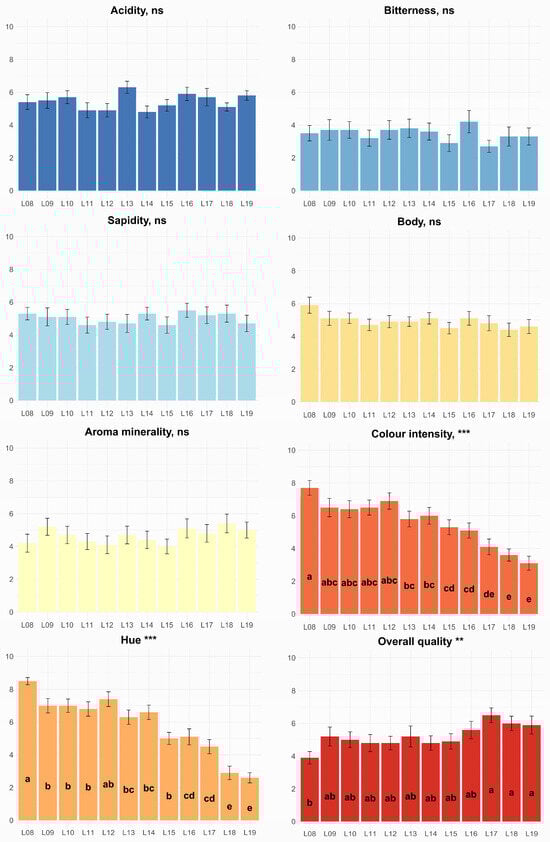
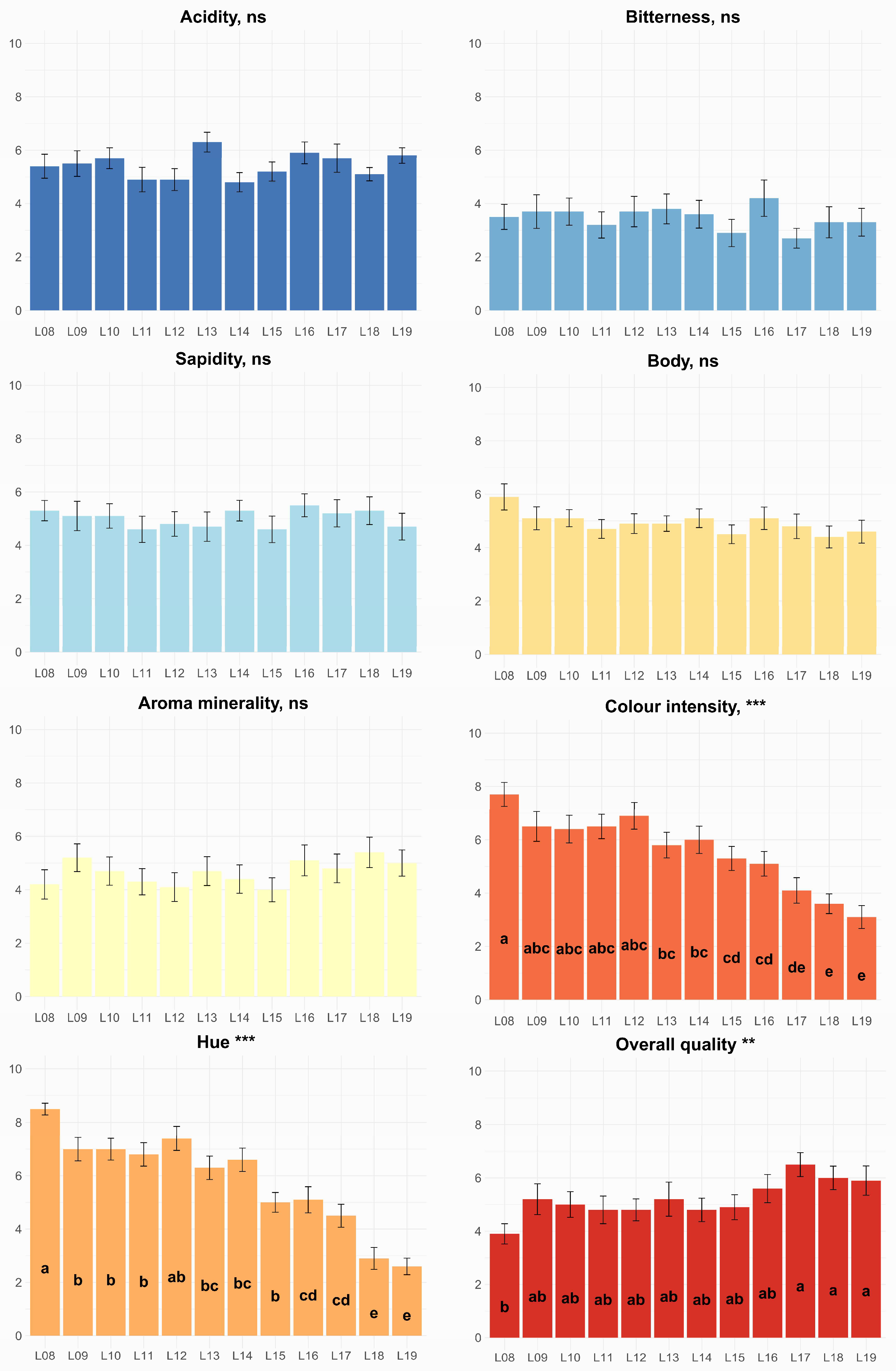
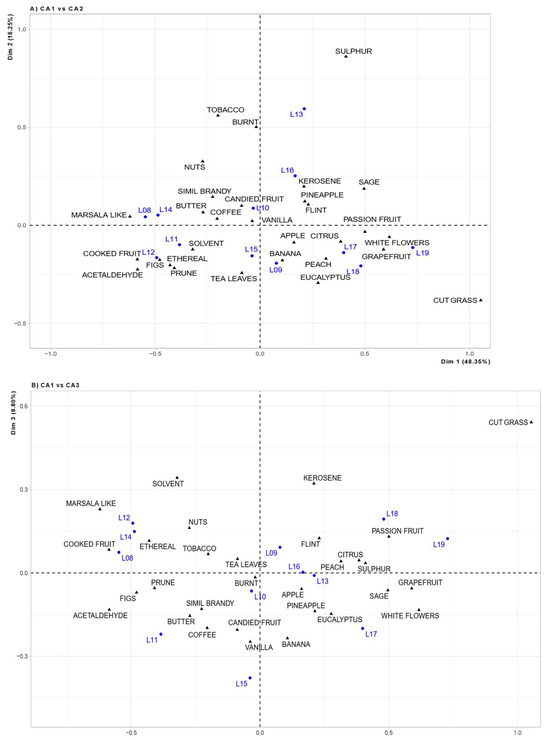
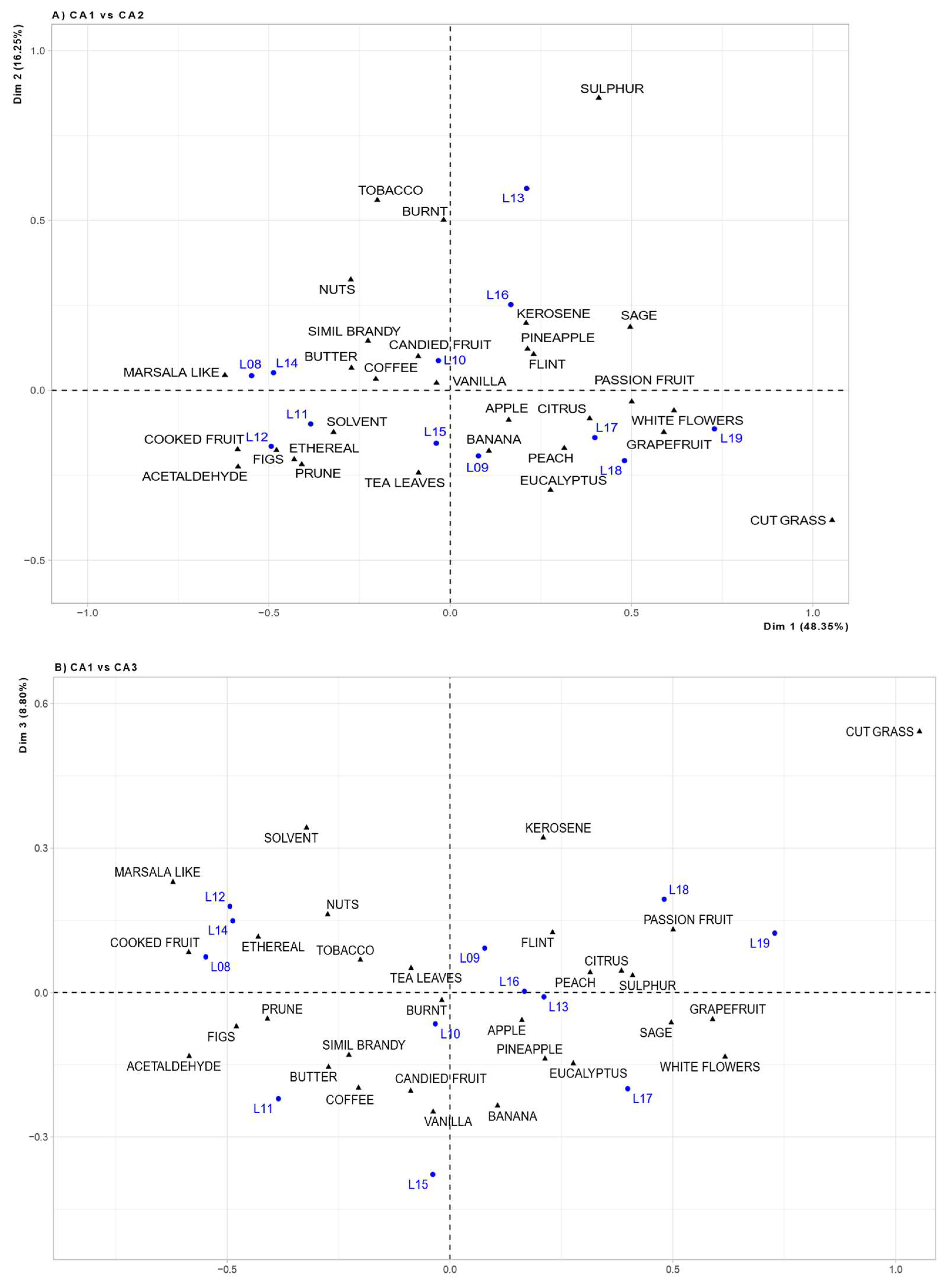
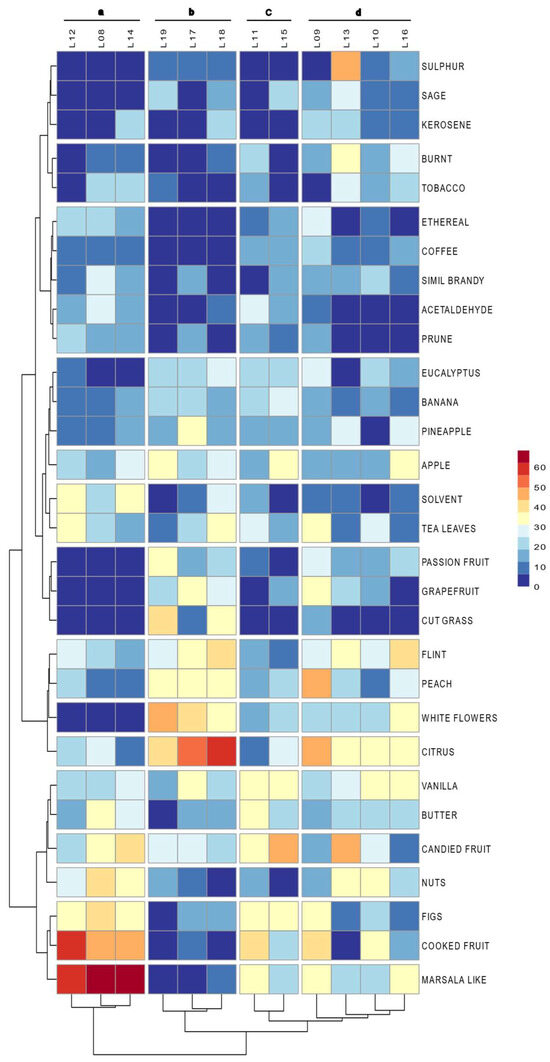
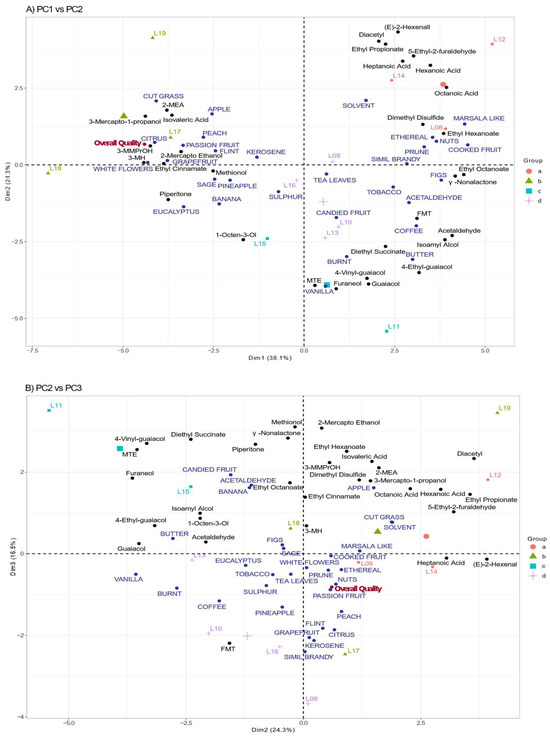

Disclaimer/Publisher’s Note: The statements, opinions and data contained in all publications are solely those of the individual author(s) and contributor(s) and not of MDPI and/or the editor(s). MDPI and/or the editor(s) disclaim responsibility for any injury to people or property resulting from any ideas, methods, instructions or products referred to in the content. |
© 2026 by the authors. Licensee MDPI, Basel, Switzerland. This article is an open access article distributed under the terms and conditions of the Creative Commons Attribution (CC BY) license.