Brief Report

Evaluating Alternatives to Fetal Bovine Serum in the Development of Advanced Biomaterial-Based Tumor Models: Overcoming Challenges in Biofabrication


by
Elizabeth Quansah
1,2,
Isabella Rivera
1,2 and
Sara Pedrón-Haba
1,2,3,4,*
1
Department of Chemical and Biomolecular Engineering, University of Illinois Urbana-Champaign, Urbana, IL 61801, USA
2
Carl R Woese Institute for Genomic Biology, University of Illinois Urbana-Champaign, Urbana, IL 61801, USA
3
Cancer Center at Illinois, University of Illinois Urbana-Champaign, Urbana, IL 61801, USA
4
Carle Illinois College of Medicine, University of Illinois Urbana-Champaign, Urbana, IL 61801, USA
*
Author to whom correspondence should be addressed.
Bioengineering 2026, 13(7), 842; https://doi.org/10.3390/bioengineering13070842

Submission received: 26 June 2026 / Revised: 13 July 2026 / Accepted: 20 July 2026 / Published: 22 July 2026
(This article belongs to the Special Issue 3D Cell Culture Systems: Current Technologies and Applications)

Abstract

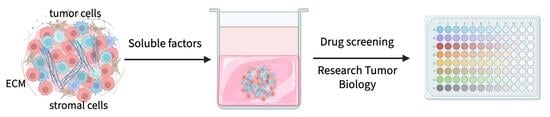
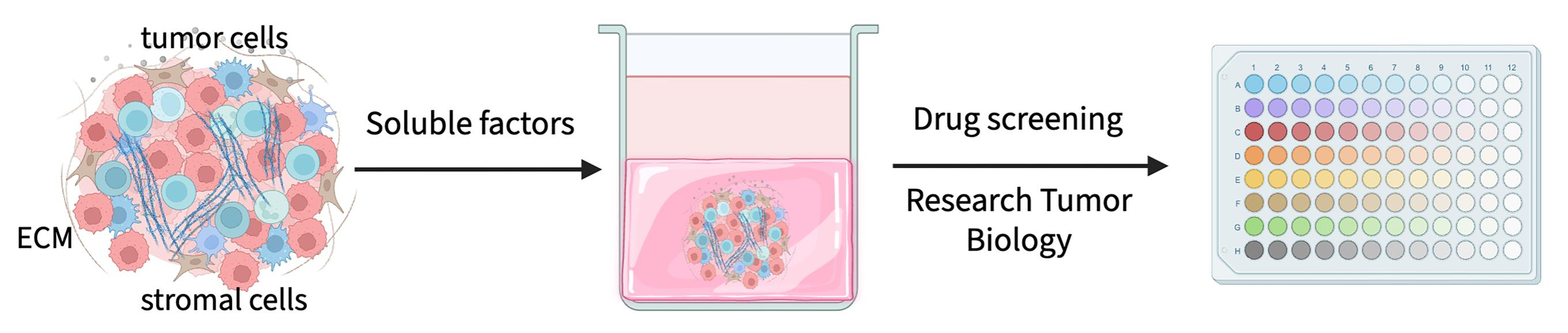
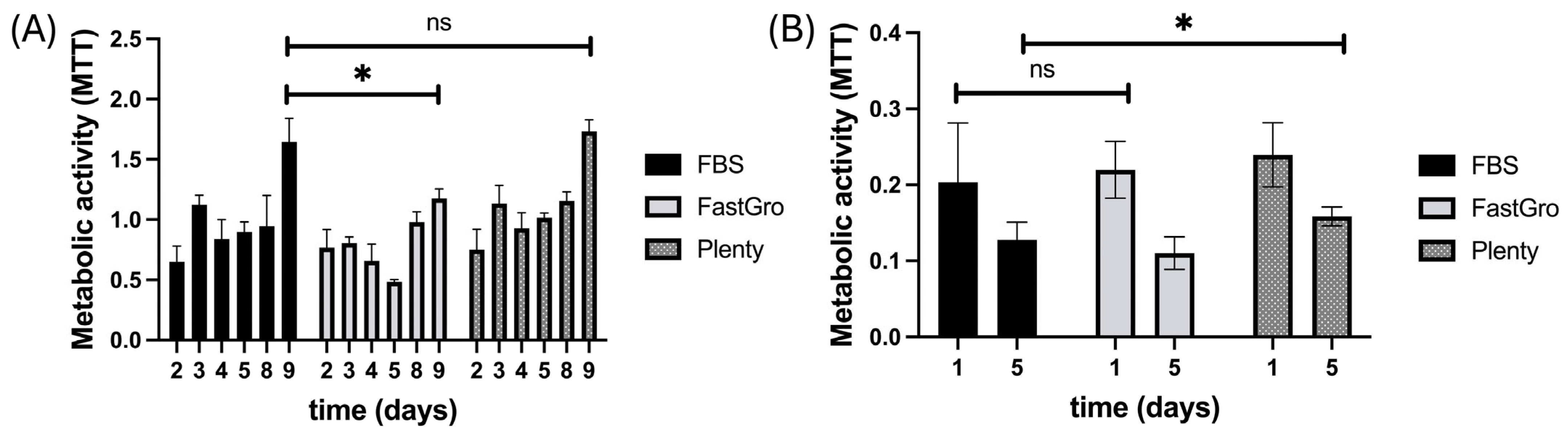
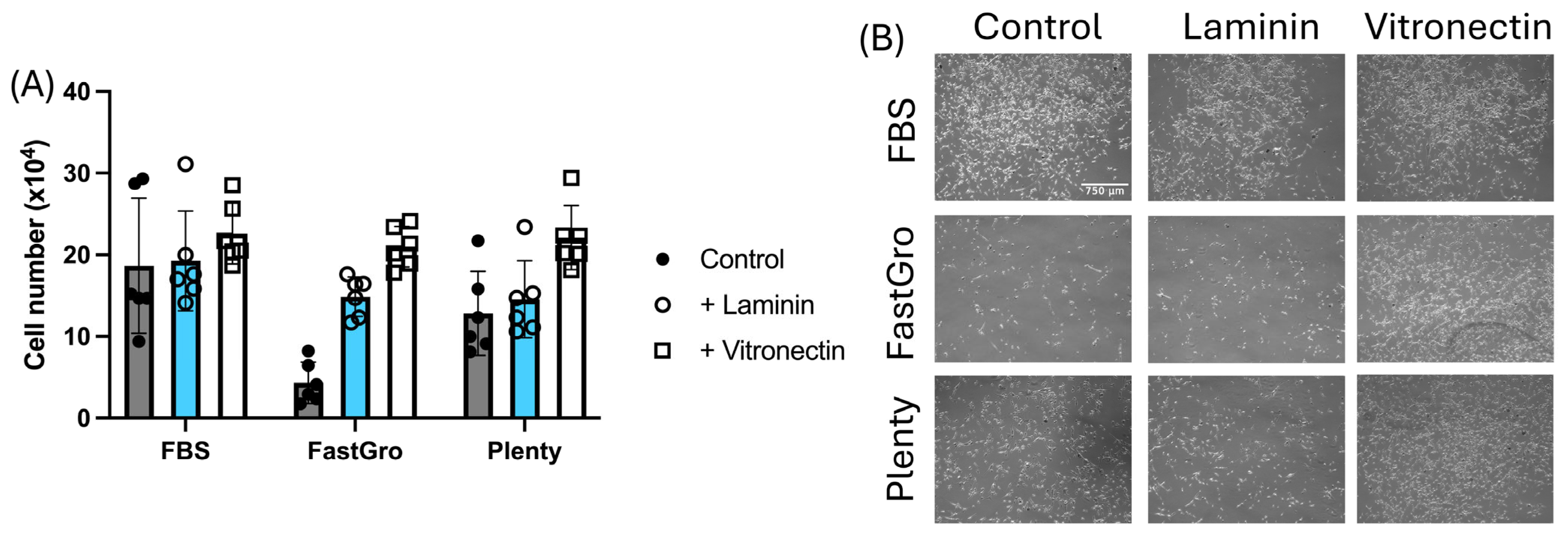
The development of next-generation organotypic platforms and disease models has proven crucial for the progress toward personalized therapeutic solutions in cancer. Fetal bovine serum (FBS) is a nutrient-rich cell culture supplement that contains essential factors for cell growth. However, in addition to ethical and environmental concerns, the manufacturing of tumor models requires a more standardized and controlled environment. This has led to the commercialization of several alternatives for the substitution of FBS, in the form of both animal-based and synthetic products. We here test the use of two alternatives for the culture of glioblastoma cells in the fabrication of organotypic tumor models, in combination with an insightful review of the existing literature, which allows for the elucidation of the most relevant challenges and potential solutions. We assess metabolic activity and cell proliferation in both 2D and 3D culture systems to determine the influence of serum on cell attachment and growth. The 3D culture systems are fabricated by photopolymerization of gelatin methacrylamide to achieve hydrogels that closely mimic the native tissue’s extracellular environment. We aim to advance our understanding of the role of culture media in these models and provide practical guidance to optimize experimental design and enhance reproducibility, thereby facilitating their broader adoption by the research community. These studies are key for the biofabrication of next-generation organoids and other advanced in vitro tumor models.
Keywords: glioblastoma; biomaterial-based models; cell culture supplements; cancer organoids; biofabrication glioblastoma; biomaterial-based models; cell culture supplements; cancer organoids; biofabrication
Graphical Abstract