Review

Tissue Engineering for Massive Bone Defects: The Volumetric Scaling Problem and Strategies to Solve It

1
United Lincolnshire Teaching Hospitals NHS Trust, Lincoln LN2 5QY, UK
2
Lancashire Teaching Hospitals NHS Foundation Trust, Preston PR2 9HT, UK
*
Author to whom correspondence should be addressed.
Bioengineering 2026, 13(7), 814; https://doi.org/10.3390/bioengineering13070814

Submission received: 25 June 2026 / Revised: 7 July 2026 / Accepted: 15 July 2026 / Published: 16 July 2026

Abstract

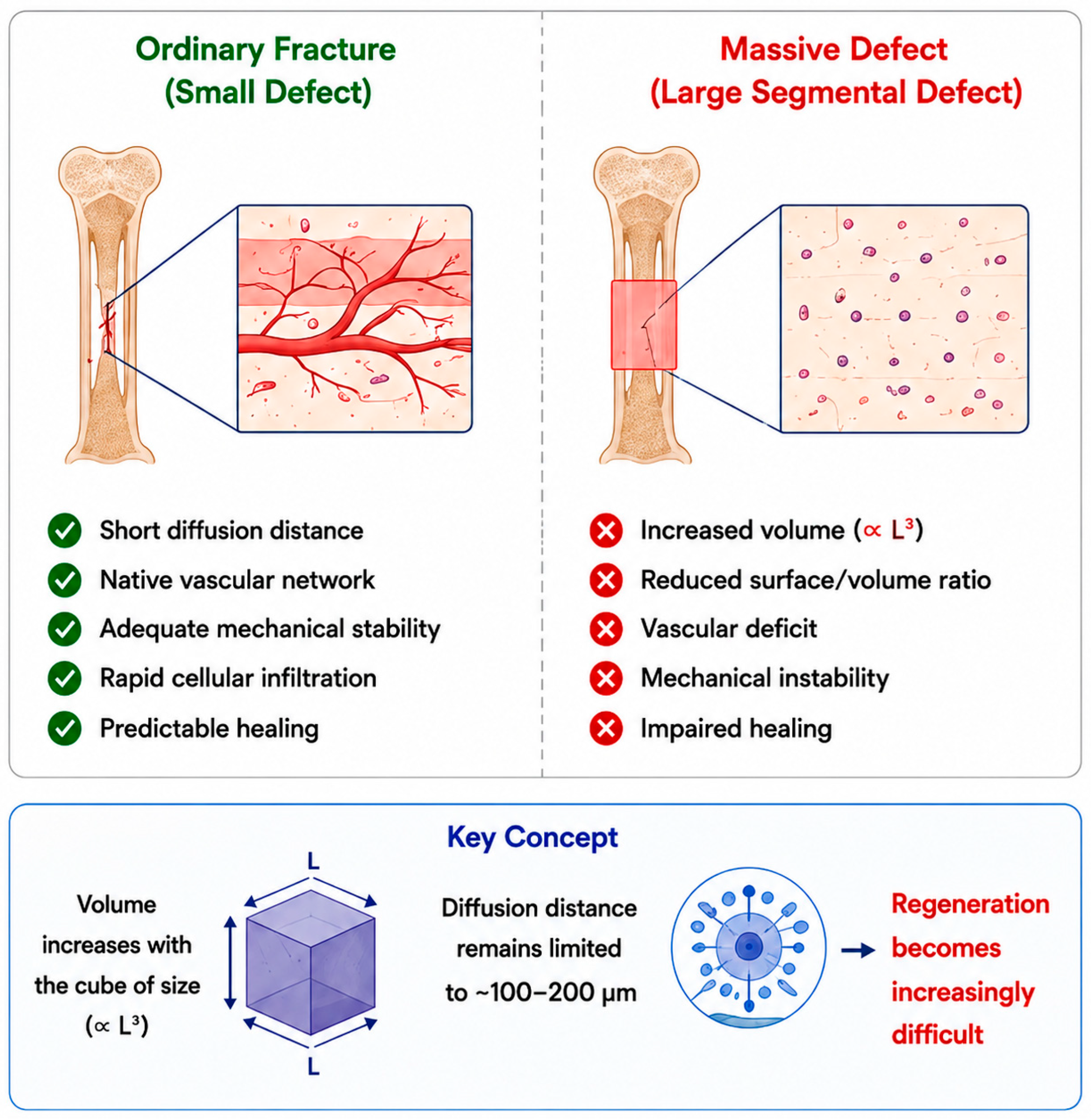
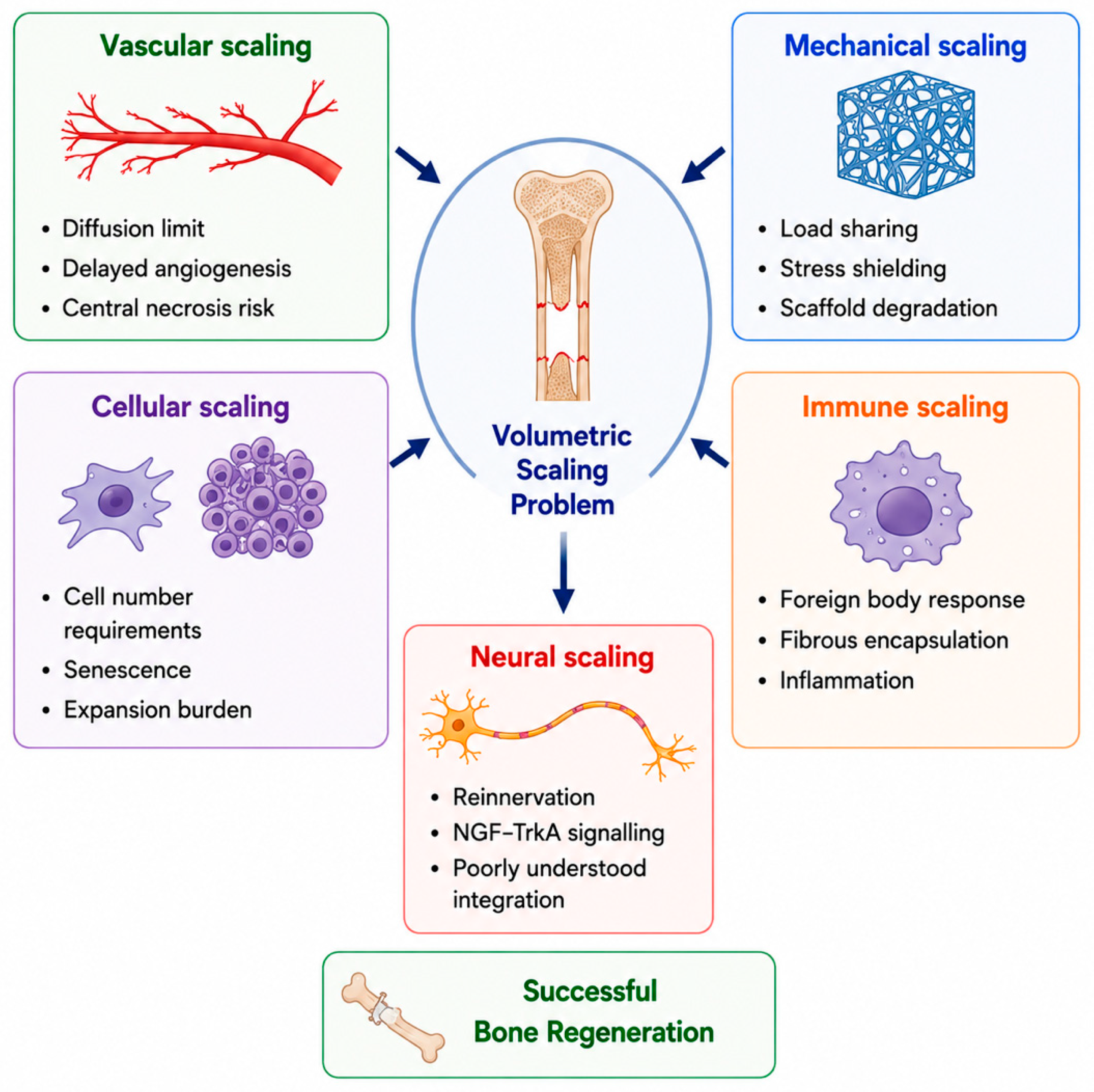
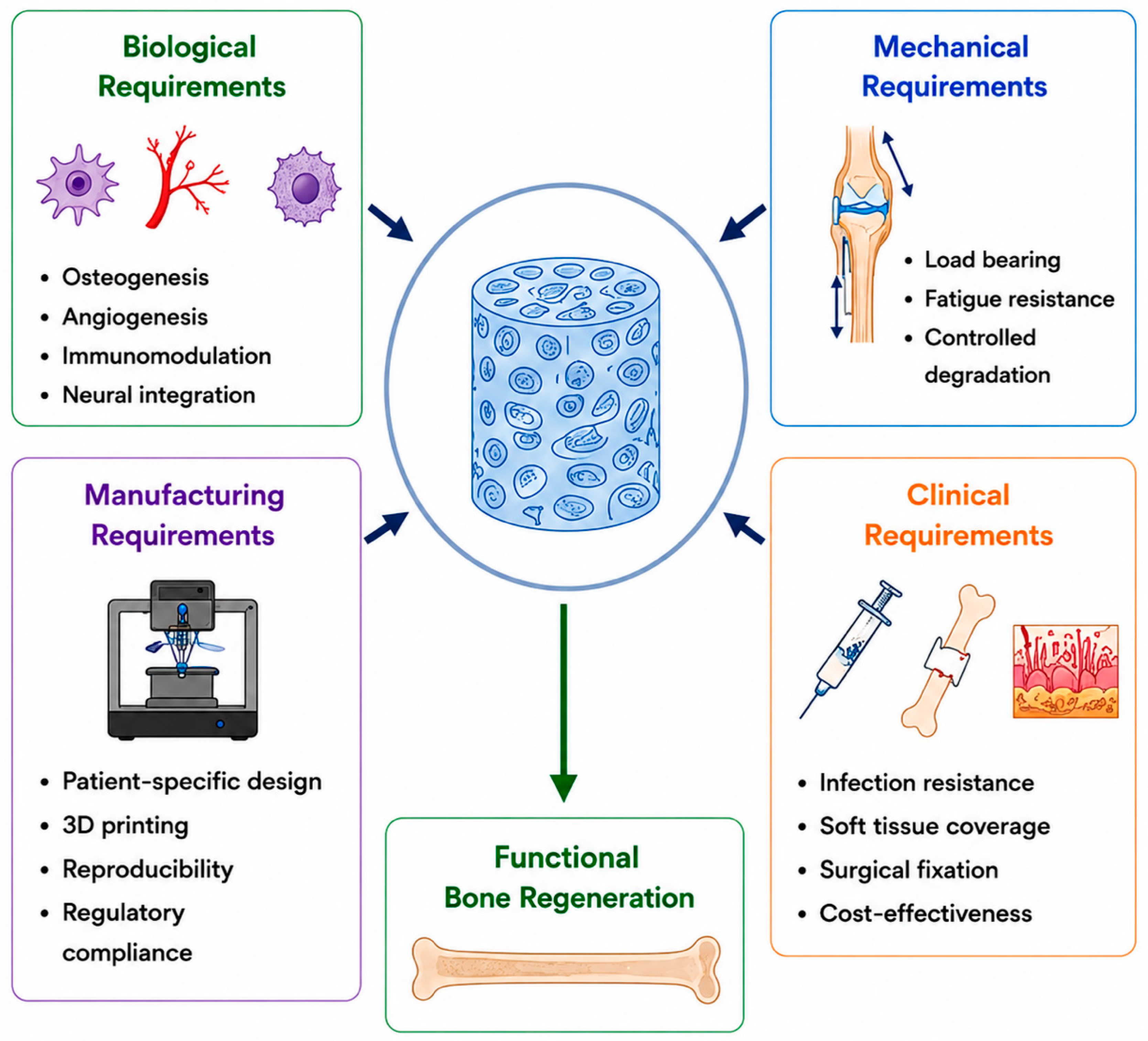
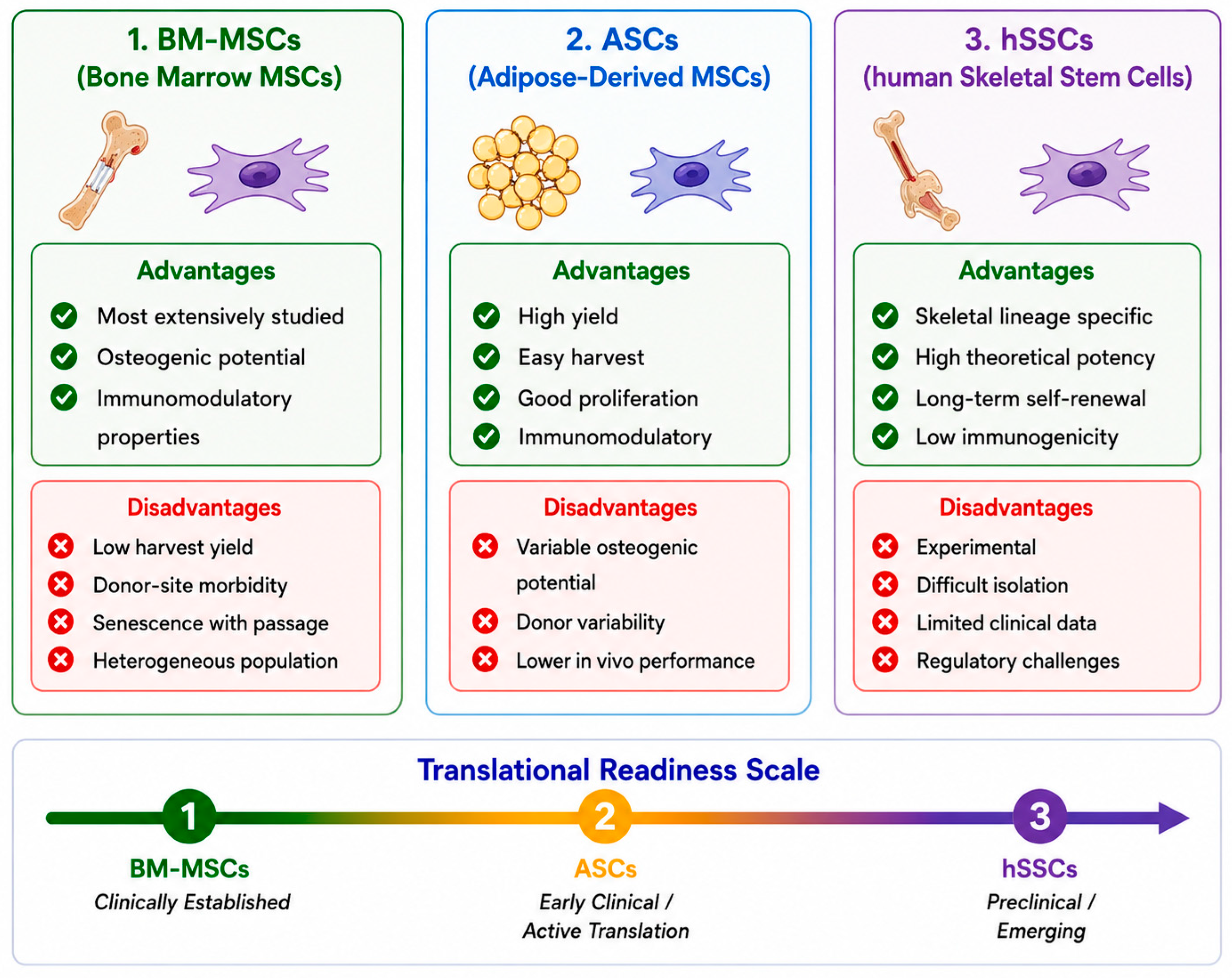
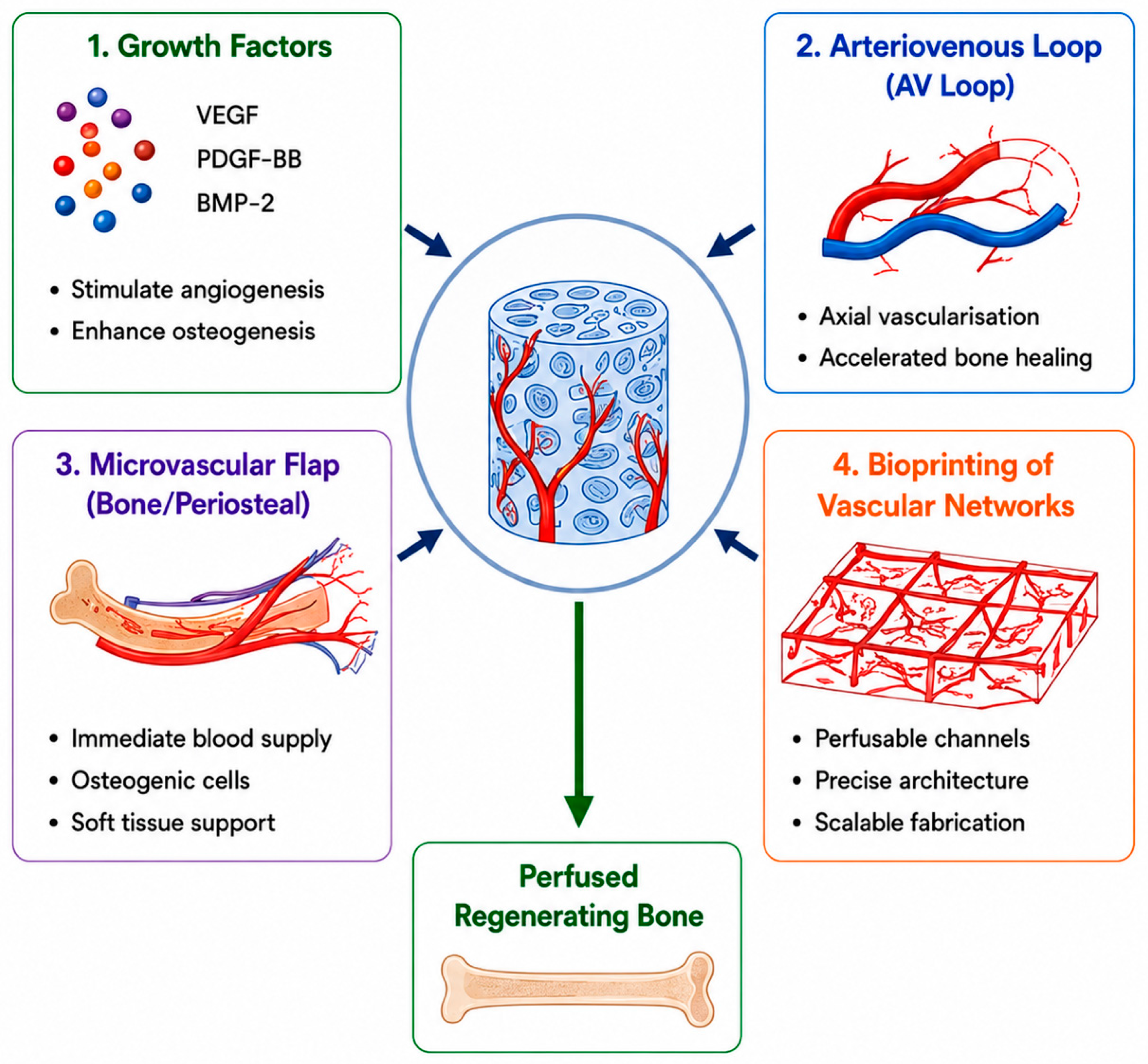
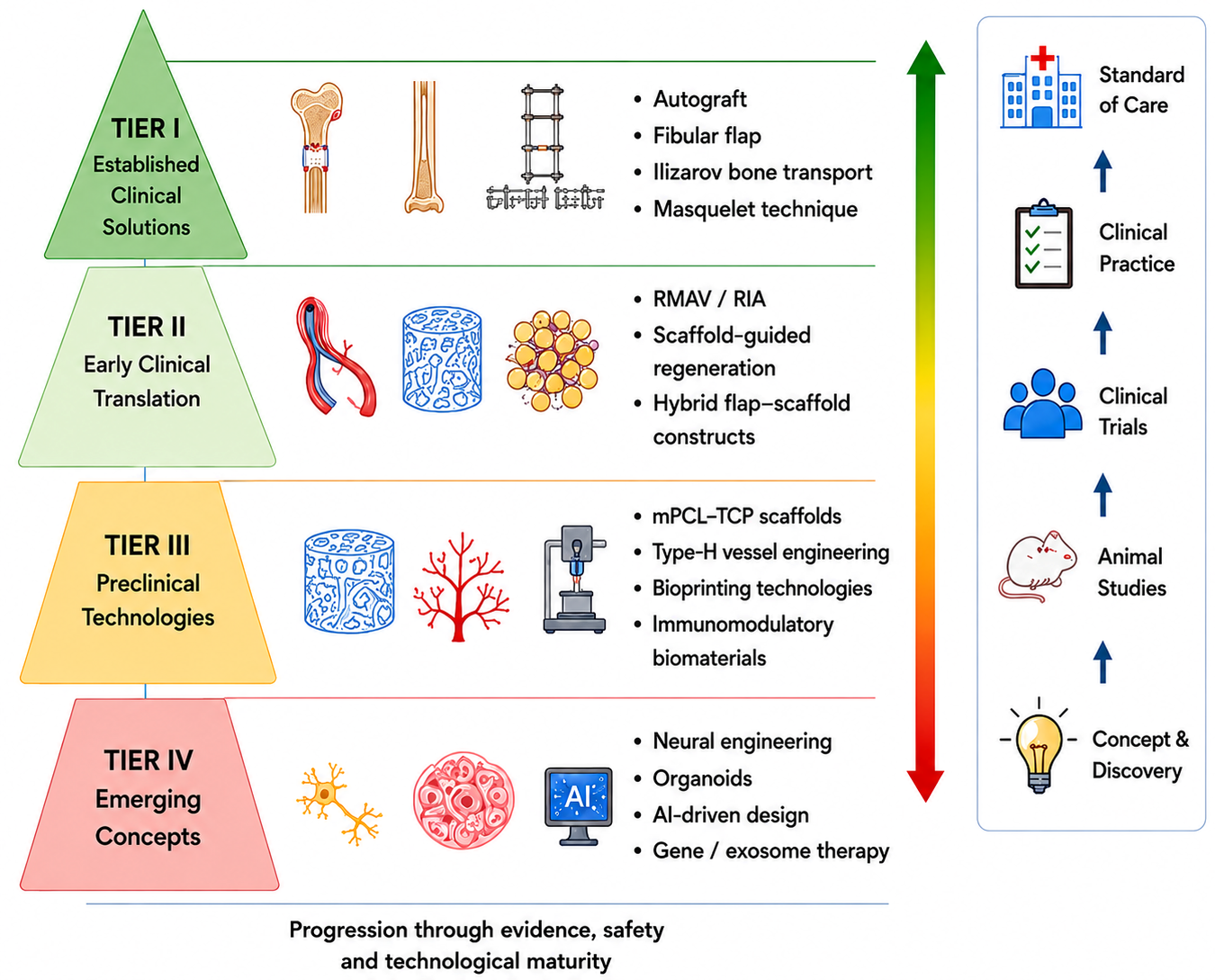
Massive segmental bone defects present significant challenges in orthopaedic and maxillofacial reconstruction. As defect size increases, the disparity between tissue volume and diffusion-limited biological processes becomes more pronounced. This narrative review analyses distinctions between centimetre-scale defects and conventional fractures and evaluates current tissue-engineering strategies in relation to vascularisation, osteogenesis, mechanical stability, immune response, neural integration, and manufacturability. This review synthesises evidence from scaffold design, cell-based approaches, growth factor delivery, type-H vessel biology, NGF–TrkA signalling, large-animal models, and early clinical translation. Current findings indicate that no single scaffold, cell source, or growth factor can reliably reproduce the coordinated biological and mechanical environment required for durable regeneration of human long bones. The strongest preclinical evidence is derived from ovine tibial models employing medical-grade polycaprolactone/β-tricalcium phosphate composites or mechanobiologically optimised titanium lattices. Human data remain limited to case reports and small early clinical series, including hybrid vascularised flap–scaffold reconstructions. Successful clinical translation will require patient-specific constructs that integrate rapid vascularisation, appropriate load sharing, immune-compatible degradation, infection control, and scalable manufacturing. Until robust comparative clinical evidence emerges, established reconstructive methods will remain the standard of care. Hybrid vascularised scaffold-guided strategies should be regarded as promising translational approaches rather than definitive solutions.
Keywords: massive bone defects; tissue engineering; vascularisation; scaffold design; mPCL-TCP; type-H vessels; sensory innervation; mechanobiology; large-animal models; clinical translation massive bone defects; tissue engineering; vascularisation; scaffold design; mPCL-TCP; type-H vessels; sensory innervation; mechanobiology; large-animal models; clinical translation