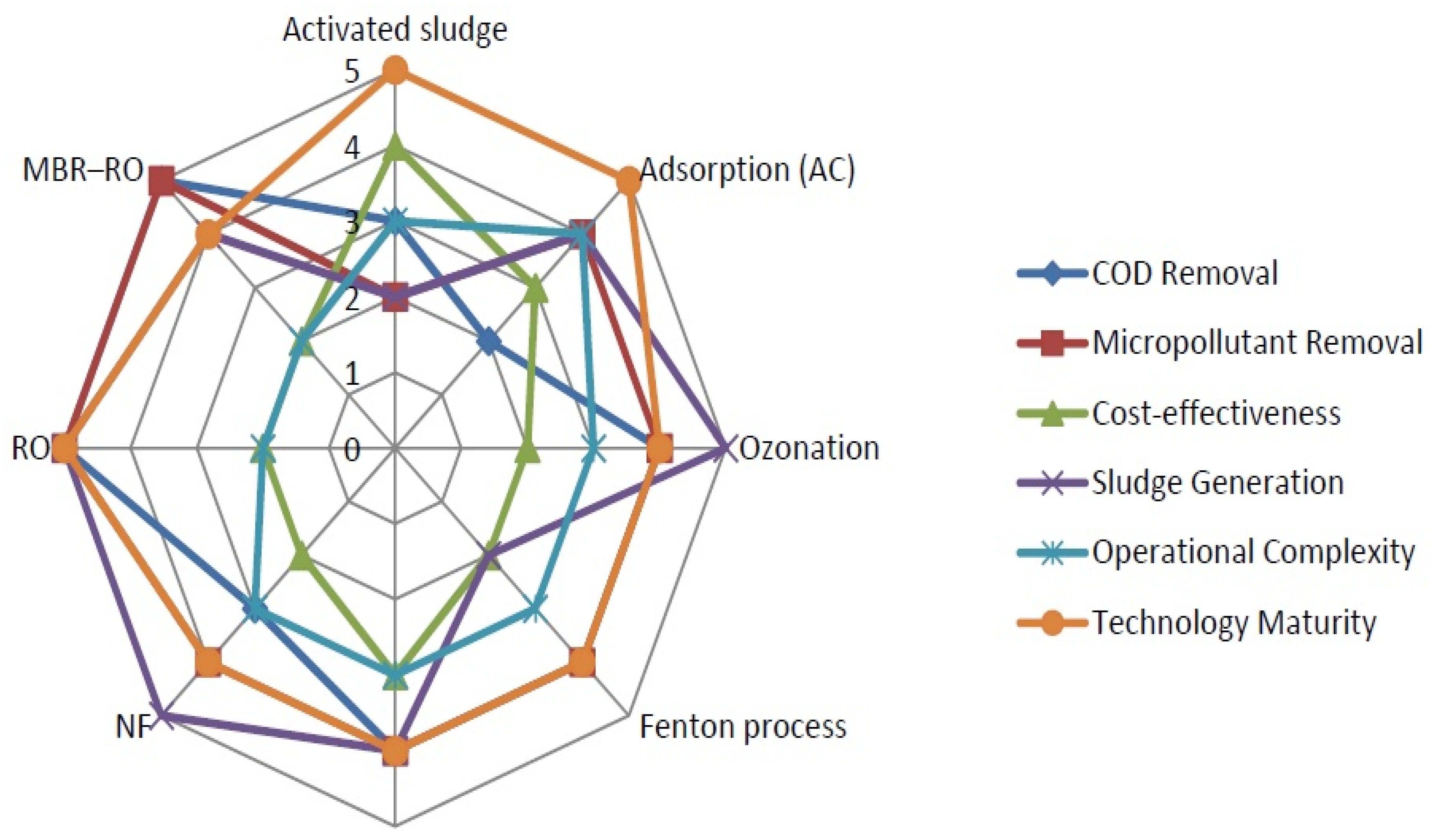

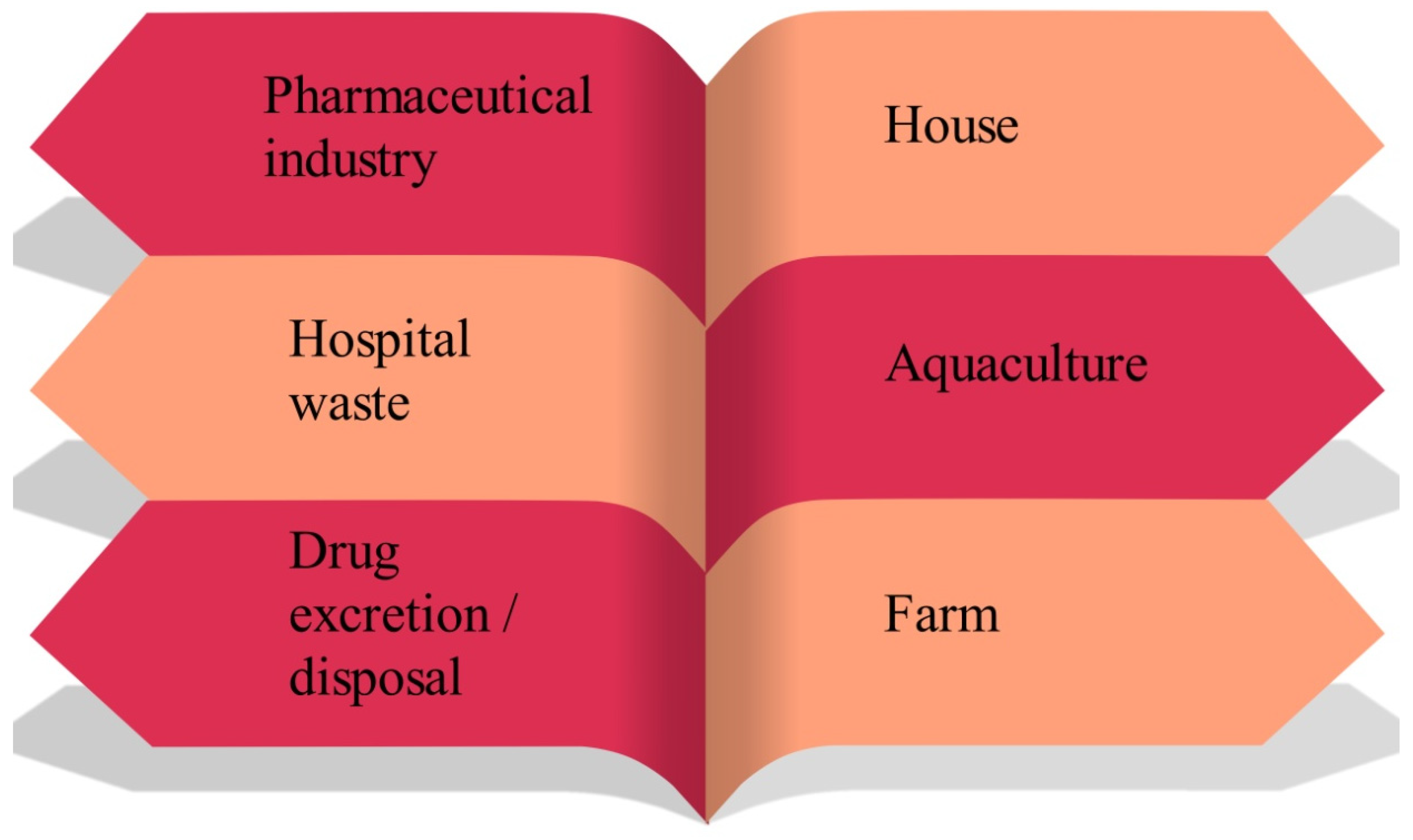
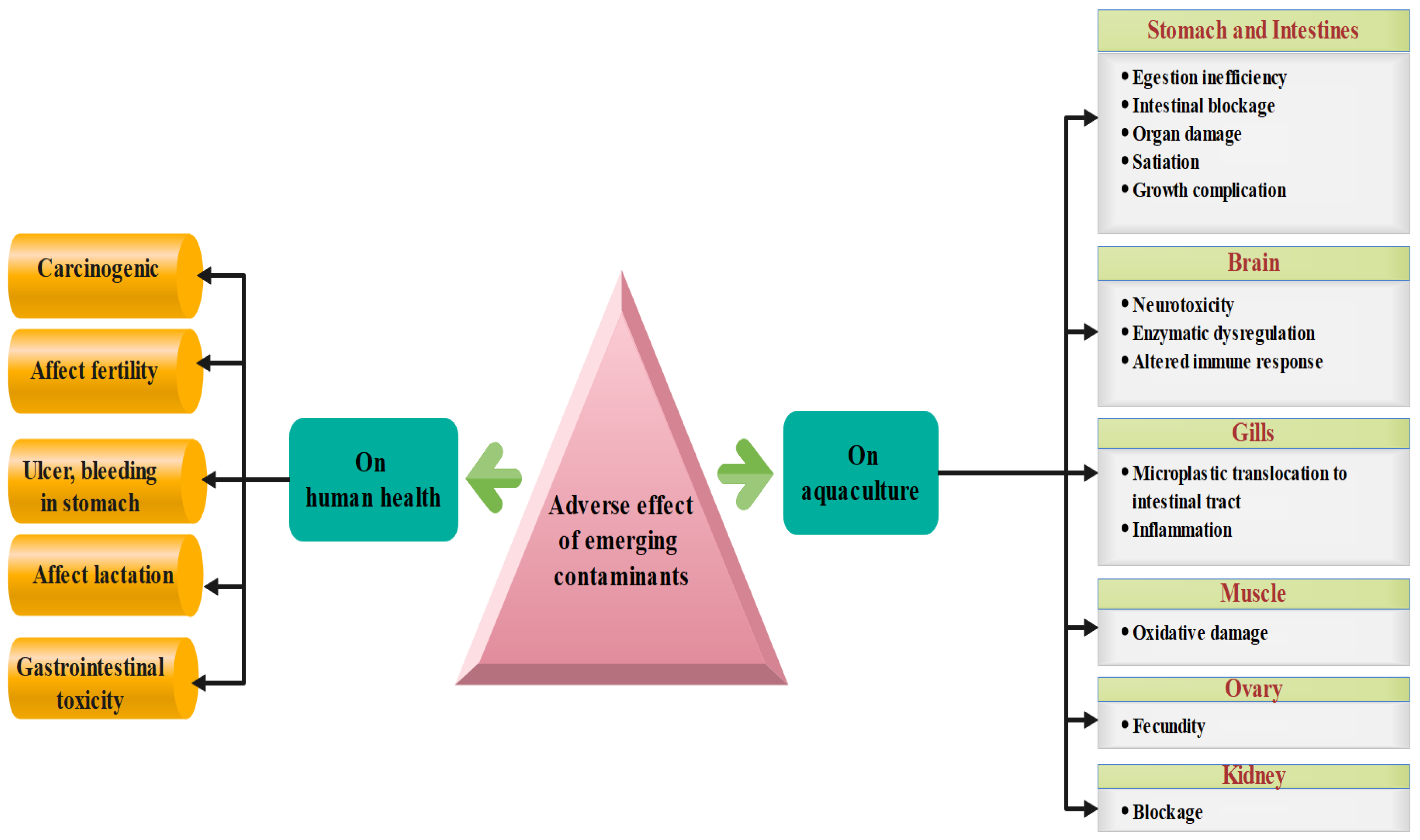
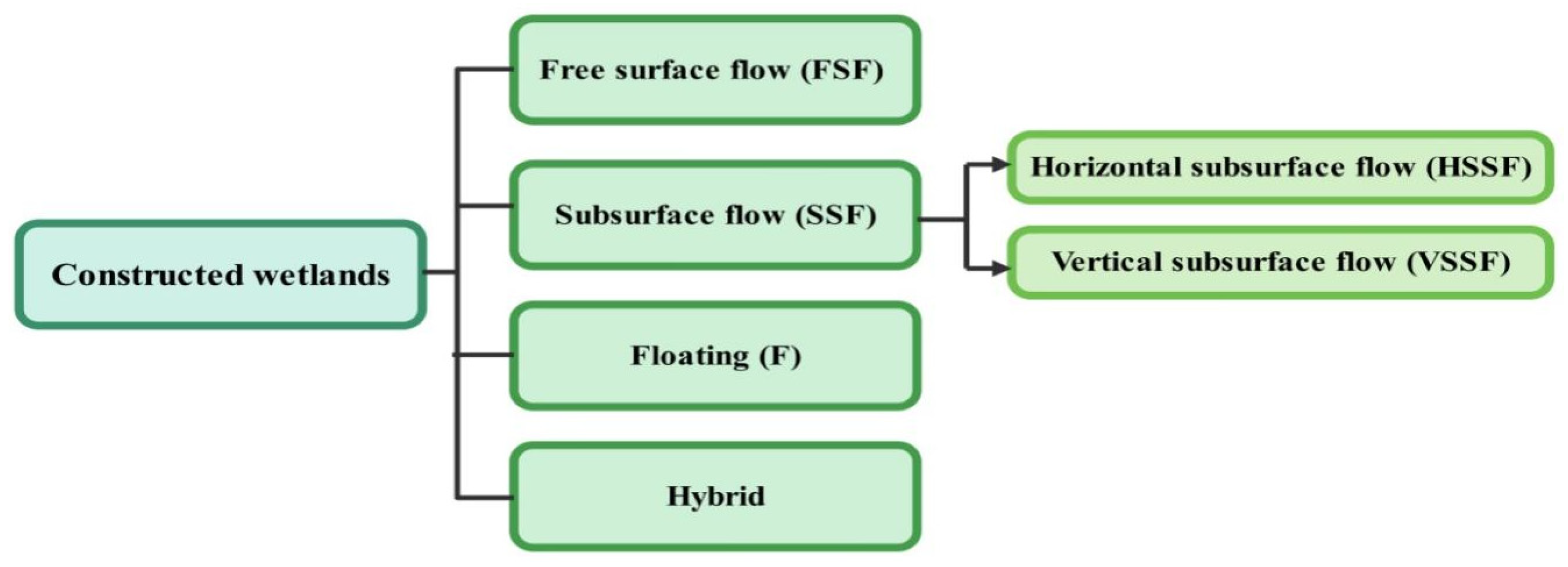
Pharmaceutical Wastewater as an Emerging Environmental Contaminant: Sustainable Treatment Strategies and Future Perspectives

 , ,
, ,  ,
, 

Abstract
1. Introduction
2. Sources of Pharmaceutical Contaminants
2.1. Pharmaceuticals Related to Human
2.2. Pharmaceuticals Related to Animals
3. Effects of Pharmaceutical Contaminants
4. Wastewater Treatment
4.1. Physical Processes for Removal of Pharmaceutical Contaminants
4.1.1. Adsorption
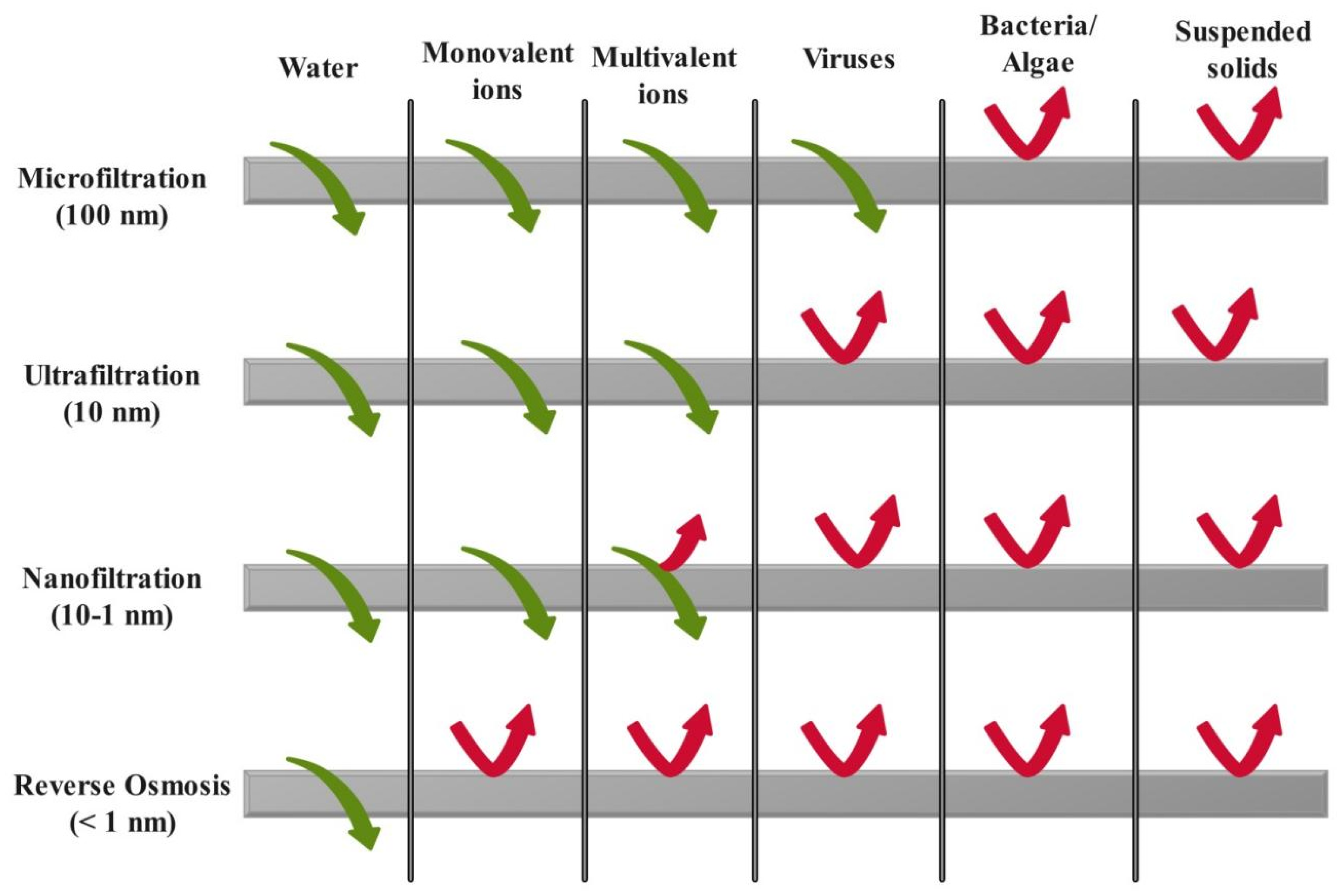
4.1.2. Membrane Filtration
Nano-Filtration (NF)
Microfiltration
Ultrafiltration (UF)
4.1.3. Reverse Osmosis (RO)
4.1.4. Forward Osmosis (FO)
4.2. Biological Processes for Removal of Pharmaceutical Contaminants
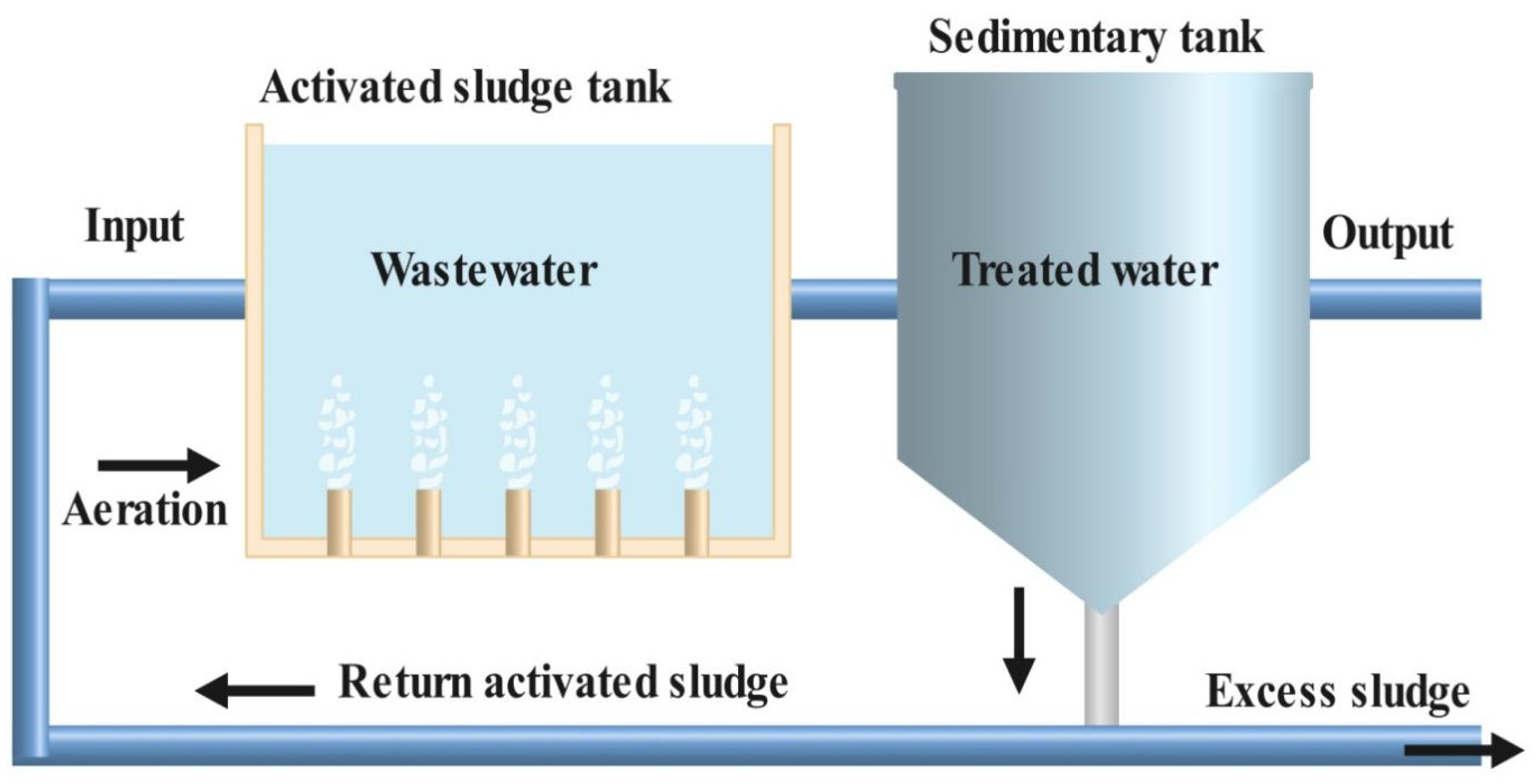
4.2.1. Aerobic and Anaerobic Treatment
4.2.2. Bacteria and Microalgae
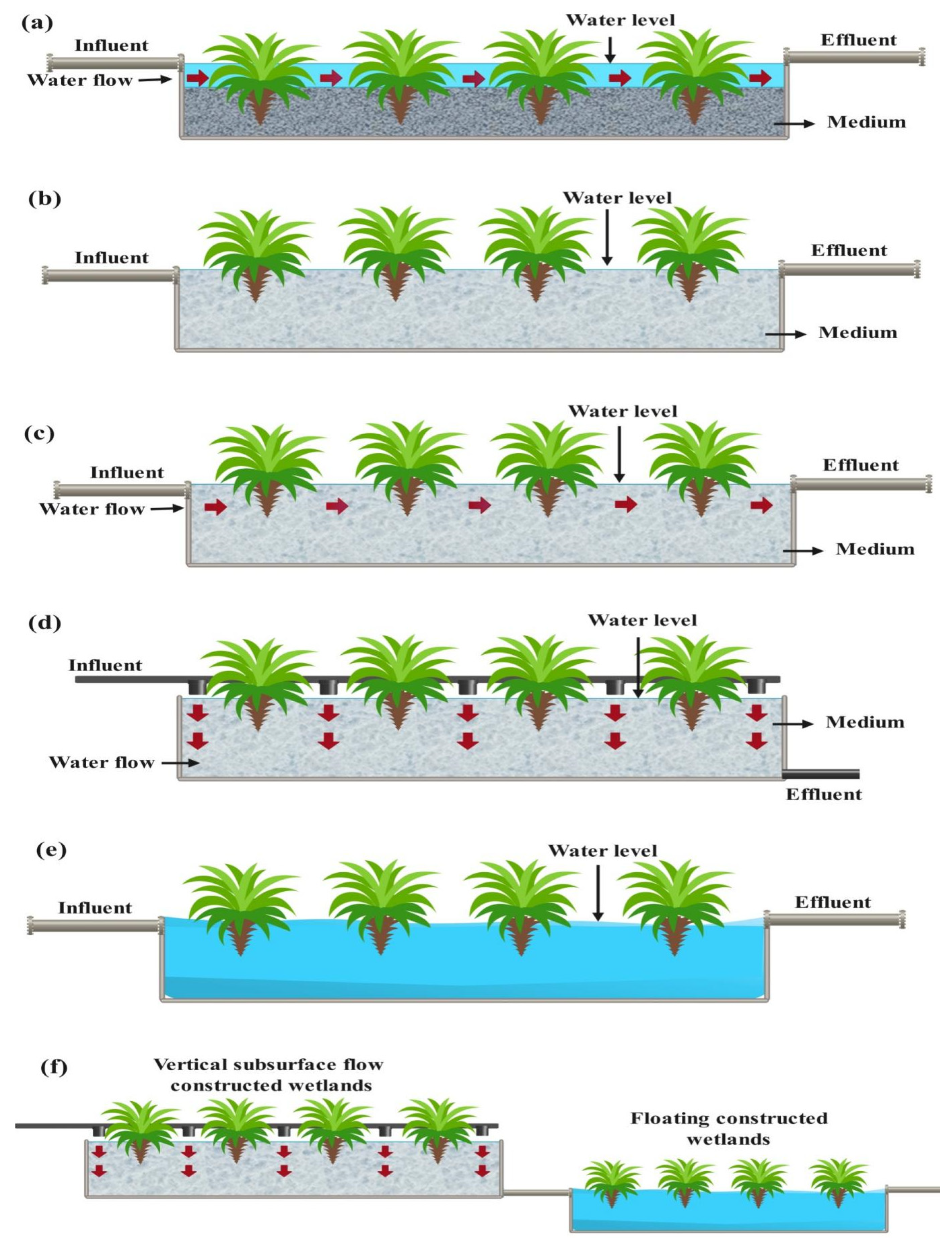
4.2.3. Constructed Wetland (CW)
4.3. Advanced Oxidation Process (AOP)
4.3.1. Photolysis
4.3.2. Photo-Fenton
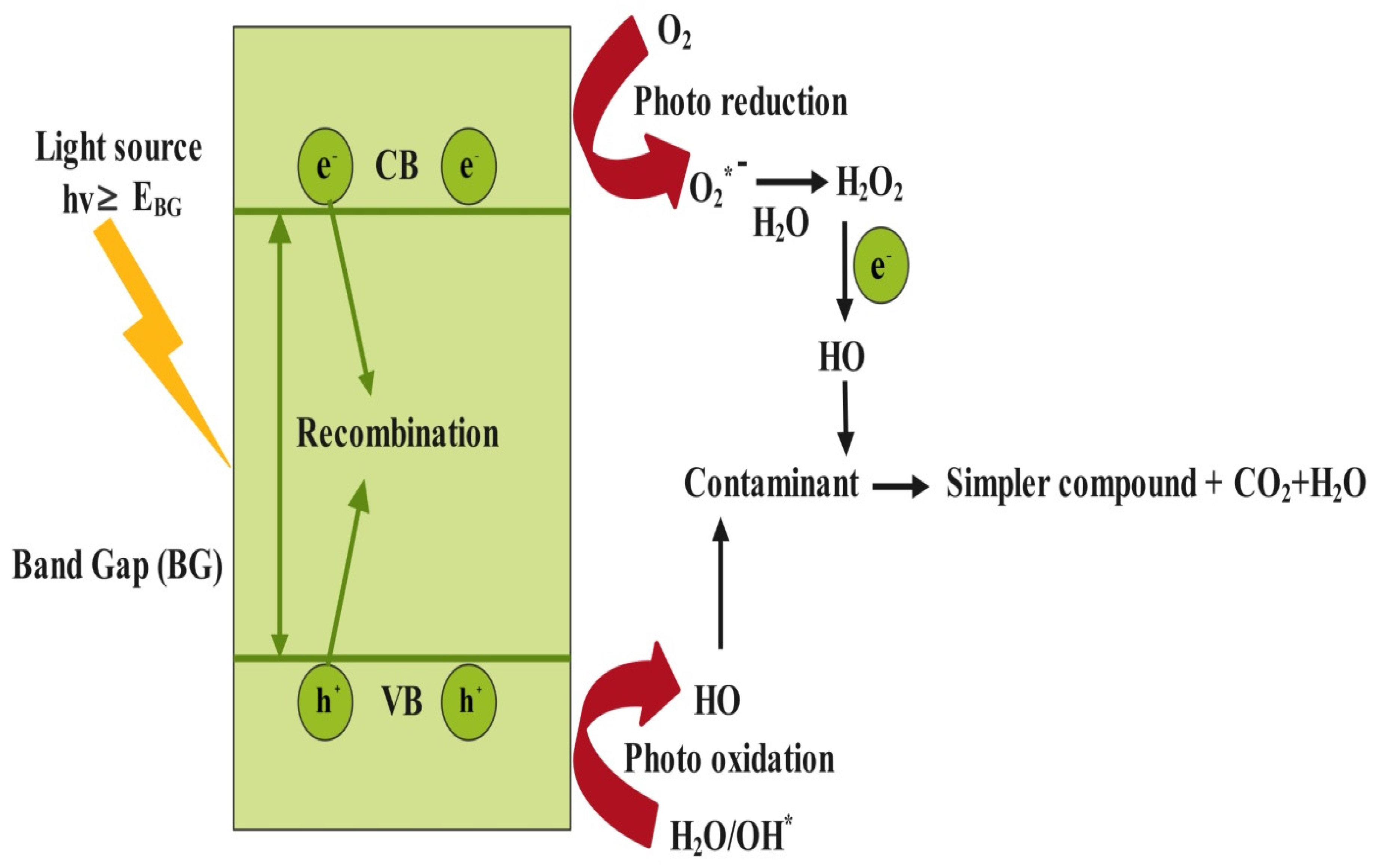
4.3.3. Photocatalysis
4.3.4. Ozonation
4.4. Hybrid Processes for Pharmaceutical Contaminants Removal
4.4.1. Hybrid AOP Techniques
4.4.2. Hybrid Biological Technology
4.4.3. Cost Comparison of Various Treatment Methods
5. Conclusions and Future Scope
Author Contributions
Funding
Institutional Review Board Statement
Informed Consent Statement
Data Availability Statement
Acknowledgments
Conflicts of Interest
Abbreviations
| AC | Activated carbon |
| AOP | Advanced oxidation process |
| BOD | Biological oxygen demand |
| COD | Chemical oxygen demand |
| CW | Constructed wetland |
| EDC | Endocrine-disrupting compounds |
| FO | Forward osmosis |
| MBR | Membrane bioreactor |
| MF | Microfiltration |
| MOF | Metal–organic framework |
| NF | Nanofiltration |
| NSAID | Nonsteroidal anti-inflammatory drugs |
| RBC | Rotating biological contactor |
| RO | Reverse osmosis |
| UF | Ultrafiltration |
| WWTP | Wastewater treatment plant |
References
- Browne, A.J.; Chipeta, M.G.; Haines-Woodhouse, G.; Kumaran, E.P.A.; Hamadani, B.H.K.; Zaraa, S.; Henry, N.J.; Deshpande, A.; Reiner, R.C.; Day, N.P.J.; et al. Global antibiotic consumption and usage in humans, 2000–2018: A spatial modelling study. Lancet Planet. Health 2021, 5, e893–e904. [Google Scholar] [CrossRef]
- Strade, E.; Kalnina, D.; Kulczycka, J. Water efficiency and safe re-use of different grades of water-Topical issues for the pharmaceutical industry. Water Resour. Ind. 2020, 24, 100132. [Google Scholar] [CrossRef]
- Casabella-Font, O.; Riva, M.; Balcázar, J.L.; Radjenovic, J.; Pijuan, M. Distinctive effects of graphene oxide and reduced graphene oxide on methane production kinetics and pharmaceuticals removal in anaerobic reactors. Bioresour. Technol. 2024, 403, 130849. [Google Scholar] [CrossRef] [PubMed]
- Adeoye, J.B.; Tan, Y.H.; Lau, S.Y.; Tan, Y.Y.; Chiong, T.; Mubarak, N.M.; Khalid, M. Advanced oxidation and biological integrated processes for pharmaceutical wastewater treatment: A review. J. Environ. Manag. 2024, 353, 120170. [Google Scholar] [CrossRef]
- Tang, K.; Ooi, G.T.H.; Torresi, E.; Kaarsholm, K.M.S.; Hambly, A.; Sundmark, K.; Lindholst, S.; Sund, C.; Kragelund, C.; Christensson, M.; et al. Municipal wastewater treatment targeting pharmaceuticals by a pilot-scale hybrid attached biofilm and activated sludge system (HybasTM). Chemosphere 2020, 259, 127397. [Google Scholar] [CrossRef]
- Tiwari, G.N.; Dhiman, N.K. Performance study of a high temperature distillation system. Energy Convers. Manag. 1991, 32, 283–291. [Google Scholar] [CrossRef]
- Kumar, R.; Awino, E.; Njeri, D.W.; Basu, A.; Chattaraj, S.; Nayak, J.; Roy, S.; Khan, G.A.; Jeon, B.H.; Ghosh, A.K.; et al. Advancing pharmaceutical wastewater treatment: A comprehensive review on application of catalytic membrane reactor-based hybrid approaches. J. Water Process Eng. 2024, 58, 104838. [Google Scholar] [CrossRef]
- Kyzas, G.Z.; Fu, J.; Lazaridis, N.K.; Bikiaris, D.N.; Matis, K.A. New approaches on the removal of pharmaceuticals from wastewaters with adsorbent materials. J. Mol. Liq. 2015, 209, 87–93. [Google Scholar] [CrossRef]
- Patel, S.K.; Singh, D.; Singh, D.; Kumar, P.; Singh, D. Physicochemical Parametric and Water Quality Index (WQI) Analysis of Gomti River, Lucknow using MDSSS. J. Indian Chem. Soc. 2020, 97, 1725–1730. [Google Scholar]
- Karungamye, P.N. Methods used for removal of pharmaceuticals from wastewater: A review. Appl. J. Environ. Eng. Sci. 2020, 6, 412–428. [Google Scholar]
- Taheran, M.; Brar, S.K.; Verma, M.; Surampalli, R.Y.; Zhang, T.C.; Valero, J.R. Membrane processes for removal of pharmaceutically active compounds (PhACs) from water and wastewaters. Sci. Total Environ. 2016, 547, 60–77. [Google Scholar] [CrossRef]
- Lindholm-Lehto, P.C.; Ahkola, H.S.J.; Knuutinen, J.S.; Herve, S.H. Widespread occurrence and seasonal variation of pharmaceuticals in surface waters and municipal wastewater treatment plants in central Finland. Environ. Sci. Pollut. Res. 2016, 23, 7985–7997. [Google Scholar] [CrossRef] [PubMed]
- Fang, T.H.; Lin, C.W.; Kao, C.H. Occurrence and distribution of pharmaceutical compounds in the Danshuei River Estuary and the Northern Taiwan Strait. Mar. Pollut. Bull. 2019, 146, 509–520. [Google Scholar] [CrossRef] [PubMed]
- Agunbiade, F.O.; Moodley, B. Occurrence and distribution pattern of acidic pharmaceuticals in surface water, wastewater, and sediment of the Msunduzi River, Kwazulu-Natal, South Africa. Environ. Toxicol. Chem. 2016, 35, 36–46. [Google Scholar] [CrossRef] [PubMed]
- Phonsiri, V.; Choi, S.; Nguyen, C.; Tsai, Y.L.; Coss, R.; Kurwadkar, S. Monitoring occurrence and removal of selected pharmaceuticals in two different wastewater treatment plants. SN Appl. Sci. 2019, 1, 798. [Google Scholar] [CrossRef]
- Giebułtowicz, J.; Nałęcz-Jawecki, G.; Harnisz, M.; Kucharski, D.; Korzeniewska, E.; Płaza, G. Environmental risk and risk of resistance selection due to antimicrobials’ occurrence in two Polish wastewater treatment plants and receiving surface water. Molecules 2020, 25, 1470. [Google Scholar] [CrossRef] [PubMed]
- Frédéric, O.; Yves, P. Pharmaceuticals in hospital wastewater: Their ecotoxicity and contribution to the environmental hazard of the effluent. Chemosphere 2014, 115, 31–39. [Google Scholar] [CrossRef]
- Verlicchi, P.; Galletti, A.; Petrovic, M.; BarcelÓ, D. Hospital effluents as a source of emerging pollutants: An overview of micropollutants and sustainable treatment options. J. Hydrol. 2010, 389, 416–428. [Google Scholar] [CrossRef]
- Patel, S.K.; Singh, D.; Devnani, G.L.; Sinha, S.; Singh, D. Potable water production via desalination technique using solar still integrated with partial cooling coil condenser. Sustain. Energy Technol. Assess. 2021, 43, 100927. [Google Scholar] [CrossRef]
- Welz, P.J.; De Jonge, N.; Lilly, M.; Kaira, W.; Mpofu, A.B. Integrated biological system for remediation and valorization of tannery wastewater: Focus on microbial communities responsible for methanogenesis and sulfidogenesis. Bioresour. Technol. 2024, 395, 130411. [Google Scholar] [CrossRef]
- Hoang, A.T.; Goldfarb, J.L.; Foley, A.M.; Lichtfouse, E.; Kumar, M.; Xiao, L.; Ahmed, S.F.; Said, Z.; Luque, R.; Bui, V.G.; et al. Production of biochar from crop residues and its application for anaerobic digestion. Bioresour. Technol. 2022, 363, 127970. [Google Scholar] [CrossRef]
- Sarkar, D.; Panicker, T.F.; Mishra, R.K.; Kini, M.S. A comprehensive review of production and characterization of biochar for removal of organic pollutants from water and wastewater. Water-Energy Nexus 2024, 7, 243–265. [Google Scholar] [CrossRef]
- Yao, M.; Duan, L.; Wei, J.; Qian, F.; Hermanowicz, S.W. Carbamazepine removal from wastewater and the degradation mechanism in a submerged forward osmotic membrane bioreactor. Bioresour. Technol. 2020, 314, 123732. [Google Scholar] [CrossRef] [PubMed]
- Samal, K.; Mahapatra, S.; Ali, M.H. Pharmaceutical wastewater as Emerging Contaminants (EC): Treatment technologies, impact on environment and human health. Energy Nexus 2022, 6, 100076. [Google Scholar] [CrossRef]
- Eliesen, G.A.M.; van Hove, H.; Meijer, M.H.; van den Broek, P.H.H.; Pertijs, J.; Roeleveld, N.; van Drongelen, J.; Russel, F.G.M.; Greupink, R. Toxicity of anticancer drugs in human placental tissue explants and trophoblast cell lines. Arch. Toxicol. 2021, 95, 557–571. [Google Scholar] [CrossRef]
- Zhang, X.X.; Zhang, T.; Fang, H.H.P. Antibiotic resistance genes in water environment. Appl. Microbiol. Biotechnol. 2009, 82, 397–414. [Google Scholar] [CrossRef]
- Ma, Z.; Wu, H.; Zhang, K.; Xu, X.; Wang, C.; Zhu, W.; Wu, W. Long-term low dissolved oxygen accelerates the removal of antibiotics and antibiotic resistance genes in swine wastewater treatment. Chem. Eng. J. 2018, 334, 630–637. [Google Scholar] [CrossRef]
- Sonwani, R.K.; Pandey, S.; Yadav, S.K.; Giri, B.S.; Katiyar, V.; Singh, R.S.; Rai, B.N. Construction of integrated system for the treatment of Acid orange 7 dye from wastewater: Optimization and growth kinetic study. Bioresour. Technol. 2021, 337, 125478. [Google Scholar] [CrossRef]
- Vikrant, K.; Giri, B.S.; Raza, N.; Roy, K.; Kim, K.H.; Rai, B.N.; Singh, R.S. Recent advancements in bioremediation of dye: Current status and challenges. Bioresour. Technol. 2018, 253, 355–367. [Google Scholar] [CrossRef]
- Ghazal, H.; Koumaki, E.; Hoslett, J.; Malamis, S.; Katsou, E.; Barcelo, D.; Jouhara, H. Insights into current physical, chemical and hybrid technologies used for the treatment of wastewater contaminated with pharmaceuticals. J. Clean. Prod. 2022, 361, 132079. [Google Scholar] [CrossRef]
- Singh, S.; Srivastav, A.D.; Singh, D.; Mishra, B.; Chandra, A.K.; Singh, D.; Singh, D. Standardization and Hypoglycemic Activity of Hydro-Alcoholic Leaves Extract of Morus alba. Der Pharma Chem. 2022, 14, 1–15. [Google Scholar]
- Singh, D.; Singh, D.; Mishra, V.; Kushwaha, J.; Dev, R.; Patel, S.K.; Shankar, R.; Giri, B.S. Sustainability issues of solar desalination hybrid systems integrated with heat exchangers for the production of drinking water: A review. Desalination 2023, 566, 116930. [Google Scholar] [CrossRef]
- Woodley, J.M. Innovative process development and production concepts for small-molecule API manufacturing. In Computer Aided Chemical Engineering, 1st ed.; Elsevier B.V.: Amsterdam, The Netherlands, 2018. [Google Scholar] [CrossRef]
- Flanagan, T. Potential for pharmaceutical excipients to impact absorption: A mechanistic review for BCS Class 1 and 3 drugs. Eur. J. Pharm. Biopharm. 2019, 141, 130–138. [Google Scholar] [CrossRef]
- Ariffin, M.; Zakili, T.S.T. Household Pharmaceutical Waste Disposal in Selangor, Malaysia—Policy, Public Perception, and Current Practices. Environ. Manag. 2019, 64, 509–519. [Google Scholar] [CrossRef] [PubMed]
- Reklaitis, G.V.R. Reklaitis, Prospects and Challenges for Process Systems Engineering in Healthcare. Comput. Aided Chem. Eng. 2017, 40, 3–7. [Google Scholar] [CrossRef]
- Eniola, J.O.; Kumar, R.; Barakat, M.A.; Rashid, J. A review on conventional and advanced hybrid technologies for pharmaceutical wastewater treatment. J. Clean. Prod. 2022, 356, 131826. [Google Scholar] [CrossRef]
- Singh, D.; Singh, S.; Singh, D.; Kushwaha, J.; Mishra, V.; Patel, S.K.; Tewari, S.; Giri, B.S. Sustainable pathways for solar desalination using nanofluids: A critical review. Environ. Res. 2024, 241, 117654. [Google Scholar] [CrossRef] [PubMed]
- Burns, E.E.; Carter, L.J.; Snape, J.; Thomas-Oates, J.; Boxall, A.B.A. Application of prioritization approaches to optimize environmental monitoring and testing of pharmaceuticals. J. Toxicol. Environ. Health—Part B Crit. Rev. 2018, 21, 115–141. [Google Scholar] [CrossRef]
- Khasawneh, O.F.S.; Palaniandy, P. Occurrence and removal of pharmaceuticals in wastewater treatment plants. Process Saf. Environ. Prot. 2021, 150, 532–556. [Google Scholar] [CrossRef]
- Song, Z.; Zhang, X.; Ngo, H.H.; Guo, W.; Wen, H.; Li, C. Occurrence, fate and health risk assessment of 10 common antibiotics in two drinking water plants with different treatment processes. Sci. Total Environ. 2019, 674, 316–326. [Google Scholar] [CrossRef]
- Nkoom, M.; Lu, G.; Liu, J.; Yang, H.; Dong, H. Bioconcentration of the antiepileptic drug carbamazepine and its physiological and biochemical effects on Daphnia magna. Ecotoxicol. Environ. Saf. 2019, 172, 11–18. [Google Scholar] [CrossRef] [PubMed]
- Jones, O.A.H.; Voulvoulis, N.; Lester, J.N. Human Pharmaceuticals in the Aquatic Environment a Review. Environ. Technol. 2001, 22, 1383–1394. [Google Scholar] [CrossRef]
- Laurenson, J.P.; Bloom, R.A.; Page, S.; Sadrieh, N. Ethinyl estradiol and other human pharmaceutical estrogens in the aquatic environment: A review of recent risk assessment data. AAPS J. 2014, 16, 299–310. [Google Scholar] [CrossRef] [PubMed]
- Kümmerer, K. Drugs in the environment: Emission of drugs, diagnostic aids and disinfectants into wastewater by hospitals in relation to other sources—A review. Chemosphere 2001, 45, 957–969. [Google Scholar] [CrossRef]
- Kuppusamy, S.; Kakarla, D.; Venkateswarlu, K.; Megharaj, M.; Yoon, Y.E.; Lee, Y.B. Veterinary antibiotics (VAs) contamination as a global agro-ecological issue: A critical view. Agric. Ecosyst. Environ. 2018, 257, 47–59. [Google Scholar] [CrossRef]
- Kemper, N. Veterinary antibiotics in the aquatic and terrestrial environment. Ecol. Indic. 2008, 8, 1–13. [Google Scholar] [CrossRef]
- Gworek, B.; Kijeńska, M.; Wrzosek, J.; Graniewska, M. Pharmaceuticals in the Soil and Plant Environment: A Review. Water Air Soil. Pollut. 2021, 232, 145. [Google Scholar] [CrossRef]
- Titilawo, Y.; Sibanda, T.; Obi, L.; Okoh, A. Multiple antibiotic resistance indexing of Escherichia coli to identify high-risk sources of faecal contamination of water. Environ. Sci. Pollut. Res. 2015, 22, 10969–10980. [Google Scholar] [CrossRef]
- Lima, T.; Domingues, S.; Da Silva, G.J. Manure as a potential hotspot for antibiotic resistance dissemination by horizontal gene transfer events. Vet. Sci. 2020, 7, 110. [Google Scholar] [CrossRef]
- Elizalde-Velázquez, A.; Gómez-Oliván, L.M.; Islas-Flores, H.; SanJuan-Reyes, N.; Galar-Martínez, M.; García-Medina, S.; Dublán-García, O.; Hernández-Navarro, M.D. Ecotoxicological Studies of Pharmaceuticals in Aquatic Organisms. In Ecopharmacovigilance; The Handbook of Environmental Chemistry; Springer: Cham, Switzerland, 2019; Volume 66, pp. 75–93. [Google Scholar] [CrossRef]
- Mackuľak, T.; Černanský, S.; Fehér, M.; Birošová, L.; Gál, M. Pharmaceuticals, drugs, and resistant microorganisms—Environmental impact on population health. Curr. Opin. Environ. Sci. Health 2019, 9, 40–48. [Google Scholar] [CrossRef]
- Ramírez-Durán, N.; Moreno-Pérez, P.A.; Sandoval-Trujillo, A.H. Bacterial Treatment of Pharmaceutical Industry Effluents. In Ecopharmacovigilance; The Handbook of Environmental Chemistry; Springer: Cham, Switzerland, 2019; Volume 66, pp. 175–187. [Google Scholar] [CrossRef]
- Goswami, M.; Chaturvedi, P.; Sonwani, R.K.; Gupta, A.D.; Singhania, R.R.; Giri, B.S.; Rai, B.N.; Singh, H.; Yadav, S.; Singh, R.S. Application of Arjuna (Terminalia arjuna) seed biochar in hybrid treatment system for the bioremediation of Congo red dye. Bioresour. Technol. 2020, 307, 123203. [Google Scholar] [CrossRef]
- Bilal, M.; Adeel, M.; Rasheed, T.; Zhao, Y.; Iqbal, H.M.N. Emerging contaminants of high concern and their enzyme-assisted biodegradation—A review. Environ. Int. 2019, 124, 336–353. [Google Scholar] [CrossRef]
- Ahmed, M.B.; Zhou, J.L.; Ngo, H.H.; Guo, W.; Johir, M.A.H.; Belhaj, D. Competitive sorption affinity of sulfonamides and chloramphenicol antibiotics toward functionalized biochar for water and wastewater treatment. Bioresour. Technol. 2017, 238, 306–312. [Google Scholar] [CrossRef]
- Khanzada, N.K.; Farid, M.U.; Kharraz, J.A.; Choi, J.; Tang, C.Y.; Nghiem, L.D.; Jang, A.; An, A.K. Removal of organic micropollutants using advanced membrane-based water and wastewater treatment: A review. J. Memb. Sci. 2020, 598, 117672. [Google Scholar] [CrossRef]
- Liu, J.; Lin, H.; He, Y.; Dong, Y.; Rose, E.; Menzembere, G.Y. Novel CoS2/MoS2@Zeolite with excellent adsorption and photocatalytic performance for tetracycline removal in simulated wastewater. J. Clean. Prod. 2020, 260, 121047. [Google Scholar] [CrossRef]
- Maldonado-Torres, S.; Gurung, R.; Rijal, H.; Chan, A.; Acharya, S.; Rogelj, S.; Piyasena, M.; Rubasinghege, G. Fate, Transformation, and Toxicological Impacts of Pharmaceutical and Personal Care Products in Surface Waters. Environ. Health Insights 2018, 12, 1–4. [Google Scholar] [CrossRef] [PubMed]
- Falahi, O.A.A.L.; Abdullah, S.R.S.; Hasan, H.A.; Othman, A.R.; Ewadh, H.M.; Kurniawan, S.B.; Imron, M.F. Occurrence of pharmaceuticals and personal care products in domestic wastewater, available treatment technologies, and potential treatment using constructed wetland: A review. Process Saf. Environ. Prot. 2022, 168, 1067–1088. [Google Scholar] [CrossRef]
- Yadav, P.; Yadav, S.; Singh, D.; Giri, B.S.; Mishra, P.K. Barriers in biogas production from the organic fraction of municipal solid waste: A circular bioeconomy perspective. Bioresour. Technol. 2022, 362, 127671. [Google Scholar] [CrossRef] [PubMed]
- Ribeiro, A.R.; Sures, B.; Schmidt, T.C. Ecotoxicity of the two veterinarian antibiotics ceftiofur and cefapirin before and after photo-transformation. Sci. Total Environ. 2018, 619–620, 866–873. [Google Scholar] [CrossRef] [PubMed]
- Christou, A.; Antoniou, C.; Christodoulou, C.; Hapeshi, E.; Stavrou, I.; Michael, C.; Fatta-Kassinos, D.; Fotopoulos, V. Stress-related phenomena and detoxification mechanisms induced by common pharmaceuticals in alfalfa (Medicago sativa L.) plants. Sci. Total Environ. 2016, 557–558, 652–664. [Google Scholar] [CrossRef] [PubMed]
- Al-Farsi, R.S.; Ahmed, M.; Al-Busaidi, A.; Choudri, B.S. Translocation of pharmaceuticals and personal care products (PPCPs) into plant tissues: A review. Emerg. Contam. 2017, 3, 132–137. [Google Scholar] [CrossRef]
- Sun, C.; Dudley, S.; Trumble, J.; Gan, J. Pharmaceutical and personal care products-induced stress symptoms and detoxification mechanisms in cucumber plants. Environ. Pollut. 2018, 234, 39–47. [Google Scholar] [CrossRef]
- Rout, P.R.; Zhang, T.C.; Bhunia, P.; Surampalli, R.Y. Treatment technologies for emerging contaminants in wastewater treatment plants: A review. Sci. Total Environ. 2021, 753, 141990. [Google Scholar] [CrossRef]
- Mishra, V.; Singh, D.; Singh, R.S.; Singh, D.; Rene, E.R.; Giri, B.S.; Sharma, S.; Mishra, A.; Shukla, H. Potable water production through a low-cost single chamber solar still in north India. Environ. Sci. Pollut. Res. 2024, 33, 2007–2016. [Google Scholar] [CrossRef]
- Barber, L.B.; Loyo-Rosales, J.E.; Rice, C.P.; Minarik, T.A.; Oskouie, A.K. Endocrine disrupting alkylphenolic chemicals and other contaminants in wastewater treatment plant effluents, urban streams, and fish in the Great Lakes and Upper Mississippi River Regions. Sci. Total Environ. 2015, 517, 195–206. [Google Scholar] [CrossRef] [PubMed]
- Zhou, P.; Su, C.; Li, B.; Qian, Y. Treatment of High-Strength Pharmaceutical Wastewater and Removal of Antibiotics in Anaerobic and Aerobic Biological Treatment Processes. J. Environ. Eng. 2006, 132, 129–136. [Google Scholar] [CrossRef]
- Behera, S.K.; Kim, H.W.; Oh, J.E.; Park, H.S. Occurrence and removal of antibiotics, hormones and several other pharmaceuticals in wastewater treatment plants of the largest industrial city of Korea. Sci. Total Environ. 2011, 409, 4351–4360. [Google Scholar] [CrossRef]
- Yu, Z.; Zhang, X.; Ngo, H.H.; Guo, W.; Wen, H.; Deng, L.; Li, Y.; Guo, J. Removal and degradation mechanisms of sulfonamide antibiotics in a new integrated aerobic submerged membrane bioreactor system. Bioresour. Technol. 2018, 268, 599–607. [Google Scholar] [CrossRef]
- Cheng, D.; Ngo, H.H.; Guo, W.; Chang, S.W.; Nguyen, D.D.; Liu, Y.; Shan, X.; Nghiem, L.D.; Nguyen, L.N. Removal process of antibiotics during anaerobic treatment of swine wastewater. Bioresour. Technol. 2020, 300, 122707. [Google Scholar] [CrossRef]
- Song, X.; Liu, R.; Chen, L.; Kawagishi, T. Comparative experiment on treating digested piggery wastewater with a biofilm MBR and conventional MBR: Simultaneous removal of nitrogen and antibiotics. Front. Environ. Sci. Eng. 2017, 11, 11. [Google Scholar] [CrossRef]
- Yang, S.; Hai, F.I.; Nghiem, L.D.; Nguyen, L.N.; Roddick, F.; Price, W.E. Removal of bisphenol A and diclofenac by a novel fungal membrane bioreactor operated under non-sterile conditions. Int. Biodeterior. Biodegrad. 2013, 85, 483–490. [Google Scholar] [CrossRef]
- Davididou, K.; Monteagudo, J.M.; Chatzisymeon, E.; Durán, A.; Expósito, A.J. Degradation and mineralization of antipyrine by UV-A LED photo-Fenton reaction intensified by ferrioxalate with addition of persulfate. Sep. Purif. Technol. 2017, 172, 227–235. [Google Scholar] [CrossRef]
- Michael, S.G.; Michael-Kordatou, I.; Nahim-Granados, S.; Polo-López, M.I.; Rocha, J.; Martínez-Piernas, A.B.; Fernández-Ibáñez, P.; Agüera, A.; Manaia, C.M.; Fatta-Kassinos, D. Investigating the impact of UV-C/H2O2 and sunlight/H2O2 on the removal of antibiotics, antibiotic resistance determinants and toxicity present in urban wastewater. Chem. Eng. J. 2020, 388, 124383. [Google Scholar] [CrossRef]
- Wang, L.; Ben, W.; Li, Y.; Liu, C.; Qiang, Z. Behavior of tetracycline and macrolide antibiotics in activated sludge process and their subsequent removal during sludge reduction by ozone. Chemosphere 2018, 206, 184–191. [Google Scholar] [CrossRef]
- Hassan, M.; Ashraf, G.A.; Zhang, B.; He, Y.; Shen, G.; Hu, S. Energy-efficient degradation of antibiotics in microbial electro-Fenton system catalysed by M-type strontium hexaferrite nanoparticles. Chem. Eng. J. 2020, 380, 122483. [Google Scholar] [CrossRef]
- Cabrera-Reina, A.; Martínez-Piernas, A.B.; Bertakis, Y.; Xekoukoulotakis, N.P.; Agüera, A.; Pérez, J.A.S. TiO2 photocatalysis under natural solar radiation for the degradation of the carbapenem antibiotics imipenem and meropenem in aqueous solutions at pilot plant scale. Water Res. 2019, 166, 115037. [Google Scholar] [CrossRef] [PubMed]
- Paucar, N.E.; Kim, I.; Tanaka, H.; Sato, C. Ozone treatment process for the removal of pharmaceuticals and personal care products in wastewater. Ozone Sci. Eng. 2019, 41, 3–16. [Google Scholar] [CrossRef]
- Wang, C.; Lin, C.Y.; Liao, G.Y. Degradation of antibiotic tetracycline by ultrafine-bubble ozonation process. J. Water Process Eng. 2020, 37, 101463. [Google Scholar] [CrossRef]
- Qian, M.; Yang, L.; Chen, X.; Li, K.; Xue, W.; Li, Y.; Zhao, H.; Cao, G.; Guan, X.; Shen, G. The treatment of veterinary antibiotics in swine wastewater by biodegradation and Fenton-like oxidation. Sci. Total Environ. 2020, 710, 136299. [Google Scholar] [CrossRef]
- Garoma, T.; Umamaheshwar, S.K.; Mumper, A. Removal of sulfadiazine, sulfamethizole, sulfamethoxazole, and sulfathiazole from aqueous solution by ozonation. Chemosphere 2010, 79, 814–820. [Google Scholar] [CrossRef]
- Kalantary, R.R.; Farzadkia, M.; Kermani, M.; Rahmatinia, M. Heterogeneous electro-Fenton process by Nano-Fe3O4 for catalytic degradation of amoxicillin: Process optimization using response surface methodology. J. Environ. Chem. Eng. 2018, 6, 4644–4652. [Google Scholar] [CrossRef]
- Wang, Y.; Zhu, J.; Huang, H.; Cho, H.H. Carbon nanotube composite membranes for microfiltration of pharmaceuticals and personal care products: Capabilities and potential mechanisms. J. Memb. Sci. 2015, 479, 165–174. [Google Scholar] [CrossRef]
- Avcu, T.; Üner, O.; Geçgel, Ü. Adsorptive removal of diclofenac sodium from aqueous solution onto sycamore ball activated carbon—Isotherms, kinetics, and thermodynamic study. Surf. Interfaces 2021, 24, 101097. [Google Scholar] [CrossRef]
- Nadour, M.; Boukraa, F.; Benaboura, A. Removal of Diclofenac Paracetamol and Metronidazole using a carbon-polymeric membrane. J. Environ. Chem. Eng. 2019, 7, 103080. [Google Scholar] [CrossRef]
- Chu, L.; Wang, J. Regeneration of sulfamethoxazole-saturated activated carbon using gamma irradiation. Radiat. Phys. Chem. 2017, 130, 391–396. [Google Scholar] [CrossRef]
- Rosset, M.; Sfreddo, L.W.; Hidalgo, G.E.N.; Perez-Lopez, O.W.; Féris, L.A. Adsorbents derived from hydrotalcites for the removal of diclofenac in wastewater. Appl. Clay Sci. 2019, 175, 150–158. [Google Scholar] [CrossRef]
- Baghdadi, M.; Ghaffari, E.; Aminzadeh, B. Removal of carbamazepine from municipal wastewater effluent using optimally synthesized magnetic activated carbon: Adsorption and sedimentation kinetic studies. J. Environ. Chem. Eng. 2016, 4, 3309–3321. [Google Scholar] [CrossRef]
- Maryam, B.; Buscio, V.; Odabasi, S.U.; Buyukgungor, H. A study on behavior, interaction and rejection of Paracetamol, Diclofenac and Ibuprofen (PhACs) from wastewater by nanofiltration membranes. Environ. Technol. Innov. 2020, 18, 100641. [Google Scholar] [CrossRef]
- Ifelebuegu, A.O.; Ukpebor, J.E.; Obidiegwu, C.C.; Kwofi, B.C. Comparative potential of black tea leaves waste to granular activated carbon in adsorption of endocrine disrupting compounds from aqueous solution. Glob. J. Environ. Sci. Manag. 2015, 1, 205–214. [Google Scholar] [CrossRef]
- Alonso, J.J.S.; El Kori, N.; Melián-Martel, N.; Del Río-Gamero, B. Removal of ciprofloxacin from seawater by reverse osmosis. J. Environ. Manag. 2018, 217, 337–345. [Google Scholar] [CrossRef] [PubMed]
- Dekkouche, S.; Morales-Torres, S.; Ribeiro, A.R.; Faria, J.L.; Fontàs, C.; Kebiche-Senhadji, O.; Silva, A.M.T. In situ growth and crystallization of TiO2 on polymeric membranes for the photocatalytic degradation of diclofenac and 17α-ethinylestradiol. Chem. Eng. J. 2022, 427, 131476. [Google Scholar] [CrossRef]
- Kim, S.; Muñoz-Senmache, J.C.; Jun, B.M.; Park, C.M.; Jang, A.; Yu, M.; Hernández-Maldonado, A.J.; Yoon, Y. A metal organic framework-ultrafiltration hybrid system for removing selected pharmaceuticals and natural organic matter. Chem. Eng. J. 2020, 382, 122920. [Google Scholar] [CrossRef]
- Plakas, K.V.; Sarasidis, V.C.; Patsios, S.I.; Lambropoulou, D.A.; Karabelas, A.J. Novel pilot scale continuous photocatalytic membrane reactor for removal of organic micropollutants from water. Chem. Eng. J. 2016, 304, 335–343. [Google Scholar] [CrossRef]
- Yang, Y.; Ok, Y.S.; Kim, K.H.; Kwon, E.E.; Tsang, Y.F. Occurrences and removal of pharmaceuticals and personal care products (PPCPs) in drinking water and water/sewage treatment plants: A review. Sci. Total Environ. 2017, 596–597, 303–320. [Google Scholar] [CrossRef]
- Zhang, M.; Shen, J.; Zhong, Y.; Ding, T.; Dissanayake, P.D.; Yang, Y.; Tsang, Y.F.; Ok, Y.S. Sorption of pharmaceuticals and personal care products (PPCPs) from water and wastewater by carbonaceous materials: A review. Crit. Rev. Environ. Sci. Technol. 2022, 52, 727–766. [Google Scholar] [CrossRef]
- Snyder, S.A.; Adham, S.; Redding, A.M.; Cannon, F.S.; DeCarolis, J.; Oppenheimer, J.; Wert, E.C.; Yoon, Y. Role of membranes and activated carbon in the removal of endocrine disruptors and pharmaceuticals. Desalination 2007, 202, 156–181. [Google Scholar] [CrossRef]
- Ogungbenro, A.E.; Quang, D.V.; Al-Ali, K.A.; Vega, L.F.; Abu-Zahra, M.R.M. Synthesis and characterization of activated carbon from biomass date seeds for carbon dioxide adsorption. J. Environ. Chem. Eng. 2020, 8, 104257. [Google Scholar] [CrossRef]
- Yahya, M.D.; Yohanna, I.; Auta, M.; Obayomi, K.S. Remediation of Pb (II) ions from Kagara gold mining effluent using cotton hull adsorbent. Sci. Afr. 2020, 8, e00399. [Google Scholar] [CrossRef]
- Kassotaki, E.; Buttiglieri, G.; Ferrando-Climent, L.; Rodriguez-Roda, I.; Pijuan, M. Enhanced sulfamethoxazole degradation through ammonia oxidizing bacteria co-metabolism and fate of transformation products. Water Res. 2016, 94, 111–119. [Google Scholar] [CrossRef] [PubMed]
- Rodriguez, E.; Campinas, M.; Acero, J.L.; Rosa, M.J. Investigating PPCP Removal from Wastewater by Powdered Activated Carbon/Ultrafiltration. Water Air Soil Pollut. 2016, 227, 177. [Google Scholar] [CrossRef]
- Tarpani, R.R.Z.; Azapagic, A. Life cycle environmental impacts of advanced wastewater treatment techniques for removal of pharmaceuticals and personal care products (PPCPs). J. Environ. Manag. 2018, 215, 258–272. [Google Scholar] [CrossRef] [PubMed]
- Zhang, S.; Gitungo, S.; Axe, L.; Dyksen, J.E.; Raczko, R.F. A pilot plant study using conventional and advanced water treatment processes: Evaluating removal efficiency of indicator compounds representative of pharmaceuticals and personal care products. Water Res. 2016, 105, 85–96. [Google Scholar] [CrossRef] [PubMed]
- Beijer, K.; Björlenius, B.; Shaik, S.; Lindberg, R.H.; Brunström, B.; Brandt, I. Removal of pharmaceuticals and unspecified contaminants in sewage treatment effluents by activated carbon filtration and ozonation: Evaluation using biomarker responses and chemical analysis. Chemosphere 2017, 176, 342–351. [Google Scholar] [CrossRef] [PubMed]
- Dhangar, K.; Kumar, M. Tricks and tracks in removal of emerging contaminants from the wastewater through hybrid treatment systems: A review. Sci. Total Environ. 2020, 738, 140320. [Google Scholar] [CrossRef]
- Couto, C.F.; Santos, A.V.; Amaral, M.C.S.; Lange, L.C.; de Andrade, L.H.; Foureaux, A.F.S.; Fernandes, B.S. Assessing potential of nanofiltration, reverse osmosis and membrane distillation drinking water treatment for pharmaceutically active compounds (PhACs) removal. J. Water Process Eng. 2020, 33, 101029. [Google Scholar] [CrossRef]
- Sharma, C.P.; Zhu, Z.; Ronen, A. Membrane Filtration for Wastewater Treatment—Fouling Mitigation. In Wastewater Treatment and Sludge Management Systems—The Gutter-to-Good Approaches; IntechOpen: London, UK, 2024; pp. 1–30. [Google Scholar] [CrossRef]
- Aziz, S.; Mazhar, A.R.; Ubaid, A.; Shah, S.M.H.; Riaz, Y.; Talha, T.; Jung, D.W. A comprehensive review of membrane-based water filtration techniques. Appl. Water Sci. 2024, 14, 169. [Google Scholar] [CrossRef]
- Mansi, A.E.; El-Marsafy, S.M.; Elhenawy, Y.; Bassyouni, M. Assessing the potential and limitations of membrane-based technologies for the treatment of oilfield produced water. Alex. Eng. J. 2023, 68, 787–815. [Google Scholar] [CrossRef]
- Licona, K.P.M.; Geaquinto, L.R.D.O.; Nicolini, J.V.; Figueiredo, N.G.; Chiapetta, S.C.; Habert, A.C.; Yokoyama, L. Assessing potential of nanofiltration and reverse osmosis for removal of toxic pharmaceuticals from water. J. Water Process Eng. 2018, 25, 195–204. [Google Scholar] [CrossRef]
- Cao, X.; Harris, W. Properties of dairy-manure-derived biochar pertinent to its potential use in remediation. Bioresour. Technol. 2010, 101, 5222–5228. [Google Scholar] [CrossRef]
- Jie, Y.; Goh, K.; Nadzri, N.; Wang, R. Thin-film composite (TFC) membranes for sustainable desalination and water reuse: A perspective. Desalination 2025, 599, 118451. [Google Scholar] [CrossRef]
- Zhang, Q.; Wang, E.; Al-nahari, A.; Zhang, Q.; Su, B. Enhancing the separation performance of thin film composite nanofiltration membranes via the synergistic effect of dopamine deposition as interlayer and arginine as aqueous co-monomer. Sep. Purif. Technol. 2025, 371, 133249. [Google Scholar] [CrossRef]
- Ahmad, N.A.; Goh, P.S.; Karim, Z.A.; Ismail, A.F. Thin Film Composite Membrane for Oily Waste Water Treatment: Recent Advances and Challenges. Membranes 2018, 8, 86. [Google Scholar] [CrossRef]
- Geng, H.; Zhang, W.; Zhao, X.; Shao, W.; Wang, H. Research on Reverse Osmosis (RO)/Nanofiltration (NF) Membranes Based on Thin Film Composite (TFC) Structures: Mechanism, Recent Progress and Application. Membranes 2024, 14, 190. [Google Scholar] [CrossRef] [PubMed]
- Salleha, N.; Nawi, M.; Jye, W.; Xin, W.; Qun, M.; Sean, P.; Fauzi, A.; Mansourizadeh, A. Tailoring TFC NF membranes for saline water recovery via vacuum filtration interfacial polymerization technique. J. Environ. Chem. Eng. 2025, 13, 119212. [Google Scholar] [CrossRef]
- Zong, Y.; Zhang, R.; Gao, S.; Tian, J. Performance regulation of a thin film composite (TFC) NF membrane by low-temperature interfacial polymerization assisted by the volatilization of n-hexane. Sep. Purif. Technol. 2022, 293, 121117. [Google Scholar] [CrossRef]
- Chen, H.; Liu, T.; Feng, N.; Shi, Y.; Zhou, Z.; Dai, B. Structural Design of Dual-Type Thin-Film Thermopiles and Their Heat Flow Sensitivity Performance. Micromachines 2023, 14, 1458. [Google Scholar] [CrossRef]
- Xing, S.; Du, S.; Huang, Y.; Qi, X.; Sui, M. Advances in High-Performance Nanofiltration Membranes Facilitated by Two-Dimensional Materials. Water 2024, 16, 988. [Google Scholar] [CrossRef]
- Singh, D.; Singh, D.; Mishra, V.; Kushwaha, J.; Sengar, M.; Sinha, S.; Singh, S.; Giri, B.S. Strategies for biological treatment of waste water: A critical review. J. Clean. Prod. 2024, 454, 142266. [Google Scholar] [CrossRef]
- Bolong, N.; Ismail, A.F.; Salim, M.R.; Matsuura, T. A review of the effects of emerging contaminants in wastewater and options for their removal. Desalination 2009, 239, 229–246. [Google Scholar] [CrossRef]
- Xu, R.; Zhang, P.; Wang, Q.; Wang, X.; Yu, K.; Xue, T.; Wen, X. Influences of multi influent matrices on the retention of PPCPs by nanofiltration membranes. Sep. Purif. Technol. 2019, 212, 299–306. [Google Scholar] [CrossRef]
- Cuhorka, J.; Wallace, E.; Mikulášek, P. Removal of micropollutants from water by commercially available nanofiltration membranes. Sci. Total Environ. 2020, 720, 137474. [Google Scholar] [CrossRef] [PubMed]
- Anis, S.F.; Hashaikeh, R.; Hilal, N. Microfiltration membrane processes: A review of research trends over the past decade. J. Water Process Eng. 2019, 32, 100941. [Google Scholar] [CrossRef]
- Chaturvedi, P.; Giri, B.S.; Shukla, P.; Gupta, P. Recent advancement in remediation of synthetic organic antibiotics from environmental matrices: Challenges and perspective. Bioresour. Technol. 2021, 319, 124161. [Google Scholar] [CrossRef] [PubMed]
- Ba, S.; Haroune, L.; Soumano, L.; Bellenger, J.P.; Jones, J.P.; Cabana, H. A hybrid bioreactor based on insolubilized tyrosinase and laccase catalysis and microfiltration membrane remove pharmaceuticals from wastewater. Chemosphere 2018, 201, 749–755. [Google Scholar] [CrossRef]
- Yu, M.; Wang, J.; Tang, L.; Feng, C.; Liu, H.; Zhang, H.; Peng, B.; Chen, Z.; Xie, Q. Intimate coupling of photocatalysis and biodegradation for wastewater treatment: Mechanisms, recent advances and environmental applications. Water Res. 2020, 175, 115673. [Google Scholar] [CrossRef]
- Manni, A.; Achiou, B.; Karim, A.; Harrati, A.; Sadik, C.; Ouammou, M.; Younssi, S.A.; El Bouari, A. New low-cost ceramic microfiltration membrane made from natural magnesite for industrial wastewater treatment. J. Environ. Chem. Eng. 2020, 8, 103906. [Google Scholar] [CrossRef]
- Kim, S.; Lee, D.W.; Cho, J. Application of direct contact membrane distillation process to treat anaerobic digestate. J. Membr. Sci. 2016, 511, 20–28. [Google Scholar] [CrossRef]
- Singh, R.; Hankins, N.P. Introduction to Membrane Processes for Water Treatment. In Emerging Membrane Technology for Sustainable Water Treatment; Elsevier B.V.: Amsterdam, The Netherlands, 2016. [Google Scholar] [CrossRef]
- Yoon, Y.; Westerhoff, P.; Snyder, S.A.; Wert, E.C.; Yoon, J. Removal of endocrine disrupting compounds and pharmaceuticals by nanofiltration and ultrafiltration membranes. Desalination 2007, 202, 16–23. [Google Scholar] [CrossRef]
- Singh, R.; Yadav, V.S.K.; Purkait, M.K. Cu2O photocatalyst modified antifouling polysulfone mixed matrix membrane for ultrafiltration of protein and visible light driven photocatalytic pharmaceutical removal. Sep. Purif. Technol. 2019, 212, 191–204. [Google Scholar] [CrossRef]
- Goh, P.S.; Zulhairun, A.K.; Ismail, A.F.; Hilal, N. Contemporary antibiofouling modifications of reverse osmosis desalination membrane: A review. Desalination 2019, 468, 114072. [Google Scholar] [CrossRef]
- Couto, C.F.; Lange, L.C.; Amaral, M.C.S. A critical review on membrane separation processes applied to remove pharmaceutically active compounds from water and wastewater. J. Water Process Eng. 2018, 26, 156–175. [Google Scholar] [CrossRef]
- Kimura, K.; Toshima, S.; Amy, G.; Watanabe, Y. Rejection of neutral endocrine disrupting compounds (EDCs) and pharmaceutical active compounds (PhACs) by RO membranes. J. Membr. Sci. 2004, 245, 71–78. [Google Scholar] [CrossRef]
- Gao, J.; Wu, J.; Chen, S.; Chen, Y. Nitrogen removal from pharmaceutical wastewater using simultaneous nitrification–denitrification coupled with sulfur denitrification in full-scale system. Bioresour. Technol. 2024, 393, 130066. [Google Scholar] [CrossRef] [PubMed]
- Castellano-Hinojosa, A.; Gallardo-Altamirano, M.J.; González-Martínez, A.; González-López, J. Novel insights into the impact of anticancer drugs on the performance and microbial communities of a continuous-flow aerobic granular sludge system. Bioresour. Technol. 2024, 394, 130195. [Google Scholar] [CrossRef]
- Kumar, R.; Pal, P. A novel forward osmosis-nano filtration integrated system for coke-oven wastewater reclamation. Chem. Eng. Res. Des. 2015, 100, 542–553. [Google Scholar] [CrossRef]
- Pan, S.F.; Zhu, M.P.; Chen, J.P.; Yuan, Z.H.; Zhong, L.B.; Zheng, Y.M. Separation of tetracycline from wastewater using forward osmosis process with thin film composite membrane—Implications for antibiotics recovery. Sep. Purif. Technol. 2015, 153, 76–83. [Google Scholar] [CrossRef]
- Samsami, S.; Sarrafzadeh, M.-H.; Ahmadi, A. Surface modification of thin-film nanocomposite forward osmosis membrane with super-hydrophilic MIL-53 (Al) for doxycycline removal as an emerging contaminant and membrane antifouling property enhancement. Chem. Eng. J. 2022, 431, 133469. [Google Scholar] [CrossRef]
- Uday, V.; Harikrishnan, P.S.; Deoli, K.; Zitouni, F.; Mahlknecht, J.; Kumar, M. Current trends in production, morphology, and real-world environmental applications of biochar for the promotion of sustainability. Bioresour. Technol. 2022, 359, 127467. [Google Scholar] [CrossRef]
- Sui, Y.; Cui, Y.W.; Huang, J.L.; Xu, M.J. Feast/famine ratio regulates the succession of heterotrophic nitrification-aerobic denitrification and autotrophic ammonia oxidizing bacteria in halophilic aerobic granular sludge treating saline wastewater. Bioresour. Technol. 2024, 393, 129995. [Google Scholar] [CrossRef]
- Kumar, M.; Ngasepam, J.; Dhangar, K.; Mahlknecht, J.; Manna, S. Critical review on negative emerging contaminant removal efficiency of wastewater treatment systems: Concept, consistency and consequences. Bioresour. Technol. 2022, 352, 127054. [Google Scholar] [CrossRef]
- Kaya, Y.; Bacaksiz, A.M.; Bayrak, H.; Gönder, Z.B.; Vergili, I.; Hasar, H.; Yilmaz, G. Treatment of chemical synthesis-based pharmaceutical wastewater in an ozonation-anaerobic membrane bioreactor (AnMBR) system. Chem. Eng. J. 2017, 322, 293–301. [Google Scholar] [CrossRef]
- Mukesh, P.; Srinivasamurthy, S.; Vigneshkumar, P.S.; Balamurugan, P. A treatment of toxic substance in pharmaceutical Industry wastewater: A review. Inf. Technol. Ind. 2021, 9, 410–417. [Google Scholar] [CrossRef]
- Su, R.; Zhang, G.; Wang, P.; Li, S.; Ravenelle, R.M.; Crittenden, J.C. Treatment of Antibiotic Pharmaceutical Wastewater Using a Rotating Biological Contactor. J. Chem. 2015, 2015, 705275. [Google Scholar] [CrossRef]
- Molina, M.C.; Bautista, L.F.; Catalá, M.; de las Heras, M.R.; Martínez-Hidalgo, P.; San-Sebastián, J.; González-Benítez, N. From laboratory tests to the ecoremedial system: The importance of microorganisms in the recovery of PPCPs-disturbed ecosystems. Appl. Sci. 2020, 10, 3391. [Google Scholar] [CrossRef]
- Mansouri, F.; Chouchene, K.; Roche, N.; Ksibi, M. Removal of pharmaceuticals from water by adsorption and advanced oxidation processes: State of the art and trends. Appl. Sci. 2021, 11, 6659. [Google Scholar] [CrossRef]
- Fawzy, M.E.; Abdelfattah, I.; Abuarab, M.E.; Mostafa, E.; Aboelghait, K.M.; El-Awady, M.H. Sustainable approach for pharmaceutical wastewater treatment and reuse: Case study. J. Environ. Sci. Technol. 2018, 11, 209–219. [Google Scholar] [CrossRef]
- Khalidi-Idrissi, A.; Madinzi, A.; Anouzla, A.; Pala, A.; Mouhir, L.; Kadmi, Y.; Souabi, S. Recent advances in the biological treatment of wastewater rich in emerging pollutants produced by pharmaceutical industrial discharges. Int. J. Environ. Sci. Technol. 2023, 20, 11719–11740. [Google Scholar] [CrossRef] [PubMed]
- Shi, X.; Leong, K.Y.; Ng, H.Y. Anaerobic treatment of pharmaceutical wastewater: A critical review. Bioresour. Technol. 2017, 245, 1238–1244. [Google Scholar] [CrossRef]
- Phoon, B.L.; Ong, C.C.; Saheed, M.S.M.; Show, P.L.; Chang, J.S.; Ling, T.C.; Lam, S.S.; Juan, J.C. Conventional and emerging technologies for removal of antibiotics from wastewater. J. Hazard. Mater. 2020, 400, 122961. [Google Scholar] [CrossRef]
- Abdelfattah, A.; Eltawab, R.; Hossain, M.I.; Zhou, X.; Cheng, L. Membrane aerated biofilm reactor system driven by pure oxygen for wastewater treatment. Bioresour. Technol. 2024, 393, 130130. [Google Scholar] [CrossRef] [PubMed]
- Ma, M.; Jiang, L.; Xie, Z.; Liu, M.; Chen, H.; Yu, Z.; Pei, H. Phosphorus-supplemented seawater–wastewater cyclic system for microalgal cultivation: Production of high-lipid and high-protein algae. Bioresour. Technol. 2024, 398, 130512. [Google Scholar] [CrossRef]
- Skouteris, G.; Rodriguez-Garcia, G.; Reinecke, S.F.; Hampel, U. The use of pure oxygen for aeration in aerobic wastewater treatment: A review of its potential and limitations. Bioresour. Technol. 2020, 312, 123595. [Google Scholar] [CrossRef]
- Chan, Y.J.; Chong, M.F.; Law, C.L.; Hassell, D.G. A review on anaerobic-aerobic treatment of industrial and municipal wastewater. Chem. Eng. J. 2009, 155, 1–18. [Google Scholar] [CrossRef]
- Shah, A.; Shah, M. Characterisation and bioremediation of wastewater: A review exploring bioremediation as a sustainable technique for pharmaceutical wastewater. Groundw. Sustain. Dev. 2020, 11, 100383. [Google Scholar] [CrossRef]
- Maryjoseph, S.; Ketheesan, B. Microalgae based wastewater treatment for the removal of emerging contaminants: A review of challenges and opportunities. Case Stud. Chem. Environ. Eng. 2020, 2, 100046. [Google Scholar] [CrossRef]
- Martins, M.; Sanches, S.; Pereira, I.A.C. Anaerobic biodegradation of pharmaceutical compounds: New insights into the pharmaceutical-degrading bacteria. J. Hazard. Mater. 2018, 357, 289–297. [Google Scholar] [CrossRef]
- Park, J.; Yamashita, N.; Wu, G.; Tanaka, H. Removal of pharmaceuticals and personal care products by ammonia oxidizing bacteria acclimated in a membrane bioreactor: Contributions of cometabolism and endogenous respiration. Sci. Total Environ. 2017, 605–606, 18–25. [Google Scholar] [CrossRef] [PubMed]
- Mohan, S.V.; Devi, M.P. Salinity stress induced lipid synthesis to harness biodiesel during dual mode cultivation of mixotrophic microalgae. Bioresour. Technol. 2014, 165, 288–294. [Google Scholar] [CrossRef] [PubMed]
- Ding, T.; Wang, S.; Yang, B.; Li, J. Biological removal of pharmaceuticals by Navicula sp. and biotransformation of bezafibrate. Chemosphere 2020, 240, 124949. [Google Scholar] [CrossRef]
- Nayak, J.K.; Ghosh, U.K. Post treatment of microalgae treated pharmaceutical wastewater in photosynthetic microbial fuel cell (PMFC) and biodiesel production. Biomass Bioenergy 2019, 131, 105415. [Google Scholar] [CrossRef]
- Ortiz-Ardila, A.E.; Celis, C.; Usack, J.G.; Angenent, L.T.; Labatut, R.A. Microaeration promotes volatile siloxanes conversion to methane and simpler monomeric products. Bioresour. Technol. 2024, 400, 130673. [Google Scholar] [CrossRef]
- Sharma, V.K.; Johnson, N.; Cizmas, L.; McDonald, T.J.; Kim, H. A review of the influence of treatment strategies on antibiotic resistant bacteria and antibiotic resistance genes. Chemosphere 2016, 150, 702–714. [Google Scholar] [CrossRef] [PubMed]
- Zamora, S.; Marín-Muñíz, J.L.; Nakase-Rodríguez, C.; Fernández-Lambert, G.; Sandoval, L. Wastewater treatment by constructed wetland eco-technology: Influence of mineral and plastic materials as filter media and tropical ornamental plants. Water 2019, 11, 2344. [Google Scholar] [CrossRef]
- Ibekwe, A.M.; Murinda, S.E.; DebRoy, C.; Reddy, G.B. Potential pathogens, antimicrobial patterns and genotypic diversity of Escherichia coli isolates in constructed wetlands treating swine wastewater. FEMS Microbiol. Ecol. 2016, 92, fiw006. [Google Scholar] [CrossRef] [PubMed]
- Elkacmi, R.; Bennajah, M. Advanced oxidation technologies for the treatment and detoxification of olive mill wastewater: A general review. J. Water Reuse Desalin. 2019, 9, 463–505. [Google Scholar] [CrossRef]
- Pandis, P.K.; Kalogirou, C.; Kanellou, E.; Vaitsis, C.; Savvidou, M.G.; Sourkouni, G.; Zorpas, A.A.; Argirusis, C. Key Points of Advanced Oxidation Processes (AOPs) for Wastewater, Organic Pollutants and Pharmaceutical Waste Treatment: A Mini Review. ChemEngineering 2022, 6, 8. [Google Scholar] [CrossRef]
- Chambi-Rocha, A.; Cabrera-Domínguez, M.E.; Domínguez-Reyes, A. Breathing mode influence on craniofacial development and head posture. J. Pediatr. 2018, 94, 123–130. [Google Scholar] [CrossRef]
- Annabi, C.; Fourcade, F.; Soutrel, I.; Geneste, F.; Floner, D.; Bellakhal, N.; Amrane, A. Degradation of enoxacin antibiotic by the electro-Fenton process: Optimization, biodegradability improvement and degradation mechanism. J. Environ. Manag. 2016, 165, 96–105. [Google Scholar] [CrossRef]
- Cuerda-Correa, E.M.; Alexandre-Franco, M.F.; Fernández-González, C. Advanced oxidation processes for the removal of antibiotics from water. An overview. Water 2020, 12, 102. [Google Scholar] [CrossRef]
- Wang, J.L.; Xu, L.J. Advanced oxidation processes for wastewater treatment: Formation of hydroxyl radical and application. Crit. Rev. Environ. Sci. Technol. 2012, 42, 251–325. [Google Scholar] [CrossRef]
- Jesus, F.; Domingues, E.; Bernardo, C.; Pereira, J.L.; Martins, R.C.; Gomes, J. Ozonation of Selected Pharmaceutical and Personal Care Products in Secondary Effluent—Degradation Kinetics and Environmental Assessment. Toxics 2022, 10, 765. [Google Scholar] [CrossRef]
- Li, Y.; Zhang, S.; Zhang, W.; Xiong, W.; Ye, Q.; Hou, X.; Wang, C.; Wang, P. Life cycle assessment of advanced wastewater treatment processes: Involving 126 pharmaceuticals and personal care products in life cycle inventory. J. Environ. Manag. 2019, 238, 442–450. [Google Scholar] [CrossRef] [PubMed]
- Zhang, D.; Chu, B.; Yang, Q.; Zhang, X.; Fang, Y.; Liu, G.; Liang, L.; Guo, Y.; Yin, Y.; Cai, Y.; et al. Degradation of organic mercury in high salt environments by a marine aerobic bacterium Alteromonas macleodii KD01. Bioresour. Technol. 2024, 402, 130831. [Google Scholar] [CrossRef] [PubMed]
- Wang, Q.; Li, Z.; Zhao, J.; Zhu, M.; Wei, H.; Yang, D.; Lei, X.; Sun, D.; Liao, C. Porous-carbon/manganese composite catalyst transformed from waste biomass as peroxymonosulfate activator for carbamazepine degradation. Bioresour. Technol. 2024, 402, 130841. [Google Scholar] [CrossRef]
- Hora, P.I.; Novak, P.J.; Arnold, W.A. Photodegradation of pharmaceutical compounds in partially nitritated wastewater during UV irradiation. Environ. Sci. Water Res. Technol. 2019, 5, 897–909. [Google Scholar] [CrossRef]
- Ryan, C.C.; Tan, D.T.; Arnold, W.A. Direct and indirect photolysis of sulfamethoxazole and trimethoprim in wastewater treatment plant effluent. Water Res. 2011, 45, 1280–1286. [Google Scholar] [CrossRef]
- Ali, A.M.M.; Kallenborn, R.; Sydnes, L.K.; Rønning, H.T.; Alarif, W.M.; Al-Lihaibi, S. Photolysis of pharmaceuticals and personal care products in the marine environment under simulated sunlight conditions: Irradiation and identification. Environ. Sci. Pollut. Res. 2017, 24, 14657–14668. [Google Scholar] [CrossRef]
- Alabdraba, D.W.M.S.; Al-Obaidi, A.R.; Hashim, S.S.; Zangana, S.D. Industrial Wastewater Treatment by Advanced Oxidation Processes—A Review. J. Adv. Sci. Eng. Technol. 2018, 1, 24–33. [Google Scholar] [CrossRef]
- Kumar, R.; Barakat, M.A.; Al-Mur, B.A.; Alseroury, F.A.; Eniola, J.O. Photocatalytic degradation of cefoxitin sodium antibiotic using novel BN/CdAl2O4 composite. J. Clean. Prod. 2020, 246, 119076. [Google Scholar] [CrossRef]
- Zhang, M.H.; Dong, H.; Zhao, L.; Wang, D.X.; Meng, D. A review on Fenton process for organic wastewater treatment based on optimization perspective. Sci. Total Environ. 2019, 670, 110–121. [Google Scholar] [CrossRef] [PubMed]
- Wu, Y.; Wang, C.; Wang, L.; Hou, C. Recent Advances in Iron Oxide-Based Heterojunction Photo-Fenton Catalysts for the Elimination of Organic Pollutants. Catalysts 2025, 15, 391. [Google Scholar] [CrossRef]
- Klamerth, N.; Malato, S.; Maldonado, M.; Aguery, A.; Fernandez-Alba, A. Application of Photo-Fenton as a Tertiary Treatment of Emerging Contaminants in Municipal Wastewater. Environ. Sci. Technol. 2015, 44, 1792–1798. [Google Scholar] [CrossRef] [PubMed]
- Dong, W.; Jin, Y.; Zhou, K.; Sun, S.P.; Li, Y.; Chen, X.D. Efficient degradation of pharmaceutical micropollutants in water and wastewater by FeIII-NTA-catalyzed neutral photo-Fenton process. Sci. Total Environ. 2019, 688, 513–520. [Google Scholar] [CrossRef]
- Khasawneh, O.F.S.; Palaniandy, P. Photocatalytic Degradation of Pharmaceuticals Using TiO2 Based Nanocomposite Catalyst-Review. Civ. Environ. Eng. Rep. 2019, 29, 1–33. [Google Scholar] [CrossRef]
- Jimenez-Relinque, E.; Castellote, M. Hydroxyl radical and free and shallowly trapped electron generation and electron/hole recombination rates in TiO2 photocatalysis using different combinations of anatase and rutile. Appl. Catal. A Gen. 2018, 565, 20–25. [Google Scholar] [CrossRef]
- Kumar, R.; Travas-Sejdic, J.; Padhye, L.P. Conducting polymers-based photocatalysis for treatment of organic contaminants in water. Chem. Eng. J. Adv. 2020, 4, 100047. [Google Scholar] [CrossRef]
- Alenizi, M.A.; Kumar, R.; Aslam, M.; Alseroury, F.A.; Barakat, M.A. Construction of a ternary g-C3N4/TiO2@polyaniline nanocomposite for the enhanced photocatalytic activity under solar light. Sci. Rep. 2019, 9, 12091. [Google Scholar] [CrossRef]
- Chakravorty, A.; Roy, S. A review of photocatalysis, basic principles, processes, and materials. Sustain. Chem. Environ. 2024, 8, 100155. [Google Scholar] [CrossRef]
- Rueda-Marquez, J.J.; Levchuk, I.; Ibañez, P.F.; Sillanpää, M. A critical review on application of photocatalysis for toxicity reduction of real wastewaters. J. Clean. Prod. 2020, 258, 120694. [Google Scholar] [CrossRef]
- Testolin, R.C.; Mater, L.; Sanches-Simões, E.; Conti-Lampert, A.D.; Corrêa, A.X.R.; Groth, M.L.; Oliveira-Carneiro, M.; Radetski, C.M. Comparison of the mineralization and biodegradation efficiency of the Fenton reaction and Ozone in the treatment of crude petroleum-contaminated water. J. Environ. Chem. Eng. 2020, 8, 104265. [Google Scholar] [CrossRef]
- Da Silva, L.M.; Jardim, W.F. Trends and strategies of ozone application in environmental problems. Quim. Nova 2006, 29, 310–317. [Google Scholar] [CrossRef]
- Farzaneh, H.; Loganathan, K.; Saththasivam, J.; McKay, G. Ozone and ozone/hydrogen peroxide treatment to remove gemfibrozil and ibuprofen from treated sewage effluent: Factors influencing bromate formation. Emerg. Contam. 2020, 6, 225–234. [Google Scholar] [CrossRef]
- Wu, B.; Majumdar, R.D.; Lysak, D.H.; Biswas, R.G.; Tabatabaei-Anaraki, M.; Jenne, A.; You, X.; Soong, R.; Lane, D.; Helm, P.A.; et al. Towards real-time kinetic monitoring of wastewater treatment: A case study of sunlight and ozone treatment of unconcentrated wastewater using flow NMR. Chem. Eng. J. 2021, 405, 126696. [Google Scholar] [CrossRef]
- Hejna, M.; Kapu, D. Pharmaceuticals in the Aquatic Environment: A Review on Eco-Toxicology and the Remediation Potential of Algae. Int. J. Environ. Res. Public Health 2022, 19, 7717. [Google Scholar] [CrossRef]
- Fathima, M.M.; Harini, N.P.; Rangasamy, G.; Gayathri, K.V.; Kumar, P.S. Degradation of pharmaceutical contaminants in sewage wastewater using biosynthesised nanoparticle produced by halophilic bacterial strain and phytotoxicity. Sci. Rep. 2026, 16, 8039. [Google Scholar] [CrossRef]
- Ma, R.; Li, J.; Zeng, P.; Duan, L.; Dong, J.; Ma, Y.; Yang, L. The Application of Membrane Separation Technology in the Pharmaceutical Industry. Membranes 2024, 14, 24. [Google Scholar] [CrossRef]
- Della-Flora, A.; Wilde, M.L.; Thue, P.S.; Lima, D.; Lima, E.C.; Sirtori, C. Combination of solar photo-Fenton and adsorption process for removal of the anticancer drug Flutamide and its transformation products from hospital wastewater. J. Hazard. Mater. 2020, 396, 122699. [Google Scholar] [CrossRef] [PubMed]
- Hou, J.; Chen, Z.; Gao, J.; Xie, Y.; Li, L.; Qin, S.; Wang, Q.; Mao, D.; Luo, Y. Simultaneous removal of antibiotics and antibiotic resistance genes from pharmaceutical wastewater using the combinations of up-flow anaerobic sludge bed, anoxic-oxic tank, and advanced oxidation technologies. Water Res. 2019, 159, 511–520. [Google Scholar] [CrossRef]
- Miralles-Cuevas, S.; Audino, F.; Oller, I.; Sánchez-Moreno, R.; Pérez, J.A.S.; Malato, S. Pharmaceuticals removal from natural water by nanofiltration combined with advanced tertiary treatments (solar photo-Fenton, photo-Fenton-like Fe(III)-EDDS complex and ozonation). Sep. Purif. Technol. 2014, 122, 515–522. [Google Scholar] [CrossRef]
- Janssens, R.; Mandal, M.K.; Dubey, K.K.; Luis, P. Slurry photocatalytic membrane reactor technology for removal of pharmaceutical compounds from wastewater: Towards cytostatic drug elimination. Sci. Total Environ. 2017, 599–600, 612–626. [Google Scholar] [CrossRef]
- Valério, A.; Wang, J.; Tong, S.; de Souza, A.A.U.; Hotza, D.; González, S.Y.G. Synergetic effect of photocatalysis and ozonation for enhanced tetracycline degradation using highly macroporous photocatalytic supports. Chem. Eng. Process.—Process Intensif. 2020, 149, 107838. [Google Scholar] [CrossRef]
- Kovalova, L.; Siegrist, H.; Von Gunten, U.; Eugster, J.; Hagenbuch, M.; Wittmer, A.; Moser, R.; McArdell, C.S. Elimination of micropollutants during post-treatment of hospital wastewater with powdered activated carbon, ozone, and UV. Environ. Sci. Technol. 2013, 47, 7899–7908. [Google Scholar] [CrossRef]
- Patel, S.; Majumder, S.K.; Mondal, S.; Das, P.; Ghosh, P. Treatment of a pharmaceutical industrial effluent by a hybrid process of advanced oxidation and adsorption. ACS Omega 2020, 5, 32305–32317. [Google Scholar] [CrossRef]
- Sirtori, C.; Zapata, A.; Oller, I.; Gernjak, W.; Agüera, A.; Malato, S. Decontamination industrial pharmaceutical wastewater by combining solar photo-Fenton and biological treatment. Water Res. 2009, 43, 661–668. [Google Scholar] [CrossRef]
- Changotra, R.; Rajput, H.; Dhir, A. Treatment of real pharmaceutical wastewater using combined approach of Fenton applications and aerobic biological treatment. J. Photochem. Photobiol. A Chem. 2019, 376, 175–184. [Google Scholar] [CrossRef]
- Mei, X.; Ding, Y.; Wang, Y.; Yang, Y.; Xu, L.; Wang, Y.; Shen, W.; Zhang, Z.; Ma, M.; Guo, Z.; et al. A novel membrane-aerated biofilter for the enhanced treatment of nitroaniline wastewater: Nitroaniline biodegradation performance and its influencing factors. Bioresour. Technol. 2020, 307, 123241. [Google Scholar] [CrossRef]
- Nidheesh, P.V.; Couras, C.; Karim, A.V.; Nadais, H. A review of integrated advanced oxidation processes and biological processes for organic pollutant removal. Chem. Eng. Commun. 2022, 209, 390–432. [Google Scholar] [CrossRef]
- Ma, K.; Qin, Z.; Zhao, Z.; Zhao, C.; Liang, S. Toxicity evaluation of wastewater collected at different treatment stages from a pharmaceutical industrial park wastewater treatment plant. Chemosphere 2016, 158, 163–170. [Google Scholar] [CrossRef]
- Kim, S.; Chu, K.H.; Al-Hamadani, Y.A.J.; Park, C.M.; Jang, M.; Kim, D.H.; Yu, M.; Heo, J.; Yoon, Y. Removal of contaminants of emerging concern by membranes in water and wastewater: A review. Chem. Eng. J. 2018, 335, 896–914. [Google Scholar] [CrossRef]
- Nguyen, L.N.; Hai, F.I.; Kang, J.; Price, W.E.; Nghiem, L.D. Removal of trace organic contaminants by a membrane bioreactor-granular activated carbon (MBR-GAC) system. Bioresour. Technol. 2012, 113, 169–173. [Google Scholar] [CrossRef]
- Wang, J.; Li, K.; Wei, Y.; Cheng, Y.; Wei, D.; Li, M. Performance and fate of organics in a pilot MBR-NF for treating antibiotic production wastewater with recycling NF concentrate. Chemosphere 2015, 121, 92–100. [Google Scholar] [CrossRef] [PubMed]
- Husain, Q. Peroxidase mediated decolorization and remediation of wastewater containing industrial dyes: A review. Rev. Environ. Sci. Bio/Technol. 2010, 9, 117–140. [Google Scholar] [CrossRef]
- Anjaneyulu, Y.; Chary, N.S.; Raj, D.S.S. Decolourization of industrial effluents—Available methods and emerging technologies—A review. Rev. Environ. Sci. Bio/Technol. 2005, 4, 245–273. [Google Scholar] [CrossRef]
- Banat, I.M.; Nigam, P.; Singh, D.; Marchant, R. Microbial decolorization of textile-dyecontaining effluents: A review. Bioresour. Technol. 1996, 58, 217–227. [Google Scholar] [CrossRef]
- Brás, R.; Gomes, A.; Ferra, M.I.A.; Pinheiro, H.M.; Gonçalves, I.C. Monoazo and diazo dye decolourisation studies in a methanogenic UASB reactor. J. Biotechnol. 2005, 115, 57–66. [Google Scholar] [CrossRef]
- Sivarajasekar, N. Agriculture waste biomass valorisation for cationic dyes sequestration: A concise review. J. Chem. Pharm. Res. 2015, 7, 737–748. [Google Scholar]
- AlJaberi, F.Y.; Mohammed, W.T. The Most Practical Treatment Methods for Wastewaters: A Systematic Review. 2018. Available online: https://www.researchgate.net/publication/329505790 (accessed on 1 April 2026).
- Segura, Y.; del Álamo, A.C.; Munoz, M.; Álvarez-Torrellas, S.; García, J.; Casas, J.A.; De Pedro, Z.M.; Martínez, F. A comparative study among catalytic wet air oxidation, Fenton, and Photo-Fenton technologies for the on-site treatment of hospital wastewater. J. Environ. Manag. 2021, 290, 112624. [Google Scholar] [CrossRef]
- Changotra, R.; Rajput, H.; Guin, J.P.; Khader, S.A.; Dhir, A. Techno-economical evaluation of coupling ionizing radiation and biological treatment process for the remediation of real pharmaceutical wastewater. J. Clean. Prod. 2020, 242, 118544. [Google Scholar] [CrossRef]
- Zulhendri, F.; Stuckler, D.; Simon, A.; Zulhendri, F.; Pagilla, K. Long-term full-scale evaluation of three membrane bioreactor plants for coconut-processing wastewater treatment: Energy, cost, and pretreatment impacts. Case Stud. Chem. Environ. Eng. 2026, 13, 101310. [Google Scholar] [CrossRef]
- Elboughdiri, N.; Cosma, R.; Amari, A.; Spalevic, V.; Dudic, B.; Skataric, G. Evaluating the feasibility of direct contact membrane distillation and nanofiltration in ground water treatment through a techno—Economic analysis. Appl. Water Sci. 2024, 14, 130. [Google Scholar] [CrossRef]
- Askari, S.S.; Giri, B.S.; Basheer, F.; Izhar, T.; Ahmad, S.A.; Mumtaz, N. Enhancing sequencing batch reactors for efficient wastewater treatment across diverse applications: A comprehensive review. Environ. Res. 2024, 260, 119656. [Google Scholar] [CrossRef] [PubMed]





| Technique | Target Pollutant | Initial Concentration | Reaction Time (RT)/Hydraulic Retention Time (HRT) | System Scale | Matrix Type | Remarks | Removal Efficiency | References |
|---|---|---|---|---|---|---|---|---|
| Biological | ||||||||
| Anaerobic baffled reactor | Ampicillin | 3.5 mg/L | 2.5 days | Lab-scale | Real wastewater | pH—6.8 | 42.1% | [69] |
| Anaerobic baffled reactor | Aureomycin | 4.6 mg/L | 2.5 days | Lab-scale | Real wastewater | pH—6.6 | 31.3% | [69] |
| Activated sludge process | Acetamenofen | 7460 ng/L | 10 h | Actual treatment plant | Real wastewater | - | 99.9% | [70] |
| Activated sludge process | Naproxen | 2584 ng/L | 10 h | Actual treatment plant | Real wastewater | - | 95.7% | [70] |
| Aerobic submerged MBR + sponge-plastic biocarriers | Sulfadiazine | 5 µg/L | 12 h | Lab-scale | Synthetic wastewater | SRT—45 days | 91% | [71] |
| Sulfamethoxazole | 5 µg/L | 12 h | 88% | |||||
| Anaerobic bioreactors | Tetracyclines | 300 µg/L | 120 h | Lab-scale | Synthetic wastewater | - | >90% | [72] |
| Biofilm membrane bioreactor | Sulfonamide | 8.21 | 1–2 days | Lab-scale | Real wastewater | - | 98.8% | [73] |
| Fungal membrane bioreactor | Diclofenac | 345 110 µg/L | 2 days | Lab-scale | Synthetic wastewater | - | 55% | [74] |
| Bisphenol A | 475 25 µg/L | 2 days | 80–90% | |||||
| AOP | ||||||||
| UV-A-LED Photo-Fenton | Antipyrine | 50 mg/L | 60 min | Lab-scale | Synthetic wastewater | - | 93% | [75] |
| UV-C/H2O2 | ciprofloxacin | 100 µg/L | 60 min | Pilot-scale | Synthetic wastewater | >99 | [76] | |
| Sulfamethoxazole | 100 µg/L | 60 min | >99 | |||||
| Sludge Ozonation | Tetracyclines | 100 µg/L | Lab-scale | Synthetic wastewater | 86.4–93.6% | [77] | ||
| Azithromycin | 100 µg/L | |||||||
| Microbial Electro-Fenton | Tylosin, Tetracycline, Sulfaquinoxaline | 24 h | Lab-scale | Synthetic wastewater | 93.5 ± 1.3 94.1 ± 1.3 94.4 ± 1.5 | [78] | ||
| Photocatalysis | Imipenem | 500 µg/L | 60 min | Lab-scale | River water | 75% | [79] | |
| Meropenem | 50 µg/L | 45 min | 75% | |||||
| Ozonation | Ketoprofen | 106.8 ng/L | 15 min | Pilot-scale | Synthetic wastewater | O3—9 mg/L | 99% | [80] |
| Atenolol | 23.9 ng/L | 15 min | O3—3 mg/L | 100% | ||||
| Primidone | 21.3 ng/L | 15 min | O3—9 mg/L | 92% | ||||
| Ozonation | Tetracycline | 50 mg/L | 60 min | Lab-scale | Synthetic wastewater | 99% | [81] | |
| Fenton oxidation reaction | Sulfonamide | 100 µg/L | 120 min | Lab-scale | Real wastewater | pH—6.0 H2O2—2.9 mM | 74% | [82] |
| Ozonation | Sulfonamide | 1000 µg/L | 35 min | Lab-scale | Synthetic wastewater | > 99.9% | [83] | |
| Heterogeneous Electro-Fenton | Amoxicillin | 20 mg/L | 60 min | Lab-scale | Synthetic wastewater | nano Fe3O4 Catalyst | 98% | [84] |
| Physical | ||||||||
| Microfiltration Membrane | Triclosan, Acetaminophen Ibuprofen | 1 mg/L | 120 min | Lab-scale | Synthetic wastewater | 10–95% | [85] | |
| Adsorption (Activated Carbon) | Diclofenac | 10–50 mg/L. | upto 210 min | Lab-scale | Synthetic wastewater | Adsorption capacity 178.9 mg/g | ~99% | [86] |
| Ultrafiltration Carbon-polymeric membranes | Diclofenac Paracetamol Metronidazole | 10 ppm | 60 min | Lab-scale | Synthetic wastewater | MC 0.5 * PAC 2.5 ** | 50.44% 41.57% 36.20% | [87] |
| Adsorption (Activated Carbon) | Sulfamethoxazole | 100 mg/L | 120 h | Lab-scale | Synthetic wastewater | Adsorption capacity 417 mg/g | >99.9% | [88] |
| Adsorption (Metal oxides) | Sodium Diclofenac | 50 mg/L | 60 min | Lab-scale | Synthetic wastewater | C-Zn | 76.5% | [89] |
| Adsorption (Activated Carbon) | Carbamazepine | 50 mg/L | 60 min | Lab-scale | Municipal wastewater | Adsorption capacity 182.9 mg/g | 93% | [90] |
| Nanofiltration | Diclofenac Ibuprofen Paracetamol | 100 mg/L | 60 min | Pilot-scale | Synthetic wastewater | - | 99.7% 81.2% 49% | [91] |
| Adsorption (Granular activated carbon) | 17-estradiol17 ethinylestradiol Bisphenol A | 100 mg/L | 60 min | Pilot-scale | Synthetic wastewater | Adsorption capacity 4.01 mg/g 2.97 mg/g 16.26 mg/g | 96.98% 97.05% 96.21% | [92] |
| Adsorption (Tea leaves) | 17-estradiol17 ethinylestradiol Bisphenol A | 100 mg/L | 60 min | Pilot-scale | Synthetic wastewater | Adsorption capacity 3.46 mg/g 2.44 mg/g 18.35 mg/g | 95.75%, 95.25% 96.19% | [92] |
| Reverse osmosis | Ciprofloxacin | 500 µg/L | 180 min | Pilot-scale | Synthetic wastewater | 99.7% | [93] | |
| 200 µg/L | 98.3% | |||||||
| 50 µg/L | 97.8% | |||||||
| Hybrid | ||||||||
| Photocatalytic membrane (T-PS) | Diclofenac | 10 µM | 24 h | Pilot-scale | Synthetic wastewater | 93% | [94] | |
| 17 ethinylestradiol | 10 µM | 24 h | 96% | |||||
| Metal–organic frameworks with ultrafiltration hybrid systems (MOF-UF) | Ibuprofen | 50 mg/L | 2 h | Pilot-scale | Synthetic wastewater | pH—11 | 57.9% | [95] |
| 17 ethinylestradiol | 50 mg/L | 2 h | 72.2% | |||||
| Forward osmosis membrane bioreactor | Carbamazepine | 50 µg/L | 9 h | Lab-scale | Synthetic wastewater | 88.20–94.45% | [23] | |
| 100 µg/L | ||||||||
| 200 µg/L | ||||||||
| Photocatalytic membrane reactor | Diclofenac | 0.12, 0.61 and 8.85 mg/L | 30 min | Pilot-scale | Real wastewater | 56–100% | [96] | |
| 60 min | ||||||||
| Treatment Category | Process | Mechanism/Role in Removal | Advantages | Limitations | Practical Applicability | References |
|---|---|---|---|---|---|---|
| Physical | Activated carbon adsorption | Physical adsorption of hydrophobic and moderately polar pharmaceuticals via surface interaction | High removal efficiency for many pharmaceuticals; simple operation; widely available | Saturation and regeneration requirements; high operational cost for spent carbon handling | Effective as a polishing step for antibiotics, hormones and analgesics | [217] |
| Chemical | Chemical oxidation | Chemical transformation of organics into smaller/less toxic compounds | Applicable to a broad contaminant spectrum; improves biodegradability | Sludge/by-product formation; chemical consumption; incomplete mineralization risk | Suitable as a pre-treatment or partial oxidation step | [217] |
| Coagulation– precipitation | Charge neutralization and floc formation for particulate-bound contaminants | Low capital cost; simple operation; fast kinetics | Less effective for dissolved micropollutants; sludge management issue | Primarily for turbidity, colloids, and partial COD reduction | [217,218] | |
| Sodium hypochlorite oxidation | Oxidative chlorination of organic compounds | Effective disinfection; partial oxidation of organics | Formation of toxic chlorinated by-products; high chemical cost | Limited use due to environmental concerns | [219] | |
| Biological | Aerobic treatment (activated sludge) | Microbial biodegradation under oxygen-rich conditions | Effective for bulk COD and colour removal; well-established | Poor removal of recalcitrant pharmaceuticals; long HRT | Core municipal and industrial treatment step | [217] |
| Anaerobic treatment | Anaerobic biodegradation producing biogas | Energy recovery potential; tolerant to high-strength wastewater | Long start-up/acclimation; limited micropollutant degradation | Suitable for high organic load pre-treatment | [220] | |
| Advanced oxidation processes (AOPs) | Ozonation | Oxidative breakdown via ozone and radical formation | No sludge generation; effective for many micropollutants | Short ozone half-life; energy demand; incomplete mineralization possible | Strong polishing step for pharmaceuticals and endocrine disruptors | [221] |
| Irradiation (UV/ionizing) | Radical generation via high-energy radiation | Broad-spectrum oxidation; effective degradation of resistant compounds | High energy demand; scalability limitations | Mostly pilot-scale or specialized applications | [221] | |
| Photocatalysis | Light-activated catalyst generates reactive radicals | Simultaneous removal of organic/inorganic pollutants; low secondary waste | Slow kinetics; limited large-scale implementation | Emerging technology for niche applications | [222] |
| Method | COD Reduction (%) | Total Treatment Cost (USD/m3) | Reference |
|---|---|---|---|
| AOP | 40–50 | 22.46 | [148] |
| AOP + RBC | 20–45 | 14.00 | [148] |
| DIP | 60–80 | 59.00 | [148] |
| Catalytic wet air oxidation | 70 | 6.67 | [223] |
| Fenton | 99.7 | 0.852 | [223] |
| Photo-Fenton | 95 | 10.36 | [223] |
| E-beam | 48.1 | 0.67 | [224] |
| Activated sludge | 60.1 | 0.70 | [224] |
| E-beam + H2O2 | 89 | 11.48 | [224] |
| Membrane bioreactor | >99.5 | 37.7–69.5 | [225] |
| Direct contact membrane distillation | 80 | 1.37 | [226] |
| Nanofiltration | 70 | 0.63 | [226,227] |
| Coagulation precipitation + MBR | 96.6–98.3 | 0.25 | [201] |
| Hydrolytic acidification + A/O + MBR | 87.5–91.6 | 0.11 | [201] |
| UF+ RO+ triple effect evaporation | >99.5 | 5.51–6.48 | [201] |
| Biochemical treatment + UF+ RO+ ion exchange | >90% | 0.63 | [201] |
Disclaimer/Publisher’s Note: The statements, opinions and data contained in all publications are solely those of the individual author(s) and contributor(s) and not of MDPI and/or the editor(s). MDPI and/or the editor(s) disclaim responsibility for any injury to people or property resulting from any ideas, methods, instructions or products referred to in the content. |
© 2026 by the authors. Licensee MDPI, Basel, Switzerland. This article is an open access article distributed under the terms and conditions of the Creative Commons Attribution (CC BY) license.
Share and Cite
Singh, D.; Kushwaha, J.; Shankar, R.; Singh, S.; Mishra, V.; Singh, D.; Mishra, A.; Singhania, R.R.; Patel, A.K.; Giri, B.S. Pharmaceutical Wastewater as an Emerging Environmental Contaminant: Sustainable Treatment Strategies and Future Perspectives. Bioengineering 2026, 13, 540. https://doi.org/10.3390/bioengineering13050540
Singh D, Kushwaha J, Shankar R, Singh S, Mishra V, Singh D, Mishra A, Singhania RR, Patel AK, Giri BS. Pharmaceutical Wastewater as an Emerging Environmental Contaminant: Sustainable Treatment Strategies and Future Perspectives. Bioengineering. 2026; 13(5):540. https://doi.org/10.3390/bioengineering13050540
Chicago/Turabian StyleSingh, Dhananjay, Jyoti Kushwaha, Ravi Shankar, Sunita Singh, Vinay Mishra, Deepak Singh, Anshuman Mishra, Reeta Rani Singhania, Anil Kumar Patel, and Balendu Shekher Giri. 2026. "Pharmaceutical Wastewater as an Emerging Environmental Contaminant: Sustainable Treatment Strategies and Future Perspectives" Bioengineering 13, no. 5: 540. https://doi.org/10.3390/bioengineering13050540
APA StyleSingh, D., Kushwaha, J., Shankar, R., Singh, S., Mishra, V., Singh, D., Mishra, A., Singhania, R. R., Patel, A. K., & Giri, B. S. (2026). Pharmaceutical Wastewater as an Emerging Environmental Contaminant: Sustainable Treatment Strategies and Future Perspectives. Bioengineering, 13(5), 540. https://doi.org/10.3390/bioengineering13050540