Article

An Optimal Deep Hybrid Framework with Selective Kernel U-Net for Skin Lesion Detection and Classification


by
Guzal Gulmirzaeva
1,2,*,
Robert Hudec
1,
Baxtiyorjon Akbaraliev
3 and
Batirbek Samandarov
2,4
1
Department of Multimedia and Information-Communication Technology, University of Žilina, 010 01 Žilina, Slovakia
2
Department of Systematic and Practical Programming, Tashkent University of Information Technologies Named After Muhammad Al-Khwarizmi, Amir Temur Avenue 108, Tashkent 100084, Uzbekistan
3
Andijan State University, Andijan 170100, Uzbekistan
4
Department of General Professional Sciences, Mamun University, Bolkhovuz Street 2, Khiva 220900, Uzbekistan
*
Author to whom correspondence should be addressed.
Bioengineering 2026, 13(4), 427; https://doi.org/10.3390/bioengineering13040427

Submission received: 13 January 2026 / Revised: 27 March 2026 / Accepted: 30 March 2026 / Published: 6 April 2026
(This article belongs to the Special Issue Deep Learning for Medical Applications: Challenges and Opportunities)

Abstract

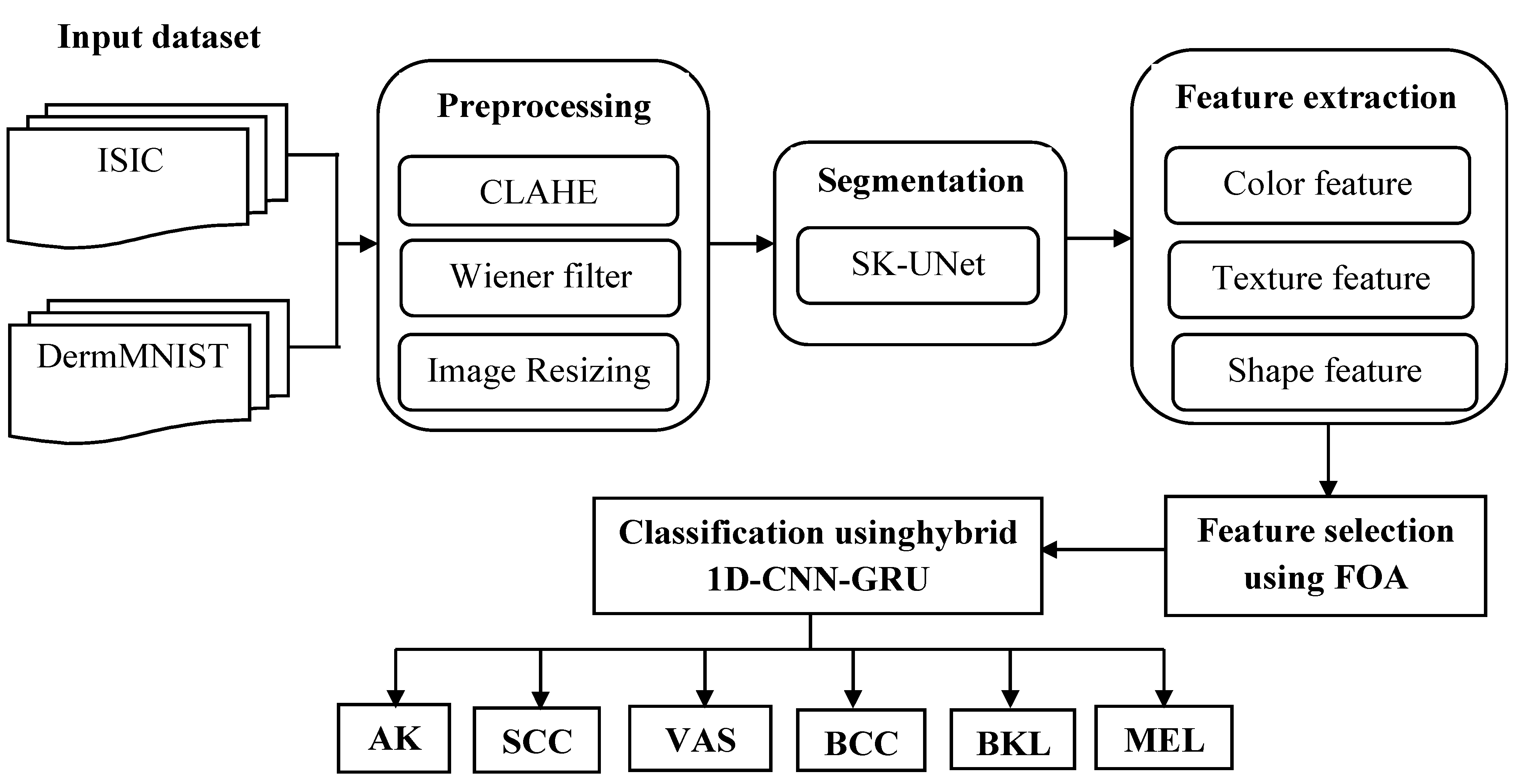
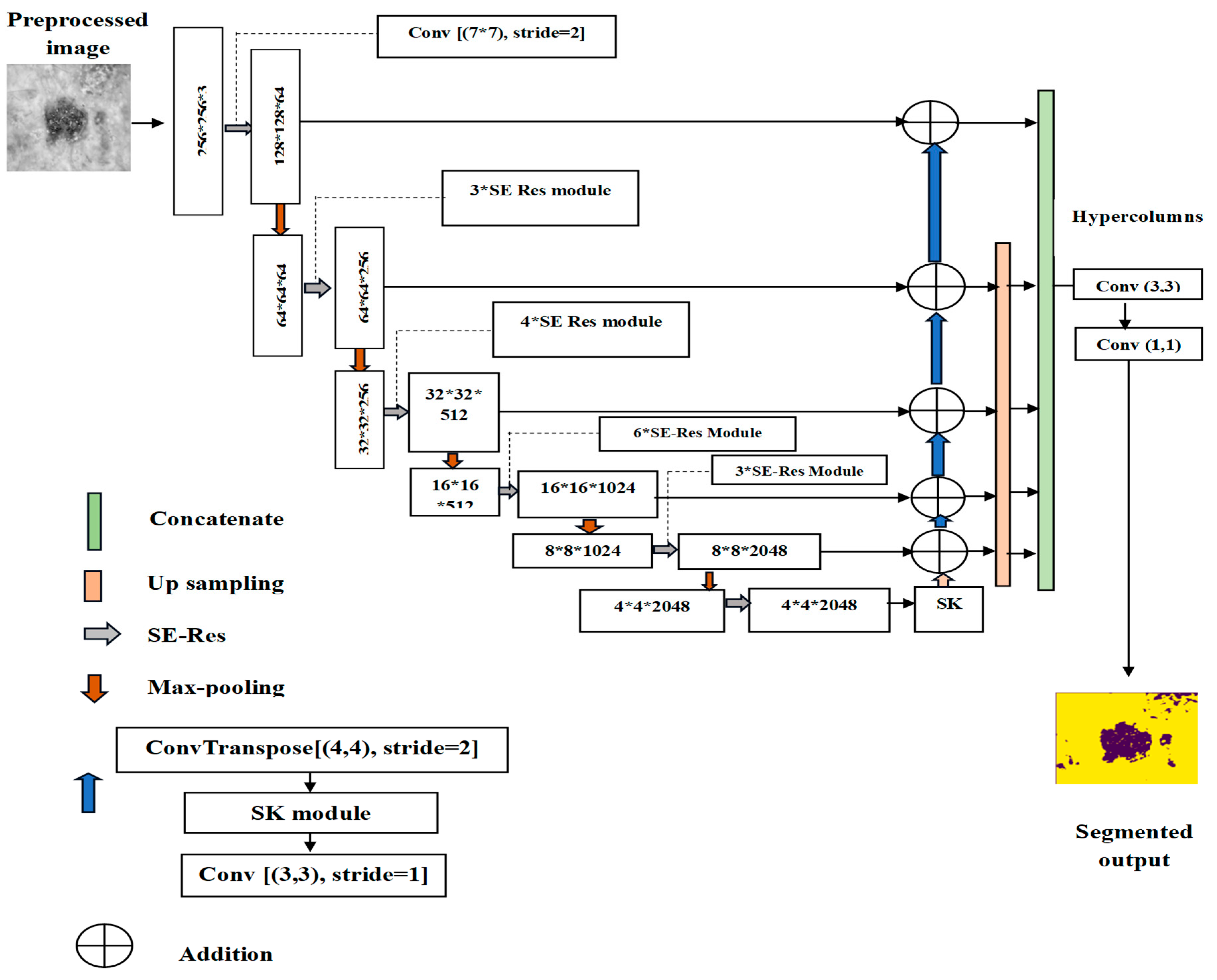
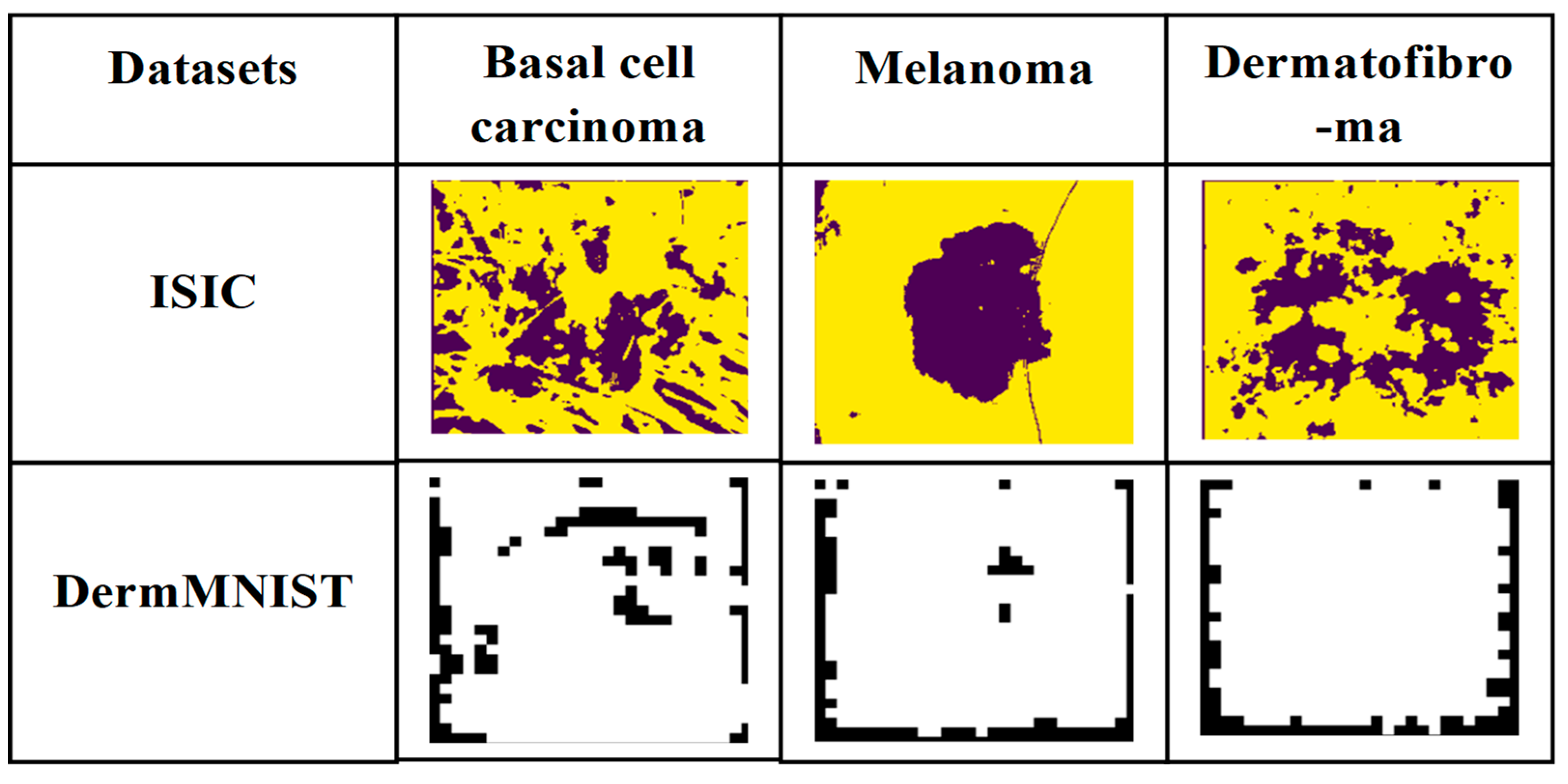
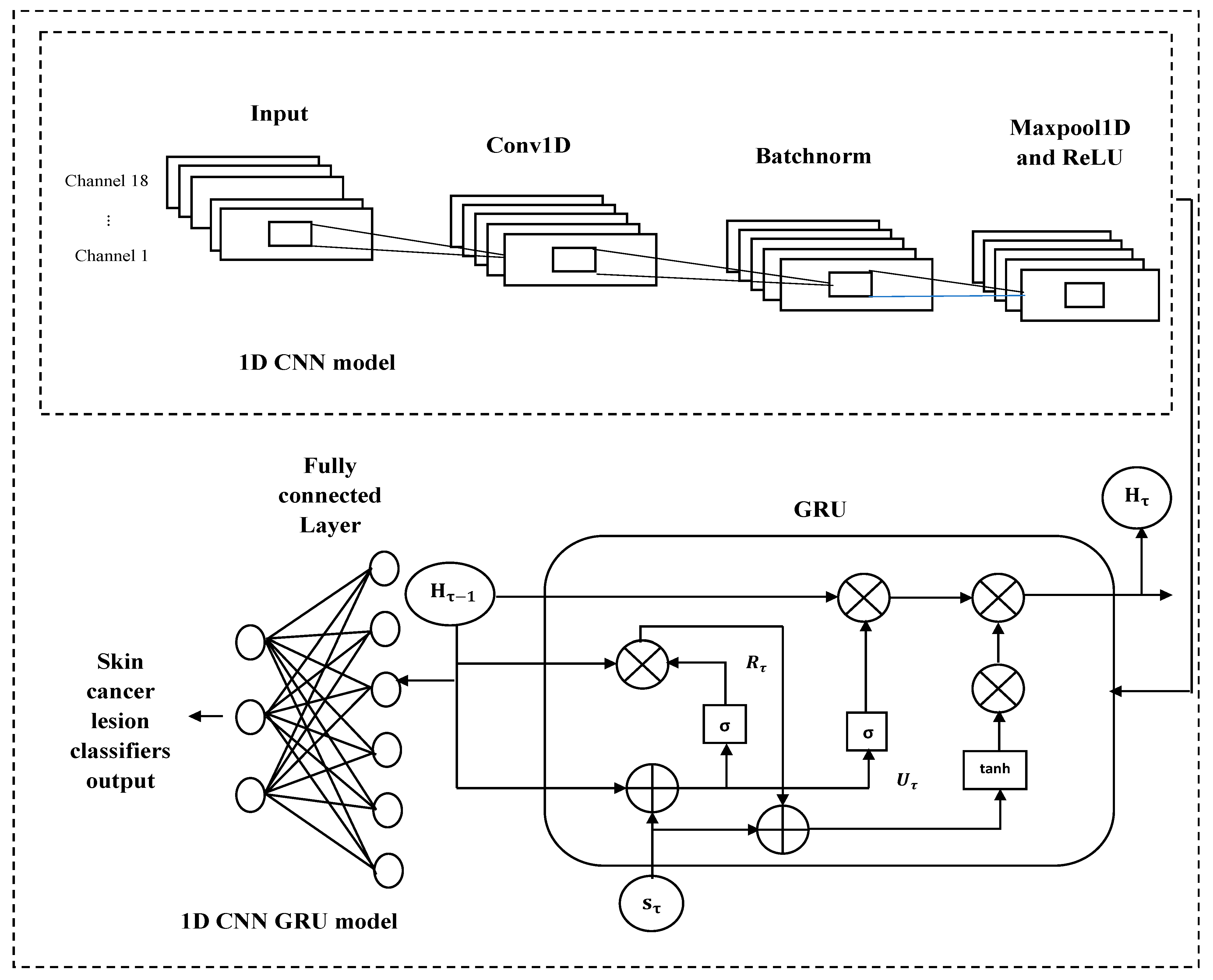
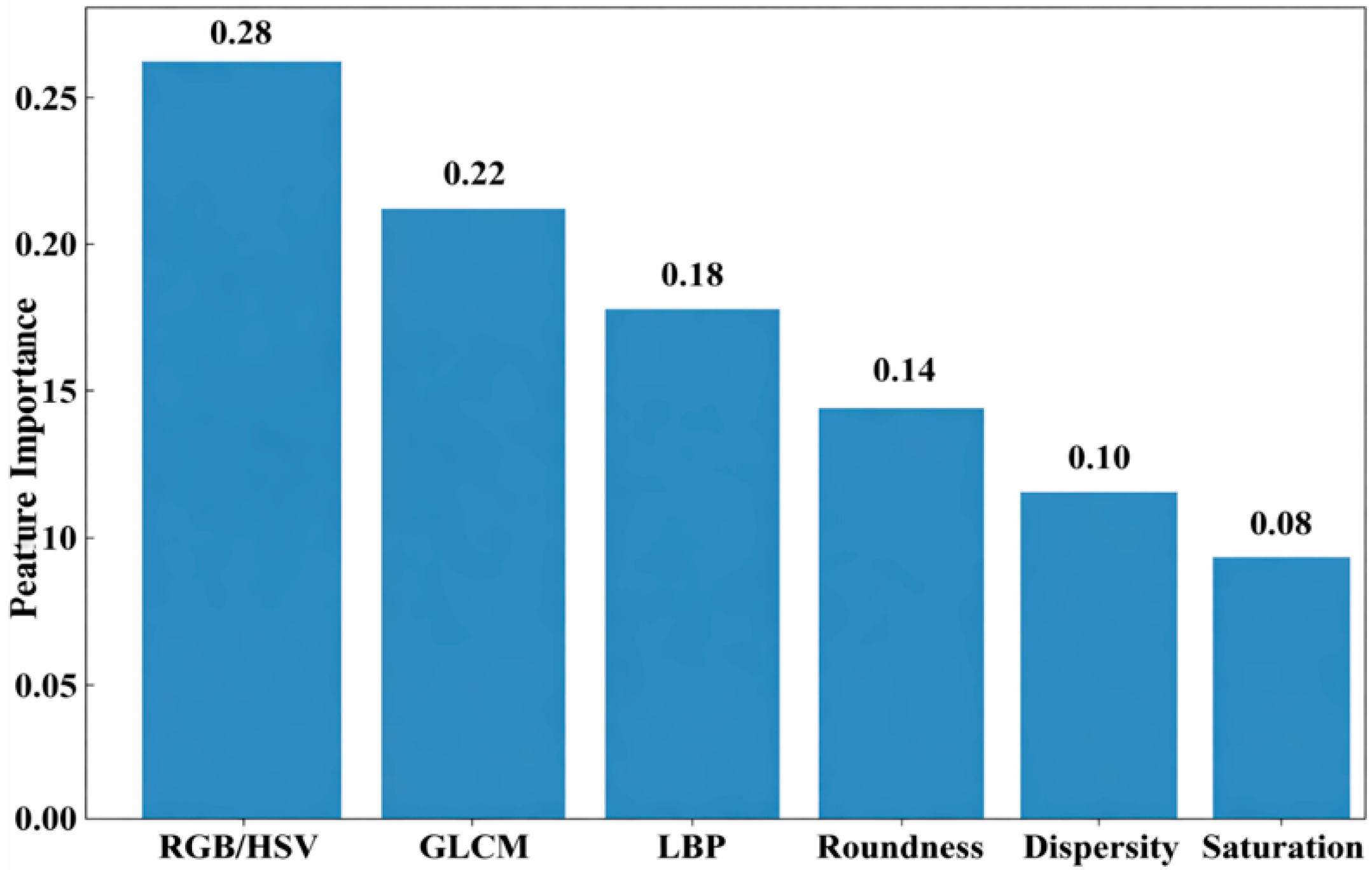
Early and accurate detection of skin cancer is critical for reducing mortality rates, particularly for malignant melanoma. Automated analysis of dermoscopic images has gained significant attention due to its potential to support clinical diagnosis and overcome the limitations of manual inspection. Motivated by challenges such as image noise, low contrast, lesion variability, and redundant feature representation, this study proposes an optimal deep hybrid framework for skin lesion detection and classification. The objective of this work is to design a robust and efficient system that integrates advanced preprocessing, precise segmentation, optimal feature selection, and accurate classification. Initially, contrast enhancement using Contrast Limited Adaptive Histogram Equalization (CLAHE) and noise reduction using Wiener filtering are applied to improve image quality. Lesion regions are then segmented using a Selective Kernel U-Net (SK-UNet), which adaptively captures multi-scale spatial information. Subsequently, discriminative color, texture, and shape features are extracted and optimized using the Fossa Optimization Algorithm (FOA) to eliminate redundancy. A hybrid one-dimensional Convolutional Neural Network–Gated Recurrent Unit (1D-CNN–GRU) classifier is employed for final classification, learning both spatial and sequential feature patterns. Experimental evaluation on the ISIC and DermMNIST datasets demonstrates that the proposed framework achieves classification accuracies of 97.6% and 95.6%, respectively, outperforming several existing methods. The results confirm that the proposed hybrid framework provides reliable, accurate, and scalable skin cancer diagnosis, highlighting its potential for assisting clinical decision-making and early detection.
Keywords: skin cancer detection; dermoscopic images; SK-UNet segmentation; Fossa Optimization Algorithm; deep learning; feature selection skin cancer detection; dermoscopic images; SK-UNet segmentation; Fossa Optimization Algorithm; deep learning; feature selection