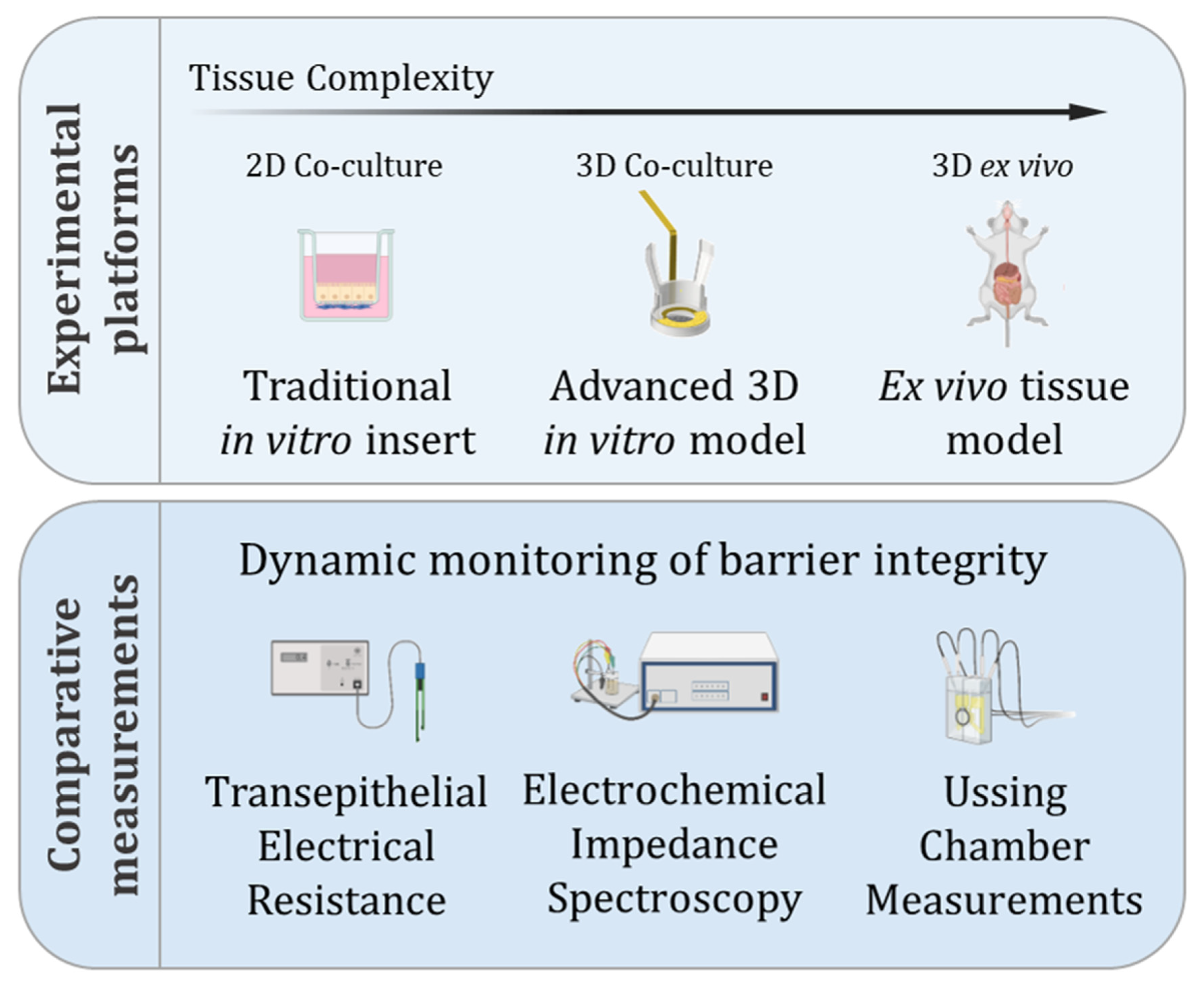
Comparison of 2D, 3D In Vitro, and Ex Vivo Platforms for Modeling the Rat Small Intestine

 ,
,
Abstract
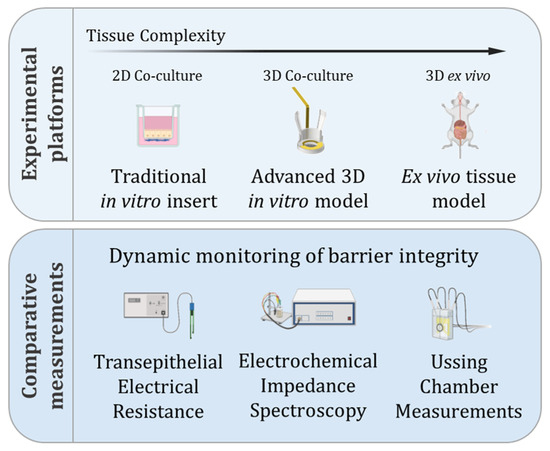
1. Introduction
2. Materials and Methods
2.1. Cell Culture
2.1.1. Cell Culture Maintenance
2.1.2. Cell Seeding Within Insert
2.2. Transepithelial Electrical Resistance (TEER) Measurement
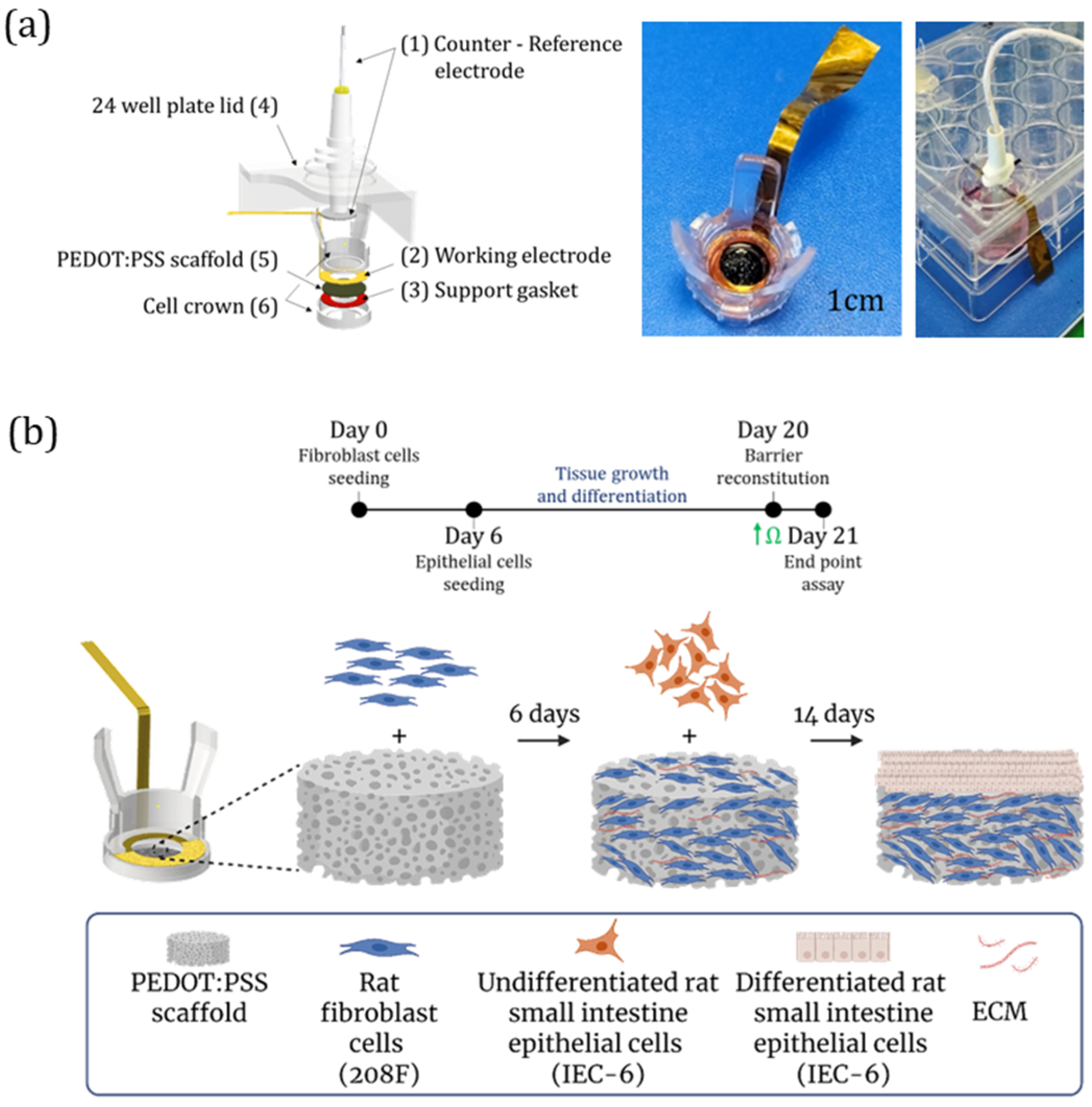
2.3. 3D e-Transmembrane Device
2.3.1. Scaffold Fabrication
2.3.2. Device Design and Fabrication
2.3.3. Cell Seeding Within the e-Transmembrane Device
2.4. Imaging
2.4.1. Scanning Electron Microscopy (SEM)
2.4.2. Immunofluorescence Microscopy
2.5. Electrochemical Impedance Spectroscopy (EIS) and Modeling
2.6. Calcium Switch Assay
2.7. Ex Vivo Ussing Chamber
2.8. Micro-CT Scan
2.9. Quantitative Real-Time PCR Assay
2.10. Statistical Analysis
3. Results and Discussion
3.1. Reconstituting the Rat Small Intestine Barrier in 2D Using Inserts
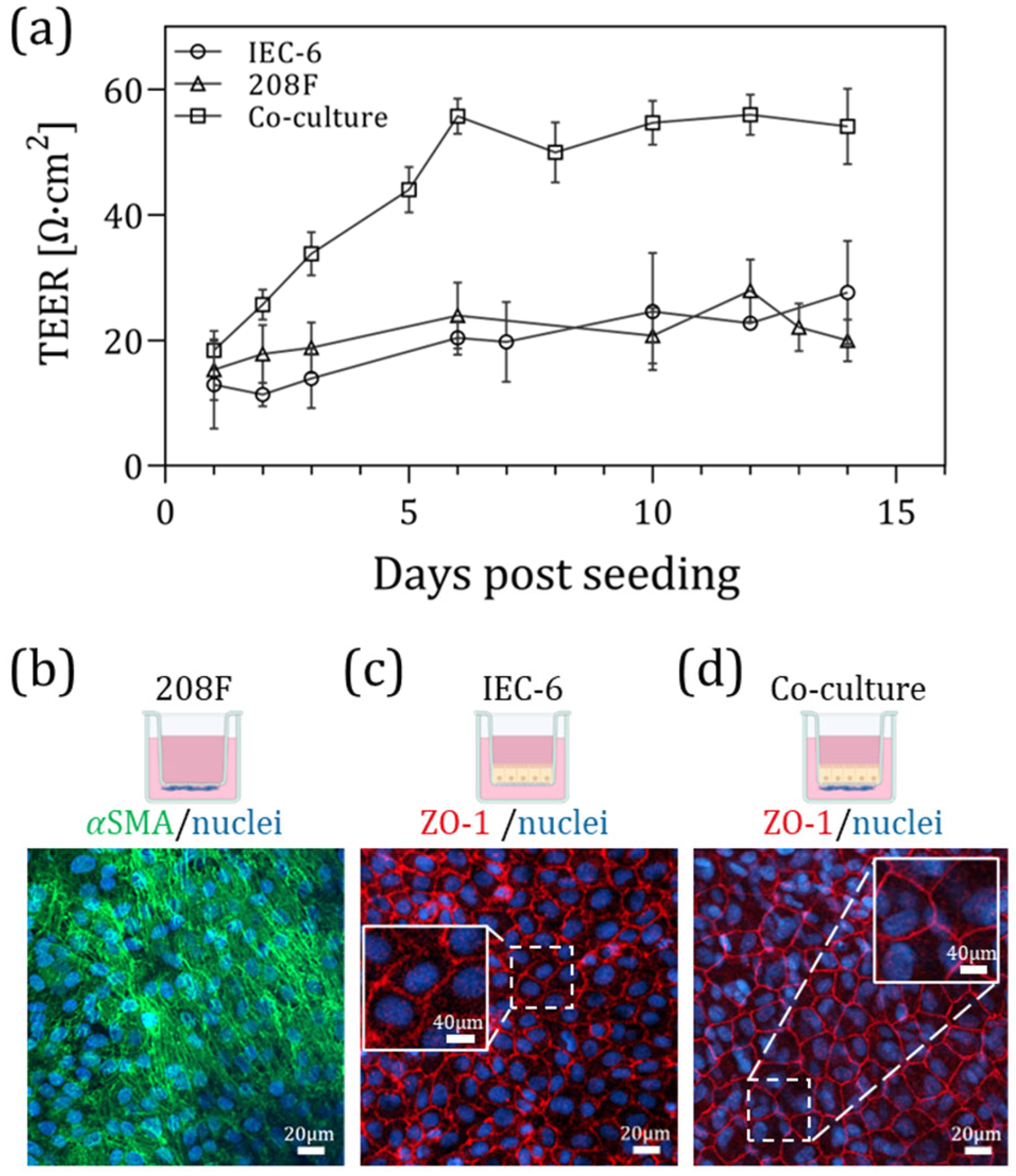
3.1.1. Barrier Formation in 2D Co-Culture
3.1.2. Tight Junction and Cell Identity Characterization by Immunofluorescence
3.2. Establishment of a Rat Small Intestinal Barrier in a 3D Culture e-Transmembrane Device
3.2.1. 3D Co-Culture Assembly
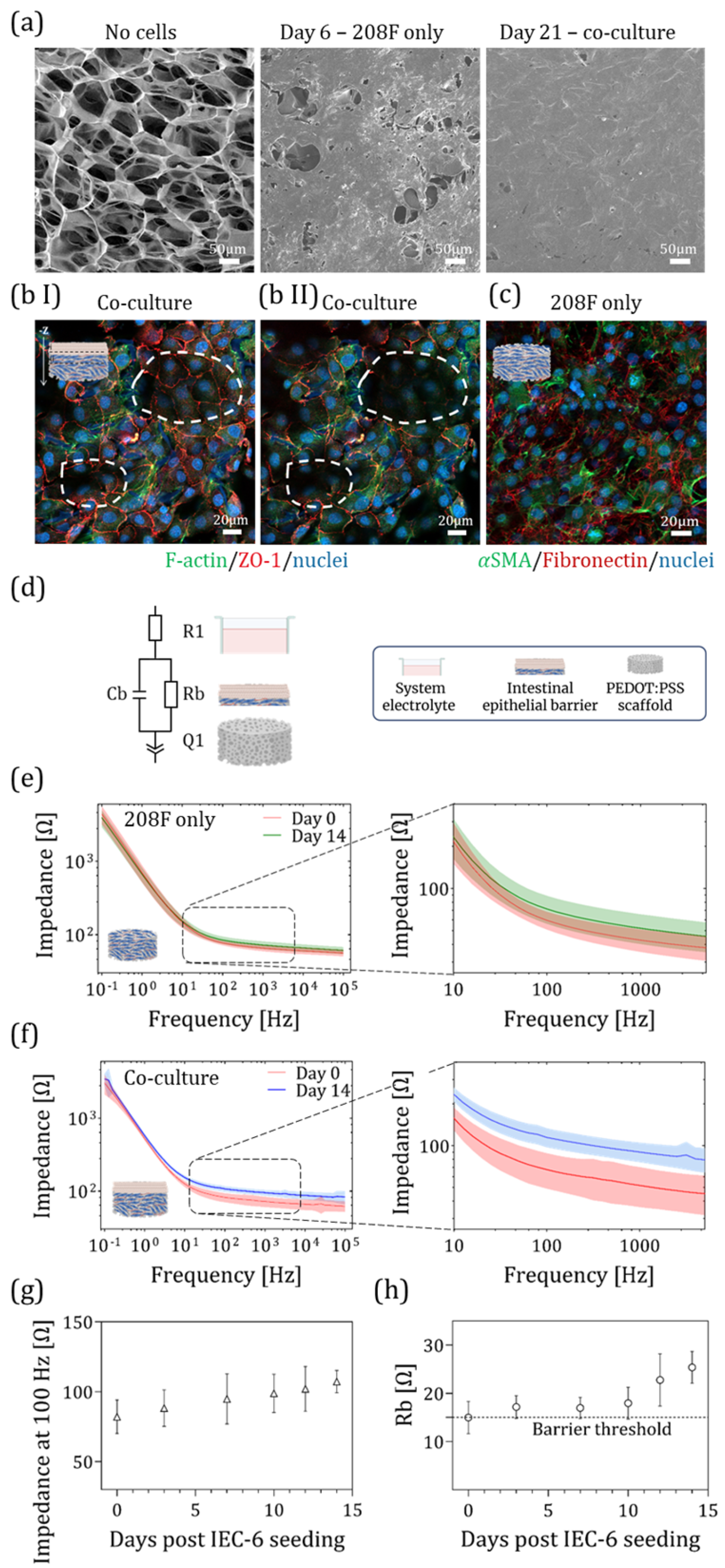
3.2.2. Cell Localization Within Scaffold by Immunofluorescence
3.2.3. EIS Monitoring of Barrier Formation
3.2.4. Impedance Response of Mono- Versus Co-Culture
3.2.5. Barrier Resistance Quantification
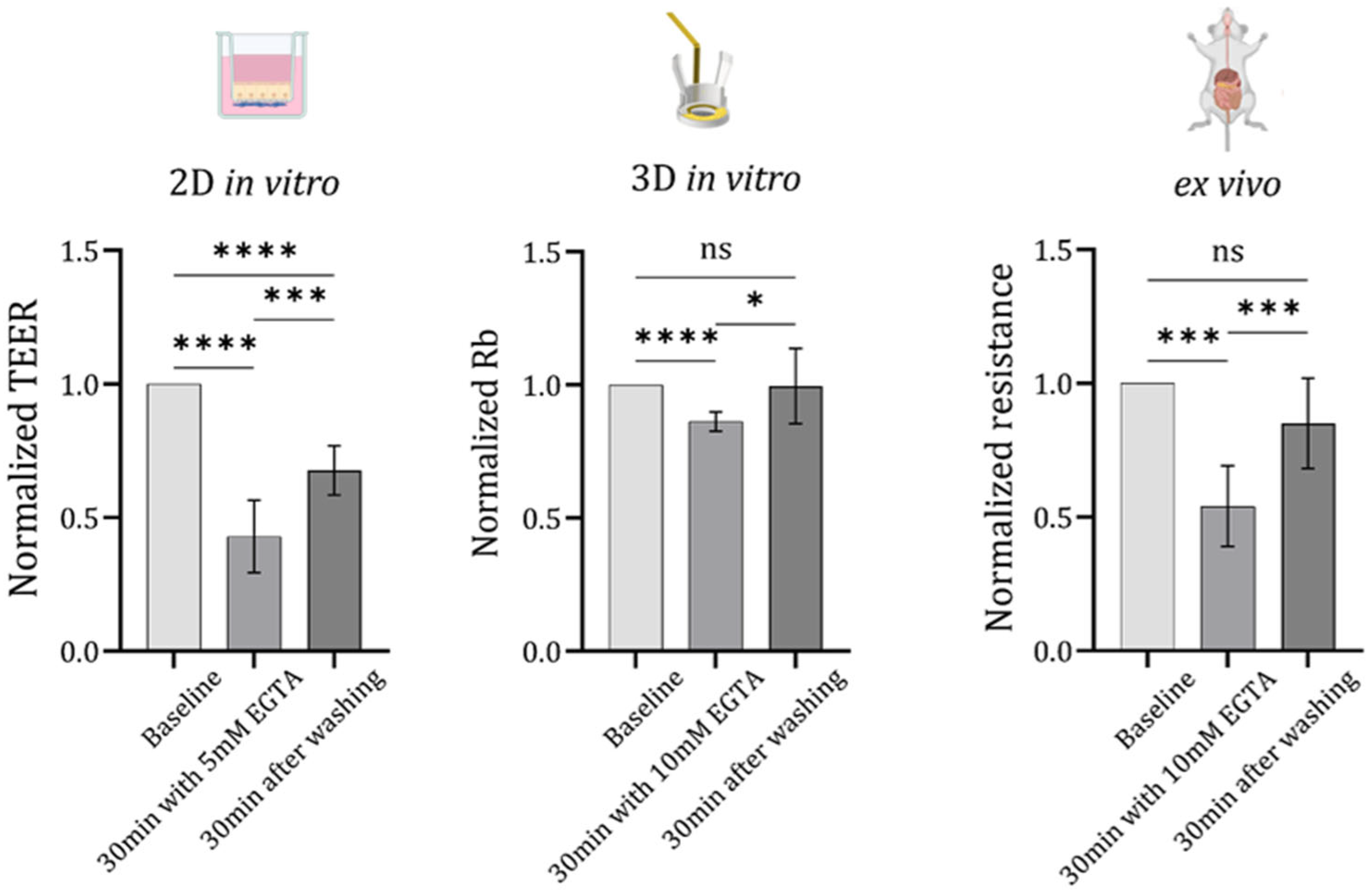
3.3. Assessment of Barrier Integrity and EGTA-Induced Disruption via Resistance Measurements
4. Conclusions
Supplementary Materials
Author Contributions
Funding
Data Availability Statement
Acknowledgments
Conflicts of Interest
Abbreviations
| PEDOT:PSS | poly(3,4-ethylenedioxythiophene):poly(styrenesulfonate) |
| IEC-6 | intestinal epithelial cells |
| EIS | electrochemical impedance spectroscopy |
| EGTA | ethylene glycol tetraacetic acid |
| e-transmembrane | electronic transmembrane |
| iPS cells | induced pluripotent stem cells |
| DBSA | sodium dodecylbenzenesulfonate |
| GOPS | 3-glycidyloxypropyl)trimethoxysilane |
| PEGDE | poly(ethylene glycol) diglycidyl ether |
| TEER | transepithelial electrical resistance |
| RT | room temperature |
| SEM | scanning electron microscopy |
| CE | counter electrode |
| WE | working electrode |
| RE | reference electrode |
| RT-PCR | real-time PCR |
References
- Galvan, A.; Guidorizzi, E.; Carton, F.; Malatesta, M. In vitro and ex vivo models to study molecular trafficking across the human intestinal barrier. Int. J. Mol. Sci. 2025, 26, 10535. [Google Scholar] [CrossRef]
- Di Tommaso, N.; Gasbarrini, A.; Ponziani, F.R. Intestinal barrier in human health and disease. Int. J. Env. Res. Public Health 2021, 18, 12836. [Google Scholar] [CrossRef]
- Hugenholtz, F.; de Vos, W.M. Mouse models for human intestinal microbiota research: A critical evaluation. Cell. Mol. Life Sci. 2018, 75, 149–160. [Google Scholar] [CrossRef]
- Chelakkot, C.; Ghim, J.; Ryu, S.H. Mechanisms regulating intestinal barrier integrity and its pathological implications. Exp. Mol. Med. 2018, 50, 103. [Google Scholar] [CrossRef]
- Hill, D.R.; Spence, J.R. Gastrointestinal organoids: Understanding the molecular basis of the host–microbe interface. Cell. Mol. Gastroenterol. Hepatol. 2017, 3, 138–149. [Google Scholar] [CrossRef]
- Rahman, S.; Ghiboub, M.; Donkers, J.M.; van de Steeg, E.; van Tol, E.A.; Hakvoort, T.B.; de Jonge, W.J. The progress of intestinal epithelial models from cell lines to gut-on-chip. Int. J. Mol. Sci. 2021, 22, 13472. [Google Scholar] [CrossRef]
- McCoy, R.; Oldroyd, S.; Yang, W.; Wang, K.; Hoven, D.; Bulmer, D.; Zilbauer, M.; Owens, R.M. In vitro models for investigating intestinal host–pathogen interactions. Adv. Sci. 2024, 11, e2306727. [Google Scholar] [CrossRef]
- McConnell, E.L.; Basit, A.W.; Murdan, S. Measurements of rat and mouse gastrointestinal pH, fluid and lymphoid tissue, and implications for in vivo experiments. J. Pharm. Pharmacol. 2008, 60, 63–70. [Google Scholar] [CrossRef]
- Waclawiková, B.; Codutti, A.; Alim, K.; El Aidy, S. Gut microbiota–motility interregulation: Insights from in vivo, ex vivo and in silico studies. Gut Microbes 2022, 14, 1997296. [Google Scholar] [CrossRef]
- Seyhan, A.A. Lost in translation: The valley of death across preclinical and clinical divide—Identification of problems and overcoming obstacles. Transl. Med. Commun. 2019, 4, 18. [Google Scholar] [CrossRef]
- Ewart, L.; Apostolou, A.; Briggs, S.A.; Carman, C.V.; Chaff, J.T.; Heng, A.R.; Jadalannagari, S.; Janardhanan, J.; Jang, K.-J.; Joshipura, S.R.; et al. Performance assessment and economic analysis of a human Liver-Chip for predictive toxicology. Commun. Med. 2022, 2, 154. [Google Scholar] [CrossRef]
- Han, X.M.; Han, Y.; Zheng, Y.S.; Sun, Q.; Ma, T.; Zhang, J.Y.; Xu, L.J. Can animal models of disease reliably inform human studies? PLoS ONE 2017, 12, e0175950. [Google Scholar] [CrossRef]
- Seok, J.; Warren, H.S.; Cuenca, A.G.; Mindrinos, M.N.; Baker, H.V.; Xu, W.; McDonald-Smith, G.P.; Gao, H.; Hennessy, L.; Richards, D.R.; et al. Genomic responses in mouse models poorly mimic human inflammatory diseases. Proc. Natl. Acad. Sci. USA 2013, 110, 3507–3512. [Google Scholar] [CrossRef]
- Roodsant, T.; Navis, M.; Aknouch, I.; Renes, I.B.; van Elburg, R.M.; Pajkrt, D.; Wolthers, K.C.; Schultsz, C.; van der Ark, K.C.H.; Sridhar, A.; et al. A human 2D primary organoid-derived epithelial monolayer model to study host–pathogen interaction in the small intestine. Front. Cell. Infect. Microbiol. 2020, 10, 272. [Google Scholar] [CrossRef]
- Sato, T.; Vries, R.G.; Snippert, H.J.; van de Wetering, M.; Barker, N.; Stange, D.E.; van Es, J.H.; Abo, A.; Kujala, P.; Peters, P.J.; et al. Single Lgr5 stem cells build crypt-villus structures in vitro without a mesenchymal niche. Nature 2009, 459, 262–265. [Google Scholar] [CrossRef]
- Kim, H.J.; Ingber, D.E. Gut-on-a-chip microenvironment induces human intestinal cells to undergo villus differentiation. Integr. Biol. 2013, 5, 1130–1140. [Google Scholar] [CrossRef]
- Bein, A.; Shin, W.; Jalili-Firoozinezhad, S.; Park, M.H.; Sontheimer-Phelps, A.; Tovaglieri, A.; Chalkiadaki, A.; Kim, H.J.; Ingber, D.E. Microfluidic organ-on-a-chip models of human intestine. Cell. Mol. Gastroenterol. Hepatol. 2018, 5, 659–668. [Google Scholar] [CrossRef]
- Pitsalidis, C.; Van Niekerk, D.; Moysidou, C.M.; Boys, A.J.; Withers, A.; Vallet, R.; Owens, R.M. Organic electronic transmembrane device for hosting and monitoring 3D cell cultures. Sci. Adv. 2022, 8, eabm6493. [Google Scholar] [CrossRef]
- Moysidou, C.M.; van Niekerk, D.C.; Stoeger, V.; Pitsalidis, C.; Draper, L.A.; Withers, A.M.; Hughes, K.; McCoy, R.; Acharya, R.; Hill, C.; et al. Modelling human gut–microbiome interactions in a 3D bioelectronic platform. Small Sci. 2024, 4, 2300158. [Google Scholar] [CrossRef]
- Savva, A.; Saez, J.; Withers, A.; Barberio, C.; Stoeger, V.; Elias-Kirma, S.; Lu, Z.; Moysidou, C.-M.; Kallitsis, K.; Pitsalidis, C.; et al. 3D organic bioelectronics for electrical monitoring of human adult stem cells. Mater. Horiz. 2023, 10, 3589–3600. [Google Scholar] [CrossRef]
- Stoeger, V.; Strauss, M.; Thurimella, K.; Elias-Kirma, S.; Niewczas, I.; Parlar, E.; Schaudy, E.; Moysidou, C.-M.; Voong, S.; Lietard, J.; et al. Bioelectronic technology for nutritional research—A novel in vitro platform for a better understanding of human gut barrier absorption. Adv. Biol. 2026, 10, e00409. [Google Scholar] [CrossRef] [PubMed]
- Inui, T.; Uraya, Y.; Yokota, J.; Yamashita, T.; Kawai, K.; Okada, K.; Ueyama-Toba, Y.; Mizuguchi, H. Functional intestinal monolayers from organoids derived from human iPS cells for drug discovery research. Stem Cell Res. Ther. 2024, 15, 85. [Google Scholar] [CrossRef] [PubMed]
- Gai, T.; Zhang, H.; Hu, Y.; Li, R.; Wang, J.; Chen, X.; Wang, J.; Chen, Z.; Jing, Y.; Wang, C.; et al. Sequential construction of vascularized and mineralized bone organoids using engineered ECM-DNA-CPO-based bionic matrix for efficient bone regeneration. Bioact. Mater. 2025, 49, 362–377. [Google Scholar] [CrossRef] [PubMed]
- Song, S.; Zhang, J.; Fang, Y.; Li, W.; Zeng, H.; Fang, Z.; Wang, T.; Xie, Y.; Liu, C.; Wang, J.; et al. Nerve–bone crosstalk manipulates bone organoid development and bone regeneration: A review and perspectives. Organoid Res. 2025, 1, 82–94. [Google Scholar] [CrossRef]
- Guex, A.G.; Puetzer, J.L.; Armgarth, A.; Littmann, E.; Stavrinidou, E.; Giannelis, E.P.; Malliaras, G.G.; Stevens, M.M. Highly porous scaffolds of PEDOT:PSS for bone tissue engineering. Acta Biomater. 2017, 62, 91–101. [Google Scholar] [CrossRef]
- Barberio, C.; Saez, J.; Withers, A.; Nair, M.; Tamagnini, F.; Owens, R.M. Conducting polymer-ECM scaffolds for human neuronal cell differentiation. Adv. Healthc. Mater. 2022, 11, 2200941. [Google Scholar] [CrossRef]
- Furlani, F.; Campodoni, E.; Sangiorgi, N.; Montesi, M.; Sanson, A.; Sandri, M.; Panseri, S. Electroconductive scaffolds based on gelatin and PEDOT:PSS for cardiac regeneration. Int. J. Biol. Macromol. 2023, 224, 266–280. [Google Scholar] [CrossRef]
- Pitsalidis, C.; Ferro, M.P.; Iandolo, D.; Tzounis, L.; Inal, S.; Owens, R.M. Transistor in a tube: A route to three-dimensional bioelectronics. Sci. Adv. 2018, 4, eaat4253. [Google Scholar] [CrossRef]
- Moysidou, C.M.; Barberio, C.; Owens, R.M. Advances in engineering human tissue models. Front. Bioeng. Biotechnol. 2021, 8, 620962. [Google Scholar] [CrossRef]
- Eslami Amirabadi, H.; Donkers, J.M.; Wierenga, E.; Ingenhut, B.; Pieters, L.; Stevens, L.; Donkers, T.; Westerhout, J.; Masereeuw, R.; Bobeldijk-Pastorova, I.; et al. Intestinal explant barrier chip: Long-term intestinal absorption screening in a novel microphysiological system using tissue explants. Lab A Chip 2022, 22, 326–342. [Google Scholar] [CrossRef]
- Walter, E.; Janich, S.; Roessler, B.J.; Hilfinger, J.M.; Amidon, G.L. HT29-MTX/Caco-2 cocultures as an in vitro model for the intestinal epithelium: In vitro-in vivo correlation with permeability data from rats and humans. J. Pharm. Sci. 1996, 85, 1070–1076. [Google Scholar] [CrossRef] [PubMed]
- Pearce, S.C.; Coia, H.G.; Karl, J.P.; Pantoja-Feliciano, I.G.; Zachos, N.C.; Racicot, K. Intestinal in vitro and ex vivo models to study host-microbiome interactions and acute stressors. Front. Physiol. 2018, 9, 1584. [Google Scholar] [CrossRef] [PubMed]
- Lozoya-Agullo, I.; Gonzalez-Alvarez, I.; Zur, M.; Fine-Shamir, N.; Cohen, Y.; Markovic, M.; Garrigues, T.M.; Dahan, A.; Gonzalez-Alvarez, M.; Merino-Sanjuán, M.; et al. Closed-loop Doluisio (colon, small intestine) and single-pass intestinal perfusion (colon, jejunum) in rat—Biophysical model and predictions based on Caco-2. Pharm. Res. 2018, 35, 17. [Google Scholar] [CrossRef] [PubMed]
- Matei, D.; Ghișe, A.; Dumitrescu, E. Ussing chamber: The study of transepithelial transport in the small intestine. Rev. Rom. Med. Vet. 2023, 33, 114–124. [Google Scholar]
- Fan, J.; Li, T.J.; Zhao, X.H. Barrier-promoting efficiency of two bioactive flavonols quercetin and myricetin on rat intestinal epithelial (IEC-6) cells via suppressing Rho activation. RSC Adv. 2020, 10, 27249–27258. [Google Scholar] [CrossRef]
- Li, J.; Zhang, W.; Jiao, R.; Yang, Z.; Yuan, Y.; Wu, Q.; Hu, Z.; Xiang, S.; Tang, Q. DIM attenuates TGF-β1-induced myofibroblast differentiation in neonatal rat cardiac fibroblasts. Int. J. Clin. Exp. Pathol. 2015, 8, 5121–5128. Available online: https://pmc.ncbi.nlm.nih.gov/articles/PMC4503079/ (accessed on 5 February 2026).
- Hsu, T.; Phung, A.; Choe, K.; Kim, J.W.; Fan, H. Role for a Zinc Finger Protein (Zfp111) in Transformation of 208F Rat Fibroblasts by Jaagsiekte Sheep Retrovirus Envelope Protein. J. Virol. 2015, 89, 10453–10466. [Google Scholar] [CrossRef]
- Ruijter, J.M.; Ramakers, C.; Hoogaars, W.M.H.; Karlen, Y.; Bakker, O.; Van den Hoff, M.J.B.; Moorman, A. Amplification efficiency: Linking baseline and bias in the analysis of quantitative PCR data. Nucleic Acids Res. 2009, 37, e45. [Google Scholar] [CrossRef]
- Solazzo, M.; Monaghan, M.G. Hydrophilic, conductive and flexible piezoresistive PEDOT:PSS 3D sensors with tunable microarchitecture and crosslinked using a PEGylated crosslinker. Synth. Met. 2022, 290, 117157. [Google Scholar] [CrossRef]
- Talukder, J. Leukotriene D4 requires PKCα–Akt signaling pathway to inhibit Na+-dependent alanine cotransporter (ASCT1) in enterocytes. J. Gastrointest. Dig. Syst. 2016, 310, G345–G354. [Google Scholar] [CrossRef]
- Kular, J.K.; Basu, S.; Sharma, R.I. The extracellular matrix: Structure, composition, age-related differences, tools for analysis and applications for tissue engineering. J. Tissue Eng. 2014, 5, 2041731414557112. [Google Scholar] [CrossRef]


Disclaimer/Publisher’s Note: The statements, opinions and data contained in all publications are solely those of the individual author(s) and contributor(s) and not of MDPI and/or the editor(s). MDPI and/or the editor(s) disclaim responsibility for any injury to people or property resulting from any ideas, methods, instructions or products referred to in the content. |
© 2026 by the authors. Licensee MDPI, Basel, Switzerland. This article is an open access article distributed under the terms and conditions of the Creative Commons Attribution (CC BY) license.
Share and Cite
Elias-Kirma, S.; McCoy, R.; Niekerk, D.v.; Stoeger, V.; Oldroyd, S.; Sumner, E.; Savva, A.; Owens, R.M. Comparison of 2D, 3D In Vitro, and Ex Vivo Platforms for Modeling the Rat Small Intestine. Bioengineering 2026, 13, 349. https://doi.org/10.3390/bioengineering13030349
Elias-Kirma S, McCoy R, Niekerk Dv, Stoeger V, Oldroyd S, Sumner E, Savva A, Owens RM. Comparison of 2D, 3D In Vitro, and Ex Vivo Platforms for Modeling the Rat Small Intestine. Bioengineering. 2026; 13(3):349. https://doi.org/10.3390/bioengineering13030349
Chicago/Turabian StyleElias-Kirma, Shani, Reece McCoy, Douglas van Niekerk, Verena Stoeger, Sophie Oldroyd, Emma Sumner, Achilleas Savva, and Róisín M. Owens. 2026. "Comparison of 2D, 3D In Vitro, and Ex Vivo Platforms for Modeling the Rat Small Intestine" Bioengineering 13, no. 3: 349. https://doi.org/10.3390/bioengineering13030349
APA StyleElias-Kirma, S., McCoy, R., Niekerk, D. v., Stoeger, V., Oldroyd, S., Sumner, E., Savva, A., & Owens, R. M. (2026). Comparison of 2D, 3D In Vitro, and Ex Vivo Platforms for Modeling the Rat Small Intestine. Bioengineering, 13(3), 349. https://doi.org/10.3390/bioengineering13030349