
Molecular and Structural Changes, and Skeletal Muscle Strength and Endurance in Chronic Obstructive Pulmonary Disease and Interstitial Lung Disease: Practical Applications of Assessment and Management

Abstract
1. Introduction: Physiological Changes in Skeletal Muscle in ILD, COPD, and Post-Transplant Patients
1.1. Methods of Literature Review
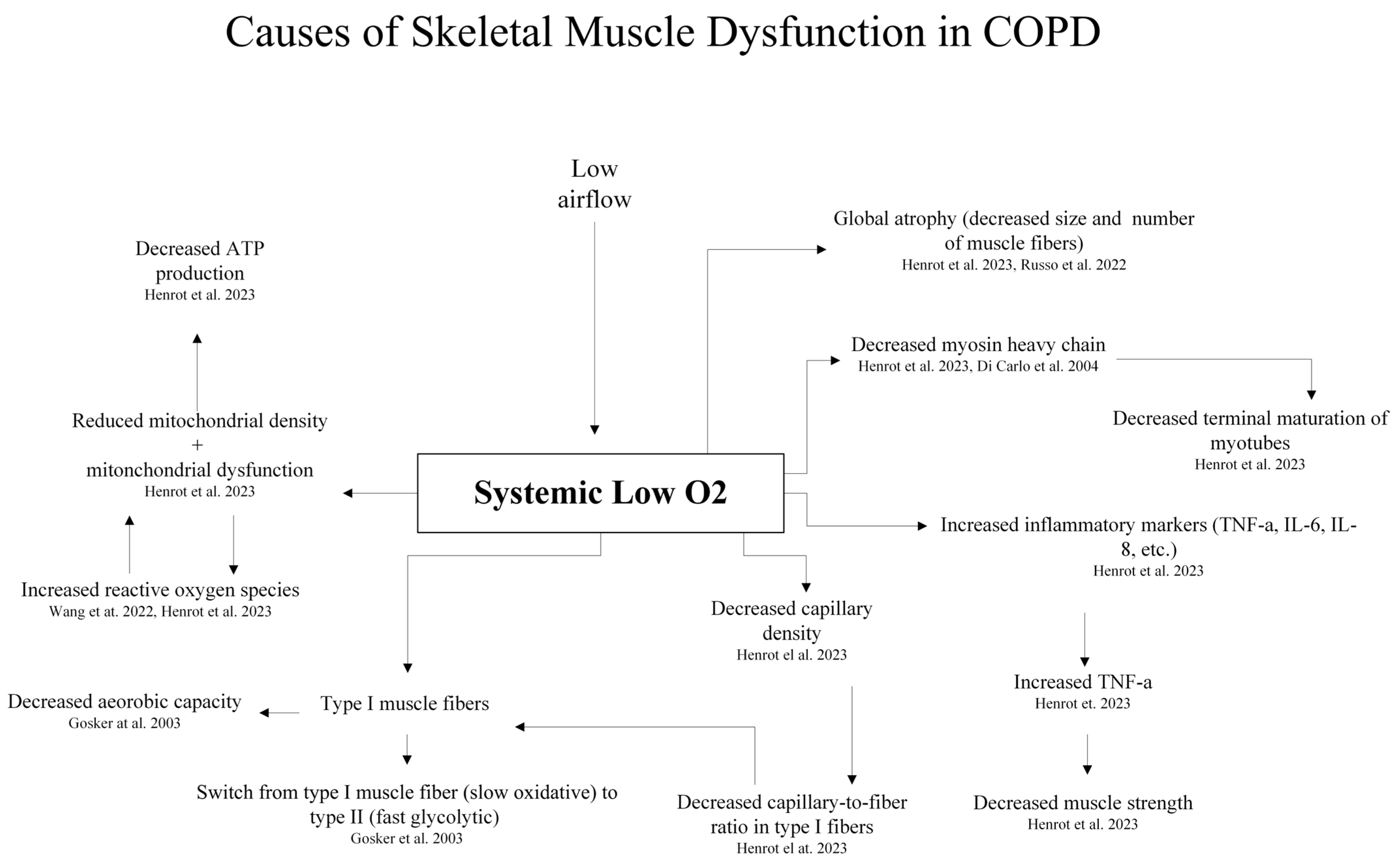
1.2. Skeletal Muscle Dysfunction in COPD: Molecular Mechanisms
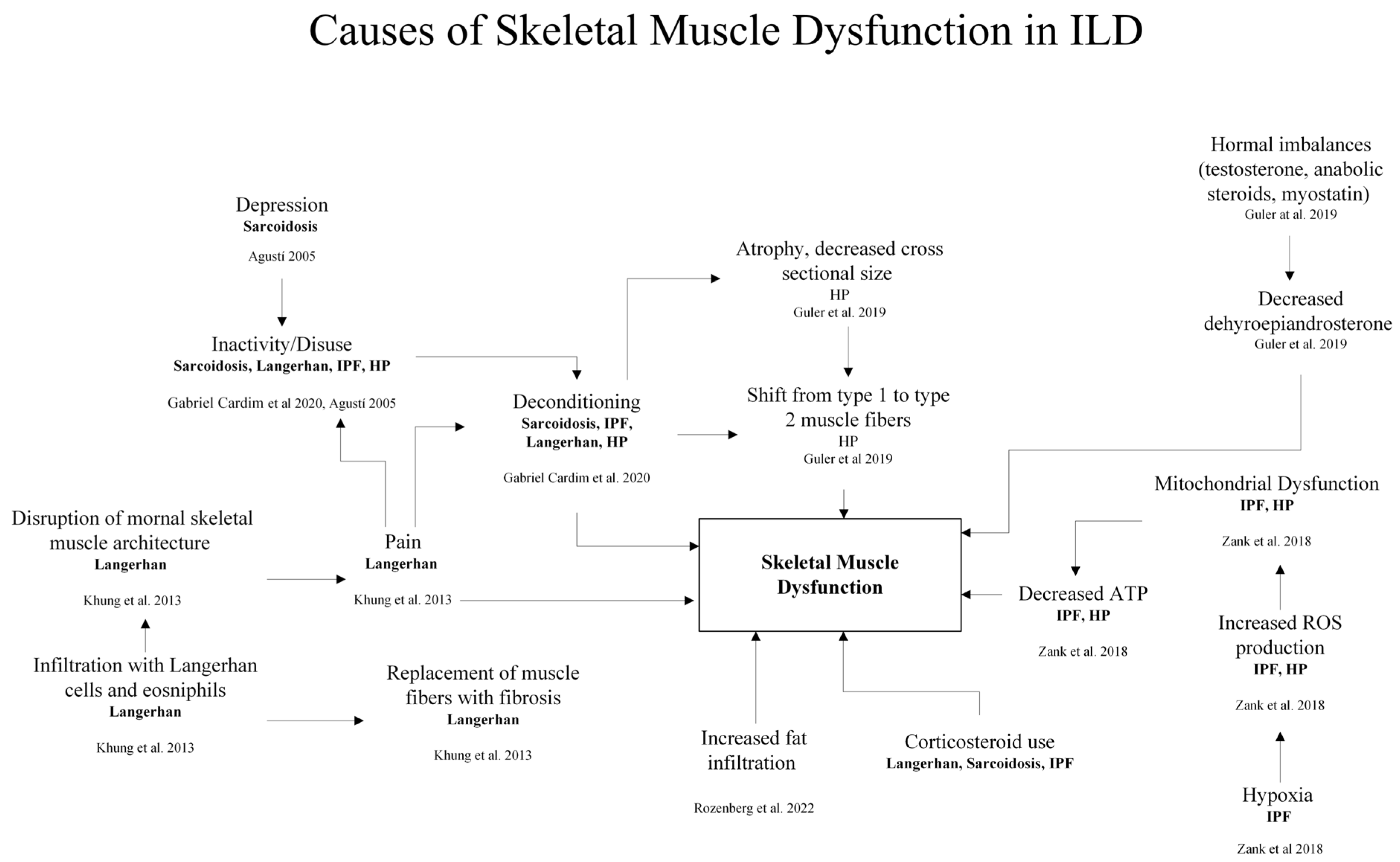
1.3. Skeletal Muscle Dysfunction in ILD
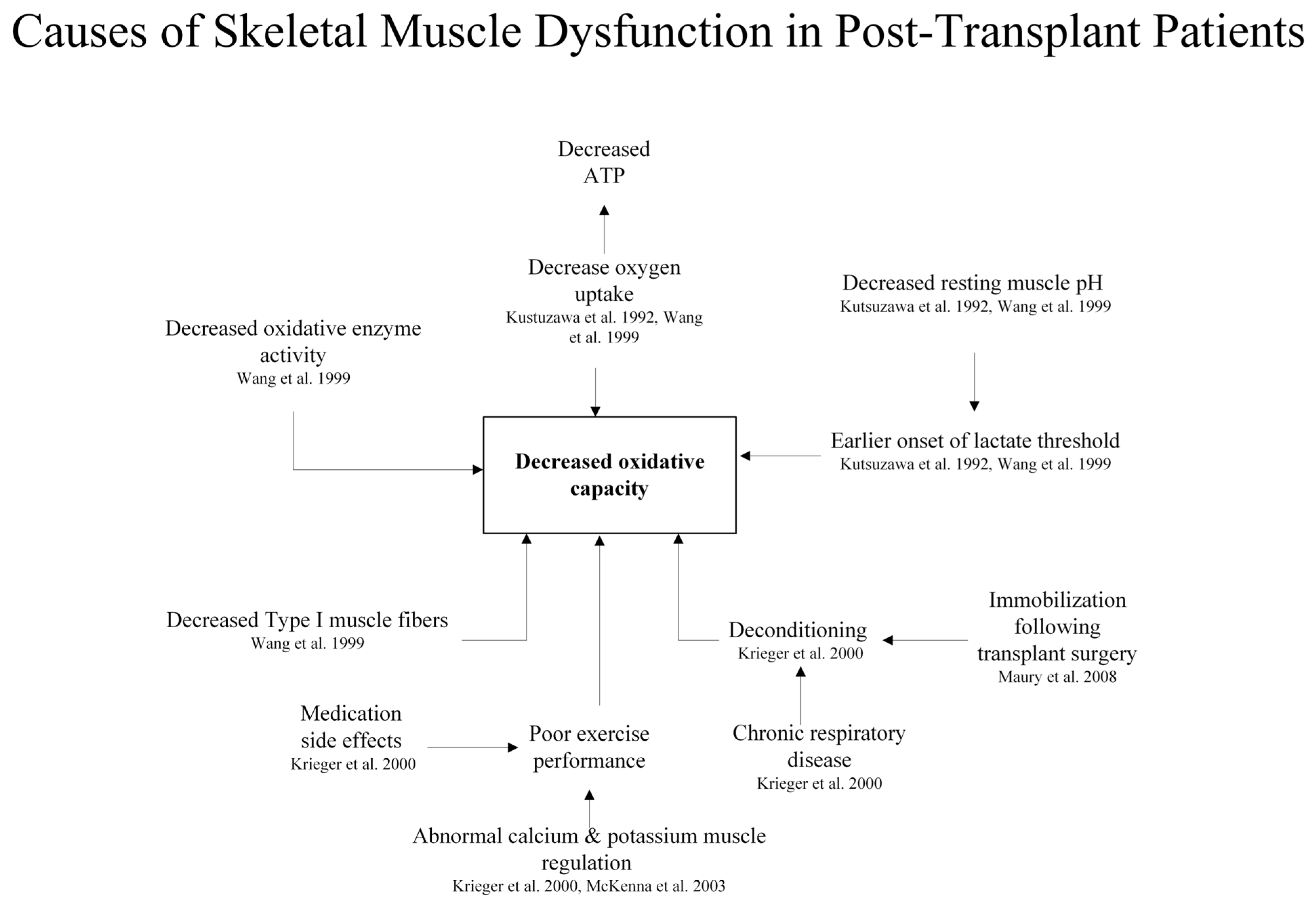
1.4. Skeletal Muscle Dysfunction in Post-Lung Transplant Patients
2. Methods of Evaluating Muscle Dysfunction
2.1. Electromyography (EMG) Analysis for Quantifying Skeletal Muscle Dysfunction: Technical Challenges
2.2. Isokinetic vs. Isometric Dynamometry for Quantifying Skeletal Muscle Dysfunction: Strengths, Limitations
- Isokinetic dynamometry:
- b
- Isometric dynamometry:
3. Reversing Physiological Changes Through Pulmonary Rehabilitation (PR)
4. Quality and Strength of Review and Meta-Analysis Papers Discussed
5. Future Considerations for Investigation
6. Summary and Conclusions
Funding
Institutional Review Board Statement
Informed Consent Statement
Data Availability Statement
Conflicts of Interest
Abbreviations
| 1STS | One-Minute Sit-to-Stand |
| 4mGS | 4-Meter Gait Speed |
| 5STS | Five-Repetition Sit-to-Stand |
| 6MWT | Six-Minute Walk Test |
| ARFI | Acoustic Radiation Force Impulse |
| ATP | Adenosine Triphosphate |
| BMP | Bone Morphogenetic Protein |
| Ca2+ | Calcium Ion |
| CINAHL | Cumulative Index to Nursing and Allied Health Literature |
| CO | Cardiac Output |
| COPD | Chronic Obstructive Pulmonary Disease |
| COSMINQMS | Consensus-Based Standards for the Selection of Health Measurement Instruments Quality Management System |
| CSA | Cross-Sectional Area |
| CT | Computed Tomography |
| CTD-ILD | Connective Tissue Disease-Related Interstitial Lung Disease |
| CV | Conduction Velocity |
| DHEA | Dehydroepiandrosterone |
| DHEA-S | Dehydroepiandrosterone Sulfate |
| DLCO | Diffusing Capacity for Carbon Monoxide |
| EFL | Expiratory Flow Limitation |
| EMG | Electromyography |
| Eq/Tq | Quadriceps Torque-to-EMG Ratio |
| FEV | Forced Expiratory Volume |
| FI | Fatigue Index |
| FVC | Forced Vital Capacity |
| HHD | Handheld Dynamometer |
| HIF-1 | Hypoxia-Inducible Factor 1 |
| HP | Hypersensitivity Pneumonitis |
| HR | Heart Rate |
| ICC | Intraclass Correlation Coefficient |
| ICU | Intensive Care Unit |
| ILD | Interstitial Lung Disease |
| IL-6 | Interleukin-6 |
| IL-8 | Interleukin-8 |
| INTERCOM | Interdisciplinary Community-Based COPD Management |
| K+ | Potassium Ion |
| K921 | Myocyte Lysine 921 |
| MEP | Maximal Expiratory Pressure |
| MES | Surface Myoelectric Signal |
| MF | Median Frequency |
| MID | Minimal Important Difference |
| MFCV | Muscle Fiber Conduction Velocity |
| MIP | Maximal Inspiratory Pressure |
| MRI | Magnetic Resonance Imaging |
| mTORC1 | Mammalian Target of Rapamycin Complex 1 |
| MVC | Maximal Voluntary Contraction |
| MVIC | Maximal Voluntary Isometric Contraction |
| MVPA | Moderate-to-Vigorous Physical Activity |
| ncRNA | Non-Coding Ribonucleic Acid |
| NF-κB | Nuclear Factor-Kappa B |
| NIRS | Near-Infrared Spectroscopy |
| NMD | Neuromuscular Dysfunction |
| NMR | Nuclear Magnetic Resonance |
| PA | Physical Activity |
| PCr | Phosphocreatine |
| PR | Pulmonary Rehabilitation |
| QME | Quadriceps Muscle Endurance |
| QMVC | Quadriceps Maximal Voluntary Contraction |
| RMS | Root Mean Square |
| ROS | Reactive Oxygen Species |
| SCPT | Stair Climb Power Test |
| SCE | Spectral Compression Estimate |
| SE | Strain Elastography |
| SGRQ | St. George’s Respiratory Questionnaire |
| SPPB | Short Physical Performance Battery |
| SRAT | Steep Ramp Anaerobic Test |
| STS | Sit-to-Stand |
| SWE | Shear Wave Elastography |
| TGF-β | Transforming Growth Factor-Beta |
| TLC | Total Lung Capacity |
| TNF-α | Tumor Necrosis Factor-Alpha |
| Tq | Peak Torque |
| TUG | Timed Up and Go |
| UE | Ultrasound Elastography |
| VO2max | Maximal Oxygen Consumption |
References
- Maltais, F.; Decramer, M.; Casaburi, R.; Barreiro, E.; Burelle, Y.; Debigaré, R.; Dekhuijzen, P.N.R.; Franssen, F.; Gayan-Ramirez, G.; Gea, J.; et al. An Official American Thoracic Society/European Respiratory Society Statement: Update on Limb Muscle Dysfunction in Chronic Obstructive Pulmonary Disease. Am. J. Respir. Crit. Care Med. 2014, 189, e15–e62. [Google Scholar] [CrossRef]
- Hussain, S.; Cheol, K.; Mofarrahi, M. Skeletal Muscle Dysfunction in Patients with Chronic Obstructive Pulmonary Disease. Int. J. COPD 2008, 3, 637–658. [Google Scholar] [CrossRef] [PubMed]
- Stoffels, A.A.F.; Allard, N.A.E.; Spruit, M.A.; Klijn, P.; Hopman, M.T.E.; Meys, R.; Franssen, F.M.E.; Timmers, S.; Van Den Borst, B.; Van Hees, H.W.H. Relationship between Volitional and Non-Volitional Quadriceps Muscle Endurance in Patients with Chronic Obstructive Pulmonary Disease. Diagnostics 2024, 14, 190. [Google Scholar] [CrossRef] [PubMed]
- Barreiro, E.; Gea, J. Respiratory and Limb Muscle Dysfunction in COPD. COPD J. Chronic Obstr. Pulm. Dis. 2015, 12, 413–426. [Google Scholar] [CrossRef]
- Mathur, S.; Brooks, D.; Carvalho, C.R.F. Structural Alterations of Skeletal Muscle in Copd. Front. Physiol. 2014, 5, 104. [Google Scholar] [CrossRef]
- Gea, J.; Pascual, S.; Casadevall, C.; Orozco-Levi, M.; Barreiro, E. Muscle Dysfunction in Chronic Obstructive Pulmonary Disease: Update on Causes and Biological Findings. J. Thorac. Dis. 2015, 7, E418–E438. [Google Scholar] [CrossRef]
- Fiaccadori, E.; Del Canale, S.; Vitali, P.; Coffrini, E.; Ronda, N.; Guariglia, A. Skeletal Muscle Energetics, Acid-Base Equilibrium and Lactate Metabolism in Patients with Severe Hypercapnia and Hypoxemia. Chest 1987, 92, 883–887. [Google Scholar] [CrossRef]
- Jakobsson, P.; Jorfeldt, L.; Brundin, A. Skeletal Muscle Metabolites and Fibre Types in Patients with Advanced Chronic Obstructive Pulmonary Disease (COPD), with and without Chronic Respiratory Failure. Eur. Respir. J. 1990, 3, 192–196. [Google Scholar] [CrossRef] [PubMed]
- Wuyam, B.; Payen, J.; Levy, P.; Bensaidane, H.; Reutenauer, H.; Le Bas, J.; Benabid, A. Metabolism and Aerobic Capacity of Skeletal Muscle in Chronic Respiratory Failure Related to Chronic Obstructive Pulmonary Disease. Eur. Respir. J. 1992, 5, 157–162. [Google Scholar] [CrossRef]
- Ausín, P.; Martínez-Llorens, J.; Sabaté-Bresco, M.; Casadevall, C.; Barreiro, E.; Gea, J. Sex Differences in Function and Structure of the Quadriceps Muscle in Chronic Obstructive Pulmonary Disease Patients. Chron. Respir. Dis. 2017, 14, 127–139. [Google Scholar] [CrossRef]
- Sharanya, A.; Ciano, M.; Withana, S.; Kemp, P.R.; Polkey, M.I.; Sathyapala, S.A. Sex Differences in COPD-Related Quadriceps Muscle Dysfunction and Fibre Abnormalities. Chron. Respir. Dis. 2019, 16, 1479973119843650. [Google Scholar] [CrossRef] [PubMed]
- Mendoza-Milla, C.; Valero Jiménez, A.; Rangel, C.; Lozano, A.; Morales, V.; Becerril, C.; Chavira, R.; Ruiz, V.; Barrera, L.; Montaño, M.; et al. Dehydroepiandrosterone Has Strong Antifibrotic Effects and Is Decreased in Idiopathic Pulmonary Fibrosis. Eur. Respir. J. 2013, 42, 1309–1321. [Google Scholar] [CrossRef] [PubMed]
- Rozenberg, D.; Sussman, M.; Koh, R.G.L.; Nourouzpour, S.; Wickerson, L.; Singer, L.G.; Shapera, S.; Fisher, J.H.; Fukushi, M.; Martinu, T.; et al. Skeletal Muscle Size and Fat Infiltration of the Limb Muscles in Idiopathic Pulmonary Fibrosis. In Proceedings of the American Thoracic Society 2022 International Conference, San Francisco, CA, USA, 13–18 May 2022. [Google Scholar] [CrossRef]
- Mendes, P.; Wickerson, L.; Helm, D.; Janaudis-Ferreira, T.; Brooks, D.; Singer, L.G.; Mathur, S. Skeletal Muscle Atrophy in Advanced Interstitial Lung Disease. Respirology 2015, 20, 953–959. [Google Scholar] [CrossRef]
- Pehlivan, E.; Zeren, M.; Özcan, Z.B.; Karaahmetoğlu, F.S.; Demirkol, B.; İlhan, U.; Ataç, A.; Çetinkaya, E. Exercise-Induced Muscle Oxygenation Changes in Fibrosing Interstitial Lung Diseases: A near-Infrared Spectroscopy Study. Sarcoidosis Vasc. Diffuse Lung Dis. 2025, 42, 15942. [Google Scholar] [CrossRef]
- Evans, A.B.; Al-Himyary, A.J.; Hrovat, M.I.; Pappagianopoulos, P.; Wain, J.C.; Ginns, L.C.; Systrom, D.M. Abnormal Skeletal Muscle Oxidative Capacity after Lung Transplantation by 31P-MRS. Am. J. Respir. Crit. Care Med. 1997, 155, 615–621. [Google Scholar] [CrossRef]
- Wang, X.N.; Williams, T.J.; McKENNA, M.J.; Li, J.L.; Fraser, S.F.; Side, E.A.; Snell, G.I.; Walters, E.H.; Carey, M.F. Skeletal Muscle Oxidative Capacity, Fiber Type, and Metabolites after Lung Transplantation. Am. J. Respir. Crit. Care Med. 1999, 160, 57–63. [Google Scholar] [CrossRef]
- Kutsuzawa, T.; Shioya, S.; Kurita, D.; Haida, M.; Ohta, Y.; Yamabayashi, H. 31P-NMR Study of Skeletal Muscle Metabolism in Patients with Chronic Respiratory Impairment. Am. Rev. Respir. Dis. 1992, 146, 1019–1024. [Google Scholar] [CrossRef]
- McKenna, M.J.; Fraser, S.F.; Li, J.L.; Wang, X.N.; Carey, M.F.; Side, E.A.; Morton, J.; Snell, G.I.; Kjeldsen, K.; Williams, T.J. Impaired Muscle Ca2+ and K+ Regulation Contribute to Poor Exercise Performance Post-Lung Transplantation. J. Appl. Physiol. 2003, 95, 1606–1616. [Google Scholar] [CrossRef]
- Frazão, M.; Santos, A.D.C.; Araújo, A.A.; Romualdo, M.P.; De Mello, B.L.C.; Jerônimo, G.G.; Paulino, F.P.; Brasileiro-Santos, M.D.S. Neuromuscular Efficiency Is Impaired during Exercise in COPD Patients. Respir. Physiol. Neurobiol. 2021, 290, 103673. [Google Scholar] [CrossRef]
- Calatayud, J.; Torres-Castro, R.; Vera-Uribe, R.; Olivares-Valenzuela, Á.; Guzmán-González, B.; Torres, M.E.; Sepúlveda-Cáceres, N.; Andersen, L.L.; Cruz-Montecinos, C. Neuromuscular and Acute Symptoms Responses to Progressive Elastic Resistance Exercise in Patients with Chronic Obstructive Pulmonary Disease: Cross-Sectional Study. Front. Med. 2022, 9, 934410. [Google Scholar] [CrossRef] [PubMed]
- Valle, M.S.; Casabona, A.; Di Fazio, E.; Crimi, C.; Russo, C.; Malaguarnera, L.; Crimi, N.; Cioni, M. Impact of Chronic Obstructive Pulmonary Disease on Passive Viscoelastic Components of the Musculoarticular System. Sci. Rep. 2021, 11, 18077. [Google Scholar] [CrossRef] [PubMed]
- Janaudis-Ferreira, T.; Wadell, K.; Sundelin, G.; Lindström, B. Thigh Muscle Strength and Endurance in Patients with COPD Compared with Healthy Controls. Respir. Med. 2006, 100, 1451–1457. [Google Scholar] [CrossRef]
- Butcher, S.J.; Pikaluk, B.J.; Chura, R.; Walkner, M.J.; Farthing, J.P.; Marciniuk, D.D. Associations between Isokinetic Muscle Strength, High-Level Functional Performance, and Physiological Parameters in Patients with Chronic Obstructive Pulmonary Disease. Int. J. COPD 2012, 7, 537–542. [Google Scholar] [CrossRef]
- Van Wetering, C.R. Systemic Impairment in Relation to Disease Burden in Patients with Moderate COPD Eligible for a Lifestyle Program. Findings from the INTERCOM Trial. Int. J. Chron. Obstruct. Pulmon. Dis. 2008, 3, 443–451. [Google Scholar] [CrossRef]
- Hul, A.V.; Harlaar, J.; Gosselink, R.; Hollander, P.; Postmus, P.; Kwakkel, G. Quadriceps Muscle Endurance in Patients with Chronic Obstructive Pulmonary Disease. Muscle Nerve 2004, 29, 267–274. [Google Scholar] [CrossRef]
- Jaitovich, A. Impaired Regenerative Capacity Contributes to Skeletal Muscle Dysfunction in Chronic Obstructive Pulmonary Disease. Am. J. Physiol.-Cell Physiol. 2022, 323, C974–C989. [Google Scholar] [CrossRef]
- Barreiro, E.; Gea, J. Molecular and Biological Pathways of Skeletal Muscle Dysfunction in Chronic Obstructive Pulmonary Disease. Chron. Respir. Dis. 2016, 13, 297–311. [Google Scholar] [CrossRef]
- Persson, H.L.; Sioutas, A.; Kentson, M.; Jacobson, P.; Lundberg, P.; Dahlqvist Leinhard, O.; Forsgren, M.F. Skeletal Myosteatosis Is Associated with Systemic Inflammation and a Loss of Muscle Bioenergetics in Stable COPD. J. Inflamm. Res. 2022, 15, 4367–4384. [Google Scholar] [CrossRef]
- Maddocks, M.; Shrikrishna, D.; Vitoriano, S.; Natanek, S.A.; Tanner, R.J.; Hart, N.; Kemp, P.R.; Moxham, J.; Polkey, M.I.; Hopkinson, N.S. Skeletal Muscle Adiposity Is Associated with Physical Activity, Exercise Capacity and Fibre Shift in COPD. Eur. Respir. J. 2014, 44, 1188–1198. [Google Scholar] [CrossRef] [PubMed]
- Gosker, H.R.; Zeegers, M.P.; Wouters, E.F.M.; Schols, A.M.W.J. Muscle Fibre Type Shifting in the Vastus Lateralis of Patients with COPD Is Associated with Disease Severity: A Systematic Review and Meta-Analysis. Thorax 2007, 62, 944–949. [Google Scholar] [CrossRef] [PubMed]
- Levine, S.; Kaiser, L.; Leferovich, J.; Tikunov, B. Cellular Adaptations in the Diaphragm in Chronic Obstructive Pulmonary Disease. N. Engl. J. Med. 1997, 337, 1799–1806. [Google Scholar] [CrossRef]
- Adami, A.; Corvino, R.B.; Calmelat, R.A.; Porszasz, J.; Casaburi, R.; Rossiter, H.B. Muscle Oxidative Capacity Is Reduced in Both Upper and Lower Limbs in COPD. Med. Sci. Sports Exerc. 2020, 52, 2061–2068. [Google Scholar] [CrossRef]
- Orozco-Levi, M.; Gea, J.; Lloreta, J.; Felez, M.; Minguella, J.; Serrano, S.; Broquetas, J. Subcellular Adaptation of the Human Diaphragm in Chronic Obstructive Pulmonary Disease. Eur. Respir. J. 1999, 13, 371–378. [Google Scholar] [CrossRef]
- Guler, S.A.; Hur, S.A.; Lear, S.A.; Camp, P.G.; Ryerson, C.J. Body Composition, Muscle Function, and Physical Performance in Fibrotic Interstitial Lung Disease: A Prospective Cohort Study. Respir. Res. 2019, 20, 56. [Google Scholar] [CrossRef] [PubMed]
- Coronell, C.; Orozco-Levi, M.; Méndez, R.; Ramírez-Sarmiento, A.; Gáldiz, J.B.; Gea, J. Relevance of Assessing Quadriceps Endurance in Patients with COPD. Eur. Respir. J. 2004, 24, 129–136. [Google Scholar] [CrossRef]
- Bohannon, R.W. Isokinetic Testing of Muscle Strength of Older Individuals with Chronic Obstructive Pulmonary Disease: An Integrative Review. Isokinet. Exerc. Sci. 2020, 28, 261–267. [Google Scholar] [CrossRef]
- Van Der Woude, D.R.; Ruyten, T.; Bartels, B. Reliability of Muscle Strength and Muscle Power Assessments Using Isokinetic Dynamometry in Neuromuscular Diseases: A Systematic Review. Phys. Ther. 2022, 102, pzac099. [Google Scholar] [CrossRef] [PubMed]
- Saey, D.; Lépine, P.-A.; Ribeiro, F.; Garceau-Bolduc, C.; Coats, V.; Maltais, F.; Allard, E. Test-Retest Reliability of Lower Limb Isokinetic Endurance in COPD: A Comparison of Angular Velocities. Int. J. Chron. Obstruct. Pulmon. Dis. 2015, 1163. [Google Scholar] [CrossRef][Green Version]
- Roig, M.; Eng, J.J.; MacIntyre, D.L.; Road, J.D.; Reid, W.D. Associations of the Stair Climb Power Test with Muscle Strength and Functional Performance in People with Chronic Obstructive Pulmonary Disease: A Cross-Sectional Study. Phys. Ther. 2010, 90, 1774–1782. [Google Scholar] [CrossRef]
- Bui, K.-L.; Mathur, S.; Dechman, G.; Maltais, F.; Camp, P.; Saey, D. Fixed Handheld Dynamometry Provides Reliable and Valid Values for Quadriceps Isometric Strength in People with Chronic Obstructive Pulmonary Disease: A Multicenter Study. Phys. Ther. 2019, 99, 1255–1267. [Google Scholar] [CrossRef]
- Vaes, A.W.; Sillen, M.J.H.; Goërtz, Y.M.J.; Machado, F.V.C.; Van Herck, M.; Burtin, C.; Franssen, F.M.E.; Van ’t Hul, A.J.; Spruit, M.A. The Correlation between Quadriceps Muscle Strength and Endurance and Exercise Performance in Patients with COPD. J. Appl. Physiol. 2021, 131, 589–600. [Google Scholar] [CrossRef]
- Mohamed-Hussein, A.A.R.; Makhlouf, H.A.; Selim, Z.I.; Gamaleldin Saleh, W. Association between Hand Grip Strength with Weaning and Intensive Care Outcomes in COPD Patients: A Pilot Study. Clin. Respir. J. 2018, 12, 2475–2479. [Google Scholar] [CrossRef]
- Maury, G.; Langer, D.; Verleden, G.; Dupont, L.; Gosselink, R.; Decramer, M.; Troosters, T. Skeletal Muscle Force and Functional Exercise Tolerance Before and After Lung Transplantation: A Cohort Study. Am. J. Transplant. 2008, 8, 1275–1281. [Google Scholar] [CrossRef]
- Franssen, F.M.E.; Broekhuizen, R.; Janssen, P.P.; Wouters, E.F.M.; Schols, A.M.W.J. Effects of Whole-Body Exercise Training on Body Composition and Functional Capacity in Normal-Weight Patients with COPD. Chest 2004, 125, 2021–2028. [Google Scholar] [CrossRef]
- Kongsgaard, M.; Backer, V.; Jørgensen, K.; Kjær, M.; Beyer, N. Heavy Resistance Training Increases Muscle Size, Strength and Physical Function in Elderly Male COPD-Patients—A Pilot Study. Respir. Med. 2004, 98, 1000–1007. [Google Scholar] [CrossRef]
- Frykholm, E.; Gephine, S.; Saey, D.; Lemson, A.; Klijn, P.; Bij de Vaate, E.; Maltais, F.; van Hees, H.; Nyberg, A. Isotonic Quadriceps Endurance Is Better Associated with Daily Physical Activity than Quadriceps Strength and Power in COPD: An International Multicentre Cross-Sectional Trial. Sci. Rep. 2021, 11, 11557. [Google Scholar] [CrossRef]
- Dowman, L.; McDonald, C.F.; Hill, C.J.; Lee, A.; Barker, K.; Boote, C.; Glaspole, I.; Goh, N.; Southcott, A.; Burge, A.; et al. Reliability of the Hand Held Dynamometer in Measuring Muscle Strength in People with Interstitial Lung Disease. Physiotherapy 2016, 102, 249–255. [Google Scholar] [CrossRef] [PubMed]
- Dowman, L.; Hill, C.J.; May, A.; Holland, A.E. Pulmonary Rehabilitation for Interstitial Lung Disease. Cochrane Database Syst. Rev. 2014, 2, CD006322. [Google Scholar] [CrossRef] [PubMed]
- Nishiyama, O.; Kondoh, Y.; Kimura, T.; Kato, K.; Kataoka, K.; Ogawa, T.; Watanabe, F.; Arizono, S.; Nishimura, K.; Taniguchi, H. Effects of Pulmonary Rehabilitation in Patients with Idiopathic Pulmonary Fibrosis. Respirology 2008, 13, 394–399. [Google Scholar] [CrossRef]
- Li, P.; Li, J.; Wang, Y.; Xia, J.; Liu, X. Effects of Exercise Intervention on Peripheral Skeletal Muscle in Stable Patients with COPD: A Systematic Review and Meta-Analysis. Front. Med. 2021, 8, 766841. [Google Scholar] [CrossRef] [PubMed]
- Grandio, G.; Yetter, G.; Briglio, S.; Ong, K.; Froding, J.; Kim, J.; Cortez, J.; Baydur, A. Peak Quadriceps Muscle Torque and Electromyographic Output in Patients with Chronic Respiratory Disorders: Effects of Pulmonary Rehabilitation. Arch. Rehabil. Res. Clin. Transl. 2023, 5, 100259. [Google Scholar] [CrossRef] [PubMed]
- Guler, S.A.; Hur, S.A.; Stickland, M.K.; Brun, P.; Bovet, L.; Holland, A.E.; Bondarenko, J.; Hambly, N.; Wald, J.; Makhdami, N.; et al. Survival after Inpatient or Outpatient Pulmonary Rehabilitation in Patients with Fibrotic Interstitial Lung Disease: A Multicentre Retrospective Cohort Study. Thorax 2022, 77, 589–595. [Google Scholar] [CrossRef]
- Iepsen, U.W.; Munch, G.D.W.; Rugbjerg, M.; Rinnov, A.; Zacho, M.; Mortensen, S.P.; Secher, N.H.; Ringbaek, T.; Pedersen, B.K.; Hellsten, Y.; et al. Effect of Endurance versus Resistance Training on Quadriceps Muscle Dysfunction in COPD: A Pilot Study. Int. J. Chron. Obstruct. Pulmon. Dis. 2016, 11, 2659–2669. [Google Scholar] [CrossRef]
- Pancera, S.; Bianchi, L.N.C.; Porta, R.; Villafañe, J.H.; Buraschi, R.; Lopomo, N.F. Muscle Function and Functional Performance after Pulmonary Rehabilitation in Patients with Chronic Obstructive Pulmonary Disease: A Prospective Observational Study. Sci. Rep. 2022, 12, 16386. [Google Scholar] [CrossRef]
- Henrot, P.; Dupin, I.; Schilfarth, P.; Esteves, P.; Blervaque, L.; Zysman, M.; Gouzi, F.; Hayot, M.; Pomiès, P.; Berger, P. Main Pathogenic Mechanisms and Recent Advances in COPD Peripheral Skeletal Muscle Wasting. Int. J. Mol. Sci. 2023, 24, 6454. [Google Scholar] [CrossRef]
- Gayan-Ramirez, G.; Koulouris, N.; Roca, J.; Decramer, M. Respiratory and Skeletal Muscles in Chronic Obstructive Pulmonary Disease. In Management of Chronic Obstructive Pulmonary Disease; European Respiratory Society: Lausanne, Switzerland, 2006; ISBN 978-1-904097-48-8. [Google Scholar] [CrossRef]
- Russo, C.; Valle, M.S.; Casabona, A.; Spicuzza, L.; Sambataro, G.; Malaguarnera, L. Vitamin D Impacts on Skeletal Muscle Dysfunction in Patients with COPD Promoting Mitochondrial Health. Biomedicines 2022, 10, 898. [Google Scholar] [CrossRef] [PubMed]
- Di Carlo, A.; De Mori, R.; Martelli, F.; Pompilio, G.; Capogrossi, M.C.; Germani, A. Hypoxia Inhibits Myogenic Differentiation through Accelerated MyoD Degradation. J. Biol. Chem. 2004, 279, 16332–16338. [Google Scholar] [CrossRef]
- Wang, Y.; Li, P.; Cao, Y.; Liu, C.; Wang, J.; Wu, W. Skeletal Muscle Mitochondrial Dysfunction in Chronic Obstructive Pulmonary Disease: Underlying Mechanisms and Physical Therapy Perspectives. Aging Dis. 2023, 14, 33. [Google Scholar] [CrossRef]
- Gosker, H.R.; Kubat, B.; Schaart, G.; Van Der Vusse, G.J.; Wouters, E.F.M.; Schols, A.M.W.J. Myopathological Features in Skeletal Muscle of Patients with Chronic Obstructive Pulmonary Disease. Eur. Respir. J. 2003, 22, 280–285. [Google Scholar] [CrossRef]
- Yfantis, A.; Mylonis, I.; Chachami, G.; Nikolaidis, M.; Amoutzias, G.D.; Paraskeva, E.; Simos, G. Transcriptional Response to Hypoxia: The Role of HIF-1-Associated Co-Regulators. Cells 2023, 12, 798. [Google Scholar] [CrossRef] [PubMed]
- Wyart, E.; Bindels, L.B.; Mina, E.; Menga, A.; Stanga, S.; Porporato, P.E. Cachexia, a Systemic Disease beyond Muscle Atrophy. Int. J. Mol. Sci. 2020, 21, 8592. [Google Scholar] [CrossRef]
- Rausch, V.; Sala, V.; Penna, F.; Porporato, P.E.; Ghigo, A. Understanding the Common Mechanisms of Heart and Skeletal Muscle Wasting in Cancer Cachexia. Oncogenesis 2021, 10, 1. [Google Scholar] [CrossRef] [PubMed]
- Li, Y.; Xue, L.; Wang, F.; Wang, Y.; Sun, Y.; Niu, Z.; Liu, S.; Yan, Y.; Shen, S.; Zhang, K.; et al. Lactylation of mTOR Enhances Autophagy in Skeletal Muscle during Exercise. Cell Chem. Biol. 2025, 32, 1367–1380.e5. [Google Scholar] [CrossRef]
- Kubat, G.B.; Bouhamida, E.; Ulger, O.; Turkel, I.; Pedriali, G.; Ramaccini, D.; Ekinci, O.; Ozerklig, B.; Atalay, O.; Patergnani, S.; et al. Mitochondrial Dysfunction and Skeletal Muscle Atrophy: Causes, Mechanisms, and Treatment Strategies. Mitochondrion 2023, 72, 33–58. [Google Scholar] [CrossRef]
- Liu, Q.; Deng, J.; Qiu, Y.; Gao, J.; Li, J.; Guan, L.; Lee, H.; Zhou, Q.; Xiao, J. Non-Coding RNA Basis of Muscle Atrophy. Mol. Ther.-Nucleic Acids 2021, 26, 1066–1078. [Google Scholar] [CrossRef]
- Puig-Vilanova, E.; Martínez-Llorens, J.; Ausin, P.; Roca, J.; Gea, J.; Barreiro, E. Quadriceps Muscle Weakness and Atrophy Are Associated with a Differential Epigenetic Profile in Advanced COPD. Clin. Sci. 2015, 128, 905–921. [Google Scholar] [CrossRef] [PubMed]
- Lewis, A.; Riddoch-Contreras, J.; Natanek, S.A.; Donaldson, A.; Man, W.D.-C.; Moxham, J.; Hopkinson, N.S.; Polkey, M.I.; Kemp, P.R. Downregulation of the Serum Response Factor/miR-1 Axis in the Quadriceps of Patients with COPD. Thorax 2012, 67, 26–34. [Google Scholar] [CrossRef] [PubMed]
- Donaldson, A.; Natanek, S.A.; Lewis, A.; Man, W.D.-C.; Hopkinson, N.S.; Polkey, M.I.; Kemp, P.R. Increased Skeletal Muscle-Specific microRNA in the Blood of Patients with COPD. Thorax 2013, 68, 1140–1149. [Google Scholar] [CrossRef]
- Egbuonu, F.; Antonio, F.A.; Edavalath, M. Effect of Inhaled Corticosteroids on Glycemic Status. Open Respir. Med. J. 2014, 8, 101–105. [Google Scholar] [CrossRef]
- Gabriel Cardim De, O.; Cleber Jose Martins, G.; Yara De, M.; Alena Ribeiro Alves Peixoto, M. Langerhans Cell Histiocytosis-A Case Report. Arch. Oral Maxillofac. Surg. 2020, 3, 25–29. [Google Scholar] [CrossRef]
- Khung, S.; Budzik, J.-F.; Amzallag-Bellenger, E.; Lambilliote, A.; Soto Ares, G.; Cotten, A.; Boutry, N. Skeletal Involvement in Langerhans Cell Histiocytosis. Insights Imaging 2013, 4, 569–579. [Google Scholar] [CrossRef]
- Zank, D.C.; Bueno, M.; Mora, A.L.; Rojas, M. Idiopathic Pulmonary Fibrosis: Aging, Mitochondrial Dysfunction, and Cellular Bioenergetics. Front. Med. 2018, 5, 10. [Google Scholar] [CrossRef]
- Agustí, A.G.N. Systemic Effects of Chronic Obstructive Pulmonary Disease. Proc. Am. Thorac. Soc. 2005, 2, 367–370. [Google Scholar] [CrossRef] [PubMed]
- Krieger, A.C.; Szidon, P.; Kesten, S. Skeletal Muscle Dysfunction in Lung Transplantation. J. Heart Lung Transplant. 2000, 19, 392–400. [Google Scholar] [CrossRef]
- Kamavuako, E.N. On the Applications of EMG Sensors and Signals. Sensors 2022, 22, 7966. [Google Scholar] [CrossRef]
- Shin, H.J.; Lee, J.W.; Kim, S.H.; Shin, M.-J.; Jang, M.H. Relationship between Chronic Obstructive Pulmonary Disease Severity and Surface Electromyography Parameters during Fatigue Caused by Knee Extensor Contractions. J. Electrodiagn. Neuromuscul. Dis. 2023, 25, 51–58. [Google Scholar] [CrossRef]
- Saey, D.; Côté, C.H.; Mador, M.J.; Laviolette, L.; Leblanc, P.; Jobin, J.; Maltais, F. Assessment of Muscle Fatigue during Exercise in Chronic Obstructive Pulmonary Disease. Muscle Nerve 2006, 34, 62–71. [Google Scholar] [CrossRef] [PubMed]
- Tortora, S.; Tonin, L.; Chisari, C.; Micera, S.; Menegatti, E.; Artoni, F. Hybrid Human-Machine Interface for Gait Decoding Through Bayesian Fusion of EEG and EMG Classifiers. Front. Neurorobot. 2020, 14, 582728. [Google Scholar] [CrossRef] [PubMed]
- Hargrove, L.J.; Englehart, K.; Hudgins, B. A Comparison of Surface and Intramuscular Myoelectric Signal Classification. IEEE Trans. Biomed. Eng. 2007, 54, 847–853. [Google Scholar] [CrossRef]
- Hermens, H.J.; Freriks, B.; Disselhorst-Klug, C.; Rau, G. Development of Recommendations for SEMG Sensors and Sensor Placement Procedures. J. Electromyogr. Kinesiol. 2000, 10, 361–374. [Google Scholar] [CrossRef]
- Gephine, S.; Mucci, P.; Bielmann, M.; Martin, M.; Bouyer, L.; Saey, D.; Maltais, F. Quadriceps Physiological Response during the 1-Min Sit-to-Stand Test in People with Severe COPD and Healthy Controls. Sci. Rep. 2022, 12, 794. [Google Scholar] [CrossRef]
- Lowery, M.; Nolan, P.; O’Malley, M. Electromyogram Median Frequency, Spectral Compression and Muscle Fibre Conduction Velocity during Sustained Sub-Maximal Contraction of the Brachioradialis Muscle. J. Electromyogr. Kinesiol. 2002, 12, 111–118. [Google Scholar] [CrossRef]
- Bigland-Ritchie, B.; Jones, D.A.; Woods, J.J. Excitation Frequency and Muscle Fatigue: Electrical Responses during Human Voluntary and Stimulated Contractions. Exp. Neurol. 1979, 64, 414–427. [Google Scholar] [CrossRef]
- Rønager, J.; Christensen, H.; Fuglsang-Frederiksen, A. Power Spectrum Analysis of the EMG Pattern in Normal and Diseased Muscles. J. Neurol. Sci. 1989, 94, 283–294. [Google Scholar] [CrossRef] [PubMed]
- Enoka, R.M.; Duchateau, J. Inappropriate Interpretation of Surface EMG Signals and Muscle Fiber Characteristics Impedes Understanding of the Control of Neuromuscular Function. J. Appl. Physiol. 2015, 119, 1516–1518. [Google Scholar] [CrossRef]
- Marklund, S.; Bui, K.-L.; Nyberg, A. Measuring and Monitoring Skeletal Muscle Function in COPD: Current Perspectives. Int. J. Chron. Obstruct. Pulmon. Dis. 2019, 14, 1825–1838. [Google Scholar] [CrossRef]
- Kupa, E.J.; Roy, S.H.; Kandarian, S.C.; De Luca, C.J. Effects of Muscle Fiber Type and Size on EMG Median Frequency and Conduction Velocity. J. Appl. Physiol. 1995, 79, 23–32. [Google Scholar] [CrossRef]
- Moreno-Justicia, R.; Van Der Stede, T.; Stocks, B.; Laitila, J.; Seaborne, R.A.; Van De Loock, A.; Lievens, E.; Samodova, D.; Marín-Arraiza, L.; Dmytriyeva, O.; et al. Human Skeletal Muscle Fiber Heterogeneity beyond Myosin Heavy Chains. Nat. Commun. 2025, 16, 1764. [Google Scholar] [CrossRef]
- Amaral, G.M.; Marinho, H.V.R.; Ocarino, J.M.; Silva, P.L.P.; de Souza, T.R.; Fonseca, S.T. Muscular Performance Characterization in Athletes: A New Perspective on Isokinetic Variables. Braz. J. Phys. Ther. 2014, 18, 521–529. [Google Scholar] [CrossRef] [PubMed]
- Alt, T.; Knicker, A.; Strueder, H. The Effects of Angular Velocity and Training Status on the Dynamic Control Equilibrium. Sports Med. Int. Open 2017, 01, E23–E29. [Google Scholar] [CrossRef] [PubMed]
- Hora, Á.L.; Guimarães, F.S.; Menezes, S.L.S.; Soares, M.S.; Bunn, P.S.; Lopes, A.J. The Relationship between Muscle Function, Lung Function and Quality of Life in Patients with Chronic Obstructive Pulmonary Disease (COPD). Isokinet. Exerc. Sci. 2018, 26, 17–27. [Google Scholar] [CrossRef]
- Trevisan, M.E.; Porto, A.S.; Pinheiro, T.M. Influência Do Treinamento Da Musculatura Respiratória e de Membros Inferiores No Desempenho Funcional de Indivíduos Com DPOC. Fisioter. Pesqui. 2010, 17, 209–213. [Google Scholar] [CrossRef]
- Holland, A.E.; Spruit, M.A.; Troosters, T.; Puhan, M.A.; Pepin, V.; Saey, D.; McCormack, M.C.; Carlin, B.W.; Sciurba, F.C.; Pitta, F.; et al. An Official European Respiratory Society/American Thoracic Society Technical Standard: Field Walking Tests in Chronic Respiratory Disease. Eur. Respir. J. 2014, 44, 1428–1446. [Google Scholar] [CrossRef]
- Castillo, Í.M.P.; Argilés, J.M.; Rueda, R.; Ramírez, M.; Pedrosa, J.M.L. Skeletal Muscle Atrophy and Dysfunction in Obesity and Type-2 Diabetes Mellitus: Myocellular Mechanisms Involved. Rev. Endocr. Metab. Disord. 2025, 26, 815–836. [Google Scholar] [CrossRef]
- McGee, S.L.; Hargreaves, M. Exercise Adaptations: Molecular Mechanisms and Potential Targets for Therapeutic Benefit. Nat. Rev. Endocrinol. 2020, 16, 495–505. [Google Scholar] [CrossRef]
- Egan, B.; Sharples, A.P. Molecular Responses to Acute Exercise and Their Relevance for Adaptations in Skeletal Muscle to Exercise Training. Physiol. Rev. 2023, 103, 2057–2170. [Google Scholar] [CrossRef]
- Vaidya, T.; Beaumont, M.; De Bisschop, C.; Bazerque, L.; Le Blanc, C.; Vincent, A.; Ouksel, H.; Chambellan, A. Simple Quadriceps Strength Measurement in COPD Using a Fixed Dynamometer. Determination of the Minimal Important Difference after a Pulmonary Rehabilitation Program. Eur. Respir. J. 2018, 52, PA2052. [Google Scholar] [CrossRef]
- Furrer, R.; Handschin, C. Molecular Aspects of the Exercise Response and Training Adaptation in Skeletal Muscle. Free Radic. Biol. Med. 2024, 223, 53–68. [Google Scholar] [CrossRef]
- McGlory, C.; Devries, M.C.; Phillips, S.M. Skeletal muscle and resistance exercise training; the role of protein synthesis in recovery and remodeling. J. Appl. Physiol. 2017, 122, 541–548. [Google Scholar] [CrossRef]
- Lamon, S.; Wallace, M.A.; Léger, B.; Russell, A.P. Regulation of STARS and its downstream targets suggest a novel pathway involved in human skeletal muscle hypertrophy and atrophy. J. Physiol. 2009, 587, 1795–1803. [Google Scholar] [CrossRef]
- Jaitovich, A.; Barreiro, E. Skeletal Muscle Dysfunction in Chronic Obstructive Pulmonary Disease. What We Know and Can Do for Our Patients. Am. J. Respir. Crit. Care Med. 2018, 198, 175–186. [Google Scholar] [CrossRef]
- Laveneziana, P.; Albuquerque, A.; Aliverti, A.; Babb, T.; Barreiro, E.; Dres, M.; Dubé, B.-P.; Fauroux, B.; Gea, J.; Guenette, J.A.; et al. ERS Statement on Respiratory Muscle Testing at Rest and during Exercise. Eur. Respir. J. 2019, 53, 1801214. [Google Scholar] [CrossRef]
- Taivassalo, T.; Hepple, R.T. Integrating Mechanisms of Exacerbated Atrophy and Other Adverse Skeletal Muscle Impact in COPD. Front. Physiol. 2022, 13, 861617. [Google Scholar] [CrossRef]
- Spruit, M.A.; Singh, S.J.; Garvey, C.; ZuWallack, R.; Nici, L.; Rochester, C.; Hill, K.; Holland, A.E.; Lareau, S.C.; Man, W.D.-C.; et al. An Official American Thoracic Society/European Respiratory Society Statement: Key Concepts and Advances in Pulmonary Rehabilitation. Am. J. Respir. Crit. Care Med. 2013, 188, e13–e64. [Google Scholar] [CrossRef] [PubMed]
- Rochester, C.L.; Vogiatzis, I.; Holland, A.E.; Lareau, S.C.; Marciniuk, D.D.; Puhan, M.A.; Spruit, M.A.; Masefield, S.; Casaburi, R.; Clini, E.M.; et al. An Official American Thoracic Society/European Respiratory Society Policy Statement: Enhancing Implementation, Use, and Delivery of Pulmonary Rehabilitation. Am. J. Respir. Crit. Care Med. 2015, 192, 1373–1386. [Google Scholar] [CrossRef]
- Wouters, E.F.M. Nutritional Status and Body Composition in Patients Suffering From Chronic Respiratory Diseases and Its Correlation with Pulmonary Rehabilitation. Front. Rehabil. Sci. 2021, 2, 725534. [Google Scholar] [CrossRef] [PubMed]
- Al-Ghimlas, F.; Todd, D.C. Creatine Supplementation for Patients with COPD Receiving Pulmonary Rehabilitation: A Systematic Review and Meta-analysis. Respirology 2010, 15, 785–795. [Google Scholar] [CrossRef]
- Schlegel, W.; Raimann, A.; Halbauer, D.; Scharmer, D.; Sagmeister, S.; Wessner, B.; Helmreich, M.; Haeusler, G.; Egerbacher, M. Insulin-Like Growth Factor I (IGF-1) Ec/Mechano Growth Factor—A Splice Variant of IGF-1 within the Growth Plate. PLoS ONE 2013, 8, e76133. [Google Scholar] [CrossRef][Green Version]
- Deng, M.; Zhou, X.; Li, Y.; Yin, Y.; Liang, C.; Zhang, Q.; Lu, J.; Wang, M.; Wang, Y.; Sun, Y.; et al. Ultrasonic Elastography of the Rectus Femoris, a Potential Tool to Predict Sarcopenia in Patients with Chronic Obstructive Pulmonary Disease. Front. Physiol. 2022, 12, 783421. [Google Scholar] [CrossRef] [PubMed]
- Huang, S.; Guo, R.; Yuan, X.; Tang, X.; Liu, T.; Xie, Q.; Qiu, L. Evaluation of Connective Tissue Disease-Related Interstitial Lung Disease Using Ultrasound Elastography: A Preliminary Study. Quant. Imaging Med. Surg. 2022, 12, 3778–3791. [Google Scholar] [CrossRef]
- Chen, Y.; Li, J.; Dong, B.; Zhu, Z.; Lyu, G. Two-Dimensional Shear Wave Elastography: A New Tool for Evaluating Respiratory Muscle Stiffness in Chronic Obstructive Pulmonary Disease Patients. BMC Pulm. Med. 2022, 22, 441. [Google Scholar] [CrossRef]
- Flatres, A.; Aarab, Y.; Nougaret, S.; Garnier, F.; Larcher, R.; Amalric, M.; Klouche, K.; Etienne, P.; Subra, G.; Jaber, S.; et al. Real-Time Shear Wave Ultrasound Elastography: A New Tool for the Evaluation of Diaphragm and Limb Muscle Stiffness in Critically Ill Patients. Crit. Care 2020, 24, 34. [Google Scholar] [CrossRef] [PubMed]
- Mina, E.; Wyart, E.; Sartori, R.; Angelino, E.; Zaggia, I.; Rausch, V.; Maldotti, M.; Pagani, A.; Hsu, M.Y.; Friziero, A.; et al. FK506 Bypasses the Effect of Erythroferrone in Cancer Cachexia Skeletal Muscle Atrophy. Cell Rep. Med. 2023, 4, 101306. [Google Scholar] [CrossRef]
- López-Otín, C.; Blasco, M.A.; Partridge, L.; Serrano, M.; Kroemer, G. Hallmarks of Aging: An Expanding Universe. Cell 2023, 186, 243–278. [Google Scholar] [CrossRef] [PubMed]
- Von Maltzahn, J. Muscle Stem Cells Trade Functionality for Survival. Science 2026, 391, 444. [Google Scholar] [CrossRef] [PubMed]
- Kang, J.; Benjamin, D.I.; Guo, Q.; Evangelista, C.; Kim, S.; Arjona, M.; Both, P.; Chung, M.; Krishnan, A.K.; Dhaliwal, G.; et al. Cellular Survivorship Bias as a Mechanistic Driver of Muscle Stem Cell Aging. Science 2026, 391, 517–521. [Google Scholar] [CrossRef]



| Study Name | Year | Authors | Type of Paper | Number of Patients | Methods | Key Findings |
|---|---|---|---|---|---|---|
| Structural/functional changes of skeletal muscle in chronic lung disease | ||||||
| An Official ATS/ERS Statement: Update on Limb Muscle Dysfunction in Chronic Obstructive Pulmonary Disease | 2014 | Maltais et al. [1] | Expert consensus statement (systematic literature review and update) | Not applicable | A targeted literature review updating the 1999 statement on limb muscle dysfunction in COPD via an interdisciplinary ATS/ERS task force. | Limb muscle dysfunction impairs exercise capacity, reduces quality of life and survival. Review describes atrophy, fiber-type shifts, mitochondrial dysfunction and identifies inflammation, hypoxia, oxidative stress in COPD. In addition to exercise training, neuromuscular electrical stimulation shows promise for early detection and treatment of limb muscle dysfunction. |
| Relationship between Volitional and Non-Volitional Quadriceps Muscle Endurance in Patients with Chronic Obstructive Pulmonary Disease | 2024 | Stoffels et al. [3] | Cross-sectional validation study | 26 COPD patients (16 completed all tests) | Isometric and isokinetic dynamometry to determine volitional quadriceps activity. Repetitive electrical stimulation to measure non-volitional endurance. Correlations between the outcomes analyzed. | No correlation found between volitional endurance measures and non-volitional force decline. Measures captured different physiological components of quadriceps endurance and were not interchangeable. |
| Structural alterations of skeletal muscle in chronic obstructive pulmonary disease (COPD) | 2014 | Mathur et al. [5] | Narrative review | NONE | Review of studies evaluating muscle wasting, structural changes, regenerative capacity, and potential mechanisms for muscle wasting. | About one-third of COPD patients experience muscle mass depletion, which predicts mortality. Key structural changes include smaller type I fibers, lower mitochondrial density, and reduced oxidative capacity. Impaired regeneration implicated by decreased telomere length and central nuclei. Findings possibly related to amino acid metabolism changes, reactive oxygen species, and decreased peroxisome proliferator-activated receptors-gamma-coactivator 1-alpha mRNA. Oxidative deficits show weak functional association while muscle atrophy moderately correlates with function. |
| Skeletal muscle energetics, acid-base equilibrium, and lactate metabolism in patients with severe hypercapnia and hypoxemia | 1987 | Fiaccadori et al. [7] | Comparative observational study | 10 COPD patients with acute respiratory failure and 10 matched healthy controls | Energy metabolism and acid-base status of the quadriceps muscles were assessed through ATP, PCr, intracellular pH, and lactate levels. | Reduced levels of ATP, PCr, and intracellular acidosis correlated with hypercapnia, and increased muscle lactate. Results indicate anaerobic metabolism and disrupted cellular pathways lead to broader muscle dysfunction despite oxygen supplementation. |
| Skeletal muscle metabolites and fibre types in patients with advanced chronic obstructive pulmonary disease (COPD), with and without chronic respiratory failure | 1990 | Jakobsson et al. [8] | Comparative observational study | 18 COPD patients (8 with respiratory failure, 10 without) | Quadriceps muscles analysis of ATP, creatine phosphate, creatine, lactate, glycogen, and fiber distribution compared with spirometry and arterial blood gases. | Patients with respiratory failure exhibited lower ATP, glycogen, and creatine phosphate levels. Muscle glycogen correlated strongly with arterial PO2. Reduced oxidative type I fibers in both groups indicate metabolic depletion and fiber-type shifts. |
| Metabolism and aerobic capacity of skeletal muscle in chronic respiratory failure related to chronic obstructive pulmonary disease | 1992 | Wuyam et al. [9] | Comparative observational study using magnetic resonance spectroscopy | 8 COPD patients with chronic respiratory failure and 8 healthy controls | Calf muscle energy metabolism at rest, during incremental exercise, and during recovery assessed using 31P magnetic resonance spectroscopy. Intracellular pH, phosphate (Pi)/phosphocreatine ratio, and phosphocreatine resynthesis rate measured. | Patients showed increased intracellular phosphate (Pi)/phosphocreatine (PCr) ratios, decreased pH, and slower PCr resynthesis. Findings indicate impaired muscle aerobic metabolism, likely due to chronic hypoxemia. |
| Sex differences in function and structure of the quadriceps muscle in chronic obstructive pulmonary disease patients | 2017 | Ausín et al. [10] | Cross-sectional comparative study | 40 COPD patients (21 women, 19 men) and 15 healthy controls | Different factors including lung and muscle function, exercise capacity, inflammation, fiber type (via quadriceps biopsy), damage-regeneration markers, and inflammatory gene expression were assessed. | More severe muscle dysfunction in women, independent of similar airflow limitation. Women exhibited decreased type II fibers and greater muscle damage while men showed greater regenerative markers. Inflammatory markers elevated in both men and women. |
| Sex differences in COPD-related quadriceps muscle dysfunction and fibre abnormalities | 2019 | Sharanya et al. [11] | Cross-sectional comparative study | 114 total (76 male and 38 female COPD patients; 30 healthy controls) | Exercise performance, quadriceps muscle strength, and muscle fiber type (via biopsy) compared between male and female COPD patients compared to healthy controls. Plasma cytokines and physical activity also compared. | Female patients expressed decreased quadricep strength, decreased type II fiber CSA, and decreased peak workload compared to men. Higher levels of inflammatory markers, including TNF-α and IL-8 in women, independent of oxygen uptake. Greater susceptibility for muscle weakness and wasting in female patients. |
| Dehydroepiandrosterone has strong antifibrotic effects and is decreased in idiopathic pulmonary fibrosis | 2013 | Mendoza-Milla et al. [12] | Case-control and in vitro experimental study | 137 IPF patients and 58 healthy controls | Comparisons made between plasma DHEA and (dehydroepiandrosterone sulfate) DHEA-S in IPF patients and controls. Fibroblasts in human lungs exposed to DHEA to determine effect of apoptosis, collagen, synthesis, migration, and proliferation. | IPF patients exhibited significantly lower plasma DHEA and DHEA-S levels. DHEA reduced fibroblast proliferation, increased apoptosis, inhibited TGF-β1-induced collagen production, fibroblast-to-myofibroblast differentiation, and platelet-derived growth factor-driven migration. DHEA deficiency is related to IPF pathogenesis and possesses antifibrotic activity. |
| Skeletal Muscle Size and Fat Infiltration of the Limb Muscles in Idiopathic Pulmonary Fibrosis (IPF) | 2022 | Rozenberg et al. [13] | Prospective single-center cross-sectional study | 10 male IPF patients | Quadriceps cross-sectional area (CSA) and fat infiltration assessed using B-mode ultrasound and MRI. Functional measures: quadriceps force, 4-m gait speed, six-minute walk test (6MWT), and daily step count. | Ultrasound muscle size strongly correlated with magnetic resonance imaging (MRI). CSA correlated with gait speed, and higher echogenicity correlated with lower 6MWD. Ultrasound is a reliable bedside tool to assess muscle quality and function in IPF. |
| Skeletal muscle atrophy in advanced interstitial lung disease (ILD) | 2015 | Mendes et al. [14] | Cross-sectional comparative study | 26 advanced ILD patients and 12 healthy controls | B-mode ultrasound used to assess recuts of femoris CSA, and thickness of several limb muscles. Isometric strength testing, short physical performance battery, timed up and go (TUG), and unsupported upper limb exercise tests performed. | Patients showed reduced rectus femoris CSA and limb strength compared to controls. Muscle size was correlated with strength. Advanced ILD is associated with major lower limb weakness and atrophy. |
| Exercise-induced muscle oxygenation changes in fibrosing interstitial lung diseases: A near-infrared spectroscopy study | 2025 | Pehlivan et al. [15] | Observational cross-sectional study | 36 patients with fibrosing ILD | Changes in muscle oxygenation, total hemoglobin in intercostal and quadriceps muscles assessed using NIRS during a 6MWT. | Intercostal oxygenation higher than quadriceps at rest. Oxygenation stable with exercise, but greater increase in hemoglobin in quadriceps vs. intercostals. Intercostal hemoglobin inversely related to pulmonary function and 6MWT. Suggests blood flow redistribution, not only oxygenation, relates to exercise intolerance in ILD. |
| Abnormal skeletal muscle oxidative capacity after lung transplantation (LTx) by 31P-MRS | 1997 | Evans et al. [16] | Observational comparative study using 31phosphorus magnetic resonance spectroscopy (31P-MRS) | 9 LTx recipients and 8 healthy controls | Measurements of gas exchange, ventilation, quadriceps pH, lactate, and phosphorylation during incremental quadriceps exercise to exhaustion. 31P-MRS used to assess muscle oxidative capacity. | Reduced peak VO2 and normalized lung function in LTx patients. Decreased resting pH and anaerobic metabolic developing earlier during exercise. Exercise limitation rather than ventilatory constraints following lung transplantation correlate with skeletal muscle dysfunction |
| Skeletal Muscle Oxidative Capacity, Fiber Type, and Metabolites After Lung Transplantation (LTx) | 1999 | Wang et al. [17] | Observational comparative study | 7 lung transplant recipients and 7 age- and sex-matched healthy controls | Peak VO2 with arterialized venous sampling during incremental exercise. Quadriceps muscle biopsied to analyze muscle fiber type, metabolite levels, glycolytic and oxidative enzymes, and mitochondrial ATP production at rest. | Patients exhibited decreased muscle oxidative capacity (52% normal VO2max). Lower mitochondrial ATP production, oxidative enzyme activity, and fewer type I fibers in biopsy. Phosphofructokinase activity, inosine monophosphate levels, and lactate increased, indicating shift towards anaerobic metabolism. Altered muscle fiber composition and impaired mitochondrial function contribute to exercise limitation following LTx. |
| 31P-NMR study of skeletal muscle metabolism in patients with chronic respiratory impairment | 1999 | Kutsuzawa et al. [18] | Comparative observational study using 31P-nuclear magnetic resonance spectroscopy (31P-NMR) | 9 patients with chronic respiratory impairment and 9 age-matched healthy controls | Forearm muscle analyzed using 31P-NMR spectroscopy during repetitive handgrip exercise. Measurements: intracellular PCr, (PCr)/(PCr + Pi) ratio pH, and PCr recovery time constant. | Impaired oxidative phosphorylation and early activation of anaerobic glycolysis was indicated by a greater decrease in PCr/(PCr + Pi) ratio and pH during exercise. Lung function, muscle mass, and handgrip strength positively correlated with PCr. Skeletal muscle in chronic respiratory impairment reliant on anaerobic energy production and likely related to malnutrition and chronic tissue hypoxia. |
| Impaired muscle Ca2+ and K+ regulation contribute to poor exercise performance post-lung transplantation | 2003 | McKenna et al. [19] | Comparative physiological study | 8 lung transplant recipients and 8 healthy controls | Plasma K+ and peak VO2 measured during incremental exercise. Resting levels of sarcoplasmic reticulum Ca2+ release, uptake, and Ca2+-ATPase activity, Na+/K+-ATPase activity and content, muscle pH, buffering capacity, and fiber composition in quadriceps biopsy. | Post-LTx reduced exercise performance related to defective muscle ion transport and excitation–contraction coupling. |
| Neuromuscular efficiency is impaired during exercise in COPD patients | 2021 | Frazão et al. [20] | Comparative observational study | COPD patients (mean FEV1 = 39.3 ± 13.1% predicted) and matched healthy controls | Surface EMG recorded during cardiopulmonary exercise tests of varying intensities in participants. Respiratory neuromuscular and peripheral efficiency determined by tidal volume to diaphragm to EMG activity and power output to vastus lateralis EMT activity ratio, respectively. | Strong association between reduced respiratory and peripheral efficiency with dynamic hyperinflation, contributing to reduced exercise tolerance. |
| Neuromuscular and acute symptoms responses to progressive elastic resistance exercise in patients with chronic obstructive pulmonary disease: Cross-sectional study | 2021 | Calatayud et al. [21] | Cross-sectional experimental study | 14 patients with moderate to very severe COPD | Elastic bands of increasing resistance used for participants to perform progressive knee extension. Surface EMG measured muscle activation of rectus femoris, vastus lateralis, and vastus medialis. Vital signs and symptoms recorded. | Quadriceps EMG activity significantly increased after at least two increments of resistance. Cardiorespiratory responses remained unchanged while dyspnea, fatigue, and perceived exertional rate proportionally increased with resistance intensity. Effective method for assessing quadriceps activity with potential for individualized rehabilitation training. |
| Impact of Chronic Obstructive Pulmonary Disease on Passive Viscoelastic Components of the Musculoarticular System | 2021 | Valle et al. [22] | Observational comparative study | 11 COPD patients and 11 healthy controls | The pendulum test (passive leg oscillations) was used to assess passive knee joint stiffness and viscosity. EMG of the rectus femoris and biceps femoris recorded during voluntary flexion–extension movements. | Significantly reduced stiffness and viscosity during oscillations in patients, showing weaker passive viscoelastic support from connective tissue and muscles. Decreased EMG activity during voluntary motion. Impaired musculoarticular mechanics was a novel contributor to movement limitation in patients. |
| Thigh Muscle Strength and Endurance in Patients with COPD Compared with Healthy Controls | 2006 | Janaudis-Ferreira et al. [23] | Comparative observational study | 42 COPD patients (26 women, 16 men) and 53 healthy controls | Maximal voluntary contraction (MVC), endurance (number of knee extension repetitions), and FI of thigh muscles were assessed with isokinetic dynamometry. Self-reported levels of physical activity were also collected. | Reduced thigh muscle strength and endurance seen in COPD patients compared to controls, except for knee extension MCV in males. Greater functional decline and higher fatigue index (FI) in females vs. males. Confirms skeletal muscle dysfunction occurring even in physically active patients and there are sex-specific differences that should guide training. |
| Associations between isokinetic muscle strength, high-level functional performance, and physiological parameters in patients with chronic obstructive pulmonary disease | 2012 | Butcher et al. [24] | Cross-sectional correlational study | 13 patients with COPD | Participants underwent cardiopulmonary exercise testing (aerobic capacity), isokinetic quadriceps strength testing, steep ramp anaerobic test (SRAT), timed up and go (TUG), stair climb power test (SCPT), and 30-s sit-to-stand (STS). Physiological parameters and performance outcomes analyzed. | Strong correlation exhibited between functional performance and anaerobic capacity. No correlation with aerobic power. Strongest determinant of TUG time was isometric peak torque, while the SRAT performance best predicted SCPT. Strongest association with STS was eccentric torque at 90°/sec. High-level functional ability did not depend on aerobic fitness, but rather muscle force generation and power. |
| Systemic Impairment in Relation to Disease Burden in Patients with Moderate COPD Eligible for a Lifestyle Program (INTERCOM [Interdisciplinary Community-based COPD management] Trial) | 2008 | Wetering, et al. [25] | Cross-sectional baseline analysis from a clinical trial | 127 patients with GOLD stage 2 COPD | Quadriceps, handgrip, and inspiratory force strength, exercise capacity (cycle ergometry, 6MWT), body composition, quality of life (SGRQ, medical research council dyspnea scale) related to hospitalization, smoking status, and exacerbations. | Reduced handgrip, inspiratory muscle strength, and mild quadriceps weakness with 15% showing low fat-free mass. Handgrip strength a predictor of hospitalization risk while diffusing capacity of the lung for carbon monoxide (DLCO) and quadriceps force were independent predictors of exercise capacity. Muscle dysfunction can be detected by early changes in gas transfer. |
| Quadriceps Muscle Endurance in Patients with Chronic Obstructive Pulmonary Disease | 2004 | Hul et al. [26] | Observational comparative study | 89 COPD patients (57 men, 32 women) and 31 healthy controls (20 men, 11 women) | Quadriceps MVC, endurance (Tlim), dynamic work capacity (Wlim) compared between patients and controls. | Lower strength (MVC), endurance, and work capacity (Tlim, Wlim) exhibited in COPD patients. Only small percentage of differences explained by pulmonary function. Disproportionate reduction in quad endurance compared to strength emphasizes need for PR programs targeting endurance rather than force generation. |
| Impaired Regenerative Capacity Contributes to Skeletal Muscle Dysfunction in Chronic Obstructive Pulmonary Disease | 2022 | Jaitovich [27] | Narrative review/mechanistic overview | Not applicable (review-based) | Comprehensive review of current literature. | COPD characterized by decreased mass, contractile strength, fatigue tolerance, and impaired regenerative capacity, related to mitochondrial metabolic dysfunction, affecting muscle repair and satellite cell activation. Potential for exploring mitochondrial–myogenic signaling pathways as therapeutic targets to restore muscle regeneration. |
| Molecular and Biological Pathways of Skeletal Muscle Dysfunction in Chronic Obstructive Pulmonary Disease | 2016 | Barreriro et al. [28] | Narrative mechanistic review | Not applicable | Comprehensive review of the current literature. | Discusses multifactorial components relating to dysfunction by describing oxidative stress, inflammation, mitochondrial dysfunction, proteolytic pathway activation (e.g., ubiquitin–proteasome, autophagy), and epigenetic modulation. |
| Skeletal Myosteatosis Is Associated with Systemic Inflammation and a Loss of Muscle Bioenergetics in Stable COPD | 2022 | Persson et al. [29] | Observational cross-sectional study | 32 patients with stable COPD | Thigh muscle fat infiltration (MFI), and muscle volume was quantified using MRI, muscle bioenergetics (PCr/Pi ratios) assessed via 31P-MRS. Functional, clinical, and biochemical parameters were related. | Thigh muscle composition exhibited increased myosteatosis and reduced fat-free muscle volume. Findings associated with lower physical activity and systemic inflammation. Impaired muscle oxidative metabolism exhibited higher PCr/Pi ratio, lower blood oxygenation, worse airflow obstruction, and greater symptom burden. |
| Skeletal Muscle Adiposity Is Associated with Physical Activity, Exercise Capacity, and Fibre Shift in COPD | 2014 | Maddocks et al. [30] | Cross-sectional observational study | 101 patients with COPD, 10 healthy controls | Mid-thigh CSA, intramuscular fat percentage, and skeletal muscle attenuation were measured using computed tomography (CT) imaging. These parameters were related to quadriceps fiber-type composition (via biopsy), exercise capacity, lung function, and physical activity. | Lower muscle mass and increased intramuscular fat correlated with reduced physical activity, lower exercise capacity, and a shift from oxidative (type I) to glycolytic fibers. Findings independent of muscle size or strength. When combined with DLCO, imaging biomarkers identified >80% of patients with fiber-type shift. CT provided a non-invasive method to determine muscle composition and phenotype in COPD patients. |
| Muscle Fibre Type Shifting in the Vastus Lateralis of Patients with COPD Is Associated with Disease Severity: A Systematic Review and Meta-Analysis | 2007 | Gosker et al. [31] | Systematic review and meta-analysis | Multiple studies (quantitative synthesis across COPD cohorts) | Relationship between fiber-type distribution and COPD severity was collected via analyzing vastus lateralis muscle fiber-type composition and disease severity markers (FEV1, FEV1/FVC, Body Mass Index (BMI)) | Fiber-type shift from oxidative type I fibers to glycolytic type IIx fibers strongly related to disease severity. Positive associations between type 1 fiber proportion and lung function and BMI. Proportions of type I < 27% and type IIx > 29% considered pathologically abnormal. Study established benchmarks for muscle fiber composition and confirmed fiber-type transitions with disease progression. |
| Cellular Adaptations in the Diaphragm in Chronic Obstructive Pulmonary Disease | 1997 | Levine et al. [32] | Comparative histologic and biochemical study (biopsy-based) | 6 COPD patients, 10 healthy controls | Surgical diaphragm biopsies from patients and controls collected. Immunohistochemistry and electrophoresis used to quantify fiber-type composition and myosin heavy/light chain isoforms. | Shift toward slow-twitch oxidative fibers, with increased slow myosin heavy chain I and decreased fast isoforms IIa and IIb in patient diaphragms. Slow isoforms of tropomyosin, troponin, and myosin light chain upregulated. Reflected fatigue resistance adaptations but increased energy demand from sustained inspiratory load. |
| Muscle Oxidative Capacity Is Reduced in Both Upper and Lower Limbs in COPD | 2020 | Adami et al. [33] | Cross-sectional comparative study | 20 COPD patients (GOLD 2–4) and 20 smoking controls | Forearm and gastrocnemius oxygen consumption measured by near-infrared spectroscopy as proxy for oxidative capacity. Triaxial (steps/day and vector magnitude units) used to determine physical activity. | Reduced oxidative capacity similar in upper and lower limbs of patients. Findings suggest muscle mitochondrial dysfunction is systemic. |
| Subcellular Adaptation of the Human Diaphragm in Chronic Obstructive Pulmonary Disease | 1999 | Orozco-Levi et al. [34] | Comparative biopsy and electron microscopy study | 11 COPD patients, 9 controls (undergoing thoracotomy) | Electron microscopy of diaphragm biopsies to evaluate mitochondrial density, sarcomere length, and glycogen content. Findings compared with lung function parameters and maximal inspiratory pressure. | Greater mitochondrial density and shorter sarcomeres in COPD patients, more prominent with air trapping. FEV1 inversely related to mitochondrial density and RV/TLC positively correlated with mitochondrial density. Mitochondrial proliferation and sarcomere shortening lead to diaphragm remodeling, enhancing contractile efficiency and endurance. |
| Methods of Evaluating Skeletal Muscle Strength and Endurance | ||||||
| Body composition, muscle function, and physical performance in fibrotic interstitial lung disease: a prospective cohort study | 2019 | Guler et al. [35] | Prospective cohort study | 115 fibrotic ILD patients (including 40 with IPF) | Handgrip strength, body composition (assessed with Dual energy X-ray absorptiometry), and physical performance (using 4-m gait speed) was assessed. Pulmonary function, dyspnea scores, muscle metrics, and fat metrics collected. | Increased ILD severity related to lower muscle mass, increased fat percentages, reduced grip strength, and decreased gait speed. Age, sex, and weight independent of these factors. Findings most pronounced in men and indicate a strong association with ILD progression, muscle dysfunction, and impaired physical performance. |
| Relevance of assessing quadriceps endurance in patients with COPD | 2004 | Coronell et al. [36] | Cross-sectional comparative study | 75 participants (COPD patients and age-matched healthy controls) | QMVC and endurance (QTlim—sustained contractions at 10% QMVC until fatigue or 30 min) were measured. Muscle fatigue assessed with EMG and lung function to physical inactivity relationship analyzed. | Quadriceps strength and endurance lower in patients compared to controls. EMG frequency decline occurred in patients, confirming limb fatigue. Lung function, physical activity, or strength levels independent of muscle endurance. Muscle dysfunction not explained solely by reduced airflow or decreased strength. |
| Isokinetic Testing of Muscle Strength of Older Individuals with Chronic Obstructive Pulmonary Disease: An Integrative Review | 2020 | Bohannon [37] | Integrative review | 27 relevant studies (out of 34 identified) | Search results for “isokinetic” and “chronic obstructive pulmonary disease/COPD,” using PubMed and a manual literature search. Studies involving isokinetic testing of muscle strength in older individuals with COPD were assessed for validity, reliability, and responsiveness. | Strong evidence for validity of isokinetic strength testing for assessing muscle function in older patients. No evidence provided for supported responsiveness (ability to detect change over time). Isokinetic testing is valid but needs more longitudinal studies. |
| Reliability of Muscle Strength and Muscle Power Assessments Using Isokinetic Dynamometry in Neuromuscular Diseases (NMDs): A Systematic Review | 2022 | van der Woude et al. [38] | Systematic review | 11 studies across various neuromuscular diseases | Systematic review to evaluate reliability of isokinetic dynamometry for muscle power and strength assessment in patients with NMDs. COSMIN standards used for methodological quality, and disease type used to determine reliability evidence. | Reliable evidence varied among NMDs. High-quality evidence supported reliability best in post-poliomyelitis syndrome compared to other NMDs. Most reliable measure across populations was peak torque. Evidence for chronic lung disease was not reviewed. |
| Test–Retest Reliability of Lower Limb Isokinetic Endurance in COPD: A Comparison of Angular Velocities | 2015 | Saey et al. [39] | Reliability study | 14 patients with moderate to severe COPD | Patients performed two isokinetic quadriceps endurance tests on two occasions 5–7 days apart. Intraclass correlation coefficient, minimal detectable change, and limits of agreement for torque, endurance, fatigue index, and Borg scale scores used to assess reliability. | High test–retest reliability seen at both velocities for peak torque and total work. Better reliability seen at 90°/s. Dyspnea and leg fatigue ratings were not highly reliable and the fatigue index was only reliable at 90°/s. Isokinetic testing at 90°/s can be useful for assessing quadriceps endurance in COPD. |
| Associations of the Stair Climb Power Test (SCPT) With Muscle Strength and Functional Performance in People With COPD | 2010 | Roig et al. [40] | Cross-sectional comparative study | 21 COPD patients and 21 healthy controls | SCPT, isokinetic knee torque tests (extensor and flexor), and functional performance measures (Timed Up and Go and 6MWT) were conducted using participants. Associations with these factors and outcomes were analyzed. | Lower SCPT performance and muscle torque in patients compared to controls. Moderate correlation between SCPT and knee extensor torque. Strong correlation between SCPT and 6MWT. The test is a simple, safe, and clinically relevant tool, but is limited by its ability to measure functional power rather than force capacity. |
| Fixed Handheld Dynamometry Provides Reliable and Valid Values for Quadriceps Isometric Strength in People With COPD: A Multicenter Study | 2019 | Bui et al. [41] | Prospective multicenter observational reliability and validity study | 69 patients with mild–moderate COPD | Measurements of quadriceps isometric maximal voluntary contraction (iMVCquad) using a standardized protocol and relating iMVCquad to functional capacity. | Excellent test–retest reliability with handheld dynamometer (HHD) when compared to computerized standard. No correlation between quadriceps strength measured via HHD and Short Physical Performance Battery (SPPB) performance, suggesting that strength and function assess distinct domains. Fixed HHD is a reliable, valid, and feasible method for assessing quadriceps strength. |
| The Correlation Between Quadriceps Muscle Strength and Endurance and Exercise Performance in Patients with COPD | 2021 | Vaes et al. [42] | Large multicenter cross-sectional study | 3246 patients with COPD | Peak oxygen uptake (VO2) and 6MWT assessed with isokinetic quadriceps strength (QMS) and endurance (QME). Sex and lung function differences taken into account. Regression models and correlations analyzed the relationships between exercise performance and muscle function. | Across sexes and lung function strata, both QMS and QME exhibited high associations with VO2max and 6MWT. QME is a stronger determinant of exercise performance. Quadriceps endurance is a better tool to predict exercise capacity than strength alone. |
| Association between hand grip strength with weaning and intensive care outcomes in COPD patients: A pilot study | 2018 | Mohamed-Hussein et al. [43] | Prospective observational pilot study | 34 COPD patients on mechanical ventilation | Assessed handgrip strength through serial measurements in mechanically ventilated patients. Associations with weaning duration, extubation, successes, and ICU outcomes were compared. | Baseline handgrip strength inversely correlated with mechanical ventilation duration. Day 5 grip strength decreased in reintubated and non-surviving patients. Handgrip strength a potential predictive index for mortality, extubation success, and prognosis. |
| Effects of Pulmonary Rehabilitation--Functional and Molecular | ||||||
| Skeletal muscle force and functional exercise tolerance before and after lung transplantation: a cohort study | 2008 | Maury et al. [44] | Prospective cohort study | 36 lung transplant recipients (17 male, 19 female) | 6MWT, quadriceps force, and lung function determined prior to lung transplantation, measured one month post-transplant, and after completion of outpatient pulmonary rehabilitation (PR). Values related to associations like duration of ICU stay and sex. | Preexisting muscle weakness in patients worsened by ~32% after transplantation, esp. in patients with longer ICU stays. Post-transplant PR significantly increased quadriceps force and 6MWT distance (+140 m). Quadriceps force remained below pre-transplant levels. Females demonstrated decreased functional improvement compared to men. |
| Associations Between Isokinetic Muscle Strength, High-Level Functional Performance, and Physiological Parameters in Patients with COPD | 2012 | Butcher. [24] | Cross-sectional correlational study | 13 patients with COPD | Participants completed isokinetic dynamometry, Steep Ramp Anaerobic Test (SRAT), TUG, SCPT, and 30-s sit-to-stand (STS). Tests analyzed for anaerobic power, functional outcomes, and muscle strength. | Strong association between muscle strength and anaerobic capacity with functional performance. No association with aerobic power. SRAT performance predicted SCPT, isometric peak torque best predicted TUG, and eccentric torque predicted STS. Findings indicate need for both strength and power training in rehabilitation. |
| Effects of Whole-Body Exercise Training on Body Composition and Functional Capacity in Normal-Weight Patients with COPD | 2004 | Franssen et al. [45] | Prospective interventional study | 50 COPD patients (plus 36 healthy controls for baseline comparison) | Patients underwent 8 weeks of whole-body inpatient exercise training. Training included daily cycling, treadmill walking, resistance training, and gymnastics. Isokinetic quadriceps strength, exercise capacity (cycle ergometry VO2max), and fat-free mass were measured. | Showed increased body weight and fat-free mass and slight increases in fat mass after training. Peak work rate, VO2max, and quadriceps strength all improved significantly. Fat-free mass related moderately to VO2max and functional gains exceeded changes in muscle mass. Findings highlight functional and anabolic improvements with intensive exercise. |
| Heavy Resistance Training Increases Muscle Size, Strength, and Physical Function in Elderly Male COPD Patients—A Pilot Study | 2004 | Kongsgaard et al. [46] | Randomized controlled pilot trial | 18 elderly male COPD patients | Two random groups were formed: heavy progressive resistance training twice weekly for 12 weeks compared with conventional breathing exercises. Quads CSA, knee extension and trunk strength, leg extension power, gait speed, stair climb time, chair stands, lung function, and self-reported health assessed pre- and post-interventions. | Significant improvements in quadriceps CSA, isometric and isokinetic strength, leg power, maximal gait speed, stair climb performance, and improved self-reported health in resistance exercise group after 2 weeks. Control group showed no changes. Lung function (FEV1) remained unchanged in both groups. Findings show importance of short-term heavy resistance training safely on enhancing muscle size, strength, and functional mobility. |
| Isotonic Quadriceps Endurance Is Better Associated with Daily Physical Activity Than Quadriceps Strength and Power in COPD: An International Multicentre Cross-Sectional Trial | 2021 | Frykholm et al. [47] | International multicenter cross-sectional study | 81 COPD patients (mean age 67 ± 8 years; mean FEV1 57 ± 19% predicted) | Accelerometry used to assess daily physical activity: steps, sedentary time, and time in moderate-to-vigorous PA (MVPA). Quadriceps strength, power, and endurance (isotonic, isometric, isokinetic) assessed using standardized protocols. Relationships between PA and muscle function were assessed. | Small-to-moderate associations seen between quadriceps function and physical activity. Isotonic endurance was only muscle index shown to improve all physical activity models. When adjusted for isotonic endurance, strength, power, isometric and isokinetic endurance were no longer independently related to physical activity. |
| Reliability of the Hand-Held Dynamometer (HHD) in Measuring Muscle Strength in People with Interstitial Lung Disease (ILD) | 2016 | Dowman et al. [48] | Test–retest reliability study | 30 ILD patients (10–11 with idiopathic pulmonary fibrosis; mean age ≈ 71–73 years; majority male) | Handheld Dynamometry (HHDy) via two independent raters and two sessions used to measure elbow flexor and knee extensor strength. Inter-rater and intra-rater reliability were analyzed via Bland–Altman plots and intraclass correlation coefficient (ICC). | HHDy exhibited excellent reliability for both inter- and intra-rater testing. Elbow flexors and knee extensors exhibited ICCs of ≥0.95. Mean differences between raters and sessions were minimal, indicating HHDy a reliable method for assessing upper and lower limb muscle strength in ILD patients. |
| Pulmonary Rehabilitation for Interstitial Lung Disease (Review) | 2021 | Dowman et al. [49] | Systematic review and meta-analysis of randomized and quasi-randomized controlled trials | 675 participants (356 PR, 319 control) across 21 studies | Comprehensive review of PR in ILD conducted via database searches through April 2020. Programs lasting 3–48 weeks were assessed. Primary outcomes (6MWT, dyspnea, and quality of life) and secondary outcomes (peak VO2, workload, and ventilation) were evaluated. | Significantly improved exercise capacity with PR. Pooled mean increase in 6MWT = 40 m. Dyspnea decreased and quality of life improved. Gains in 6MWT, dyspnea, and quality of life sustained for 6–12 months post-intervention. |
| Effects of Pulmonary Rehabilitation in Patients With Idiopathic Pulmonary Fibrosis | 2008 | Nishiyama et al. [50] | Pilot interventional study | Not specified (pilot study of IPF patients) | A 6-week standardized pulmonary rehabilitation (PR) program was completed by patients with IPF. Functional capacity, fatigue, anxiety, depression, sleep, and health status were assessed before and after PR using validated measures, including the 6MWT and the Fatigue Severity Scale. | Significant improvements in 6MWT (mean 65 m) and a 1.5-point reduction in fatigue severity following PR. Trends indicated better overall health status with reduced anxiety and depression. |
| Effects of Exercise Intervention on Peripheral Skeletal Muscle in Stable Patients With COPD: A Systematic Review and Meta-Analysis | 2021 | Li et al. [51] | Systematic review and meta-analysis of randomized controlled trials | 1317 participants across 30 RCTs | Five databases searched for randomized control trails evaluating endurance exercise (EE), resistance exercise (RE), and combined exercise (CE) in stable COPD. Skeletal muscle mass, strength, and exercise capacity assessed. Data pooled using standardized mean differences with subgroup analysis by training modality. | Improved strength and exercise capacity seen in COPD patients with exercise. Largest strength gains exhibited with resistance training while endurance and combined exercise increased VO2max. Isotonic testing most sensitive measure of strength changes. Resistance training improves aerobic capacity and peripheral muscle function. |
| Peak Quadriceps Muscle Torque and Electromyographic Output in Patients with Chronic Respiratory Disorders: Effects of Pulmonary Rehabilitation | 2023 | Grandio et al. [52] | Prospective observational study | 18 patients (9 restrictive lung disease, 6 chronic airflow limitation, 3 non-ILD restrictive) and 11 healthy controls | An 8-week pulmonary rehabilitation (PR) program. At baseline, 4 weeks and 8 weeks, isokinetic knee extensions (5 repetitions at 60°/s) performed to record peak quad torque (Tq) and peak EMG signal (Eq) to assess neuromuscular efficiency. | Patients exhibited reduced neuromuscular efficiency at baseline with lower EMG amplitude and lower torque, but a twofold higher Eq/Tq ratio. After 4 weeks there was improved muscle force generation with Eq/Tq decreasing by 44%. No further changes recorded at 8 weeks. Improved St. George’s Respiratory Questionnaire (SGRQ) scores associated with increases in Eq/Tq. PR enhanced quadriceps neuromuscular efficiency within the first month, demonstrating functional adaptation of limb muscles. |
| Survival After Inpatient or Outpatient Pulmonary Rehabilitation in Patients with Fibrotic Interstitial Lung Disease: A Multicentre Retrospective Cohort Study | 2022 | Guler et al. [53] | Multicenter retrospective cohort study | 701 patients (196 inpatients, 505 outpatients) | Across 12 centers, patients with ILD in inpatient or outpatient PR were assessed with primary outcome (death or lung transplant) in relation to PR. | The 6MWT increased by 55 m (inpatients) and 34 m (outpatients) following PR, which was independently associated with decreased mortality/transplant risk. |
| Effect of Endurance Versus Resistance Training on Quadriceps Muscle Dysfunction in COPD: A Pilot Study | 2016 | Iepsen et al. [54] | Randomized controlled pilot trial | 30 patients with COPD | Patients randomly assigned to 8 weeks of endurance or resistance training. Assessments included vastus lateralis biopsies (fiber type, enzyme content, capillarization), exercise capacity (6MWT, cycle ergometry), circulatory function, and symptom burden. | Improved exercise capacity and symptoms with both endurance and resistance training. A shift toward oxidative phenotype and reduction of type IIa fibers exhibited by endurance training patients. There were no major metabolic changes with resistance training. Endurance training promoted oxidative remodeling of quadriceps muscle. |
| Muscle Function and Functional Performance After Pulmonary Rehabilitation in Patients With Chronic Obstructive Pulmonary Disease: A Prospective Observational Study | 2022 | Pancera et al. [55] | Prospective observational study | 20 COPD outpatients | After 5 weeks of PR was completed, assessments collected including 5-repetition sit-to-stand (5STS), 4-m gait speed (4mGS), and measures of quadriceps strength, power, force control, and muscle activation during 5STS. Follow up completed in 3 months. | 4mGS and concentric activation during 5STS decreased while quadriceps strength, power, and force control improved with PR and maintained following treatment. During 5STS, eccentric activation showed 31% of 4mGS variance, suggesting its contribution to mobility. Overall, while skeletal muscle properties improved or remained stable, there was a decline in functional performance post-PR, indicating a need for eccentric training to enhance long term outcomes in rehabilitation. |
Disclaimer/Publisher’s Note: The statements, opinions and data contained in all publications are solely those of the individual author(s) and contributor(s) and not of MDPI and/or the editor(s). MDPI and/or the editor(s) disclaim responsibility for any injury to people or property resulting from any ideas, methods, instructions or products referred to in the content. |
© 2026 by the authors. Licensee MDPI, Basel, Switzerland. This article is an open access article distributed under the terms and conditions of the Creative Commons Attribution (CC BY) license.
Share and Cite
Patel, N.; Baydur, A. Molecular and Structural Changes, and Skeletal Muscle Strength and Endurance in Chronic Obstructive Pulmonary Disease and Interstitial Lung Disease: Practical Applications of Assessment and Management. Bioengineering 2026, 13, 329. https://doi.org/10.3390/bioengineering13030329
Patel N, Baydur A. Molecular and Structural Changes, and Skeletal Muscle Strength and Endurance in Chronic Obstructive Pulmonary Disease and Interstitial Lung Disease: Practical Applications of Assessment and Management. Bioengineering. 2026; 13(3):329. https://doi.org/10.3390/bioengineering13030329
Chicago/Turabian StylePatel, Nina, and Ahmet Baydur. 2026. "Molecular and Structural Changes, and Skeletal Muscle Strength and Endurance in Chronic Obstructive Pulmonary Disease and Interstitial Lung Disease: Practical Applications of Assessment and Management" Bioengineering 13, no. 3: 329. https://doi.org/10.3390/bioengineering13030329
APA StylePatel, N., & Baydur, A. (2026). Molecular and Structural Changes, and Skeletal Muscle Strength and Endurance in Chronic Obstructive Pulmonary Disease and Interstitial Lung Disease: Practical Applications of Assessment and Management. Bioengineering, 13(3), 329. https://doi.org/10.3390/bioengineering13030329