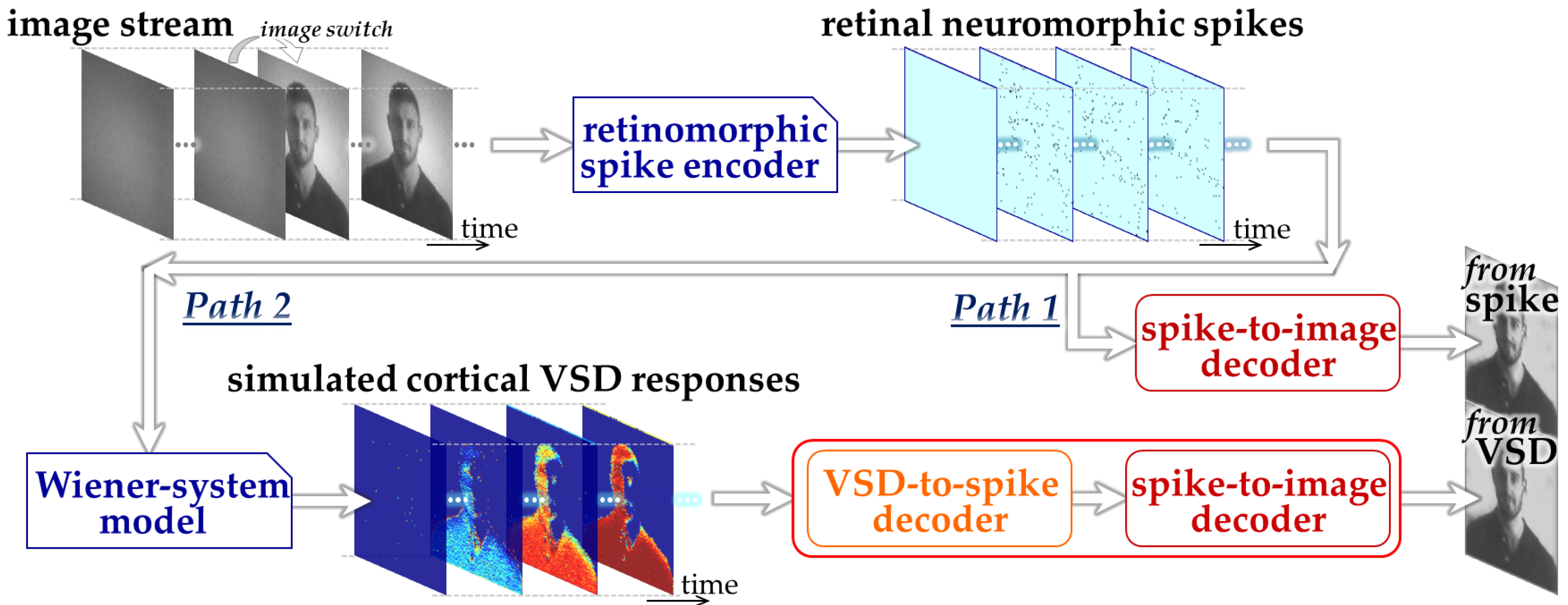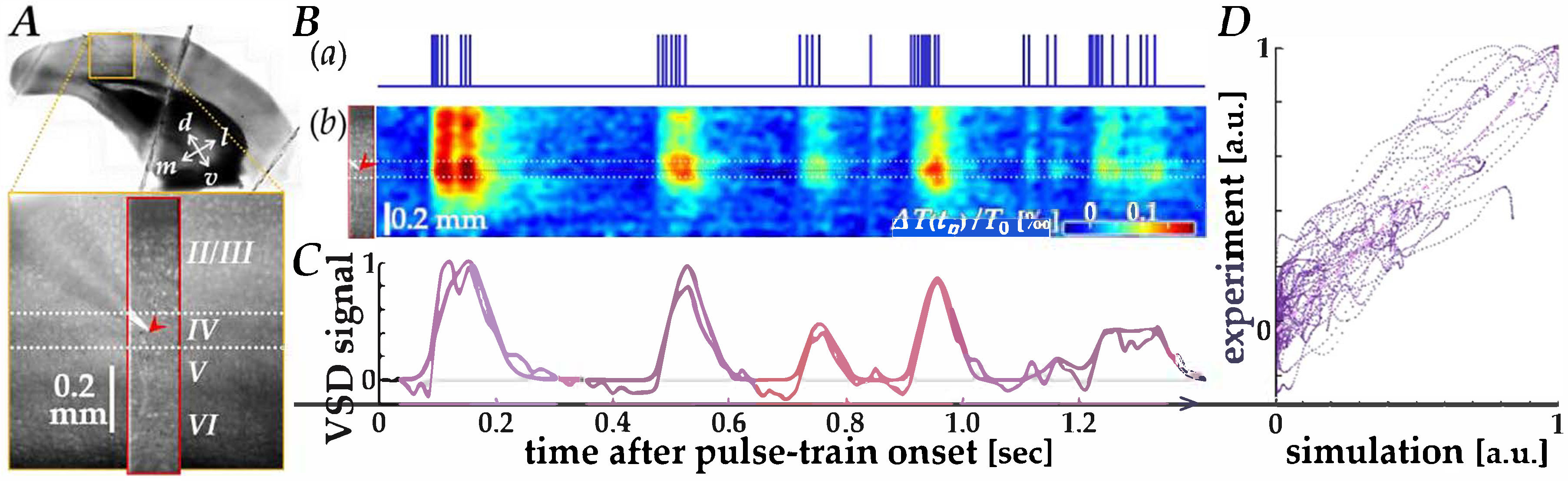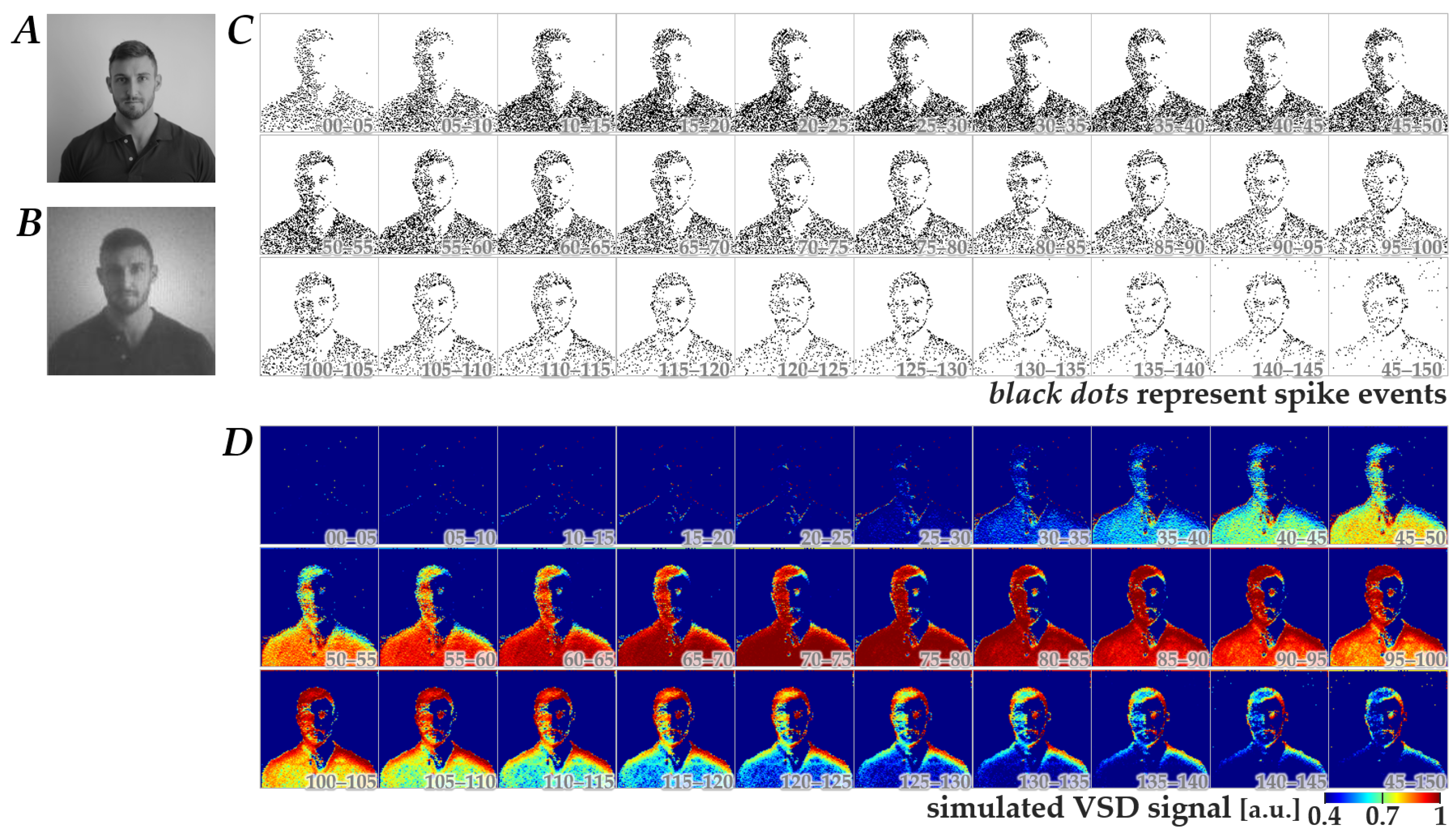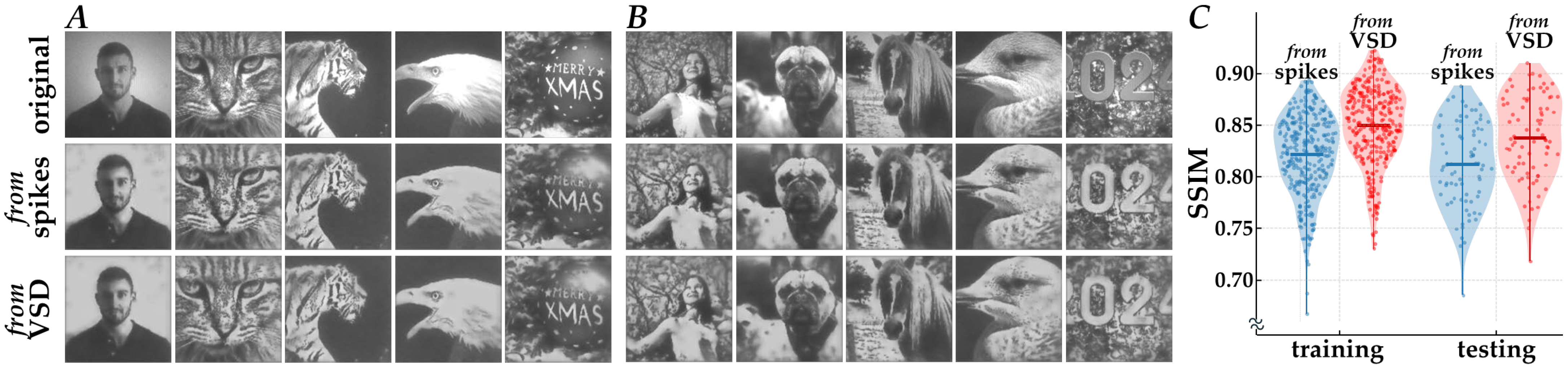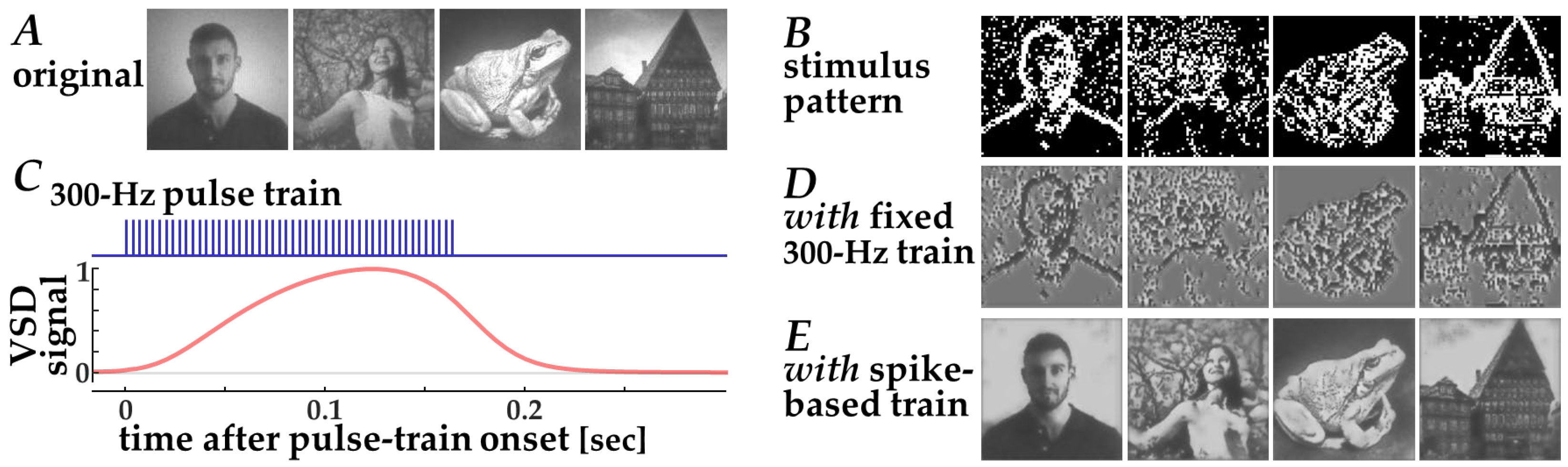
A Machine Learning-Based Decoder Framework for the Cortical Voltage-Sensitive Dye Responses to Retinal Neuromorphic Microstimulation: A Proof-of-Concept Simulation Study


Abstract
1. Introduction
2. Methods
2.1. Physiological Experiments
2.2. Wiener-System Model
2.3. Machine Learning-Based Framework
3. Results
3.1. Dataset Synthesis
3.2. Decoding Performance
4. Discussion
Author Contributions
Funding
Institutional Review Board Statement
Informed Consent Statement
Data Availability Statement
Acknowledgments
Conflicts of Interest
Abbreviations
| ICMS | Intracortical microstimulation |
| V1 | Primary visual cortex |
| VSD | Voltage-sensitive dye |
| ML | Machine learning |
| CNN | Convolutional neural network |
| SSIM | Structural Similarity Index Measure |
| Adam | Adaptive Moment Estimation |
References
- Brindley, G.S.; Lewin, W.S. The sensations produced by electrical stimulation of the visual cortex. J. Physiol. 1968, 196, 479–493. [Google Scholar] [CrossRef]
- Dobelle, W.H.; Mladejovsky, M.G. Phosphenes produced by electrical stimulation of human occipital cortex, and their application to artificial vision. J. Physiol. 1974, 243, 553–576. [Google Scholar] [CrossRef] [PubMed]
- Pollen, D.A. Some perceptual effects of electrical stimulation of the visual cortex in man. In The Nervous System; Tower, D.B., Ed.; Raven Press: New York, NY, USA, 1975; Volume 2, pp. 519–523. [Google Scholar]
- Beauchamp, M.S.; Yoshor, D. Dynamic stimulation of visual cortex produces form vision in sighted and blind humans. Cell 2020, 181, 774–783. [Google Scholar] [CrossRef] [PubMed]
- Schmidt, E.M.; Bak, M.J.; Hambrecht, F.T.; Kufta, C.V.; O’Rourke, D.K.; Vallabhanath, P. Feasibility of a visual prosthesis for the blind based on intracortical microstimulation of the visual cortex. Brain 1996, 119, 507–522. [Google Scholar] [CrossRef] [PubMed]
- Tehovnik, E.J. Electrical stimulation of neural tissue to evoke behavioral responses. J. Neurosci. Methods 1996, 65, 1–17. [Google Scholar] [CrossRef]
- Lewis, P.M.; Ackland, H.M.; Lowery, A.J.; Rosenfeld, J.V. Restoration of vision in blind individuals using bionic devices: A review with a focus on cortical visual prostheses. Brain Res. 2016, 1668, 59–80. [Google Scholar] [CrossRef]
- Fernández, E.; Alfaro, A.; Soto-Sánchez, C.; Gonzalez-Lopez, P.; Lozano, A.M.; Peña, S.; Grima, M.D.; Rodil, A.; Gómez, B.; Chen, X.; et al. Visual percepts evoked with an intracortical 96-channel microelectrode array inserted in human occipital cortex. J. Clin. Investig. 2021, 131, e151331. [Google Scholar] [CrossRef]
- Grinvald, A.; Hildesheim, R. VSDI: A new era in functional imaging of cortical dynamics. Nat. Rev. Neurosci. 2004, 5, 874–885. [Google Scholar] [CrossRef]
- Momose-Sato, Y.; Sato, K.; Arai, Y.; Yazawa, I.; Mochida, H.; Kamino, K. Evaluation of voltage-sensitive dyes for long-term recording of neural activity in the hippocampus. Membr. Biol. 1999, 172, 145–157. [Google Scholar] [CrossRef]
- Tanaka, Y.; Nomoto, T.; Shiki, T.; Sakata, Y.; Shimada, Y.; Hayashida, Y.; Yagi, T. Focal activation of neuronal circuits induced by microstimulation in the visual cortex. J. Neural Eng. 2019, 16, 036007. [Google Scholar] [CrossRef]
- Hayashida, Y.; Kameda, S.; Umehira, Y.; Ishikawa, S.; Yagi, T. Multichannel stimulation module as a tool for animal studies on cortical neural prostheses. Front. Med. Technol. 2022, 4, 927581. [Google Scholar] [CrossRef]
- Nokura, T.; Tamaki, T.; Hayashida, Y. On the Information Coding with Retinal Neuromorphic Spikes Toward the Spike-Based Microstimulation in Intra-Cortical Visual Prostheses. In Proceedings of the 2024 16th Biomedical Engineering International Conference (BMEiCON2024), Chon Buri, Thailand, 21–24 November 2024; pp. 1–5. [Google Scholar] [CrossRef]
- Yamada, K.; Fukuda, S.; Hayashida, Y. Optical imaging of the mouse cortical neural activities driven by microstimulation pulse trains based on retinal and neuromorphic spike-timing sequences. In Proceedings of the 2024 46th Annual International Conference of the IEEE Engineering in Medicine and Biology Society (IEEE-EMBC2024), Orlando, FL, USA, 15–19 July 2024; p. 8416. [Google Scholar]
- Kay, K.N.; Naselaris, T.; Prenger, R.J.; Gallant, J.L. Identifying natural images from human brain activity. Nature 2008, 452, 352–355. [Google Scholar] [CrossRef] [PubMed]
- Miyawaki, Y.; Uchida, H.; Yamashita, O.; Sato, M.-A.; Morito, Y.; Tanabe, H.C.; Sadato, N.; Kamitani, Y. Visual image reconstruction from human brain activity using a combination of multiscale local image decoders. Neuron 2008, 60, 915–929. [Google Scholar] [CrossRef] [PubMed]
- Nishimoto, S.; Vu, A.T.; Naselaris, T.; Benjamini, Y.; Yu, B.; Gallant, J.L. Reconstructing visual experiences from brain activity evoked by natural movies. Curr. Biol. 2011, 21, 1641–1646. [Google Scholar] [CrossRef] [PubMed]
- Shen, G.; Horikawa, T.; Majima, K.; Kamitani, Y. Deep image reconstruction from human brain activity. PLoS Comput. Biol. 2019, 15, e1006633. [Google Scholar] [CrossRef]
- Zhang, Y.; Du, C.; Zhang, L.; Wang, T. Reconstructing seen image from brain activity by visually-guided cognitive attention and adversarial learning. Neurocomputing 2020, 418, 17–28. [Google Scholar]
- Terakura, Y.; Yamada, K.; Fukuda, S.; Hayashida, Y. Modeling of Visual Cortex Responses to Retinal Neuromorphic Spike-Timing-Based Microstimulation in Mouse Brain Slices. In Proceedings of the 2025 10th International Conference on Intelligent Informatics and Biomedical Sciences (ICIIBMS2025), Okinawa, Japan, 2–5 December 2025; pp. 304–306. [Google Scholar] [CrossRef]
- Fukuda, S.; Hayashida, Y. Optimal interphase delay in biphasic current pulses facilitates neural circuit activation induced by microstimulation in the mouse visual cortex. Front. Neurosci. 2026, 19, 1710221. [Google Scholar] [CrossRef]
- Nokura, T.; Okada, R.; Yamamasu, S.; Yasukawa, S.; Hayashida, Y. Neuromorphic spikes generated by the retinal circuit emulator for training 3-dimensional convolutional neural networks to reconstruct natural images. In Proceedings of the 2023 IEEE 23rd International Symposium on Computational Intelligence and Informatics (CINTI2023), Budapest, Hungary, 20–22 November 2023; pp. 71–76. [Google Scholar] [CrossRef]
- Hunter, I.W.; Korenberg, M.J. The identification of nonlinear biological systems: Wiener and Hammerstein cascade models. Biol. Cybern. 1986, 55, 135–144. [Google Scholar] [CrossRef]
- Hayashida, Y.; Rodríguez, C.V.; Ogata, G.; Partida, G.J.; Oi, H.; Stradleigh, T.W.; Lee, S.C.; Colado, A.F.; Ishida, A.T. Inhibition of adult rat retinal ganglion cells by D1-type dopamine receptor activation. J Neurosci. 2009, 29, 15001–15016. [Google Scholar] [CrossRef]
- Chichilnisky, E.J. A simple white noise analysis of neuronal light responses. Netw. Comput. Neural Syst. 2001, 12, 199–213. [Google Scholar] [CrossRef]
- Ji, S.; Xu, W.; Yang, M.; Yu, K. 3D convolutional neural networks for human action recognition. IEEE Trans. Pattern Anal. Mach. Intell. 2013, 35, 221–231. [Google Scholar] [CrossRef]
- Hayashida, Y.; Kudo, Y.; Ishida, R.; Okuno, H.; Yagi, T. Retinal Circuit Emulator With Spatiotemporal Spike Outputs at Millisecond Resolution in Response to Visual Events. IEEE Trans. Biomed. Circuits Syst. 2017, 11, 597–611. [Google Scholar] [CrossRef]
- Izhikevich, E.M. Dynamical Systems in Neuroscience: The Geometry of Excitability and Bursting; MIT Press: Cambridge, MA, USA, 2007. [Google Scholar]
- Wang, Z.; Bovik, A.C.; Sheikh, H.R.; Simoncelli, E.P. Image quality assessment: From error visibility to structural similarity. IEEE Trans. Image Process. 2004, 13, 600–612. [Google Scholar] [CrossRef]
- Kingma, D.P.; Ba, J. Adam: A method for stochastic optimization. arXiv 2014, arXiv:1412.6980. [Google Scholar]
- Ioffe, S.; Szegedy, C. Batch normalization: Accelerating deep network training by reducing internal covariate shift. In Proceedings of the 32nd International Conference on Machine Learning, Lille, France, 6–11 July 2015; pp. 448–456. [Google Scholar]
- VanRullen, R.; Thorpe, S.J. Rate coding versus temporal order coding: What the retinal ganglion cells tell the visual cortex. Neural Comput. 2001, 13, 1255–1283. [Google Scholar] [CrossRef]
- Butts, D.A.; Weng, C.; Jin, J.; Yeh, C.I.; Lesica, N.A.; Alonso, J.M.; Stanley, G.B. Temporal precision in the neural code and the timescales of natural vision. Nature 2007, 449, 92–95. [Google Scholar] [CrossRef]
- Mainen, Z.F.; Sejnowski, T.J. Reliability of spike timing in neocortical neurons. Science 1995, 268, 1503–1506. [Google Scholar] [CrossRef] [PubMed]

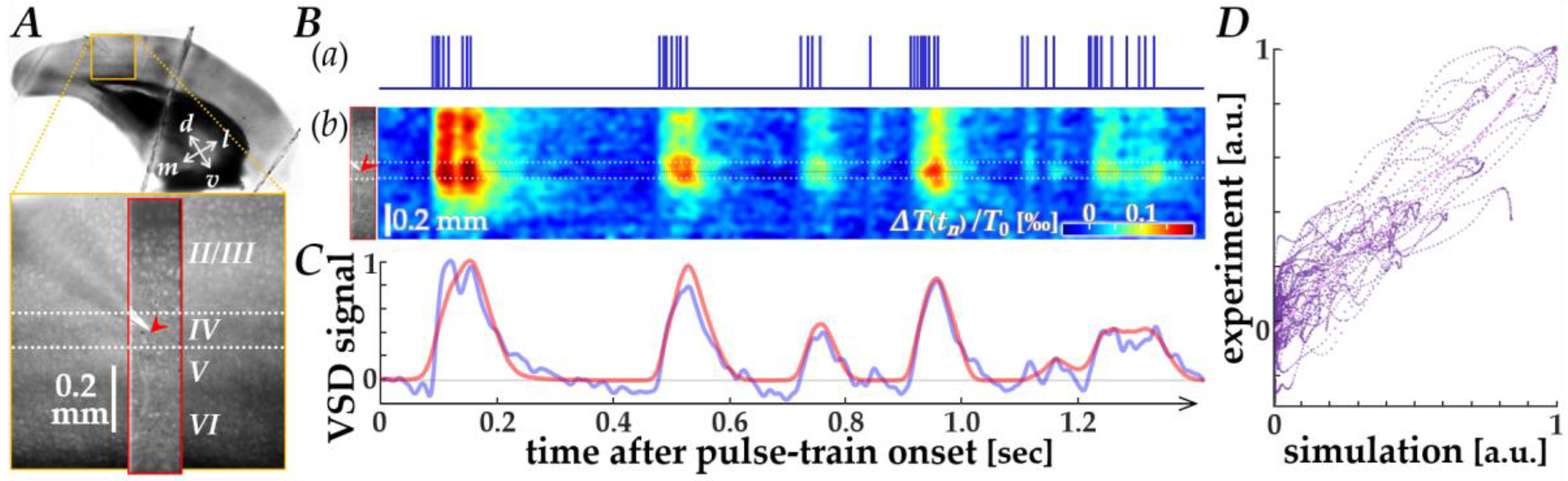


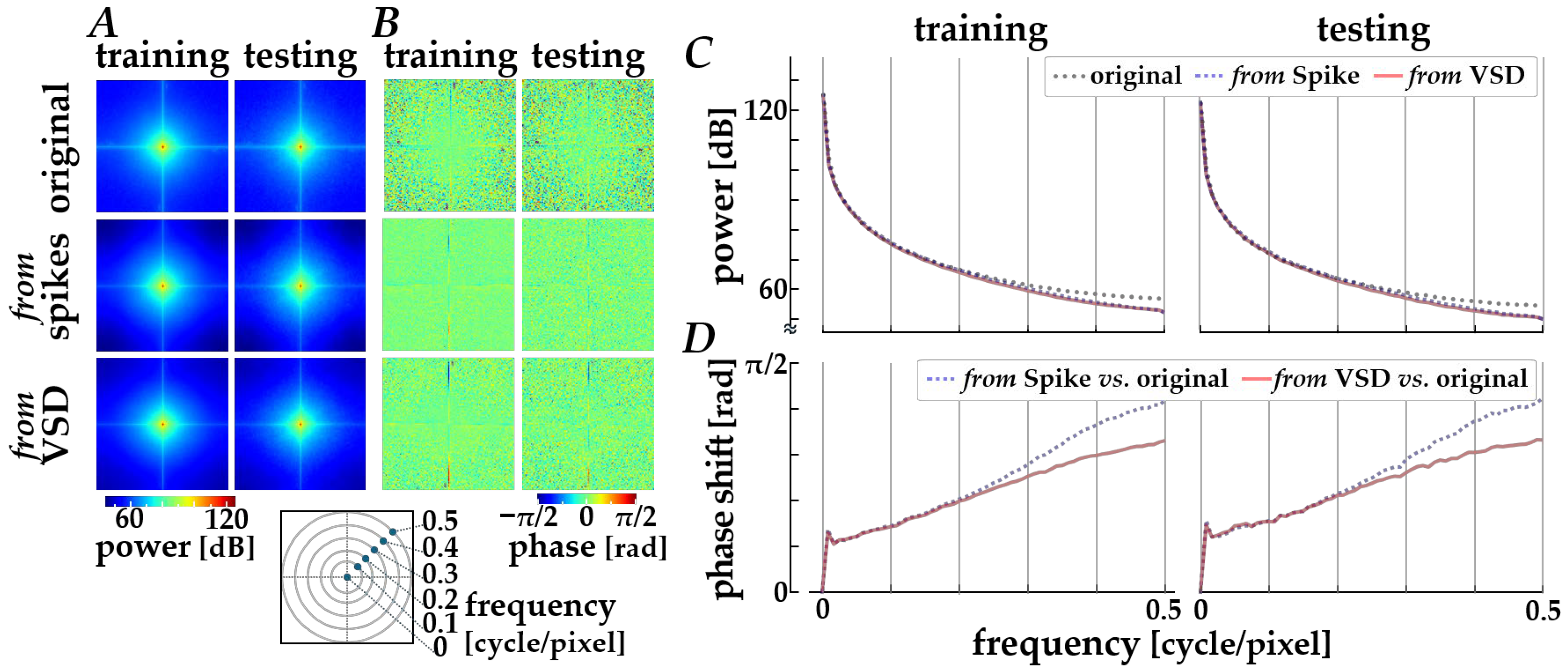


| Layer | Operation [Kernel] | Output | Parameters | Layer | Operation [Kernel] | Output | Parameters |
|---|---|---|---|---|---|---|---|
| 0 | Input [200 × 120 × 120 × 1] | 5 | Conv3D [(5 × 3 × 3) × 16] | (200 × 120 × 120) × 16 | 23,040 | ||
| 1 | Conv3D [(7 × 3 × 3) × 16] | (200 × 120 × 120) × 16 | 1008 | 6 | Batch Norm [γ, β] | (200 × 120 × 120) × 16 | 32 |
| 2 | Batch Norm [γ, β] | (200 × 120 × 120) × 16 | 32 | 7 | Conv3D [(3 × 3 × 3) × 32] | (200 × 120 × 120) × 32 | 13,824 |
| 3 | Conv3D [(5 × 3 × 3) × 32] | (200 × 120 × 120) × 32 | 23,040 | 8 | Batch Norm [γ, β] | (200 × 120 × 120) × 32 | 64 |
| 4 | Batch Norm [γ, β] | (200 × 120 × 120) × 32 | 64 | 9 | Conv3D [(1 × 1 × 1) × 1] | (200 × 120 × 120) × 1 | 33 |
| Layer | Operation [Kernel] | Output | Parameters | Layer | Operation [Kernel] | Output | Parameters |
|---|---|---|---|---|---|---|---|
| 0 | Input [30 × 120 × 120 × 1] | 5 | Avepooling3D [3 × 1 × 1] | (5 × 120 × 120) × 8 | 0 | ||
| 1 | Conv3D [(30 × 3 × 3) × 4] | (30 × 120 × 120) × 4 | 1084 | 6 | Conv3D [(5 × 3 × 3) × 16] | (5 × 120 × 120) × 16 | 5776 |
| 2 | Conv3D [(30 × 3 × 3) × 4] | (30 × 120 × 120) × 4 | 4324 | 7 | Avepooling3D [5 × 1 × 1] | (1 × 120 × 120) × 16 | 0 |
| 3 | Avepooling3D [2 × 1 × 1] | (15 × 120 × 120) × 4 | 0 | 8 | Conv3D [(1 × 3 × 3) × 1] | (1 × 120 × 120) × 1 | 145 |
| 4 | Conv3D [(15 × 3 × 3) × 8] | (15 × 120 × 120) × 8 | 4328 |
Disclaimer/Publisher’s Note: The statements, opinions and data contained in all publications are solely those of the individual author(s) and contributor(s) and not of MDPI and/or the editor(s). MDPI and/or the editor(s) disclaim responsibility for any injury to people or property resulting from any ideas, methods, instructions or products referred to in the content. |
© 2026 by the authors. Licensee MDPI, Basel, Switzerland. This article is an open access article distributed under the terms and conditions of the Creative Commons Attribution (CC BY) license.
Share and Cite
Yamada, K.; Terakura, Y.; Fukuda, S.; Hayashida, Y. A Machine Learning-Based Decoder Framework for the Cortical Voltage-Sensitive Dye Responses to Retinal Neuromorphic Microstimulation: A Proof-of-Concept Simulation Study. Bioengineering 2026, 13, 231. https://doi.org/10.3390/bioengineering13020231
Yamada K, Terakura Y, Fukuda S, Hayashida Y. A Machine Learning-Based Decoder Framework for the Cortical Voltage-Sensitive Dye Responses to Retinal Neuromorphic Microstimulation: A Proof-of-Concept Simulation Study. Bioengineering. 2026; 13(2):231. https://doi.org/10.3390/bioengineering13020231
Chicago/Turabian StyleYamada, Keisuke, Yuina Terakura, Santa Fukuda, and Yuki Hayashida. 2026. "A Machine Learning-Based Decoder Framework for the Cortical Voltage-Sensitive Dye Responses to Retinal Neuromorphic Microstimulation: A Proof-of-Concept Simulation Study" Bioengineering 13, no. 2: 231. https://doi.org/10.3390/bioengineering13020231
APA StyleYamada, K., Terakura, Y., Fukuda, S., & Hayashida, Y. (2026). A Machine Learning-Based Decoder Framework for the Cortical Voltage-Sensitive Dye Responses to Retinal Neuromorphic Microstimulation: A Proof-of-Concept Simulation Study. Bioengineering, 13(2), 231. https://doi.org/10.3390/bioengineering13020231