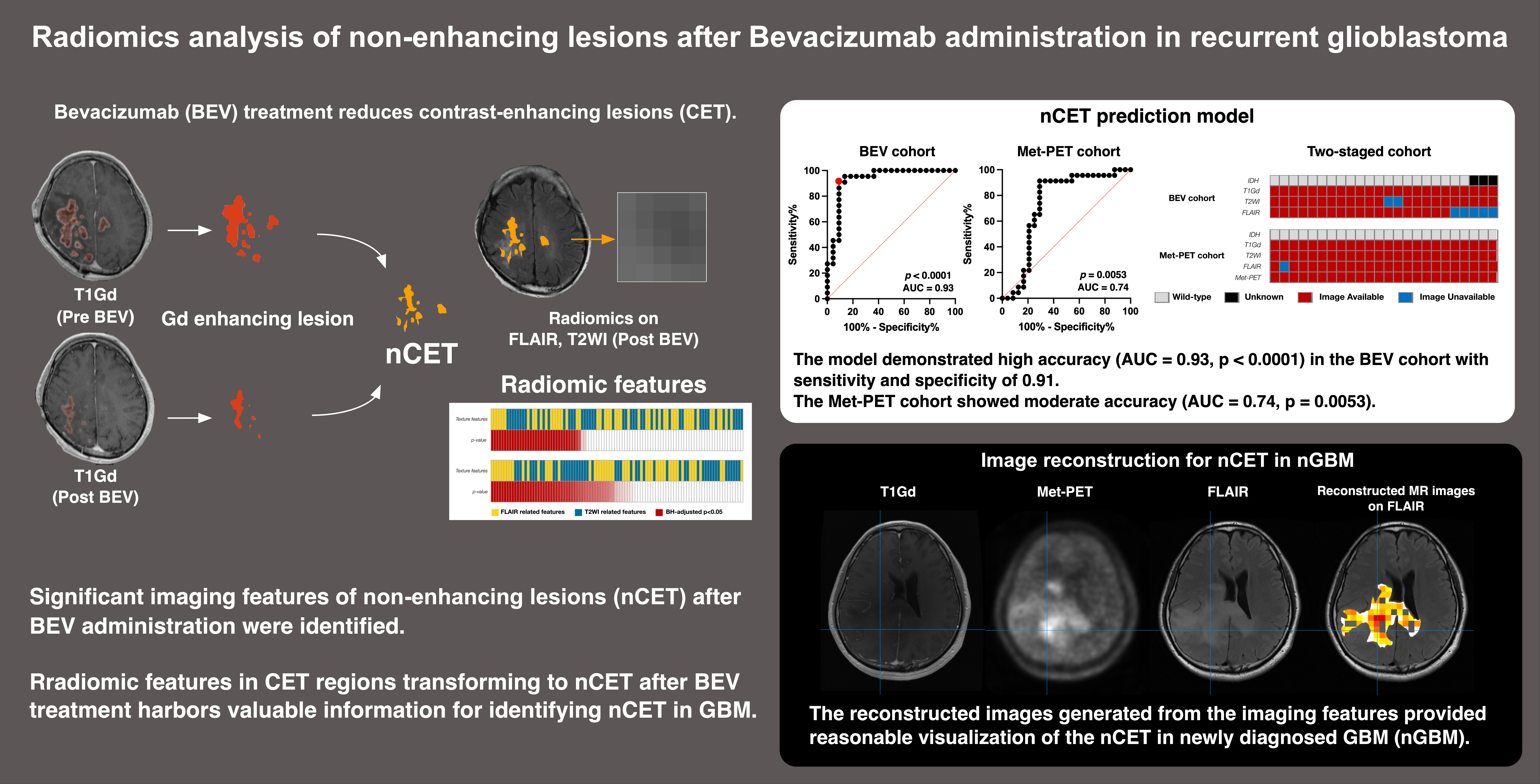


Radiomics Analysis of Non-Enhancing Lesions After Bevacizumab Administration in Recurrent Glioblastoma

 ,
,  , , , ,
Abstract
1. Introduction
2. Materials and Methods
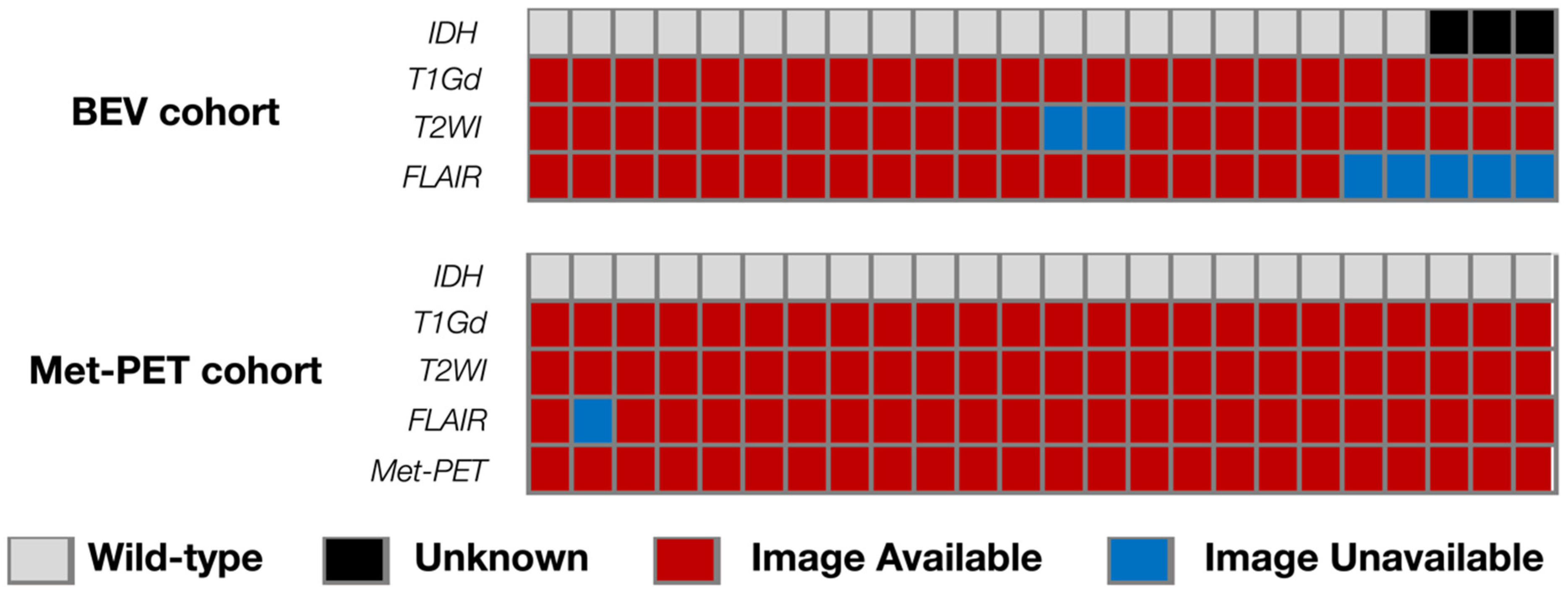
2.1. Patients and Cohorts
2.2. Genetic Analysis and Pathological Diagnosis
2.3. MRI and 11C-Methionine Positron Emission Tomography (Met-PET) Acquisition
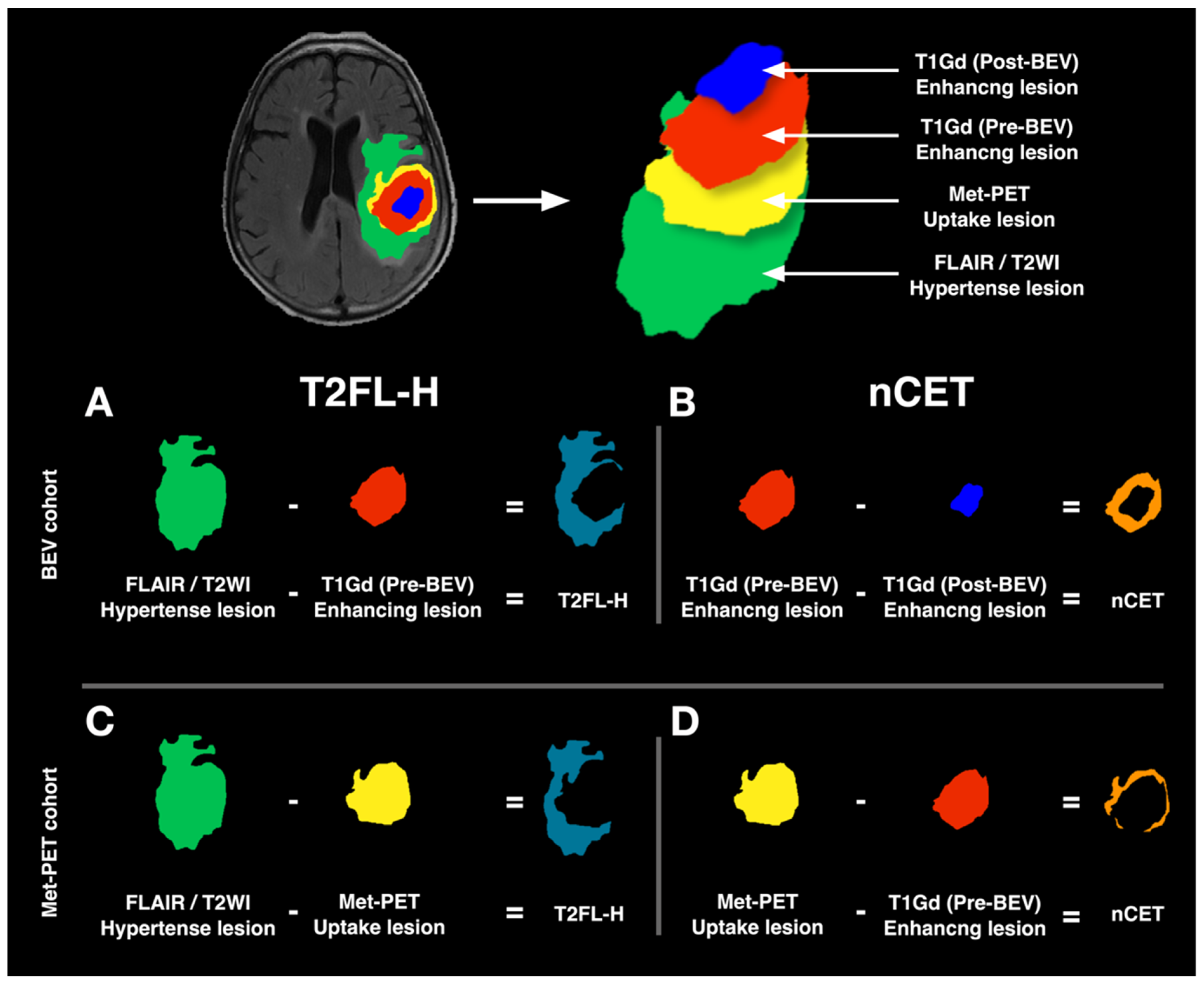
2.4. The Concept of Crafting Voxels-of-Interest
2.5. Image Co-Registration and Radiomics
2.6. Statistical Analysis and Imaging Feature Selection
2.7. The Evaluation of nCET Prediction Through Radiomic Features in Newly Diagnosed GBM
2.8. nCET Predictive Image Reconstruction via Radiomics
3. Results
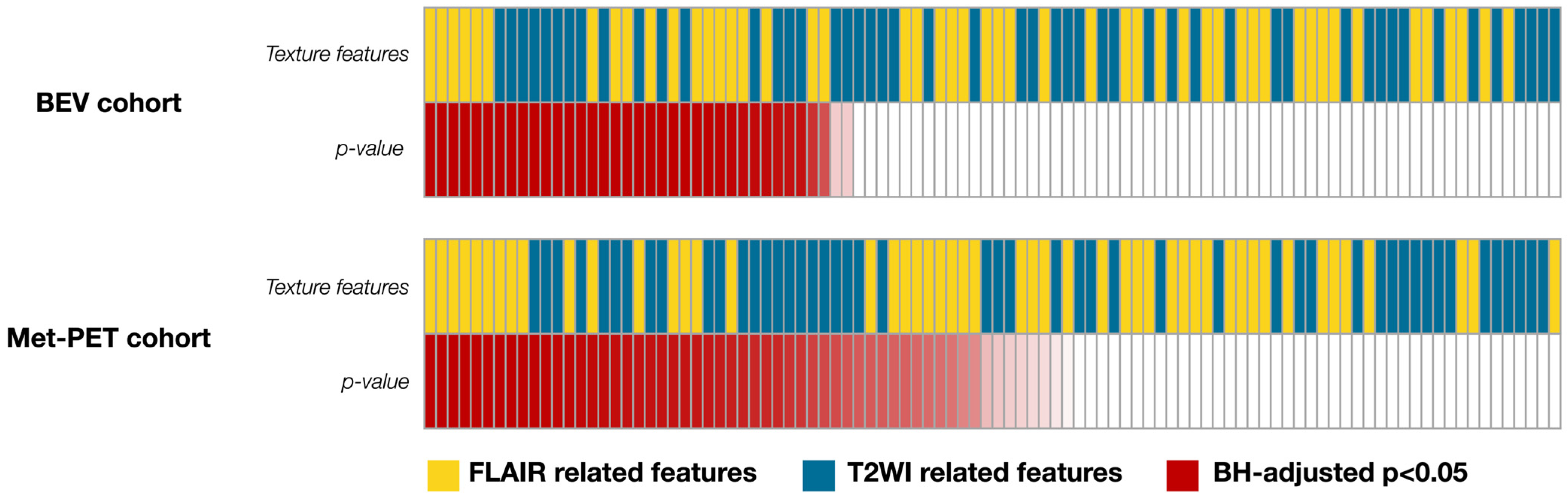
3.1. Significant Radiomic Features for VOInCET
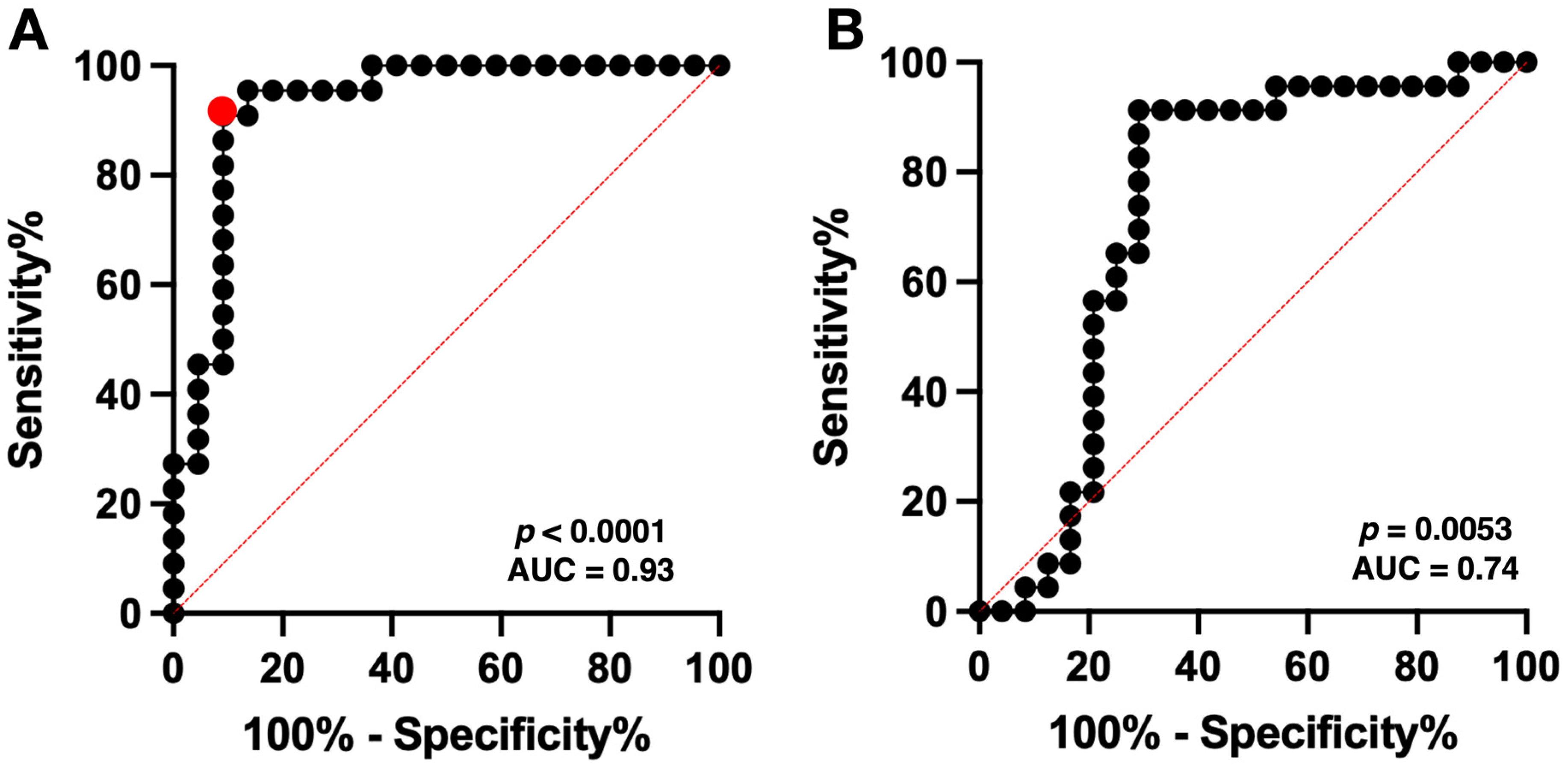
3.2. The Predictive Model for nCET in the BEV Cohort
3.3. The Predictive Model for nCET in Newly Diagnosed GBM in the Met-PET Cohort
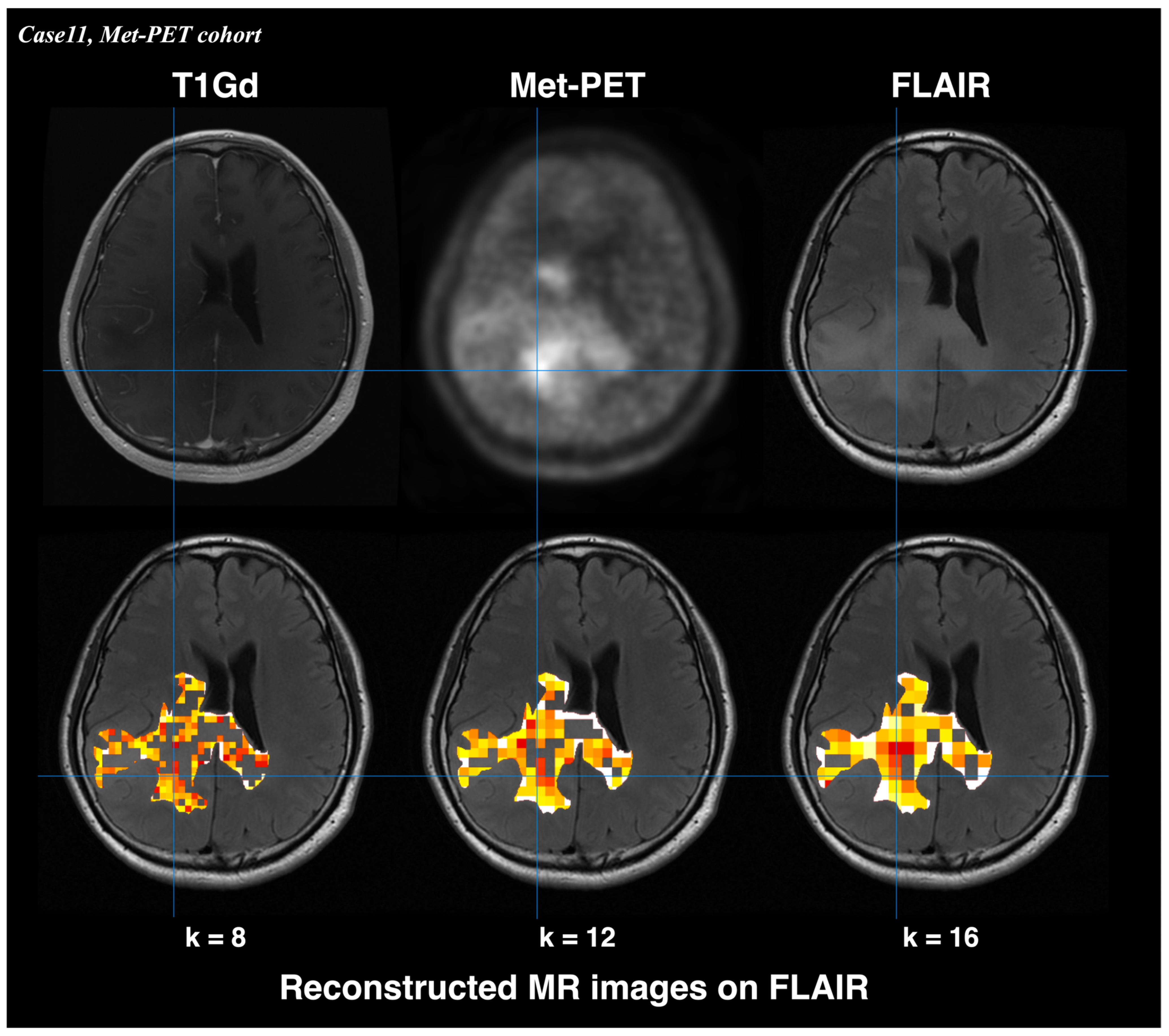
3.4. Reconstruction of nCET Predictive Image from Radiomic Features
4. Discussion
5. Conclusions
Supplementary Materials
Author Contributions
Funding
Institutional Review Board Statement
Informed Consent Statement
Data Availability Statement
Acknowledgments
Conflicts of Interest
Abbreviations
| nCET | Non-contrast-enhancing tumors |
| CET | Contrast-enhancing tumors |
| BEV | Bevacizumab |
| GBM | Glioblastoma |
| rGBM | Recurrent GBM |
| nGBM | Newly diagnosed GBM |
| MRI | Magnetic resonance imaging |
| T1Gd | Gadolinium-um-enhanced T1-weighted imaging |
| FLAIR | Fluid-attenuated inversion recovery |
| T2WI | T2-weighted images |
| IDH | Isocitrate dehydrogenase |
| Met-PET | 11C-methionine positron emission tomography |
| AMUH | Asahikawa Medical University Hospital |
| OICI | Osaka International Cancer Institute |
| OUH | Osaka University Hospital |
| GLCM | Gray Level Co-occurrence Matrix |
| GLRLM | Gray Lebel Run Length Matrix |
| PPV | Positive predictive value |
| NPV | Negative predictive value |
| ROC | receiver-operating characteristic |
| AUC | Area under the curve |
References
- Sanai, N.; Polley, M.-Y.; McDermott, M.W.; Parsa, A.T.; Berger, M.S. An Extent of Resection Threshold for Newly Diagnosed Glioblastomas. J. Neurosurg. 2011, 115, 3–8. [Google Scholar] [CrossRef] [PubMed]
- Lacroix, M.; Abi-Said, D.; Fourney, D.R.; Gokaslan, Z.L.; Shi, W.; DeMonte, F.; Lang, F.F.; McCutcheon, I.E.; Hassenbusch, S.J.; Holland, E.; et al. A Multivariate Analysis of 416 Patients with Glioblastoma Multiforme: Prognosis, Extent of Resection, and Survival. J. Neurosurg. 2001, 95, 190–198. [Google Scholar] [CrossRef] [PubMed]
- Li, Y.M.; Suki, D.; Hess, K.; Sawaya, R. The Influence of Maximum Safe Resection of Glioblastoma on Survival in 1229 Patients: Can We Do Better than Gross-Total Resection? J. Neurosurg. 2016, 124, 977–988. [Google Scholar] [CrossRef]
- Kinoshita, M.; Arita, H.; Okita, Y.; Kagawa, N.; Kishima, H.; Hashimoto, N.; Tanaka, H.; Watanabe, Y.; Shimosegawa, E.; Hatazawa, J.; et al. Comparison of Diffusion Tensor Imaging and (11)C-Methionine Positron Emission Tomography for Reliable Prediction of Tumor Cell Density in Gliomas. J. Neurosurg. 2016, 125, 1136–1142. [Google Scholar] [CrossRef]
- Lasocki, A.; Gaillard, F. Non-Contrast-Enhancing Tumor: A New Frontier in Glioblastoma Research. Am. J. Neuroradiol. 2019, 40, 758–765. [Google Scholar] [CrossRef] [PubMed]
- Karschnia, P.; Young, J.S.; Dono, A.; Häni, L.; Sciortino, T.; Bruno, F.; Juenger, S.T.; Teske, N.; Morshed, R.A.; Haddad, A.F.; et al. Prognostic Validation of a New Classification System for Extent of Resection in Glioblastoma: A Report of the RANO Resect Group. Neuro-Oncology 2022, 25, 940–954. [Google Scholar] [CrossRef]
- Molinaro, A.M.; Hervey-Jumper, S.; Morshed, R.A.; Young, J.; Han, S.J.; Chunduru, P.; Zhang, Y.; Phillips, J.J.; Shai, A.; Lafontaine, M.; et al. Association of Maximal Extent of Resection of Contrast-Enhanced and Non–Contrast-Enhanced Tumor with Survival Within Molecular Subgroups of Patients with Newly Diagnosed Glioblastoma. JAMA Oncol. 2020, 6, 495–503. [Google Scholar] [CrossRef]
- Yamamoto, S.; Okita, Y.; Arita, H.; Sanada, T.; Sakai, M.; Arisawa, A.; Kagawa, N.; Shimosegawa, E.; Nakanishi, K.; Kinoshita, M.; et al. Qualitative MR Features to Identify Non-Enhancing Tumors within Glioblastoma’s T2-FLAIR Hyperintense Lesions. J. Neurooncol. 2023, 165, 251–259. [Google Scholar] [CrossRef]
- Akbari, H.; Kazerooni, A.F.; Ware, J.B.; Mamourian, E.; Anderson, H.; Guiry, S.; Sako, C.; Raymond, C.; Yao, J.; Brem, S.; et al. Quantification of Tumor Microenvironment Acidity in Glioblastoma Using Principal Component Analysis of Dynamic Susceptibility Contrast Enhanced MR Imaging. Sci. Rep. 2021, 11, 15011. [Google Scholar] [CrossRef]
- Cohen, M.H.; Shen, Y.L.; Keegan, P.; Pazdur, R. FDA Drug Approval Summary: Bevacizumab (Avastin®) as Treatment of Recurrent Glioblastoma Multiforme. Oncologist 2009, 14, 1131–1138. [Google Scholar] [CrossRef]
- Brandsma, D.; Bent, M.J. van den Pseudoprogression and Pseudoresponse in the Treatment of Gliomas. Curr. Opin. Neurol. 2009, 22, 633–638. [Google Scholar] [CrossRef]
- Nowosielski, M.; Wen, P. Imaging Criteria in Neuro-Oncology. Semin. Neurol. 2018, 38, 24–31. [Google Scholar] [CrossRef]
- Arevalo, O.D.; Soto, C.; Rabiei, P.; Kamali, A.; Ballester, L.Y.; Esquenazi, Y.; Zhu, J.-J.; Riascos, R.F. Assessment of Glioblastoma Response in the Era of Bevacizumab: Longstanding and Emergent Challenges in the Imaging Evaluation of Pseudoresponse. Front. Neurol. 2019, 10, 460. [Google Scholar] [CrossRef]
- Sanada, T.; Yamamoto, S.; Sakai, M.; Umehara, T.; Sato, H.; Saito, M.; Mitsui, N.; Hiroshima, S.; Anei, R.; Kanemura, Y.; et al. Correlation of T1- to T2-Weighted Signal Intensity Ratio with T1- and T2-Relaxation Time and IDH Mutation Status in Glioma. Sci. Rep. 2022, 12, 18801. [Google Scholar] [CrossRef]
- Hatakeyama, T.; Kawai, N.; Nishiyama, Y.; Yamamoto, Y.; Sasakawa, Y.; Ichikawa, T.; Tamiya, T. 11C-Methionine (MET) and 18F-Fluorothymidine (FLT) PET in Patients with Newly Diagnosed Glioma. Eur. J. Nucl. Med. 2008, 35, 2009–2017. [Google Scholar] [CrossRef] [PubMed]
- Sasaki, T.; Kinoshita, M.; Fujita, K.; Fukai, J.; Hayashi, N.; Uematsu, Y.; Okita, Y.; Nonaka, M.; Moriuchi, S.; Uda, T.; et al. Radiomics and MGMT Promoter Methylation for Prognostication of Newly Diagnosed Glioblastoma. Sci. Rep. 2019, 9, 14435. [Google Scholar] [CrossRef]
- Peduzzi, P.; Concato, J.; Kemper, E.; Holford, T.R.; Feinstein, A.R. A Simulation Study of the Number of Events per Variable in Logistic Regression Analysis. J. Clin. Epidemiol. 1996, 49, 1373–1379. [Google Scholar] [CrossRef] [PubMed]
- Incekara, F.; Smits, M.; van der Voort, S.R.; Dubbink, H.J.; Atmodimedjo, P.N.; Kros, J.M.; Vincent, A.J.P.E.; Bent, M. van den The Association Between the Extent of Glioblastoma Resection and Survival in Light of MGMT Promoter Methylation in 326 Patients with Newly Diagnosed IDH-Wildtype Glioblastoma. Front. Oncol. 2020, 10, 1087. [Google Scholar] [CrossRef] [PubMed]
- de Leeuw, C.N.; Vogelbaum, M.A. Supratotal Resection in Glioma: A Systematic Review. Neuro-Oncology 2019, 21, 179–188. [Google Scholar] [CrossRef]
- Kracht, L.W.; Miletic, H.; Busch, S.; Jacobs, A.H.; Voges, J.; Hoevels, M.; Klein, J.C.; Herholz, K.; Heiss, W.-D. Delineation of Brain Tumor Extent with [11C]l-Methionine Positron Emission Tomography: Local Comparison with Stereotactic Histopathology. Clin. Cancer Res. 2004, 10, 7163–7170. [Google Scholar] [CrossRef]
- Verburg, N.; Hoefnagels, F.W.A.; Barkhof, F.; Boellaard, R.; Goldman, S.; Guo, J.; Heimans, J.J.; Hoekstra, O.S.; Jain, R.; Kinoshita, M.; et al. Diagnostic Accuracy of Neuroimaging to Delineate Diffuse Gliomas within the Brain: A Meta-Analysis. Am. J. Neuroradiol. 2017, 38, 1884–1891. [Google Scholar] [CrossRef]
- Haralick, R.M.; Shanmugam, K.; Dinstein, I. Textural Features for Image Classification. IEEE Trans. Syst. Man Cybern. 1973, SMC-3, 610–621. [Google Scholar] [CrossRef]
- Chen, X.; Wei, X.; Zhang, Z.; Yang, R.; Zhu, Y.; Jiang, X. Differentiation of True-Progression from Pseudoprogression in Glioblastoma Treated with Radiation Therapy and Concomitant Temozolomide by GLCM Texture Analysis of Conventional MRI. Clin. Imaging 2015, 39, 775–780. [Google Scholar] [CrossRef] [PubMed]
- Pignotti, F.; Ius, T.; Russo, R.; Bagatto, D.; Bartoli, F.B.; Boccia, E.; Boldrini, L.; Chiesa, S.; Ciardi, C.; Cusumano, D.; et al. Development and Validation of a MRI-Radiomics-Based Machine Learning Approach in High Grade Glioma to Detect Early Recurrence. Front. Oncol. 2024, 14, 1449235. [Google Scholar] [CrossRef] [PubMed]
- Ingrisch, M.; Schneider, M.J.; Nörenberg, D.; de Figueiredo, G.N.; Maier-Hein, K.; Suchorska, B.; Schüller, U.; Albert, N.; Brückmann, H.; Reiser, M.; et al. Radiomic Analysis Reveals Prognostic Information in T1-Weighted Baseline Magnetic Resonance Imaging in Patients with Glioblastoma. Investig. Radiol. 2017, 52, 360–366. [Google Scholar] [CrossRef]



| Imaging Features | Mean AUC | BEV Cohort | Met-PET Cohort | ||||||||
|---|---|---|---|---|---|---|---|---|---|---|---|
| ROC Analysis | BH-Adjusted p Value | Mann–Whitney U Test | ROC Analysis | BH-Adjusted p Value | Mann–Whitney U Test | ||||||
| AUC | p Value | Median | AUC | p Value | Median | ||||||
| T2FLH | nCET | T2FLH | nCET | ||||||||
| T2WI_whole_GLCMcorrelation_1 | 0.833 | 0.928 | p < 0.001 † | p < 0.001 † | 0.942 | 0.843 | 0.737 | 0.019 † | 0.005 † | 0.931 | 0.886 |
| FLAIR_whole_GLCMcorrelation_1 | 0.831 | 0.957 | p < 0.001 † | p < 0.001 † | 0.945 | 0.848 | 0.706 | 0.041 † | 0.018 † | 0.931 | 0.897 |
| FLAIR_whole_GLCMcorrelation_2 | 0.826 | 0.951 | p < 0.001 † | p < 0.001 † | 0.883 | 0.714 | 0.702 | 0.044 † | 0.020 † | 0.860 | 0.798 |
Disclaimer/Publisher’s Note: The statements, opinions and data contained in all publications are solely those of the individual author(s) and contributor(s) and not of MDPI and/or the editor(s). MDPI and/or the editor(s) disclaim responsibility for any injury to people or property resulting from any ideas, methods, instructions or products referred to in the content. |
© 2025 by the authors. Licensee MDPI, Basel, Switzerland. This article is an open access article distributed under the terms and conditions of the Creative Commons Attribution (CC BY) license.
Share and Cite
Sanada, T.; Shimizu, T.; Okita, Y.; Arita, H.; Sato, H.; Saito, M.; Mitsui, N.; Hiroshima, S.; Isohashi, K.; Tanino, M.; et al. Radiomics Analysis of Non-Enhancing Lesions After Bevacizumab Administration in Recurrent Glioblastoma. Bioengineering 2026, 13, 28. https://doi.org/10.3390/bioengineering13010028
Sanada T, Shimizu T, Okita Y, Arita H, Sato H, Saito M, Mitsui N, Hiroshima S, Isohashi K, Tanino M, et al. Radiomics Analysis of Non-Enhancing Lesions After Bevacizumab Administration in Recurrent Glioblastoma. Bioengineering. 2026; 13(1):28. https://doi.org/10.3390/bioengineering13010028
Chicago/Turabian StyleSanada, Takahiro, Takeshi Shimizu, Yoshiko Okita, Hideyuki Arita, Hirotaka Sato, Masato Saito, Nobuyuki Mitsui, Satoru Hiroshima, Kayako Isohashi, Mishie Tanino, and et al. 2026. "Radiomics Analysis of Non-Enhancing Lesions After Bevacizumab Administration in Recurrent Glioblastoma" Bioengineering 13, no. 1: 28. https://doi.org/10.3390/bioengineering13010028
APA StyleSanada, T., Shimizu, T., Okita, Y., Arita, H., Sato, H., Saito, M., Mitsui, N., Hiroshima, S., Isohashi, K., Tanino, M., Kanemura, Y., Kishima, H., & Kinoshita, M. (2026). Radiomics Analysis of Non-Enhancing Lesions After Bevacizumab Administration in Recurrent Glioblastoma. Bioengineering, 13(1), 28. https://doi.org/10.3390/bioengineering13010028