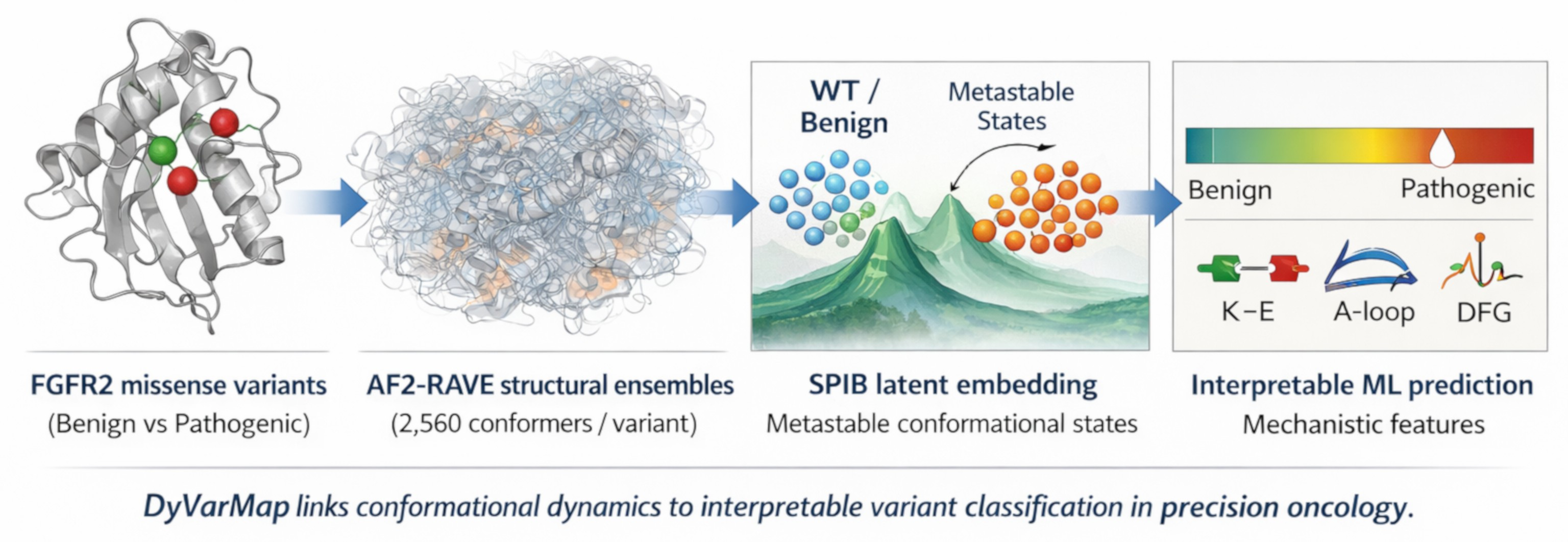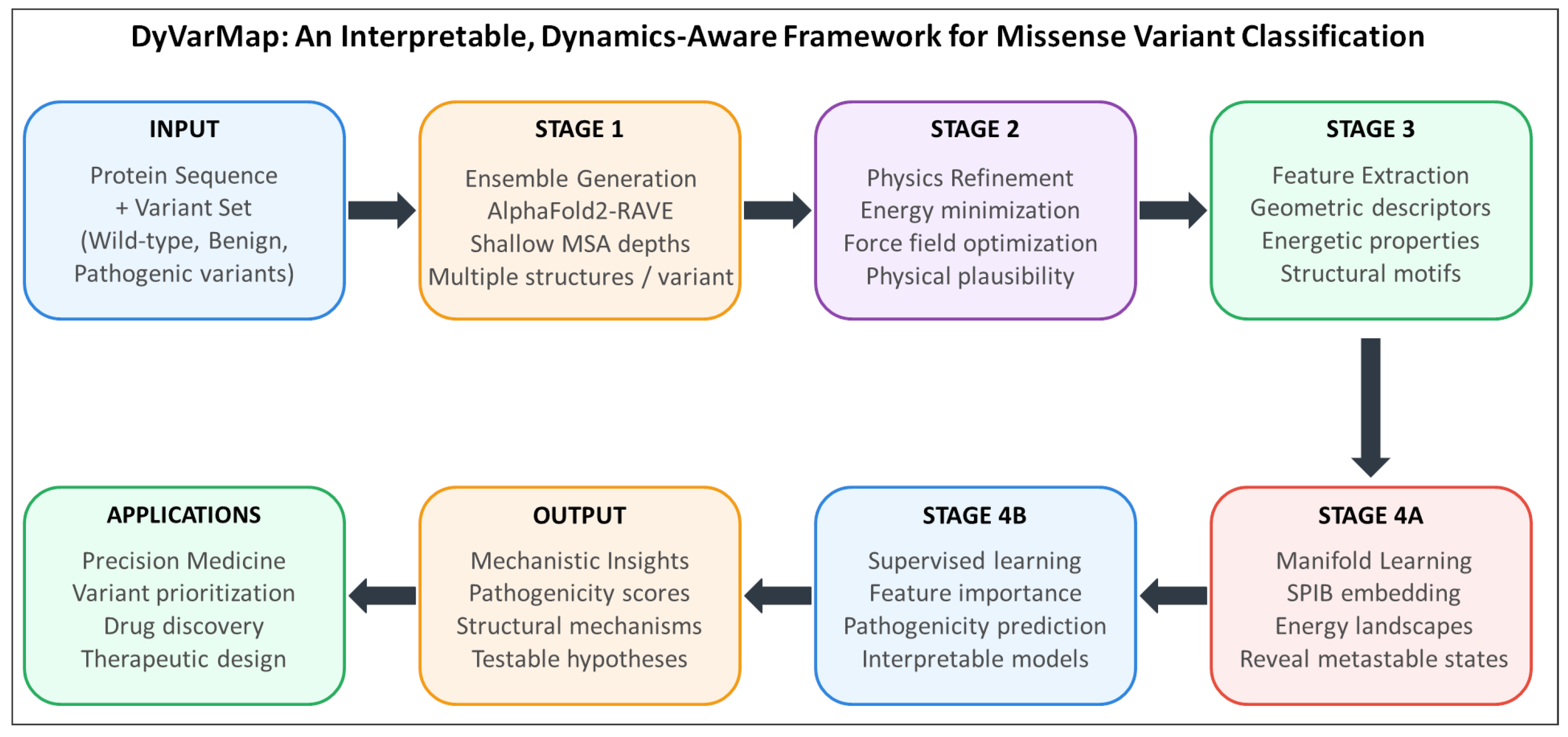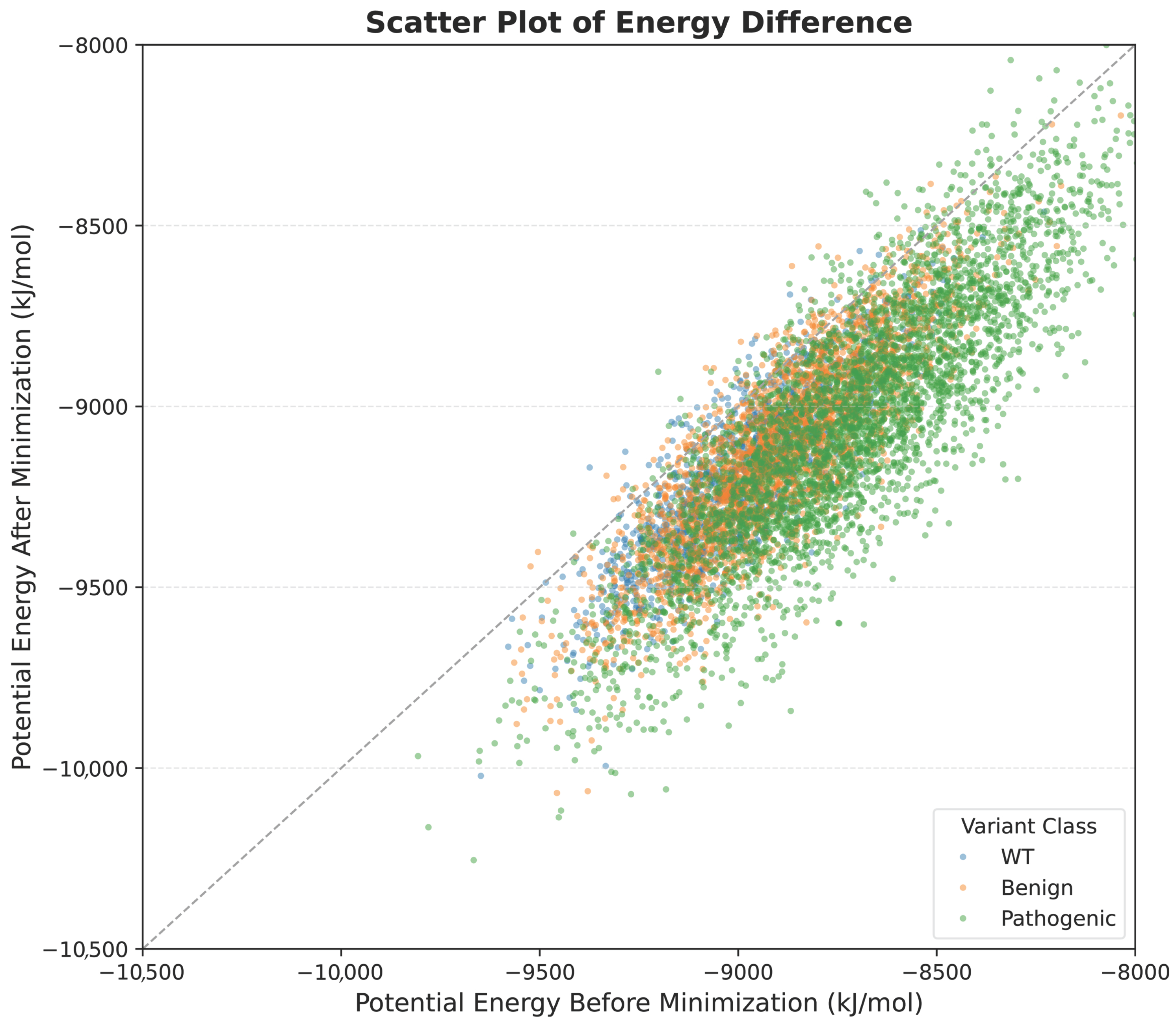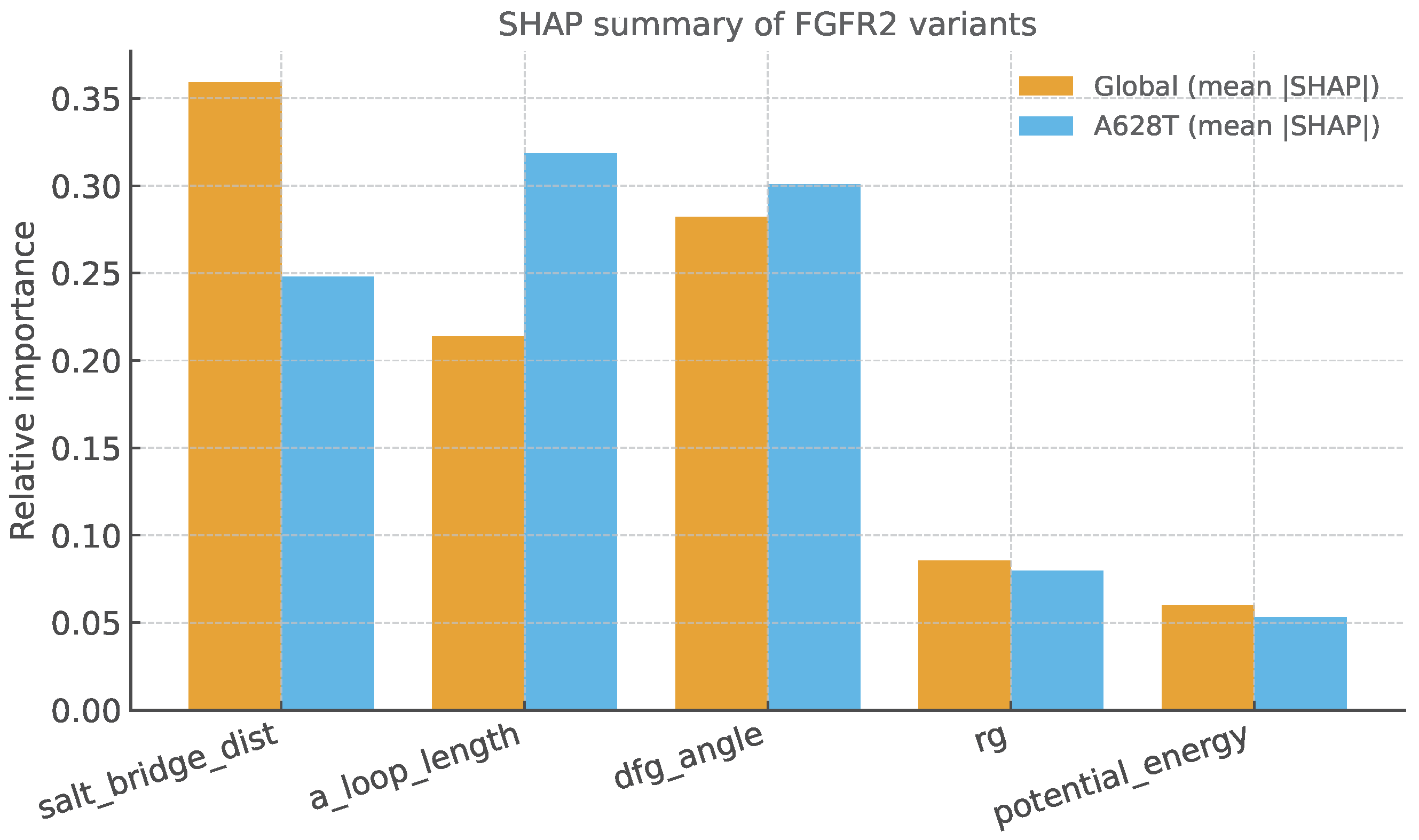

DyVarMap: Integrating Conformational Dynamics and Interpretable Machine Learning for Cancer-Associated Missense Variant Classification in FGFR2


Abstract
1. Introduction
2. Background and Related Work
2.1. Kinase Function and Pathogenic Missense Mutations
2.2. AI-Based Protein Structure Prediction
2.3. Conformational Dynamics and Landscapes
2.4. Variant Effect Prediction: Sequence-Based and Structure-Based Tools
2.5. Interpretable Machine Learning for Structural Biology
2.6. Terminology
3. Methods
3.1. Problem Formulation and DyVarMap Overview
- An ensemble of refined three-dimensional structures/conformations for each .
- A low-dimensional embedding that preserves slow conformational modes.
- A discrete set of metastable landscape basins with representative conformers.
- A pathogenicity probability together with Shapley-based feature attributions.
3.2. Stage 1: Structural Ensemble Generation
3.2.1. AF2-RAVE Implementation Details and Reproducibility
Computational Cost and Scalability
3.3. Stage 2: Physics Refinement of Structural Ensembles
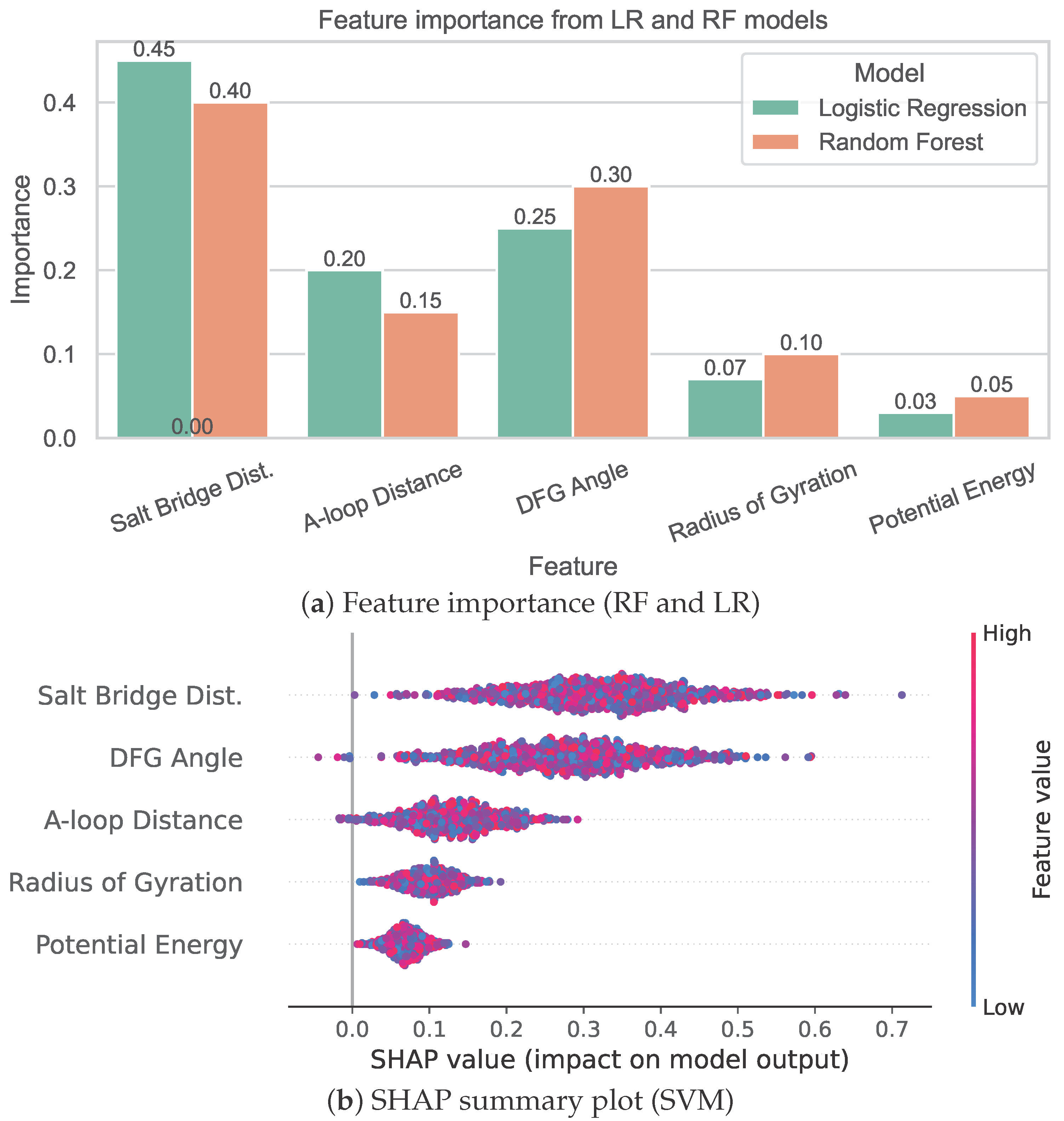
3.4. Stage 3: Feature Extraction from Refined Structures
- (i)
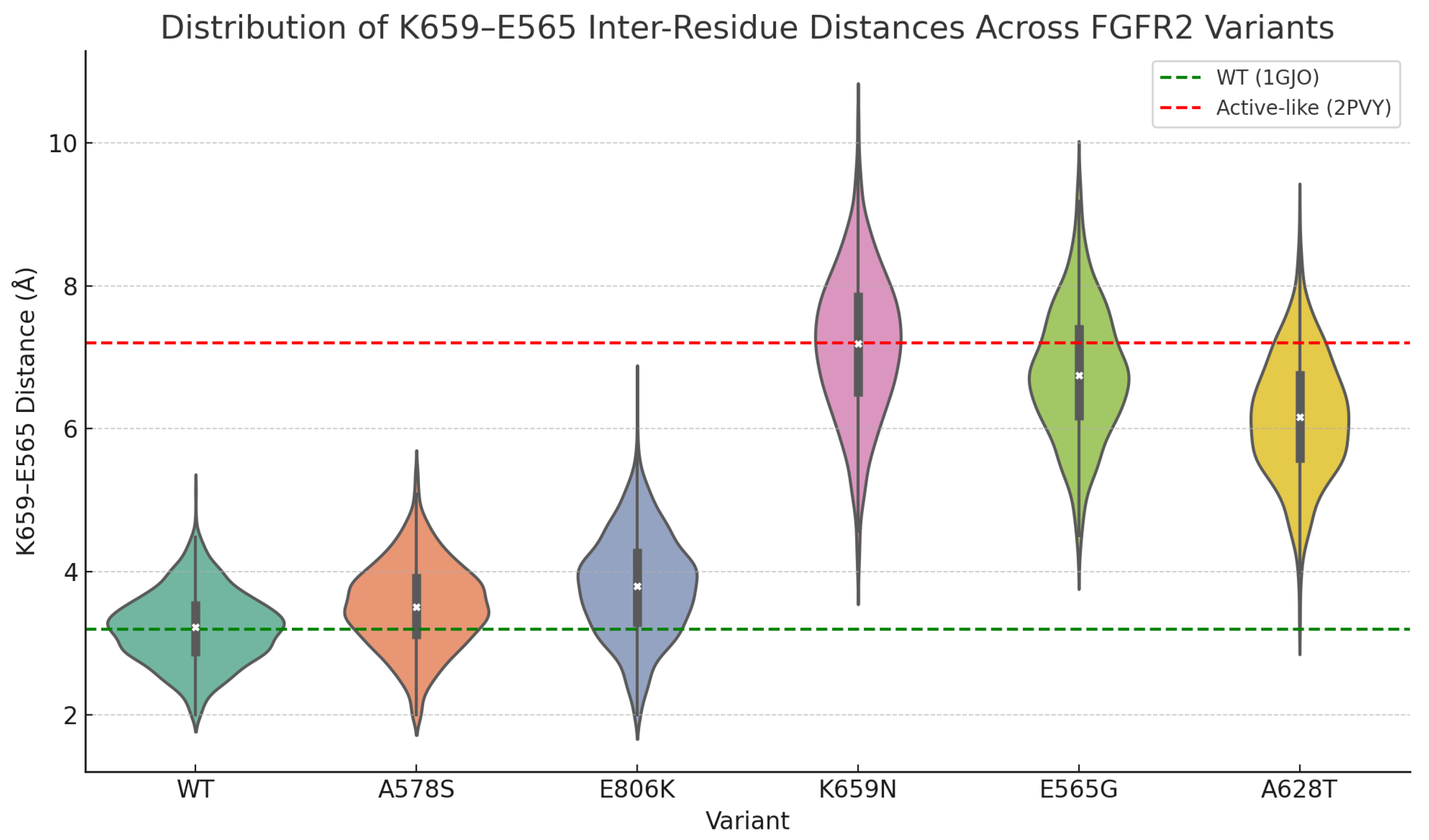
- The inter-residue distance between conserved catalytic residues (K659–E565 salt bridge in FGFR2) that mediate activation-state switching—a feature applicable to any protein with allosteric regulation where critical residue pairs undergo distance changes during functional transitions.
- (ii)
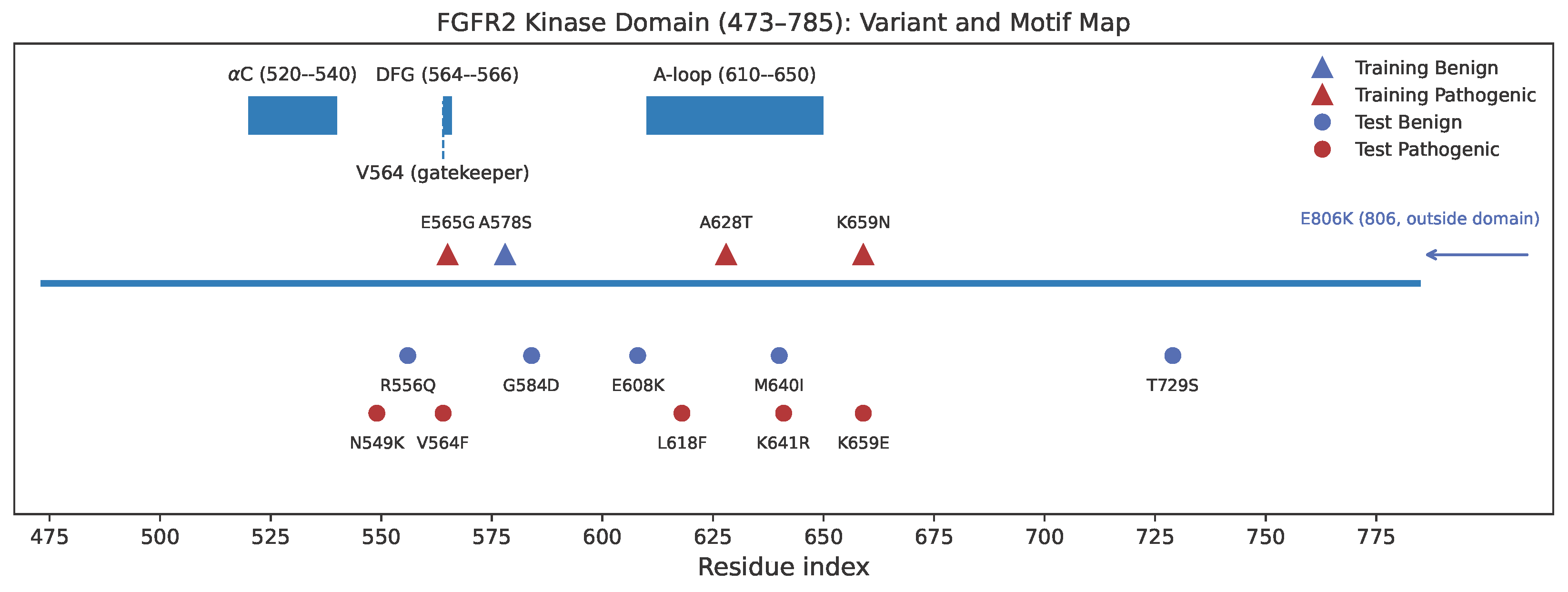
- The end-to-end length of the activation loop (residues 610–650 in FGFR2)—specific to kinases but generalizable to any protein with regulatory loop regions that undergo conformational changes.
- (iii)
- Backbone dihedral angles (, ) ofkey regulatory motifs (DFG-aspartate in FGFR2) applicable to any protein with well-characterized conformational switches, requiring only identification of the relevant structural motifs.
- (iv)
- The radius of gyration (Rg), a universal measure of structural compactnes.
- (v)
3.5. Stage 4A: Nonlinear Manifold Learning
3.5.1. Design Rationale
3.5.2. Construction of Empirical Conformational Density Landscapes and Clustering
3.6. Stage 4B: Supervised Learning of Mutational Class Signatures
3.7. Mechanistic Insights
3.7.1. Comparative Evaluation Protocol
3.7.2. External Variant Curation and Validation Protocol
4. Results
4.1. Experimental Setup
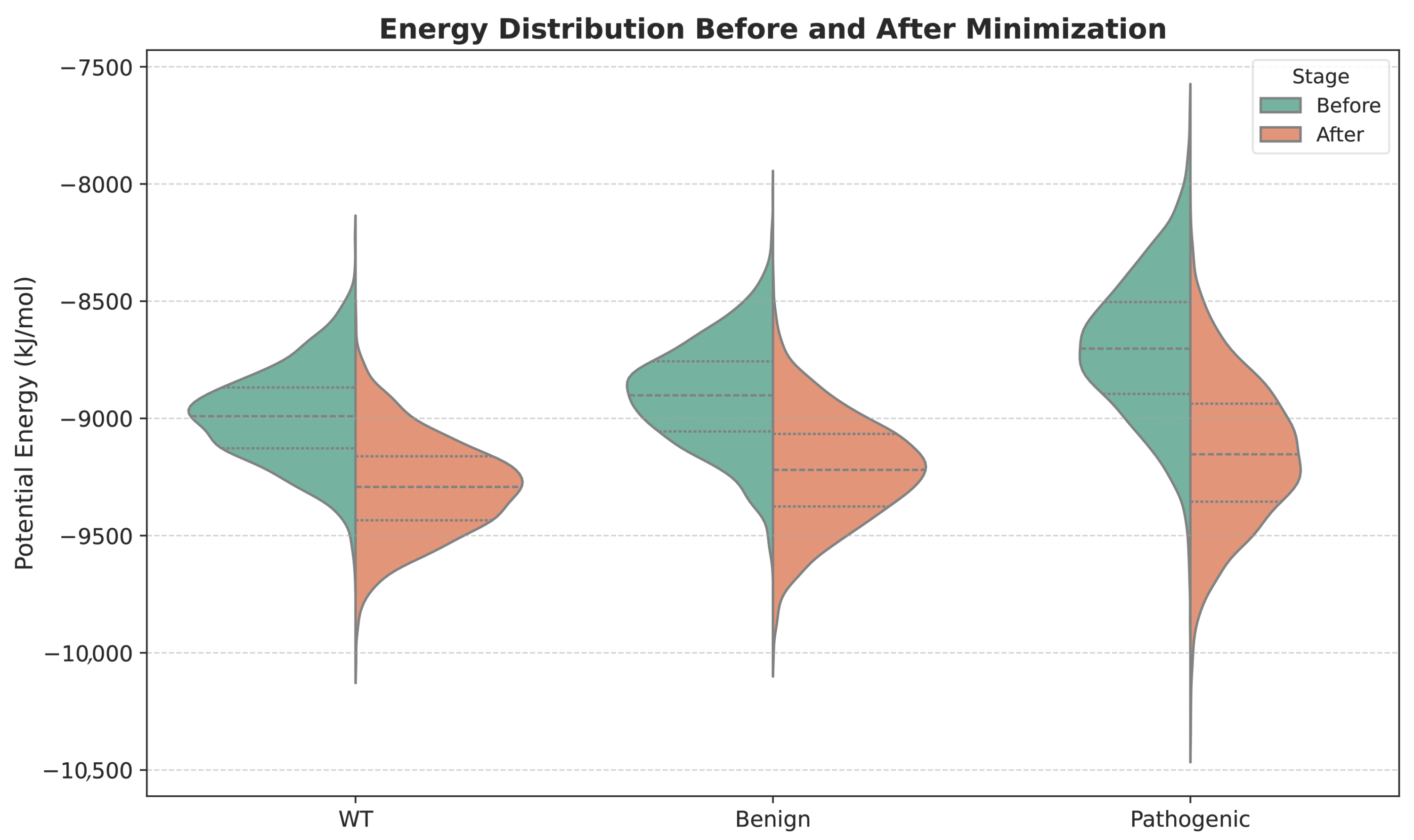
4.2. Energetic and Geometric Feature Analysis
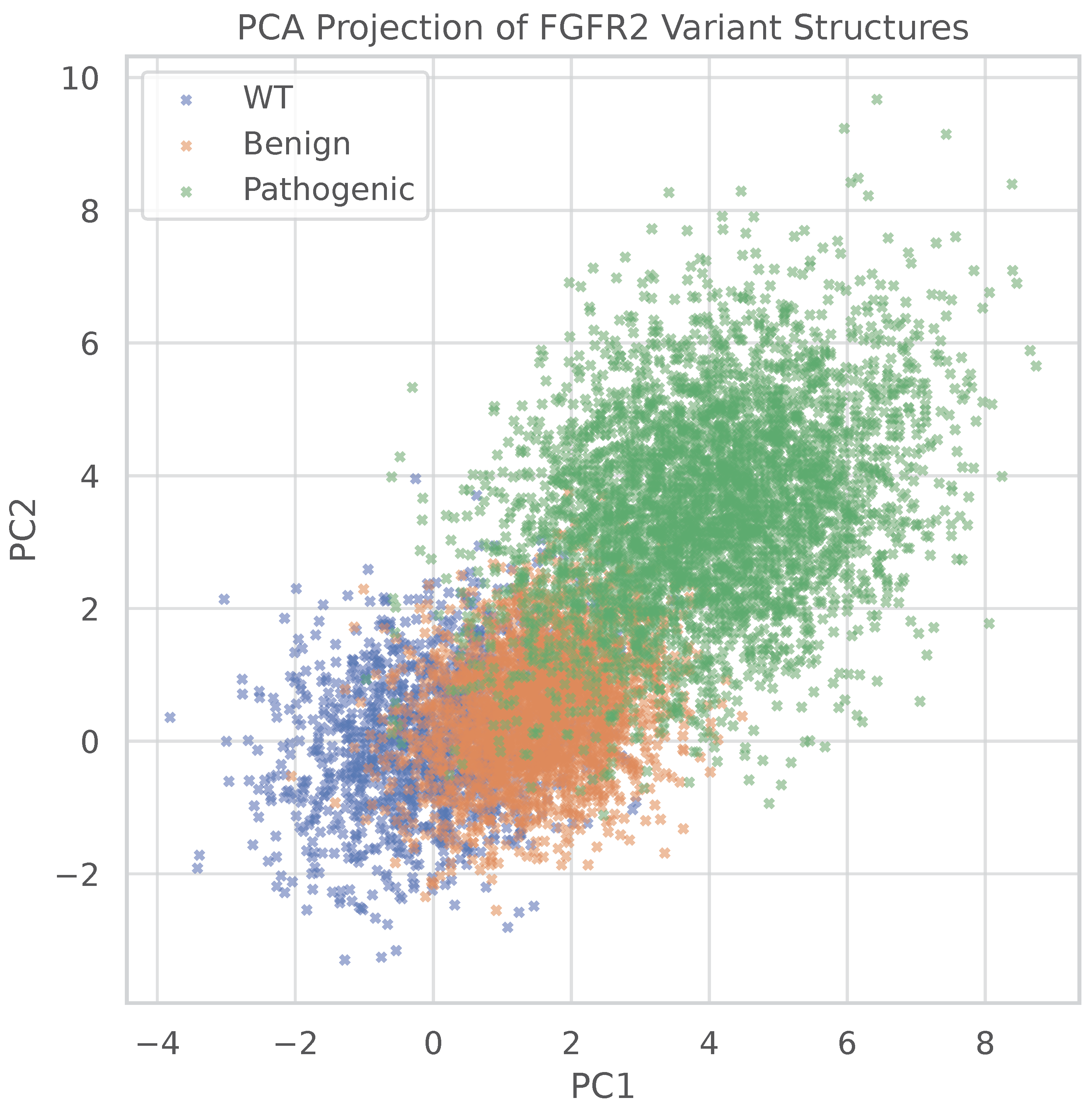
4.3. Structural Diversity Analysis
4.4. Nonlinear Manifold and Empirical Conformational Density Analysis
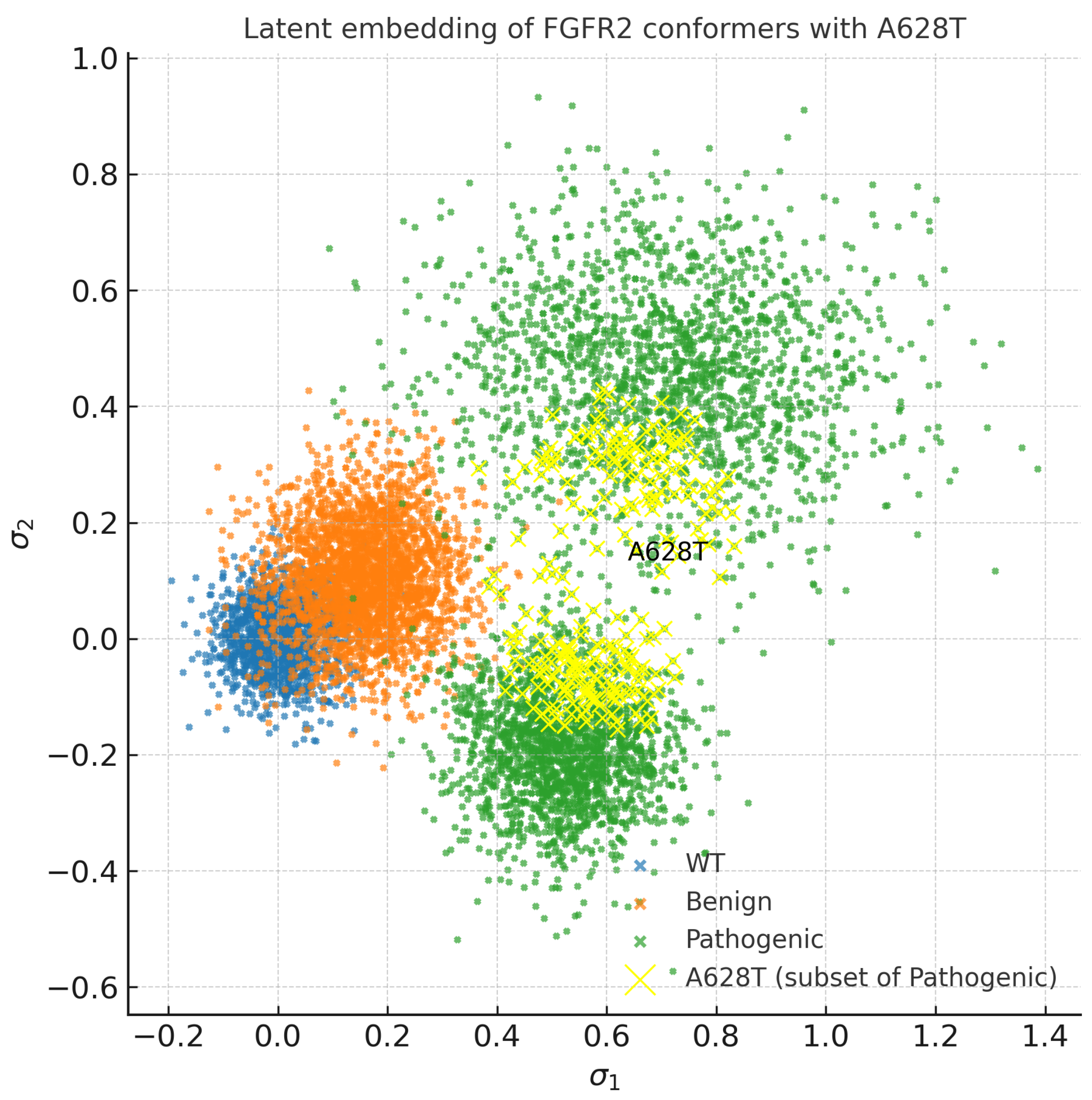
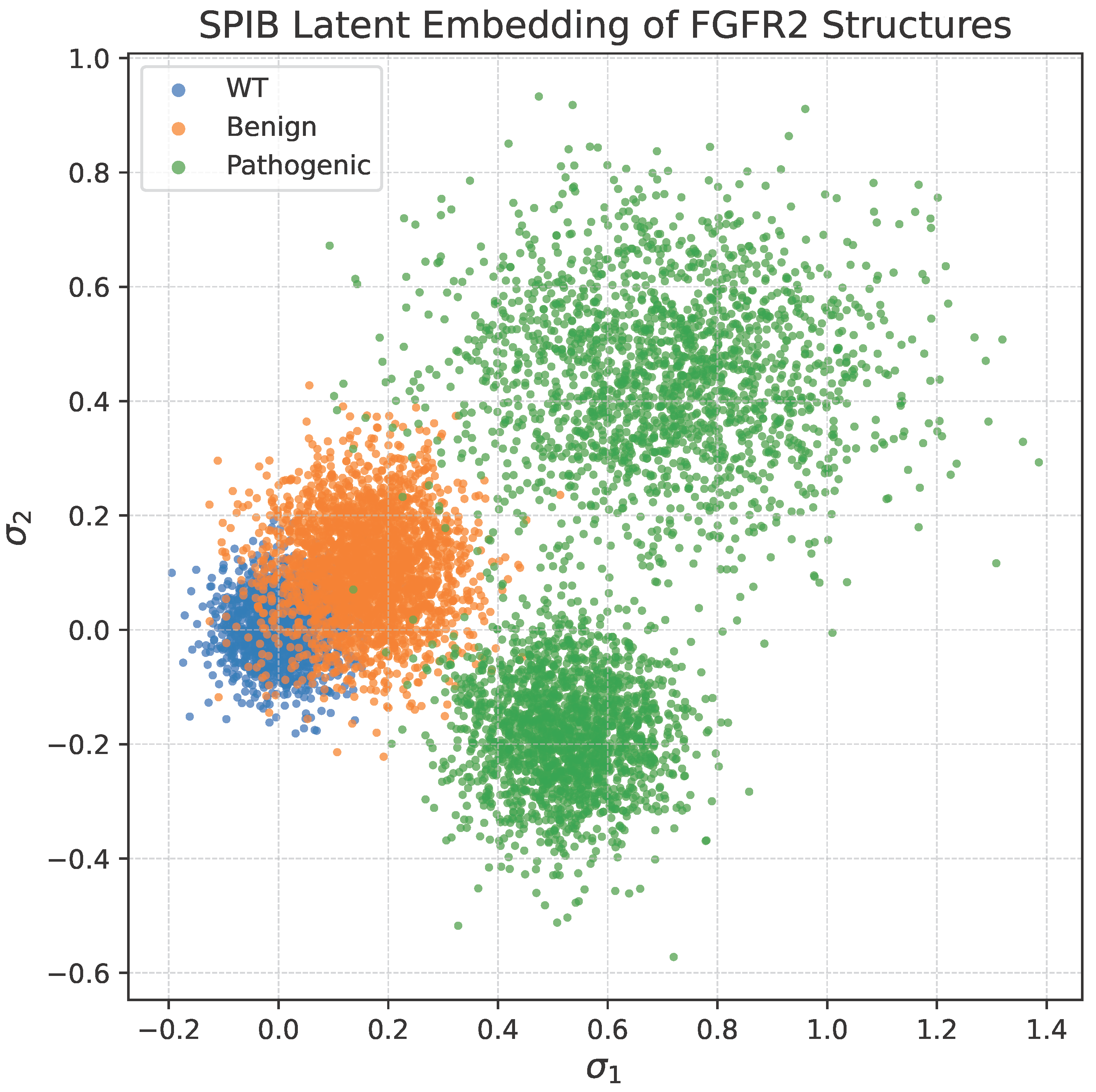
4.4.1. Latent Conformational Signatures via SPIB
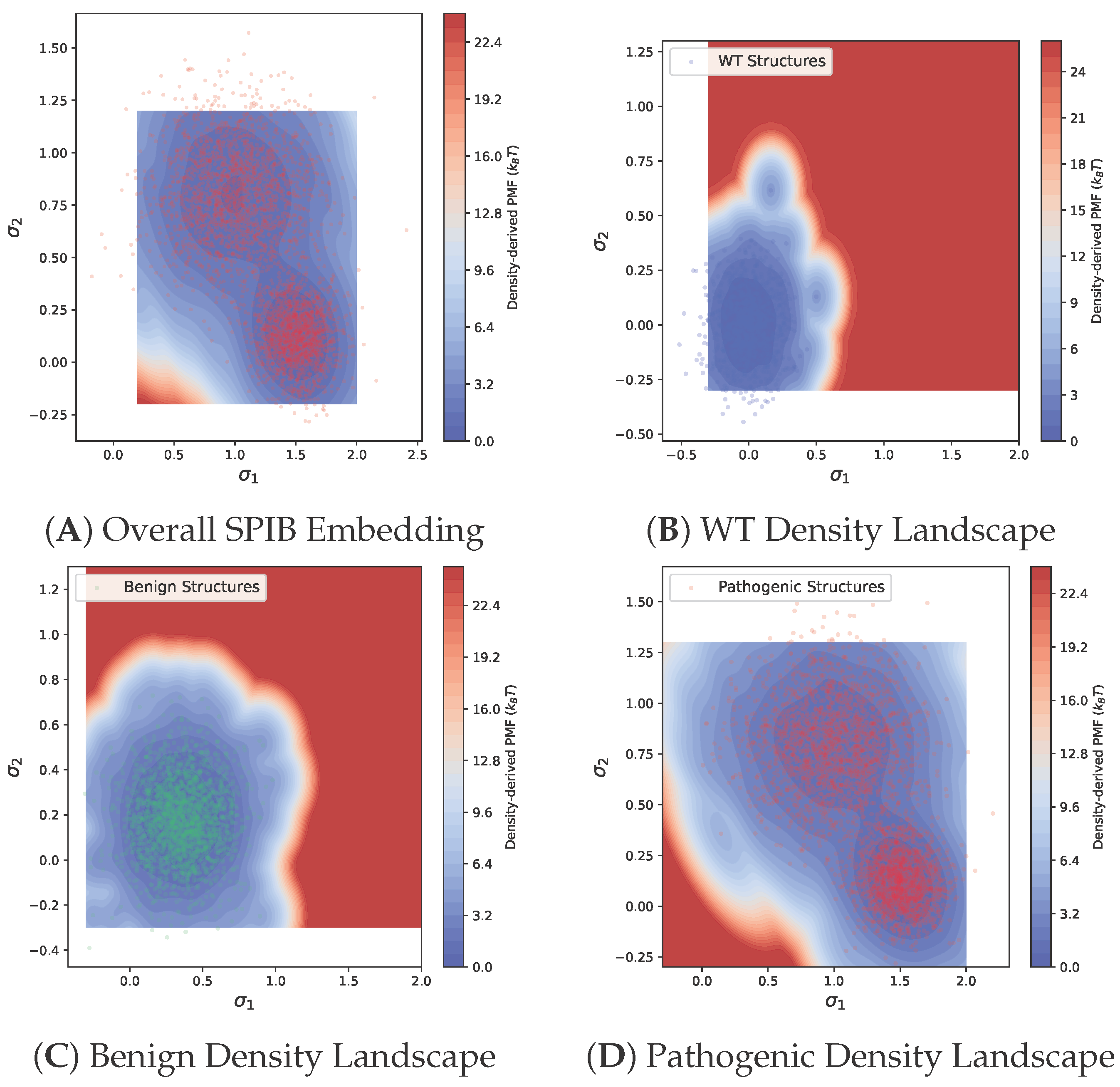
4.4.2. Empirical Conformational Density Landscape and Metastable State Identification
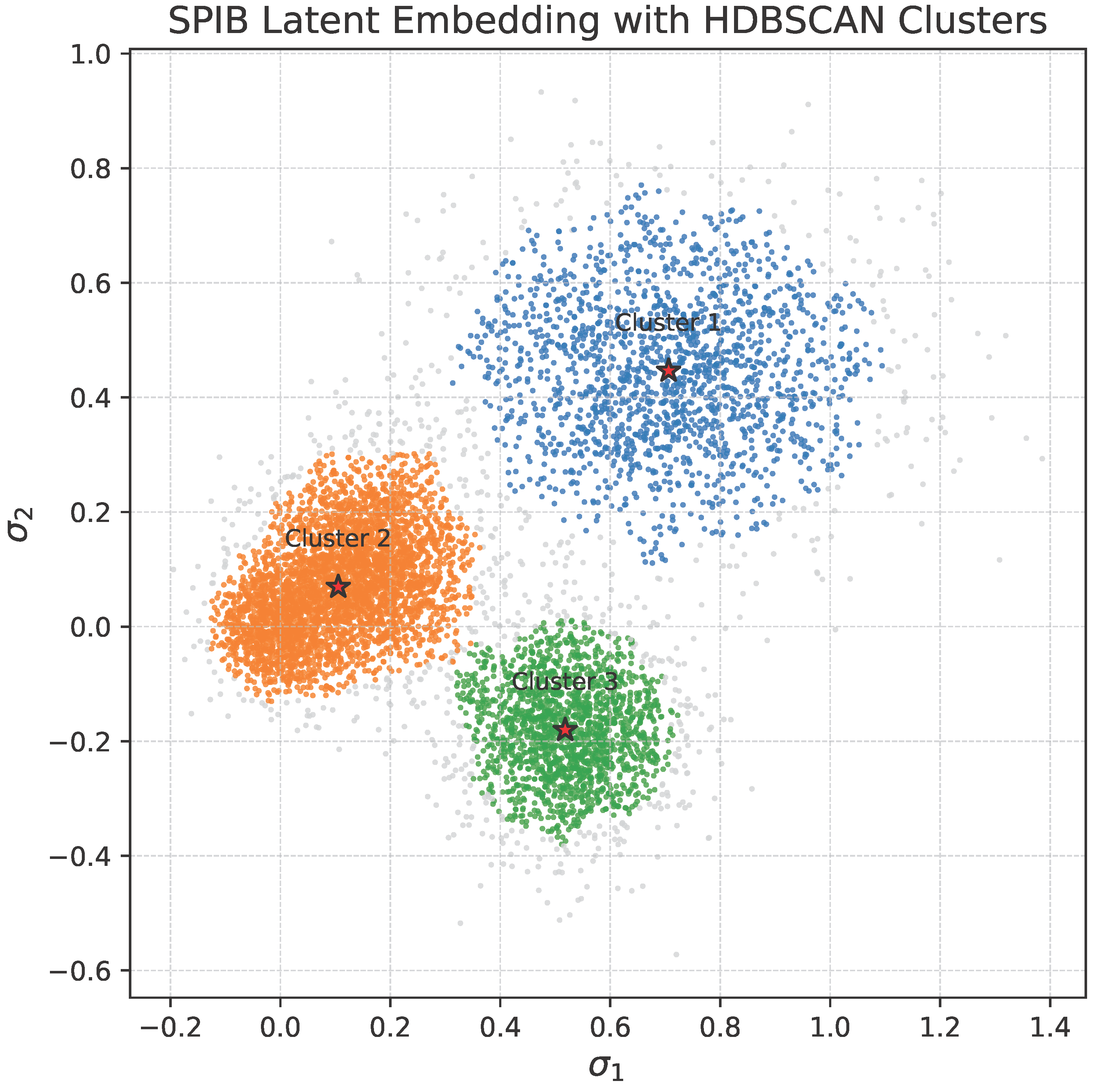
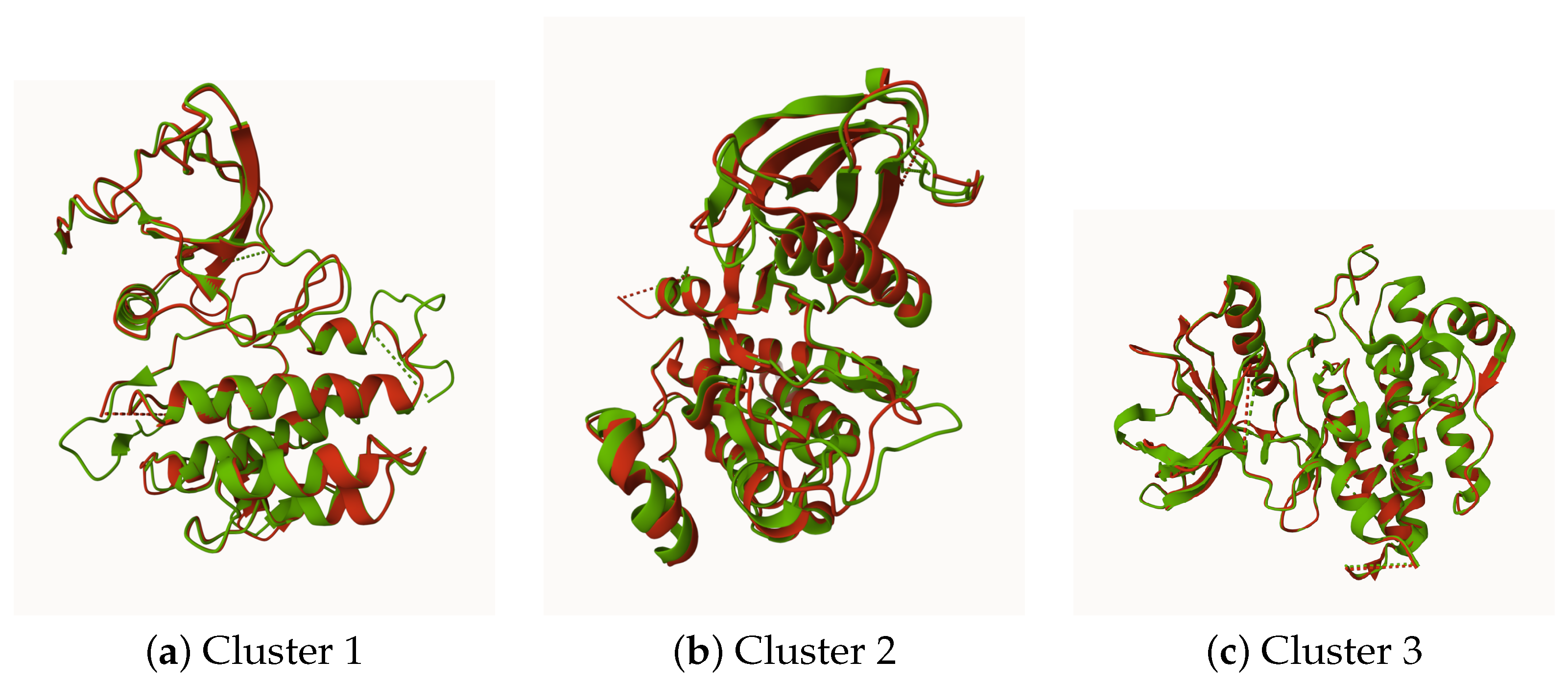
4.4.3. Conformational Clusters and Representative Snapshots
- Cluster 1 (blue) is predominantly composed of activation loop mutants and adopts an inactive-like conformation, featuring a collapsed A-loop, disrupted K659–E565 salt bridge, and non-canonical DFG dihedrals.
- Cluster 2 (orange) contains primarily wild-type and benign variants, characterized by a compact A-loop, intact salt bridge, and canonical DFG-in configuration—consistent with an inactive kinase state.
- Cluster 3 (green) is enriched for mutations in the kinase insert region and represents an intermediate state with partial A-loop extension, moderate salt bridge deviation, and DFG dihedrals suggestive of conformational flexibility.
4.5. Classification Performance and Feature Importance
4.6. Structural Validation of Salt Bridge Disruption
4.7. Variant-Level Probability Comparison with Existing Predictors
4.8. Case Study: A628T Variant
4.9. External Validation on Ten Variants
4.9.1. Dataset Summary
4.9.2. Model Performance and Baseline Comparison
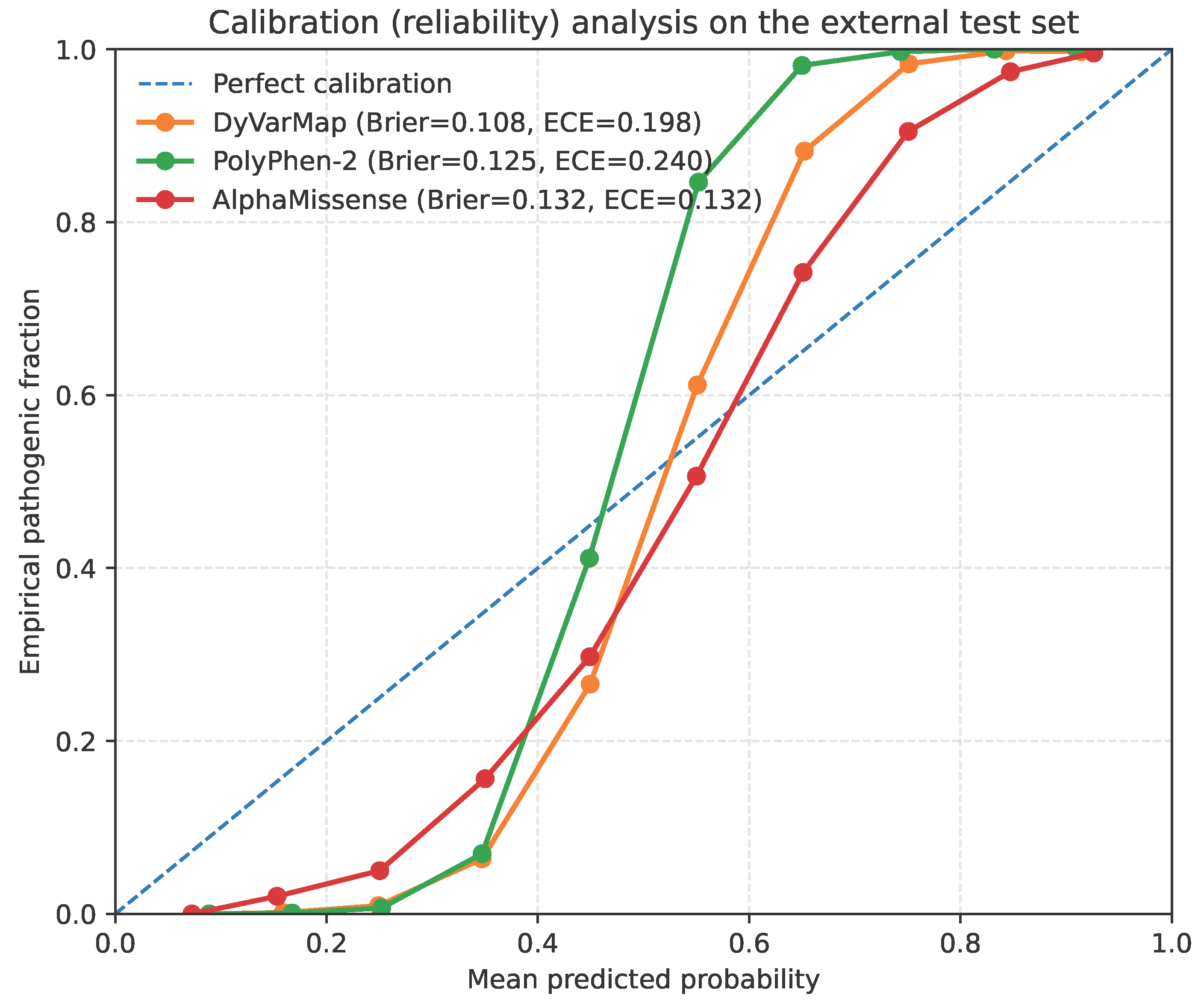
4.9.3. Calibration and Reliability Analysis
4.9.4. Case Highlights
5. Discussion
6. Conclusions
Author Contributions
Funding
Data Availability Statement
Acknowledgments
Conflicts of Interest
Abbreviations
| CA | Main-chain, Alpha Carbon Atom |
| FGFR2 | Fibroblast Growth Factor Receptor 2 |
| MSA | Multiple sequence alignment |
| PDB | Protein Data Bank |
| PCA | Principal Component Analysis |
| PC | Principal Component |
| RMSD | Root Mean Square Deviation |
| RTK | Receptor Tyrosine Kinase |
References
- Gagan, J.; Allen, E.M.V. Next-generation sequencing to guide cancer therapy. Genome Med. 2015, 7, 80. [Google Scholar] [CrossRef]
- Johnson, A.; Ng, P.; Kahle, M.; Castillo, J.; Amador, B.; Wang, Y.; Zeng, J.; Holla, V.; Vu, T.; Su, F.; et al. Actionability classification of variants of unknown significance correlates with functional effect. npj Precis. Oncol. 2023, 7, 67. [Google Scholar] [CrossRef]
- Luo, J.; Manning, B.D. Combing the Cancer Genome for Novel Kinase Drivers and New Therapeutic Strategies. Cancers 2019, 11, 1972. [Google Scholar] [CrossRef]
- Li, J.; Hu, K.; Huang, J.; Zhou, L.; Yan, Y.; Xu, Z. A Pancancer Analysis of the Expression Landscape and Clinical Relevance of Fibroblast Growth Factor Receptor 2 in Human Cancers. Front. Oncol. 2021, 11, 644854. [Google Scholar] [CrossRef]
- Varadi, M.; Bordin, N.; Orengo, C.; Velankar, S. The opportunities and challenges posed by the new generation of deep learning-based protein structure predictors. Curr. Opin. Struct. Biol. 2023, 79, 102543. [Google Scholar] [CrossRef]
- Jumper, J.; Evans, R.; Pritzel, A.; Green, T.; Figurnov, M.; Ronneberger, O.; Tunyasuvunakool, K.; Bates, R.; Žídek, A.; Potapenko, A.; et al. Highly accurate protein structure prediction with AlphaFold. Nature 2021, 596, 583–589. [Google Scholar] [CrossRef]
- EMBL-EBI Training. Strengths and Limitations of AlphaFold 2. Online Course Module. 2024. Available online: https://www.ebi.ac.uk/training/online/courses/alphafold/an-introductory-guide-to-its-strengths-and-limitations/strengths-and-limitations-of-alphafold/ (accessed on 2 July 2025).
- Terwilliger, T.; Liebschner, D.; Croll, T.; Williams, C.J.; McCoy, A.J.; Poon, B.K.; Afonine, P.V.; Oeffner, R.D.; Richardson, J.S.; Read, R.J.; et al. AlphaFold predictions are valuable hypotheses and accelerate but do not replace experimental structure determination. Nat. Methods 2024, 21, 110–116. [Google Scholar] [CrossRef] [PubMed]
- Agarwal, V.; McShan, A.C. The power and pitfalls of AlphaFold2 for structure prediction beyond rigid globular proteins. Nat. Chem. Biol. 2024, 20, 950–959. [Google Scholar] [CrossRef] [PubMed]
- Kanamaru, K.; Aiba, H.; Mizushima, S.; Mizuno, T. Signal transduction and osmoregulation in Escherichia coli. A single amino acid change in the protein kinase, EnvZ, results in loss of its phosphorylation and dephosphorylation abilities with respect to the activator protein, OmpR. J. Biol. Chem. 1989, 264, 21633–21637. [Google Scholar] [CrossRef]
- Grant, B.J.; Gorfe, A.A.; McCammon, J.A. Ras Conformational Switching: Simulating Nucleotide-Dependent Conformational Transitions with Accelerated Molecular Dynamics. PLoS Comput. Biol. 2009, 5, e1000325. [Google Scholar] [CrossRef] [PubMed]
- D’Abramo, M.; Bešker, N.; Chillemi, G.; Grottesi, A. Modeling conformational transitions in kinases by molecular dynamics simulations: Achievements, difficulties, and open challenges. Front. Genet. 2014, 5, 128. [Google Scholar] [CrossRef] [PubMed]
- Nam, K.; Tao, Y.; Ovchinnikov, V. Molecular Simulations of Conformational Transitions within the Insulin Receptor Kinase Reveal Consensus Features in a Multistep Activation Pathway. J. Phys. Chem. B 2023, 127, 5789–5798. [Google Scholar] [CrossRef]
- Baker, Z.D.; Rasmussen, D.M.; Levinson, N.M. Exploring the conformational landscapes of protein kinases: Perspectives from FRET and DEER. Biochem. Soc. Trans. 2024, 52, 1071–1083. [Google Scholar] [CrossRef]
- Hanzawa, Y.; Money, T.; Bradley, D. A single amino acid converts a repressor to an activator of flowering. Proc. Natl. Acad. Sci. USA 2005, 102, 7748–7753. [Google Scholar] [CrossRef]
- Clausen, R.; Ma, B.; Nussinov, R.; Shehu, A. Mapping the Conformation Space of Wildtype and Mutant H-Ras with a Memetic, Cellular, and Multiscale Evolutionary Algorithm. PLoS Comput. Biol. 2015, 11, e1004470. [Google Scholar] [CrossRef]
- Shehu, A.; Nussinov, R. Computational Methods for Exploration and Analysis of Macromolecular Structure and Dynamics. PLoS Comput. Biol. 2015, 11, e1004585. [Google Scholar] [CrossRef]
- Shehu, A.; Plaku, E. A Survey of omputational Treatments of Biomolecules by Robotics-inspired Methods Modeling Equilibrium Structure and Dynamics. J. Artif. Intel. Res. 2016, 597, 509–572. [Google Scholar]
- Adzhubei, I.; Jordan, D.M.; Sunyaev, S.R. Predicting functional effect of human missense mutations using PolyPhen-2. Curr. Protoc. Hum. Genet. 2013, 76, 7–20. [Google Scholar] [CrossRef] [PubMed]
- Cheng, J.; Novati, G.; Pan, J.; Bycroft, C.; Žemgulytė, A.; Applebaum, T.; Pritzel, A.; Wong, L.H.; Zielinski, M.; Sargeant, T.; et al. Accurate proteome-wide missense variant effect prediction with AlphaMissense. Science 2023, 381, eadg7492. [Google Scholar] [CrossRef]
- Tordai, H.; Torres, O.; Csepi, M.; Bodrogi, F.; Farkas, K.; Klement, E.; Szikora, S.; Farkas, K.; Szakács, G.; Hegedűs, T. Analysis of AlphaMissense data in different protein groups and structural context. Sci. Data 2024, 11, 495. [Google Scholar] [CrossRef]
- Jing, B.; Berger, B.; Jaakkola, T. AI-based Methods for Simulating, Sampling, and Predicting Protein Ensembles. arXiv 2025, arXiv:2509.17224. [Google Scholar] [CrossRef]
- Zhang, J.; Xing, E.; Cheng, X. MSACLR: Contrastive Learning of Protein Conformations from MSAs. bioRxiv 2025. [Google Scholar] [CrossRef]
- Manning, G.; Whyte, D.B.; Martinez, R.; Hunter, T.; Sudarsanam, S. The protein kinase complement of the human genome. Science 2002, 298, 1912–1934. [Google Scholar] [CrossRef] [PubMed]
- Turner, N.; Lambros, M.B.; Horlings, H.M.; Pearson, A.; Sharpe, R.; Natrajan, R.; Geyer, F.C.; van Kouwenhove, M.; Kreike, B.; Mackay, A.; et al. Integrative molecular profiling of triple negative breast cancers identifies amplicon drivers and potential therapeutic targets. Oncogene 2010, 29, 2013–2023. [Google Scholar] [CrossRef]
- Teng, D.; Meraz, V.J.; Aranganathan, A.; Gu, X.; Tiwary, P. AlphaFold2-RAVE: Protein Ensemble Generation with Physics-Based Sampling. ChemRxiv 2025. [Google Scholar] [CrossRef]
- del Alamo, D.; Sala, D.; Mchaourab, H.S.; Meiler, J. Sampling alternative conformational states of transporters and receptors with AlphaFold2. eLife 2022, 11, e75751. [Google Scholar] [CrossRef]
- Li, L.; Wang, Q.; Ke, C. Local support vector machine based dimension reduction. Stat. Anal. Data Min. Asa Data Sci. J. 2022, 15, 722–735. [Google Scholar] [CrossRef]
- Devaurs, D.; Molloy, K.; Vaisset, M.; Shehu, A. Characterizing Energy Landscapes of Peptides using a Combination of Stochastic Algorithms. IEEE Trans. NanoBioSci. 2015, 14, 545–552. [Google Scholar] [CrossRef] [PubMed]
- Clausen, R.; Shehu, A. A Data-driven Evolutionary Algorithm for Mapping Multi-basin Protein Energy Landscapes. J. Comp. Biol. 2015, 22, 844–860. [Google Scholar] [CrossRef]
- Husic, B.E.; Pande, V.S. Markov State Models: From an Art to a Science. J. Am. Chem. Soc. 2018, 140, 2386–2396. [Google Scholar] [CrossRef]
- Kabir, L.K.; Akhter, N.; Shehu, A. From Molecular Energy Landscapes to Equilibrium Dynamics via Landscape Analysis and Markov State Models. J. Bioinform. Comput. Biol. 2019, 17, 1940014. [Google Scholar] [CrossRef] [PubMed]
- Kabir, K.L.; Ma, B.; Nussinov, R.; Shehu, A. Fewer Dimensions, More Structures for Improved Discrete Models of Dynamics of Free versus Antigen-Bound Antibody. Biomolecules 2022, 12, 1011. [Google Scholar] [CrossRef] [PubMed]
- Rahman, T.; Du, Y.; Zhao, L.; Shehu, A. Generative Adversarial Learning of Protein Tertiary Structures. Molecules 2021, 26, 1209. [Google Scholar] [CrossRef] [PubMed]
- Maximova, T.; Plaku, E.; Shehu, A. Structure-guided Protein Transition Modeling with a Probabilistic Roadmap Algorithm. IEEE/ACM Trans. Comput. Biol. Bioinf. 2018, 15, 1783–1796. [Google Scholar] [CrossRef]
- Alam, F.; Shehu, A. Data Size and Quality Matter: Generating Physically-realistic Distance Maps of Protein Tertiary Structures. Biomolecules 2022, 12, 908. [Google Scholar] [CrossRef]
- Wang, D.; Tiwary, P. State predictive information bottleneck. J. Chem. Phys. 2021, 154, 134111. [Google Scholar] [CrossRef]
- Adzhubei, I.A.; Schmidt, S.; Peshkin, L.; Ramensky, V.E.; Gerasimova, A.; Bork, P.; Kondrashov, A.S.; Sunyaev, S.R. A method and server for predicting damaging missense mutations. Nat. Methods 2010, 7, 248–249. [Google Scholar] [CrossRef]
- Kircher, M.; Witten, D.M.; Jain, P.; O’Roak, B.J.; Cooper, G.M.; Shendure, J. A general framework for estimating the relative pathogenicity of human genetic variants. Nat. Genet. 2014, 46, 310–315. [Google Scholar] [CrossRef]
- Ioannidis, N.M.; Rothstein, B.F.; Pejaver, V.V.; Damaghi, S.; Shapiro, S.A.; McDonnell, D.J.; Karczewski, M.R.; Cutting, D.G.; Rehm, R.K.; Wallis, H.L.; et al. REVEL: An Ensemble Method for Predicting the Pathogenicity of Rare Missense Variants. Am. J. Hum. Genet. 2016, 99, 877–885. [Google Scholar] [CrossRef]
- Meier, J.; Jaakkola, T.S.; Barzilay, R.; Liu, D.R. Language models enable zero-shot prediction of the effects of mutations on protein function. bioRxiv 2021. [Google Scholar] [CrossRef]
- Bromberg, Y.; Kabir, A.; Ramakrishnan, P.; Shehu, A. Variant Effect Prediction in the Age of Machine Learning. Cold Spring Harb. Perspect. Biol. 2024, 16, a041467. [Google Scholar] [CrossRef]
- Saladino, G.; Gervasio, F.L. Modeling the effect of pathogenic mutations on the conformational landscape of protein kinases. Curr. Opin. Struct. Biol. 2016, 37, 108–114. [Google Scholar] [CrossRef]
- Martínez-Abadías, N.; Percival, C.; Aldridge, K.; Hill, C.A.; Ryan, T.; Sirivunnabood, S.; Wang, Y.; Jabs, E.W.; Richtsmeier, J.T. Beyond the closed suture in apert syndrome mouse models: Evidence of primary effects of FGFR2 signaling on facial shape at birth. Dev. Dyn. 2010, 239, 3058–3071. [Google Scholar] [CrossRef]
- Antwarg, L.; Miller, R.M.; Shapira, B.; Rokach, L. Explaining anomalies detected by autoencoders using Shapley Additive Explanations. Expert Syst. Appl. 2021, 186, 115736. [Google Scholar] [CrossRef]
- Nohara, Y.; Matsumoto, K.; Soejima, H.; Nakashima, N. Explanation of machine learning models using improved shapley additive explanation. In Proceedings of the 10th ACM international Conference on Bioinformatics, Computational Biology and Health Informatics, Niagara Falls, NY, USA, 7–10 September 2019; p. 546. [Google Scholar]
- Maier, J.A.; Martinez, C.; Kasavajhala, K.; Wickstrom, L.; Hauser, K.E.; Simmerling, C. ff14SB: Improving the accuracy of protein side chain and backbone parameters from ff99SB. J. Chem. Theory Comput. 2015, 11, 3696–3713. [Google Scholar] [CrossRef]
- He, X.; Liu, S.; Lee, T.S.; Ji, B.; Man, V.H.; York, D.M.; Wang, J. Fast, accurate, and reliable protocols for routine calculations of protein–ligand binding affinities in drug design projects using AMBER GPU-TI with ff14SB/GAFF. ACS Omega 2020, 5, 4611–4619. [Google Scholar] [CrossRef]
- Steichen, J.M.; Kuchinskas, M.; Keshwani, M.M.; Yang, J.; Adams, J.A.; Taylor, S.S. Structural basis for the regulation of protein kinase A by activation loop phosphorylation. J. Biol. Chem. 2012, 287, 14672–14680. [Google Scholar] [CrossRef] [PubMed]
- Meng, Y.; Lin, Y.l.; Roux, B. Computational study of the “DFG-flip” conformational transition in c-Abl and c-Src tyrosine kinases. J. Phys. Chem. B 2015, 119, 1443–1456. [Google Scholar] [CrossRef] [PubMed]
- Kumar, S.; Nussinov, R. Salt bridge stability in monomeric proteins. J. Mol. Biol. 1999, 293, 1241–1255. [Google Scholar] [CrossRef] [PubMed]
- Creutzig, F.; Globerson, A.; Tishby, N. Past-future information bottleneck in dynamical systems. Phys. Rev. E Stat. Nonlinear Soft Matter Phys. 2009, 79, 041925. [Google Scholar] [CrossRef]
- Kolchinsky, A.; Tracey, B.D.; Wolpert, D.H. Nonlinear information bottleneck. Entropy 2019, 21, 1181. [Google Scholar] [CrossRef]
- McInnes, L.; Healy, J.; Saul, N.; Grossberger, L. UMAP: Uniform Manifold Approximation and Projection. J. Open Source Softw. 2018, 3, 861. [Google Scholar] [CrossRef]
- van der Maaten, L.; Hinton, G. Visualizing Data using t-SNE. J. Mach. Learn. Res. 2008, 9, 2579–2605. [Google Scholar]
- Marx, V. Seeing data as t-SNE and UMAP do. Nat. Methods 2024, 21, 930–933. [Google Scholar] [CrossRef]
- Benkovic, S.J.; Hammes, G.G.; Hammes-Schiffer, S. Free-energy landscape of enzyme catalysis. Biochemistry 2008, 47, 3317–3321. [Google Scholar] [CrossRef]
- Dinner, A.R.; Šali, A.; Smith, L.J.; Dobson, C.M.; Karplus, M. Understanding protein folding via free-energy surfaces from theory and experiment. Trends Biochem. Sci. 2000, 25, 331–339. [Google Scholar] [CrossRef]
- Wales, D.J.; Bogdan, T.V. Potential energy and free energy landscapes. J. Phys. Chem. B 2006, 110, 20765–20776. [Google Scholar] [CrossRef] [PubMed]
- Rahman, M.F.; Liu, W.; Suhaim, S.B.; Thirumuruganathan, S.; Zhang, N.; Das, G. Hdbscan: Density based clustering over location based services. arXiv 2016, arXiv:1602.03730. [Google Scholar] [CrossRef]
- Sehnal, D.; Bittrich, S.; Deshpande, M.; Svobodová, R.; Berka, K.; Bazgier, V.; Velankar, S.; Burley, S.K.; Koča, J.; Rose, A.S. Mol* Viewer: Modern web app for 3D visualization and analysis of large biomolecular structures. Nucleic Acids Res. 2021, 49, W431–W437. [Google Scholar] [CrossRef]
- Wong, T.T. Performance evaluation of classification algorithms by k-fold and leave-one-out cross validation. Pattern Recognit. 2015, 48, 2839–2846. [Google Scholar] [CrossRef]
- LaValley, M.P. Logistic regression. Circulation 2008, 117, 2395–2399. [Google Scholar] [CrossRef]
- Jakkula, V. Tutorial on Support Vector Machine (svm). Ph.D. Thesis, School of EECS, Washington State University, Pullman, WA, USA, 2006. Volume 37. p. 3. [Google Scholar]
- Rigatti, S.J. Random forest. J. Insur. Med. 2017, 47, 31–39. [Google Scholar] [CrossRef] [PubMed]
- Taud, H.; Mas, J.F. Multilayer perceptron (MLP). In Geomatic Approaches for Modeling Land Change Scenarios; Springer: Berlin/Heidelberg, Germany, 2017; pp. 451–455. [Google Scholar]
- Hosmer, D.; Lemeshow, S.; Sturdivant, R. Area under the receiver operating characteristic curve. In Applied Logistic Regression, 3rd ed.; Wiley: Hoboken, NJ, USA, 2013; pp. 173–182. [Google Scholar]
- Tibshirani, R.J.; Efron, B. An Introduction to the Bootstrap; Chapman and Hall/CRC: Boca Raton, FL, USA, 1993; Volume 57, pp. 1–436. [Google Scholar]
- Abney, S. Bootstrapping. In Proceedings of the 40th Annual Meeting of the Association for Computational Linguistics, Philadelphia, PA, USA, 6–12 July 2002; pp. 360–367. [Google Scholar]
- McDonald, E.F.; Oliver, K.E.; Schlebach, J.P.; Meiler, J.; Plate, L. Benchmarking AlphaMissense pathogenicity predictions against cystic fibrosis variants. PLoS ONE 2024, 19, e0297560. [Google Scholar] [CrossRef] [PubMed]




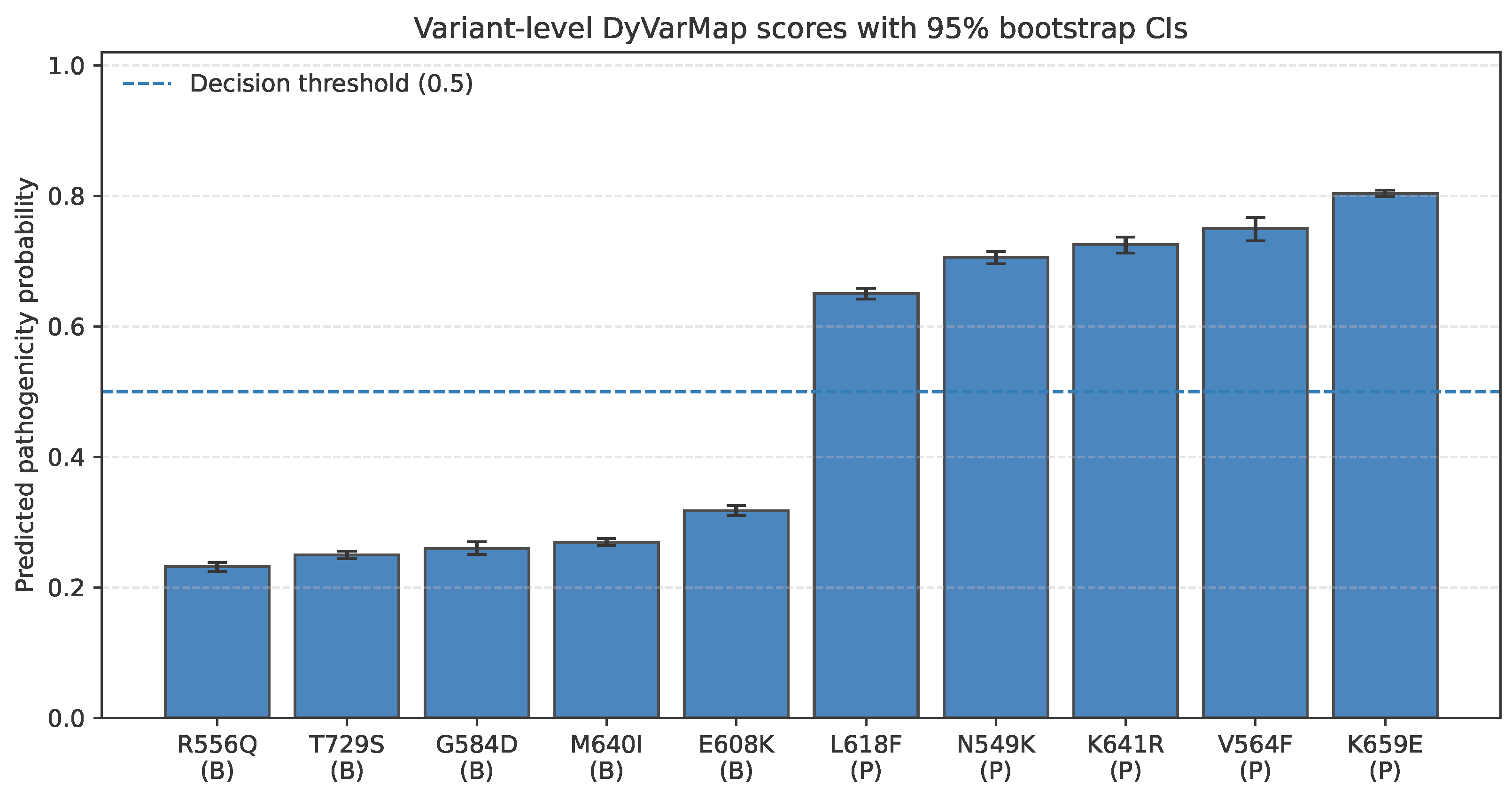


| Model | AUROC (Mean) | 95% CI (N = 1000) | 95% CI (N = 2000) |
|---|---|---|---|
| Logistic Regression (LR) | 0.623 | [0.571, 0.643] | [0.582, 0.631] |
| Support Vector Machine (SVM) | 0.744 | [0.723, 0.771] | [0.726, 0.768] |
| Random Forest (RF) | 0.777 | [0.753, 0.809] | [0.761, 0.801] |
| Multilayer Perceptron (MLP) | 0.711 | [0.672, 0.732] | [0.679, 0.726] |
| XGBoost | 0.772 | [0.748, 0.804] | [0.756, 0.796] |
| Variant | True Label | PolyPhen | AlphaMiss |
|---|---|---|---|
| A578S | 0 | 0.114 | 0.107 |
| E806K | 0 | 0.446 | 0.153 |
| K659N | 1 | 0.918 | 0.998 |
| E565G | 1 | 0.932 | 0.982 |
| A628T | 1 | 0.985 | 0.998 |
| Variant | Domain | Label | Source | ID | Notes |
|---|---|---|---|---|---|
| N549K | Kinase | P | OncoKB/ClinVar | FGFR2_N549K | C-helix hotspot; oncogenic gain-of-function |
| V564F | Kinase | P | Literature/OncoKB | PMID:35830866 | Gatekeeper mutation; inhibitor resistance |
| K659E | Kinase | P | ClinVar/OncoKB | VCV000182771 | Activation-loop hotspot |
| K641R | Kinase | P | OncoKB | FGFR2_K641R | Recurrent oncogenic mutation |
| L618F | Kinase | P | Literature/OncoKB | PMID:32291351 | Acquired resistance mutation |
| G584D | Kinase | B | ClinVar | VCV000543970 | Likely benign; mid-kinase region |
| M640I | Kinase | B | OncoKB | FGFR2_M640I | Likely neutral (kinase-domain benign proxy) |
| T729S | Kinase | B | OncoKB | FGFR2_T729S | Likely neutral; C-lobe region |
| R556Q | Kinase | B | ClinVar | VCV000543980 | Likely benign; N-lobe region, no disease evidence |
| E608K | Kinase | B | ClinVarMiner | rsID: benign variant | Hinge-region benign; multiple benign submissions |
| Method | AUROC | Balanced Accuracy | MCC | Brier Score |
|---|---|---|---|---|
| DyVarMap | 0.77 | 0.82 | 0.59 | (0.108) |
| PolyPhen-2 | 0.78 | 0.74 | 0.48 | (0.125) |
| AlphaMissense | 0.75 | 0.71 | 0.42 | (0.132) |
| Variant | True Label | DyVarMap | PolyPhen-2 | AlphaMissense |
|---|---|---|---|---|
| G584D | 0 | 0.12 | 0.10 | 0.15 |
| M640I | 0 | 0.18 | 0.25 | 0.22 |
| T729S | 0 | 0.27 | 0.33 | 0.30 |
| R556Q | 0 | 0.24 | 0.41 | 0.28 |
| E608K | 0 | 0.31 | 0.48 | 0.34 |
| N549K | 1 | 0.94 | 0.91 | 0.97 |
| V564F | 1 | 0.93 | 0.88 | 0.94 |
| K659E | 1 | 0.96 | 0.92 | 0.99 |
| K641R | 1 | 0.92 | 0.87 | 0.90 |
| L618F | 1 | 0.89 | 0.85 | 0.87 |
Disclaimer/Publisher’s Note: The statements, opinions and data contained in all publications are solely those of the individual author(s) and contributor(s) and not of MDPI and/or the editor(s). MDPI and/or the editor(s) disclaim responsibility for any injury to people or property resulting from any ideas, methods, instructions or products referred to in the content. |
© 2026 by the authors. Licensee MDPI, Basel, Switzerland. This article is an open access article distributed under the terms and conditions of the Creative Commons Attribution (CC BY) license.
Share and Cite
Lian, Y.; Shehu, A. DyVarMap: Integrating Conformational Dynamics and Interpretable Machine Learning for Cancer-Associated Missense Variant Classification in FGFR2. Bioengineering 2026, 13, 126. https://doi.org/10.3390/bioengineering13010126
Lian Y, Shehu A. DyVarMap: Integrating Conformational Dynamics and Interpretable Machine Learning for Cancer-Associated Missense Variant Classification in FGFR2. Bioengineering. 2026; 13(1):126. https://doi.org/10.3390/bioengineering13010126
Chicago/Turabian StyleLian, Yiyang, and Amarda Shehu. 2026. "DyVarMap: Integrating Conformational Dynamics and Interpretable Machine Learning for Cancer-Associated Missense Variant Classification in FGFR2" Bioengineering 13, no. 1: 126. https://doi.org/10.3390/bioengineering13010126
APA StyleLian, Y., & Shehu, A. (2026). DyVarMap: Integrating Conformational Dynamics and Interpretable Machine Learning for Cancer-Associated Missense Variant Classification in FGFR2. Bioengineering, 13(1), 126. https://doi.org/10.3390/bioengineering13010126