

Finite Element-Based Biomechanical Evaluation of Patient-Specific Insoles for a Pediatric Patient with Hereditary Spastic Paraplegia Using the Taguchi Method

Abstract
1. Introduction
2. Materials and Methods
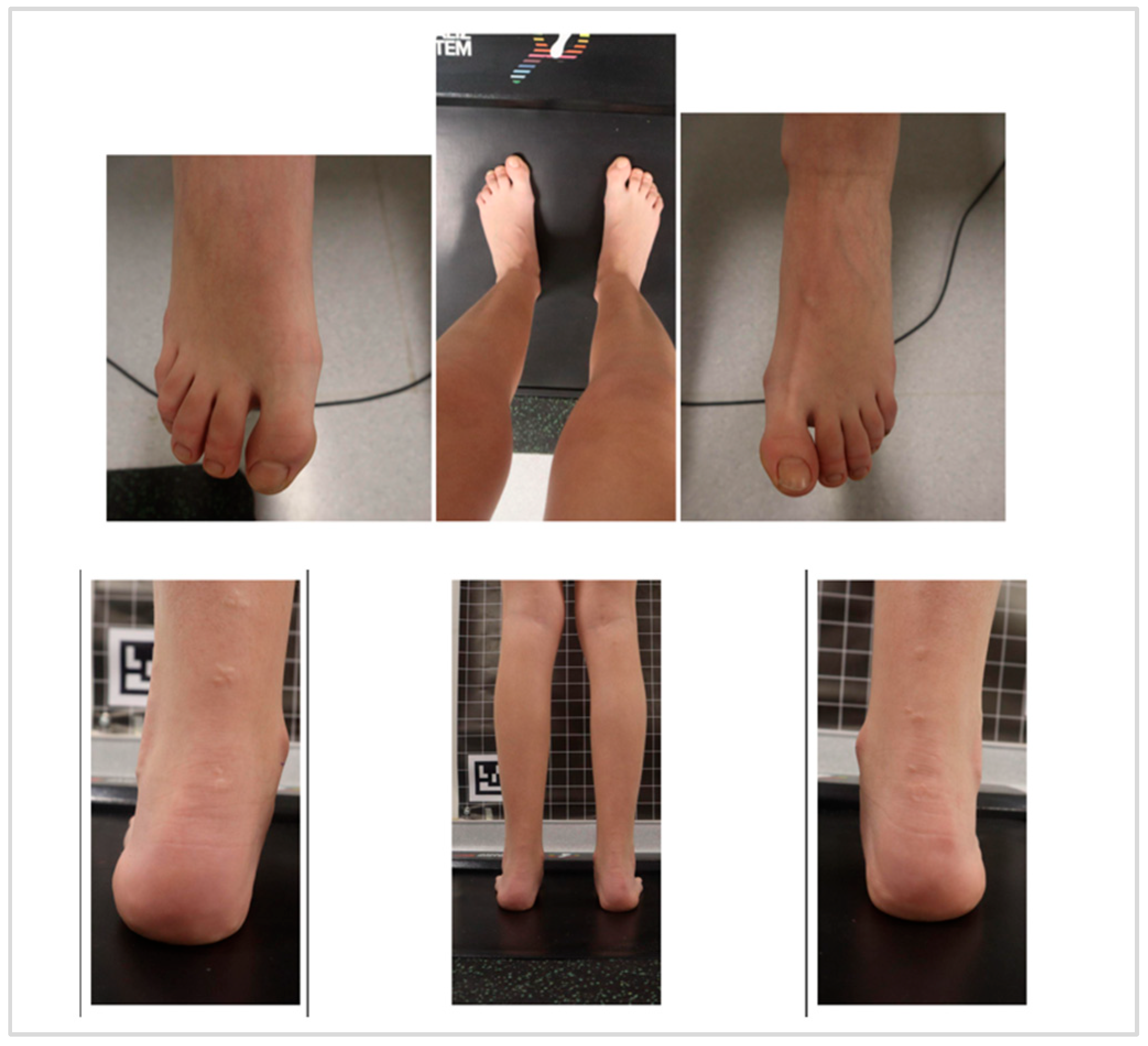
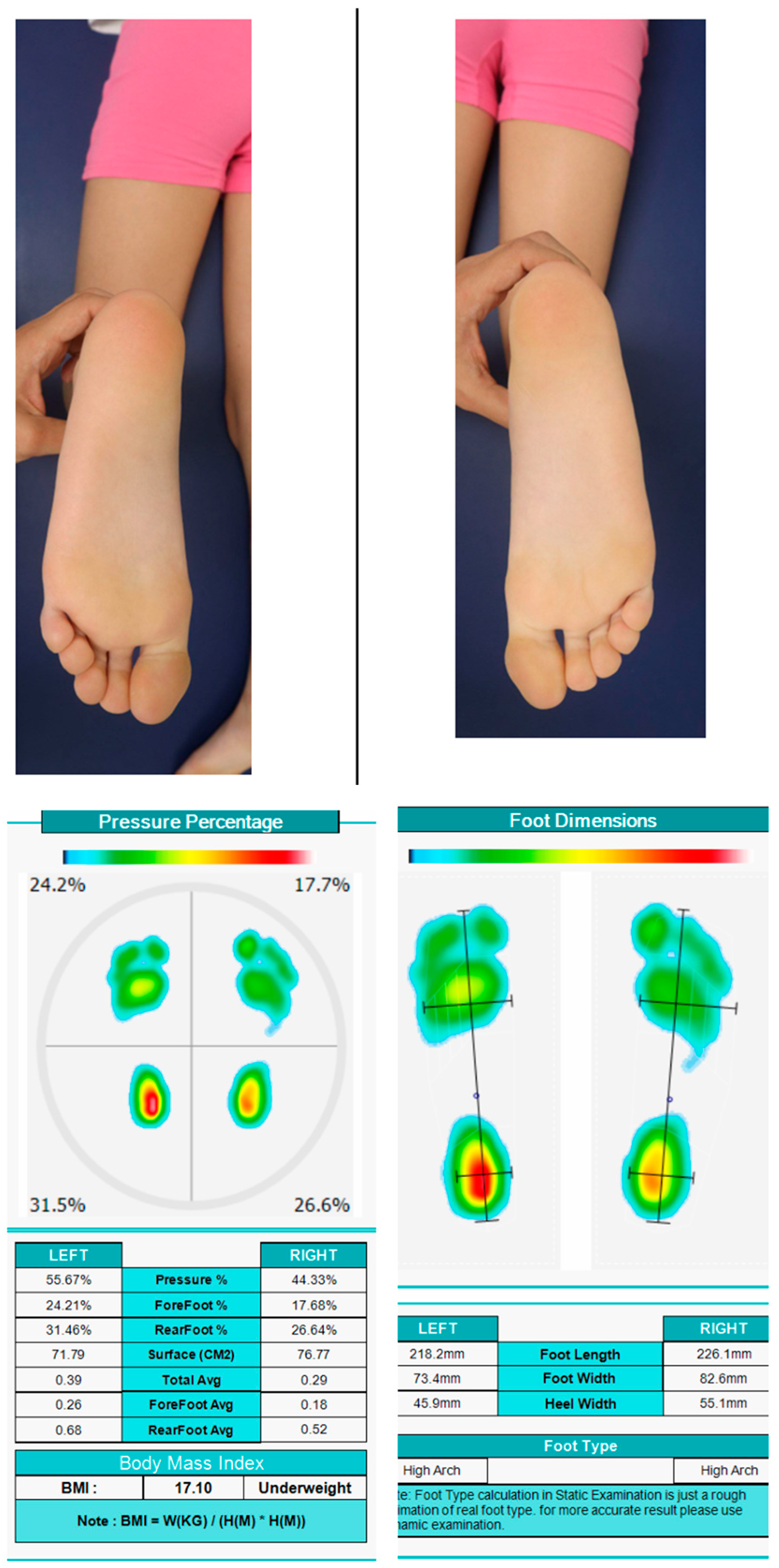
2.1. Demographic Information and Biomechanical Measurements of the Participant
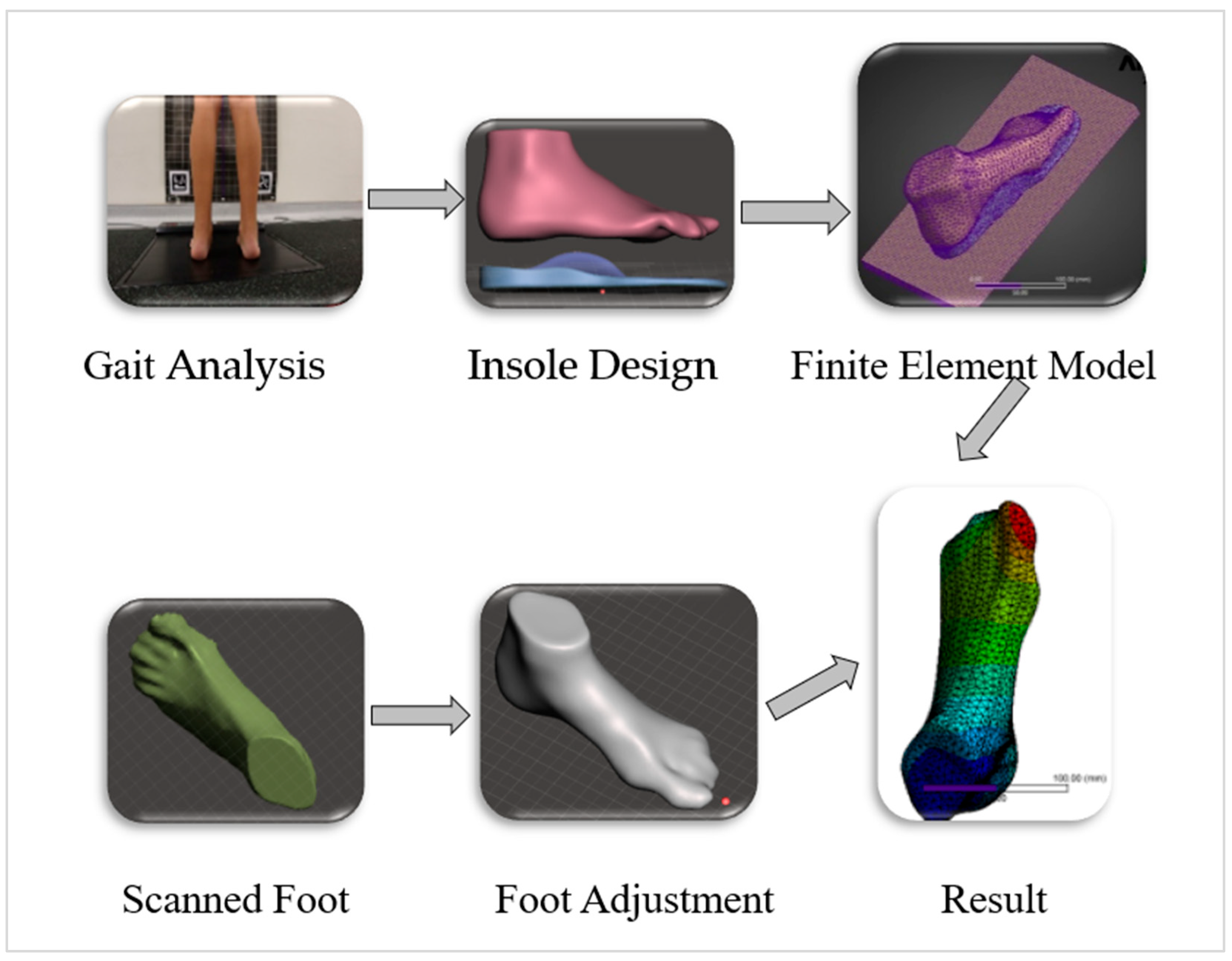
2.2. The Foot and Insole Modeling
2.3. Subject-Specific Finite Element Model Construction
2.4. Computational Evaluation of Foot Orthoses Design Parameters Using Taguchi Method
2.5. Mesh Sensitivity Analysis
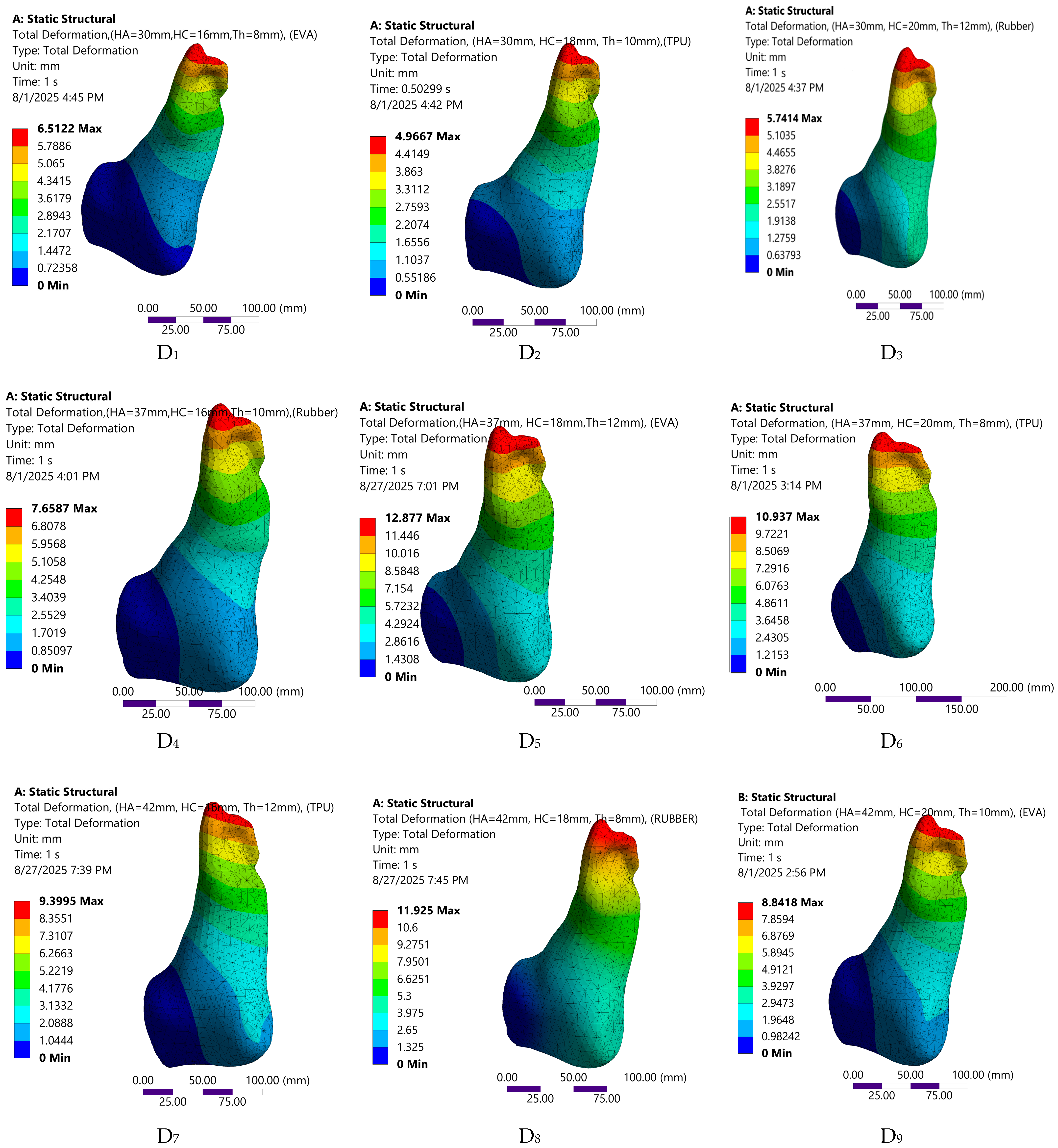
3. Results
4. Discussion
5. Conclusions
Author Contributions
Funding
Data Availability Statement
Conflicts of Interest
Appendix A

| Models | MS (mm) | NG | NF | NI | EG | EF | EI | PPP(MPa) | % ΔPPP | TD (mm) | % ΔTD |
|---|---|---|---|---|---|---|---|---|---|---|---|
| 4 mm | 74,714 | 11,632 | 11,006 | 15,800 | 6530 | 5988 | 0.6 | — | 4.94 | — | |
| 5 mm | 39,643 | 7021 | 13,866 | 8064 | 3878 | 7481 | 0.631 | 5.17% | 4.96 | 0.40% | |
| 7 mm | 16,280 | 4097 | 3953 | 3105 | 2216 | 2001 | 0.643 | 7.17% | 4.82 | 2.43% | |
| 8 mm | 12,667 | 3373 | 3600 | 2400 | 1807 | 1809 | 0.546 | 9.00% | 4.72 | 4.45% | |
| 4 mm | 74,714 | 12,927 | 13,774 | 15,800 | 7220 | 7543 | 0.142 | — | 7.677 | — | |
| 5 mm | 39,643 | 7455 | 8665 | 8064 | 4075 | 4639 | 0.138 | 0.35% | 7.65 | 2.82% | |
| 7 mm | 16,280 | 4130 | 4150 | 3105 | 2222 | 2102 | 0.128 | 0.69% | 7.624 | 9.86% | |
| 8 mm | NA | NA | NA | NA | NA | NA | NA | NA | NA | NA | |
| 4 mm | 74,714 | 17,399 | 25,057 | 15,800 | 9871 | 13,753 | 0.149 | — | 11.08 | — | |
| 5 mm | 39,643 | 10,766 | 12,905 | 8064 | 6027 | 6852 | 0.1433 | 3.83% | 10.937 | 1.29% | |
| 7 mm | 16,280 | 5822 | 4829 | 3105 | 3197 | 2410 | 0.136 | 8.72% | 10.775 | 2.75% | |
| 8 mm | 12,667 | 4520 | 4170 | 2400 | 2447 | 2048 | 0.131 | 12.08% | 10.71 | 3.34% | |
| 4 mm | 74,714 | 13,678 | 10,259 | 15,800 | 7696 | 5557 | 0.111 | — | 9.366 | — | |
| 5 mm | 39,643 | 8195 | 6454 | 8064 | 4532 | 3386 | 0.109 | 1.80% | 9.399 | 0.35% | |
| 7 mm | 16,280 | 4809 | 4186 | 3105 | 2599 | 2129 | 0.107 | 3.60% | 9.212 | 1.64% | |
| 8 mm | 12,667 | 4030 | 3925 | 2400 | 2187 | 1973 | 0.104 | 6.31% | 9.302 | 0.68% | |
| 4 mm | 74,714 | 8935 | 8789 | 15,800 | 4957 | 4649 | 0.167 | — | 11.864 | — | |
| 5 mm | 39,643 | 6424 | 6652 | 8064 | 3548 | 3417 | 0.165 | 0.51% | 11.925 | 1.20% | |
| 7 mm | 16,280 | 3697 | 3961 | 3105 | 1977 | 1919 | 0.18 | 9.44% | 10.744 | 7.78% | |
| 8 mm | 12,667 | 3131 | 7025 | 2400 | 1677 | 3538 | 0.129 | 2.92% | 12.21 | 22.75% | |
| 4 mm | 74,714 | 13,678 | 26,909 | 15,800 | 7696 | 14,950 | 0.09 | — | 8.85 | — | |
| 5 mm | 39,643 | 8195 | 18,401 | 8064 | 4532 | 10,103 | 0.087 | 3.33% | 8.84 | 0.11% | |
| 7 mm | 16,280 | 4809 | 19,811 | 3105 | 2599 | 10,988 | 0.09 | 0% | 8.76 | 1.02% | |
| 8 mm | 12,667 | 4030 | 4802 | 2400 | 2187 | 2475 | 0.091 | 1.11% | 8.755 | 1.07% |
References
- Lo Giudice, T.; Lombardi, F.; Santorelli, F.M.; Kawarai, T.; Orlacchio, A. Hereditary spastic paraplegia: Clinical-genetic characteristics and evolving molecular mechanisms. Exp. Neurol. 2014, 261, 518–539. [Google Scholar] [CrossRef] [PubMed]
- Faber, I.; Servelhere, K.R.; Martinez, A.R.; D’Abreu, A.; Lopes-Cendes, I.; França, M.C., Jr. Clinical features and management of hereditary spastic paraplegia. Arq. Neuro-Psiquiatr. 2014, 72, 219–226. [Google Scholar] [CrossRef] [PubMed]
- Klimpe, S.; Schüle, R.; Kassubek, J.; Otto, S.; Kohl, Z.; Klebe, S.; Klopstock, T.; Ratzka, S.; Karle, K.; Schöls, L. Disease severity affects quality of life of hereditary spastic paraplegia patients. Eur. J. Neurol. 2012, 19, 168–171. [Google Scholar] [CrossRef] [PubMed]
- Orsucci, D.; Petrucci, L.; Ienco, E.C.; Chico, L.; Simi, P.; Fogli, A.; Baldinotti, F.; Simoncini, C.; LoGerfo, A.; Carlesi, C.; et al. Hereditary spastic paraparesis in adults. A clinical and genetic perspective from Tuscany. Clin. Neurol. Neurosurg. 2014, 120, 14–19. [Google Scholar] [CrossRef] [PubMed]
- Ruano, L.; Melo, C.; Silva, M.C.; Coutinho, P. The global epidemiology of hereditary ataxia and spastic paraplegia: A systematic review of prevalence studies. Neuroepidemiology 2014, 42, 174–183. [Google Scholar] [CrossRef]
- Brown, R.R.; Rosenberg, Z.S.; Thornhill, B.A. The C sign: More specific for flatfoot deformity that subtalar coalition. Skeletal Radiol. 2001, 30, 84–87. [Google Scholar] [CrossRef]
- Arangio, G.A.; Reinert, K.L.; Salathe, E.P. A biomechanical model of the effect of subtalar arthroereisis on the adult flexible flat foot. Clin. Biomech. 2004, 19, 847–852. [Google Scholar] [CrossRef]
- Sullivan, A.J. Pediatric flatfoot: Evaluation and management. J. Am. Acad. Orthop. Surg. 1999, 7, 44–53. [Google Scholar] [CrossRef]
- Rosati, G. The prevalence of multiple sclerosis in the world: An update. Neurol. Sci. 2001, 22, 117–139. [Google Scholar] [CrossRef]
- Caravaggi, P.; Sforza, C.; Leardini, A.; Portinaro, N.; Panou, A. Effect of plano-valgus foot posture on midfoot kinematics during barefoot walking in an adolescent population. J. Foot Ankle Res. 2018, 11, 55. [Google Scholar] [CrossRef]
- Staheli, L.T. Planovalgus foot deformity. Current status. J. Am. Podiatr. Med. Assoc. 1999, 89, 94–99. [Google Scholar] [CrossRef] [PubMed]
- Ohlendorf, D.; Kerth, K.; Osiander, W.; Holzgreve, F.; Fraeulin, L.; Ackermann, H. Standard reference values of weight and maximum pressure distribution in healthy adults aged 18–65 years in Germany. J. Physiol. Anthropol. 2020, 39, 39. [Google Scholar] [CrossRef] [PubMed]
- Kelikian, A.S.; Sarrafian, S.K. Sarrafian’s Anatomy of the Foot and Ankle: Descriptive, Topographic, Functional; Lippincott Williams & Wilkins: Philadelphia, PA, USA, 2011. [Google Scholar]
- Buerk, A.A.; Albert, M.C. Advances in pediatric foot and ankle treatment. Curr. Opin. Orthop. 2001, 12, 437–442. [Google Scholar] [CrossRef]
- Telfer, S.; Abbott, M.; Steultjens, M.P.M.; Woodburn, J. Dose response Effects of Customised Foot Orthoses on Lower Limb Kinematics and Kinetics in Pronated Foot Type. J. Biomech. 2013, 46, 1489–1495. [Google Scholar] [CrossRef]
- Kosonen, J.; Kulmala, J.-P.; Müller, E.; Avela, J. Effects of Medially Posted Insoles on Foot and Lower Limb Mechanics across Walking and Running in Overpronating Men. J. Biomech. 2017, 54, 58–63. [Google Scholar] [CrossRef]
- Cheung, R.T.H.; Chung, R.C.K.; Ng, G.Y.F. Efficacies of Different External Controls for Excessive Foot Pronation: A Meta-Analysis. Br. J. Sports Med. 2011, 45, 743–751. [Google Scholar] [CrossRef]
- Choi, J.Y.; Lee, D.J.; Kim, S.J.; Suh, J.S. Does the long-term use of medial arch support insole induce the radio graphic structural changes for pediatric flexible flat foot?—A prospective comparative study. Foot Ankle Surg. 2020, 26, 449–456. [Google Scholar] [CrossRef] [PubMed]
- Güner, S.; Haghari, S.; Alsancak, S.; Uluğ, N.; İnanıcı, F. Effect of insoles with arch support on gait pattern in patients with multiple sclerosis. Turk. J. Phys. Med. Rehabil. 2018, 64, 261–267. [Google Scholar] [CrossRef]
- Zafar, A.Q.; Zamani, R.; Akrami, M. The effectiveness of foot orthoses in the treatment of medial knee osteoarthritis: A systematic review. Gait Posture 2020, 76, 238–251. [Google Scholar] [CrossRef]
- Jafarnezhadgero, A.; Madadi-Shad, M.; Alavi-Mehr, S.M.; Granacher, U. The long-term use of foot orthoses affects walking kinematics and kinetics of children with flexible flat feet: A randomized controlled trial. PLoS ONE 2018, 13, e0205187. [Google Scholar] [CrossRef]
- Lehman, L.F.; Geyer, M.J.; Bolton, L. American Leprosy Missions Use of Protective footwear. In Ten Steps: A Guide for Health Promotion and Empowerment of People Affected by Neglected Tropical Diseases; The American Leprosy Missions: Greenville, SC, USA, 2015; pp. 175–187. [Google Scholar]
- Cross, H. Wound Care for People Affected by Leprosy A Guide for Low Resource Situation; American Leprosy Mission: Greenville, SC, USA, 2003. [Google Scholar]
- Park, C.; Choi, W.; Lee, J. Effects of hardness and thickness of polyurethane foam midsoles on bending properties of the footwear. Fibers Polym. 2007, 8, 192–197. [Google Scholar] [CrossRef]
- Vimal, A.K.; Sharma, S.; Gahlawat, B.; Pandian, G.; Sural, S. The effect of customized and silicon insoles on mid-and hindfoot in adult flexible pes planovalgus. Indian J. Orthop. 2022, 56, 1897–1905. [Google Scholar] [CrossRef] [PubMed]
- Yavuz, M.; Botek, G.; Davis, B.L. Plantar shear stress distributions: Comparing actual and predicted frictional forces at the foot-ground interface. J. Biomech. 2007, 40, 3045–3049. [Google Scholar] [CrossRef]
- Yavuz, M.; Ocak, H.; Hetherington, V.J.; Davis, B.L. Prediction of plantar shear stress distribution byartificial intelligence methods. J. Biomech. Eng. 2009, 131, 091007. [Google Scholar] [CrossRef]
- Sacco, I.C.N.; Bacarin, T.A.; Canettieri, M.G.; Hennig, E.M. Plantar pressures during shod gait in diabetic neuropathic patients with and without a history of plantar ulceration. J. Am. Podiatr. Med. Assoc. 2009, 99, 285–294. [Google Scholar] [CrossRef]
- Maluf, K.S.; Mueller, M.J. Comparison of physical activity and cumulative plantar tissue stress among subjects with and without diabetes mellitus and a history of recurrent plantar ulcers. Clin. Biomech. 2003, 18, 567–575. [Google Scholar] [CrossRef]
- Cheung, J.T.-M.; Zhang, M. Parametric Design of Pressure-Relieving Foot Orthosis Using Statistics-Based Finite Element Method. Med. Eng. Phys. 2008, 30, 269–277. [Google Scholar] [CrossRef] [PubMed]
- Chen, W.-M.; Lee, S.-J.; Lee, P.V.S. Plantar Pressure Relief under the Metatarsal Heads—Therapeutic Insole Design Using Three-Dimensional Finite Element Model of the Foot. J. Biomech. 2015, 48, 659–665. [Google Scholar] [CrossRef]
- Hsu, Y.C.; Gung, Y.W.; Shih, S.L.; Feng, C.K.; Wei, S.H.; Yu, C.H.; Chen, C.S. Using an optimization approach to design an insole for lowering plantar fascia stress–a finite element study. Ann. Biomed. Eng. 2008, 36, 1345–1352. [Google Scholar] [CrossRef]
- Zhang, H.; Lv, M.L.; Yang, J.; Niu, W.; Chung-Wai, J. Computational modelling of foot orthosis for midfoot arthritis: A taguchi approach for design optimization. Acta Bioeng. Biomech. 2020, 22, 75–83. [Google Scholar] [CrossRef]
- Erdemir, A.; Hamel, A.J.; Fauth, A.R.; Piazza, S.J.; Sharkey, N.A. Dynamic loading of the plantar aponeurosis in walking. J. Bone Jt. Surg. Am. 2004, 86, 546–552. [Google Scholar] [CrossRef]
- Kogler, G.F.; Solomonidis, S.E.; Paul, J.P. In vitro method for quantifying the effectiveness of the longitudinal arch support mechanism of a foot orthosis. Clin. Biomech. 1995, 10, 245–252. [Google Scholar] [CrossRef]
- Peng, Y.; Wang, Y.; Wong, D.W.C.; Chen, T.L.W.; Chen, S.F.; Zhang, G.; Tan, Q.; Zhang, M. Different design feature combinations of flatfoot orthosis on plantar fascia strain and plantar pressure: A muscle-driven finite element analysis with taguchi method. Front. Bioeng. Biotechnol. 2022, 10, 853085. [Google Scholar] [CrossRef]
- Nouman, M.; Chong, D.Y.; Srewaradachpisal, S.; Chatpun, S. The effect of customized insole pads on plantar pressure distribution in a diabetic foot with neuropathy: Material and design study using finite element analysis approach. Appl. Sci. 2022, 13, 399. [Google Scholar] [CrossRef]
- Shuang, J. Biomechanical Risk Factors of Diabetic Foot Ulceration: Engineering an Insole Design Solution. Ph.D. Thesis, The University of Manchester, Manchester, UK, 2024. [Google Scholar]
- Bouaziz, R.; Truffault, L.; Borisov, R.; Ovalle, C.; Laiarinandrasana, L.; Miquelard-Garnier, G.; Fayolle, B. Elastic properties of polychloroprene rubbers in tension and compression during ageing. Polymers 2020, 12, 2354. [Google Scholar] [CrossRef]
- Jogi, S.P.; Thaha, R.; Rajan, S.; Mahajan, V.; Venugopal, V.K.; Singh, A.; Mehndiratta, A. Model for in-vivo estimation of stiffness of tibiofemoral joint using MR imaging and FEM analysis. J. Transl. Med. 2021, 19, 310. [Google Scholar] [CrossRef]
- Su, S.; Mo, Z.; Guo, J.; Fan, Y. The effect of arch height and material hardness of personalized insole on correction and tissues of flatfoot. J. Healthc. Eng. 2017, 2017, 8614341. [Google Scholar] [CrossRef] [PubMed]
- Geiger, F.; Kebbach, M.; Vogel, D.; Weissmann, V.; Bader, R. Efficient computer based method for adjusting the stiffness of subject-specific 3D-printed insoles during walking. Appl. Sci. 2023, 13, 3854. [Google Scholar] [CrossRef]
- Pisarciuc, C.; Dan, I.; Cioară, R. The influence of mesh density on the results obtained by finite element analysis of complex bodies. Materials 2023, 16, 2555. [Google Scholar] [CrossRef] [PubMed]
- Parvez, N.; Amjad, S.N.; Dey, M.K.; Picu, C.R. Methodological aspects and mesh convergence in numerical analysis of athermal fiber network material deformation. Fibers 2024, 12, 9. [Google Scholar] [CrossRef]
- Sarikhani, A.; Motalebizadeh, A.; Asiaei, S.; Kamali Doost Azad, B. Studying Maximum Plantar Stress per Insole Design Using Foot CT—Scan Images of Hyperelastic Soft Tissues. Appl. Bionics Biomech. 2016, 2016, 8985690. [Google Scholar] [CrossRef]
- Yu, J.; Cheung, J.T.; Wong, D.W.; Cong, Y.; Zhang, M. Biomechanical simulation of high-heeled shoe donning and walking. J. Biomech. 2013, 46, 2067–2074. [Google Scholar] [CrossRef]
- Kim, E.; Kim, J.S. The effects of short foot exercises and arch support insoles on improvement in the medial longitudinal arch and dynamic balance of flexible flatfoot patients. J. Phys. Ther. Sci. 2016, 28, 3136–3139. [Google Scholar] [CrossRef] [PubMed]
- Tsung, B.Y.; Zhang, M.; Mak, A.F.; Wong, M.W. Effectiveness of insoles on plantar pressure redistribution. J. Rehabil. Res. Dev. 2004, 41, 767–774. [Google Scholar] [CrossRef]
- Peng, Y.; Wong, D.W.-C.; Chen, T.L.-W.; Wang, Y.; Zhang, G.; Yan, F.; Zhang, M. Influence of Arch Support Heights on the Internal Foot Mechanics of Flatfoot during Walking: A Muscle-Driven Finite Element Analysis. Comput. Biol. Med. 2021, 132, 104355. [Google Scholar] [CrossRef] [PubMed]
- Wahmkow, G.; Cassel, M.; Mayer, F.; Baur, H. Effects of Different Medial Arch Support Heights on Rearfoot Kinematics. PLoS ONE 2017, 12, e0172334. [Google Scholar] [CrossRef] [PubMed]
- Park, S.; Jung, J.H.; Lei, S.; Jung, E.Y.; Cho, H.Y. 3D-Printed Customized Arch-Support Insoles Improve Gait Mechanics and Ankle Alignment in Young Adults with Functional Flat Foot During Uphill Walking. Medicina 2025, 61, 281. [Google Scholar] [CrossRef]
- Rusu, L.; Marin, M.I.; Geambesa, M.M.; Rusu, M.R. Monitoring the role of physical activity in children with flat feet by assessing subtalar flexibility and plantar arch index. Children 2022, 9, 427. [Google Scholar] [CrossRef]
- Lewis, G. Finite element analysis of a model of a therapeutic shoe: Effect of material selection for the outsole. Bio-Med. Mater. Eng. 2003, 13, 75–81. [Google Scholar]
- Nouman, M.; Dissaneewate, T.; Chong, D.Y.; Chatpun, S. Effects of custom-made insole materials on frictional stress and contact pressure in diabetic foot with neuropathy: Results from a finite element analysis. Appl. Sci. 2021, 11, 3412. [Google Scholar] [CrossRef]
- Chatpun, S.; Dissaneewate, T.; Kwanyuang, A.; Nouman, M.; Srewaradachpisal, S.; Movrin, D. Infill Pattern and Density of 3D-Printed Insoles Alter Energy and Pressure Distribution in Gait. Appl. Sci. 2025, 15, 3916. [Google Scholar] [CrossRef]
- Haris, F.; Liau, B.Y.; Jan, Y.K.; Akbari, V.B.H.; Primanda, Y.; Lin, K.H.; Lung, C.W. A review of the plantar pressure distribution effects from insole materials and at different walking speeds. Appl. Sci. 2021, 11, 11851. [Google Scholar] [CrossRef]
- Cheung, J.T.M.; Zhang, M. Finite element modeling of the human foot and footwear. In ABAQUS Users’ Conference, Proceedings of the ABAQUS Announces 2006 Worldwide Users’ Conference, Providence, RI, USA, 16 November 2005; SIMULIA: Johnston, RI, USA, 2006; Volume 20, pp. 145–158. [Google Scholar]
- Chen, W.P.; Ju, C.W.; Tang, F.T. Effects of total contact insoles on the plantar stress redistribution: A finite element analysis. Clin. Biomech. 2003, 18, S17–S24. [Google Scholar] [CrossRef]
- Cheung, J.T.M.; Zhang, M.; Leung, A.K.L.; Fan, Y.B. Three-dimensional finite element analysis of the foot during standing a material sensitivity study. J. Biomech. 2005, 38, 1045–1054. [Google Scholar] [CrossRef] [PubMed]
- Raposo, M.R.; Ricardo, D.; Teles, J.; Veloso, A.P.; João, F. Gait analysis in children with cerebral palsy: Are plantar pressure insoles a reliable tool? Sensors 2022, 22, 5234. [Google Scholar] [CrossRef]
- Zhou, Q.; Niu, W.; Yick, K.L.; Gu, B.; Sun, Y. Numerical simulation of the effect of different footwear midsole structures on plantar pressure distribution and bone stress in obese and healthy children. Bioengineering 2023, 10, 1306. [Google Scholar] [CrossRef]


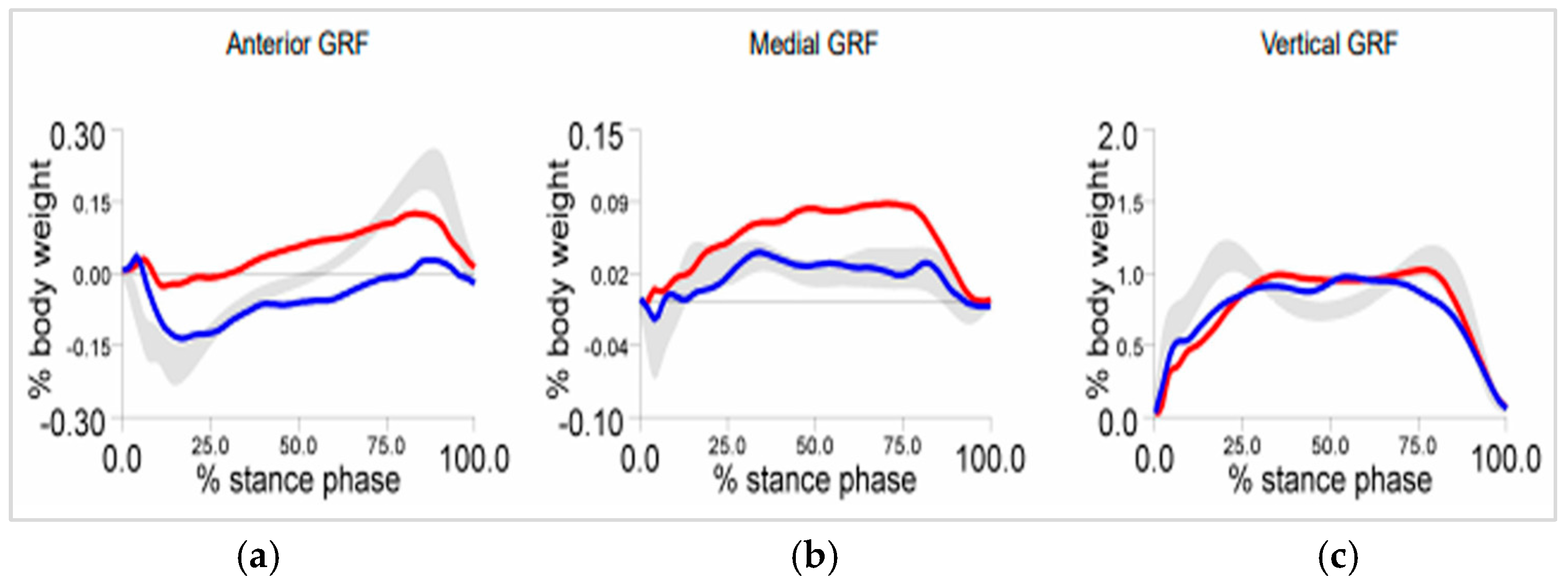
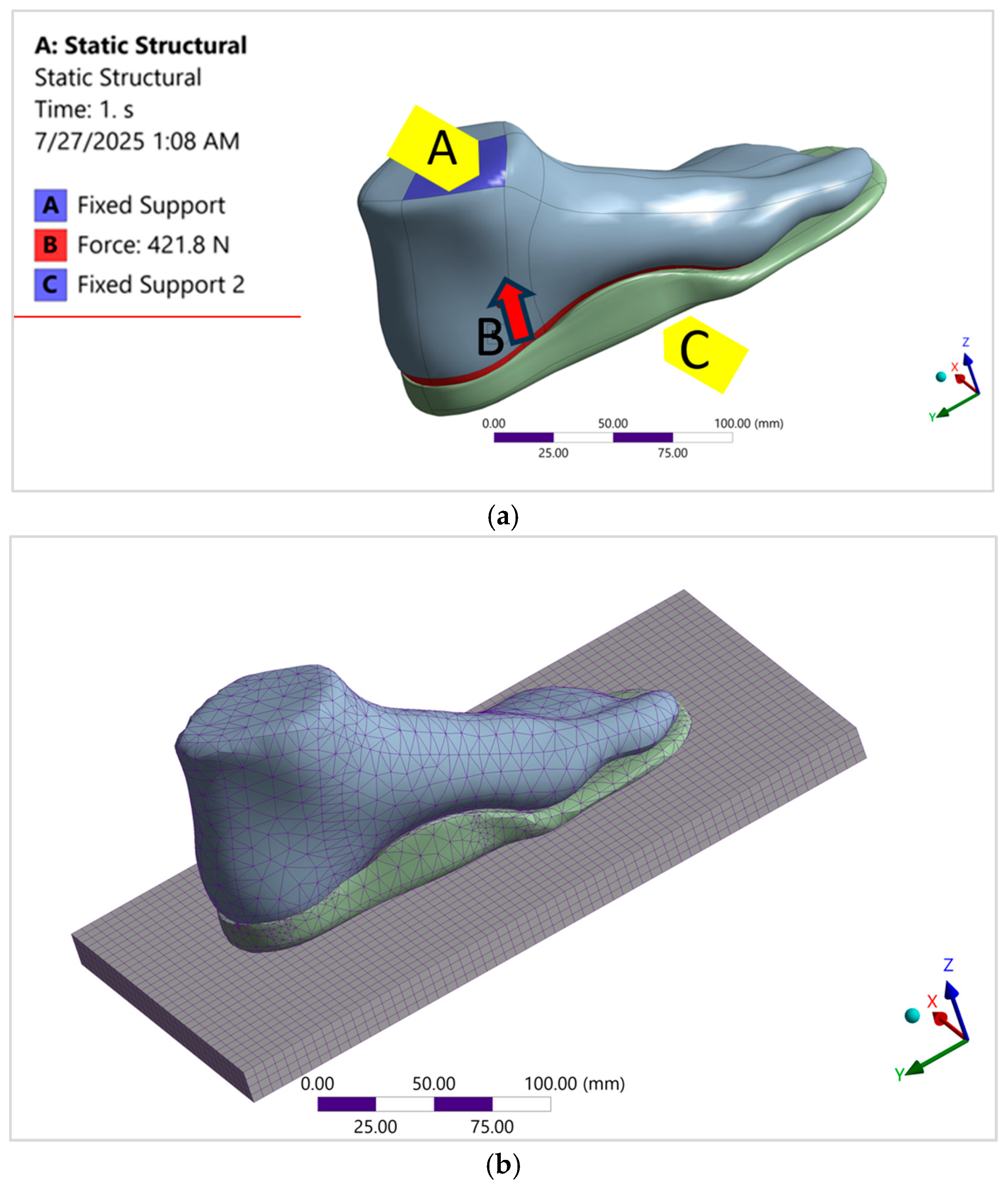

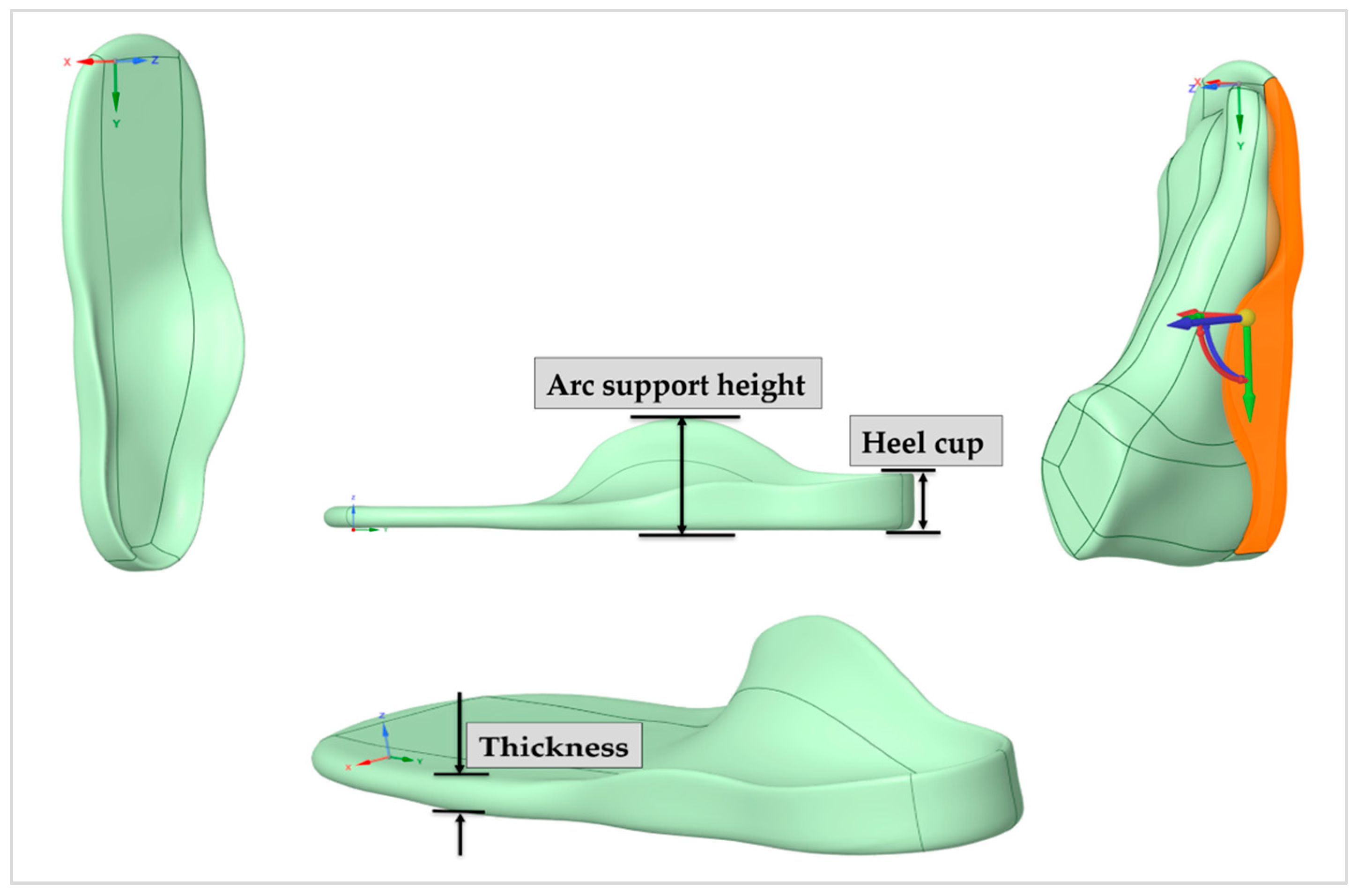
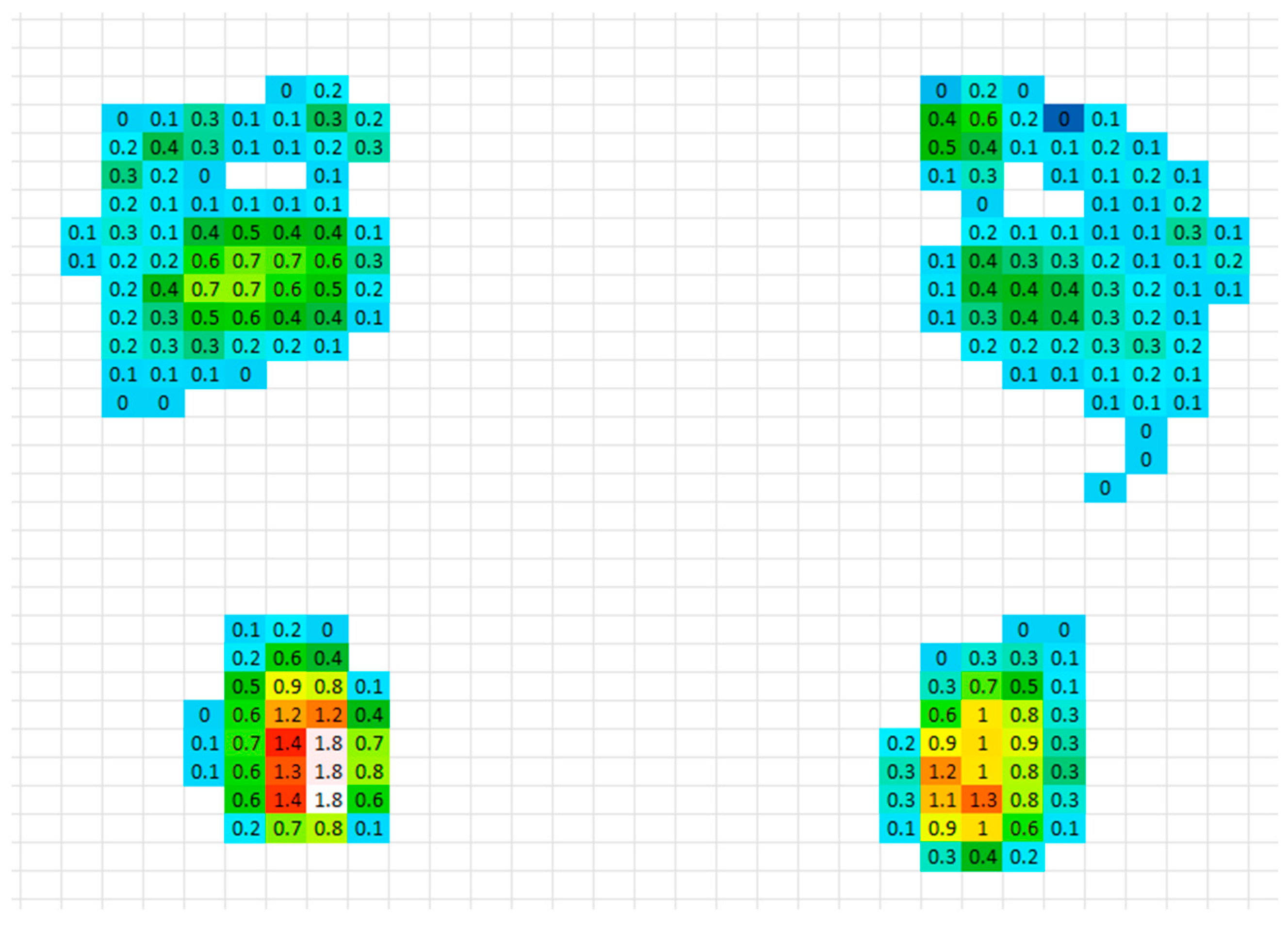


| Material | Elastic Modulus (MPa) | Poisson’s Ratio | References |
|---|---|---|---|
| EVA | 1.66 | 0.49 | [38] |
| TPU | 11 | 0.45 | [37] |
| Rubber | 6 | 0.45 | [39] |
| Foot | 50 | 0.4 | [40] |
| Ground | 210,000 (Steel) | 0.3 | [41] |
| Design Factor | Level1 | Level2 | Level3 |
|---|---|---|---|
| Arc support height (mm) | 30 | 37 | 42 |
| Heel cup height (mm) | 16 | 18 | 20 |
| Thickness (mm) | 8 | 10 | 12 |
| Materials | EVA | TPU | Rubber |
| Trial Number | Code | Design Factor | |||
|---|---|---|---|---|---|
| Arch Height (mm) | Heel Cup (mm) | Thickness (mm) | Material Type | ||
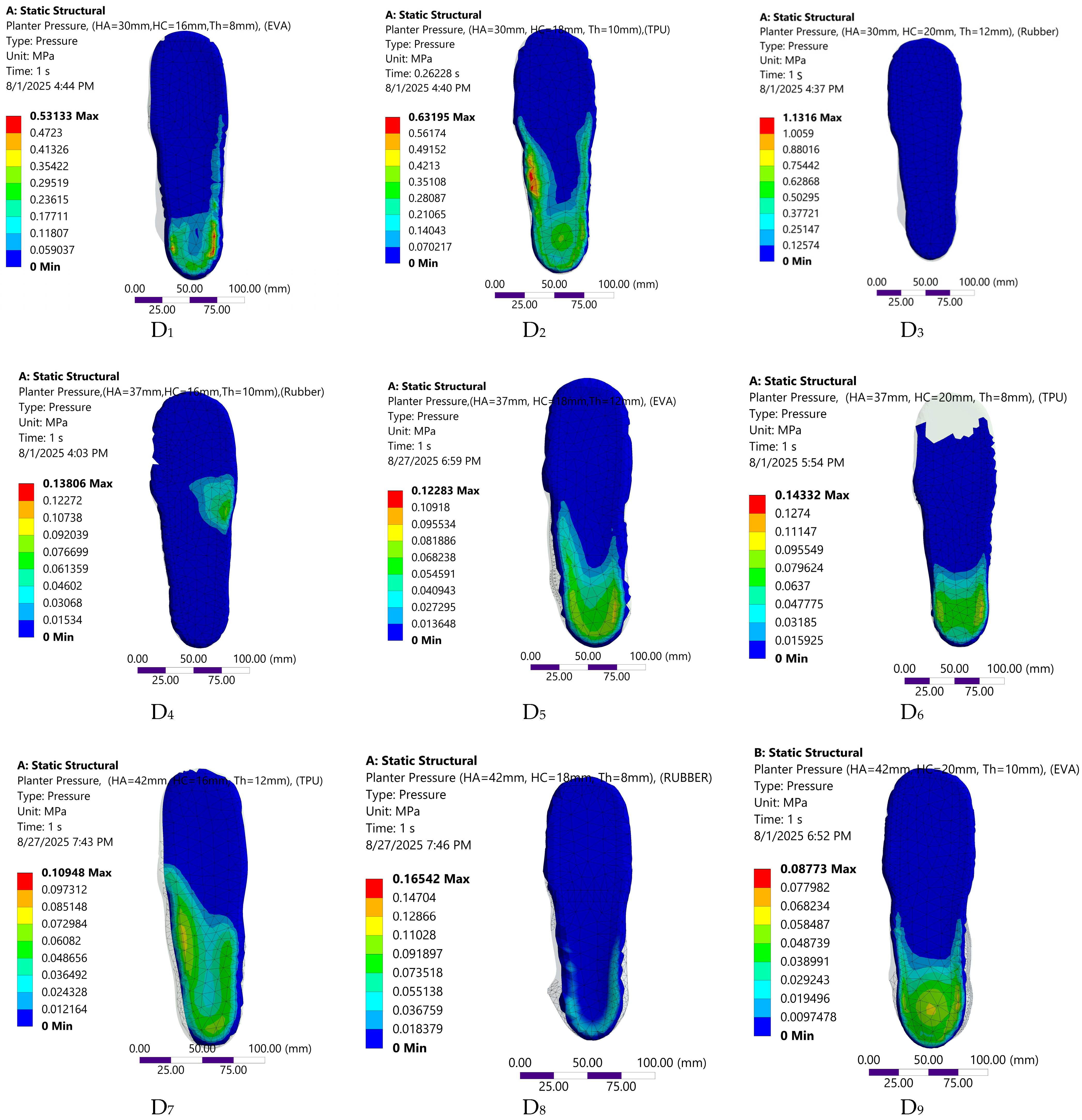
| 1 | 30 | 16 | 8 | EVA | |
| 2 | 30 | 18 | 10 | TPU | |
| 3 | 30 | 20 | 12 | RUBBER | |
| 4 | 37 | 16 | 10 | RUBBER | |
| 5 | 37 | 18 | 12 | EVA | |
| 6 | 37 | 20 | 8 | TPU | |
| 7 | 42 | 16 | 12 | TPU | |
| 8 | 42 | 18 | 8 | RUBBER | |
| 9 | 42 | 20 | 10 | EVA | |
| Trial Number | Code | Plantar Pressure (MPa) | Deformation (mm) | Stress (MPa) | Strain (mm/mm) |
|---|---|---|---|---|---|
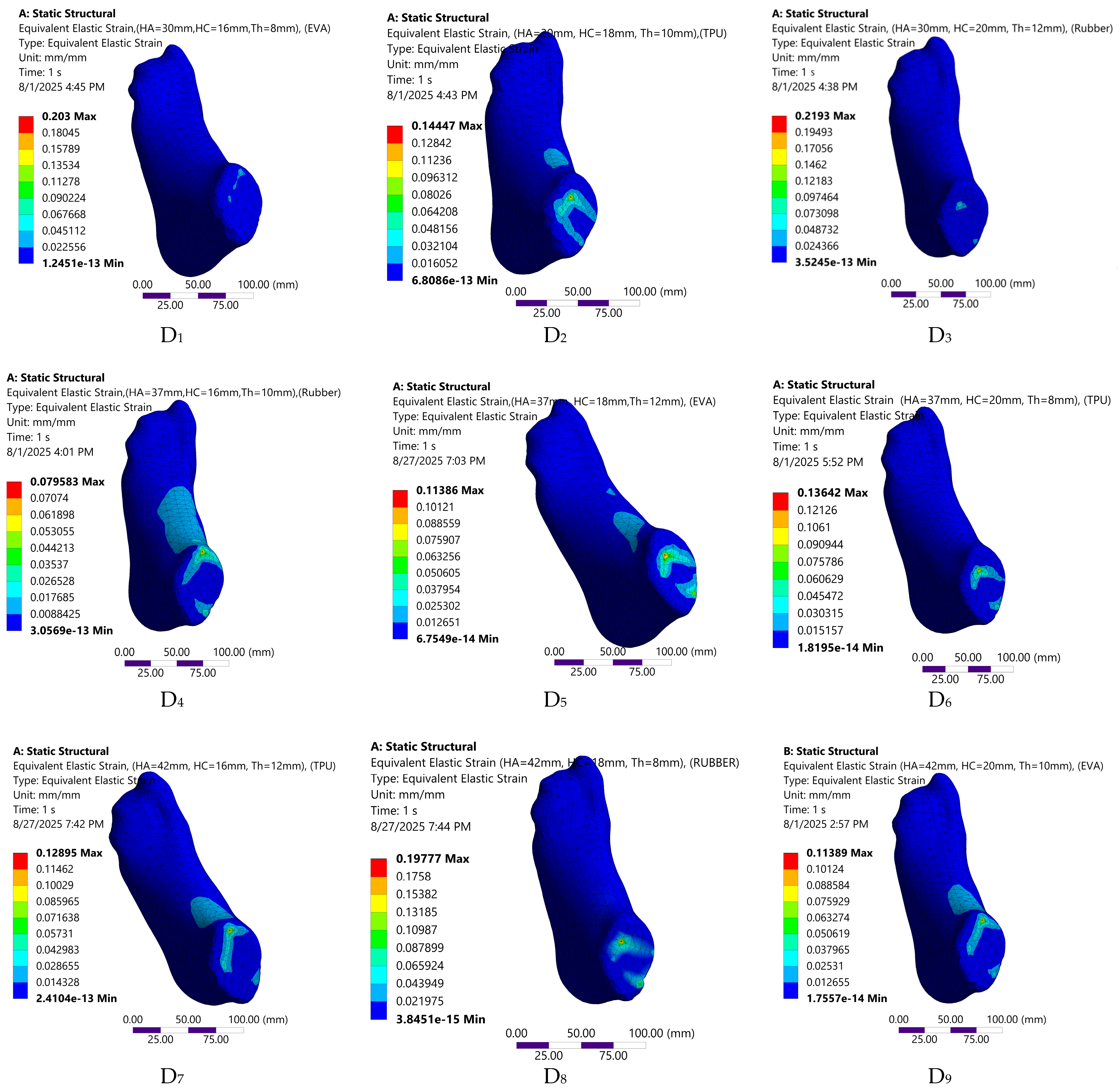
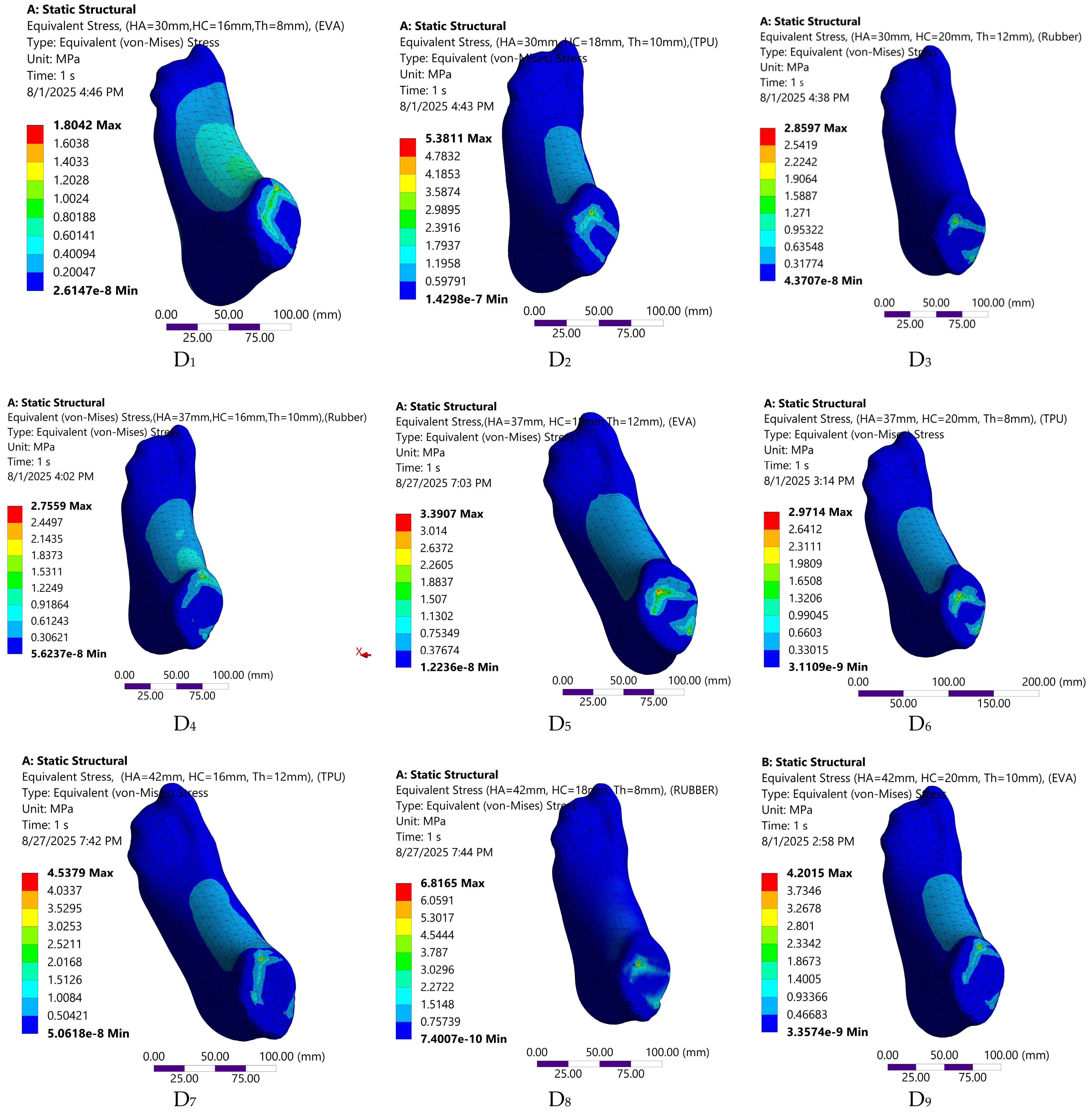
| 1 | 0.53 | 6.51 | 1.80 | 0.20 | |
| 2 | 0.63 | 4.96 | 5.38 | 0.14 | |
| 3 | 1.13 | 5.74 | 2.85 | 0.21 | |
| 4 | 0.13 | 7.65 | 2.75 | 0.07 | |
| 5 | 0.12 | 12.87 | 3.39 | 0.11 | |
| 6 | 0.14 | 10.93 | 2.97 | 0.13 | |
| 7 | 0.10 | 9.39 | 4.53 | 0.12 | |
| 8 | 0.16 | 11.92 | 6.81 | 0.19 | |
| 9 | 0.08 | 8.84 | 4.20 | 0.11 |
| Design Factor | Sum of Squares for Plantar Pressure, Deformation, Stress and Strain | |||
|---|---|---|---|---|
| Plantar Pressure | Deformation | Stress | Strain | |
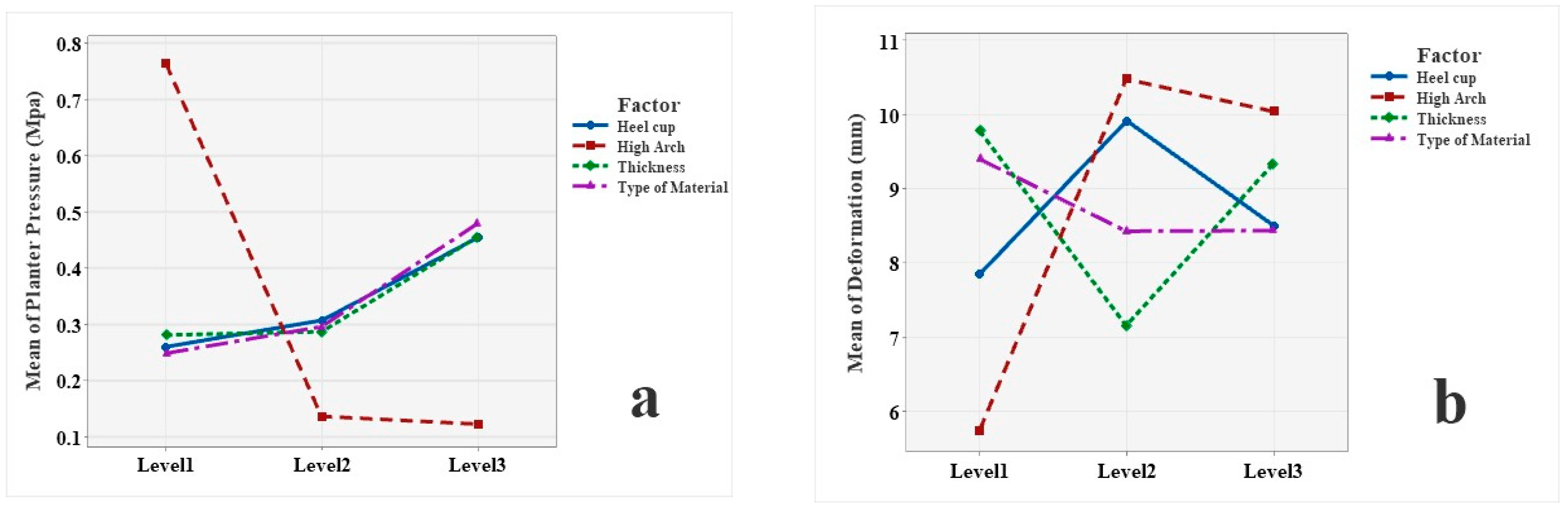
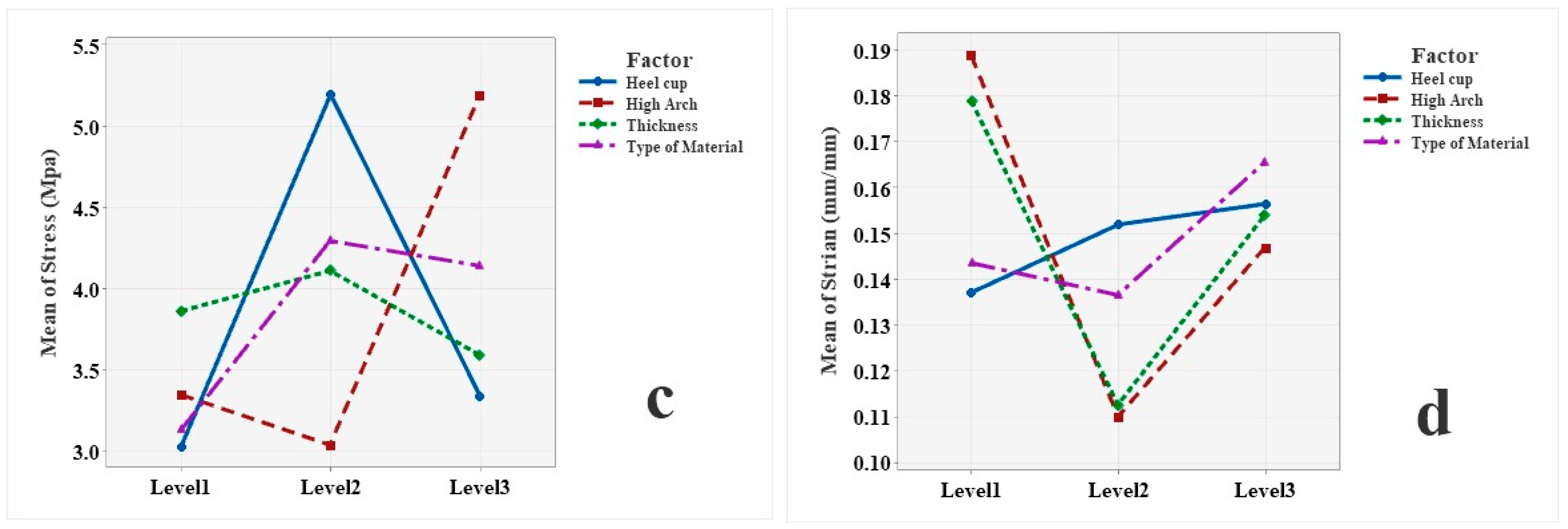
| Arch Height | 0.81 (79.4%) | 42.09 (68.1%) | 8.14 (39.3%) | 0.14 (48.2%) |
| Heel Cup | 0.06 (6.1%) | 7.10 (11.5%) | 8.34 (40.2%) | 0.03 (14.5%) |
| Thickness | 0.05 (5.8%) | 12.28 (19.9%) | 0.44 (2.1%) | 0.07 (22.3%) |
| Type of material | 0.08 (8.7%) | 2.25 (3.6%) | 2.41 (11.6%) | 0.06 (15.0%) |
Disclaimer/Publisher’s Note: The statements, opinions and data contained in all publications are solely those of the individual author(s) and contributor(s) and not of MDPI and/or the editor(s). MDPI and/or the editor(s) disclaim responsibility for any injury to people or property resulting from any ideas, methods, instructions or products referred to in the content. |
© 2025 by the authors. Licensee MDPI, Basel, Switzerland. This article is an open access article distributed under the terms and conditions of the Creative Commons Attribution (CC BY) license (https://creativecommons.org/licenses/by/4.0/).
Share and Cite
Alsaleh, D.M.; Bilgili, F.; Bayraktar, M.; Arslan, Y.Z. Finite Element-Based Biomechanical Evaluation of Patient-Specific Insoles for a Pediatric Patient with Hereditary Spastic Paraplegia Using the Taguchi Method. Bioengineering 2025, 12, 1323. https://doi.org/10.3390/bioengineering12121323
Alsaleh DM, Bilgili F, Bayraktar M, Arslan YZ. Finite Element-Based Biomechanical Evaluation of Patient-Specific Insoles for a Pediatric Patient with Hereditary Spastic Paraplegia Using the Taguchi Method. Bioengineering. 2025; 12(12):1323. https://doi.org/10.3390/bioengineering12121323
Chicago/Turabian StyleAlsaleh, Dhifaf Muhi, Fuat Bilgili, Meral Bayraktar, and Yunus Ziya Arslan. 2025. "Finite Element-Based Biomechanical Evaluation of Patient-Specific Insoles for a Pediatric Patient with Hereditary Spastic Paraplegia Using the Taguchi Method" Bioengineering 12, no. 12: 1323. https://doi.org/10.3390/bioengineering12121323
APA StyleAlsaleh, D. M., Bilgili, F., Bayraktar, M., & Arslan, Y. Z. (2025). Finite Element-Based Biomechanical Evaluation of Patient-Specific Insoles for a Pediatric Patient with Hereditary Spastic Paraplegia Using the Taguchi Method. Bioengineering, 12(12), 1323. https://doi.org/10.3390/bioengineering12121323