Machine Learning Methods in Posture-Related Applications in Children up to 12 Years Old: A Systematic Review

 ,
,  ,
,  and
and 
Abstract
1. Introduction
2. Materials and Methods
2.1. Experimental Approach to the Problem
2.2. Information Sources
2.3. Search Strategy
2.4. Eligibility Criteria
2.5. Data Extraction
2.6. Assessment of Study Methodology
3. Results
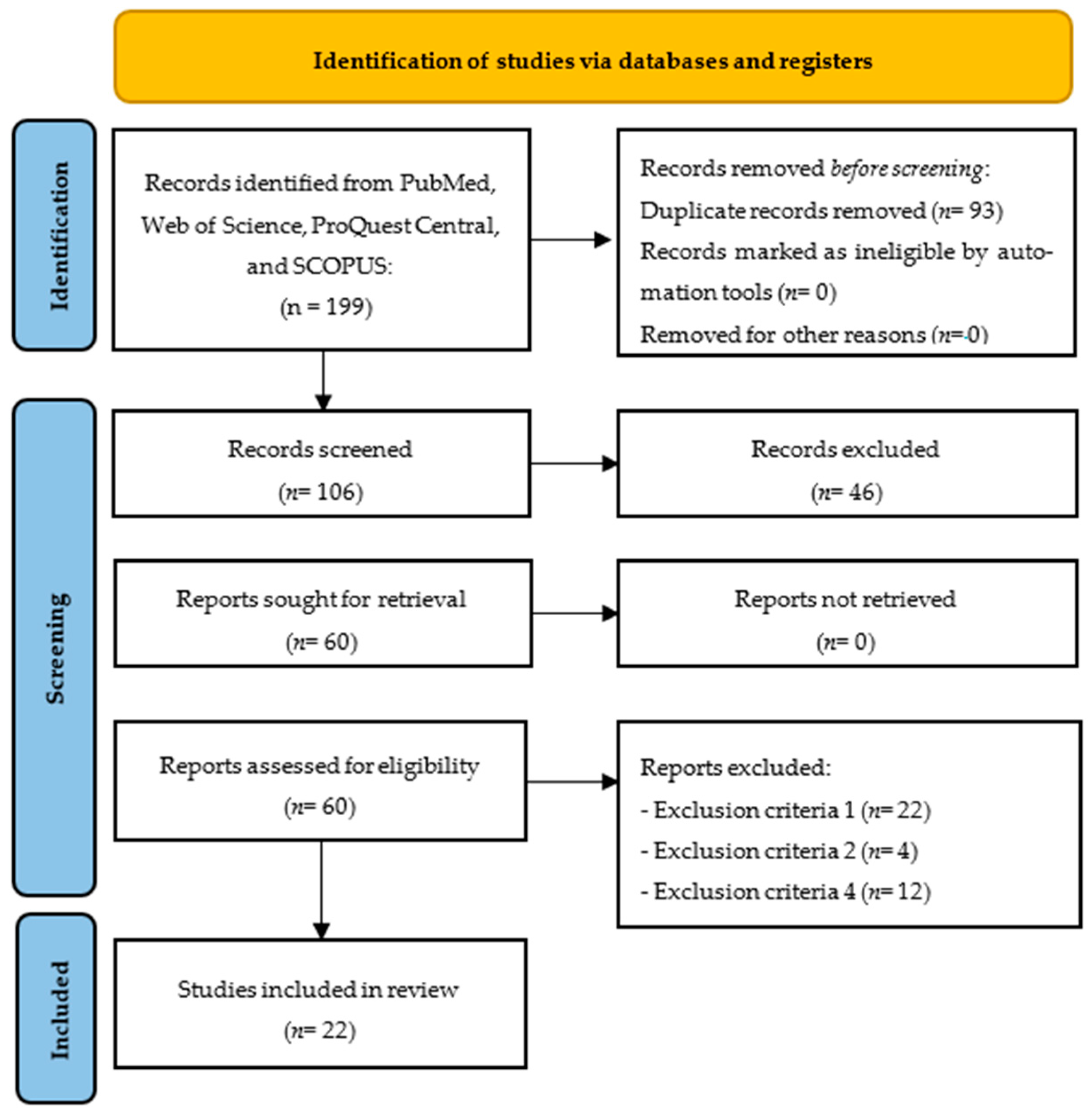
3.1. Identification and Selection of Studies
3.2. Quality Assessment
3.3. Study Characteristics
3.3.1. Sample
3.3.2. Data Collection Methods
3.3.3. Study Settings and Research Focus
3.3.4. Machine Learning Implementation
4. Discussion
4.1. Sensor Technologies and Data Collection Methods
4.2. Machine Learning Algorithms and Classification Performance
4.3. Clinical Applications and Diagnostic Capabilities
4.4. Naturalistic Assessment and Home-Based Monitoring
4.5. Limitations and Practical Applications
5. Conclusions
Author Contributions
Funding
Institutional Review Board Statement
Informed Consent Statement
Data Availability Statement
Conflicts of Interest
References
- Velázquez-Iglesias, S.; Moreno-Rodilla, V.; Curto-Diego, B.; Pérez-Robledo, F.; Llamas-Ramos, R.; Calvo-Arenillas, J.I.; Llamas-Ramos, I. Postural Analysis in Ventral and Dorsal Decubitus Babies Using Deep Learning Techniques: A Protocol Study. J. Clin. Med. 2025, 14, 3096. [Google Scholar] [CrossRef] [PubMed]
- Franchak, J.M. Changing Opportunities for Learning in Everyday Life: Infant Body Position Over the First Year. Infancy 2019, 24, 187–209. [Google Scholar] [CrossRef]
- Franchak, J.M.; Kretch, K.S.; Adolph, K.E. See and Be Seen: Infant–Caregiver Social Looking during Locomotor Free Play. Dev. Sci. 2018, 21, e12626. [Google Scholar] [CrossRef]
- Maciak, M.; Koszela, K.; Beniuk, A.; Woldańska-Okońska, M. The Assessment of Postural–Motor, Coordination, and Reflex Functions in Children and Adolescents with a History of Premature Verticalization and Ontogeny Disorders in Their First Year of Life. Children 2024, 11, 1071. [Google Scholar] [CrossRef]
- Jones, D.; Innerd, A.; Giles, E.L.; Azevedo, L.B. Association between Fundamental Motor Skills and Physical Activity in the Early Years: A Systematic Review and Meta-Analysis. J. Sport Health Sci. 2020, 9, 542–552. [Google Scholar] [CrossRef]
- Casey, J.; Rosenblad, A.; Rodby-Bousquet, E. Postural Asymmetries, Pain, and Ability to Change Position of Children with Cerebral Palsy in Sitting and Supine: A Cross-Sectional Study. Disabil. Rehabil. 2022, 44, 2363–2371. [Google Scholar] [CrossRef]
- Stolinski, L.; Kozinoga, M.; Czaprowski, D.; Tyrakowski, M.; Cerny, P.; Suzuki, N.; Kotwicki, T. Two-Dimensional Digital Photography for Child Body Posture Evaluation: Standardized Technique, Reliable Parameters and Normative Data for Age 7–10 Years. Scoliosis Spinal Disord. 2017, 12, 38. [Google Scholar] [CrossRef]
- Fortin, C.; Ehrmann Feldman, D.; Cheriet, F.; Labelle, H. Clinical Methods for Quantifying Body Segment Posture: A Literature Review. Disabil. Rehabil. 2011, 33, 367–383. [Google Scholar] [CrossRef]
- Hendry, D.; Rohl, A.L.; Rasmussen, C.L.; Zabatiero, J.; Cliff, D.P.; Smith, S.S.; Mackenzie, J.; Pattinson, C.L.; Straker, L.; Campbell, A. Objective Measurement of Posture and Movement in Young Children Using Wearable Sensors and Customised Mathematical Approaches: A Systematic Review. Sensors 2023, 23, 9661. [Google Scholar] [CrossRef] [PubMed]
- Harsted, S.; Holsgaard-Larsen, A.; Hestbæk, L.; Boyle, E.; Lauridsen, H.H. Concurrent Validity of Lower Extremity Kinematics and Jump Characteristics Captured in Pre-School Children by a Markerless 3D Motion Capture System. Chiropr. Man. Ther. 2019, 27, 39. [Google Scholar] [CrossRef] [PubMed]
- Zahradka, N.; Verma, K.; Behboodi, A.; Bodt, B.; Wright, H.; Lee, S.C.K. An Evaluation of Three Kinematic Methods for Gait Event Detection Compared to the Kinetic-Based ‘Gold Standard. Sensors 2020, 20, 5272. [Google Scholar] [CrossRef]
- Deng, W.; O’Brien, M.K.; Andersen, R.A.; Rai, R.; Jones, E.; Jayaraman, A. A Systematic Review of Portable Technologies for the Early Assessment of Motor Development in Infants. npj Digit. Med. 2025, 8, 63. [Google Scholar] [CrossRef] [PubMed]
- Kim, Y.M.; Son, Y.; Kim, W.; Jin, B.; Yun, M.H. Classification of Children’s Sitting Postures Using Machine Learning Algorithms. Appl. Sci. 2018, 8, 1280. [Google Scholar] [CrossRef]
- Kim, W.; Jin, B.; Choo, S.; Nam, C.S.; Yun, M.H. Designing of Smart Chair for Monitoring of Sitting Posture Using Convolutional Neural Networks. Data Technol. Appl. 2019, 53, 142–155. [Google Scholar] [CrossRef]
- Li, Y.; Mache, M.A.; Todd, T.A. Automated Identification of Postural Control for Children with Autism Spectrum Disorder Using a Machine Learning Approach. J. Biomech. 2020, 113, 110073. [Google Scholar] [CrossRef]
- Khaksar, S.; Pan, H.; Borazjani, B.; Murray, I.; Agrawal, H.; Liu, W.; Elliott, C.; Imms, C.; Campbell, A.; Walmsley, C. Application of Inertial Measurement Units and Machine Learning Classification in Cerebral Palsy: Randomized Controlled Trial. JMIR Rehabil. Assist. Technol. 2021, 8, e29769. [Google Scholar] [CrossRef]
- Mellodge, P.; Saavedra, S.; Tran Poit, L.; Pratt, K.A.; Goodworth, A.D. Quantifying States and Transitions of Emerging Postural Control for Children Not Yet Able to Sit Independently. Sensors 2023, 23, 3309. [Google Scholar] [CrossRef] [PubMed]
- Khan, M.H.; Schneider, M.; Farid, M.S.; Grzegorzek, M. Detection of Infantile Movement Disorders in Video Data Using Deformable Part-Based Model. Sensors 2018, 18, 3202. [Google Scholar] [CrossRef]
- Slijepcevic, D.; Zeppelzauer, M.; Unglaube, F.; Kranzl, A.; Breiteneder, C.; Horsak, B. Explainable Machine Learning in Human Gait Analysis: A Study on Children With Cerebral Palsy. IEEE Access 2023, 11, 65906–65923. [Google Scholar] [CrossRef]
- Muralidharan, V.; Burgart, A.; Daneshjou, R.; Rose, S. Recommendations for the Use of Pediatric Data in Artificial Intelligence and Machine Learning ACCEPT-AI. npj Digit. Med. 2023, 6, 166. [Google Scholar] [CrossRef]
- Page, M.J.; McKenzie, J.E.; Bossuyt, P.M.; Boutron, I.; Hoffmann, T.C.; Mulrow, C.D.; Shamseer, L.; Tetzlaff, J.M.; Akl, E.A.; Brennan, S.E.; et al. The PRISMA 2020 Statement: An Updated Guideline for Reporting Systematic Reviews. BMJ 2021, 372, n71. [Google Scholar] [CrossRef]
- Rico-González, M.; Pino-Ortega, J.; Clemente, F.M.; Los Arcos, A. Guidelines for Performing Systematic Reviews in Sports Science. Biol. Sport. 2022, 39, 463–471. [Google Scholar] [CrossRef]
- Cochrane Consumers & Communication Review Group. Data Extraction Template for Included Studies. Available online: https://opal.latrobe.edu.au/articles/journal_contribution/Data_extraction_template/6818852/1?file=12400460 (accessed on 3 November 2025).
- Slim, K.; Nini, E.; Forestier, D.; Kwiatkowski, F.; Panis, Y.; Chipponi, J. Original Article Methodological Index for Non-Randomized Studies (Minors). ANZ J. Surg. 2003, 73, 712–716. [Google Scholar]
- Airaksinen, M.; Gallen, A.; Taylor, E.; De Sena, S.; Palsa, T.; Haataja, L.; Vanhatalo, S. Assessing Infant Gross Motor Performance With an At-Home Wearable. Pediatrics 2025, 155, e2024068647. [Google Scholar] [CrossRef]
- Yang, Y.-Z.; Tsai, J.-A.; Yu, Y.-L.; Ko, M.H.-J.; Chiou, H.-Y.; Pai, T.-W.; Chen, H.-J. Automatic Movement Recognition for Evaluating the Gross Motor Development of Infants. Children 2025, 12, 310. [Google Scholar] [CrossRef]
- Arias Valdivia, J.T.; Gatica Rojas, V.; Astudillo, C.A. Deep Learning-Based Classification of Hemiplegia and Diplegia in Cerebral Palsy Using Postural Control Analysis. Sci. Rep. 2025, 15, 8811. [Google Scholar] [CrossRef]
- Lee, Y.; Kim, Y.M.; Pyo, S.; Yun, M.H. Development of a Sitting Posture Monitoring System for Children Using Pressure Sensors: An Application of Convolutional Neural Network. Work 2022, 72, 351–366. [Google Scholar] [CrossRef]
- Bertoncelli, C.M.; Bertoncelli, D.; Bagui, S.S.; Bagui, S.C.; Costantini, S.; Solla, F. Identifying Postural Instability in Children with Cerebral Palsy Using a Predictive Model: A Longitudinal Multicenter Study. Diagnostics 2023, 13, 2126. [Google Scholar] [CrossRef]
- Sukhadia, N.; Kamboj, P. IMU-Based Approach to Detect Spastic Cerebral Palsy in Infants at Early Stages. EAI Endorsed Trans. Pervasive Health Technol. 2024, 10, 1–12. [Google Scholar] [CrossRef]
- Li, H.; Wang, Y.; He, L.; Lv, W.; Cui, S.; Ruan, J.S. Investigation of the Prediction Model and Assessment Parameters of Head Injury of Children Occupants Based on Machine Learning; SAE International: Detroit, MI, USA, 2024; No. 2024-01-2514. [Google Scholar]
- Franchak, J.M.; Tang, M.; Rousey, H.; Luo, C. Long-Form Recording of Infant Body Position in the Home Using Wearable Inertial Sensors. Behav. Res. Methods 2023, 56, 4982–5001. [Google Scholar] [CrossRef] [PubMed]
- Eken, M.M.; Meyns, P.; Lamberts, R.P.; Langerak, N.G. Markerless Upper Body Movement Tracking During Gait in Children with HIV Encephalopathy: A Pilot Study. Appl. Sci. 2025, 15, 4546. [Google Scholar] [CrossRef]
- Tao, H.; Wen, Y.; Yu, R.; Xu, Y.; Yu, F. Predictive Model Establishment for Forward-Head Posture Disorder in Primary-School-Aged Children Based on Multiple Machine Learning Algorithms. Front. Bioeng. Biotechnol. 2025, 13, 1607419. [Google Scholar] [CrossRef]
- Ledwoń, D.; Danch-Wierzchowska, M.; Doroniewicz, I.; Kieszczyńska, K.; Affanasowicz, A.; Latos, D.; Matyja, M.; Mitas, A.W.; Myśliwiec, A. Automated Postural Asymmetry Assessment in Infants Neurodevelopmental Evaluation Using Novel Video-Based Features. Comput. Methods Programs Biomed. 2023, 233, 107455. [Google Scholar] [CrossRef]
- Airaksinen, M.; Räsänen, O.; Ilén, E.; Häyrinen, T.; Kivi, A.; Marchi, V.; Gallen, A.; Blom, S.; Varhe, A.; Kaartinen, N.; et al. Automatic Posture and Movement Tracking of Infants with Wearable Movement Sensors. Sci. Rep. 2020, 10, 169. [Google Scholar] [CrossRef]
- Gama, F.; Misar, M.; Navara, L.; Popescu, S.T.; Hoffmann, M. Automatic Infant 2D Pose Estimation from Videos: Comparing Seven Deep Neural Network Methods 2025. arXiv 2024, arXiv:2406.17382. [Google Scholar]
- Franchak, J.M.; Scott, V.; Luo, C. A Contactless Method for Measuring Full-Day, Naturalistic Motor Behavior Using Wearable Inertial Sensors. Front. Psychol. 2021, 12, 701343. [Google Scholar] [CrossRef] [PubMed]
- Ali, M.M.; Mohamed, S.I. A Pose Estimation for Motion Tracking of Infants Cerebral Palsy. Multimed. Tools Appl. 2024, 84, 8261–8286. [Google Scholar] [CrossRef]
- Duda-Goławska, J.; Rogowski, A.; Laudanska, Z.; Zygierewicz, J.; Tomalski, P. Identifying Infant Body Position from Inertial Sensors with Machine Learning Which Parameters Matter. Sensors 2024, 24, 7809. [Google Scholar] [CrossRef] [PubMed]
- Rachwani, J.; Santamaria, V.; Ai, X.; Goldstone, H.; Kanneth, J.; Karim, N.; Schulteis, J.; Agrawal, S. Dynamic Sitting in Infants: Limits of Stability. Gait Posture 2023, 102, 210–215. [Google Scholar] [CrossRef]
- Chicco, D.; Jurman, G. The Advantages of the Matthews Correlation Coefficient (MCC) over F1 Score and Accuracy in Binary Classification Evaluation. BMC Genom. 2020, 21, 6. [Google Scholar] [CrossRef]
- Rihar, A.; Mihelj, M.; Pašič, J.; Kolar, J.; Munih, M. Infant Trunk Posture and Arm Movement Assessment Using Pressure Mattress, Inertial and Magnetic Measurement Units (IMUs). J. Neuroeng. Rehabil. 2014, 11, 133. [Google Scholar] [CrossRef] [PubMed]
- Walmsley, C.P.; Williams, S.A.; Grisbrook, T.; Elliott, C.; Imms, C.; Campbell, A. Measurement of Upper Limb Range of Motion Using Wearable Sensors: A Systematic Review. Sports Med.—Open 2018, 4, 53. [Google Scholar] [CrossRef] [PubMed]
- Jeong, H.; Rogers, J.A.; Xu, S. Continuous On-Body Sensing for the COVID-19 Pandemic: Gaps and Opportunities. Sci. Adv. 2020, 6, eabd4794. [Google Scholar] [CrossRef]
- Roggio, F.; Trovato, B.; Sortino, M.; Musumeci, G. A Comprehensive Analysis of the Machine Learning Pose Estimation Models Used in Human Movement and Posture Analyses: A Narrative Review. Heliyon 2024, 10, e39977. [Google Scholar] [CrossRef]
- Airaksinen, M.; Vanhatalo, S.; Räsänen, O. Comparison of End-to-End Neural Network Architectures and Data Augmentation Methods for Automatic Infant Motility Assessment Using Wearable Sensors. Sensors 2023, 23, 3773. [Google Scholar] [CrossRef]
- Sadeghi, Z.; Alizadehsani, R.; Cifci, M.A.; Kausar, S.; Rehman, R.; Mahanta, P.; Bora, P.K.; Almasri, A.; Alkhawaldeh, R.S.; Hussain, S.; et al. A Review of Explainable Artificial Intelligence in Healthcare. Comput. Electr. Eng. 2024, 118, 109370. [Google Scholar] [CrossRef]
- Antoniadi, A.M.; Du, Y.; Guendouz, Y.; Wei, L.; Mazo, C.; Becker, B.A.; Mooney, C. Current Challenges and Future Opportunities for XAI in Machine Learning-Based Clinical Decision Support Systems: A Systematic Review. Appl. Sci. 2021, 11, 5088. [Google Scholar] [CrossRef]


| Item | Inclusion | Exclusion |
|---|---|---|
| Population | Children as participants (until 12 years old) | Studies with non-child participants (more than 12 years old) |
| Intervention or Exposure | Studies that used machine learning | Studies that did not use machine learning |
| Comparation | Not applicable | Not applicable |
| Outcome[s] | Any result (validity or reliability studies, predictions…) related to children’s body posture | Any result not related to children’s body posture |
| Other criteria | Peer-reviewed full-text studies published in original journal articles | Non-peer-reviewed journal articles Non-original full-text studies (conference papers…) Reviews |
| Reference | 1 | 2 | 3 | 4 | 5 | 6 | 7 | 8 | 9 | 10 | 11 | 12 | Score |
|---|---|---|---|---|---|---|---|---|---|---|---|---|---|
| Airaksinen et al. [25] | 2 | 1 | 0 | 2 | 2 | 2 | 2 | 1 | - | - | - | 2 | 14/18 |
| Li et al. [15] | 2 | 1 | 0 | 2 | 2 | 2 | 2 | 2 | - | - | - | 2 | 15/18 |
| Yang et al. [26] | 2 | 1 | 1 | 2 | 2 | - | - | 0 | - | - | - | 2 | 10/14 |
| Kim et al. [13] | 2 | 1 | 0 | 2 | 2 | 2 | 2 | 0 | - | - | - | 2 | 13/18 |
| Arias Valdivia et al. [27] | 2 | 1 | 0 | 2 | 2 | - | - | 0 | - | - | - | 2 | 9/14 |
| Khaksar et al. [16] | 2 | 1 | 1 | 2 | 1 | 2 | 2 | 1 | 2 | 2 | 1 | 2 | 19/24 |
| Kim et al. [14] | 2 | 1 | 0 | 2 | 2 | 2 | 2 | 0 | - | - | - | 2 | 13/18 |
| Lee et al. [28] | 2 | 1 | 0 | 2 | 2 | 2 | 2 | 0 | - | - | - | 2 | 13/18 |
| Bertoncelli et al. [29] | 2 | 1 | 2 | 2 | 2 | 2 | 2 | 0 | - | - | - | 2 | 15/18 |
| Sukhadia & Kamboj [30] | 2 | 1 | 0 | 2 | 1 | - | 0 | 0 | - | - | - | 2 | 8/16 |
| Li et al. [31] | 2 | 1 | 0 | 2 | 2 | 2 | - | 0 | - | - | - | 2 | 11/16 |
| Franchak et al. [32] | 2 | 1 | 0 | 2 | 2 | 2 | 2 | 0 | - | - | - | 2 | 13/18 |
| Eken et al. [33] | 2 | 1 | 0 | 2 | 2 | 2 | 2 | 0 | - | - | - | 2 | 13/18 |
| Tao et al. [34] | 2 | 1 | 0 | 2 | 2 | 0 | 0 | 0 | - | - | - | 2 | 9/18 |
| Ledwon et al. [35] | 2 | 1 | 0 | 2 | 2 | 2 | 2 | 0 | - | - | - | 2 | 11/18 |
| Airaksinen et al. [36] | 2 | 1 | 0 | 2 | 2 | 2 | 2 | 0 | - | - | - | 2 | 13/18 |
| Gama et al. [37] | 2 | 1 | 0 | 2 | 2 | - | - | 0 | - | - | - | 2 | 9/14 |
| Franchak et al. [38] | 2 | 1 | 0 | 2 | 2 | 2 | 2 | 0 | - | - | - | 2 | 13/18 |
| Ali & Mohamed [39] | 2 | 0 | 0 | 2 | 2 | 2 | - | 0 | - | - | - | 2 | 10/16 |
| Duda-Goławska et al. [40] | 2 | 1 | 0 | 2 | 2 | 2 | 1 | 0 | - | - | - | 2 | 13/18 |
| Rachwani et al. [41] | 2 | 1 | 0 | 2 | 2 | 2 | 2 | 0 | - | - | - | 2 | 13/18 |
| Ref. | Participants’ Characteristics | Activity Registration | Aim of Prediction Related to Posture | MLe/DL Accuracy | Conclusions | Practical Application for Predicting | ||||
|---|---|---|---|---|---|---|---|---|---|---|
| Tool | Tool’s Specifications | Location | Attributes/Features/Variables | Algorithm | % | |||||
| Airaksinen et al. [25] | 134 infants (4–22 months); Cohort 1 (n = 97, typically developing), Cohort 2 (n = 37, developmental risk) | MAIJU wearable suit (multi-sensor) | Accelerometer and gyroscope; 52 Hz (1024 samples/s); Bluetooth to mobile device | Limbs (standard locations on each limb) | Second-by-second posture and movement detections (“MAIJU features”): supine, prone, sitting, crawling, standing, walking, etc. | To detect gross motor milestones (GMMs), quantify time spent in key postures, and track holistic motor development (BIMS score) | Support Vector Machine (SVM) for GMM detection; Linear Mixed-Effects Model (LME) for BIMS | GMM detection accuracy: 90.9–96.8% (cross-val. and external val.); BIMS vs. age correlation (Spearman’s ρ): 0.93 | Unsupervised at-home wearable measurements can accurately and automatically quantify infant gross motor skills, with performance comparable to expert agreement levels. | Objective, at-home assessment of infant motor development for early detection of delays, clinical support, and longitudinal tracking in healthcare and research. |
| Li et al. [15] | 50 children (25 ASD, 25 TD); age 5–12 years; mild ASD (level 1) | Force plate (Kistler Instrument Corp., Winterthur, Switzerland) | 60 Hz sampling rate; 20 s quiet standing trials; eyes open and eyes closed conditions | Biomechanics laboratory | COP linear displacements (AP, ML), total distance, sway area, sample entropy (complexity)—12 features total (6 variables × 2 conditions) | Automated identification of ASD based on postural control patterns | Naïve Bayes (best performer among 6 classifiers) | Accuracy: 0.900 Sensitivity: 0.826 Specificity: 1.000 Precision: 1.000 F1 Score: 0.898 | Naïve Bayes best identified ASD postural control with high accuracy and specificity. COP complexity improved classification by ~4%. | Potential as an early diagnostic tool for ASD using postural sway biomarkers; supports computer-aided diagnosis with minimal human intervention. |
| Yang et al. [26] | 90 infants (aged 2–6 months); 26 with developmental delays, 64 typically developing | Video camera (home recordings) | 15 frames per second | Home environment | 227 features extracted (106 significant after ANOVA): • Kinematic (speed, acceleration of elbows, wrists, knees, ankles) • Joint angles (shoulders, elbows, hips, knees) • Angular velocity and acceleration • Entropy of movement | Automatic classification of gross motor development (normal vs. abnormal) | Random Forest | Accuracy: 94% F1-score: 0.94 AUC: 0.98 | The ViTPose model provided the best pose recognition. A Random Forest classifier using 106 significant features achieved high performance in automatically identifying infants with gross motor delays from home videos. | Enables remote, automated early screening for gross motor developmental delays in infants using simple home videos, facilitating timely intervention, especially in resource-limited areas. |
| Kim et al. [13] | 10 children; age not specified (school-aged); no health conditions reported | Sensing cushion with pressure sensor mat | Film-type FSR sensor (8 × 8 grid); 318 × 318 mm area; 12-bit data; Bluetooth transfer | Seat cushion of a child’s chair | Two-dimensional pressure distribution images (8 × 8 pixels); raw pressure values used as input features. | To classify children’s sitting postures into five categories in real time | CNN (LeNet-5 modified), NB, DT, NN, MLR, SVM | CNN: 95.3% (Avg. accuracy, individual validation); NB: 87.1%; MLR: 84.5%; DT: 79.4%; NN: 92.1%; SVM: 94.2% | The CNN algorithm outperformed conventional machine learning algorithms for classifying sitting postures from pressure distribution data. Accuracy was influenced by the child’s body weight. | Enables the development of a smart chair or real-time posture monitoring system to promote correct sitting habits and prevent musculoskeletal disorders in children. |
| Arias Valdivia et al. [27] | 57 pediatric patients (7–14 years, 9.2 ± 1.8 years; 29 males, 28 females) diagnosed with hemiplegia (n = 35) or diplegia (n = 22) | AMTI force platform | Force plate; 200 Hz sampling rate; measures forces (Fx, Fy, Fz) and moments (Mx, My Mz) | Laboratory setting; participants stood barefoot on the platform | Center of pressure (COP) coordinates, velocity (VELx, VELy), standard deviation (STDx, STDy), area of ellipse; time series data derived from 30 s trials. | To classify type of cerebral palsy (hemiplegia vs. diplegia) based on postural control analysis during quiet standing | LSTM, GRU, BiLSTM, BiGRU, ARIMA (BiGRU performed best) | Accuracy: 76.43% (BiGRU) | BiGRU model most effectively captured temporal dependencies in postural sway for classification, outperforming traditional methods and unidirectional models; offers a non-invasive, objective diagnostic aid. | Provides a clinical decision-support tool for differentiating CP subtypes using brief, static postural control tests, aiding in early and accurate diagnosis and personalized intervention planning. |
| Khaksar et al. [16] | Two age groups: • ~15 years (MIT trial): 89 with CP, 30 without CP • ~3 years (iWHOT trial): 51 with CP, 20 without CP | Custom IMU (Inertial Measurement Unit) | • Sensor: MPU-9250 (Accel, Gyro, Mag.) • Microcontroller: Custom Arduino Pro Mini • Wireless: nRF24L01 (2.4 GHz RF) • Data Rate: 100 Hz • Battery: 3.7 V, 90 mAh (~3 h) | Two sensors placed: 1. Back of the hand 2. Above the wrist | Raw accelerometer and gyroscope data (time-domain) converted to frequency-domain features (Fast Fourier Transform). Feature vector (1 × 270) included amplitude, phase shift, and peak frequency of the first 5 harmonics for each sensor and axis. | To classify movement features associated with cerebral palsy (CP) from raw IMU data during a “stop sign” wrist motion task, distinguishing between children with and without CP | 9 algorithms tested, including: • Random Forest • C4.5 Decision Tree • SVM, k-NN, MLP, etc. | • ~15 y.o.: 87.75% (Random Forest) • ~3 y.o.: 89.39% (C4.5 Decision Tree) | Machine learning applied to raw IMU data can successfully classify CP-related movement features without complex joint angle calculations. Decision-tree-based algorithms (Random Forest, C4.5) were most accurate. The system shows potential for accurate active range-of-motion assessment. | Provides a digital solution for classifying movement disorders like CP; could be used to monitor therapy effectiveness and for continuous at-home monitoring of hand movement patterns in children with movement disabilities. |
| Kim et al. [14] | 26 children (14 males, 12 females); age: 6–12 years old; all physically healthy | Film-type pressure sensor (Force Sensing Resistor—FSR) array | 64 (8 × 8) sensors; Sensor mat dimension: not fully specified, but sensor distance: 30 mm (w) × 30 mm (l) | Chair seat | Body pressure distribution data converted into 25 × 28 pixel heat map images. | Classification of 7 sitting postures: (a) sitting straight, (b) lean forward, (c) lean left, (d) lean right, (e) lean backward, (f) sitting at front of chair, (g) sitting crossed-legged | Convolutional Neural Network (CNN) | Accuracy: 97.5% (average from tenfold cross-validation; min: 0.970, max: 0.981). Recall and Precision for all postures > 0.9 | The CNN algorithm was significantly superior (97.5% accuracy) to ANN (82.9%) and MNN (88.7%) for classifying children’s sitting postures using only seat pressure sensors. This confirms the applicability of CNN-based algorithms for smart chairs to support correct posture in children. | Development of smart chairs for children to monitor sitting posture in real time, helping to prevent musculoskeletal disorders and promote the formation of correct postural habits during childhood. |
| Lee et al. [28] | 24 healthy children (11 boys, 13 girls); age: 7–12 years (mean = 10.13, SD = 1.62); country: South Korea | Custom film-type pressure sensor mat | • 64 (8 × 8) FSRs • Size: 318 × 318 mm • Frequency: 10 Hz • Resolution: 12-bit • Data transmission: Bluetooth | Seat pan of an adjustable children’s chair | 2D pressure distribution maps (8 × 8 grid). Data was interpolated to 16 × 16 and normalized before being used as input. | Classification of nine sitting postures: good, leaning forward, leaning left, right foot over left, leaning right, left foot over right, sitting at front edge, slouching, crossed legs | Convolutional Neural Network (CNN) | Exp. 1 (User-specific): 99.66% Exp. 2 (All users, identifiable): 99.40% Exp. 3 (Unfamiliar user—Leave-one-out): 77.35% Good vs. Poor posture discriminator (unfamiliar user): PPV = 0.59, NPV = 0.95 | A CNN applied to seat pan pressure distribution data is highly effective for classifying children’s sitting postures, especially when user-specific data is available. Performance drops for unfamiliar users but remains viable for good/poor posture discrimination. | Enables the development of a non-invasive, real-time sitting posture monitoring and correction system for children in classrooms or at home, helping to prevent musculoskeletal disorders by promoting postural awareness. |
| Bertoncelli et al. [29] | 102 teenagers with CP (60 inpatients, 42 outpatients; 60 males); mean age 16.5 ± 1.2 years (range 12–18 yrs); with cognitive impairment and severe motor disorders | Clinical and functional assessment data from medical records and standardized scales | Data collected between 2006 and 2021; variables included type of etiology, spasticity, dystonia, epilepsy, neuromuscular scoliosis, hip dysplasia, GMFCS, MACS, EDACS | Two specialized hospitals (Nice, France) | Independent variables: type of etiology (ET), sex (SE), dystonia (D), spasticity (SP), epilepsy (E), neuromuscular scoliosis (NS), hip dysplasia (H), MACS, GMFCS, EDACS. Dependent variable: type of trunk muscle tone (hypotonic, spastic, normal). | To identify factors associated with hypotonic or spastic truncal tone (TT) in adolescents with CP | Multiple Logistic Regression (TT-PredictMed model) | Average Accuracy: 82% Sensitivity: 71% Specificity: 90% | The TT-PredictMed model successfully identified specific clinical factors (e.g., hip dysplasia, etiology, motor function scores) associated with hypotonic and spastic truncal tone. The model’s performance aligns with recent MLe applications in clinical diagnostics. | Enables clinicians to identify adolescents with CP at risk for specific types of postural instability (hypotonic/spastic TT), allowing for earlier, more personalized rehabilitation targeting trunk control. |
| Sukhadia & Kamboj [30] | 43 infants (15 healthy, 28 with spastic cerebral palsy) | Custom IMU sensors (9 units) | Tri-axial accelerometer, gyroscope, and magnetometer; samples per second not specified | Nine sensors: both forearms, both upper arms, both lower legs, both upper legs, and trunk | Joint angles from limbs and trunk (3D data from 9 tri-axial sensors); stride length; leg dimension. | To detect spastic cerebral palsy (CP) based on posture and movement analysis | Support Vector Machine (SVM) | Accuracy: 88% (with 2-fold cross-validation) | An IMU-based system combined with machine learning can accurately identify infants with spastic CP by analyzing joint angles and movement parameters. | Enables early, automated detection of spastic CP using wearable sensors, facilitating timely intervention; serves as an objective tool to assist clinical diagnosis. |
| Li et al. [31] | Simulation study using a validated 6-year-old child occupant model (TUST IBMs 6YO-O); no human subjects | Finite Element (FE) vehicle crash simulation model; Machine Learning models | - FE Model: TUST IBMs 6YO-O (Hexahedron elements, detailed brain anatomy). - Simulation: LS-DYNA or similar explicit dynamics solver. - MLe Inputs: Collision speed (50–80 km/h), Sitting angle (90–135°). - Outputs: Head injury criteria (HIC15, 3 ms acceleration, BrIC, von Mises stress, Maxshear stress, MPS). | Virtual crash test environment (FRB—Frontal Rigid Barrier) | Input variables: impact speed, occupant sitting posture. Output (posture/injury) variables: head linear and rotational injury metrics (3ms accel., HIC15, BrIC), brain tissue stress/strain (von Mises, Maxshear, MPS). | To predict head injury risk and biomechanical response of a 6-year-old child occupant based on collision speed and sitting posture | LSTM, SVM, Random Forest (RF) | R2 > 0.93 for all models (LSTM, SVM, RF) on head injury indices (e.g., 3 ms accel., HIC15) using 10-fold cross-validation | The combination of simulation and machine learning provides a reliable predictive model for child head injury. The risk and primary mechanism of injury (linear vs. rotational load) are significantly influenced by both collision speed and sitting posture. | Enables virtual safety testing and optimization of child restraint systems (CRS) in autonomous vehicle scenarios by predicting injury outcomes for various postures and crash speeds, informing safer CRS design. |
| Franchak et al. [32] | 15 infants (6–18 months, M = 11.28 months); 7 male, 8 female; laboratory study | MetaMotionR IMUs (Mbientlab); Later: Biostamp IMUs (MC10) in leggings (home case study) | 3–4 IMUs; Accelerometer and Gyroscope; 50 Hz (Lab), 62.5 Hz (Home) | Right hip, thigh, and ankle (Lab); both hips and ankles (Home, embedded in leggings) | 204 features from 4 s windows: 10 summary stats (mean, SD, skew, etc.) per sensor location, signal (accel/gyro), and axis; cross-sensor/axis correlations and differences. | Classify body position into 5 categories: supine, prone, sitting, upright, held by caregiver | Random Forest | Individual Models: 97.9% (Lab), ~86% (Home) Group Models: 93.2% (Lab) | Method accurately classifies infant body position and captures individual differences in time spent in each position; feasible for contactless, full-day home assessment. | Enables unobtrusive, long-form measurement of naturalistic infant motor behavior and posture in home settings, useful for developmental studies linking motor experience to other domains (e.g., language). |
| Eken et al. [33] | 10 children (5 with HIV encephalopathy (HIVE), 5 typically developing (TD)); all girls; aged 5–12 years; GMFCS level II (HIVE group) | Video cameras (Bonita) | 50 Hz; sagittal and frontal plane recordings; DeepLabCut (pre-trained ResNet101 model) for 2D markerless pose estimation | Laboratory setting; anatomical landmarks (shoulder, elbow, wrist, hip, chin) tracked in sagittal and frontal planes | Joint angles calculated from tracked landmarks: shoulder flexion/extension, elbow flexion/extension, shoulder abduction/adduction, trunk lateral sway. Joint angle trajectories and range of motion (ROM) over the gait cycle. | To classify and quantify differences in upper body postures and movements (arm swing, trunk sway) during gait between children with and without HIVE | Statistical Parametric Mapping (SPM); Mann–Whitney U test for ROM | SPM identified significant differences in joint angle trajectories: shoulder sagittal (20–59% gait cycle), shoulder frontal (80–93%), trunk frontal (44–65%). ROM significantly larger in HIVE group for shoulder abduction (p = 0.028) and trunk sway (p = 0.009). | Markerless tracking with DeepLabCut is feasible and sensitive for quantifying pathological upper body postures and movements during gait in children with HIVE, showing increased trunk sway and altered arm swing similar to other neurological disorders. | Serves as a low-cost, accessible alternative to conventional gait analysis for assessing postural deviations in clinical settings, especially in low-to-middle-income countries; useful for monitoring disease progression and therapy effectiveness. |
| Tao et al. [34] | 514 primary school children (aged 6–12 years); 300 with forward head posture (FHP), 214 without; from 12 public schools in Nanjing, China | Kinect depth camera (Version: Kinect 2 for Windows); InBody 370 body composition analyzer; structured questionnaire. | Kinect: accuracy 0.001 m, standing distance 2 m; InBody: standard BIA protocol; Questionnaire: Chinese PAQ-A scale | Clinical/school setting; full-body frontal and lateral views | Anthropometric: age, sex, height, body weight, BMI. Lifestyle: daily and weekly homework time. Postural: Cervical Vertebrae Angle (CVA), ear-to-shoulder distance, horizontal angle of shoulders. | To predict the risk of forward head posture (FHP) disorder | Six algorithms tested: KNN, LGBM, XGBoost, RF, LM, SVM | RF AUC = 0.865 (best performer; LM AUC = 0.640 for comparison) | The Random Forest model demonstrated superior predictive accuracy for FHP. BMI, body weight, and age were the most influential predictors, with BMI being the most important. | Provides a tool for early screening and risk assessment of FHP in school-aged children, enabling targeted interventions focusing on weight management and monitoring of sedentary behaviors (e.g., homework time). |
| Ledwon et al. [35] | 51 healthy infants aged 6–16 weeks; full-term, Apgar score 10 | Sony HDR-AS200V camera | 920 × 1080 px, 60 fps | Home setting; camera 1 m above infant | Six pose-based features: HBA, NPD, TBA, TAF, BPDv, BPDh (reduced to TBA, TAF, HBA via feature selection). | Automated classification of postural asymmetry (symmetry, left, right) in infants | QDA (best performer) | 92.03% accuracy; 93.26% sensitivity; AUC: 0.913 | The method provides quantitative, objective assessment of postural asymmetry with high sensitivity and agreement with expert judgment. | Screening tool for infant postural asymmetry; supports early neurodevelopmental assessment and therapy monitoring without additional tools. |
| Airaksinen et al. [36] | 22 infants (mean age 6.7 months); typically developing; recruited for movement analysis | “Smart jumpsuit” with 4 wearable sensors (Movesense) | Inertial Measurement Units (IMUs): accelerometer and gyroscope; 52 Hz sampling rate; wireless via Bluetooth | Proximally on upper arms and legs (4 limbs) | Raw accelerometer and gyroscope signals (24 channels); 2.3 s windows with 50% overlap; used to classify posture and movement. | To automatically classify infant posture (prone, supine, side L/R, crawl posture) and gross body movements | Convolutional Neural Network (CNN) with iterative annotation refinement (IAR) | Posture: 94.1–99.1% UAR (depending on frame set) Movement: 71.9–82.4% UAR | The smart jumpsuit and CNN classifier achieve human-equivalent accuracy in posture and movement classification, demonstrating feasibility for automated infant movement assessment. | Enables objective, quantitative tracking of infant motor development in clinical and potentially home settings for early detection of neurodevelopmental risks. |
| Gama et al. [37] | • Real Infants: 2 healthy infants (1f, 1m), 8–25 weeks old, 16 videos (1440 annotated images) • Synthetic Infants: MINI-RGBD dataset, 12 synthetic infants, 1000 images each | RGB video cameras | Frame-by-frame and video input processing | In-lab/synthetic environment (supine position) | • 2D coordinates of body keypoints (e.g., eyes, shoulders, wrists, hips, knees, ankles). • Derived metrics: Object Keypoint Similarity (OKS), Average Precision/Recall (AP/AR), Neck-MidHip error, percentage of missing data/redundant detections, processing speed (fps). | To compare the performance of seven 2D human pose estimation methods for automatically estimating infant body posture from video | Seven Deep Neural Networks: AlphaPose, DeepLabCut/DeeperCut, Detectron2, MediaPipe/BlazePose, HRNet (BU & TD), OpenPose, ViTPose | Best Performer (ViTPose): • OKS: 0.92 (Real), 0.87 (Synth) • AP (average precision): 88.5 (Real), 73.7 (Synth) • AR (average recall): 90.9 (Real), 79.1 (Synth) • Neck-MidHip Error: ~6.0% (Real) | State-of-the-art pose estimation methods (especially ViTPose and HRNet-TD) work well on infant pose estimation without additional training. Performance varies significantly between methods in accuracy, missing/redundant detections, and speed. AlphaPose was the fastest (27 fps). DeepLabCut and MediaPipe performed poorly. | Enables automatic, markerless quantification of infant posture and movement from ordinary videos (e.g., from a smartphone). This is a key enabling technology for large-scale “in the wild” movement analysis, early screening for neurodevelopmental disorders (e.g., via GMA), and studying typical motor development. |
| Franchak et al. [38] | 22 infants (4–14 months); 10 female, 12 male; 34 testing sessions (14 from younger group 4–7 mo, 20 from older group 11–14 mo) | MC10 Biostamp IMUs (Inertial Measurement Units) | 4 IMUs; accelerometer and gyroscope; 62.5 Hz | Embedded in custom leggings on both hips (thighs) and both ankles | 436 features from 4 s windows: 10 summary stats (mean, SD, skew, kurtosis, percentiles, etc.) per sensor location, signal (accel/gyro), and axis; cross-sensor/axis correlations and differences. | Classify body position into 5 categories: supine, prone, sitting, upright, held by caregiver | Random Forest | Individual Models: ~97.9% (Proximal), ~86% (Distal) Group Models: ~93.2% (Proximal) | Method accurately classifies infant body position and captures individual differences in time spent in each position. Feasible for contactless, full-day home assessment. | Enables unobtrusive, long-form measurement of naturalistic infant motor behavior and posture in home settings, useful for developmental studies linking motor experience to other domains (e.g., language). |
| Ali & Mohamed [39] | Infants (2–5 months post-term) from MINI-RGBD and RVI-38 datasets | RGB video cameras (Sony DSC-RX100), pose estimation software (MediaPipe, OpenPose, MeTRAbs) | 25 FPS, 640 × 480 to 1920 × 1080 resolution | Clinical and home settings (supine position) | Joint angles (shoulder, elbow, hip, knee), movement velocity, acceleration, anti-gravity movements, symmetry of movement, postural variability. | Early prediction of cerebral palsy (CP) based on posture and movement patterns | SVM, NN, DT, Extra-Tree, XGBoost | MINI-RGBD: 91.67% (NN) RVI-38: 97.37% (SVM) | Pose estimation with MLe classifiers effectively distinguishes CP from typical development by quantifying movement and postural features. | Automated, non-invasive early screening for CP using widely available video recordings; suitable for home or clinical use. |
| Duda-Goławska et al. [40] | 104 infants; longitudinal study at 4, 6, 9, 12 months; 301 visits analyzed | Xsens MTw Awinda IMUs | Accelerometer, gyroscope, magnetometer; 60 Hz (resampled from occasional 40 Hz) | Trunk and legs (optimal configuration) | 1920 features from 5 groups: Statistical, Frequency, Summary, Differences, Correlations; extracted from 2 s sliding windows with 1 s overlap. | Classify infant body position into 5 classes: supine, sitting, upright, prone, hands and knees | CatBoost Classifier | F1 Scores (trunk and legs): sitting (0.942), upright (0.819), supine (0.955), prone (0.924), hands and knees (0.617). | CatBoost outperformed Random Forest. Statistical features (especially from accelerometer) were most important, followed by difference features. Sensor placement on trunk and legs was optimal. | Enables automatic, accurate monitoring of infant posture during naturalistic play; useful for assessing motor development and potentially detecting delays in lab, clinical, or home settings. |
| Rachwani et al. [41] | 21 infants (10 girls, 11 boys) aged 6–10 months (M = 8.2 months); sitting experience ranged from 5 days to 4.75 months; all typically developing, born without complications | Video camera (home recordings via Zoom) | Resolution not specified; frame rate not specified | Home environment | Behavioral (video coded): Success in touching/grasping toy, falls, hand support, changes in base of support. Kinematic (DeepLabCut): 2D coordinates of wrist, shoulder, hip; initial trunk angle, mean trunk angle, trunk angular displacement, reach time, normalized reach path, reach velocity, straightness score. | To quantify postural control (trunk kinematics) and its relation to successful multi-directional reaching during unsupported sitting | DeepLabCut (for pose estimation) and Custom MATLAB program (for kinematic variable calculation); statistical analysis (ANCOVA) performed in SPSS (version 28) | Behavioral: Touch: 100% (both directions) Grasp: ~94% (both directions) Falls: ~3% (both directions) Kinematics: No significant differences in trunk displacement or reaching kinematics between directions or across sitting experience | All infants, including novice sitters, were successful at reaching in both directions, demonstrating functional multi-directional postural control from the onset of independent sitting. Posture became more upright with experience, but arm and trunk movements during reaching were similar regardless of sitting skill level. | Provides an objective method (video-based pose estimation) to assess functional sitting postural control via multi-directional reaching. Suggests therapeutic strategies for sitting acquisition should involve variable practice in all planes of motion from early stages, rather than a specific sequence. |
| Task/Application | Algorithm(s) | Sensing Modality | Dataset/Sample Size | Key Metrics (Accuracy/F1/AUC/Other) | Inference/Processing Time | Reference(s) |
|---|---|---|---|---|---|---|
| Sitting posture classification | CNN (LeNet-5), SVM, NB | Pressure mat (8 × 8 FSR) | 10 children | Acc = 95.30% (CNN); SVM = 94.20% | ~20 ms per frame (real time) | Kim et al. [12] |
| Sitting posture classification (7 classes) | CNN | Pressure mat (8 × 8 FSR) | 26 children | Acc = 97.50%; Precision > 0.90 (all classes) | ~15 ms per frame | Kim et al. [13] |
| Sitting posture classification (9 classes) | CNN | Pressure mat (8 × 8 FSR) | 24 children | Acc = 99.66% (user-specific); 77.35% (unfamiliar) | Real-time feasible | Lee et al. [28] |
| ASD identification | Naïve Bayes | Force plate (COP features) | 50 children (25 ASD, 25 TD) | Acc = 90.00%; Sens = 82.60%; Spec = 100%; F1 = 0.90 | <1 s per trial | Li et al. [14] |
| Gross motor development (delay detection) | Random Forest | Video (home) | 90 infants | Acc = 94.00%; F1 = 0.94; AUC = 0.98 | ~0.5 s per segment | Yang et al. [26] |
| Infant posture classification (prone, supine, side, crawl) | CNN | Wearable IMUs (smart jumpsuit) | 22 infants | Acc = 94.10–99.10% (UAR) | Near real time | Airaksinen et al. [35] |
| Gross motor milestone detection | SVM + LME | Multi-sensor wearable (MAIJU) | 134 infants | Acc = 90.90–96.80%; ρ(age, BIMS) = 0.93 | Real time (mobile) | Airaksinen et al. [25] |
| CP detection (wrist motion) | RF, C4.5 DT | IMUs (hand/wrist) | 140 children (89 + 51 CP) | Acc = 87.75–89.39% | ~50 ms per sample | Khaksar et al. [15] |
| CP subtype (hemiplegia vs diplegia) | BiGRU | Force plate (COP series) | 57 children (CP) | Acc = 76.43% | N/R | Arias Valdivia et al. [27] |
| CP detection (pose estimation) | SVM, NN | RGB video | MINI-RGBD and RVI-38 datasets | Acc = 91.67–97.37% | ~25 fps (video) | Ali & Mohamed [36] |
| Forward head posture risk prediction | Random Forest | Depth camera + BIA | 514 school children | AUC = 0.865; Acc ≈ 86% | <1 s per case | Tao et al. [33] |
| Postural asymmetry detection | QDA | Video (home) | 51 infants | Acc = 92.03%; Sens = 93.26%; AUC = 0.913 | ~0.3 s per frame | Ledwoń et al. [34] |
| Infant posture classification (home IMUs) | Random Forest | Wearable IMUs (leggings) | 15–22 infants | Acc = 86.00–97.90% (individual models) | Real time | Franchak et al. [16,17] |
| Infant pose estimation benchmark | ViTPose, HRNet, AlphaPose, etc. | RGB video (2D pose estimation) | MINI-RGBD + real infant videos | OKS = 0.92; AP = 88.50; AR = 90.90 (Real) | 27 fps (best model) | Gama et al. [19] |
| Head-injury risk prediction (sitting posture/impact) | LSTM, SVM, RF | Finite-element simulation model | Synthetic (6-year-old model) | R2 > 0.93 (all indices) | N/R | Li et al. [31] |
Disclaimer/Publisher’s Note: The statements, opinions and data contained in all publications are solely those of the individual author(s) and contributor(s) and not of MDPI and/or the editor(s). MDPI and/or the editor(s) disclaim responsibility for any injury to people or property resulting from any ideas, methods, instructions or products referred to in the content. |
© 2025 by the authors. Licensee MDPI, Basel, Switzerland. This article is an open access article distributed under the terms and conditions of the Creative Commons Attribution (CC BY) license (https://creativecommons.org/licenses/by/4.0/).
Share and Cite
Rico-González, M.; Gómez-Carmona, C.D.; Ouergui, I.; Ardigò, L.P. Machine Learning Methods in Posture-Related Applications in Children up to 12 Years Old: A Systematic Review. Bioengineering 2025, 12, 1311. https://doi.org/10.3390/bioengineering12121311
Rico-González M, Gómez-Carmona CD, Ouergui I, Ardigò LP. Machine Learning Methods in Posture-Related Applications in Children up to 12 Years Old: A Systematic Review. Bioengineering. 2025; 12(12):1311. https://doi.org/10.3390/bioengineering12121311
Chicago/Turabian StyleRico-González, Markel, Carlos D. Gómez-Carmona, Ibrahim Ouergui, and Luca Paolo Ardigò. 2025. "Machine Learning Methods in Posture-Related Applications in Children up to 12 Years Old: A Systematic Review" Bioengineering 12, no. 12: 1311. https://doi.org/10.3390/bioengineering12121311
APA StyleRico-González, M., Gómez-Carmona, C. D., Ouergui, I., & Ardigò, L. P. (2025). Machine Learning Methods in Posture-Related Applications in Children up to 12 Years Old: A Systematic Review. Bioengineering, 12(12), 1311. https://doi.org/10.3390/bioengineering12121311