Investigation of Attenuation Correction Methods for Dual-Gated Single Photon Emission Computed Tomography (DG-SPECT)


Abstract
1. Introduction
2. Methods
2.1. DG-SPECT Imaging Model
2.2. 4D Reconstruction for DG-SPECT for Each Respiratory Phase Independently
2.3. Post-4D Reconstruction Respiratory-Motion Compensated Smoothing for DG-SPECT
3. Experiments
3.1. Phantoms and DG-SPECT Monte Carlo Simulation
3.2. Reconstruction and Attenuation Correction Methods for Comparison and Evaluation Criteria
3.2.1. Reconstruction and Attenuation Correction Methods
3.2.2. Evaluation Criteria
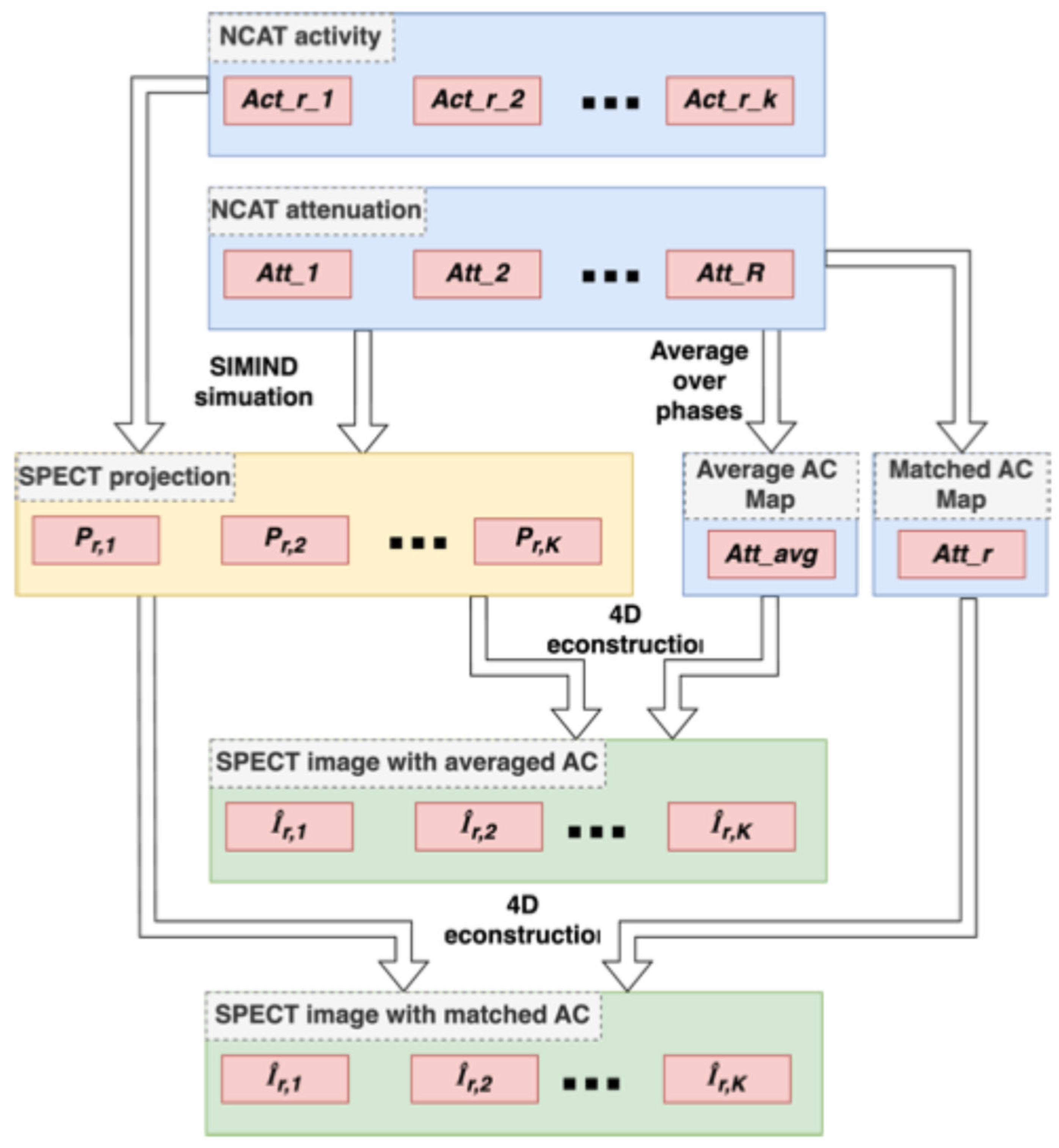
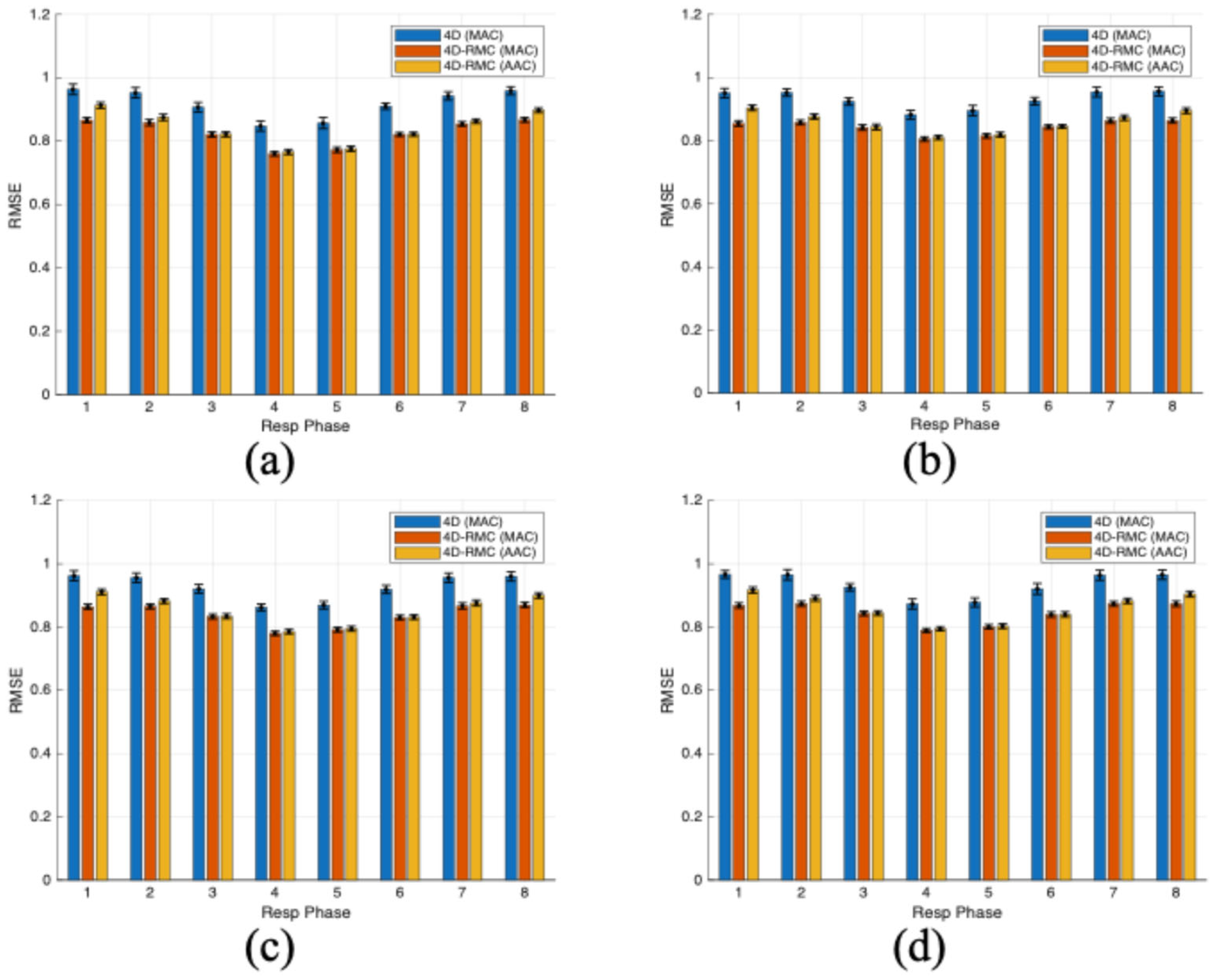
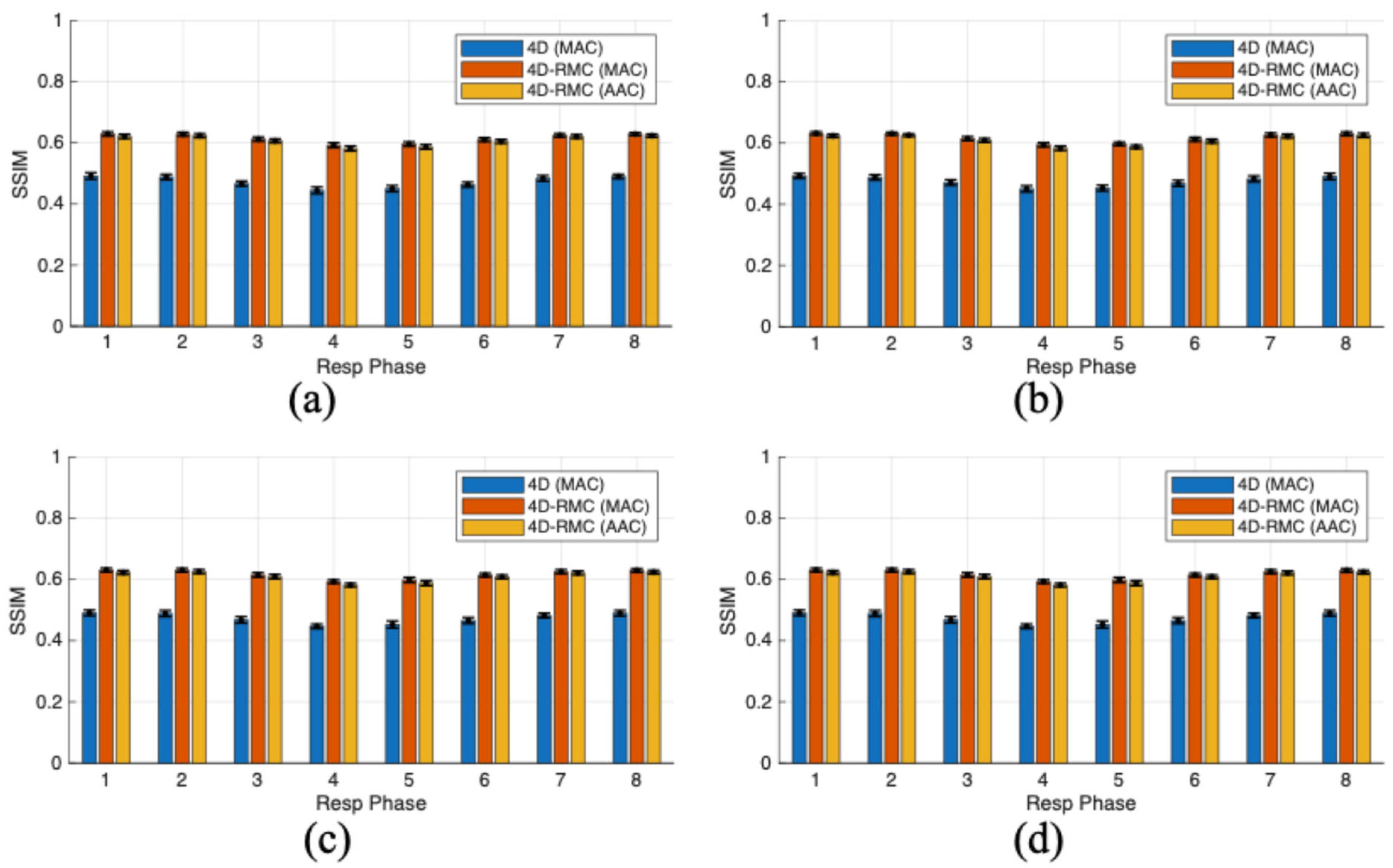
- Quantitative accuracy of the reconstructed myocardium: To quantify the overall accuracy of reconstructed myocardium, the relative root mean squared error (RMSE) and structural similarity index measurement (SSIM) are calculated for the reconstructed images of a 28 × 28 × 10 volumetric region for the majority of LV. The mean relative RMSE and mean SSIM indices are computed for all cardiac gates within the corresponding respiratory gate. The ideal images described in Section 2.2 are used as the ground truth for the calculation of the relative RMSE and SSIM.
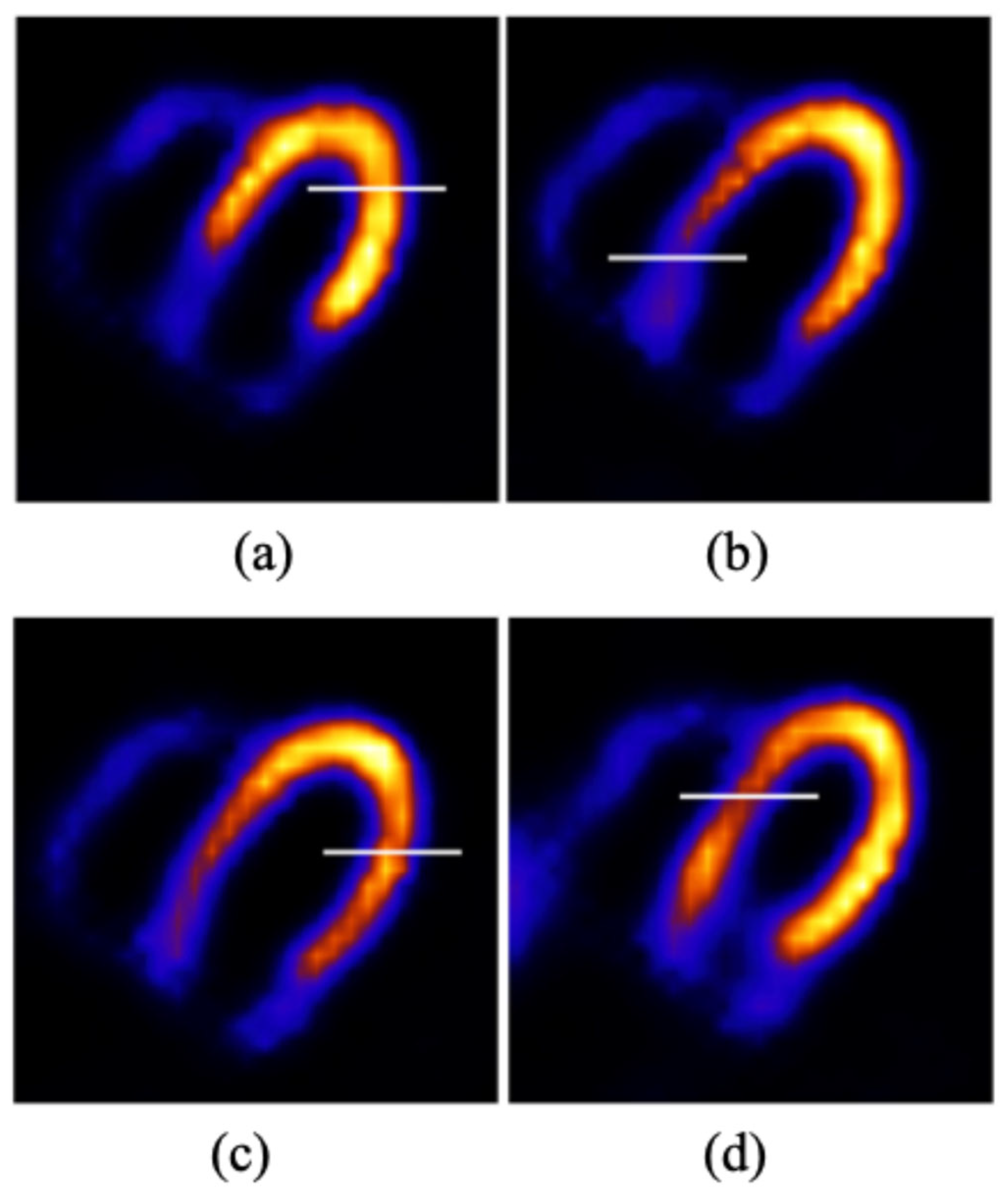
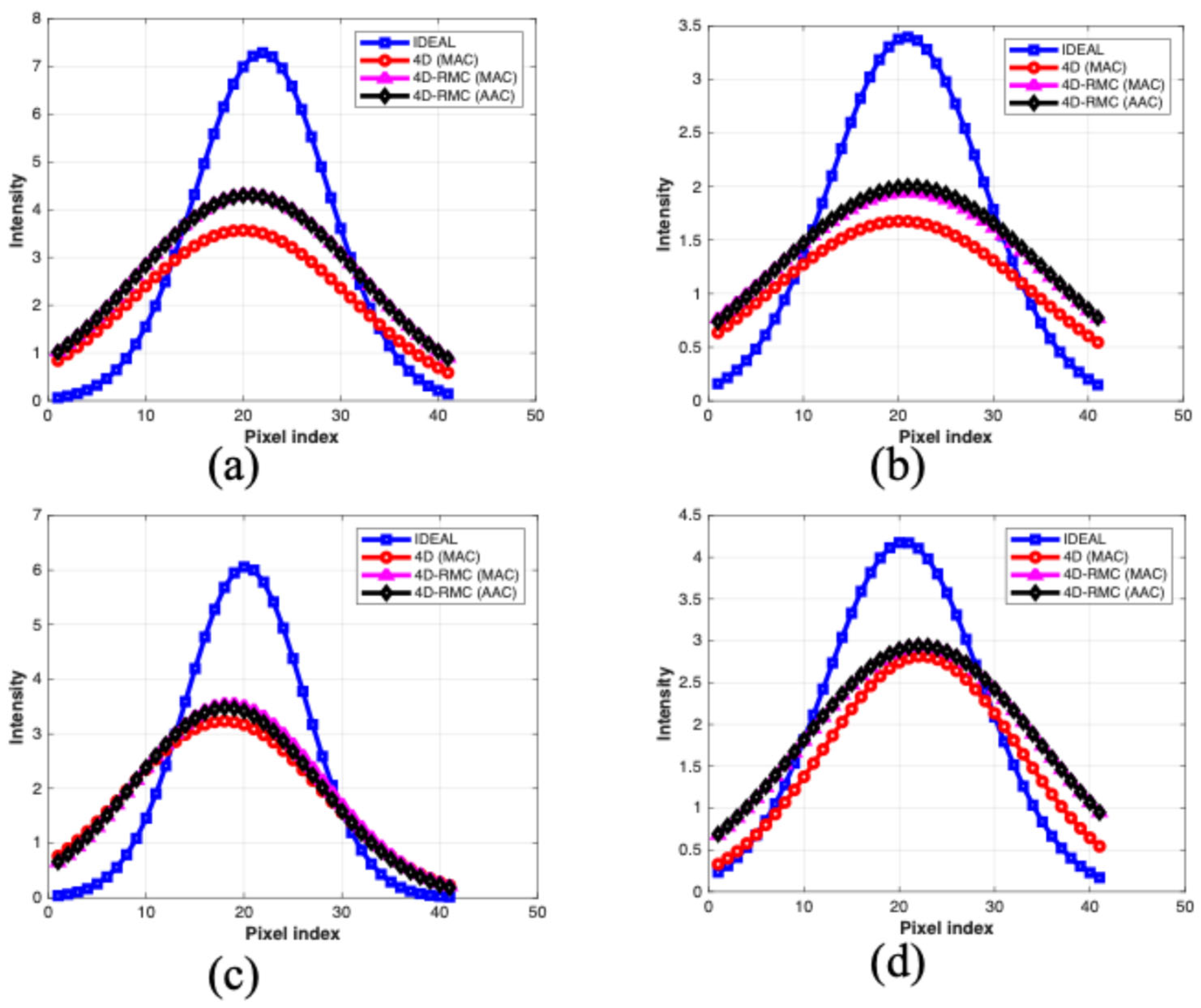
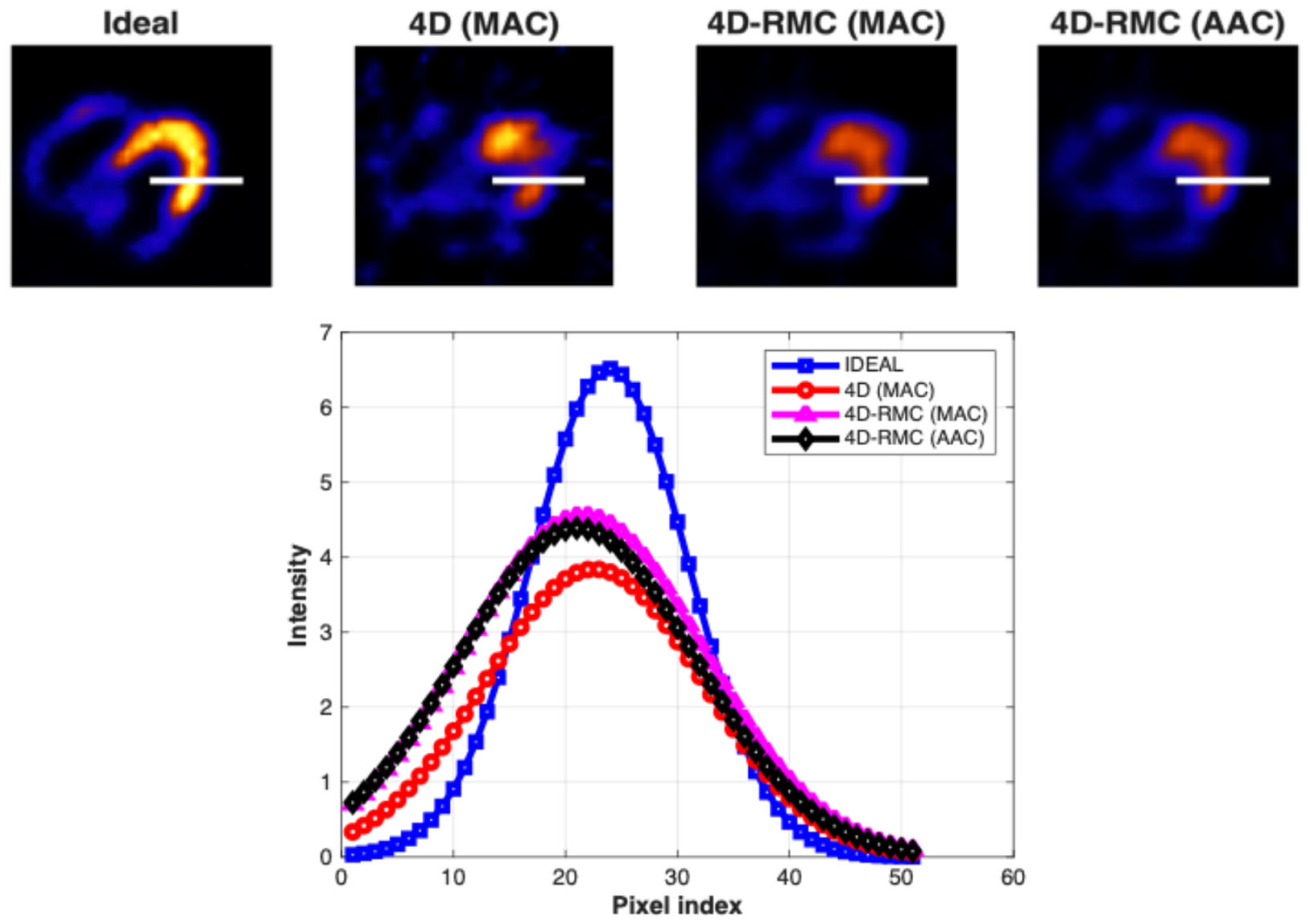
- Intensity Profile: Moreover, the differences among different reconstruction and AC methods are evaluated by image intensity line profiles across the LV wall in transverse slices.
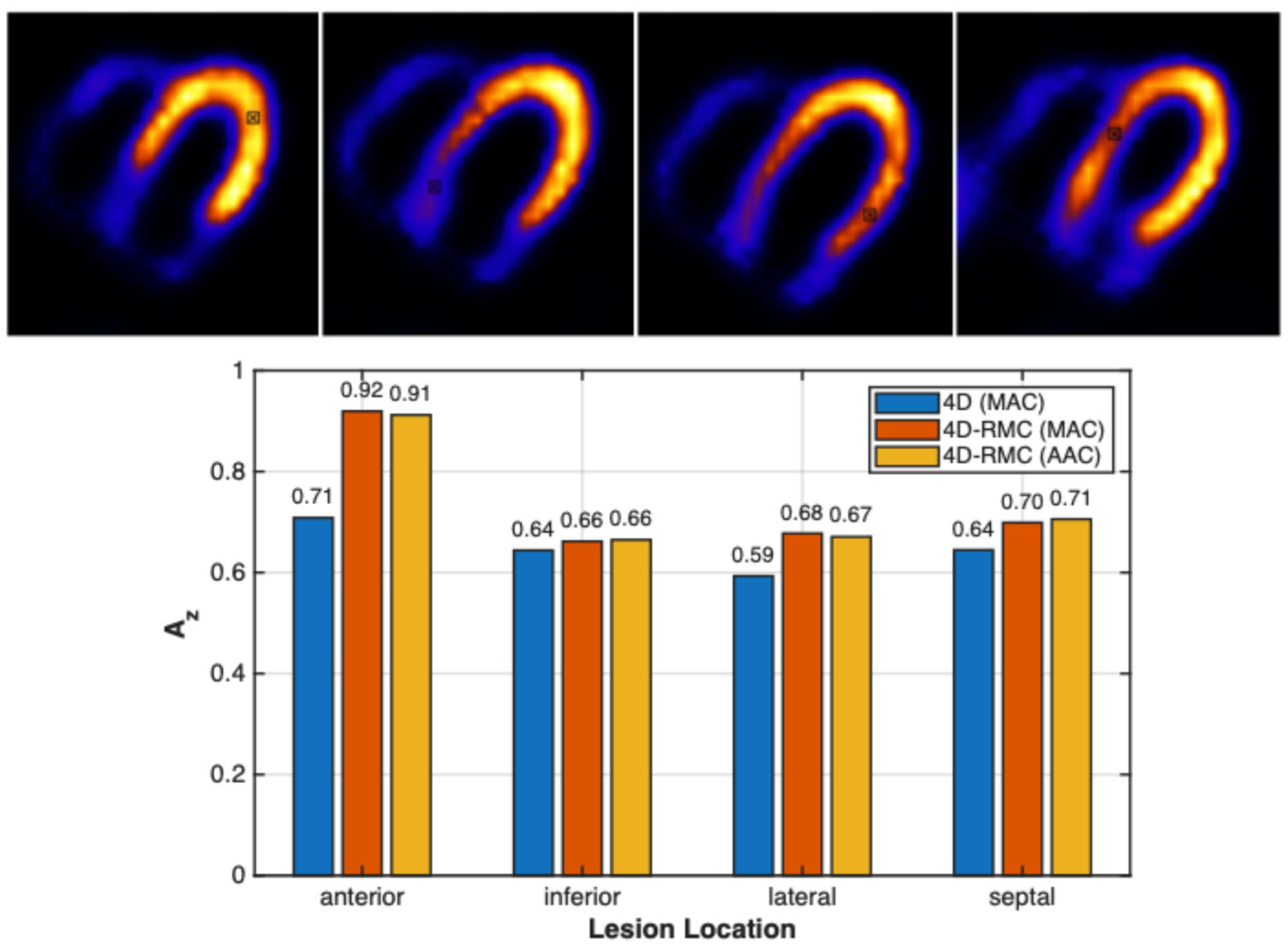
- Perfusion defect detection: To quantify the detectability of the introduced perfusion defect in reconstructed images, a Channelized Hotelling Observer (CHO) is employed. In this study, the 28 × 28 LV region in a transverse slice is bilinearly interpolated to a 140 × 140 image. Four rotationally symmetric, non-overlapping input channels are used for the CHO, and internal noise is included as in [4]. A total of 60 noise realizations (30 lesion-present and 30 lesion-absent) are used for each lesion location. The detection performance is summarized by the area under the receiver operating characteristic (ROC) curve (“Az”). This CHO study represented a “signal-known exactly” and “background-known exactly” observer study. The end-diastole (ED) cardiac gate of a reference respiratory gate during which the heart wall is most expanded, is used for the CHO study. We further performed a statistical analysis on the Az of the CHO using MATLAB’s (version R2025a) rocmetrics function. Statistical significance of Az differences was evaluated using nonparametric bootstrap resampling (for 2000 iterations). Two-tailed p-values were derived for the null hypothesis for which there was no difference for the Az’s from the two methods. p < 0.05 was set as the significance threshold to reject the null hypothesis.
4. Results
4.1. Quantitative Accuracy of Myocardium Reconstruction
4.2. Intensity Profiles
4.3. Perfusion Defect Detection Performance
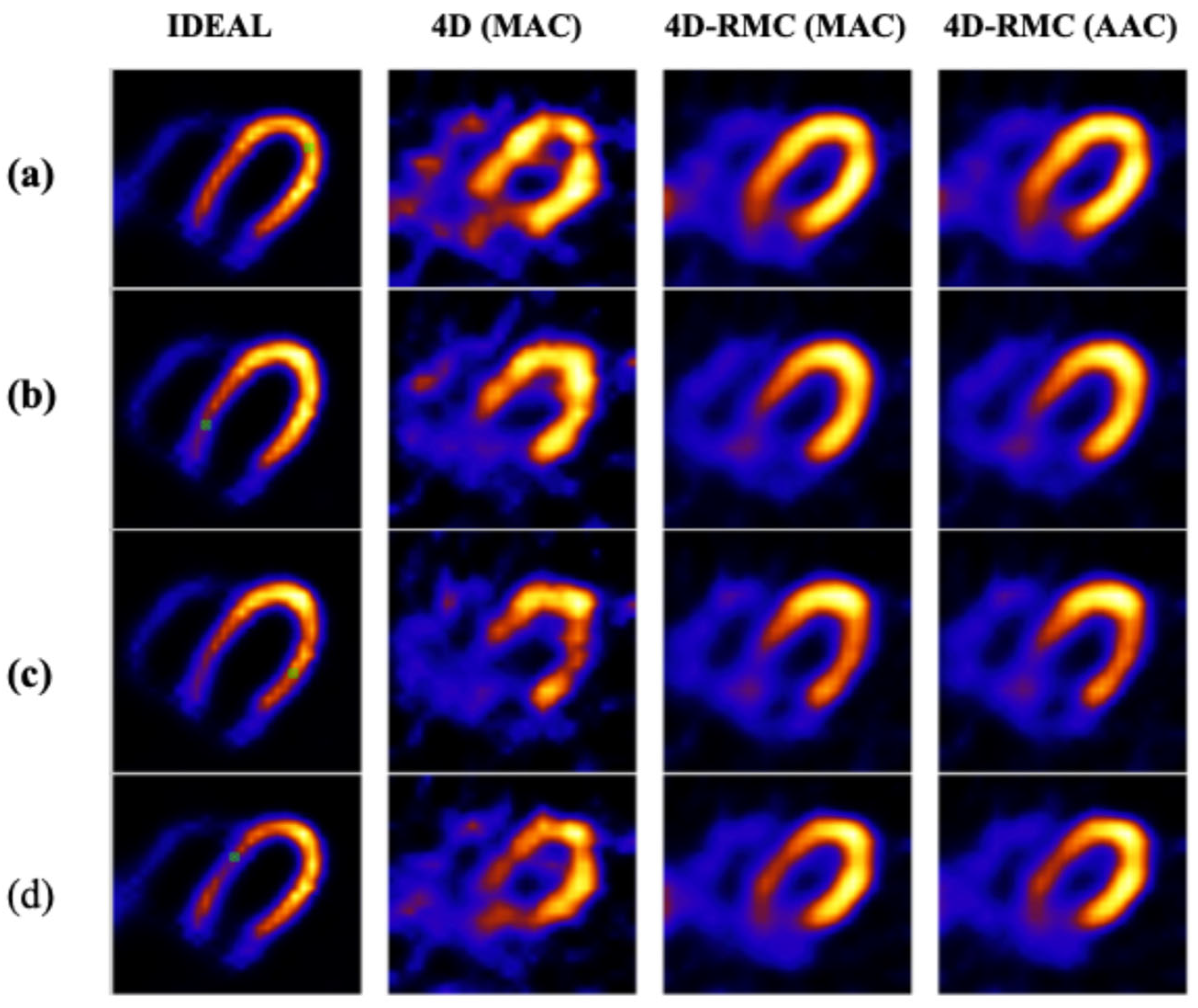
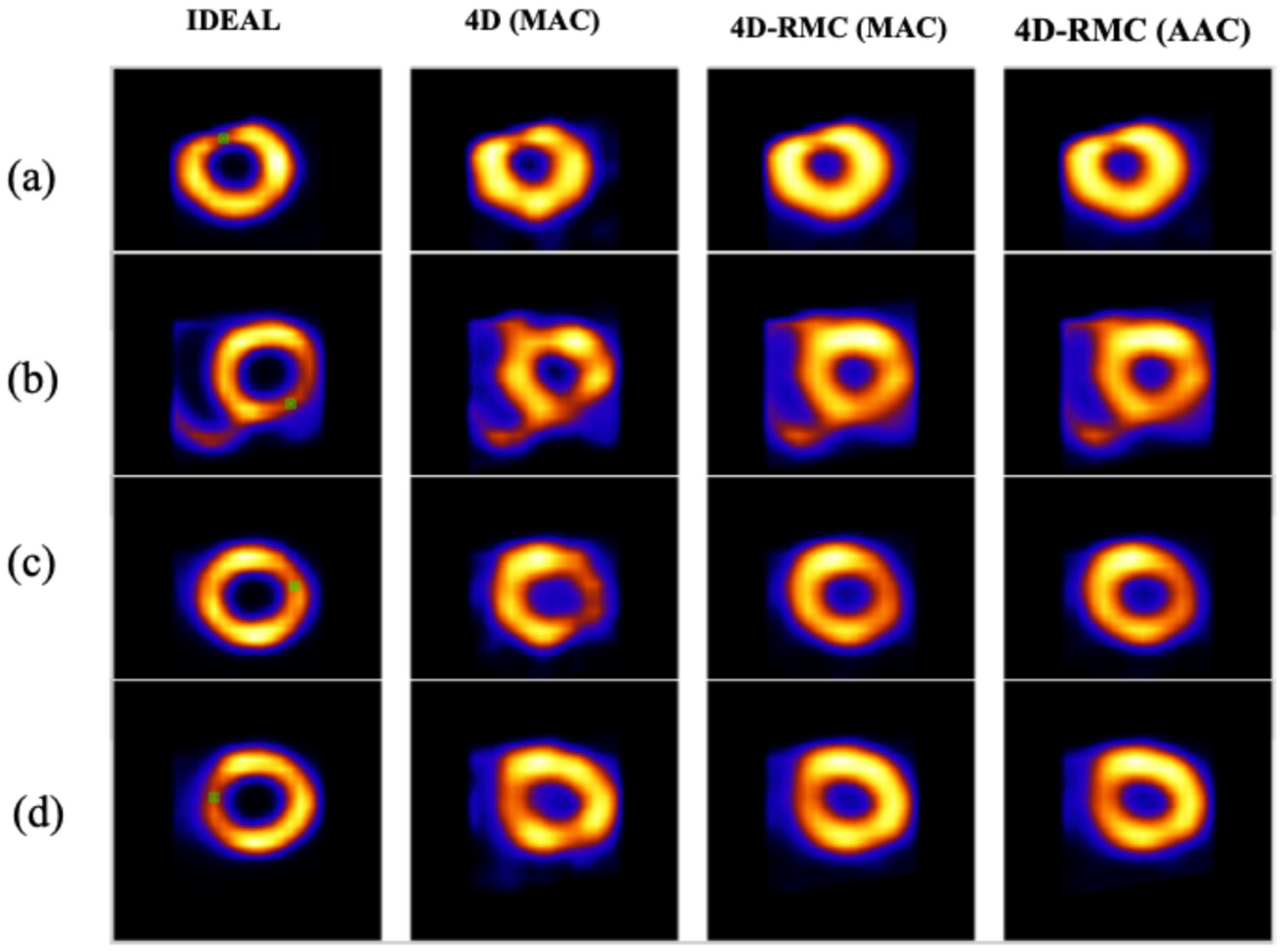
4.4. Reconstructed Images
5. Discussions
6. Conclusions
Author Contributions
Funding
Institutional Review Board Statement
Informed Consent Statement
Data Availability Statement
Acknowledgments
Conflicts of Interest
References
- Chen, J.; Garcia, E.V.; Bax, J.J.; Iskandrian, A.E.; Borges-Neto, S.; Soman, P. SPECT myocardial perfusion imaging for the assessment of left ventricular mechanical dyssynchrony. J. Nucl. Cardiol. 2011, 18, 685–694. [Google Scholar] [CrossRef]
- Henzlova, M.J.; Duvall, W.L.; Einstein, A.J.; Travin, M.I.; Verberne, H.J. ASNC imaging guidelines for SPECT nuclear cardiology procedures: Stress, protocols, and tracers. J. Nucl. Cardiol. 2016, 23, 606–639. [Google Scholar] [CrossRef]
- Abbott, B.G.; Case, J.A.; Dorbala, S.; Einstein, A.J.; Galt, J.R.; Pagnanelli, R.; Bullock-Palmer, R.P.; Soman, P.; Wells, R.G. Contemporary cardiac SPECT imaging—Innovations and best practices: An information statement from the American Society of Nuclear Cardiology. Circ. Cardiovasc. Imaging 2018, 11, e000020. [Google Scholar] [CrossRef]
- Jin, M.; Yang, Y.; Niu, X.; Marin, T.; Brankov, J.G.; Feng, B.; Pretorius, P.H.; King, M.A.; Wernick, M.N. A quantitative evaluation study of four-dimensional gated cardiac SPECT reconstruction. Phys. Med. Biol. 2009, 54, 5643. [Google Scholar] [CrossRef]
- Li, C.; Polson, L.A.; Wu, X.; Zhang, Y.; Uribe, C.; Rahmim, A. Optical surface information-based respiratory phase-sorting and motion-incorporated reconstruction for SPECT imaging. Med. Phys. 2025, 52, 4330–4340. [Google Scholar] [CrossRef]
- Mohammadi, I.; Castro, F.; Rahmim, A.; Veloso, J. Motion in nuclear cardiology imaging: Types, artifacts, detection and correction techniques. Phys. Med. Biol. 2022, 67, 02TR02. [Google Scholar] [CrossRef] [PubMed]
- Kortelainen, M.J.; Koivumäki, T.M.; Vauhkonen, M.J.; Hakulinen, M.A. Effect of respiratory motion on cardiac defect contrast in myocardial perfusion SPECT: A physical phantom study. Ann. Nucl. Med. 2019, 33, 305–316. [Google Scholar] [CrossRef]
- Chrysanthou-Baustert, I.; Polycarpou, I.; Demetriadou, O.; Livieratos, L.; Lontos, A.; Antoniou, A.; Christofides, S.; Yiannakkaras, C.; Kaolis, D.; Panagidis, C. Characterization of attenuation and respiratory motion artifacts and their influence on SPECT MP image evaluation using a dynamic phantom assembly with variable cardiac defects. J. Nucl. Cardiol. 2017, 24, 698–707. [Google Scholar] [CrossRef]
- Segars, W.P.; Tsui, B.M. Study of the efficacy of respiratory gating in myocardial SPECT using the new 4-D NCAT phantom. IEEE Trans. Nucl. Sci. 2002, 49, 675–679. [Google Scholar] [CrossRef]
- Kortelainen, M.J.; Koivumäki, T.M.; Vauhkonen, M.J.; Hedman, M.K.; Kärkkäinen, S.T.; Quintero, J.N.; Hakulinen, M.A. Respiratory motion reduction with a dual gating approach in myocardial perfusion SPECT: Effect on left ventricular functional parameters. J. Nucl. Cardiol. 2018, 25, 1633–1641. [Google Scholar] [CrossRef] [PubMed]
- Parker, J.G.; Mair, B.A.; Gilland, D.R. Respiratory motion correction in gated cardiac SPECT using quaternion-based, rigid-body registration. Med. Phys. 2009, 36, 4742–4754. [Google Scholar] [CrossRef] [PubMed]
- Shrestha, U.M.; Seo, Y.; Botvinick, E.H.; Gullberg, G.T. Image reconstruction in higher dimensions: Myocardial perfusion imaging of tracer dynamics with cardiac motion due to deformation and respiration. Phys. Med. Biol. 2015, 60, 8275. [Google Scholar] [CrossRef]
- Wu, J.; Liu, C. Recent advances in cardiac SPECT instrumentation and imaging methods. Phys. Med. Biol. 2019, 64, 06TR01. [Google Scholar] [CrossRef] [PubMed]
- Robert, A.; Rit, S.; Baudier, T.; Jomier, J.; Sarrut, D. Data-driven respiration-gated SPECT for liver radioembolization. IEEE Trans. Radiat. Plasma Med. Sci. 2021, 6, 778–787. [Google Scholar] [CrossRef]
- Huh, Y.; Shrestha, U.M.; Gullberg, G.T.; Seo, Y. Monte carlo simulation and reconstruction: Assessment of myocardial perfusion imaging of tracer dynamics with cardiac motion due to deformation and respiration using gamma camera with continuous acquisition. Front. Cardiovasc. Med. 2022, 9, 871967. [Google Scholar] [CrossRef] [PubMed]
- Saleki, L.; Ghafarian, P.; Bitarafan-Rajabi, A.; Yaghoobi, N.; Fallahi, B.; Ay, M.R. The influence of misregistration between CT and SPECT images on the accuracy of CT-based attenuation correction of cardiac SPECT/CT imaging: Phantom and clinical studies. Iran. J. Nucl. Med. 2019, 27, 63–72. [Google Scholar]
- Lyu, Y.; Chen, G.; Lu, Z.; Chen, Y.; Mok, G.S. The effects of mismatch between SPECT and CT images on quantitative activity estimation–a simulation study. Z. Für Med. Phys. 2023, 33, 54–69. [Google Scholar] [CrossRef]
- Zhang, D.; Yang, B.-H.; Wu, N.Y.; Mok, G.S.P. Respiratory average CT for attenuation correction in myocardial perfusion SPECT/CT. Ann. Nucl. Med. 2017, 31, 172–180. [Google Scholar] [CrossRef]
- Ko, C.-L.; Wu, Y.-W.; Cheng, M.-F.; Yen, R.-F.; Wu, W.-C.; Tzen, K.-Y. Data-driven respiratory motion tracking and compensation in CZT cameras: A comprehensive analysis of phantom and human images. J. Nucl. Cardiol. 2015, 22, 308–318. [Google Scholar] [CrossRef]
- Qi, W.; Yang, Y.; Song, C.; Wernick, M.N.; Pretorius, P.H.; King, M.A. 4-D reconstruction with respiratory correction for gated myocardial perfusion SPECT. IEEE Trans. Med. Imaging 2017, 36, 1626–1635. [Google Scholar] [CrossRef]
- Jin, M.; Kalantari, F.; Wang, J.; King, M. Respiratory Motion Matched Attenuation Correction for Dual Gated Cardiac SPECT. In Proceedings of the Fully 3D Image Reconstruction in Radiology and Nuclear Medicine Conference, Xian, China, 18–23 June 2017; pp. 120–124. [Google Scholar]
- Könik, A.; Kikut, J.; Lew, R.; Johnson, K.; King, M.A. Comparison of methods of acquiring attenuation maps for cardiac SPECT in the presence of respiratory motion. J. Nucl. Cardiol. 2013, 20, 1093–1107. [Google Scholar] [CrossRef]
- Zhang, Q.; Zhang, D.; Mok, G.S. Comparison of different attenuation correction methods for dual gating myocardial perfusion SPECT/CT. IEEE Trans. Radiat. Plasma Med. Sci. 2019, 3, 565–571. [Google Scholar] [CrossRef]
- Zhang, D.; Ghaly, M.; Mok, G.S. Interpolated CT for attenuation correction on respiratory gating cardiac SPECT/CT—A simulation study. Med. Phys. 2019, 46, 2621–2628. [Google Scholar] [CrossRef] [PubMed]
- Niu, X.; Yang, Y.; Jin, M.; Wernick, M.N.; King, M.A. Effects of motion, attenuation, and scatter corrections on gated cardiac SPECT reconstruction. Med. Phys. 2011, 38, 6571–6584. [Google Scholar] [CrossRef] [PubMed]
- Zhou, S.; Chi, Y.; Wang, J.; Jin, M. General simultaneous motion estimation and image reconstruction (G-SMEIR). Biomed. Phys. Eng. Express 2021, 7, 055011. [Google Scholar] [CrossRef] [PubMed]
- Ljungberg, M.; Strand, S.V. A Monte Carlo program simulating scintillation camera imaging. Comput. Methods Prog. Biomed. 1989, 29, 257–272. [Google Scholar] [CrossRef]
- Lu, Z.; Chen, G.; Lin, K.H.; Wu, T.H.; Mok, G.S. Evaluation of different CT maps for attenuation correction and segmentation in static 99mTc-MAA SPECT/CT for 90Y radioembolization treatment planning: A simulation study. Med. Phys. 2021, 48, 3842–3851. [Google Scholar] [CrossRef]
- Song, C.; Yang, Y.; Ramon, A.J.; Wernick, M.N.; Pretorius, P.H.; Johnson, K.L.; Slomka, P.J.; King, M.A. Improving perfusion defect detection with respiratory motion correction in cardiac SPECT at standard and reduced doses. J. Nucl. Cardiol. 2019, 26, 1526–1538. [Google Scholar] [CrossRef]
- Kyme, A.Z.; Fulton, R.R. Motion estimation and correction in SPECT, PET and CT. Phys. Med. Biol. 2021, 66, 18TR02. [Google Scholar] [CrossRef]
- Segars, W.P.; Tsui, B.M.; Cai, J.; Yin, F.-F.; Fung, G.S.; Samei, E. Application of the 4-D XCAT phantoms in biomedical imaging and beyond. IEEE Trans. Med. Imaging 2017, 37, 680–692. [Google Scholar] [CrossRef]
- Segars, W.P.; Sturgeon, G.; Mendonca, S.; Grimes, J.; Tsui, B.M. 4D XCAT phantom for multimodality imaging research. Med. Phys. 2010, 37, 4902–4915. [Google Scholar] [CrossRef] [PubMed]
- Arabi, H.; AkhavanAllaf, A.; Sanaat, A.; Shiri, I.; Zaidi, H. The promise of artificial intelligence and deep learning in PET and SPECT imaging. Phys. Med. 2021, 83, 122–137. [Google Scholar] [CrossRef]
- Dong, S.; Wang, P.; Abbas, K. A survey on deep learning and its applications. Comput. Sci. Rev. 2021, 40, 100379. [Google Scholar] [CrossRef]
- Du, Y.; Jiang, H.; Lin, C.-N.; Peng, Z.; Sun, J.; Chiu, P.-Y.; Hung, G.-U.; Mok, G.S. Generative adversarial network-based attenuation correction for 99mTc-TRODAT-1 brain SPECT. Front. Med. 2023, 10, 1171118. [Google Scholar] [CrossRef]
- Shao, W.; Rowe, S.P.; Du, Y. Artificial intelligence in single photon emission computed tomography (SPECT) imaging: A narrative review. Ann. Transl. Med. 2021, 9, 820. [Google Scholar] [CrossRef]
- Chen, X.; Liu, C. Deep-learning-based methods of attenuation correction for SPECT and PET. J. Nucl. Cardiol. 2023, 30, 1859–1878. [Google Scholar] [CrossRef] [PubMed]
- Chan, H.-P.; Samala, R.K.; Hadjiiski, L.M.; Zhou, C. Deep Learning in Medical Image Analysis. In Advances in Experimental Medicine and Biology; Springer: Berlin/Heidelberg, Germany, 2020; pp. 3–21. [Google Scholar]
- Sun, J.; Jiang, H.; Du, Y.; Li, C.-Y.; Wu, T.-H.; Liu, Y.-H.; Yang, B.-H.; Mok, G.S. Deep learning-based denoising in projection-domain and reconstruction-domain for low-dose myocardial perfusion SPECT. J. Nucl. Cardiol. 2023, 30, 970–985. [Google Scholar] [CrossRef] [PubMed]
- McMillan, A.B.; Bradshaw, T.J. Artificial intelligence–based data corrections for attenuation and scatter in position emission tomography and single-photon emission computed tomography. PET Clin. 2021, 16, 543–552. [Google Scholar] [CrossRef]
- Reymann, M.; Vija, A.; Maier, A. Method for comparison of data driven gating algorithms in emission tomography. Phys. Med. Biol. 2023, 68, 185024. [Google Scholar] [CrossRef]


Disclaimer/Publisher’s Note: The statements, opinions and data contained in all publications are solely those of the individual author(s) and contributor(s) and not of MDPI and/or the editor(s). MDPI and/or the editor(s) disclaim responsibility for any injury to people or property resulting from any ideas, methods, instructions or products referred to in the content. |
© 2025 by the authors. Licensee MDPI, Basel, Switzerland. This article is an open access article distributed under the terms and conditions of the Creative Commons Attribution (CC BY) license (https://creativecommons.org/licenses/by/4.0/).
Share and Cite
Rasel, N.M.; Xing, C.; Zhou, S.; Yang, Y.; King, M.A.; Jin, M. Investigation of Attenuation Correction Methods for Dual-Gated Single Photon Emission Computed Tomography (DG-SPECT). Bioengineering 2025, 12, 1195. https://doi.org/10.3390/bioengineering12111195
Rasel NM, Xing C, Zhou S, Yang Y, King MA, Jin M. Investigation of Attenuation Correction Methods for Dual-Gated Single Photon Emission Computed Tomography (DG-SPECT). Bioengineering. 2025; 12(11):1195. https://doi.org/10.3390/bioengineering12111195
Chicago/Turabian StyleRasel, Noor M., Christina Xing, Shiwei Zhou, Yongyi Yang, Michael A. King, and Mingwu Jin. 2025. "Investigation of Attenuation Correction Methods for Dual-Gated Single Photon Emission Computed Tomography (DG-SPECT)" Bioengineering 12, no. 11: 1195. https://doi.org/10.3390/bioengineering12111195
APA StyleRasel, N. M., Xing, C., Zhou, S., Yang, Y., King, M. A., & Jin, M. (2025). Investigation of Attenuation Correction Methods for Dual-Gated Single Photon Emission Computed Tomography (DG-SPECT). Bioengineering, 12(11), 1195. https://doi.org/10.3390/bioengineering12111195