1. Introduction
Flooding remains one of the most destructive hydro-meteorological hazards worldwide, causing severe losses of human life, infrastructure, agriculture, ecosystem, and socio-economic system [
1,
2]. Its impacts are intensifying under changing rainfall regimes, rapid land-use conversion, urban expansion, and increasing human occupation of the floodplain [
3,
4]. Major Pakistani cities, including Karachi, Lahore, and Rawalpindi, have experienced extreme flooding events that exposed weaknesses in drainage systems, land-use planning, and urban resilience, while affecting millions of people and economic activities [
5,
6].
Pakistan is highly susceptible to flooding due to its monsoon climate, complex terrain, extensive Indus River system, and large areas of agricultural and residential areas located within floodplain environments. The Indus River corridor, the lower floodplains, and the coastal delta have been repeatedly hit by major flood events, exposing farmland, settlements, transportation networks, and critical infrastructure to repeated flood disasters [
7,
8]. The floods of 2010 and 2022, in particular, demonstrate that flood risk in Pakistan is not only a hydrological issue but also a land-use and planning challenge that requires an assessment approach that can capture both physical vulnerability and exposure to human environmental systems [
7,
9]. As highlighted in previous studies, the consequences of climate change extend beyond direct inundation and require improved drainage design, resilient infrastructure, and flood-sensitive land use planning [
10,
11]. Therefore, Pakistan was selected as the study area because its recurrent large-scale floods, diverse flood-generating mechanisms, and rapid land-use changes make it an appropriate case for evaluating spatial and temporal flood-risk patterns at the national scale [
12].
Geospatial technologies, including Geographic Information Systems (GIS), remote sensing, and multi-criteria decision analysis, have been widely applied to flood susceptibility mapping [
13,
14]. Past research has employed the Analytic Hierarchy Process (AHP), frequency ratios, logistic regression, random forests, and other machine learning methods to integrate flood-influencing factors such as rainfall, elevation, slope, drainage density, topographic moisture index (TWI), soil, land use/land cover (LULC), normalized difference vegetation index (NDVI), and distance from rivers [
15,
16]. In Pakistan, several regional studies have assessed flood susceptibility and vulnerability in areas such as Sindh, Karachi, Hunza Nagar, and Swat using rainfall, land use, drainage, slope, vegetation, and urban-exposure indicators [
17]. These studies have improved the identification of flood-prone areas and demonstrated the usefulness of geospatial modelling for flood-risk assessment [
18]. However, much of the existing work remains focused on local or regional case studies and single-period susceptibility or hazard maps [
19,
20]. Even recent high-resolution studies in Pakistan have mainly emphasized susceptibility and exposure mapping, while temporal flood behaviour, flood persistence, flood-risk change, LULC-based exposure, and district-level priority integration remain less fully developed [
21,
22].
This limitation is crucial because flood risk is not static. The vulnerability of certain areas to flooding can change over time due to changes in hydroclimate, LULC, vegetation and water dynamics, and exposed land-use systems. Similarly, some areas may experience only occasional flooding, while others may be repeatedly affected by floods. Therefore, flood risk assessment requires not only mapping flood-prone areas but also assessing how susceptibility changes, in which areas it persists, and which land-use classes are exposed within high-risk areas.
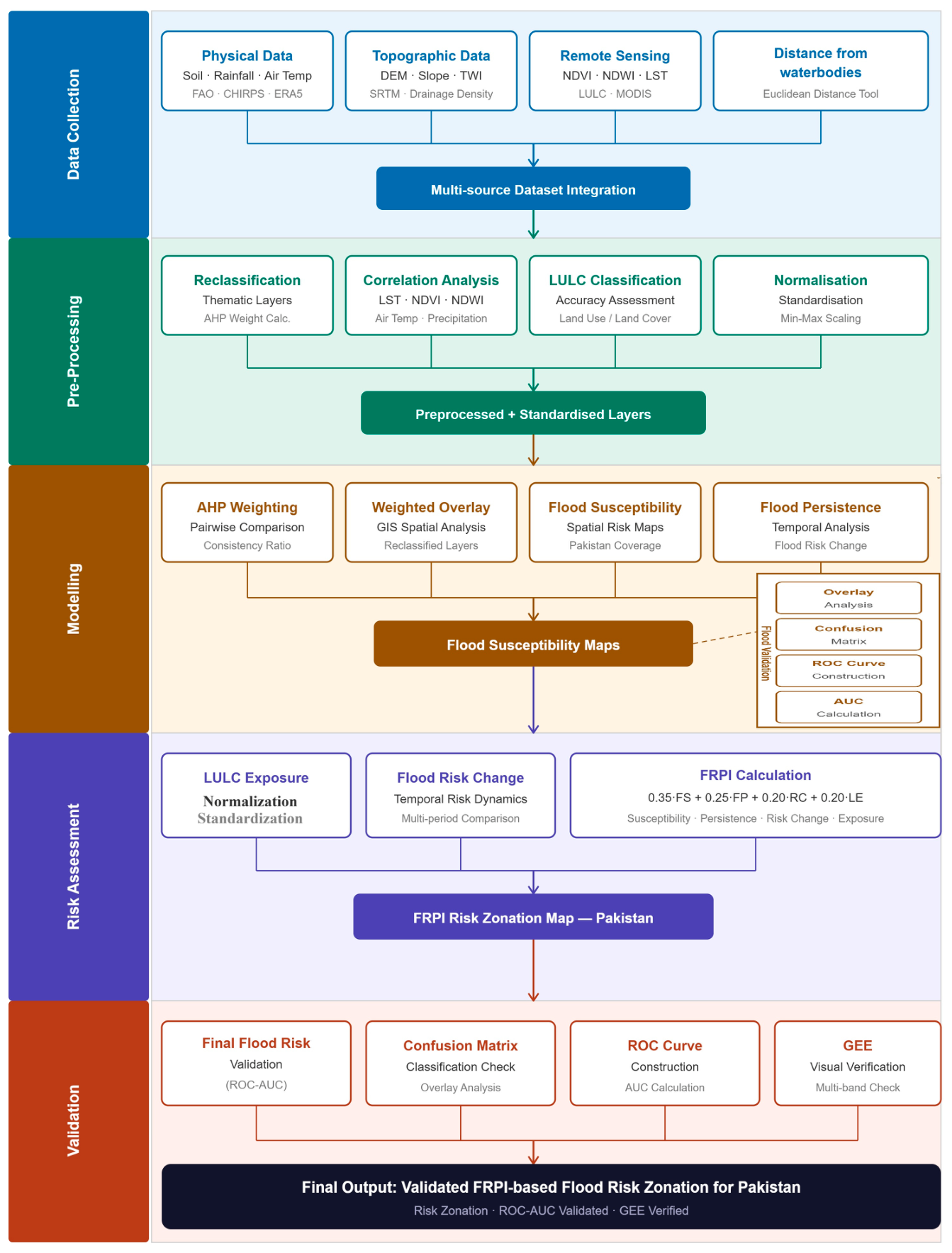
To address these gaps, the present study develops an integrated national-scale geospatial assessment of flood risk in Pakistan for three benchmark years: 2002, 2012, and 2022. In this study, flood susceptibility is assessed using hydro-climatic, land-surface, topographic, hydrological, soil, LULC, and anthropogenic indicators, and the analysis is further extended to examine how susceptibility patterns change and persist over time. This allows the identification of areas where flood susceptibility has increased, decreased, remained stable, or repeatedly occurred under high-risk conditions. The assessment is further linked to LULC information to examine how different land-cover classes are distributed across susceptibility zones and to quantify the exposure of cropland and built-up areas within high- and very high-flood-prone regions. These analyses are subsequently integrated into a district-level Flood Risk Priority Index (FRPI), which converts complex spatial and temporal information into a clear priority ranking for flood risk management. The FRPI highlights districts where multiple risk conditions overlap, making it a practical decision-support output for targeted mitigation, agricultural protection, land-use regulation, and climate-resilient planning. This integrated approach provides a clearer and more practically meaningful understanding of flood-risk patterns compared to conventional single-period mapping approaches.
Unlike previous national-scale flood studies in Pakistan, which primarily focused on single-period susceptibility or exposure mapping, the present study integrates multi-temporal flood susceptibility assessment, flood persistence analysis, flood risk change evaluation, LULC-based exposure assessment, and district-level flood risk prioritization within a unified framework. This combination represents a key novelty of the study and provides a more comprehensive basis for flood-risk management and climate-resilient planning.
3. Result
3.1. Geophysical Distributions Across Pakistan
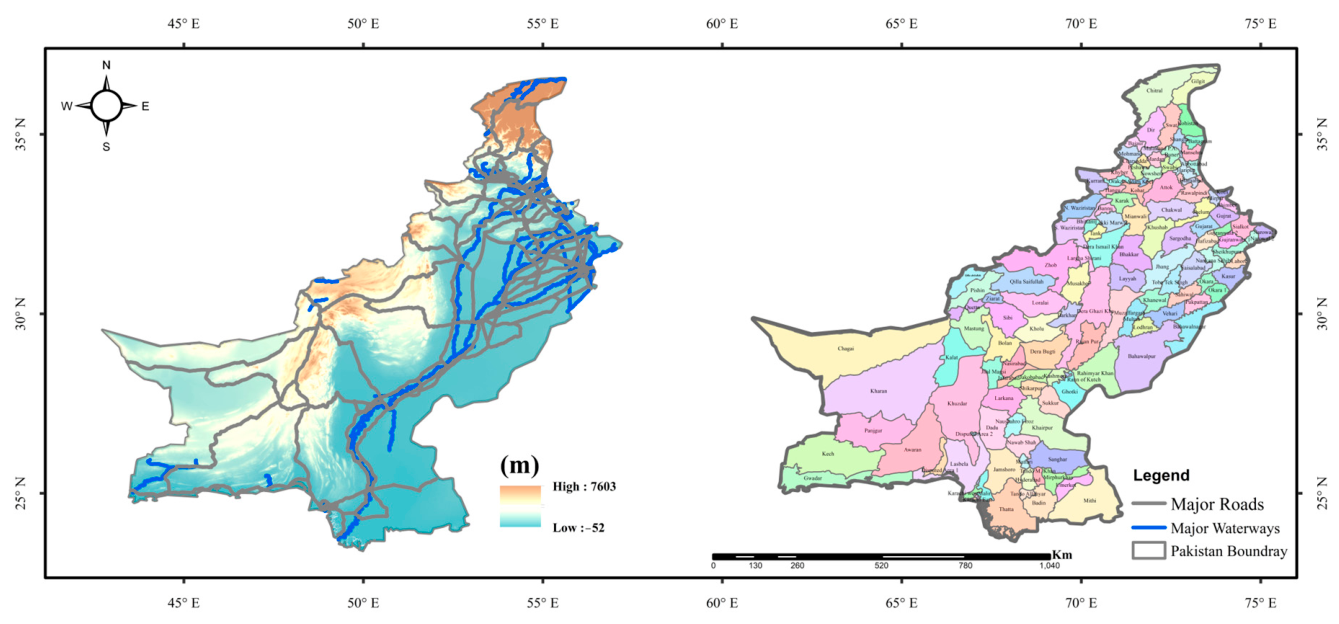
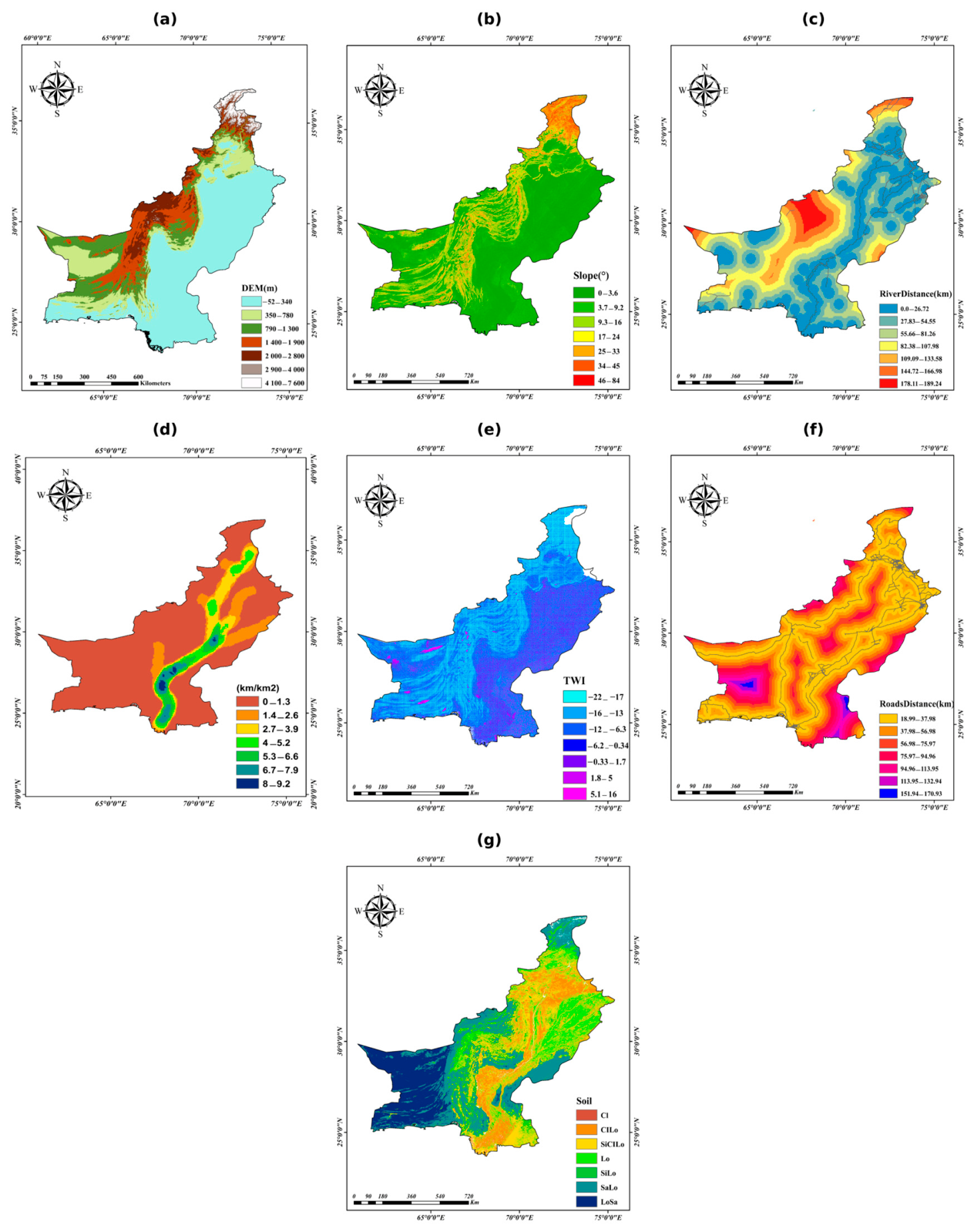
The current research also investigates the geophysical distributions within Pakistan, such as DEM, slope, distance to rivers, drainage density (DD), topographic wetness index (TWI), distance to roads, and soil characteristics. All continuous parameters were re-categorized into seven ordered categories within the same grid to allow cross-comparison, and the soils were mapped in the form of texture groups. In particular, the results of the DEM indicate that the highest elevation is observed in the Hindu Kush Karakoram HHK arc and the mountain ranges along the West, and there is a steep drop in elevation towards the Indus Plain and the coastal lands of Sindh. Similarly, slope outcomes also show that steep slopes are located in Gilgit Baltistan, Chitral, Kohistan, and the adjacent highlands, and the gentle or near-level ones are found in Punjab and the lower Indus basin. Furthermore, distance-to-rivers findings indicate a constant low-distance zone of the Indus with its major tributaries, extending along the Indus headwaters to Punjab to the delta, but very large distances within interior Balochistan and the Thar fringe.
In constant proportion, the drainage density outcomes indicate that DD is maximum along the upper Indus system and the related piedmont fans, which comprise the Swat, Hazara, and Potwar margins, which are indicative of close-spaced channels, and DD is minimum in interior deserts and the final alluvial plains of southern Sindh. Moreover, the TWI outcomes depict convergent and comparatively more humid areas along mountain valleys, piedmont aprons, and active floodplains, and lower TWI scores are on interfluves, plateaus, and dune fields
Figure 3. Moreover, distance-to-roads outcomes indicate that there are relatively small distances throughout the Punjab Sindh urban industrial corridor and significantly larger distances in the sparsely populated western basins. Equally, as shown by soil-texture outcomes, finer textures are found to prevail on the Indus alluvium, whereas sandier soils are found to dominate on the west and south-western basins; localized pockets of silt loam are largely oriented along major floodplains. Together, these DEM, slope, distance-to-river, drainage-density, TWI, distance-to-road, and soil-texture outputs give the physical context governing runoff generation, flow concentration, and possible pathways of inundation, and form the basis of the susceptibility analysis that proceeds.
3.2. Distribution and Trends of Climate Parameters (Rainfall, Air Temperature, LST) (2002–2022)
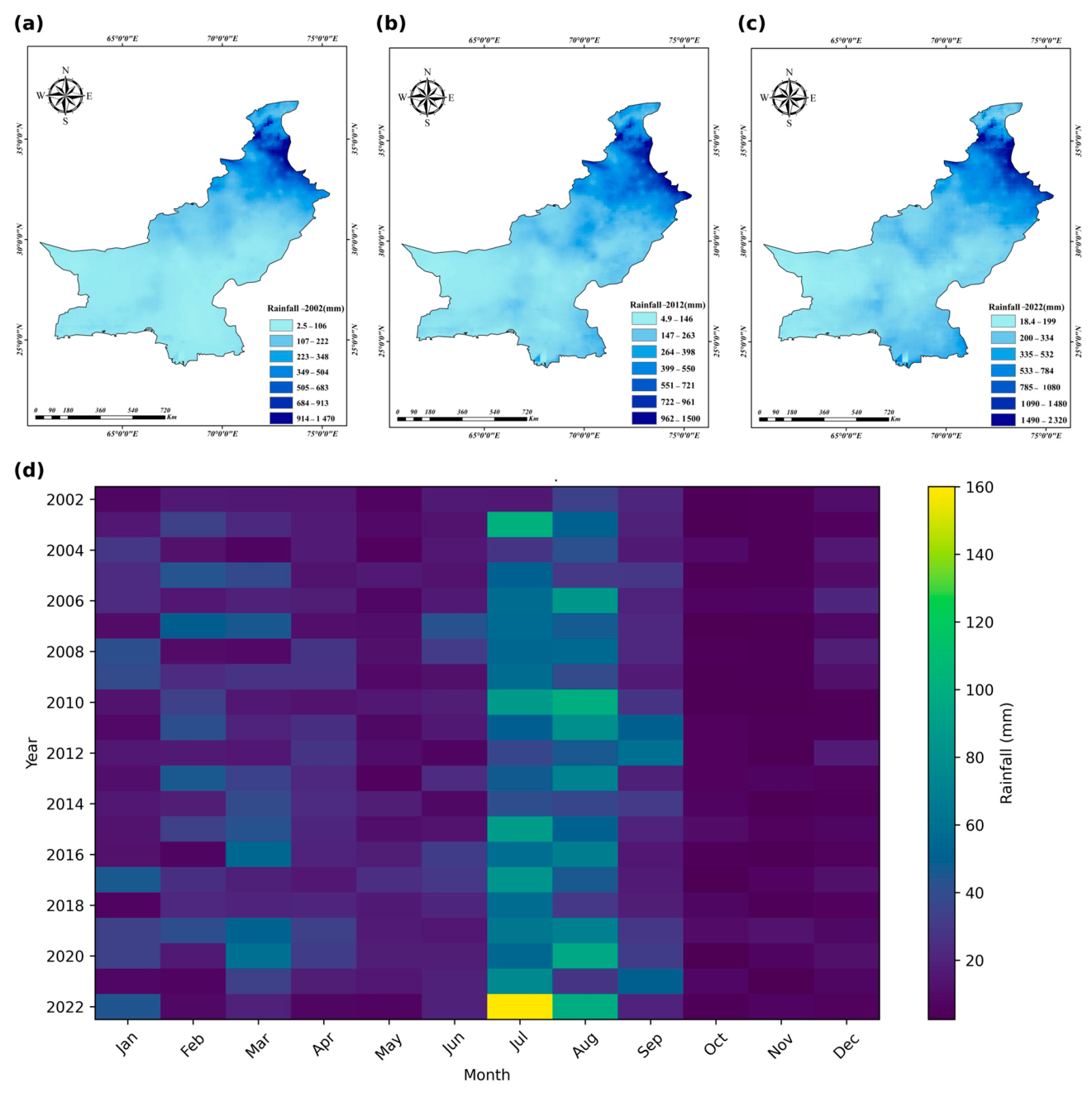
The study reveals significant spatial and temporal variability in rainfall, air temperature, and LST across Pakistan during the period 2002–2022
Figure 4a–c.
Year wise spatial rainfall distribution indicates that northern mountainous regions consistently receive the highest precipitation, whereas southern districts remain comparatively dry. This pattern reflects the dominant influence of orographic effects and monsoonal circulation in the northern highlands.
At the national district scale, average rainfall shows notable internal variability across the study period, increasing from 405.52 mm in 2002 to 524.48 mm in 2012, followed by a sharp decline to 307.18 mm in 2022. Monthly rainfall trends further reveal pronounced seasonal variability controlled by the monsoon system
Figure 4d. The highest rainfall contributions are observed during July and August, with a peak recorded in July 2022 (160.03 mm), followed by August (99.66 mm), whereas comparatively lower rainfall is observed during the winter season. The highest monthly rainfall was recorded in July 2022 (160.03 mm). To provide additional insight into regional precipitation contrasts, representative districts from different rainfall regimes are compared in
Supplementary Figure S1. The figure highlights the variability between humid northern regions and comparatively drier southern districts across Pakistan. These findings confirm that rainfall is strongly concentrated in the monsoon season, while winter months remain comparatively dry.
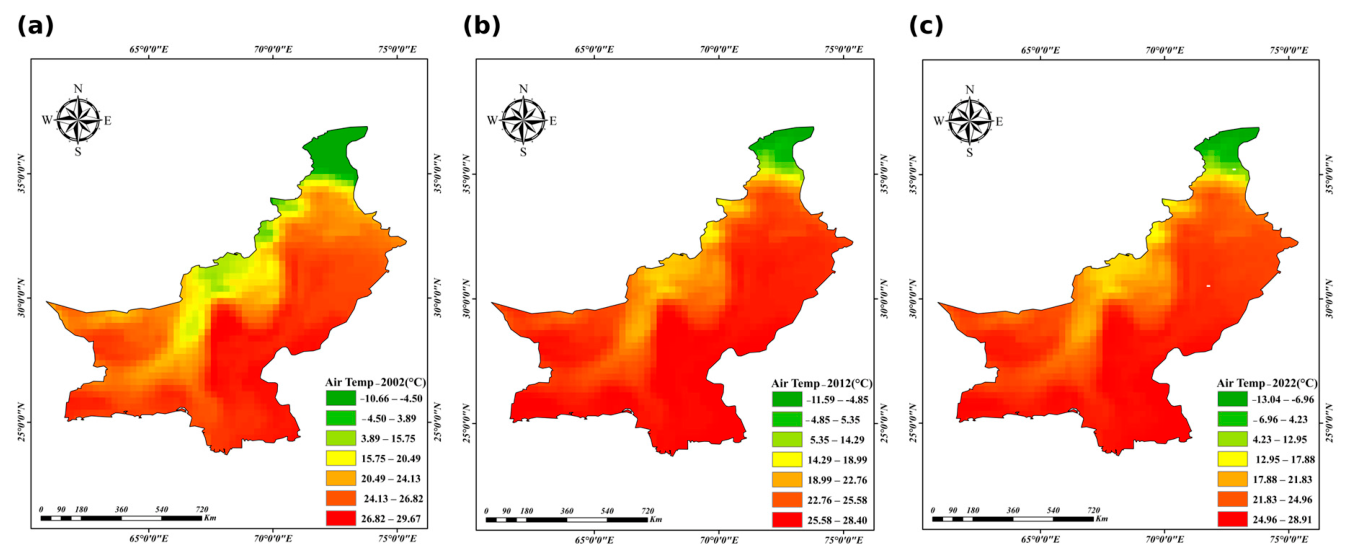
Likewise spatial distribution of air temperature has a distinct north south gradient across Pakistan
Figure 5a–c. Southern and southwestern regions are characterized by persistently warmer conditions, whereas northern mountainous areas experience comparatively cooler temperatures due to higher elevation and dense vegetation cover.
At the national district scale, air temperature shows a gradual decline across the study period, decreasing from 22.84 °C in 2002 to 21.85 °C in 2012, and further to 20.81 °C in 2022. Despite this overall decrease, the spatial thermal gradient remains consistent, with southern districts experiencing persistent thermal stress and northern regions maintaining comparatively cooler conditions.
Figure S2 presents a comparison of representative districts selected from contrasting temperature environments, providing additional evidence of the pronounced thermal differences between the cooler northern highlands and the warmer southern plains.
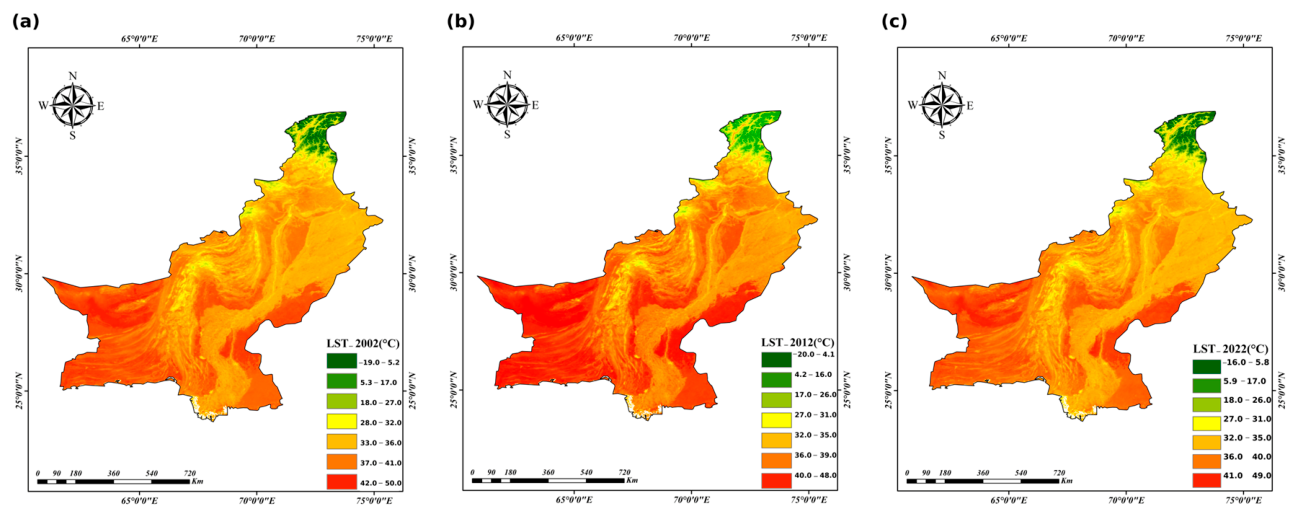
The spatial pattern of LST closely follows the distribution of air temperature but exhibits stronger surface contrasts due to land surface characteristics
Figure 6a–c.
At the national district scale, LST also shows temporal variability, with values of 32.55 °C in 2002, decreasing to 31.25 °C in 2012, and increasing again to 32.34 °C in 2022. This trend suggests a mid-period decline followed by renewed surface warming in recent years. (
Figure S3) provides a comparison of representative districts from contrasting thermal environments, further illustrating the spatial variability of land surface temperature across Pakistan.
3.3. Spatial Distribution of NDVI and NDWI (2002–2022)
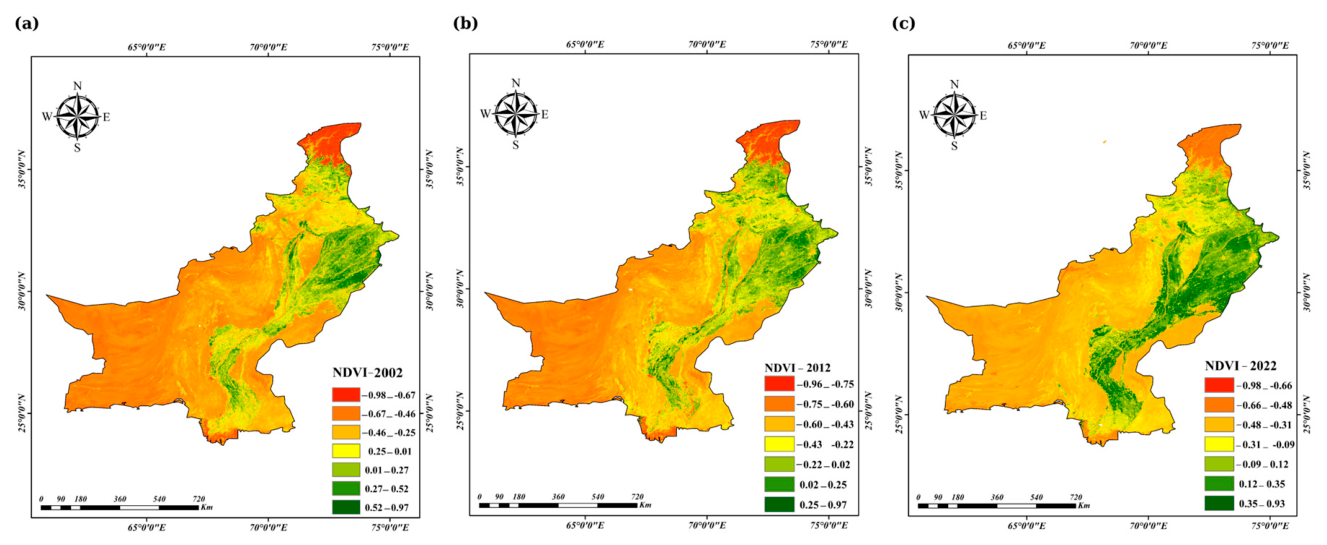
The spatial distribution of vegetation and surface moisture conditions across Pakistan was evaluated using NDVI and NDWI for the years 2002, 2012, and 2022. These indices reveal substantial spatial variability driven by climatic conditions, land-use patterns, and water availability across the study area. The year-wise spatial distribution of NDVI indicates that vegetation density is predominantly concentrated in the northern and northeastern regions, whereas southern and southwestern areas exhibit sparse vegetation cover
Figure 7a–c. Moreover, the NDVI results indicate improved vegetation conditions during the study period. Mean NDVI increased from 0.14 in 2002 to 0.15 in 2012 and further to 0.18 in 2022, suggesting a gradual improvement in vegetation cover across Pakistan. Spatially, relatively higher vegetation density is observed in the northern and northeastern regions, whereas lower vegetation cover is concentrated in the arid and semi-arid zones of southern and southwestern Pakistan. These patterns highlight the strong influence of rainfall availability and regional climatic conditions on vegetation dynamics. To further illustrate regional differences in vegetation conditions, representative districts from contrasting environmental settings are compared in
Supplementary Figure S4.
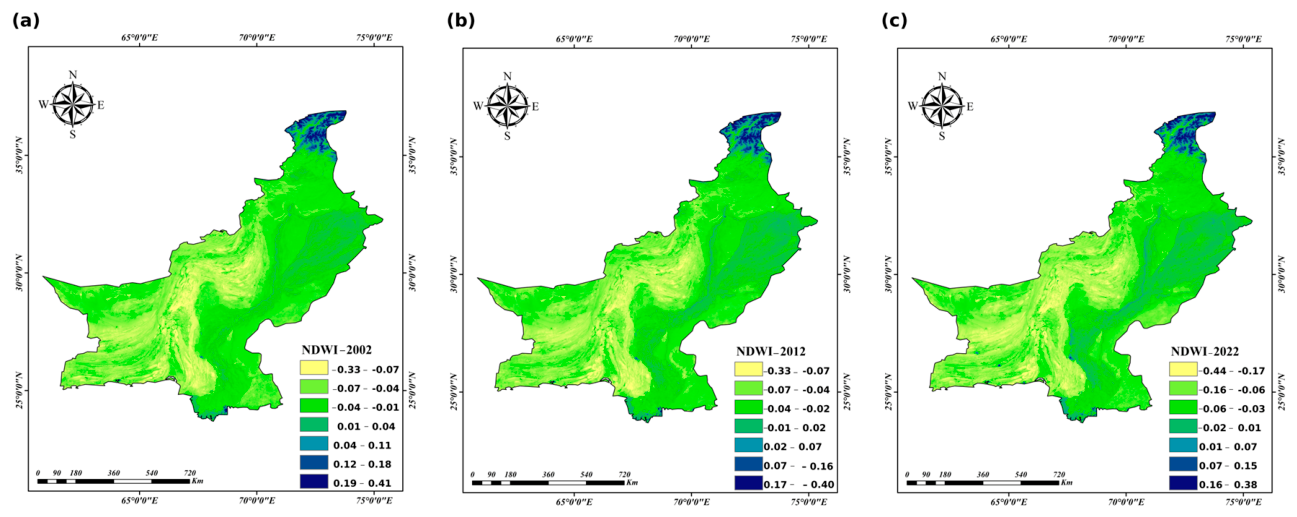
Similarly, the spatial distribution of NDWI provides important insights into surface moisture and water availability across the study area
Figure 8a–c. Mean NDWI increased slightly from −0.03 in 2002 to −0.02 in 2012 and remained at approximately −0.02 in 2022, indicating relatively stable moisture conditions over the study period. Spatially, higher moisture availability is observed in northern regions, whereas southern and arid zones exhibit comparatively lower NDWI values. These spatial and temporal patterns reflect variations in hydrological conditions and precipitation regimes across the country, indicating limited surface water availability and predominance of non-water land surfaces. A comparison of representative districts across contrasting moisture environments is presented in
Supplementary Figure S5, further highlighting regional differences in surface moisture conditions.
The combined analysis of NDVI and NDWI highlights a consistent environmental gradient across Pakistan. Regions with higher vegetation density generally correspond to higher moisture availability, whereas arid regions are characterized by low vegetation cover and reduced surface moisture. Consequently, these findings establish a strong linkage between climatic conditions, vegetation dynamics, and hydrological processes across the study area.
3.4. Assessment of LULC Changes and Classification Accuracy (2002–2022)
In this study, the accuracy of the LULC classification was validated based on the standard metrics, including the Kappa coefficient and overall accuracy. The Kappa coefficient value, as in
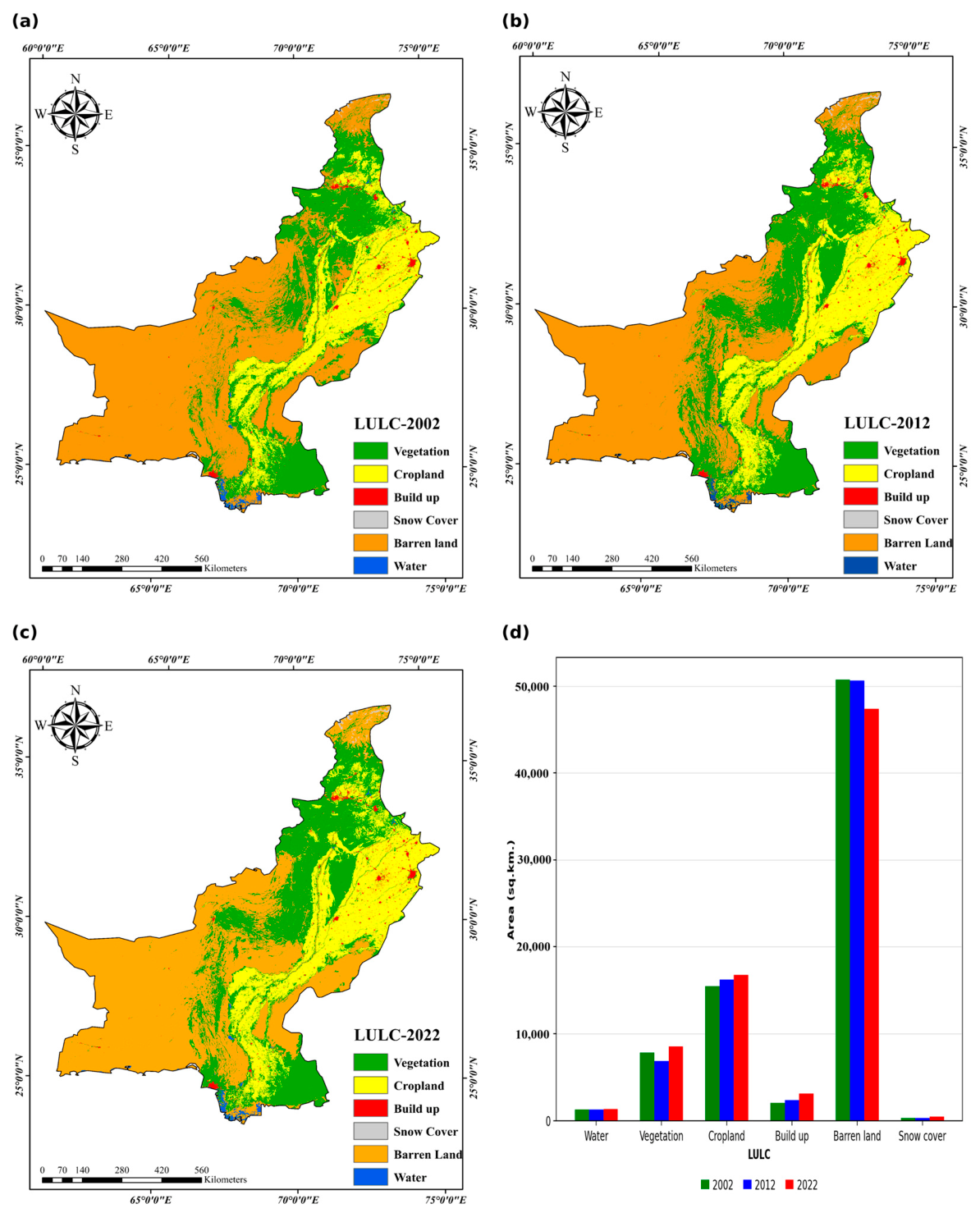
Figure S6, has improved from 0.79 in 2002 to 0.82 in 2022, and the overall accuracy has improved from 79.8 to 83.9, which shows better classification reliability over the years. Also, the accuracy of the producer’s and user’s accuracy of individual land-use classes is relatively more accurate in vegetation, cropland and water classes compared to the built-up and barren land classes, which are relatively moderate, possibly because of spectral mixing and any transitional land-use conditions. The accuracy tests validate the strength of the classification findings and justify their consistency in further analysis. Spatiotemporal dynamics of LULC in 2002, 2012 and 2022 were analyzed, and the areas of the classes are given in
Table 3 and the spatial patterns depicted in
Figure 9a–d. The findings show that the landscape was largely characterized by bare land, which reduced between 507,431 km
2 (65.37) in 2002 and 473,858 km
2 (61.04) in 2022, representing a slow change towards more productive land uses.
In contrast, cropland increased from 154,672 km
2 (19.93%) to 167,819 km
2 (21.62%), particularly across the Indus basin, indicating agricultural expansion and intensified land utilization can be seen in
Table 4. Similarly, built-up areas exhibited the most pronounced growth, expanding from 20,188 km
2 (2.60%) to 31,127 km
2 (4.01%), highlighting rapid urbanization and increasing anthropogenic pressure on land resources. The vegetation cover showed a moderate increase, rising from 78,356 km
2 (10.09%) to 85,208 km
2 (10.98%), suggesting localized ecological recovery. Meanwhile, water bodies remained relatively stable, with a slight increase from 12,804 km
2 (1.65%) to 13,504 km
2 (1.74%), indicating consistency in surface water distribution. Notably, snow and ice cover increased from 2792 km
2 (0.36%) to 4729 km
2 (0.61%), reflecting changes in cryospheric conditions. The observed increase may reflect interannual variability in snow accumulation and seasonal snow persistence in the high-altitude northern regions of Pakistan. This is particularly significant in the context of flood susceptibility, as glacier melt and snow dynamics contribute directly to runoff generation and flood hazards in northern Pakistan. The overall transition pattern highlights that the reduction in barren land is primarily compensated by increases in cropland and built-up areas, indicating a shift toward more intensive land-use practices. These transformations demonstrate the growing interaction between land-use change and hydrological processes.
The findings indicate that LULC changes in Pakistan are driven by urban expansion, agricultural intensification, and environmental variability, which collectively influence flood dynamics and spatial susceptibility patterns across the region.
3.5. Flood Susceptibility and LULC Association (2002–2022)
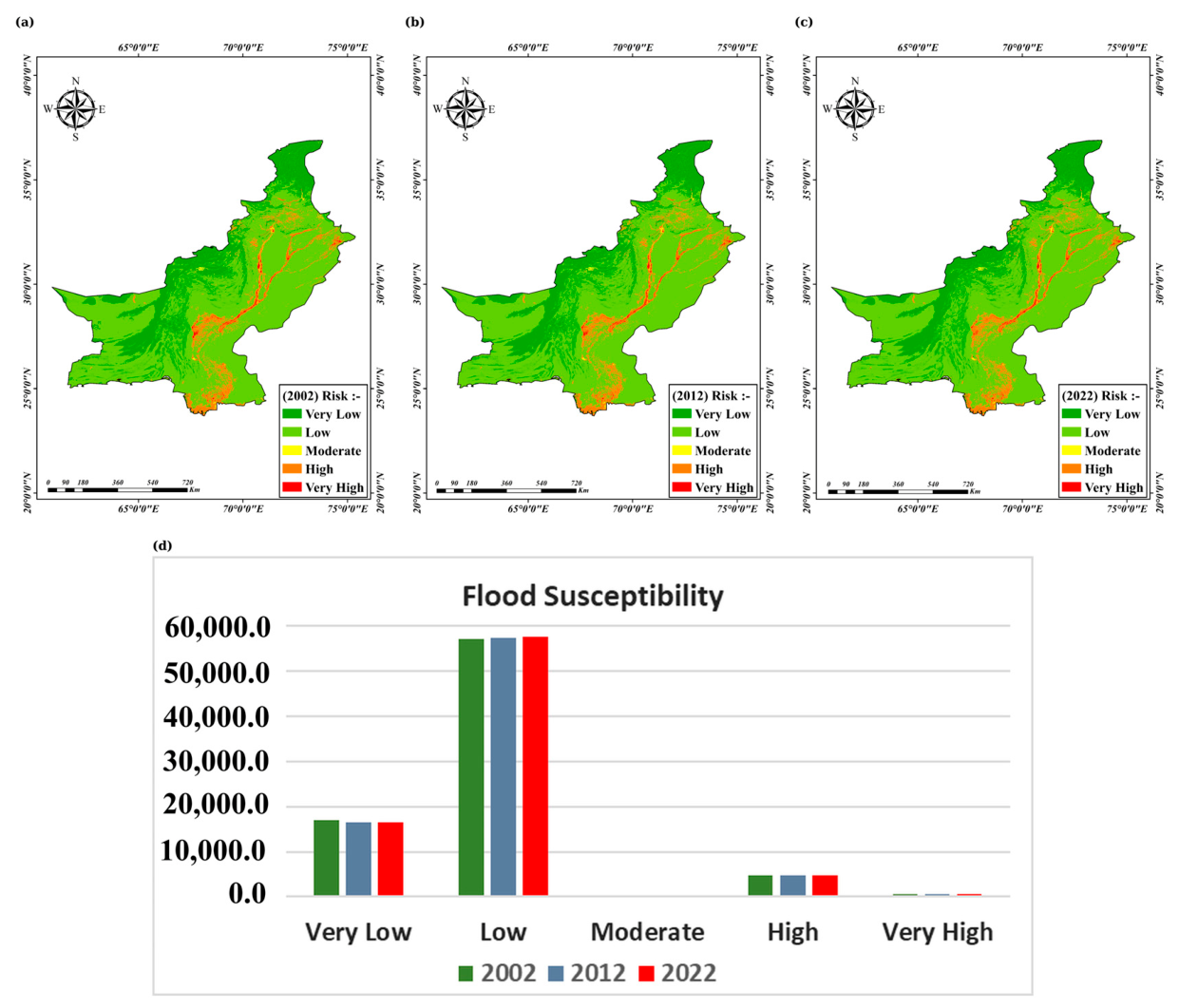
Flood susceptibility analysis revealed clear spatial variations across Pakistan, with high-susceptibility zones concentrated in riverine, floodplain, and coastal-deltaic environments. Across all study years, high and very high flood susceptibility classes were primarily concentrated along the Indus River corridor, its major tributaries, lower floodplains, and coastal regions of Sindh
Figure 10a–d.
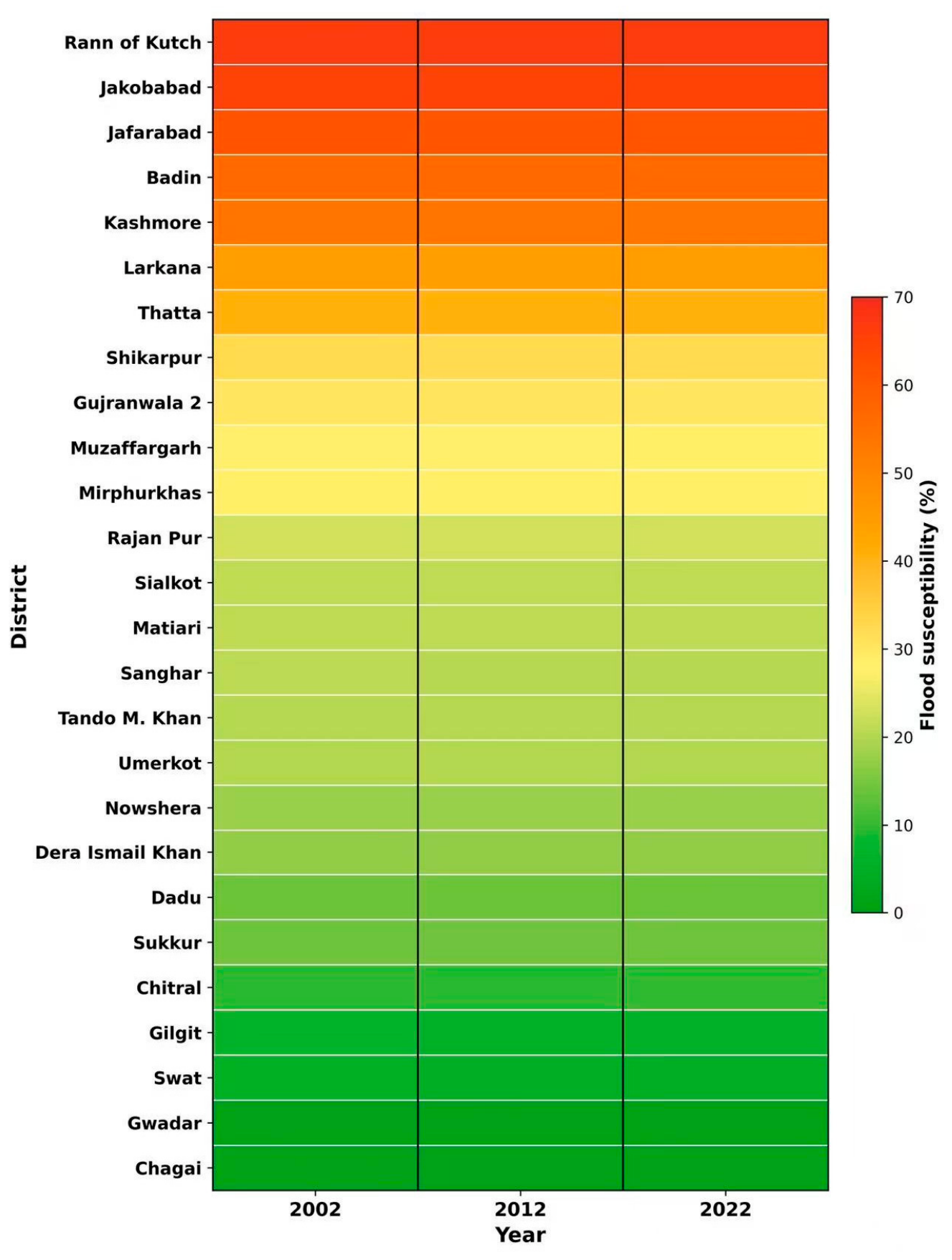
District-wise results further confirm this spatial concentration of flood susceptibility
Figure 11. In 2022, the largest proportions of high and very high flood-susceptible areas are observed in Rann of Kutch, accounting for approximately 66.6%, followed by Jakobabad (65.0%), Jafarabad (61.1%), Badin (56.5%) and Kashmore (54.1%). These districts represent the most critical flood-susceptibility zones because a substantial part of their area falls within the high and very high classes. Moreover, their spatial location near low-lying floodplains, deltaic environments and river-connected agricultural zones explains why these districts remain highly exposed to flood-prone conditions.
Similarly, several other districts show notable levels of high and very high susceptibility, although at comparatively lower proportions than the most exposed districts. Larkana records approximately 44.6%, followed by Thatta (40.6%), Shikarpur (32.3%), Gujranwala 2 (30.3%), Muzaffargarh (28.5%) and Mirphurkhas (28.5%). Likewise, Rajan Pur (23.1%), Sialkot (21.6%), Matiari (21.1%), Sanghar (20.4%) and Tando Muhammad Khan (20.3%) indicate moderate to high district-level exposure. These values show that flood susceptibility is not confined to one administrative region; rather, it extends across multiple floodplains and irrigated agricultural landscapes where low elevation, drainage concentration and proximity to river systems increase flood sensitivity.
Flood susceptibility patterns remained largely stable between 2002 and 2022, with Rann of Kutch, Jakobabad, Jafarabad, Badin, Kashmore, Larkana, Thatta, and Shikarpur consistently appearing among the most vulnerable districts.
Conversely, a number of western, dry and high-elevation districts tend to exhibit smaller numbers of high and very high susceptibility. At the district level, high-susceptibility classes are less dominant in such districts as Chagai, Kharan, Quetta, Kalat, Pishin, Gwadar, Chitral, Gilgit and Swat. However, it does not mean that there is no risk of floods in such places, since local flash floods, hill torrents and valley-based floods can take place. Instead, the percentages of lower district-levels reveal that high-susceptibility areas are more spatially constrained than the lower Indus floodplain and coastal-deltaic districts.
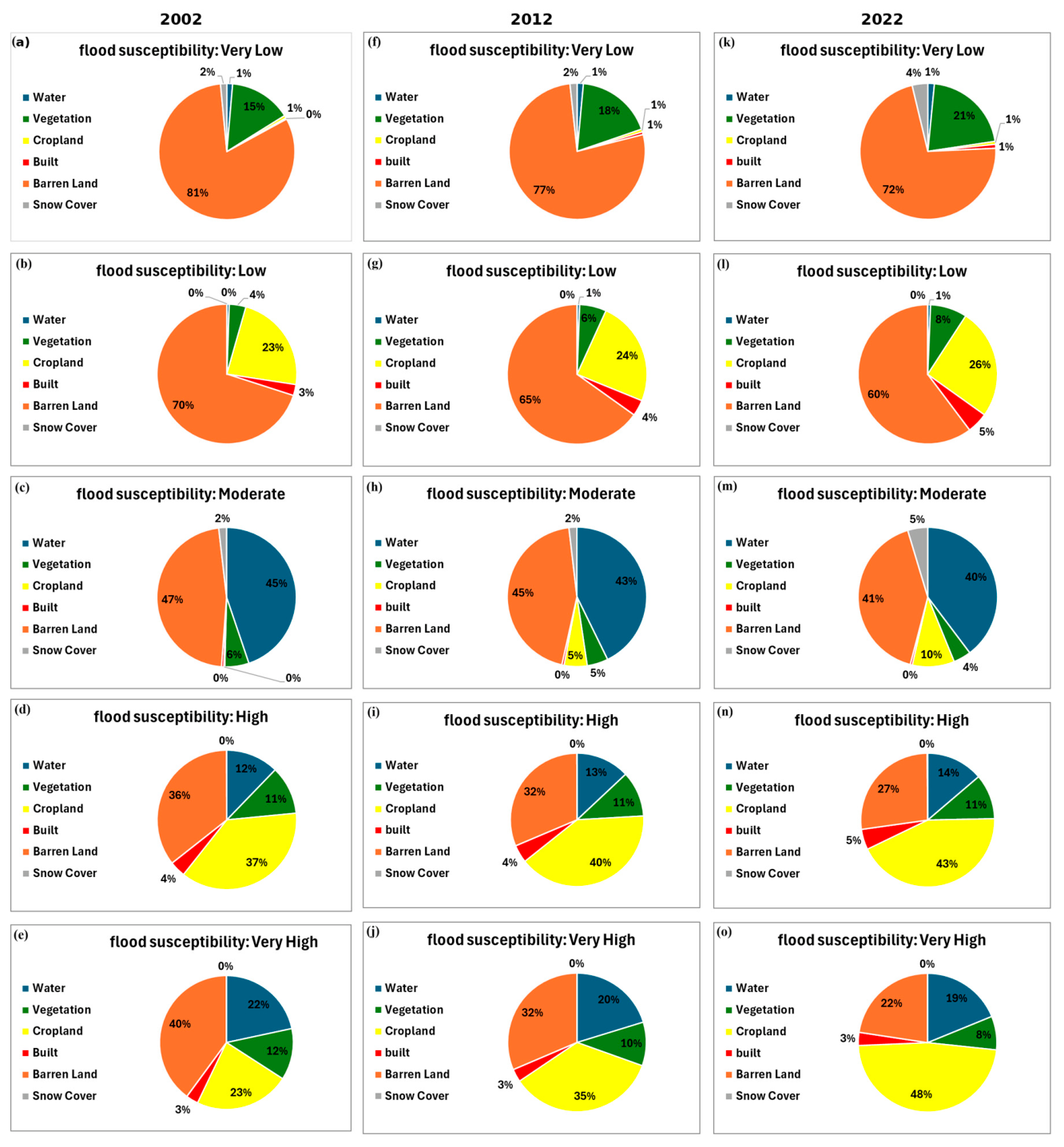
Further information about the land-cover features of the individual flood-susceptibility classes is obtained with the help of the LULC association analysis
Figure 12a–o. In the very low susceptibility class, barren land remains the dominant LULC category across all three years, contributing approximately 81% in 2002, 77% in 2012 and 72% in 2022. Meanwhile, vegetation increases from 15% to 18% and then to 21%, whereas water, cropland, built-up land and snow cover remain minor components.
This composition means that the very low susceptibility areas are primarily linked to dry and poorly developed landscapes where repeated exposure to floods is minimal. Similarly, barren land also predominates in the low susceptibility category, but this category decreases to around 70% in 2002 to 65% in 2012 and 60% in 2022. Simultaneously, the proportion of cropland rises to 23–24% and 26% with the vegetation proportion increasing to 4–6% and 8%. There is also a slight increase in built-up land, which rises to 3% or 5%.
Mixed land cover composition is exhibited by the moderate susceptibility class. This class is dominated by water and barren land in 2002, with an approximation of 45% and 47% respectively. Water contributed approximately 43% in 2012, with barren land contributing 45%. By 2022, water reduces to 40% and, barren land is crucial at 41% and cropland for approximately 10%. In addition, snow cover is seen more in 2022, adding around 5%. These results indicate a mixed LULC composition in moderate susceptibility zones. In the high susceptibility category, the importance of cropland is heightened. Its share increases to about 37% in 2002, to 40% in 2012, and 43% in 2022, and is the prevailing LULC category in recent years. Conversely, barren land decreases from 36% to 32% and then to 27%, while water remains relatively stable, increasing slightly from 12% to 14%. Vegetation remains close to 11%, and built-up land increases from 4% to 5%. The very high susceptibility class shows the most important land-cover transition. In 2002, barren land was the largest component, accounting for approximately 40%, followed by cropland (23%), water (22%) and vegetation (12%). However, by 2022, cropland becomes the dominant class, reaching approximately 48%, while barren land declines to 22%. Water remains important at about 19%, whereas vegetation decreases to 8%, and built-up land remains around 3%. Cropland becomes the dominant LULC class in very high susceptibility zones by 2022.
Overall, the district-wise and LULC analyses indicate a transition from barren land-dominated low susceptibility zones to cropland-dominated high susceptibility zones. High and very high susceptibility classes show increasing cropland exposure, particularly along the Indus floodplain and coastal deltaic belt.
3.6. Flood Persistence and Risk Change Analysis
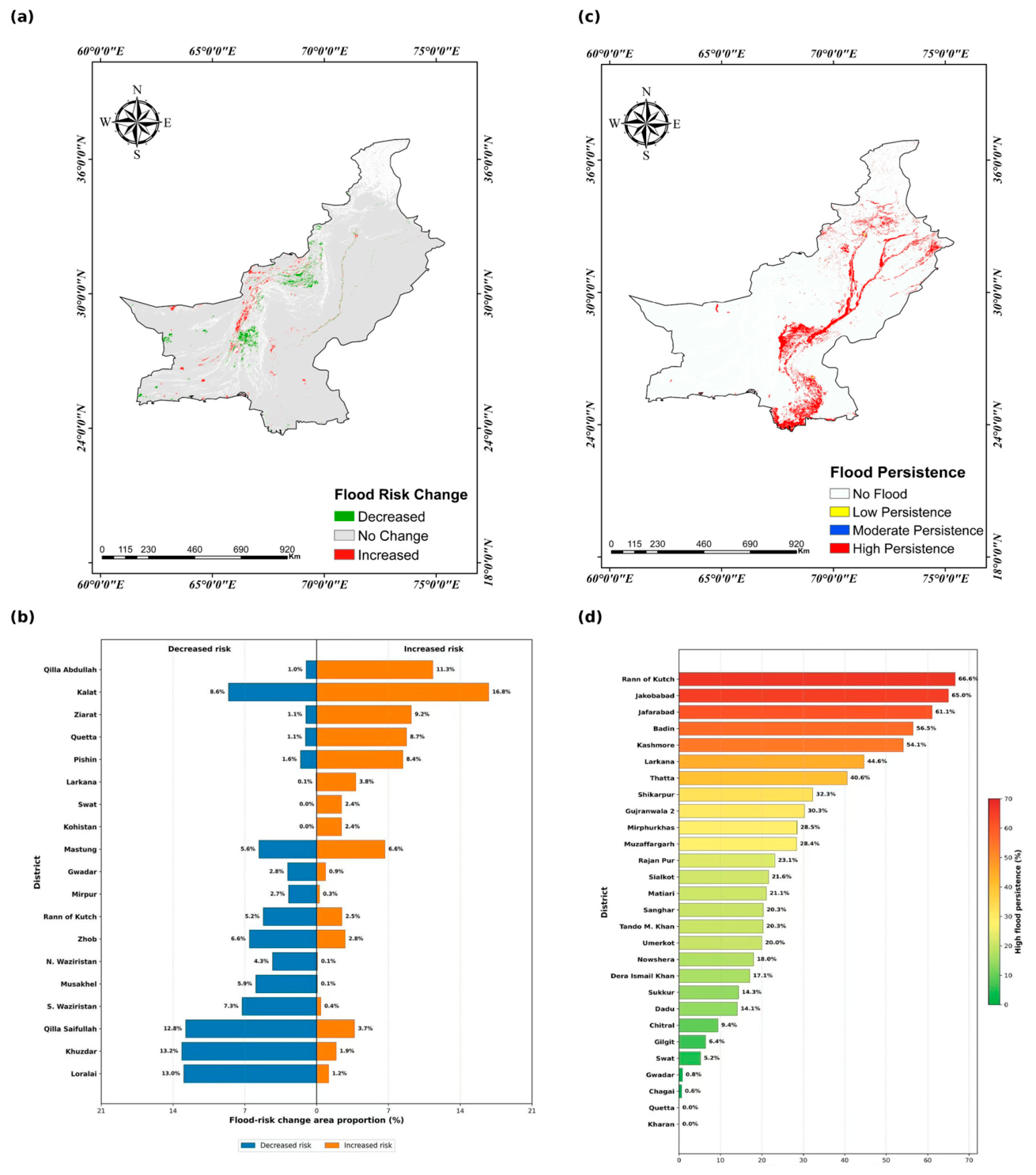
The flood-risk change analysis reveals that most of Pakistan remained within the no-change category, while increased and decreased risk zones occurred as localized transition areas. The strongest increases were observed in western upland districts, particularly Kalat (16.8%) and Qilla Abdullah (11.3%), indicating spatially concentrated flood-risk expansion rather than widespread national change. These patterns suggest that local topography, drainage conditions and terrain-controlled runoff pathways play an important role in shaping flood-risk transitions across the country. The results show that most of the country remained within the no-change category, whereas increased and decreased risk zones appeared as spatially limited but important transition areas. These changes were not randomly distributed; rather, they were concentrated in selected western, north-western and river-connected districts where local topography, drainage behaviour and land-surface conditions influenced the direction of flood-risk transition. At the district scale, the strongest increase in flood risk is observed in Kalat, where the increased-risk area reaches approximately 16.8%. This is followed by Qilla Abdullah (11.3%), Ziarat (9.2%), Quetta (8.7%), Pishin (8.4%) and Mastung (6.6%)
Figure 13a,b.
Alongside these increased-risk areas, several districts show a clear reduction in flood risk extent. The highest declines are observed in Khuzdar (13.2%), Loralai (13.0%) and Qilla Saifullah (12.8%). Additional declines are seen in Kalat (8.6%), South Waziristan (7.3%), Zhob (6.6%) and Musakhel (5.9%). Building on the risk change outcomes, the flood persistence analysis reports areas of repeated high flood susceptibility over the study period. The persistence map demonstrates that the high flood persistence is concentrated primarily along Indus floodplain, the agricultural region of Sindh and the coastal-deltaic region. This spatial pattern follows major drainage and floodplain corridors, indicating that the most exposed areas are not only susceptible in one period but remain repeatedly flood-prone over time. Thus, persistence emphasizes the chronic aspect of flood exposure and the risk change analysis demonstrates the places of transitions
Figure 13c.
This persistent flood exposure is especially clear in the district-wise results. Rann of Kutch records the highest high-persistence proportion, with approximately 66.6% of its area falling within the high flood-persistence class. It is followed by Jakobabad (65.0%), Jafarabad (61.1%), Badin (56.5%) and Kashmore (54.1%), Since more than half of the area in these districts remains repeatedly associated with high flood-prone conditions, they represent the strongest persistence hotspots. This persistent flood exposure is especially clear in the district-wise results. Rann of Kutch records the highest high-persistence proportion (66.6%), followed by Jakobabad (65.0%), Jafarabad (61.1%), Badin (56.5%) and Kashmore (54.1%). Larkana (44.6%) and Thatta (40.6%) also show considerable flood persistence within the lower Indus and deltaic environments
Figure 13d. These findings indicate that recurrent flood susceptibility is primarily concentrated within river-connected agricultural and floodplain landscapes.
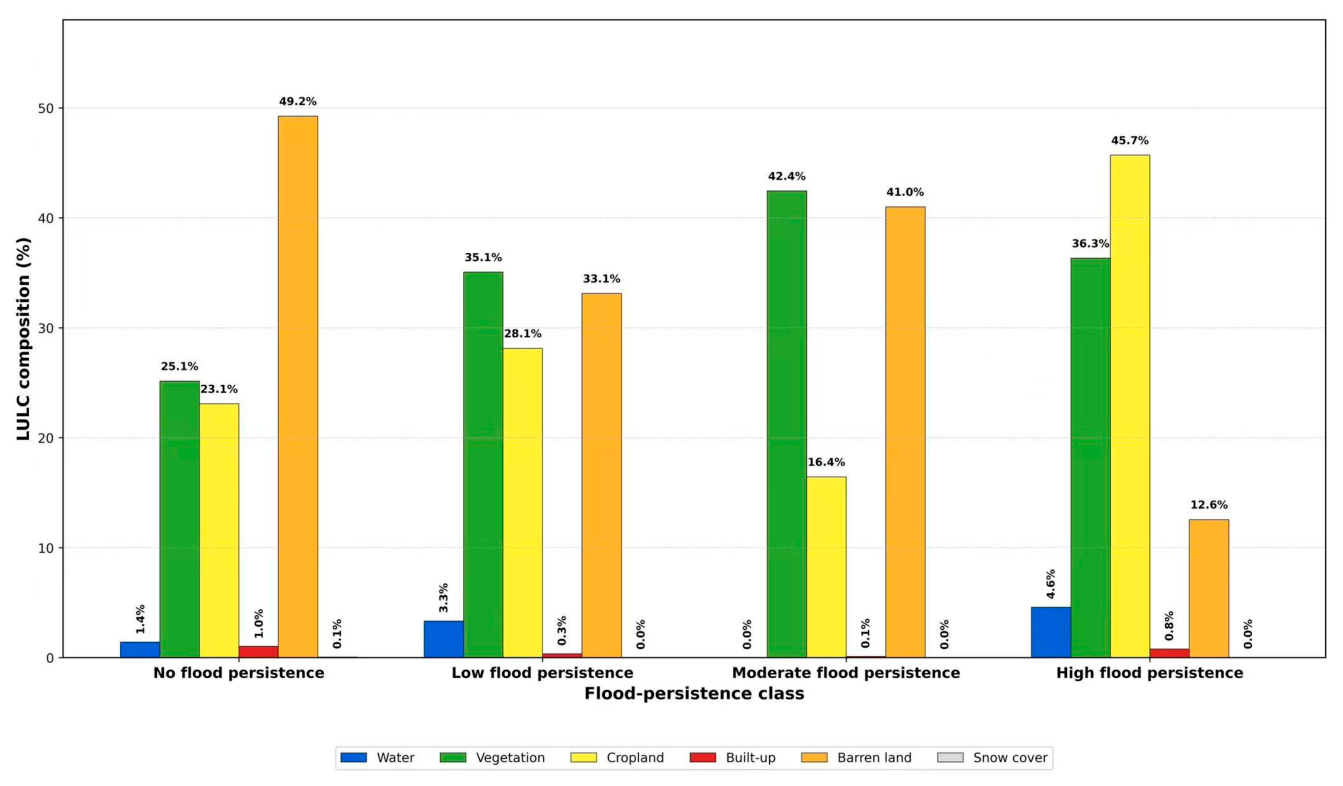
In contrast to these persistent floodplain districts, several western and northern districts show relatively low high-persistence proportions. Gwadar and Chagai record only 0.8% and 0.6%, respectively, while Quetta and Kharan show almost no high flood persistence in the selected district-wise comparison. Similarly, Swat (5.2%) and Gilgit (6.4%) show limited district scale high persistence, although localized flood hazards may still occur along narrow valleys and mountain drainage channels. This contrast is important because it separates broad district level persistence from localized flood events, particularly in mountainous and arid environments where flood prone zones are spatially narrow. The LULC composition further explains the distribution of flood persistence classes
Figure 14. The no-persistence class is dominated by barren land (49.3%), followed by vegetation (25.1%) and cropland (23.1%), indicating that non-persistent zones are mainly associated with less flood-connected landscapes. In the low persistence class, vegetation (35.1%), barren land (33.1%) and cropland (28.1%) represent the dominant land-cover categories. Moderate persistence zones are characterized by vegetation (42.4%), barren land (41.0%) and cropland (16.4%), representing transitional environments exposed to periodic flooding.
The strongest exposure pattern occurs in the high flood-persistence class, where cropland becomes the dominant LULC category (45.7%), followed by vegetation (36.3%). Barren land decreases to 12.6%, indicating a transition from barren-dominated non-persistent zones to cropland-dominated persistent zones. These findings demonstrate that recurrent flood-prone areas are strongly associated with agricultural and vegetated floodplain landscapes.
3.7. LULC Exposure to Flood Susceptibility
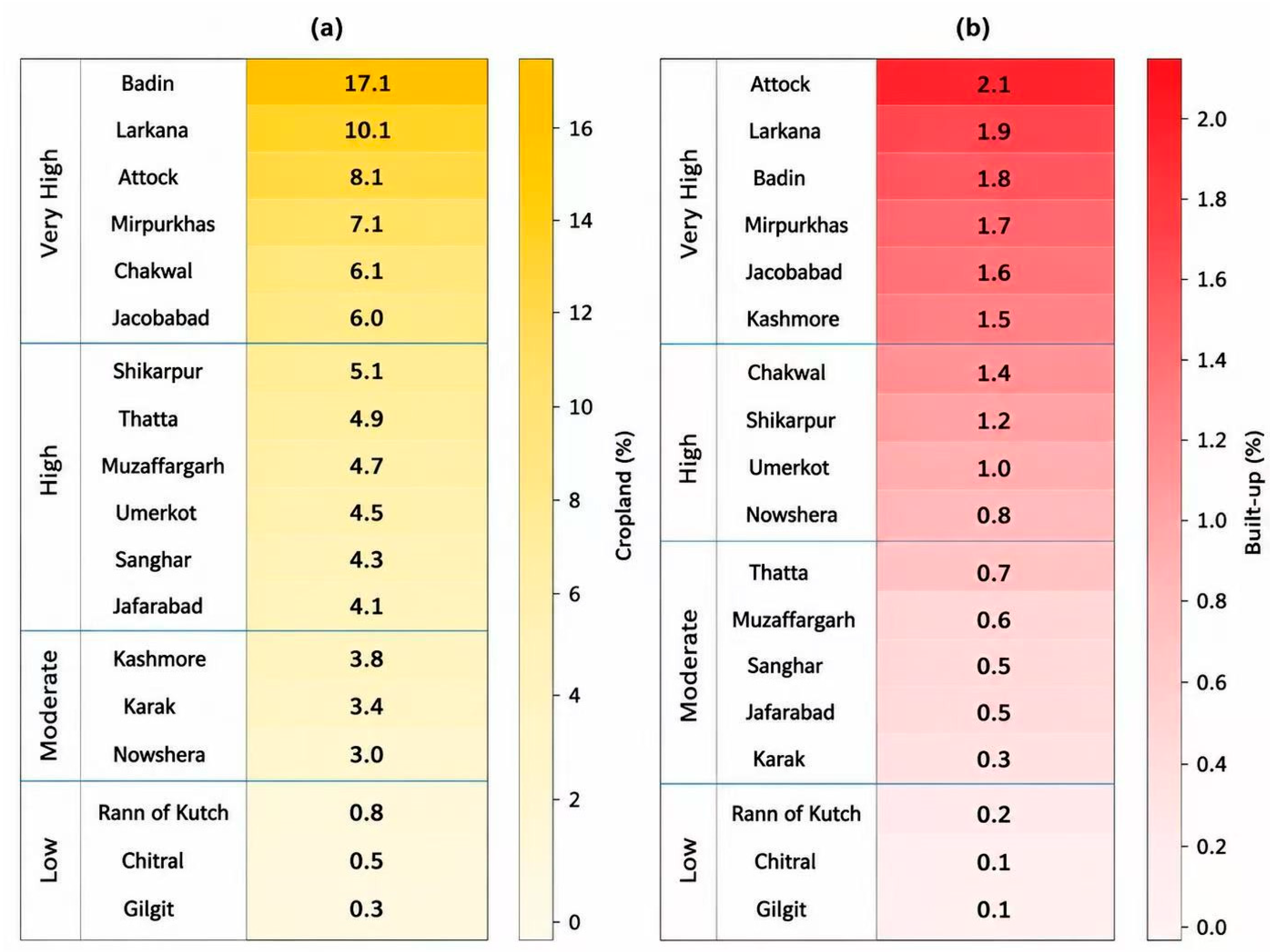
The LULC exposure values were classified into low, moderate, high, and very high categories based on the district-wise distribution of cropland and built-up areas within high and very high flood-susceptibility zones. The spatial distribution of exposure is presented in
Figure 15a, while the district-wise comparison of cropland and built-up exposure is shown in
Figure 15b. The results show a clear spatial variation in LULC exposure particularly within high and very high flood-susceptibility zones. Cropland exposure exhibits a wider range compared to built-up areas indicating a noticeable difference in the intensity of land-use exposure across districts. The highest exposure is observed in Badin (17%), followed by Larkana (10.1%), Attock (8.1%), Mirpurkhas (7.1%), and Chakwal (6.1%). These districts fall under the very high exposure category and are primarily located along the Indus floodplain, where agricultural activities are highly concentrated in flood-prone areas.
While built-up area exposure was relatively low, it remains significant as it represents at-risk settlements and infrastructure. The highest built-up area exposure was observed in Atok (2.10%), followed by Larkana (1.90%), Badin (1.80%), Mirpurkhas (1.70%), and Jacobabad (1.60%). This shows that although built-up exposure is smaller than cropland exposure, some districts still contain notable settlement exposure within flood-prone areas.
The results suggest that cultivated land is the dominant LULC type, while built-up area exposure is more localized. This pattern aligns with the results of the flood susceptibility, persistence, and FRPI, with high-risk areas primarily located in the Indus floodplain and other flood-prone riparian zones. Therefore, the LULC exposure analysis confirms that flood risk in these areas is influenced not only by physical flood susceptibility but also by the exposure of agricultural land and built-up areas. Moreover, the identified high-exposure districts were also inundated by floods during the 2010 and 2022 floods, further adding to the exposure. These findings are consistent with the observed LULC expansion trends between 2002 and 2022, particularly the increase in cropland and built-up areas within flood-prone regions.
3.8. Integrated Flood Risk Priority Index Analysis
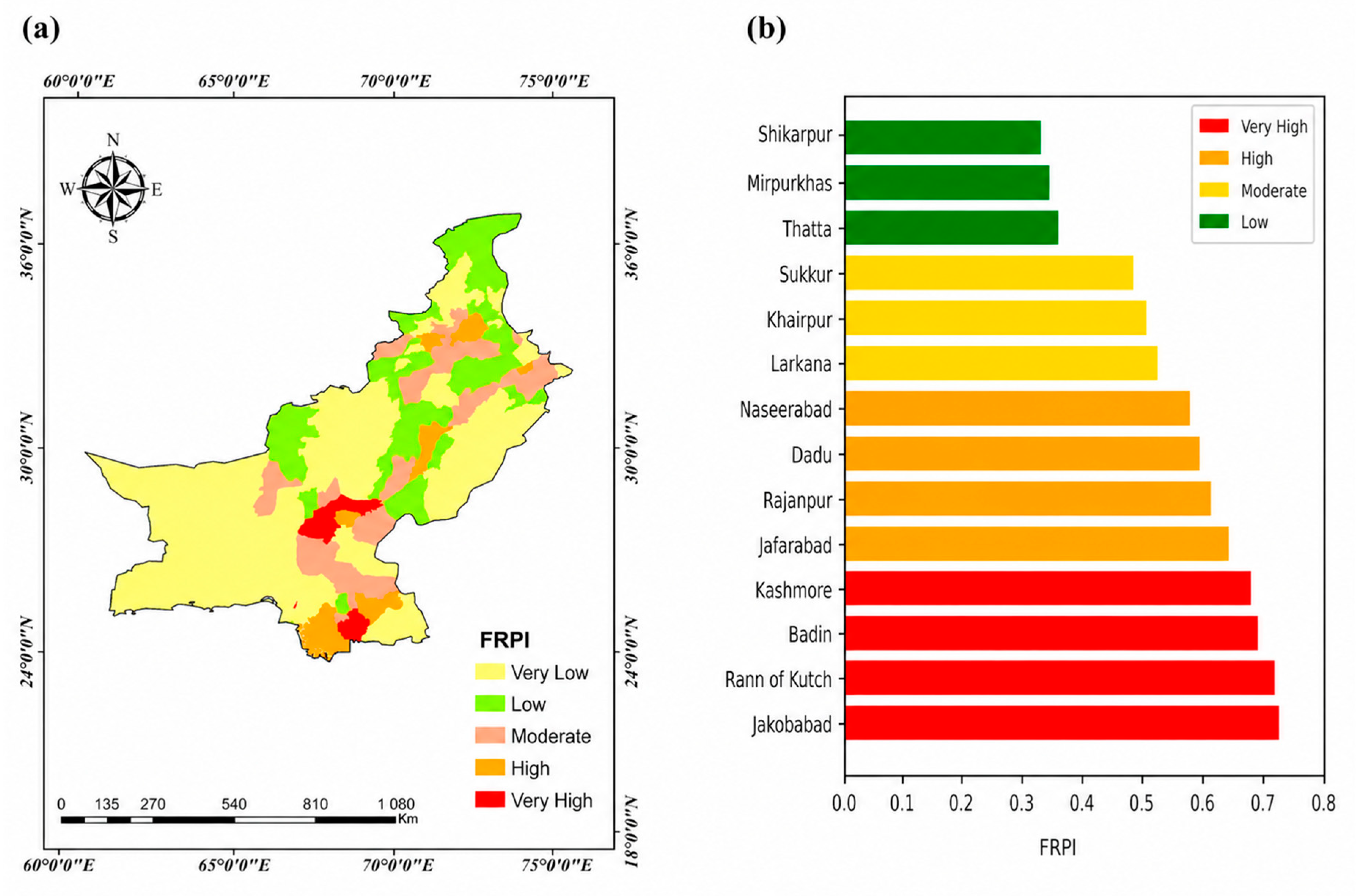
The FRPI values represent the combined effect of flood susceptible, flood persistence, flood risk change and LULC exposure at the district level. The results show clear differences in flood-risk priority across districts, indicating that the intensity of flood risk varies spatially rather than remaining uniform. The highest FRPI values are observed in Jakobabad (0.742), Rann of Kutch (0.738), Badin (0.711), Kashmore (0.637), and Jafarabad (0.600). These districts constitute the highest priority category, where flood-prone conditions, recurrent flooding, increasing risk tendency and vulnerable land-use areas occur simultaneously with more intensity, leading to a higher priority than the other districts
Figure 16a,b.
A moderate priority level is observed in Larkana (0.556), where flood-related conditions remain important but are comparatively less intense than those in the highest-ranked districts. Thatta (0.398), Mirpurkhas (0.385), Shikarpur (0.373), and Muzaffargarh (0.308) have lower FRPI values, which indicate lower combined effects of the flood-related factors. Districts in the very high and high FRPI categories reveal a higher intensity of flood-related conditions, suggesting a greater priority for flood management, drainage improvement, agricultural protection, and land-use planning. By contrast, the districts in moderate and low categories show a relatively less intense influence of these conditions. The FRPI pattern aligns with known flood-prone regions along the Indus floodplain, where higher-priority districts are concentrated. This pattern demonstrates the impact of recurring flood events on the geographical distribution of FRPI values.
3.9. Correlation Between Hydro-Climatic and Land Surface Indicators
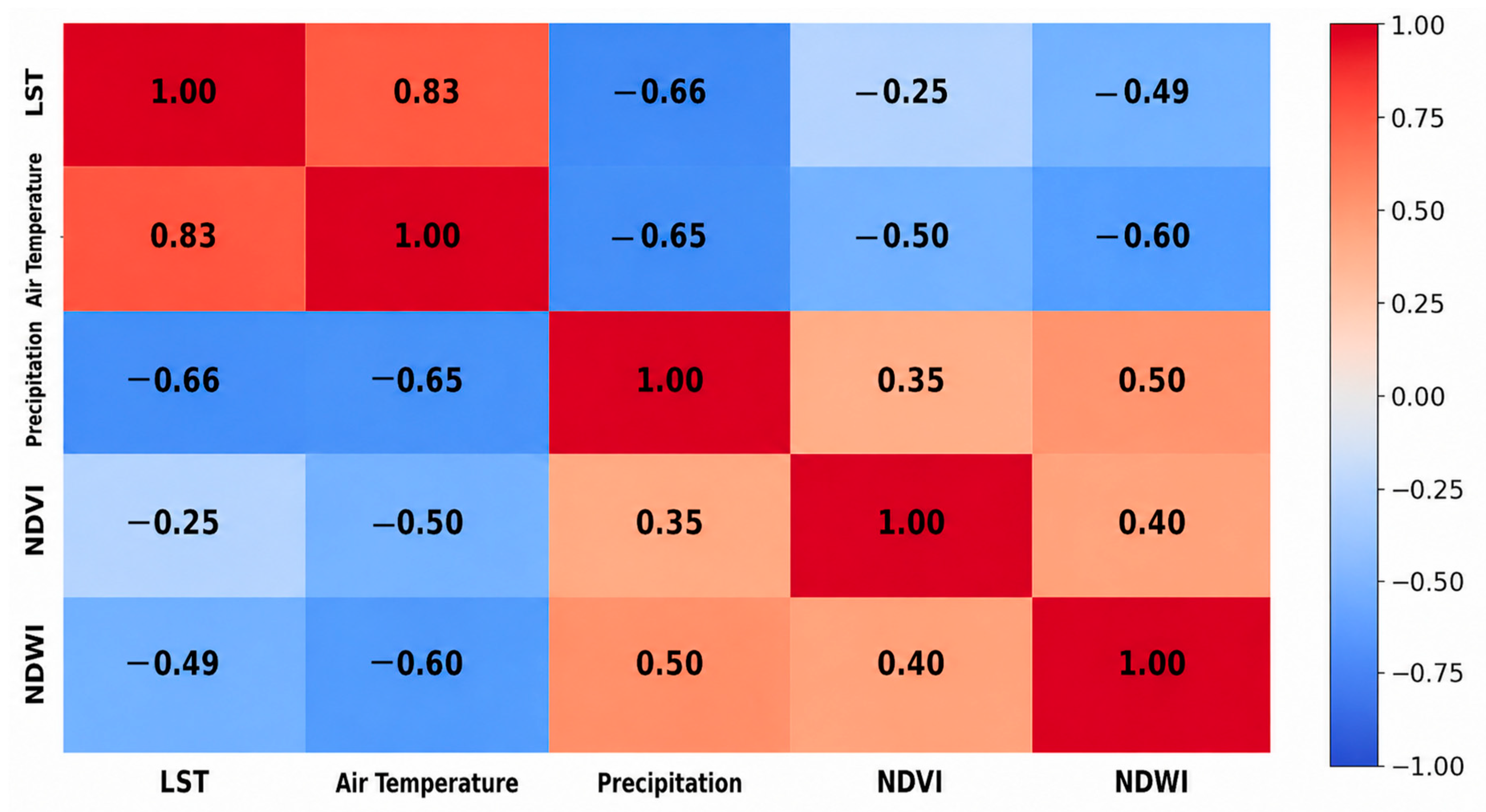
To better understand how hydro-climatic forcing interacts with land-surface conditions, a Pearson correlation analysis was carried out for 2022 using LST, air temperature, precipitation, NDVI, and NDWI, as shown in
Figure 17. LST is positively correlated with air temperature (r = 0.83), which means that districts with higher near-surface air temperatures tend to have higher skin temperatures. Conversely, LST has a strong negative correlation with precipitation (r = −0.66), and air temperature shows a strong negative correlation with precipitation (r = −0.65). These trends indicate a consistently hot, dry regime across large parts of southern and south-western Pakistan. For example, districts such as Chagai, Kech, and Kharan have very high mean LST (41–42 °C), low annual precipitation (less than 150 mm), reflecting thermally stressed and moisture deficient environments.
Precipitation has a moderate positive relationship with NDVI (r = 0.35), implying that greener districts are usually wetter and have denser vegetation cover, whereas arid areas are less green. The correlation between vegetation and thermal indicators is weaker: NDVI shows only a weak negative correlation with LST (r = −0.25), suggesting that vegetation cover is influenced not only by temperature but also by localized environmental conditions and land-use heterogeneity. Cooler and wetter northern regions, such as Gilgit, Swat, and Kohistan, exhibit relatively lower LST and higher NDVI values.
NDWI is also an important moisture-based complement of NDVI. It is moderately positively correlated with precipitation (r = 0.50), which suggests that those districts that are receiving more rains have more surface moisture. Similarly, NDWI correlates with NDVI in a moderate positive manner (r = 0.40), which implies that wetter areas are also prone to have more vegetation cover. Contrarily, NDWI is moderately to strongly negatively correlated with LST (r = −0.49), air temperature (r = −0.60). These trends indicate that hotter and more thermally stressed districts are generally drier and more moisture-deficient. For example, districts such as Gilgit, Chitral, Kohistan, Swat, and Battagram show relatively higher NDWI values, whereas districts such as Disputed Area 1, Jamshoro, Kholu, Mastung, and Barkhan have lower NDWI values, reflecting comparatively drier surface conditions.
3.10. Performance Evaluation of the Model
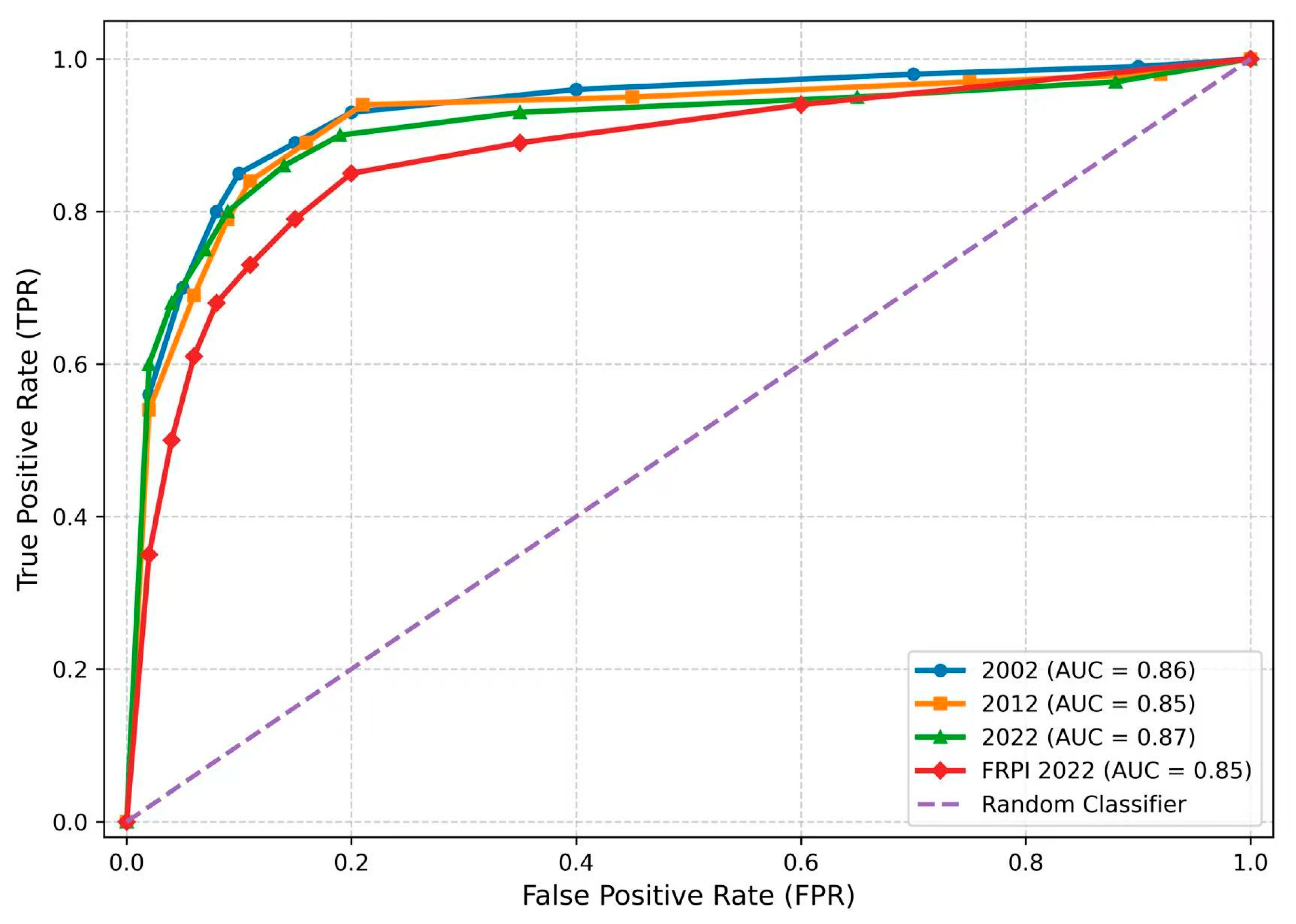
The AUC values of the flood susceptibility model were 0.86 in 2002, 0.85 in 2012, and 0.87 in 2022, all within the “very good” performance range (0.80–0.90). This indicates that the model can reliably distinguish between flood-inundated and non-flood-inundated areas within Pakistan. Furthermore, the AUC values remained highly similar over time, indicating that the model’s performance remained stable and reliable despite interannual variations in hydroclimatic forcing and surface conditions
Figure 18.
The confusion matrix statistics also support the robustness of the flood susceptibility model. The overall accuracy for 2002, 2012, and 2022 was 84%, 83%, and 85%, respectively, indicating that most pixels were correctly classified. The sensitivity values were 86%, 85%, and 87%, respectively, indicating that most observed flood-inundated areas were located within the predicted high-risk and very high-risk areas. The specificity values were 82%, 81%, and 83%, respectively, indicating that non-flood-inundated areas were also reliably identified.
The FRPI model’s AUC of 0.85 is also within the “very good” performance range. Its confusion matrix results further confirm its reliable performance, with an overall accuracy of 82%, sensitivity of 83%, and specificity of 85%. This figure demonstrates that the FRPI model, after integrating susceptibility, persistence, flood risk change, and LULC based exposure information, can effectively identify flood-vulnerable and non-flood-vulnerable areas.
The high consistency between the 2022 flood susceptibility validation results and the FRPI validation results indicates that this integrated risk prioritization framework maintains strong predictive power even after incorporating exposure-based risk information. The validation results confirm that the outputs of both the susceptibility and priority indices are robust and suitable for supporting district-level flood risk assessment and planning.
4. Discussion
This study used a GIS framework based on the Analytic Hierarchy Process to integrate hydro-climate, topographic, surface, and LULC indicators to assess flood susceptibility and risk prioritization patterns in Pakistan [
70,
71]. The results show that flood susceptibility is not determined by a single factor, but is influenced by a combination of factors including rainfall variability, thermal conditions, topography, river proximity, surface humidity, vegetation status, and land use exposure [
14]. In 2002, 2012, and 2022, high-susceptibility and very high-susceptibility areas were mainly concentrated along the Indus River, in low-lying floodplains, and in coastal delta regions. This pattern indicates that flood risk in Pakistan is spatially concentrated rather than spatially extensive; therefore, even a relatively small high-risk area can have major management importance when it overlaps with agricultural floodplains and settlements [
21].
Our findings at the district level also confirm this trend. These districts are mainly located within or near the lower Indus floodplain and coastal Sindh, where low elevation, gentle slopes, river proximity, alluvial plains, and dense drainage networks favour flood accumulation. In contrast, western arid and high-elevation districts generally show lower susceptibility, although localized flash-flood risk may still occur in narrow valleys and piedmont areas. These findings are consistent with previous studies conducted in the Indus floodplain and lower Sindh regions, which identified low elevation, river proximity, and alluvial floodplain environments as major controls of flood susceptibility.
The hydro-climatic and land-surface results suggest that rainfall alone does not fully explain the flood-susceptibility pattern while air temperature and LST remained higher in lowland and southern regions, `hotter regions are generally more moisture-deficient. These relationships indicate that flooding behaviour is affected by the interaction of precipitation, temperature, surface moisture, and soil moisture, not just by rainfall magnitude. Similar interactions among precipitation, temperature, vegetation condition, and surface moisture have also been reported in previous flood susceptibility studies in South Asia and Pakistan.
The LULC results show that flood risk is increasingly becoming an exposure-related issue. This transition indicates a gradual shift from open surfaces toward agricultural and settlement landscapes. This means that even if the overall high-risk area is not expanding dramatically, exposure of productive agricultural land within flood-prone zones is increasing. Flood persistence analysis adds a temporal dimension to this interpretation. This shift indicates that repeated flood-prone conditions are closely linked with agricultural floodplain environments. Previous studies have also highlighted that land-use change, particularly agricultural expansion and urban growth, increases flood exposure and vulnerability in floodplain regions. However, most earlier studies considered LULC mainly as a flood-conditioning or vulnerability factor, whereas the present study explicitly quantifies LULC-based exposure within flood-prone and persistent flood-risk zones. This provides a clearer understanding of how agricultural and built-up land systems intersect with recurrent flood-prone environments. This finding agrees with earlier studies reporting that agricultural expansion and settlement growth within floodplains substantially increase flood exposure and vulnerability.
Although the LULC classification achieved acceptable overall accuracies (79.8–83.9%) and Kappa coefficients (0.79–0.82), some uncertainty may remain in the discrimination of built-up, barren land, and transitional land-cover classes. Consequently, minor uncertainty may propagate into district-level LULC exposure estimates. However, the achieved accuracy levels are consistent with previous national-scale studies and are considered suitable for regional-scale flood-risk assessment and prioritization.
Flood-risk change analysis shows that Pakistan’s flood-risk pattern has both stable and changing components. Much of the country remains under no-change conditions, confirming that the national flood-susceptibility structure is relatively stable. However, the presence of localized increases and decreases in flood risk suggests that flood-prone environments are not static and may evolve over time in response to changing hydro-climatic and land-surface conditions. This suggests that flood risk includes both persistent hotspots along established flood corridors and emerging transition zones where susceptibility is changing over time. The FRPI integrates these separate results into a district-level priority framework by combining susceptibility, persistence, flood-risk change, and LULC exposure. This integration enables the identification of areas where flood-prone conditions, repeated flooding, changing risk, and exposed land-use systems overlap most strongly. Unlike conventional flood-susceptibility studies that primarily produce static, single-period hazard maps, the FRPI moves the analysis beyond susceptibility mapping by integrating susceptibility, persistence, flood-risk change, and LULC-based exposure into a unified, temporally explicit, district-level priority framework. This approach enables the identification not only of where flood-prone areas exist, but also where flood conditions persist, intensify, and increasingly intersect with human land-use systems.
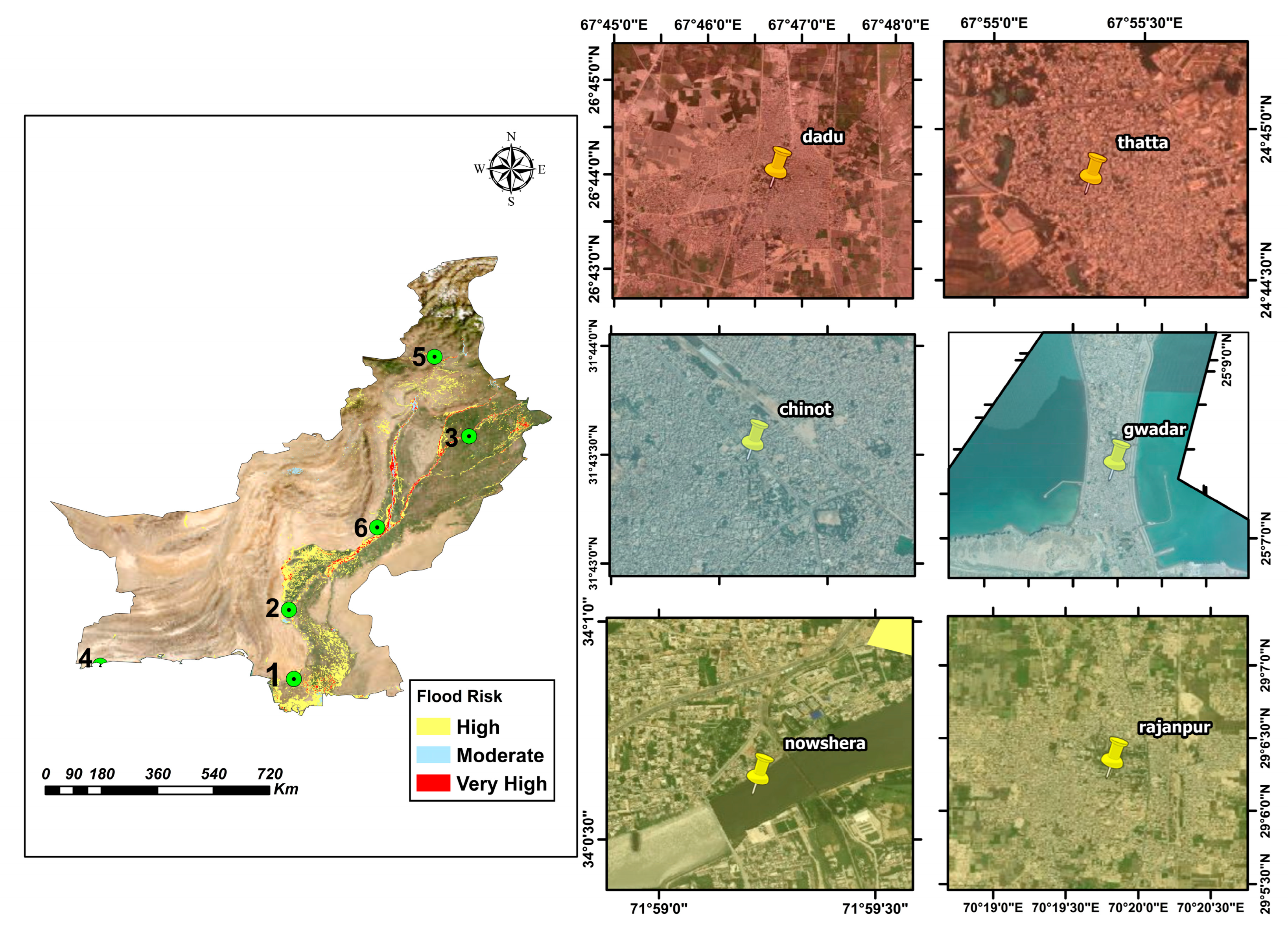
The Google Earth-based regional interpretation also supports the spatial meaning of the modelled results. Representative locations across floodplains, agricultural regions, and coastal environments illustrate diverse flood-risk settings, including low-lying terrain, river proximity, agricultural expansion, settlement development, drainage connectivity, and coastal exposure. These observations confirm that the mapped high-risk zones correspond well with real-world land-surface conditions and flood-prone environments. The validation results further support the reliability of the proposed framework. The obtained validation performance indicates a high level of predictive accuracy and demonstrates the robustness of the integrated approach in identifying flood-prone areas and supporting district-level flood-risk prioritization. These findings suggest that the framework can provide a reliable basis for flood-risk assessment and management in data-scarce environments.
Overall, the findings shows that flood risk in Pakistan is not only a question of where flooding is physically likely to occur. It is also shaped by where flood-prone conditions repeat, where risk is changing, and where cropland and settlements are increasingly exposed. The main contribution of this study is therefore the integration of susceptibility, persistence, change, LULC exposure, FRPI, and regional visual interpretation into a single flood-risk understanding.
Planning and Flood Risk Management Implications
Regional flood risk interpretation combines spatial flood risk patterns with high-resolution Google Earth imagery to more clearly demonstrate the correspondence between model results and actual conditions
Figure 19. Flood risk maps show that high-risk areas are mainly concentrated along the Indus River, particularly in the middle and lower floodplains and the coastal areas of Sindh. These areas are typically characterized by low-lying terrain, flat topography, and dense drainage networks.
The spatial distribution of these high-risk areas closely matches areas with intensive agricultural activity and dense settlements, indicating that flood-prone areas are influenced not only by topographical conditions but also by land use patterns. Representative locations selected, including Tata, Dadu, Naushera, Rajanpur, Chiniot, and Gwadar, demonstrate how different environmental and land use patterns interact within identified flood risk areas.
Google Earth-based illustrations visually confirm these spatial patterns by showcasing river proximity, irrigated farmland, settlement expansion, and low-lying floodplain environments within high-risk and very high-risk areas. The high consistency between model outputs and ground observations demonstrates the reliability and robustness of the applied analytical framework. Furthermore, the observed spatial patterns indicate that the northern and high-elevation regions are generally less prone to flooding due to steep terrain and limited floodplain development; while the lowlands and delta regions are more susceptible to flooding due to gentler slopes, poor infiltration capacity, and concentrated human activities.
These outcomes could assist national and provincial disaster risks management authorities through the provision of spatially explicit data on the areas where interventions are the most required. Structural measures like drainage rehabilitation and embankment maintenance and floodwater diversion planning can be concentrated in high-persistence districts and monitoring, early warning and preparedness may be focused in increased-risk districts. Further, the cropland-controlling high-persistence areas can be identified to inform land-use zoning and adaptation approaches in agriculture, especially in the lower Indus floodplain and coastal-deltaic areas. This study offers a more specific framework to minimizing flood losses by incorporating flood susceptibility, risk change, persistence and LULC exposure, which facilitates better resource allocation and climate-resilient land-use planning in Pakistan.
5. Conclusions
This study developed an integrated GIS-AHP framework to assess flood susceptibility, temporal flood dynamics, LULC-based exposure, and district-level flood-risk priority across Pakistan for 2002, 2012, and 2022. By combining hydro-climatic, topographic, hydrological, land-surface, and LULC indicators, the study provides a comprehensive national-scale understanding of how physical flood susceptibility interacts with changing land use and exposure.
The results show that high and very high flood susceptibility is consistently concentrated along the Indus River corridor, lower floodplains, and coastal Sindh, where low elevation, gentle slopes, drainage concentration, and river proximity create favourable flood-prone conditions. Beyond identifying flood-prone areas, the study demonstrates how flood persistence, flood-risk change, and LULC exposure interact spatially and temporally, providing a more comprehensive understanding of flood-risk dynamics than conventional single-period susceptibility assessments. Although the highest susceptibility zones occupy a relatively limited proportion of the national area, they overlap strongly with agriculturally and socio-economically important landscapes. A key finding of this study is that flood risk in Pakistan is increasingly shaped by exposure. Cropland and built-up areas have expanded within flood-prone zones, indicating that productive land, settlements, and infrastructure are becoming more vulnerable to flooding. Flood persistence analysis further identified recurrent hotspots in the lower Indus and coastal districts, while flood-risk change analysis highlighted both stable flood corridors and localized emerging risk zones. The FRPI strengthened the assessment by integrating susceptibility, persistence, risk change, and LULC exposure into a single district-level priority index. High FRPI values in Jacobabad, Rann of Kutch, Badin, Kashmore, and Jafarabad indicate districts where multiple flood-risk dimensions overlap. Validation results confirmed the reliability of the framework, with strong AUC values for both flood susceptibility and FRPI.
Overall, this study demonstrates that flood risk in Pakistan is not merely a natural disaster issue but also an exposure-driven risk problem. This integrated framework provides a solid foundation for identifying priority flood risk zones and can support future flood risk assessments, land use planning, and climate adaptation decisions. The proposed FRPI framework provides a practical district-level prioritization tool that can support targeted flood-risk management, agricultural protection, land-use planning, and climate adaptation strategies in data-limited environments.