Article

Land Use and Land Cover Changes and Their Impacts on Hydrological Sustainability in a Tropical Watershed, Brazil

by
Rogerio Gonçalves Lacerda de Gouveia
Department of Agronomy, Frutal Unit, Minas Gerais State University(UEMG), Av. Professor Mário Palmerio, 1001, Frutal 38202-436, MG, Brazil
Hydrology 2026, 13(6), 159; https://doi.org/10.3390/hydrology13060159
Submission received: 20 May 2026 / Revised: 9 June 2026 / Accepted: 10 June 2026 / Published: 17 June 2026

Abstract

Land use and land cover change (LULCC) is increasingly recognized as a dominant driver of hydrological alteration in tropical watersheds, often exceeding the influence of climatic variability. This study evaluates the spatiotemporal dynamics of LULCC and their implications for hydrological sustainability in the Uberabinha River Basin, southeastern Brazil, between 1990 and 2020. Utilizing MapBiomas data and statistical analysis, the results reveal a marked expansion of mechanized agriculture, particularly soybean cultivation, which grew from 3426 ha to 54,162 ha, and urban areas, which expanded by approximately 89.4%. Conversely, natural vegetation and pasturelands decreased continuously, with pastures showing the sharpest absolute reduction, from 72,248 ha to 34,535 ha. Despite a 10.76% increase in annual precipitation between 1990 and 2020, the hydrological response exhibited a severe decline in streamflow, characterized by a 76.35% drop in minimum flow. Furthermore, the runoff index decreased from 0.0574 in 1990 to 0.0211 in 2020, indicating a critical loss in the basin’s capacity to convert rainfall into streamflow. These findings demonstrate a clear decoupling between precipitation and streamflow driven by LULCC, posing a severe threat to regional water security and highlighting the urgent need for integrated land–water management.

1. Introduction

Land use and land cover change (LULCC) is widely recognized as one of the dominant drivers of hydrological alteration at global, regional, and local scales. The conversion of natural vegetation into agricultural lands, pastures, and urban areas has profoundly modified key components of the hydrological cycle, including infiltration, evapotranspiration, surface runoff, groundwater recharge, and streamflow regimes [1,2,3]. These transformations have intensified over recent decades, largely driven by population growth, food demand, and economic globalization, placing increasing pressure on freshwater systems worldwide [4,5,6].
A growing body of literature demonstrates that LULCC can significantly alter watershed hydrological responses, often producing effects comparable to or greater than those associated with climate variability [6,7,8,9]. The replacement of native vegetation by croplands or impervious surfaces tends to reduce soil permeability and water storage capacity, leading to increased surface runoff, reduced groundwater recharge, and changes in flow seasonality [10,11,12]. Under expanding urban footprints, this impervious surface expansion can trigger complex response mechanisms in localized precipitation patterns [13]. Furthermore, combined experimental and modeling approaches in industrial and expanding catchments demonstrate that significant urban soil sealing drastically alters the foundational rainfall–runoff relationship, leading to severe hydrologic degradation. These processes frequently result in declining baseflows and increased vulnerability of water resources during dry periods, directly affecting water security and ecosystem functioning [14,15].
The hydrological consequences of LULCC are highly context-dependent, varying according to climate conditions, soil characteristics, topography, and land management practices [16,17]. In tropical regions, these impacts are often amplified due to intense rainfall regimes, highly weathered soils, and rapid rates of land transformation [11,18,19,20]. Empirical and modeling studies across tropical basins in South America, Africa, and Asia consistently report reductions in streamflow resilience and alterations in runoff generation following agricultural expansion and deforestation [10,21].
Disentangling the relative contributions of LULCC and climate variability remains a central challenge in hydrological research [22,23]. While climate change influences precipitation patterns and evapotranspiration rates, numerous studies indicate that human-induced land transformations and direct water withdrawals increasingly dominate hydrological responses, particularly in intensively managed basins [24,25,26]. Divergent directional trends between precipitation and streamflow, especially minimum flows, have been identified as key indicators of anthropogenic disruption of natural hydrological processes [27].
Within this global context, Brazil represents a critical hotspot for LULCC-driven hydrological change. The rapid expansion of mechanized agriculture in tropical biomes, especially the Cerrado, has led to the large-scale replacement of native vegetation by monocultures, thereby altering landscape structure and hydrological functioning [28]. These transformations have raised growing concerns regarding the long-term sustainability of water resources, particularly in strategic watersheds that support urban supply, irrigation, and ecosystem services [28,29,30]. Similar dynamics have been highlighted in other critical regions of the Brazilian tropical savanna, where the combined pressures of localized deforestation and climatic forcing have demonstrably constrained water yield and altered macro-scale basin sustainability [31].
Against this backdrop, the present study evaluates the spatiotemporal dynamics of land use and land cover change and their impacts on hydrological sustainability in a tropical watershed in southeastern Brazil between 1990 and 2020. By integrating long-term land use datasets with precipitation and streamflow records, this research contributes to a broader understanding of how human-driven land transformations reshape hydrological regimes and compromise water availability. Although focused on a Brazilian tropical watershed, the results offer insights applicable to agricultural frontiers worldwide, where land use change increasingly constrains hydrological sustainability. The findings provide scientifically grounded insights to support integrated watershed management and land use planning aimed at reconciling agricultural production with the conservation of water resources in tropical environments.

2. Materials and Methods

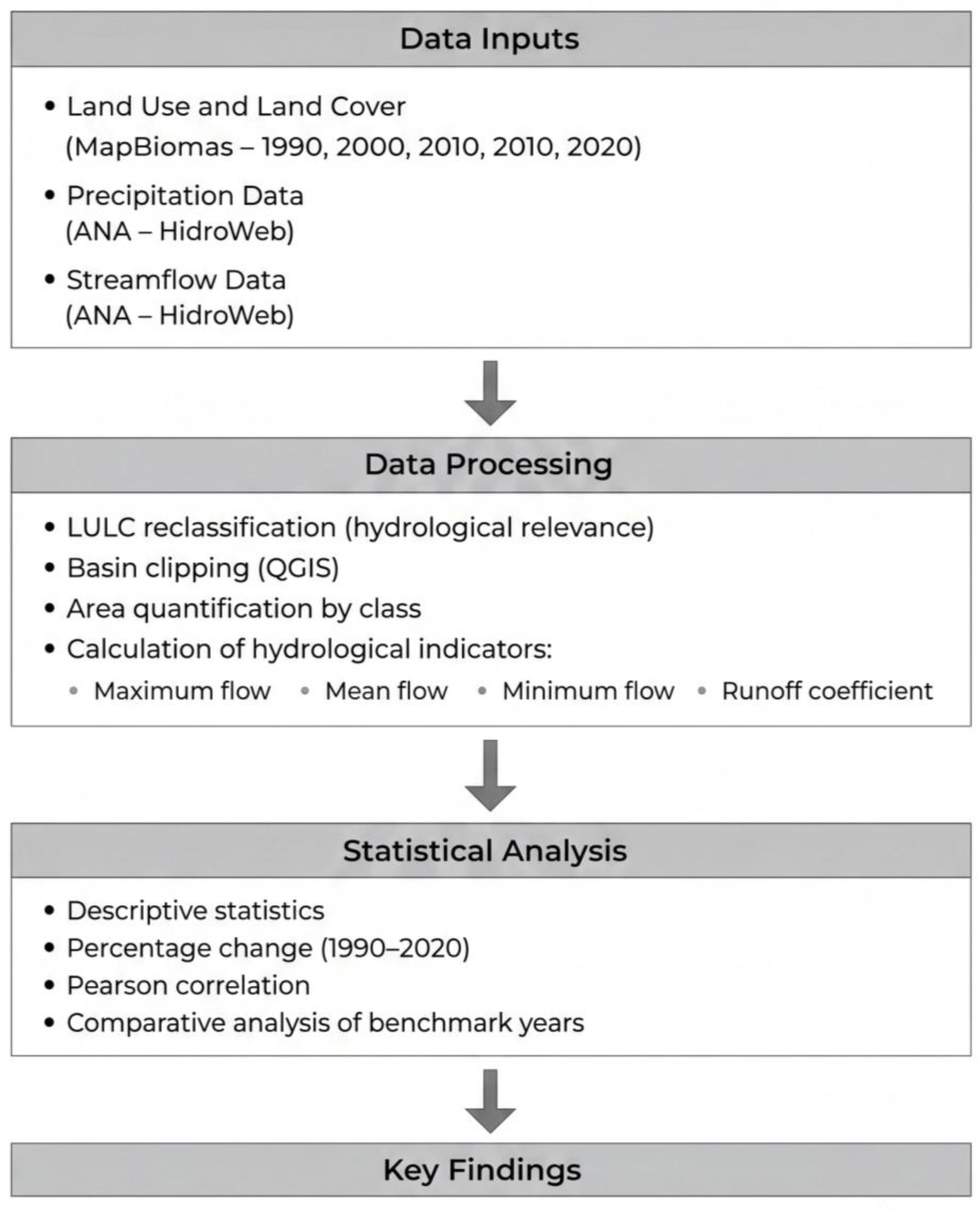
Figure 1 presents the methodological framework adopted in this study, summarizing the main data sources, processing steps, and analytical procedures used to assess the impacts of land use and land cover change on hydrological sustainability.

2.1. Study Area

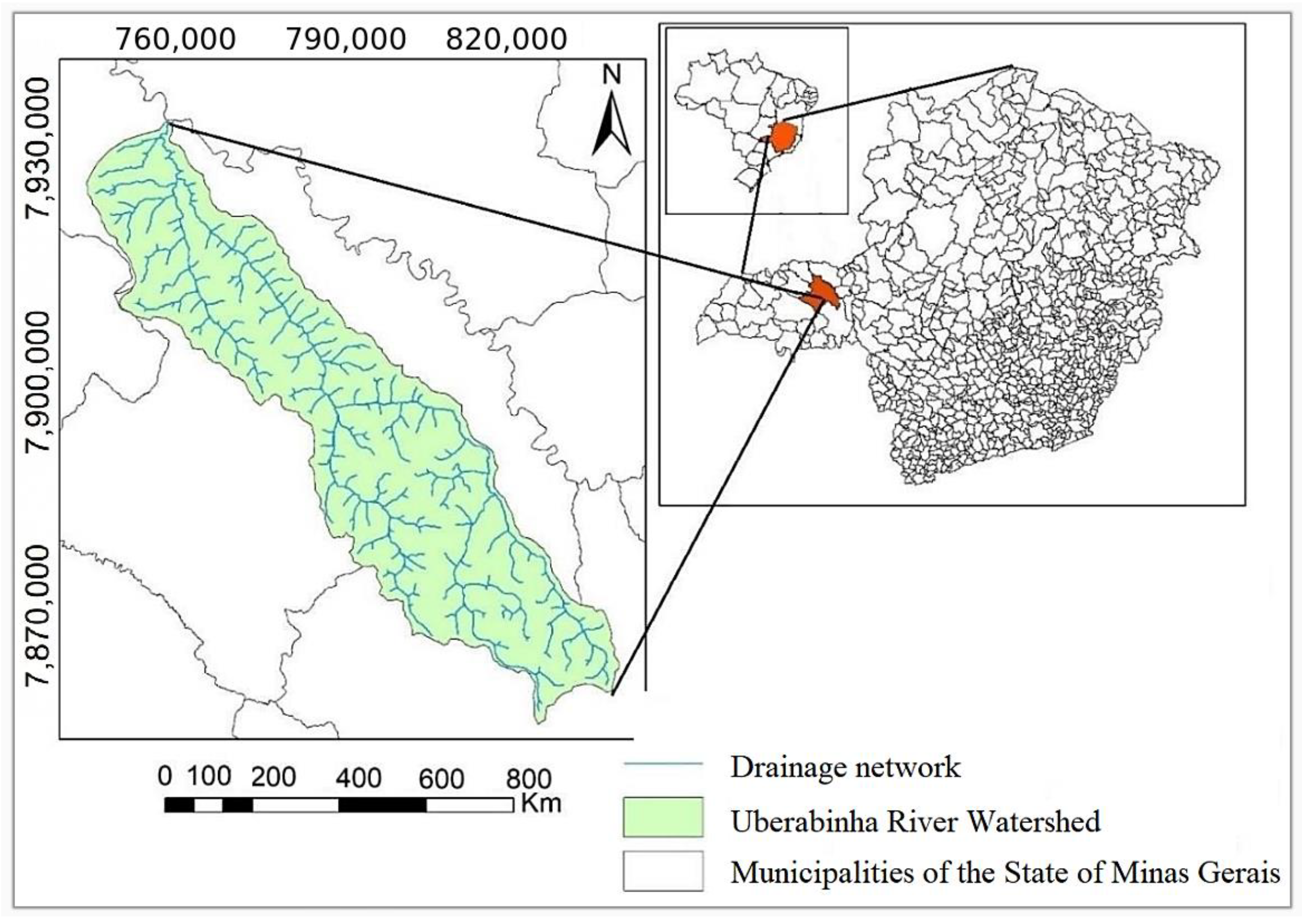
The study was conducted in the Uberabinha River Basin (URB), located in the southwestern portion of the state of Minas Gerais, Brazil, within the Triângulo Mineiro mesoregion (Figure 2). The basin covers an area of 218,926 ha and encompasses parts of the municipalities of Uberlândia, Uberaba, and Tupaciguara. The catchment is geographically bounded by latitudes 18°34′45″ S to 19°14′10″ S and longitudes 47°55′20″ W to 48°39′40″ W, positioned within the localized standard grid of UTM Zone 22S (7,913,403 m to 7,839,450 m Northing; 191,240 m to 268,110 m Easting).
The regional climate is classified as Aw (tropical savanna climate) according to the Köppen system, characterized by marked rainfall seasonality, with a well-defined rainy season during the austral summer and a dry winter, and a mean annual precipitation of approximately 1600 mm [32]. The basin is entirely located within the Cerrado biome, which comprises a mosaic of savanna, forested savanna, grassland, and wetland physiognomies [32].
The pedological distribution of the Uberabinha River Basin is characterized predominantly by Ferralsols (deep, well-drained Latosolos in the Brazilian Soil Classification System—SiBCS), which occupy the flat high-plateau areas (chapadas). Acrisols (Argisolos) and Cambisols (Cambisolos) are distributed along steeper slopes and transitional topographies, while Fluvisols (Gleisolos and Neosolos Flúvicos) are restricted to riparian zones and valley bottoms [33].

2.2. Land Use and Land Cover Data

Land use and land cover (LULC) data were obtained from the MapBiomas Collection 8 (MapBiomas Project, São Paulo, Brazil; available online: https://mapbiomas.org), which provides annual land cover maps for Brazil derived from Landsat satellite imagery with a spatial resolution of 30 m. For this study, LULC data corresponding to the years 1990, 2000, 2010, and 2020 were analyzed to assess long-term changes in land occupation patterns [34].
Original MapBiomas classes were maintained and grouped according to their hydrological relevance, including forest formations, savanna formations, pasture, agricultural crops (soybean, sugarcane, other temporary crops, and perennial crops), silviculture, wetlands, urban areas, and water bodies. Spatial processing, reclassification, and area quantification were performed using QGIS software (version 3.38, QGIS Geographic Information System, Open Source Geospatial Foundation Project; available online: https://qgis.org). Land use maps were clipped to the basin boundary, and the area occupied by each class was calculated for each analyzed year.

2.3. Hydrological and Climatic Data

Precipitation data were obtained from the HidroWeb database of the National Water and Basic Sanitation Agency (ANA), using data from two rainfall stations located within or near the basin (station codes 1848009 and 1948006) [35]. These specific stations were selected because they represent the only available hydrometeorological monitoring points in the study region that possess a continuous, long-term historical series exceeding 30 years, spanning exactly from 1990 to 2020. Annual precipitation totals were calculated continuously for every consecutive year across the entire 30-year historical series (1990 to 2020). The specific benchmark years (1990, 2000, 2010, and 2020) were then cross-examined to evaluate structural anomalies in parallel with the land use analysis. To ensure rigorous data quality and mitigate the well-known limitation of monitoring gaps within the HidroWeb database, strict entry criteria were applied to the daily time series. Years with more than 5% of missing daily records or consecutive gaps exceeding 3 days in strategic seasonal transitions were excluded from long-term trend considerations. For the selected multi-decadal framework, data completeness achieved 100% annual integrity. Consistency checks, including spatial homogeneity analysis between the two adjacent rainfall stations and visual screening for statistical outliers (values exceeding three standard deviations from the historical monthly means), were performed, confirming no artificial shifts caused by equipment changes or observational anomalies.
Streamflow data were obtained from the hydrometric station located at the mouth of the Uberabinha River (station code 60381000), which is also available through the HidroWeb platform [35]. For each analyzed year, the maximum, minimum, and mean annual flows were computed based on the continuous historical discharge records from 1990 to 2020. These indicators were verified for 100% data completeness across the multi-decadal time series, ensuring that the long-term behavior during the selected benchmark periods reflects robust statistical trends rather than isolated annual fluctuations. These indicators were selected due to their sensitivity to both climatic variability and land use changes, particularly in tropical basins.

2.4. Hydrological Indicators and Runoff Coefficient

To evaluate the hydrological sustainability of the Uberabinha River Basin, annual maximum, minimum, and mean streamflows were analyzed in conjunction with precipitation data. Additionally, the runoff coefficient was calculated for each analyzed year as the ratio between mean annual streamflow (m3/s) and total annual precipitation (mm). Although this approach yields a dimensional ratio (m3/s/mm) rather than a standard dimensionless volumetric runoff coefficient (m3/m3), it serves as a highly sensitive Catchment Efficiency Index (CEI). Because the drainage area remains constant, seasonal and multi-decadal changes in this ratio mathematically reflect shifts in the watershed’s capacity to convert rainfall into streamflow, bypassing systematic monitoring uncertainties while isolating the signal of landscape degradation.
Variations in streamflow indicators and the runoff coefficient over time were interpreted as responses to changes in land use and land cover, reflecting alterations in infiltration capacity, aquifer recharge, and baseflow maintenance. In tropical basins characterized by marked seasonality, such as the Brazilian Cerrado, annual minimum streamflow (Qmin) acts as a direct proxy for baseflow behavior and dry-season sustainability, since it systematically occurs at the end of the hydrological recession period. Therefore, rather than tracking continuous baseflow separation or multi-quantile flow duration curves (such as Q90 or Q95), evaluating the multi-decadal trend of the absolute annual minimum flow provides a reliable, data-driven indicator of aquifer depletion and loss of hydrological buffering capacity under rapid agricultural expansion.

2.5. Statistical and Trend Analysis

Descriptive statistical analyses were applied to evaluate temporal changes in precipitation and streamflow variables across the selected benchmark years (1990, 2000, 2010, and 2020). Percentage variations between 1990 and 2020 were calculated to quantify structural changes in hydrological behavior over the study period. Given that the analytical framework integrates discrete land use benchmarks with continuous hydro-climatic datasets, the statistical results are interpreted as robust indicators of multi-decadal trends. The concurrent analysis of uninterrupted annual streamflow and precipitation series allows for formal trend characterization, demonstrating that the observed structural shifts in watershed functioning are statistically associated with historical land cover transformation rather than background interannual climatic noise.

2.6. Data Processing and Limitations

All spatial analyses and map production were carried out using QGIS software (version 3.38, QGIS Geographic Information System, Open Source Geospatial Foundation Project; available online: https://qgis.org), while hydrological and statistical analyses were performed using Python software (version 3.14, Python Software Foundation, Wilmington, DE, USA; available online: https://www.python.org). The comparative design of this study is based on four benchmark years (1990, 2000, 2010, and 2020), selected to ensure temporal consistency with the land use datasets and to capture long-term structural transformations in watershed conditions.
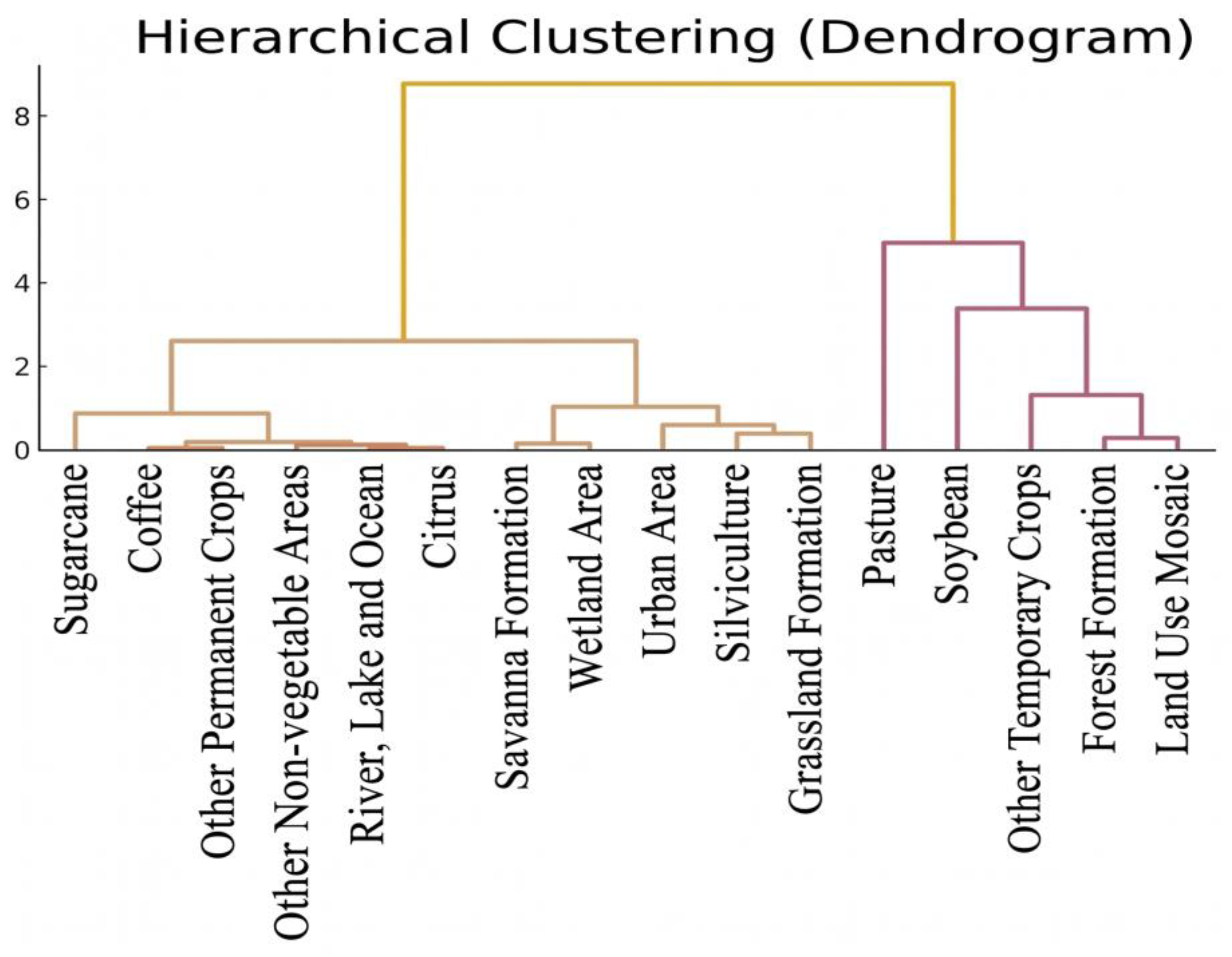
Potential uncertainties related to land cover classification accuracy, hydrometeorological data completeness, groundwater abstraction, and unmonitored water withdrawals are acknowledged as study limitations. Regarding mapping uncertainties, MapBiomas Collection 8 products carry localized classification errors; however, they maintain a high global and regional accuracy of approximately 85% to 90% for major structural classes such as agricultural land and forest formations in the Cerrado biome, making them highly reliable for catchment-scale structural assessments. To minimize user and producer inaccuracies in critical spectrally similar classes, such as pasture versus temporary crops, transition detection was cross-checked against cumulative regional trends. Regarding the multivariate analysis in Section 2.5, the hierarchical clustering displayed in the dendrogram was computed utilizing Ward’s minimum variance method based on Euclidean distances, implemented through the SciPy library (version 1.17; available online: https://scipy.org), ensuring that branches reflect statistically robust regime similarities rather than arbitrary groupings.
Potential uncertainties related to hydrometeorological data completeness are minimized by the 100% data completeness, with zero missing values, of the daily rainfall and streamflow series utilized for the target benchmark years. Nevertheless, significant socio-hydrological uncertainties stem from unmonitored surface water withdrawals and escalating groundwater abstraction within the Uberabinha River Basin. Because centralized historical monitoring of actual pumped volumes, as opposed to legally granted paper rights, is sparse, these unmonitored abstractions act as hidden drivers that accelerate baseflow degradation and reinforce the physical rainfall–runoff decoupling identified in the basin.
Furthermore, since explicit climate-LULCC decomposition models, such as Budyko-type frameworks, or calibrated rainfall–runoff numerical simulations were not deployed to isolate a counterfactual reference scenario, the reduced streamflow must be interpreted as a cumulative response. This response encompasses not only structural vegetation conversion but also its synergistic interactions with modified intra-annual rainfall distribution, localized evapotranspiration shifts, and historical water management changes over the 30-year timeframe. Nevertheless, the magnitude and coherence of directional changes across hydrological indicators provide consistent evidence of altered watershed functioning, ensuring the reliability and reproducibility of the methodological framework.

3. Results

3.1. Land Use and Land Cover Changes

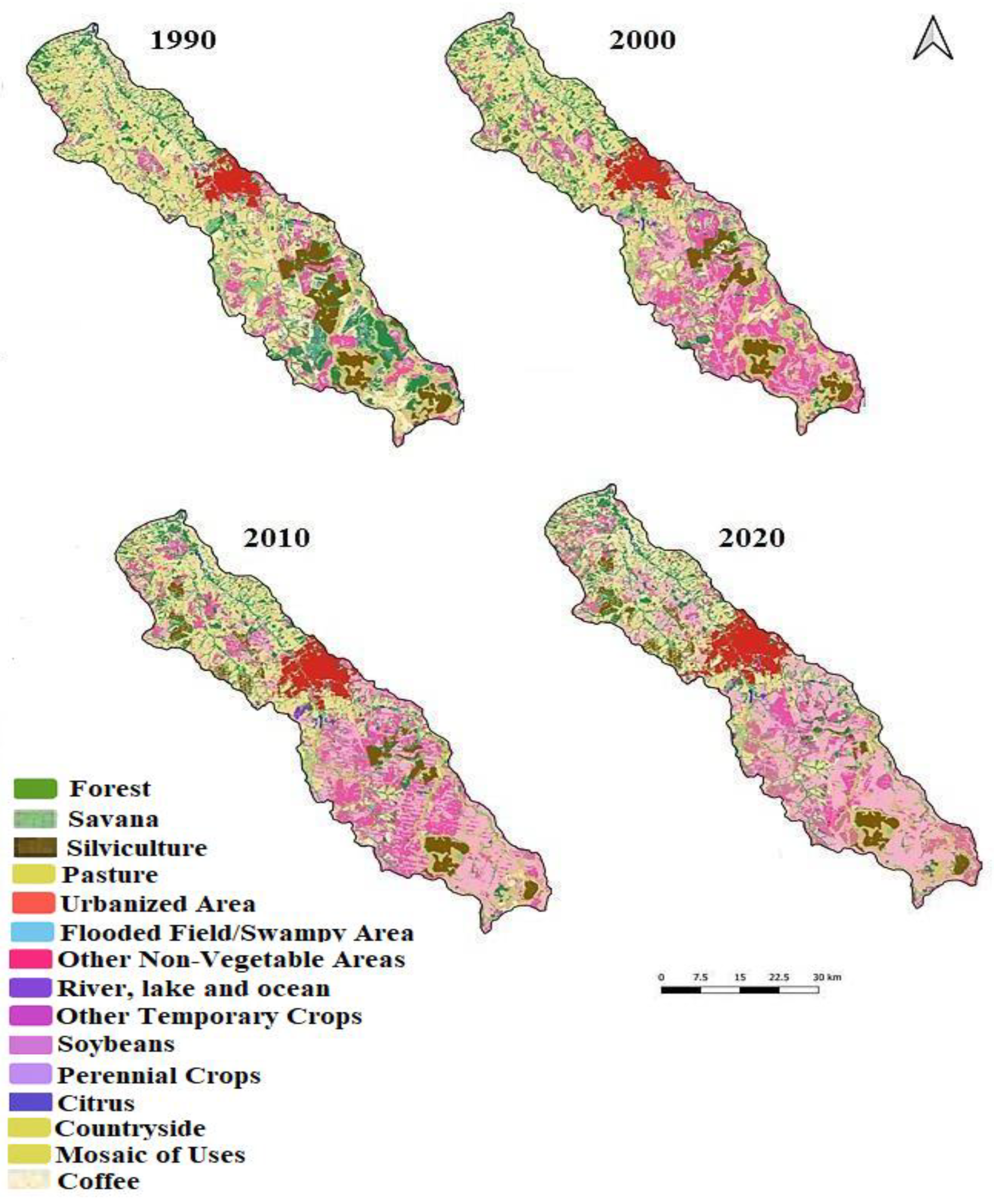
Figure 3 illustrates the spatial distribution of land use and land cover (LULC) in the Uberabinha River Basin for the years 1990, 2000, 2010, and 2020. The maps reveal pronounced changes over the analyzed period, characterized by the expansion of agricultural and urban areas and a consistent reduction in natural vegetation.
In 1990, the basin exhibited a heterogeneous landscape dominated by natural formations, particularly forest and savanna vegetation, interspersed with extensive pasturelands and land use mosaics. Agricultural areas were present but occupied relatively limited portions of the basin. By 2000, agricultural expansion became evident, especially due to the increase in soybean and sugarcane cultivation, accompanied by the growth of urban areas.
In 2010, soybean cultivation became the dominant land use across large portions of the basin, while pasture and natural vegetation continued to decline. Forestry plantations also expanded locally. By 2020, agricultural occupation reached its maximum extent, with soybean representing the most extensive land use class, followed by pasture, sugarcane, and urban areas.
Table 1 quantifies these changes and highlights a marked restructuring of the landscape. Forest and savanna formations declined continuously throughout the period, while pasture exhibited the largest absolute reduction. In contrast, soybean cultivation showed the greatest expansion, increasing from a marginal land use in 1990 to the dominant class in 2020. Urban areas also expanded steadily over the analyzed period.
From a spatial perspective, the expansion of mechanized agriculture, predominantly soybean, occurred as a sweeping consolidation across the flat plateau areas, known as chapadas, in the upper and middle sections of the basin, which are highly conducive to large-scale machinery. Concurrently, the 89.4% expansion of urban areas developed as a highly concentrated, dense core in the central-northern sector of the watershed, flanking the main channel of the Uberabinha River. Conversely, the drastic reduction in pastures and the fragmentation of savanna and forest formations were widespread across the basin, with native vegetation becoming increasingly confined to steep slopes and narrow riparian corridors along the drainage network.
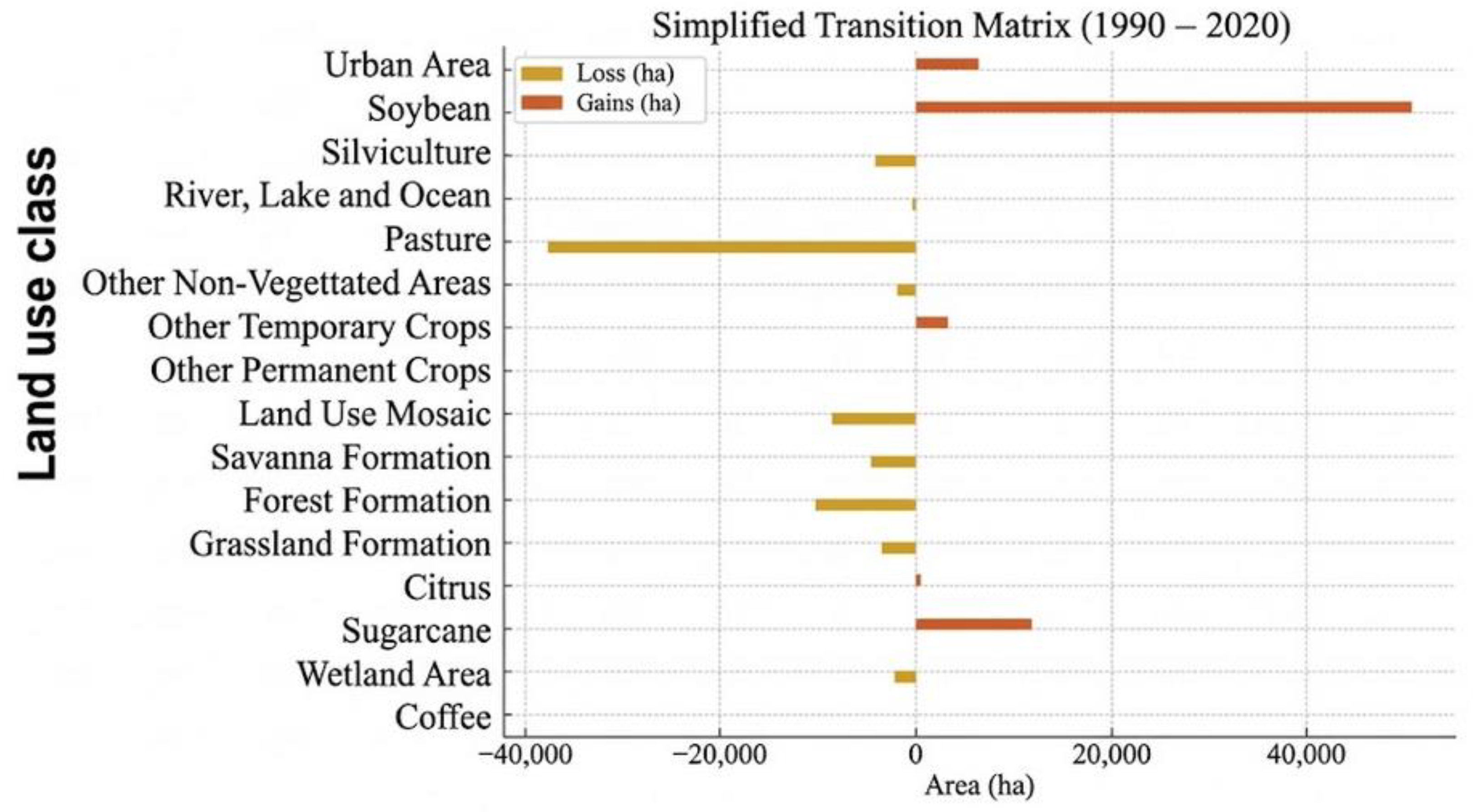
The simplified transition matrix displayed in Figure 4 quantitatively confirms an intense dynamic of landscape replacement across the multi-decadal study period, revealing that a total of 72,823 hectares, corresponding to 33.26% of the total catchment area, underwent structural land cover transitions between 1990 and 2020. The most prominent conversion trajectory observed was the massive displacement of both pasture formations, which lost 37,713 ha, and natural savanna vegetation, which lost 4,527 ha, primarily serving as the spatial matrix for the rapid expansion of mechanized agriculture dominated by sugarcane and soybean cultivation.
The spatial clustering behaviors observed in these transformations are mathematically substantiated by the dendrogram analysis displayed in Figure 5. Utilizing Ward’s hierarchical clustering method based on Euclidean distances, the multi-decadal framework demonstrates a clear segregation of time-series benchmarks. Years characterized by initial baseline conditions and high pasture-to-savanna ratios cluster at significantly larger linkage distances from recent decades. This statistical structuring confirms that the accelerated expansion of agricultural commodities forms a distinct, low-variance cluster, proving that landscape modernization has driven the watershed into a structurally altered operating regime compared to its historical behavior.

3.2. Precipitation and Streamflow Variability

Annual precipitation in the Uberabinha River Basin exhibited interannual variability over the analyzed period and did not present a consistent directional reduction, with relatively higher totals recorded in the later benchmark years (Table 2; see also Appendix A, Table A1).
Streamflow indicators showed marked interannual variability, featuring a pronounced climate-driven peak across all metrics in the year 2000, as shown in Table 2, which reflects specific antecedent moisture conditions and extreme regional events. Despite this localized fluctuation, a systematic multi-decadal divergence is observed when comparing the long-term historical endpoints. While total annual precipitation expanded by 10.76% between 1990 and 2020, the annual minimum streamflow (Qmin) and mean flow collapsed by 76.35% and 59.32%, respectively, according to Table 3 (the complete annualized dataset is provided in Appendix A, Table A1). This historical divergence in directional trends empirically indicates a systematic reduction in the catchment’s hydrological buffering capacity, highlighting that dry-season baseflow maintenance has become progressively disconnected from macroclimatic rainfall inputs.
These contrasting historical trajectories demonstrate that long-term streamflow dynamics do not scale linearly with precipitation variations across the selected benchmark years. Because precipitation signals remained relatively stable or slightly increased over the 30-year timeframe, the severe depletion of minimum and mean flows points toward a persistent loss of landscape retention capacity. This historical pattern suggests that continuous land cover transformations have modified the pathways of local water distribution, reducing subsurface storage efficiency without necessarily implying an abrupt state tipping point.

3.3. Runoff Index and Hydrological Indicators

The runoff index, calculated as the ratio between mean annual streamflow and annual precipitation, exhibited marked temporal variability across the analyzed benchmark years, as presented in Table 4. In 1990, the basin showed moderate rainfall-to-runoff conversion efficiency, which subsequently increased in 2000. However, this behavior was reversed in subsequent decades, with a substantial reduction observed in 2010 and the lowest value recorded in 2020. The runoff index observed in 2020 represents a pronounced decrease relative to both the 1990 baseline and the peak value observed in 2000, indicating a progressive loss in the basin’s capacity to convert precipitation into streamflow.
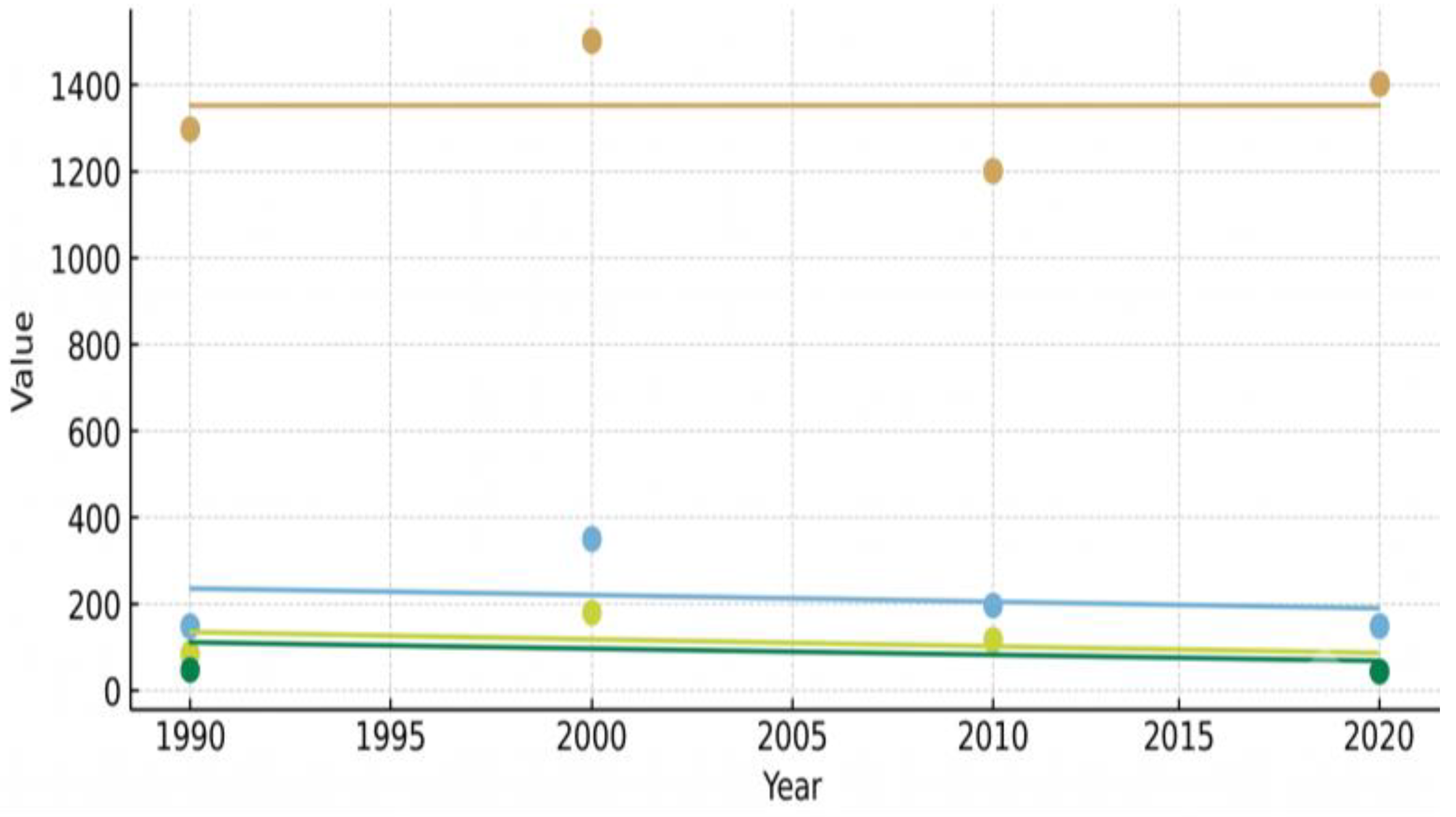
To facilitate visualization of the historical endpoints, maximum, mean, and minimum streamflow values are graphically represented across the selected benchmark years of 1990, 2000, 2010, and 2020 in Figure 6. As evidenced by Table 4, the runoff index does not follow a continuous linear decline from 1990 to 2020; instead, it exhibits a distinct non-linear, two-phase behavior, marked by an initial climate-driven increase in 2000 to 0.1081, followed by a sharp and continuous degradation through 2010 to 0.0874 and 2020 to 0.0211. Although based on discrete temporal benchmarks, this visual configuration serves as a diagnostic synthesis of the multi-decadal water balance changes. Rather than representing a statistical time-series model on its own, Figure 6 visually summarizes the cumulative directional trends and the persistent reduction in the catchment’s hydrological buffering capacity detailed in the continuous historical records.

4. Discussion

The results reveal a pronounced decoupling between precipitation and streamflow in the Uberabinha River Basin over the last three decades. Despite relatively stable annual precipitation totals, maximum, mean, and especially minimum streamflows exhibited a clear directional decline, with a marked intensification after 2000. This behavior indicates that climatic forcing alone is insufficient to explain the observed hydrological changes, suggesting that non-climatic drivers have progressively gained dominance in controlling basin hydrology. Similar rainfall–runoff decoupling patterns have been documented in river basins worldwide, particularly in regions experiencing rapid land use change and increasing human interventions [36,37].
Although the analysis is based on discrete temporal benchmarks aligned with land use datasets, the coherence between landscape transformation and hydrological indicators suggests a persistent directional trend in flow distribution rather than short-term variability. The magnitude and consistency of directional changes across maximum, mean, and minimum flows support the interpretation of structural watershed alteration associated with long-term land cover conversion.
Rainfall–runoff decoupling has been increasingly reported in global and regional studies, where alterations in vegetation cover, soil properties, and water management practices override direct climatic controls on streamflow generation [38,39]. The findings observed in the Uberabinha River Basin are consistent with this global pattern, reinforcing the notion that hydrological responses are increasingly shaped by anthropogenic pressures rather than by climate variability alone.

4.1. Declining Minimum Streamflow and Baseflow Degradation

The sharp reduction in minimum streamflow represents one of the most critical outcomes of this study. Low flows are primarily sustained by groundwater discharge and subsurface storage, making them particularly sensitive to changes in infiltration capacity, soil structure, and vegetation cover [40]. The substantial decrease observed in minimum flows, despite relatively stable precipitation totals, suggests a progressive degradation of baseflow conditions within the basin.
At both global and regional scales, land cover changes have been shown to substantially reduce groundwater recharge and baseflow contributions, even under unchanged rainfall regimes [41]. The observed weakening in the association between precipitation and minimum streamflow in this study reinforces the hypothesis that rainfall alone no longer governs dry-season flows in the Uberabinha River Basin. Instead, reduced infiltration, diminished subsurface storage, and increased groundwater abstraction likely play a central role in limiting the basin’s capacity to sustain streamflow during dry periods [37].
Regarding potential river regulation, it is necessary to contextualize the role of existing hydraulic infrastructure within the Uberabinha River Basin. The catchment contains localized water infrastructure, including municipal water supply intakes for the city of Uberlândia and small hydropower plants operating under run-of-river regimes. While these local structures alter short-term, hourly, or daily hydrograph peaks, they lack the massive active storage capacity required to induce multi-decadal, basin-wide structural streamflow depletion or to artificially drive the 76.35% drop in minimum flow observed over the 30-year period. Therefore, while local water management and operational regulations influence local hydraulic dynamics, they do not constitute the primary driver of the long-term, systemic rainfall–runoff decoupling, which remains robustly associated with widespread landscape transformation and concurrent unmonitored agricultural water demand.
These findings indicate a loss of hydrological buffering capacity, whereby the basin becomes less able to regulate streamflow variability through subsurface processes. Such behavior is characteristic of catchments experiencing reduced hydrological buffering capacity, where the capacity to absorb climatic variability without substantial functional degradation is progressively constrained [5].

4.2. Role of Land Use and Land Cover Change

Land use and land cover changes emerge as a key driver of the observed hydrological response, particularly where agricultural expansion replaces natural vegetation and pastures, leading to increased anthropic pressure and functional degradation of catchment processes [42,43,44,45,46,47,48]. Mechanized agricultural systems, particularly those associated with intensive soybean cultivation, tend to increase soil compaction and reduce soil porosity, thereby limiting infiltration and enhancing surface runoff generation during rainfall events. Over time, these processes reduce groundwater recharge and weaken baseflow contributions to streamflow [43]. Similarly, urban expansion introduces impervious surfaces that further disrupt natural hydrological pathways and reduce effective infiltration.
Comparable hydrological impacts of agricultural intensification and land conversion have been reported in multiple regions worldwide, where changes in land management practices alter catchment-scale water balances [36,42]. In the Uberabinha River Basin, the observed decline in streamflow metrics suggests that land use change has fundamentally modified the internal hydrological functioning of the basin, leading to long-term reductions in water availability.

4.3. Non-Linear Behavior of the Runoff Coefficient

The runoff coefficient exhibited a distinctly non-linear temporal pattern, characterized by an initial increase around 2000 followed by a pronounced decline by 2020. Early increases in runoff efficiency are commonly associated with land clearing and reduced surface resistance, which temporarily enhance the conversion of rainfall into streamflow [41].
However, the subsequent decline in the runoff coefficient suggests a progressive loss of the basin’s capacity to transform precipitation into streamflow. This behavior is indicative of increasing evapotranspiration demands, soil degradation, and intensified water withdrawals, particularly for irrigation [39]. As groundwater levels decline and subsurface storage is depleted, a growing fraction of precipitation is retained within the soil–plant–atmosphere continuum or consumed by human activities, rather than contributing to streamflow.
This non-linear response underscores the importance of considering long-term system evolution when assessing the hydrological impacts of land use change. Short-term increases in runoff do not necessarily translate into sustained water availability and may, in fact, precede long-term degradation of hydrological functioning [37]. Furthermore, the non-linear hydrological response observed in the basin, such as the initial increase and subsequent decline in the runoff coefficient, demonstrates that monotonic statistical trend tests would fail to capture the complex, episodic nature of these spatial anthropogenic disruptions. This reinforces the value of integrating spatial land use data with benchmark hydrological assessments.

4.4. Anthropogenic Dominance and Loss of Hydrological Resilience

The combination of declining streamflows and stable precipitation indicates that anthropogenic pressures have become the dominant control on hydrological sustainability in the Uberabinha River Basin. Similar patterns have been documented in agricultural frontiers worldwide, where land and water management practices exert a stronger influence on hydrological resilience than climatic variability [44].
From a broader perspective, the observed reduction in hydrological resilience aligns with global concerns regarding the safe operating limits of freshwater systems under increasing human pressure [45]. At the basin scale, land capability assessments in Brazilian agricultural regions have demonstrated that the expansion of agro-pastoral activities often exceeds soil and landscape suitability, intensifying environmental stress and compromising long-term hydrological buffering capacity [46]. Parallelly, similar escalations in hydrological and environmental stress, driven by anthropogenic surface modifications and land-use conversion, have been identified as dominant factors altering receiving river flow regimes and disrupting natural drainage system capacities globally [49].
These findings emphasize the need for integrated land and water management strategies that explicitly consider subsurface processes, groundwater recharge, and long-term hydrological buffering capacity. Without such measures, continued land conversion and water abstraction are likely to further compromise the hydrological sustainability of the basin [39]. Furthermore, to deepen the analysis of the regional rainfall regime and its interaction with landscape changes, future research should consider hydro-climatic features beyond total annual precipitation. Incorporating indicators such as the duration of maximum consecutive dry periods, seasonal shifts in the onset of the rainy season, and localized temperature trends will be essential to better quantify the role of atmospheric evaporative demand and climate-driven stress on long-term baseflow degradation.

5. Conclusions

Land use and land cover changes were associated with substantial alterations in the hydrological functioning of the Uberabinha River Basin between 1990 and 2020. The expansion of mechanized agriculture and urban areas, combined with the continuous reduction in native vegetation and pasturelands, coincided with marked reductions in maximum, mean, and especially minimum streamflows observed across the analyzed benchmark years.
The most critical finding is the pronounced rainfall–runoff decoupling: while annual precipitation in 2020 was 10.76% higher than in 1990, minimum streamflow declined by 76.35% during the same period. This behavior indicates that climatic forcing alone is insufficient to explain the observed hydrological changes, suggesting that anthropogenic land transformations have become the dominant control on watershed hydrology. The drastic reduction in the runoff index, which reached its historical low of 0.0211 in 2020, reflects a progressive loss of hydrological buffering capacity and a weakening of groundwater recharge and baseflow support.
Looking ahead, the patterns of declining hydrological resilience identified in this Cerrado basin serve as a warning model for other rapidly expanding tropical agricultural frontiers worldwide. Future research should focus on integrating high-resolution hydrological data with ecohydrological modeling to identify critical recharge thresholds and system tipping points. Refining land use scenarios in conjunction with actual water permit and abstraction data will be essential to support adaptive water management strategies in the face of intensifying anthropogenic pressures and global climate change.

Funding

This research received no external funding.

Data Availability Statement

The data presented in this study are available on request from the corresponding author.

Conflicts of Interest

The author declares no conflicts of interest.

Appendix A

Table A1. Consolidated operational synthesis of annual hydro-climatic boundary conditions and runoff efficiency indexes for the benchmark years.
Benchmark YearAnnual Precipitation (mm)Maximum Flow (m3/s)Minimum Flow (m3/s)Mean Flow (m3/s)Runoff Index (m3/s per mm)
19901265.75118.8333.5272.610.0574
20001547.20366.1690.13167.220.1081
20101186.50175.1276.69103.690.0874
20201401.9042.557.9329.540.0211

References

  1. Foley, J.A.; DeFries, R.; Asner, G.P.; Barford, C.; Bonan, G.B.; Carpenter, S.R.; Chapin, F.S.; Coe, M.T.; Daily, G.C.; Gibbs, H.K.; et al. Global consequences of land use. Science 2005, 309, 570–574. [Google Scholar] [CrossRef] [PubMed]
  2. DeFries, R.; Eshleman, K.N. Land-use change and hydrologic processes: A major focus for the future. Hydrol. Process. 2004, 18, 2183–2186. [Google Scholar] [CrossRef]
  3. Allan, J.D. Landscapes and riverscapes: The influence of land use on stream ecosystems. Annu. Rev. Ecol. Evol. Syst. 2004, 35, 257–284. [Google Scholar] [CrossRef]
  4. Vörösmarty, C.J.; McIntyre, P.B.; Gessner, M.O.; Dudgeon, D.; Prusevich, A.; Green, P.; Glidden, S.; Bunn, S.E.; Sullivan, C.A.; Reidy Liermann, C.; et al. Global threats to human water security and river biodiversity. Nature 2010, 467, 555–561. [Google Scholar] [CrossRef] [PubMed]
  5. Rockström, J.; Steffen, W.; Noone, K.; Persson, Å.; Chapin, F.S.; Lambin, E.F.; Lenton, T.M.; Scheffer, M.; Folke, C.; Schellnhuber, H.J.; et al. A safe operating space for humanity. Nature 2009, 461, 472–475. [Google Scholar] [CrossRef] [PubMed]
  6. Scanlon, B.R.; Jolly, I.; Sophocleous, M.; Zhang, L. Global impacts of conversions from natural to agricultural ecosystems on water resources. Water Resour. Res. 2007, 43, W03437. [Google Scholar] [CrossRef]
  7. Bosmans, J.H.C.; van Beek, L.P.H.; Sutanudjaja, E.H.; Bierkens, M.F.P. Hydrological impacts of global land cover change and human water use. Hydrol. Earth Syst. Sci. 2017, 21, 5603–5626. [Google Scholar] [CrossRef]
  8. Chawla, I.; Mujumdar, P.P. Isolating the impacts of land use and climate change on streamflow. Hydrol. Earth Syst. Sci. 2015, 19, 3633–3647. [Google Scholar] [CrossRef]
  9. Piao, S.; Friedlingstein, P.; Ciais, P.; de Noblet-Ducoudré, N.; Labat, D.; Zaehle, S. Changes in climate and land use have a larger direct impact than rising CO2 on global river runoff trends. Proc. Natl. Acad. Sci. USA 2007, 104, 15242–15247. [Google Scholar] [CrossRef] [PubMed]
  10. Costa, M.H.; Botta, A.; Cardille, J.A. Effects of large-scale changes in land cover on the discharge of the Tocantins River, Southeastern Amazonia. J. Hydrol. 2003, 283, 206–217. [Google Scholar] [CrossRef]
  11. Bruijnzeel, L.A. Hydrological functions of tropical forests. Agric. Ecosyst. Environ. 2004, 104, 185–228. [Google Scholar] [CrossRef]
  12. Hagemann, S.; Chen, C.; Clark, D.B.; Folwell, S.; Gosling, S.N.; Haddeland, I.; Hanasaki, N.; Heinke, J.; Ludwig, F.; Voss, F.; et al. Climate change impact on available water resources obtained using multiple global climate and hydrology models. Earth Syst. Dyn. 2013, 4, 129–144. [Google Scholar] [CrossRef]
  13. Zhang, Y.; Zhu, Y.; Yang, K.; Du, S.; Wang, Q.; Zhao, L.; Peng, Z.; Luo, Y. The response mechanism of urban precipitation to impervious surface expansion. J. Hydrol. Reg. Stud. 2025, 62, 102789. [Google Scholar] [CrossRef]
  14. Brauman, K.A.; Richter, B.D.; Postel, S.; Malsy, M.; Flörke, M. Water depletion: An improved metric for incorporating seasonal and dry-year water scarcity into water risk assessments. Elem. Sci. Anthr. 2016, 4, 000083. [Google Scholar] [CrossRef]
  15. Bierkens, M.F.P.; Wada, Y. Non-renewable groundwater use and groundwater depletion: A review. Environ. Res. Lett. 2019, 14, 063002. [Google Scholar] [CrossRef]
  16. Beven, K. Rainfall–Runoff Modelling: The Primer, 2nd ed.; Wiley: Hoboken, NJ, USA, 2012. [Google Scholar] [CrossRef]
  17. Rogger, M.; Agnoletti, M.; Alaoui, A.; Bathurst, J.C.; Bodner, G.; Borga, M.; Chaplot, V.; Gallart, F.; Glatzel, G.; Hall, J.; et al. Land use change impacts on floods at the catchment scale: Challenges and opportunities for future research. Water Resour. Res. 2017, 53, 5209–5219. [Google Scholar] [CrossRef] [PubMed]
  18. Yin, J.; He, F.; Xiong, Y.J.; Qiu, G.Y. Effects of land use/land cover and climate changes on surface runoff in on surface runoff in a semi-humid and semi-arid transition zone in northwest China. Hydrol. Earth Syst. Sci. 2017, 21, 183–196. [Google Scholar] [CrossRef]
  19. Destouni, G.; Verrot, L. Screening long-term variability and change of soil moisture in a changing climate. J. Hydrol. 2014, 516, 131–139. [Google Scholar] [CrossRef]
  20. Almeida, B.V.; Gouveia, R.G.L.; Mata, J.F. Sustentabilidade e expansão da cana-de-açúcar na bacia do Baixo Rio Grande/MG. Geofronter 2025, 11, e9436. [Google Scholar] [CrossRef]
  21. Davidson, E.A.; De Araújo, A.C.; Artaxo, P.; Balch, J.K.; Brown, I.F.; Bustamante, M.M.C.; Coe, M.T.; DeFries, R.S.; Keller, M.; Longo, M.; et al. The Amazon basin in transition. Nature 2012, 481, 321–328. [Google Scholar] [CrossRef] [PubMed]
  22. Wagener, T.; Sivapalan, M.; Troch, P.A.; McDonnell, J.J.; Harman, C.J.; Gupta, H.V.; Hooper, R.P.; Peters, N.E.; Wagener, P.; Wilson, J.S. The future of hydrology. Water Resour. Res. 2010, 46, W05301. [Google Scholar] [CrossRef]
  23. Haddeland, I.; Heinke, J.; Biemans, H.; Eisner, S.; Flörke, M.; Fekete, B.M.; Wada, Y.; Wisser, D.; Hanasaki, N.; Ribbe, J.; et al. Global water resources affected by human interventions. Proc. Natl. Acad. Sci. USA 2014, 111, 3251–3256. [Google Scholar] [CrossRef] [PubMed]
  24. Oki, T.; Kanae, S. Global hydrological cycles and world water resources. Science 2006, 313, 1068–1072. [Google Scholar] [CrossRef] [PubMed]
  25. Montgomery, D.R. Soil erosion and agricultural sustainability. Proc. Natl. Acad. Sci. USA 2007, 104, 13268–13272. [Google Scholar] [CrossRef] [PubMed]
  26. IPCC. Climate Change 2022: Impacts, Adaptation and Vulnerability; Cambridge University Press: Cambridge, UK, 2022. [Google Scholar] [CrossRef] [PubMed]
  27. Peña-Arancibia, J.L.; van Dijk, A.I.J.M.; Guerschman, J.P.; Mulligan, M.; Bruijnzeel, L.A.; McVicar, T.R. Detecting changes in streamflow after partial woodland clearing in two large catchments in the seasonal tropics. J. Hydrol. 2012, 416–417, 60–71. [Google Scholar] [CrossRef]
  28. Meyfroidt, P.; de Bremond, A.; Ryan, C.M.; Alexander, S.; Aramburú, C.; Barbier, E.B.; Biazin, B.; Borras, S.M., Jr.; Burgess, R.; Chaplin-Kramer, R.; et al. Ten facts about land systems for sustainability. Proc. Natl. Acad. Sci. USA 2022, 119, e2109217118. [Google Scholar] [CrossRef] [PubMed]
  29. Tucci, C.E.M. Some scientific challenges in the development of South America’s water resources. Hydrol. Sci. J. 2009, 54, 937–946. [Google Scholar] [CrossRef][Green Version]
  30. Rodrigues, E.L.; Elmiro, M.A.T.; Braga, F.A.; Jacobi, C.M.; Rossi, R.D. Impact of changes in land use in the flow of the Pará River Basin. MG. Rev. Bras. Eng. Agríc. Ambient. 2015, 19, 70–76. [Google Scholar] [CrossRef]
  31. Corrêa, T.R.; Matricardi, E.A.T.; Filoso, S.; Santos, J.A.; Scariot, A.O.; Torres, C.M.M.E.; Martorano, L.G.; Pereira, E.M. Sustainability Under Deforestation and Climate Variability in Tropical Savannas: Water Yield in the Urucuia River Basin, Brazil. Sustainability 2025, 17, 8169. [Google Scholar] [CrossRef]
  32. Martins, F.B.; Gonzaga, G.; Santos, D.F.; Reboita, M.S. Classificação climática de Köppen e de Thornthwaite para Minas Gerais: Cenário atual e projeções futuras. Rev. Bras. Climatol. 2018, 22, 129–151. [Google Scholar] [CrossRef]
  33. Gouveia, R.G.L.; Pereira, G.T.; Pissarra, T.C.T.; Martins Filho, M.V.; Silva, M.M.A.P.M.; Valle Junior, R.F. Influence of Land Use and Land Cover on Water Quality in the Uberabinha River Basin (MG), Brazil. Geonorte 2022, 13, 167–190. [Google Scholar] [CrossRef]
  34. Ribeiro, J.F.; Walter, B.M.T. Fitofisionomias do bioma Cerrado. In Cerrado: Ambiente e Flora; Sano, S.M., Almeida, S.P., Eds.; Embrapa-CPAC: Planaltina, Brazil, 1998; pp. 89–166. Available online: https://www.alice.cnptia.embrapa.br/handle/doc/554094 (accessed on 15 May 2025).
  35. Santos, H.G.; Jacomine, P.K.T.; Anjos, L.H.C.; Oliveira, V.A.; Lumbreras, J.F.; Coelho, M.R.; Almeida, J.A.; Araujo Filho, J.C.; Oliveira, J.B.; Cunha, T.J.F. Sistema Brasileiro de Classificação de Solos, 5th ed.; Embrapa: Brasília, Brazil, 2018; Available online: https://www.embrapa.br/web/solos/sibcs (accessed on 18 June 2025).
  36. MAPBIOMAS. Coleção 8 da Série Anual de Mapas de Cobertura e Uso da Terra do Brasil. Available online: https://brasil.mapbiomas.org/ (accessed on 5 April 2025).
  37. Agência Nacional de Águas e Saneamento Básico (ANA). Atlas Irrigação: Uso da Água na Agricultura Irrigada; ANA: Brasília, Brazil, 2021. Available online: https://www.ana.gov.br/atlasirrigacao/Release-Atlas-Irrigacao.pdf (accessed on 25 May 2025).
  38. Xie, Z.; Mu, X.; Gao, P.; Wu, C.; Qiu, D. Impacts of Climate and Anthropogenic Activities on Streamflow Regimes in the Beiluo River, China. Water 2021, 13, 2892. [Google Scholar] [CrossRef]
  39. Saedi, J.; Sharifi, M.R.; Saremi, A.; Babazadeh, H. Assessing the impact of climate change and human activity on streamflow in a semiarid basin using precipitation and baseflow analysis. Sci. Rep. 2022, 12, 9228. [Google Scholar] [CrossRef] [PubMed]
  40. Gordon, L.J.; Steffen, W.; Jönsson, B.F.; Folke, C.; Falkenmark, M.; Johannessen, Å. Human modification of global water vapor flows from the land surface. Proc. Natl. Acad. Sci. USA 2005, 102, 7612–7617. [Google Scholar] [CrossRef] [PubMed]
  41. Wada, Y.; van Beek, L.P.H.; Bierkens, M.F.P. Nonsustainable groundwater sustaining irrigation: A global assessment. Water Resour. Res. 2012, 48, W00L06. [Google Scholar] [CrossRef]
  42. Price, K. Effects of watershed topography, soils, land use, and climate on baseflow hydrology in humid regions: A review. Prog. Phys. Geogr. 2011, 35, 465–492. [Google Scholar] [CrossRef]
  43. Schilling, K.E.; Jha, M.K.; Zhang, Y.-K.; Gassman, P.W.; Wolter, C.F. Impact of land use and land cover change on the water balance of a large agricultural watershed: Historical effects and future directions. Water Resour. Res. 2008, 44, W00A09. [Google Scholar] [CrossRef]
  44. Gouveia, R.G.L.; Galvanin, E.A.S.; Neves, S.M.A.S. Application of the anthropic transformation index for multitemporal analysis of the Bezerro Vermelho stream basin, Tangará da Serra, MT, Brazil. Rev. Árvore 2013, 37, 1045–1054. [Google Scholar] [CrossRef]
  45. Hamza, M.A.; Anderson, W.K. Soil compaction in cropping systems: A review of the nature, causes and possible solutions. Soil Tillage Res. 2005, 82, 121–145. [Google Scholar] [CrossRef]
  46. Gerten, D.; Heck, V.; Jägermeyr, J.; Bodirsky, B.L.; Fetzer, I.; Jalava, M.; Kummu, M.; Lucht, W.; Rockström, J.; Schaphoff, S. Feeding ten billion people is possible within four terrestrial planetary boundaries. Nat. Sustain. 2020, 3, 200–208. [Google Scholar] [CrossRef]
  47. Steffen, W.; Richardson, K.; Rockström, J.; Cornell, S.E.; Fetzer, I.; Bennett, E.M.; Biggs, R. Planetary boundaries: Guiding human development on a changing planet. Science 2015, 347, 1259855. [Google Scholar] [CrossRef] [PubMed]
  48. Gouveia, R.G.L. Land use capacity for soil conservation in the Paraguay River Basin, Mato Grosso, Brazil. Geoambiente On-Line 2025, 51, 144–158. Available online: https://revistas.ufj.edu.br/geoambiente/article/view/76997 (accessed on 20 July 2025).
  49. Todeschini, S. Hydrologic and Environmental Impacts of Imperviousness in an Industrial Catchment of Northern Italy. J. Hydrol. Eng. 2016, 21, 05016013. [Google Scholar] [CrossRef]
Figure 1. Methodological framework.
Hydrology 13 00159 g001
Figure 2. Location of the Uberabinha River Basin (BHU), MG. Brazil.
Hydrology 13 00159 g002
Figure 3. Spatial dynamics of land use and land cover in the Uberabinha River Basin (MG) for the years 1990, 2000, 2010, and 2020.
Hydrology 13 00159 g003
Figure 4. Simplified land use and land cover transition matrix in the Uberabinha River Basin (MG) for the years 1990 and 2020.
Hydrology 13 00159 g004
Figure 5. Similarity of land use dynamics in the Uberabinha River Basin.
Hydrology 13 00159 g005
Figure 6. Graphical representation of maximum, minimum, and mean streamflows across benchmark years (1990, 2000, 2010, and 2020), highlighting temporal variability and directional changes in streamflow indicators. Colored solid lines represent long-term linear trends, while the corresponding colored dots indicate the specific calculated values for each benchmark year: maximum streamflows are depicted in gold/yellow, mean streamflows in blue/cyan, and minimum streamflows (baseflow) in green.
Hydrology 13 00159 g006
Table 1. Area of land use classes (hectares) in the Uberabinha River Basin for the years 1990, 2000, 2010, and 2020.
Area (ha)
2020
Area (ha)
2010
Area (ha)
2000
Area (ha)
1990
Land Use
20,93321,23122,80731,184Forest Formation
57625752639310,289Savanna Formation
963811,64611,32613,775Silviculture
7344651758039470Wetland Area
13,94713,42414,04017,320Grassland Formation
34,53548,80668,77372,248Pasture
11,82567621Sugarcane
23,19217,53616,40631,687Land Use Mosaic
13,42311,16493227087Urban Area
8157759162697Other Non-Vegetated Areas
607701683926Rivers, Lakes, and Ocean
54,16239,26519,2163426Soybean
21,76040,60442,54418,446Other Temporary Crops
7727725Coffee
907802623364Citrus
218,926218,926218,926218,926Total
Table 2. Annual precipitation (mm), maximum flow (m3/s), minimum flow (m3/s), and mean flow (m3/s) for the years 1990, 2000, 2010, and 2020 in the Uberabinha River Basin (BHU).
Mean Flow (m3/s)Minimum Flow (m3/s)Maximum Flow (m3/s)Precipitation (mm)Year
72.6133.52118.831265.751990
167.2290.13366.161547.22000
103.6976.69175.121186.52010
29.547.9342.551401.92020
Table 3. Percentage change in annual precipitation and maximum, minimum, and mean flows in the Uberabinha River Basin (MG) between 1990 and 2020.
Variation (%)Variable
10.76Precipitation (mm)
−64.20Maximum Flow (m3/s)
−76.35Minimum Flow (m3/s)
−59.32Mean Flow (m3/s)
Table 4. Presents the runoff index values, calculated as the ratio between mean annual flow and annual precipitation.
Runoff Index (m3/s per mm)Year
0.05741990
0.10812000
0.08742010
0.02112020
Disclaimer/Publisher’s Note: The statements, opinions and data contained in all publications are solely those of the individual author(s) and contributor(s) and not of MDPI and/or the editor(s). MDPI and/or the editor(s) disclaim responsibility for any injury to people or property resulting from any ideas, methods, instructions or products referred to in the content.