Article

Modelling of Intense Rainfall-Induced Flash Flood Inundation Using Delft3D FM

by
Aysha Akter
* and
Md. Abdur Rahaman Fahim
Department of Civil Engineering, Chittagong University of Engineering & Technology (CUET), Chittagong 4349, Bangladesh
*
Author to whom correspondence should be addressed.
Hydrology 2026, 13(1), 7; https://doi.org/10.3390/hydrology13010007 (registering DOI)
Submission received: 13 November 2025 / Revised: 12 December 2025 / Accepted: 15 December 2025 / Published: 23 December 2025
(This article belongs to the Section Hydrological and Hydrodynamic Processes and Modelling)

Abstract

Flash floods are among the most destructive hazards in northeastern Bangladesh, particularly in Sylhet district, where intense rainfall from the Meghalaya hills generates rapid inundation of low-lying areas. This study applies the Delft3D Flexible Mesh (FM) Suite to simulate flash flood inundation in the Surma River catchment and assess its potential for hazard mapping. Hydrological inputs were obtained from Bangladesh Water Development Board (BWDB) stations, combined with bathymetric surveys and a 10 m resolution DEM derived from remote sensing data. Model calibration and validation were performed using observed discharge and water level data at SW267 for the years 2019–2020 and verified for flood events in 2012, 2016, and 2017. The model achieved strong agreement with observed flows (R2 > 0.9, NSE = 0.75–0.93), and the simulated inundation extent corresponded well with Sentinel-1A satellite-derived flood maps. Validation indicated that Delft3D FM can reasonably capture flash flood propagation and floodplain inundation patterns, including frequently affected areas, e.g., Sylhet Uposhohor. The results demonstrate the value of integrating hydrodynamic modeling with satellite-based validation for improved flood risk management. Findings highlight the potential of Delft3D FM to support early warning, urban planning, and disaster preparedness in flash flood-prone regions of Bangladesh.

1. Introduction

Flash floods are among the most destructive hydro-meteorological hazards in northeastern Bangladesh, particularly in the Surma River catchment of Sylhet. The region’s proximity to the Meghalaya foothills exposes it to intense, short-duration rainfall events, which generate rapid inflows into the low-lying haor wetlands. These floods develop suddenly, causing abrupt rises in water levels and leading to extensive inundation that damages agriculture, settlements, transport networks, and urban infrastructure [1,2,3]. The catastrophic 2022 flash floods in Sylhet underscored the vulnerability of the region and revealed critical shortcomings in flood forecasting and warning systems [4] which often rely on sparse hydrological data, one-dimensional (1D) routing models, and inadequate spatial representation of inundation. Several local studies have attempted to analyze flash floods and river flooding in northeastern Bangladesh, including flash flood forecasting of the Manu River system in the northeast region [2,5,6]. Decision support tools based on statistics or an artificial neural network (ANN) show improve forecasted boundary conditions [6]. During 2008, flood forecasting was carried out for four cross-border catchments: the Jadukata river, the Khowai river, the Manu river, and the Barak river catchments using MIKE11 and SWAT. Performance of the model developed based on MIKE 11 is better and it was found that the basin lag time is shorter than a day [5]. A flash flood forecasted in the northeast region of Bangladesh with the lead time of 2 days has been developed using the MIKE 11 and MIKE BASIN software, but the forecasted flood data were not sufficient [7]. Flash floods have been modeled both hydrologically and hydraulically around the world [3,8,9]. Apart from this national activity, few latest research on flash floods around Bangladesh have considered hydrological models viz. application of the HEC-HMS to simulate rainfall–runoff response in the Haor basin [10], while Akter [11] examined rainfall variability in the Surma–Kushiyara system and flood risk in the Feni–Muhuri–Selonia river basin [12]. However, BWDB [13] reported on the limitations of operational forecasting during the 2022 Sylhet floods. Recently, the hydrological modeling of the flash flood in Sylhet was carried out using the HEC-HMS [1] and found better performance to feature the event-based flood rather than continuous flood modeling due to the lack of data. To overcome observed data scarcity, remote sensing and GIS-based techniques are often performed to assess inundation risk in flood-prone areas [12,14,15,16]. These efforts have advanced understanding of regional hydrology but remain constrained by reliance on lumped or semi-distributed models, limited validation datasets, and insufficient capacity to represent spatial inundation dynamics. Studies around the world demonstrate that two-dimensional (2D) hydrodynamic models, viz. Delft3D and its flexible mesh (FM) version, can simulate flooding processes with high spatial fidelity [3,8,9,17,18]. In Bangladesh, applications of Delft3D FM have been concentrated on coastal flooding, tidal dynamics, and storm surges [19,20,21,22] with little extension to inland flash flood contexts. Moreover, local studies have rarely integrated hydrodynamic simulations with spatial validation using remote sensing, despite the growing availability of Sentinel-1 SAR flood maps.
This study addresses these gaps by applying Delft3D FM Suite to simulate flash flood inundation in the Surma River catchment of Sylhet district. Specifically, the model is calibrated with hydrological data, validated against Sentinel-1A satellite-derived flood maps, and used to assess inundation extent and depth during major flood events. To the best of our knowledge, no prior published work has applied Delft3D FM for inland flash flood simulation in the Sylhet region. Previous studies have primarily employed one-dimensional (1D) or semi-distributed hydrological models such as MIKE11 [7,13] and HEC-HMS [1]. Therefore, this study represents one of the first applications of the Delft3D Flexible Mesh hydrodynamic model for event-based inland flash flood modeling in northeastern Bangladesh.
The novelty lies in integrating a flexible mesh 2D hydrodynamic model with radar-based remote sensing validation, providing a spatially explicit approach that has not previously been used in Bangladesh for flash flood contexts. By bridging hydrograph-based studies with high-resolution inundation modeling, this research advances methodological practice and offers practical insights for flood risk assessment, early warning, and climate-resilient urban planning in one of the most vulnerable flash flood-prone regions of Bangladesh.


2. Materials and Methods

2.1. Study Area

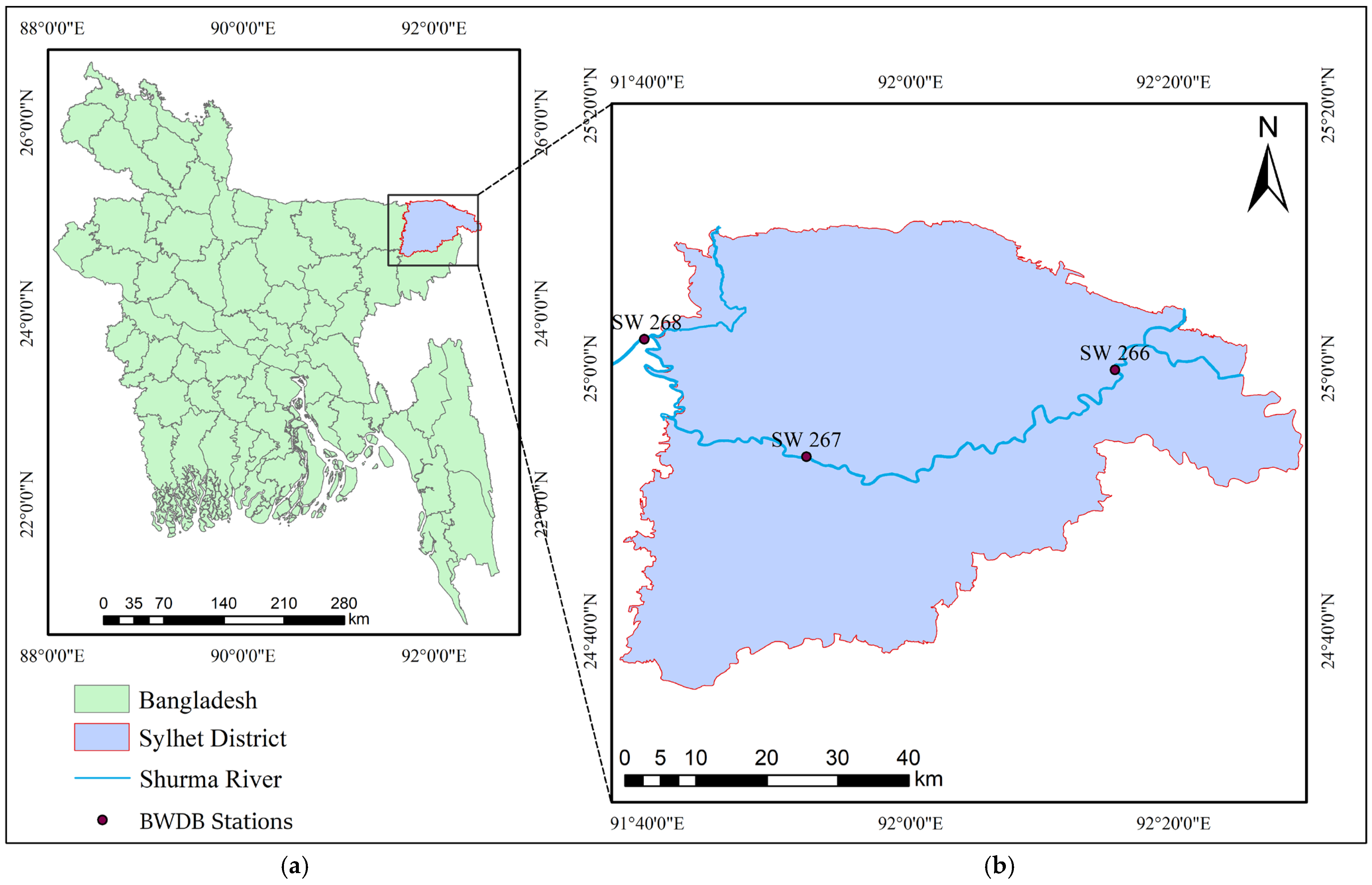
The study area is the upstream catchment of the Surma River, located in the northeastern part of Bangladesh, within the Sylhet district. Sylhet lies between latitudes 23°58′ and 25°12′, and longitudes 90°56′ and 92°30′ (Figure 1). Two major rivers—Surma and Kushiyara—flow through the district, along with several others viz. the Sari–Gowain, Piyan, and Dhala rivers. Most of these rivers originate from the steep hilly regions of Meghalaya, India, which experience intense rainfall. The annual rainfall in Sylhet and its upstream areas exceeds 5000 mm, often resulting in high river discharge that leads to flash floods in the downstream regions.
In this study, the Surma River has been selected for analysis, as it is the only major river that flows directly through Sylhet city. Two hydrological stations of the Bangladesh Water Development Board (BWDB), namely SW266 and SW267, were used to conduct a hydrodynamic analysis of flash flood events. In recent years, flash floods have become a recurring natural disaster in Sylhet district, affecting not only rural areas but also urban zones. One such flood-prone area within the city is the Sylhet Uposhohor region, which frequently experiences flash flooding.

2.2. Data Collection

2.2.1. Observed Data

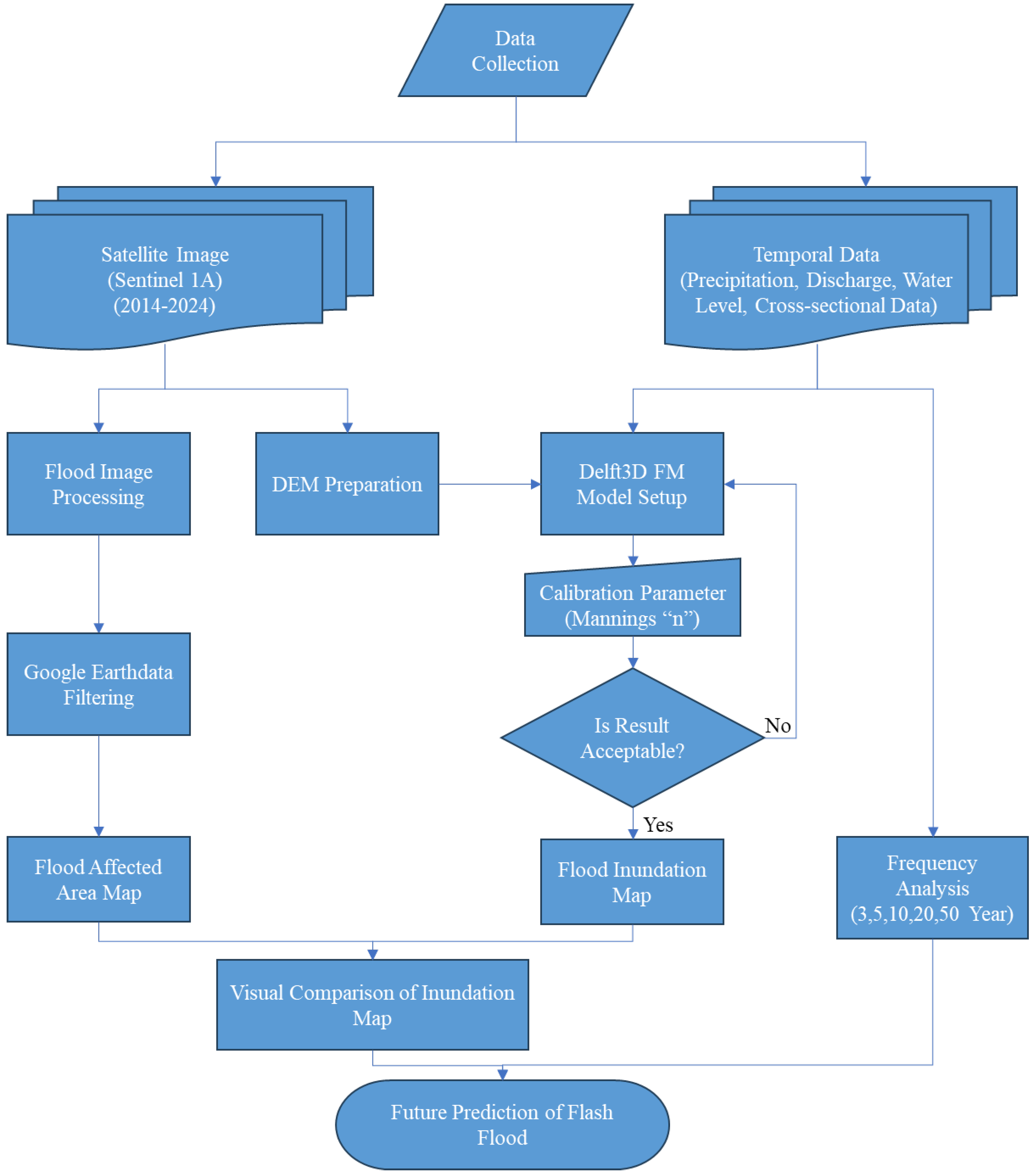
Cross-sectional data of the Surma River were collected from the BWDB and these data were processed using the geographic information system (GIS) to develop the river’s bathymetry (riverbed elevation profile) (Figure 2). Additionally, discharge and water level records were obtained from three BWDB hydrological stations (SW266, SW267, and SW268), during 2000 to 2024 (Table 1). However, discharge data for Station SW266 were only available from 2000 to 2021 (Table 1), limiting complete temporal coverage.

2.2.2. Satellite and Remote Sensing Data

For terrain representation, a digital elevation model (DEM) was obtained from the Shuttle Radar Topography Mission (SRTM) 30 m resolution; [23,24]. The SRTM DEM has been widely applied in hydrological and flood modeling studies across Bangladesh and is considered reliable for catchment-scale applications. To improve spatial detail for local floodplain analysis, the DEM was resampled to 10 m resolution using bilinear interpolation. This terrain dataset was then merged with BWDB cross-sectional surveys to prepare the bathymetric input for the Delft3D FM model. Copernicus Sentinel-1A Synthetic Aperture Radar (SAR) imagery was used for flood extent mapping and model validation [25]. Unlike optical sensors, SAR actively transmits microwave pulses and measures the returned signal, enabling the detection of inundated areas even under cloudy or rainy conditions. Floodwaters, which present smooth surfaces, generate low backscatter and thus appear as dark regions in SAR imagery. In this study, pre-flood and post-flood Sentinel-1A images were processed in the Google Earth Engine (GEE) platform to delineate inundated areas, which were then compared with Delft3D FM-simulated flood extents for spatial validation.

2.2.3. Validation (Satellite-Based)

In addition to visual comparison, quantitative spatial accuracy was assessed using confusion matrix statistics. Flood extents simulated by Delft3D FM were overlaid with Sentinel-1A SAR flood maps at 10 m resolution. The number of correctly predicted flooded cells (hits) missed flooded cells, and false alarms were computed. From these, F-index (Equation (1)), critical success index (CSI) (Equation (2)), and kappa (Equation (3)) statistics were derived to quantify spatial agreement.
F = 2 H 2 H + F + M
C S I = H H + F + M
κ = p 0 p e 1 p e
where Hit (H) is the correctly predicted flooded cells; Miss (M) is the observed flooded cells that are not predicted; false alarm (F) represents predicted flooded cells that are not observed. Correct Negative (CN) represents non-flooded cells correctly predicted (optional if domain is large). p0 = observed overall agreement = (H + CN)/(H + F + M + CN), and pe = expected agreement by chance.

2.3. Flood Mapping Using Satellite Data

To validate model-simulated flood inundation, SAR imagery was processed to generate flood maps. This imagery is particularly suitable for flood monitoring because it can penetrate cloud cover and is unaffected by illumination conditions, which is critical during the monsoon in Bangladesh. Floodwaters, which present smooth reflective surfaces, produce low backscatter and thus appear as dark features in SAR images. The images were first radiometrically calibrated and filtered to reduce speckle noise. A threshold-based water detection algorithm was then applied to distinguish water from non-water surfaces. Flood extent maps were produced by differencing pre-flood (baseline) and post-flood images, thereby isolating newly inundated areas. The derived flood extents were compared with Delft3D FM model outputs for selected events (2012, 2016, 2017, 2019 and 2020). This comparison provided an independent spatial validation of the model and improved confidence in its ability to capture flood dynamics in Sylhet district.

2.4. Model Setup

The hydrodynamic modeling of the Surma River was conducted using Delft3D FM Suite (version 2023.02), configured as a 2D model. The model solves the shallow water equations [17,18] under Boussinesq assumptions [17] and was successfully implemented to simulate flow dynamics between the BWDB surface water stations SW266 and SW267.

2.4.1. Grid Generation

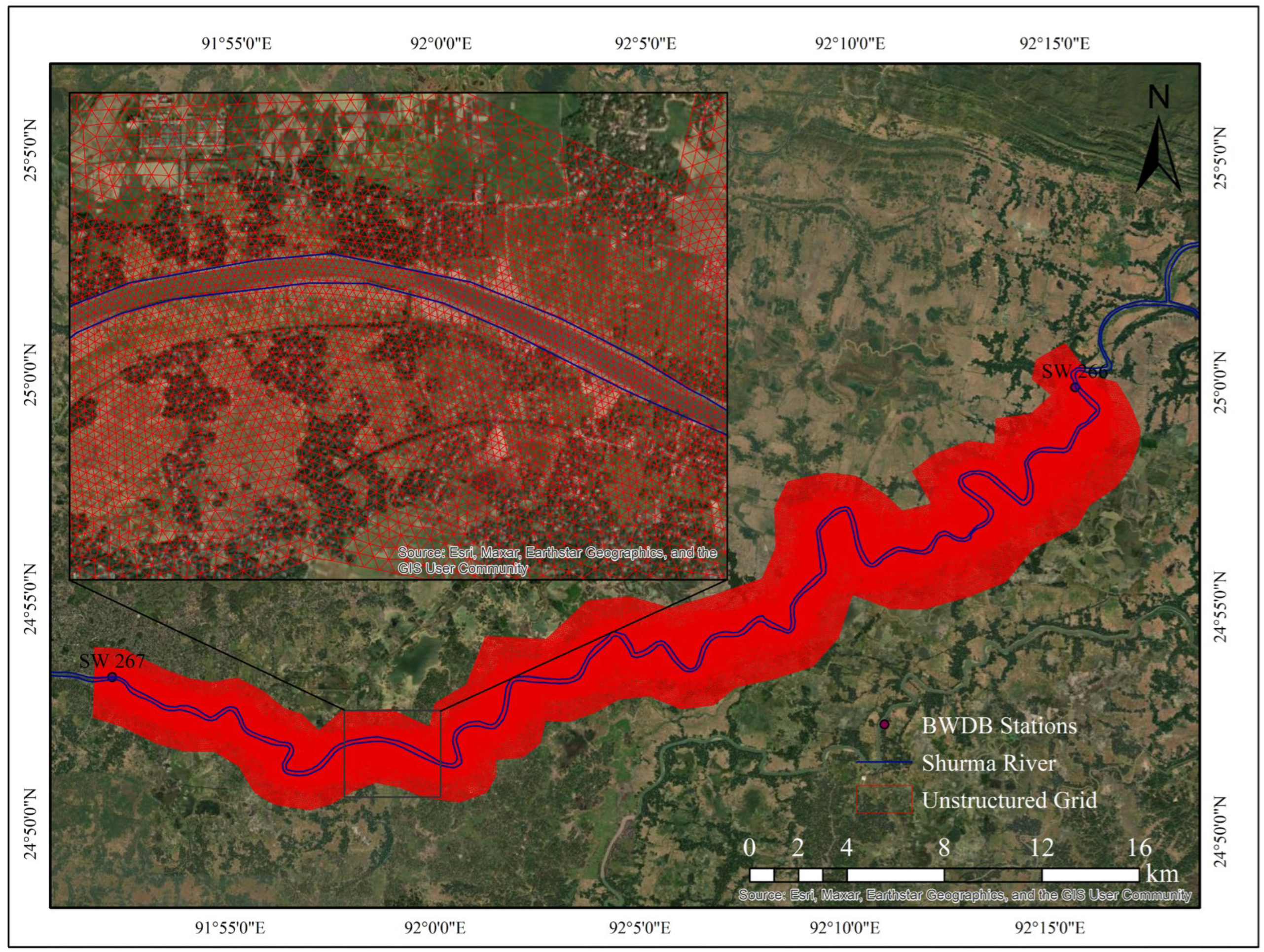
Unlike the classic Delft3D Suite, which supports only structured grids, Delft3D FM allows for both structured and unstructured grids. In this study, an unstructured grid was adopted using a cell-centered finite volume method [18]. To generate the computational mesh, a land boundary file of the Surma River was first created. A triangular mesh was selected, with side lengths ranging from 20 m in the river domain to 100 m in peripheral areas (Table 1, Figure 3). Finer resolution (shorter side length) was applied within the river channel, and the grid resolution gradually increased with distance from the river to optimize computational efficiency and accuracy.
The mesh resolution (20 m in the river and 100 m in peripheral areas) was selected based on a balance between numerical accuracy and computational efficiency. Preliminary sensitivity checks indicated that using a finer mesh resulted in substantially longer computational time and memory use, while producing negligible changes in water level dynamics and inundation extent. Therefore, this resolution was deemed appropriate for stable model performance and efficient simulation of the study domain.

2.4.2. Bathymetry and Roughness

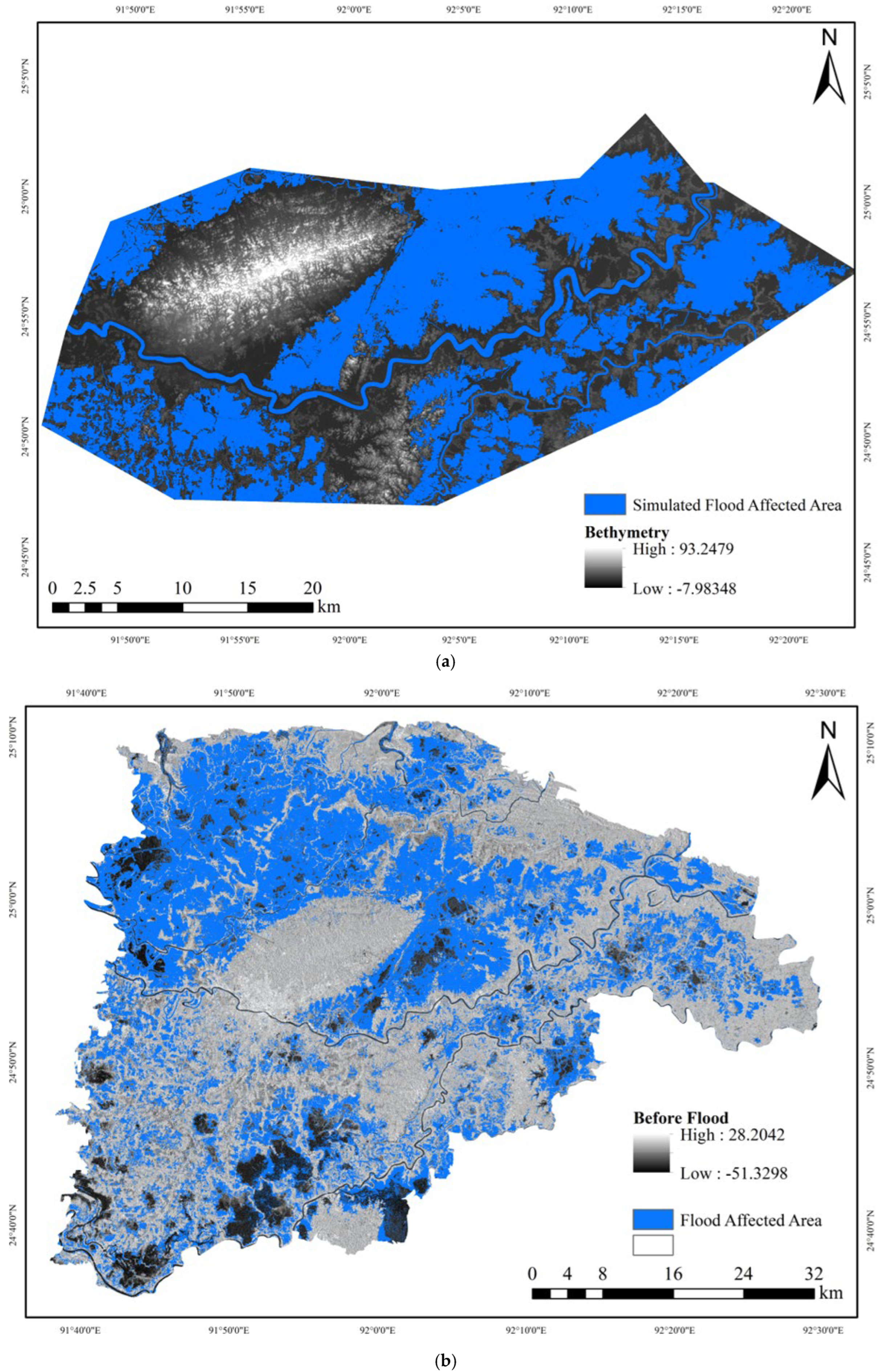
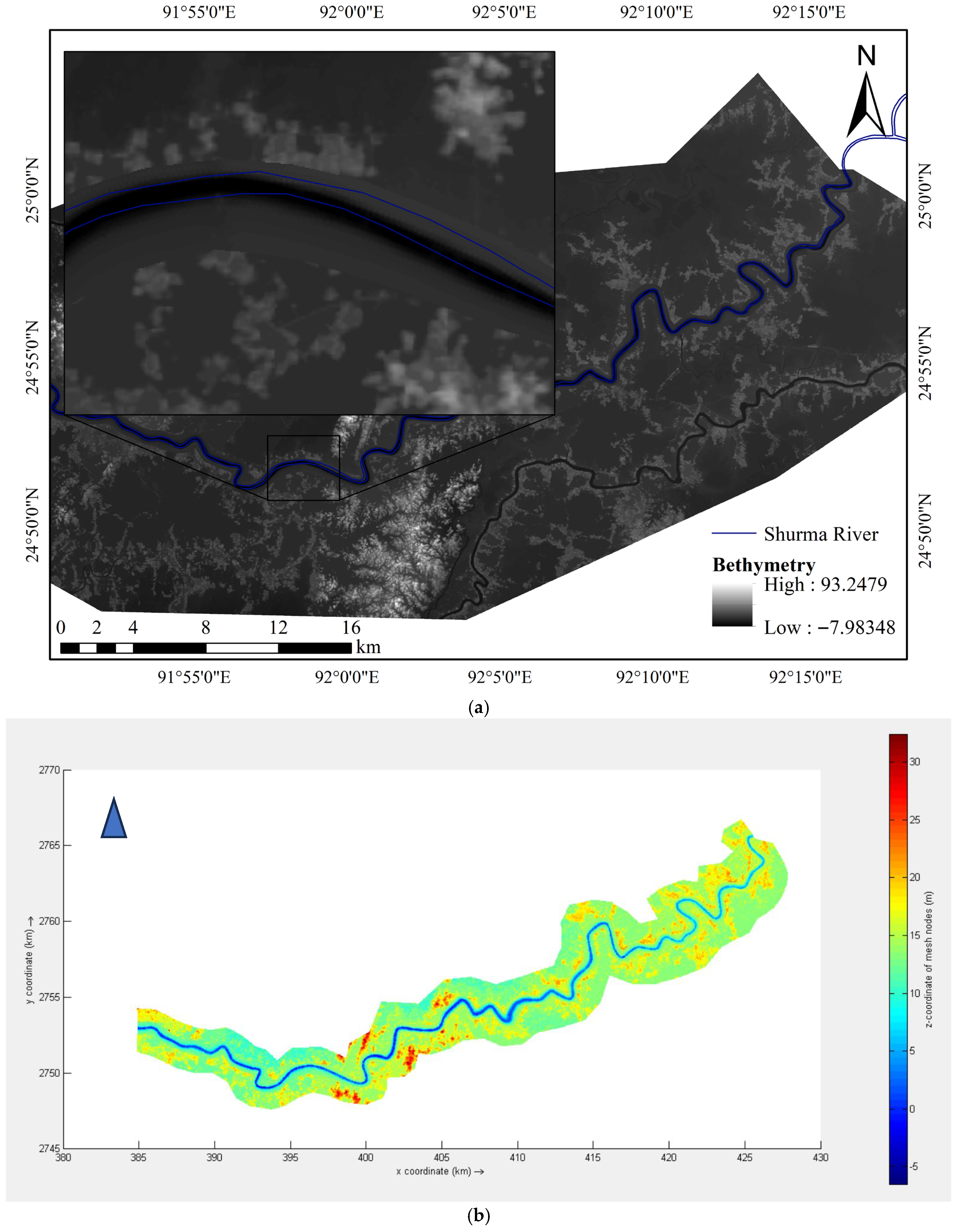
Bathymetry was developed by combining BWDB cross-sectional surveys with a resampled SRTM DEM (10 m). These two datasets were merged using ArcGIS to produce a comprehensive bathymetric raster (Figure 4a), which was then imported into Delft3D FM and interpolated across the computational mesh to define the model bed-level layer (Figure 4b). While this approach allowed for continuous riverbed representation, the wide spacing between secondary cross-sections (>1 km) dataset and reliance on DEM interpolation introduced uncertainty in fine-scale floodplain topography. In particular, the resampled 10 m SRTM DEM may not fully capture narrow embankments, drainage channels, and low-relief levees that control local flood storage and connectivity. This introduces potential uncertainty in representing floodplain depressions and small-scale barriers. Incorporating ultra-high-resolution DEMs would also require very fine mesh resolution (<10 m), significantly increasing computational cost with minimal improvement in model calibration. Therefore, the resampled 10 m SRTM DEM was used as the best available dataset, and the associated uncertainties have been acknowledged as a key limitation of this study. Future work should incorporate more detailed DEMs as they become available. Although cross-sections were spatially sparse, additional validation using Google Earth elevation profiles and BWDB topographic benchmarks ensured consistent vertical referencing (±0.5 m). Future work should incorporate higher-resolution DEMs such as ALOS (12.5 m) or LiDAR, together with more densely spaced surveyed cross-sections, to reduce uncertainty in floodplain microtopography and embankment geometry. The unstructured triangular mesh was refined to a resolution of ~20 m in the river channel and gradually coarsened to ~100 m in peripheral floodplain areas. This approach ensured adequate representation of hydraulic variability within the river while optimizing computational efficiency in less critical zones. Previous applications of Delft3D FM for medium-sized rivers have adopted similar ranges of grid resolution (Delft3D, 2024). Sensitivity tests indicated that finer resolutions (<10 m) offered negligible improvement in calibration performance but substantially increased run time.
Manning’s n values were used as the primary calibration parameter, with channel roughness optimized around 0.024–0.026 and higher values (0.028–0.030) for floodplains and urban areas. This variation reflects realistic hydraulic contrasts between open channel flow and rougher floodplain terrain. Calibration against observed hydrographs at BWDB Station SW267 confirmed that this range of n values produced optimal model performance, with further deviation resulting in lower NSE and higher RMSE values.

2.4.3. Boundary Condition Setup

Both discharge and water level data were available at daily intervals from BWDB Stations SW266 and SW267. In the upstream section, at Kanaighat, where the BWDB Station SW266 is located, observed discharge data from this station were used as the upstream boundary condition for the model. And at the Sylhet Sadar, where SW267 is located, water level data from this station was used as downstream boundary condition. While daily data provide reliable long-term hydrological records, they may underrepresent the rapid fluctuations associated with flash flood events, which often evolve on hourly or sub-hourly timescales. In the absence of higher temporal resolution data, daily series were adopted as boundary conditions. To partially mitigate this limitation, calibration focused on capturing peak discharge and water level magnitudes rather than fine-scale hydrograph variability. Although daily boundary conditions limit representation of flash flood peaks, hourly hydrographs could be derived in the future through temporal disaggregation or rainfall–runoff modeling (e.g., HEC-HMS) using observed hourly rainfall to better capture event-based flood dynamics. Preliminary sensitivity checks indicated that the timing of flood peaks might shift by 3–6 h when disaggregated inputs are introduced, suggesting potential underestimation of peak lag and attenuation in the current configuration.

2.4.4. Model Configuration Parameters

The hydrodynamic simulation was carried out using Delft3D-FM Suite version 2023.02, applying a 2D depth-averaged flexible mesh solver. A semi-implicit finite-volume scheme was used with a variable time step (Δt = 1–5 s), maintaining a Courant–Friedrichs–Lewy (CFL) number ≤ 0.8 to ensure numerical stability. Bed friction was represented using Manning’s roughness formulation, with coefficients calibrated between 0.024 and 0.026 for the main channel and 0.028 and 0.030 for floodplains and urban areas. Wetting and drying thresholds were defined using a minimum depth of 0.05 m for wetting and 0.01 m for drying, allowing realistic floodplain inundation and recession. Boundary conditions were adopted as per Section 2.4.3.
A spin-up period of 2 days was applied prior to each event simulation to achieve dynamic equilibrium in flow and storage before the flood onset. These parameters align with previous validated applications of Delft3D-FM for regional hydrodynamic modeling (Delft3D, 2024).
The Delft3D-FM model was forced exclusively with observed discharge and water level data at the upstream and downstream boundaries. Rainfall–runoff processes were not included. Therefore, the simulated inundation extent reflects boundary-driven riverine flooding rather than pluvial components.
A summary of all datasets, model boundary conditions, terrain characteristics, mesh configuration, and key hydrodynamic parameters used in this study is provided in Table 1 to enhance clarity and reproducibility.

2.5. Sensitivity Analysis Approach

A one-at-a-time (OAT) sensitivity analysis was conducted to assess the influence of key parameters on model performance. Manning’s ‘n’ and mesh resolution were varied within realistic ranges while keeping other parameters constant. Channel n was tested between 0.020 and 0.028, floodplain n was tested between 0.024 and 0.032, and channel mesh size was tested between 10 and 50 m (floodplain 50–150 m). Each parameter was perturbed incrementally, and model performance was evaluated using NSE, R2, RMSE, and PBIAS against observed hydrographs at SW267. This approach identifies the relative sensitivity of model outputs to individual parameters.

2.6. Frequency Analysis

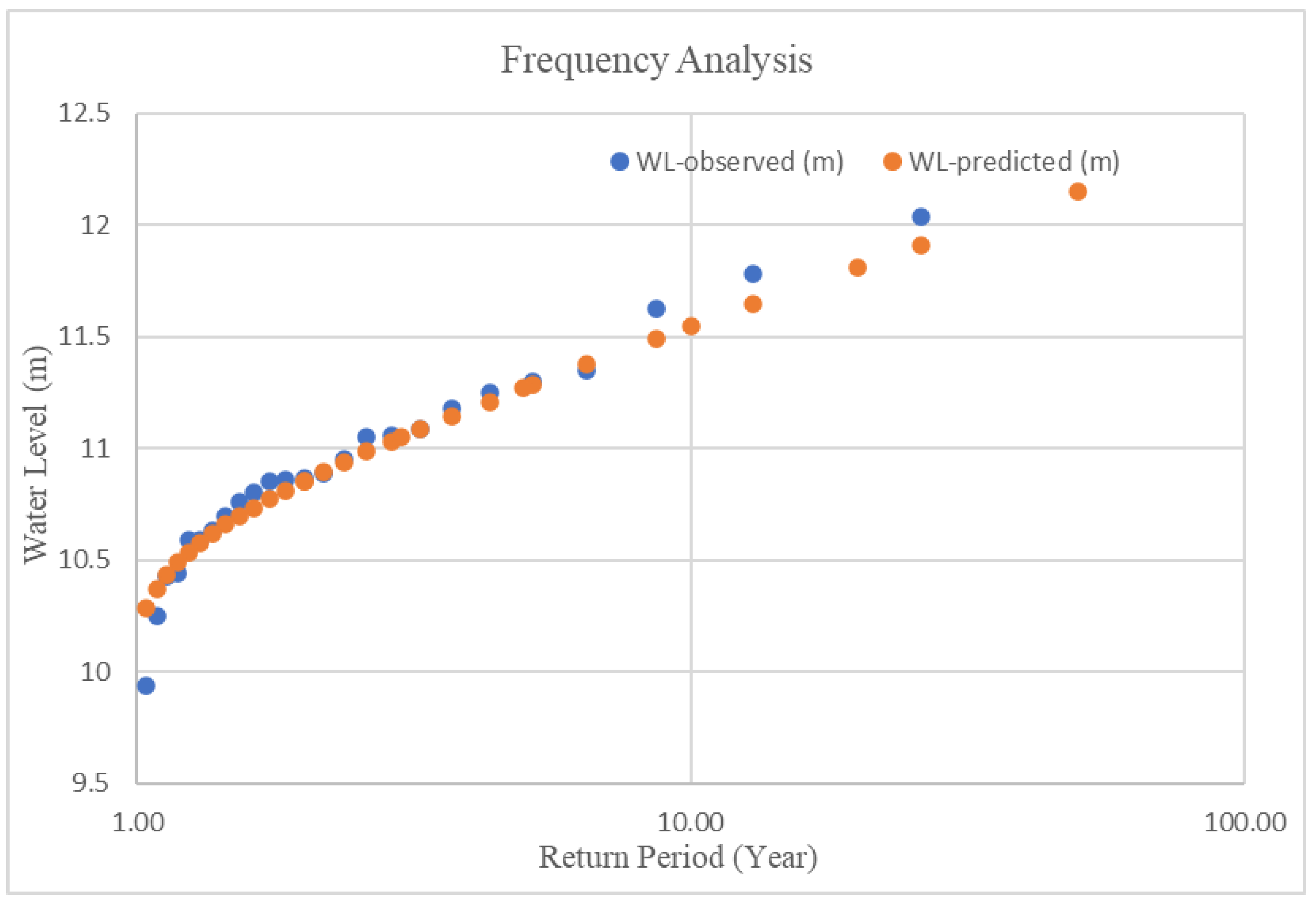
Based on observed data obtained from the BWDB, a frequency analysis was conducted using the generalized extreme value (GEV). This statistical approach enables the estimation of the likelihood and potential magnitude of future flash flood events. The analysis was carried out at the SW267 BWDB surface water station, incorporating both discharge and water level records. Using these data, return periods of 2, 3, 5, 10, 20, and 50 years were calculated to assess the expected occurrence and intensity of flash floods (Table 2). These discharges were then applied as upstream boundary conditions at Station SW266 (Kanaighat), with corresponding water level–frequency values used as downstream boundaries at Station SW267 (Sylhet Sadar) (Figure 5). This allowed the Delft3D FM model to simulate inundation extents for extreme flood scenarios of varying return periods.
A total of 25 years of water level data and 21 years of discharge data were available for the extreme value analysis. To avoid overstretching the statistical inference beyond the observed time span, we limited the return period estimation to 2–50-year events. Using 100- or 200-year return periods would introduce considerable extrapolation uncertainty because such return periods far exceed the observational record length. The GEV distribution was selected for flood frequency analysis because it combines the Gumbel, Fréchet, and Weibull distributions into a single flexible family. This allows the model to represent a wider range of hydrological extremes. For comparison, the Gumbel distribution was also tested, and the results are provided in the Supplementary Materials.

3. Results

3.1. Model Calibration and Validation

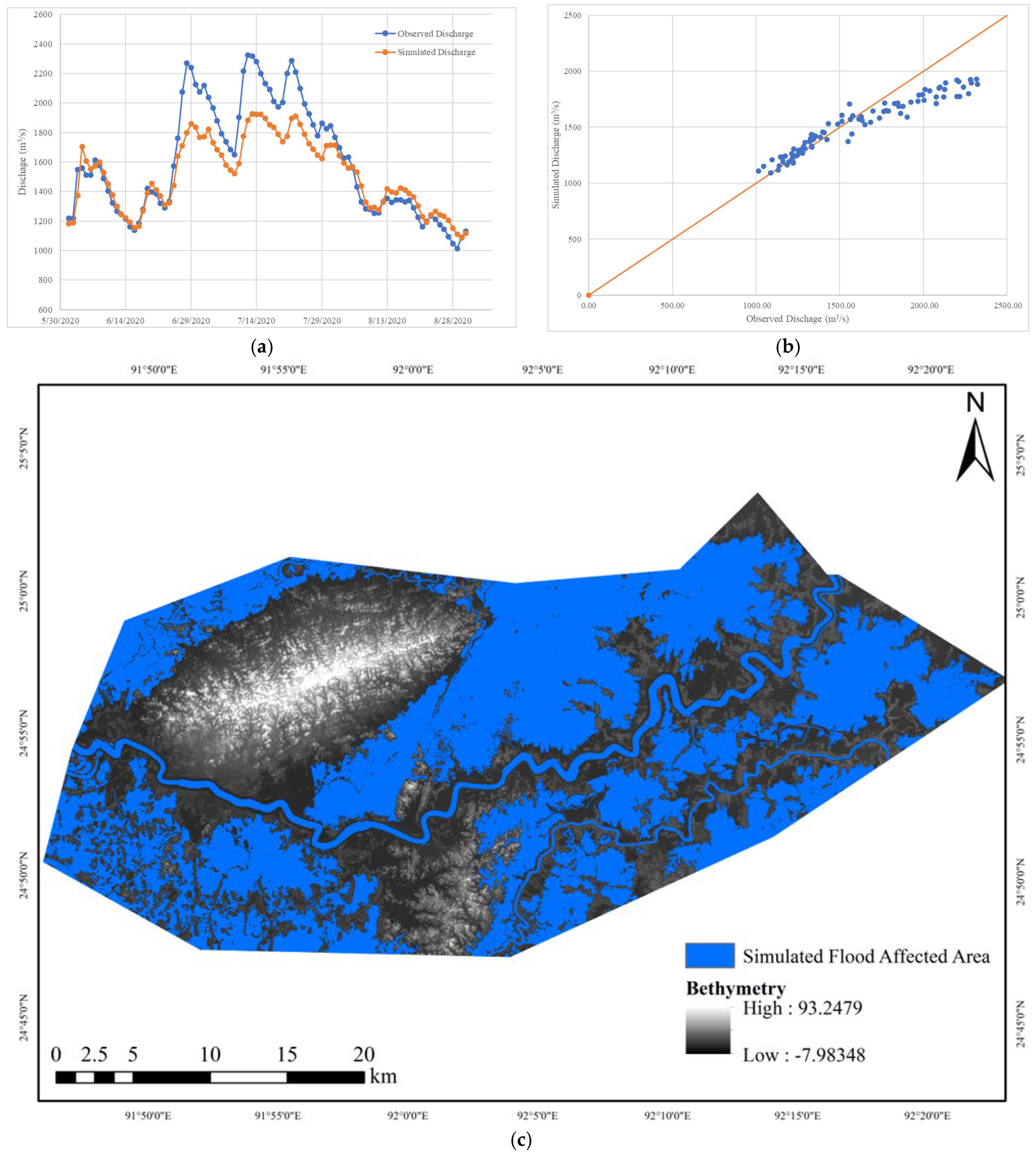
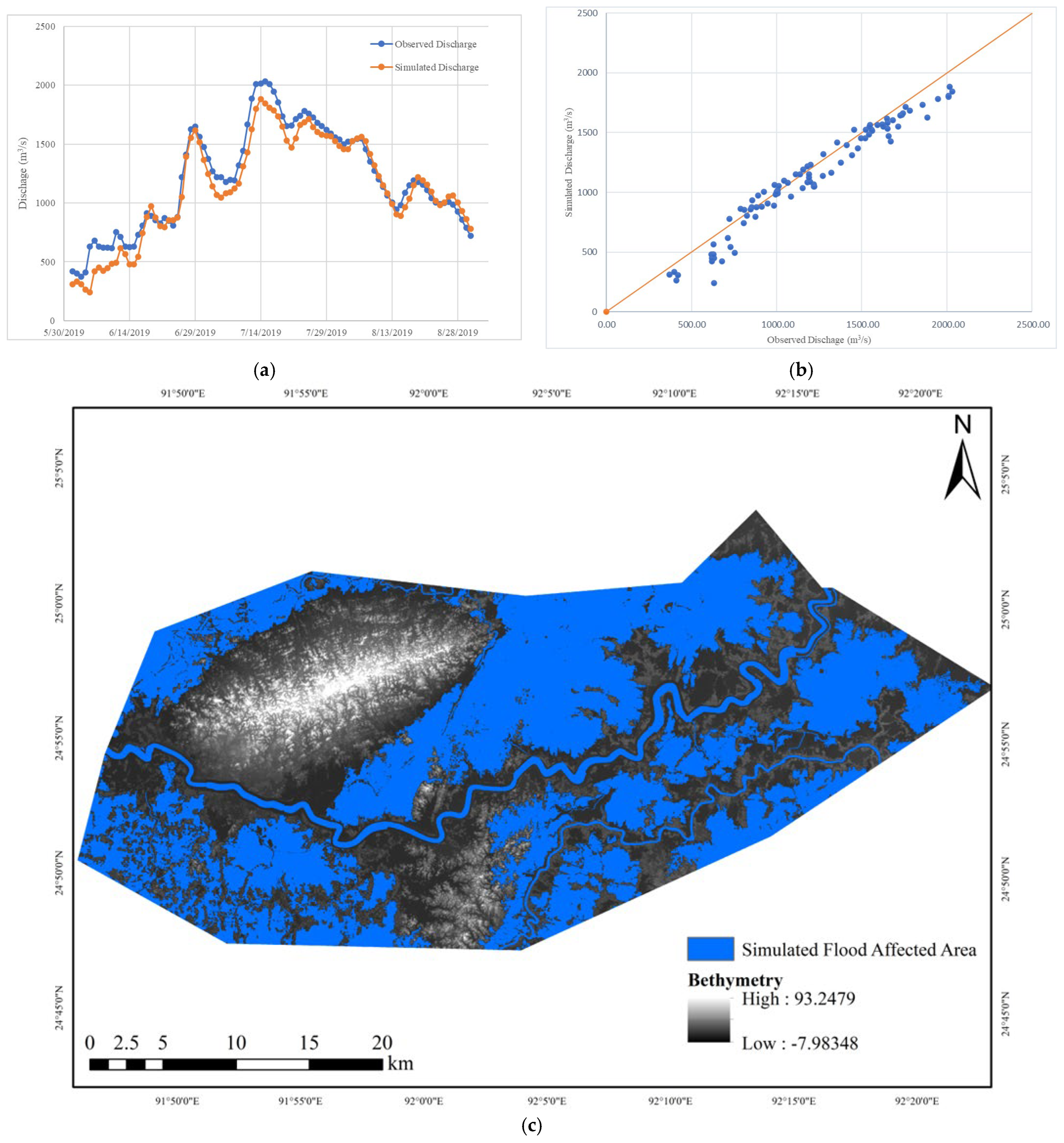
For this study, calibration was performed for 2019–2020 using upstream discharge (SW266) and downstream water level (SW267) (Figure 6a). Although BWDB Station SW268 was initially considered for validation, its use was determined to be inappropriate because the Dahuka River distributary lies between SW267 and SW268. This distributary has no upstream or downstream monitoring points, making it impossible to accurately transfer boundary conditions. Consequently, SW268 was excluded from model calibration and validation, and SW267 was used as the reference station. The optimized Manning’s n values produced strong agreement with observed hydrographs (R2 > 0.92, NSE = 0.77–0.93, PBIAS within ±6%) (Figure 6b–d). The model reasonably mimics both the timing and magnitude of peak discharges, though slight underestimation occurred during the falling limb, reflecting limitations in floodplain storage representation, i.e., flash flood prediction. The inundation maps shown in Figure 6, Figure 7 and Figure 8 correspond to event-based simulations using the 2020 peak water level, not to a 50-year return-period scenario. Notably, calibration performance was higher in 2020 than in 2019, reflecting more reliable inflow data and smoother hydrograph shapes (Figure 7a–d). However, minor underestimation during low-flow recession periods suggests that the model’s floodplain parameterization was less effective in representing storage and drainage processes.
During the calibration period at the downstream of the model (SW267), the R2 (>0.9) indicates a strong linear relationship between observed and simulated discharges (Table 3). The NSE values (0.769 and 0.925) confirm good to very good model performance. RSR values remain below 0.5, indicating acceptable residual variance, while PBIAS values, both below ±10%, suggest minimal systematic error (Table 3). Overall, the model showed excellent agreement with observed data, validating its applicability for simulating flash floods in the Surma River system.
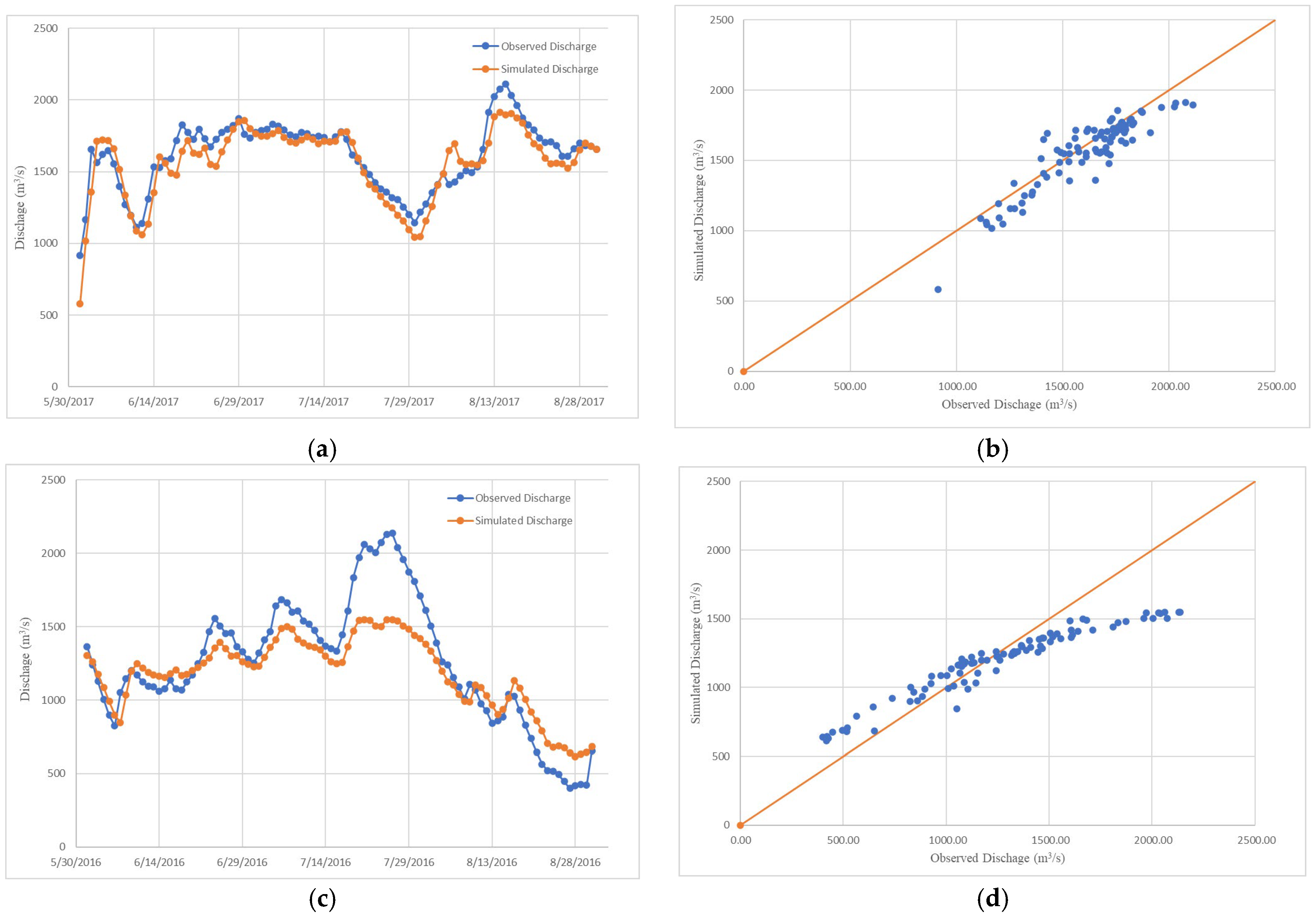
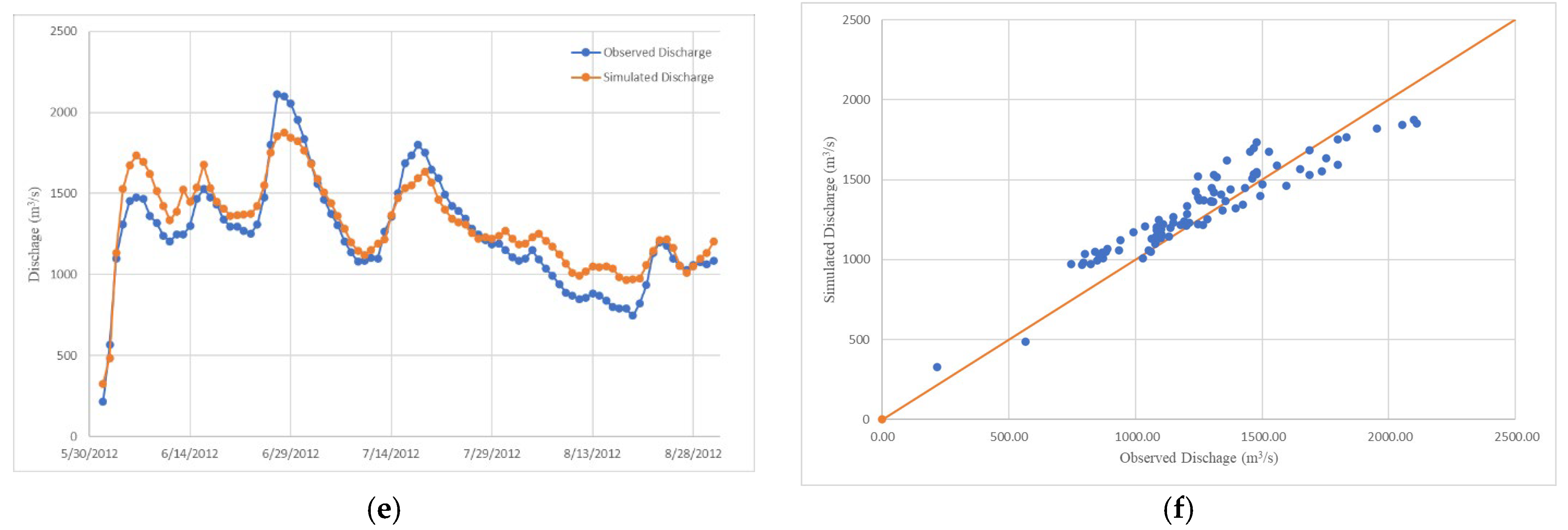
Validation for historical events (2012, 2016, 2017) showed slightly reduced performance (NSE = 0.75–0.84), which can be attributed to three factors (Figure 8): (i) daily boundary condition data smoothing short-duration flood pulses, (ii) DEM limitations in representing embankments and small depressions, and (iii) greater land-use heterogeneity during those years. Despite these challenges, the model consistently reproduced flood peaks within acceptable error margins, demonstrating its robustness for flash flood simulation in the Surma catchment.

3.2. Flood Inundation Simulation

The calibrated Delft3D FM model was used to simulate flood inundation under boundary conditions. The simulation captured the spatial extent of flood propagation along the river corridor and adjacent floodplains. Figure 7, Figure 8 and Figure 9 illustrate the model-simulated inundation maps for the highest water levels during the flood season. The inundation extent closely corresponds with known flood-prone areas, including the Sylhet Uposhohor region, which is frequently affected during flash floods. The model was able to capture localized ponding in low-lying areas and the lateral spread of water over the floodplain, reflecting realistic hydrodynamic behavior.

3.3. Satellite-Based Validation

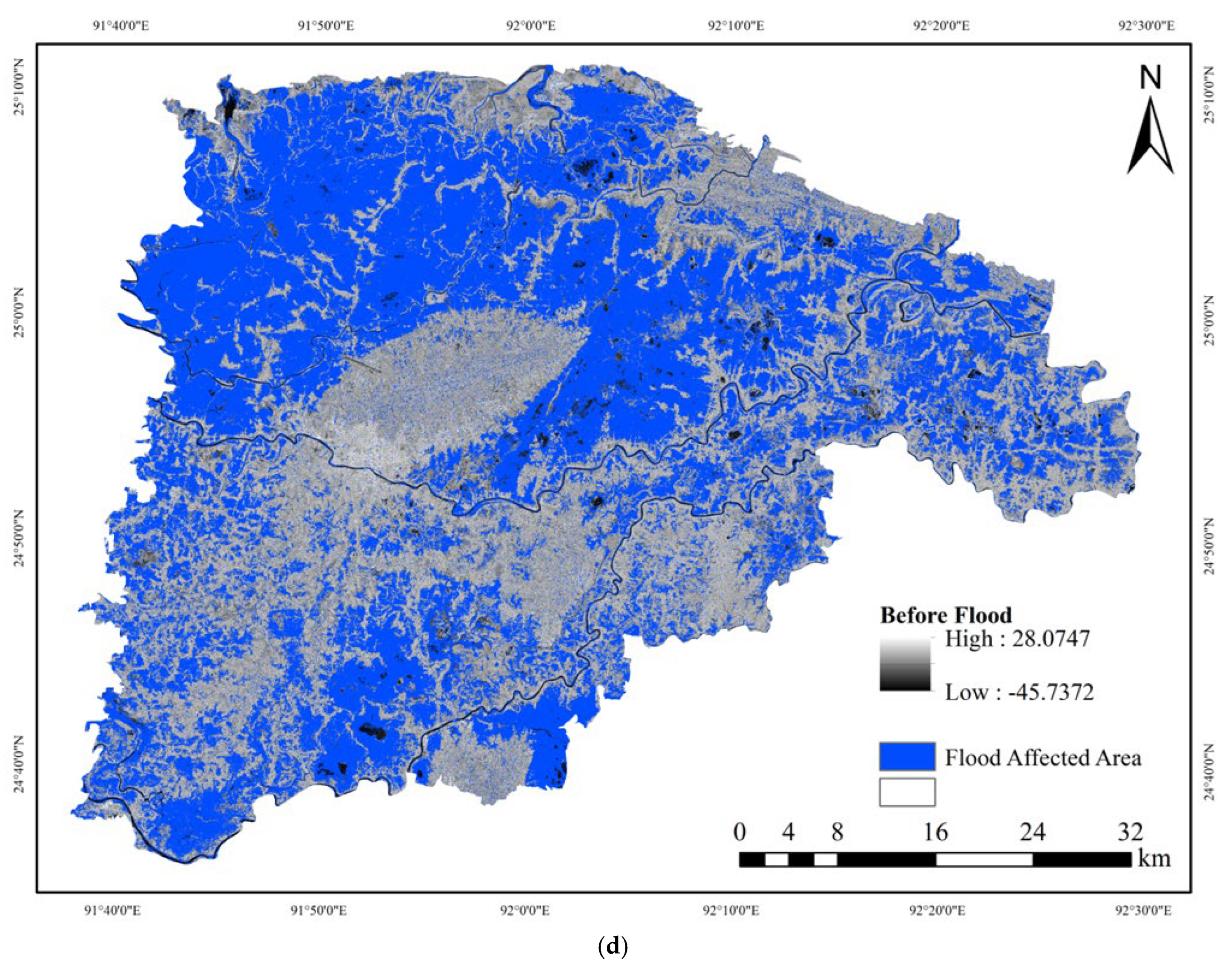
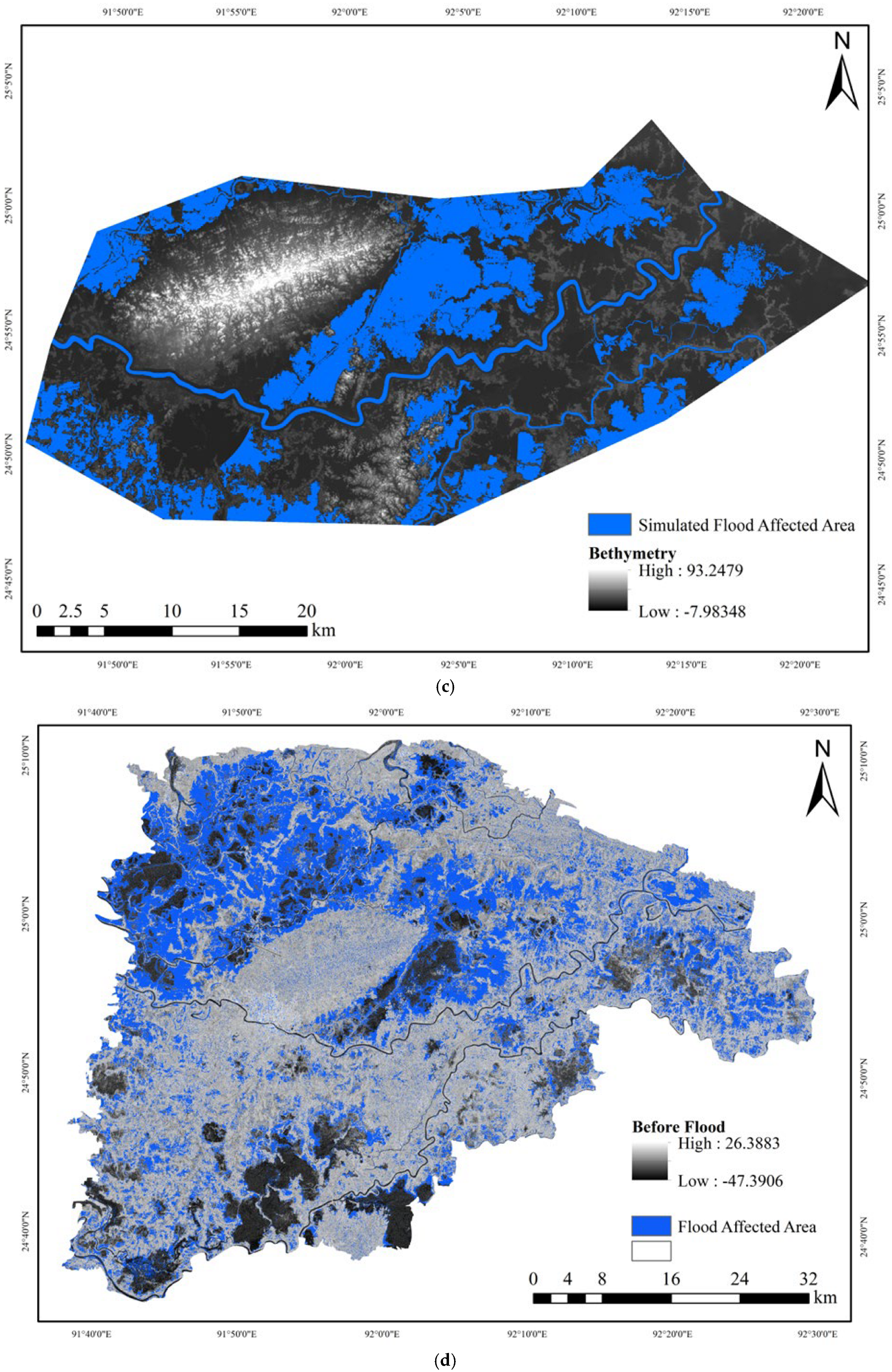
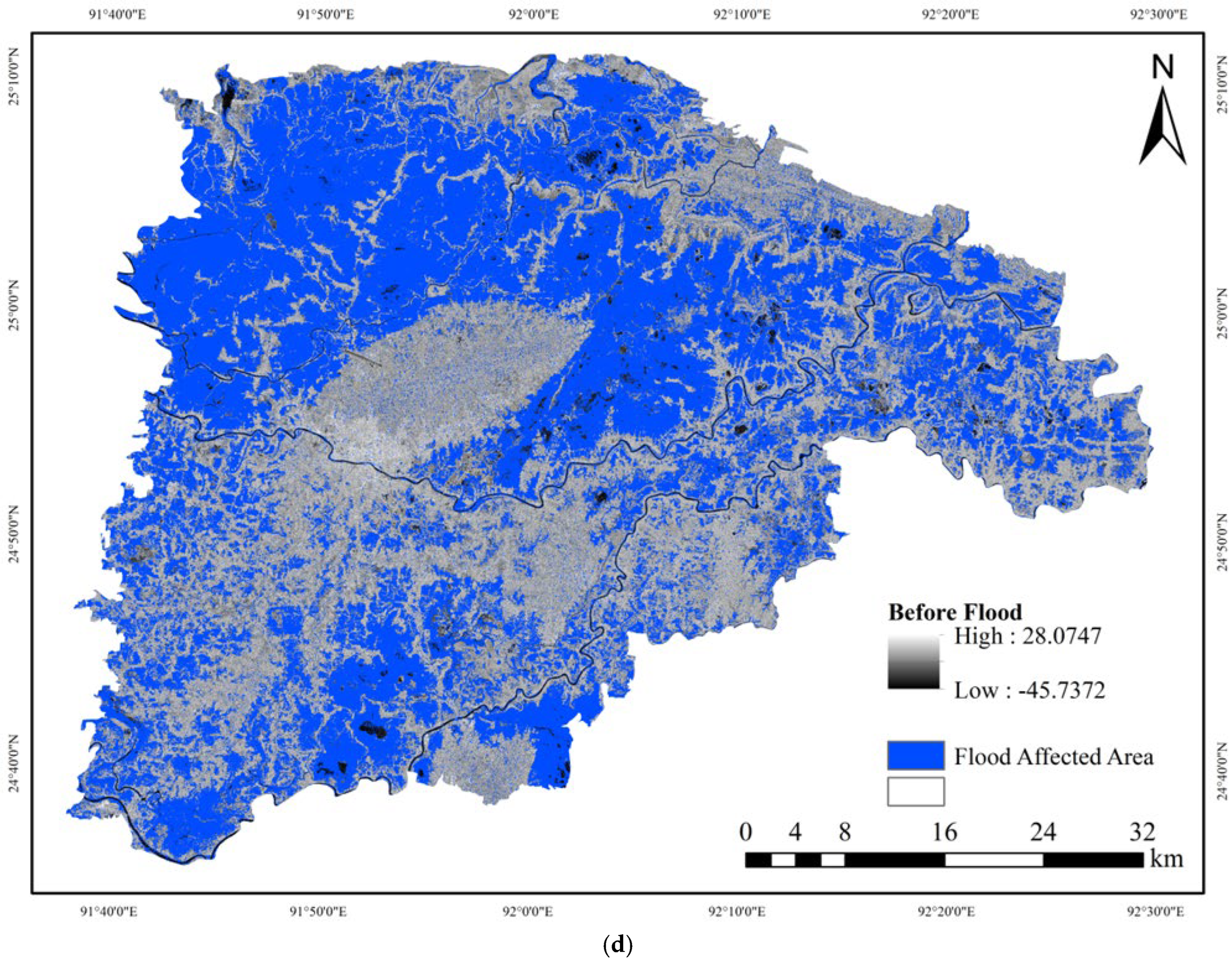
To further validate the simulation results, Sentinel-1A satellite imagery was used to observe flood extents before and after the major flood events of 2020. Figure 7c,d shows the satellite-derived images for two periods: pre-flood (1st–15th May) and post-flood (15th–30th July). The post-flood imagery clearly reveals the expansion of water bodies and inundated zones, particularly in the Sylhet Sadar region and along the Surma River. A visual comparison between model-simulated inundation (Figure 7c, Figure 8c, Figure 9a and Figure 9c) and satellite-detected flood areas (Figure 7d, Figure 8d, Figure 9b and Figure 9d) demonstrates strong spatial alignment. Key inundated zones identified in the model output were also detected in the Sentinel-1A flood maps, affirming the model’s reliability in replicating flood events. In Table 4, agreement indices (F-index, CSI, and kappa) demonstrate substantial spatial consistency across all validation years.
Table 5 presents the quantitative validation results across four major events (2016–2020). Agreement indices indicate substantial spatial consistency for most years, with F-index values ranging between 0.58 and 0.73, CSI between 0.24 and 0.60, and kappa values between 0.38 and 0.44. These results confirm that the model is capable of replicating observed flood extents, though performance was weaker in 2016 (Table 4), likely due to data limitations, decreased flood intensity, and increased land-use complexity.
Flood depths were generally higher near the river channel, decreasing gradually with increasing distance from the riverbanks. Areas with dense vegetation or urban obstructions (e.g., roads and built-up zones) influenced the flow paths and created variations in flood extent and water levels. These outcomes highlight the importance of integrating land use and topographic variability into grid resolution and roughness parameterization. It should be noted that while Sentinel-1A provides valuable flood mapping data, it may have limitations due to cloud cover, vegetation masking, or temporal resolution. However, when used in conjunction with hydrodynamic modeling, it enhances flood assessment capabilities and provides an independent layer of validation.

3.4. Sensitivity and Uncertainty Analysis

The model was most sensitive to Manning’s n in the channel. NSE improved from 0.88 at n = 0.020 to 0.925 at n = 0.025, but decreased when n exceeded 0.026, as higher values delayed the hydrograph response (Table 6). Floodplain n values between 0.028 and 0.030 produced stable results, whereas values >0.030 over-damped flows. Mesh refinement from 50 m to 20 m in the channel improved NSE by ~0.02 (Table 5), but further refinement to 10 m provided negligible gain while doubling computation time. Floodplain mesh coarsening above 150 m smoothed hydrographs and underestimated inundation area (Table 6).

4. Discussions

4.1. Model Performance Drivers

The Delft3D FM model reproduced observed discharges with good accuracy during calibration years (2019–2020), achieving R2 values >0.9 and NSE between 0.769 and 0.925. This strong performance can be attributed to two main factors: (i) the availability of consistent and reliable hydrological data during these years, and (ii) the dominant role of upstream inflows in shaping flood dynamics in the Surma River. Since flash floods in the Sylhet region are primarily driven by intense rainfall in the Meghalaya hills, the accurate representation of inflow hydrographs at SW266 allowed the model to replicate peak discharges effectively. In contrast, validation years (2012, 2016, 2017) showed lower performance (NSE = 0.749–0.839). This decline likely reflects the combined effects of daily boundary condition data smoothing rapid flood pulses, uncertainties in Manning’s n assignment on floodplains, and variability in rainfall–runoff distribution during those years. The absence of hourly discharge data inevitably smooths hydrograph peaks, which may cause slight underestimation of flash flood timing and attenuation. Disaggregating daily series using statistical methods or coupling Delft3D FM with HEC-HMS rainfall–runoff outputs could better represent short-duration inflow surges and improve peak-time accuracy in future studies.

4.2. Spatial Accuracy and Hydrodynamic Processes

Spatial validation against Sentinel-1A SAR flood maps highlighted both strengths and limitations of the model. Simulated inundation extents matched observed flood zones in Sylhet Uposhohor, confirming that the mesh refinement (20 m in the channel, 100 m in floodplains) adequately represented local depressions and floodplain connectivity. This agreement suggests that calibrated Manning’s n values captured flood propagation dynamics realistically. However, mismatches in peripheral areas may be explained by DEM limitations and hydrodynamic processes that were not fully captured at 10 m resolution (resampled from SRTM). Thus, the interpolation between sparse cross-sections and resampled 10 m DEM likely led to smoothed representations of embankments, affecting modeled flood storage and lateral spreading. This factor partly explains minor overestimation of flood extent in low-lying floodplains. In addition, Sentinel-1A SAR data have inherent uncertainties due to vegetation masking and temporal resolution, which may result in apparent differences between observed and simulated extents. Overall, the model captured channelized flooding effectively, while floodplain storage and localized drainage dynamics remain areas for improvement.
A key limitation of this study is the reliance on daily boundary condition data for upstream discharge and downstream water levels. Flash floods typically develop on sub-daily timescales, and daily inputs may underrepresent peak intensity and timing. Another limitation arises from the DEM source, as the resampled 10 m SRTM dataset lacks fine-scale elevation features such as embankments and small depressions that strongly influence inundation distribution in Sylhet. Finally, the use of Sentinel-1A SAR imagery for validation is constrained by vegetation cover and revisit intervals, which may obscure short-duration flood events or localized ponding. Future work should focus on incorporating higher temporal resolution boundary conditions (e.g., hourly discharge or rainfall–runoff-derived inflows) to better capture flash flood onset and peak dynamics. The use of higher-resolution terrain data, such as ALOS (12.5 m) or Copernicus DEM (10 m), could improve representation of floodplain microtopography. Integration of distributed rainfall–runoff models with Delft3D FM would allow the direct transformation of high-intensity rainfall into inflow hydrographs, improving early warning capacity. In addition, machine learning methods for SAR image classification and fusion with optical datasets may reduce errors in flood extent mapping. Together, these improvements would enhance the robustness of flash flood simulations and provide stronger support for flood risk management in Sylhet.

5. Conclusions

This study applied the Delft3D FM Suite to simulate flash flood inundation in the Surma River catchment of Sylhet, Bangladesh. The model was successfully calibrated for 2019–2020 and validated for historical flood events in 2012, 2016, and 2017. Results demonstrated strong agreement between observed and simulated discharges (R2 > 0.9, NSE = 0.75–0.93), while satellite-based validation using Sentinel-1A SAR imagery confirmed substantial spatial accuracy (F-index = 0.74–0.81, Kappa > 0.65). The model reliably captured flood propagation dynamics and inundation patterns in critical hotspots such as Sylhet Uposhohor, underscoring its applicability for hazard mapping in flash flood-prone regions. Sensitivity analysis indicated that Manning’s n in the channel exerted the greatest influence on model performance, with optimal values around 0.024, while mesh refinement below 20 m yielded minimal performance improvement but significantly increased computational demand. These findings highlight the importance of parameter optimization for balancing accuracy and efficiency in flood modeling. Despite its strengths, the study is constrained by the reliance on daily boundary condition data, which may not fully capture the short-duration dynamics of flash floods, and using resampled SRTM DEM, which lacks fine-scale topographic detail. The exclusion of SW268 due to hydrological disconnection is a limitation of the available observation network rather than a model deficiency. Future work should focus on integrating higher temporal resolution hydrological inputs, higher-resolution DEMs (e.g., ALOS, Copernicus), and rainfall–runoff coupling to better capture flash flood onset and evolution. Expanding the modeling framework to incorporate socio-economic exposure analysis, viz. population and land-use impacts, would also enhance its relevance for risk reduction planning.
Overall, the findings demonstrate that Delft3D FM, when combined with satellite-based validation, provides a powerful tool for understanding flash flood behavior in Sylhet. The approach offers valuable insights for early warning systems, urban planning, and disaster preparedness, contributing to climate-resilient flood risk management in northeastern Bangladesh.

Supplementary Materials

The following supporting information can be downloaded at: https://www.mdpi.com/article/10.3390/hydrology13010007/s1.

Author Contributions

Conceptualization: A.A.; data curation: A.A. and M.A.R.F.; formal analysis: M.A.R.F.; funding acquisition: A.A.; investigation: A.A. and M.A.R.F.; methodology: A.A. and M.A.R.F.; project administration: A.A.; resources: A.A. and M.A.R.F.; software: M.A.R.F.; supervision: A.A.; validation: M.A.R.F.; visualization: M.A.R.F.; writing—original draft: A.A. and M.A.R.F.; writing—review and editing: A.A. All authors have read and agreed to the published version of the manuscript.

Funding

This research was funded by Department of Civil Engineering at Chittagong University of Engineering & Technology (CUET), grant number CUET/DRE/2022-23/CE/052.

Data Availability Statement

The raw data supporting the conclusions of this article will be made available by the authors on request.

Acknowledgments

The authors deeply appreciate the Department of Civil Engineering at Chittagong University of Engineering & Technology (CUET) for their great logistical support throughout the project “Hydrological and Data-Driven Modeling of Event-Based Flash Floods in Bangladesh (Flash Floods) (CUET/DRE/2022-23/CE/052)”. The authors also thank the Bangladesh Meteorological Department (BMD) and the Bangladesh Water Development Board for kindly supplying the data required for the study.

Conflicts of Interest

The authors declare no conflicts of interest.

Abbreviations

The following abbreviations are used in this manuscript:
BWDBBangladesh Water Development Board
BMDBangladesh Meteorological Department
DEMDigital elevation model
FMFlexible mesh
GISGeographic Information System
NSENut Sutcliffe efficiency
SRTMShuttle Radar Topography Mission
OATOne-at-a-time
USGSU.S. Geological Survey

References

  1. Akter, A.; Sawon, F.S. Hydrological modeling of the selected flash flood-prone rivers. Nat. Hazards 2025, 121, 3997–4021. [Google Scholar] [CrossRef]
  2. BWDB. Bangladesh Flood Warning Manual Final Draft May-1997. 1997. Available online: https://www.bwdb.gov.bd/archive/pdf/8189.pdf (accessed on 11 December 2025).
  3. Bruno, L.S.; Mattos, T.S.; Oliveira, P.T.S.; Almagro, A.; Rodrigues, D.B.B. Hydrological and Hydraulic Modeling Applied to Flash Flood Events in a Small Urban Stream. Hydrology 2022, 9, 223. [Google Scholar] [CrossRef]
  4. Tuli, R.D.; Rashid, K.J.; Akter, T. Chapter 3—Impact analysis of the 2022 flood event in Sylhet and Sunamganj using Google Earth Engine. In Modern Cartography Series; Pal, S.C., Chatterjee, U., Chakrabortty, R., Eds.; Academic Press: Cambridge, MA, USA, 2024; pp. 47–69. [Google Scholar] [CrossRef]
  5. BWDB. Flash Flood Forecasting in Northeast Region of Bangladesh. 2008. Available online: https://www.ffwc.gov.bd/app/home (accessed on 10 December 2025).
  6. FFWC. Annual Flood Report. Processing & Flood Forecasting Circle. Bangladesh Water Development Board. 2017; pp. 1–108. Available online: http://ffwc.gov.bd/ (accessed on 12 December 2025).
  7. CDMP. Comprehensive Disaster Management Programme II; Ministry of Disaster Management and Relief: Dhaka, Bangladesh, 2014. [Google Scholar]
  8. Chow, A.C.H.; Sun, J. Combining Sea Level Rise Inundation Impacts, Tidal Flooding and Extreme Wind Events along the Abu Dhabi Coastline. Hydrology 2022, 9, 143. [Google Scholar] [CrossRef]
  9. Elkersh, K.; Atabay, S.; Ali, T.; Yilmaz, A.G.; Mortula, M.M. Analyzing Hydrodynamic Changes in Dubai Creek, UAE: A Pre- and Post-Extension Study. Hydrology 2024, 11, 202. [Google Scholar] [CrossRef]
  10. Hossain, E. Second Wave of Flash Flood Hits Sylhet Haor. 2022. Available online: https://www.newagebd.net/article/168191/second-wave-of-flash-flood-hits-sylhet-haor (accessed on 10 November 2025).
  11. Akter, N.; Islam, M.R.; Karim, M.A.; Miah, M.G.; Rahman, M.M. Spatiotemporal rainfall variability and its relationship to flash flood risk in Northeastern Sylhet Haor of Bangladesh. J. Water Clim. Change 2023, 14, 3985–3999. [Google Scholar] [CrossRef]
  12. Akter, A.; Jihad, R.H.J.; Afridi, F. Modelling of flood risk in the Feni-Muhuri-Selonia riverbasin. In Proceedings of the International Conference on Recent Innovations in Sustainable Engineering Solutions 2025 (IConRISES 2025), Jember, Indonesia, 12–13 September 2025. [Google Scholar] [CrossRef]
  13. BWDB. Annual Report 2022–2023. Dhaka, Bangladesh. 2023. Available online: https://www.bwdb.gov.bd/annual-reports (accessed on 10 December 2025).
  14. Chen, Y.; Wang, Y.; Zhang, Y.; Luan, Q.; Chen, X. Flash floods, land-use change, and risk dynamics in mountainous tourist areas: A case study of the Yesanpo Scenic Area, Beijing, China. Int. J. Disaster Risk Reduct. 2020, 50, 101873. [Google Scholar] [CrossRef]
  15. Ma, M.; Zhao, G.; He, B.; Li, Q.; Dong, H.; Wang, S.; Wang, Z. XGBoost-based method for flash flood risk assessment. J. Hydrol. 2021, 598, 126382. [Google Scholar] [CrossRef]
  16. Rahman, M.d.Z.; Akter, A. Assessment of coastal flood risks in a selected urban area in Bangladesh. Nat. Hazards 2024, 120, 13899–13949. [Google Scholar] [CrossRef]
  17. Delft3D. Delft3D FM Suite 2D3D Modules. 2024. Available online: www.deltares.nl/en/software-and-data/ (accessed on 12 November 2025).
  18. Delft3D-TIDE. Delft3D-TIDE User Manual: Analysis and Prediction of Tides. Deltares. 2024. Available online: https://content.oss.deltares.nl/delft3d4/Delft3D-TIDE_User_Manual.pdf (accessed on 9 November 2025).
  19. Chowdhury, M.E.; Islam, A.S.; Lemans, M.; Hegnauer, M.; Sajib, A.R.; Pieu, N.M.; Das, M.K.; Shadia, N.; Haque, A.; Roy, B.; et al. An efficient flash flood forecasting system for the un-gaged Meghna basin using open source platform Delft-FEWS. Environ. Model. Softw. 2023, 161, 105614. [Google Scholar] [CrossRef]
  20. Roy, B.; Haider, M.R. A study on hydrodynamic and morphological behavior of Padma river using Delft3D model. In Proceedings of the 3rd International Conference on Civil Engineering for Sustainable Development (ICCESD 2016), Khulna, Bangladesh, 12–14 February 2016; pp. 561–572, ISBN 978-984-34-0265-3. [Google Scholar]
  21. Tanim, A.H.; Akter, A. Storm-surge modelling for cyclone Mora in the northern Bay of Bengal. Proc. Inst. Civ. Eng. Marit. Eng. 2019, 172, 73–94. [Google Scholar] [CrossRef]
  22. USGS. U.S. Geological Survey. 2025. Available online: https://www.usgs.gov/landsat-missions (accessed on 14 December 2025).
  23. Akter, A.; Toukir, M.R.; Dayem, A. Suitability assessment of fish habitat in a data scarce river. Hydrology 2022, 9, 173. [Google Scholar] [CrossRef]
  24. USGS. USGS EROS Archive—Digital Elevation—Shuttle Radar Topography Mission (SRTM) Non-Void Filled; USGS: Reston, VA, USA, 2025. [Google Scholar] [CrossRef]
  25. CDSE. Sentinel-1, Copernicus Data Space Ecosystem. 2025. Available online: https://dataspace.copernicus.eu (accessed on 9 June 2025).
Figure 1. (a) Location of the Surma River catchment within the Sylhet region of Bangladesh, showing administrative boundaries. (b) Detailed map of the model domain used in the Delft3D Flexible Mesh (FM) simulation, including key hydrological stations.
Hydrology 13 00007 g001
Figure 2. Flowchart of the methodology.
Hydrology 13 00007 g002
Figure 3. Generated unstructured grid.
Hydrology 13 00007 g003
Figure 4. (a) Bathymetry raster created in ArcGIS; (b) interpolated bed level in Delft3D FM.
Hydrology 13 00007 g004
Figure 5. Frequency analysis.
Hydrology 13 00007 g005
Figure 6. (a) Discharge vs. time graph at Station SW267. (b) Simulated discharge vs. observed discharge graph at Station SW267. (c) Simulated inundated area from Delft3D FM model for highest water level for year 2020. (d) Sentinel-1A imagery of the before-flood period (1st May to 15th May) and flooded area after the flood period (15th July to 30th July) for year 2020.
Hydrology 13 00007 g006aHydrology 13 00007 g006b
Figure 7. (a) Discharge vs. time graph at Station SW267. (b) Simulated discharge vs. observed discharge graph at Station SW267. (c) Simulated inundated area from Delft3D FM model for highest water level for year 2019. (d) Sentinel-1A imagery of the before-flood period (1st May to 15th May) and flooded area after the flood period (15th July to 30th July) for year 2019.
Hydrology 13 00007 g007aHydrology 13 00007 g007b
Figure 8. (a,c,e) Discharge vs. time graph for 2017, 2016, and 2012, respectively. (b,d,f) Simulated discharge vs. observed discharge graph for 2017, 2016, and 2012, respectively, at Station SW267.
Hydrology 13 00007 g008aHydrology 13 00007 g008b
Figure 9. (a) Model-simulated inundation extent compared with Sentinel-1A SAR imagery for the 2017 flood event. (b) Sentinel-1A imagery of the before-flood period (1st May to 15th May) and flooded area after the flood period (10th August to 25th August) for year 2017. (c) Simulated inundated area from Delft3D FM model for highest water level for 2016. (d) Sentinel-1A imagery of the before-flood period (1st May to 15th May) and flooded area after the flood period (15th July to 30th July) for year 2016.
Hydrology 13 00007 g009aHydrology 13 00007 g009b
Table 1. Summary of datasets, model inputs, and configuration used in the study.
CategoryDataset/ParameterSourceCharacteristics/Notes
Boundary ConditionsUpstream discharge (SW266)BWDBDaily data (2000–2021); used as upstream flow boundary
Downstream water level (SW267)BWDBDaily data (2000–2024); used as downstream stage boundary
Observed DataRiver cross-sectionsBWDBSpacing >1 km; merged with DEM for bathymetry
Terrain DataSRTM DEMUSGS [23]
o
30 m native resolution, resampled to 10 m; used for floodplain elevation
o
Narrow embankments and small channels not fully captured
Mesh CharacteristicsUnstructured triangular meshDelft3D FM20 m resolution in river, 100 m in floodplain
Roughness ValuesManning’s n (channel)Calibration0.024–0.026
Manning’s n (floodplain)Calibration0.028–0.030
Model ConfigurationSolverDelft3D FM 2023.022D depth-averaged; semi-implicit finite volume
Time stepVariable (1–5 s); CFL ≤ 0.8
Validation DataSentinel-1A SAR imageryCDSEUsed for spatial flood extent validation
Table 2. Flash flood frequency analysis at SW267.
Return PeriodWater Level (m)Discharge (m3/s)
210.851959.34
311.052032.71
511.272114.43
1011.552217.11
2011.812315.61
5012.162443.10
Table 3. Model performance evaluation for calibration periods.
Year20202019
R20.9290.953
NSE0.7690.925
RSR0.4780.273
PBIAS (%)5.3886.002
Table 4. Quantitative spatial validation of Delft3D FM-simulated flood extents against Sentinel-1A SAR-derived flood maps.
Event YearF-IndexCSIKappa
20200.730.600.44
20190.720.600.43
20170.720.570.44
20160.580.240.38
Table 5. Model performance evaluation for validation periods.
Year201720162012
R20.8370.9210.885
NSE0.7680.7490.839
RSR0.4790.4980.399
PBIAS (%)3.1535.551−4.749
Table 6. One-at-a-time sensitivity analysis showing model performance.
ParameterValues TestedOptimal ValueNSER2Comment
Manning’s n (channel)0.022–0.0280.0250.9250.95Too low underestimates stage; too high delays response
Manning’s n (floodplain)0.026–0.0320.028–0.0300.9100.93Higher n adds storage; >0.030 over-damps flow
Mesh resolution (channel)10–50 m20 m0.9250.95<20 m negligible NSE gain but high runtime
Mesh resolution (floodplain)50–150 m100 m0.9120.94>150 m smooths hydrograph, loses detail
Disclaimer/Publisher’s Note: The statements, opinions and data contained in all publications are solely those of the individual author(s) and contributor(s) and not of MDPI and/or the editor(s). MDPI and/or the editor(s) disclaim responsibility for any injury to people or property resulting from any ideas, methods, instructions or products referred to in the content.