


Abstract
River discharge scaling is fundamental to the global hydrological cycle and to water resource assessment. This study investigates the existence of multiple scaling regimes and introduces a novel framework for clustering river discharge using multiscale fractal characteristics. We analyzed daily discharge data from 38 stations across continental Canada over an 80-year period. Multifractal characterization was performed at decadal and long-term scales using three key parameters: the singularity exponent (), multifractal strength (), and asymmetry index (r). K-means clustering in the , , and planes revealed distinct clusters, with the asymmetric parameter (r) emerging as the strongest distinguishing factor. These clusters represent groups of rivers with similar dynamical structures: the clusters categorize discharge based on scaling strength and fluctuation influence. Analysis of the generalized Hurst exponent revealed anti-persistent behavior at most stations, with exceptions at five specific locations. This multifractal clustering approach provides a powerful method for classifying river regimes based on intrinsic characteristics and identifying the physical drivers of discharge fluctuations.
1. Introduction
River discharge dynamics represent a classic example of a complex geophysical system governed by scale-invariant behavior, where fluctuations exhibit recognizable patterns across a wide range of temporal scales. Such dynamics challenge traditional linear hydrological models, which are often unable to reproduce the self-similarity, persistence, and long-range dependence observed in natural river flows [1,2]. Foundational work on the fractal geometry of river networks [3,4] and the scaling structure of rainfall fields [5] established that hydrological processes are not merely random or chaotic but exhibit organized variability that spans multiple scales. These insights motivated the development of analytical approaches capable of capturing the intrinsic multiscale nature of hydrological systems.
Early efforts to quantify this behavior relied on monofractal descriptions, which condense complexity into a single scaling exponent. However, river discharge rarely follows a uniform scaling law across all regimes. High-flow conditions and peak events often display strong intermittency and turbulent signatures, while low-flow periods reveal persistent, long-range correlations. These contrasting behaviors cannot be adequately captured by monofractal theory, leading to the recognition that river discharge must instead be represented by a spectrum of scaling exponents. This realization catalyzed the adoption of multifractal frameworks, which explicitly characterize the scale-dependent variability and intermittency inherent in hydrological time series [5,6].
Subsequent studies firmly established the ubiquity of multifractality in river flow across diverse climatological and physiographic settings. Seminal analyses, including [6] on U.S. basins and the global investigations of [7], demonstrated that daily streamflow fluctuations adhere closely to multifractal scaling laws. These findings revealed a remarkable degree of universality: despite differences in basin size, topography, and climate, river discharge frequently conforms to similar multifractal structures. Building on this understanding, [8] showed that Canadian streamflow is well-described by multiplicative cascade processes, further reinforcing the consistency of multifractal behavior across regions. Together, these studies highlight that multifractality is a fundamental and pervasive property of river discharge.
Yet, despite extensive evidence documenting multifractal behavior in individual rivers, much of the literature has focused either on characterizing single catchments or on identifying universal parameters across broad datasets. What remains less explored is how rivers can be systematically compared and grouped based on the similarities and differences in their multifractal signatures. Understanding such groupings not only extends multifractal analysis beyond individual case studies but also offers a pathway to uncovering shared dynamical behaviors that may relate to hydrological, climatological, or physiographic controls. This perspective provides a foundation for the comparative hydrological analyses developed in this study.
In this study, we apply a multifractal–based clustering approach to examine how rivers can be grouped according to shared dynamical characteristics. Building on the work of [8], we use Multifractal Detrended Fluctuation Analysis (MFDFA) on an 80-year record of daily discharge from 38 stations across Canada. We characterize each river using three widely used multifractal parameters: the singularity exponent (), multifractal strength (), and asymmetry index (r), and use these parameters as inputs to a k-means clustering algorithm. Rather than treating these metrics solely as descriptors of individual rivers, we use them to identify groups of rivers that exhibit similar multiscale fluctuation patterns. This grouping enables a comparative examination of how multifractal behaviors relate to hydrological, climatological, and physiographic factors across diverse catchments.
The resulting clusters offer a useful perspective for understanding how rivers with similar multiscale dynamics respond to hydrological, climatological, and physiographic influences across Canada. As climate change continues to alter flow regimes in complex and often non-stationary ways, recognizing these shared dynamical patterns may help improve comparative assessments of river behavior, inform regional hydrological analyses, and support context-sensitive water management strategies. By classifying rivers according to their intrinsic multifractal properties, this study contributes an additional lens through which to interpret and compare river regimes within a broader hydroclimatic framework.
2. Methodology
2.1. Data and Study Area
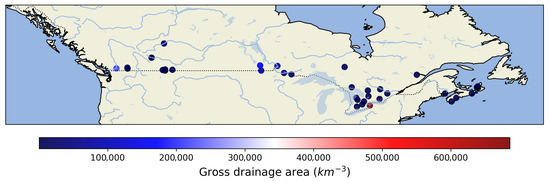
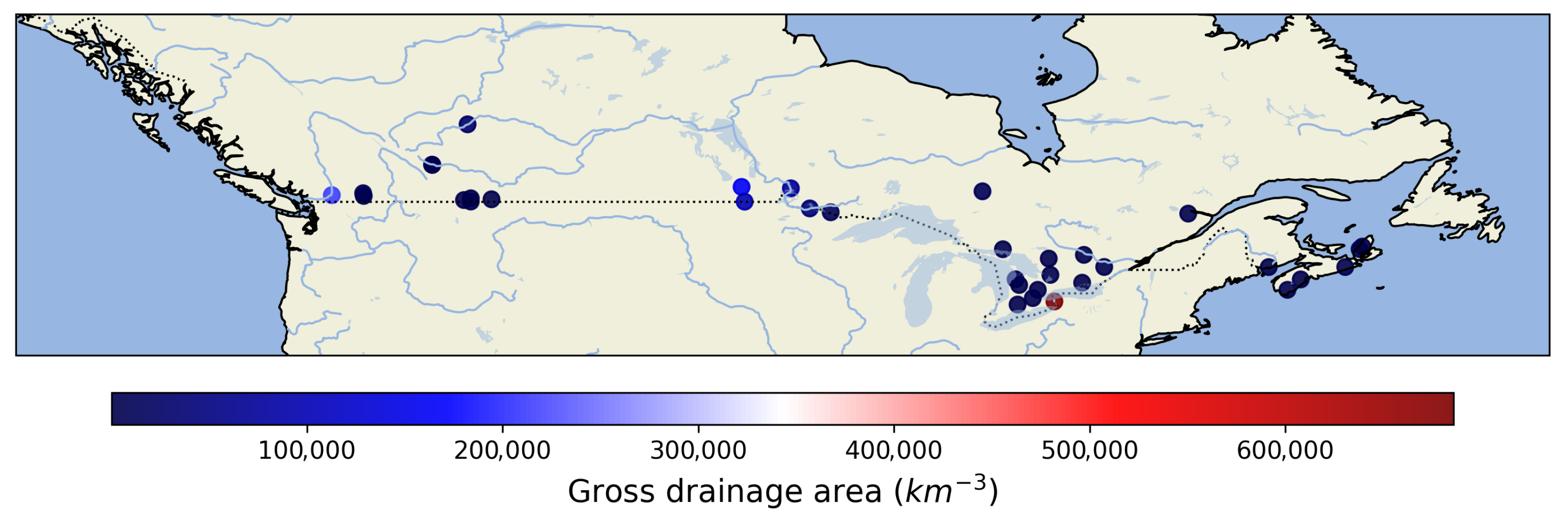
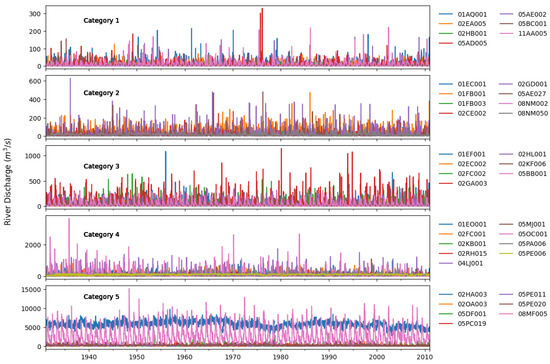
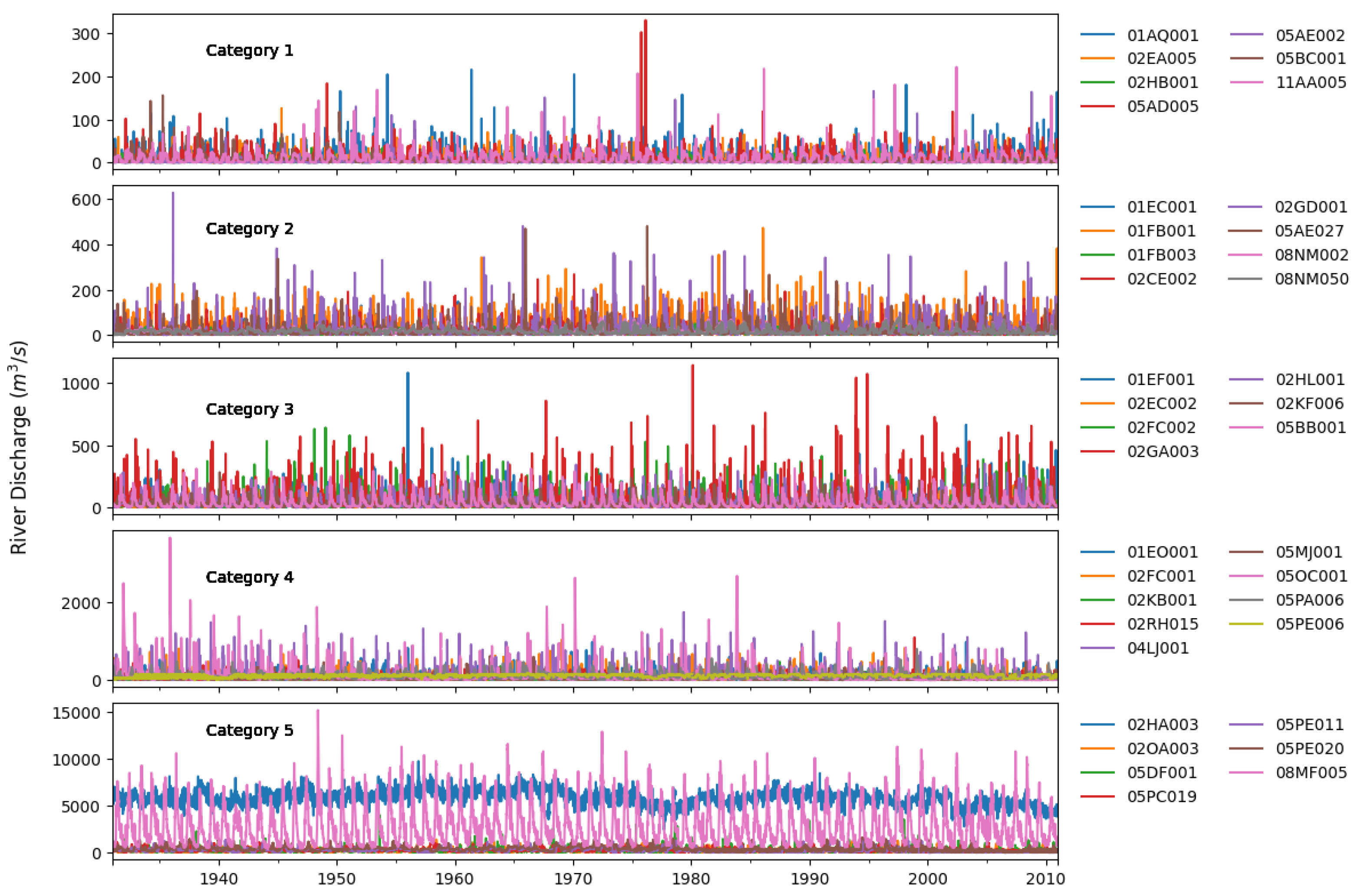
Daily river discharge data were obtained from https://collaboration.cmc.ec.gc.ca/cmc/hydrometrics/www/ (accessed on 7 May 2023). The National Hydrological Service (NHS) provides Canadian hydrometric data and information services. NHS services provide (a) near real-time Canadian hydrometric data 24 h a day, 365 days a year, and (b) value-added historical Canadian hydrometric data and statistical information. A total of 38 stations across Canada (Figure 1) were considered in this study. The period from 1 January 1931, to 31 December 2010, was analyzed (Figure 2). Two time periods were considered in this study: a decadal analysis consisting of eight decades (1931–1940, 1941–1950, 1951–1960, 1961–1970, 1971–1980, 1981–1990, 1991–2000, and 2001–2010) and a long-term analysis covering the entire dataset from 1931 to 2010. The stations were initially divided into categories based on long-term mean discharge values (Table 1), providing a static baseline for analysis. Subsequently, the stations were clustered based on multifractal parameters (, , r), yielding dynamic groupings that capture scale-dependent flow behavior. Categorizing river stations by long-term mean discharge offers a unique and valuable perspective on flow behaviour. While drainage basin size is commonly used for hydrological classification, grouping by mean discharge provides a more functional indicator of hydrological regime that integrates climatic inputs, catchment storage, and human influences [9,10,11]. This approach allows us to examine how rivers exhibit multifractal properties across different flow regimes, rather than being classified solely by their basin characteristics.
Figure 1.
Map of the study area with gauge stations.
Figure 2.
Time series of river discharge for each of the five (5) categories.
Table 1.
Categorization of river stations based on mean discharge values.
2.2. Methods
Ref. [7] extended the concept of fractal scaling to multiple scales through the development of Multifractal Detrended Fluctuation Analysis (MFDFA). While scaling is inherent in many natural systems, a single scaling exponent is often insufficient to describe their full complexity. Many geophysical time series, including river discharge, exhibit heterogeneous scaling behavior, where different segments of the record follow distinct patterns of self-similarity. MFDFA provides a robust framework for detecting and characterizing the scale-dependent variability by estimating a continuous spectrum of scaling exponents.
Within this framework, multifractality strength captures the degree of heterogeneity in local scaling behavior across time series. A large multifractality strength () indicates the presence of multiple coexisting scaling regimes, implying that different portions of the record behave differently with respect to their persistence, variability, or intermittency. Conversely, systems with uniform scaling properties exhibit low multifractality strength.
To investigate multifractality in a time series, X of length n, the MFDFA procedure begins by removing serial correlations through a detrending process
where is the mean of X. The detrended profile is divided into non-overlapping segments, v each of length s. The variance is estimated by removing the linear trend for each segment as:
where is the linear fit to the segment v. The result obtained from the variance is then used to determine the order fluctuation as
The existence of long-range correlation can be inferred from the scaling law
where is the generalized Hurst exponent. The mass exponent is defined as
The mass exponent can be used to construct the multifractal spectrum with the help of the Legendre transform
where is the scaling exponent. The difference between the maximum and minimum values of the scaling exponent is referred to as multifractal strength (). A multifractal system will exhibit larger values of than signals with more uniform scaling behavior. The singularity exponent () corresponds to the point at which the multifractal spectrum reaches its maximum and represents the most dominant local scaling behavior in the time series. The asymmetric index (r) characterizes the skewness of the multifractal spectrum and provides insight into the effect of extreme events on the observed multifractality. The asymmetry index is defined as:
For symmetric, right-skewed and left-skewed shapes, r is equal to 1, greater than 1, and less than 1, respectively, [12]. indicates a right-skewed spectrum, which corresponds to fine structures. implies a left-skewed spectrum with dominance of extreme values. The asymmetric index (r) quantifies the imbalance in scaling behavior between extreme increases and extreme decreases within a time series. When this index deviates significantly from 1, it reveals a fundamental asymmetry in how the system responds to perturbations in opposite directions, indicating that upward and downward fluctuations are governed by different dynamical mechanisms. A perfectly symmetric system with a unity asymmetry index suggests that the physical processes driving increases and decreases are statistically indistinguishable, while strong asymmetry indicates that the system’s response function is fundamentally directional, often due to threshold effects, feedback loops, or irreversible processes that favor one direction of change over the other. In this study, the scales are taken over the range in 0.125 steps, while the orders are in the range in 0.25 steps. In the decadal analysis, the scales are taken in the range while the orders are in the range . The long-term variation is defined as the analysis applied to the entire 80-year record (1931–2010) and is characterized by the scale range (s) exceeding the decadal scale ( days), capturing variability beyond the inter-annual and multi-year fluctuations.
Clustering aims to establish homogeneous groups within data based on similar characteristics [13]. Clustering is an important tool in data analysis, signal and pattern recognition, image processing, and artificial intelligence. In natural systems, clustering enables the identification of locations or time epochs with similar characteristics. By clustering the multifractal indices, rather than the time series, locations with similar dynamical complexities can be identified [14]. There exist several clustering methods, including but not limited to k-means, DBSCAN, and mean shift. In this study, the k-means clustering algorithm was considered. The k-means algorithm creates n groups of equal variance. This is done by minimizing the inertia, defined as
Essentially, the k-means algorithm divides a set of N samples into K distinct clusters, where each cluster is defined by its mean. In addition, we utilized the Silhouette score, Calinski–Harabasz index, and a low Davies-Bouldin score to collectively assess the clusters’ performance and effectiveness in capturing underlying fractal properties.
3. Results
3.1. Decadal Variation in Multifractal Parameters
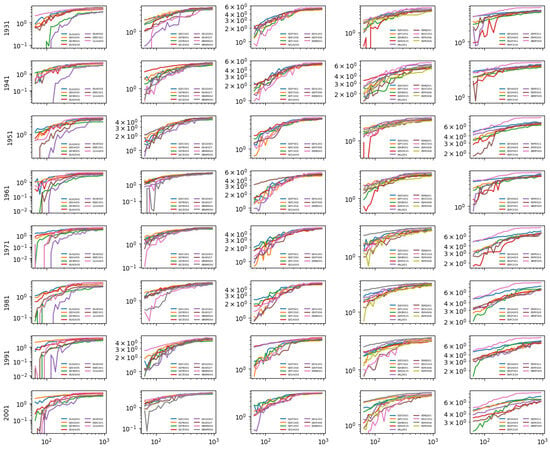
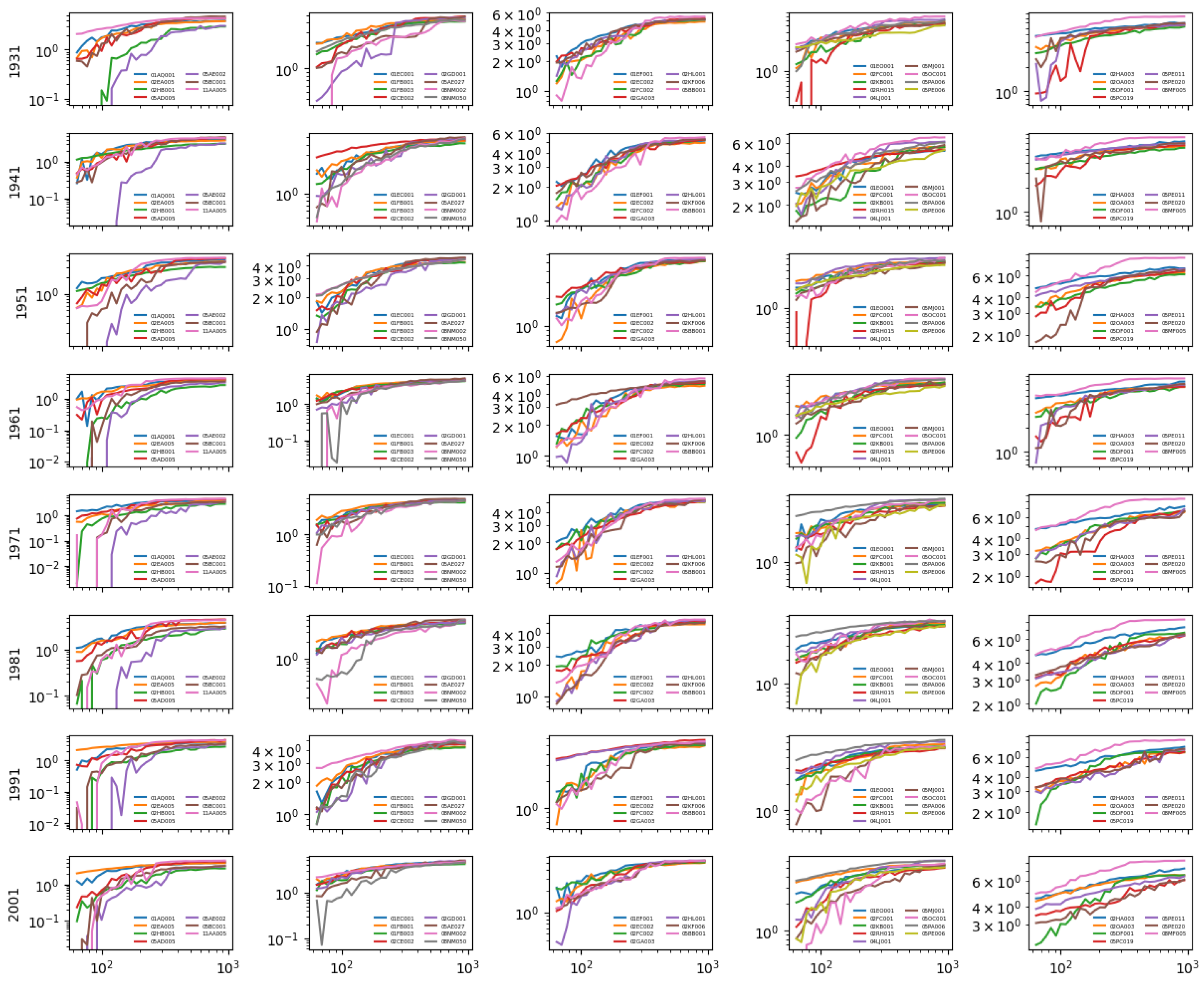
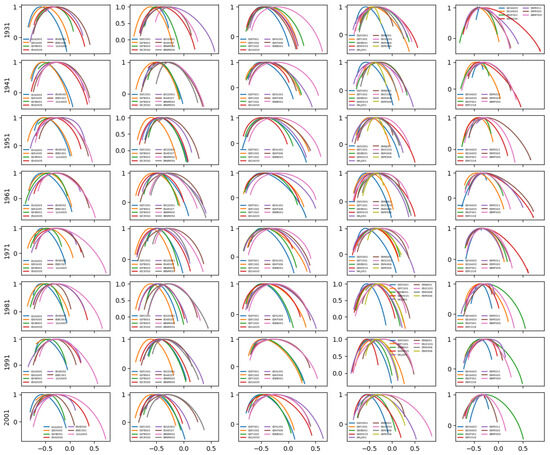
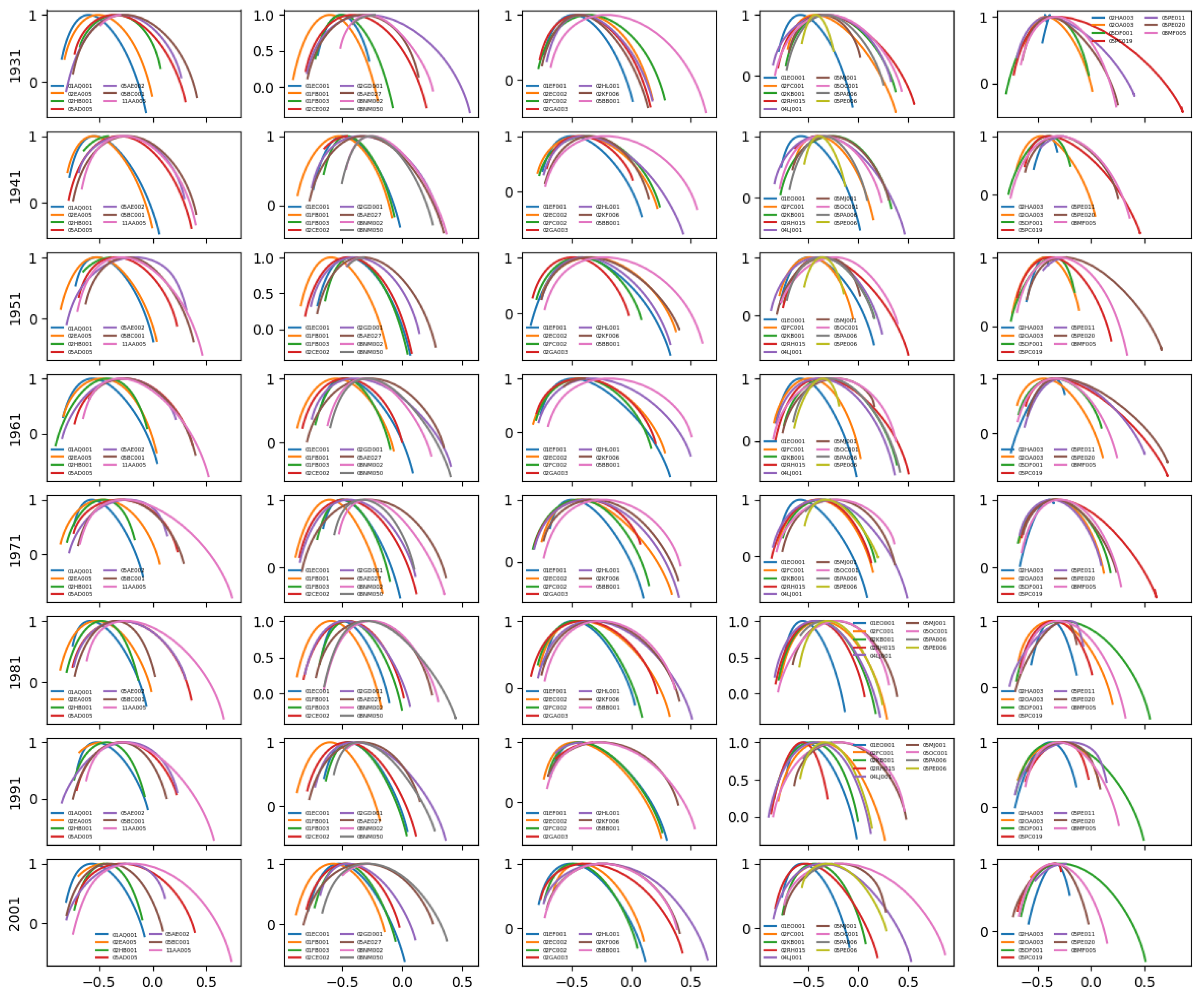
The multifractal spectrum of river discharge across Canada (Figure 3 and Figure 4) reveals patterns across different flow categories. The functional plots (Figure 3) illustrate similar temporal trends with varying degrees of stability and fluctuation across scales, particularly at higher discharge values, providing a visual overview of scaling behavior. This consistency in response to high-flow events suggests a uniform resilience across stations, which is valuable for understanding peak flow behaviors. However, the nuanced variations and complexities at lower-flow levels are less readily distinguishable in these spectrum plots (Figure 4). To gain a clearer and more quantitative understanding of these behaviors, we present the multifractal statistics , , and r (Figure 5, Figure 6 and Figure 7). These metrics offer several advantages, including (i) quantifying spectrum range and intensity, (ii) identifying complexity and uniformity across stations, and (iii) enhancing interpretability for management applications.
Figure 3.
Fluctuation plots () for river discharge in different categories (column-wise) for different decades (row-wise).
Figure 4.
Multifractal spectrum for river discharge in different categories (column-wise) for different decades (row-wise).
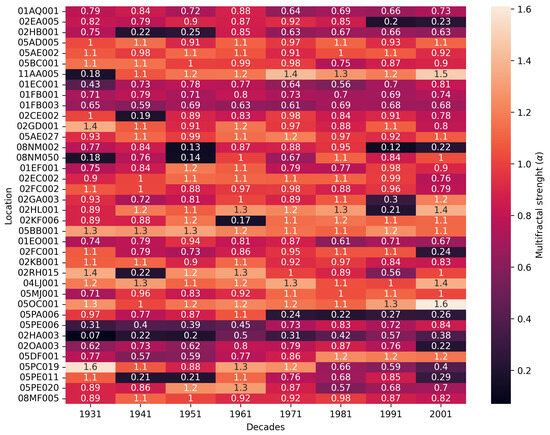
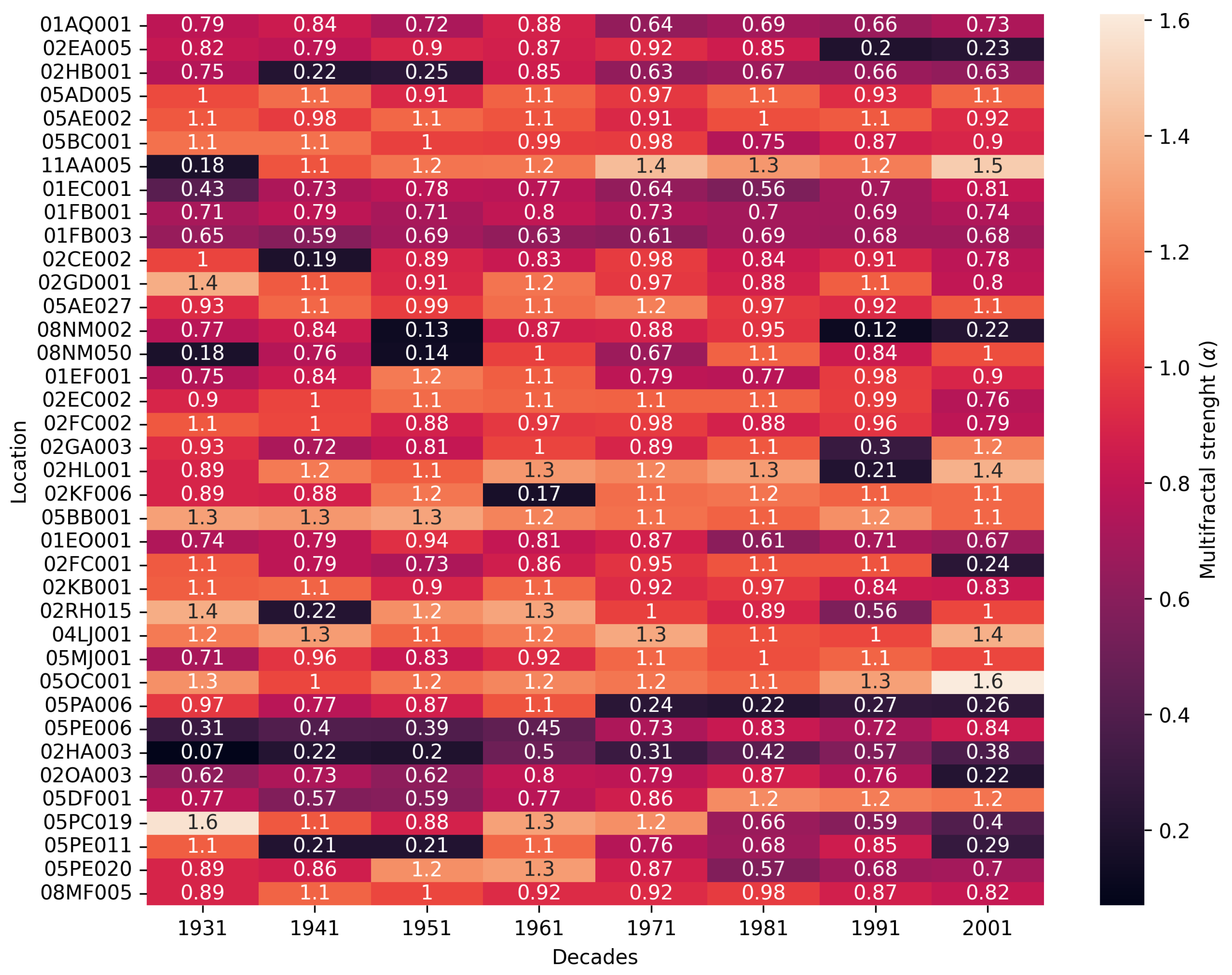
Figure 5.
Decadal variation in multifractal strength () for river discharge across Canada over 8 decades.
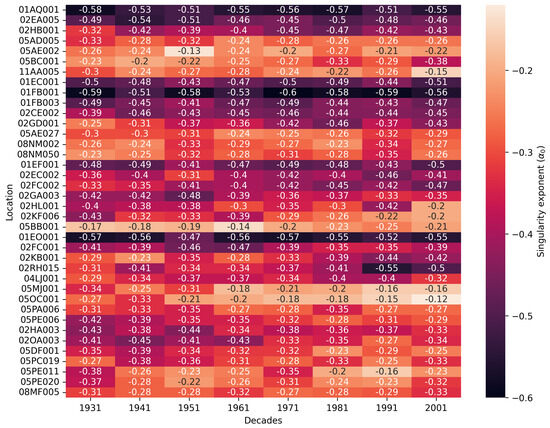
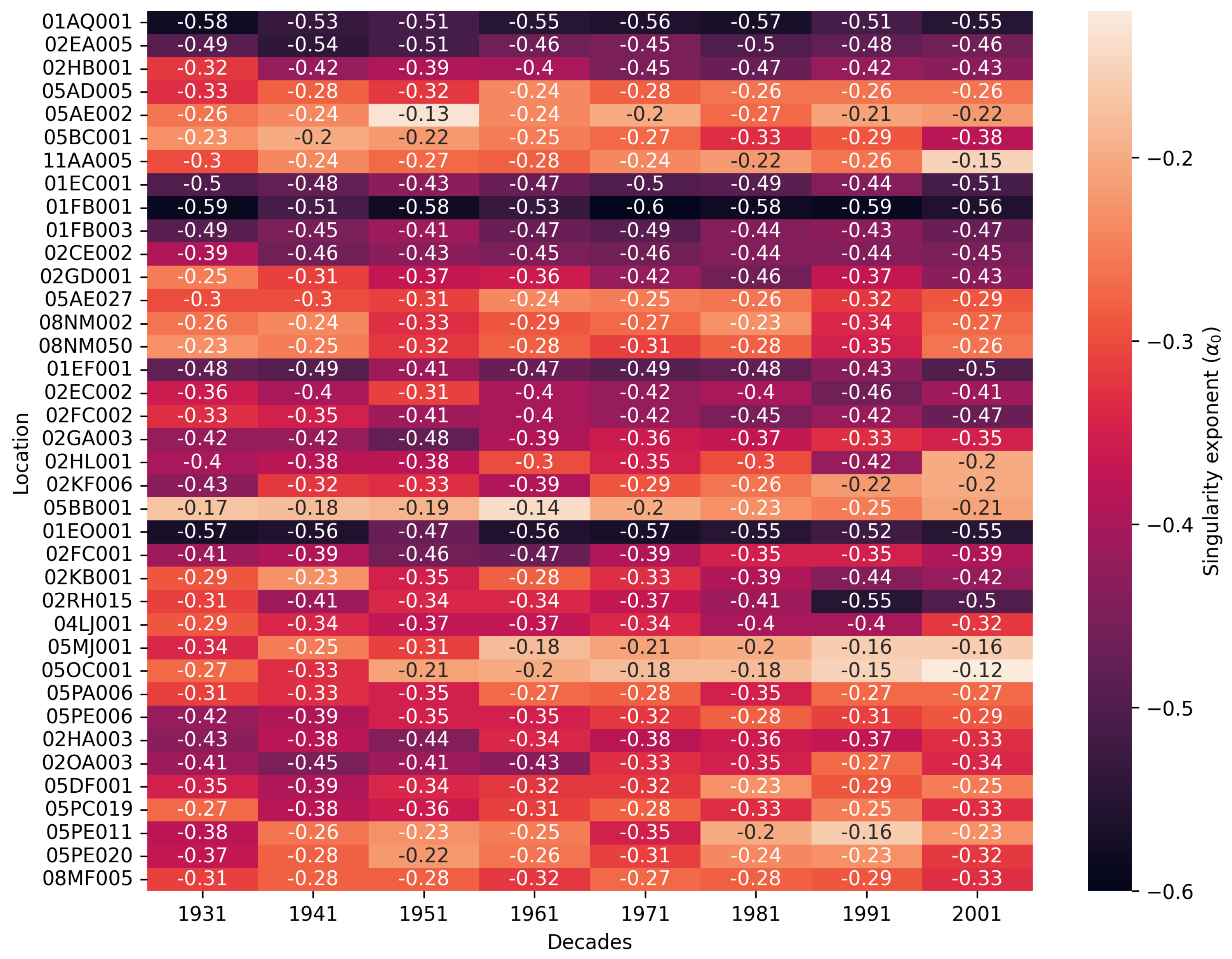
Figure 6.
Singularity exponent () for river discharge across Canada over 8 decades.
Figure 7.
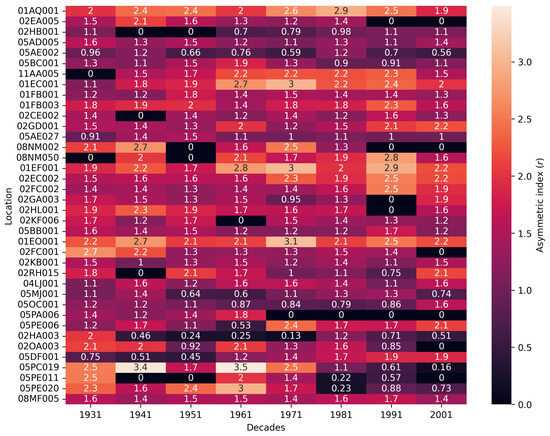
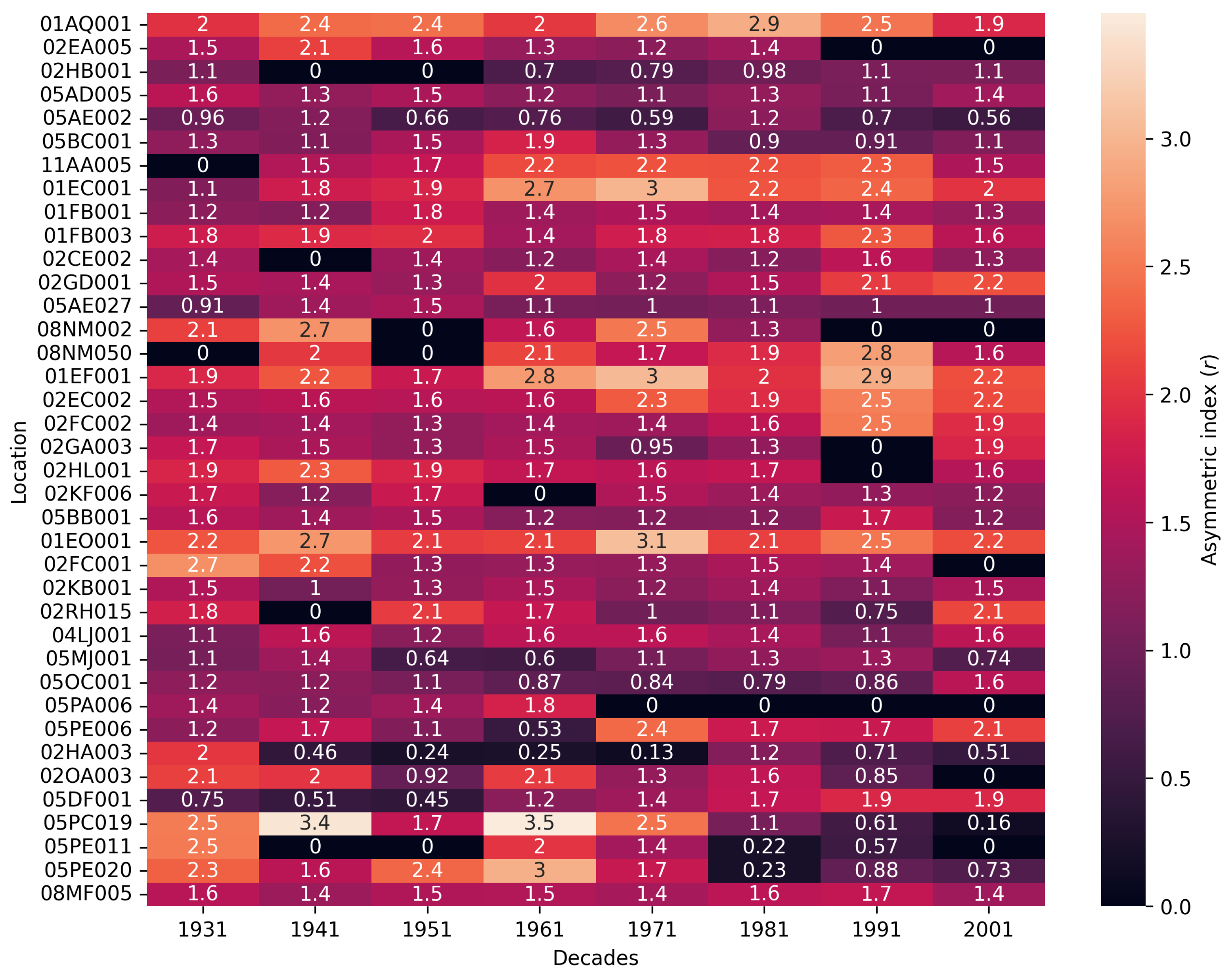
Asymmetric index (r) for river discharge across Canada over 8 decades.
The decadal analysis of multifractal parameters revealed substantial temporal variability across the 38 river stations (Figure 3, Figure 4 and Figure 5). Figure 5 illustrates the fluctuations in multifractal strength () over eight decades, categorized by mean discharge.
Category 1 rivers (<10 m3/s) exhibited values ranging from 0.18 to 1.36, with Station 11AA005 consistently showing the highest multifractality across most decades. Notable declines occurred at stations 02EA005 (1991–2010) and 02HB001 (1941–1961), where decreased by approximately 40–60.
Category 2 rivers (10–20 m3/s) showed values between 0.12 and 1.36. Stations 01EC001, 08NM002, and 08NM050 exhibited pronounced reductions during the 1930s and 1990s, with values falling below 0.3.
Category 3 rivers (20–40 m3/s) displayed the most dynamic range, with reaching 1.36 in the 1950s at multiple stations. Minimum values occurred variably, with stations 02GA003 and 02HL001 recording during the 1980s and 1990s.
Category 4 rivers (40–200 m3/s) showed divergent temporal patterns. Station 05PA006 decreased from in early decades to post-1970s, while 05PE006 increased from to in later decades.
Category 5 rivers (>200 m3/s) maintained relatively stable values (0.07–0.82), with minimal decadal fluctuation compared to other categories.
3.2. Singularity and Asymmetry Patterns
The singularity exponent () showed distinct patterns across discharge categories (Figure 6). Category 1 rivers maintained low values (0.06–0.12), indicating relatively uniform scaling. Station 01AQ001 consistently showed the minimum across all decades, while 05BC001 and 11AA005 exhibited peaks during specific periods (1931–1950 and 2001–2010, respectively).
Category 2 rivers displayed values of 0.07–0.12, with 05AE027 showing maximum values across four decades. Category 3 values ranged 0.08–0.18, with 01EF001 maintaining consistently low and 05BB001 reaching maximum values during 1931–1990. Higher variability characterized Category 4 ( = 0.07–0.22), where 05OC001 maintained high values across multiple decades while 01EO001 showed consistently low values. Category 5 exhibited minimal variation (0.06–0.22), with 02HA003 showing the most stable patterns.
The asymmetric index (r) revealed predominant right-skewed spectra () across most stations and decades (Figure 7), indicating small-scale fluctuation dominance. Category 1 stations 01AQ001 and 05AD005 maintained across all eight decades, while 02EA005 transitioned from right-skewed (1931–1990) to left-skewed (1991–2010). In Category 2, stations 01EC001, 01FB001, 01FB003, and 02GD001 showed persistent right-skewed spectra, whereas 02CE002 and 05AE027 exhibited this pattern in only one decade each. Category 3 demonstrated strong small-scale dominance, with stations 01EF001, 02EC002, and 02FC002 maintaining throughout the study period. Category 4 showed the most consistent right-skewed spectra, with stations 01EO001, 02KB001, and 04LJ001 maintaining across all decades. In Category 5, only 08MF005 maintained persistent right-skewed spectra.
3.3. Long-Term Multifractal Characteristics
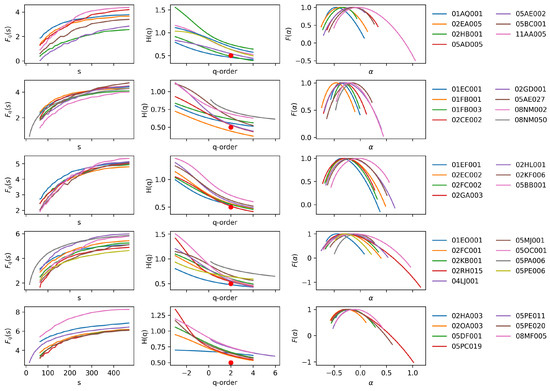
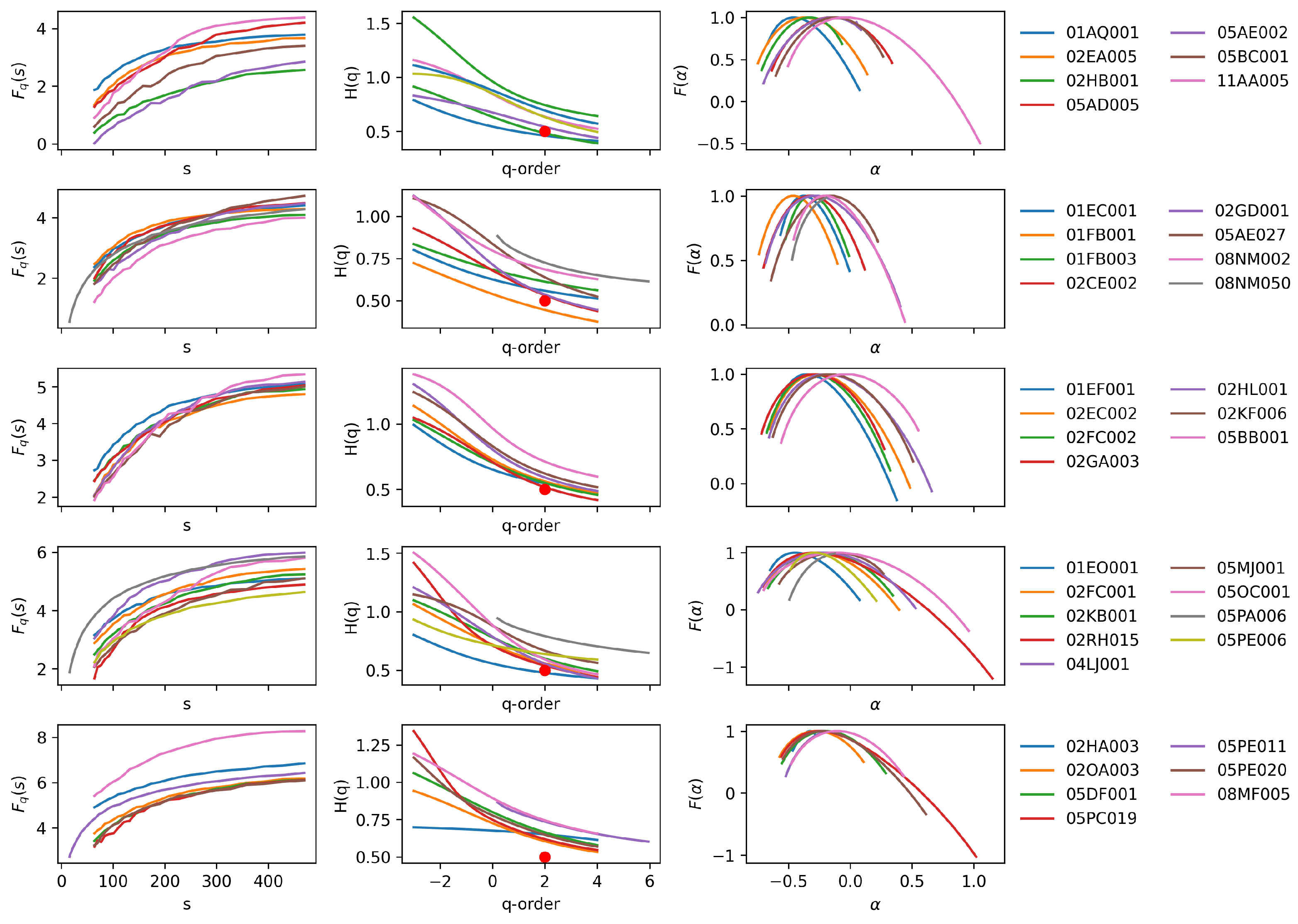
Analysis of the complete 1931–2010 period revealed robust multifractal structure across all stations (Figure 8). The vs. s relationships showed distinct linear trends in Categories 2 and 3, indicating consistent multifractal scaling. Categories 1, 4, and 5 exhibited greater separation among time series, reflecting more heterogeneous discharge dynamics.
Figure 8.
Multifractal spectra for 38 river stations in Canada (1931–2010). Red dots signify .
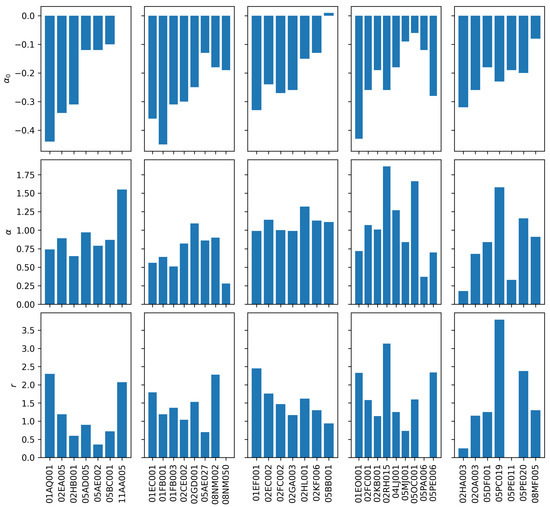
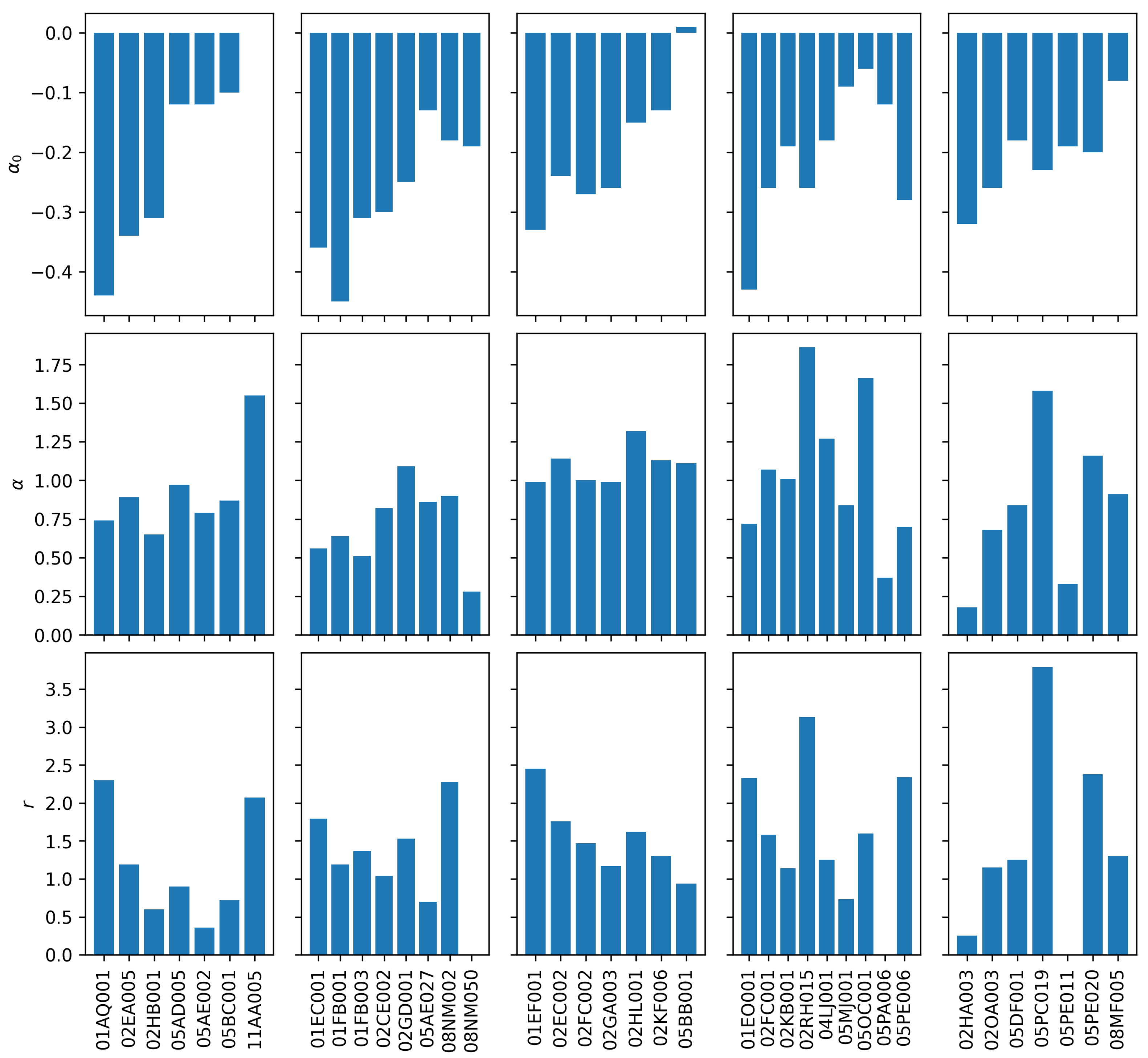
The spectra (Figure 9) confirmed multifractality, with decreasing values at higher q. Five stations (01AQ001, 02HB001, 01FB001, 02GA003, 01EO001) exhibited anti-persistence (), while the remaining stations showed long-term persistence (). Multifractal strength for the combined period was , with category-specific means of (Category 1), (Category 2), (Category 3), (Category 4), and (Category 5).
Figure 9.
Multifractal statistics for river discharge across 38 stations in Canada (1931–2010).
3.4. Multifractal Clustering Analysis
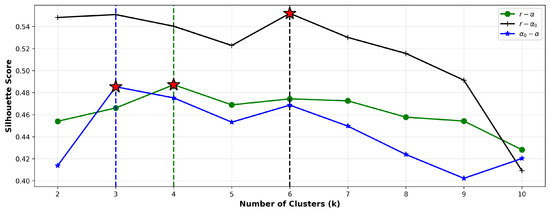
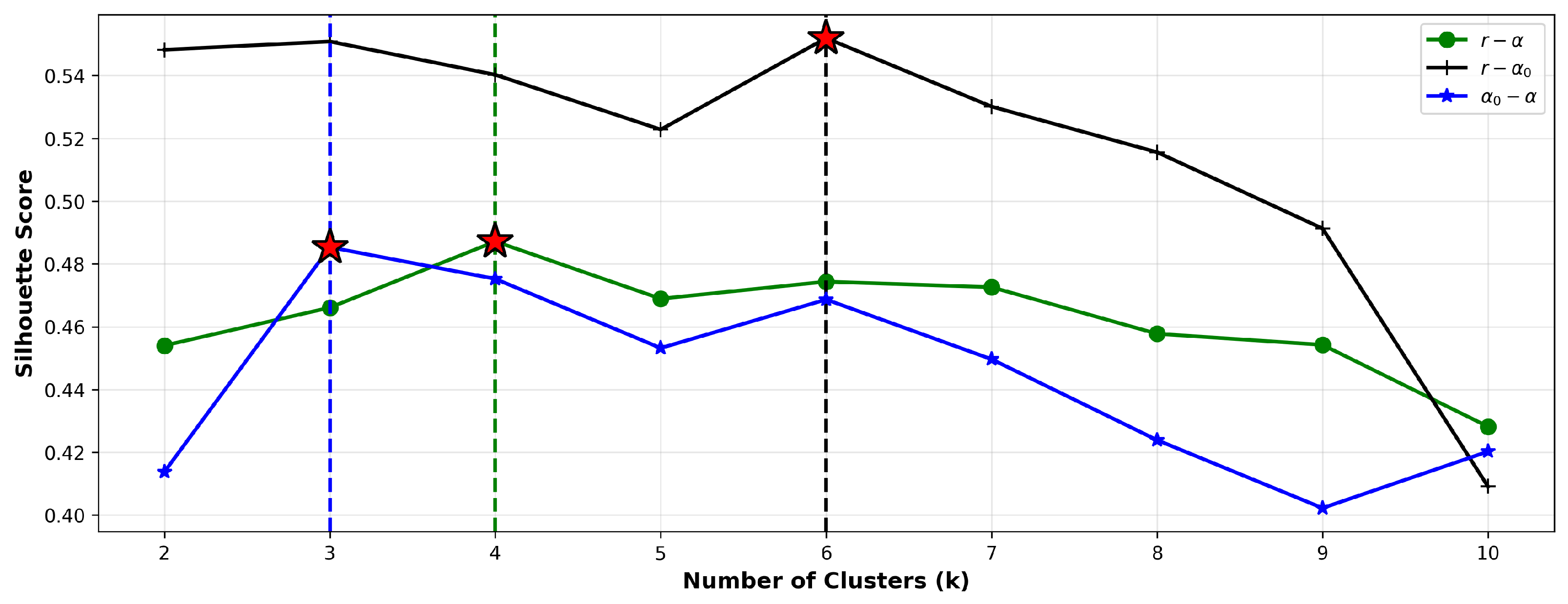
Silhouette analysis determined optimal cluster numbers as for the plane, for , and for (Figure 10).
Figure 10.
Determination of optimal cluster number using the silhouette method.
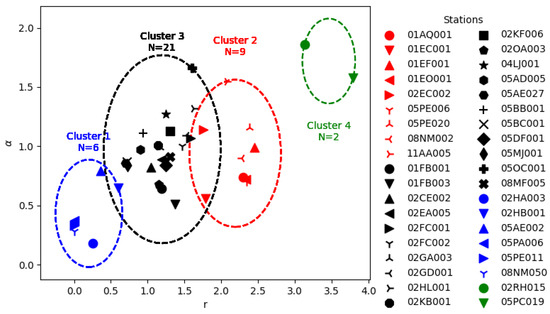
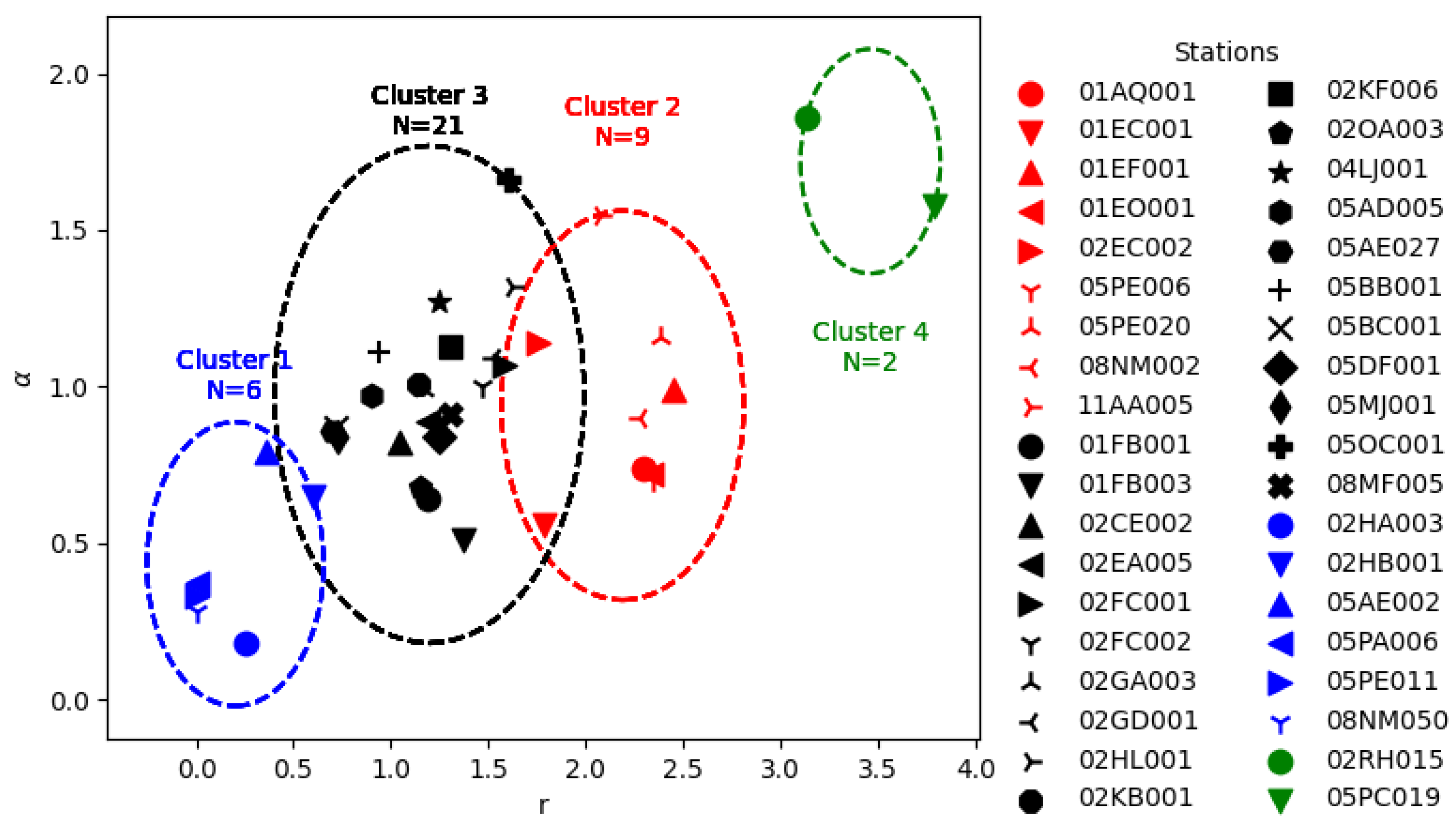
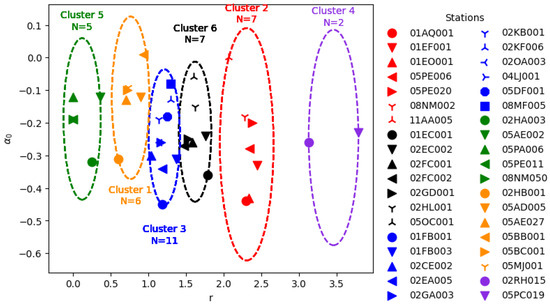
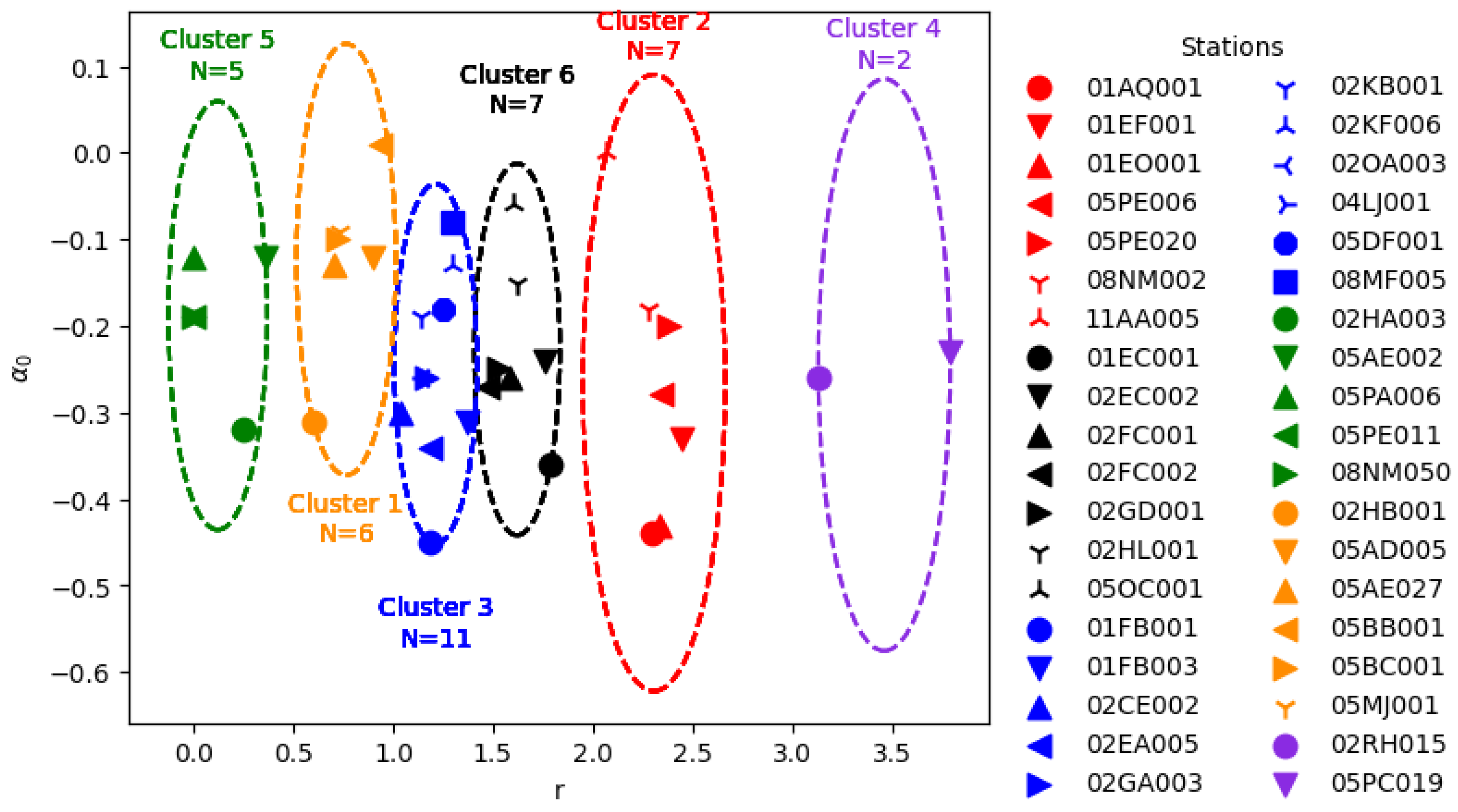
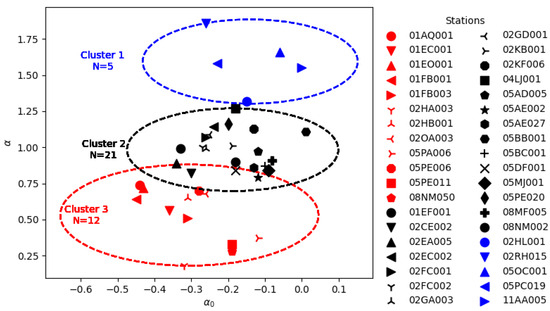
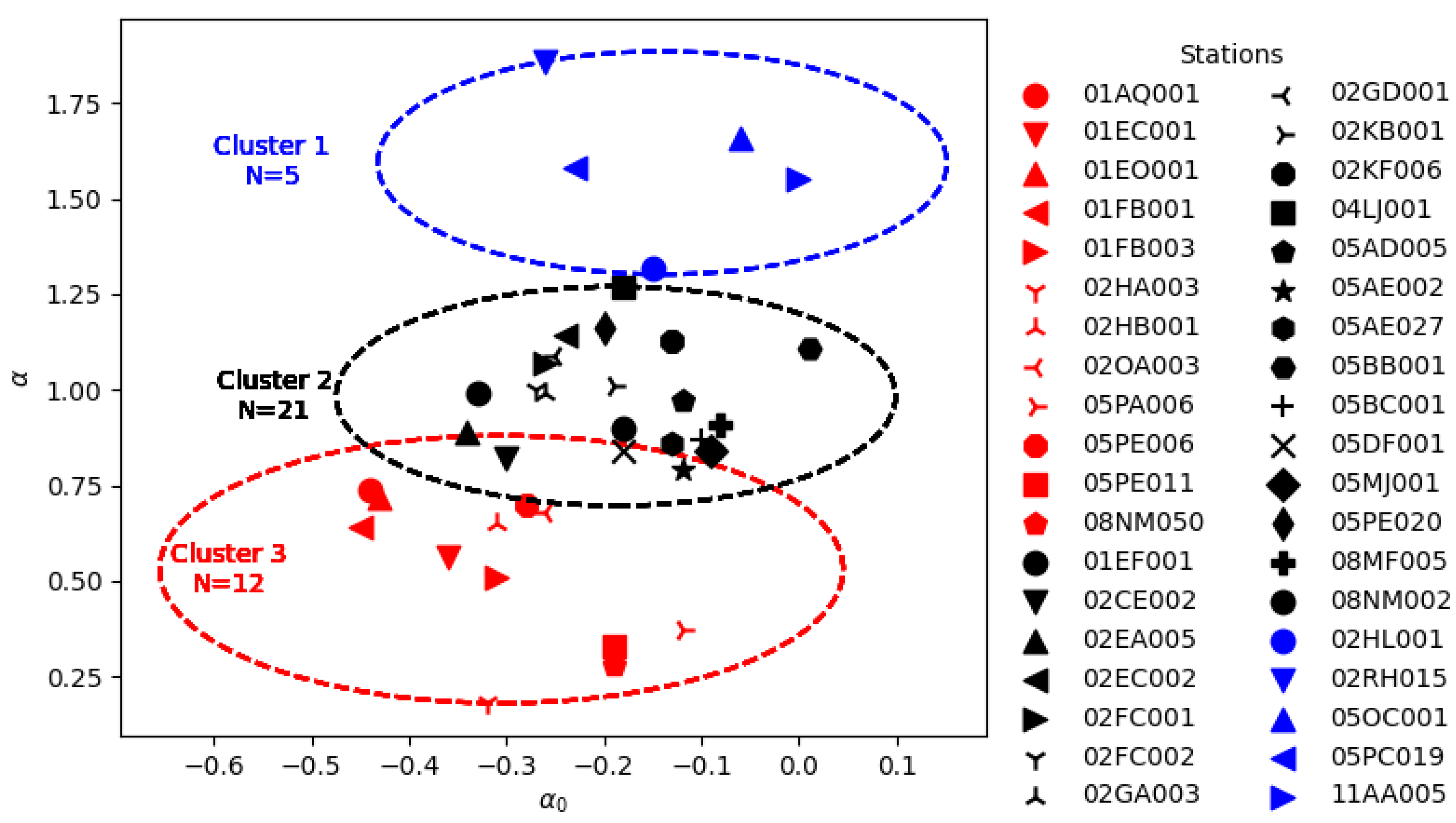
In the plane (Figure 11), Cluster 1 contained six stations with low multifractality () and high asymmetry (). Cluster 2 comprised 21 stations with moderate multifractality () and asymmetry (). Cluster 3 showed a similar range but higher r values (>2), while Cluster 4 contained two stations with high multifractality () and extreme asymmetry (). The plane clustering (Figure 12) revealed six groups primarily distinguished by r values. Cluster 5 () showed low r (0–0.5) with between −0.15 and −0.3. Cluster 1 () exhibited moderate r (0.5–1.0) with a similar range. Cluster 4 () displayed extreme r values (3.5–4.0) with from −0.25 to −0.6. Clustering in the plane (Figure 13) produced three groups based primarily on values: Cluster 1 (, N = 12), Cluster 2 (, N = 20), and Cluster 3 (, N = 6). Further substructure emerged along the axis within each cluster. Cluster validation metrics (Table 2) confirmed robust separation, with silhouette scores of 0.49–0.55, Davies-Bouldin indices of 0.51–0.66, and Calinski–Harabasz scores of 59.89–154.76 across the three parameter planes. The relatively weak cluster structure reflects the distinct hydrological signatures of individual rivers within the analyzed basins. The moderate Silhouette scores (–) suggest that, although the clusters are distinguishable, some degree of overlap exists. This overlap highlights the inherent complexity and individuality of river systems in the study region, consistent with previous findings that river networks exhibit multifractal and highly heterogeneous structures shaped by basin-specific controls [15,16,17]. Such moderate separation is expected, as each river’s multifractal signature is influenced by a combination of interacting factors such as catchment characteristics, discharge regimes, and climate variability [18], as well as anthropogenic modifications such as dam construction and water withdrawals [19].
Figure 11.
Clustering in the plane showing four distinct groups.
Figure 12.
Clustering in plane revealing six distinct groups.
Figure 13.
Clustering in plane showing three primary groups.
Table 2.
Cluster validation metrics for k-means clustering.
4. Discussion
4.1. Hydrological Significance of Multifractal Patterns
The decadal variations in multifractal strength () reveal distinct hydrological regimes across river categories. Category 1 rivers (small streams) exhibited consistent multifractality, reflecting their heightened sensitivity to localized precipitation events and rapid hydrological response. This aligns with the established understanding that headwater systems amplify climatic signals through their limited storage capacity and quick response times [1]. The observed fluctuations in stations like 02EA005 and 02HB001 during specific decades likely reflect periods of altered precipitation patterns or land use changes that disproportionately affected these sensitive systems.
In contrast, Category 4–5 rivers (major regulated systems) demonstrated more stable multifractal signatures, consistent with the damping effect of large storage volumes and anthropogenic control. However, the persistent multifractality even in these systems suggests that natural hydrological variability cannot be completely suppressed by regulation. The transitional behavior of Category 2–3 rivers represents an intermediate state where both natural variability and anthropogenic influence interact to produce complex scaling behaviors.
From a hydrological perspective, the observed multifractal behavior captures both intrinsic variability and system-specific controls. In Canadian rivers, catchment characteristics such as area, topography, soil type, and vegetation, as well as climatic gradients from west to east and north to south, contribute to the diversity of scaling behaviors [1,2]. The multifractal parameters, therefore, provide an integrated lens to quantify how these factors collectively influence river dynamics [6,8]. By grouping rivers based on , , and r, the analysis identifies sets of rivers that share similar hydrodynamic signatures, which can inform comparative hydrology and enhance understanding of regional variability in flow regimes [18].
Moreover, these multifractal signatures have practical hydrological implications. In small, high-variability rivers, the dominance of fine-scale fluctuations may increase susceptibility to flash flooding or drought events, highlighting the need for localized management strategies [1]. In large rivers, persistent multifractality despite regulation underscores the importance of considering natural variability in reservoir operation, flood forecasting, and water resource planning [19]. Overall, multifractal analysis provides a framework to connect scaling behaviors with hydrological processes, enabling a more nuanced interpretation of how climate, catchment characteristics, and human interventions shape Canadian river systems [8,18].
4.2. Anthropogenic Modulation of Natural Scaling Regimes
Our analysis reveals evidence that dam operations fundamentally alter multifractal scaling relationships in river systems. The clear before-and-after transitions observed at multiple stations (11AA005, 08NM002/050, 05MJ001, 05PE006) demonstrate that reservoirs introduce characteristic temporal signatures detectable through multifractal analysis. These findings align with [20] but extend them by quantifying the direction and magnitude of change across diverse dam types and operational regimes, ranging from small run-of-river structures to large storage reservoirs.
Notably, dams produced divergent effects on multifractal strength. Some structures reduced values (e.g., Fresno and Okanagan dams), suggesting homogenization of flow regimes and suppression of natural variability, while others increased multifractality (e.g., Shellmouth and Veteran’s Memorial dams), suggesting the introduction of complexity through managed fluctuations [18,19]. This dichotomy likely reflects different operational objectives, such as flood control versus hydroelectric generation, and highlights that multifractal analysis provides a quantitative framework for classifying dam impacts based on dynamic behavior rather than solely on their structural attributes.
Beyond individual rivers, these effects have broader implications for regulated basins across Canada and similar temperate-climate systems in the United States. In systems such as the Saskatchewan, Red, and Columbia River basins, dams and water diversion infrastructure modulate seasonal flows, which may obscure natural scaling relationships and alter downstream hydrological connectivity [18,19]. Multifractal analysis captures these alterations, revealing how anthropogenic control reshapes both high-frequency variability and longer-term flow intermittency. Such insights are particularly valuable for integrated transboundary water management, where understanding the interplay between natural variability and regulated operations is critical for flood risk mitigation, ecosystem health, and hydropower optimization [1,2].
Furthermore, the modulation of multifractal signatures underscores the sensitivity of river scaling behavior to human interventions. While some regulated systems maintain aspects of natural variability, others exhibit pronounced departures from their unregulated scaling regimes [8,20], which can affect sediment transport, nutrient cycling, and aquatic habitat structure. By leveraging multifractal metrics, hydrologists and water managers can develop more nuanced strategies that account for both anthropogenic modulation and inherent river complexity, facilitating adaptive management across diverse flow regimes [18,19].
4.3. Clustering as a Hydrological Classification Tool
The clustering analysis represents an important advancement in hydrological classification by moving beyond static basin characteristics, such as area or slope, to consider dynamic, scale-dependent behaviors inherent in river discharge. By grouping rivers based on multifractal parameters (, , and r), the analysis captures both intrinsic variability and the influence of anthropogenic modifications, providing a functional classification that reflects hydrological processes rather than solely physical attributes. The four clusters identified in the plane (Figure 11) correspond to distinct hydrological archetypes:
Cluster 1 (Low , High r): Heavily regulated systems with dampened overall variability but persistent small-scale fluctuations. These rivers typically have dams or other flow-control infrastructure that suppress high-flow events while maintaining stable baseflow. Their multifractal signatures reflect a combination of human management and residual natural dynamics [18,19].
Cluster 2 (Medium , Medium r): Transitional systems where natural variability and anthropogenic influence are balanced. Rivers in this cluster may experience moderate regulation or substantial groundwater contributions, which buffer extreme events and smooth discharge variability. Their multifractal properties capture this interplay between natural hydrological processes and human interventions [1,2].
Cluster 3 (High , High r): Highly variable systems dominated by large-scale climatic drivers. These rivers often correspond to snowmelt-dominated basins or are strongly influenced by climate oscillations and teleconnection patterns such as ENSO. Their high multifractality indicates significant variability across both short- and long-term scales, reflecting the combined effect of climatic forcing and basin-specific characteristics [8].
Cluster 4 (High , Low r): Flashy systems with strong multifractality primarily driven by precipitation events. These typically include small- to medium-sized watersheds with limited storage capacity, where high-intensity rainfall produces rapid and pronounced flow responses. The multifractal signatures of these rivers emphasize the dominance of extreme short-term events over longer-term variability [1].
This classification offers a physically based framework for anticipating hydrological responses to environmental change, complementing traditional approaches that rely solely on basin morphology or conventional flow statistics.
4.4. Regional Patterns and Climate Connections
The distinct multifractal regimes observed across provinces reflect fundamental differences in hydrological processes, catchment characteristics, and landscape controls. The complex multifractal signatures in British Columbia (Category 4, ) align with its steep topography and snowmelt-dominated hydrology, where elevation gradients and seasonal storage release generate variability across multiple scales [8,21]. In contrast, Ontario’s more subdued multifractality (Category 5, ) reflects both its gentler terrain and extensive flow regulation, where dams and reservoirs homogenize discharge dynamics across temporal scales [20,22]. These provincial distinctions illustrate how catchment characteristics filter climate signals into unique scaling signatures, supporting the concept of hydrological landscapes in which geology, climate, and human management jointly constrain river behavior [1].
The anti-persistence detected at five stations () suggests strong regulatory feedback mechanisms within these systems. This mean-reverting behavior is characteristic of heavily managed rivers, where reservoir operations actively dampen flow extremes, or systems dominated by groundwater exchange that buffers surface flow variations [6,7]. Stations exhibiting anti-persistence may be particularly sensitive to climate perturbations as well as extreme precipitation or drought events that could overwhelm these stabilizing mechanisms, potentially leading to more persistent hydrological anomalies.
Across Canada, multifractal patterns reveal both regional climatic signatures and the imprint of human intervention. In western provinces, snowmelt and orographic precipitation drive high variability and strong scale interactions, while in central and eastern provinces, flatter topography combined with regulation tends to suppress extreme variability. These spatial patterns highlight the utility of multifractal analysis for understanding how climate gradients, catchment properties, and anthropogenic activities interact to shape river discharge dynamics over broad geographic extents.
The multifractal framework developed here provides actionable insights for water resource management under changing climate conditions. Specifically:
- Risk Assessment: Rivers in high- clusters (e.g., Cluster 3–4 in -r space) exhibit variability across multiple timescales simultaneously, requiring probabilistic flood management strategies that account for cross-scale interactions. In contrast, low- systems respond more predictably within defined scaling ranges [5].
- Climate Adaptation: Systems with strong multifractality may be more vulnerable to climate shifts, as altered precipitation patterns could disrupt the scaling relationships fundamental to their behavior [23]. The clustering approach identifies which river types are most at risk of regime shifts [24].
- Regulatory Planning: Distinct multifractal signatures of different dam types (e.g., flood control versus hydroelectric) provide a quantitative basis for optimizing operations that balance human needs with ecological flow maintenance [25].
- Monitoring Design: Clustering reveals stations with redundant scaling behaviors and identifies critical gaps in regional hydrological diversity, enabling more efficient network design that captures the full spectrum of hydrological regimes [26].
Overall, these results demonstrate that multifractal metrics and clustering offer a robust framework for linking hydrological dynamics to regional climate patterns and human interventions, providing a practical tool for adaptive water management across Canada.
4.5. Conclusions
This study has established multifractal clustering as a powerful methodology for classifying river systems based on their intrinsic scale-invariant dynamics, moving beyond traditional characterization to reveal archetypal hydrological behaviors. By analyzing eight decades of daily discharge data from 38 stations across Canada, we identified distinct clusters in the multifractal parameter space (, , ) that correspond to unique regimes of flow variability, scaling strength, and fluctuation asymmetry. The decadal analysis revealed the significant impact of anthropogenic interventions, particularly dams, which leave clear and quantifiable signatures in the multifractal spectrum, either dampening or amplifying natural complexity. Over the long term, the persistence of these clustered behaviors underscores the stability of these dynamical regimes, providing a new, process-based framework for hydrological classification.
The implications of this work are immediate and practical for water resource management. Our clustering approach directly informs risk assessment by categorizing rivers based on their cross-scale variability, enabling tailored strategies for flood and drought management. In dam operations, the distinct multifractal signatures of different reservoir types provide a quantitative basis for optimizing releases to balance human needs with ecological functions. Furthermore, this framework enhances monitoring network design by identifying stations with redundant dynamical behaviors and critical gaps in regional coverage.
Looking forward, this multifractal clustering framework opens several promising avenues for research. The logical next step is to apply this methodology to river systems globally to test its universality and identify global hydrological archetypes. To deepen the dynamical understanding, future work should integrate this approach with other nonlinear metrics, such as Lyapunov exponents, correlation dimension, and Recurrence Quantification Analysis, such as within information-theoretic planes like the Fisher–Shannon and complexity–entropy planes. Finally, explicitly linking these multifractal clusters to specific catchment attributes (e.g., geology, land cover, climate indices) will bridge the gap between dynamical signature and physical driver, ultimately leading to more predictive and resilient water resource management in a non-stationary world.
Author Contributions
C.O.: Conceptualization; data curation; formal analysis; visualization; writing—original draft; investigation; methodology; writing—review and editing. A.O.: writing—original draft; investigation; methodology; writing—review and editing. S.O.: formal analysis; writing—original draft; investigation; methodology; writing—review and editing. All authors have read and agreed to the published version of the manuscript.
Funding
This research received no external funding.
Institutional Review Board Statement
Not applicable.
Informed Consent Statement
Not applicable.
Data Availability Statement
All data used in this study are publicly available and listed in the methods section. Data used in this software is publicly available at https://collaboration.cmc.ec.gc.ca (accessed on 7 May 2023).
Acknowledgments
The authors would like to thank the Faculty of Environmental and Urban Change, York University, Toronto, Canada for providing the necessary support for this research.
Conflicts of Interest
The authors declare that they have no conflict of interest. The authors have no relevant financial or non-financial interests to disclose.
References
- Blöschl, G. Scaling in hydrology. Hydrol. Process. 2001, 15, 709–711. [Google Scholar] [CrossRef] [Scilit]
- Hubert, P. Multifractals as a tool to overcome scale problems in hydrology. Hydrol. Sci. J. 2001, 46, 897–905. [Google Scholar] [CrossRef] [Scilit]
- Rodriguez-Iturbe, I.; Rinaldo, A. Fractal River Basins: Chance and Self-Organization; Cambridge University Press: Cambridge, UK, 1997. [Google Scholar]
- Tarboton, D.G.; Bras, R.L.; Rodriguez-Iturbe, I. The fractal nature of river networks. Water Resour. Res. 1988, 24, 1317–1322. [Google Scholar] [CrossRef] [Scilit]
- Schertzer, D.; Lovejoy, S. Multifractals, generalized scale invariance and complexity in geophysics. Int. J. Bifurc. Chaos 2011, 21, 3417–3456. [Google Scholar] [CrossRef] [Scilit]
- Pandey, G.; Lovejoy, S.; Schertzer, D. Multifractal analysis of daily river flows including extremes for basins of five to two million square kilometres, one day to 75 years. J. Hydrol. 1998, 208, 62–81. [Google Scholar] [CrossRef] [Scilit]
- Kantelhardt, J.W.; Zschiegner, S.A.; Koscielny-Bunde, E.; Havlin, S.; Bunde, A.; Stanley, H.E. Multifractal detrended fluctuation analysis of nonstationary time series. Phys. A Stat. Mech. Its Appl. 2002, 316, 87–114. [Google Scholar] [CrossRef] [Scilit]
- Tan, X.; Gan, T.Y. Multifractality of Canadian precipitation and streamflow. Int. J. Climatol. 2017, 37, 1221–1236. [Google Scholar] [CrossRef] [Scilit]
- Wolfe, J.D.; Shook, K.R.; Spence, C.; Whitfield, C.J. A watershed classification approach that looks beyond hydrology: Application to a semi-arid, agricultural region in Canada. Hydrol. Earth Syst. Sci. 2019, 23, 3945–3967. [Google Scholar] [CrossRef] [Scilit]
- Brunner, M.I.; Melsen, L.A.; Newman, A.J.; Wood, A.W.; Clark, M.P. Future streamflow regime changes in the United States: Assessment using functional classification. Hydrol. Earth Syst. Sci. 2020, 24, 3951–3966. [Google Scholar] [CrossRef] [Scilit]
- Jehn, F.U.; Bestian, K.; Breuer, L.; Kraft, P.; Houska, T. Using hydrological and climatic catchment clusters to explore drivers of catchment behavior. Hydrol. Earth Syst. Sci. 2020, 24, 1081–1100. [Google Scholar] [CrossRef] [Scilit]
- Drożdż, S.; Oświecimka, P. Detecting and interpreting distortions in hierarchical organization of complex time series. Phys. Rev. E 2015, 91, 030902. [Google Scholar] [CrossRef] [Scilit] [PubMed]
- Likas, A.; Vlassis, N.; Verbeek, J.J. The global k-means clustering algorithm. Pattern Recognit. 2003, 36, 451–461. [Google Scholar] [CrossRef] [Scilit]
- Ogunjo, S.T. Multifractal Detrended Fluctuation Analysis, Cross-Correlation and Clustering of Global 7 Be Activity Concentration. Fluct. Noise Lett. 2025, 24, 2550019. [Google Scholar] [CrossRef] [Scilit]
- De Bartolo, S.; Gabriele, S.; Gaudio, R. Multifractal behaviour of river networks. Hydrol. Earth Syst. Sci. 2000, 4, 105–112. [Google Scholar] [CrossRef] [Scilit]
- Xiang, J.; Xu, Y.; Yuan, J.; Wang, Q.; Wang, J.; Deng, X. Multifractal analysis of river networks in an urban catchment on the Taihu Plain, China. Water 2019, 11, 2283. [Google Scholar] [CrossRef] [Scilit]
- Qin, Z.; Wang, J.; Lu, Y. Multifractal characteristics analysis based on slope distribution probability in the Yellow River Basin, China. ISPRS Int. J. Geo-Inf. 2021, 10, 337. [Google Scholar] [CrossRef] [Scilit]
- Assani, A.A. Variability of Mean Annual Flows in Southern Quebec (Canada). Water 2022, 14, 1370. [Google Scholar] [CrossRef] [Scilit]
- Champagne, O.; Arain, M.A.; Leduc, M.; Coulibaly, P.; McKenzie, S. Future shift in winter streamflow modulated by the internal variability of climate in southern Ontario. Hydrol. Earth Syst. Sci. 2020, 24, 3077–3096. [Google Scholar] [CrossRef] [Scilit]
- Stosic, T.; Stosic, B.; Singh, V.P. The influence of cascade dams on multifractality of river flow. Res. Sq. 2023; preprint. [CrossRef] [Scilit]
- Déry, S.J.; Wood, E.F. Decreasing river discharge in northern Canada. Geophys. Res. Lett. 2005, 32. [Google Scholar] [CrossRef] [Scilit]
- Latif, S.; Simonovic, S.P. Compounding joint impact of rainfall, storm surge and river discharge on coastal flood risk: An approach based on 3D Fully Nested Archimedean Copulas. Environ. Earth Sci. 2023, 82, 63. [Google Scholar] [CrossRef] [Scilit]
- Lovejoy, S.; Schertzer, D. Functional box-counting and multiple elliptical dimensions in rain. Science 1987, 235, 1036–1038. [Google Scholar] [CrossRef] [Scilit]
- Milly, P.C.D.; Betancourt, J.; Falkenmark, M.; Hirsch, R.M.; Kundzewicz, Z.W.; Lettenmaier, D.P.; Stouffer, R.J. Stationarity is dead: Whither water management? Science 2008, 319, 573–574. [Google Scholar] [CrossRef] [Scilit]
- Timpe, K.; Kaplan, D. The changing hydrology of a dammed Amazon. Sci. Adv. 2017, 3, e1700611. [Google Scholar] [CrossRef] [Scilit]
- Blöschl, G.; Bierkens, M.F.; Chambel, A.; Cudennec, C.; Destouni, G.; Fiori, A.; Kirchner, J.W.; McDonnell, J.J.; Savenije, H.H.; Sivapalan, M.; et al. Twenty-three unsolved problems in hydrology (UPH)—A community perspective. Hydrol. Sci. J. 2019, 64, 1141–1158. [Google Scholar] [CrossRef] [Scilit]

Disclaimer/Publisher’s Note: The statements, opinions and data contained in all publications are solely those of the individual author(s) and contributor(s) and not of MDPI and/or the editor(s). MDPI and/or the editor(s) disclaim responsibility for any injury to people or property resulting from any ideas, methods, instructions or products referred to in the content. |
© 2025 by the authors. Licensee MDPI, Basel, Switzerland. This article is an open access article distributed under the terms and conditions of the Creative Commons Attribution (CC BY) license.