
Article

Dissolved Ion Distribution in a Watershed: A Study Utilizing Ion Chromatography and Non-Parametric Analysis

by
Selline Okechi
1,
Keisuke Nakayama
1,* and
Katsuaki Komai
2
1
Department of Civil Engineering, Graduate School of Engineering, Kobe University, 1-1 Rokkodai-cho, Nada-ku, Kobe 658-8501, Japan
2
Department of Civil and Environmental Engineering, Kitami Institute of Technology, 165 Koen-Cho, Kitami City 090-0015, Japan
*
Author to whom correspondence should be addressed.
Hydrology 2025, 12(12), 310; https://doi.org/10.3390/hydrology12120310
Submission received: 1 October 2025 / Revised: 13 November 2025 / Accepted: 14 November 2025 / Published: 22 November 2025
(This article belongs to the Section Soil and Hydrology)

Abstract

This study presents a unique approach for characterizing ion distribution within the Kushiro River catchment basin, which is characterized by exceptionally high dissolved ion concentrations. principal component analysis, Mann–Whitney U test, and neural network modeling were employed to analyze data from 11 distinct locations in two different seasons. The 11 sampling locations were subsequently classified into five distinct groups to facilitate precise analysis of the ion distribution using neural networks. Two principal components were also employed to visualize and interpret our dataset. Compositional similarities and seasonal variations in ion distribution were identified, as well as the key variability patterns, thereby revealing underlying correlations among the dissolved ions. Our findings highlighted that Group 1, encompassing a caldera lake, exhibits the highest dissolved ion concentrations. This observation may be attributed to the geological characteristics of the underlying rock formation. Furthermore, a significant correlation was observed between the major dissolved ions present in the catchment basin, as evidenced by positive correlation coefficients. Conversely, nitrate ions exhibited a negative correlation with F, Cl, and Na+ ions. This comprehensive analytical framework offers a robust and insightful tool for determining ion distribution within catchment basins with significant implications for environmental monitoring and sustainable resource management.

1. Introduction

Rivers are vital lifelines that serve multiple crucial functions in both human societies and natural ecosystems. They provide essential resources that are fundamental to our daily lives, including clean drinking water and a source of sustenance through fishing and agriculture [1]. Additionally, rivers act as important transportation corridors, facilitating the movement of people and goods. Beyond their direct benefits to humans, these waterways also play a pivotal role in supporting a wide array of plant and animal life, fostering biodiversity and maintaining delicate ecological balances in the environments through which they flow, as well as contributing to economic growth by virtue of being cultural heritage sites. However, wetlands in Japan have been rapidly shrinking due to rapid industrialization and agricultural development [2]. This has increased pressure on the water resources, thereby affecting their quality. The Kushiro River is one of the most affected rivers in Japan as a result of climate change and human activities. With the aim of improving the criteria for water quality management in the Kushiro River catchment basin, we applied multivariate analytical techniques to determine the similarities between the ion composition as well as the seasonal variations in ion composition from different regions in the Kushiro River catchment basin. The Kushiro wetland is the largest wetland in Japan, which was partly declared a national monument in 1967 and was the first to be declared as a Ramsar site in 1980 under the Ramsar Convention [3,4]. This expansive catchment supports diverse wildlife and vegetation, as well as providing water storage, flood control, aesthetic and recreational opportunities. Teshikaga and Shibecha towns lie in the upper reaches of the Kushiro River, with populations of about 7500 and 7700, respectively. Within the Kushiro catchment basin lies the Kushiro River, one of the longest rivers in Hokkaido prefecture in Japan. The Kushiro River originates from Lake Kussharo (Japan’s largest caldera lake) in Eastern Hokkaido and flows through the wetland, which is composed of both wildlife and vegetation. In its upper section, the river is shallow and has a very gentle flow. Kushiro Marsh spreads across the lower reaches of the Kushiro River. This is the largest marshland in Japan and acts as a habitat for about 100 species of plants and animals.
Agricultural development through processes such as shortening of stream channels is a major cause of streambed degradation [5], as exemplified by the Kushiro River catchment basin [6]. This degradation leads to a reduction in the river’s carrying capacity, resulting in water spillage into wetlands during flooding events [7]. Furthermore, continuous sediment deposition may introduce sediment-associated nutrients into the soil, potentially interfering with plant growth and survival [8,9,10,11]. In addition, rapid changes in the vegetation type in the Kushiro River catchment basin have been attributed to the deterioration of water quality. The sources of sediment and nutrient loads in rivers are diverse, originating from atmospheric fallout, human activities, and riverbed rocks and soil components. The soil in the Kushiro River basin is predominantly volcanic ash soil characterized by a high content of SiO2, Al2O3, Na2O, K2O, FeO, CaO, MgO, TiO, and MnO. In contrast, peat soil, which is rich in organic matter derived from plants, is widely distributed in lowlands. This research uses a neural network, the Mann–Whitney test, and principal component analysis (PCA) to identify the dissolved ion composition and transportation in a watershed. The numerical values of principal component loadings are used to interpret the relative importance of the present chemical variables in each of the sampling stations.

2. Materials and Methods

2.1. Site Location

Our study was conducted in the Kushiro River catchment basin, where the Kushiro River, a renowned first-class river in Hokkaido Prefecture, Japan, flows. The Kushiro River originates from Lake Kussharo (Japan’s largest caldera lake) in Eastern Hokkaido. It flows through the Shibecha and Kushiro cities and empties into the Pacific Ocean. The river is 154 km long, and its basin covers an area of 2510 km2 [12]. In its upper section, the river is shallow and has a very gentle slope with a bed gradient of 0.001, which is uncharacteristic of other rivers in Japan. The upper and middle reaches of the river exhibit a relatively steep gradient, while the downstream marsh area has a gentle gradient. The river meanders as it flows downstream, and it is characterized by gentle currents. Kushiro Marsh spreads across the lower reaches of the Kushiro River catchment basin. This expansive marshland serves as a habitat for approximately 100 species of plants and animals. The Kushiro wetland, the largest wetland in Japan, was partly designated as a national monument in 1967 and was the first to be designated as a Ramsar site in 1980 under the Ramsar Convention [3,13].
The Kushiro River catchment basin supports diverse wildlife and vegetation and provides water storage, flood control, and aesthetic and recreational opportunities [14]. The average annual rainfall in the basin is approximately 1000–1200 mm. Approximately 20% of the land is used for agriculture, while the rest of the land is mountainous or has gentle slopes [14].

2.2. Data Collection

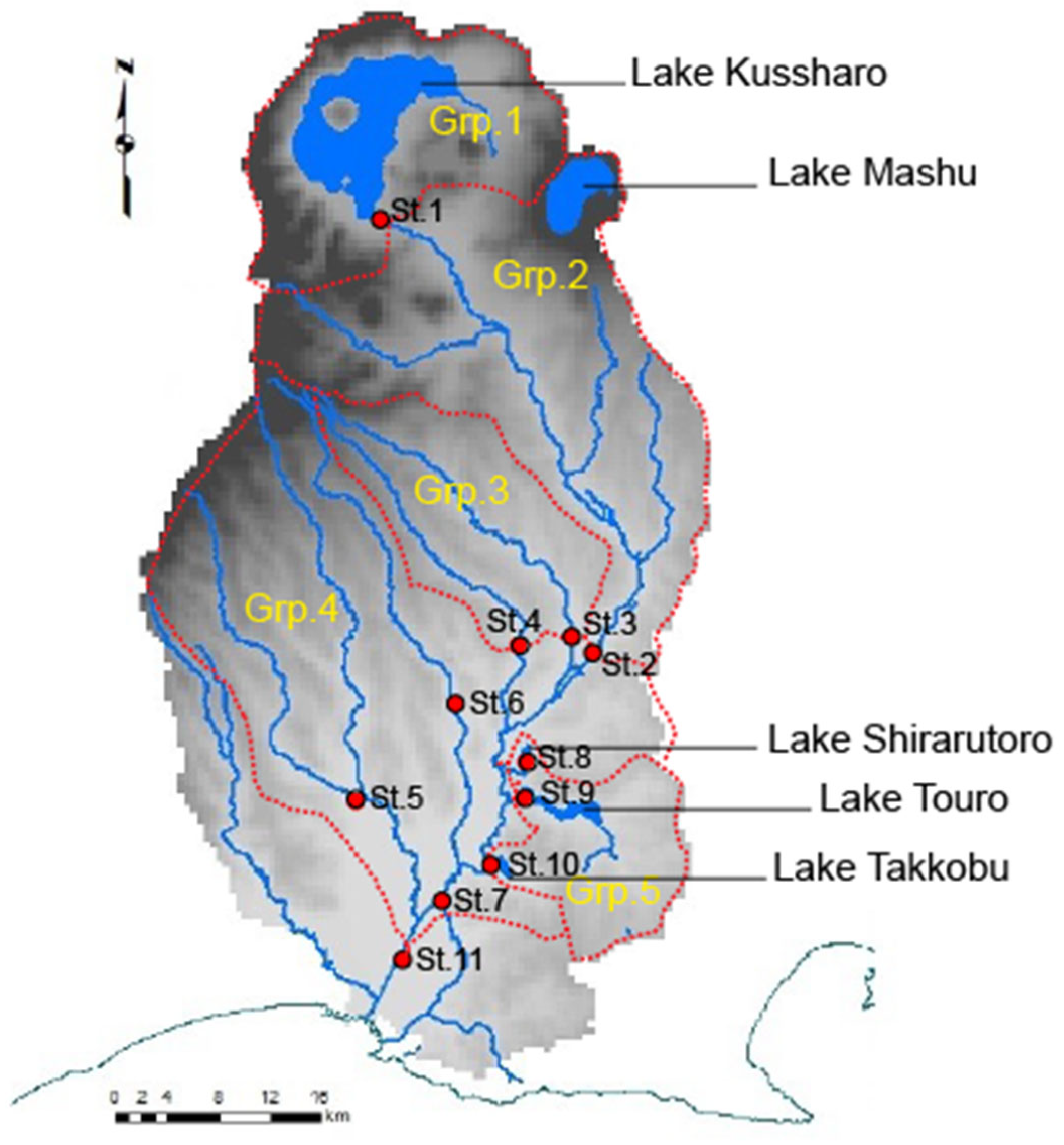
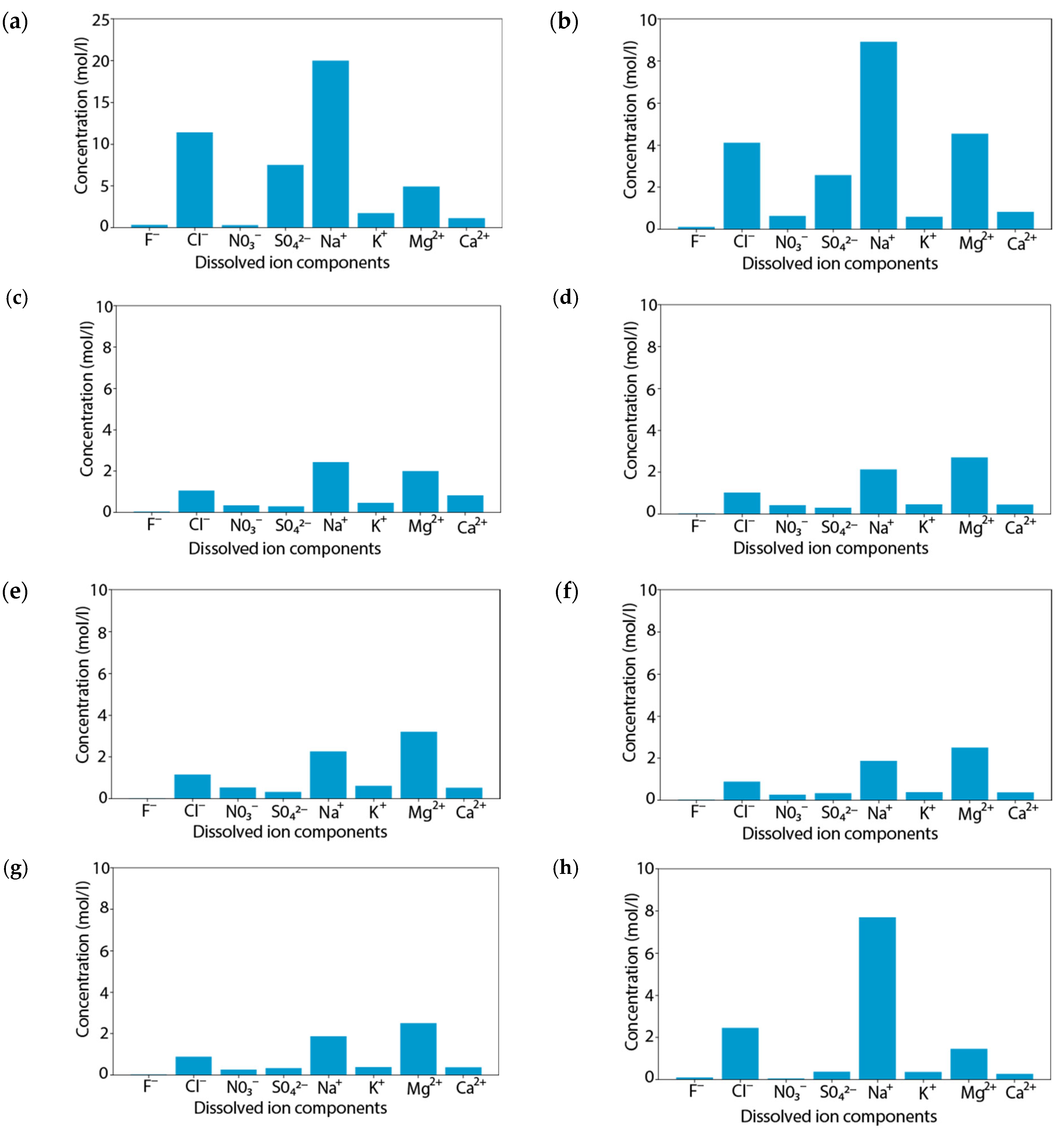
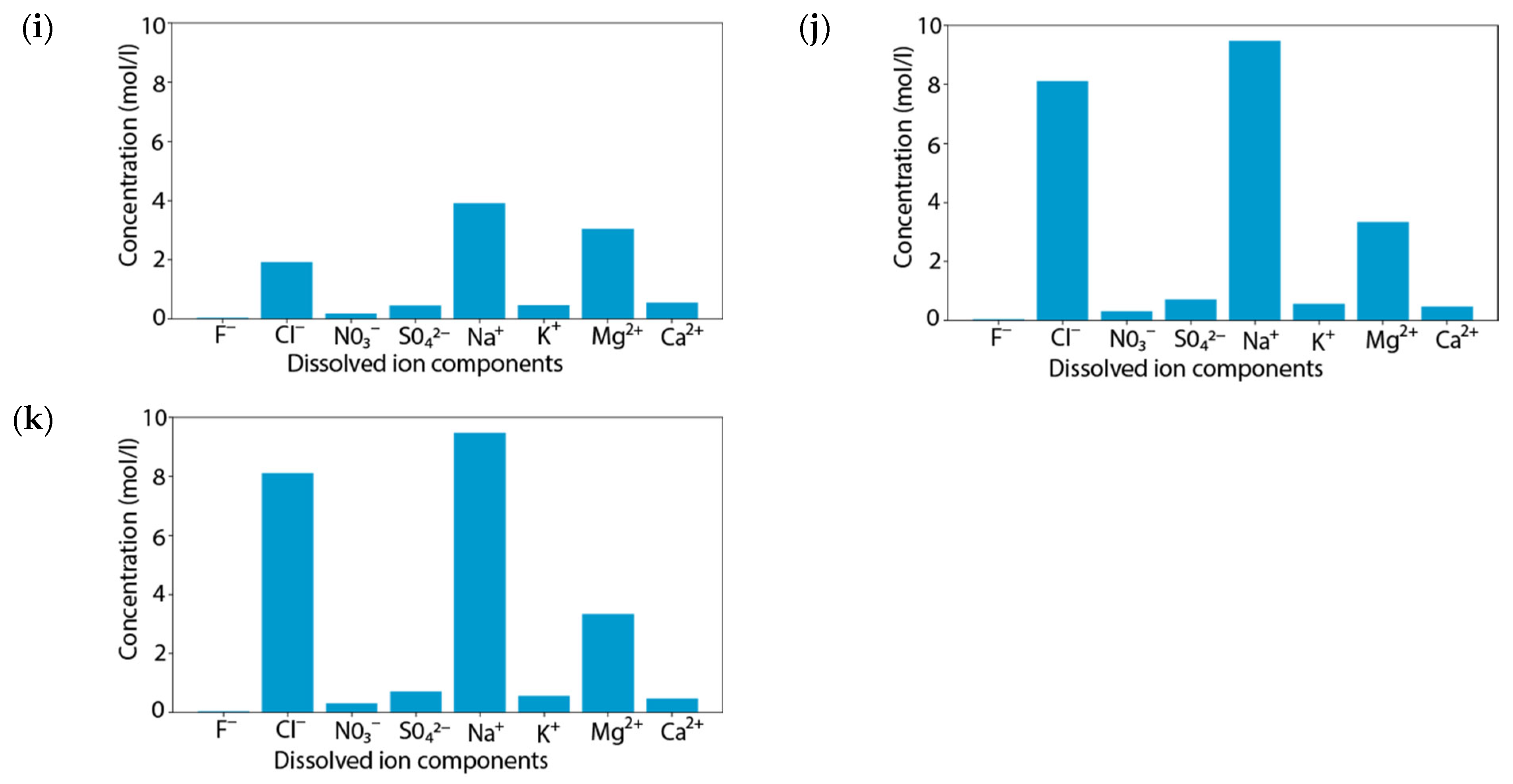
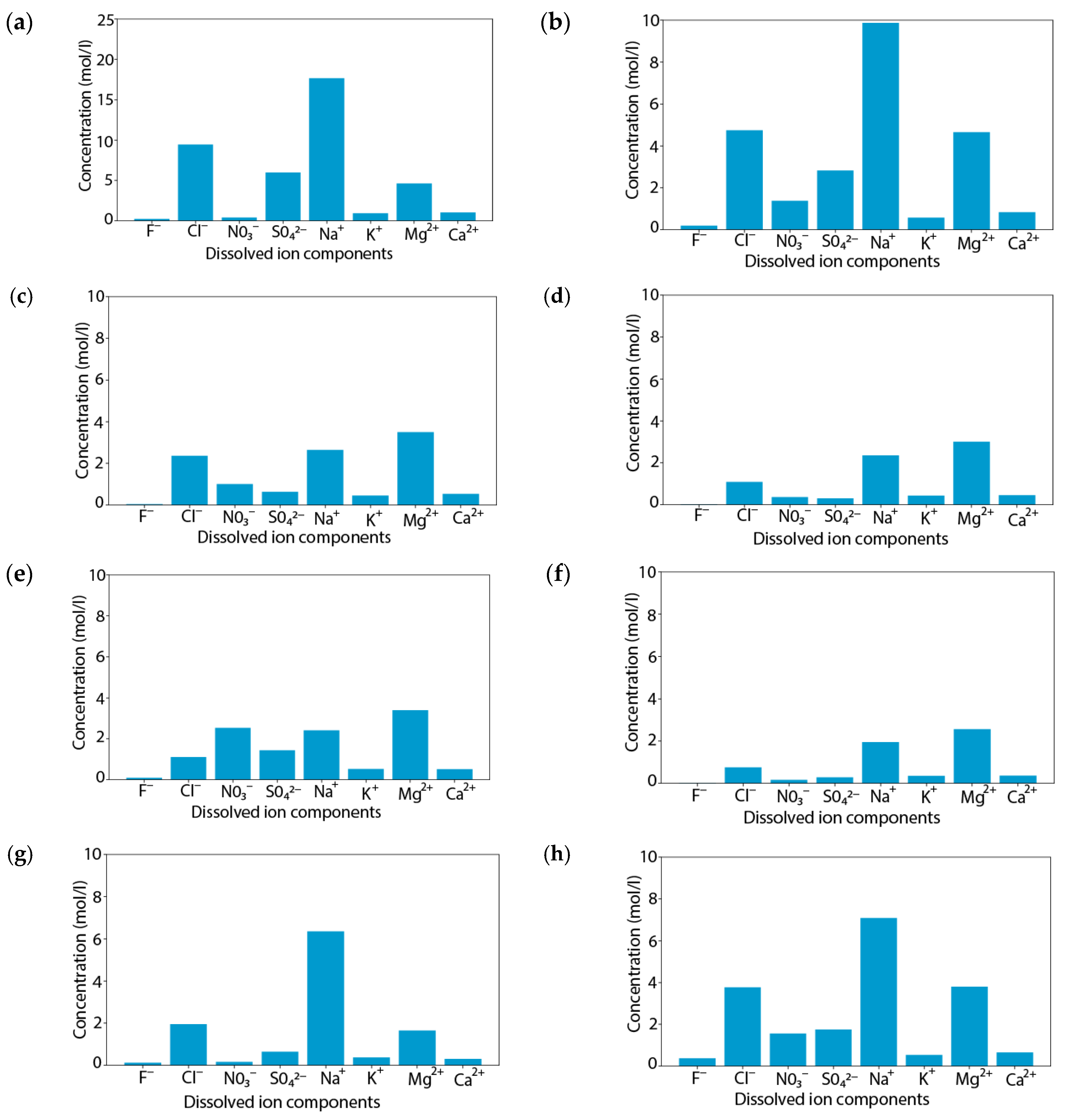
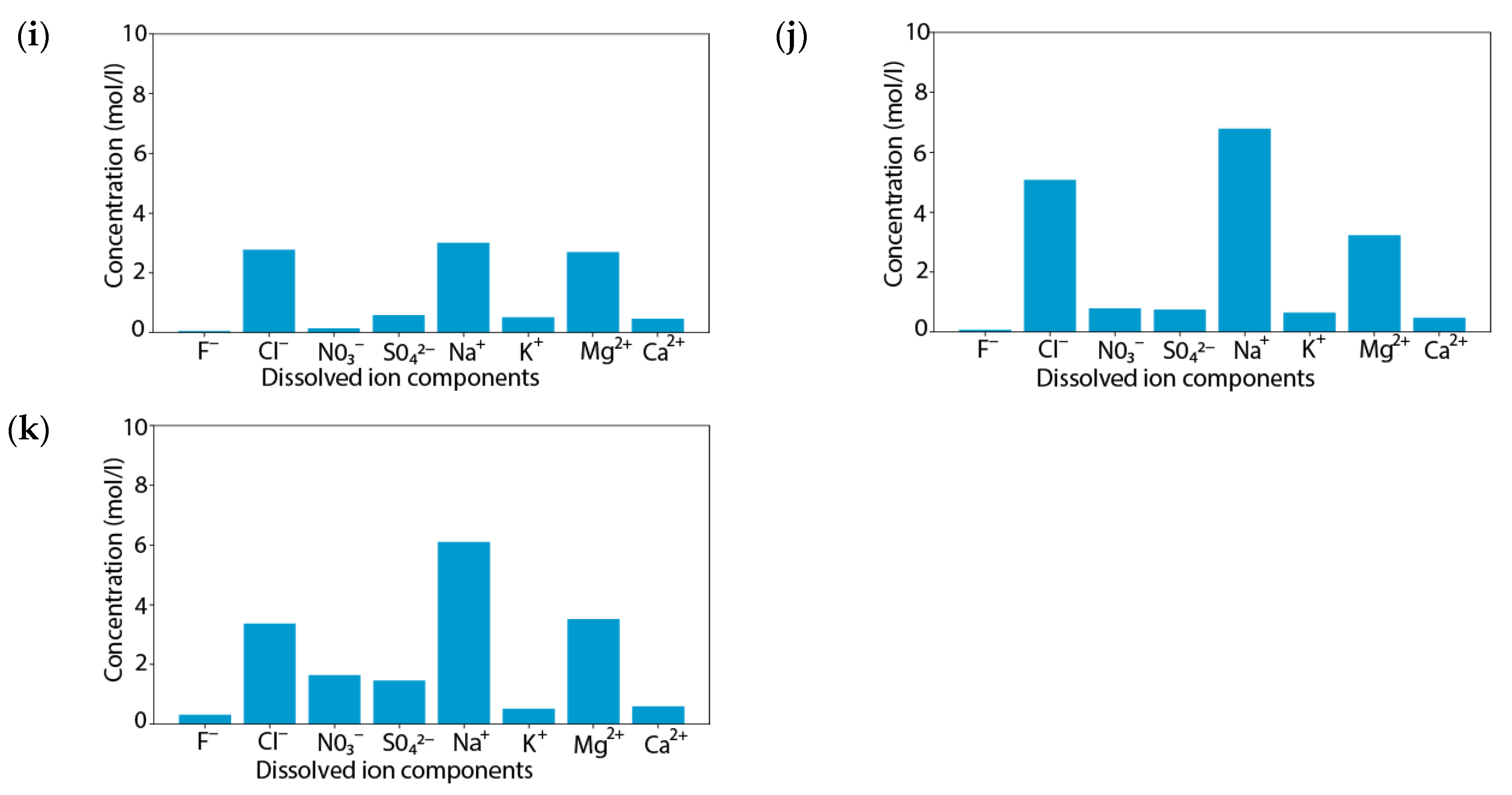
The data employed in this research were obtained during two distinct periods: 30–31 March 2016 and 15–16 October 2016, from eleven distinct locations within the Kushiro River catchment basin. The data collected in March were designated as the spring datum, while those obtained in October were categorized as the autumn datum. Data were collected as per the methods described by Komai et al. [12]. 250 mL of river water from each sampling station was collected, filtered using a 0.2 µm PTFE filter, and immediately submitted for analysis. A total of 11 sampling stations were located within the Kushiro River catchment basin, taking into consideration the basin boundaries, altitude, vegetation, and land use. St. 1 includes Lake Kussharo, which is the source of the Kushiro River, and the center of Teshikaga Town. St. 2 represents the downstream area and is located in the marsh region. St. 3 and St. 4 represent the Osobetsu River basin and Numahoro River basin, which flow into the northeastern part of the Kushiro Marsh. St. 5, St. 6, and St. 7 represent the Setsuri River and Kuchoro River basins, which are close to the Kushiro Marsh. St. 8, St. 9, and St. 10 encompass the regions that include Lake Shirarutoro, Lake Toro, and Lake Takkobu, which are freshwater lakes situated east of the Kushiro River. St. 11 is located at the downstream end within the Kushiro marsh. To determine the export rate of dissolved ions, the sampling stations were categorized into five groups, as shown in Figure 1. The dotted red lines represent the boundaries of the five groups. Figure 2 and Figure 3 show the dissolved ion concentrations in both spring and summer.

2.3. Seasonal Variation of Dissolved Ions Using Neural Networks

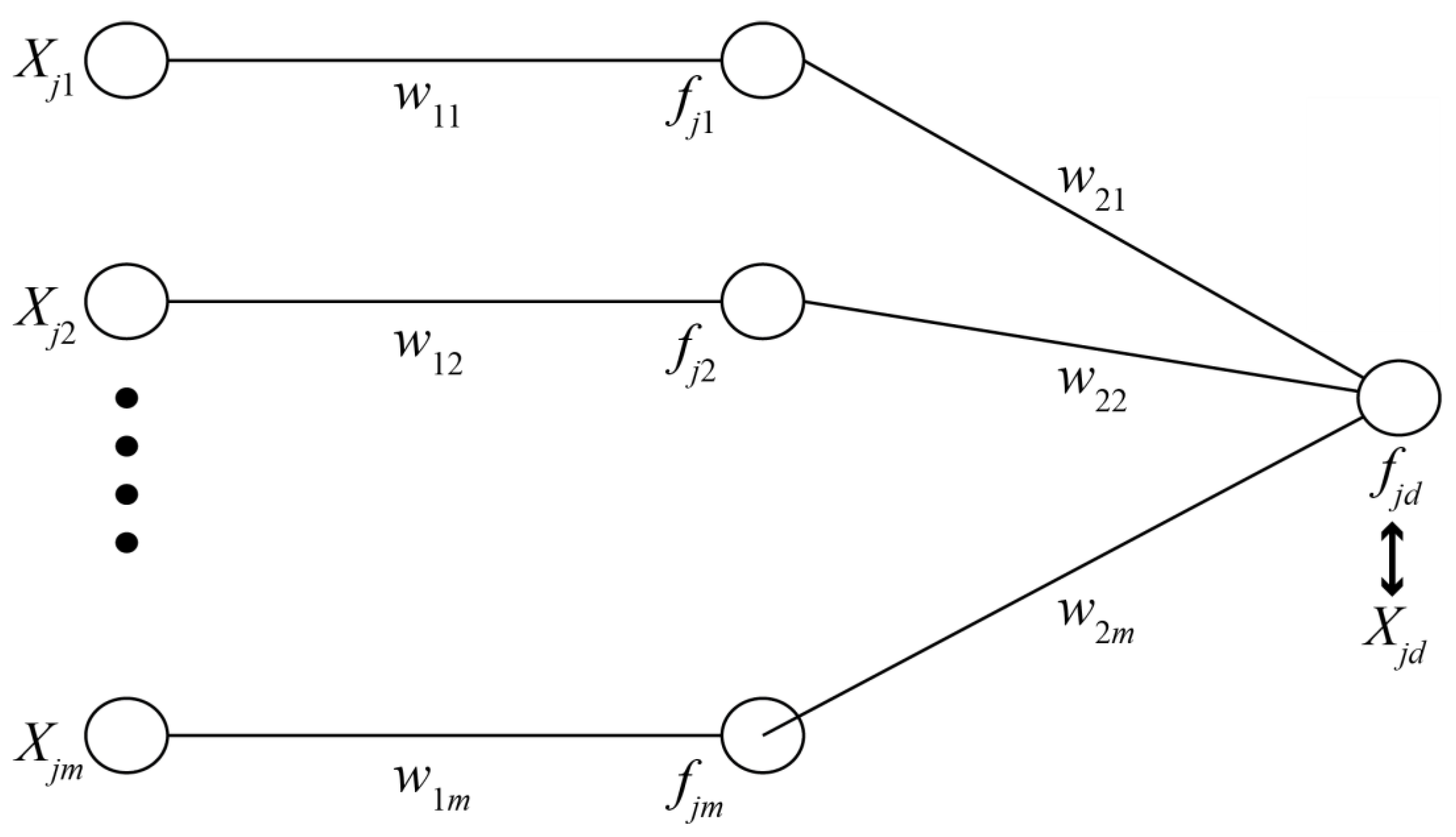
Neural networks can quickly perform numerical calculations by “learning” from existing data and effectively addressing complex signal-processing challenges. However, neural networks typically contain complex structures. To determine the seasonal variation of dissolved ions, a neural network model developed by Mutiso et al. [15] was applied. This model relies on a simplified network structure that is easy to implement while providing an accurate estimation of ion transport rates. This model consisted of only three layers, i.e., the input layer, the middle (hidden) layer, and the output layer. The three layers work together to process data through a series of transformations. The input layer is the first layer in neural networks, and it does not perform any computations but passes the data to the hidden (middle) layer. The hidden layer automatically detects important features within the raw data and performs the necessary computations and complex processing to understand and model the intricate relationships present in the data. The output layer is the last layer in the neural network architecture, and it maps the network’s final results to the desired output format.
Our sampling stations were classified into five groups; group 1 comprised station 1; group 2 comprised station 2; group 3 comprised stations 3 and 4; group 4 comprised stations 5, 6, and 7; group 5 comprised stations 8, 9, and 10; and station 11 was at the downstream end of the Kushiro River catchment basin. The concentration of dissolved ions at each of the stations within each group served as the input for our neural network model, while the concentration from station 11 was used as the output.
To estimate the discharge of dissolved ions at the downstream end of the Kushiro River catchment basin, we assumed that the groups were independent, implying that dissolved substances were transported directly from the source to the downstream end. A modified sigmoid function was employed as the activation function. An activation function is a mathematical function in an artificial neural network that determines a neuron’s output based on its input and decides whether the neuron should be activated or not. Its main function is to introduce non-linearity into the network, enabling it to learn and model complex data patterns. The connection weights (numerical value assigned to a connection between two neurons that signifies the strength and direction of that connection) were adjusted based on the backpropagated error computed between the observed and estimated results.
During this supervised machine learning procedure, the weight was adjusted immediately upon feeding the input data, and we ensured the model was appropriately fitted by minimizing the error between the desired and predicted outputs [16,17]. To achieve the same transportation rates of the dissolved ions from each group to the downstream end, the NNA calculation was iterated 10,000 times to attain a steady state for w1i and w2i. The series of equations employed to estimate the contributions of dissolved ions from various regions of the catchment basin was as follows [15]:
f j i = m S i g X j i w 1 i
f j d = m S i g i = 1 m f j i w 2 i
m S i g = 2 1 + exp x / γ 1
D I T i = i = 1 m f j i w 2 i W T
W T = j = 1 n i = 1 m f j i w 2 i
w 1 i = w 1 i + η δ 1 i f j i
w 2 i = w 2 i + η δ 2 X j i
          δ 1 i = f j i 1 f j i δ 2 w 2 i
δ 2 = f j d 1 f j d X j d f j d
where n is the total count of the dissolved ions components, m is the total count of the groups, f j i is the output for component j (=1 to n) and group i (=1 to m) from the middle layer, X j i is the input for dissolved ion component j and group i , w 1 i is the weight for group i between the input and middle layers, f j d is the output for component j (=1 to n ) at the downstream, w2i is the weight for group i between the middle and output layers, m S i g is the modified sigmoid function, γ is the coefficient for a modified sigmoid function, D I T i is the dissolved ion transportation rate from group i to the downstream, and η is the adjustment coefficient for the weight. Equations (5)–(9) are used to determine the dissolved ion transport rates to the downstream end of the Kushiro River catchment basin. Equation (6) estimates the weight between the input layer and the middle layer, while Equation (7) estimates the weight between the middle layer and the output layer. δ 1 i and δ 2 are error functions used to estimate the weights. The value of these functions is dependent on the difference between the observed ( X j d ) and estimated ( f j d ) results. If the output value, X j d , is equal to the estimated value, f j d , then the value of delta becomes zero, and therefore the value of w2i remains unchanged. Thus, Equation (7) becomes w 2 i = w 2 i . Likewise, W 1 i also remains unchanged if δ 2 is zero since the second term in Equation (6) is dependent on δ 1 i , which is also dependent on δ 2 .
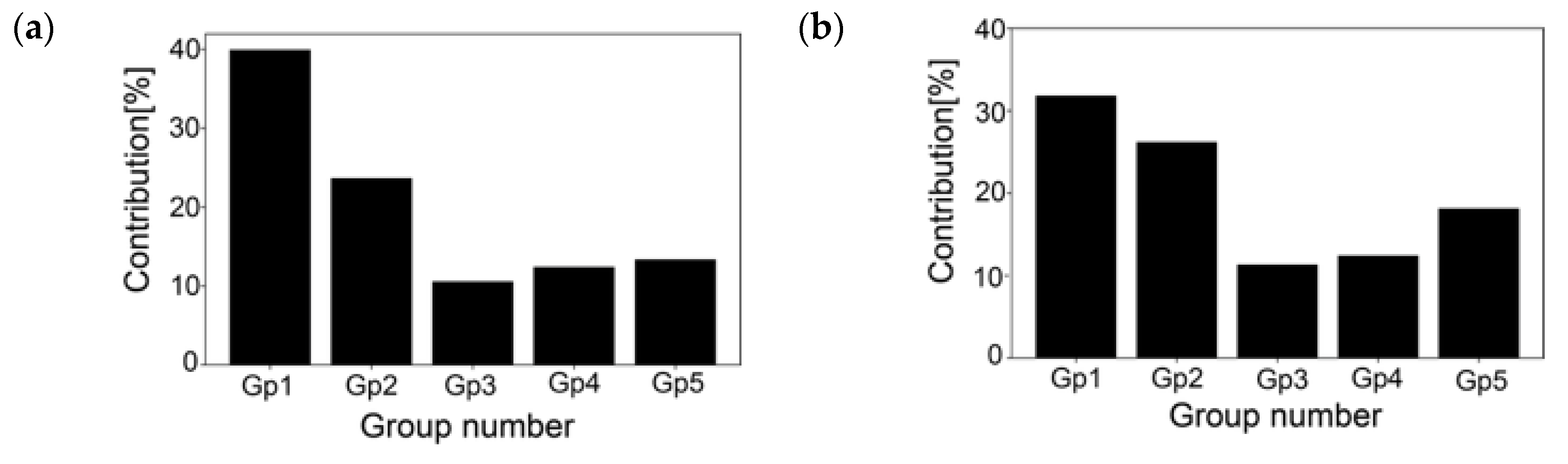
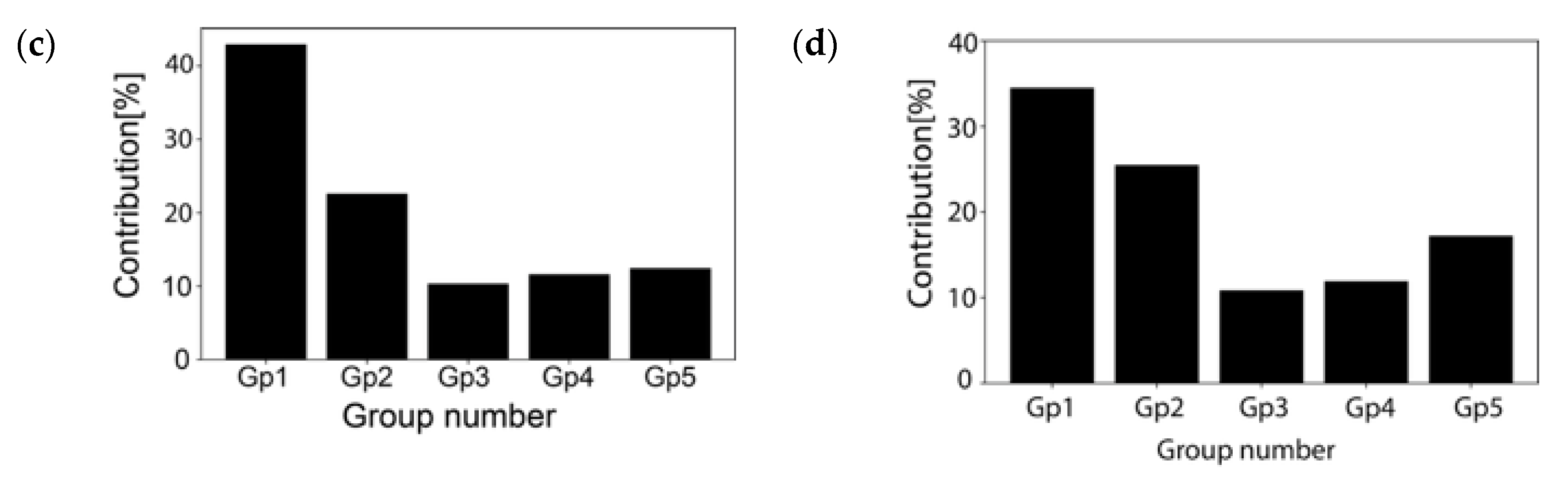
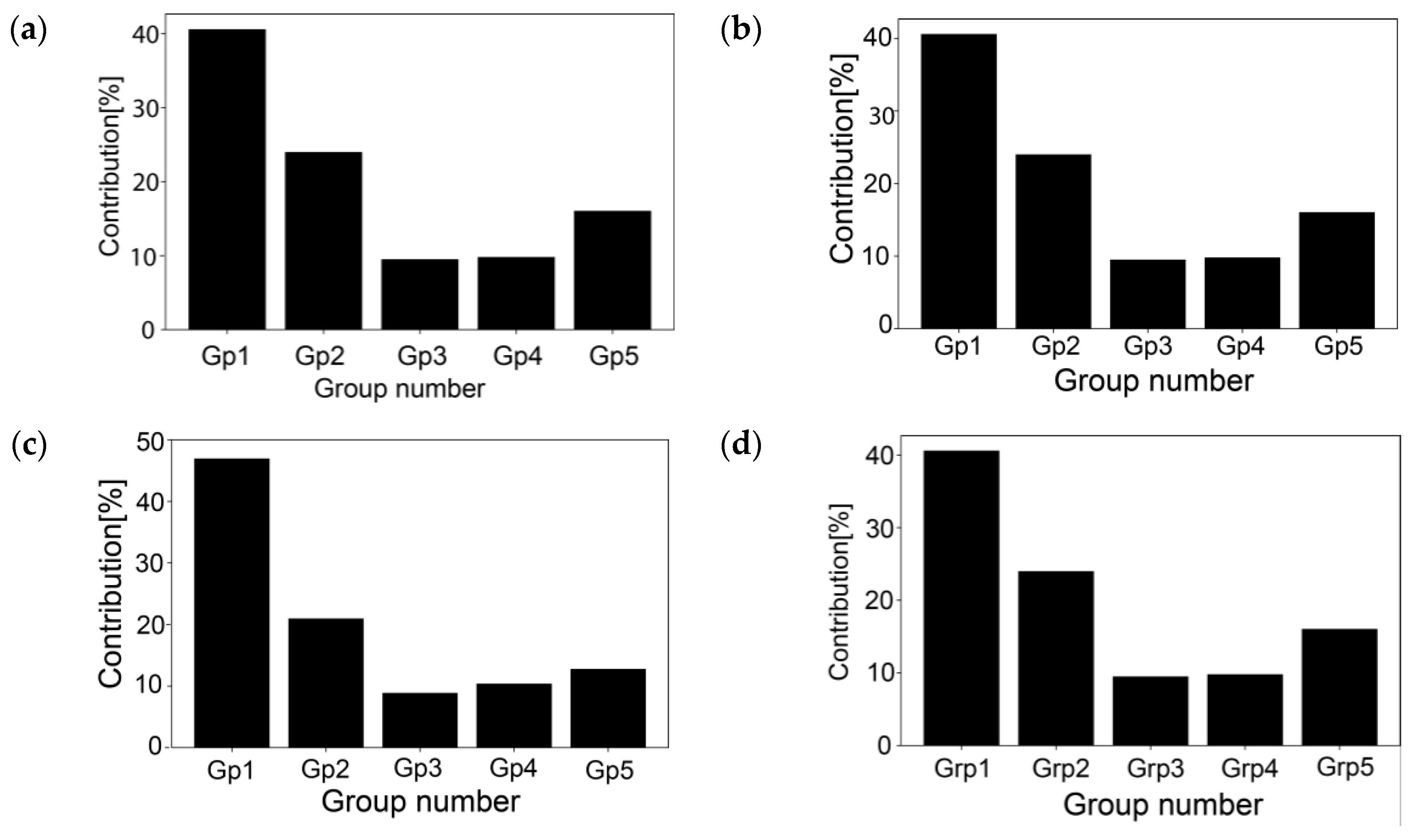
Figure 4 shows the transportation rates of dissolved ion components from different groups to the downstream end of the Kushiro River catchment basin. The transportation rates of dissolved ions from each group were analyzed using concentrations expressed in both milligrams per liter (mg/L) and moles per liter (mol/L) for the two seasons of data collection, and the results were subsequently compared.
As shown in Figure 5 and Figure 6, our results illustrate a consistent pattern in the dissolved ion concentration. Nevertheless, there were slight variations in the percentage contribution between the groups during both spring and autumn. Furthermore, the percentage transportation rates were higher in spring than in autumn. Although both concentration units (mg/L and mol/L) exhibited comparable group contribution trends, the percentage transportation rates of the dissolved ions were significantly higher when the mol/L unit was employed. The difference in the transportation rates for the same ions expressed in different units arises because the units used to quantify the concentration affect how the ions’ behaviors are represented and interpreted. In addition, the transport rate, i.e., the diffusion coefficient and migration velocity, depends on particle characteristics, such as charge and size, which are more directly related to molar concentration. In addition, when using mass-based units, these properties may be scaled differently, influencing the transportation rates. In addition, the discrepancy between the estimated and observed results in our neural network was notably more pronounced for nitrate ions. Nitrate ions exhibited a higher error value in the NNA calculations, which necessitated further investigation. Therefore, in order to elucidate the impact of nitrate ions on the distribution of dissolved ions within the Kushiro River catchment basin, we reanalyzed our samples using the neural network model previously employed, excluding the nitrate ion concentration, and subsequently compared our findings.
Figure 6 shows the major dissolved ion transport rates in the five distinct categories within the Kushiro River catchment basin, excluding nitrate ions. By excluding nitrate ions from our dataset, we obtained almost similar results for the dissolved ion contributions, suggesting that nitrate ions do not possess the typical characteristics to accurately estimate the dissolved ion contribution to the downstream end of the Kushiro River catchment basin. Groups 1 and 2 had the highest contribution rates of dissolved ions to the downstream end (station 11) of the Kushiro River catchment basin. Both groups are situated in a region with caldera lakes, namely, Lake Kussharo and Lake Mashu. Furthermore, the source of the Kushiro River is Lake Kussharo (formed as a result of volcanism). Therefore, the highest transportation rates may have been influenced by the presence of the caldera lakes in these two regions.

2.4. Seasonal Variation of Dissolved Ions Determined Using Principal Component Analysis (PCA)

Due to the increased concerns about water quality, researchers have focused more attention on water quality environments, thereby leading to an increase in water assessment methods [18]. The most commonly used water quality analytical techniques include the fuzzy evaluation method, index evaluation method, gray evaluation method, and multivariate statistical method. Among the multivariate statistical methods, principal component analysis (PCA) is the most widely used to identify the relationship between the original indicator variables and transform them into independent principal components. PCA is a statistical technique employed to reduce the dimensionality of a dataset to a manageable number of influencing factors while simultaneously preserving the relationships inherent in the original data [19,20].
To further elucidate the distribution of major ions in the Kushiro River basin, PCA was employed. PCA analysis comprises the following steps [21,22,23,24,25,26].
(1) Data standardization
Considering the original data matrix to be represented by an m by n matrix.
X = X i j n m = x 11 x 1 m x n 1 x n m
where x i j = the original data.
n   =   Sampling station number; m   =   Dissolved ion components.
The data are standardized to have a mean of zero and a standard deviation of 1. This is done in order to eliminate the impact of dimensionality. The Z-score standardization formula is applied.
X i j = ( X i j x ¯ j ) / s j
where X i j = standard variable
S j   =   Standard deviation
Standardized data are used to calculate the correlation coefficient matrix, R , to determine the correlation between the variables.
R = r i j = 1 k 1 k 1 k x t 1 X t j ( i ,   j   =   1 ,   2 ,   ,   p )
where p is the total number of dissolved ion components in our dataset, and k is the order of the dissolved ion components.
The number of principal components is determined by calculating the eigenvalues and eigen vectors of the resultant correlation coefficient matrix, R , whereby eigenvalues of the correlation coefficient matrix, R , are represented by λ i ( i = 1,…, n and their corresponding eigen vectors are u i ( u i = u i 1 ,…, u i n ) ( i  = 1,…, n ). The λ value corresponds to the variance of the principal component, and variance is positively correlated with the contribution rate of the principal components.
To calculate the principal components, we applied
F i = U i 1 X 1 + U i 2 X 2 + U i 3 X 3 ( i = 1 ,   2 , , n )
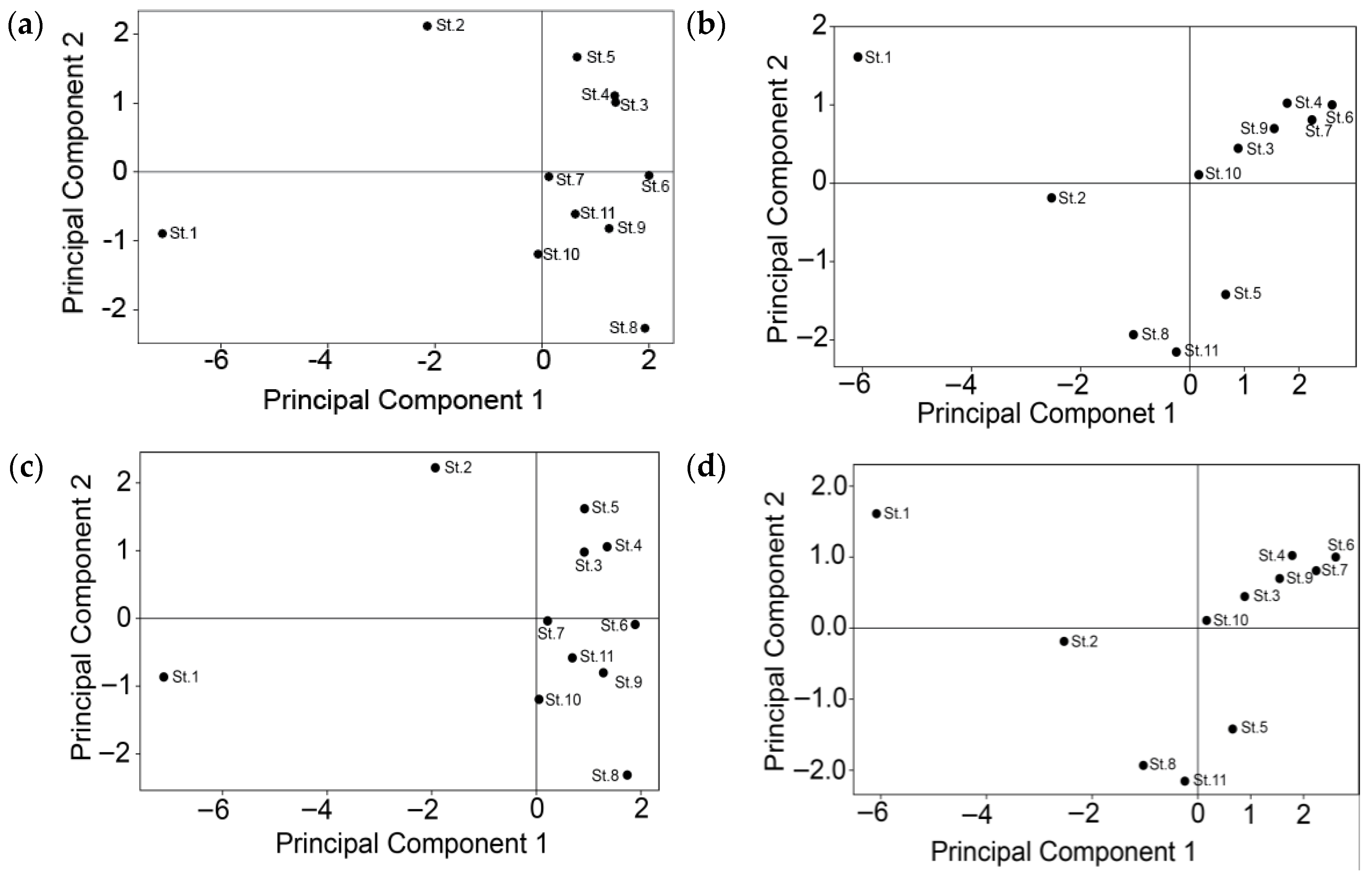
Employing the aforementioned formulae, we derived the principal component analysis (PCA) results for our dataset, presented in both milligrams per liter (mg/L) and moles per liter (mol/L). Figure 7a illustrates the results obtained during the spring season, while Figure 7b presents the results for the autumn season, both in mg/L. Figure 7c shows the results for the spring season, expressed in mol/L, and Figure 7d shows the results for the autumn season, also in mol/L.
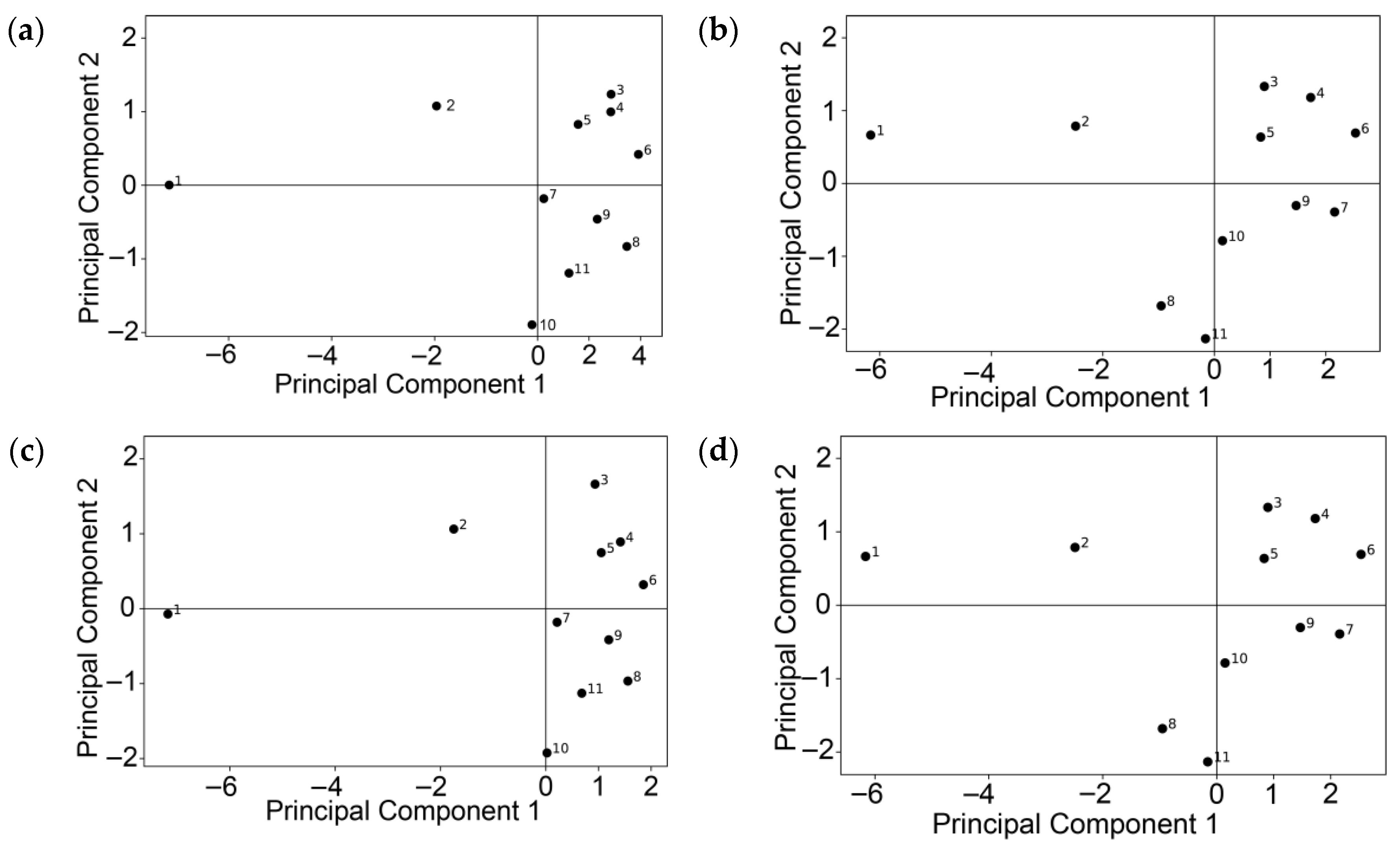
In Figure 7a, principal component 1 accounts for 69.5% of the total variance, while principal component 2 accounts for 18.2% of the total variance. Principal component 1 is characterized by high levels of dissolved ions at station 8 in spring and stations 8 and 11 in autumn. Figure 7a exhibits positive coefficients for stations 3, 4, 5, 6, 7, 8, 9, and 11, indicating a positive correlation. Conversely, stations 1, 2, and 10 have negative coefficients, suggesting a negative effect. Figure 7c,d represent the correlation between the sources of dissolved ions and the principal component results obtained in spring (mol/L) and autumn (mol/L), respectively. Principal component 1 effectively captures the presence of dissolved substances in the samples and is characterized by high levels of dissolved ions at station 8 in spring and stations 8 and 11 in summer. Figure 8 represents the PCA analysis excluding nitrate ions in (a)Spring (mg/L) (b)Autumn (mg/L) (c) Spring (mol/L) and (d) Autumn (mol/L). There was a significant shift in the locations of the stations in each of the PCA plots in Figure 8 as compared to the corresponding figures in Figure 7. There were also comparable differences in the location of the stations on the PCA plots. In Figure 8a, the deviation from the mean along the second principal component of station one (St.1) is zero. In Figure 8b, the PCA scores for stations 7, 9 and 10 shifts to a negative position along the second principal component relative to Figure 7b. Additionally, in Figure 8c, the PCA score for station 6 exhibits a positive change along the second principal component, while in Figure 8d stations 7, 9 and 10 show a negative change. These observations highlight the significant role of nitrate ions in defining the variations captured by the second principal components in each of the stations.
Table 1 shows the correlation analysis of the ions present in the sampled water in (a) spring (mg/L), (b) autumn (mg/L), (c) spring (mol/L), and (d) autumn (mol/L). In Table 1a–d, our results indicate that there is a strong correlation between the dissolved ions in the river water, as described by positive correlation coefficients. However, nitrate ions had a negative correlation with F, Cl, and Na+. High correlations among the dissolved ions point to a common source of dissolved ions.

2.5. Mann–Whitney U Test

In most scientific fields, it is a common task to compare the tendencies of two independent samples. While parametric tests, such as the t-test, are commonly employed for this purpose, they necessitate the assumption of normal distribution for the data. The Mann–Whitney U test provides an alternative for situations where the assumptions of normal distribution are violated. The Mann–Whitney U test compares the medians of two samples and assesses whether they are derived from the same population without assuming normal distribution. To further determine the seasonal variations of dissolved ions in the Kushiro River catchment basin, we employed the Mann–Whitney U-test. The Mann–Whitney U test is a non-parametric statistical test used to assess the differences between two independent groups.
This assessment evaluates the statistical significance of the distributions of two independent groups, providing an alternative to the independent t-test when the data do not conform to parametric assumptions, such as normality. When a two-tailed test is conducted, the alternative hypothesis (H1) against which the null hypothesis (H0) is tested asserts that the data distribution for the first group differs from the data distribution for the second group. In this scenario, the null hypothesis is rejected when the test statistic falls within either tail of its sampling distribution. Conversely, when a one-tailed test is applied, the null hypothesis is rejected when the test statistic falls within a specified direction of its sampling distribution. The Mann–Whitney U-test is based on the assumptions that the datasets are independent, the samples are randomly selected, and the measurement scale is at least ordinal. The test involves ranking the data points from both groups, calculating the rank sums, and computing the U-statistic to determine statistical significance. Our study was based on the following hypothesis:
Null Hypothesis (H0):
There is no variation in the dissolved ion concentration within our water samples at the sampling stations during the spring and summer seasons.
Alternative Hypothesis (H1):
There is variation in the dissolved ion concentration within our water samples at the sampling stations during the spring and summer seasons.
Test procedure
Our test procedure involved the following tasks:
(i)
Merging the dataset from our seasonal samples and ranking them in ascending order.
(ii)
Calculating the rank sum of each dataset ( R x and R y ).
(iii)
Calculating the Mann–Whitney U test statistic ( U ) using the formula (minimum of U x and U y ).
(iv)
Calculating the p-value by comparing U with the critical value.
The following formulae was used to compute the U-statistic for each group.
U x = m n +   m m + 1 2 R x
U y = m n +   n n + 1 2 R y
The U-statistic was then obtained as the minimum of the U-statistics of both groups.
U = min U x , U y
where the U = Mann–Whitney statistic includes the following:
         m   =   Number of samples drawn from population X;          n   =   Number of samples drawn from population Y; R x   =   Sum of ranks attributed to population X; R y   =   Sum of ranks attributed to population Y.
A two-tailed test was conducted, and the p-values of the major ions in the Kushiro River were computed and compared. The null hypothesis was rejected for a p-value less than 0.05, indicating a statistically significant difference between our seasonal data distribution.

3. Results

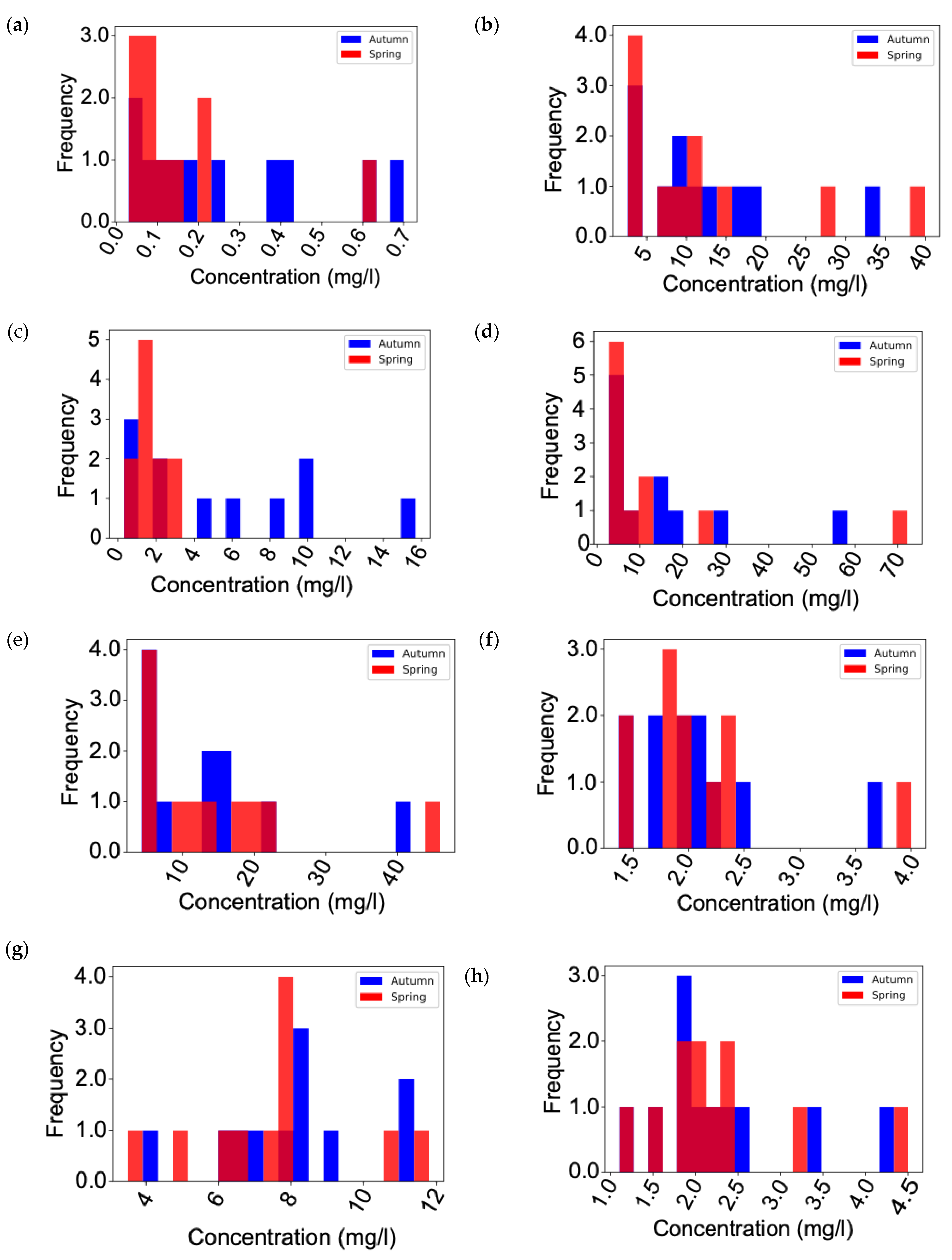
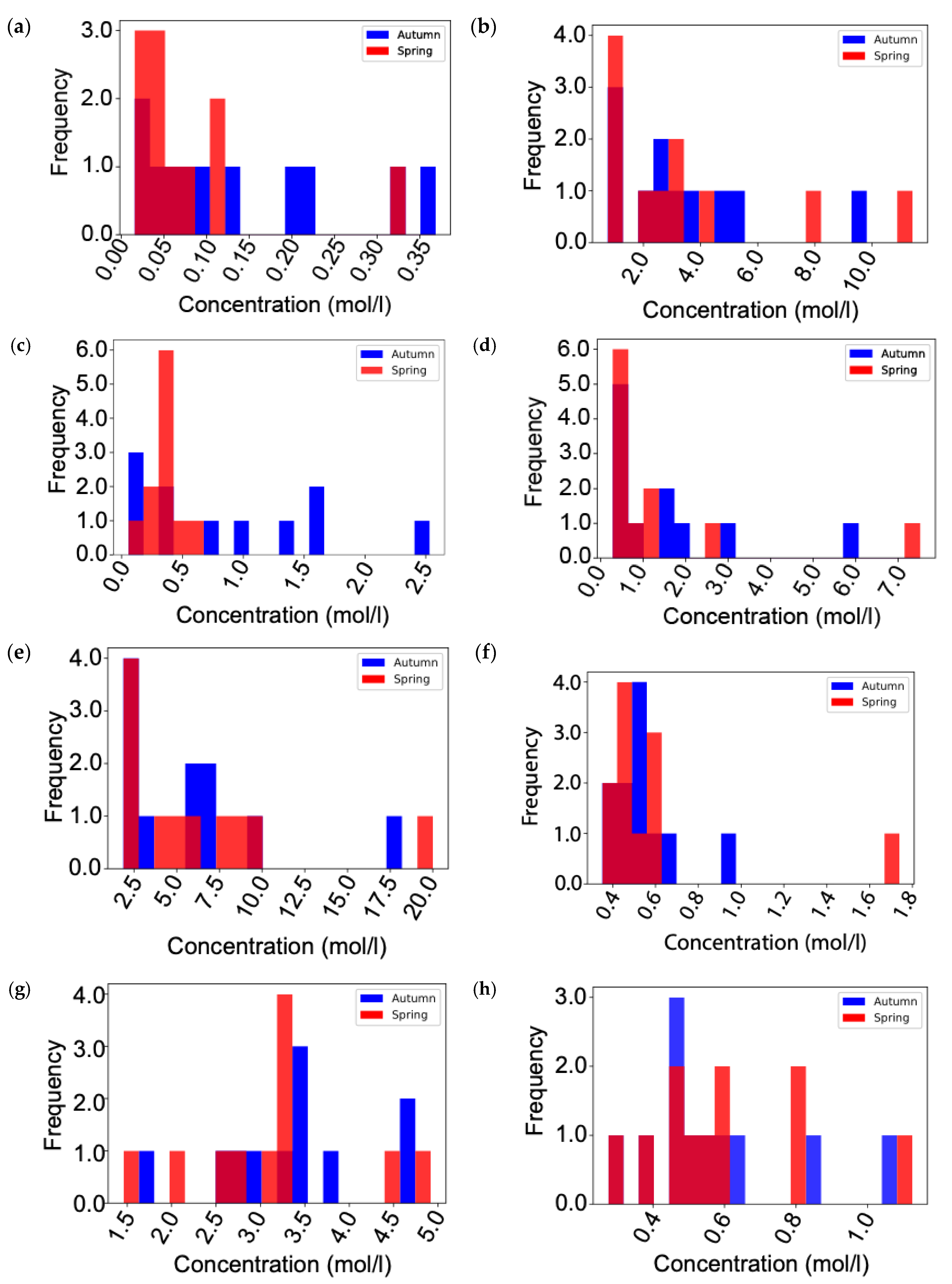
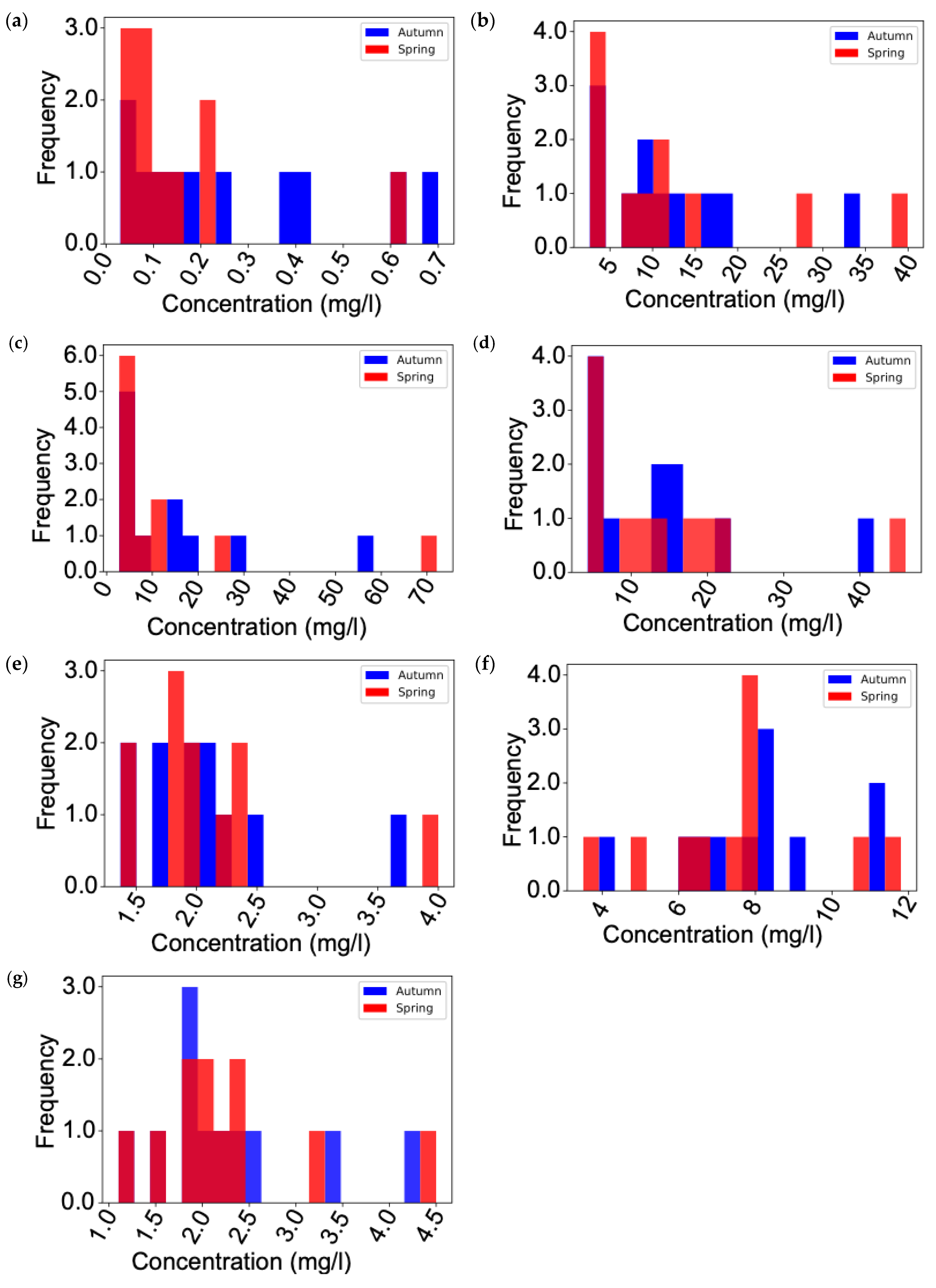
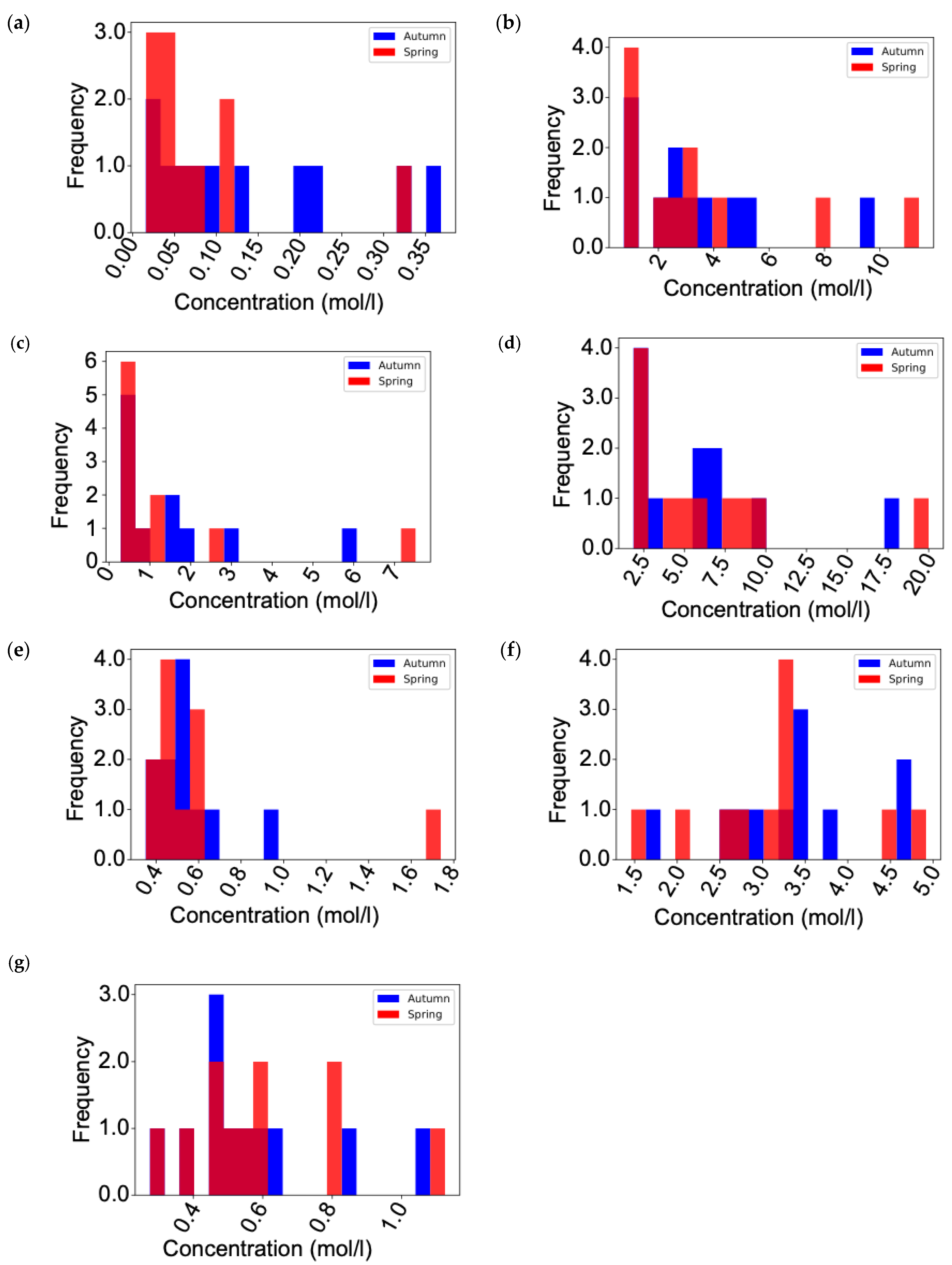
Figure 9, Figure 10, Figure 11 and Figure 12 show histograms displaying the distribution of major dissolved ions in both spring and autumn. The histograms display the distribution of the concentration of dissolved ions in both spring and autumn, typically showing the frequency of the concentrations across different values. For both groups, the histogram exhibits a roughly similar distribution, indicating comparable distributions. However, the majority of the dissolved ion concentration is distributed in a left-skewed manner. A few ions exhibit a right-skewed distribution, suggesting potential variations in the concentration patterns. There was also variation in the dissolved ion concentration across each sampling station. Notably, the sodium ion concentration was higher in the majority of the sampling stations, whereas the fluoride ion concentration was lowest. In addition, there were variations in the nitrate ion concentration in the sampling stations based on the seasons. Station 5 exhibited the highest concentration of nitrate ions, reaching 0.5 mol/L in spring and 2.5 mol/L in autumn.
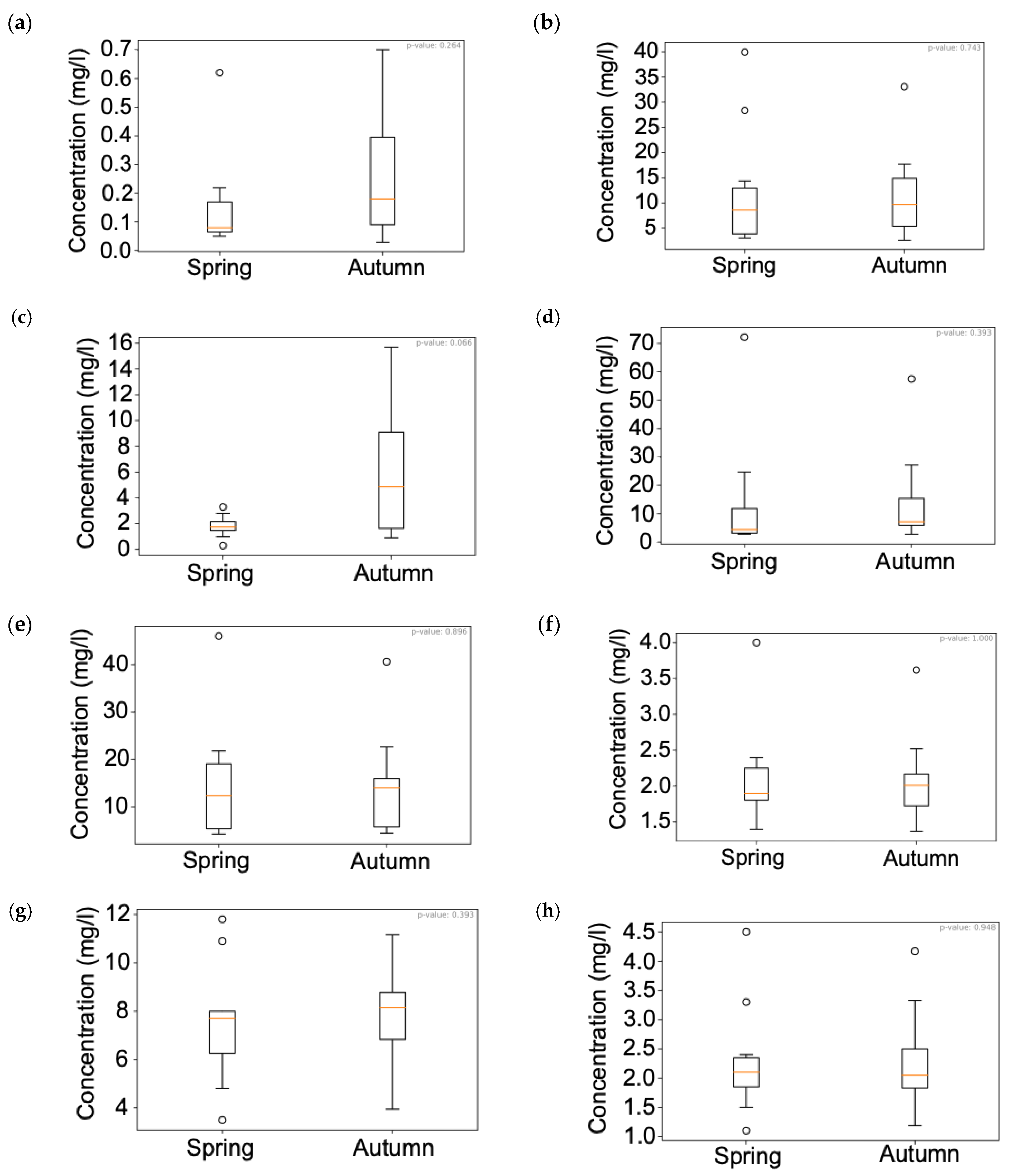
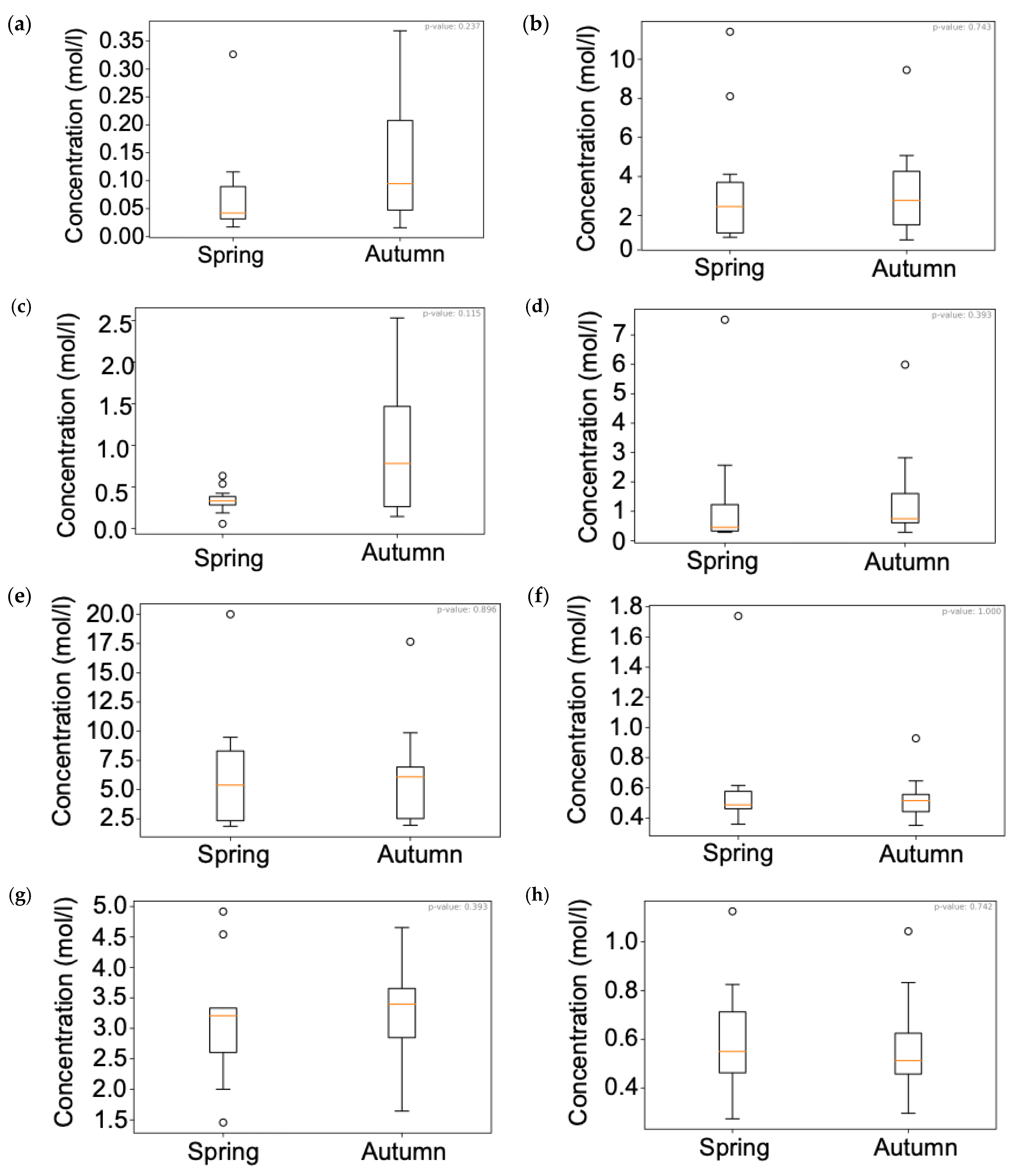
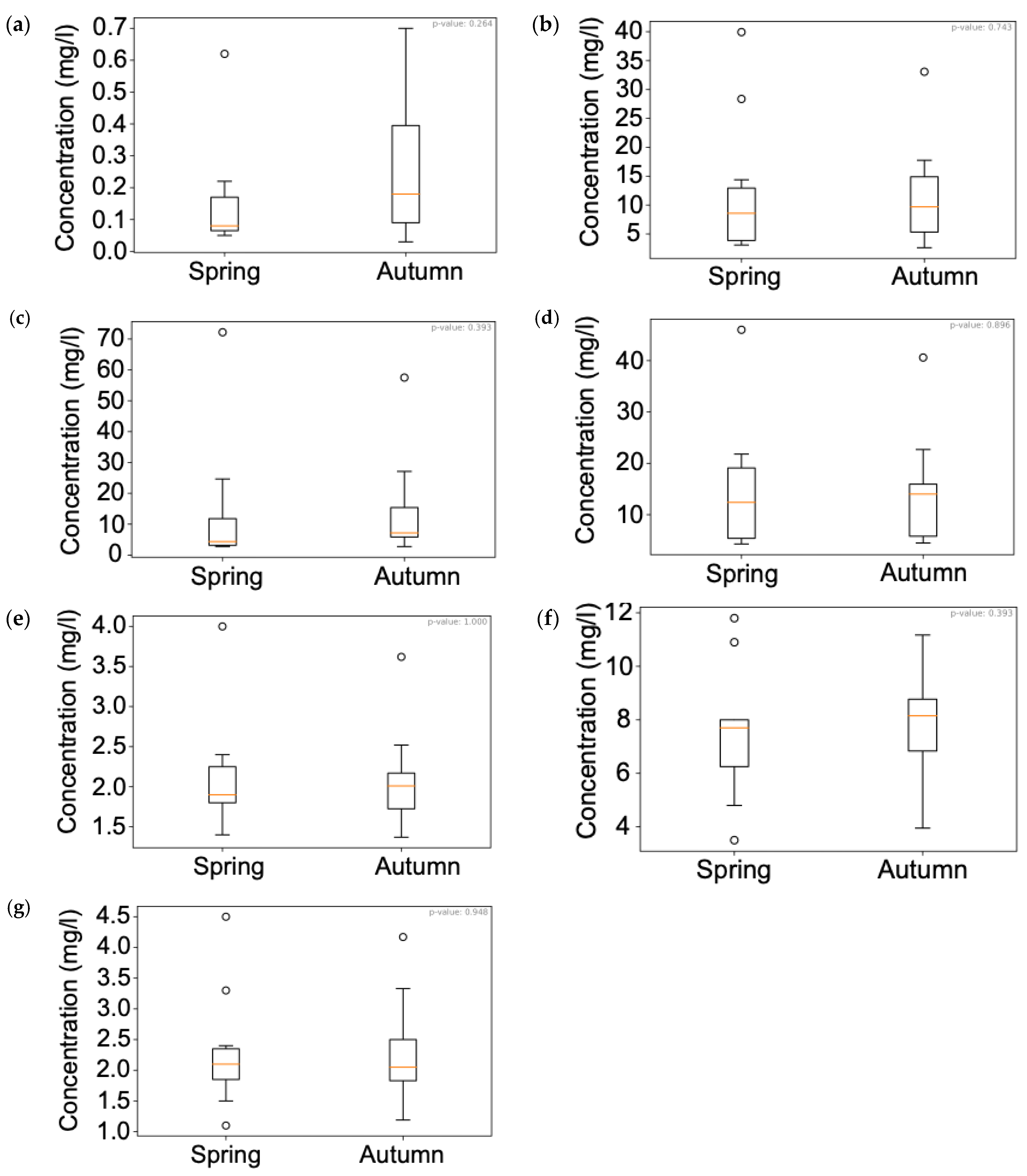
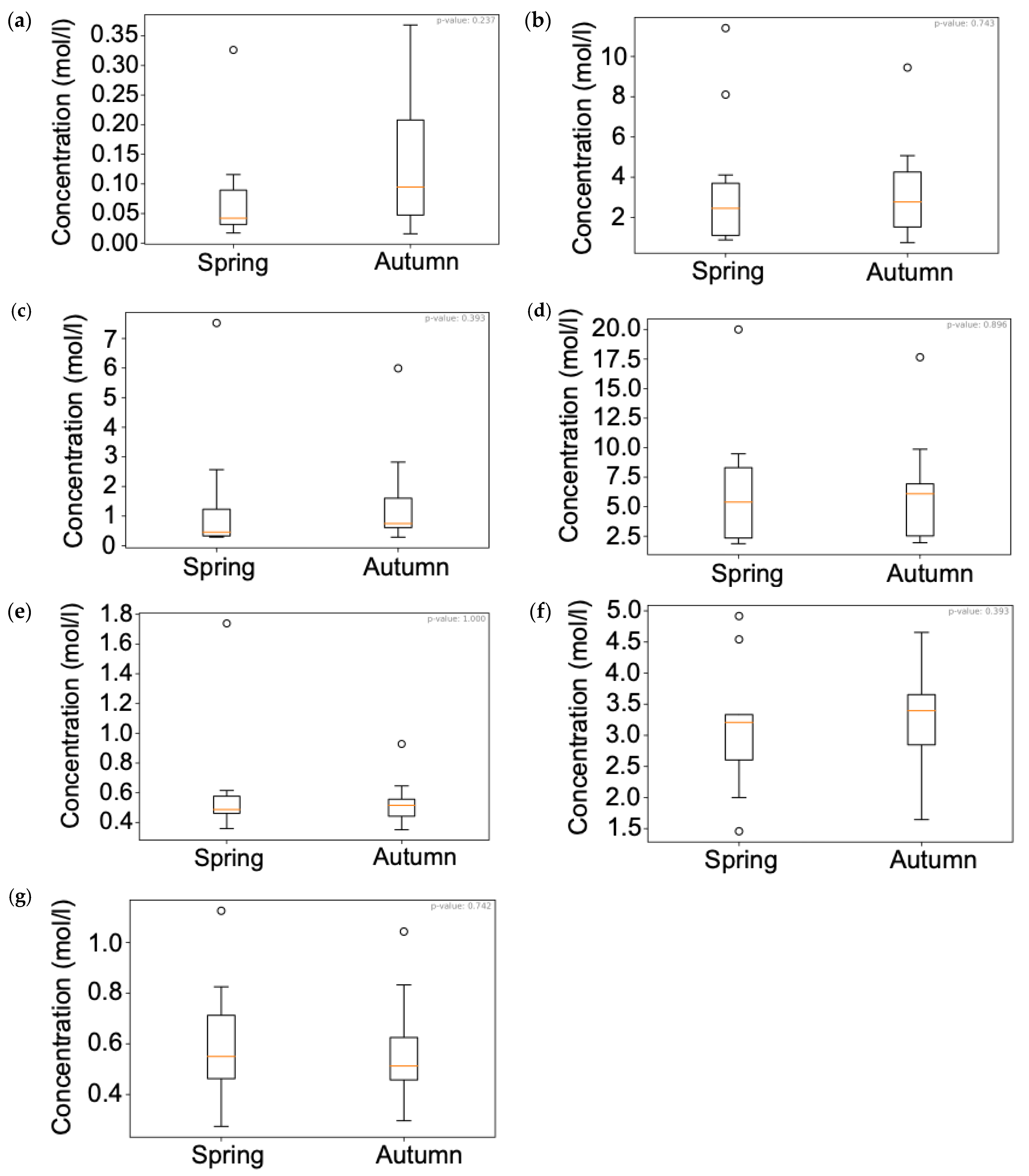
Figure 13, Figure 14, Figure 15 and Figure 16 illustrate the boxplots depicting the concentrations of dissolved ions during both spring and autumn. These boxplots provide a comprehensive visual summary, showcasing the median, interquartile range (IQR), and any outliers present. For fluoride ions (Figure 13a), the median concentration in spring is 0.08 mg/L, while in autumn, it rises to 0.18 mg/L, with a p-value of 0.264. This noticeable difference in medians suggests a distinct variation in the concentration patterns of these ions between the two seasons. Considering Figure 13c, the median concentration for nitrate ion in spring is 1.8 mg/L, compared to 4.4 mg/L in autumn, with a p-value of 0.066. This indicates that the distribution of these ions also varies significantly with the changing seasons, as evidenced by the larger interquartile range observed in autumn compared to spring. These insights highlight the dynamic nature of ion concentrations throughout the year. The box plots of chloride, sodium, and calcium ions in spring demonstrate symmetry, whereas the remaining box plots exhibit skewness. The nitrate ion concentrations exhibit a seasonal pattern, with higher levels in autumn and lower levels in spring (Figure 13c and Figure 14c). Conversely, the potassium ion concentrations demonstrate no significant seasonal variation, as indicated by the absence of statistical differences between spring and autumn (Figure 13f and Figure 14f). It is noteworthy that the box plots reveal the presence of multiple outliers, suggesting the presence of data points that substantially deviate from the central tendency of the dataset. These outliers may be attributed to the seasonal variations in the distribution of ions.

4. Discussion

The transportation rate of dissolved ions from each group was determined using our neural network model. The ion concentrations were expressed in units of milligrams per liter (mg/L) and moles per liter (mol/L), and the resulting data were subsequently compared. Both concentration units, i.e., mol/L and mg/L, yielded similar group contribution trends. Although the dissolved ion concentration patterns exhibited a similar trend when both mg/L and mol/L units were employed, there were slight variations in the percentage contribution between the respective groups. Therefore, to clarify the variations in the percentage contributions of the dissolved ion components, we applied both the principal component analysis and the Mann–Whitney test. We generated a two-dimensional scatter plot of the ion contribution from all sampling stations with two principal components as the axes: PC1 on the x-axis and PC2 on the y-axis. Visualization of the principal components unveiled the correlation between the sampling stations. Figure 6a represents a PCA plot for the spring dataset, with concentrations expressed in mg/L. Principal component 1 accounts for 69.5% of the total variance, whereas PC2 accounts for 18.2% of the total variance. There were seasonal variations in the location of station 5 on the PCA plot. Furthermore, there were no exceptionally high concentrations of any particular ion at station 5, and the overall ion concentrations were relatively low in comparison to the upstream and downstream stations. However, small changes in nitrate and sulfate concentrations between March and October may have caused substantial shifts in the PCA scores at this site. This may be attributed to the fact that PCA highlights relative variation across all sites, and therefore, even moderate samples can exhibit significant score changes if the main contributing ions change between seasons. Notably, outlier samples with exceptionally high concentrations (such as at the downstream end) tend to remain fixed in the plot, making changes at moderate sites, like Stn. 5, more noticeable.
To clarify the ion distribution pattern in the watershed, we conducted a Mann–Whitney test. Most of the present major ions exhibit a right-skewed distribution, with the exception of Mg2+, which presents a non-symmetric bimodal distribution with a mode spanning between 3 and 6. Only nitrate ions exhibited a statistically significant difference between the two seasons analyzed. In addition, there were no discernible seasonal variations in the concentrations of all the major ions within the catchment basin. These findings suggest that nitrate ions are highly susceptible to human activities, such as agricultural practices and land-use interventions. Furthermore, it can be asserted that the nitrate concentration fluctuates due to the increased surface and groundwater runoff during spring snowmelt and autumn rainfall. Apart from nitrates, most of the other ions originate from geological sources, resulting in more stable concentrations and less seasonal variation.
There were slight differences in the p-values when the concentrations were expressed in mg/L and mol/L. However, only nitrates consistently showed a significant difference between the results obtained from the two units. When the concentrations are expressed in mol/L, the contributions of monovalent ions such as Na+ and Cl from the upstream area are also significantly influenced. This implies that, when using mg/L, metal ions make a relatively larger contribution in analyses such as principal component analysis (PCA). Consequently, the spatial pattern of contribution and the primary components can vary depending on the unit of measurement employed.
The primary limitation of this study is that the analyzed samples were collected in a single year. To provide a long-term representation of dissolved ions distribution in the Kushiro River catchment basin, we plan to incorporate additional datasets in future studies to reflect all seasons.

5. Conclusions

A comprehensive analysis of dissolved ion distribution within a catchment basin was conducted employing a synergistic combination of machine learning techniques and non-parametric statistical tests. These techniques included principal component analysis (PCA) and Mann–Whitney tests, which were instrumental in elucidating the intricate patterns and variations in dissolved ions within the Kushiro River catchment basin. The Mann–Whitney U-test is a robust tool for comparing two independent datasets when the assumptions of normal distributions are not fulfilled. Its reliance on sample ranks makes it an ideal choice for ordinal or non-normally distributed data, thereby expanding the scope of hypothesis testing beyond parametric constraints. Group 1, situated within a caldera lake region, exhibited the highest concentration of dissolved ions within the catchment basin, as determined by our neural network model. Fluoride ions, chloride ions, sulfate ions, sodium ions, potassium ions, magnesium ions, and calcium ions are likely to have been majorly derived from the caldera lake as well as from the underlying volcanic rock. Nitrate ions may have originated from the underlying rocks as well as from human activities, such as agriculture in the catchment basin. The permissible limit for dissolved ions in drinking water in Japan is as follows: fluoride—0.8 mg/L; nitrate and nitrite—10 mg/L; nitrite nitrogen—0.04 mg/L; sodium—200 mg/L; chloride—200 mg/L; calcium and Magnesium—300 mg/L; sulfate—250 mg/L; and sodium—200 mg/L [27]. Based on our results, all the parameters in our study are within the permissible limit for drinking water. In spring, the concentration of fluoride ions was 0.033 mol/L (0.62 mg/L), which falls below the 0.8 mg/L permissible limit. Nonetheless, regular monitoring and appropriate treatment of drinking water should be maintained to ensure that the fluoride concentration does not exceed the permitted limit.
There were slight seasonal fluctuations in dissolved ion concentrations between spring and summer. These variations can be attributed to biological processes within the watershed, such as nitrate consumption by plants. The distribution pattern of the dissolved ions exhibited similar trends, although there were variations in the percentage composition of dissolved ions when expressed in mg/L and mol/L. The mol/L results are based on the reaction relation and therefore provide a clear picture of the ion distribution in the watershed.

Author Contributions

Conceptualization, K.N. and S.O.; methodology, K.N. and S.O.; software, K.N. and S.O.; validation, K.N. and S.O.; formal analysis, K.N. and S.O.; investigation, K.N. and S.O.; resources, K.N.; data curation, K.N., K.K. and S.O.; writing—original draft preparation, S.O.; writing—review and editing, K.N. and K.K.; visualization, K.N. and S.O.; supervision, K.N.; project administration, K.N.; funding acquisition, K.N. All authors have read and agreed to the published version of the manuscript.

Funding

This research was funded by the Japan Society for the Promotion of Science, grant numbers 25H00408 and 23K22871, and JST SPRING, grant number JPMJSP2148.

Data Availability Statement

The data used in this study are available upon request from the corresponding author.

Conflicts of Interest

The authors declare no conflicts of interest.

References

  1. Cooper, J.; Gilliam, J.; Daniels, R.; Robarge, W. Riparian areas as filters for agricultural sediment. Soil Sci. Soc. Am. J. 1987, 51, 416–420. [Google Scholar] [CrossRef]
  2. Nakamura, F.; Kameyama, S.; Mizugaki, S. Rapid shrinkage of Kushiro Mire, the largest mire due to increased sedimentation associated with land-use development in the catchment. Catena 2004, 55, 213–229. [Google Scholar] [CrossRef]
  3. Kushiro Wetland Restoration Committee. Comprehensive Concept, Japan; Kushiro Wetland Restoration Committee: Kushiro, Japan, 2005. [Google Scholar]
  4. Nakamoto, A.; Nakayama, K.; Shintani, T.; Maruya, Y.; Komai, K.; Ishida, T.; Makiguchi, Y. Adaptive management in Kushiro Wetland in the context of salt wedge intrusion due to sea level rise. Hydrol. Res. Lett. 2013, 7, 1–5. [Google Scholar] [CrossRef]
  5. Emmerson, J. Channelization: A case study. Science 1971, 173, 325–326. [Google Scholar] [CrossRef] [PubMed]
  6. Nakamura, F.; Sudo, T.; Kameyama, S.; Jitsu, M. Influences of channelization on discharge of suspended sediment and wetland vegetation in Kushiro Marsh, northern Japan. Geomorphology 1997, 18, 279–289. [Google Scholar] [CrossRef]
  7. Kameyama, S.; Yamagata, Y.; Nakamura, F.; Kaneko, M. Development of WTI and turbidity estimation model using SMA—Application to Kushiro Mire, eastern Hokkaido. Jpn. Remote Sens. Environ. 2001, 77, 1–9. [Google Scholar] [CrossRef]
  8. Jurik, T.; Wang, S.; Van der Valk, A. Effects of sediment load on seedling emergence from wetland seed banks. Wetlands 1994, 14, 159–165. [Google Scholar] [CrossRef]
  9. Wang, S.; Jurik, T.; Van der Valk, A. Effects of sediment load on various stages in the life and death of cattail (Typha × grauca). Wetlands 1994, 14, 166–173. [Google Scholar] [CrossRef]
  10. Smith, M.; Brandt, T.; Stone, J. Effects of soil texture and microtopography on germination and seedling growth in Boltonia decurrens (Asteraceae), a threatened floodplain species. Wetlands 1995, 15, 392–396. [Google Scholar] [CrossRef]
  11. Oki, K.; Awadu, T.; Oguma, H.; Omasa, K. Spatial assessment of the alder tree in Kushiro mire, Japan using remotely sensed imagery-effects of the surrounding land use on Kushiro mire. Environ. Monit. Assess. 2005, 109, 243–253. [Google Scholar] [CrossRef]
  12. Komai, K.; Nakayama, K.; Hiroki, S.; Sakaguchi, S. Estimation of dissolved substances transport in Kushiro River basin using dissolved ion pattern. J. Jpn. Soc. Civ. Eng. Ser B1 (Hydraul. Eng.) 2018, 74, 1505–1510. [Google Scholar] [CrossRef]
  13. Miyake, H. Kushiro Wetland Restoration Project. In Proceedings of the International Symposium on Coast zones and Climate Change: Assessing the impacts and Developing Adaptation Strategies, Monash University, Melbourne, VIC, Australia, 12–13 April 2010; pp. 183–191. [Google Scholar]
  14. Shoyama, K.; Yamagata, Y. Predicting land-use change for biodiversity conservation and climate change mitigation and its effect on ecosystem services in a watershed in Japan. Ecosyst. Serv. 2014, 8, 25–34. [Google Scholar] [CrossRef]
  15. Mutiso, S.; Nakayama, K.; Komai, K. A Simple Neural Network for Estimating Fine Sediment Sources Using XRF and XRD. Hydrology 2024, 11, 192. [Google Scholar] [CrossRef]
  16. Rumelhart, D.; Hinton, G.; Williams, R. Learning representations by back-propagating errors. Nature 1986, 323, 533–536. [Google Scholar] [CrossRef]
  17. Muriel, G.; Dimopoulos, I.; Lek, S. Review and comparison of methods to study the contribution of variables in artificial neural network models. Ecol. Model. 2003, 160, 249–264. [Google Scholar] [CrossRef]
  18. Young, W.; Zhao, Y.; Wang, D.; Wu, H.; Lin, A.; He, L. Using Principal Components Analysis and IDW Interpolation to Determine Spatial and Temporal Changes of Surface Water of Xin’anjiang River in Huangshan, China. Int. J. Environ. Res. Public Health 2020, 17, 2942. [Google Scholar] [CrossRef] [PubMed]
  19. Gorgoglione, A.; Gioiaand, A.; Iacobellis, V. A Framework for Assessing Modeling Performance and Effects of Rainfall-Catchment-Drainage Characteristics on Nutrient Urban Runoff in Poorly Gauged Watersheds. Sustainability 2019, 11, 4933. [Google Scholar] [CrossRef]
  20. Gorgoglione, A.; Bombardelli, F.A.; Pitton, B.J.L.; Oki, L.R.; Haverand, D.L.; Young, T.M. Role of Sediments in Insecticide Runoff from Urban Surfaces: Analysis and Modelling. Int. J. Environ. Res. Public Health 2018, 15, 1464. [Google Scholar] [CrossRef]
  21. Belkhiri, L.; Narany, T.S. Using Multivariate Statistical Analysis, Geostatistical Techniques and Structural Equation Modeling to Identify Spatial Variability of Groundwater Quality. Water Resource. Manag. 2015, 29, 2073–2089. [Google Scholar] [CrossRef]
  22. Chen, J.; Lu, L.; Luand, J.; Luo, Y. An Early-Warning System for Shipping Market Crisis Using Climate Index. J. Coast. Res. 2015, 73, 620–627. [Google Scholar] [CrossRef]
  23. Uddameri, V.; Honnungarand, V.; Hernandez, E.A. Assessment of groundwater water quality in central and southern Gulf Coast aquifer, TX using principal component analysis. Environ. Earth Sci. 2013, 71, 2653–2671. [Google Scholar] [CrossRef]
  24. Harris, L. The nature of cumulative impacts on biotic diversity on wetland vertebrates. Environ. Manag. 1988, 12, 675–693. [Google Scholar] [CrossRef]
  25. Li, G.; Qin, Y. An exploration of the application of principal component analysis in big data processing. Appl. Math. Non-Linear Sci. 2024, 9, 1–24. [Google Scholar] [CrossRef]
  26. Carton, A.; Postiglione, P. Principal component analysis for geographical data: The role of spatial effects in the definition of spatial indicators. Spat. Econ. Anal. 2020, 16, 126–127. [Google Scholar] [CrossRef]
  27. Ministry of Health, Labour and Welfare, Japan. Available online: https://www.mhlw.go.jp/english/policy/health/water_supply/dl/4a.pdf (accessed on 7 November 2025).
Figure 1. Kushiro River catchment basin, sampling stations, and groups. St.1 is located at the source of Kushiro River, St.2 is located in a marsh region along the Kushiro River, St.3 and St.4 represents the Osobetsu and Numahoro River basins, St.5, St.6 and St.7 represents the Setsuri and Kuchoro River basins, St.8, St. 9 and St.10 includes the regions covered by Lake Shirarutoro, Lake Toro and Lake Takkobu and St. 11 is located at the downstream end within the Kushiro marsh.
Hydrology 12 00310 g001
Figure 2. Concentration patterns of cations and anions in our sampling stations in March (Spring) 2016. (a) Station 1, (b) Station 2, (c) Station 3, (d) Station 4 (e) Station 5 (f) Station 6 (g) Station 7 (h) Station 8, (i) Station 9, (j) Station 10 (k) Station 11.
Hydrology 12 00310 g002aHydrology 12 00310 g002b
Figure 3. Concentration patterns of cations and anions in our sampling stations in October (Autumn), 2016. (a) Station 1 (b) Station 2 (c) Station 3 (d) Station 4 (e) Station 5 (f) Station 6 (g) Station 7 (h) Station 8, (i) Station 9, (j) Station 10 (k) Station 11.
Hydrology 12 00310 g003aHydrology 12 00310 g003b
Figure 4. Neural network model used in this study (obtained from Mutiso et al. [15]).
Hydrology 12 00310 g004
Figure 5. Transportation rates of all the major dissolved ion components from different groups to the downstream end of Kushiro River: (a) spring (mg/L); (b) autumn (mg/L); (c) spring (mol/L); (d) autumn (mol/L).
Hydrology 12 00310 g005aHydrology 12 00310 g005b
Figure 6. Transportation rates of all the major dissolved ion components from different groups to the downstream end, excluding nitrate ions: (a) spring (mg/L); (b) autumn (mg/L); (c) spring (mol/L); (d) autumn (mol/L).
Hydrology 12 00310 g006
Figure 7. Sources of dissolved ions as analyzed using PCA in (a) spring (mg/L); (b) autumn (mg/L); (c) spring (mol/L); (d) autumn (mol/L).
Hydrology 12 00310 g007
Figure 8. Sources of dissolved ions, excluding the concentration of nitrate ions as analyzed using PCA with concentrations expressed in (a) spring (mg/L); (b) autumn (mg/L); (c) spring (mol/L); (d) autumn (mol/L).
Hydrology 12 00310 g008
Figure 9. Seasonal comparison of the concentrations of major ions in mg/Liter. (a) Fluoride ions; (b) chloride ions; (c) nitrate ions; (d) sulfate ions; (e) sodium ions; (f) potassium ions; (g) magnesium ions; (h) calcium ions.
Hydrology 12 00310 g009
Figure 10. Seasonal comparison of the concentrations of major ions in moles/liter. (a) Fluoride ions; (b) chloride ions; (c) nitrate ions; (d) sulfate ions; (e) sodium ions; (f) potassium ions; (g) magnesium ions; (h) calcium ions.
Hydrology 12 00310 g010
Figure 11. Seasonal comparison of the concentrations of major ions in mg/Liter (excluding nitrate ions): (a) fluoride ions; (b) chloride ions; (c) sulfate ions; (d) sodium ions; (e) potassium ions; (f) magnesium ions; (g) calcium ions.
Hydrology 12 00310 g011
Figure 12. Seasonal comparison of the concentrations of major ions in moles/liter (excluding nitrate ions). (a) Fluoride ions; (b) chloride ions; (c) sulfate ions; (d) sodium ions; (e) potassium ions; (f) magnesium ions; (g) calcium ions.
Hydrology 12 00310 g012
Figure 13. A boxplot of the dissolved ion pattern in Kushiro River catchment basin with concentrations expressed in mg/L. (a) Fluoride ions; (b) chloride ions; (c) nitrate ions; (d) sulfate ions; (e) sodium ions; (f) potassium ions; (g) magnesium ions; (h) calcium ions.
Hydrology 12 00310 g013
Figure 14. A boxplot of the dissolved ion patterns in Kushiro River catchment basin with concentrations expressed in mol/L. (a) Fluoride ions (b) chloride ions; (c) nitrate ions; (d) sulfate ions; (e) sodium ions; (f) potassium ions; (g) magnesium ions; (h) calcium ions.
Hydrology 12 00310 g014
Figure 15. A boxplot of the dissolved ion patterns in Kushiro River catchment basin with concentrations expressed in mg/L (excluding nitrate ions). (a) Fluoride ions; (b) chloride ions; (c) sulfate ions; (d) sodium ions; (e) potassium ions; (f) magnesium ions; (g) calcium ions.
Hydrology 12 00310 g015
Figure 16. A boxplot of the dissolved ion patterns in Kushiro River catchment basin with concentrations expressed in moles/L (excluding nitrate ions). (a) Fluoride ions; (b) chloride ions; (c) sulfate ions; (d) sodium ions; (e) potassium ions; (f) magnesium ions; (g) calcium ions.
Hydrology 12 00310 g016
Table 1. Correlation analysis between the major dissolved ion components in Kushiro River catchment basin.
(a)
FClNO3SO4NaKMgCa
F10.79−0.070.970.930.840.620.82
Cl 1−0.060.830.950.820.690.72
NO3 10.09−0.10.270.50.38
SO4 10.910.920.770.92
Na 10.820.670.77
K 10.820.91
Mg 10.91
Ca 1
(b)
FClNO3SO4NaKMgCa
F10.470.450.50.540.370.490.55
Cl 1−0.070.880.950.940.680.85
NO3 10.1−0.070.080.450.23
SO4 10.930.880.750.93
Na 10.860.620.84
K 10.720.85
Mg 10.92
Ca 1
(c)
FClNO3SO4NaKMgCa
F10.79−0.070.960.930.90.610.72
Cl 1−0.030.830.950.820.690.59
NO3 10.11−0.070.10.550.38
SO4 10.910.960.770.81
Na 10.860.670.64
K 10.720.78
Mg 10.72
Ca 1
(d)
FClNO3SO4NaKMgCa
F10.470.450.50.540.370.490.55
Cl 1−0.070.880.950.940.680.85
NO3 10.1−0.070.080.450.23
SO4 10.930.880.750.93
Na 10.860.620.84
K 10.720.85
Mg 10.92
Ca 1
Disclaimer/Publisher’s Note: The statements, opinions and data contained in all publications are solely those of the individual author(s) and contributor(s) and not of MDPI and/or the editor(s). MDPI and/or the editor(s) disclaim responsibility for any injury to people or property resulting from any ideas, methods, instructions or products referred to in the content.