Article

Drying-Induced Strain-Stress and Deformation of Thin Ceramic Plate


1
Department of Mechanical Engineering, Gifu University, Gifu 501-1193, Japan
2
Gifu Renewable Energy System Research Center, Gifu University, Gifu 501-1193, Japan
*
Author to whom correspondence should be addressed.
ChemEngineering 2020, 4(1), 9; https://doi.org/10.3390/chemengineering4010009

Submission received: 20 September 2019 / Revised: 29 November 2019 / Accepted: 11 December 2019 / Published: 1 February 2020

Abstract

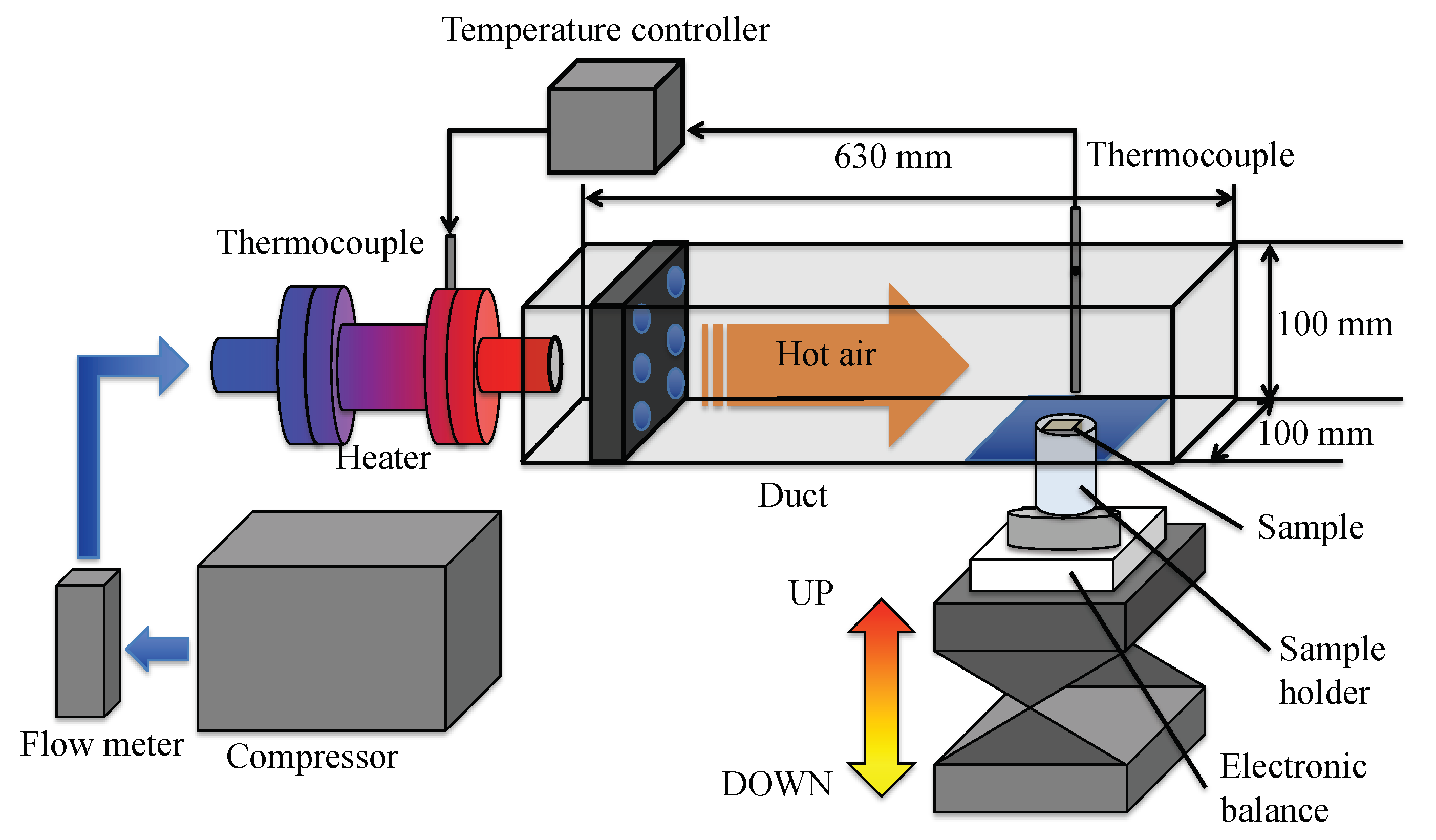
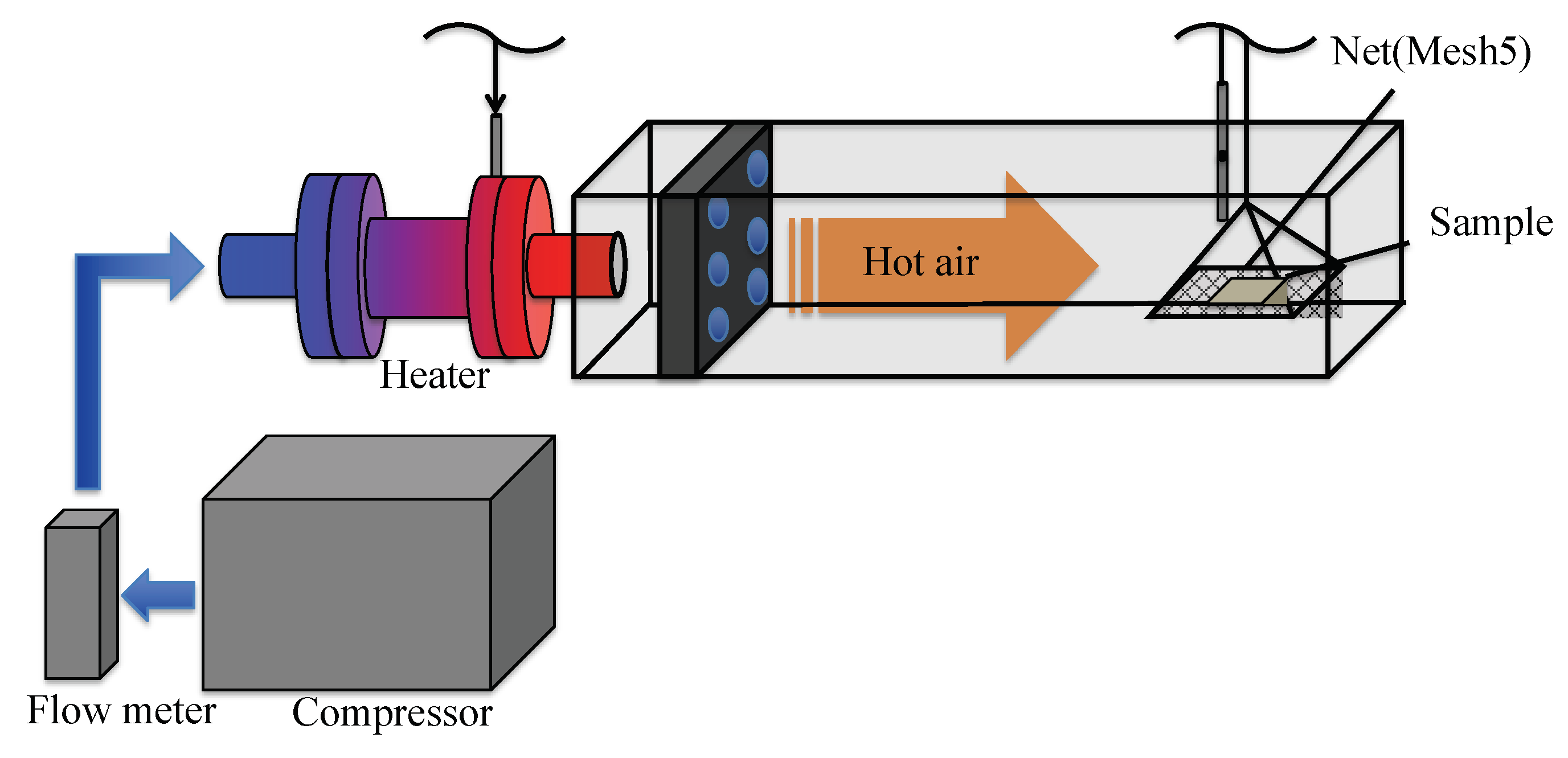
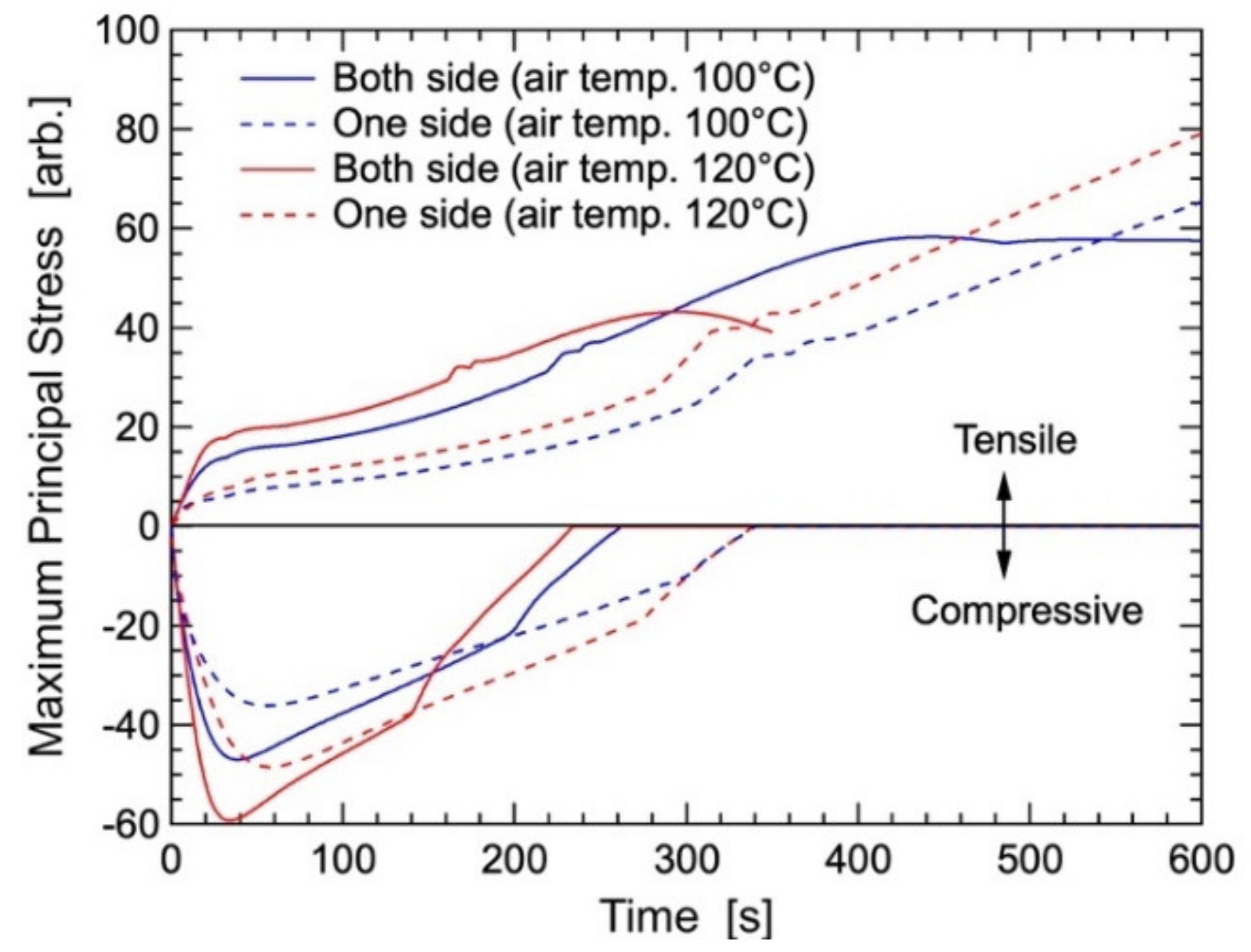
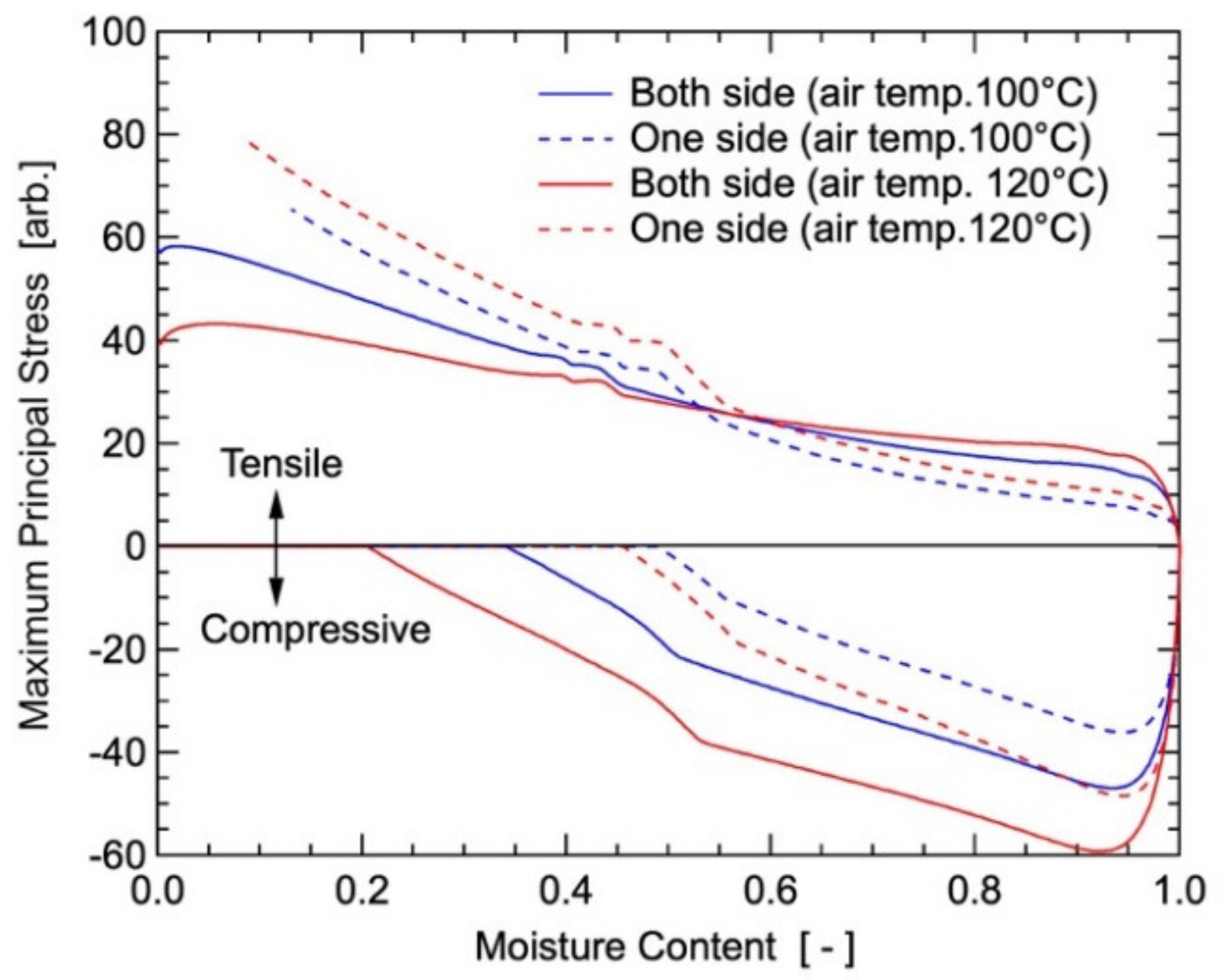
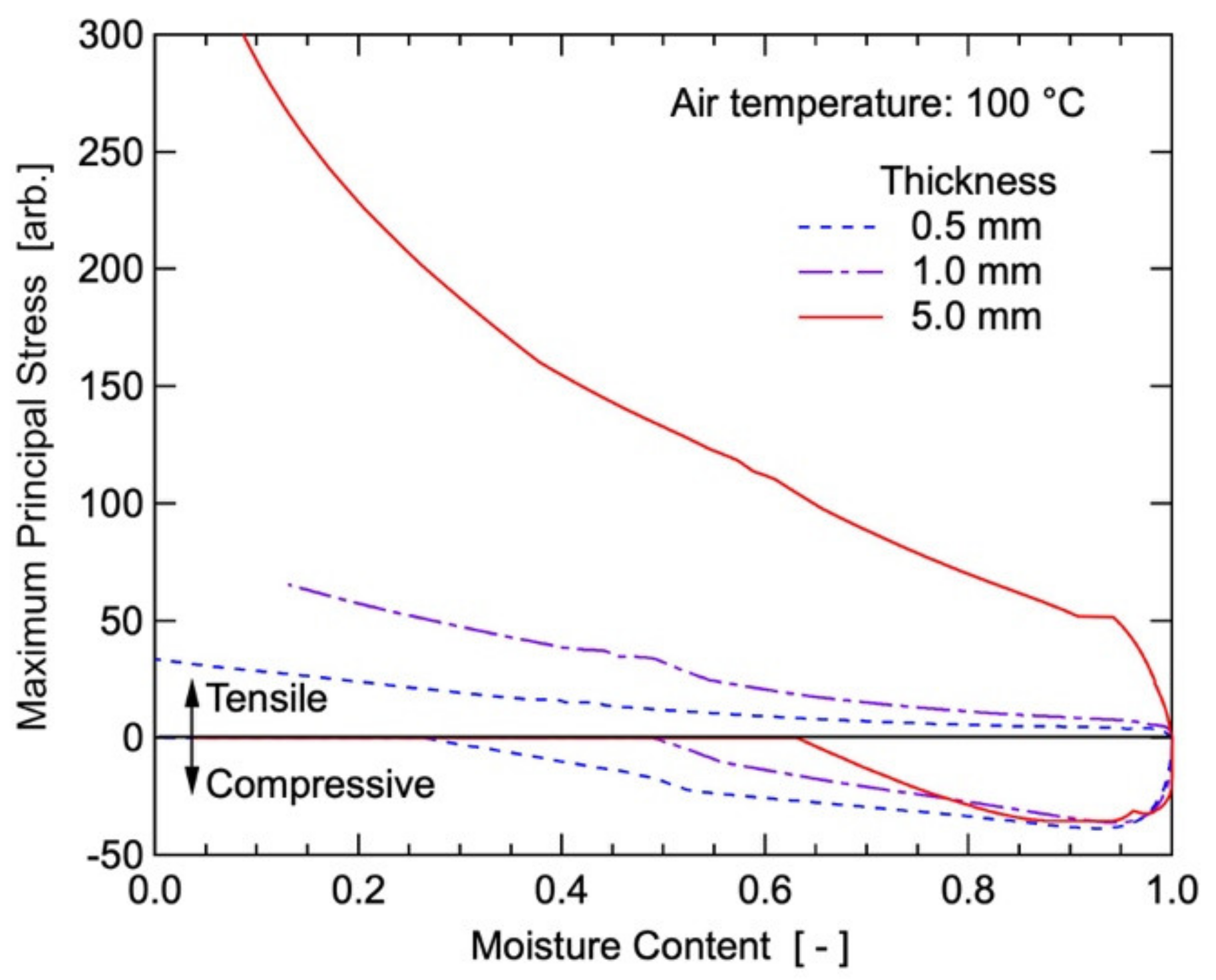
Ceramic thin plates are applied to several industrial purposes including electronic materials and sensors. Drying-induced shrinkage and strain-stress formation of a ceramic thin plate were studied experimentally and theoretically. A kaolin thin plate molded into 10 mm × 30 mm × 1 mm was dried in a hot air stream, and the drying characteristics and deformation were examined. Modeling was also performed to predict the behavior. Heat and moisture transfer conservation equations and constitution equations based on viscoelastic strain-stress were simultaneously solved by a finite element method. A test piece of the thin plate was warped when only one side of the plate was dried, while it was almost flat when both sides were dried. The behaviors of drying and deformation were predicted with a reasonable agreement by the modeling. Parametric analyses by the modeling revealed that the drying conditions with faster drying rate in the beginning period resulted in formation of greater maximum principal stress, and drying on only one side of the plate induced stronger tensile stress in falling rate period than that with both sides drying. The larger thickness of the plate influenced the formation of significantly greater tensile stress but affected maximum compressive stress only a little.
Keywords: ceramics drying; thin plate; shrinkage; strain-stress; deformation ceramics drying; thin plate; shrinkage; strain-stress; deformation