Article

Assessment of the Yield and Bioactive Compounds of Jambu (Acmella oleracea) Flowers and Leaves Extracted with CO2, 1,1,1,2-Tetrafluoroethane (R-134a), and Propane

by
Marcos Antônio Avibar Ruzza
1,
Raquel Laina Barbosa dos Santos
1,
Nikolas Ramos Bernardes
1,
Carlos Toshiyuki Hiranobe
2,
Dener da Silva Souza
3,
Michael Jones da Silva
1,2,3,
Erivaldo Antônio da Silva
4,
Renivaldo José dos Santos
2,3 and
Leandro Ferreira-Pinto
1,2,3,*
1
Postgraduate Program in Science of Materials (PPGCM), School of Engineering and Sciences, São Paulo State University (UNESP), Rosana 19272-100, SP, Brazil
2
Department of Engineering, School of Engineering and Sciences, São Paulo State University (UNESP), Rosana 19272-100, SP, Brazil
3
Postgraduate Program in Science and Technology of Materials (POSMAT), School of Engineering and Sciences, São Paulo State University (UNESP), Rosana 19272-100, SP, Brazil
4
Department of Cartography, School of Science and Technology, São Paulo State University (UNESP), Presidente Prudente 19060-900, SP, Brazil
*
Author to whom correspondence should be addressed.
ChemEngineering 2026, 10(1), 9; https://doi.org/10.3390/chemengineering10010009
Submission received: 6 November 2025 / Revised: 16 December 2025 / Accepted: 19 December 2025 / Published: 7 January 2026

Abstract

This study compares the extraction of oils and bioactive compounds from Acmella oleracea using supercritical CO2, pressurized R-134a, and propane under systematically designed experimental conditions. Extraction yields ranged from 1.16–3.35% for CO2, 1.90–2.35% for R-134a, and 1.30–5.42% for propane. Propane achieved the highest yields and the fastest plateau (~35 min), producing extracts dominated by unsaturated fatty acids (linoleic acid ≈ 85%). Supercritical CO2 generated the most diverse chemical profile, combining alkamides (spilanthol), triterpenoids (β-amyrone), and lipids, with a plateau at approximately 50 min, whereas R-134a selectively enriched β-amyrin acetate (~70%) with intermediate kinetics (~45 min). These yield values are typical for non-oilseed species, in which the low natural abundance of the target metabolites renders solvent selectivity more relevant than the total extract mass. Statistical modeling (R2 > 0.96) confirmed that pressure was the main driver of CO2 and propane extraction, whereas temperature dominated R-134a performance. The distinct selectivity patterns revealed by Gas chromatography–mass spectrometry (GC-MS) indicate that each solvent generates compositionally different extracts aligned with specific industrial applications in cosmetics, pharmaceuticals, and nutraceuticals. The unified comparison of these three fluids under a consistent experimental design provides practical insights for rational solvent selection: propane favors unsaturated lipids, CO2 preserves multifunctional compositions, and R-134a targets triterpenoid esters, supporting the economic feasibility of producing enriched, solvent-free plant extracts.

1. Introduction

Jambu (Acmella oleracea) is an Amazonian plant valued for its diverse range of bioactive compounds, primarily alkylamides, such as spilanthol, terpenoids, and lipid fractions [1,2]. The phytochemical profile of Jambu, particularly its spilanthol content, highlights its potential applications in dermocosmetics, nutraceuticals, and topical formulations [3,4]. These applications leverage the sensory attributes of plants and their documented anti-inflammatory and antioxidant properties [5]. Such bioactivity aligns with consumer trends prioritizing natural ingredients in product formulations, particularly in the cosmetics industry [6,7]. To translate this potential into standardized products, it is essential to employ extraction methods that preserve thermosensitive molecules and offer selectivity for classes of interest, ensuring high yield and reproducibility [8].
Technologies based on pressurized fluids, particularly supercritical CO2, have emerged as mature and environmentally favorable alternatives to traditional methods [9]. Supercritical CO2 has emerged as a leading solvent because of its ability to preserve thermosensitive compounds while ensuring selective extraction under variable temperature and pressure conditions. Several studies have successfully applied supercritical CO2 extraction to obtain bioactive compounds from Acmella oleracea. Dias et al. (2012) [10] demonstrated the selective extraction of spilanthol from multiple plant parts using supercritical fluid extraction (SFE), yielding solvent-free extracts. Barbosa et al. (2017) [11] quantified spilanthol in CO2 extracts under different storage conditions, confirming its predominance as a key metabolite. Blanco et al. (2018) [12] utilized supercritical CO2 to isolate and fractionate spilanthol with high purity, also evaluating its anti-inflammatory activity. These investigations underscore the efficiency of supercritical CO2 in selectively extracting higher-molar-mass, less polar compounds characteristic of jambu, enhancing the yield and purity of the desired metabolites. Recent studies further indicate that supercritical CO2 markedly improves both yield and quality when operated at optimal pressures (typically 10–40 MPa) and temperatures (30–80 °C) [13].
Propane, a highly effective extraction solvent, exhibits a notable affinity for lipids and can operate under milder conditions, leading to rapid extraction kinetics and preservation of taste and nutritional qualities [14,15]. Because propane is a flammable hydrocarbon, its application at pilot and industrial scales requires appropriate engineering controls and safety procedures. R-134a, although less frequently employed, offers advantages such as low toxicity and operation under moderate pressure conditions, making it suitable for extracting flavor and fragrance compounds with lower environmental impact than traditional organic solvents [16,17,18,19]. However, R-134a is a synthetic fluorinated refrigerant with a relatively high global warming potential, which must be considered when evaluating its use on an industrial scale. Pressurized propane and R-134a have also gained attention because of their favorable physicochemical properties and potential for selective extractions. However, studies involving these fluids for Acmella oleracea remain scarce, particularly under a unified experimental design.
Despite the importance of understanding extraction processes, studies directly comparing supercritical CO2, R-134a, and propane within a unified experimental framework, simultaneously assessing three critical process dimensions: (1) extraction yield, (2) extraction kinetics, and (3) chemical composition, are lacking.
This gap hinders the rational design of extracts that capitalize on complementary bioactive profiles, whether multifunctional compositions containing alkamides and triterpenoids or lipid-rich fractions intended for emollient or nutritional applications [20].
This study addresses this gap by systematically comparing the extraction performances of supercritical CO2, pressurized R-134a, and propane for jambu. Under controlled temperature and pressure conditions, we evaluated the extraction yields, kinetic behavior, and extract composition using gas chromatography–mass spectrometry (GC–MS). Preliminary evidence indicates that each fluid yields a distinct and complementary chemical profile, supporting the hypothesis that extraction fluid choice can be strategically used to align extract properties with specific product development goals in cosmetic, nutraceutical, and pharmaceutical applications.
In conclusion, this study emphasizes the importance of selecting extraction technologies based not only on extraction performance and compositional profile but also on physicochemical characteristics and sustainability considerations. The unified comparison of supercritical CO2, R-134a, and propane demonstrates the potential of tailored extraction strategies to meet industrial demands for high-quality, bioactive-rich plant extracts.

2. Experimental Section

2.1. Sample Preparation

Jambu flowers and leaves were harvested from native areas in Pontal do Paranapanema, Rosana municipality, São Paulo State, Brazil (22.5313° S; 53.0062° W) during March and April. After manual cleaning, the plant material was dried in a forced-air oven at 60 °C for 72 h until it reached a constant mass, and then milled and sieved. A method known to reduce moisture while preserving thermosensitive compounds and minimizing losses by volatilization and oxidation [21,22]. The dried material was milled using a bench blender and sieved through W.S. Tyler® (Mentor, OH, USA) sieves to select a 1.0 mm (~16 mesh) particle size, which promotes reproducible mass transfer in fixed-bed extraction. The prepared samples were stored in polyethylene bags, protected from light, and frozen until use to prevent degradation and oxidation [23,24]. The residual moisture content of the dried plant matrix (5.3 wt%) was quantified gravimetrically and subsequently used for yield correction to ensure accuracy in the reported extraction efficiencies.
The gases used in this study were obtained from different suppliers. Carbon dioxide (99 wt% purity) was purchased from Linde Gás (São Paulo, SP, Brazil), propane (99 wt% purity) from Nevada Refrigerants (GTS SPA, Aruja, SP, Brazil), and R-134a (99 wt% purity) from Honeywell Genetron (Honeywell Chemicals, Morristown, NJ, USA). All gases were used without further purification to ensure reproducibility and consistency across the extraction runs.

2.2. Extraction System and Experimental Design

The residual moisture content of the jambu after drying was determined gravimetrically using an analytical balance. The sample mass was monitored until stabilization, and the moisture content (5.3 wt%) was calculated as the difference between the initial and final masses relative to the initial mass. The extraction yield (Y, wt%) was defined as 100 times the ratio between the extract mass (mextract) and the initial dry mass of the plant material (mdry), that is, Y = (mextract/mdry) × 100.
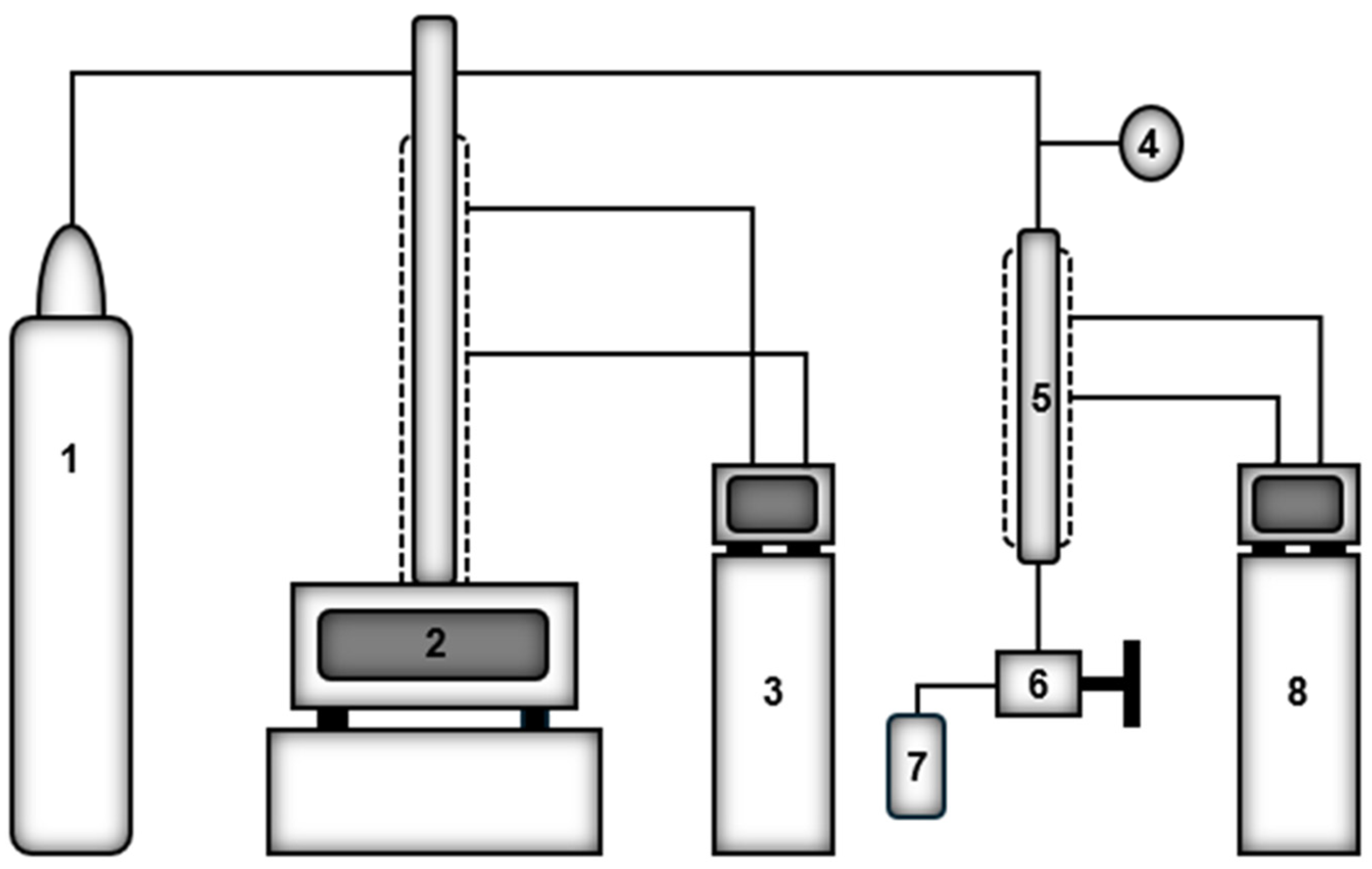
Extractions were conducted on a bench-scale pressurized fluid extraction system consisting of a gas cylinder, an ISCO 260 D high-pressure pump, a thermostatic bath, and an AISI 304 stainless-steel extractor, as shown in Figure 1. The same equipment and configuration were employed for CO2, R-134a, and propane to ensure the comparability of the solvents. Additional information on the equipment arrangement and operating procedures can be found in previous studies that employed similar configurations [25,26]. The internal volume of the extractor vessel was 30 mL, which allowed consistent solvent flow dynamics across all extraction conditions.
Pressures of 18 and 28 MPa were applied for both CO2 and R-134a, whereas propane was evaluated between 8 and 16 MPa, consistent with its lower critical pressure and ability to achieve a high solvating density under milder conditions. Temperatures between 35 and 60 °C and solvent volumetric flow rates at the pump inlet maintained between 2 and 3 mL min−1 were used for all fluids. These inlet flow rates were controlled using an ISCO 260 D syringe pump to ensure a consistent mass flow into the extractor. The solvent volumetric flow rate exiting the system was maintained between 2 and 3 mL min−1, controlled with a micrometer valve (Parker Autoclave Engineers, Erie, PA, USA) heated to 100 °C to prevent condensation at the restrictions. These specifications clarify the distinction between the inlet volumetric flow and pressure-dependent volumetric flow within the extraction cell.
A 32 factorial design with two replicated center points was applied for CO2 and R-134a, comprising nine pressure–temperature combinations (levels −1, 0, and +1) (Table 1). A 22 factorial design with three replicated center points was used for the propane (Table 2). The choice of different pressure ranges for CO2/R-134a (18–28 MPa) and propane (8–16 MPa) was a deliberate methodological decision based on the thermophysical properties of each fluid: CO2 and R-134a require higher pressures to achieve optimal densities in supercritical or dense-phase regions, whereas propane reaches high solvating power for lipophilic compounds at substantially lower pressures. This ensured that each solvent was evaluated within its most efficient operational window.
The designs included replicates only at the center points (n = 2 for CO2 and R-134a; n = 3 for propane) to estimate the pure experimental error and assess the model curvature. Corner and axial points were run once (n = 1) to balance the resource constraints with adequate exploration of the factor space. This is a standard approach in response surface methodology for preliminary optimization studies [27,28], but limits full inferential power for between-condition comparisons. In practice, the replicated center-point runs yielded closely clustered extraction yields, confirming good experimental reproducibility under these conditions.
The extractor vessel was charged with 5 g of sieved plant material. The remaining free volume was filled with glass beads to ensure a homogeneous solvent flow distribution. After thermal stabilization, the system was pressurized to the predetermined target pressure. A 30 min static period was then maintained to allow for equilibrium and complete solvent saturation of the matrix before initiating extract collection.
The fluid flow rate was maintained between 2 and 3 mL min−1, controlled with a micrometer valve (Parker Autoclave Engineers, Erie, PA, USA) heated to 100 °C to prevent condensation at the restrictions. Extracts were collected in pre-weighed glass vials at 5 min intervals initially and then at 10 min intervals to build kinetic curves and identify plateau times. The plateau time for each solvent was determined visually as the point at which the slope of the cumulative extraction curve approached zero, indicating a negligible extraction rate. This procedure ensured the consistent monitoring of extraction kinetics throughout the process.

2.3. Oil Characterization

The extracts were prepared by derivatizing the lipid fraction to form fatty acid methyl esters (FAMEs) and analyzed using GC–MS in a single run per sample. From the same chromatographic acquisition, both the FAME profile, reported as fatty acid equivalents, and the qualitative screening of other detectable classes, including triterpenoids and alkamides, were obtained simultaneously. Derivatization was applied exclusively to the fatty acid fraction, whereas triterpenoids, alkamides, diterpenes, and long-chain hydrocarbons were identified without chemical modification. The lipid fraction or oleaginous compounds were characterized by their fatty acid composition after derivatization to FAMEs. The oleaginous fraction was expressed in terms of fatty acid equivalents.
For fatty acid analysis, approximately 10 mg of the lipid fraction was derivatized to FAMEs following a standard methylation protocol. The extract was dissolved in 1 mL n-hexane, followed by the addition of 1 mL of 0.5 M NaOH in methanol. The mixture was heated at 80 °C for 10 min, cooled to room temperature, and acidified with 1 mL of 1 M HCl. Subsequently, 1 mL of n-hexane was added, and the organic phase containing the FAMEs was separated, dried over anhydrous sodium sulfate, and concentrated under a nitrogen stream before injection. This protocol ensures the efficient methylation and reproducible detection of C16–C18 fatty acids.
Gas chromatography–mass spectrometry (GC–MS) analyses were performed using a GCMS-QP2010 Plus instrument (Shimadzu, Kyoto, Japan) equipped with an AOC-20i autosampler (Shimadzu, Kyoto, Japan). A DB-5MS capillary column (5% phenyl-95% dimethylpolysiloxane, 50 m length, 0.25 mm internal diameter, 0.25 µm film thickness) was employed. The oven program started at 40 °C, followed by a temperature increase of 2 °C min−1 to 200 °C and then 10 °C min−1 to 300 °C, with a final isothermal step of 15 min at 300 °C. The injector, interface, and ion source temperatures were adjusted to 250, 300, and 280 °C, respectively. Helium (99.999% purity) was used as the carrier gas at a constant flow rate of 0.8 mL min−1. Each central point extract was injected twice (n = 2) in split mode (1:50) to verify the reproducibility of the relative peak areas. The relative standard deviations for duplicate injections remained within acceptable limits, thereby supporting analytical robustness. Data acquisition and processing were conducted using GC-MS Postrun Analysis software (v2.53, Shimadzu), referenced against the National Institute of Standards and Technology (NIST14.lb and NIST14.lbs) spectral libraries. Additional methodological details can be found in Ferreira et al. (2024) [29] and Mateus et al. (2023) [30].
Identification was performed through automated NIST library searches using a minimum similarity index of 85%, followed by a manual inspection of the diagnostic fragments. The results are reported as relative peak areas (%) for each extract. The lipid fraction was expressed as fatty acid equivalents owing to prior derivatization into FAMEs. Non-derivatized classes, including triterpenoids, alkamides, diterpenes, and very long-chain hydrocarbons, were qualitatively detected in the same analytical run, ensuring consistent chromatographic conditions across chemical classes.
GC–MS analyses were performed on the extracts obtained from the center-point conditions of each experimental design (CO2, R-134a, and propane). The central points were selected because they represent intermediate operating conditions and provide a common basis for comparing the chemical profiles of different solvents. In addition, the center points were the only conditions for which three independent experimental repetitions were performed (n = 2 for CO2 and R-134a; n = 3 for propane), which ensured a better assessment of repeatability and sufficient extract in case additional GC–MS injections were required. Each center-point extract was analyzed in duplicate (n = 2 injections), and the relative standard deviations of the peak areas remained within acceptable limits, supporting the reliability of the compositional data for comparative purposes. Although a higher number of chromatographic replicates (n ≥ 3) would provide stronger statistical support, the duplicate injections yielded consistent chromatographic profiles and peak areas under our experimental conditions, which we consider sufficient for the comparative and exploratory purposes of this study.
For CO2 and R-134a, the extraction yields obtained at the center points were very close to those at the highest-yield conditions within the investigated ranges, with no appreciable differences within the experimental variability in this exploratory design. In contrast, for propane, the maximum yield (5.42 wt% at 60 °C and 16 MPa) was substantially higher than the yield at the center point (3.31–3.42 wt% at 47.5 °C and 12 MPa). Nevertheless, the center point was chosen for GC–MS because it represented moderate operating conditions common to all three experimental designs and was the only condition with triplicate extraction experiments, providing a more reliable and directly comparable basis for assessing solvent-dependent differences in extract composition.

2.4. Statistical Analysis

Response surface models were fitted to the experimental data using least squares- regression. ANOVA tables and associated F -statistics and p-values are reported only as descriptive measures of model fit, aimed at identifying which linear, quadratic, and interaction terms contributed most to explaining the observed variability in extraction yield. Because most experimental conditions were run with n = 1 (with replication restricted to the central points), the residual variance does not provide a full estimate of independent experimental error for all factor combinations. Consequently, the F -tests and p -values should not be interpreted as formal inferential tests between treatments, but rather as exploratory indicators within the fitted models.
Multiple comparison procedures were occasionally consulted in an exploratory manner, but their results were not used as formal evidence of statistical significance. Therefore, throughout this work, terms such as ‘dominant effect’ or ‘largest contribution’ refer to the relative magnitudes of the fitted regression coefficients and ANOVA components, and not to statistically significant differences in the strict inferential sense.

3. Results and Discussions

3.1. Supercritical CO2 Extraction

The extraction yields obtained using supercritical CO2 ranged from 1.16% to 3.35%, depending on the pressure and temperature (Table 3). The highest CO2 yields (3.2–3.35%) were observed at 28 MPa across all temperatures, reflecting the strong dependence of the solvation capacity on density at elevated pressures [24,31]. These values are consistent with those of previous studies on Acmella oleracea extracted with supercritical CO2, in which increasing pressure enhanced the solubility of medium- and high-molecular-weight compounds, such as triterpenoids and alkylamides.
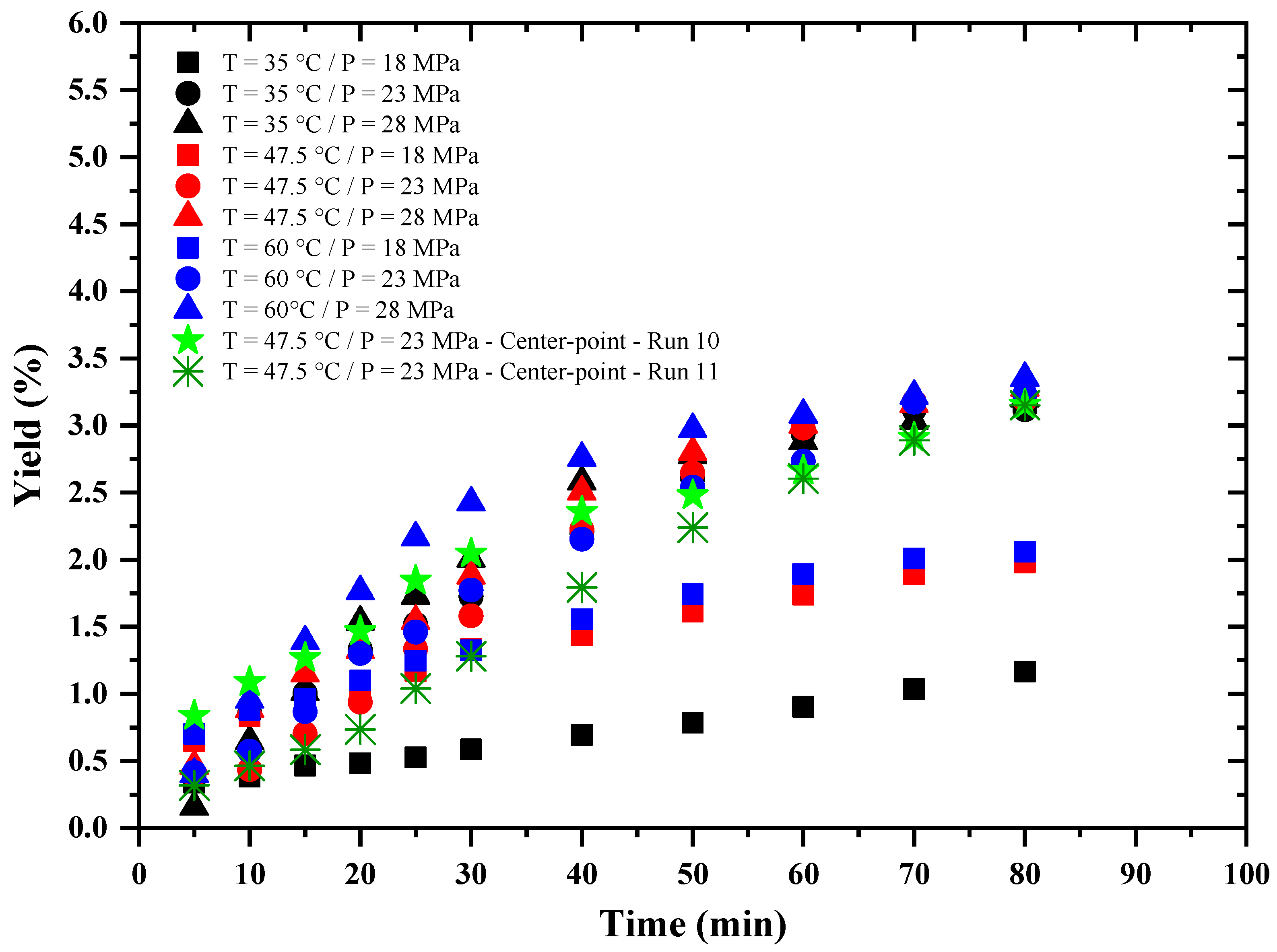
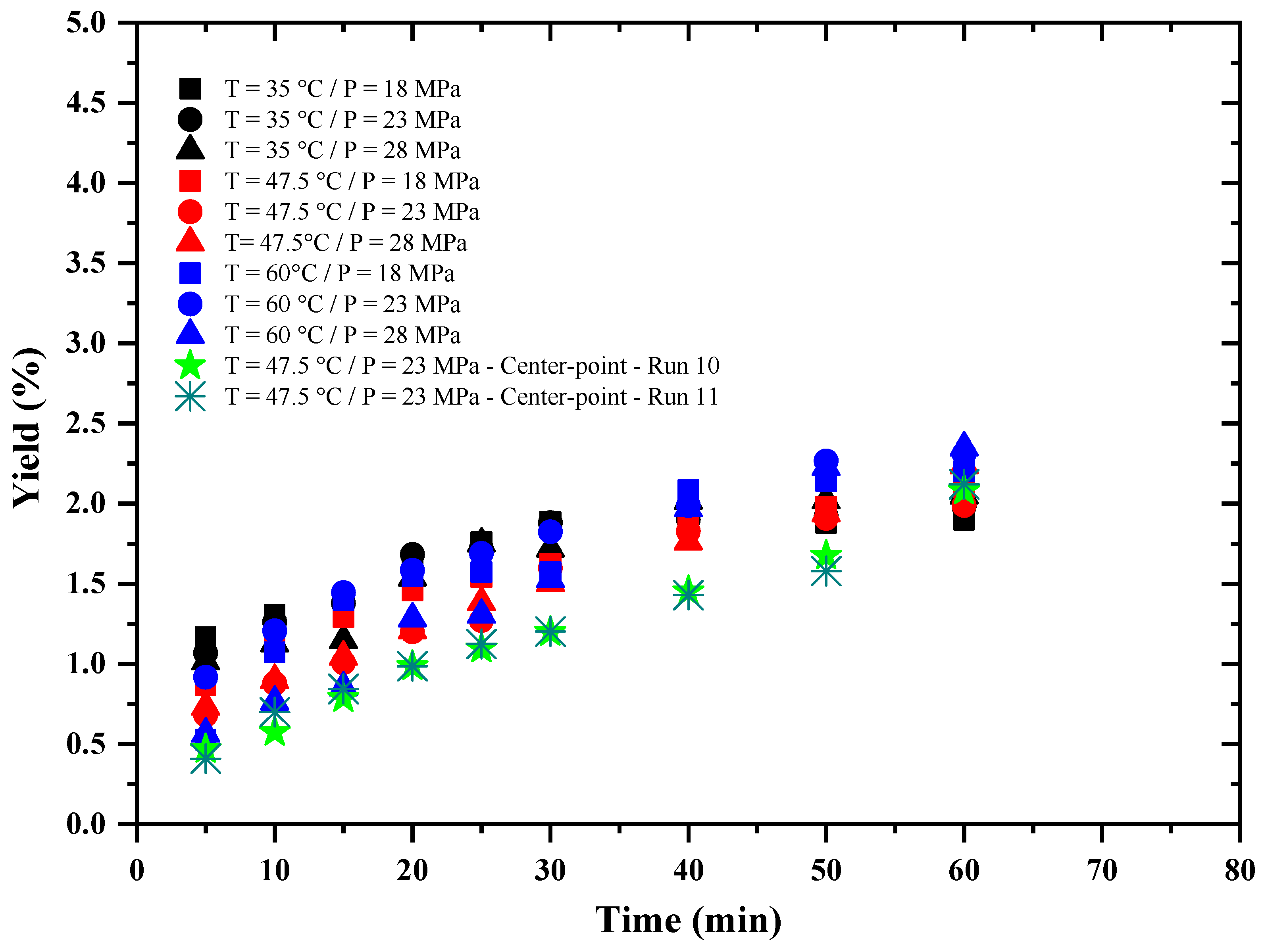
The extraction kinetics (Figure 2) displayed two distinct stages: an initial rapid phase dominated by the mass transfer of easily accessible solutes, followed by a slower diffusion-controlled regime, with a plateau reached at approximately 50 min [33,34,35]. In Figure 2, the green curves correspond to the duplicate center-point experiments, and the small differences among these replicate curves reflect the inherent experimental variability of the extraction runs.
The quantitative relationship between the extraction yield (Y), temperature (T), and pressure (P) was accurately modeled using the quadratic polynomial shown in Equation (1).
Y i e l d = 3.20 + 0.1967 T + 0.7717 P 0.1875 T × P 0.6329 P 2
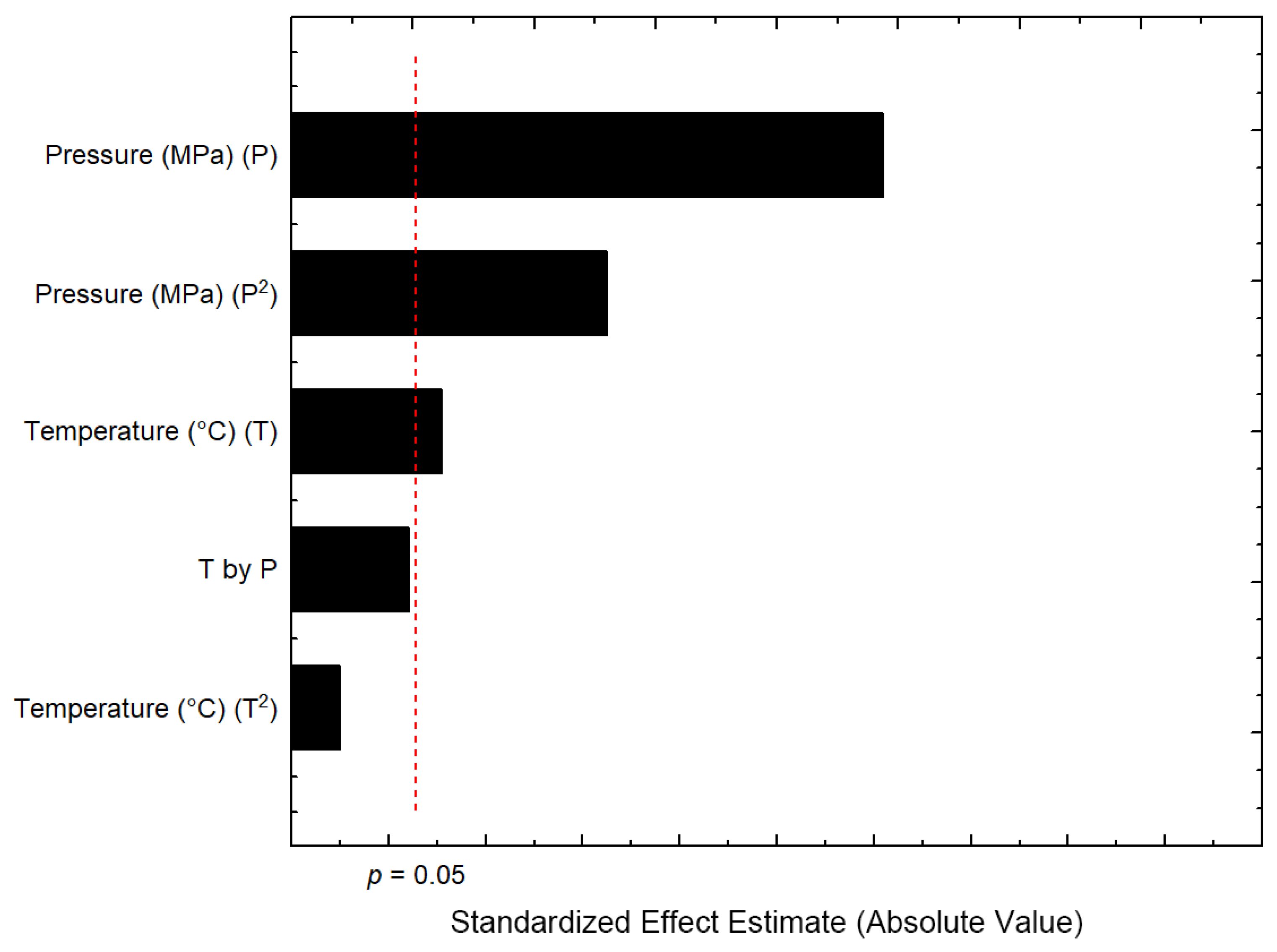
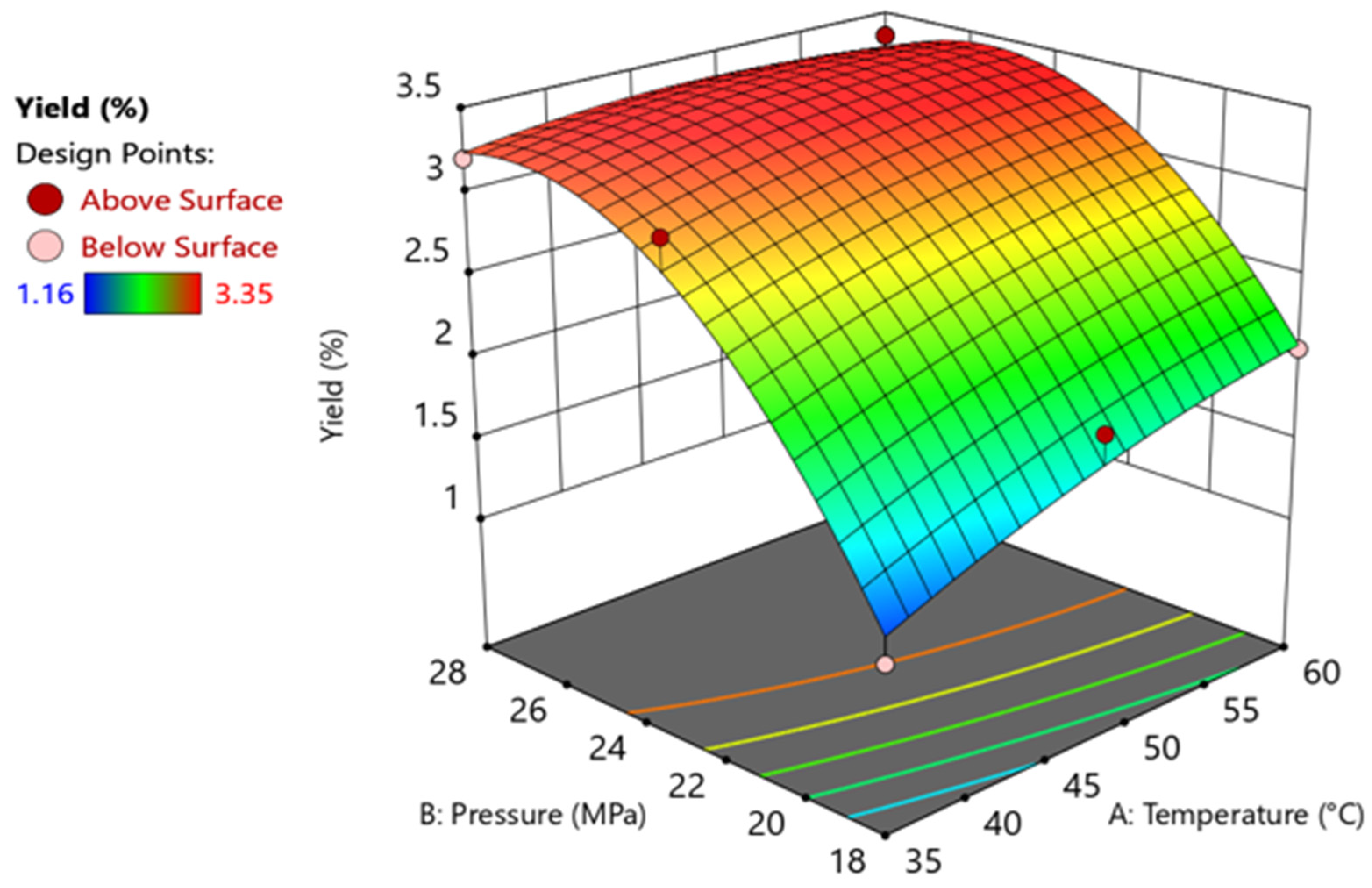
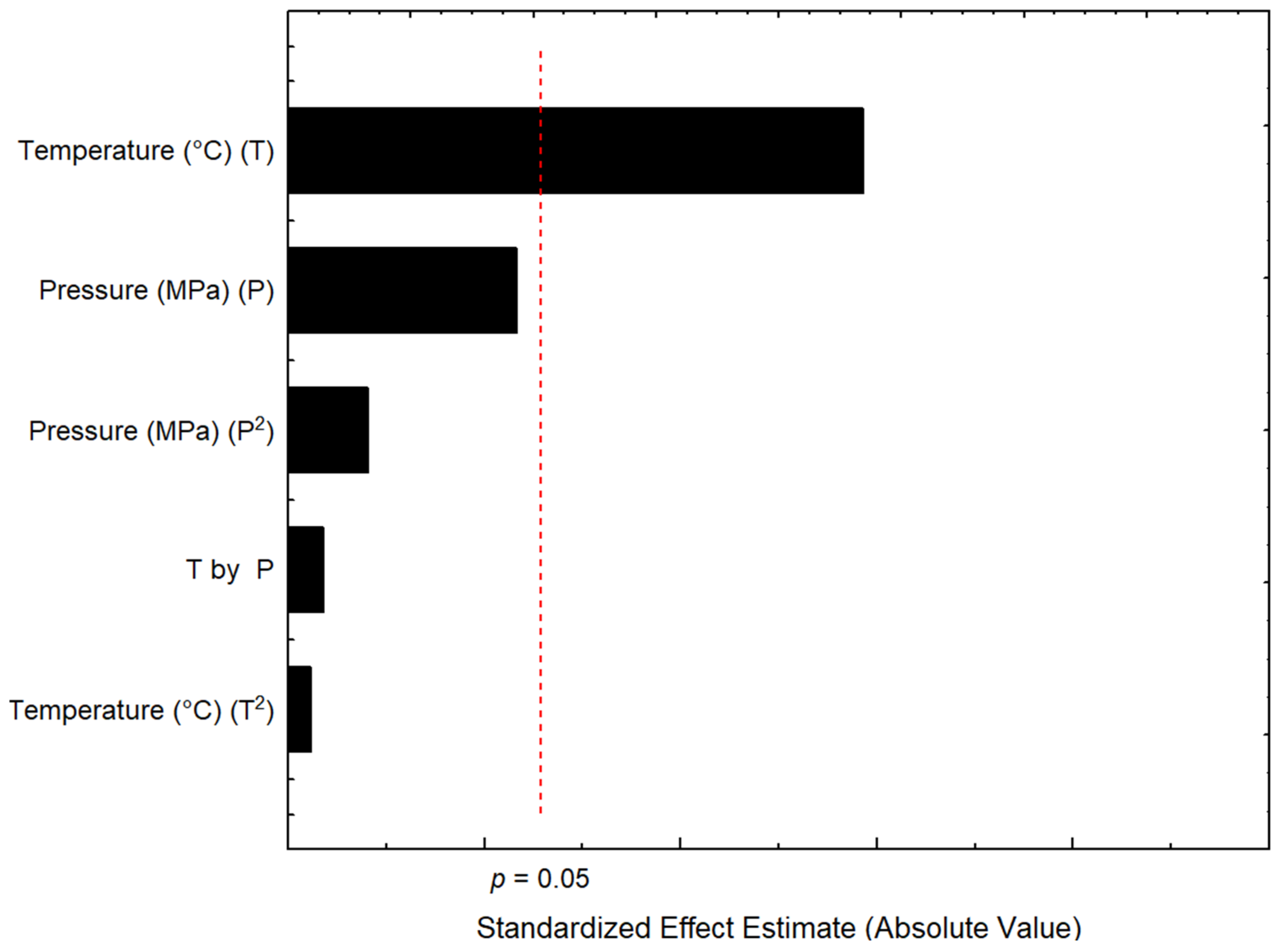
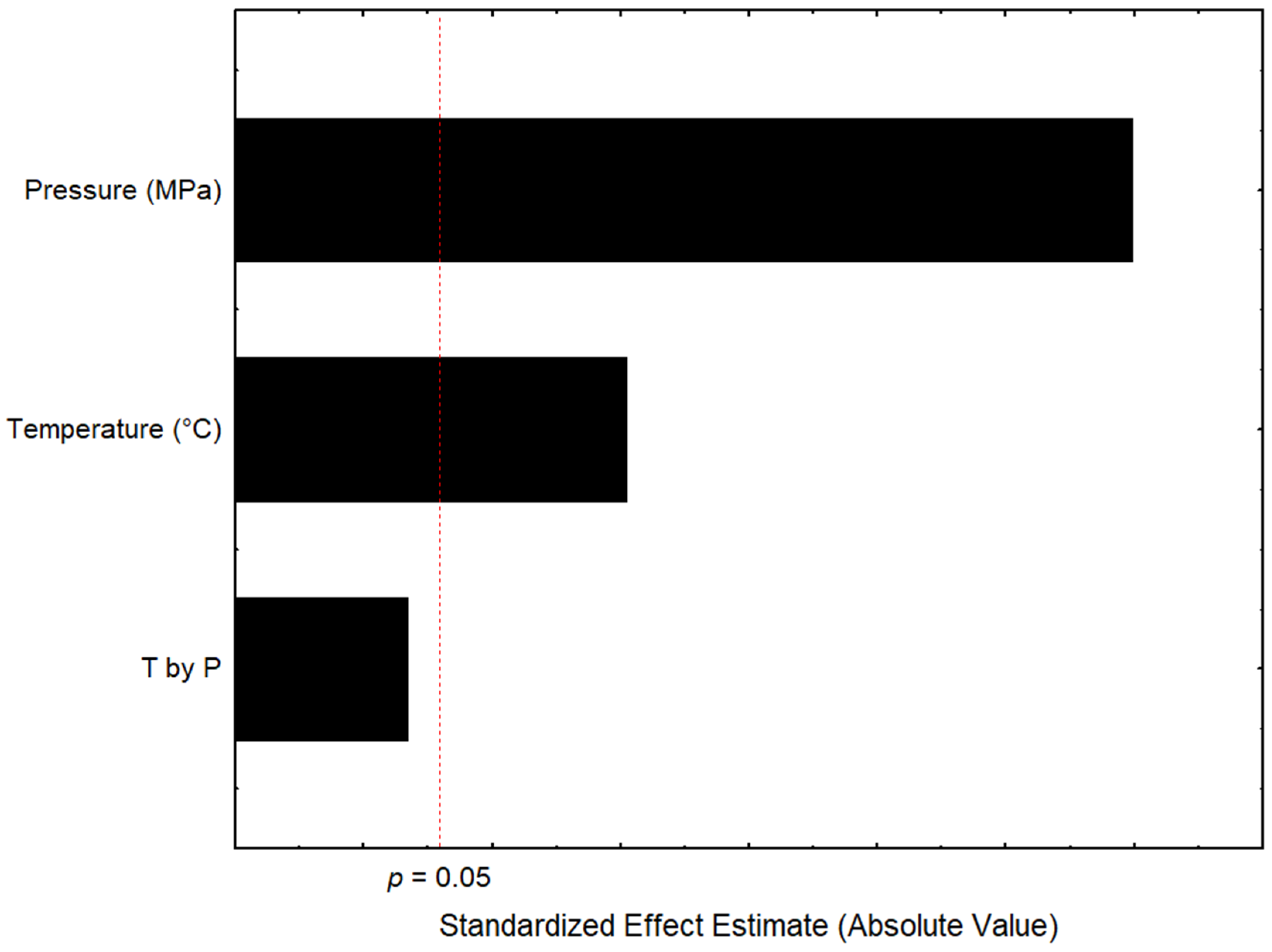
The model captured 97.72% of the yield variance (R2 = 0.9772), indicating good descriptive and predictive performance within the studied parameter range. The ANOVA results (Table 4), interpreted in a descriptive sense as discussed in Section 2.4, highlight pressure as the factor with the largest contribution to the fitted model, with temperature also exerting a relevant influence, and the interaction term having a smaller but non-negligible effect. In line with the limitations imposed by the lack of full replication, these ANOVA-based quantities and the associated p-values are not used as formal evidence of statistical significance but only as internal, descriptive indicators of model behavior. Therefore, pressure was the dominant linear factor affecting the yield, as illustrated by the Pareto chart (Figure 3). The response surface (Figure 4) reveals the characteristic curvature of a quadratic model, with yield maximization occurring at high pressure and intermediate temperature, which is typical behavior for supercritical CO2 extraction, where density and diffusivity trends interact in opposing ways.
The plateau time (~50 min) was the longest among all three fluids. This behavior is consistent with the lower diffusivity of CO2 compared to propane and the extraction of compounds with stronger matrix interactions and higher molecular weights, which introduce increased diffusion resistance during the later stages of extraction. This interpretation aligns with the broader compositional profile obtained with CO2 (e.g., triterpenoids and alkylamides), which typically requires deeper penetration into the plant matrix.
Overall, the quadratic model demonstrated excellent predictive capability, and the dominant influence of pressure underscores the importance of solvent density in controlling the solubility and mass transfer during supercritical CO2 extraction.

3.2. Extraction with R-134a Pressurized

The extraction yields obtained with pressurized R-134a ranged from 1.90% to 2.35%, with the highest values observed at 60 °C and pressures between 23 and 28 MPa (Table 5). Extraction plateau times were between 35 and 40 min, as shown in the kinetic curves (Figure 5). The green curves represent duplicate experiments under the central condition, and the slight deviations between them are attributable to the normal run-to-run variability of the extraction procedure.
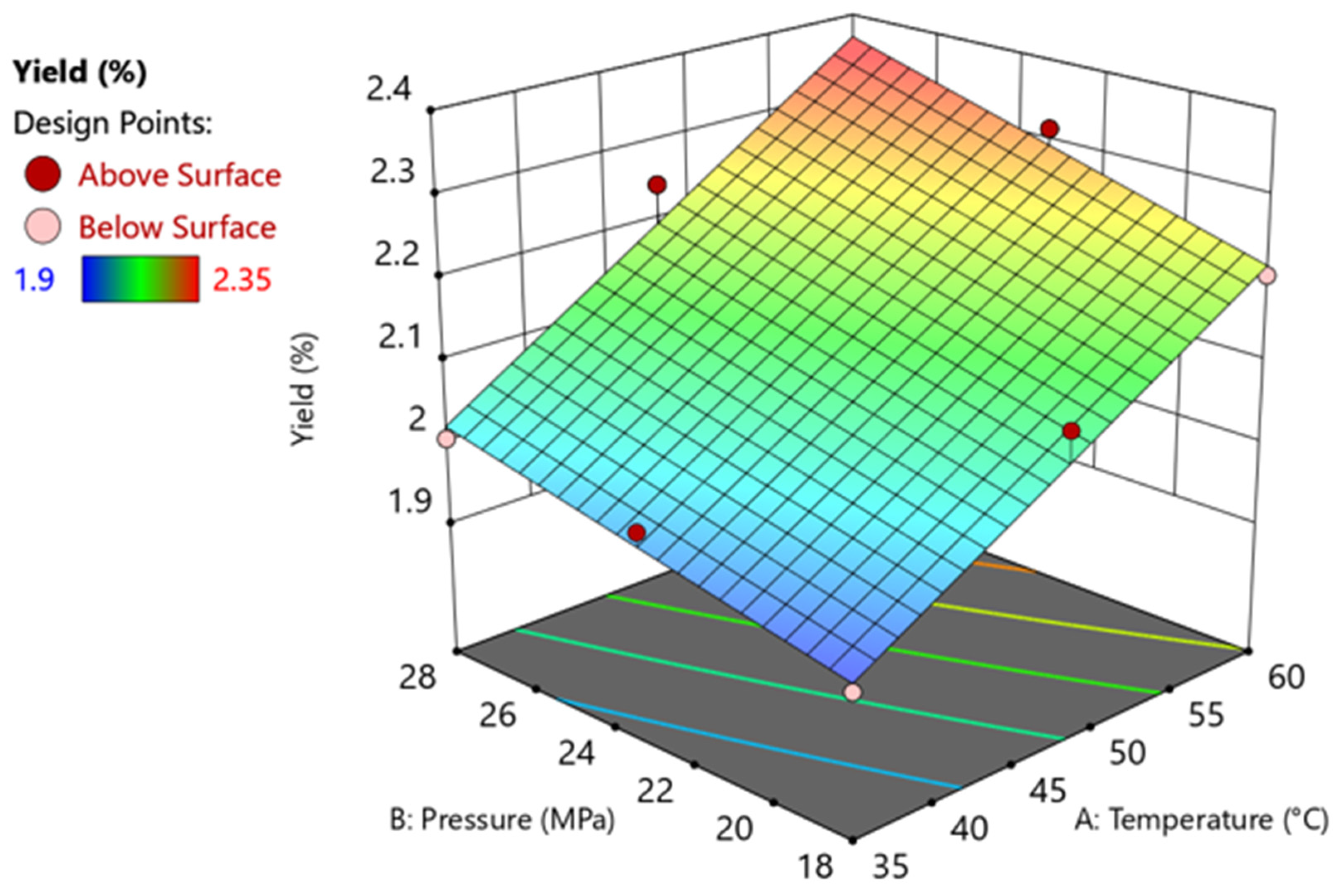
A linear model (Equation (2)) adequately described the extraction performance, with an R2 of 0.9631. Within the fitted model, temperature emerged as the dominant factor, whereas pressure showed a smaller but relevant contribution (Table 6). The Pareto chart (Figure 6) emphasizes this predominance, and the response surface (Figure 7) illustrates the monotonic increase in the yield with both temperature and pressure. Consistent with the exploratory, non-inferential framework defined in Section 2.4, the ANOVA table and Pareto chart are interpreted solely as descriptive summaries of the fitted model without any claim of formal statistical significance for individual factors.
Y i e l d = 2.13 + 0.1631 T + 0.0649 P
The interpretation of the factor significance requires consideration of the thermophysical properties of R-134a. Contrary to the earlier incorrect statement, R-134a exhibits higher density and higher viscosity than CO2 at equivalent conditions, as demonstrated by NIST data [36,37]. This indicates that the lower sensitivity of R-134a to pressure increases is not due to lower density but rather due to its physicochemical behavior: temperature more strongly influences solute vapor pressure, matrix softening, and molecular mobility in this system.
The dominance of temperature, as observed in Figure 6, and the uniformly rising response surface in Figure 7 support this interpretation. Pressure enhances the density of R-134a; however, its solvating behavior is governed less by density and more by thermal effects, particularly for mid-polarity compounds such as triterpenoid esters.
The plateau time (~45 min) was intermediate between those of propane and CO2. This behavior is consistent with R-134a higher viscosity relative to CO2, which may slow late-stage diffusion, and its intermediate solvating capacity, which favors specific mid-polarity compounds while limiting the extraction of heavier or less accessible solutes.

3.3. Pressurized Propane Extraction

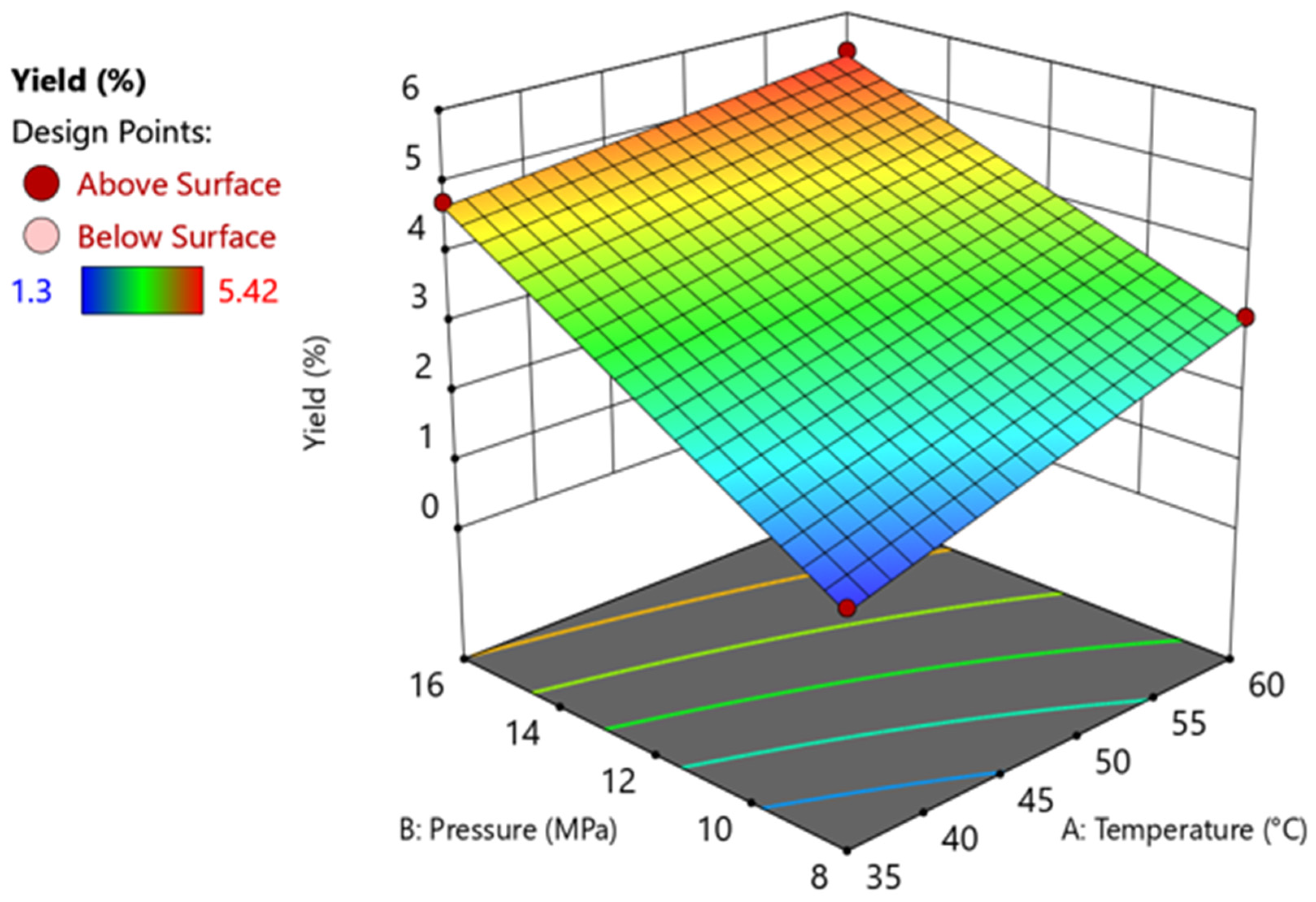
The extraction yields obtained with propane ranged from 1.3% to 5.42% (Table 7). The highest yields (up to 5.42% at 60 °C and 16 MPa) and fastest plateau times (~30–35 min) were observed under these conditions. Higher pressure combined with elevated temperature consistently increased the yield within the 22 factorial design. The center-point conditions (47.5 °C, 12 MPa) demonstrated good reproducibility, with yields ranging from 3.31% to 3.42%, reinforcing the experimental robustness across all solvents evaluated. The center-point conditions (47.5 °C, 12 MPa) demonstrated good reproducibility, with yields ranging from 3.31% to 3.42%, reinforcing the experimental robustness and comparability of these conditions across all evaluated solvents.
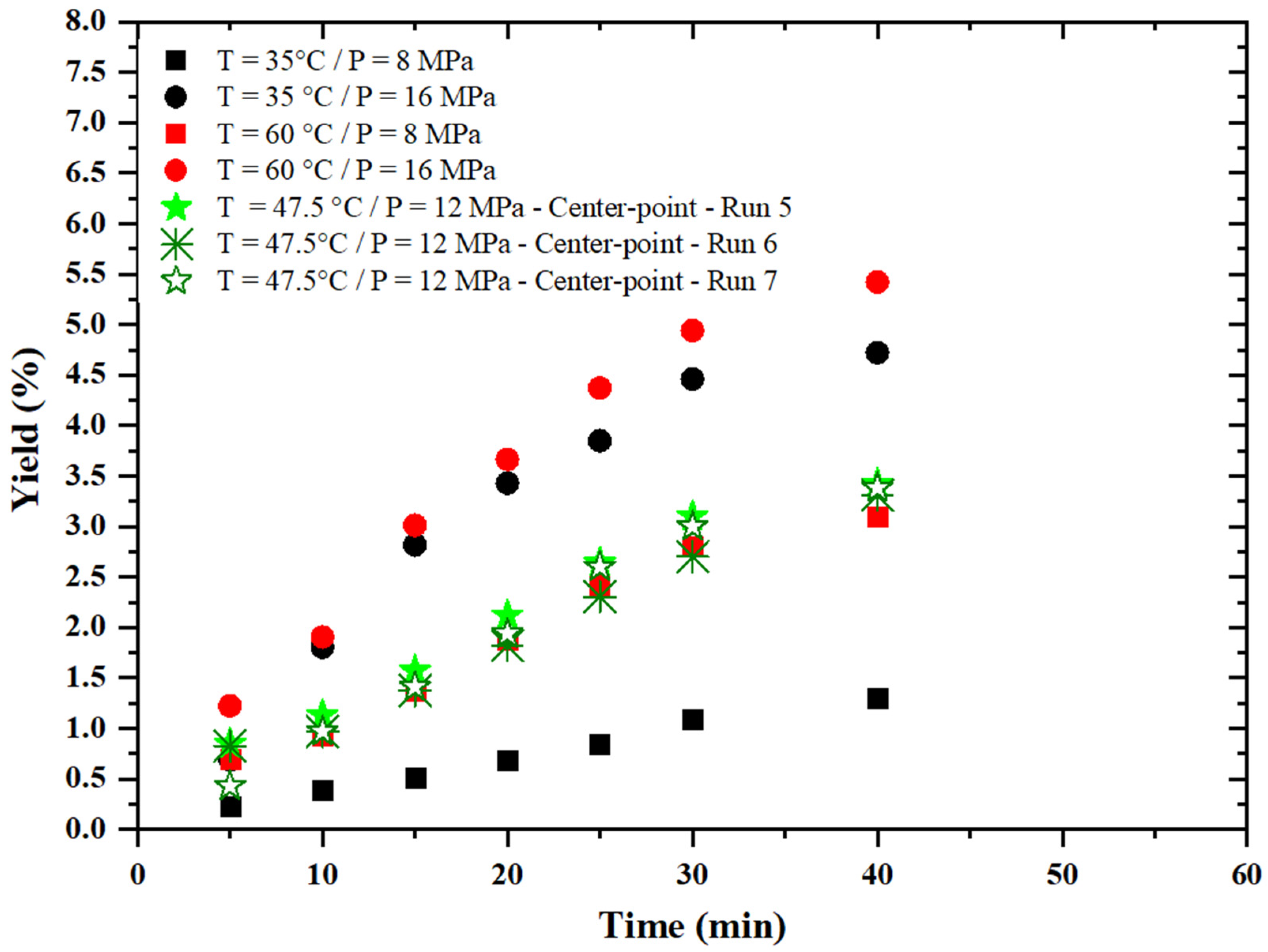
Figure 8 shows the experimental extraction kinetics of jambu using pressurized propane at different temperatures. In this case, the green curves correspond to triplicate experiments under the central condition; the modest dispersion among these three curves reflects the intrinsic variability of repeated extractions under nominally identical operating conditions.
The rapid plateau (~30–35 min) observed for propane is attributable to its low viscosity and high diffusivity, which accelerate the external and internal mass transfer processes. This explains why propane consistently delivered the shortest extraction times and highest yields among the three solvents, particularly for lipid-rich fractions.
A linear model (Equation (3)) adequately described the extraction performance, with an R2 value of 0.9661. Within the fitted model, both temperature and pressure contributed positively to the yield, with pressure exerting a greater influence (Table 8, Figure 9). This behavior aligns with the sharp increase in propane density within the 8–16 MPa range and its strong solvency for nonpolar lipids, which enhances extractability as pressure increases.
Y i e l d = 3.57 + 0.6250 T + 1.44 P
It is important to note that the equations (Equations (1)–(3)) were developed using coded levels of the factors (temperature and pressure), ranging from −1 to +1, with 0 denoting the center point. Therefore, the intercept (3.57) in Equation (3) corresponds to the predicted yield at the center point (47.5 °C and 12 MPa, coded levels 0) and not at the lowest experimental conditions. To predict the yields for specific real values of temperature and pressure, these must first be converted to their corresponding coded levels.
Although propane presents lower density than CO2 and especially R-134a under the conditions investigated, its density at moderate pressures (8–16 MPa), combined with its low viscosity and non-polar character, enables rapid internal diffusion and efficient solvation of unsaturated fatty acids [15,38].
As shown in the Pareto chart (Figure 9), the effect of pressure is dominant, consistent with the propane extraction mechanism, which is strongly dependent on density-driven solvation improvements. The response surface (Figure 10) shows a monotonic ascent with no curvature, indicating that within the tested region, both temperature and pressure contribute additively and linearly to the yield increase. Once again, this dominance is understood in a descriptive sense: given the limited replication (n = 1 for non-center points), the F-statistics and p-values underlying the Pareto chart do not support strict inferential conclusions and are used only to rank terms in the regression model.
Owing to the limited replicates (n = 1 for non-center points), ANOVA was used primarily in a descriptive way, focusing on model term contributions and overall fit adequacy rather than on broad inferential comparisons between individual conditions. While formal verification of assumptions such as normality and homoscedasticity would be required for full inferential rigor, the high R2 values and the relative magnitudes of the model terms indicate that the fitted models effectively capture the main variability and trends within the experimental domain, serving well for predictive purposes and for identifying the most influential factors. Future studies could benefit from increased replication across all experimental points to enable more robust and reliable inferential analyses.

3.4. Extract Components

The chemical composition of the jambu extracts varied consistently with the employed fluid (Table 9), yielding three complementary profiles. For the lipid fraction, the results are presented as fatty acid equivalents, as identification by GC–MS was performed after derivatization to methyl esters. Compounds from other classes, such as triterpenoids and alkamides, have been reported in their native structures. All chromatographic identifications were based on the same analysis run used for FAME quantification, ensuring consistent detection conditions for both the lipid and non-lipid constituents. Derivatization was applied only to fatty acids, whereas triterpenoids, alkamides, diterpenes, and long-chain hydrocarbons were identified without chemical modification. The lipid fraction, or oleaginous compounds, was characterized by its fatty acid composition after derivatization to fatty acid methyl esters (FAMEs), as shown in Table 9. The oleaginous fraction was reported as a fatty acid equivalent.
A broader profile was observed in the extract obtained using supercritical CO2. The triterpenoid β-amyrone was the major component, with a relative area of 56.80%, accompanied by a mixed lipid fraction composed mainly of linoleic acid (24.80%) and palmitic acid (7.50%). Alkamides, including spilanthol (4.70%), were also detected, along with minor constituents such as phytol and very long-chain alkanes. This diversity reflects the tunable solvating power of CO2 under supercritical conditions, enabling access to compounds with intermediate polarity and higher molecular weights.
A narrower composition range was observed for the extract obtained using pressurized R-134a. β-Amyrin acetate accounted for 70.00% of the relative area. The lipid fraction appeared in lower proportions, with linoleic acid at 11.90%, oleic acid at 10.20%, and palmitic acid at 3.60%. Low-abundance constituents were also observed, such as phytol (0.90%) and a very long-chain linear alkane ((n-C54); 3.40%). The predominance of β-amyrin acetate highlights the selective affinity of R-134a for triterpenoid esters, which is consistent with the dielectric properties and solute–solvent interactions of this fluid.
An essentially lipidic cut was obtained in the extract obtained using pressurized propane. Under these analytical conditions, linoleic acid and oleic acid reached 84.90% and 15.20%, respectively, with low or no detection of triterpenoids, alkamides, and other markers outside the lipid class. This pattern reflects the strong solvency of propane for nonpolar, unsaturated C18 fatty acids and its limited capacity to dissolve larger or more structurally complex metabolites. The predominance of oleic acid (C18:1) and linoleic acid (C18:2) in propane extracts is attributed to their highly apolar nature, which favors the extraction of long-chain unsaturated fatty acids, whereas shorter-chain fatty acids or more polar compounds exhibit reduced solubility under the tested conditions [14,15,38]. Other compounds, such as alkylamides and triterpenoids, which possess different polarities or more complex molecular structures, exhibit lower solubility in propane under the tested conditions, resulting in their absence or insignificant amounts [14,15,38].
Taken together, these data indicate three fluid-distinguishable compositional signatures. For CO2, a triterpenoid predominated, with concomitant presence of C18 lipids and alkamides. For R-134a, there was a proportional enrichment in a triterpenoid ester with lower co-extraction of other classes of compounds. For propane, there was a predominance of unsaturated C18 fatty acids. The complete percentages and minor constituents are listed in Table 9. Given the limited number of GC–MS replicates, these compositional profiles should be interpreted as semi-quantitative and exploratory, yet adequate to reveal the main trends in solvent-dependent selectivity of the catalysts.
The distinct compositional profiles of the jambu extracts obtained using supercritical CO2, pressurized R-134a, and propane are directly attributable to the differences in the physicochemical properties of each solvent, such as polarity, density, and molecular interaction capacity. Supercritical CO2, with its adjustable polarity and high solvation capacity, is capable of extracting a broader range of compounds, including alkylamides and triterpenoids, in addition to fatty acids. R-134a, with its intermediate dielectric polarity, exhibits a particular selectivity for triterpenoids. Propane, a highly apolar solvent, exhibits a strong affinity for lipophilic compounds, resulting in extracts that are predominantly rich in unsaturated fatty acids. These differences in selectivity are crucial for obtaining extracts with specific compositions targeted for particular applications. These three extraction profiles clearly demonstrate the role of solvent polarity, density, and viscosity in defining extraction selectivity, supporting the potential to tailor the extract composition through appropriate solvent choice.

3.5. Comparative Discussion of Extraction Results

A comprehensive comparison of the extraction results obtained with supercritical CO2, pressurized R-134a, and propane revealed critical differences in extraction efficiency, kinetic behavior, and selectivity toward phytochemical classes.
Supercritical CO2 yielded up to 3.35%, with a wide extraction spectrum including alkamides and triterpenes, specifically spilanthol and β-amyrone, as confirmed by GC-MS analysis (Table 3 and Figure 2). This is supported by the strong solvency at high densities under elevated pressures (18–28 MPa) [39]. The quadratic model (Equation (1)) accounted for nearly 98% of the variance in the yield data, and ANOVA results highlighted pressure as the primary driver with a relevant temperature influence and relevant interaction effect (Table 4, Figure 3 and Figure 4). The response surface indicates a nuanced balance between improved diffusivity and reduced solvent density with increasing temperature at high pressures, which is key to process optimization [40].
In contrast, pressurized R-134a, operated within a similar pressure range as CO2, delivered lower yields (up to 2.35%) but enhanced the selectivity for the triterpenoid ester β-amyrin acetate (~70%), a compound of pharmaceutical interest. Contrary to earlier assumptions, R-134a exhibits higher viscosity and comparable or higher density than CO2 under the studied conditions, which affects the solvation of less accessible solutes and contributes to a narrower chemical diversity. Its temperature-driven increase in solute vapor pressure and matrix softening favors the extraction of a restricted set of constituents, consistent with previously reported trends [41].
Yield prediction was effectively captured by a linear model (Equation (2)), with temperature strongly influencing the extraction efficiency (Table 6, Figure 6 and Figure 7). The dominance of temperature in the Pareto analysis aligns with the physicochemical properties of R-134a, which enables faster mass transfer at elevated temperatures but with a more moderate density response to pressure than CO2. The resulting extract was strongly triterpenoid-centered, with marked enrichment of β-amyrin acetate and reduced co-extraction of other compound classes. This yields a more focused phytochemical profile, which is advantageous for marker-based standardization despite the lower overall yield.
Propane exhibited the highest extraction yield, reaching up to 5.42% under moderate pressure and temperature conditions (16 MPa, 60 °C) (Table 7), likely due to its non-polarity and strong solvating potential for lipophilic components [42]. Its density at 8–16 MPa is sufficient to sustain elevated mass-transfer rates while maintaining low flow resistance in the packed bed [39]. A simple linear model (Equation (3)) explained 96.61% of the yield variability. Propane’s effectiveness in extracting predominantly unsaturated lipid fractions, particularly linoleic acid (C18:2) at ~85%, correlates directly with its highly apolar character and the moderate pressures used [14,43]. The rapid plateau observed in Figure 8 (~35 min) reflects the low viscosity and high diffusivity of propane, which accelerates internal mass transfer relative to both CO2 and R-134a.
The Pareto charts (Figure 3, Figure 6 and Figure 9) consistently show that pressure is the factor with the strongest influence on CO2 and propane extraction, whereas temperature plays a pivotal role in R-134a extraction. This difference reflects the pressure-dependent density increase characteristics of CO2 and propane, which enhance solubility, whereas the milder density response of R-134a shifts the dominant influence toward temperature-driven mechanisms. The statistical models corroborated these trends: all three exhibited high coefficients of determination, with R2 values of 0.9772 for CO2, 0.9631 for R-134a, and 0.9661 for propane. Within the descriptive framework adopted here (Section 2.4), temperature and pressure emerge as the main factors controlling the yield in the studied ranges, reinforcing the sensitivity of these systems to changes in solvent density and molecular structure.
From a mechanistic standpoint, CO2 requires elevated densities to enable deep matrix penetration and access high-molecular-weight compounds, thereby broadening the compositional scope and prolonging the diffusion-controlled phase. Propane operates primarily under lipid-dominated solvation, with facilitated diffusion and rapid mass transfer, shortening the time required to reach the plateau and maximizing the unsaturated lipid content. R-134a combines efficient initial diffusion with a more limited solvating capacity across diverse phytochemical classes, resulting in a narrower composition and intermediate plateau time. Although the extraction curves for all three solvents exhibited the typical two-stage behavior described in classical kinetic models, rigorous kinetic modeling of the extraction curves (e.g., using Sovová-type models) was considered beyond the scope of the present work, which focuses on comparing process conditions and solvents in terms of global extraction performance and extract composition.
Three extraction scenarios emerged from the results. Although the absolute maximum yields for each solvent were not always located at the center-point conditions, the center points provided yields comparable to the best-performing conditions for CO2 and R-134a and were the only triplicate runs for propane. Consequently, the GC–MS comparison among the solvents was based on these common, moderately severe operating conditions, which maximized the experimental robustness and compositional comparability [42,44]. When the goal is to preserve the chemical identity of jambu in a single multifunctional extract containing lipids and triterpenoids, with β-amyrone as the primary marker, CO2 provides the greatest compositional diversity, albeit with longer extraction times and higher pressures. When a triterpenoid-centered extract is desired for standardization, R-134a affords a higher relative proportion of β-amyrin acetate, despite its lower overall yield. This synthesis, supported by the kinetic curves, yields, and relative composition in Table 9, emphasizes the trade-offs among selectivity, productivity, and process duration. Fine adjustments in pressure and temperature enable the precise modulation of solvent density, diffusivity, and solute vapor pressure, providing a basis for tailored process optimization depending on whether the target is yield, speed, or compositional specificity.


4. Conclusions

This study demonstrates that the choice of pressurized fluid critically governs the yield, selectivity, and kinetics of jambu (Acmella oleracea) extraction. Propane delivered the highest yields (up to 5.42%) and the fastest plateau time (~30–35 min), producing a predominantly unsaturated lipid extract (linoleic acid ~85%) suitable for emollient and nutritional applications.
Supercritical CO2 extraction provided the broadest compositional diversity, combining alkamides (spilanthol), triterpenoids (β-amyrone, 56.8%), and lipids, making it attractive for multifunctional extracts targeting the cosmetic and nutraceutical markets. Pressurized R-134a selectively enriched β-amyrin acetate (~70%), yielding a focused profile for pharmaceutical standardization, albeit with a lower overall yield. Statistical models (R2 > 0.96) confirmed that pressure dominated the yield of CO2 and propane, whereas temperature governed R-134a extraction, reflecting the different density–viscosity relationships and solvation mechanisms of these three fluids.
The kinetic analysis revealed plateau times ranging from ~30–35 min for propane to ~45 min for R-134a and ~50 min for CO2, which is consistent with the relative diffusivities and viscosities of the solvents. Together, these extraction profiles show that solvent choice enables precise modulation of both productivity and chemical composition, allowing process conditions to be aligned with specific industrial objectives. Integrated modeling and compositional analysis provide a practical framework for selecting the most appropriate solvent: propane for high-yield unsaturated lipid fractions, CO2 for broad-spectrum extracts that preserve the chemical signature of jambu, and R-134a for triterpenoid-centered standardized ingredients. Future work should combine the optimized extraction conditions identified here with in vitro assays in order to directly correlate extraction parameters, chemical profiles, and biological activities.
Beyond yield and selectivity, the choice among these pressurized fluids must also consider environmental and safety aspects. Supercritical CO2 remains attractive from a sustainability perspective because of its low toxicity and negligible global warming potential at the point of use, whereas R-134a is a synthetic fluorinated refrigerant with a relatively high global warming potential, and propane is flammable and therefore requires strict safety controls. These trade-offs must be weighed alongside the distinct compositional profiles described here when designing industrial extraction processes.

Author Contributions

Conceptualization, L.F.-P.; Methodology, M.A.A.R., R.L.B.d.S., N.R.B., C.T.H. and D.d.S.S.; Software, E.A.d.S.; Formal analysis, M.J.d.S., R.J.d.S. and L.F.-P.; Data curation, L.F.-P.; Writing—original draft, M.A.A.R., R.L.B.d.S. and N.R.B.; Writing—review & editing, L.F.-P.; Visualization, L.F.-P. All authors have read and agreed to the published version of the manuscript.

Funding

This study was funded by the São Paulo Research Foundation (FAPESP, Grant Number 2018/23063-1) and the National Council for Scientific and Technological Development (CNPq, Grant Number 420832/2023-8).

Data Availability Statement

The original contributions presented in this study are included in the article. Further inquiries can be directed to the corresponding author.

Acknowledgments

The authors thank the Coordination for the Improvement of Higher Education Personnel (CAPES), São Paulo Research Foundation (FAPESP) and National Council for Scientific and Technological Development (CNPq).

Conflicts of Interest

The authors declare no conflict of interest.

References

  1. Batista, L.L.; Koga, R.D.C.R.; Teixeira, A.V.T.D.L.; Teixeira, T.A.; De Melo, E.L.; Carvalho, J.C.T. Clinical Safety of a Pharmaceutical Formulation Containing an Extract of Acmella oleracea (L.) in Patients With Premature Ejaculation: A Pilot Study. Am. J. Men’s Health 2023, 17, 155798832311678. [Google Scholar] [CrossRef]
  2. Ferrati, M.; Bartolini, B.; Lupidi, G.; Freddi, L.; Bolletta, V.; Cespi, M.; Giovannetti, R.; Zannotti, M.; Petrelli, R.; Maggi, F.; et al. Assessment of the N-Alkylamide Content and Volatile Profiles in Two Cultivars of Acmella oleracea (L.) R.K. Jansen Grown in Aquaponics. Plants 2025, 14, 1401. [Google Scholar] [CrossRef]
  3. Dallazen, J.L.; Maria-Ferreira, D.; da Luz, B.B.; Nascimento, A.M.; Cipriani, T.R.; de Souza, L.M.; Felipe, L.P.G.; Silva, B.J.G.; Nassini, R.; de Paula Werner, M.F. Pharmacological potential of alkylamides from Acmella oleracea flowers and synthetic isobutylalkyl amide to treat inflammatory pain. Inflammopharmacology 2019, 28, 175–186. [Google Scholar] [CrossRef]
  4. De Bessa Cunha, N.M.; Devilla, I.A.; Da Silva Maia, G. Influence of Drying Temperature of Jambu Leaves (Acmella oleracea) in a Spray Dryer. J. Sustain. Dev. 2025, 18, 13. [Google Scholar] [CrossRef]
  5. Maxim, C.; Turcov, D.; Trifan, A.; Șuteu, D.; Barna, A.S. Preliminary Characterization of the Phytoextracts from Acmella oleracea with Therapeutic. Sci. Study Res. Chem. Chem. Eng. Biotechnol. Food Ind. 2024, 25, 169–182. [Google Scholar] [CrossRef]
  6. Zúñiga-Moreno, A.; Galicia-Luna, L.A.; Camacho-Camacho, L.E. Measurements of solid solubilities and volumetric properties of naphthalene+carbon dioxide mixtures with a new assembly taking advantage of a vibrating tube densitometer. Fluid. Phase Equilibria 2005, 234, 151–163. [Google Scholar] [CrossRef]
  7. Kowalczyk, S.; Grymel, M.; Bilik, J.; Kula, W.; Wawoczny, A.; Grymel, P.; Gillner, D. Selected Plants as Sources of Natural and Active Ingredients for Cosmetics of the Future. Appl. Sci. 2024, 14, 3487. [Google Scholar] [CrossRef]
  8. Spinozzi, E.; Ferrati, M.; Baldassarri, C.; Cappellacci, L.; Marmugi, M.; Caselli, A.; Benelli, G.; Maggi, F.; Petrelli, R. A Review of the Chemistry and Biological Activities of Acmella oleracea (“jambù”, Asteraceae), with a View to the Development of Bioinsecticides and Acaricides. Plants 2022, 11, 2721. [Google Scholar] [CrossRef]
  9. Zhang, X.; Heinonen, S.; Levänen, E. Applications of supercritical carbon dioxide in materials processing and synthesis. RSC Adv. 2014, 4, 61137–61152. [Google Scholar] [CrossRef]
  10. Dias, A.; Santos, P.; Seabra, I.; Júnior, R.; Braga, M.; de Sousa, H. Spilanthol from Spilanthes acmella flowers, leaves and stems obtained by selective supercritical carbon dioxide extraction. J. Supercrit. Fluids 2012, 61, 62–70. [Google Scholar] [CrossRef]
  11. Barbosa, A.F.; Pereira, C.D.S.S.; Mendes, M.F.; Junior, R.N.D.C.; De Carvalho, M.G.; Maia, J.G.S.; Sabaa-Srur, A.U.O. Spilanthol Content in the Extract Obtained by Supercritical CO2 at Different Storage Times of Acmella oleracea L. J. Food Process. Eng. 2017, 40. [Google Scholar] [CrossRef]
  12. Blanco, V.S.d.F.; Michalak, B.; Zelioli, Í.A.M.; Oliveira, A.d.S.S.d.; Rodrigues, M.V.N.; Ferreira, A.G.; Garcia, V.L.; Cabral, F.A.; Kiss, A.K.; Rodrigues, R.A.F. Isolation of spilanthol from Acmella oleracea based on Green Chemistry and evaluation of its in vitro anti-inflammatory activity. J. Supercrit. Fluids 2018, 140, 372–379. [Google Scholar] [CrossRef]
  13. Sahena, F.; Zaidul, I.; Jinap, S.; Karim, A.; Abbas, K.; Norulaini, N.; Omar, A. Application of supercritical CO2 in lipid extraction—A review. J. Food Eng. 2009, 95, 240–253. [Google Scholar] [CrossRef]
  14. Freitas, L.d.S.; de Oliveira, J.V.; Dariva, C.; Jacques, R.A.; Caramão, E.B. Extraction of Grape Seed Oil Using Compressed Carbon Dioxide and Propane: Extraction Yields and Characterization of Free Glycerol Compounds. J. Agric. Food Chem. 2008, 56, 2558–2564. [Google Scholar] [CrossRef]
  15. Sparks, D.; Hernandez, R.; Zappi, M.; Blackwell, D.; Fleming, T. Extraction of rice brain oil using supercritical carbon dioxide and propane. J. Am. Oil Chem. Soc. 2006, 83, 885. [Google Scholar] [CrossRef]
  16. Kim, M.S.; Mulroy, W.J.; Didion, D.A. Performance Evaluation of Two Azeotropic Refrigerant Mixtures of HFC-134a With R-290 (Propane) and R-600a (Isobutane). J. Energy Resour. Technol. 1994, 116, 148–154. [Google Scholar] [CrossRef]
  17. Basu, R.S.; Wilson, D.P. Thermophysical properties of 1,1,1,2-tetrafluoroethane (R-134a). Int. J. Thermophys. 1989, 10, 591–603. [Google Scholar] [CrossRef]
  18. Guo, T.; Wan, C.; Huang, F. Extraction of rapeseed cake oil using subcritical R134a/butane: Process optimization and quality evaluation. Food Sci. Nutr. 2019, 7, 3570–3580. [Google Scholar] [CrossRef]
  19. Mustapa, A.; Manan, Z.; Azizi, C.M.; Norulaini, N.N.; Omar, A.M. Effects of parameters on yield for sub-critical R134a extraction of palm oil. J. Food Eng. 2009, 95, 606–616. [Google Scholar] [CrossRef]
  20. Yan, W.; Chen, C.; Zheng, Y.; Xu, J.; Wang, Y.; He, X. Total triterpenoids from apple peels exert pronounced anti-breast-cancer activity in vivo and in vitro. J. Sci. Food Agric. 2024, 104, 9228–9239. [Google Scholar] [CrossRef]
  21. Lajoie, L.; Fabiano-Tixier, A.-S.; Chemat, F. Water as Green Solvent: Methods of Solubilisation and Extraction of Natural Products-Past, Present and Future Solutions. Pharmaceuticals 2022, 15, 1507. [Google Scholar] [CrossRef]
  22. Chemat, F.; Rombaut, N.; Sicaire, A.-G.; Meullemiestre, A.; Fabiano-Tixier, A.-S.; Abert-Vian, M. Ultrasound assisted extraction of food and natural products. Mechanisms, techniques, combinations, protocols and applications. A review. Ultrason. Sonochem. 2016, 34, 540–560. [Google Scholar] [CrossRef]
  23. Azmir, J.; Zaidul, I.S.M.; Rahman, M.M.; Sharif, K.M.; Mohamed, A.; Sahena, F.; Jahurul, M.H.A.; Ghafoor, K.; Norulaini, N.A.N.; Omar, A.K.M. Techniques for extraction of bioactive compounds from plant materials: A review. J. Food Eng. 2013, 117, 426–436. [Google Scholar] [CrossRef]
  24. Reverchon, E.; De Marco, I. Supercritical fluid extraction and fractionation of natural matter. J. Supercrit. Fluids 2006, 38, 146–166. [Google Scholar] [CrossRef]
  25. GLopes, G.d.S.; Conceição, M.A.; Hiranobe, C.T.; da Silva, C.; da Silva, E.A.; dos Santos, R.J.; Ferreira-Pinto, L. Supercritical CO2 Extraction from Bacupari (Garcinia brasiliensis) and Leiteira (Tabernaemontana catharinensis) Seeds. Sustain. Chem. 2025, 6, 35. [Google Scholar] [CrossRef]
  26. Corrêa, G.; Souza, M.R.d.R.; Nascimento, E.S.; Bjerk, T.R.; Goncalves, J.E.; Moritz, C.M.F.; Sakai, O.A.; da Silva, E.A.; dos Santos, R.J.; da Silva, E.A.; et al. Supercritical CO2 Extraction of Natural Compounds from Capuchin (Tropaeolum majus) Leaves and Seeds. Processes 2024, 12, 1566. [Google Scholar] [CrossRef]
  27. Anderson, M.J.; Whitcomb, P.J. Design of Experiments. In Kirk-Othmer Encyclopedia of Chemical Technology; John Wiley & Sons: Hoboken, NJ, USA, 2010; pp. 1–22. [Google Scholar] [CrossRef]
  28. Holmes, D.L. Experiments—Design and Analysis. J. Oper. Res. Soc. 1978, 29, 715–716. [Google Scholar] [CrossRef]
  29. Ferreira, A.C.; Da Silva, C.; Ferreira-Pinto, L.; Belisário, C.; Favareto, R.; Lopes, G.; Cardozo-Filho, L.; Filho, A.C.; Postaue, N.; Paim, L.L. Assessment of Yield, Flavonoid and Phytosterol Contents, and Fatty Acid Composition of Baru Almond Oil (Dipteryx alata Vogel) by Supercritical CO2 Extraction. Processes 2024, 12, 1729. [Google Scholar] [CrossRef]
  30. Mateus, L.S.; Dutra, J.M.; Favareto, R.; da Silva, E.A.; Pinto, L.F.; da Silva, C.; Cardozo-Filho, L. Optimization Studies and Compositional Oil Analysis of Pequi (Caryocar brasiliense Cambess) Almonds by Supercritical CO2 Extraction. Molecules 2023, 28, 1030. [Google Scholar] [CrossRef]
  31. Brunner, G. Applications of Supercritical Fluids. Annu. Rev. Chem. Biomol. Eng. 2010, 1, 321–342. [Google Scholar] [CrossRef]
  32. Lemmon, E.; Huber, M.; McLinden, M. NIST Standard Reference Database 23: Reference Fluid Thermodynamic and Transport Properties-REFPROP, Version 9.1. 2013. Available online: https://tsapps.nist.gov/publication/get_pdf.cfm?pub_id=912382 (accessed on 1 December 2025).
  33. Lee, A.K.K.; Bulley, N.R.; Fattori, M.; Meisen, A. Modelling of supercritical carbon dioxide extraction of canola oilseed in fixed beds. J. Am. Oil Chem. Soc. 1986, 63, 921–925. [Google Scholar] [CrossRef]
  34. Sovova, H. Mathematical Modelling of Supercritical Fluid Extraction. In Current Trends of Supercritical Fluid Technology in Pharmaceutical, Nutraceutical and Food Processing Industries; Bentham Science: Sharjah, United Arab Emirates, 2010; pp. 80–96. [Google Scholar]
  35. Ruslan, M.S.H.; Idham, Z.; Zaini, M.A.A.; Yian, L.Y.; Yunus, M.A.C. Kinetic Modeling of Supercritical Fluid Extraction of Betel Nut. Int. J. Automot. Mech. Eng. 2018, 15, 5273–5284. [Google Scholar] [CrossRef]
  36. Pádua, A.A.H.; Fareleira, J.M.N.A.; Calado, J.C.G.; Wakeham, W.A. Density and Viscosity Measurements of 1,1,1,2-Tetrafluoroethane (HFC-134a) from 199 K to 298 K and up to 100 MPa. J. Chem. Eng. Data 1996, 41, 731–735. [Google Scholar] [CrossRef]
  37. Kumagai, A.; Mochida, H.; Takahashi, S. Liquid viscosities and densities of HFC-134a+glycol mixtures. Int. J. Thermophys. 1993, 14, 45–53. [Google Scholar] [CrossRef]
  38. Trentini, C.P.; Cuco, R.P.; Cardozo-Filho, L.; da Silva, C. Extraction of macauba kernel oil using supercritical carbon dioxide and compressed propane. Can. J. Chem. Eng. 2018, 97, 785–792. [Google Scholar] [CrossRef]
  39. Khaw, K.-Y.; Parat, M.-O.; Shaw, P.N.; Falconer, J.R. Solvent Supercritical Fluid Technologies to Extract Bioactive Compounds from Natural Sources: A Review. Molecules 2017, 22, 1186. [Google Scholar] [CrossRef]
  40. Herrero, M.; Mendiola, J.A.; Cifuentes, A.; Ibáñez, E. Supercritical fluid extraction: Recent advances and applications. J. Chromatogr. A 2009, 1217, 2495–2511. [Google Scholar] [CrossRef]
  41. Ferreira, R.G.d.S.; Guilhon-Simplicio, F.; Yamaguchi, K.K.D.L.; de Lira, P.D.; Machado, T.M.; Ferreira, M.A.C.; Júnior, V.F.D.V.; Lima, E.S. The selective obtaining of amyrins from Amazonian Protium oleoresins. Rev. Colomb. Cienc. Químico-Farm. 2020, 49, 482–497. [Google Scholar] [CrossRef]
  42. Temelli, F. Perspectives on supercritical fluid processing of fats and oils. J. Supercrit. Fluids 2008, 47, 583–590. [Google Scholar] [CrossRef]
  43. De Melo, M.M.R.; Silvestre, A.J.D.; Silva, C.M. Supercritical fluid extraction of vegetable matrices: Applications, trends and future perspectives of a convincing green technology. J. Supercrit. Fluids 2014, 92, 115–176. [Google Scholar] [CrossRef]
  44. Uquiche, E.; Huerta, E.; Sandoval, A.; del Valle, J.M. Effect of boldo (Peumus boldus M.) pretreatment on kinetics of supercritical CO2 extraction of essential oil. J. Food Eng. 2011, 109, 230–237. [Google Scholar] [CrossRef]
Figure 1. Schematic of the pressurized fluid extraction apparatus. The main components are as follows: 1—CO2 cylinder, 2—high-pressure syringe pump, 3—thermostated bath, 4—pressure indicator, 5—extraction vessel, 6—needle valve equipped with an aluminum heating jacket, 7—collection flask, and 8—secondary thermostatic bath. Adapted from [25].
Chemengineering 10 00009 g001
Figure 2. Experimental extraction kinetics of jambu using supercritical CO2: green curves correspond to duplicate center-point experiments.
Chemengineering 10 00009 g002
Figure 3. Pareto chart of the effects of supercritical CO2 extraction of jambu.
Chemengineering 10 00009 g003
Figure 4. Response surface of the supercritical CO2 extraction yield as a function of temperature and pressure.
Chemengineering 10 00009 g004
Figure 5. Experimental kinetic extraction curves of jambu using pressurized R-134a: green curves correspond to duplicate center-point experiments.
Chemengineering 10 00009 g005
Figure 6. Pareto chart of linear effects for jambu extraction using pressurized R-134a.
Chemengineering 10 00009 g006
Figure 7. Response surface of the R-134a extraction yield as a function of temperature and pressure.
Chemengineering 10 00009 g007
Figure 8. Experimental extraction kinetics of jambu using pressurized propane: green curves correspond to triplicate center-point experiments.
Chemengineering 10 00009 g008
Figure 9. Pareto chart of linear effects for jambu extraction using pressurized propane.
Chemengineering 10 00009 g009
Figure 10. Response surface of pressurized propane extraction yield from jambu as a function of temperature and pressure.
Chemengineering 10 00009 g010
Table 1. Design matrix for the 32 factorial (CO2, R-134a): nine combinations (−1, 0, +1) with two central point replicates.
FactorsSymbolsUnitsLevels
−10+1
TemperatureT°C3547.560
PressurePMPa182328
Table 2. Design matrix for the 22 factorial (propane): four combinations (−1, +1) with three center point replicates.
FactorsSymbolsUnitsLevels
−10+1
TemperatureT°C3547.560
PressurePMPa81216
Table 3. Experimental conditions and extraction yield for jambu using supercritical CO2.
RunTemperature (°C)Pressure (MPa)Density (kg m−3) [32]Viscosity (mPa s) [32]Yield (wt%)
13518848.0480.9601.2
23523888.2089.8253.1
33528918.6497.3913.2
447.518773.4267.5672.0
547.523828.9177.4103.2
647.528867.5885.3213.3
76018687.2555.5322.1
86023764.7366.5983.2
96028813.9874.9673.3
10 *47.523828.9177.4103.1
11 *47.523828.9177.4103.1
* Runs 10 and 11 represent duplicate center point experiments.
Table 4. ANOVA summary for the 32 factorial design applied to the supercritical CO2 extraction of jambu.
TermsSum of SquaresDegrees of FreedomMean SquaresF-Valuep-ValueR2
Model5.1551.0342.920.00040.9772
T0.232110.23219.660.0266
P3.5713.57148.76<0.0001
T × P0.140610.14065.860.0601
T20.024310.02431.010.3608
P21.0111.0142.250.0013
Residual0.120150.0240
Lack of Fit0.119030.039774.390.0133
Pure Error0.001120.0005
Cor Total5.2710
T = temperature; P = pressure.
Table 5. Experimental conditions and extraction yield of jambu using pressurized R-134a.
RunTemperature (°C)Pressure (MPa)Density (kg m−3) [32]Viscosity (mPa s) [32]Yield (wt%)
135181255.3227.261.9
235231273.0241.722.0
335281288.9255.952.0
447.5181219.4201.132.1
547.5231239.5215.002.0
647.5281257.3228.512.2
760181182.2178.622.2
860231205.3192.102.3
960281225.3205.072.3
10 *47.5231239.5215.002.1
11 *47.5231239.5215.002.1
* Runs 10 and 11 represent duplicate center point experiments.
Table 6. ANOVA results for R-134a extractions of jambu using a 32 factorial design.
TermsSum of SquaresDegrees of FreedomMean SquaresF-Valuep-ValueR2
Model0.185650.061960.88<0.00010.9631
T0.159710.1597157.17<0.0001
P0.025310.025324.880.0016
T × P0.000610.00060.60100.4636
T20.000210.00020.18870.6821
P20.000610.00060.043570.5384
Residual0.006550.0013
Lack of Fit0.006430.002150.020.0197
Pure Error0.000120.0000
Cor Total0.192710
T = temperature; P = pressure.
Table 7. Experimental conditions and extraction yield of jambu using pressurized propane.
RunTemperature (°C)Pressure (MPa)Density (kg m−3) [32]Viscosity (mPa s) [32]Yield (wt%)
1358497.25100.551.3
33516514.73113.584.72
2608459.8779.0443.1
46016484.7092.7075.42
5 *47.512490.5896.2373.42
6 *47.512490.5896.2373.31
7 *47.512490.5896.2373.38
* Runs 5, 6, and 7 represent triplicate center-point experiments.
Table 8. ANOVA results for propane extraction of jambu using a 22 factorial design.
TermsSum of SquaresDegrees of FreedomMean SquaresF-Valuep-ValueR2
Model9.8024.4957.030.00110.9661
T1.5611.5618.190.0130
P8.2418.2495.870.0006
Residual0.343740.0859
Lack of Fit0.343720.1718
Pure Error0.000020.0000
Cor Total10.146
T = temperature; P = pressure.
Table 9. Chemical profile of jambu extracts * obtained using supercritical CO2, pressurized R-134a, and propane, expressed as relative peak area (%).
CompoundChemical ClassPeak Area (%)
CO2
PhytolDiterpene alcohol1.5
Tetrapentacontane (n-C54, linear alkane)Very-long-chain linear alkane2.0
Stearic acid (C18:0)Saturated fatty acid2.7
Spilanthol (N-Isobutyl-(2E,6Z,8E)-decatrienamideAlkamide4.7
Palmitic acid (C16:0)Saturated fatty acid7.5
Linoleic acid (C18:2)Polyunsaturated fatty acid24.8
Β-AmyroneTriterpene ketone56.8
R-134a
PhytolDiterpene alcohol0.9
Tetrapentacontane (n-C54, linear alkane)Very-long-chain linear alkane3.4
Palmitic acid (C16:0)Saturated fatty acid3.6
Oleic acid (C18:1)Monounsaturated fatty acid10.2
Linoleic acid (C18:2)Polyunsaturated fatty acid11.9
β-Amyrin acetateTriterpene ester70.0
Propane
Oleic acid (C18:1)Monounsaturated fatty acid15.2
Linoleic acid (C18:2)Polyunsaturated fatty acid84.9
* Extracts from the center points of each experimental design (CO2, R-134a, and propane) were analyzed in duplicates.
Disclaimer/Publisher’s Note: The statements, opinions and data contained in all publications are solely those of the individual author(s) and contributor(s) and not of MDPI and/or the editor(s). MDPI and/or the editor(s) disclaim responsibility for any injury to people or property resulting from any ideas, methods, instructions or products referred to in the content.