1. Introduction
Fatalities from electrical shock hazards are generally attributed to poor maintenance practices, but they are often due to poor design. In 2023 alone, 37% of them in the construction industry were attributed to electrical hazards [
1]. Industry standards and practices, alongside artificial intelligence, address the predominant issues in electrical components, such as transformers, capacitors, inductor banks, energy storage systems, and heavy switchboards. The methodologies for deploying artificial intelligence in machine learning are crucial for solving complex problems of power failures and faults. AI offers many self-healing capabilities to the power components. In recent years, much research has identified vast manual operating systems in the power grids, with some AI applications. In recent years, smart grid systems have been able to make informed decisions without human intervention. Hydrogen and batteries used as energy storage, researched by authors in [
2,
3], solve disaster management or load shedding problems in many developing countries.
The author in [
3] presented energy management systems for improving the grid resilience from modern power systems’ loads, such as electric vehicles. The current research design framework is based on storage capabilities, promising improvements in system efficiency of more than 10–15% at distribution, along with component efficiency improvements from proportional and derivative control systems in [
4]. Machine learning in controlling systems from monitored field variables improves closed-loop performance by providing feedback and correcting the output within permissible limits. Traditional ring systems, along with emergency backup from main-tie-main breakers, standby generators, and uninterrupted power supply systems, have reduced many critical challenges in power resilience at the facility level. However, personnel safety became critical when data indicated that the absence of arc-flash studies increased hazards.
Artificial intelligence contributions to training data monitoring interfaces for prompt decision-making in load dispatch and crew management are based on fuzzy logic and machine learning. The applications are widely related to generation forecasting, grid operations and stability, integration of renewable energy, predictive maintenance, demand response, fault containment, and energy storage optimization [
5]. Traditional grids struggle with the variability of solar and wind. AI models provide highly accurate, short-term forecasts that allow grid operators to ramp up or down conventional generation sources or to use energy storage to compensate for these fluctuations, ensuring stable frequency and voltage. The field data collected from utility companies has allowed us to reasonably conclude that many system faults are random and occur at almost any part of the distribution system, but with accurate data analysis, many failure points can be isolated, especially critical points vulnerable to weather-related stress and age-related deterioration. For example, outdoor electrical power transformers and poles experience undue stress from wind and snow loads; during many heat events, oil-filled pole-mounted transformers experience oil leaks; and many more.
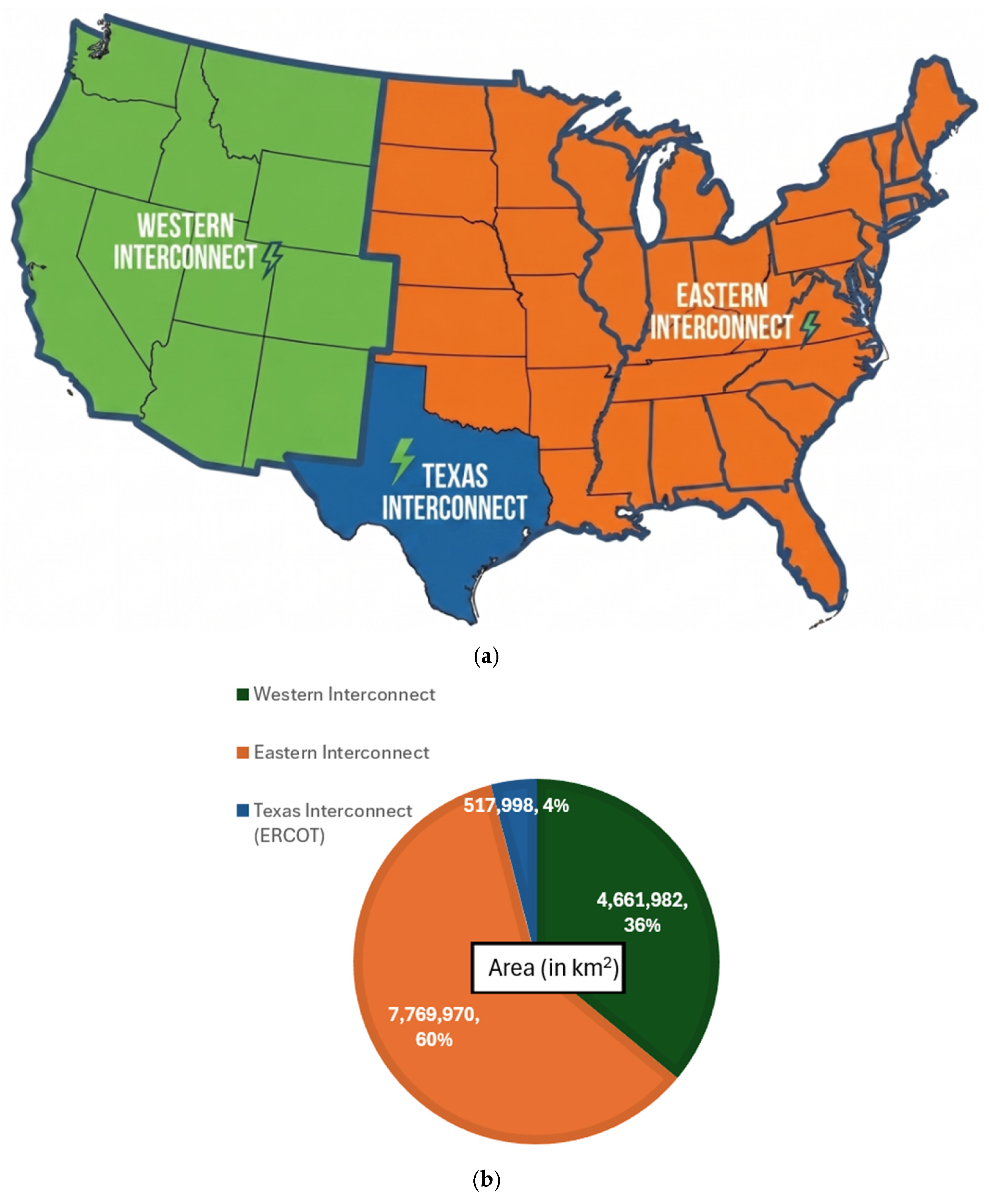
Figure 1 shows the total area of each of the three major interconnects, which comprise nearly 997,793.28 miles of transmission lines and 10.14 million km of distribution lines, according to the Department of Energy as of February 2022. Per thousand miles of transmission lines, there are about 85 substations and about 34 generators. Each substation comprises power conversion transformers, power line communication, capacitive power factor correction banks, controlling equipment, and protective relays and circuit breakers. Protective relays and circuit breakers are key elements for controlling arc-flash hazards, as appropriately designed sizes and configured trip settings eliminate undue stress on power lines, electrical loads, and control panels—areas where electricians periodically perform maintenance. Due to the nature of continuity required for the electrical services, especially for critical infrastructure of national importance, such as data centers, federal and state government facilities, healthcare and defense research facilities, and many more, the electricians are required to complete hot work by following all required safety procedures governed by standards such as National Fire Protection Association (NFPA) 70E, Occupational Health and Safety Administration (OSHA) guidelines, and other defined standard operating procedures.
Electrical injuries in the workplace are attributable to either a poorly designed system without arc-flash mitigation solutions or the lack of labeling equipment to alert electricians while working on energized or de-energized conditions. Based on sources such as the National Fire Protection Association (NFPA), the Electrical Safety Foundation International (ESFI), and the Bureau of Labor Statistics (BLS),
Table 1 lists fatalities and injuries reported at workplaces in the United States of America. Based on [
6], there is a research gap regarding the 18.8% of fatalities reported from working near or on energized equipment, along with arc flashes. Also, there is a rise in fatalities from 2023 to 2024, as reported in [
6,
7]. The focus of this research is to address system safety issues related to the reliability of electrical systems prone to arc-flash hazards. IEEE Std 1584-2018 [
8] outlines the calculation for arcing current, incident energy, and arc-flash boundary. OSHA and NFPA standards emphasize the frequent performance of engineering studies to ensure that current systems are up-to-date within permissible incident energies. IEEE Std 1584.2-2025 [
9] outlines the information that must be gathered as input for an arc-flash analysis using specialized software such as Easy Power version 10.0, ETAP version 24.0.3, and SKM PTW Version 11.0.1.0.
Mitigation strategies often include readjusting circuit breaker settings, adding current-limiting breakers, installing energy-reducing active arc-flash mitigation systems, compartmentalization, and increasing the depth of enclosures. Facilities such as data centers and hospitals undergo renovations over time, thereby either increasing or decreasing the existing loads due to reconfigured power distribution systems. Additionally, natural/environmental threats increase the need for system modifications to enhance flood resilience, address vandalism, and mitigate cyber-attacks [
10]. Often, the existing single-line and three-line diagrams, preventive maintenance, previous arc-flash reports, construction shop drawing submittals, and other documents help with both the determination of need and the performance of the study. Due to the lack of an appropriate section in IEEE Std 1584-2018 on how an artificial intelligence model can document field conditions more accurately and efficiently, this research explores this gap in detail. The remainder of the manuscript is organized into preparing a framework for data collection and developing a formal process at facilities of national importance to enable meaningful application of AI-driven standards. Finally, implementation, results, and concluding remarks are presented.
2. Research Methods
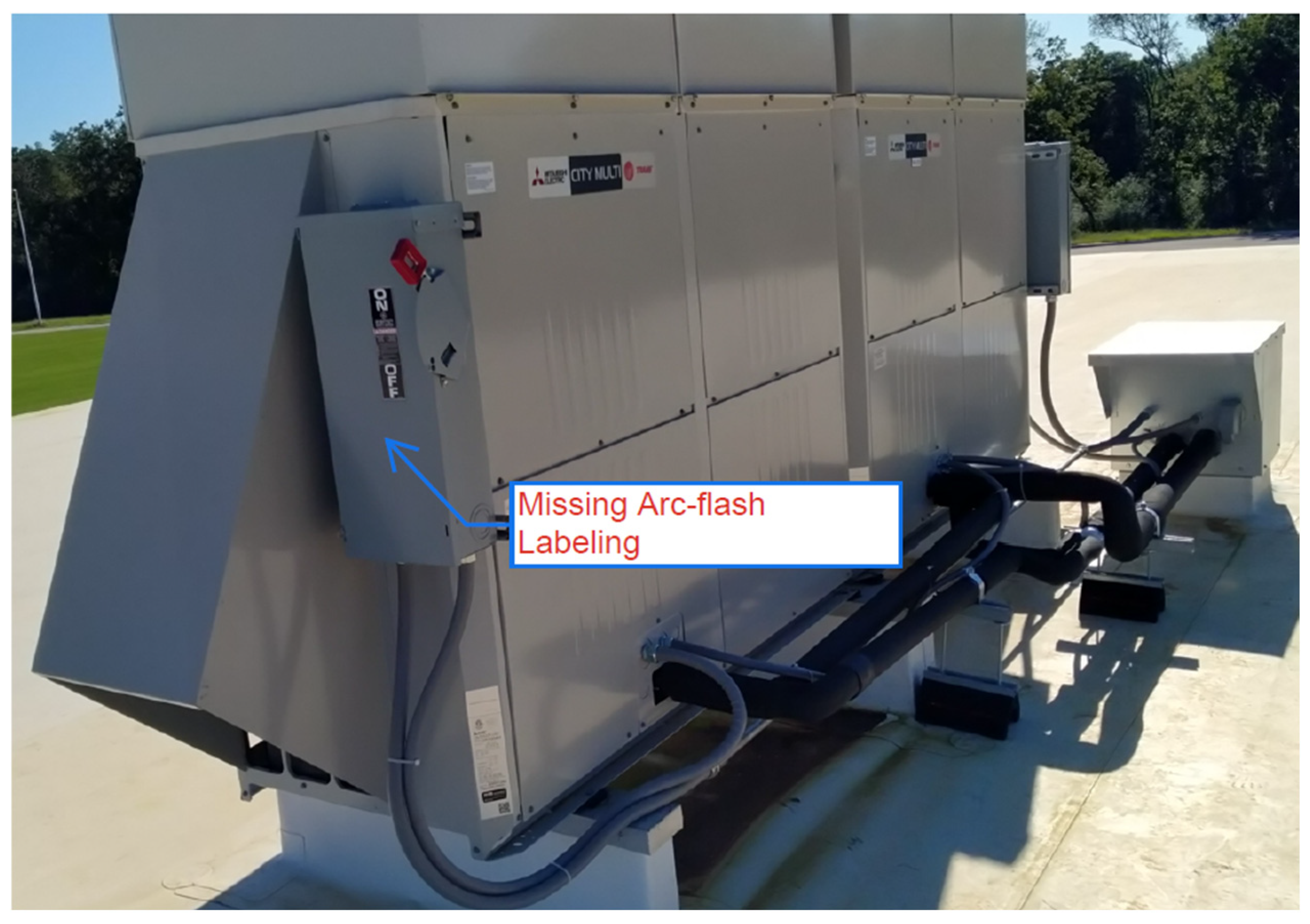
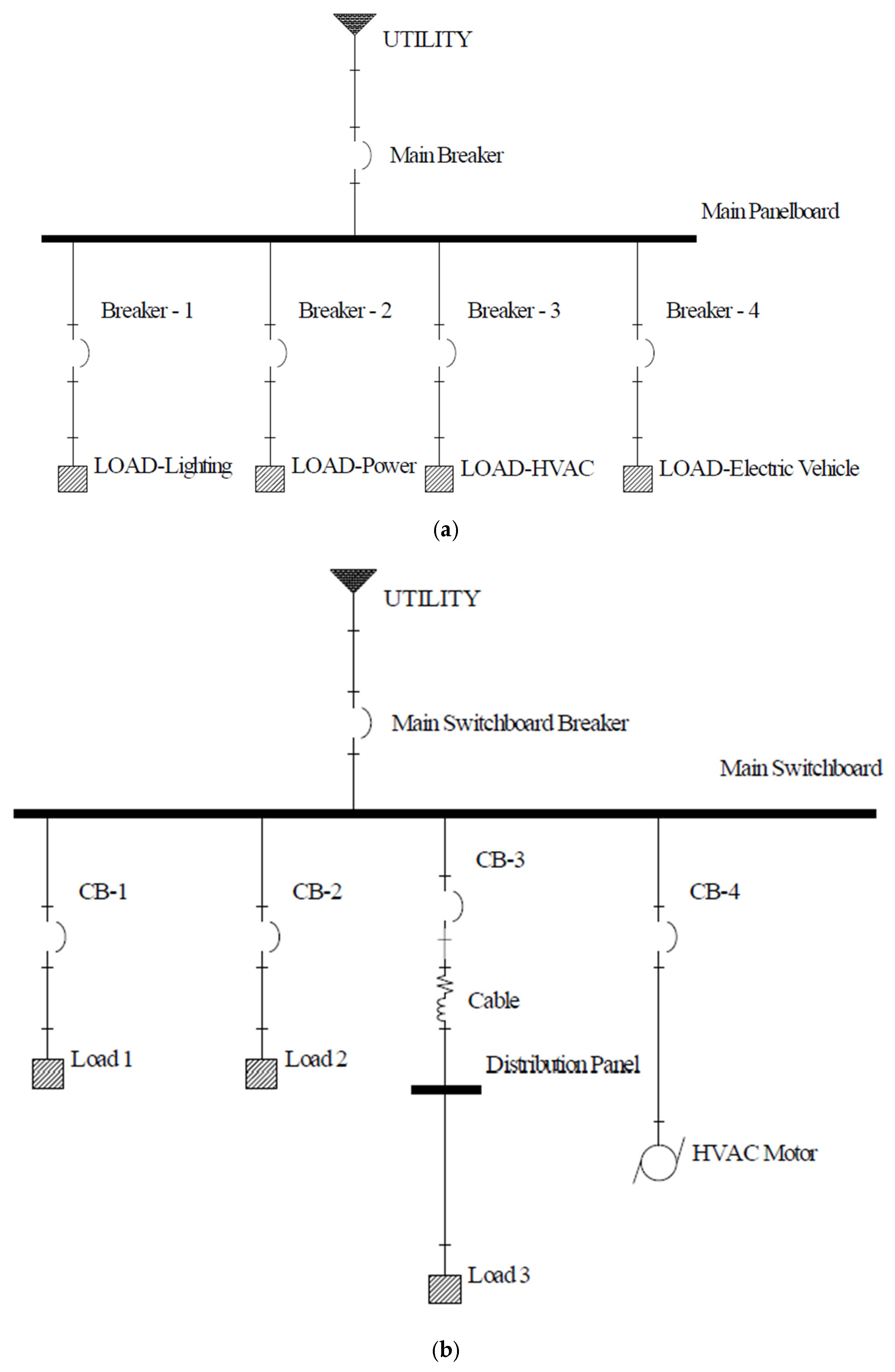
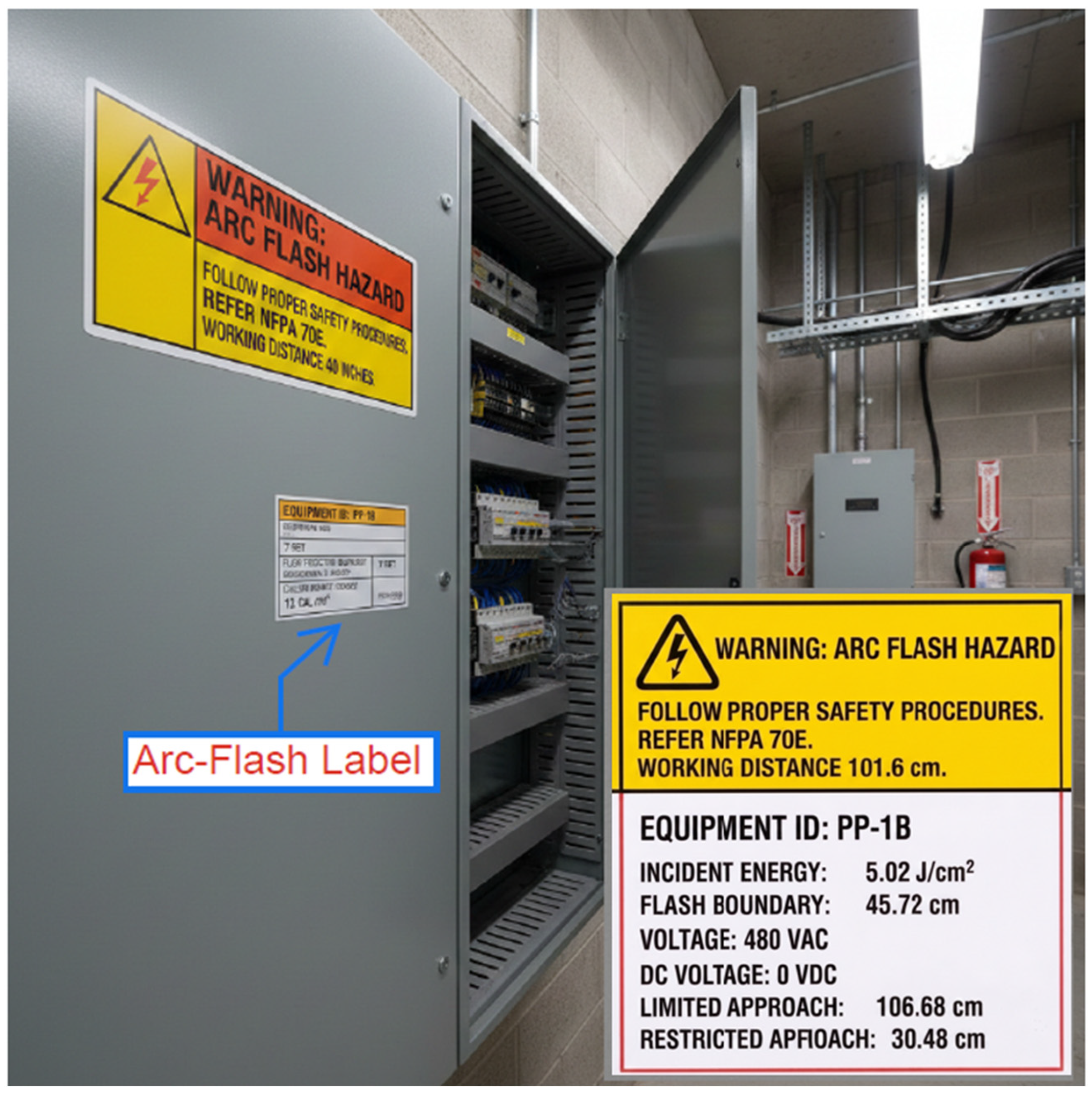
The methodology of this research was primarily focused on increasing personnel safety, which can be limited by poor arc-flash labeling and the absence of streamlined processes for documenting field information on switchgear, switchboards, panelboards, motor control centers, disconnect switches, fuses, circuit breakers, transformers, conductors, and other electrical equipment. Firstly, arc-flash studies for a residential facility operating at 440 V, 3-phase (South Asian region) and a commercial facility operating at 480 V, 3-phase (USA region) were performed as presented in
Figure 2,
Figure 3 and
Figure 4. Later, a checklist of specific data required for each system was developed. This further led to the implementation of arc-flash labeling in areas with deficient labeling.
Section 2.1 to
Section 2.3 describe potential areas where an artificial intelligence model can support multiple different facets of fault detection and mitigation. However, this information is presented here to highlight the application of the AI rather than its implementation under this study.
2.1. Fault Prediction and Early Detection
Artificial intelligence (AI) models can prevent faults before their occurrence through prediction and system anomaly detection. The research methodology via AI transforms fault eradication by enabling smarter, faster, and proactive grid management. Fault diagnosis and management leveraging the AI’s ability to analyze the vast volume of real-time data from field sensors to achieve zero faults. For instance, smart metering infrastructure and demand response mechanisms in smart grid infrastructure are essential components in enabling field devices to become part of a larger Internet of Things cloud [
11,
12,
13,
14,
15].
Predictive maintenance: AI algorithms, particularly machine learning (ML) and deep learning (DL), analyze historical and real-time sensor data to estimate the next fault condition and estimate the remaining useful life of equipment such as transformers and circuit breakers. Sensor data may include, but is not limited to, temperature, vibration, and voltage/current fluctuations. This allows power companies to schedule maintenance and repairs proactively before a major electrical failure or breakdown, minimizing unplanned outages.
System anomaly detection: Monitoring capabilities of AI in evaluating the grid data for subtle deviations or unusual patterns that may trigger a signal for an incipient fault or failure point, such as harmonic distortions from electronic components (mainly 5th harmonics) or voltage imbalances (ranging more than 10%), long before the current relay protection and breaker systems would isolate and trip to isolate the sections.
2.2. Fault Categorization and Location
Once a fault event occurs, the AI significantly speeds up identification within the complex transmission and distribution system, minimizing service disruptions for critical users such as hospitals [
8]. Healthcare infrastructure supports life safety equipment, which often requires not only power redundancy between normal and emergency power sources but also multiple points to ensure electrical safety is not hampered by poor design and installation. For example, automatic transfer switches are deployed to switch from normal to emergency power within a designated short period of time. However, many critical services in areas such as intensive care units (ICUs) and operating theaters (OTs) are often equipped with local battery banks and uninterrupted power supply systems. Electrical safety from hazards posed by battery banks and equivalent fault currents remains a topic of research in arc-flash hazard studies.
Fault Categorization: ML models like Support Vector Machines, Decision Trees, and Neural Networks are trained on labeled fault data to instantly classify fault types, such as line-to-ground and three-phase short circuits. This classification is crucial for determining the appropriate corrective action for the operators. Some faults are considered less critical and can be repaired over an extended period without significantly hampering real-world applications. For example, a faulty power supply to outdoor lighting during the daytime may be considered less critical than a faulty power supply to IT racks within a building. Similarly, in hospitals, the critical and life-safety branches are treated with utmost care compared to the normal branches serving non-essential loads.
Location: AI uses data from Phasor Measurement Units (PMUs) and other intelligent devices to precisely and rapidly pinpoint the fault’s location on a transmission line or distribution cable, drastically reducing the time repair crews need to reach the site. The exact location of the fault is critical to protection systems, as it provides selectivity. The relays operate to isolate only the fault section, thereby allowing power to be restored by taking corrective action on the identified faulty section. Similarly, in critical facilities such as data centers and hospitals, arc-flash studies are conducted only after a star coordination study is completed for the relays and circuit breakers. The current curves (TCCs) indicate the sequence of trips between the downstream and upstream breakers. Although the purpose of coordination between relays, fuses, and circuit breakers is to provide backup protection, this intent also enhances the selectivity feature, which isolates only the faulty branch circuit.
2.3. Self-Healing Grids
The ultimate goal is a self-healing grid that can automatically mitigate the impact of a three-phase or single-phase fault with minimal human intervention, leveraging broader applications of AI in hydropower [
11]. Power grids draw on many types of energy sources, including renewable, thermal, and nuclear. A diverse portfolio of energy sources, together with distributed energy sources from renewables at the customer interface, often increases power grid complexity. The complexity may also be driven by decentralization with bi-directional power flow capabilities. However, grids are seeing rising demands for data centers. Artificial intelligence (AI) systems are supposed to place a significant load on IT infrastructure, thereby increasing data storage capacity and electricity consumption to run AI processes. Operating critical infrastructure that supports essential services for customers, businesses, and government can be severely impacted in the absence of smart self-healing grids. Data centers of national importance and security often see a rising trend in energy demand for both the development and operation of additional infrastructure supporting AI.
Fault isolation and reconfiguration: AI, often using Reinforcement Learning (RL), can make decisions in milliseconds—much faster than human operators or conventional automation. The system autonomously: (a) Isolates the faulty section by operating the isolators, disconnect switches, etc., using automated switching. These switches can operate manual transfer switches, automatically close reclosers, or initiate the response of the uninterrupted power supply sources. For example, during a loss of power from a normal power source, the automatic transfer switch may be triggered to switch to backup power from the emergency generator. (b) Reroutes power flow by closing/opening other switches to restore service in a radial or ring main system, serving as many customers as possible, even as power dynamics are reshaped by alternative sources, leveraging distributed energy resources like generators when readily available. In ring systems, there is sufficient power redundancy on either side of any node. For example, a 4.16 kV ring main system may provide power to multiple loads over long distances, such as in railroad tunnel infrastructure or hospitals, to improve power resilience. At the distribution level, this provides an additional level of resiliency at the customer interface. Upstream systems at utility scale often have another level of ring system, which improves safety for patients and stakeholders of national importance.
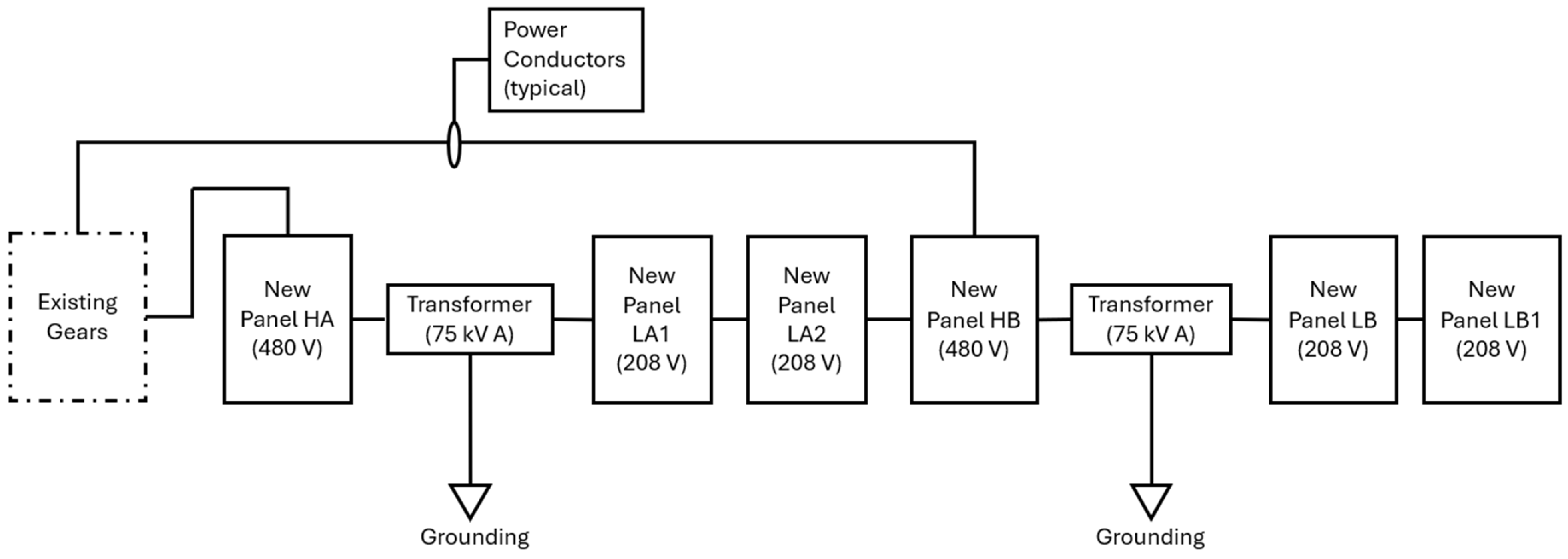
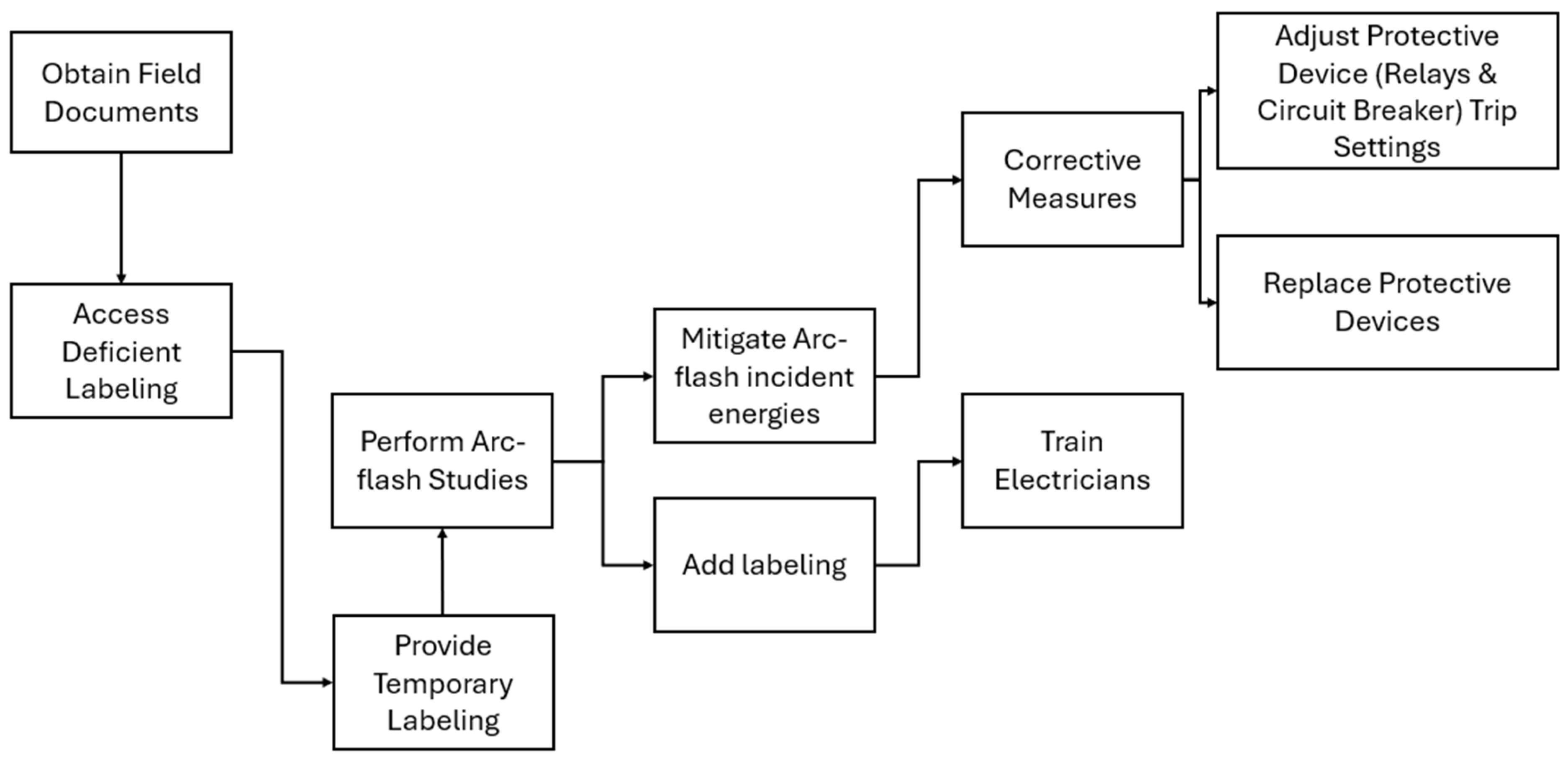
AI with a digital twin, where a virtual replica of the power system is easily developed, interfaces with the long-term objectives in allowing the AI to simulate fault and failure scenarios, test methodologies in the corrective measures, and learn the optimal response to the changing dynamics of the power flow from the faulty condition, ensuring a robust and reliable eradication process. If the entire system, from field documentation as described further in
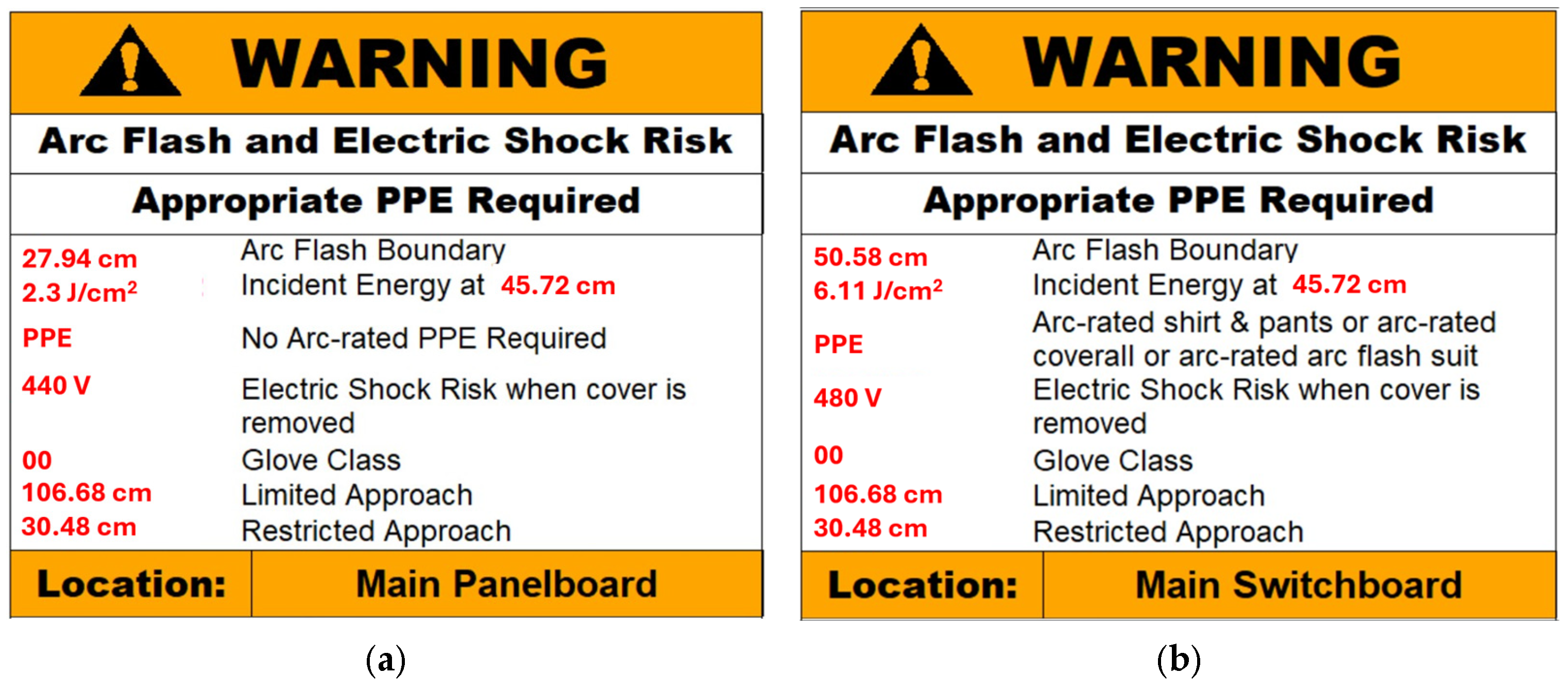
Figure 5, is reconstructed with accurate details, a digital twin can simulate worst-case scenarios or safety-compromise failure points very quickly and efficiently and therefore develop arc-flash labels as presented in
Figure 6. The next steps shown in
Figure 5 are intended to develop the digital twin, which can most accurately predict fault currents, equipment failure points, incident energies, and arc-flash boundaries. The self-healing features, as described earlier, will assist in correcting many failure points, such as incorrect relay or circuit breaker trip settings, and in fixing malfunctioning switching mechanisms between normal and emergency scenarios.
4. Standard for Training AI Model for Healthcare and Data Centers
Table 2 presents the additional items for standards framework for data collection with itemization of amended data required from field documentation.
Key decision-making points for an AI model in planning a system resilient to arc-flash deficiencies and fault currents include configuring the system to accurately calculate arc-flash incident energies at various nodes [
16]. For example, in
Figure 5, the key nodes (or buses) were Panel MDP, HA, LA, LA1, HB, LB, and LB1. The maximum fault current (
) at the service entrance is given by Equation (2):
where
is the full load amps for the transformer (expressed in A), cos
Φ is the operating power factor (unitless),
Φ is the angle between active power and reactive power (expressed in °), and
is the impedance of the transformer (expressed in Ω). IEEE 1584 provides governing equations for arc-flash boundary and incident energy at a given node within the system.
Figure 7 lays the foundation for the framework that can help arc-flash studies be completed by accessing extensive field documentation in addition to the IEEE 1584.2-2025. This framework is currently allowing a process that otherwise may not have been previously included in the standards.
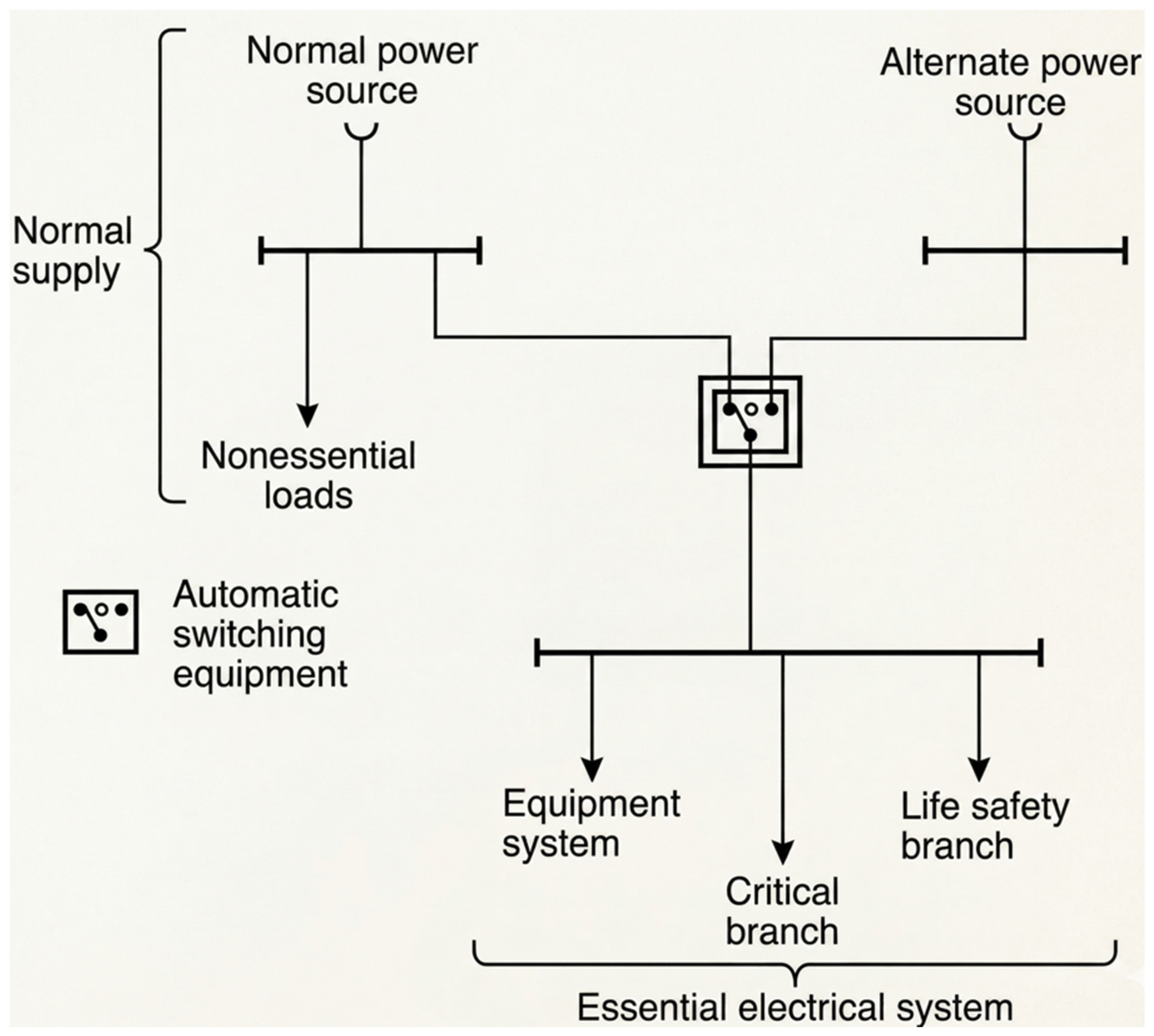
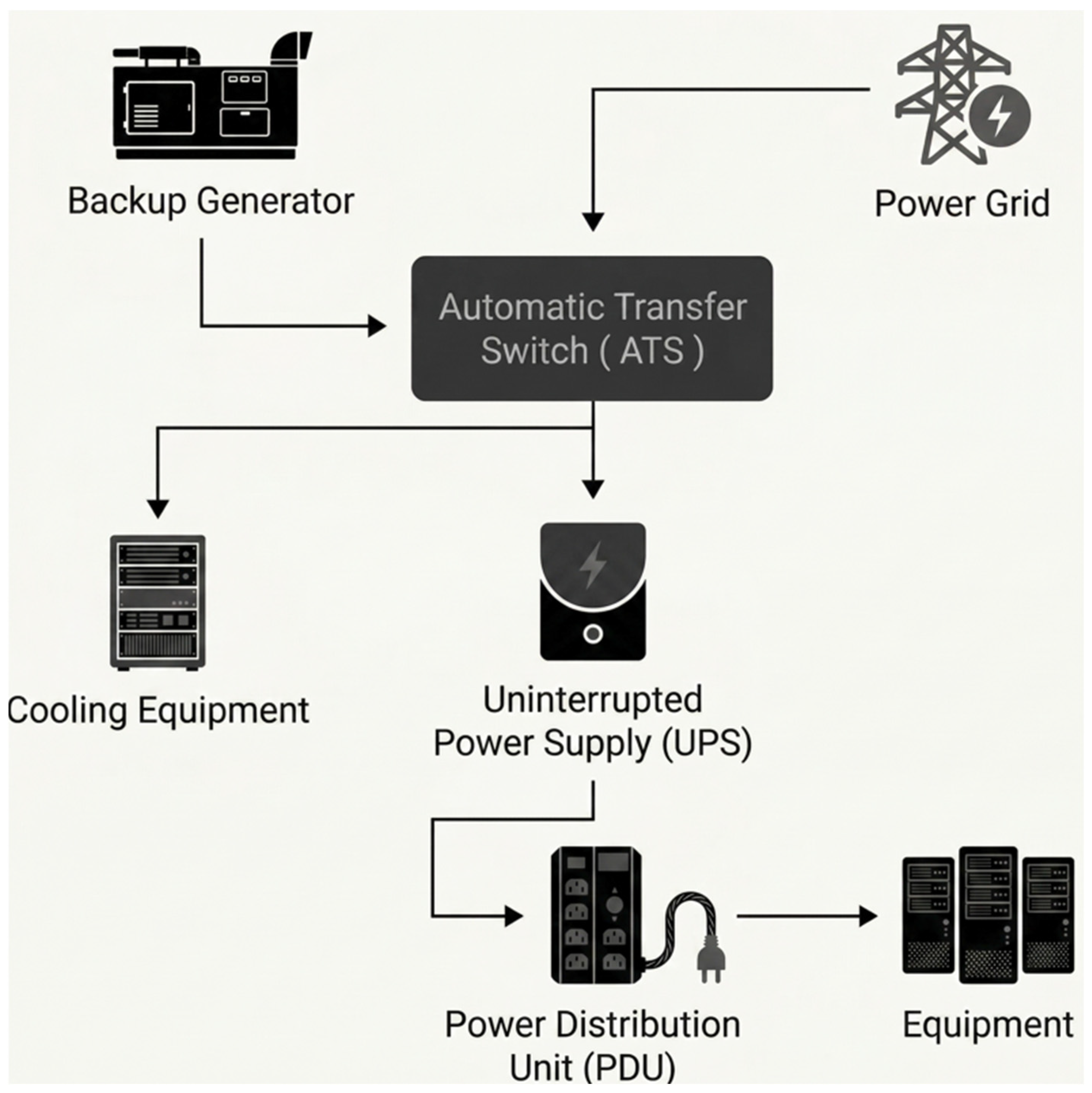
Hospital (healthcare) systems are required to have alternate power sources that transition from normal power to alternate sources within 10 milliseconds of power loss. The automatic transfer switch serves the equipment, critical, and life-safety systems. Often, life safety systems have additional uninterrupted power supply (UPS) systems, such as data centers, as shown in
Figure 8 (for life safety systems) [
17,
18] and
Figure 9 (for UPS) [
19,
20]. The rising power requirements of data centers are due to the cooling systems needed to remove heat generated by IT racks and power distribution units. For optimal operation of electrical systems, the operating temperature is maintained within permissible limits. Many countries have been using waste heat from data centers to power commercial heating systems.
Table 3 [
21,
22] gives the total number of data centers by zone, and
Table 4 gives the overall loads associated with the type of data center. This information helps the AI model learn critical areas of focus and energy-demand calculations, which are key to determining energy efficiency and equivalent impact in fault-current evaluations.
The unique architecture of data centers, with DC power buses serving the racks, can be enhanced by DC generation from renewables. The cooling system uses elevated floors as media for cooled air circulation through the IT racks. The operating system’s low voltages at the IT racks reduce arc-flash hazards. Further upstream, the operating voltages and currents add up, potentially requiring training artificial intelligence models to reasonably assess hazards using a digital twin. Grounding safety is another mechanism that routes the fault current directly to ground, reducing shock hazards to personnel. In a typical building grounding system, grounding electrode conductors connect to the exothermically welded tri-ground rods in the test well. The equipment grounding conductors run from the equipment back to the service entrance, where they are bonded to the grounding plates, which are connected directly to the ground rods via grounding electrode conductors. Soil conductivity is the ability of soil to conduct electrical current through electrolytic processes in its porous areas, where minerals (salts) dissolve in water, acting as an electrolyte for conduction. The ohmic resistance and conductivity of the grounding system often require utmost care in design and operation, as fault currents can pose major hazards to personnel and equipment if not routed appropriately.
5. Discussion
A new standard framework for arc-flash safety data collection was developed to supplement the IEEE 1584.2-2025 guidelines. The AI model first has to study the single-line diagram in
Figure 6 and all the field photographs of the field equipment shown in
Figure 3 and
Figure 4. Clearly, based on the photographs, the missing labeling can be identified. The typical script appearing on the labeling is shown in
Figure 4. Additionally, the mathematical reasoning for the maximum fault currents is available in Equation (2). For this system, a transformer rated at an apparent power of 75 kV A would typically see a fault current in the range above 100 kA, given its impedance (
) falls within 2–8%.
Figure 2 shows a system that was run for an arc-flash study by first completing relay coordination. As shown in
Figure 2, the trip curves have minimal overlap to ensure selectivity for the protection system. A test label generated for the transformer cabinet is presented in
Figure 6. The AI tools employed in this domain can be used to train using the following techniques, resulting in early fault detection: Machine learning: The algorithms like Support Vector Machines (SVM), Decision Trees, and Random Forests for fault classification and prediction result in detecting anomalies related to the faulty condition of power devices. The vast majority of system components are exposed to electrical stress from heat/energy dissipation from copper losses. Deep learning: A combination of Convolutional Neural Networks (CNNs) and Recurrent Neural Networks (RNNs) for advanced pattern recognition in high-dimensional time-series data accurately predicted voltage and current waveforms for bolted faults at multiple buses. Reinforcement learning: Trained models use autonomous agents to learn the optimal sequence of control actions to isolate faults and reconfigure the grid to maintain power supply. The reclosers’ and isolators’ open and close actions are governed by the control actions for fault containment.
6. Conclusions
The conclusions of this research paper were that field documentation, including detailed images of the front panels of electrical equipment, along with as-builts and shop drawings, can be analyzed using artificial intelligence, and this could lead to a possible elimination of 2% of arc-flash hazard-related fatalities across all occupations and reduce overall 37% fatalities reported from electrical hazards in 2023. Although AI models can resolve power issues caused by faults using deep learning, machine learning, and reinforcement learning, this standards development framework highlighted gaps in the existing documentation items per IEEE 1584.2-2025. Data points to support the conclusion that workplace fatalities are attributed to arc-flash hazards from energized electrical equipment, wherein workers are exposed to those hazards. The major implication of this study is that there is a lack of novel methodologies for mitigating arc-flash hazards in the majority of facilities supporting critical infrastructure worldwide through the implementation of arc-flash hazard programs. With arc-flash incidents being very common from statistical data, the application of standards that can detect potential hazards from field photos and existing documentation and start the mitigation process with both analyzing the field conditions and performing the mitigation strategies by application of the IEEE 1584 standards is required, and this paper presents the necessary framework.
Reduction in workspace fatalities from electrical hazards can be significantly improved by performing a holistic assessment of existing critical infrastructure, such as hospitals and data centers. There is no substitute for preventing injuries caused by arc-flash hazards, so the cost-effectiveness of systems being compliant with industry standards, at a minimum, is not only a necessity but also a continuous pathway for exploring innovative solutions, such as those proposed in this paper. The innovative approach in this paper started with analyzing existing deficiencies and therefore recommended field documentation of the electrical equipment using photos and reports, which AI models can evaluate against the model presented in
Figure 5. Therefore, preventing arc-flash hazards as proposed in this paper, especially for critical facilities, equates to saving more lives from the risk of electrical hazards in the construction industry.