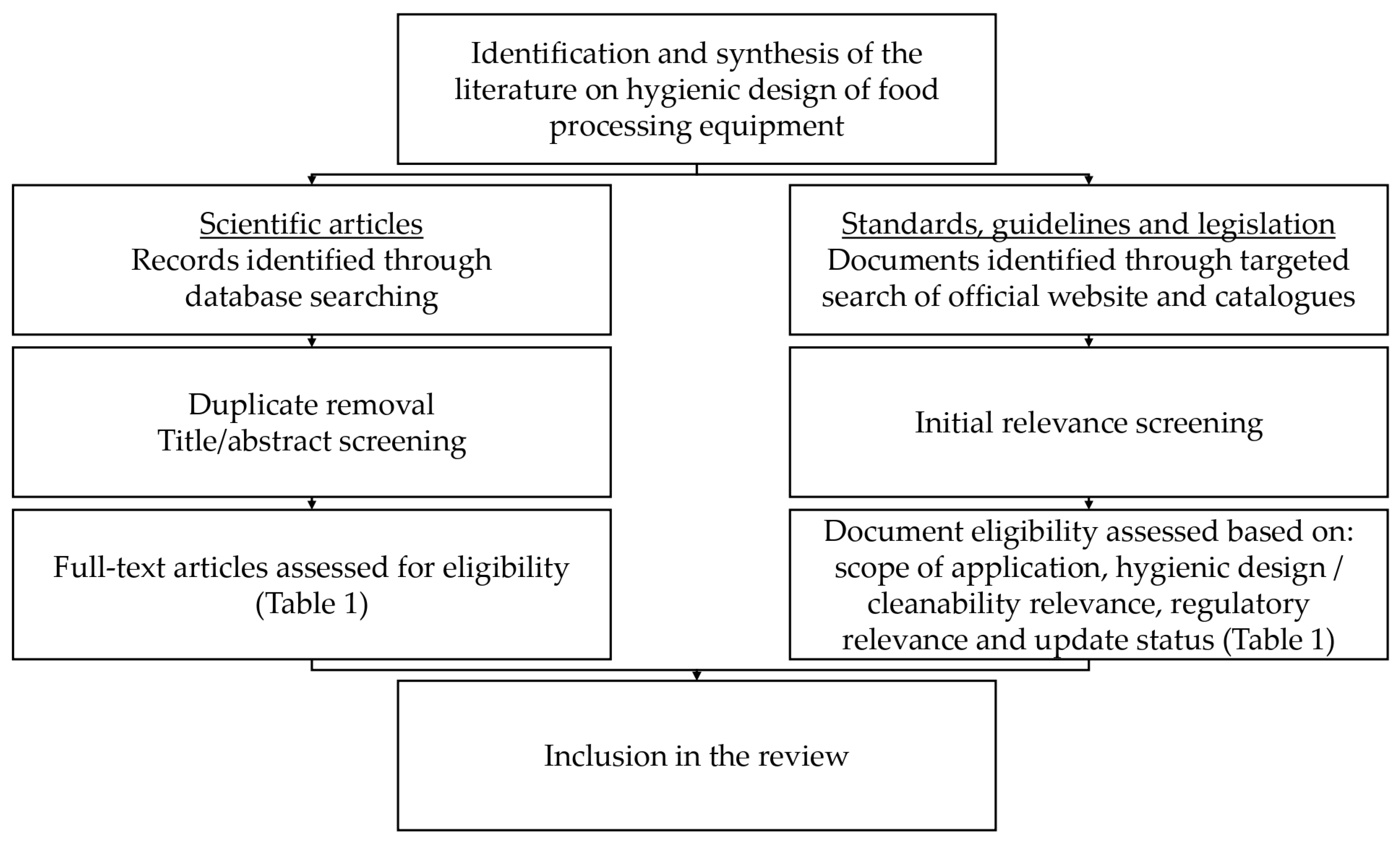
3. Hygienic Design: Concepts and Principles
Hygienic design of food processing equipment is currently considered mandatory for reducing the risk of food contamination [
3]. The terms sanitary design and hygienic design are often used equally. In the United States, sanitary design commonly refers to recommended design features for equipment and facilities that support safe processing of food and feed, while hygienic design is more widely used in Europe and other regions to refer to the safe construction of food handling and processing equipment [
4]. Also, product contact surface(s) is a term usually used in standards and guidelines, whereas equipment in contact with food is used in the Codex General Principles of Food Hygiene [
5]. For consistency, the terms hygienic design and product contact surface(s) are used throughout this review.
Numerous standards and professional guidelines including those issued by 3-A Sanitary Standards Inc. (3-A SSI) [
6] and the European Hygienic Engineering and Design Group (EHEDG) [
7] provide different but complementary definitions of hygienic design. According to Nikoleiski, hygienic design is defined as “the application of design techniques that allow for all assets to be cleaned effectively and efficiently in order to minimize the risk of any kind of hazards” [
8]. These definitions emphasize cleanability as a central concept linking equipment design with food safety outcomes. Before the practical implementation of hygienic design, it is important to clearly differentiate between product and non-product contact surfaces in food processing environments.
Product contact surfaces are all surfaces that come into contact with the food product either intentionally (direct handling) or unintentionally (indirect exposure, such as splashing or dripping) [
7]. Typical examples of product contact surfaces include processing equipment such as slicers, peelers, fillers, hoppers, screens, conveyor belts and air blowers, as well as utensils and tools including knives, racks and worktables [
9]. Splash zones are areas exposed to droplets or spray of liquids, resulting in persistently moist surfaces that favour microbial attachment and subsequent biofilm development [
10]. Because splash zones are frequently overlooked during routine sanitation, they represent critical transition areas between product and non-product contact surfaces.
On the other hand, non-product contact surfaces are those that do not directly affect the product. Within this group of non-product contact surfaces, three hygienic zones can be identified. The first group includes non-product contact surfaces near food and food contact surfaces (e.g., processing equipment exteriors and frameworks, refrigeration or cooling units, equipment control panels and switches). The second group refers to more remote non-product contact surfaces located in or near processing areas (e.g., forklifts, hand trucks, carts, wheels, air return covers, hoses, walls, floors and drains), while the third group covers non-product contact surfaces outside processing areas such as locker rooms, cafeterias, entryways, loading bays, finished product storage areas and maintenance areas [
9]. Although these surfaces do not directly contact food, they may serve as reservoirs or transfer points for contamination. Principles of hygienic design apply to both product and non-product contact surfaces. However, this review focuses on product contact surfaces and non-product contact surfaces in close proximity to food and food contact surfaces.
The basic hygienic design requirements for the food processing equipment can be grouped into ten principals, as outlined below [
11]:
Cleanable to a Microbiological Level;
Equipment Must Be Made of Compatible Material;
Accessible for Inspection, Maintenance, Cleaning and Sanitizing;
Equipment Is Designed to Prevent Product or Liquid Collection;
Hollow Areas of Equipment or Components Are Hermetically Sealed;
No Niches;
Equipment Must Be Designed for Sanitary Operational Performance;
Hygienic Design of Maintenance Enclosures;
Hygienic Compatibility with Other Plant Systems;
Validated Cleaning and Sanitizing Procedures.
These principles are not independent requirements but function together to enable effective hygienic performance throughout equipment design, operation and sanitation. Cleanability to a microbiological level (Principle 1) is the primary objective and the overall aim of hygienic design for food processing equipment. Food processing equipment shall be designed and constructed in such a way that efficient cleaning is possible throughout its entire service life, without significant deterioration in performance. The design should minimize the risk of microbial entry, persistence and spread, and should also prevent the introduction or accumulation of allergens, chemical residues or foreign matter on both product contact and non-product contact surfaces [
12]. Inadequate surface characteristics, such as excessive surface roughness and the presence of scratches, cracks, grooves and pits, create protected environments in which microorganisms can persist. These features shield microorganisms from mechanical cleaning actions and disinfectants, resulting in hard-to-clean areas of food processing equipment that remain inadequately cleaned [
13]. Consequently, this may result in persistent contamination despite regular cleaning and disinfection procedures.
The selection of compatible materials (Principle 2) is a foundational prerequisite, as construction materials for food processing equipment, piping and utilities must be hygienic, chemically inert and mechanically robust. They must remain fully compatible with the product, the processing environment and all process and cleaning chemicals throughout the equipment’s service life [
14]. Depending on the application, a variety of materials, such as metals and non metals (e.g., plastics, rubber, and elastomers) are used, while some materials such as wood are not recommended and should be avoided because of their porosity and difficulty in cleaning [
15]. Stainless steel is a widely used metal for product contact surfaces because of its corrosion resistance, resistance to high and low temperatures, good mechanical and physical properties, inert surface and durability in most food industries [
16]. Depending on its composition, primarily the presence of iron, chromium and nickel, stainless steel can be produced in several types [
17]. Stainless steel finish 2B is usually recommended for product contact surfaces as it provides surface roughness of up to Ra ≤ 0.8 μm [
18]. Austenitic stainless steel (AISI 304) which contains 18% chromium and 8% nickel is widely used in the food industry. On the other hand, AISI 316, which also contains molybdenum (2%), is often used in dairies and other industries where greater corrosion protection is required [
17]. The use of some plastics and elastomers is sometimes necessary but must meet the appropriate criteria for the intended use. The selection of plastics and elastomers is supported by established hygienic design guidelines, such as EHEDG Guideline Document No. 32, which provides practical guidance on material properties, selection procedures and potential failure mechanisms, considering their behaviour during processing, cleaning and use [
19]. Plastics must be suitable for intended use, abrasion resistant, cleanable and must have an appropriate coefficient of thermal expansion and appropriate surface roughness. In addition, elastomers require resilience, low thermal expansion coefficient and resistance to ageing [
7]. Nevertheless, material selection alone is insufficient to ensure hygienic design if equipment geometry or layout restricts physical access to surfaces.
All areas, including internal angles and corners, should be designed with generous radii, wherever feasible, so that they are readily accessible and can be effectively cleaned and inspected, as required in Principle 3 [
20]. It is necessary to ensure that connecting pipes, gauges, thermometers, probes or other equipment to product contact surfaces do not create dead end or areas where food product can accumulate and are not accessible for inspection, maintenance, cleaning and sanitizing. Also, internal angles should be covered or rounded with appropriate radii depending on equipment application and all product contact surfaces should be free of sharp corners and crevices [
15]. Food processing equipment should be positioned so that there is sufficient space between each piece of equipment and the wall, the equipment and the floor, and between each other to allow adequate cleaning and therefore avoid cross-contamination [
15].
Design measures that prevent product or liquid accumulation (Principle 4) further support cleanability by reducing the availability of moisture and nutrients required for microbial survival and growth. Equipment and associated drainage systems shall be designed and constructed to ensure complete removal of liquids and to minimize any risk of contamination throughout their intended use. In addition, all pipelines and equipment surfaces should allow complete self-drainage, as retained liquids may support microbial growth or cause product contamination [
20,
21]. Similarly, hollow bodies and inadequately sealed joints represent critical hygienic weaknesses, as they can entrap product residues and moisture while remaining inaccessible to cleaning and disinfection.
Hollow structures created by welding shall be hermetically sealed (Principle 5) and fabricated to prevent microbiological contamination, by avoiding cracks and crevices in the welding seam [
7]. It is important to eliminate free space in the groove while still allowing for seal thermal expansion and swelling. Therefore, it is not feasible to use conventional groove designs, such as O-ring grooves. The seal material must also be compatible with both product and cleaning fluids, which may be at a much higher temperatures [
22]. If not properly designed, such sealed areas may become persistent sources of contamination.
Equipment components should be designed without niches (Principle 6) that can harbour soil or microorganisms, including pits, cracks, corrosion, recesses, open seams, gaps, lap seams, protruding ledges, internal threads, bolts/rivets and dead ends. To avoid niches for microbiological growth, the legs of equipment should be sealed at the base and should not be of hollow design [
15]. Connected surfaces should be joined by a continuous weld or by a continuous sealed and flush joint. If there are technical limitations such as long sheet metal parts of varying thicknesses, assemblies may be made by overlapping sheet. In that case the assembly surfaces are joined to each other either by a continuous weld or by a continuous sealed and flush joint [
18]. The elimination of niches is particularly critical for preventing microbial persistence and recontamination.
While these design principles establish the conditions necessary for hygienic performance, equipment must also maintain these conditions during routine operation. Sanitary operational performance (Principle 7) requires that equipment functions without generating unsanitary conditions, including unintended product leakage, harbourage and spread of microorganisms, aerosol formation or accumulation of foreign materials [
12].
Maintenance enclosures and human–machine interfaces, including push buttons, valve actuators, switches and touch screens, shall be configured so that food residues, water or product liquids cannot enter or accumulate on or within these components (Principle 8). Furthermore, the external geometry of such enclosures should be inclined rather than horizontal, to prevent their use as storage or placement surfaces [
23]. Ultimately, the effectiveness of hygienic design can only be demonstrated through validated cleaning and sanitizing procedures.
Equipment design should ensure hygienic compatibility with other equipment and systems (Principle 9), such as electrical, hydraulic, steam, air, and water systems [
24]. Equipment that relies on auxiliary subsystems (e.g., exhaust, drainage or automated cleaning system) does not create food safety design risk because of the soil load, operational conditions or standard sanitation operating procedures. Drainage systems must be designed to prevent the flow from highly contaminated areas (such as those designated for raw material handling or toilets) to areas where finished food is exposed [
5].
Ultimately, the effectiveness of hygienic design can only be demonstrated through validated cleaning and disinfection procedures (Principle 10). This requirement is one of the core prerequisites of good hygiene practice [
5,
25]. Validation serves as the functional link between design and food safety performance, providing evidence that the combined application of appropriate materials, geometry, accessibility and operational safeguards achieves the intended level of hygienic control. Without validation, hygienic design remains an assumption rather than a verified property, highlighting the necessity of systematically confirming that equipment can be reliably cleaned and disinfected under real processing conditions. Sanitation procedures should be clearly documented, appropriately designed and validated as both effective and efficient [
26]. Recommended cleaning and sanitizing chemicals and methods must be compatible with the equipment and the manufacturing environment to avoid damage.
Within this framework, cleanability to a microbiological level represents the over-arching objective of hygienic design (Principle 1), which is achieved through a set of design prerequisites related to materials, geometry and surface characteristics (Principles 2–6) and maintained during routine operation by operational control measures (Principles 7–9). The effectiveness of this integrated approach is demonstrated through validated cleaning and disinfection procedures (Principle 10).
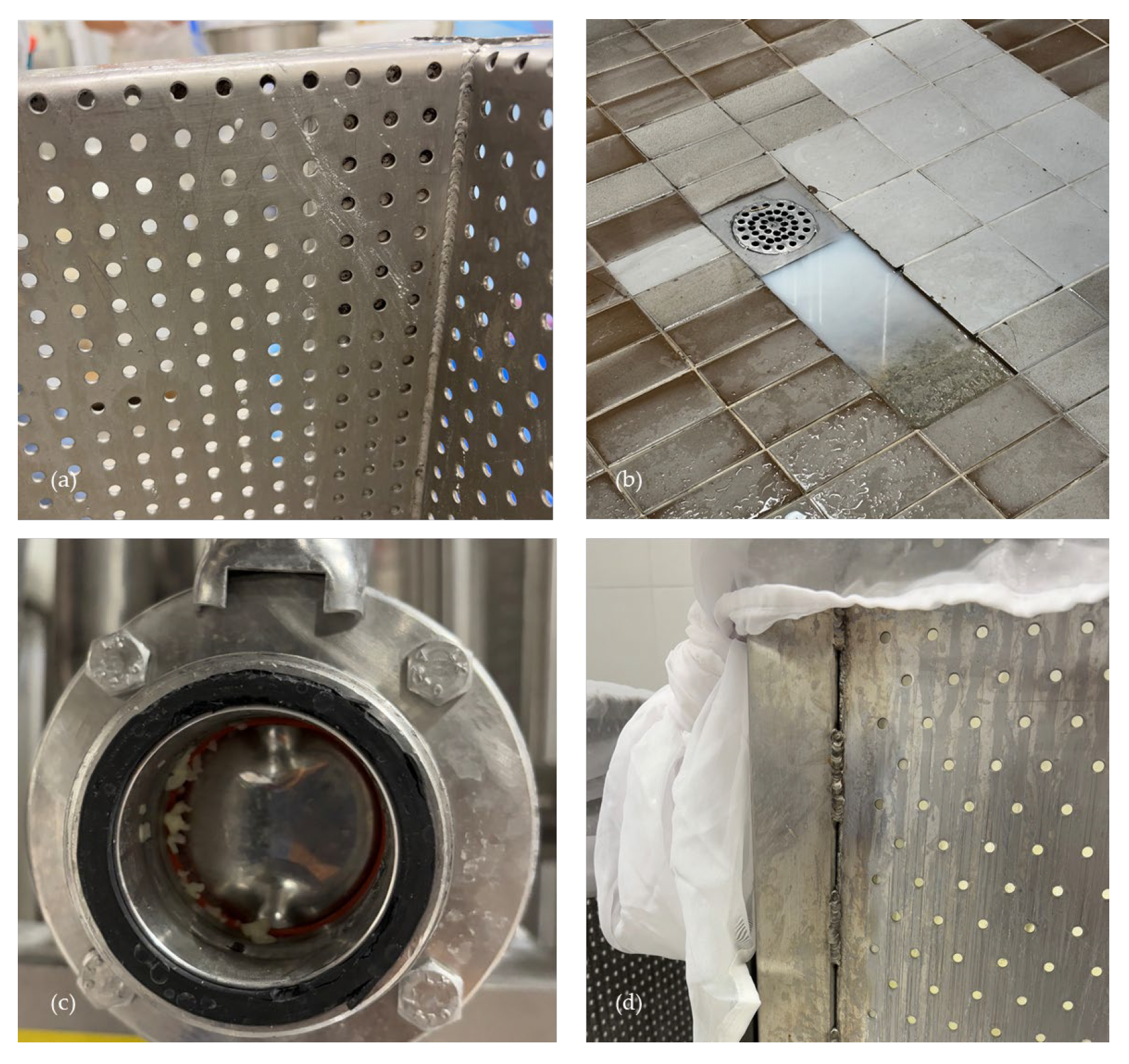
In contrast to the hygienic design principles described above, examples of poor hygienic design practices observed in industrial environments are presented in
Figure 2.
4. Regulatory Context, Standards, Guidelines and Certification Schemes
Hygienic design principles in the food industry are governed by several internationally recognized documents that set requirements for constructing and validating equipment intended for food processing environments. The most relevant sources include the EHEDG guidelines, 3-A Sanitary Standards, ISO 22002-100, EN 1672-2:2020, as well as Codex General Principles of Food (CXC 1-1969, rev. 2020) and NSF/ANSI 2–2012 [
5,
6,
7,
18,
27,
28]. Although all these documents aim to prevent product contamination and ensure effective cleanability, they differ in terms of whether they prescribe specific design criteria, define performance based expectations or focus on management system controls. This section summarizes the regulatory baseline and then compares the scope, requirement specificity and certification mechanisms across these documents and outlines their main areas of divergence.
Based on Regulation EC 178/2002 [
29], Regulation EC 852/2004 was adopted in the EU in 2004 [
21], defining general requirements for hygiene conditions that all food producers must meet. At the most generic level, hygienic design is addressed by the Codex General Principles of Food Hygiene (CXC 1-1969, rev. 2020), which provide a comprehensive reference framework. The Codex General Principles of Food Hygiene (CXC 1-1969) state that food contact equipment, and containers must be suitable for cleaning, disinfection and maintenance. Equipment should be made from non-toxic materials, be durable and be movable or capable of being disassembled [
5]. In a similar way, the Regulation on Food Hygiene Requirements: 73/2010-131 [
30], in force in the Republic of Serbia, prescribes food hygiene requirements for manufacturers at all stages of food production, processing, and trade. This document, among other requirements, provides general requirements related to food contact equipment. Equipment must be designed, constructed of appropriate materials and maintained in such condition to ensure it can be cleaned and, where necessary, disinfected, as well as to ensure that the risk of contamination is reduced to the lowest possible level. Also, equipment must be arranged to enable proper cleaning of the area around it. While food hygiene legislation defines general obligations for food business operators regarding hygienic conditions and equipment suitability, specific legal requirements for the design and construction of food processing machinery are addressed through EU machinery legislation. In the European Union, the harmonization of legal requirements for machinery began with Council Directive 89/392/EEC [
31], issued in 1989 and later revised by Directive 2006/42/EC [
32]. The 2006 Machinery Directive consolidates previous amendments and establishes mandatory design provisions for equipment intended for processing food, cosmetics and pharmaceutical products. It requires that such machinery be designed and constructed to prevent health risks, outlining specific hygiene-related design principles that must be met. Following this Directive, European Standard EN 1672-2:2020, Food processing machinery—Basic concepts—Part 2: Hygiene and cleanability requirements [
18], was adopted to further clarify the hygiene rules established in 2006/42/EC. Unlike the EU, in the United States, hygienic design requirements are not defined through a single machinery directive. They are elaborated through a combination of food safety legislation and guidance. Legal bases are provided in the Federal Food, Drug and Cosmetic Act and implementing regulations (21 CFR), while hygienic design for equipment is covered through the FDA Food Code and industry standards such as 3-A Sanitary Standards, Inc. In the United States, the Food Safety Modernization Act (FSMA) established a preventive and risk-based framework for food safety. Although FSMA does not explicitly define hygienic design criteria for food processing equipment, it emphasizes the prevention of contamination by requiring that equipment and facilities be designed and maintained to allow effective cleaning and to prevent microbial growth. Consequently, FSMA encourages alignment with established industry practices and standards addressing hygienic design [
33].
In addition, within the ISO 22002-100 framework for food safety management [
28], hygienic design of equipment is defined through a combination of functional design criteria and management system requirements, rather than detailed geometric specifications. Equipment and utensils must be hygienically designed, constructed, and installed to facilitate cleaning, disinfection and maintenance and made from materials that do not pose a risk of contamination or cross-contamination under normal operating conditions. The standard further assigns responsibilities to the organization to install and operate equipment under specified conditions, inspect it at appropriate frequencies, and to ensure that processing equipment can control identified food safety hazards while allowing monitoring and verification of key parameters. Preventive and corrective maintenance programmes are considered an integral part of hygienic design, ensuring that equipment hygiene is systematically managed and documented within the food safety management system.
In contrast to legislation, the Codex General Principles of Food Hygiene and ISO 22002-100 frameworks, which express hygienic design requirements mainly in general, performance and system-based terms, the EHEDG Guideline [
7] and 3-A Sanitary Standards, Inc. [
6] provide a more prescriptive and practice-oriented guidance. EHEDG Guideline Doc. 8 sets out prescriptive hygienic design criteria for food processing equipment. In its section on hygienic design and construction, the document specifies detailed rules for material selection, product contact surface finish and geometry, welds, joints, seals, drainability and equipment layout, so that equipment can be effectively cleaned and does not create niches for accumulation of soil or microorganisms. These specific design criteria also form the basis for the EHEDG equipment certification programme, enabling independent assessment and documentation of hygienic equipment design conformity. Similarly, 3-A Sanitary Standards, Inc. (3-A SSI) develops and compiles hygienic design criteria for processing equipment and systems and provides technical knowledge resources to support training and implementation in the food, beverage and pharmaceutical sectors. Due to their long history of developing hygienic design standards and guidelines for buildings and equipment, 3-A SSI and EHEDG jointly welcome the GFSI hygienic design benchmarking initiative published in 2020. These Hygienic Design of Food Buildings and Processing Equipment requirements were published as scope JI (for building constructors and equipment manufacturers) and scope JII (for building and equipment users) [
34]. In
Section 1 (Hazard and Risk Management Systems Requirements), GFSI sets benchmarking requirements for risk assessment, stating that a documented hygienic design risk assessment for food safety hazards in new and existing buildings and equipment shall be established, implemented, and maintained, at minimum addressing intended use, hazard identification and evaluation. The assessment shall be reviewed whenever changes to the building, equipment, product or process occur, or when other hazards arise, or at the minimum frequency defined by applicable regulations [
34].
The group of standards that provide more detailed requirements for the design and construction of equipment for the food industry includes the NSF International Standard for food equipment [
27] and EN 1672-2:2020 [
18]. The NSF International Standard prescribes construction criteria for a wide range of elements such as internal and external angles and corners, joints and seams, fasteners, covers, insulation, inspection and maintenance panels, hinges and shelving. It emphasizes that all equipment must be designed and manufactured to prevent harbourage of pests and the accumulation of dirt and debris and to allow inspection, maintenance, servicing and cleaning of the equipment and its components. EN 1672-2:2020 specifies common hygiene and cleanability requirements for machinery and machine components used in preparing and processing food intended for human consumption. It identifies significant hazards and describes design methods and information for the elimination or reduction in these risks [
18].
In addition to differences in the terminology, all the mentioned standards also differ in how specifically they formulate hygienic design requirements, which can be illustrated using the example of surface finish on product contact surfaces. Codex requires work surfaces in direct contact with food to be smooth, non-absorbent and easy to clean, maintain and disinfect, without defining any numerical roughness limits [
5]. Similarly, the ISO 22002 framework stipulates that equipment and product contact surfaces must be compatible with the product and the cleaning system and prevent contamination and cross-contamination, but does not specify measurable surface finish parameters [
28]. By contrast, EHEDG Doc. 8 recommends a stainless steel surface roughness of Ra ≤ 0.8 µm, achieved by mechanical polishing or machining, with higher values permitted only in justified cases [
7], while 3-A Sanitary Standards prescribe a nominal surface finish of 32 µin (≈0.8 µm) Ra for relevant product contact surfaces [
35]. Taken together, these formulations illustrate a progression from qualitative descriptions of “smooth and cleanable” surfaces towards prescriptive and quantitative criteria that can be directly applied in the design and assessment of hygienic food processing equipment. A comparable difference is also observed in the drainage requirements. Codex addresses drainage in general terms, emphasizing provision and maintenance of drainage and waste disposal to prevent contamination of food. In contrast, EN 1672-2:2020 requires that machinery is preferably self-draining by sufficient inclination or other means, and EHEDG sets an explicit criterion by requiring surfaces to slope to one side at a minimum of 3° and to avoid horizontal areas.
While standards and guidelines set hygienic design requirements, voluntary certification programmes put these requirements into practice. Programmes such as the EHEDG certification scheme [
36] and the 3-A Symbol authorisation process [
6] translate hygienic design requirements into verifiable criteria by relying on independent evaluation and documented evidence of conformity. The EHEDG certification scheme is based on assessing equipment according to the EHEDG hygienic design criteria described in Guideline Document 8. Initially focused on closed equipment intended for CIP cleaning and aseptic applications, the scheme was later expanded to include categories for open processing and dry material handling [
37]. For EHEDG certification, both open and closed equipment are evaluated by an EHEDG Authorized Evaluation Officer through a mandatory design review. During this review, a new equipment sample is assessed against the manufacturer’s official drawings and the relevant EHEDG guidelines. Deviations may lead to recommendations for redesign, although certain departures from hygienic design criteria can be accepted if they are considered technically unavoidable for the intended function. Following a successful design review, open equipment may proceed directly to certification, whereas most closed equipment must additionally demonstrate in place cleanability through CIP testing. Certification eligibility is granted only after at least three successful CIP tests [
36]. Currently, EHEDG offers the following two main equipment certification types: Type EL for equipment cleaned with liquids and Type ED for equipment intended for dry cleaning only [
38]. A list of all certified equipment is published on the EHEDG website.
Likewise, the 3-A Symbol programme identifies equipment conforming to 3-A Sanitary Standards for design and fabrication. To obtain and retain the right to display the 3-A Symbol, equipment must undergo an independent third-party verification inspection conducted on site by a credential Certified Conformance Evaluator, who assesses the finished equipment against the applicable 3-A standard. It should also be noted that, any nonconformities must be corrected before authorisation is granted. The programme is supported by publicly accessible online certificate and licence information provided by 3-A SSI, enabling verification of authorisation details (e.g., by authorisation number, equipment type/standard or company name) [
6].
Table 2 provides an overview of the key international frameworks that define the requirements for the hygienic design of food processing equipment.
From a regional perspective, hygienic design requirements in Europe are primarily established through EN and ISO standards and supported in practice by EHEDG guidelines, which are also recognized beyond Europe, including in Asia [
36]. In the United States they are addressed through food safety legislation and guidance, with FSMA providing standards such as 3-A Sanitary Standards.
5. Assessment Methods for Hygienic Design
It is important to distinguish between conformity assessment conducted at the equipment design or manufacturing stage, such as certification under EHEDG or 3-A schemes, and hygienic design assessment performed after equipment installation. Certification programmes primarily evaluate whether equipment design meets defined hygienic criteria under standardized conditions, while post-installation assessment focuses on how equipment performs in its actual processing environment, considering installation, operation, cleaning practices and interaction with surrounding systems. Currently, no single, universally adopted method exists for assessing the hygienic design of food processing equipment and a variety of tools and approaches have emerged in practice. In this context, this section considers how qualitative design criteria defined in standards and regulatory documents can be translated into practical tools for assessing hygienic equipment design.
In practice, hygienic design assessment is usually initiated through structured de-sign reviews or audits, where qualitative requirements from standards are translated into practical evaluation criteria. EHEDG guidelines define a range of hygienic design criteria related to equipment geometry, welds, surface finish, drainability, accessibility, cleanability and suitability of materials for food contact [
7]. Similar criteria are addressed in other EHEDG documents covering specific equipment types and process conditions. Although these requirements are formulated qualitatively rather than as numerical scores, they can be readily converted into audit checklists by using simple YES/NO items to indicate compliance with each criterion. For example, Doc 8 requires that direct and indirect product contact surfaces must be easy to clean, smooth and free of imperfections (e.g., crevices and cracks) [
7]. In a checklist, this qualitative requirement can be broken down into several binary items, such as: “Are all direct and indirect product contact surfaces smooth and free from visible imperfections?” and “Are there any gaps or crevices at joints between components in product contact areas?” In addition to qualitative statements, Doc 8 also specifies quantitative criteria, such as a maximum surface roughness value (Ra ≤ 0.8 μm) for product contact surfaces and a minimum radius 3 mm for all internal angles of 135° or less [
7]. In a checklist, these specifications can be expressed as questions. For example, one question may ask whether all product contact surfaces have been measured and shown to have a surface roughness Ra ≤ 0.8 μm according to the defined measurement procedure. Another question may verify whether all internal angles of 135° or less in product zones have a radius of at least 3 mm and whether documented evidence is available confirming that newly installed or modified product contact surfaces comply with the specified roughness and radius criteria.
ISO 22002-1:2025 requires food manufacturers to apply a risk-based approach to the selection, installation and maintenance of processing equipment, including the evaluation of materials of construction, surface characteristics, cleanability, accessibility for inspection, and maintenance, installation and drainage [
39]. These general requirements can be translated into internal, risk-oriented equipment design checklists that use simple three level scoring, for example assigning 0 points for non-conformity, 1 point for partial (marginal) conformity and 2 points for full conformity with each criterion. For example, the requirement that drainage systems shall be designed, constructed, located, and maintained so that the risk of contamination of materials or products is avoided and have capacity sufficient to remove expected flow loads [
39] can be translated into several checklist items. These may include questions such as: “Are all drainage channels and floor drains located and configured so that splashing, backflow or aerosols cannot contaminate raw materials, product or food contact surfaces?” A second question may ask: “Do drains in this area consistently cope with the maximum expected flow from process and cleaning operations without overflow or standing water?” In addition, the checklist can include the item: “Is there a documented preventive maintenance program in place to keep drainage components intact, unobstructed and in good repair?” Each of these items can then be scored, on a 0–2 scale, to reflect non-conformity, partial conformity or full conformity with the underlying requirement.
In addition to checklists derived directly from standards and guidelines, several sector-specific tools have been developed by industry organizations to facilitate the practical evaluation of hygienic design. An example of an industry developed hygienic design assessment tool is the Dairy Equipment Design Checklist provided by the Innovation Center for U.S. Dairy, as part of a broader set of food safety resources for dairy processors, including facility design and sanitation checklists. This checklist is adapted from the U.S. meat and poultry industry sanitary equipment design principles and checklist (Food Safety Equipment Design Taskforce, 2021) [
12] and is provided as an Excel-based audit form that organizes equipment design requirements under ten sanitary design principles, as mentioned in
Section 3. Each requirement can be rated as satisfactory, marginal or unsatisfactory according to the observed degree of compliance, while a separate “not applicable” option is available for criteria that are not relevant to a particular piece of equipment. In the accompanying spreadsheet, these categorical ratings are converted into numeric scores. The maximum number of points is assigned to “satisfactory” responses, half of that value to “marginal” responses and zero points to “unsatisfactory” responses. “Not applicable” items are excluded from the calculation. The scores are then aggregated to yield an overall semi-quantitative indicator of how well a piece of equipment conforms to the sanitary design principles and to support the prioritization of redesign, replacement or additional control measures. From a methodological perspective, the checklist provides a pragmatic, weighted and easy to apply framework for systematic hygienic design assessment in dairy plants.
Failure modes and effects analysis (FMEAs) is a systematic approach for proactively identifying potential failures in systems, products or processes and implementing measures to prevent their occurrence [
40]. For assessing the hygienic design of equipment, FMEA can complement checklist-based assessments by prioritizing nonconformities identified during design reviews or audits according to their potential impact on product safety and process performance. For each prioritized nonconformity, scores for severity, occurrence and detectability are assigned and combined into a risk priority number, which is then used to guide decisions on design improvements [
41]. This combined approach has, for example, been applied in evaluating the hygienic design of a unit for supercritical fluid drying [
42]. In that study, motivated by the large number of partially overlapping standards and regulations on hygienic design, the authors developed a compact checklist based tool by integrating requirements from sanitary standards and industry specific guidelines [
42]. The resulting checklist comprised 50 requirements grouped into three categories. The first addressed types of materials, covering compatibility with the product, environment and cleaning and sanitizing agents and procedures. The second covered hygienic design and construction, focusing on microbiological cleanability, accessibility for inspection, maintenance, cleaning and sanitation and avoidance of product or liquid accumulation, while the third concerned functional requirements, including hollow areas, niches and operational and maintenance performance [
42]. Nonconformities defined as non-fulfilment of requirements were classified as minor or major. A level of implementation indicator was calculated by applying a weighted scoring approach in which minor and major nonconformities received weights of 1 and 2, respectively, and the weighted sum of nonconformities was subtracted from the total number of requirements and expressed as a percentage [
42].
In summary, checklists can be a useful tool for quick equipment screening and comparison, but it is important to emphasize that their results have limitations because they depend on the evaluator’s subjective judgement and do not directly measure microbiological performance.
Table 3 summarizes the key characteristics of the primary hygienic design assessment methods discussed in this review.
6. Sector-Specific Challenges Related to Hygienic Design
Hygienic design challenges vary across food industries due to differences in raw materials, production processes and operating conditions, cleaning protocols and contamination risks. Therefore, equipment intended for dry food processing (foods with water activity of 0.85 or below) is designed differently from equipment used for wet or liquid products [
44]. These sector-specific differences have direct implications for the assessment of hygienic design, as the relevance and severity of individual design criteria depend strongly on product characteristics, processing conditions and contamination risks.
Listeria monocytogenes may be introduced into food processing facilities through various routes and can become established on equipment surfaces, leading to product contamination during processing. In wet processing sectors such as dairy, beverage and meat industries, moisture supports the survival and spread of this pathogen and increases the risk of persistent contamination, especially when equipment design allows water to remain. In addition, water can carry
L. monocytogenes around the facility, for example through splashing, aerosols, condensate and floor drainage, which further increases the risk of cross-contamination in wet processing areas. Key design priorities include ensuring adequate drainability, avoiding horizontal surfaces and complex geometries that retain liquids and preventing water accumulation under or inside machinery. This implies that equipment should be designed to ensure complete drainage of all surfaces, prevent water retention and allow sufficient time for thorough drying to minimize microbial growth [
45]. Biofilm formation can enhance
L. monocytogenes survival under adverse conditions, and this pathogen can be detected after routine cleaning and disinfection procedures [
46]. In this regard, equipment used in the meat industry such as slicing and grinding machines, cutting boards, knives and tables has been identified as areas where this pathogen can easily grow since they are difficult to clean and disinfect [
47]. In the dairy industry, fouling of processing equipment or formation of deposits is a major problem, especially inside pipes and on inner surfaces of equipment [
48]. Cleaning in place (CIP) is the most commonly used system for industrial sanitation [
49], relying on recirculating cleaning and sanitizing solutions through closed equipment and pipelines without dismantling [
50] and with minimal human intervention. Therefore, equipment should be designed to support effective CIP by eliminating hard to clean areas where the cleaning solution cannot properly reach, as biofilms may persist in tanks and pipelines despite water treatment, as reported in wet processing sectors such as the fish production industry [
51].
On the other hand, even though pathogen growth is prevented in dry and low-moisture foods, contamination risks remain significant due to long-term pathogen survival and widespread product distribution. Unlike wet operations, hygienic design in dry or low-moisture processing should primarily address the buildup and spread of dust rather than standing water. In low-moisture food production environments, such as bakeries, where the product is often in prolonged contact with processing and work surfaces, equipment design emphasizes smooth and accessible surfaces and the avoidance of hollow areas [
51]. Controlling pathogens such as
Salmonella spp. in low-moisture food processing environments is difficult, but hygienic equipment design, good hygiene practices, as well as proactive maintenance and strong control of incoming materials and ingredients can help prevent contamination [
52]. In dry food production sites, a dry cleaning, which is defined as the removal of soil, food residues or dirt without the use of water and detergents, is advised prior to wet cleaning [
42]. The removal of food residues from equipment involves actions such as wiping, sweeping, brushing, scraping or vacuuming, which can cause friction and wear; therefore, the materials used must be mechanically robust and corrosion resistant. If water is required for washing, equipment should be designed to allow thorough drying before reuse for low-moisture foods. Where feasible, equipment should be designed without hollow areas, or these areas should be permanently sealed to prevent harbourage. In addition, interface components such as push buttons, valve handles, switches and touchscreens should be designed to prevent the ingress and accumulation of product residues and liquids [
52].
Beyond the differences between wet and dry processing, packaging and end-of-line operations present a common hygiene challenge across many food sectors. According to a survey of Finnish food industries [
53], packaging machines and conveyors were identified as the most hygienically problematic equipment, with poor construction cited as the main reason. Respondents emphasized that such equipment should have simpler designs, be easy to open and dismantle for cleaning and use materials that tolerate strong cleaning or disinfecting agents and heat. This may reflect the fact that these machines often include chains, belts, guide rails, sensors and actuators positioned close to exposed food or packaging materials, creating numerous niches, shadowed areas and difficult to clean surfaces.
These examples together illustrate that while hygienic design principles are broadly applicable across food sectors, their practical implementation and prioritization must be adapted to sector-specific hazards, processing conditions and cleaning strategies.
7. Equipment Hygienic Design and Food Safety Outcomes
Despite the existence of numerous standards, regulations and guidelines governing hygienic design and food safety, as outlined in the previous sections, foodborne diseases continue to occur worldwide. In recent years multiple serious, high-profile outbreaks have been reported in different regions [
54,
55]. Furthermore, deficiencies in cleaning and sanitizing procedures, combined with inadequately designed, constructed and maintained processing equipment, have been recognized as significant contributors to foodborne disease outbreaks. Several documented outbreaks support this finding, including the following cases.
One documented example is a listeriosis outbreak in Texas, where ten cases were associated with machine cut, diced celery served in five different hospitals [
56]. Similarly, in 2008, an outbreak of
L. monocytogenes in Canada was associated with deli meat products, with contamination potentially linked to a meat slicing device that featured surfaces difficult to clean and possible stress-induced cracks [
57]. In 2011, a deadly outbreak of
Listeria monocytogenes linked to melon was attributed to processing equipment that had not been effectively cleaned, was insufficiently maintained and lacked an appropriate hygienic design and construction [
58]. These outbreaks show how
Listeria spp. can persist on equipment with complex and hard to access features, such as slicers with sheltered surfaces, joints and interfaces that are difficult to clean and highlight the importance of hygienic design, cleaning and maintenance of equipment used for processing ready to eat food. Also, surface damages, condensate and poor drainability can create niches and increase the likelihood of contamination, while transfer systems may pose a risk when non-drainable sections, inaccessible valves or dead legs are present, as these features can limit effective cleaning.
In addition to outbreaks caused by
L. monocytogenes, similar patterns can be observed for
Salmonella spp. In 1994, the United States experienced a nationwide outbreak of
Salmonella Enteritidis linked to ice cream, which was traced back to a tanker truck that had not been adequately cleaned following the transportation of raw, unpasteurized eggs. It was estimated that approximately 224,000 cases of gastroenteritis occurred, with an attack rate of 6.6% among consumers, and affected ice cream batches contained a higher proportion of ice cream base (premix) transported in tankers that had previously carried nonpasteurized eggs [
59]. Although the outbreak was attributed to contamination of pasteurized premix during transport, the official investigation did not clarify whether structural features of the tankers, such as crevices or other hard to clean surfaces, contributed to the event. Inherently hard to clean areas of the equipment may impede effective cleaning and allow residual contaminated material to persist as microbial harbourage sites, thereby linking equipment hygienic design directly to food safety outcomes. A further, widely publicized outbreak in 2009, caused by
Salmonella Typhimurium and linked to peanuts and peanut-derived products, was subsequently associated with deficiencies in facility maintenance, equipment design and maintenance, as well as inadequacies in cleaning and sanitation programmes [
60]. This outbreak in the United States resulted in at least 530 confirmed cases (116 patients hospitalized and 8 alleged deaths) and was an ingredient-driven outbreak in which a contaminated ingredient affected many different products distributed through various channels and consumed in various settings, making this one of the largest recalls in the United States [
61]. Another widely reported outbreak occurred in Europe in 2022, where salmonellosis was linked to contaminated chocolate products produced in Belgium. The majority of 392 reported cases involved children aged 10 or younger and approximately 40% were hospitalized. The outbreak was caused by novel strains of monophasic
Salmonella Typhimurium that were detected in the processing equipment for the buttermilk ingredients [
62].
Similarly,
Escherichia coli O157:H7 is a pathogen of significant concern, as it may be harboured in processing equipment, grow during production and contaminate the product [
63]. Studies have shown that contaminated processing surfaces, such as conveyors and shredders, can facilitate the transfer of
E. coli O157:H7 during food processing, highlighting the importance of hygienic equipment design [
64].
In addition to bacterial pathogens, foodborne viruses such as human Norovirus and Hepatitis A virus are important causes of foodborne illness worldwide. Although these viruses do not multiply in food or on food contact surfaces, they can persist in food processing environments and be transferred via food handlers, contaminated surfaces or equipment. International food hygiene guidelines recognize viral contamination as a significant hazard and emphasize preventive control measures. However, most hygienic design standards and guidelines primarily focus on bacterial contamination and only indirectly address viral persistence and transmission, highlighting a potential gap in current hygienic design frameworks [
65,
66].
Taken together, these outbreaks underline how shortcomings in cleaning and sanitation, combined with inadequately designed, constructed and maintained transport and processing equipment, can play an important role in compromising food safety.