Article

A Comparative Study of Tumor-Specificity and Neurotoxicity between 3-Styrylchromones and Anti-Cancer Drugs

1
Division of Geriatric Dentistry, Meikai University School of Dentistry, Saitama 350-0283, Japan
2
Meikai University Research Institute of Odontology (M-RIO), 1-1 Keyakidai, Saitama 350-0283, Japan
3
Division of Biochemistry, Meikai University School of Dentistry, Saitama 350-0283, Japan
4
Department of Medical Molecular Informatics, Meiji Pharmaceutical University, Tokyo 204-858, Japan
5
Department of Pharmaceutical Sciences, Faculty of Pharmacy and Pharmaceutical Sciences, Josai University, Saitama 350-0295, Japan
6
Department of Biochemistry and Molecular Biology, Faculty of Pharmaceutical Sciences, Tokyo University of Science, Chiba 278-8510, Japan
*
Author to whom correspondence should be addressed.
These authors contributed equally to this study.
Medicines 2023, 10(7), 43; https://doi.org/10.3390/medicines10070043

Submission received: 5 June 2023 / Revised: 8 July 2023 / Accepted: 10 July 2023 / Published: 14 July 2023
(This article belongs to the Section New Drugs Exploration and Development)

Abstract

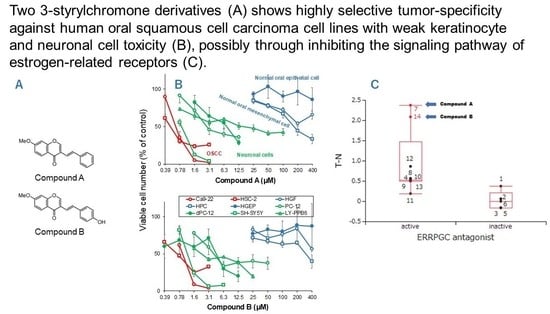
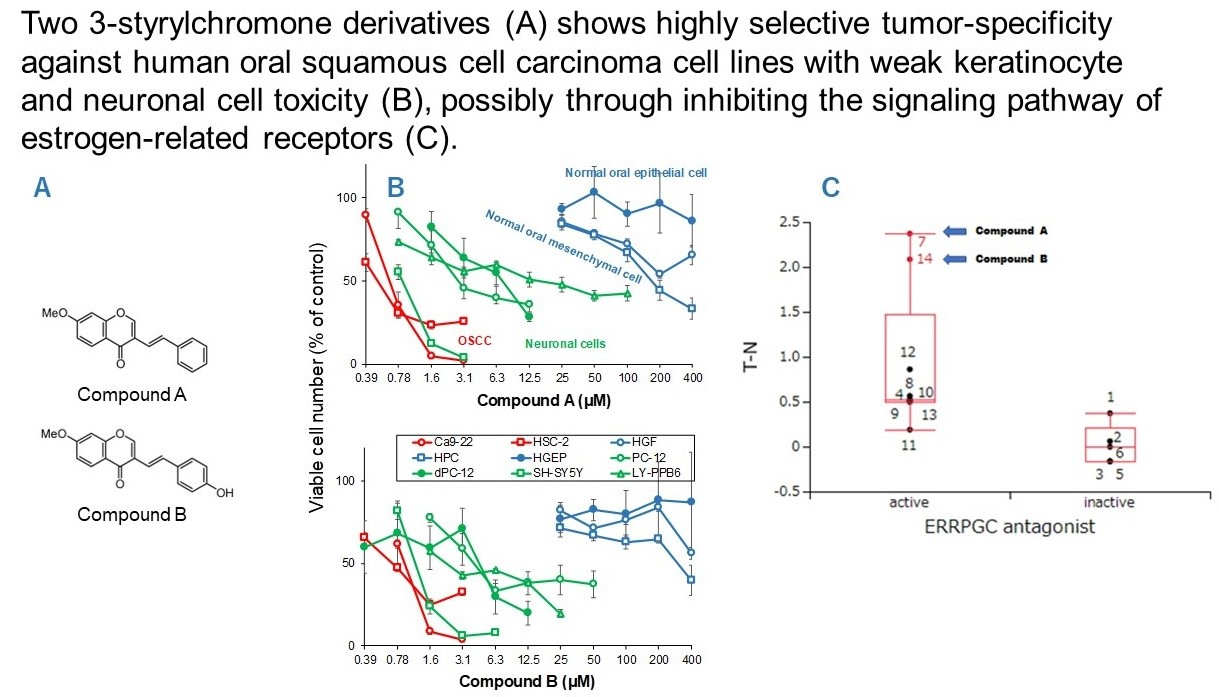
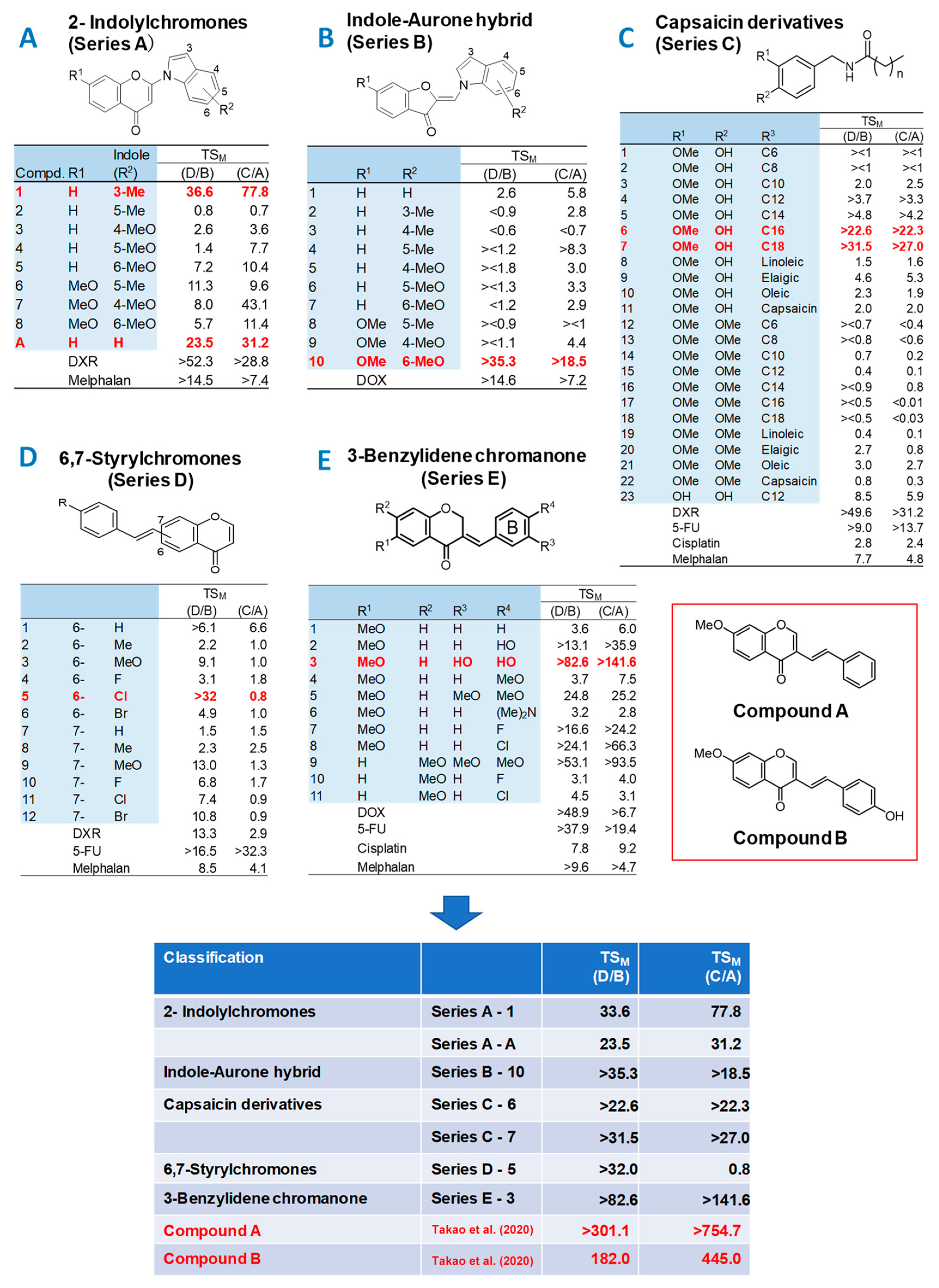
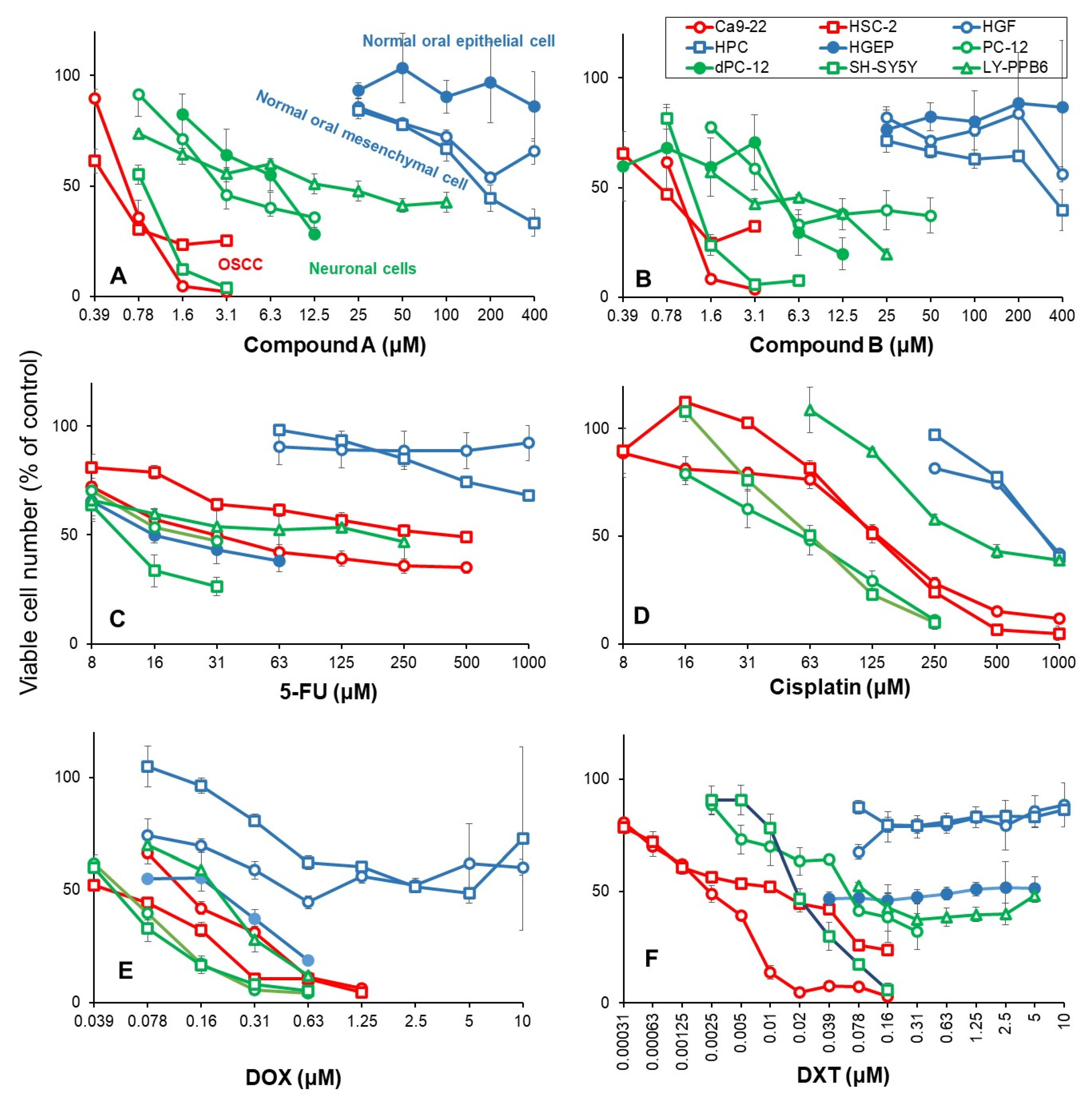
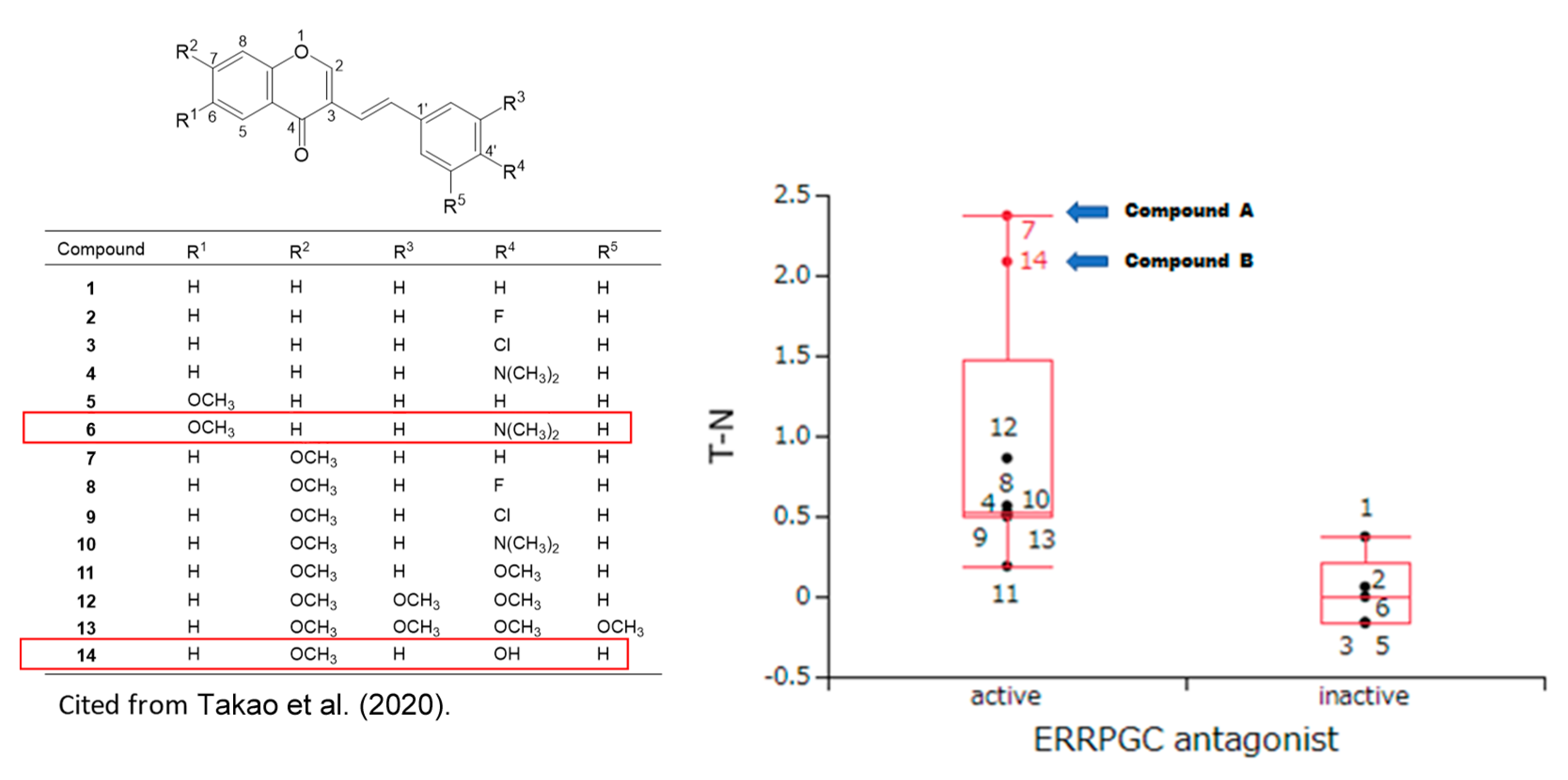
Background. Many anti-cancer drugs used in clinical practice cause adverse events such as oral mucositis, neurotoxicity, and extravascular leakage. We have reported that two 3-styrylchromone derivatives, 7-methoxy-3-[(1E)-2-phenylethenyl]-4H-1-benzopyran-4-one (Compound A) and 3-[(1E)-2-(4-hydroxyphenyl)ethenyl]-7-methoxy-4H-1-benzopyran-4-one (Compound B), showed the highest tumor-specificity against human oral squamous cell carcinoma (OSCC) cell lines among 291 related compounds. After confirming their superiority by comparing their tumor specificity with newly synthesized 65 derivatives, we investigated the neurotoxicity of these compounds in comparison with four popular anti-cancer drugs. Methods: Tumor-specificity (TSM, TSE, TSN) was evaluated as the ratio of mean CC50 for human normal oral mesenchymal (gingival fibroblast, pulp cell), oral epithelial cells (gingival epithelial progenitor), and neuronal cells (PC-12, SH-SY5Y, LY-PPB6, differentiated PC-12) to OSCC cells (Ca9-22, HSC-2), respectively. Results: Compounds A and B showed one order of magnitude higher TSM than newly synthesized derivatives, confirming its prominent tumor-specificity. Docetaxel showed one order of magnitude higher TSM, but two orders of magnitude lower TSE than Compounds A and B. Compounds A and B showed higher TSM, TSE, and TSN values than doxorubicin, 5-FU, and cisplatin, damaging OSCC cells at concentrations that do not affect the viability of normal epithelial and neuronal cells. QSAR prediction based on the Tox21 database suggested that Compounds A and B may inhibit the signaling pathway of estrogen-related receptors.
Keywords: chromone derivatives; oral squamous cell carcinoma; tumor-specificity; keratinocyte toxicity; neurotoxicity; signaling pathway; QSAR; estrogen-related receptor chromone derivatives; oral squamous cell carcinoma; tumor-specificity; keratinocyte toxicity; neurotoxicity; signaling pathway; QSAR; estrogen-related receptor
Graphical Abstract